Tag: Quantum Imaging

  • Quantum Leap in Semiconductor Metrology: EuQlid Unveils Non-Invasive 3D Imaging of Electrical Currents

    Quantum Leap in Semiconductor Metrology: EuQlid Unveils Non-Invasive 3D Imaging of Electrical Currents

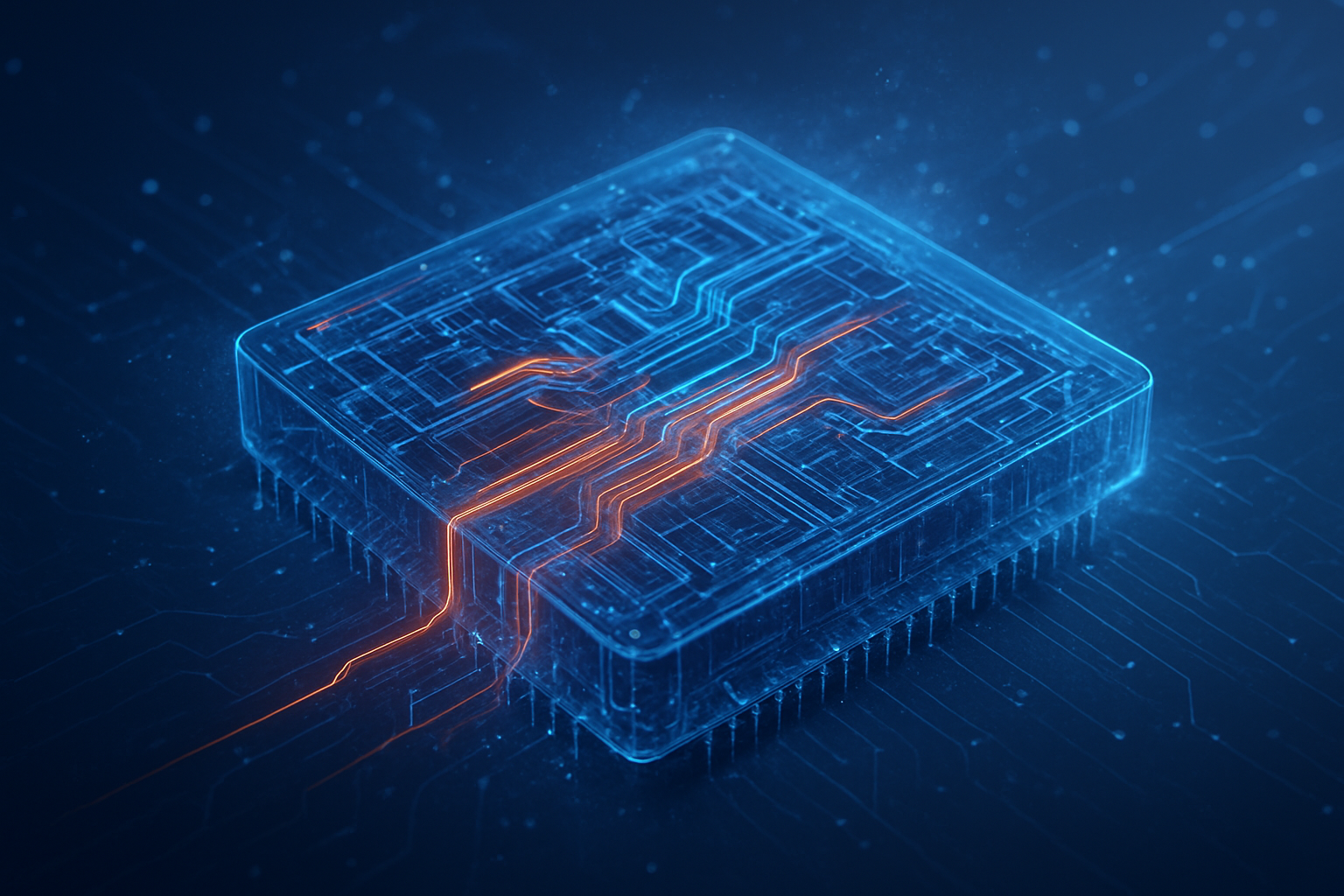
    In a groundbreaking development poised to revolutionize semiconductor research and manufacturing, EuQlid has introduced its pioneering quantum imaging platform, Qu-MRI™. This innovative technology offers unprecedented non-invasive 3D visualization of electrical currents within semiconductors and batteries, addressing a critical gap in existing metrology tools. By leveraging quantum magnetometry, Qu-MRI™ promises to accelerate product development cycles, improve manufacturing yields, and unlock new possibilities for designing next-generation electronic devices.

    The immediate significance of EuQlid's Qu-MRI™ cannot be overstated. As the tech industry pushes towards increasingly complex 3D architectures and advanced packaging in semiconductors—driven by the demands of artificial intelligence and high-performance computing—the ability to accurately map and understand sub-surface electrical activity becomes paramount. This platform provides direct, high-resolution insights into the intricate world of current flow, offering a powerful tool for engineers and researchers to diagnose issues, optimize designs, and ensure the reliability of advanced microchips.

    Unveiling the Invisible: The Technical Prowess of Qu-MRI™

    EuQlid's Qu-MRI™ platform is a marvel of modern engineering, integrating quantum magnetometry with sophisticated signal processing and machine learning. At its heart are synthetic diamonds embedded with nitrogen-vacancy (NV) centers. These NV centers function as extraordinarily sensitive quantum sensors, capable of detecting the minute magnetic fields generated by electrical currents flowing within a device. The system then translates these intricate sensory readings into detailed, visual magnetic field maps, providing a clear picture of current distribution and flow.

    What sets Qu-MRI™ apart from conventional inspection methods is its non-contact, non-destructive, and high-throughput approach. Traditional techniques often involve destructive physical cross-sectioning or indirect electrical measurements, which can be time-consuming and limit the ability to analyze functioning devices. In contrast, Qu-MRI™ boasts a remarkable resolution of one micron and nano-amp sensitivity, enabling the identification of subtle electrical anomalies and the precise mapping of sub-surface electrical currents. The integration of machine learning further enhances its capabilities, rapidly converting complex quantum sensing data into actionable insights, often within seconds. This allows for the precise mapping of buried current flow within complex, multi-layered 3D structures, a capability crucial for understanding dynamic electrical activity deep within advanced electronic components.

    Initial reactions from the semiconductor research community and industry experts have been overwhelmingly positive. The ability to directly visualize 3D charge flow, particularly in multi-layer chips with sub-micron feature sizes, fills a long-standing void where previous methods struggled with sensitivity, resolution, or were limited to 2D mapping. This breakthrough is seen as a foundational technology for controlling and optimizing intricate manufacturing workflows for advanced 3D architectures.

    Reshaping the Semiconductor Landscape: Corporate Implications

    The advent of EuQlid's Qu-MRI™ platform carries significant implications for a wide array of companies across the technology sector, from established tech giants to agile startups. Semiconductor manufacturers like Taiwan Semiconductor Manufacturing Company (TSMC: TPE) (NYSE: TSM), Samsung Electronics (KRX: 005930), and Intel Corporation (NASDAQ: INTC) stand to benefit immensely. The platform's ability to accelerate development cycles and improve manufacturing yields directly translates to reduced costs and faster time-to-market for their next-generation chips, particularly those leveraging advanced 3D packaging and backside power delivery.

    The competitive landscape in semiconductor metrology is poised for disruption. Existing metrology tool providers will need to adapt or integrate similar advanced capabilities to remain competitive. Companies involved in the design and fabrication of high-bandwidth memory, CPUs, and GPUs will find Qu-MRI™ invaluable for identifying and localizing interconnect errors and analyzing power flows within functioning devices. This technology offers a strategic advantage by providing unparalleled insights into device physics and failure mechanisms, allowing companies to refine their designs and manufacturing processes with greater precision.

    Potential disruption extends to current quality control and failure analysis methodologies. By offering a non-destructive alternative, Qu-MRI™ could reduce the reliance on slower, more invasive techniques, thereby streamlining production lines and enhancing overall product quality. For startups focused on novel semiconductor architectures or advanced materials, this platform provides a powerful diagnostic tool, potentially accelerating their innovation cycles and enabling quicker validation of new designs. The market positioning for EuQlid itself is strong, as it addresses a multi-billion dollar global market for advanced metrology tools, aiming to make "quantum precision" available for both R&D labs and high-volume manufacturing environments.

    Broader Significance: A New Era for Electronics

    EuQlid's quantum imaging platform fits seamlessly into the broader AI landscape and the relentless pursuit of more powerful and efficient computing. As AI models grow in complexity, they demand increasingly sophisticated hardware, often relying on dense 3D integrated circuits. The ability to precisely visualize current flows within these intricate structures is not just an incremental improvement; it's a fundamental enabler for the next generation of AI accelerators and high-performance computing. This development marks a significant step towards fully understanding and optimizing the physical underpinnings of advanced electronics.

    The impacts extend beyond semiconductors to other critical areas, notably the battery sector. Qu-MRI™ offers crucial insights into battery degradation pathways, paving the way for the development of safer, longer-lasting, and more efficient energy storage solutions—a vital component for electric vehicles, portable electronics, and renewable energy grids. This cross-sector applicability underscores the profound significance of EuQlid's technology.

    While the benefits are substantial, potential concerns might include the initial cost of adoption for such advanced quantum-based systems and the need for specialized expertise to fully leverage its capabilities. However, these are typical challenges with any revolutionary technology. Compared to previous AI and semiconductor milestones, such as the introduction of lithography or the development of FinFET transistors, Qu-MRI™ represents a breakthrough in characterization—the ability to see and understand what's happening at a fundamental level within these devices. This deeper understanding is crucial for overcoming current design and manufacturing bottlenecks, much like how advanced microscopy opened new fields in biology.

    The Horizon: Future Developments and Applications

    Looking ahead, the potential applications and use cases for EuQlid's quantum imaging platform are vast and varied. In the near term, we can expect its widespread adoption in advanced semiconductor R&D labs, where it will become an indispensable tool for debugging complex chip designs, validating new materials, and optimizing fabrication processes. Its role in high-volume manufacturing is also expected to grow rapidly, especially in quality control for critical components like high-bandwidth memory (HBM) and advanced logic chips, where even microscopic defects can lead to significant yield losses.

    Long-term developments could see the integration of Qu-MRI™ data directly into AI-powered design automation tools, allowing for real-time feedback loops that optimize chip layouts based on actual current flow visualization. Experts predict that as the technology matures, its resolution and sensitivity could further improve, enabling even finer-grained analysis of quantum phenomena within devices. Furthermore, the platform's application in materials science could expand, allowing researchers to study the electrical properties of novel materials with unprecedented detail.

    Challenges that need to be addressed include further scaling the technology for even faster throughput in high-volume production environments and potentially reducing the cost of the quantum sensing components. Additionally, developing user-friendly interfaces and robust data analysis pipelines will be crucial for broader adoption beyond specialized research facilities. Experts predict that this technology will not only accelerate the development of next-generation semiconductors but also foster entirely new fields of research by providing a window into the previously invisible electrical world of micro- and nano-scale devices.

    A New Era of Visibility in Electronics

    EuQlid's introduction of the Qu-MRI™ quantum imaging platform marks a pivotal moment in the history of semiconductor and battery technology. The key takeaway is the establishment of a truly non-invasive, high-resolution, 3D visualization technique for electrical currents, a capability that has long eluded the industry. This development is not merely an improvement; it's a paradigm shift in how we understand, design, and manufacture advanced electronic components.

    Its significance in AI history is profound, as it directly enables the continued advancement of the hardware infrastructure upon which AI innovation relies. By providing unprecedented insights into the inner workings of complex chips, Qu-MRI™ will accelerate the development of more powerful, efficient, and reliable AI accelerators, ultimately pushing the boundaries of what artificial intelligence can achieve. The long-term impact will be seen in faster innovation cycles, higher product quality, and potentially entirely new device architectures that were previously impossible to characterize.

    In the coming weeks and months, industry observers should watch for further announcements regarding pilot programs with major semiconductor manufacturers, detailed case studies showcasing the platform's capabilities in real-world scenarios, and competitive responses from other metrology companies. EuQlid's Qu-MRI™ is set to become an indispensable tool, heralding a new era of visibility and precision in the ever-evolving world of electronics.


    This content is intended for informational purposes only and represents analysis of current AI developments.

    TokenRing AI delivers enterprise-grade solutions for multi-agent AI workflow orchestration, AI-powered development tools, and seamless remote collaboration platforms.
    For more information, visit https://www.tokenring.ai/.

  • EuQlid Unveils Quantum Imaging Breakthrough: Revolutionizing 3D Analysis of Semiconductors and Batteries

    EuQlid Unveils Quantum Imaging Breakthrough: Revolutionizing 3D Analysis of Semiconductors and Batteries

    In a monumental leap for industrial metrology and advanced electronics, EuQlid, a pioneering quantum technology startup, has officially emerged from stealth mode today, November 4, 2025, to unveil its groundbreaking quantum imaging platform, Qu-MRI™. This novel technology promises to fundamentally transform how electrical currents are visualized and analyzed in 3D within highly complex materials like semiconductors and batteries. By leveraging the enigmatic power of quantum mechanics, EuQlid is poised to address critical challenges in manufacturing, design validation, and failure analysis that have long plagued the electronics and energy storage industries.

    The immediate significance of EuQlid's Qu-MRI™ cannot be overstated. As the tech world races towards ever-more intricate 3D semiconductor architectures and more efficient, safer batteries, traditional inspection methods are increasingly falling short. EuQlid's platform offers a non-destructive, high-resolution solution to peer into the hidden electrical activity within these devices, promising to accelerate development cycles, improve manufacturing yields, and enhance the performance and reliability of next-generation electronic components and power sources.

    Unlocking Sub-Surface Secrets: The Quantum Mechanics Behind Qu-MRI™

    At the heart of EuQlid's revolutionary Qu-MRI™ platform lies a sophisticated integration of quantum magnetometry, advanced signal processing, and cutting-edge machine learning. The system capitalizes on the unique properties of nitrogen-vacancy (NV) centers in diamonds, which serve as exquisitely sensitive quantum sensors. These NV centers exhibit changes in their optical properties when exposed to the minute magnetic fields generated by electrical currents. By precisely detecting these changes, Qu-MRI™ can map the magnitude and direction of current flows with remarkable accuracy and sensitivity.

    Unlike conventional inspection techniques that often require destructive physical cross-sectioning or operate under restrictive conditions like vacuums or cryogenic temperatures, EuQlid's platform provides non-invasive, 3D visualization of buried current flow. It boasts a resolution of one micron and nano-amp sensitivity, making it capable of identifying even subtle electrical anomalies. The platform's software rapidly converts raw sensory data into intuitive visual magnetic field maps within seconds, streamlining the analysis process for engineers and researchers.

    This approach marks a significant departure from previous methods. Traditional electrical testing often relies on surface-level probes or indirect measurements, struggling to penetrate multi-layered 3D structures without causing damage. Electron microscopy or X-ray techniques provide structural information but lack the dynamic, real-time electrical current mapping capabilities of Qu-MRI™. By directly visualizing current paths and anomalies in 3D, EuQlid offers a diagnostic tool that is both more powerful and less intrusive, directly addressing the limitations of existing metrology solutions in complex 3D packaging and advanced battery designs.

    The initial reaction from the quantum technology and industrial sectors has been overwhelmingly positive. EuQlid recently secured $3 million in funding led by QDNL Participations and Quantonation, alongside an impressive $1.5 million in early customer revenue, underscoring strong market validation. Further cementing its position, EuQlid was awarded the $25,000 grand prize at the Quantum World Congress 2024 Startup Pitch Competition, signaling broad recognition of its potential to disrupt and innovate within manufacturing diagnostics.

    Reshaping the Landscape: Competitive Implications for Tech Innovators

    EuQlid's Qu-MRI™ platform is poised to have a profound impact across a spectrum of industries, particularly those driving the next wave of technological innovation. Companies heavily invested in AI computing, advanced electronics miniaturization, and electric vehicles (EVs) stand to be the primary beneficiaries. Tech giants like NVIDIA (NASDAQ: NVDA), Intel (NASDAQ: INTC), and TSMC (NYSE: TSM), which are at the forefront of developing complex semiconductor architectures for AI accelerators and high-performance computing, will gain an invaluable tool for defect identification, design validation, and yield improvement in their cutting-edge 3D packaging and backside power delivery designs.

    The competitive implications are significant. For major AI labs and semiconductor manufacturers, the ability to non-destructively analyze sub-surface current flows means faster iteration cycles, reduced development costs, and higher-quality products. This could translate into a distinct strategic advantage, allowing early adopters of EuQlid's technology to bring more reliable and efficient chips to market quicker than competitors still reliant on slower, more destructive, or less precise methods. Startups in the battery technology space, aiming to improve energy density, charging speed, and safety, will also find Qu-MRI™ indispensable for understanding degradation mechanisms and optimizing cell designs.

    Potential disruption to existing products and services is also on the horizon. While EuQlid's technology complements many existing metrology tools, its unique 3D current mapping capability could render some traditional failure analysis and inspection services less competitive, especially those that involve destructive testing or lack the ability to visualize buried electrical activity. Companies providing electron beam testing, conventional thermal imaging, or even some forms of acoustic microscopy might need to adapt their offerings or integrate quantum imaging capabilities to remain at the forefront.

    From a market positioning standpoint, EuQlid (Private) is carving out a unique niche in the burgeoning quantum industrial metrology sector. By making quantum precision accessible for high-volume manufacturing, it establishes itself as a critical enabler for industries grappling with the increasing complexity of their products. Its strategic advantage lies in offering a non-destructive, high-resolution solution where none effectively existed before, positioning it as a key partner for companies striving for perfection in their advanced electronic components and energy storage solutions.

    A New Lens on Innovation: Quantum Imaging in the Broader AI Landscape

    EuQlid's Qu-MRI™ platform represents more than just an incremental improvement in imaging; it signifies a pivotal moment in the broader intersection of quantum technology and artificial intelligence. While not an AI system itself, the platform leverages machine learning for signal processing and data interpretation, highlighting how quantum sensing data, often noisy and complex, can be made actionable through AI. This development fits squarely into the trend of "quantum-enhanced AI" or "AI-enhanced quantum," where each field accelerates the other's capabilities. It also underscores the growing maturity of quantum technologies moving from theoretical research to practical industrial applications.

    The impacts of this advancement are multifaceted. For the semiconductor industry, it promises a significant boost in manufacturing yields and a reduction in the time-to-market for next-generation chips, particularly those employing advanced 3D packaging and backside power delivery. For the battery sector, it offers unprecedented insights into degradation pathways, paving the way for safer, longer-lasting, and more efficient energy storage solutions crucial for the electric vehicle revolution and grid-scale storage. Fundamentally, it enables a deeper understanding of device physics and failure mechanisms, fostering innovation across multiple engineering disciplines.

    Potential concerns, while not explicitly highlighted as drawbacks of the technology itself, often revolve around the broader adoption of advanced metrology. These could include the cost of implementation for smaller manufacturers, the need for specialized expertise to operate and interpret the data, and potential challenges in integrating such a sophisticated system into existing high-volume manufacturing lines. However, EuQlid's emphasis on industrial-scale metrology suggests these factors are being actively addressed.

    Comparing this to previous AI milestones, Qu-MRI™ shares a similar disruptive potential to breakthroughs like deep learning in image recognition or large language models in natural language processing. Just as those advancements provided unprecedented capabilities in data analysis and generation, EuQlid's quantum imaging provides an unprecedented capability in physical analysis – revealing hidden information with quantum precision. It's a foundational tool that could unlock subsequent waves of innovation in materials science, device engineering, and manufacturing quality control, much like how improved computational power fueled the AI boom.

    The Horizon of Discovery: What's Next for Quantum Imaging

    Looking ahead, the trajectory for quantum imaging technology, particularly EuQlid's Qu-MRI™, points towards exciting near-term and long-term developments. In the near future, we can expect to see further refinement of the platform's resolution and sensitivity, potentially pushing into the sub-micron or even nanometer scale for finer analysis of atomic-level current phenomena. Integration with existing automated inspection systems and enhanced AI-driven analysis capabilities will also be key, enabling more autonomous defect detection and predictive maintenance in manufacturing lines.

    Potential applications and use cases on the horizon are vast. Beyond semiconductors and batteries, quantum imaging could find utility in analyzing other complex electronic components, advanced materials for aerospace or medical devices, and even in fundamental physics research to study novel quantum materials. Imagine diagnosing early-stage material fatigue in aircraft components or precisely mapping neural activity in biological systems without invasive procedures. The ability to non-destructively visualize current flows could also be instrumental in the development of next-generation quantum computing hardware, helping to diagnose coherence issues or qubit coupling problems.

    However, challenges remain that need to be addressed for widespread adoption and continued advancement. Scaling the technology for even higher throughput in mass production environments, reducing the overall cost of ownership, and developing standardized protocols for data interpretation and integration into diverse manufacturing ecosystems will be crucial. Furthermore, expanding the range of materials that can be effectively analyzed and improving the speed of data acquisition for real-time process control are ongoing areas of research and development.

    Experts predict that quantum industrial metrology, spearheaded by companies like EuQlid, will become an indispensable part of advanced manufacturing within the next decade. The ability to "see" what was previously invisible will accelerate materials science discoveries and engineering innovations. What experts predict will happen next is a rapid expansion of this technology into various R&D and production facilities, leading to a new era of "design for quantum inspectability" where devices are built with the inherent understanding that their internal electrical characteristics can be precisely mapped.

    Quantum Precision: A New Era for Electronics and Energy

    EuQlid's unveiling of its Qu-MRI™ quantum imaging platform marks a significant milestone, representing a powerful confluence of quantum technology and industrial application. The key takeaway is the advent of a non-destructive, high-resolution 3D visualization tool for electrical currents, filling a critical void in the metrology landscape for advanced semiconductors and batteries. This capability promises to accelerate innovation, enhance product reliability, and reduce manufacturing costs across vital technology sectors.

    This development holds profound significance in the history of AI and quantum technology. It demonstrates the tangible benefits of quantum sensing moving beyond the lab and into industrial-scale challenges, while simultaneously showcasing how AI and machine learning are essential for making complex quantum data actionable. It’s a testament to the fact that quantum technologies are no longer just a futuristic promise but a present-day reality, delivering concrete solutions to pressing engineering problems.

    The long-term impact of quantum imaging will likely be transformative, enabling a deeper understanding of material science and device physics that will drive entirely new generations of electronics and energy storage solutions. By providing a "microscope for electricity," EuQlid is empowering engineers and scientists with an unparalleled diagnostic capability, fostering a new era of precision engineering.

    In the coming weeks and months, it will be crucial to watch for further customer adoptions of EuQlid's platform, detailed case studies showcasing its impact on specific semiconductor and battery challenges, and any announcements regarding partnerships with major industry players. The expansion of its application scope and continued technological refinements will also be key indicators of its trajectory in revolutionizing advanced manufacturing diagnostics.


    This content is intended for informational purposes only and represents analysis of current AI developments.

    TokenRing AI delivers enterprise-grade solutions for multi-agent AI workflow orchestration, AI-powered development tools, and seamless remote collaboration platforms.
    For more information, visit https://www.tokenring.ai/.