Tag: Rapidus

  • The New Silicon Nationalism: Japan, India, and Canada Lead the Multi-Billion Dollar Charge for Sovereign AI

    The New Silicon Nationalism: Japan, India, and Canada Lead the Multi-Billion Dollar Charge for Sovereign AI

    As of January 2026, the global artificial intelligence landscape has shifted from a race between corporate titans to a high-stakes competition between nation-states. Driven by the need for strategic autonomy and a desire to decouple from a volatile global supply chain, a new era of "Sovereign AI" has arrived. This movement is defined by massive government-backed initiatives designed to build domestic chip manufacturing, secure massive GPU clusters, and develop localized AI models that reflect national languages and values.

    The significance of this trend cannot be overstated. By investing billions into domestic infrastructure, nations are effectively attempting to build "digital fortresses" that protect their economic and security interests. In just the last year, Japan, India, and Canada have emerged as the vanguard of this movement, committing tens of billions of dollars to ensure they are not merely consumers of AI developed in Silicon Valley or Beijing, but architects of their own technological destiny.

    Breaking the 2nm Barrier and the Blackwell Revolution

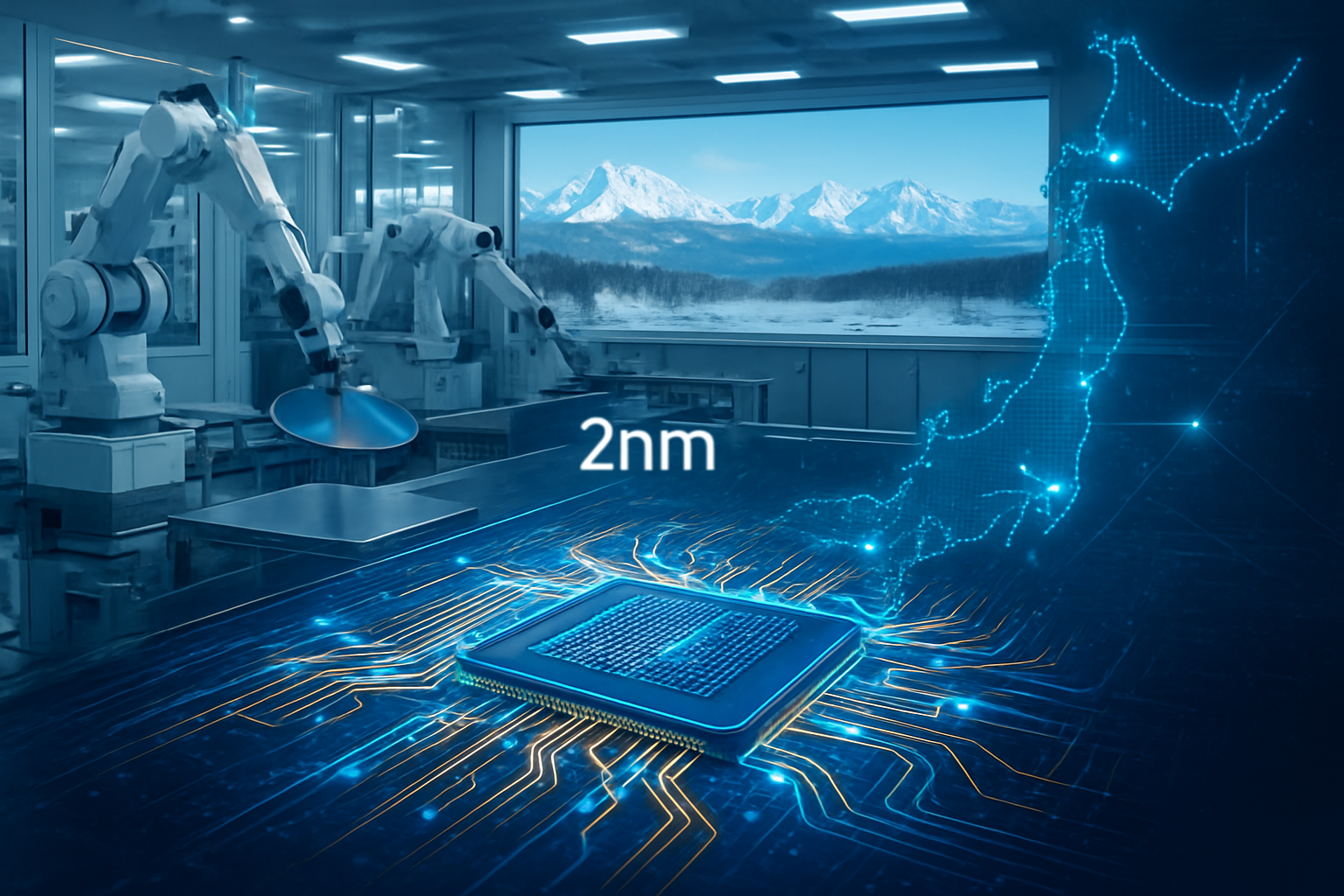
    At the technical heart of the Sovereign AI movement is a push for cutting-edge hardware and massive compute density. In Japan, the government has doubled down on its "Rapidus" project, approving a fresh ¥1 trillion ($7 billion USD) injection to achieve mass production of 2nm logic chips by 2027. To support this, Japan has successfully integrated the first ASML (NASDAQ: ASML) NXE:3800E EUV lithography systems at its Hokkaido facility, positioning itself as a primary competitor to TSMC and Intel (NASDAQ: INTC) in the sub-3nm era. Simultaneously, SoftBank (TYO: 9984) has partnered with NVIDIA (NASDAQ: NVDA) to deploy the "Grace Blackwell" GB200 platform, scaling Japan’s domestic compute power to over 25 exaflops—a level of processing power that was unthinkable for a private-public partnership just two years ago.

    India’s approach combines semiconductor fabrication with a massive "population-scale" compute mission. The IndiaAI Mission has successfully sanctioned the procurement of over 34,000 GPUs, with 17,300 already operational across local data centers managed by partners like Yotta and Netmagic. Technically, India is pursuing a "full-stack" strategy: while Tata Electronics builds its $11 billion fab in Dholera to produce 28nm chips for edge-AI devices, the nation has also established itself as a global hub for 2nm chip design through a major new facility opened by Arm (NASDAQ: ARM). This allows India to design the world's most advanced silicon domestically, even while its manufacturing capabilities mature.

    Canada has taken a unique path by focusing on public-sector AI infrastructure. Through its 2024 and 2025 budgets, the Canadian government has committed nearly $3 billion CAD to create a Sovereign Public AI Infrastructure. This includes the AI Sovereign Compute Infrastructure Program (SCIP), which aims to build a single, government-owned supercomputing facility that provides academia and SMEs with subsidized access to NVIDIA H200 and Blackwell chips. Furthermore, private Canadian firms like Hypertec have committed to reserving up to 50,000 GPUs for sovereign use, ensuring that Canadian data never leaves the country’s borders during the training or inference of sensitive public-sector models.

    The Hardware Gold Rush and the Shift in Tech Power

    The rise of Sovereign AI has created a new category of "must-win" customers for the world’s major tech companies. NVIDIA (NASDAQ: NVDA) has emerged as the primary beneficiary, effectively becoming the "arms dealer" for national governments. By tailoring its offerings to meet "sovereign" requirements—such as data residency and localized security protocols—NVIDIA has offset potential slowdowns in the commercial cloud sector with massive government contracts. Other hardware giants like IBM (NYSE: IBM), which is a key partner in Japan’s 2nm project, and specialized providers like Oracle (NYSE: ORCL), which provides sovereign cloud regions, are seeing their market positions strengthened as nations prioritize security over the lowest cost.

    This shift presents a complex challenge for traditional "Big Tech" firms like Microsoft (NASDAQ: MSFT) and Alphabet (NASDAQ: GOOGL). While they remain dominant in AI services, the push for domestic infrastructure threatens their total control over the global AI stack. Startups in these "sovereign" nations are no longer solely dependent on Azure or AWS; they now have access to government-subsidized, locally-hosted compute power. This has paved the way for domestic champions like Canada's Cohere or India's Sarvam AI to build large-scale models that are optimized for local needs, creating a more fragmented—and arguably more competitive—global market.

    Geopolitics, Data Privacy, and the Silicon Shield

    The broader significance of the Sovereign AI movement lies in the transition from "software as a service" to "sovereignty as a service." For years, the AI landscape was a duopoly between the US and China. The emergence of Japan, India, and Canada as independent "compute powers" suggests a multi-polar future where digital sovereignty is as important as territorial integrity. By owning the silicon, the data centers, and the training data, these nations are building a "silicon shield" that protects them from external supply chain shocks or geopolitical pressure.

    However, this trend also raises significant concerns regarding the "balkanization" of the internet and AI research. As nations build walled gardens for their AI ecosystems, the spirit of global open-source collaboration faces new hurdles. There is also the environmental impact of building dozens of massive new data centers globally, each requiring gigawatts of power. Comparisons are already being made to the nuclear arms race of the 20th century; the difference today is that the "deterrent" isn't a weapon, but the ability to process information faster and more accurately than one's neighbors.

    The Road to 1nm and Indigenous Intelligence

    Looking ahead, the next three to five years will see these initiatives move from the construction phase to the deployment phase. Japan is already eyeing the 1.4nm and 1nm nodes for 2030, aiming to reclaim its 1980s-era dominance in the semiconductor market. In India, the focus will shift toward "Indigenous LLMs"—models trained exclusively on Indian languages and cultural data—designed to bring AI services to hundreds of millions of citizens in their native tongues.

    Experts predict that we will soon see the rise of "Regional Compute Hubs," where nations like Canada or Japan provide sovereign compute services to smaller neighboring countries, creating new digital alliances. The primary challenge will remain the talent war; building a multi-billion dollar data center is easier than training the thousands of specialized engineers required to run it. We expect to see more aggressive national talent-attraction policies, such as "AI Visas," as these countries strive to fill the high-tech roles created by their infrastructure investments.

    Conclusion: A Turning Point in AI History

    The rise of Sovereign AI marks a definitive end to the era of globalized, borderless technology. Japan’s move toward 2nm manufacturing, India’s massive GPU procurement, and Canada’s public supercomputing initiatives are the first chapters in a story of national self-reliance. The key takeaway for 2026 is that AI is no longer just a tool for productivity; it is the fundamental infrastructure of the modern state.

    As we move into the middle of the decade, the success of these programs will determine which nations thrive in the automated economy. The significance of this development in AI history is comparable to the creation of the interstate highway system or the national power grid—it is the laying of the foundation for everything that comes next. In the coming weeks and months, the focus will shift to how these nations begin to utilize their newly minted "sovereign" power to regulate and deploy AI in ways that reflect their unique national identities.


    This content is intended for informational purposes only and represents analysis of current AI developments.

    TokenRing AI delivers enterprise-grade solutions for multi-agent AI workflow orchestration, AI-powered development tools, and seamless remote collaboration platforms.
    For more information, visit https://www.tokenring.ai/.

  • Japan’s $6 Billion ‘Sovereign AI’ Gamble: A Bold Bid for Silicon and Software Independence

    Japan’s $6 Billion ‘Sovereign AI’ Gamble: A Bold Bid for Silicon and Software Independence

    TOKYO — In a decisive move to reclaim its status as a global technology superpower, the Japanese government has officially greenlit a massive $6.34 billion (¥1 trillion) "Sovereign AI" initiative. Announced as part of the nation’s National AI Basic Plan, the funding marks a historic shift toward total technological independence, aiming to create a domestic ecosystem that encompasses everything from 2-nanometer logic chips to trillion-parameter foundational models. By 2026, the strategy has evolved from a defensive reaction to global supply chain vulnerabilities into an aggressive industrial blueprint to dominate the next phase of the "AI Industrial Revolution."

    This initiative is not merely about matching the capabilities of Silicon Valley; it is a calculated effort to insulate Japan’s economy from geopolitical volatility while solving its most pressing domestic crisis: a rapidly shrinking workforce. By subsidizing the production of cutting-edge semiconductors through the state-backed venture Rapidus Corp. and fostering a "Physical AI" sector that merges machine intelligence with Japan's legendary robotics industry, the Ministry of Economy, Trade and Industry (METI) is betting that "Sovereign AI" will become the backbone of 21st-century Japanese infrastructure.

    Engineering the Silicon Soul: 2nm Chips and Physical AI

    At the heart of Japan's technical roadmap is a two-pronged strategy focusing on domestic high-end manufacturing and specialized AI architectures. The centerpiece of the hardware push is Rapidus Corp., which, as of January 2026, has successfully transitioned its pilot production line in Chitose, Hokkaido, to full-wafer runs of 2-nanometer (2nm) logic chips. Unlike the traditional mass-production methods used by established foundries, Rapidus is utilizing a "single-wafer processing" approach. This allows for hyper-precise, AI-driven adjustments during the fabrication process, catering specifically to the bespoke requirements of high-performance AI accelerators rather than the commodity smartphone market.

    Technically, the Japanese "Sovereign AI" movement is distinguishing itself through a focus on "Physical AI" or Vision-Language-Action (VLA) models. While Western models like GPT-4 excel at digital reasoning and text generation, Japan’s national models are being trained on "physics-based" datasets and digital twins. These models are designed to predict physical torque and robotic pathing rather than just the next word in a sentence. This transition is supported by the integration of NTT’s (OTC: NTTYY) Innovative Optical and Wireless Network (IOWN), a groundbreaking photonics-based infrastructure that replaces traditional electrical signals with light, reducing latency in AI-to-robot communication to near-zero levels.

    Initial reactions from the global research community have been cautiously optimistic. While some skeptics argue that Japan is starting late in the LLM race, others point to the nation’s unique data advantage. By training models on high-quality, proprietary Japanese industrial data—rather than just scraped internet text—Japan is creating a "cultural and industrial firewall." Experts at RIKEN, Japan’s largest comprehensive research institution, suggest that this focus on "embodied intelligence" could allow Japan to leapfrog the "hallucination" issues of traditional LLMs by grounding AI in the laws of physics and industrial precision.

    The Corporate Battlefield: SoftBank, Rakuten, and the Global Giants

    The $6 billion initiative has created a gravitational pull that is realigning Japan's corporate landscape. SoftBank Group Corp. (OTC: SFTBY) has emerged as the primary "sovereign provider," committing an additional $12.7 billion of its own capital to build massive AI data centers across Hokkaido and Osaka. These facilities, powered by the latest Blackwell architecture from NVIDIA Corporation (NASDAQ: NVDA), are designed to host "Sarashina," a 1-trillion parameter domestic model tailored for high-security government and corporate applications. SoftBank’s strategic pivot marks a transition from a global investment firm to a domestic infrastructure titan, positioning itself as the "utility provider" for Japan’s AI future.

    In contrast, Rakuten Group, Inc. (OTC: RKUNY) is pursuing a strategy of "AI-nization," focusing on the edge of the network. Leveraging its virtualized 5G mobile network, Rakuten is deploying smaller, highly efficient AI models—including a 700-billion parameter LLM optimized for its ecosystem of 100 million users. While SoftBank builds the "heavyweight" backbone, Rakuten is focusing on hyper-personalized consumer AI and smart city applications, creating a competitive tension that is accelerating the adoption of AI across the Japanese retail and financial sectors.

    For global giants like Taiwan Semiconductor Manufacturing Company (NYSE: TSM) and Samsung Electronics, the rise of Japan’s Rapidus represents a long-term "geopolitical insurance policy" for their customers. Major U.S. firms, including IBM (NYSE: IBM), which is a key technical partner for Rapidus, and various AI startups, are beginning to eye Japan as a secondary source for advanced logic chips. This diversification is seen as a strategic necessity to mitigate risks associated with regional tensions in the Taiwan Strait, potentially disrupting the existing foundry monopoly and giving Japan a seat at the table of advanced semiconductor manufacturing.

    Geopolitics and the Sovereign AI Trend

    The significance of Japan’s $6 billion investment extends far beyond its borders, signaling the rise of "AI Nationalism." In an era where data and compute power are synonymous with national security, Japan is following a global trend—also seen in France and the Middle East—of developing AI that is culturally and legally autonomous. This "Sovereign AI" movement is a direct response to concerns that a handful of U.S.-based tech giants could effectively control the "digital nervous system" of other nations, potentially leading to a new form of technological colonialism.

    However, the path is fraught with potential concerns. The massive energy requirements of Japan’s planned AI factories are at odds with the country’s stringent carbon-neutrality goals. To address this, the government is coupling the AI initiative with a renewed push for next-generation nuclear and renewable energy projects. Furthermore, there are ethical debates regarding the "AI-robotics" integration. As Japan automates its elderly care and manufacturing sectors to compensate for a shrinking population, the social implications of high-density robot-human interaction remain a subject of intense scrutiny within the newly formed AI Strategic Headquarters.

    Comparing this to previous milestones, such as the 1980s Fifth Generation Computer Systems project, the current Sovereign AI initiative is far more grounded in existing market demand and industrial capacity. Unlike past efforts that focused purely on academic research, the 2026 plan is deeply integrated with private sector champions like Fujitsu Ltd. (OTC: FJTSY) and the global supply chain, suggesting a higher likelihood of commercial success.

    The Road to 2027: What’s Next for the Rising Sun?

    Looking ahead, the next 18 to 24 months will be critical for Japan’s technological gamble. The immediate milestone is the graduation of Rapidus from pilot production to mass-market commercial viability by early 2027. If the company can achieve competitive yields on its 2nm GAA (Gate-All-Around) architecture, it will solidify Japan as a Tier-1 semiconductor player. On the software side, the release of the "Sarashina" model's enterprise API in mid-2026 is expected to trigger a wave of "AI-first" domestic startups, particularly in the fields of precision medicine and autonomous logistics.

    Potential challenges include a global shortage of AI talent and the immense capital expenditure required to keep pace with the frantic development cycles of companies like OpenAI and Google. To combat this, Japan is loosening visa restrictions for "AI elites" and offering massive tax breaks for companies that repatriate their digital workloads to Japanese soil. Experts predict that if these measures succeed, Japan could become the global hub for "Embodied AI"—the point where software intelligence meets physical hardware.

    A New Chapter in Technological History

    Japan’s $6 billion Sovereign AI initiative represents a watershed moment in the history of artificial intelligence. By refusing to remain a mere consumer of foreign technology, Japan is attempting to rewrite the rules of the AI era, prioritizing security, cultural integrity, and industrial utility over the "move fast and break things" ethos of Silicon Valley. It is a bold, high-stakes bet that the future of AI belongs to those who can master both the silicon and the soul of the machine.

    In the coming months, the industry will be watching the Hokkaido "Silicon Forest" closely. The success or failure of Rapidus’s 2nm yields and the deployment of the first large-scale Physical AI models will determine whether Japan can truly achieve technological sovereignty. For now, the "Rising Sun" of AI is ascending, and its impact will be felt across every factory floor, data center, and boardroom in the world.


    This content is intended for informational purposes only and represents analysis of current AI developments.

    TokenRing AI delivers enterprise-grade solutions for multi-agent AI workflow orchestration, AI-powered development tools, and seamless remote collaboration platforms.
    For more information, visit https://www.tokenring.ai/.
  • The Rising Sun of Silicon: Japan’s $6 Billion Gambit to Reclaim the Semiconductor Throne

    The Rising Sun of Silicon: Japan’s $6 Billion Gambit to Reclaim the Semiconductor Throne

    In a decisive move to restore its status as a global technological powerhouse, the Japanese government has finalized a massive $6 billion (approximately 920 billion yen) investment into its home-grown semiconductor and AI ecosystem. This capital injection, spearheaded by the Ministry of Economy, Trade and Industry (METI), serves as the primary engine for Rapidus, a bold national venture aiming to leapfrog current manufacturing constraints and establish a domestic 2-nanometer (2nm) logic chip production line by 2027.

    The announcement marks a critical turning point for Japan, which once dominated the global chip market in the 1980s before losing ground to rivals in Taiwan and South Korea. By funding the development of cutting-edge AI hardware and advanced lithography, Japan is not merely seeking to participate in the current tech boom; it is positioning itself as a vital, independent pillar in the global supply chain, ensuring that the next generation of artificial intelligence is powered by Japanese-made silicon.

    Technical Leap: The 2nm GAA Frontier

    At the heart of this initiative is the Rapidus manufacturing facility in Chitose, Hokkaido, known as IIM-1. Unlike traditional foundries that have evolved incrementally, Rapidus is attempting a "generational leap" by moving directly into 2nm production using Gate-All-Around (GAA) transistor architecture. This technology is a significant departure from the FinFET (Fin Field-Effect Transistor) designs used in current 3nm and 5nm chips. GAA provides superior electrostatic control, significantly reducing power consumption while increasing processing speeds—a critical requirement for the massive computational demands of generative AI and autonomous systems.

    Technical execution is being bolstered by a "Triangle of Innovation" involving International Business Machines (NYSE: IBM), the European research hub imec, and Japan’s own Leading-edge Semiconductor Technology Center (LSTC). As of early 2026, Japanese engineers have completed intensive training at IBM’s Albany NanoTech Complex, and the IIM-1 facility has successfully demonstrated the operation of its first 2nm GAA prototype transistors. This collaboration allows Japan to bypass years of trial-and-error by licensing IBM’s foundational 2nm logic technology while utilizing imec’s expertise in Extreme Ultraviolet (EUV) lithography to achieve the precision required for such dense circuitry.

    Industry experts have reacted with a mixture of awe and skepticism, noting that while the technical roadmap is sound, the timeline is incredibly aggressive. Rapidus is essentially attempting to compress a decade of semiconductor evolution into less than five years. However, the integration of the LSTC as an R&D umbrella ensures that the project isn't just about manufacturing; it is also about designing the "Beyond 2nm" future, including advanced chiplet packaging and low-latency edge AI accelerators that could redefine how AI is deployed at the hardware level.

    Industry Impact: A New Power Dynamic

    The ripple effects of this $6 billion investment are being felt across the Tokyo Stock Exchange and Wall Street alike. SoftBank Group Corp. (TOKYO: 9984) has emerged as a primary beneficiary and advocate, viewing the domestic 2nm capability as essential for its vision of an AI-centric future. Similarly, Sony Group Corp. (NYSE: SONY) and Toyota Motor Corp. (NYSE: TM) are deeply integrated into the Rapidus consortium. For Sony, local 2nm production offers a pathway to more sophisticated AI-driven image sensors, while Toyota and its partner Denso Corp. (TOKYO: 6902) view the venture as a safeguard for the future of "Software Defined Vehicles" (SDVs) and autonomous driving.

    From a competitive standpoint, the emergence of Rapidus introduces a new dynamic for Taiwan Semiconductor Manufacturing Company (NYSE: TSM) and Intel Corp. (NASDAQ: INTC). While TSMC remains the undisputed leader in volume, Japan’s focus on a "high-mix, low-volume" specialized foundry model offers a strategic alternative for companies seeking to diversify their supply chains away from geopolitical flashpoints. This "Sovereign AI" strategy allows Japanese firms to develop proprietary AI chips without relying on foreign foundries, potentially disrupting the current market dominance held by major international players.

    Furthermore, the investment has catalyzed a private-sector surge. A consortium led by Mitsubishi UFJ Financial Group (NYSE: MUFG) has moved to provide trillions of yen in additional debt guarantees and loans, signaling that the financial industry views the semiconductor revival as a viable long-term bet. This public-private synergy provides Japan with a strategic advantage that few other nations can match: a unified industrial policy where the government, the banks, and the tech giants are all pulling in the same direction.

    Wider Significance: Geopolitical Resilience and AI Sovereignty

    Beyond the technical specifications, Japan’s $6 billion investment is a masterstroke of geopolitical positioning. In an era defined by the "chip wars" between the U.S. and China, Japan is carving out a role as a stable, high-tech sanctuary. By building the "Hokkaido Silicon Valley," the Japanese government is creating a self-sustaining ecosystem that attracts global suppliers of materials and equipment, such as Tokyo Electron and Shin-Etsu Chemical. This reduces the risk of supply chain shocks and ensures that Japan remains indispensable to the global economy.

    The broader AI landscape is currently grappling with a "compute crunch," where the demand for high-performance chips far outstrips supply. Japan’s entry into the 2nm space is a direct response to this trend. If successful, it will provide a much-needed release valve for the industry, offering a new source of the ultra-efficient chips required for the next wave of large language models (LLMs) and robotic process automation. It represents a shift from "AI software" dominance to "AI hardware" sovereignty, a move that mirrors previous milestones like the development of the first integrated circuits.

    However, the path is not without concerns. Critics point to the immense cost of maintaining EUV lithography machines and the potential for a talent shortage. To combat this, the LSTC has launched "Silicon Talent" initiatives across 15 universities, attempting to train a new generation of semiconductor engineers. The success of this human capital investment will be just as critical as the financial one, as the complexity of 2nm manufacturing requires a level of precision that leaves zero room for error.

    Future Developments: The Road to 1.4nm

    Looking ahead, the next 18 months will be the most critical in Japan’s technological history. The immediate goal is the launch of an advanced packaging pilot line at the Rapidus Chiplet Solutions center in April 2026. This facility will focus on "chiplets"—a method of stacking different types of processors together—which is widely considered the future of AI hardware design. By late 2026, the industry expects to see the first full-wafer runs from the Chitose plant, serving as a "litmus test" for the 2027 mass production deadline.

    In the long term, Japan is already looking past the 2nm horizon. Plans are reportedly in development for a second Hokkaido facility dedicated to 1.4nm production, with construction potentially beginning as early as 2027. Experts predict that if Japan can hit its 2nm targets, it will trigger a massive influx of global AI startups moving their hardware development to Japanese soil, drawn by the combination of cutting-edge manufacturing and a stable political environment.

    Closing Thoughts: A Historic Rebound

    Japan’s $6 billion investment is more than just a financial commitment; it is a declaration of intent. By backing Rapidus and the LSTC, the nation is betting that it can reclaim its role as the world’s premier high-tech workshop. The strategy is clear: secure the technology through global partnerships, fund the infrastructure with state capital, and drive the demand through a consortium of national champions like Toyota and Sony.

    The significance of this development in AI history cannot be overstated. We are witnessing the birth of a decentralized semiconductor map, where the ability to produce the world’s most advanced chips is no longer concentrated in just one or two regions. As we move toward the 2027 production goal, the world will be watching Hokkaido. The success of Rapidus would not only be a victory for Japan but a stabilizing force for the global AI industry, ensuring that the hardware of the future is as diverse and resilient as the software it supports.


    This content is intended for informational purposes only and represents analysis of current AI developments.

    TokenRing AI delivers enterprise-grade solutions for multi-agent AI workflow orchestration, AI-powered development tools, and seamless remote collaboration platforms.
    For more information, visit https://www.tokenring.ai/.

  • Japan’s Silicon Renaissance: Rapidus Hits 2nm GAA Milestone as Government Injects ¥1.23 Trillion into AI Future

    Japan’s Silicon Renaissance: Rapidus Hits 2nm GAA Milestone as Government Injects ¥1.23 Trillion into AI Future

    In a definitive stride toward reclaiming its status as a global semiconductor powerhouse, Japan’s state-backed venture Rapidus Corporation has successfully demonstrated the operational viability of its first 2nm Gate-All-Around (GAA) transistors. This technical breakthrough, achieved at the company’s IIM-1 facility in Hokkaido, marks a historic leap for a nation that had previously trailed the leading edge of logic manufacturing by nearly two decades. The success of these prototype wafers confirms that Japan has successfully bridged the gap from 40nm to 2nm, positioning itself as a legitimate contender in the race to power the next generation of artificial intelligence.

    The achievement is being met with unprecedented financial firepower from the Japanese government. As of early 2026, the Ministry of Economy, Trade and Industry (METI) has finalized a staggering ¥1.23 trillion ($7.9 billion) budget allocation for the 2026 fiscal year dedicated to semiconductors and domestic AI development. This massive capital infusion is designed to catalyze the transition from trial production to full-scale commercialization, ensuring that Rapidus meets its goal of launching an advanced packaging pilot line in April 2026, followed by mass production in 2027.

    Technical Breakthrough: The 2nm GAA Frontier

    The successful operation of 2nm GAA transistors represents a fundamental shift in semiconductor architecture. Unlike the traditional FinFET (Fin Field-Effect Transistor) design used in previous generations, the Gate-All-Around (nanosheet) structure allows the gate to contact the channel on all four sides. This provides superior electrostatic control, significantly reducing current leakage and power consumption while increasing drive current. Rapidus’s prototype wafers, processed using ASML (NASDAQ: ASML) Extreme Ultraviolet (EUV) lithography systems, have demonstrated electrical characteristics—including threshold voltage and leakage levels—that align with the high-performance requirements of modern AI accelerators.

    A key technical differentiator for Rapidus is its departure from traditional batch processing in favor of a "single-wafer processing" model. By processing wafers individually, Rapidus can utilize real-time AI-based monitoring and optimization at every stage of the manufacturing flow. This approach is intended to drastically reduce "turnaround time" (TAT), allowing customers to move from design to finished silicon much faster than the industry standard. This agility is particularly critical for AI startups and tech giants who are iterating on custom silicon designs at a blistering pace.

    The technical foundation for this achievement was laid through a deep partnership with IBM (NYSE: IBM) and the Belgium-based research hub imec. Since 2023, hundreds of Rapidus engineers have been embedded at the Albany NanoTech Complex in New York, working alongside IBM researchers to adapt the 2nm nanosheet technology IBM first unveiled in 2021. This collaboration has allowed Rapidus to leapfrog multiple generations of technology, effectively "importing" the world’s most advanced logic manufacturing expertise directly into the Japanese ecosystem.

    Shifting the Global Semiconductor Balance of Power

    The emergence of Rapidus as a viable 2nm manufacturer introduces a new dynamic into a market currently dominated by Taiwan Semiconductor Manufacturing Co. (NYSE: TSM) and Samsung Electronics (KRX: 005930). For years, the global supply chain has been heavily concentrated in Taiwan, creating significant geopolitical anxieties. Rapidus offers a high-tech alternative in a stable, democratic jurisdiction, which is already attracting interest from major AI players. Companies like Sony Group Corp (NYSE: SONY) and Toyota Motor Corp (TYO: 7203), both of which are investors in Rapidus, stand to benefit from a secure, domestic source of cutting-edge chips for autonomous driving and advanced image sensors.

    The strategic advantage for Rapidus lies in its focus on specialized, high-performance logic rather than high-volume commodity chips. By positioning itself as a "boutique" foundry for advanced AI silicon, Rapidus avoids a direct head-to-head war of attrition with TSMC’s massive scale. Instead, it offers a high-touch, fast-turnaround service for companies developing bespoke AI hardware. This model is expected to disrupt the existing foundry landscape, potentially pulling high-margin AI chip business away from traditional leaders as tech giants seek to diversify their supply chains.

    Furthermore, the Japanese government’s ¥1.23 trillion budget includes nearly ¥387 billion specifically for domestic AI foundational models. This creates a symbiotic relationship: Rapidus provides the hardware, while government-funded AI initiatives provide the demand. This "full-stack" national strategy ensures that the domestic ecosystem is not just a manufacturer for foreign firms, but a self-sustaining hub of AI innovation.

    Geopolitical Resilience and the "Last Chance" for Japan

    The "Rapidus Project" is frequently characterized by Japanese officials as the nation’s "last chance" to regain its 1980s-era dominance in the chip industry. During that decade, Japan controlled over half of the global semiconductor market, a share that has since dwindled to roughly 10%. The successful 2nm transistor operation is a psychological and economic turning point, proving that Japan can still compete at the bleeding edge. The massive 2026 budget allocation signals to the world that the Japanese state is no longer taking an "ad-hoc" approach to industrial policy, but is committed to long-term "technological sovereignty."

    This development also fits into a broader global trend of "onshoring" and "friend-shoring" critical technology. By establishing "Hokkaido Valley" in Chitose, Japan is creating a localized cluster of suppliers, engineers, and researchers. This regional hub is intended to insulate the Japanese economy from the volatility of US-China trade tensions. The inclusion of SoftBank Group Corp (TYO: 9984) and NEC Corp (TYO: 6701) among Rapidus’s backers underscores a unified national effort to ensure that the backbone of the digital economy—advanced logic—is produced on Japanese soil.

    However, the path forward is not without concerns. Critics point to the immense capital requirements—estimated at ¥5 trillion total—and the difficulty of maintaining high yields at the 2nm node. While the GAA transistor operation is a success, scaling that to millions of defect-free chips is a monumental task. Comparisons are often made to Intel Corp (NASDAQ: INTC), which has struggled with its own foundry transitions, highlighting the risks inherent in such an ambitious leapfrog strategy.

    The Road to April 2026 and Mass Production

    Looking ahead, the next critical milestone for Rapidus is April 2026, when the company plans to launch its advanced packaging pilot line at the "Rapidus Chiplet Solutions" (RCS) center. Advanced packaging, particularly chiplet technology, is becoming as important as the transistors themselves in AI applications. By integrating front-end 2nm manufacturing with back-end advanced packaging in the same geographic area, Rapidus aims to provide an end-to-end solution that further reduces production time and enhances performance.

    The near-term focus will be on "first light" exposures for early customer designs and optimizing the single-wafer processing flow. If the April 2026 packaging trial succeeds, Rapidus will be on track for its 2027 mass production target. Experts predict that the first wave of Rapidus-made chips will likely power high-performance computing (HPC) clusters and specialized AI edge devices for robotics, where Japan already holds a strong market position.

    The challenge remains the talent war. To succeed, Rapidus must continue to attract top-tier global talent to Hokkaido. The Japanese government is addressing this by funding university programs and research initiatives, but the competition for 2nm-capable engineers is fierce. The coming months will be a test of whether the "Hokkaido Valley" concept can generate the same gravitational pull as Silicon Valley or Hsinchu Science Park.

    A New Era for Japanese Innovation

    The successful operation of 2nm GAA transistors by Rapidus, backed by a monumental ¥1.23 trillion government commitment, marks the beginning of a new chapter in the history of technology. It is a bold statement that Japan is ready to lead once again in the most complex manufacturing process ever devised by humanity. By combining IBM’s architectural innovations with Japanese manufacturing precision and a unique single-wafer processing model, Rapidus is carving out a distinct niche in the AI era.

    The significance of this development cannot be overstated; it represents the most serious challenge to the existing semiconductor status quo in decades. As we move toward the April 2026 packaging trials, the world will be watching to see if Japan can turn this technical milestone into a commercial reality. For the global AI industry, the arrival of a third major player at the 2nm node promises more competition, more innovation, and a more resilient supply chain.

    The next few months will be critical as Rapidus begins installing the final pieces of its advanced packaging line and solidifies its first commercial contracts. For now, the successful "first light" of Japan’s 2nm ambition has brightened the prospects for a truly multipolar future in semiconductor manufacturing.


    This content is intended for informational purposes only and represents analysis of current AI developments.

    TokenRing AI delivers enterprise-grade solutions for multi-agent AI workflow orchestration, AI-powered development tools, and seamless remote collaboration platforms.
    For more information, visit https://www.tokenring.ai/.

  • The Glass Frontier: Intel and Rapidus Lead the Charge into the Next Era of AI Hardware

    The Glass Frontier: Intel and Rapidus Lead the Charge into the Next Era of AI Hardware

    The transition to glass substrates is driven by the failure of organic materials (like ABF and BT resins) to cope with the extreme heat and structural demands of massive AI "superchips." Glass offers a Coefficient of Thermal Expansion (CTE) that closely matches that of silicon (3–7 ppm/°C), which drastically reduces the risk of warpage during the high-temperature manufacturing processes required for advanced 2nm and 1.4nm nodes. Furthermore, glass is an exceptional electrical insulator with significantly lower dielectric loss (Df) and a lower dielectric constant (Dk) than silicon-based interposers. This allows for signal speeds to double while cutting insertion loss in half—a critical requirement for the high-frequency data transfers essential for 5G, 6G, and ultra-fast AI training.

    Technically, the "magic" of glass lies in Through-Glass Vias (TGVs). These microscopic vertical interconnects allow for a 10-fold increase in interconnect density compared to traditional organic substrates. This density enables thousands of Input/Output (I/O) bumps, allowing multiple chiplets—CPUs, GPUs, and High Bandwidth Memory (HBM)—to be packed closer together with minimal latency. At SEMICON Japan in December 2025, Rapidus demonstrated the sheer scale of this potential by unveiling a 600mm x 600mm glass panel-level packaging (PLP) prototype. Unlike traditional 300mm round silicon wafers, these massive square panels can yield up to 10 times more interposers, significantly reducing material waste and enabling the creation of "monster" packages that can house up to 24 HBM4 dies alongside a multi-tile GPU.

    Market Dynamics: A High-Stakes Race for Dominance

    Intel is currently the undisputed leader in the "Glass War," having invested over a decade of R&D into the technology. The company's Arizona-based pilot line is already operational, and Intel is on track to integrate glass substrates into its high-volume manufacturing (HVM) roadmap by late 2026. This head start provides Intel with a significant strategic advantage, potentially allowing them to reclaim the lead in the foundry business by offering packaging capabilities that Taiwan Semiconductor Manufacturing Co. (NYSE: TSM) is not expected to match at scale until 2028 or 2029 with its "CoPoS" (Chip-on-Panel-on-Substrate) initiative.

    However, the competition is intensifying rapidly. Samsung Electronics (KRX: 005930) has fast-tracked its glass substrate development, leveraging its existing expertise in large-scale glass manufacturing from its display division. Samsung is currently building a pilot line at its Sejong facility and aims for a 2026-2027 rollout, potentially positioning itself as a primary alternative for AI giants like NVIDIA and Advanced Micro Devices (NASDAQ: AMD) who are desperate to diversify their supply chains away from a single source. Meanwhile, the emergence of Rapidus as a serious contender with its panel-level prototype suggests that the Japanese semiconductor ecosystem is successfully leveraging its legacy in LCD technology to leapfrog current packaging constraints.

    Redefining the AI Landscape and Moore’s Law

    The wider significance of glass substrates lies in their role as the "enabling platform" for the post-Moore's Law era. As it becomes increasingly difficult to shrink transistors further, the industry has turned to heterogeneous integration—stacking and stitching different chips together. Glass substrates provide the structural integrity needed to build these massive 3D structures. Intel’s stated goal of reaching 1 trillion transistors on a single package by 2030 is virtually impossible without the flatness and thermal stability provided by glass.

    This development also addresses the critical "power wall" in AI data centers. The extreme flatness of glass allows for more reliable implementation of Backside Power Delivery (such as Intel’s PowerVia technology) at the package level. This reduces power noise and improves overall energy efficiency by an estimated 15% to 20%. In an era where AI power consumption is a primary concern for hyperscalers and environmental regulators alike, the efficiency gains from glass substrates could be just as important as the performance gains.

    The Road to 2026 and Beyond

    Looking ahead, the next 12 to 18 months will be focused on solving the remaining engineering hurdles of glass: namely, fragility and handling. While glass is structurally superior once assembled, it is notoriously difficult to handle in a high-speed factory environment without cracking. Companies like Rapidus are working closely with equipment manufacturers to develop specialized "glass-safe" robotic handling systems and laser-drilling techniques for TGVs. If these challenges are met, the shift to 600mm square panels could drop the cost of manufacturing massive AI interposers by as much as 40% by 2027.

    In the near term, expect to see the first commercial glass-packaged chips appearing in high-end server environments. These will likely be specialized AI accelerators or high-end Xeon processors designed for the most demanding scientific computing tasks. As the ecosystem matures, we can anticipate the technology trickling down to consumer-grade high-end gaming GPUs and workstations, where thermal management is a constant struggle. The ultimate goal is a fully standardized glass-based ecosystem that allows for "plug-and-play" chiplet integration from various vendors.

    Conclusion: A New Foundation for Computing

    The move to glass substrates marks the beginning of a new chapter in semiconductor history. It is a transition that validates the industry's shift from "system-on-chip" to "system-in-package." By solving the thermal and density bottlenecks that have plagued organic substrates, Intel and Rapidus are paving the way for a new generation of AI hardware that was previously thought to be physically impossible.

    As we move into 2026, the industry will be watching closely to see if Intel can successfully execute its high-volume rollout and if Rapidus can translate its impressive prototype into a viable manufacturing reality. The stakes are immense; the winner of the glass substrate race will likely hold the keys to the world's most powerful AI systems for the next decade. For now, the "Glass War" is just beginning, and it promises to be the most consequential battle in the tech industry's ongoing evolution.


    This content is intended for informational purposes only and represents analysis of current AI developments.

    TokenRing AI delivers enterprise-grade solutions for multi-agent AI workflow orchestration, AI-powered development tools, and seamless remote collaboration platforms.
    For more information, visit https://www.tokenring.ai/.

  • The Samurai Silicon Showdown: Inside the High-Stakes Race for 2nm Supremacy in Japan

    The Samurai Silicon Showdown: Inside the High-Stakes Race for 2nm Supremacy in Japan

    As of December 22, 2025, the global semiconductor landscape is witnessing a historic transformation centered on the Japanese archipelago. For decades, Japan’s dominance in electronics had faded into the background of the silicon era, but today, the nation is the frontline of a high-stakes battle for the future of artificial intelligence. The race to master 2-nanometer (2nm) production—the microscopic threshold required for the next generation of AI accelerators and sovereign supercomputers—has pitted the world’s undisputed foundry leader, Taiwan Semiconductor Manufacturing Company (NYSE: TSM), against Japan’s homegrown champion, Rapidus.

    This is more than a corporate rivalry; it is a fundamental shift in the "Silicon Shield." With billions of dollars in government subsidies and the future of "Sovereign AI" on the line, the dual hubs of Kumamoto and Hokkaido are becoming the most critical coordinates in the global tech supply chain. While TSMC brings the weight of its proven manufacturing excellence to its expanding Kumamoto cluster, Rapidus is attempting a "leapfrog" strategy, bypassing older nodes to build a specialized, high-speed 2nm foundry from the ground up. The outcome will determine whether Japan can reclaim its crown as a global technology superpower or remain a secondary player in the AI revolution.

    The Technical Frontier: GAAFET, EUV, and the Rapidus 'Short TAT' Model

    The technical specifications of the 2nm node represent the most significant architectural shift in a decade. Both TSMC and Rapidus are moving away from the traditional FinFET transistor design to Gate-All-Around (GAA) technology, often referred to as GAAFET. This transition allows for better control over the electrical current, reducing power leakage and significantly boosting performance—critical metrics for AI chips that currently consume massive amounts of energy. As of late 2025, TSMC has successfully transitioned its Taiwan-based plants to 2nm mass production, but its Japanese roadmap is undergoing a dramatic pivot. Originally planned for 6nm and 7nm, the Kumamoto Fab 2 has seen a "strategic pause" this month, with internal reports suggesting a jump straight to 2nm or 4nm to meet the insatiable demand from AI clients like NVIDIA (NASDAQ: NVDA).

    In contrast, Rapidus has spent 2025 proving that its "boutique" approach to silicon can rival the giants. At its IIM-1 facility in Hokkaido, Rapidus successfully fabricated its first 2nm GAA transistors in July 2025, utilizing the latest ASML NXE:3800E Extreme Ultraviolet (EUV) lithography machines. What sets Rapidus apart is its "Rapid and Unified Manufacturing Service" (RUMS) model. Unlike TSMC’s high-volume batch processing, Rapidus employs a 100% single-wafer processing system. This allows for a "Short Turn Around Time" (STAT), promising a design-to-delivery cycle of just 50 days—roughly one-third of the industry average. This model is specifically tailored for AI startups and high-performance computing (HPC) firms that need to iterate chip designs at the speed of software.

    Initial reactions from the semiconductor research community have been cautiously optimistic. While critics originally dismissed Rapidus as a "paper company," the successful trial production in 2025 and its partnership with IBM for technology transfer have silenced many skeptics. However, industry experts note that the real challenge for Rapidus remains "yield"—the percentage of functional chips per wafer. While TSMC has decades of experience in yield optimization, Rapidus is relying on AI-assisted design and automated error correction to bridge that gap.

    Corporate Chess: NVIDIA, SoftBank, and the Search for Sovereign AI

    The 2nm race in Japan has triggered a massive realignment among tech giants. NVIDIA, the current king of AI hardware, has become a central figure in this drama. CEO Jensen Huang, during his recent visits to Tokyo, has emphasized the need for "Sovereign AI"—the idea that nations must own the infrastructure that processes their data and intelligence. NVIDIA is reportedly vetting Rapidus as a potential second-source supplier for its future Blackwell-successor architectures, seeking to diversify its manufacturing footprint beyond Taiwan to mitigate geopolitical risks.

    SoftBank Group (TYO: 9984) is another major beneficiary and driver of this development. Under Masayoshi Son, SoftBank has repositioned itself as an "Artificial Super Intelligence" (ASI) platformer. By backing Rapidus and maintaining deep ties with TSMC, SoftBank is securing the silicon pipeline for its ambitious trillion-dollar AI initiatives. Other Japanese giants, including Sony Group (NYSE: SONY) and Toyota Motor (NYSE: TM), are also heavily invested. Sony, a key partner in TSMC’s Kumamoto Fab 1, is looking to integrate 2nm logic with its world-leading image sensors, while Toyota views 2nm chips as the essential "brains" for the next generation of fully autonomous vehicles.

    The competitive implications for major AI labs are profound. If Rapidus can deliver on its promise of ultra-fast turnaround times, it could disrupt the current dominance of large-scale foundries. Startups that cannot afford the massive minimum orders or long wait times at TSMC may find a home in Hokkaido. This creates a strategic advantage for the "fast-movers" in the AI space, allowing them to deploy custom silicon faster than competitors tethered to traditional manufacturing cycles.

    Geopolitics and the Bifurcation of Japan’s Silicon Landscape

    The broader significance of this 2nm race lies in the decentralization of advanced manufacturing. For years, the world’s reliance on a single island—Taiwan—for sub-5nm chips was seen as a systemic risk. By December 2025, Japan has effectively created two distinct semiconductor hubs to mitigate this: the "Silicon Island" of Kyushu (Kumamoto) and the "Silicon Valley of the North" in Hokkaido. The Japanese Ministry of Economy, Trade and Industry (METI) has fueled this with a staggering ¥10 trillion ($66 billion) investment plan, framing the 2nm capability as a matter of "strategic indispensability."

    However, this rapid expansion has not been without growing pains. In Kumamoto, TSMC’s expansion has hit a literal roadblock: infrastructure. CEO C.C. Wei recently cited severe traffic congestion and local labor shortages as reasons for the construction pause at Fab 2. The Japanese government is now racing to upgrade roads and rail lines to support the "Silicon Island" ecosystem. Meanwhile, in Hokkaido, the challenge is climate and energy. Rapidus is leveraging the region’s cool climate to reduce the thermal cooling costs of its data centers and fabs, but it must still secure a massive, stable supply of renewable energy to meet its sustainability goals.

    The comparison to previous AI milestones is striking. Just as the release of GPT-4 shifted the focus from "models" to "compute," the 2nm race in Japan marks the shift from "compute" to "supply chain resilience." The 2nm node is the final frontier before the industry moves into the "Angstrom era" (1.4nm and below), and Japan’s success or failure here will determine its relevance for the next fifty years of computing.

    The Road to 1.4nm and Advanced Packaging

    Looking ahead, the 2nm milestone is just the beginning. Both TSMC and Rapidus are already eyeing the 1.4nm node (A14) and beyond. TSMC is expected to announce plans for a "Fab 3" in Japan by mid-2026, which could potentially house its first 1.4nm line outside of Taiwan. Rapidus, meanwhile, is betting on "Advanced Packaging" as its next major differentiator. At SEMICON Japan this month, Rapidus unveiled a breakthrough glass substrate interposer, which offers significantly better electrical performance and heat dissipation than current silicon-based packaging.

    The near-term focus will be on the "back-end" of manufacturing. As AI chips become larger and more complex, the way they are packaged together with High Bandwidth Memory (HBM) becomes as important as the chip itself. Experts predict that the battle for AI supremacy will move from the "wafer" to the "chiplet," where multiple specialized chips are stacked into a single package. Japan’s historical strength in materials science gives it a unique advantage in this area, potentially allowing Rapidus or TSMC’s Japanese units to lead the world in 3D integration.

    Challenges remain, particularly in talent acquisition. Japan needs an estimated 40,000 additional semiconductor engineers by 2030. To address this, the government has launched nationwide "Semiconductor Human Resource Development" centers, but the gap remains a significant hurdle for both TSMC and Rapidus as they scale their operations.

    A New Era for Global Silicon

    In summary, the 2nm race in Japan represents a pivotal moment in the history of technology. TSMC’s Kumamoto upgrades signify the global leader’s commitment to geographical diversification, while the rise of Rapidus marks the return of Japanese ambition in the high-end logic market. By December 2025, it is clear that the "Silicon Shield" is expanding, and Japan is its new, northern anchor.

    The key takeaways are twofold: first, the 2nm node is no longer a distant goal but a present reality that is reshaping corporate and national strategies. Second, the competition between TSMC’s volume-driven model and Rapidus’s speed-driven model will provide the AI industry with much-needed diversity in how chips are designed and manufactured. In the coming months, watch for the official announcement of TSMC’s Fab 3 location and the first customer tape-outs from Rapidus’s 2nm pilot line. The samurai of silicon have returned, and the AI revolution will be built on their steel.


    This content is intended for informational purposes only and represents analysis of current AI developments.

    TokenRing AI delivers enterprise-grade solutions for multi-agent AI workflow orchestration, AI-powered development tools, and seamless remote collaboration platforms.
    For more information, visit https://www.tokenring.ai/.

  • Japan’s Silicon Renaissance: Government Signals 1.5-Fold Budget Surge to Reclaim Global Semiconductor Dominance

    Japan’s Silicon Renaissance: Government Signals 1.5-Fold Budget Surge to Reclaim Global Semiconductor Dominance

    In a decisive move to secure its technological future, the Japanese government has announced a massive 1.5-fold increase in its semiconductor and artificial intelligence budget for Fiscal Year 2026. As of late December 2025, the Ministry of Economy, Trade and Industry (METI) has finalized a request for ¥1.239 trillion (approximately $8.2 billion) specifically earmarked for the chip sector. This pivot marks a fundamental shift in Japan's economic strategy, moving away from erratic, one-time "supplementary budgets" toward a stable, multi-year funding model designed to support the nation’s ambitious goal of mass-producing 2-nanometer (2nm) logic chips by 2027.

    The announcement, spearheaded by the administration of Prime Minister Sanae Takaichi, elevates semiconductors to a "National Strategic Technology" status. By securing this funding, Japan aims to reduce its reliance on foreign chipmakers and establish a domestic "Silicon Shield" that can power the next generation of generative AI, autonomous vehicles, and advanced defense systems. This budgetary expansion is not merely about capital; it represents a comprehensive legislative overhaul that allows the Japanese state to take direct equity stakes in private tech firms, signaling a new era of state-backed industrial competition.

    The Rapidus Roadmap: 2nm Ambitions and State Equity

    The centerpiece of Japan’s semiconductor revival is Rapidus Corp, a state-backed venture that has become the focal point of the nation’s 2nm logic chip ambitions. For FY 2026, the government has allocated ¥630 billion specifically to Rapidus, part of a broader ¥1 trillion funding package intended to bridge the gap between prototype development and full-scale mass production. Unlike previous subsidy programs, the 2025 legislative amendments to the Act on the Promotion of Information Processing now allow the government to provide ¥100 billion in direct equity funding. This move effectively makes the Japanese state a primary stakeholder in the success of the Hokkaido-based firm, ensuring that the project remains insulated from short-term market fluctuations.

    Technically, the push for 2nm production represents a leapfrog strategy. While current leaders like Taiwan Semiconductor Manufacturing Co. (TPE: 2330 / NYSE: TSM) are already at the leading edge, Japan is betting on a "short TAT" (Turnaround Time) manufacturing model and the integration of Extreme Ultraviolet (EUV) lithography tools—purchased and provided by the state—to gain a competitive advantage. Industry experts from the AI research community have noted that Rapidus is not just building a fab; it is building a specialized ecosystem for "AI-native" chips that prioritize low power consumption and high-speed data processing, features that are increasingly critical as the world moves toward edge-AI applications.

    Corporate Impact: Strengthening the Domestic Ecosystem

    The budgetary surge also provides a significant tailwind for established players and international partners operating within Japan. Sony Group Corp (TYO: 6758 / NYSE: SONY), a key private investor in Rapidus and a partner in the Japan Advanced Semiconductor Manufacturing (JASM) joint venture, stands to benefit from increased subsidies for advanced image sensors and specialized AI logic. Similarly, Denso Corp (TYO: 6902 / OTC: DNZOY) and Toyota Motor Corp (TYO: 7203 / NYSE: TM) are expected to leverage the domestic supply of high-end chips to maintain their lead in the global electric vehicle and autonomous driving markets.

    The funding expansion also secures the future of Micron Technology Inc. (NASDAQ: MU) in Hiroshima. The government has continued its support for Micron’s production of High-Bandwidth Memory (HBM), which is essential for the AI servers used by companies like NVIDIA Corp (NASDAQ: NVDA). By subsidizing the manufacturing of memory and logic chips simultaneously, Japan is positioning itself as a "one-stop shop" for AI hardware. This strategic advantage could potentially disrupt existing supply chains, as tech giants look for alternatives to the geographically concentrated manufacturing hubs in Taiwan and South Korea.

    Geopolitical Strategy and the Quest for Technological Sovereignty

    Japan’s 1.5-fold budget increase is a direct response to the global fragmentation of the semiconductor supply chain. In the broader AI landscape, this move aligns Japan with the US CHIPS Act and the EU Chips Act, but with a more aggressive focus on "technological sovereignty." By aiming for a domestic semiconductor sales target of ¥15 trillion by 2030, Japan is attempting to mitigate the risks of a potential conflict in the Taiwan Strait. The "Silicon Shield" strategy is no longer just about economic growth; it is about national security and ensuring that the "brains" of future AI systems are produced on Japanese soil.

    However, this massive state intervention has raised concerns regarding market distortion and the long-term viability of Rapidus. Critics point out that Japan has not been at the forefront of logic chip manufacturing for decades, and the technical hurdle of jumping directly to 2nm is immense. Comparisons are frequently drawn to previous failed state-led initiatives like Elpida Memory, but proponents argue that the current geopolitical climate and the explosive demand for AI-specific silicon create a unique window of opportunity that did not exist in previous decades.

    Future Outlook: The Road to 2027 and Beyond

    Looking ahead, the next 18 months will be critical for Japan's semiconductor strategy. The Hokkaido fab for Rapidus is expected to begin pilot production in late 2026, with the goal of achieving commercial viability by 2027. Near-term developments will focus on the installation of advanced lithography equipment and the recruitment of global talent to manage the complex manufacturing processes. The government is also exploring the issuance of "Advanced Semiconductor/AI Technology Bonds" to ensure that the multi-trillion yen investments can continue without placing an immediate burden on the national tax base.

    Experts predict that if Japan successfully hits its 2nm milestones, it could become the primary alternative to TSMC for high-end AI chip fabrication. This would not only benefit Japanese tech firms but also provide a "Plan B" for US-based AI labs that are currently dependent on a single source of supply. The challenge remains in the execution: Rapidus must prove it can achieve high yields at the 2nm node, a feat that has historically taken even the most experienced foundries years of trial and error to master.

    Conclusion: A High-Stakes Bet on the Future of AI

    Japan’s FY 2026 budget increase marks a historic gamble on the future of the global technology landscape. By committing over ¥1.2 trillion in a single year and transitioning to a stable, equity-based funding model, the Japanese government is signaling that it is no longer content to be a secondary player in the semiconductor industry. This development is a significant milestone in AI history, representing one of the most concentrated efforts by a developed nation to reclaim leadership in the hardware that makes artificial intelligence possible.

    In the coming weeks and months, investors and industry analysts should watch for the formal passage of the FY 2026 budget in the Diet and the subsequent allocation of funds to specific infrastructure projects. The progress of the JASM Fab 2 construction and the results of early testing at the Rapidus pilot line will serve as the ultimate litmus test for Japan's silicon renaissance. If successful, the move could redefine the global balance of power in the AI era, turning Japan back into the "world's factory" for the most advanced technology on the planet.


    This content is intended for informational purposes only and represents analysis of current AI developments.

    TokenRing AI delivers enterprise-grade solutions for multi-agent AI workflow orchestration, AI-powered development tools, and seamless remote collaboration platforms.
    For more information, visit https://www.tokenring.ai/.

  • Japan’s Material Maestros: Fueling the 2nm Chip Revolution and AI’s Future

    Japan’s Material Maestros: Fueling the 2nm Chip Revolution and AI’s Future

    In a significant strategic pivot, Japan's semiconductor materials suppliers are dramatically ramping up capital expenditure, positioning themselves as indispensable architects in the global race to mass-produce advanced 2-nanometer (nm) chips. This surge in investment, coupled with robust government backing and industry collaboration, underscores Japan's renewed ambition to reclaim a pivotal role in the semiconductor supply chain, a move that carries profound implications for the future of artificial intelligence (AI) and the broader tech industry.

    The immediate significance of this development cannot be overstated. As the world grapples with persistent supply chain vulnerabilities and escalating geopolitical tensions, Japan's concentrated effort to dominate the foundational materials segment for next-generation chips offers a critical pathway towards greater global resilience. For AI developers and tech giants alike, the promise of 2nm chips—delivering unprecedented processing power and energy efficiency—is a game-changer, and Japan's material prowess is proving to be the silent engine driving this technological leap.

    The Microscopic Frontier: Japan's Advanced Materials Edge

    The journey to 2nm chip manufacturing is not merely about shrinking transistors; it demands an entirely new paradigm in material science and advanced packaging. Japanese companies are at the forefront of this microscopic frontier, investing heavily in specialized materials crucial for processes like 3D chip packaging, which is essential for achieving the density and performance required at 2nm. This includes the development of sophisticated temporary bonding adhesives, advanced resins compatible with complex back-end production, and precision equipment for removing microscopic debris that can compromise chip integrity. The alliance JOINT2 (Jisso Open Innovation Network of Tops 2), a consortium of Japanese firms including Renosac and Ajinomoto Fine-Techno, is actively collaborating with the government-backed Rapidus and the Leading-Edge Semiconductor Technology Center (LSTC) on these advanced packaging technologies.

    These advancements represent a significant departure from previous manufacturing approaches, where the focus was primarily on lithography and front-end processes. At 2nm, the intricate interplay of materials, their purity, and how they interact during advanced packaging, including Gate-All-Around (GAA) transistors, becomes paramount. GAA transistors, which surround the gate on all four sides of the channel, are a key innovation for 2nm, offering superior gate control and reduced leakage compared to FinFETs used in previous nodes. This technical shift necessitates materials with unparalleled precision and consistency. Initial reactions from the AI research community and industry experts highlight the strategic brilliance of Japan's focus on materials and equipment, recognizing it as a pragmatic and high-impact approach to re-enter the leading edge of chip manufacturing.

    The performance gains promised by 2nm chips are staggering: up to 45% faster or 75% lower power consumption compared to 3nm chips. Achieving these metrics relies heavily on the quality and innovation of the underlying materials. Japanese giants like SUMCO (TYO: 3436) and Shin-Etsu Chemical (TYO: 4063) already command approximately 60% of the global silicon wafer market, and their continued investment ensures a robust supply of foundational elements. Other key players like Nissan Chemical (TYO: 4021), Showa Denko (TYO: 4004), and Sumitomo Bakelite (TYO: 4203) are scaling up investments in everything from temporary bonding adhesives to specialized resins, cementing Japan's role as the indispensable material supplier for the next generation of semiconductors.

    Reshaping the AI Landscape: Beneficiaries and Competitive Shifts

    The implications of Japan's burgeoning role in 2nm chip materials ripple across the global technology ecosystem, profoundly affecting AI companies, tech giants, and nascent startups. Global chipmakers such as Taiwan Semiconductor Manufacturing Company (TSMC) (TPE: 2330), Samsung Electronics (KRX: 005930), and Intel (NASDAQ: INTC), all vying for 2nm production leadership, will heavily rely on the advanced materials and equipment supplied by Japanese firms. This dependency ensures that Japan's material suppliers are not merely participants but critical enablers of the next wave of computing power.

    Within Japan, the government-backed Rapidus consortium, comprising heavyweights like Denso (TYO: 6902), Kioxia, MUFG Bank (TYO: 8306), NEC (TYO: 6701), NTT (TYO: 9432), SoftBank (TYO: 9984), Sony (TYO: 6758), and Toyota (TYO: 7203), stands to be a primary beneficiary. Their collective investment in Rapidus aims to establish domestic 2nm chip manufacturing by 2027, securing a strategic advantage for Japanese industries in AI, automotive, and high-performance computing. This initiative directly addresses competitive concerns, aiming to prevent Japanese equipment and materials manufacturers from relocating overseas and consolidating the nation's technological base.

    The competitive landscape is set for a significant shift. Japan's strategic focus on the high-value, high-barrier-to-entry materials segment diversifies the global semiconductor supply chain, reducing over-reliance on a few key regions for advanced chip manufacturing. This move could potentially disrupt existing product development cycles by enabling more powerful and energy-efficient AI hardware, fostering innovation in areas like edge AI, autonomous systems, and advanced robotics. For startups developing AI solutions, access to these cutting-edge chips means the ability to run more complex models locally, opening up new product categories and services that were previously computationally unfeasible.

    Wider Significance: A Pillar for Global Tech Sovereignty

    Japan's resurgence in semiconductor materials for 2nm chips extends far beyond mere commercial interests; it is a critical component of the broader global AI landscape and a strategic move towards technological sovereignty. These ultra-advanced chips are the foundational bedrock for the next generation of AI, enabling unprecedented capabilities in large language models, complex simulations, and real-time data processing. They are also indispensable for the development of 6G wireless communication, fully autonomous driving systems, and the nascent field of quantum computing.

    The impacts of this initiative are multi-faceted. On a geopolitical level, it enhances global supply chain resilience by diversifying the sources of critical semiconductor components, a lesson painfully learned during recent global shortages. Economically, it represents a massive investment in Japan's high-tech manufacturing base, promising job creation, innovation, and sustained growth. From a national security perspective, securing domestic access to leading-edge chip technology is paramount for maintaining a competitive edge in defense, intelligence, and critical infrastructure.

    However, potential concerns also loom. The sheer scale of investment required, coupled with intense global competition from established chip manufacturing giants, presents significant challenges. Talent acquisition and retention in a highly specialized field will also be crucial. Nevertheless, this effort marks a determined attempt by Japan to regain leadership in an industry it once dominated in the 1980s. Unlike previous attempts, the current strategy focuses on leveraging existing strengths in materials and equipment, rather than attempting to compete directly with foundry giants on all fronts, making it a more focused and potentially more successful endeavor.

    The Road Ahead: Anticipating Next-Gen AI Enablers

    Looking ahead, the near-term developments are poised to be rapid and transformative. Rapidus, with substantial government backing (including an additional 100 billion yen under the fiscal 2025 budget), is on an aggressive timeline. Test production at its Innovative Integration for Manufacturing (IIM-1) facility in Chitose, Hokkaido, is slated to commence in April 2025. The company has already successfully prototyped Japan's first 2nm wafer in August 2025, a significant milestone. Global competitors like TSMC aim for 2nm mass production in the second half of 2025, while Samsung targets 2025, and Intel's (NASDAQ: INTC) 18A (2nm equivalent) is projected for late 2024. These timelines underscore the fierce competition but also the rapid progression towards the 2nm era.

    In the long term, the applications and use cases on the horizon are revolutionary. More powerful and energy-efficient 2nm chips will unlock capabilities for AI models that are currently constrained by computational limits, leading to breakthroughs in fields like personalized medicine, climate modeling, and advanced robotics. Edge AI devices will become significantly more intelligent and autonomous, processing complex data locally without constant cloud connectivity. The challenges, however, remain substantial, particularly in achieving high yield rates, managing the escalating costs of advanced manufacturing, and sustaining continuous research and development to push beyond 2nm to even smaller nodes.

    Experts predict that Japan's strategic focus on materials and equipment will solidify its position as an indispensable partner in the global semiconductor ecosystem. This specialized approach, coupled with strong government-industry collaboration, is expected to lead to further innovations in material science, potentially enabling future breakthroughs in chip architecture and packaging beyond 2nm. The ongoing success of Rapidus and its Japanese material suppliers will be a critical indicator of this trajectory.

    A New Era of Japanese Leadership in Advanced Computing

    In summary, Japan's semiconductor materials suppliers are unequivocally stepping into a critical leadership role in the production of advanced 2-nanometer chips. This strategic resurgence, driven by significant capital investment, robust government support for initiatives like Rapidus, and a deep-seated expertise in material science, is not merely a commercial endeavor but a national imperative. It represents a crucial step towards building a more resilient and diversified global semiconductor supply chain, essential for the continued progress of artificial intelligence and other cutting-edge technologies.

    This development marks a significant chapter in AI history, as the availability of 2nm chips will fundamentally reshape the capabilities of AI systems, enabling more powerful, efficient, and intelligent applications across every sector. The long-term impact will likely see Japan re-established as a technological powerhouse, not through direct competition in chip fabrication across all nodes, but by dominating the foundational elements that make advanced manufacturing possible. What to watch for in the coming weeks and months includes Rapidus's progress towards its 2025 test production goals, further announcements regarding material innovation from key Japanese suppliers, and the broader global competition for 2nm chip supremacy. The stage is set for a new era where Japan's mastery of materials will power the AI revolution.


    This content is intended for informational purposes only and represents analysis of current AI developments.

    TokenRing AI delivers enterprise-grade solutions for multi-agent AI workflow orchestration, AI-powered development tools, and seamless remote collaboration platforms.
    For more information, visit https://www.tokenring.ai/.