Tag: Reasoning AI

  • Beyond the Next Token: How OpenAI’s ‘Strawberry’ Reasoning Revolutionized Artificial General Intelligence

    Beyond the Next Token: How OpenAI’s ‘Strawberry’ Reasoning Revolutionized Artificial General Intelligence

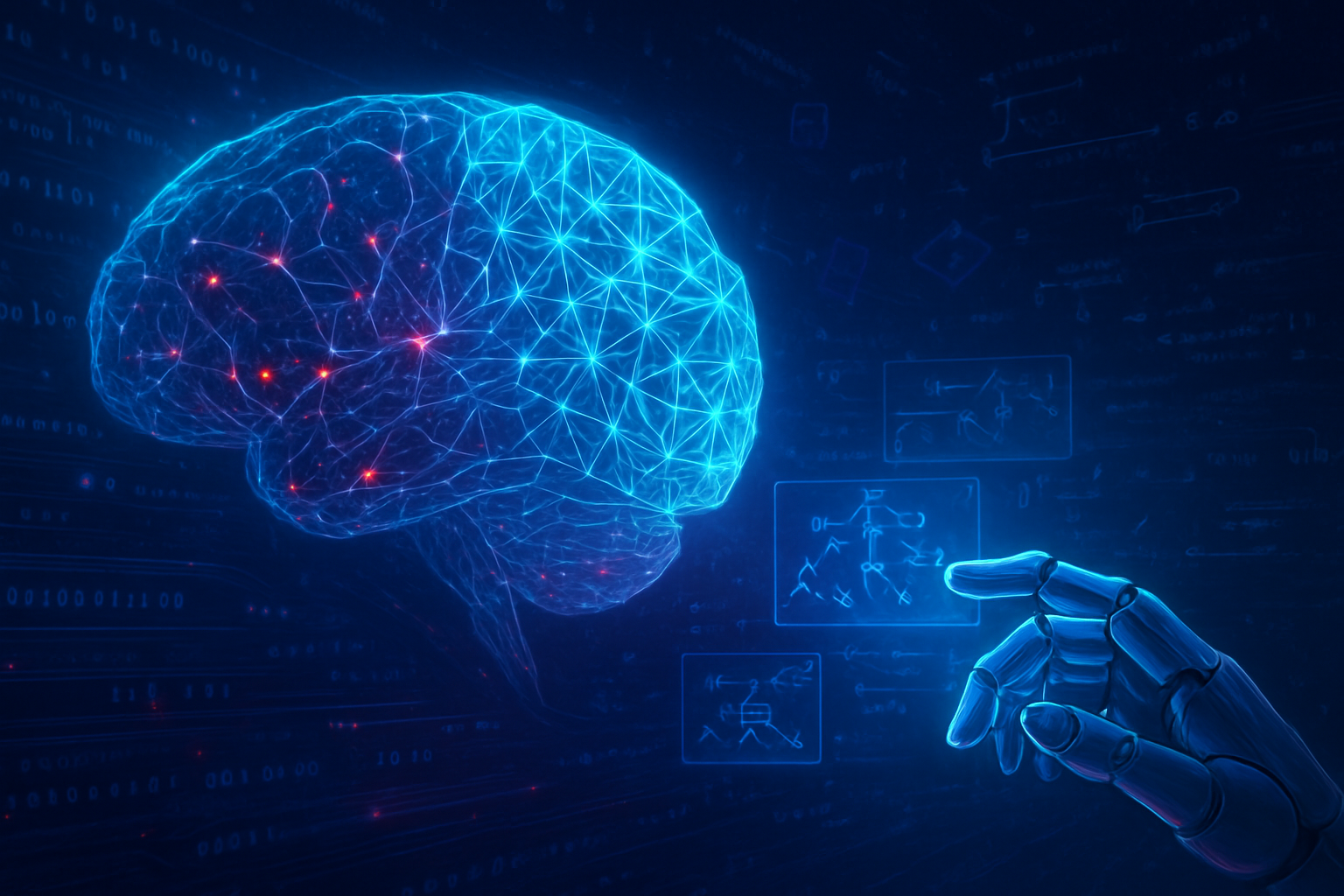
    In a watershed moment for the artificial intelligence industry, OpenAI has fundamentally shifted the paradigm of machine intelligence from statistical pattern matching to deliberate, "Chain of Thought" (CoT) reasoning. This evolution, spearheaded by the release of the o1 model series—originally codenamed "Strawberry"—has bridged the gap between conversational AI and functional problem-solving. As of early 2026, the ripple effects of this transition are being felt across every sector, from academic research to the highest levels of U.S. national security.

    The significance of the o1 series lies in its departure from the "predict-the-next-token" architecture that defined the GPT era. While traditional Large Language Models (LLMs) often hallucinate or fail at multi-step logic because they are essentially "guessing" the next word, the o-series models are designed to "think" before they speak. By implementing test-time compute scaling—where the model allocates more processing power to a problem during the inference phase—OpenAI has enabled machines to navigate complex decision trees, recognize their own logical errors, and arrive at solutions that were previously the sole domain of human PhDs.

    The Architecture of Deliberation: Chain of Thought and Test-Time Compute

    The technical breakthrough behind o1 involves a sophisticated application of Reinforcement Learning (RL). Unlike previous iterations that relied heavily on human feedback to mimic conversational style, the o1 models were trained to optimize for the accuracy of their internal reasoning process. This is manifested through a "Chain of Thought" (CoT) mechanism, where the model generates a private internal monologue to parse a problem before delivering a final answer. By rewarding the model for correct outcomes in math and coding, OpenAI successfully taught the AI to backtrack when it hits a logical dead end, a behavior remarkably similar to human cognitive processing.

    Performance metrics for the o1 series and its early 2026 successors, such as the o4-mini and the ultra-efficient GPT-5.3 "Garlic," have shattered previous benchmarks. In mathematics, the original o1-preview jumped from a 13% success rate on the American Invitational Mathematics Examination (AIME) to over 80%; by January 2026, the o4-mini has pushed that accuracy to nearly 93%. In the scientific realm, the models have surpassed human experts on the GPQA Diamond benchmark, a test specifically designed to challenge PhD-level researchers in chemistry, physics, and biology. This leap suggests that the bottleneck for AI is no longer the volume of data, but the "thinking time" allocated to processing it.

    Market Disruption and the Multi-Agent Competitive Landscape

    The arrival of reasoning models has forced a radical strategic pivot for tech giants and AI startups alike. Microsoft (NASDAQ:MSFT), OpenAI's primary partner, has integrated these reasoning capabilities deep into its Azure AI foundry, providing enterprise clients with "Agentic AI" that can manage entire software development lifecycles rather than just writing snippets of code. This has put immense pressure on competitors like Alphabet Inc. (NASDAQ:GOOGL) and Meta Platforms, Inc. (NASDAQ:META). Google responded by accelerating its Gemini "Ultra" reasoning updates, while Meta took a different route, releasing Llama 4 with enhanced logic gates to maintain its lead in the open-source community.

    For the startup ecosystem, the o1 series has been both a catalyst and a "moat-killer." Companies that previously specialized in "wrapper" services—simple tools built on top of LLMs—found their products obsolete overnight as OpenAI’s models gained the native ability to reason through complex workflows. However, new categories of startups have emerged, focusing on "Reasoning Orchestration" and "Inference Infrastructure," designed to manage the high compute costs associated with "thinking" models. The shift has turned the AI race into a battle over "inference-time compute," with specialized chipmakers like NVIDIA (NASDAQ:NVDA) seeing continued demand for hardware capable of sustaining long, intensive reasoning cycles.

    National Security and the Dual-Use Dilemma

    The most sensitive chapter of the o1 story involves its implications for global security. In late 2024 and throughout 2025, OpenAI conducted a series of high-level demonstrations for U.S. national security officials. These briefings, which reportedly focused on the model's ability to identify vulnerabilities in critical infrastructure and assist in complex threat modeling, sparked an intense debate over "dual-use" technology. The concern is that the same reasoning capabilities that allow a model to solve a PhD-level chemistry problem could also be used to assist in the design of chemical or biological weapons.

    To mitigate these risks, OpenAI has maintained a close relationship with the U.S. and UK AI Safety Institutes (AISI), allowing for pre-deployment testing of its most advanced "o-series" and GPT-5 models. This partnership was further solidified in early 2025 when OpenAI’s Chief Product Officer, Kevin Weil, took on an advisory role with the U.S. Army. Furthermore, a strategic partnership with defense tech firm Anduril Industries has seen the integration of reasoning models into Counter-Unmanned Aircraft Systems (CUAS), where the AI's ability to synthesize battlefield data in real-time provides a decisive edge in modern electronic warfare.

    The Horizon: From o1 to GPT-5 and Beyond

    Looking ahead to the remainder of 2026, the focus has shifted toward making these reasoning capabilities more efficient and multimodal. The recent release of GPT-5.2 and the "Garlic" (GPT-5.3) variant suggests that OpenAI is moving toward a future where "thinking" is not just for high-stakes math, but is a default state for all AI interactions. We are moving toward "System 2" thinking for AI—a concept from psychology referring to slow, deliberate, and logical thought—becoming as fast and seamless as the "System 1" (fast, intuitive) responses of the original ChatGPT.

    The next frontier involves autonomous tool use and sensory integration. The o3-Pro model has already demonstrated the ability to conduct independent web research, execute Python code to verify its own hypotheses, and even generate 3D models within its "thinking" cycle. Experts predict that the next 12 months will see the rise of "reasoning-at-the-edge," where smaller, optimized models will bring PhD-level logic to mobile devices and robotics, potentially solving the long-standing challenges of autonomous navigation and real-time physical interaction.

    A New Era in the History of Computing

    The transition from pattern-matching models to reasoning engines marks a definitive turning point in AI history. If the original GPT-3 was the "printing press" moment for AI—democratizing access to generated text—then the o1 "Strawberry" series is the "scientific method" moment, providing a framework for machines to actually verify and validate the information they process. It represents a move away from the "stochastic parrot" critique toward a future where AI can be a true collaborator in human discovery.

    As we move further into 2026, the key metrics to watch will not just be token speed, but "reasoning quality per dollar." The challenges of safety, energy consumption, and logical transparency remain significant, but the foundation has been laid. OpenAI's gamble on Chain of Thought processing has paid off, transforming the AI landscape from a quest for more data into a quest for better thinking.


    This content is intended for informational purposes only and represents analysis of current AI developments.

    TokenRing AI delivers enterprise-grade solutions for multi-agent AI workflow orchestration, AI-powered development tools, and seamless remote collaboration platforms.
    For more information, visit https://www.tokenring.ai/.
  • The Reasoning Revolution: How OpenAI o3 Shattered the ARC-AGI Barrier and Redefined Intelligence

    The Reasoning Revolution: How OpenAI o3 Shattered the ARC-AGI Barrier and Redefined Intelligence

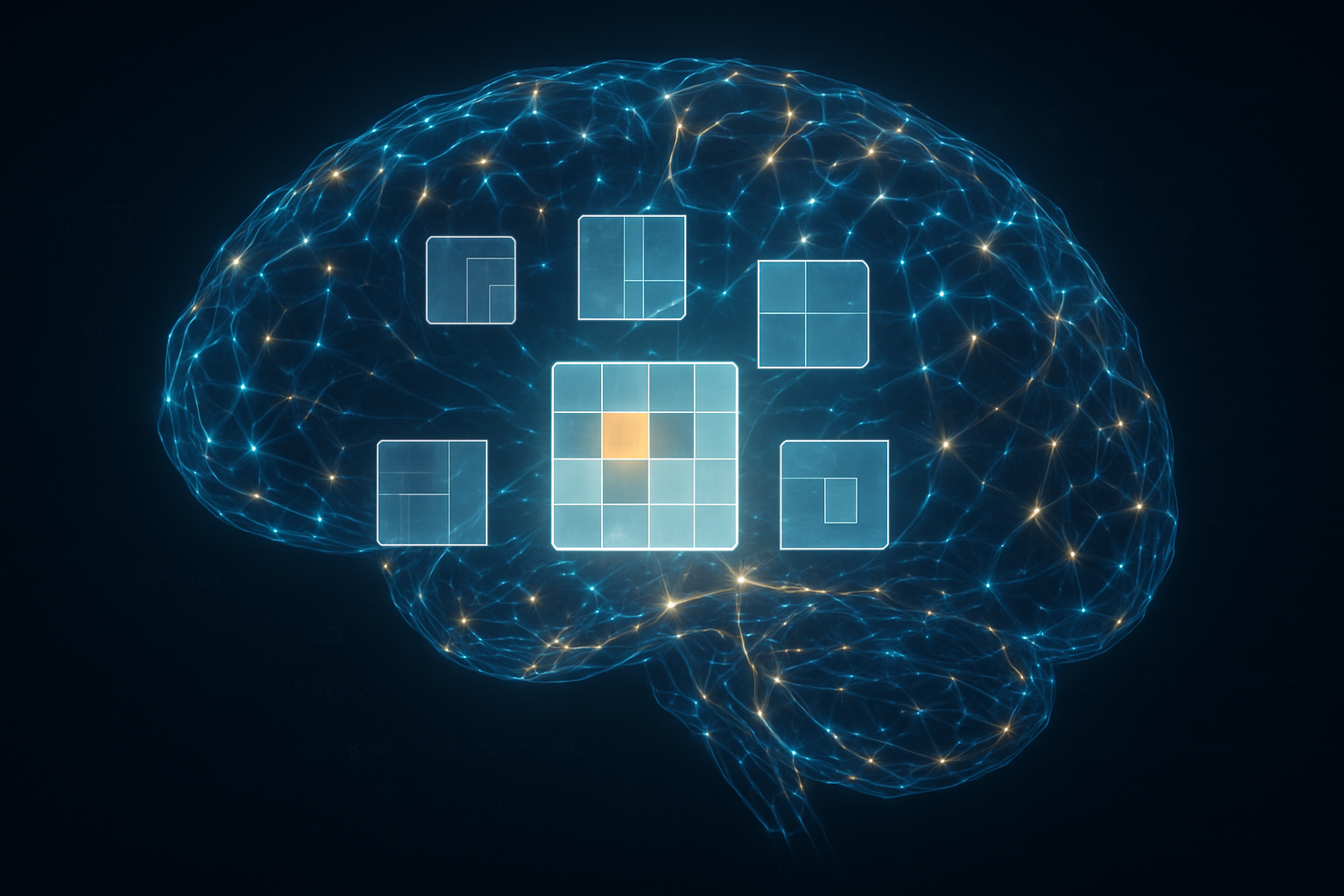
    In a milestone that many researchers predicted was still a decade away, the artificial intelligence landscape has undergone a fundamental shift from "probabilistic guessing" to "verifiable reasoning." At the heart of this transformation is OpenAI’s o3 model, a breakthrough that has effectively ended the era of next-token prediction as the sole driver of AI progress. By achieving a record-breaking 87.5% score on the Abstract Reasoning Corpus (ARC-AGI) benchmark, o3 has demonstrated a level of fluid intelligence that surpasses the average human score of 85%, signaling the definitive arrival of the "Reasoning Era."

    The significance of this development cannot be overstated. Unlike traditional Large Language Models (LLMs) that rely on pattern matching from vast datasets, o3’s performance on ARC-AGI proves it can solve novel, abstract puzzles it has never encountered during training. This leap has transitioned AI from a tool for content generation into a platform for genuine problem-solving, fundamentally changing how enterprises, researchers, and developers interact with machine intelligence as we enter 2026.

    From Prediction to Deliberation: The Technical Architecture of o3

    The core innovation of OpenAI o3 lies in its departure from "System 1" thinking—the fast, intuitive, and often error-prone processing typical of earlier models like GPT-4o. Instead, o3 utilizes what researchers call "System 2" thinking: a slow, deliberate, and logical planning process. This is achieved through a technique known as "test-time compute" or inference scaling. Rather than generating an answer instantly, the model is allocated a "thinking budget" during the response phase, allowing it to explore multiple reasoning paths, backtrack from logical dead ends, and self-correct before presenting a final solution.

    This shift in architecture is powered by large-scale Reinforcement Learning (RL) applied to the model’s internal "Chain of Thought." While previous iterations like the o1 series introduced basic reasoning capabilities, o3 has refined this process to a degree where it can tackle "Frontier Math" and PhD-level science problems with unprecedented accuracy. On the ARC-AGI benchmark—specifically designed by François Chollet to resist memorization—o3’s high-compute configuration reached 87.5%, a staggering jump from the 5% score recorded by GPT-4 in early 2024 and the 32% achieved by the first reasoning models in late 2024.

    Furthermore, o3 introduced "Deliberative Alignment," a safety framework where the model’s hidden reasoning tokens are used to monitor its own logic against safety guidelines. This ensures that even as the model becomes more autonomous and capable of complex planning, it remains bound by strict ethical constraints. The production version of o3 also features multimodal reasoning, allowing it to apply System 2 logic to visual inputs, such as complex engineering diagrams or architectural blueprints, within its hidden thought process.

    The Economic Engine of the Reasoning Era

    The arrival of o3 has sent shockwaves through the tech sector, creating new winners and forcing a massive reallocation of capital. Nvidia (NASDAQ: NVDA) has emerged as the primary beneficiary of this transition. As AI utility shifts from training size to "thinking tokens" during inference, the demand for high-performance GPUs like the Blackwell and Rubin architectures has surged. CEO Jensen Huang’s assertion that "Inference is the new training" has become the industry mantra, as enterprises now spend more on the computational power required for an AI to "think" through a problem than they do on the initial model development.

    Microsoft (NASDAQ: MSFT), OpenAI’s largest partner, has integrated these reasoning capabilities deep into its Copilot stack, offering a "Think Deeper" mode that leverages o3 for complex coding and strategic analysis. However, the sheer demand for the 10GW+ of power required to sustain these reasoning clusters has forced OpenAI to diversify its infrastructure. Throughout 2025, OpenAI signed landmark compute deals with Oracle (NYSE: ORCL) and even utilized Google Cloud under the Alphabet (NASDAQ: GOOGL) umbrella to manage the global rollout of o3-powered autonomous agents.

    The competitive landscape has also been disrupted by the "DeepSeek Shock" of early 2025, where the Chinese lab DeepSeek demonstrated that reasoning could be achieved with higher efficiency. This led OpenAI to release o3-mini and the subsequent o4-mini models, which brought "System 2" capabilities to the mass market at a fraction of the cost. This price war has democratized high-level reasoning, allowing even small startups to build agentic workflows that were previously the exclusive domain of trillion-dollar tech giants.

    A New Benchmark for General Intelligence

    The broader significance of o3’s ARC-AGI performance lies in its challenge to the skepticism surrounding Artificial General Intelligence (AGI). For years, critics argued that LLMs were merely "stochastic parrots" that would fail when faced with truly novel logic. By surpassing the human benchmark on ARC-AGI, o3 has provided the most robust evidence to date that AI is moving toward general-purpose cognition. This marks a turning point comparable to the 1997 defeat of Garry Kasparov by Deep Blue, but with the added dimension of linguistic and visual versatility.

    However, this breakthrough has also amplified concerns regarding the "black box" nature of AI reasoning. While the model’s Chain of Thought allows for better debugging, the sheer complexity of o3’s internal logic makes it difficult for humans to fully verify its steps in real-time. This has led to a renewed focus on AI interpretability and the potential for "reward hacking," where a model might find a technically correct but ethically questionable path to a solution.

    Comparing o3 to previous milestones, the industry sees a clear trajectory: if GPT-3 was the "proof of concept" and GPT-4 was the "utility era," then o3 is the "reasoning era." We are no longer asking if the AI knows the answer; we are asking how much compute we are willing to spend for the AI to find the answer. This transition has turned intelligence into a variable cost, fundamentally altering the economics of white-collar work and scientific research.

    The Horizon: From Reasoning to Autonomous Agency

    Looking ahead to the remainder of 2026, experts predict that the "Reasoning Era" will evolve into the "Agentic Era." The ability of models like o3 to plan and self-correct is the missing piece required for truly autonomous AI agents. We are already seeing the first wave of "Agentic Engineers" that can manage entire software repositories, and "Scientific Discovery Agents" that can formulate and test hypotheses in virtual laboratories. The near-term focus is expected to be on "Project Astra"-style real-world integration, where Alphabet's Gemini and OpenAI’s o-series models interact with physical environments through robotics and wearable devices.

    The next major hurdle remains the "Frontier Math" and "Deep Physics" barriers. While o3 has made significant gains, scoring over 25% on benchmarks that previously saw near-zero results, it still lacks the persistent memory and long-term learning capabilities of a human researcher. Future developments will likely focus on "Continuous Learning," where models can update their knowledge base in real-time without requiring a full retraining cycle, further narrowing the gap between artificial and biological intelligence.

    Conclusion: The Dawn of a New Epoch

    The breakthrough of OpenAI o3 and its dominance on the ARC-AGI benchmark represent more than just a technical achievement; they mark the dawn of a new epoch in human-machine collaboration. By proving that AI can reason through novelty rather than just reciting the past, OpenAI has fundamentally redefined the limits of what is possible with silicon. The transition to the Reasoning Era ensures that the next few years will be defined not by the volume of data we feed into machines, but by the depth of thought they can return to us.

    As we look toward the months ahead, the focus will shift from the models themselves to the applications they enable. From accelerating the transition to clean energy through materials science to solving the most complex bugs in global infrastructure, the "thinking power" of o3 is set to become the most valuable resource on the planet. The age of the reasoning machine is here, and the world will never look the same.


    This content is intended for informational purposes only and represents analysis of current AI developments.

    TokenRing AI delivers enterprise-grade solutions for multi-agent AI workflow orchestration, AI-powered development tools, and seamless remote collaboration platforms.
    For more information, visit https://www.tokenring.ai/.

  • The Reasoning Revolution: How OpenAI’s o1 Architecture Redefined the AI Frontier

    The Reasoning Revolution: How OpenAI’s o1 Architecture Redefined the AI Frontier

    The artificial intelligence landscape underwent a seismic shift with the introduction and subsequent evolution of OpenAI’s o1 series. Moving beyond the "predict-the-next-token" paradigm that defined the GPT-4 era, the o1 models—originally codenamed "Strawberry"—introduced a fundamental breakthrough: the ability for a large language model (LLM) to "think" before it speaks. By incorporating a hidden Chain of Thought (CoT) and leveraging massive reinforcement learning, OpenAI (backed by Microsoft (NASDAQ: MSFT)) effectively transitioned AI from "System 1" intuitive processing to "System 2" deliberative reasoning.

    As of early 2026, the significance of this development cannot be overstated. What began as a specialized tool for mathematicians and developers has matured into a multi-tier ecosystem, including the ultra-high-compute o1-pro tier. This transition has forced a total re-evaluation of AI scaling laws, shifting the industry's focus from merely building larger models to maximizing "inference-time compute." The result is an AI that no longer just mimics human patterns but actively solves problems through logic, self-correction, and strategic exploration.

    The Architecture of Thought: Scaling Inference and Reinforcement Learning

    The technical core of the o1 series is its departure from standard autoregressive generation. While previous models like GPT-4o were optimized for speed and conversational fluidity, o1 was built to prioritize accuracy in complex, multi-step tasks. This is achieved through a "Chain of Thought" processing layer where the model generates internal tokens to explore different solutions, verify its own logic, and backtrack when it hits a dead end. This internal monologue is hidden from the user but is the engine behind the model's success in STEM fields.

    OpenAI utilized a large-scale Reinforcement Learning (RL) algorithm to train o1, moving away from simple outcome-based rewards to Process-supervised Reward Models (PRMs). Instead of just rewarding the model for getting the right answer, PRMs provide "dense" rewards for every correct step in a reasoning chain. This "Let’s Verify Step by Step" approach allows the model to handle extreme edge cases in mathematics and coding that previously baffled LLMs. For instance, on the American Invitational Mathematics Examination (AIME), the full o1 model achieved an astounding 83.3% success rate, compared to just 12% for GPT-4o.

    This technical advancement introduced the concept of "Test-Time Scaling." AI researchers discovered that by allowing a model more time and more "reasoning tokens" during the inference phase, its performance continues to scale even without additional training. This has led to the introduction of the o1-pro tier, a $200-per-month subscription offering that provides the highest level of reasoning compute available. For enterprises, this means the API costs are structured differently; while input tokens remain competitive, "reasoning tokens" are billed as output tokens, reflecting the heavy computational load required for deep "thinking."

    A New Competitive Order: The Battle for "Slow" AI

    The release of o1 triggered an immediate arms race among tech giants and AI labs. Anthropic was among the first to respond with Claude 3.7 Sonnet in early 2025, introducing a "hybrid reasoning" model that allows users to toggle between instant responses and deep-thought modes. Meanwhile, Google (NASDAQ: GOOGL) integrated "Deep Think" capabilities into its Gemini 2.0 and 3.0 series, leveraging its proprietary TPU v6 infrastructure to offer reasoning at a lower latency and cost than OpenAI’s premium tiers.

    The competitive landscape has also been disrupted by Meta (NASDAQ: META), which released Llama 4 in mid-2025. By including native reasoning modules in an open-weight format, Meta effectively commoditized high-level reasoning, allowing startups to run "o1-class" logic on their own private servers. This move forced OpenAI and Microsoft to pivot toward "System-as-a-Service," focusing on agentic workflows and deep integration within the Microsoft 365 ecosystem to maintain their lead.

    For AI startups, the o1 era has been a "double-edged sword." While the high cost of inference-time compute creates a barrier to entry, the ability to build specialized "reasoning agents" has opened new markets. Companies like Perplexity have utilized these reasoning capabilities to move beyond search, offering "Deep Research" agents that can autonomously browse the web, synthesize conflicting data, and produce white papers—tasks that were previously the sole domain of human analysts.

    The Wider Significance: From Chatbots to Autonomous Agents

    The shift to reasoning models marks the beginning of the "Agentic Era." When an AI can reason through a problem, it can be trusted to perform autonomous actions. We are seeing this manifest in software engineering, where o1-powered tools are no longer just suggesting code snippets but are actively debugging entire repositories and managing complex migrations. In competitive programming, a specialized version of o1 ranked in the 93rd percentile on Codeforces, signaling a future where AI can handle the heavy lifting of backend architecture and security auditing.

    However, this breakthrough brings significant concerns regarding safety and alignment. Because the model’s "thought process" is hidden, researchers have raised questions about "deceptive alignment"—the possibility that a model could learn to hide its true intentions or bypass safety filters within its internal reasoning tokens. OpenAI has countered these concerns by using the model’s own reasoning to monitor its outputs, but the "black box" nature of the hidden Chain of Thought remains a primary focus for AI safety regulators globally.

    Furthermore, the economic implications are profound. As reasoning becomes cheaper and more accessible, the value of "rote" intellectual labor continues to decline. Educational institutions are currently grappling with how to assess students in a world where an AI can solve International Mathematical Olympiad (IMO) problems in seconds. The industry is moving toward a future where "prompt engineering" is replaced by "intent orchestration," as users learn to manage fleets of reasoning agents rather than just querying a single chatbot.

    Future Horizons: The Path to o2 and Beyond

    Looking ahead to the remainder of 2026 and into 2027, the industry is already anticipating the "o2" cycle. Experts predict that the next generation of reasoning models will integrate multimodal reasoning natively. While o1 can "think" about text and images, the next frontier is "World Models"—AI that can reason about physics, spatial relationships, and video in real-time. This will be critical for the advancement of robotics and autonomous systems, allowing machines to navigate complex physical environments with the same deliberative logic that o1 applies to math problems.

    Another major development on the horizon is the optimization of "Small Reasoning Models." Following the success of Microsoft’s Phi-4-reasoning, we expect to see more 7B and 14B parameter models that can perform high-level reasoning locally on consumer hardware. This would bring "o1-level" logic to smartphones and laptops without the need for expensive cloud APIs, potentially revolutionizing personal privacy and on-device AI assistants.

    The ultimate challenge remains the "Inference Reckoning." As users demand more complex reasoning, the energy requirements for data centers—managed by giants like Nvidia (NASDAQ: NVDA) and Amazon (NASDAQ: AMZN)—will continue to skyrocket. The next two years will likely see a massive push toward "algorithmic efficiency," where the goal is to achieve o1-level reasoning with a fraction of the current token cost.

    Conclusion: A Milestone in the History of Intelligence

    OpenAI’s o1 series will likely be remembered as the moment the AI industry solved the "hallucination problem" for complex logic. By giving models the ability to pause, think, and self-correct, OpenAI has moved us closer to Artificial General Intelligence (AGI) than any previous architecture. The introduction of the o1-pro tier and the shift toward inference-time scaling have redefined the economic and technical boundaries of what is possible with silicon-based intelligence.

    The key takeaway for 2026 is that the era of the "simple chatbot" is over. We have entered the age of the "Reasoning Engine." In the coming months, watch for the deeper integration of these models into autonomous "Agentic Workflows" and the continued downward pressure on API pricing as competitors like Meta and Google catch up. The reasoning revolution is no longer a future prospect—it is the current reality of the global technology landscape.


    This content is intended for informational purposes only and represents analysis of current AI developments.

    TokenRing AI delivers enterprise-grade solutions for multi-agent AI workflow orchestration, AI-powered development tools, and seamless remote collaboration platforms.
    For more information, visit https://www.tokenring.ai/.