Tag: Regulation

  • Apple’s High-Stakes Legal Battle: A Defining Moment for Big Tech Regulation

    Apple’s High-Stakes Legal Battle: A Defining Moment for Big Tech Regulation

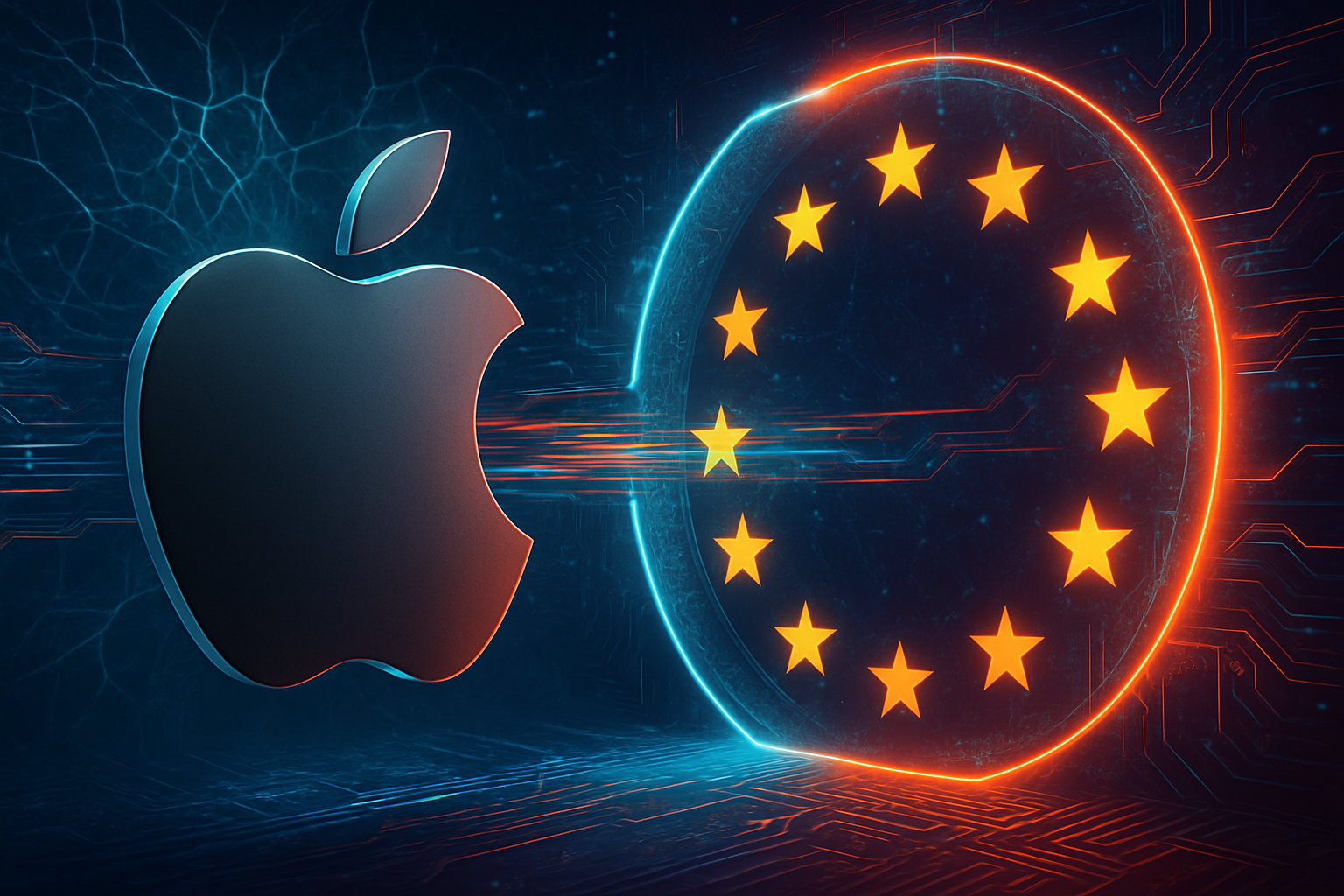
    In a landmark legal confrontation, Apple Inc. (NASDAQ: AAPL) has launched a comprehensive challenge against the European Union's ambitious Digital Markets Act (DMA), setting the stage for an unprecedented antitrust court test that could reshape the global regulatory landscape for technology giants. As of October 21, 2025, Apple's lawyers are presenting oral arguments before the EU's General Court in Luxembourg, initiating its broadest legal attack yet on a regulation designed to curb the power of "gatekeeper" platforms. This legal battle is not merely about a single company; it represents a pivotal moment in the ongoing struggle between national sovereignty and corporate control over the digital economy, with profound implications for innovation, competition, and consumer choice.

    The immediate significance of this challenge is immense. The outcome will not only dictate the future of Apple's tightly controlled ecosystem in the EU but also establish crucial precedents for how the DMA, and potentially similar regulations worldwide, are enforced. A favorable ruling for Apple could weaken the EU's regulatory teeth, while an EU victory would solidify its position as a global leader in digital antitrust, forcing significant changes across the tech industry.

    The Legal Gauntlet: Apple's Core Arguments Against the DMA

    Apple's legal offensive is multifaceted, targeting key provisions of the DMA that the company argues are "hugely onerous and intrusive" and threaten its foundational principles of user privacy, security, and intellectual property. The Digital Markets Act, largely applicable since May 2023, identifies dominant online platforms like Apple as "gatekeepers" and imposes specific "do's and don'ts" to prevent anti-competitive practices, such as favoring their own services or locking in users and businesses. The EU's motivation stems from a desire to foster a fairer digital economy and counter what it perceives as the "supernormal profits" derived from gatekeepers' control over their ecosystems.

    Central to Apple's challenge are three primary areas:

    1. Interoperability Requirements: Apple vehemently contests obligations demanding its iPhone hardware and services interoperate with competing third-party devices. The company argues that mandated interoperability with "unknown or unvetted hardware classes" could severely compromise user privacy and security, exposing iPhone users to malware and data breaches. Apple claims these requirements would force it to share sensitive user data and violate its intellectual property, which is integral to the iOS security architecture.
    2. App Store Designation: Apple disputes the European Commission's decision to classify the App Store as a core platform service under the DMA. The company maintains that the App Store does not fit the statute's definition of a single unified service for DMA purposes. This argument is particularly critical given a €500 million fine imposed on Apple in April 2025 for violating DMA anti-steering provisions, which prevented app developers from directing consumers to offers outside Apple's payment system. Apple is appealing both the designation and the penalty.
    3. iMessage Probe: Apple also challenges the procedural propriety of the EU's earlier inquiry into whether iMessage should be designated as a core platform service. Although the Commission ultimately decided against full DMA obligations for iMessage, Apple argues that initiating the investigation itself was improper.

    Apple's legal counsel, Daniel Beard, has asserted that the DMA's demands "ignore the protection of property rights and issues of privacy and security, which are vital to EU citizens." Furthermore, Apple claims the law has hindered its ability to roll out new features, such as enhanced Siri capabilities and Apple Intelligence integrations, in the EU, suggesting a chilling effect on innovation. This contrasts sharply with the EU's stance, which dismisses Apple's security concerns, stating that "nothing in the DMA requires companies to lower their privacy standards, their security standards."

    Reshaping the Competitive Landscape: Implications for Big Tech and Startups

    The outcome of Apple's legal challenge carries significant competitive implications for not only Apple (NASDAQ: AAPL) but also other designated gatekeepers such as Alphabet (NASDAQ: GOOGL), Amazon (NASDAQ: AMZN), ByteDance, Meta Platforms (NASDAQ: META), Microsoft (NASDAQ: MSFT), and Booking Holdings (NASDAQ: BKNG). A ruling upholding the DMA would likely force Apple to open up its ecosystem further, leading to potential disruptions in its existing business models and revenue streams, particularly from the App Store. This could manifest as increased competition in app distribution, payment processing, and hardware accessories, potentially eroding Apple's walled-garden advantage.

    For other tech giants, an EU victory would reinforce the precedent that regulators are willing and able to impose stringent controls on market-dominant platforms. This could accelerate similar legislative efforts globally and encourage more aggressive enforcement of existing antitrust laws. Companies like Alphabet and Meta, also subject to DMA obligations, would face renewed pressure to comply with provisions like allowing greater interoperability and enabling alternative app stores or payment systems.

    Conversely, a win for Apple could embolden other gatekeepers to challenge DMA provisions, potentially slowing down or even derailing the EU's broader digital market reform agenda. This scenario might allow major tech companies to maintain their current market positioning and strategic advantages, continuing to leverage their ecosystem control to promote their own services. For startups and smaller developers, the DMA promises a fairer playing field, with greater access to users and reduced reliance on gatekeeper platforms. If Apple's challenge succeeds, these benefits could be delayed or diminished, perpetuating the existing power imbalances in the digital economy.

    A Broader Battle: Digital Sovereignty and Global Regulation

    Apple's legal fight is more than just a corporate dispute; it is a critical front in the broader global trend towards increased regulation of Big Tech. The DMA itself is a cornerstone of the EU's strategy to assert digital sovereignty and create a more integrated Digital Single Market. This case will test the limits of that ambition and potentially influence similar legislative initiatives in the United States, the UK, and other jurisdictions grappling with the market power of tech giants.

    The debate centers on balancing innovation with competition and consumer welfare. While Apple warns of compromised security and privacy, the EU maintains that the DMA aims to enhance consumer choice, foster innovation by smaller businesses, and ultimately lead to better and more affordable services. This clash highlights fundamental differences in regulatory philosophies, with the EU prioritizing market contestability and user empowerment, while Apple emphasizes its proprietary ecosystem as a guarantor of quality and security.

    This legal battle can be compared to historical antitrust milestones, such as the U.S. government's case against Microsoft in the late 1990s, which ultimately led to significant changes in how the company operated. While the specific context differs, both cases represent a governmental effort to rein in dominant technology companies perceived as stifling competition. The outcome here will signal whether regulators can effectively challenge the pervasive influence of today's tech behemoths or if corporate power will continue to outpace legislative efforts.

    The Road Ahead: Long-Term Implications and Expert Predictions

    The legal proceedings are expected to be lengthy. While oral arguments are underway as of October 21, 2025, a decision from the EU's General Court is not anticipated for another 12-18 months. Any ruling is almost certain to be appealed to the EU's highest court, the Court of Justice of the European Union, meaning a final resolution could take several years. This extended timeline creates a period of uncertainty for Apple and other gatekeepers, potentially delaying strategic decisions and product roadmaps in the EU.

    Should the DMA's provisions be upheld, Apple would likely be forced to implement significant changes. This could include allowing third-party app stores on iOS devices, enabling alternative payment systems within apps without incurring Apple's commission, and opening up its hardware and software to greater interoperability with competing products. These changes could lead to new applications and use cases, fostering a more diverse and competitive mobile ecosystem. Challenges will include ensuring that any mandated openness does not genuinely compromise user security or experience, a balance that both regulators and tech companies will need to address.

    Experts predict a tough fight for Apple, given the EU's strong track record in antitrust enforcement and its clear legislative intent behind the DMA. However, Apple's legal team is formidable, and its arguments regarding security and privacy resonate with many consumers. What happens next will largely depend on the General Court's interpretation of the DMA's scope and its assessment of Apple's claims regarding the law's impact on its intellectual property and security architecture. The ongoing transatlantic tensions regarding digital regulation also suggest that the political ramifications of this case will extend far beyond the courtroom.

    A Defining Chapter in Digital Regulation

    Apple's legal challenge against the EU's Digital Markets Act marks a defining chapter in the history of digital regulation. The core takeaway is the fundamental clash between a powerful corporation's control over its ecosystem and a sovereign entity's ambition to foster a fairer, more open digital market. The significance of this development in AI and tech history cannot be overstated; it represents a major stress test for modern antitrust law in the face of increasingly integrated and dominant digital platforms.

    The long-term impact will reverberate across the tech industry, influencing how companies design products, interact with developers, and compete for users. Should the EU prevail, it will solidify its reputation as the world's leading tech regulator, potentially inspiring similar legislation globally. If Apple finds success, it could slow down the momentum of such regulatory efforts, raising questions about the efficacy of antitrust laws in the digital age.

    In the coming weeks and months, all eyes will be on the proceedings in Luxembourg, as well as any further enforcement actions by the European Commission against Apple or other gatekeepers. The legal arguments, expert testimonies, and ultimately, the court's decision, will provide invaluable insights into the future direction of digital market governance and the delicate balance between corporate innovation and public interest.


    This content is intended for informational purposes only and represents analysis of current AI developments.

    TokenRing AI delivers enterprise-grade solutions for multi-agent AI workflow orchestration, AI-powered development tools, and seamless remote collaboration platforms.
    For more information, visit https://www.tokenring.ai/.

  • Semiconductor Sector in Flux: Extreme Volatility and the Geopolitical Chessboard

    Semiconductor Sector in Flux: Extreme Volatility and the Geopolitical Chessboard

    The global semiconductor industry has been a hotbed of extreme stock volatility between 2023 and 2025, driven by an unprecedented confluence of factors including the artificial intelligence (AI) boom, dynamic supply chain shifts, and escalating geopolitical tensions. While established giants like Nvidia and TSMC have seen their valuations soar and dip dramatically, smaller players like India's RRP Semiconductor Limited (BSE: RRP; NSE: RRPSEM) have also experienced parabolic growth, highlighting the speculative fervor and strategic importance of this critical sector. This period has not only reshaped market capitalization but has also prompted significant regulatory interventions, particularly from the United States, aimed at securing technological leadership and supply chain resilience.

    The rapid fluctuations underscore the semiconductor industry's pivotal role in the modern economy, acting as the foundational technology for everything from consumer electronics to advanced AI systems and defense applications. The dramatic swings in stock prices reflect both the immense opportunities presented by emerging technologies like generative AI and the profound risks associated with global economic uncertainty and a fragmented geopolitical landscape. As nations vie for technological supremacy, the semiconductor market has become a battleground, with direct implications for corporate strategies, national security, and global trade.

    Unpacking the Technical Tides and Market Swings

    The period from 2023 to 2025 has been characterized by a complex interplay of technological advancements and market corrections within the semiconductor space. The Morningstar Global Semiconductors Index surged approximately 161% from May 2023 through January 2025, only to experience a sharp 17% decline within two months, before rebounding strongly in the summer of 2025. This roller-coaster ride is indicative of the speculative nature surrounding AI-driven demand and the underlying supply-side challenges.

    At the heart of this volatility are the cutting-edge advancements in Graphics Processing Units (GPUs) and specialized AI accelerators. Companies like Nvidia Corporation (NASDAQ: NVDA) have been central to the AI revolution, with its GPUs becoming the de facto standard for training large language models. Nvidia's stock experienced phenomenal growth, at one point making it one of the world's most valuable companies, yet it also faced significant single-day losses, such as a 17% drop (USD 590 billion) on January 27, 2025, following the announcement of a new Chinese generative AI model, DeepSeek. This illustrates how rapidly market sentiment can shift in response to competitive developments. Taiwan Semiconductor Manufacturing Company Limited (NYSE: TSM), as the dominant foundry for advanced chips, also saw its stock gain nearly 85% from February 2024 to February 2025, riding the AI wave but remaining vulnerable to geopolitical tensions and supply chain disruptions.

    The technical differences from previous market cycles are profound. Unlike past boom-bust cycles driven by PC or smartphone demand, the current surge is fueled by AI, which requires vastly more sophisticated and power-efficient chips, pushing the boundaries of Moore's Law. This has led to a concentration of demand for specific high-end chips and a greater reliance on a few advanced foundries. While companies like Broadcom Inc. (NASDAQ: AVGO) also saw significant gains, others with industrial exposure, such as Texas Instruments Incorporated (NASDAQ: TXN) and Analog Devices, Inc. (NASDAQ: ADI), experienced a severe downturn in 2023 and 2024 due to inventory corrections from over-ordering during the earlier global chip shortage. The AI research community and industry experts have largely welcomed the innovation but expressed concerns about the sustainability of growth and the potential for market overcorrection, especially given the intense capital expenditure required for advanced fabrication.

    Competitive Implications and Market Repositioning

    The extreme volatility and regulatory shifts have profound implications for AI companies, tech giants, and startups alike. Companies that control advanced chip design and manufacturing, like Nvidia and TSMC, stand to benefit immensely from the sustained demand for AI hardware. Nvidia's strategic advantage in AI GPUs has solidified its position, while TSMC's role as the primary fabricator of these advanced chips makes it indispensable, albeit with heightened geopolitical risks. Conversely, companies heavily reliant on these advanced chips face potential supply constraints and increased costs, impacting their ability to scale AI operations.

    The competitive landscape for major AI labs and tech companies is intensely affected. Access to cutting-edge semiconductors is now a strategic imperative, driving tech giants like Google, Amazon, and Microsoft to invest heavily in custom AI chip development and secure long-term supply agreements. This vertical integration aims to reduce reliance on external suppliers and optimize hardware for their specific AI workloads. For startups, securing access to scarce high-performance chips can be a significant barrier to entry, potentially consolidating power among larger, more established players.

    Potential disruption to existing products and services is also evident. Companies unable to adapt to the latest chip technologies or secure sufficient supply may find their AI models and services falling behind competitors. This creates a powerful incentive for innovation but also a risk of obsolescence. Market positioning and strategic advantages are increasingly defined by control over the semiconductor value chain, from design and intellectual property to manufacturing and packaging. The drive for domestic chip production, spurred by government initiatives, is also reshaping supply chains, creating new opportunities for regional players and potentially diversifying the global manufacturing footprint away from its current concentration in East Asia.

    Wider Significance in the AI Landscape

    The semiconductor sector's volatility and the subsequent regulatory responses are deeply intertwined with the broader AI landscape and global technological trends. This period marks a critical phase where AI transitions from a niche research area to a fundamental driver of economic growth and national power. The ability to design, manufacture, and deploy advanced AI chips is now recognized as a cornerstone of national security and economic competitiveness. The impacts extend beyond the tech industry, influencing geopolitical relations, trade policies, and even military capabilities.

    Potential concerns are manifold. The concentration of advanced chip manufacturing in a few regions, particularly Taiwan, poses significant geopolitical risks. Any disruption due to conflict or natural disaster could cripple global technology supply chains, with devastating economic consequences. Furthermore, the escalating "chip war" between the U.S. and China raises fears of technological balkanization, where different standards and supply chains emerge, hindering global innovation and cooperation. The U.S. export controls on China, which have been progressively tightened since October 2022 and expanded in November 2024 and January 2025, aim to curb China's access to advanced computing chips and AI model weights, effectively slowing its AI development.

    Comparisons to previous AI milestones reveal a shift in focus from software algorithms to the underlying hardware infrastructure. While early AI breakthroughs were often about novel algorithms, the current era emphasizes the sheer computational power required to train and deploy sophisticated models. This makes semiconductor advancements not just enabling but central to the progress of AI itself. The CHIPS Act in the U.S., with its substantial $348 billion investment, and similar initiatives globally, underscore the recognition that domestic chip manufacturing is a strategic imperative, akin to previous national efforts in space exploration or nuclear technology.

    Charting Future Developments

    Looking ahead, the semiconductor industry is poised for continued rapid evolution, albeit within an increasingly complex geopolitical framework. Near-term developments are expected to focus on further advancements in chip architecture, particularly for AI acceleration, and the ongoing diversification of supply chains. We can anticipate more localized manufacturing hubs emerging in the U.S. and Europe, driven by government incentives and the imperative for resilience. The integration of advanced packaging technologies and heterogeneous computing will also become more prevalent, allowing for greater performance and efficiency.

    In the long term, potential applications and use cases on the horizon include pervasive AI in edge devices, autonomous systems, and advanced scientific computing. The demand for specialized AI chips will only intensify as AI permeates every aspect of society. Challenges that need to be addressed include the immense capital costs of building and operating advanced fabs, the scarcity of skilled labor, and the environmental impact of chip manufacturing. The geopolitical tensions are unlikely to abate, meaning companies will need to navigate an increasingly fragmented global market with varying regulatory requirements.

    Experts predict a bifurcated future: one where innovation continues at a breakneck pace, driven by fierce competition and demand for AI, and another where national security concerns dictate trade policies and supply chain structures. The delicate balance between fostering open innovation and protecting national interests will be a defining feature of the coming years. What experts universally agree on is that semiconductors will remain at the heart of technological progress, making their stability and accessibility paramount for global advancement.

    A Critical Juncture for Global Technology

    The period of extreme stock volatility in semiconductor companies, exemplified by the meteoric rise of RRP Semiconductor Limited and the dramatic swings of industry titans, marks a critical juncture in AI history. It underscores the profound economic and strategic importance of semiconductor technology in the age of artificial intelligence. The subsequent regulatory responses, particularly from the U.S. government, highlight a global shift towards securing technological sovereignty and de-risking supply chains, often at the expense of previously integrated global markets.

    The key takeaways from this tumultuous period are clear: the AI boom has created unprecedented demand for advanced chips, leading to significant market opportunities but also intense speculative behavior. Geopolitical tensions have transformed semiconductors into a strategic commodity, prompting governments to intervene with export controls, subsidies, and calls for domestic manufacturing. The significance of this development in AI history cannot be overstated; it signifies that the future of AI is not just about algorithms but equally about the hardware that powers them, and the geopolitical struggles over who controls that hardware.

    What to watch for in the coming weeks and months includes the effectiveness of new regulatory frameworks (like the U.S. export controls effective April 1, 2025), the progress of new fab constructions in the U.S. and Europe, and how semiconductor companies adapt their global strategies to navigate a more fragmented and politically charged landscape. The ongoing interplay between technological innovation, market dynamics, and government policy will continue to shape the trajectory of the semiconductor industry and, by extension, the entire AI-driven future.


    This content is intended for informational purposes only and represents analysis of current AI developments.

    TokenRing AI delivers enterprise-grade solutions for multi-agent AI workflow orchestration, AI-powered development tools, and seamless remote collaboration platforms.
    For more information, visit https://www.tokenring.ai/.

  • News Corp Declares ‘Grand Theft Australia’ on AI Firms, Demanding Copyright Accountability

    News Corp Declares ‘Grand Theft Australia’ on AI Firms, Demanding Copyright Accountability

    Melbourne, Australia – October 8, 2025 – In a powerful address today, News Corp Australasia executive chairman Michael Miller issued a stark warning to artificial intelligence (AI) firms, accusing them of committing "Grand Theft Australia" by illicitly leveraging copyrighted content to train their sophisticated models. Speaking at the Melbourne Press Club, Miller's pronouncement underscores a burgeoning global conflict between content creators and the rapidly advancing AI industry over intellectual property rights, demanding urgent government intervention and a re-evaluation of how AI consumes and profits from creative works.

    News Corp's (NASDAQ: NWS) (ASX: NWS) strong stance highlights a critical juncture in the evolution of AI, where the technological prowess of generative models clashes with established legal frameworks designed to protect creators. The media giant's aggressive push for accountability signals a potential paradigm shift, forcing AI developers to confront the ethical and legal implications of their data sourcing practices and potentially ushering in an era of mandatory licensing and fair compensation for the vast datasets fueling AI innovation.

    The Digital Plunder: News Corp's Stance on AI's Content Consumption

    News Corp's core grievance centers on the widespread, unauthorized practice of text and data mining (TDM), where AI systems "hoover up" vast quantities of copyrighted material—ranging from news articles and literary works to cultural expressions—without explicit permission or remuneration. Michael Miller characterized this as a "second 'big steal'," drawing a pointed parallel to the early digital age when tech platforms allegedly built their empires on the uncompensated use of others' content. The company vehemently opposes any proposed "text and data mining exception" to Australia's Copyright Act, arguing that such a legislative change would effectively legalize this "theft" and undermine the very foundation of creative industries.

    This position is further reinforced by News Corp CEO Robert Thomson's earlier warnings. In August 2025, Thomson famously described the exploitation of intellectual property by AI as "vandalising virtuosity," questioning the use of copyrighted books, such as Donald Trump's "The Art of the Deal," to train AI models without consent. He likened it to "the art of the steal," emphasizing that the current approach by many AI firms bypasses the fundamental principle of intellectual property. Unlike previous technological shifts that sought to digitize and distribute content, the current AI paradigm involves ingesting and transforming content into new outputs, raising complex questions about originality, derivation, and the rights of the original creators. This approach significantly differs from traditional content aggregation or search indexing, where content is typically linked or excerpted rather than fully absorbed and re-synthesized. Initial reactions from the creative community have largely echoed News Corp's concerns, with many artists, writers, and journalists expressing alarm over the potential devaluation of their work.

    Reshaping the AI Landscape: Implications for Tech Giants and Startups

    News Corp's aggressive posture carries significant implications for AI companies, tech giants, and burgeoning startups alike. The company's "woo and sue" strategy is a dual-pronged approach: on one hand, it involves forming strategic partnerships, such as the multi-year licensing deal with OpenAI (OpenAI) to use News Corp's current and archived content. This suggests a pathway for AI companies to legitimately access high-quality data. On the other hand, News Corp is actively pursuing legal action against firms it accuses of copyright infringement. Dow Jones and the New York Post, both News Corp-owned entities, sued Perplexity AI (Perplexity AI) in October 2024 for alleged misuse of articles, while Brave (Brave) has been accused of monetizing widespread IP theft.

    This dual strategy is likely to compel AI developers to reconsider their data acquisition methods. Companies that have historically relied on scraping the open web for training data may now face increased legal risks and operational costs as they are forced to seek licensing agreements. This could lead to a competitive advantage for firms willing and able to invest in legitimate content licensing, while potentially disrupting smaller startups that lack the resources for extensive legal battles or licensing fees. The market could see a pivot towards training models on public domain content, synthetically generated data, or exclusively licensed datasets, which might impact the diversity and quality of AI model outputs. Furthermore, News Corp's actions could set a precedent, influencing how other major content owners approach AI companies and potentially leading to a broader industry shift towards a more regulated, compensation-based model for AI training data.

    A Global Call for Fair Play: Wider Significance in the AI Era

    The "Grand Theft Australia" warning is not an isolated incident but rather a significant development within the broader global debate surrounding generative AI and intellectual property rights. It underscores a fundamental tension between the rapid pace of technological innovation and the need to uphold the rights of creators, ensuring that the economic benefits of AI are shared equitably. News Corp frames this issue as crucial for safeguarding Australia's cultural and creative sovereignty, warning that surrendering intellectual property to large language models would lead to "less media, less Australian voices, and less Australian stories," thereby eroding national culture and identity.

    This situation resonates with ongoing discussions in other jurisdictions, where content creators and media organizations are lobbying for stronger copyright protections against AI. The impacts extend beyond mere financial compensation; they touch upon the future viability of journalism, literature, and artistic expression. The potential for AI to dilute the value of human-created content or even replace creative jobs without proper ethical and legal frameworks is a significant concern. Comparisons to previous AI milestones, such as the rise of deep learning or the advent of autonomous systems, often focused on technical capabilities. However, the current debate around copyright highlights the profound societal and economic implications that AI's integration into daily life brings, demanding a more holistic regulatory response than ever before.

    Charting the Future: Regulation, Licensing, and the Path Forward

    Looking ahead, the "Grand Theft Australia" declaration is poised to accelerate developments in AI regulation and content licensing. In the near term, we can anticipate intensified lobbying efforts both for and against text and data mining exceptions in Australia and other nations. The outcomes of News Corp's ongoing lawsuits against AI firms like Perplexity AI and Brave will be closely watched, as they could establish crucial legal precedents for defining "fair use" in the context of AI training data. These legal battles will test the boundaries of existing copyright law and likely shape future legislative amendments.

    In the long term, experts predict a growing movement towards more robust and standardized licensing models for AI training data. This could involve the development of new market mechanisms for content creators to license their work to AI developers, potentially creating new revenue streams for industries currently struggling with digital monetization. However, significant challenges remain, including establishing fair market rates for content, developing effective tracking and attribution systems for AI-generated outputs, and balancing the imperative for AI innovation with the protection of intellectual property. Policymakers face the complex task of crafting regulations that foster technological advancement while simultaneously safeguarding creative industries and ensuring ethical AI development. The discussions initiated by News Corp's warning are likely to contribute significantly to the global discourse on responsible AI governance.

    A Defining Moment for AI and Intellectual Property

    News Corp's "Grand Theft Australia" warning marks a pivotal moment in the ongoing narrative of artificial intelligence. It serves as a powerful reminder that while AI's technological capabilities continue to expand at an unprecedented rate, the fundamental principles of intellectual property, fair compensation, and ethical data usage cannot be overlooked. The aggressive stance taken by one of the world's largest media conglomerates signals a clear demand for AI firms to transition from a model of uncompensated content consumption to one of legitimate licensing and partnership.

    The significance of this development in AI history lies in its potential to shape the very foundation upon which future AI models are built. It underscores the urgent need for policymakers, tech companies, and content creators to collaborate on establishing clear, enforceable guidelines that ensure a fair and sustainable ecosystem for both innovation and creativity. As the legal battles unfold and legislative debates intensify in the coming weeks and months, the world will be watching closely to see whether the era of "Grand Theft Australia" gives way to a new paradigm of respectful collaboration and equitable compensation in the age of AI.

    This content is intended for informational purposes only and represents analysis of current AI developments.

    TokenRing AI delivers enterprise-grade solutions for multi-agent AI workflow orchestration, AI-powered development tools, and seamless remote collaboration platforms.
    For more information, visit https://www.tokenring.ai/.