
Tag: Renewable Energy

  • The Green Revolution Accelerates: Sustainable Technology Redefines Environmental Conservation and Economic Growth

    The Green Revolution Accelerates: Sustainable Technology Redefines Environmental Conservation and Economic Growth

    In an era increasingly defined by climate urgency, sustainable technology is no longer a niche concern but a driving force reshaping global industries and economies. Far beyond incremental improvements, a new wave of innovations is emerging, promising not only to mitigate environmental degradation but also to unlock unprecedented opportunities for economic development. From intelligent agriculture to advanced energy storage and the burgeoning circular economy, these technological breakthroughs are fundamentally altering how humanity interacts with the planet, offering scalable solutions to some of the most pressing challenges of our time. The immediate significance lies in their dual capacity to foster ecological resilience and spur robust, future-proof economic models.

    Unpacking the Innovations: A Deep Dive into Green Tech's New Frontier

    The landscape of sustainable technology is undergoing a profound transformation, moving beyond traditional approaches to embrace highly sophisticated, data-driven, and biologically inspired solutions. Precision agriculture, for instance, leverages GPS, drones, IoT devices, and AI to meticulously monitor and manage crop conditions. Unlike conventional farming that often relies on blanket applications of resources, this data-driven approach optimizes the use of water, fertilizers, and pesticides, tailoring inputs to specific field needs. Drones provide aerial imagery for health assessment and targeted application, significantly reducing chemical runoff and greenhouse gas emissions, a stark contrast to the broader environmental footprint of historical agricultural practices. Initial reactions from the agricultural community and environmental experts highlight the potential for vastly improved resource efficiency and reduced ecological impact, while simultaneously boosting yields.

    Another pivotal shift is observed in the circular economy, which fundamentally rethinks resource management. Moving away from the linear "take-make-dispose" model, innovations here focus on keeping resources in use for as long as possible. AI and blockchain technology are proving instrumental; AI optimizes waste reduction and material recovery, while blockchain enhances supply chain transparency, verifying recycled content and ethical sourcing from raw materials to end-of-life. Advanced recycling technologies, including robotics and AI-based sorting, are improving material recovery from complex waste streams, while chemical recycling breaks down plastics into their basic components for reuse. This represents a significant departure from mechanical recycling limitations, enabling a broader range of materials to be reintegrated into the production cycle and drastically reducing reliance on virgin resources and landfill waste.

    In the realm of renewable energy, the focus is expanding beyond established solar and wind technologies. Enhanced Geothermal Systems (EGS) are gaining traction, creating artificial reservoirs deep underground to tap into previously inaccessible geothermal resources, offering a reliable, 24/7 carbon-free power source with a minimal land footprint. Similarly, advancements in wave and tidal power are harnessing the consistent energy of the oceans, providing diverse and stable energy inputs. Perhaps most transformative is the rise of green hydrogen, produced through electrolysis powered by renewable electricity, emerging as a versatile clean fuel for transportation, industry, and heating, offering a zero-emission alternative to fossil fuels. These technologies provide critical baseload power and energy diversification, addressing the intermittency challenges often associated with traditional renewables and paving the way for a more resilient and fully decarbonized energy grid.

    Corporate Crossroads: How Green Tech Reshapes Industry Giants and Startups

    The rapid evolution of sustainable technology presents both immense opportunities and significant competitive pressures across the corporate landscape. Tech giants like Alphabet Inc. (NASDAQ: GOOGL) and Microsoft Corp. (NASDAQ: MSFT) stand to benefit immensely, with their AI and cloud computing capabilities being crucial enablers for precision agriculture, smart cities, and circular economy initiatives. Their platforms provide the computational backbone for data analytics, IoT management, and predictive modeling essential for optimizing resource use and supply chain transparency. These companies are actively investing in sustainable solutions, recognizing the growing market demand and the strategic advantage of integrating green tech into their core offerings.

    For established industrial players, particularly in manufacturing and energy sectors, these developments necessitate a profound strategic re-evaluation. Companies that embrace green materials, sustainable manufacturing processes, and carbon capture technologies will gain a competitive edge, while those slow to adapt risk obsolescence. For instance, chemical companies exploring green chemistry or manufacturers adopting additive manufacturing (3D printing) for waste reduction are positioning themselves for future growth. Startups, often unburdened by legacy infrastructure, are particularly agile in innovating within these spaces, developing specialized sensors for smart farms, advanced recycling robotics, or novel green hydrogen production methods. These smaller entities can disrupt existing products and services by offering more efficient, environmentally friendly, and often more cost-effective alternatives. The market positioning for all companies will increasingly hinge on their sustainability credentials, driving investment in R&D and fostering new partnerships across the value chain.

    Wider Significance: A Paradigm Shift for Society and the Environment

    The widespread adoption of sustainable technology signifies a profound paradigm shift in how humanity addresses environmental challenges and pursues economic prosperity. These innovations are central to achieving global climate goals, particularly the Paris Agreement targets, by offering concrete pathways to decarbonization across multiple sectors. Beyond direct emissions reduction, they lead to significant environmental benefits such as reduced pollution from agriculture and manufacturing, enhanced biodiversity through regenerative practices, and improved resource conservation across the board. The circular economy, for example, promises to drastically cut waste generation and reliance on finite virgin materials, fundamentally altering consumption patterns.

    However, the widespread implementation of these technologies also raises potential concerns. Scalability remains a key challenge; while many solutions show promise at pilot stages, scaling them to meet global demand requires substantial investment, infrastructure development, and policy support. The initial capital costs for advanced recycling facilities, green hydrogen production, or large-scale carbon capture projects can be significant. There are also questions regarding the energy intensity of some processes, such as direct air capture, and the need to ensure that the energy used is itself from truly renewable sources. Compared to previous environmental milestones, such as the initial push for renewable energy or basic recycling programs, the current wave of sustainable technology is characterized by its integrated, systemic approach, leveraging advanced computing and materials science to tackle complex, interconnected problems rather than isolated issues. This holistic approach marks a new era of environmental stewardship.

    The Horizon Ahead: Future Developments and Expert Predictions

    Looking ahead, the trajectory of sustainable technology points towards increasingly integrated and intelligent systems. In the near term, we can expect to see further advancements in AI and IoT-driven optimization across all sectors, making sustainable practices more efficient and accessible. The development of more cost-effective and energy-efficient carbon capture technologies, particularly direct air capture (DAC), is anticipated to accelerate, potentially transforming hard-to-abate industrial emissions and even enabling negative emissions. Green hydrogen infrastructure is also expected to expand rapidly, with breakthroughs in electrolysis efficiency and storage solutions making it a more viable fuel alternative.

    Long-term developments include the widespread deployment of long-duration energy storage solutions, such as iron-air batteries, which promise to fully enable a renewable grid by providing reliable backup for intermittent solar and wind power. Experts predict a future where smart cities are not just efficient but truly regenerative, with integrated green infrastructure, closed-loop resource management, and widespread adoption of autonomous, electric transportation. Challenges that need to be addressed include developing global standards for sustainable products and processes, fostering greater international collaboration on technology transfer, and ensuring equitable access to these advancements, particularly for developing nations. Experts foresee a future where sustainability is not an add-on but an intrinsic part of all economic activity, driven by continued technological innovation and evolving consumer and regulatory pressures.

    A Greener Tomorrow: Wrapping Up the Sustainable Tech Revolution

    The emerging trends in sustainable technology represent a pivotal moment in humanity's quest for a harmonious coexistence with the environment. The detailed technical advancements in precision agriculture, the circular economy, diversified renewable energy, smart urban planning, green materials, and carbon capture are not merely incremental improvements; they are foundational shifts that promise to redefine environmental conservation and economic development for generations. The key takeaways are clear: technology is providing powerful tools to mitigate climate change and resource depletion, while simultaneously creating new avenues for economic growth and industrial transformation.

    This development's significance in the broader history of technology and environmentalism cannot be overstated. It marks a departure from reactive environmental policies towards proactive, innovation-driven solutions that integrate ecological health with economic viability. The long-term impact will be a more resilient, resource-efficient, and equitable global society. In the coming weeks and months, it will be crucial to watch for further breakthroughs in energy storage, the scaling of green hydrogen production, and the policy frameworks that will support the widespread adoption of circular economy principles. The green revolution, powered by relentless technological innovation, is not just a vision; it is rapidly becoming our reality.


    This content is intended for informational purposes only and represents analysis of current AI developments.

    TokenRing AI delivers enterprise-grade solutions for multi-agent AI workflow orchestration, AI-powered development tools, and seamless remote collaboration platforms.
    For more information, visit https://www.tokenring.ai/.

  • AI-Driven Electrification Takes Center Stage: ConnectM’s $1.7 Million Heat Pump Deal with Greentech Renewables Set to Transform Green Tech Market

    AI-Driven Electrification Takes Center Stage: ConnectM’s $1.7 Million Heat Pump Deal with Greentech Renewables Set to Transform Green Tech Market

    BOSTON, MA – November 10, 2025 – In a significant move poised to accelerate the adoption of all-electric heating and cooling across the United States, ConnectM Technology Solutions, Inc. (NASDAQ: CNCT) has finalized a $1.7 million heat pump distribution agreement with Greentech Renewables. This strategic partnership will see ConnectM's advanced AI-powered Keen Heat Pumps and smart controls disseminated through Greentech Renewables' extensive network of solar, electrical, and energy contractors, marking a pivotal moment for the smart home and renewable energy sectors.

    The deal underscores a growing trend of integrating sophisticated artificial intelligence with green technology to drive efficiency, reduce carbon footprints, and make sustainable living more accessible. By combining ConnectM's innovative AI platform with Greentech Renewables' robust distribution capabilities, the collaboration aims to streamline the transition to fully electrified homes and and buildings, directly impacting energy consumption and environmental goals nationwide.

    The Technical Edge: AI-Powered Heat Pumps for a Greener Future

    ConnectM's Keen Heat Pump system stands out due to its deep integration of advanced AI, designed to deliver optimized home heating and cooling with reduced energy consumption and a significantly lower carbon footprint. The core of this innovation lies in its IoT-enabled AI engine, reportedly powered by a large language model (LLM), which continuously monitors and analyzes real-time environmental data and system performance. This AI allows for predictive maintenance, ensuring optimal operation and consistent efficiency, even in challenging weather conditions, with the heat pumps certified to perform down to -15°F.

    Unlike conventional heating and cooling systems, which often rely on fossil fuels and less efficient energy conversion, Keen Heat Pumps operate by transferring heat, making them significantly more efficient—often two to four times more so than traditional furnaces. This high-efficiency design is intended to drastically cut heating and cooling costs, especially when paired with solar panels for a fully integrated renewable energy solution. The systems are also engineered for quiet operation and come with a comprehensive 10-year parts and labor warranty, emphasizing reliability and user comfort. Keen offers both ductless and central heat pump options, including a multi-zone system that can connect multiple units to a single outdoor unit, providing versatile solutions for various building types and renovation projects. While the heat pumps themselves are the focus of this deal, ConnectM's broader Energy Intelligence Network (EIN) monitors and manages electrified assets, collecting vast amounts of performance data daily to refine its AI models, ensuring continuous improvement and adaptability.

    The $1.7 million distribution agreement with Greentech Renewables (formerly CED Greentech) is specifically structured to make these Keen Labs-branded products widely available. Greentech Renewables brings to the table an extensive logistics and warehousing infrastructure, a privately-owned shipping fleet, and a network of over 100 locations across major U.S. solar markets. This collaboration is set to provide contractors with a streamlined pathway to offering comprehensive all-electric home energy solutions, filling a crucial gap in the integrated home electrification ecosystem. Initial reactions from the industry highlight the increasing market growth for heat pumps, driven by policy-backed electrification targets and technological breakthroughs in cold-climate performance. This deal is seen as a strategic move to capitalize on these trends and scale the deployment of AI-powered green technology.

    Reshaping the Landscape: Impact on AI Companies, Tech Giants, and Startups

    The ConnectM-Greentech Renewables deal is set to send ripples across the AI, tech, and startup ecosystems, fundamentally altering competitive dynamics and market positioning within the burgeoning energy and smart home sectors.

    For ConnectM (NASDAQ: CNCT) and its Keen Labs subsidiary, the benefits are immediate and substantial. The partnership significantly expands the market reach for its AI-powered heat pumps, enabling wider deployment and, critically, the collection of more extensive operational data. This data is invaluable for continuously refining ConnectM's AI models, further enhancing system efficiency, predictive maintenance capabilities, and overall performance, solidifying its position as a leader in AI-driven clean energy solutions. Greentech Renewables also stands to gain immensely, strengthening its market leadership by offering a more comprehensive and integrated suite of renewable energy products. By moving beyond its traditional solar, storage, and EV charging offerings to include high-efficiency, AI-powered heating and cooling, Greentech Renewables caters to contractors seeking complete home energy packages, thereby expanding its revenue streams and market influence.

    More broadly, the increased adoption of smart, AI-driven heat pumps creates a fertile ground for various AI-focused companies. Firms specializing in energy management and optimization algorithms, predictive maintenance solutions for HVAC systems, and smart home integration platforms will find new avenues for growth. The demand for AI solutions that can analyze vast amounts of sensor data for demand response optimization, personalized comfort control, and fault detection will surge. Tech giants with a strong presence in smart home ecosystems, such as Google (NASDAQ: GOOGL), Amazon (NASDAQ: AMZN), and Apple (NASDAQ: AAPL), will likely see an expanding market for seamless integration with their platforms, potentially leading to increased partnerships or even strategic acquisitions as they look to bolster their energy technology portfolios. For startups, this deal validates the market for AI in electrification, attracting further venture capital and fostering innovation in specialized AI algorithms, IoT sensors, user interface platforms, and critical data privacy and security solutions.

    This partnership will intensify competition within the smart HVAC and home electrification markets, pressuring traditional HVAC manufacturers to accelerate their adoption of AI and IoT technologies. It also promotes a significant shift towards an "all-electric home and building ecosystem," potentially disrupting business models focused solely on single-category energy services. The emphasis on AI and data collection will push the entire industry towards more data-driven energy management, favoring companies that embrace this holistic and technologically advanced approach in the renewable energy landscape.

    Wider Significance: AI's Role in a Sustainable Future

    The ConnectM-Greentech Renewables deal is more than just a distribution agreement; it represents a significant stride in the practical application of AI to address one of the most pressing global challenges: climate change and energy efficiency. It firmly positions AI as a crucial enabler of the renewable energy transition.

    This partnership fits seamlessly into the broader AI landscape by showcasing the maturation of AI from theoretical breakthroughs to widespread industrial and consumer deployment. ConnectM's use of an IoT-enabled AI engine, reportedly powered by a large language model, for optimizing heat pump performance and conducting predictive maintenance exemplifies the trend of embedding AI into physical infrastructure. This data-driven approach, where ConnectM's Energy Intelligence Network collects and analyzes vast amounts of operational data to refine its AI models, is central to AI's role in creating more intelligent and efficient energy systems. This aligns with the "electrification economy" trend, where AI is vital for managing complex energy demands as the world transitions away from fossil fuels.

    The impacts on the renewable energy market are profound. By significantly expanding the reach of AI-powered heat pumps, the deal directly accelerates the adoption of a cornerstone technology for decarbonization. Heat pumps are exceptionally efficient, capable of reducing energy consumption and carbon emissions in buildings, which account for a substantial portion of global energy use. The AI optimization further amplifies these benefits, making clean energy more reliable and cost-effective. This market transformation encourages the broader HVAC industry to pivot towards electric solutions, strengthening the range of electrification options available to contractors and helping them navigate regulatory mandates.

    However, the widespread integration of AI in green technology also brings potential concerns. The substantial computational resources and energy required for training and operating sophisticated AI models, especially large language models, raise questions about AI's own energy footprint. While AI optimizes energy consumption in end-use applications, its underlying energy demands could potentially offset some environmental gains. Furthermore, the collection of vast amounts of real-time data from homes and businesses raises critical data privacy and cybersecurity concerns, necessitating robust protection measures. The digital infrastructure and skills gap within the energy industry also present challenges to full AI integration, alongside the potential for job displacement due to increased automation.

    Compared to previous AI milestones, such as AlphaGo's mastery of Go or the development of large generative AI models, this deal marks a significant milestone in the commercial application and practical scaling of AI for tangible environmental and economic impact. It signifies a shift to applied AI, where the focus is on optimizing real-world physical systems for efficiency and sustainability. This integration of AI with IoT in a physical product like a heat pump, connected to a broader energy intelligence network, demonstrates the creation of "smart entities" that operate with minimal human intervention. It showcases AI as a powerful tool for addressing grand challenges like climate change, similar to its applications in smart grids and precision agriculture, moving beyond niche applications to bring its benefits to a wider consumer base.

    The Road Ahead: Future Developments and Expert Outlook

    The ConnectM-Greentech Renewables deal is not merely a transaction but a foundational step towards a future where AI and renewable energy are inextricably linked, promising significant near-term and long-term developments.

    In the near term (1-3 years), we can expect an accelerated adoption of AI-powered heat pumps, leading to immediate energy savings and enhanced user comfort through dynamic operational adjustments based on real-time data and occupant behavior. This partnership will likely drive a more comprehensive approach to home electrification, with AI-driven heat pumps seamlessly integrating with rooftop solar, battery storage, and EV charging infrastructure to create a cohesive "fully electrified home and building ecosystem." We will also see enhanced predictive maintenance capabilities, allowing systems to anticipate and prevent failures, thereby reducing downtime and extending equipment lifespan. Initial smart grid integration will enable heat pumps to participate in demand response programs, optimizing energy consumption during peak periods to alleviate grid strain.

    Looking long-term (3+ years), AI will become crucial in managing sophisticated Distributed Energy Resource (DER) networks, where heat pumps, solar installations, and energy storage systems operate as coordinated "virtual power plants." This will involve advanced optimization of energy flow based on predictive analytics of supply, demand, and pricing. Experts predict AI will contribute to more autonomous grid management, optimizing power distribution and demand response across vast geographical areas to maintain stability with high penetrations of intermittent renewable energy. The development of decentralized microgrids, managed efficiently by AI, will further improve local energy reliability. AI algorithms will continually learn and adapt, pushing the boundaries of energy efficiency and personalized climate control.

    Potential applications for AI in renewable energy, highlighted by this deal, include optimizing heat pump performance, advanced demand-side management, enhanced resource assessment and integration of renewables into the broader energy system, and robust fault detection and proactive maintenance for all renewable assets.

    Despite the promising outlook, challenges remain. Data quality and availability, cybersecurity risks, and the substantial computational energy demand of AI itself are critical concerns. The need for Explainable AI (XAI) to build trust, significant initial investment in infrastructure, and a talent gap in AI and machine learning within the energy sector must also be addressed. However, experts are highly optimistic, projecting the global AI in energy market to reach USD 14.0 billion by 2029 and the AI in renewable energy market to hit approximately USD 158.76 billion by 2034. They predict a phased evolution, with smart grid integration dominating the 2024-2026 period, followed by optimized energy storage and real-time forecasting.

    A New Era of Energy Intelligence

    The $1.7 million distribution deal between ConnectM (NASDAQ: CNCT) and Greentech Renewables represents a significant milestone in the convergence of artificial intelligence and renewable energy. It underscores a clear trajectory towards an energy-intelligent future, where AI-powered technologies are not just theoretical concepts but practical, scalable solutions actively shaping our energy landscape.

    The key takeaways are clear: AI is moving from niche applications to mainstream infrastructure, fundamentally transforming how we heat and cool our homes and buildings. This partnership will accelerate heat pump adoption, enhance energy efficiency, and provide a comprehensive pathway to home electrification. In the long term, it promises a future of more resilient, interconnected, and autonomously optimized energy systems.

    As we move forward, several factors warrant close observation. The actual scaling and expansion of ConnectM's Keen Heat Pumps through Greentech's network will be a crucial indicator of market reception. ConnectM's financial performance will also be key, as the company aims for improved profitability and revenue growth following this significant agreement. Furthermore, changes in federal, state, and utility incentive programs for heat pumps could influence adoption rates, and continued advancements in ConnectM's AI platform and new product developments from Keen Labs will define the cutting edge of this evolving market. This deal is a powerful testament to AI's growing role in building a sustainable and energy-efficient world, and its unfolding impact will be a defining narrative in the coming weeks and months.


    This content is intended for informational purposes only and represents analysis of current AI developments.

    TokenRing AI delivers enterprise-grade solutions for multi-agent AI workflow orchestration, AI-powered development tools, and seamless remote collaboration platforms.
    For more information, visit https://www.tokenring.ai/.

  • Silicon Carbide Surges: Powering a Greener Future with a 12.5% CAGR to Reach $1.8 Billion by 2027

    Silicon Carbide Surges: Powering a Greener Future with a 12.5% CAGR to Reach $1.8 Billion by 2027

    The global Silicon Carbide (SiC) market is experiencing an unprecedented surge, poised to reach a staggering US$1,810.56 million by 2027, growing at a robust Compound Annual Growth Rate (CAGR) of 12.5%. This rapid expansion is not merely a market trend but a fundamental shift in power electronics, driven primarily by the insatiable demands of the electric vehicle (EV) revolution and the accelerating transition to renewable energy sources. SiC, with its superior material properties, is proving to be the indispensable backbone for next-generation energy-efficient technologies, fundamentally reshaping how power is managed and delivered across industries.

    This significant growth reflects a pivotal moment where traditional silicon-based power electronics are reaching their inherent limitations. SiC, a wide-bandgap semiconductor, offers vastly improved efficiency, power density, and thermal performance, making it the material of choice for applications requiring high power, high voltage, and high-temperature operation. Its immediate significance lies in its ability to extend EV driving ranges, enable faster charging, and maximize the energy yield from solar and wind power, directly contributing to global decarbonization efforts and the broader adoption of sustainable technologies.

    The Technical Edge: Why SiC is the New Gold Standard

    The technical superiority of Silicon Carbide over conventional silicon is the bedrock of its market dominance. SiC boasts a bandgap of approximately 3.2 eV, nearly three times that of silicon (1.12 eV), allowing it to withstand significantly higher electric fields before breakdown. This translates to devices capable of operating at much higher voltages (up to 3.3 kV in commercial MOSFETs) with lower leakage currents and reduced on-resistance. Furthermore, SiC's exceptional thermal conductivity (100–400 W/m·K, more than three times silicon's) enables efficient heat dissipation, allowing devices to operate reliably at elevated temperatures (up to 250°C commercially) and at higher power densities, often negating the need for bulky cooling systems.

    These intrinsic properties yield profound differences in power electronics. SiC devices offer vastly faster switching speeds and lower switching and conduction losses, leading to significantly higher power conversion efficiencies—up to 80% reduction in power loss compared to silicon IGBTs. This efficiency directly translates to tangible benefits in critical applications. In Electric Vehicle (EV) traction inverters, SiC MOSFETs enhance power density and reduce energy loss, potentially increasing an EV's driving range by 5-10%. For instance, a SiC-based inverter can achieve 220 kW output power with a peak efficiency of 99.1%, while reducing weight by approximately 6 kg and volume by 30% compared to a Si IGBT-based solution. SiC is also crucial for the emerging 800V EV architectures, where it can reduce losses by up to 70% compared to silicon.

    For on-board chargers (OBCs), SiC's high switching frequency and low losses enable faster charging times and increased power density, allowing for smaller, lighter, and more compact charger designs with peak system efficiencies of up to 98%. In renewable energy systems, particularly solar inverters, SiC minimizes losses, leading to higher energy conversion efficiencies (often exceeding 98-99%) and enabling more compact, reliable designs. Its ability to handle higher voltages also allows solar farms to increase string voltage, reducing cable size and inverter count, thereby lowering overall project costs. Initial reactions from the research community and industry experts universally hail SiC as a "game-changer" and a "disruptive technology," noting its rapid adoption and continuous R&D efforts focused on improving wafer quality, reducing defects, and enhancing packaging technologies. Despite challenges like initial costs and manufacturing complexities, the long-term outlook remains overwhelmingly positive.

    Corporate Power Plays: Who Benefits from the SiC Boom

    The rapid expansion of the SiC market is creating a new hierarchy of beneficiaries, from material manufacturers to automotive giants and renewable energy innovators. Major SiC manufacturers are strategically positioning themselves for dominance. STMicroelectronics (NYSE: STM), for instance, holds the largest market share in SiC power devices and is investing heavily in a full-process SiC factory in Italy, expected by 2026, alongside an 8-inch SiC joint venture in China. Infineon Technologies AG (FWB: IFX) is expanding its SiC capabilities through product innovation and factory expansions, such as in Kulim, Malaysia. Wolfspeed, Inc. (NYSE: WOLF) stands out as a pioneer and the world's largest supplier of SiC materials, particularly for automotive-grade MOSFET substrates, leveraging a vertically integrated model and a first-mover advantage in 8-inch wafer technology. Onsemi (NASDAQ: ON) has rapidly ascended in market share, largely due to its EliteSiC series and a significant contract with Volkswagen for EV traction inverters. Other key players like ROHM Co., Ltd. (TYO: 6767), Fuji Electric Co., Ltd. (TYO: 6504), Toshiba Electronic Devices & Storage Corporation (TYO: 6502), and Microchip Technology Inc. (NASDAQ: MCHP) are also making substantial investments.

    In the automotive sector, Electric Vehicle (EV) manufacturers are the primary drivers of SiC demand, expected to account for 70% of SiC power device consumption by 2030. Early adopters like Tesla (NASDAQ: TSLA), which integrated SiC into its Model 3 in 2017, have paved the way. Now, major players such as Hyundai (KRX: 005380), Kia (KRX: 000270), BYD (HKG: 1211), Nio (NYSE: NIO), Xpeng (NYSE: XPEV), and Li Auto (NASDAQ: LI) are heavily utilizing SiC to enhance vehicle efficiency, range, and charging speeds. The Volkswagen Group (FWB: VOW) has secured a multi-year contract with Onsemi for EV traction inverters, signaling a broader industry shift. These OEMs are increasingly forming partnerships with SiC manufacturers to secure supply and co-develop optimized solutions.

    In the renewable energy sector, companies like Wolfspeed, Inc. are leading the charge in providing SiC power devices for solar inverters, wind turbines, and battery-based energy storage systems. SiC's ability to handle high power densities reduces energy losses in power conversion, critical for scaling green technologies and integrating smart grids. The competitive landscape is characterized by intense R&D, significant capital investments in manufacturing capacity, and a strategic push towards vertical integration to ensure supply chain control and cost efficiency. The transition to larger 8-inch SiC wafers is a crucial strategy to reduce device costs, with many players investing heavily in this shift. While challenges such as higher initial costs, material defects, and recent market adjustments due to a slowdown in EV demand persist, companies adopting SiC gain significant strategic advantages in efficiency, performance, and system miniaturization, ensuring their competitive edge in an increasingly electrified world.

    A Cornerstone of the Green Revolution: Wider Implications

    The expansion of the Silicon Carbide market is far more than an industrial success story; it represents a fundamental cornerstone of the global electrification and decarbonization trends, deeply embedded in the push for sustainable technology. Valued at approximately $2 billion today, the global SiC device market is projected to surge to between $11 billion and $14 billion by 2030, underscoring its pivotal role in transforming energy systems worldwide.

    SiC is a critical enabler for electrification, particularly in the automotive industry, where EVs are poised to account for 70% or more of future SiC power device demand. Its ability to increase EV range by over 20% with the same battery pack, reduce charging times to under 40 minutes for fast chargers, and enable high-efficiency 800V powertrains is indispensable for widespread EV adoption. Beyond vehicles, SiC is increasingly adopted in industrial automation, telecommunications (including 5G infrastructure), and data centers, where its high-frequency handling reduces energy consumption.

    In decarbonization efforts, SiC is a powerhouse. It is essential in renewable energy sources like solar panel cells and wind turbines, where it efficiently converts and manages large amounts of energy. SiC semiconductors offer potential energy savings of up to 30% compared to traditional silicon chips, significantly contributing to CO2 emission reduction. For data centers, which consume vast amounts of electricity, SiC devices generate less heat, improving energy efficiency and reducing the need for extensive cooling systems. If all global data centers replaced silicon components with SiC, the energy savings could power Manhattan for a year. This aligns perfectly with the broader trend towards sustainable technology, as SiC's superior material properties—including a bandgap nearly three times that of silicon, a 10-fold higher breakdown field strength, and three times better thermal conductivity—enable smaller, more robust, and more reliable electronic systems with a reduced environmental footprint.

    However, the rapid growth also brings potential concerns. High manufacturing costs, complex production processes, and the higher initial environmental impact of SiC wafer production compared to silicon are challenges that need addressing. Supply chain volatility, including a recent "capacity glut" and price erosion for SiC wafers, along with increased competition, demand continuous innovation. Material defects and technical integration issues also require ongoing R&D. Despite these hurdles, the transition from silicon to SiC is widely described as a "once-in-a-generation technological shift," echoing the transformative impact of the Insulated Gate Bipolar Transistor (IGBT) in the 1980s. SiC transistors are now poised to achieve similar, if not greater, impact by further eliminating losses and enabling unprecedented efficiency and miniaturization, where silicon has reached its physical limits. The interplay between SiC and other wide bandgap semiconductors like Gallium Nitride (GaN) further highlights this dynamic evolution in power electronics.

    The Road Ahead: SiC's Future Trajectory

    The future of Silicon Carbide technology is brimming with potential, promising continued advancements and an expanding sphere of influence far beyond its current strongholds in EVs and renewable energy. In the near term (1-3 years), the industry is intensely focused on the widespread transition to 200 mm (8-inch) SiC wafers. This shift, already being spearheaded by companies like Wolfspeed, Inc. (NYSE: WOLF), Infineon Technologies AG (FWB: IFX), and Robert Bosch GmbH (ETR: BOSCH), is critical for enhancing manufacturing efficiency, boosting yields, and significantly reducing costs. Broader deployment and mass production scaling of 200mm wafers are anticipated by 2026. Concurrently, efforts are concentrated on improving wafer quality to eliminate microstructural defects and advancing packaging technologies to fully exploit SiC's capabilities in harsh operating environments. New generations of SiC MOSFETs, promising even greater power density and switching efficiency, are expected to be introduced every 2 to 2.5 years.

    Looking further ahead (beyond 3 years), "radical innovations" in SiC technology are on the horizon, with companies like STMicroelectronics (NYSE: STM) hinting at breakthroughs by 2027. This could include integrated sensing functions within SiC devices, further diversifying their utility. Research into alternative SiC polytypes and the synergy of SiC manufacturing with AI and digital twin technologies are also expected to optimize production processes.

    Beyond its current applications, SiC is poised to revolutionize numerous other high-growth sectors. Its high-frequency and power-handling capabilities make it ideal for 5G and 6G infrastructure, enabling faster data transmission and robust connectivity. In data centers, SiC devices can drastically improve energy efficiency by reducing heat generation in power supplies, crucial for the demands of AI and high-performance computing. Industrial automation and motor drives will benefit from SiC's enhanced durability and efficiency, leading to reduced energy consumption in heavy machinery. Its extreme temperature resilience and radiation resistance position SiC as a key material for aerospace and defense components, including satellites and aircraft. Other emerging applications include railway systems, consumer electronics (for faster charging), medical devices (due to biocompatibility), MEMS, photonics devices, and smart grid infrastructure.

    Despite this promising outlook, challenges remain. The high cost of SiC wafers due to complex and lengthy production processes, along with difficulties arising from SiC's extreme hardness and brittleness during manufacturing, continue to be significant hurdles. Material defects and ensuring a robust, reliable supply chain at scale also require continuous attention. Experts, however, remain optimistic, predicting continued substantial market growth with CAGRs ranging from 10.7% to 25.7% through 2032. SiC is widely expected to soon surpass silicon as the dominant semiconductor for power devices with voltage ratings above 600V. While the automotive sector will remain a key driver, diversification into non-EV applications is essential. The industry will prioritize vertical integration and a relentless focus on cost reduction, particularly through the acceleration of 200mm wafer production, to solidify SiC's role as a critical enabler for a more electrified and sustainable future.

    A Transformative Era: The Lasting Impact of SiC

    The rapid expansion of the Silicon Carbide market marks a transformative era in power electronics, fundamentally reshaping industries and accelerating the global shift towards a sustainable future. The projected growth to US$1,810.56 million by 2027, driven by a 12.5% CAGR, is not just a statistical projection but a testament to SiC's undeniable technological superiority and its critical role in enabling the next generation of energy-efficient solutions.

    Key takeaways underscore SiC's indispensable contribution: its superior wide bandgap properties, high thermal conductivity, and faster switching speeds translate directly into higher efficiency, increased power density, and enhanced reliability across a spectrum of applications. This makes it the cornerstone for extending the range and accelerating the charging of Electric Vehicles, maximizing the energy yield from renewable sources like solar and wind, and revolutionizing power management in data centers, 5G infrastructure, and industrial automation. SiC is effectively breaking the performance barriers that traditional silicon has encountered, propelling industries into a new era of energy optimization.

    This development holds immense significance in AI history and the broader tech industry. While not an AI development itself, SiC's role in powering AI-driven data centers and advanced robotics highlights its foundational importance to the entire technological ecosystem. It represents a "once-in-a-generation technological shift," akin to previous semiconductor breakthroughs that laid the groundwork for entirely new capabilities. Its long-term impact will be profound, enabling a more electrified, efficient, and decarbonized world. By facilitating the development of smaller, lighter, and more powerful electronic systems, SiC is a crucial enabler for achieving global climate goals and fostering a truly sustainable technological landscape.

    In the coming weeks and months, market watchers should pay close attention to several key indicators. Continued investments in SiC production facilities, particularly the acceleration towards 200mm wafer manufacturing by major players like STMicroelectronics (NYSE: STM), Wolfspeed, Inc. (NYSE: WOLF), and Infineon Technologies AG (FWB: IFX), will be crucial for scaling supply and driving down costs. Strategic partnerships between SiC manufacturers and automotive OEMs will also define the competitive landscape. Furthermore, any new breakthroughs in material quality, defect reduction, or advanced packaging technologies will further unlock SiC's full potential. Despite short-term market fluctuations and competitive pressures, the Silicon Carbide market is poised for sustained, impactful growth, solidifying its legacy as a pivotal force in the global energy transition and the advancement of modern technology.


    This content is intended for informational purposes only and represents analysis of current AI developments.

    TokenRing AI delivers enterprise-grade solutions for multi-agent AI workflow orchestration, AI-powered development tools, and seamless remote collaboration platforms.
    For more information, visit https://www.tokenring.ai/.

  • India Unveils Its First Commercial Compound Semiconductor Fab: A New Era for Domestic Tech Manufacturing

    India Unveils Its First Commercial Compound Semiconductor Fab: A New Era for Domestic Tech Manufacturing

    Bhubaneswar, Odisha – November 1, 2025 – Today marks a pivotal moment in India’s technological journey as the groundbreaking ceremony for SiCSem Private Limited’s compound semiconductor unit takes place in Infovalley, Jatni, Bhubaneswar. Hailed as India's first commercial compound semiconductor fabrication facility and an end-to-end silicon carbide (SiC) semiconductor production plant, this development is set to significantly bolster the nation's capabilities in advanced electronics manufacturing and reduce its reliance on foreign imports. This facility, a subsidiary of Archean Chemical Industries Ltd. (NSE: ACI, BSE: 543665) in collaboration with Clas-SiC Wafer Fab Ltd., UK, positions India at the forefront of the burgeoning global SiC market, critical for the next generation of electric vehicles, renewable energy systems, and high-efficiency power electronics.

    The establishment of this cutting-edge unit signifies a monumental leap for India’s "Make in India" and "Atmanirbhar Bharat" (self-reliant India) initiatives. With an initial investment of approximately ₹2,067 crore, the plant is designed to process 60,000 SiC wafers annually and achieve a packaging capacity of around 96 million units of MOSFETs and diodes. This strategic move is not just about manufacturing; it's about building a foundational technology that underpins numerous high-growth sectors, ensuring India's technological sovereignty and fostering a robust domestic supply chain.

    Technical Prowess and Strategic Differentiation

    The SiCSem facility will specialize in producing Silicon Carbide (SiC) devices, including advanced MOSFETs (Metal-Oxide-Semiconductor Field-Effect Transistors) and diodes. These components are paramount for high-power, high-frequency, and high-temperature applications where traditional silicon-based semiconductors fall short. The technical specifications of SiC devices offer superior efficiency, lower energy losses, and enhanced thermal performance compared to their silicon counterparts, making them indispensable for modern technological demands.

    Specifically, these SiC MOSFETs and diodes will be crucial for the rapidly expanding electric vehicle (EV) sector, enabling more efficient power conversion in inverters and charging systems. Beyond EVs, their applications extend to renewable energy systems (solar inverters, wind turbine converters), smart grid infrastructure, defense equipment, railway systems, fast chargers for consumer electronics, data center racks requiring efficient power management, and a wide array of consumer appliances. The "end-to-end" nature of this plant, covering the entire production process from wafer fabrication to packaging, distinguishes it significantly from previous Indian ventures that often focused on assembly or design. This integrated approach ensures greater control over quality, intellectual property, and supply chain resilience.

    Initial reactions from the Indian tech community and industry experts have been overwhelmingly positive, hailing it as a game-changer. The ability to domestically produce such critical components will not only reduce import costs but also accelerate innovation within Indian industries that rely on these advanced semiconductors. The collaboration with Clas-SiC Wafer Fab Ltd., UK, brings invaluable expertise and technology transfer, further solidifying the technical foundation of the project. It is also important to note that this is part of a broader push in Odisha, with RIR Power Electronics Ltd. also having broken ground on a silicon carbide semiconductor manufacturing facility in September 2024, focusing on high-voltage SiC wafers and devices with an investment of ₹618 crore, further cementing the region's emerging role in advanced semiconductor manufacturing.

    Reshaping the Competitive Landscape

    The establishment of SiCSem’s unit carries profound implications for various companies, from established tech giants to burgeoning startups, both within India and globally. Archean Chemical Industries Ltd. (NSE: ACI, BSE: 543665), through its subsidiary SiCSem, stands to benefit immensely, diversifying its portfolio into a high-growth, high-tech sector. Clas-SiC Wafer Fab Ltd., UK, strengthens its global footprint and partnership strategy.

    Domestically, Indian EV manufacturers, renewable energy solution providers, defense contractors, and electronics companies will find a reliable, local source for critical SiC components, potentially leading to cost reductions, faster product development cycles, and enhanced supply chain security. This development could significantly reduce India's reliance on semiconductor imports from countries like Taiwan, South Korea, and China, fostering greater economic self-sufficiency.

    Competitively, this move positions India as an emerging player in the global compound semiconductor market, which has historically been dominated by a few international giants. While it may not immediately disrupt the market share of established players like Infineon, Wolfspeed, or STMicroelectronics, it signals India's intent to become a significant producer rather than solely a consumer. For major AI labs and tech companies, particularly those developing advanced hardware for data centers and edge computing, the availability of domestically produced, efficient power management components could accelerate the development and deployment of energy-intensive AI solutions within India. This strategic advantage could lead to new partnerships and collaborations, further solidifying India's market positioning in the global tech ecosystem.

    Wider Significance and Global Aspirations

    This groundbreaking ceremony transcends mere industrial expansion; it represents a strategic pivot for India in the global technology arena. Silicon Carbide semiconductors are foundational to the ongoing energy transition and the burgeoning AI revolution. As AI models grow more complex and data centers expand, the demand for highly efficient power electronics to manage energy consumption becomes paramount. SiCSem’s unit directly addresses this need, fitting seamlessly into the broader trends of electrification, digitalization, and sustainable technology.

    The impacts are multi-faceted: economically, it promises to create approximately 5,000 direct and indirect employment opportunities for SiCSem alone, fostering a skilled workforce and boosting regional development in Odisha. Technologically, it enhances India’s self-reliance, a critical aspect of national security in an era of geopolitical uncertainties and supply chain vulnerabilities. Environmentally, the high efficiency of SiC devices contributes to reduced energy consumption and a lower carbon footprint in numerous applications.

    While the immediate focus is on SiC, this development can be seen as a stepping stone, comparable to India's early efforts in establishing silicon wafer fabrication plants. It signals the nation's commitment to mastering advanced semiconductor manufacturing, potentially paving the way for future investments in other compound semiconductors like Gallium Nitride (GaN), which are vital for 5G, radar, and satellite communications. Potential concerns, however, include the significant capital expenditure required, the challenge of attracting and retaining highly specialized talent, and navigating intense global competition from well-established players. Nevertheless, this milestone marks a significant stride towards India's ambition of becoming a global manufacturing and innovation hub.

    The Road Ahead: Future Developments and Predictions

    The near-term future will focus on the rapid construction and operationalization of SiCSem’s facility, with a keen eye on the ramp-up of production of SiC MOSFETs and diodes. We can expect to see initial products entering the market within the next few years, catering to domestic demand and potentially exploring export opportunities. Concurrently, RIR Power Electronics’ facility will progress, with Phase 2 targeting completion by December 2027 to establish a full SiC wafer fabrication plant.

    Longer-term developments could include the expansion of SiCSem's capacity, the diversification into other compound semiconductor materials, and the attraction of more ancillary industries and research institutions to the Odisha region, creating a vibrant semiconductor ecosystem. Potential applications on the horizon include advanced power modules for high-speed rail, further integration into aerospace and defense systems, and highly specialized power management solutions for quantum computing and advanced AI hardware.

    Challenges that need to be addressed include continuous investment in research and development to stay competitive, fostering a robust talent pipeline through specialized educational programs, and navigating the complexities of global trade and intellectual property. Experts predict that this initiative will cement India's position as a significant regional hub for compound semiconductor manufacturing, attracting further foreign direct investment and fostering indigenous innovation. The success of these initial ventures will be crucial in demonstrating India's capability to execute complex, high-tech manufacturing projects on a global scale.

    A New Dawn for Indian Electronics

    The groundbreaking ceremony for SiCSem Private Limited’s compound semiconductor unit in Odisha today is more than just a ceremonial event; it represents a strategic inflection point in India's technological narrative. It signifies India's determined entry into the high-stakes world of advanced semiconductor manufacturing, moving beyond mere assembly to foundational production. The key takeaways are clear: India is committed to self-reliance in critical technologies, fostering economic growth, and securing its position in the global digital economy.

    This development holds immense significance in the broader history of technology in India. While not directly an AI chip fabrication plant, the efficient power electronics enabled by SiC are indispensable for the sustainable and scalable deployment of advanced AI infrastructure, from energy-hungry data centers to edge AI devices. It lays a crucial foundation for India's ambitions in AI, EVs, renewable energy, and defense.

    The long-term impact of this venture will be felt across generations, transforming India from a technology consumer to a technology producer and innovator. It will inspire further investments, cultivate a highly skilled workforce, and bolster national security. In the coming weeks and months, all eyes will be on the progress of construction, the initiation of production, and further policy announcements supporting India's burgeoning semiconductor ambitions. This is a journey that promises to reshape India's technological destiny.


    This content is intended for informational purposes only and represents analysis of current AI developments.

    TokenRing AI delivers enterprise-grade solutions for multi-agent AI workflow orchestration, AI-powered development tools, and seamless remote collaboration platforms.
    For more information, visit https://www.tokenring.ai/.

  • The Green Revolution Goes Digital: How AI and Renewable Energy Are Cultivating a Sustainable Future for Food

    The Green Revolution Goes Digital: How AI and Renewable Energy Are Cultivating a Sustainable Future for Food

    The global food system is undergoing a profound transformation, driven by the synergistic convergence of advanced digital technologies and renewable energy solutions. This new era of "smart agriculture," or agritech, is fundamentally reshaping how food is produced, processed, and distributed, promising unprecedented efficiency, sustainability, and resilience. From AI-powered precision farming and autonomous robotics to solar-powered vertical farms and blockchain-enabled traceability, these innovations are addressing critical challenges such as food security, resource scarcity, and climate change, all while striving to meet the demands of a rapidly growing global population. This revolution signifies a pivotal shift towards more productive, environmentally friendly, and economically viable food production systems worldwide, marking a new chapter in humanity's quest for sustainable sustenance.

    At its core, this evolution leverages real-time data, intelligent automation, and clean energy to optimize every facet of the agricultural value chain. The immediate significance lies in the tangible improvements seen across the sector: substantial reductions in water, fertilizer, and pesticide use; lower carbon footprints; enhanced crop yields; and greater transparency for consumers. As the world grapples with escalating environmental concerns and the imperative to feed billions, these technological and energy breakthroughs are not just incremental improvements but foundational changes, laying the groundwork for a truly sustainable and secure food future.

    Agritech's Digital Harvest: Precision, Automation, and Data-Driven Farming

    The technical backbone of this agricultural revolution is an intricate web of digital advancements that empower farmers with unprecedented control and insight. Precision agriculture, a cornerstone of modern agritech, harnesses the power of the Internet of Things (IoT), Artificial Intelligence (AI), and data analytics to tailor crop and soil management to specific needs. IoT sensors embedded in fields continuously monitor critical parameters like soil moisture, temperature, and nutrient levels, transmitting data in real-time. This granular data, when fed into AI algorithms, enables predictive analytics for crop yields, early detection of pests and diseases, and optimized resource allocation. For instance, AI-powered systems can reduce water usage by up to 20% in large-scale operations by precisely determining irrigation needs. Drones and satellite imagery further augment this capability, providing high-resolution aerial views for assessing crop health and targeting interventions with pinpoint accuracy, minimizing waste and environmental impact.

    Automation and robotics are simultaneously addressing labor shortages and enhancing efficiency across the agricultural spectrum. Autonomous equipment, from self-driving tractors to specialized weeding robots, can perform tasks like planting, spraying, and harvesting with extreme precision and tireless dedication. A notable example is Carbon Robotics, whose LaserWeeder utilizes AI deep learning and computer vision to differentiate crops from weeds and eliminate them with high-powered lasers, drastically reducing reliance on chemical herbicides and cutting weed control costs by up to 80%. Robotic harvesters are also proving invaluable for delicate crops, improving quality and reducing post-harvest losses. These robotic systems not only boost productivity but also contribute to more sustainable, regenerative practices by reducing soil compaction and minimizing the use of agricultural inputs.

    Beyond the field, digital technologies are fortifying the food supply chain. Blockchain technology provides a decentralized, immutable ledger that records every step of a food product's journey, from farm to fork. This enhanced transparency and traceability are crucial for combating fraud, building consumer trust, and ensuring compliance with stringent food safety and sustainability standards. In the event of contamination or recalls, blockchain allows for instant tracing of products to their origin, drastically reducing response times and mitigating widespread health risks. Furthermore, Controlled Environment Agriculture (CEA), including vertical farming, leverages IoT and AI to meticulously manage indoor climates, nutrient delivery, and LED lighting, enabling year-round, pesticide-free crop production in urban centers with significantly reduced land and water usage. Initial reactions from the agricultural research community and industry experts are overwhelmingly positive, highlighting the transformative potential of these integrated technologies to create more resilient, efficient, and sustainable food systems globally.

    Corporate Cultivation: Shifting Landscapes for Tech and Agri-Giants

    The burgeoning field of agritech, powered by digital innovation and renewable energy, is creating significant shifts in the competitive landscape for both established tech giants and specialized agricultural companies, while also fostering a vibrant ecosystem for startups. Companies like John Deere (NYSE: DE), a traditional agricultural equipment manufacturer, stand to benefit immensely by integrating advanced AI, IoT, and automation into their machinery, transitioning from hardware providers to comprehensive agritech solution platforms. Their investments in precision agriculture technologies, autonomous tractors, and data analytics services position them to capture a larger share of the smart farming market. Similarly, major cloud providers such as Amazon (NASDAQ: AMZN) Web Services and Microsoft (NASDAQ: MSFT) Azure are becoming critical infrastructure providers, offering the computational power, data storage, and AI/ML platforms necessary for agritech applications to thrive.

    The competitive implications are profound, as traditional agricultural input companies are now competing with technology firms entering the space. Companies specializing in agricultural chemicals and fertilizers may face disruption as precision agriculture and robotic weeding reduce the need for blanket applications. Instead, companies offering biological solutions, data-driven insights, and integrated hardware-software platforms are gaining strategic advantages. Startups like Aerofarms and Plenty, focused on vertical farming, are challenging conventional agricultural models by demonstrating the viability of hyper-efficient, localized food production, attracting significant venture capital investment. Companies developing AI-powered crop monitoring, robotic harvesting, and sustainable energy solutions for farms are carving out lucrative niches.

    This development also fosters strategic partnerships and acquisitions. Tech giants are increasingly looking to acquire agritech startups to integrate their innovative solutions, while traditional agri-businesses are partnering with technology firms to accelerate their digital transformation. The market positioning is shifting towards companies that can offer holistic, integrated solutions that combine hardware, software, data analytics, and sustainable energy components. Those that can effectively leverage AI to optimize resource use, reduce environmental impact, and enhance productivity will gain a significant competitive edge, potentially disrupting existing products and services across the entire food supply chain. The ability to provide traceable, sustainably produced food will also become a key differentiator in a consumer market increasingly valuing transparency and environmental stewardship.

    A New Horizon for Humanity: Broader Implications and Societal Shifts

    The integration of digital technology and renewable energy into food production marks a pivotal moment in the broader AI landscape and global sustainability trends. This convergence positions AI not just as an analytical tool but as a foundational element for tackling some of humanity's most pressing challenges: food security, climate change, and resource depletion. It aligns perfectly with the growing global emphasis on sustainable development goals, demonstrating AI's capacity to drive tangible environmental benefits, such as significant reductions in water consumption (up to 40% in some smart irrigation systems), decreased reliance on chemical inputs, and a lower carbon footprint for agricultural operations. This transformation fits into the broader trend of "AI for Good," showcasing how intelligent systems can optimize complex biological and environmental processes for planetary benefit.

    However, this rapid advancement also brings potential concerns. The increasing reliance on complex digital systems raises questions about data privacy, cybersecurity in critical infrastructure, and the potential for a "digital divide" where smaller farms or developing nations might struggle to access or implement these expensive technologies. There are also concerns about job displacement in traditional agricultural labor sectors due to automation, necessitating retraining and new economic opportunities. Comparisons to previous agricultural milestones, such as the Green Revolution of the 20th century, highlight both the promise and the pitfalls. While the Green Revolution dramatically increased yields, it also led to heavy reliance on chemical fertilizers and pesticides. Today's agritech revolution, by contrast, aims for both increased productivity and enhanced sustainability, seeking to correct some of the environmental imbalances of past agricultural transformations.

    The impacts extend beyond the farm gate, influencing global supply chains, food prices, and even consumer health. With improved traceability via blockchain, food safety can be significantly enhanced, reducing instances of foodborne illnesses. Localized food production through vertical farms, powered by renewables, can reduce transportation costs and emissions, while providing fresh, nutritious food to urban populations. The ability to grow more food with fewer resources, in diverse environments, also builds greater resilience against climate-induced disruptions and geopolitical instabilities affecting food supplies. This technological shift is not merely about growing crops; it's about fundamentally redefining humanity's relationship with food, land, and energy, moving towards a more harmonious and sustainable coexistence.

    Cultivating Tomorrow: The Future Landscape of Agritech

    Looking ahead, the trajectory of digital technology and renewable energy in food production promises even more groundbreaking developments. In the near term, we can expect to see further integration of AI with advanced robotics, leading to highly autonomous farm operations where swarms of specialized robots perform tasks like individualized plant care, selective harvesting, and even disease treatment with minimal human intervention. The proliferation of hyper-spectral imaging and advanced sensor fusion will provide even more detailed and actionable insights into crop health and soil conditions, moving towards truly predictive and preventative agricultural management. Furthermore, the expansion of agrovoltaics, where solar panels and crops co-exist on the same land, will become increasingly common, maximizing land use efficiency and providing dual income streams for farmers.

    On the long-term horizon, experts predict the widespread adoption of fully closed-loop agricultural systems, especially in Controlled Environment Agriculture. These systems will optimize every input—water, nutrients, and energy—to an unprecedented degree, potentially achieving near-zero waste. AI will play a crucial role in managing these complex ecosystems, learning and adapting in real-time to environmental fluctuations and plant needs. The development of AI-driven gene-editing tools, like those based on CRISPR technology, will also accelerate, creating crops with enhanced resilience to pests, diseases, and extreme weather, further boosting food security. Bioreactors and cellular agriculture, while not directly plant-based, will also benefit from AI optimization for efficient production of proteins and other food components, reducing the environmental impact of traditional livestock farming.

    However, several challenges need to be addressed for these future developments to fully materialize. The high initial capital investment for advanced agritech solutions remains a barrier for many farmers, necessitating innovative financing models and government subsidies. The development of robust, secure, and interoperable data platforms is crucial to unlock the full potential of data-driven farming. Furthermore, addressing the digital literacy gap among agricultural workers and ensuring equitable access to these technologies globally will be paramount to prevent exacerbating existing inequalities. Experts predict that the next decade will see a significant democratization of these technologies, driven by decreasing costs and open-source initiatives, making smart, sustainable farming accessible to a broader range of producers. The continuous evolution of AI ethics and regulatory frameworks will also be vital to ensure these powerful technologies are deployed responsibly and equitably for the benefit of all.

    A Sustainable Harvest: AI's Enduring Legacy in Food Production

    The integration of digital technology and renewable energy into food production represents a monumental shift, poised to leave an indelible mark on agricultural history. The key takeaways from this revolution are clear: unprecedented gains in efficiency and productivity, a dramatic reduction in agriculture's environmental footprint, enhanced resilience against global challenges, and a new era of transparency and trust in the food supply chain. From the precision of AI-powered analytics to the sustainability of solar-powered farms and the accountability of blockchain, these advancements are not merely incremental improvements but a fundamental re-imagining of how humanity feeds itself.

    This development's significance in AI history cannot be overstated. It showcases AI moving beyond theoretical models and into tangible, real-world applications that directly impact human well-being and planetary health. It demonstrates AI's capacity to orchestrate complex biological and mechanical systems, optimize resource allocation on a massive scale, and drive us towards a more sustainable future. This is a testament to AI's potential as a transformative force, capable of solving some of the most intricate problems facing society.

    Looking ahead, the long-term impact will likely include more localized and resilient food systems, a significant reduction in food waste, and a healthier planet. The convergence of these technologies promises a future where nutritious food is abundant, sustainably produced, and accessible to all. What to watch for in the coming weeks and months includes further announcements from leading agritech companies regarding new AI models for crop management, breakthroughs in robotic harvesting capabilities, and increased government initiatives supporting the adoption of renewable energy solutions in agriculture. The ongoing evolution of this green and digital revolution in food production will undoubtedly be one of the most compelling stories of our time.


    This content is intended for informational purposes only and represents analysis of current AI developments.

    TokenRing AI delivers enterprise-grade solutions for multi-agent AI workflow orchestration, AI-powered development tools, and seamless remote collaboration platforms.
    For more information, visit https://www.tokenring.ai/.
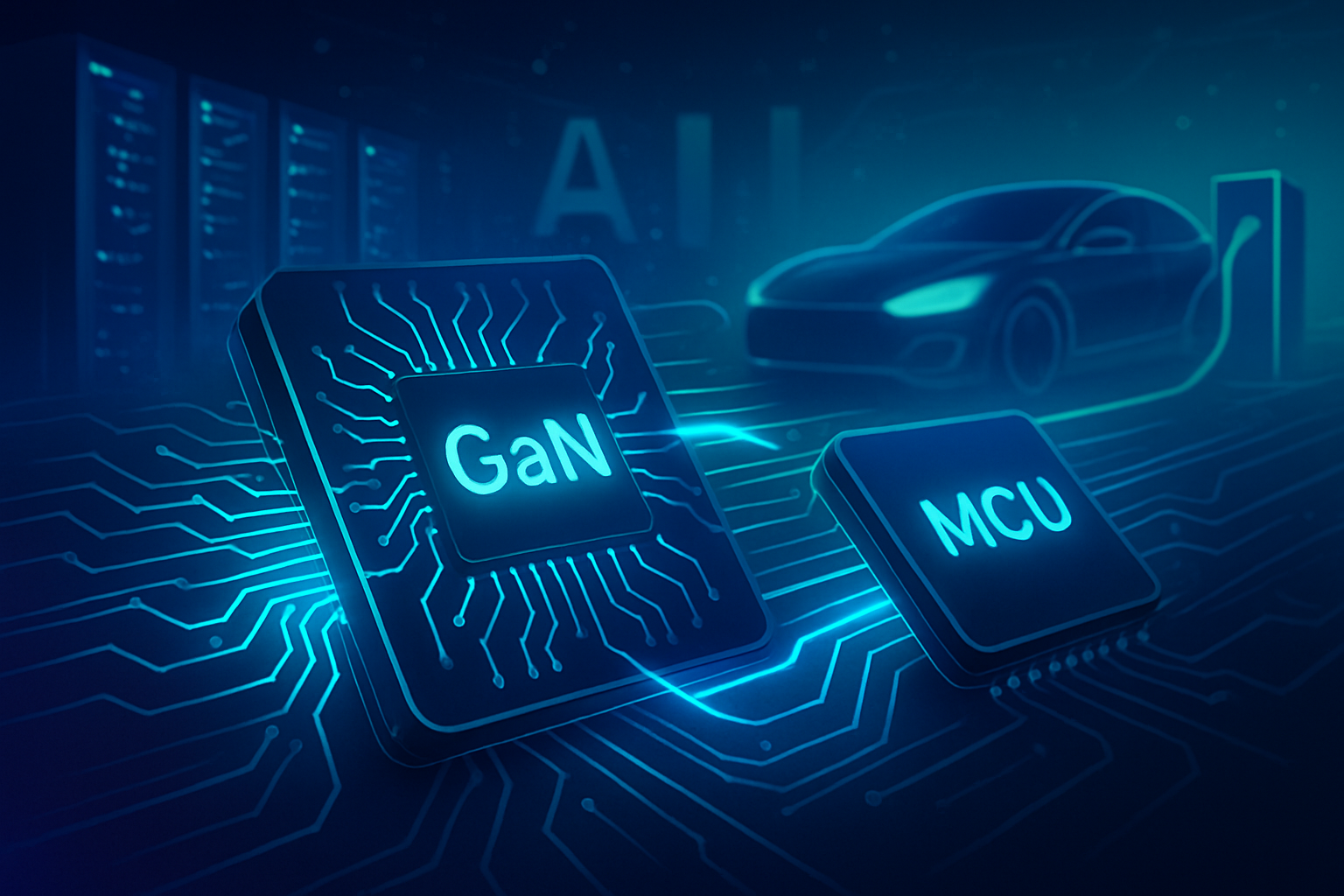
  • GigaDevice and Navitas Forge Joint Lab to Electrify the Future of High-Efficiency AI and EV Power Management

    GigaDevice and Navitas Forge Joint Lab to Electrify the Future of High-Efficiency AI and EV Power Management

    Shanghai, China – October 15, 2025 – In a significant move poised to redefine power management across critical sectors, GigaDevice (SSE: 603986), a global leader in microcontrollers and flash memory, and Navitas Semiconductor (NASDAQ: NVTS), a pioneer in Gallium Nitride (GaN) power integrated circuits, officially launched their joint lab initiative on April 9, 2025. This strategic collaboration, formally announced following a signing ceremony in Shanghai on April 8, 2025, is dedicated to accelerating the deployment of high-efficiency power management solutions, with a keen focus on integrating GaNFast™ ICs and advanced microcontrollers (MCUs) for applications ranging from AI data centers to electric vehicles (EVs) and renewable energy systems. The partnership marks a pivotal step towards a greener, more intelligent era of digital power.

    The primary objective of this joint venture is to overcome the inherent complexities of designing with next-generation power semiconductors like GaN and Silicon Carbide (SiC). By combining Navitas’ cutting-edge wide-bandgap (WBG) power devices with GigaDevice’s sophisticated control capabilities, the lab aims to deliver optimized, system-level solutions that maximize energy efficiency, reduce form factors, and enhance overall performance. This initiative is particularly timely, given the escalating power demands of artificial intelligence infrastructure and the global push for sustainable energy solutions, positioning both companies at the forefront of the high-efficiency power revolution.

    Technical Synergy: Unlocking the Full Potential of GaN and Advanced MCUs

    The technical foundation of the GigaDevice-Navitas joint lab rests on the symbiotic integration of two distinct yet complementary semiconductor technologies. Navitas brings its renowned GaNFast™ power ICs, which boast superior switching speeds and efficiency compared to traditional silicon. These GaN solutions integrate GaN FETs, gate drivers, logic, and protection circuits onto a single chip, drastically reducing parasitic effects and enabling power conversion at much higher frequencies. This translates into power supplies that are up to three times smaller and lighter, with faster charging capabilities, a critical advantage for compact, high-power-density applications. The partnership also extends to SiC technology, another wide-bandgap material offering similar performance enhancements.

    Complementing Navitas' power prowess are GigaDevice's advanced GD32 series microcontrollers, built on the high-performance ARM Cortex-M7 core. These MCUs are vital for providing the precise, high-speed control algorithms necessary to fully leverage the rapid switching characteristics of GaN and SiC devices. Traditional silicon-based power systems operate at lower frequencies, making control relatively simpler. However, the high-frequency operation of GaN demands a sophisticated, real-time control system that can respond instantaneously to optimize performance, manage thermals, and ensure stability. The joint lab will co-develop hardware and firmware, addressing critical design challenges such as EMI reduction, thermal management, and robust protection algorithms, which are often complex hurdles in wide-bandgap power design.

    This integrated approach represents a significant departure from previous methodologies, where power device and control system development often occurred in silos, leading to suboptimal performance and prolonged design cycles. By fostering direct collaboration, the joint lab ensures a seamless handshake between the power stage and the control intelligence, paving the way for unprecedented levels of system integration, energy efficiency, and power density. While specific initial reactions from the broader AI research community were not immediately detailed, the industry's consistent demand for more efficient power solutions for AI workloads suggests a highly positive reception for this strategic convergence of expertise.

    Market Implications: A Competitive Edge in High-Growth Sectors

    The establishment of the GigaDevice-Navitas joint lab carries substantial implications for companies across the technology landscape, particularly those operating in power-intensive domains. Companies poised to benefit immediately include manufacturers of AI servers and data center infrastructure, electric vehicle OEMs, and developers of solar inverters and energy storage systems. The enhanced efficiency and power density offered by the co-developed solutions will allow these industries to reduce operational costs, improve product performance, and accelerate their transition to sustainable technologies.

    For Navitas Semiconductor (NASDAQ: NVTS), this partnership strengthens its foothold in the rapidly expanding Chinese industrial and automotive markets, leveraging GigaDevice's established presence and customer base. It solidifies Navitas' position as a leading innovator in GaN and SiC power solutions by providing a direct pathway for its technology to be integrated into complete, optimized systems. Similarly, GigaDevice (SSE: 603986) gains a significant strategic advantage by enhancing its GD32 MCU offerings with advanced digital power capabilities, a core strategic market for the company. This allows GigaDevice to offer more comprehensive, intelligent system solutions in high-growth areas like EVs and AI, potentially disrupting existing product lines that rely on less integrated or less efficient power management architectures.

    The competitive landscape for major AI labs and tech giants is also subtly influenced. As AI models grow in complexity and size, their energy consumption becomes a critical bottleneck. Solutions that can deliver more power with less waste and in smaller footprints will be highly sought after. This partnership positions both GigaDevice and Navitas to become key enablers for the next generation of AI infrastructure, offering a competitive edge to companies that adopt their integrated solutions. Market positioning is further bolstered by the focus on system-level reference designs, which will significantly reduce time-to-market for new products, making it easier for manufacturers to adopt advanced GaN and SiC technologies.

    Wider Significance: Powering the "Smart + Green" Future

    This joint lab initiative fits perfectly within the broader AI landscape and the accelerating trend towards more sustainable and efficient computing. As AI models become more sophisticated and ubiquitous, their energy footprint grows exponentially. The development of high-efficiency power management is not just an incremental improvement; it is a fundamental necessity for the continued advancement and environmental viability of AI. The "Smart + Green" strategic vision underpinning this collaboration directly addresses these concerns, aiming to make AI infrastructure and other power-hungry applications more intelligent and environmentally friendly.

    The impacts are far-reaching. By enabling smaller, lighter, and more efficient power electronics, the partnership contributes to the reduction of global carbon emissions, particularly in data centers and electric vehicles. It facilitates the creation of more compact devices, freeing up valuable space in crowded server racks and enabling longer ranges or faster charging times for EVs. This development continues the trajectory of wide-bandgap semiconductors, like GaN and SiC, gradually displacing traditional silicon in high-power, high-frequency applications, a trend that has been gaining momentum over the past decade.

    While the research did not highlight specific concerns, the primary challenge for any new technology adoption often lies in cost-effectiveness and mass-market scalability. However, the focus on providing comprehensive system-level designs and reducing time-to-market aims to mitigate these concerns by simplifying the integration process and accelerating volume production. This collaboration represents a significant milestone, comparable to previous breakthroughs in semiconductor integration that have driven successive waves of technological innovation, by directly addressing the power efficiency bottleneck that is becoming increasingly critical for modern AI and other advanced technologies.

    Future Developments and Expert Predictions

    Looking ahead, the GigaDevice-Navitas joint lab is expected to rapidly roll out a suite of comprehensive reference designs and application-specific solutions. In the near term, we can anticipate seeing optimized power modules and control boards specifically tailored for AI server power supplies, EV charging infrastructure, and high-density industrial power systems. These reference designs will serve as blueprints, significantly shortening development cycles for manufacturers and accelerating the commercialization of GaN and SiC in these higher-power markets.

    Longer-term developments could include even tighter integration, potentially leading to highly sophisticated, single-chip solutions that combine power delivery and intelligent control. Potential applications on the horizon include advanced robotics, next-generation renewable energy microgrids, and highly integrated power solutions for edge AI devices. The primary challenges that will need to be addressed include further cost optimization to enable broader market penetration, continuous improvement in thermal management for ultra-high power density, and the development of robust supply chains to support increased demand for GaN and SiC devices.

    Experts predict that this type of deep collaboration between power semiconductor specialists and microcontroller providers will become increasingly common as the industry pushes the boundaries of efficiency and integration. The synergy between high-speed power switching and intelligent digital control is seen as essential for unlocking the full potential of wide-bandbandgap technologies. It is anticipated that the joint lab will not only accelerate the adoption of GaN and SiC but also drive further innovation in related fields such as advanced sensing, protection, and communication within power systems.

    A Crucial Step Towards Sustainable High-Performance Electronics

    In summary, the joint lab initiative by GigaDevice and Navitas Semiconductor represents a strategic and timely convergence of expertise, poised to significantly advance the field of high-efficiency power management. The synergy between Navitas’ cutting-edge GaNFast™ power ICs and GigaDevice’s advanced GD32 series microcontrollers promises to deliver unprecedented levels of energy efficiency, power density, and system integration. This collaboration is a critical enabler for the burgeoning demands of AI data centers, the rapid expansion of electric vehicles, and the global transition to renewable energy sources.

    This development holds profound significance in the history of AI and broader electronics, as it directly addresses one of the most pressing challenges facing modern technology: the escalating need for efficient power. By simplifying the design process and accelerating the deployment of advanced wide-bandgap solutions, the joint lab is not just optimizing power; it's empowering the next generation of intelligent, sustainable technologies.

    As we move forward, the industry will be closely watching for the tangible outputs of this collaboration – the release of new reference designs, the adoption of their integrated solutions by leading manufacturers, and the measurable impact on energy efficiency across various sectors. The GigaDevice-Navitas partnership is a powerful testament to the collaborative spirit driving innovation, and a clear signal that the future of high-performance electronics will be both smart and green.


    This content is intended for informational purposes only and represents analysis of current AI developments.

    TokenRing AI delivers enterprise-grade solutions for multi-agent AI workflow orchestration, AI-powered development tools, and seamless remote collaboration platforms.
    For more information, visit https://www.tokenring.ai/.

  • Polysilicon’s Ascendant Reign: Fueling the AI Era and Green Revolution

    Polysilicon’s Ascendant Reign: Fueling the AI Era and Green Revolution

    The polysilicon market is experiencing an unprecedented boom, driven by the relentless expansion of the electronics and solar energy industries. This high-purity form of silicon, a fundamental building block for both advanced semiconductors and photovoltaic cells, is not merely a commodity; it is the bedrock upon which the future of artificial intelligence (AI) and the global transition to sustainable energy are being built. With market valuations projected to reach between USD 106.2 billion and USD 155.87 billion by 2030-2034, polysilicon's critical role in powering our digital world and decarbonizing our planet has never been more pronounced. Its rapid expansion underscores a pivotal moment where technological advancement and environmental imperatives converge, making its supply chain and production innovations central to global progress.

    This surge is predominantly fueled by the insatiable demand for solar panels, which account for a staggering 76% to 91.81% of polysilicon consumption, as nations worldwide push towards aggressive renewable energy targets. Concurrently, the burgeoning electronics sector, propelled by the proliferation of 5G, AI, IoT, and electric vehicles (EVs), continues to drive the need for ultra-high purity polysilicon essential for cutting-edge microchips. The intricate dance between supply, demand, and technological evolution in this market is shaping the competitive landscape for tech giants, influencing geopolitical strategies, and dictating the pace of innovation in critical sectors.

    The Micro-Mechanics of Purity: Siemens vs. FBR and the Quest for Perfection

    The production of polysilicon is a highly specialized and energy-intensive endeavor, primarily dominated by two distinct technologies: the established Siemens process and the emerging Fluidized Bed Reactor (FBR) technology. Each method strives to achieve the ultra-high purity levels required, albeit with different efficiencies and environmental footprints.

    The Siemens process, developed by Siemens AG (FWB: SIE) in 1954, remains the industry's workhorse, particularly for electronics-grade polysilicon. It involves reacting metallurgical-grade silicon with hydrogen chloride to produce trichlorosilane (SiHCl₃), which is then rigorously distilled to achieve exceptional purity (often 9N to 11N, or 99.9999999% to 99.999999999%). This purified gas then undergoes chemical vapor deposition (CVD) onto heated silicon rods, growing them into large polysilicon ingots. While highly effective in achieving stringent purity, the Siemens process is energy-intensive, consuming 100-200 kWh/kg of polysilicon, and operates in batches, making it less efficient than continuous methods. Companies like Wacker Chemie AG (FWB: WCH) and OCI Company Ltd. (KRX: 010060) have continuously refined the Siemens process, improving energy efficiency and yield over decades, proving it to be a "moving target" for alternatives. Wacker, for instance, developed a new ultra-pure grade in 2023 for sub-3nm chip production, with metallic contamination below 5 parts per trillion (ppt).

    Fluidized Bed Reactor (FBR) technology, on the other hand, represents a significant leap towards more sustainable and cost-effective production. In an FBR, silicon seed particles are suspended and agitated by a silicon-containing gas (like silane or trichlorosilane), allowing silicon to deposit continuously onto the particles, forming granules. FBR boasts significantly lower energy consumption (up to 80-90% less electricity than Siemens), a continuous production cycle, and higher output per reactor volume. Companies like GCL Technology Holdings Ltd. (HKG: 3800) and REC Silicon ASA (OSL: RECSI) have made substantial investments in FBR, with GCL-Poly announcing in 2021 that its FBR granular polysilicon achieved monocrystalline purity requirements, potentially outperforming the Siemens process in certain parameters. This breakthrough could drastically reduce the carbon footprint and energy consumption for high-efficiency solar cells. However, FBR still faces challenges such as managing silicon dust (fines), unwanted depositions, and ensuring consistent quality, which historically has limited its widespread adoption for the most demanding electronic-grade applications.

    The distinction between electronics-grade (EG-Si) and solar-grade (SoG-Si) polysilicon is paramount. EG-Si demands ultra-high purity (9N to 11N) to prevent even trace impurities from compromising the performance of sophisticated semiconductor devices. SoG-Si, while still requiring high purity (6N to 9N), has a slightly higher tolerance for certain impurities, balancing cost-effectiveness with solar cell efficiency. The shift towards more efficient solar cell architectures (e.g., N-type TOPCon, heterojunction) is pushing the purity requirements for SoG-Si closer to those of EG-Si, driving further innovation in both production methods. Initial reactions from the industry highlight a dual focus: continued optimization of the Siemens process for the most critical semiconductor applications, and aggressive development of FBR technology to meet the massive, growing demand for solar-grade material with a reduced environmental impact.

    Corporate Chessboard: Polysilicon's Influence on Tech Giants and AI Innovators

    The polysilicon market's dynamics profoundly impact a diverse ecosystem of companies, from raw material producers to chipmakers and renewable energy providers, with significant implications for the AI sector.

    Major Polysilicon Producers are at the forefront. Chinese giants like Tongwei Co., Ltd. (SHA: 600438), GCL Technology Holdings Ltd. (HKG: 3800), Daqo New Energy Corp. (NYSE: DQ), Xinte Energy Co., Ltd. (HKG: 1799), and Asia Silicon (Qinghai) Co., Ltd. dominate the solar-grade market, leveraging cost advantages in raw materials, electricity, and labor. Their rapid capacity expansion has led to China controlling approximately 89% of global solar-grade polysilicon production in 2022. For ultra-high purity electronic-grade polysilicon, companies like Wacker Chemie AG (FWB: WCH), Hemlock Semiconductor Operations LLC (a joint venture involving Dow Inc. (NYSE: DOW) and Corning Inc. (NYSE: GLW)), Tokuyama Corporation (TYO: 4043), and REC Silicon ASA (OSL: RECSI) are critical suppliers, catering to the exacting demands of the semiconductor industry. These firms benefit from premium pricing and long-term contracts for their specialized products.

    The Semiconductor Industry, the backbone of AI, is heavily reliant on a stable supply of high-purity polysilicon. Companies like Intel Corporation (NASDAQ: INTC), Samsung Electronics Co., Ltd. (KRX: 005930), and Taiwan Semiconductor Manufacturing Company Limited (NYSE: TSM) require vast quantities of electronic-grade polysilicon to produce the advanced silicon wafers that become microprocessors, GPUs, and memory chips essential for AI training and inference. Disruptions in polysilicon supply, such as those experienced during the COVID-19 pandemic, can cascade into global chip shortages, directly hindering AI development and deployment. The fact that China, despite its polysilicon dominance, currently lacks the equipment and expertise to produce semiconductor-grade polysilicon at scale creates a strategic vulnerability for non-Chinese chip manufacturers, fostering a push for diversified and localized supply chains, as seen with Hemlock Semiconductor securing a federal grant to expand U.S. production.

    For the Solar Energy Industry, which consumes the lion's share of polysilicon, price volatility and supply chain stability are critical. Solar panel manufacturers, including major players like Longi Green Energy Technology Co., Ltd. (SHA: 601012) and JinkoSolar Holding Co., Ltd. (NYSE: JKS), are directly impacted by polysilicon costs. Recent increases in polysilicon prices, driven by Chinese policy shifts and production cuts, are expected to lead to higher solar module prices, potentially affecting project economics. Companies with vertical integration, from polysilicon production to module assembly, like GCL-Poly, gain a competitive edge by controlling costs and ensuring supply.

    The implications for AI companies, tech giants, and startups are profound. The escalating demand for high-performance AI chips means a continuous and growing need for ultra-high purity electronic-grade polysilicon. This specialized demand, representing a smaller but crucial segment of the overall polysilicon market, could strain existing supply chains. Furthermore, the immense energy consumption of AI data centers (an "unsustainable trajectory") creates a bottleneck in power generation, making access to reliable and affordable energy, increasingly from solar, a strategic imperative. Companies that can secure stable supplies of high-purity polysilicon and leverage energy-efficient technologies (like silicon photonics) will gain a significant competitive advantage. The interplay between polysilicon supply, semiconductor manufacturing, and renewable energy generation directly influences the scalability and sustainability of AI development globally.

    A Foundational Pillar: Polysilicon's Broader Significance in the AI and Green Landscape

    Polysilicon's expanding market transcends mere industrial growth; it is a foundational pillar supporting two of the most transformative trends of our era: the proliferation of artificial intelligence and the global transition to clean energy. Its significance extends to sustainable technology, geopolitical dynamics, and environmental stewardship.

    In the broader AI landscape, polysilicon underpins the very hardware that enables intelligent systems. Every advanced AI model, from large language models to complex neural networks, relies on high-performance silicon-based semiconductors for processing, memory, and high-speed data transfer. The continuous evolution of AI demands increasingly powerful and efficient chips, which in turn necessitates ever-higher purity and quality of electronic-grade polysilicon. Innovations in silicon photonics, allowing light-speed data transmission on silicon chips, are directly tied to polysilicon advancements, promising to address the data transfer bottlenecks that limit AI's scalability and energy efficiency. Thus, the robust health and growth of the polysilicon market are not just relevant; they are critical enablers for the future of AI.

    For sustainable technology, polysilicon is indispensable. It is the core material for photovoltaic solar cells, which are central to decarbonizing global energy grids. As countries commit to aggressive renewable energy targets, the demand for solar panels, and consequently solar-grade polysilicon, will continue to soar. By facilitating the widespread adoption of solar power, polysilicon directly contributes to reducing greenhouse gas emissions and mitigating climate change. Furthermore, advancements in polysilicon recycling from decommissioned solar panels are fostering a more circular economy, reducing waste and the environmental impact of primary production.

    However, this vital material is not without its potential concerns. The most significant is the geopolitical concentration of its supply chain. China's overwhelming dominance in polysilicon production, particularly solar-grade, creates strategic dependencies and vulnerabilities. Allegations of forced labor in the Xinjiang region, a major polysilicon production hub, have led to international sanctions, such as the U.S. Uyghur Forced Labor Prevention Act (UFLPA), disrupting global supply chains and creating a bifurcated market. This geopolitical tension drives efforts by countries like the U.S. to incentivize domestic polysilicon and solar manufacturing to enhance supply chain resilience and reduce reliance on a single, potentially contentious, source.

    Environmental considerations are also paramount. While polysilicon enables clean energy, its production is notoriously energy-intensive, often relying on fossil fuels, leading to a substantial carbon footprint. The Siemens process, in particular, requires significant electricity and can generate toxic byproducts like silicon tetrachloride, necessitating careful management and recycling. The industry is actively pursuing "sustainable polysilicon production" through energy efficiency, waste heat recovery, and the integration of renewable energy sources into manufacturing processes, aiming to lower its environmental impact.

    Comparing polysilicon to other foundational materials, its dual role in both advanced electronics and mainstream renewable energy is unique. While rare-earth elements are vital for specialized magnets and lithium for batteries, silicon, and by extension polysilicon, forms the very substrate of digital intelligence and the primary engine of solar power. Its foundational importance is arguably unmatched, making its market dynamics a bellwether for both technological progress and global sustainability efforts.

    The Horizon Ahead: Navigating Polysilicon's Future

    The polysilicon market stands at a critical juncture, with near-term challenges giving way to long-term growth opportunities, driven by relentless innovation and evolving global priorities. Experts predict a dynamic landscape shaped by technological advancements, new applications, and persistent geopolitical and environmental considerations.

    In the near-term, the market is grappling with significant overcapacity, particularly from China's rapid expansion, which has led to polysilicon prices falling below cash costs for many manufacturers. This oversupply, coupled with seasonal slowdowns in solar installations, is creating inventory build-up. However, this period of adjustment is expected to pave the way for a more balanced market as demand continues its upward trajectory.

    Long-term developments will be characterized by a relentless pursuit of higher purity and efficiency. Fluidized Bed Reactor (FBR) technology is expected to gain further traction, with continuous improvements aimed at reducing manufacturing costs and energy consumption. Breakthroughs like GCL-Poly's (HKG: 3800) FBR granular polysilicon achieving monocrystalline purity requirements signal a shift towards more sustainable and efficient production methods for solar-grade material. For electronics, the demand for ultra-high purity polysilicon (11N or higher) for sub-3nm chip production will intensify, pushing the boundaries of existing Siemens process refinements, as demonstrated by Wacker Chemie AG's (FWB: WCH) recent innovations.

    Polysilicon recycling is also emerging as a crucial future development. As millions of solar panels reach the end of their operational life, closed-loop silicon recycling initiatives will become increasingly vital, offering both environmental benefits and enhancing supply chain resilience. While currently facing economic hurdles, especially for older p-type wafers, advancements in recycling technologies and the growth of n-type and tandem cells are expected to make polysilicon recovery a more viable and significant part of the supply chain by 2035.

    Potential new applications extend beyond traditional solar panels and semiconductors. Polysilicon is finding its way into advanced sensors, Microelectromechanical Systems (MEMS), and critical components for electric and hybrid vehicles. Innovations in thin-film solar cells using polycrystalline silicon are enabling new architectural integrations, such as bent or transparent solar modules, expanding possibilities for green building design and ubiquitous energy harvesting.

    Ongoing challenges include the high energy consumption and associated carbon footprint of polysilicon production, which will continue to drive innovation towards greener manufacturing processes and greater reliance on renewable energy sources for production facilities. Supply chain resilience remains a top concern, with geopolitical tensions and trade restrictions prompting significant investments in domestic polysilicon production in regions like North America and Europe to reduce dependence on concentrated foreign supply. Experts, such as Bernreuter Research, even predict a potential new shortage by 2028 if aggressive capacity elimination continues, underscoring the cyclical nature of this market and the critical need for strategic planning.

    A Future Forged in Silicon: Polysilicon's Enduring Legacy

    The rapid expansion of the polysilicon market is more than a fleeting trend; it is a profound testament to humanity's dual pursuit of advanced technology and a sustainable future. From the intricate circuits powering artificial intelligence to the vast solar farms harnessing the sun's energy, polysilicon is the silent, yet indispensable, enabler.

    The key takeaways are clear: polysilicon is fundamental to both the digital revolution and the green energy transition. Its market growth is driven by unprecedented demand from the semiconductor and solar industries, which are themselves experiencing explosive growth. While the established Siemens process continues to deliver ultra-high purity for cutting-edge electronics, emerging FBR technology promises more energy-efficient and sustainable production for the burgeoning solar sector. The market faces critical challenges, including geopolitical supply chain concentration, energy-intensive production, and price volatility, yet it is responding with continuous innovation in purity, efficiency, and recycling.

    This development's significance in AI history cannot be overstated. Without a stable and increasingly pure supply of polysilicon, the exponential growth of AI, which relies on ever more powerful and energy-efficient chips, would be severely hampered. Similarly, the global push for renewable energy, a critical component of AI's sustainability given its immense data center energy demands, hinges on the availability of affordable, high-quality solar-grade polysilicon. Polysilicon is, in essence, the physical manifestation of the digital and green future.

    Looking ahead, the long-term impact of the polysilicon market's trajectory will be monumental. It will shape the pace of AI innovation, determine the success of global decarbonization efforts, and influence geopolitical power dynamics through control over critical raw material supply chains. The drive for domestic production in Western nations and the continuous technological advancements, particularly in FBR and recycling, will be crucial in mitigating risks and ensuring a resilient supply.

    What to watch for in the coming weeks and months includes the evolution of polysilicon prices, particularly how the current oversupply resolves and whether new shortages emerge as predicted. Keep an eye on new announcements regarding FBR technology breakthroughs and commercial deployments, as these could dramatically shift the cost and environmental footprint of polysilicon production. Furthermore, monitor governmental policies and investments aimed at diversifying supply chains and incentivizing sustainable manufacturing practices outside of China. The story of polysilicon is far from over; it is a narrative of innovation, challenge, and profound impact, continuing to unfold at the very foundation of our technological world.

    This content is intended for informational purposes only and represents analysis of current AI developments.

    TokenRing AI delivers enterprise-grade solutions for multi-agent AI workflow orchestration, AI-powered development tools, and seamless remote collaboration platforms.
    For more information, visit https://www.tokenring.ai/.

  • Silicon’s Green Revolution: How Advanced Chips are Powering the Renewable Energy Transition

    Silicon’s Green Revolution: How Advanced Chips are Powering the Renewable Energy Transition

    The global push towards a sustainable future is accelerating, and at its core lies an often-unsung hero: the semiconductor industry. Far from being merely the engine of our digital lives, advancements in chip technology are now proving indispensable in the renewable energy transition, driving unprecedented progress in how we generate, store, and manage sustainable power. This silent revolution, particularly propelled by emerging materials like organic semiconductors, is fundamentally reshaping the landscape of green energy solutions, promising a future where clean power is not only efficient but also ubiquitous and affordable.

    This pivotal role of semiconductors extends across the entire renewable energy ecosystem, from maximizing the efficiency of solar panels and wind turbines to enabling sophisticated battery management systems and intelligent smart grids. The immediate significance of these developments cannot be overstated; they are directly accelerating the adoption of renewable energy, enhancing grid resilience, and dramatically reducing the cost and accessibility barriers that have historically hindered widespread green energy deployment. As the world grapples with climate change and escalating energy demands, the continuous innovation within chip technology stands as a critical enabler for a truly sustainable future.

    Organic Semiconductors: A Technical Leap Towards Ubiquitous Green Energy

    The technical landscape of renewable energy is being profoundly reshaped by advancements in semiconductor technology, with organic semiconductors emerging as a particularly exciting frontier. Unlike traditional silicon-based chips, organic semiconductors are carbon-based molecules or polymers that offer a unique blend of properties, setting them apart as a game-changer for sustainable solutions.

    A significant breakthrough in organic solar cells (OSCs) has been the development of Non-Fullerene Acceptors (NFAs). These novel materials have dramatically boosted power conversion efficiencies, with laboratory results now approaching and even exceeding 19% in some instances. This is a crucial leap, as earlier organic solar cells often struggled with lower efficiencies, typically around 11%. NFAs address the challenge of exciton binding – where electron-hole pairs formed after light absorption are tightly bound – by facilitating more efficient charge separation. Furthermore, extensive molecular engineering allows researchers to precisely tune the band gap and other electronic properties of these materials, optimizing light absorption and charge transport. This design flexibility extends to creating new organic molecules, such as P3TTM, that exhibit quantum mechanical behaviors previously seen only in inorganic materials, potentially simplifying solar panel construction. Advanced device architectures, including bulk heterojunctions (BHJs) and multi-junction cells, are also being employed to maximize light capture across the solar spectrum and overcome the inherent short exciton diffusion lengths in organic materials.

    These technical specifications highlight the distinct advantages of organic semiconductors. Their inherent flexibility and lightweight nature mean they can be deposited onto flexible substrates using low-cost, low-temperature, solution-based processing methods like roll-to-roll printing. This contrasts sharply with the energy-intensive, high-temperature processes required for crystalline silicon. While commercial crystalline silicon cells typically boast efficiencies between 20% and 25%, the rapid improvement in organic solar cells, coupled with their semi-transparency and tunable properties, opens doors for novel applications like solar windows and integration into curved surfaces, which are impossible with rigid silicon. However, challenges remain, particularly regarding their shorter lifespan and lower charge carrier mobility compared to silicon, areas where active research is focused on improving stability under real-world conditions.

    The initial reactions from the AI research community and industry experts are a mix of optimism and pragmatism. There's widespread recognition of organic semiconductors as a "next-generation technology for a greener future" due to their sustainability, low fabrication cost, and diverse performance capabilities. Crucially, the AI community is actively contributing to this field, leveraging machine learning to accelerate the discovery of new materials, significantly reducing the experimental cycles needed for breakthroughs. Experts emphasize that while efficiency is important, the primary focus is now shifting towards enhancing long-term stability, scalability, and practical integration. The potential for low-cost, mass-produced plastic solar cells with a low embedded energy footprint is seen as a major market disruptor, although widespread commercial use in large-scale solar panels is still in its developmental stages, with existing applications primarily in consumer electronics displays.

    Corporate Fortunes and Competitive Shifts in the Green Chip Era

    The advent of advanced semiconductor technologies, particularly organic semiconductors, is poised to trigger significant shifts in corporate fortunes and reshape competitive landscapes across the tech and energy sectors. This revolution presents immense opportunities for agile innovators while demanding strategic recalibration from established giants.

    Companies specializing in Organic Photovoltaics (OPVs) and their material components are at the forefront of this benefit. Innovators like Heliatek GmbH, a pioneer in flexible organic solar films, are carving out niches in building-integrated photovoltaics (BIPV), automotive applications, and consumer electronics. Similarly, BELECTRIC OPV GmbH and ASCA are leveraging printed photovoltaic technology for customizable modules in smart textiles and architectural designs. Material specialists such as Novaled and Epishine are crucial, providing the high-performance organic materials and focusing on scalability for various appliances. Even traditional solar panel manufacturers like JinkoSolar (NYSE: JKS) and Vikram Solar could strategically integrate these technologies to diversify their offerings and tap into new markets. Beyond solar, the enhanced power management capabilities enabled by efficient organic semiconductors could indirectly benefit wind power giants like Vestas (CPH: VWS) and major Electric Vehicle (EV) manufacturers by optimizing energy flow and battery life.

    The competitive implications for major chip manufacturers and tech giants are profound. While organic semiconductors challenge the long-standing dominance of silicon due to their flexibility, lightweight nature, and lower production costs, they also present immense opportunities for tech titans. Companies like Apple (NASDAQ: AAPL), Google (NASDAQ: GOOGL), Samsung (KRX: 005930), and Amazon (NASDAQ: AMZN) stand to benefit significantly from integrating thin, flexible, and even transparent organic solar cells into consumer electronics, enabling self-charging capabilities and extended battery life for devices ranging from smartphones to VR headsets. This could lead to sleeker designs, enhanced product differentiation, and potentially transparent solar-harvesting displays. However, traditional semiconductor manufacturers must adapt. The shift towards more environmentally friendly, solution-based manufacturing processes for organic semiconductors could reduce reliance on the complex and often vulnerable global silicon supply chain. Major players may need to invest heavily in R&D, forge strategic partnerships, or acquire startups specializing in organic materials to secure intellectual property and manufacturing capabilities in this evolving domain. Material science giants like Merck KGaA (ETR: MRK), BASF SE (ETR: BAS), and Sumitomo Chemical (TYO: 4005) are already focusing on material diversification to capitalize on this trend.

    The disruptive potential of organic semiconductors is already evident in display technology, where Organic Light-Emitting Diodes (OLEDs) have largely supplanted Liquid Crystal Displays (LCDs) in small to medium-sized applications and dominate the premium television market. Companies like Samsung Display Co., Ltd. and LG Display Co., Ltd. (KRX: 034220) have been key disruptors here. Looking ahead, flexible, transparent, and ultra-light OPV films could disrupt traditional rooftop solar installations by enabling energy harvesting from unconventional surfaces like windows or curtains, creating entirely new markets. For low-power Internet of Things (IoT) devices, integrated organic solar cells could eliminate the need for conventional batteries, simplifying deployment and maintenance. Furthermore, Organic Thin-Film Transistors (OTFTs) are paving the way for mechanically flexible and foldable electronic products, leading to innovations like electronic paper and "smart" clothing. Companies that strategically invest in these areas will gain significant advantages in product differentiation, sustainability branding, and cost-effectiveness, potentially creating new market segments and securing robust intellectual property.

    A Broader Horizon: Integrating AI and Sustainability with Organic Chips

    The rise of organic semiconductors extends far beyond incremental improvements in renewable energy; it signifies a profound shift in the broader AI landscape and global sustainability efforts. This technology is not merely an alternative but a crucial enabler for a future where AI is more pervasive, efficient, and environmentally responsible.

    In the AI landscape, organic semiconductors are poised to facilitate a new generation of hardware. Their inherent flexibility and low-power characteristics make them ideal for the burgeoning fields of wearable AI, smart textiles, and implantable medical devices. Imagine biosensors seamlessly integrated into clothing for continuous health monitoring or flexible displays that adapt to any surface. Crucially, organic semiconductors are vital for low-power and edge AI applications, where processing occurs closer to the data source rather than in distant data centers. This reduces latency and energy consumption, critical for the proliferation of IoT devices. Furthermore, organic electronics hold immense potential for neuromorphic computing, which aims to mimic the human brain's structure and function. By enabling components that integrate sensing, memory, and processing—often separate in traditional systems—organic semiconductors can lead to significantly more energy-efficient and high-performing AI hardware. Paradoxically, AI itself is playing a pivotal role in accelerating this development, with machine learning algorithms rapidly discovering and optimizing new organic materials, significantly shortening the traditional trial-and-error approach in materials science.

    The societal and environmental impacts are equally transformative. Socially, biocompatible and flexible organic semiconductors promise to revolutionize healthcare with advanced monitoring and diagnostics, including innovative treatments like photovoltaic retinal prostheses. Their printability and lower production costs could also lead to more affordable and accessible electronics, helping to bridge technological divides globally. Environmentally, organic semiconductors offer a significant reduction in carbon footprint. Unlike conventional silicon, which demands energy-intensive, high-temperature manufacturing and often involves toxic metals, organic materials can be produced using low-temperature, less energy-intensive processes. Many are also biocompatible and biodegradable, offering a potential solution to the escalating problem of electronic waste (e-waste) by being recyclable like plastics. Organic photovoltaics (OPVs) provide a greener alternative to traditional silicon solar cells, utilizing earth-abundant materials and enabling seamless integration into buildings and vehicles through their transparent and flexible properties, expanding solar energy harvesting possibilities.

    However, potential concerns remain. While efficiency has improved dramatically, organic solar cells still generally have shorter lifespans and lower power conversion efficiencies compared to crystalline silicon, with degradation due to environmental factors being a persistent challenge. Scalability of manufacturing for high-performance organic devices also needs further optimization. Moreover, the energy consumption of the AI tools used to discover these materials presents an interesting paradox, underscoring the need for energy-efficient AI practices. Geopolitical factors, resource constraints, and trade restrictions impacting the broader semiconductor industry could also affect the supply chain and adoption of organic semiconductors. When compared to previous AI and energy milestones, organic semiconductors represent a fundamental paradigm shift. In AI, they move beyond the limitations of rigid, energy-intensive silicon, enabling a future of pervasive, low-power, and flexible intelligence. In energy, they herald a "greener" third wave of solar technology, moving beyond the rigidity and e-waste concerns of traditional silicon panels towards a future where energy harvesting is seamlessly integrated into our built environment, akin to how the invention of the electric generator revolutionized energy distribution. This evolution signifies a concerted move towards sustainable technological progress.

    The Road Ahead: Unlocking the Full Potential of Organic Chips for Green Energy

    The trajectory of organic semiconductors in renewable energy is one of continuous innovation and expanding horizons. Both near-term and long-term developments promise to solidify their role as a cornerstone of sustainable power, although significant challenges must still be navigated for widespread commercial viability.

    In the near term (the next 1-5 years), we can expect to see organic photovoltaic (OPV) cells push laboratory power conversion efficiencies (PCEs) beyond the 20% mark for single-junction cells, building on the success of non-fullerene acceptors (NFAs). This will bring them increasingly closer to the performance of traditional silicon. A critical focus will also be on significantly improving long-term operational stability and durability under diverse environmental conditions, with ongoing research in phase stabilization and compositional engineering. Furthermore, the industry will concentrate on scaling up manufacturing processes from laboratory to commercial-scale production, leveraging solution-based methods like roll-to-roll printing to reduce costs and complexity. A deeper understanding of fundamental electronic processes, such as "entropy-driven charge separation" in NFAs, will continue to drive these improvements.

    Looking further ahead, the long-term vision includes the development of highly efficient hybrid organic-perovskite tandem cells, designed to capture an even broader spectrum of light. Advanced material design, process refinement, and interface engineering will further augment the efficiency and durability of OPVs. Crucially, Artificial Intelligence (AI), particularly machine learning, is predicted to play a paramount role in accelerating the discovery and optimization of new organic solar materials and device designs, analyzing vast datasets to predict PCE and stability with unprecedented speed. This synergistic relationship between AI and material science will be key to unlocking the full potential of organic semiconductors. The widespread adoption of transparent and flexible organic solar cells for building-integrated photovoltaics (BIPV), smart windows, and self-powered smart textiles is also on the horizon, enabling a truly distributed energy generation model. Beyond solar, organic thermoelectrics (OTEs) are being developed to convert waste heat into electricity, offering flexible and environmentally friendly solutions for waste heat recovery in various applications.

    These unique properties—flexibility, lightweight nature, transparency, and low-cost manufacturing—open up a vast array of potential applications. Transparent organic solar cells can be seamlessly integrated into windows and facades, transforming buildings into active energy generators. Flexible organic films can power wearable devices and smart textiles, providing portable energy for consumer electronics. EVs could incorporate organic solar cells into sunroofs or body panels to extend range. Their adaptability makes them ideal for off-grid and remote power solutions, while semi-transparent versions could enable "agrivoltaics" in greenhouses, generating electricity while supporting plant growth. Experts predict that organic solar cells will carve out a distinct market niche rather than directly replacing silicon for large utility-scale installations. Their value will lie in their adaptability, aesthetic appeal, and lower installation and transportation costs. The future promises continued rapid evolution, driven by ongoing research and the accelerating influence of AI, leading to a broader range of applications and a strong focus on sustainability. However, challenges in narrowing the efficiency gap with silicon, ensuring long-term stability and durability, and achieving cost-effective large-scale manufacturing remain critical hurdles that must be addressed for organic semiconductors to achieve widespread commercial viability.

    A Sustainable Future Powered by Advanced Semiconductors

    The semiconductor industry's pivotal role in the renewable energy transition, particularly through the advancements in organic semiconductor technology, is a narrative of profound significance for both AI and global sustainability. Key takeaways highlight that semiconductors are not just components but the foundational infrastructure enabling efficient green energy generation, storage, and management. Organic semiconductors, with their inherent flexibility, lightweight properties, and potential for low-cost, environmentally friendly manufacturing, are emerging as a transformative force, promising to democratize access to clean energy and reduce the ecological footprint of electronics.

    This development marks a crucial juncture in both AI history and the energy transition. For AI, it paves the way for a new generation of low-power, flexible, and pervasive intelligent systems, from wearable AI to neuromorphic computing, moving beyond the limitations of rigid silicon. For energy, it represents a "greener" third wave of solar technology, offering versatile and integrated energy harvesting solutions that can seamlessly blend into our built environment. The long-term impact is a fundamental shift towards a future where technology is inherently more sustainable, with high-performance computing coexisting harmoniously with environmental responsibility.

    In the coming weeks and months, watch for continued breakthroughs in the efficiency and stability of organic photovoltaics, particularly as they scale to larger modules. Keep an eye on new material science discoveries, especially in non-fullerene acceptors, and advancements in solution-based processing and printing techniques that will enable low-cost, large-scale manufacturing. The synergistic role of AI in accelerating the design and discovery of these new materials will be a powerful indicator of progress. Finally, observe the expansion of organic semiconductor applications beyond traditional displays into flexible electronics, smart packaging, IoT devices, transparent solar cells for building integration, and hybrid technologies combining organic layers with inorganic semiconductors to achieve even higher efficiencies. The organic semiconductor market is projected for substantial expansion, signaling a future where these innovative chips are integral to both renewable energy solutions and next-generation AI hardware.

    This content is intended for informational purposes only and represents analysis of current AI developments.

    TokenRing AI delivers enterprise-grade solutions for multi-agent AI workflow orchestration, AI-powered development tools, and seamless remote collaboration platforms.
    For more information, visit https://www.tokenring.ai/.

  • Organic Solar Cells Achieve Breakthroughs: A New Era for Renewable Energy Driven by AI

    Organic Solar Cells Achieve Breakthroughs: A New Era for Renewable Energy Driven by AI

    Recent scientific breakthroughs in organic semiconductor molecules are poised to revolutionize solar energy harvesting, offering a compelling alternative to traditional silicon-based photovoltaics. These advancements address long-standing challenges in efficiency, stability, and environmental impact, pushing organic solar cells (OSCs) closer to widespread commercialization. The immediate significance lies in the potential for lighter, more flexible, and transparent solar solutions that can be seamlessly integrated into everyday objects and structures, fundamentally transforming how we generate and consume clean energy.

    Unpacking the Technical Marvels: Efficiency, Stability, and Quantum Leaps

    The latest wave of innovation in organic photovoltaics (OPVs) is characterized by a confluence of material science discoveries and sophisticated engineering. These breakthroughs have significantly elevated the performance and durability of OSCs, narrowing the gap with their inorganic counterparts.

    A pivotal advancement involves the development of high-efficiency non-fullerene acceptors (NFAs). These new organic semiconductor molecules have dramatically increased the power conversion efficiency (PCE) of organic solar cells. While previous organic solar cells often struggled to surpass 12% efficiency, NFA-based devices have achieved laboratory efficiencies exceeding 18%, with some single-junction cells reaching a record-breaking 20%. This represents a substantial leap from older fullerene-based acceptors, which suffered from weak light absorption and limited tunability. NFAs offer superior light absorption, especially in the near-infrared spectrum, and greater structural flexibility, allowing for better energy level matching between donor and acceptor materials. Researchers have also identified an "entropy-driven charge separation" mechanism unique to NFAs, where neutral excitons gain heat from the environment to dissociate into free charges, thereby boosting current production.

    Another critical breakthrough addresses the historical Achilles' heel of organic solar cells: stability and longevity. Researchers have successfully achieved an estimated T80 lifetime of 24,700 hours (meaning the cells maintained 80% of their initial efficiency after this time) under white light illumination, equivalent to over 16 years of operational life. This was accomplished by identifying and eliminating a previously unknown loss mechanism in structure-inverted (n-i-p) designs, combined with an in situ-derived inorganic SiOxNy passivation layer. This layer effectively addresses defects in the zinc oxide transport layer that caused recombination of photogenerated holes, leading to a significant improvement in both efficiency and durability. This directly tackles a major barrier to the widespread commercial adoption of OPVs.

    Furthermore, a groundbreaking discovery from the University of Cambridge revealed that organic radical semiconductors can exhibit Mott-Hubbard physics, a quantum mechanical behavior previously thought to be exclusive to inorganic metal oxide systems. This phenomenon was observed in an organic molecule named P3TTM, which possesses an unpaired electron. This intrinsic characteristic allows for efficient charge generation from a single organic material, fundamentally redefining our understanding of charge generation mechanisms in organic semiconductors. This discovery could pave the way for simplified, lightweight, and extremely cost-effective solar panels fabricated from a single organic material, potentially transforming not only solar energy but also other electronic device technologies.

    The initial reactions from the AI research community and industry experts are overwhelmingly positive, recognizing these advancements as crucial steps toward making OPVs commercially viable. The improved efficiencies, now approaching and even exceeding 20% in lab settings, are narrowing the gap with inorganic solar cells. The potential for low-cost, flexible, and transparent solar cells manufactured using solution-based methods (like roll-to-roll printing) makes OPVs highly attractive for a wide range of applications, including integration into buildings, wearable devices, and transparent windows. The environmental friendliness of all-organic solar cells, being free of toxic heavy metals and incinerable like plastics, is also a highly valued aspect.

    Corporate Ripples: How Organic Solar Breakthroughs Reshape the Tech Landscape

    The breakthroughs in organic semiconductor molecules for solar energy are set to create significant ripples across the technology industry, influencing tech giants, AI companies, and startups alike. The unique attributes of OSCs—flexibility, lightweight nature, transparency, and potential for low-cost manufacturing—present both opportunities and competitive shifts.

    Tech giants with extensive consumer electronics portfolios, such as Apple (NASDAQ: AAPL), Google (NASDAQ: GOOGL), Samsung, and Amazon (NASDAQ: AMZN), stand to benefit immensely. The ability to integrate thin, flexible, and transparent OSCs into devices like smartphones, smartwatches, laptops, and VR headsets could enable self-charging capabilities or significantly extend battery life, leading to smaller batteries and sleeker designs. Imagine laptops or phones with transparent solar-harvesting displays, or wearables that continuously charge from ambient light. These companies can also integrate OSCs into a vast array of Internet of Things (IoT) devices, sensors, and smart home appliances, freeing them from battery replacements or wired power connections, enabling truly pervasive and maintenance-free smart environments.

    AI companies specializing in energy management and smart cities will find new avenues for growth. The versatility of OSCs enables highly distributed energy generation, which AI systems can then manage more effectively. AI can optimize the collection and distribution of energy from various organic solar surfaces within a building or urban area, predict generation based on light conditions, and manage storage, leading to greater grid stability and efficiency. Companies like those developing AI for smart infrastructure can leverage OSCs to power a new generation of intelligent urban elements, such as transparent solar films on public transport, smart signage, or embedded sensors for traffic and environmental monitoring. Furthermore, AI itself can accelerate the discovery and optimization of new organic semiconductor molecules, giving companies employing AI in material design a significant advantage.

    Startups are already at the forefront of innovating with OSCs for niche applications. Companies like Epishine, which develops OPVs for various appliances usable in low-light conditions, or Flask, focusing on flexible OSCs for window replacement, exemplify this trend. Other startups are specializing in material development, offering chemicals to optimize solar cell efficiency, or focusing on integration specialists for flexible solar into textiles, vehicles, and building materials.

    The competitive landscape will see a diversification of energy generation, with tech giants incorporating energy generation directly into their products and infrastructure. This can lead to new market entries for companies not traditionally in the energy sector. OSCs are identified as a "disruptive innovation" that can create new markets or encroach upon existing ones by offering unique value propositions like flexibility and low cost. This can lead to new competition for established solar panel manufacturers in niche and integrated markets, although traditional silicon panels will likely retain their dominance in large-scale utility applications.

    Potential disruption to existing products or services includes segments of the battery market for low-power IoT devices, as integrated OSCs could significantly reduce reliance on conventional batteries. Many small electronic devices currently require wired power or frequent battery changes; OSCs could eliminate this need, simplifying deployment and maintenance. Companies that successfully integrate organic solar technology can gain significant strategic advantages through sustainability branding, product differentiation (e.g., self-charging devices), and reduced operational costs for vast networks of sensors. Early movers in R&D and commercialization of organic solar applications are poised to establish leading positions in these emerging markets.

    Broader Implications: AI, Sustainability, and a New Energy Paradigm

    The wider significance of breakthroughs in organic semiconductor molecules for solar energy extends far beyond mere technical improvements, deeply intertwining with the broader AI landscape and global trends towards sustainable development.

    These advancements fit perfectly into the trend of AI for material discovery and design. AI, particularly machine learning, is revolutionizing how new materials are conceived and optimized. By rapidly analyzing vast datasets, simulating material behavior, and predicting properties, AI algorithms can identify patterns and accelerate the research and development cycle for new organic molecules with desired electronic properties. This synergistic relationship is crucial for pushing the boundaries of OPV performance.

    The broader impacts are substantial. Societally, organic solar cells can enable energy access in remote areas through portable and off-grid applications. Their aesthetic appeal and integration into building materials can also foster a more widespread acceptance of solar technology in urban environments. Economically, lower manufacturing costs and the use of abundant materials could drive down the overall cost of solar electricity, making renewable energy more competitive and accessible globally. Environmentally, reduced reliance on fossil fuels, lower embodied energy in production, and potential for sustainable manufacturing processes contribute to a significant decrease in carbon footprints.

    Despite the immense potential, potential concerns remain. While improving, OPVs still generally have lower efficiencies and shorter lifespans compared to traditional silicon solar cells, though recent breakthroughs show promising progress. Degradation due to environmental factors like oxygen, water vapor, irradiation, and heat remains a challenge, as does the scalability of manufacturing high-performance materials. The delicate balance required for optimal morphology of the active layer necessitates precise control during manufacturing. Furthermore, while AI accelerates discovery, the energy consumption of training and deploying complex AI models themselves poses a paradox that needs to be addressed through energy-efficient AI practices.

    AI's role in accelerating materials discovery for organic solar cells can be compared to its impact in other transformative fields. Just as AI has revolutionized drug discovery by rapidly screening compounds, it is now compressing years of traditional materials research into months. This accelerated discovery and optimization through AI are akin to its success in predictive maintenance and complex problem-solving across various industries. The synergy between AI and sustainable energy is essential for achieving net-zero goals, with AI helping to overcome the intermittency of renewable sources and optimize energy infrastructure.

    The Horizon: What Comes Next for Organic Solar and AI

    The future of organic semiconductor molecules in solar energy promises continued rapid evolution, driven by ongoing research and the accelerating influence of AI. Both near-term and long-term developments will focus on enhancing performance, expanding applications, and overcoming existing challenges.

    In the near term (next 1-5 years), we can expect to see continued improvements in the core performance metrics of OSCs. This includes further increases in efficiency, with researchers striving to consistently push laboratory PCEs beyond 20% and translate these gains to larger-area devices. Stability will also see significant advancements, with ongoing work on advanced encapsulation techniques and more robust material designs to achieve real-world operational lifetimes comparable to silicon. The development of novel donor and acceptor materials, particularly non-fullerene acceptors, will broaden the absorption spectrum and reduce energy losses, while optimizing interfacial materials and fine-tuning morphology will contribute to further efficiency gains.

    Long-term developments (beyond 5 years) will likely explore more transformative changes. This includes the widespread adoption of novel architectures such as tandem and multi-junction solar cells, combining different materials to absorb distinct segments of the solar spectrum for even higher efficiencies. The full realization of single-material photovoltaics, leveraging discoveries like Mott-Hubbard physics in organic radicals, could simplify device architecture and manufacturing dramatically. There is also significant potential for biocompatible and biodegradable electronics, where organic semiconductors offer sustainable and eco-friendly alternatives, reducing electronic waste.

    The potential applications and use cases on the horizon are vast and diverse. Building-Integrated Photovoltaics (BIPV) will become more common, with transparent or semi-transparent OSCs seamlessly integrated into windows, facades, and roofs, turning structures into active energy generators. Wearable electronics and smart textiles will be powered by flexible organic films, offering portable and unobtrusive energy generation. Integration into electric vehicles (e.g., solar sunroofs) could extend range, while off-grid and remote power solutions will become more accessible. Even agrivoltaics, using semi-transparent OSCs in greenhouses to generate electricity while supporting plant growth, is a promising area.

    However, challenges remain. The efficiency gap with conventional silicon solar cells, especially for large-scale commercial products, needs to be further narrowed. Long-term stability and durability under diverse environmental conditions continue to be critical areas of research. Scalability of manufacturing from lab-scale to large-area, cost-effective production is a significant hurdle, requiring a transition to green chemistry and processing methods. The inherent material complexity and sensitivity to processing conditions also necessitate precise control during manufacturing.

    Experts predict that OSCs will carve out a distinct market niche rather than directly replacing silicon for large utility-scale installations. Their value lies in adaptability, aesthetics, and lower installation and transportation costs. The market for organic solar cells is projected for substantial growth, driven by demand for BIPV and other flexible applications.

    The role of AI in future advancements is paramount. AI, particularly machine learning, will continue to accelerate the discovery and optimization of organic solar materials and device designs. AI algorithms will analyze vast datasets to predict power conversion efficiency and stability, streamlining material discovery and reducing laborious experimentation. Researchers are also working on "explainable AI" tools that can not only optimize molecules but also elucidate why certain properties lead to optimal performance, providing deeper chemical insights and guiding the rational design of next-generation materials. This data-driven approach is essential for achieving more efficient, stable, and cost-effective organic solar technologies.

    A Sustainable Future Illuminated: The Lasting Impact of Organic Solar

    The recent breakthroughs in organic semiconductor molecules for solar energy mark a pivotal moment in the quest for sustainable energy solutions. These advancements, characterized by record-breaking efficiencies, significantly enhanced stability, and novel material discoveries, are poised to reshape our energy landscape.

    Key takeaways include the dramatic improvement in power conversion efficiency of organic solar cells, now surpassing 20% in laboratory settings, largely due to innovative non-fullerene acceptors. Equally critical is the achievement of over 16 years of predicted operational life, directly addressing a major barrier to commercial viability. The discovery of Mott-Hubbard physics in organic radical semiconductors hints at a fundamental shift in how we design these materials, potentially leading to simpler, single-material solar devices. Furthermore, the development of truly all-organic, non-toxic solar cells underscores a commitment to environmental responsibility.

    This development holds profound significance in AI history by demonstrating AI's indispensable role in accelerating material science. AI is not merely optimizing existing compounds but actively participating in the discovery of entirely new molecules and the understanding of their underlying physics. This "AI as a scientific co-pilot" paradigm is a testament to the technology's potential to compress decades of traditional research into years or even months, driving innovation at an unprecedented pace. The ability of AI to "open the black box" and explain why certain molecules perform optimally is a particularly exciting evolution, fostering deeper scientific understanding.

    The long-term impact of these organic solar breakthroughs, especially when synergized with AI, is nothing short of transformative. Organic solar cells are on track to become a mainstream solution for renewable energy, offering a flexible, affordable, and environmentally conscious alternatives. Their low manufacturing cost and energy-efficient production processes promise to democratize access to solar energy, particularly for off-grid applications and developing regions. The seamless integration of transparent or flexible solar cells into buildings, clothing, and other everyday objects will vastly expand the surface area available for energy harvesting, turning our built environment into an active energy generator. The environmental benefits, including the use of Earth-abundant and non-toxic materials, further solidify their role in creating a truly sustainable future.

    What to watch for in the coming weeks and months includes continued announcements of improved efficiencies and stability, particularly in scaling up from lab-bench to larger, commercially viable modules. Keep an eye on commercial pilot programs and product launches, especially in niche markets like smart windows, flexible electronics, and wearable technology. The role of AI will only intensify, with further integration of machine learning platforms in organic chemistry labs leading to even faster identification and synthesis of new, high-performance organic semiconductors. The development of hybrid solar cells combining organic materials with other technologies like perovskites also holds significant promise.

    This content is intended for informational purposes only and represents analysis of current AI developments.

    TokenRing AI delivers enterprise-grade solutions for multi-agent AI workflow orchestration, AI-powered development tools, and seamless remote collaboration platforms.
    For more information, visit https://www.tokenring.ai/.