Tag: Reskilling

  • The Great Reskilling: Navigating the AI Tsunami in a Rapidly Evolving Job Market

    The Great Reskilling: Navigating the AI Tsunami in a Rapidly Evolving Job Market

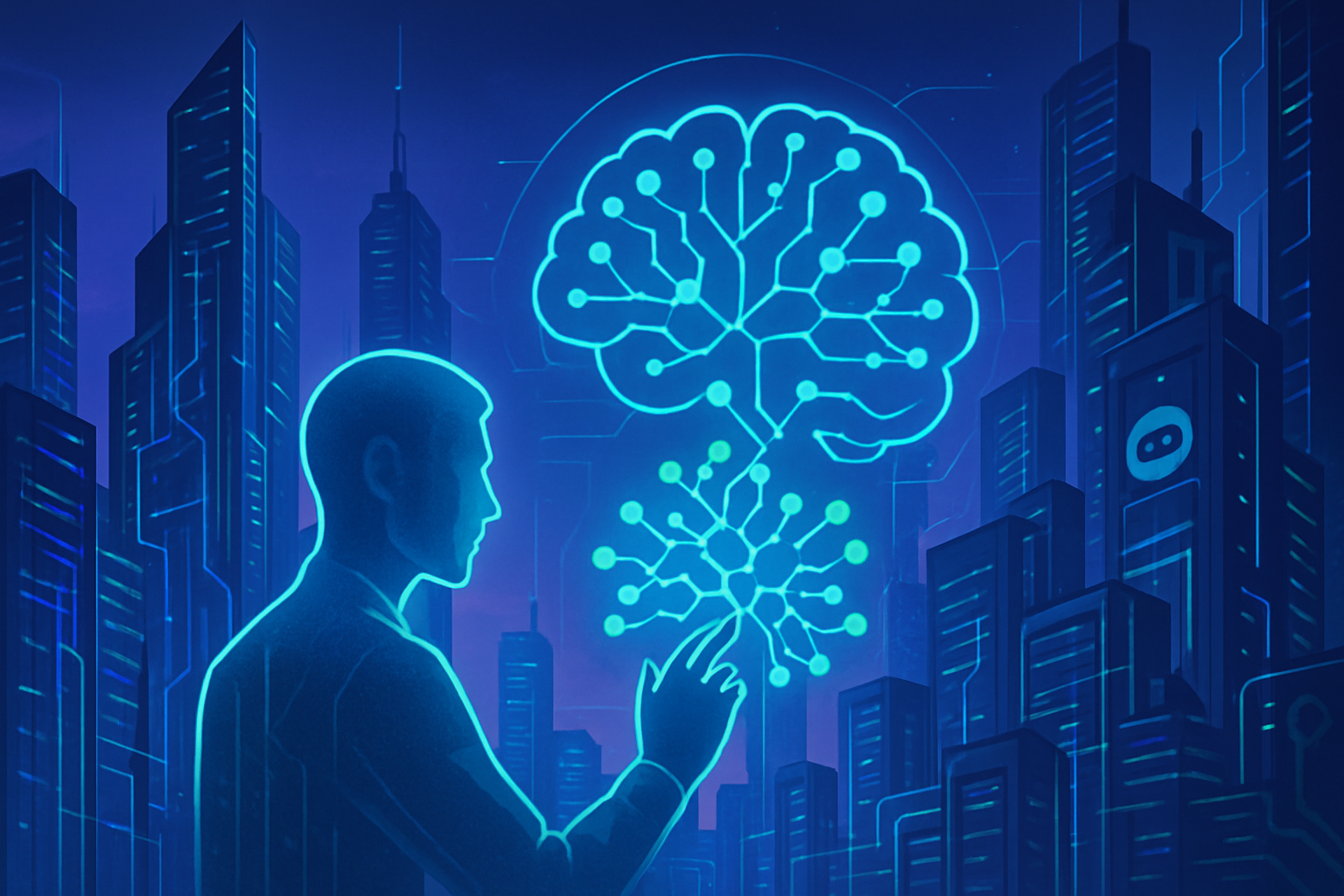
    The global workforce stands at a critical juncture, facing an unprecedented wave of technological transformation driven by advancements in Artificial Intelligence (AI), automation, cloud computing, and cybersecurity. This digital revolution is not merely altering how we work but fundamentally redefining the very nature of employment, demanding an urgent and continuous adaptation of skills from individuals, businesses, and educational institutions alike. The immediate significance of this shift cannot be overstated; it is a matter of sustained employability, economic growth, and societal resilience in the face of rapid change.

    As routine tasks become increasingly automated, the demand for human skills is pivoting towards areas that leverage creativity, critical thinking, complex problem-solving, and emotional intelligence—attributes that machines cannot yet replicate. This dynamic environment is creating new job roles at a dizzying pace, from AI prompt engineers to data ethicists, while simultaneously displacing positions reliant on repetitive labor. The urgency of this transformation is amplified by the accelerated pace of technological evolution, where skill sets can become obsolete within years, necessitating a proactive and continuous learning mindset to "future-proof" careers and ensure organizational agility.

    The Digital Dynamo: Unpacking the Technologies Reshaping Work

    The current technological revolution, primarily spearheaded by advancements in Artificial Intelligence and automation, represents a significant departure from previous industrial shifts, demanding a new paradigm of workforce adaptation. Unlike the mechanical automation of the past that primarily augmented physical labor, today's AI systems are increasingly capable of performing cognitive tasks, analyzing vast datasets, and even generating creative content, thus impacting a much broader spectrum of professions.

    At the heart of this transformation are several key technological advancements. Machine Learning (ML), a subset of AI, enables systems to learn from data without explicit programming, leading to sophisticated predictive analytics, personalized recommendations, and autonomous decision-making. Large Language Models (LLMs), such as those developed by OpenAI (NASDAQ: MSFT), Google (NASDAQ: GOOGL), and Anthropic, have dramatically advanced natural language processing, allowing for human-like text generation, translation, and summarization, impacting roles from content creation to customer service. Robotics Process Automation (RPA) automates repetitive, rule-based tasks within business processes, freeing human workers for more complex activities. Furthermore, cloud computing provides the scalable infrastructure necessary for these AI applications, while data analytics tools are essential for extracting insights from the massive amounts of data generated.

    This differs significantly from previous technological approaches where automation was often confined to specific, well-defined tasks. Modern AI, particularly generative AI, exhibits a level of adaptability and generalized capability that allows it to learn and perform across diverse domains, blurring the lines between human and machine capabilities. For instance, an AI can now draft legal documents, write software code, or design marketing campaigns—tasks previously considered exclusive to highly skilled human professionals. Initial reactions from the AI research community and industry experts highlight both immense excitement and cautious optimism. While many celebrate the potential for unprecedented productivity gains and the creation of entirely new industries, there are also concerns regarding job displacement, the ethical implications of autonomous systems, and the imperative for robust reskilling initiatives to prevent a widening skills gap. The consensus is that symbiotic human-AI collaboration will be the hallmark of future work.

    Corporate Crossroads: Navigating the AI-Driven Competitive Landscape

    The accelerating pace of AI and automation is profoundly reshaping the competitive landscape for companies across all sectors, creating clear beneficiaries, formidable disruptors, and urgent strategic imperatives for adaptation. Companies that proactively embrace and integrate these technologies into their operations and products stand to gain significant competitive advantages, while those that lag risk obsolescence.

    Tech giants with substantial investments in AI research and development, such as Alphabet (NASDAQ: GOOGL), Microsoft (NASDAQ: MSFT), Amazon (NASDAQ: AMZN), and Meta Platforms (NASDAQ: META), are clear beneficiaries. These companies are not only developing foundational AI models and infrastructure but also embedding AI capabilities into their vast ecosystems of products and services, from cloud platforms and enterprise software to consumer applications. Their ability to attract top AI talent, coupled with massive data resources, positions them at the forefront of innovation. Similarly, specialized AI startups, like Anthropic and Hugging Face, are emerging as powerful disruptors, often focusing on niche applications or developing innovative open-source models that challenge the dominance of larger players.

    The competitive implications are far-reaching. Major AI labs and tech companies are engaged in an intense race for AI supremacy, investing heavily in R&D, acquiring promising startups, and forming strategic partnerships. This competition is driving rapid advancements but also raises concerns about market concentration. Existing products and services across various industries face potential disruption. For instance, traditional customer service models are being transformed by AI-powered chatbots, while generative AI is altering workflows in creative industries, software development, and even legal services. Companies that fail to integrate AI risk losing market share to more agile competitors offering AI-enhanced solutions that deliver greater efficiency, personalization, or innovation.

    Market positioning and strategic advantages are increasingly tied to a company's "AI quotient"—its ability to develop, deploy, and leverage AI effectively. This includes not only technological prowess but also a strategic vision for workforce transformation, data governance, and ethical AI implementation. Companies that successfully reskill their workforces to collaborate with AI, rather than be replaced by it, will foster innovation and maintain a critical human advantage. Conversely, firms that view AI solely as a cost-cutting measure, without investing in their human capital, may find themselves with a disengaged workforce and a diminished capacity for future growth and adaptation.

    Beyond the Code: AI's Broad Societal Tapestry and Ethical Crossroads

    The ongoing AI revolution is not merely a technological shift; it is a profound societal transformation that resonates across the broader AI landscape, impacting economic structures, ethical considerations, and our very understanding of work. This era fits squarely into the trend of increasing automation and intelligence augmentation, representing a significant leap from previous AI milestones and setting the stage for a future where human-AI collaboration is ubiquitous.

    One of the most significant impacts is the redefinition of human value in the workplace. As AI takes on more analytical and repetitive tasks, the emphasis shifts to uniquely human capabilities: creativity, critical thinking, complex problem-solving, emotional intelligence, and interpersonal communication. This necessitates a fundamental re-evaluation of educational curricula and corporate training programs to cultivate these "soft skills" alongside digital literacy. Furthermore, the rise of AI exacerbates concerns about job displacement in certain sectors, particularly for roles involving routine tasks. While new jobs are being created, there's a critical need for robust reskilling and upskilling initiatives to ensure a just transition and prevent a widening socioeconomic gap.

    Potential concerns extend beyond employment. The ethical implications of AI, including bias in algorithms, data privacy, and accountability for autonomous systems, are at the forefront of public discourse. Unchecked AI development could perpetuate existing societal inequalities or create new ones, necessitating strong regulatory frameworks and ethical guidelines. The debate around "explainable AI" (XAI) is gaining traction, demanding transparency in how AI systems make decisions, especially in critical applications like healthcare, finance, and legal judgments.

    Comparisons to previous AI milestones, such as the development of expert systems or the Deep Blue chess victory, highlight the qualitative difference of the current era. Today's generative AI, with its ability to understand and create human-like content, represents a more generalized form of intelligence that permeates a wider array of human activities. This is not just about machines performing specific tasks better, but about machines collaborating in creative and cognitive processes. The broader AI landscape is trending towards hybrid intelligence, where humans and AI work synergistically, each augmenting the other's strengths. This trend underscores the importance of developing interfaces and workflows that facilitate seamless collaboration, moving beyond mere tool usage to integrated partnership.

    The Horizon of Work: Anticipating AI's Next Chapter

    The trajectory of AI and its impact on the workforce points towards a future characterized by continuous evolution, novel applications, and persistent challenges that demand proactive solutions. Near-term developments are expected to focus on refining existing generative AI models, improving their accuracy, reducing computational costs, and integrating them more deeply into enterprise software and everyday tools. We can anticipate more specialized AI agents capable of handling complex, multi-step tasks, further automating workflows in areas like software development, scientific research, and personalized education.

    In the long term, experts predict the emergence of more sophisticated multi-modal AI, capable of understanding and generating content across various formats—text, image, audio, and video—simultaneously. This will unlock new applications in fields such as immersive media, advanced robotics, and comprehensive virtual assistants. The development of AI for scientific discovery is also on the horizon, with AI systems accelerating breakthroughs in material science, drug discovery, and climate modeling. Furthermore, AI-powered personalized learning platforms are expected to become commonplace, dynamically adapting to individual learning styles and career goals, making continuous skill acquisition more accessible and efficient.

    Potential applications and use cases on the horizon include highly personalized healthcare diagnostics and treatment plans, AI-driven urban planning for smart cities, and autonomous systems for complex logistical challenges. The "copilot" model, where AI assists human professionals in various tasks, will expand beyond coding to encompass legal research, architectural design, and strategic business analysis.

    However, several challenges need to be addressed. The ethical governance of AI remains paramount, requiring international collaboration to establish standards for bias mitigation, data privacy, and accountability. The skills gap will continue to be a significant hurdle, necessitating massive investments in public and private reskilling initiatives to ensure a broad segment of the workforce can adapt. Furthermore, ensuring equitable access to AI technologies and education will be crucial to prevent a digital divide from exacerbating existing societal inequalities. Experts predict that the ability to effectively collaborate with AI will become a fundamental literacy, as essential as reading and writing, shaping the curriculum of future education systems and the hiring practices of leading companies.

    The Reskilling Imperative: A Call to Action for the AI Era

    The transformative power of Artificial Intelligence and automation has irrevocably altered the global job market, ushering in an era where continuous skill acquisition is not merely advantageous but absolutely essential for individuals and organizations alike. The key takeaway from this technological epoch is clear: the future of work is not about humans versus machines, but about humans with machines. This necessitates a profound shift in mindset, moving away from static job roles towards dynamic skill sets that can evolve with technological advancements.

    This development marks a significant moment in AI history, moving beyond theoretical advancements to tangible, pervasive impacts on daily work life. It underscores the rapid maturation of AI from a specialized research field to a foundational technology driving economic and social change. The long-term impact will be the creation of a more efficient, innovative, and potentially more fulfilling work environment, provided that society collectively addresses the challenges of reskilling, ethical governance, and equitable access.

    In the coming weeks and months, critical areas to watch include the continued development of highly specialized AI models, the emergence of new regulatory frameworks for AI ethics and deployment, and the acceleration of corporate and governmental initiatives focused on workforce upskilling. The integration of AI into educational systems will also be a key indicator of readiness for the future. The ability of societies to adapt their educational and training infrastructures will be paramount in determining whether the AI revolution leads to widespread prosperity or increased societal stratification.


    This content is intended for informational purposes only and represents analysis of current AI developments.

    TokenRing AI delivers enterprise-grade solutions for multi-agent AI workflow orchestration, AI-powered development tools, and seamless remote collaboration platforms.
    For more information, visit https://www.tokenring.ai/.
  • Singapore Sounds Global Alarm: Invest in Humanity for the AI Age

    Singapore Sounds Global Alarm: Invest in Humanity for the AI Age

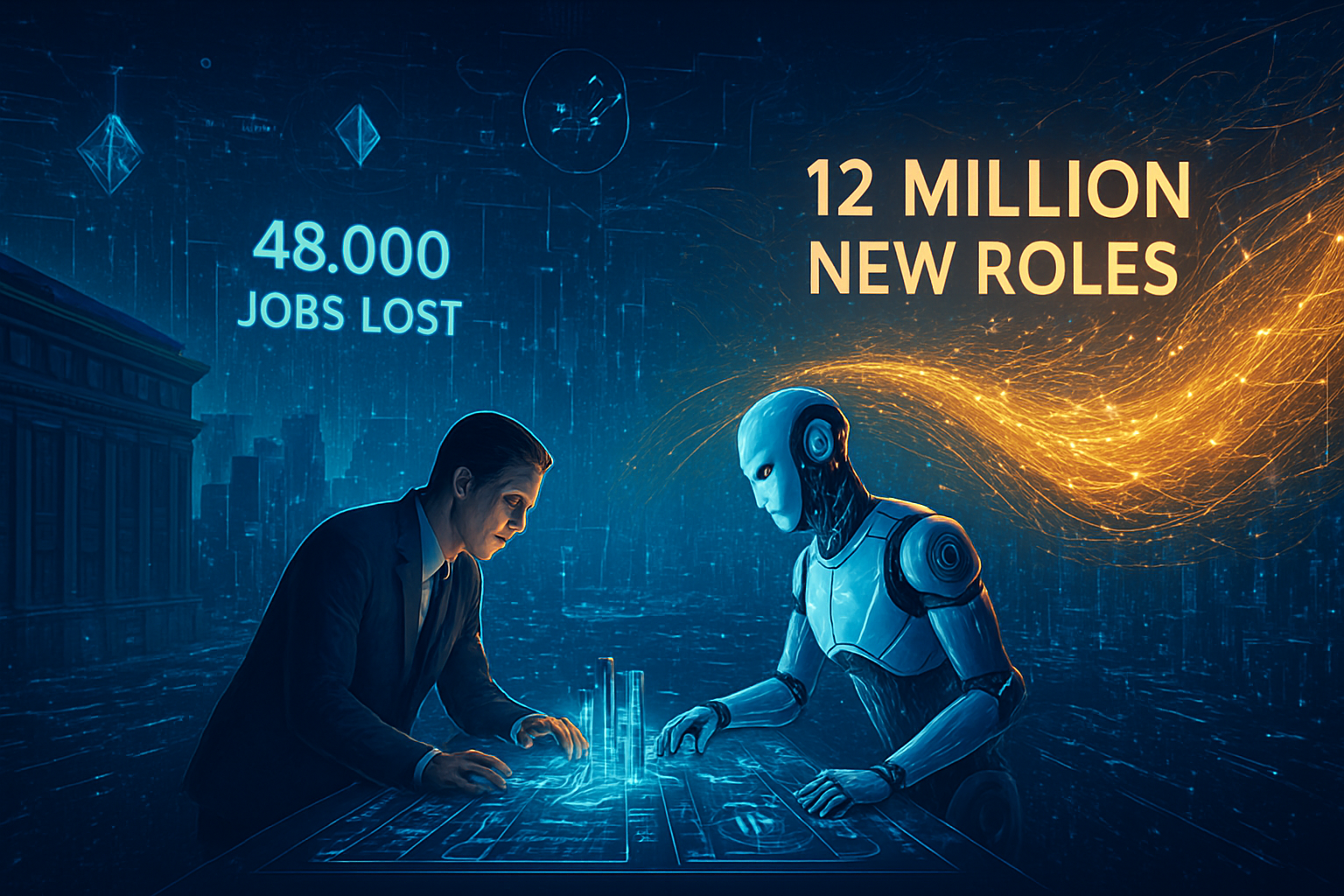
    Singapore's Prime Minister Lawrence Wong has issued a powerful and urgent global appeal to governments worldwide: prioritize significant investment in preparing their workforces for the transformative era of artificial intelligence. This clarion call, delivered amidst escalating anxieties over AI-driven job displacement, underscores a deliberate, human-centric approach to technological advancement. It positions the state as a crucial architect in ensuring that the immense benefits of AI are equitably distributed, fostering economic growth while safeguarding societal stability and individual livelihoods. The immediate significance of this message lies in its proactive stance, advocating for a global strategy that marries aggressive AI adoption with robust policies for continuous education, reskilling, and job redesign, rather than leaving the future of work solely to market forces.

    A Blueprint for Human-Centric AI Integration

    Prime Minister Wong’s announcement is not merely a caution but a comprehensive blueprint for national and international action. At its core, Singapore's strategy emphasizes that AI's primary purpose should be to create and enhance local jobs, boost productivity, and benefit the workforce, rather than causing widespread displacement. This approach fundamentally differs from a laissez-faire outlook, which often assumes new jobs will automatically emerge to replace those lost. Wong explicitly stated that "there is no economic law that guarantees" such an outcome, stressing that governments "cannot leave this to the market." This marks a significant shift, acknowledging the unprecedented speed of AI-driven disruption and the need for deliberate intervention.

    Technically, Singapore's multi-pronged strategy involves substantial overhauls and new initiatives. The SkillsFuture Programme is being revamped with the SkillsFuture Level-Up Programme, offering significant credit top-ups (e.g., SG$4,000 for Singaporeans aged 40 and above) for eligible training, including part-time and full-time diplomas and undergraduate courses. A Mid-Career Training Allowance provides up to SG$3,000 per month for workers over 40 to pursue approved full-time courses, with plans to extend this to part-time learners by early 2026. Furthermore, the National AI Strategy (NAIS) 2.0 aims to triple Singapore’s AI practitioners to 15,000 within three to five years through local training and international recruitment. The AI Apprenticeship Programme is being expanded, and universities are increasing AI course offerings, with some making AI a compulsory introductory subject for computer science students. These initiatives represent a concerted effort to proactively equip the workforce with the skills needed to thrive in an AI-driven economy, moving beyond reactive measures to systemic preparation. Initial reactions from policy experts and labor organizations have largely been positive, hailing Singapore's pragmatic and forward-thinking approach as a potential model for other nations grappling with similar challenges.

    Reshaping the AI Industry Landscape

    Singapore's proactive stance has significant implications for AI companies, tech giants, and startups globally. Companies specializing in AI education, reskilling platforms, and workforce development solutions stand to benefit immensely. Firms offering AI tools designed for productivity enhancement and job augmentation, particularly those tailored for Small and Medium-sized Enterprises (SMEs), will find a fertile ground for growth. The emphasis on broad-based AI adoption, rather than solely focusing on frontier advancements, encourages the development of practical, accessible AI solutions that can be integrated across various sectors, boosting overall economic productivity.

    For major AI labs and tech companies, Singapore's call signals a growing global expectation for responsible and human-centric AI development. While these companies often lead in innovation, they may face increasing pressure from governments to demonstrate how their technologies contribute to job creation and workforce empowerment, rather than solely focusing on efficiency gains that could lead to displacement. This could disrupt existing product roadmaps, pushing companies to invest more in explainable AI, human-in-the-loop systems, and collaborative AI tools. Startups that align with Singapore's vision, focusing on solutions that empower workers and facilitate reskilling, could gain significant market positioning and strategic advantages, potentially attracting government partnerships and investment in a global landscape increasingly prioritizing inclusive AI growth. The competitive landscape may shift towards companies that can offer not just cutting-edge AI, but also comprehensive strategies for its ethical and societal integration.

    A Global Imperative for Inclusive AI Growth

    Singapore's advocacy for workforce preparation fits squarely into the broader global AI landscape, which is increasingly grappling with the societal impacts of rapid technological advancement. It highlights a critical trend: the shift from viewing AI purely as a technological marvel to recognizing it as a profound societal force requiring careful governance and strategic human capital development. The call echoes concerns raised by international bodies like the International Monetary Fund (IMF), which has pointed to Singapore's particular exposure to AI's workplace disruptions due to its skilled workforce. This initiative serves as a potential global benchmark, especially for other small, open economies, demonstrating how aggressive tech adoption can be balanced with human-centric policies to maintain societal stability in a turbulent world marked by economic fragmentation and geopolitical tensions.

    The potential concerns addressed by this proactive approach include the exacerbation of income inequality, particularly affecting women and younger workers, if AI's benefits are not widely distributed. By emphasizing broad-based AI adoption and supporting SMEs, Singapore aims to ensure that the returns from AI investments accrue not just to the owners of capital, but also to workers and the broader populace. This contrasts sharply with earlier industrial revolutions, where the social safety nets and educational infrastructure often lagged behind technological change, leading to significant social unrest. Singapore's engagement in international forums like APEC, advocating for cooperation and best practices in AI, further underscores its commitment to shaping a responsible global AI future, exemplified by initiatives like the AI Verify Foundation and the Singapore Consensus on Global AI Safety Research Priorities.

    The Road Ahead: Continuous Adaptation and Global Collaboration

    Looking ahead, the initiatives outlined by Singapore's Prime Minister signal a future characterized by continuous adaptation and robust international collaboration in the realm of AI and workforce development. Near-term developments will likely see the full implementation and expansion of programs like the SkillsFuture Level-Up Programme and the Mid-Career Training Allowance, with the latter extending to part-time learners by early 2026. The push to triple Singapore's AI practitioners to 15,000 within three to five years will necessitate sustained investment in specialized training and talent attraction.

    In the long term, experts predict that the concept of a static career will become increasingly obsolete, replaced by a dynamic model of lifelong learning and multiple career pivots. This will require not just government-led initiatives but also a fundamental shift in corporate culture towards continuous employee upskilling and reskilling. Potential applications and use cases on the horizon include highly personalized AI-powered learning platforms, advanced job-matching algorithms that identify skill gaps and suggest relevant training, and collaborative AI systems that augment human capabilities rather than replacing them entirely. Challenges that need to be addressed include ensuring equitable access to these training opportunities, particularly for vulnerable populations, and constantly updating curricula to keep pace with rapidly evolving AI technologies. Experts predict that successful nations will be those that can foster a strong ecosystem of government, industry, and academia working in concert to cultivate an adaptable and resilient workforce.

    A Defining Moment for the Future of Work

    Singapore's Prime Minister Lawrence Wong's call for global governments to invest in preparing their workforces for the age of artificial intelligence marks a defining moment in the ongoing discourse about the future of work. The key takeaway is clear: the transition to an AI-powered economy cannot be left to chance; it requires deliberate, proactive, and human-centric government intervention. Singapore's comprehensive strategy, encompassing significant investments in lifelong learning, job redesign, and talent development, offers a tangible model for other nations.

    This development holds immense significance in AI history, shifting the narrative from technological determinism to one of human agency and responsible governance. It underscores that while AI's capabilities are profound, its ultimate impact on society will be shaped by the policy choices made today. The long-term impact could be a more equitable and resilient global workforce, capable of harnessing AI's potential for widespread prosperity. In the coming weeks and months, the world will be watching to see how other nations respond to this call, and how Singapore continues to refine and implement its ambitious strategy. The success of these initiatives will not only benefit Singaporeans but could also provide invaluable lessons for a world grappling with the profound implications of the AI revolution.


    This content is intended for informational purposes only and represents analysis of current AI developments.

    TokenRing AI delivers enterprise-grade solutions for multi-agent AI workflow orchestration, AI-powered development tools, and seamless remote collaboration platforms.
    For more information, visit https://www.tokenring.ai/.
  • The AI Revolution: Reshaping the Tech Workforce with Layoffs, Reassignments, and a New Era of Skills

    The AI Revolution: Reshaping the Tech Workforce with Layoffs, Reassignments, and a New Era of Skills

    The landscape of the global tech industry is undergoing a profound and rapid transformation, driven by the accelerating integration of Artificial Intelligence. Recent surveys and reports from 2024-2025 paint a clear picture: AI is not merely enhancing existing roles but is fundamentally redefining the tech workforce, leading to a significant wave of job reassignments and, in many instances, outright layoffs. This immediate shift signals an urgent need for adaptation from both individual workers and organizations, as the industry grapples with the dual forces of automation and the creation of entirely new, specialized opportunities.

    In the first half of 2025 alone, the tech sector saw over 89,000 job cuts, adding to the 240,000 tech layoffs recorded in 2024, with AI frequently cited by major players like Microsoft (NASDAQ: MSFT), Google (NASDAQ: GOOGL), Intel (NASDAQ: INTC), Amazon (NASDAQ: AMZN), and Meta (NASDAQ: META) as a contributing factor. While some of these reductions are framed as "right-sizing" post-pandemic, the underlying current is the growing efficiency enabled by AI automation. This has led to a drastic decline in entry-level positions, with junior roles in various departments experiencing significant drops in hiring rates, challenging traditional career entry points. However, this is not solely a narrative of job elimination; experts describe it as a "talent remix," where companies are simultaneously cutting specific positions and creating new ones that leverage emerging AI technologies, demanding a redefinition of essential human roles.

    The Technical Underpinnings of Workforce Evolution: Generative AI and Beyond

    The current wave of workforce transformation is directly attributable to significant technical advancements in AI, particularly generative AI, sophisticated automation platforms, and multi-agent systems. These capabilities represent a new paradigm, vastly different from previous automation technologies, and pose unique technical implications for enterprise operations.

    Generative AI, encompassing large language models (LLMs), is at the forefront. These systems can generate new content such as text, code, images, and even video. Technically, generative AI excels at tasks like code generation and error detection, reducing the need for extensive manual coding, particularly for junior developers. It's increasingly deployed in customer service for advanced chatbots, in marketing for content creation, and in sales for building AI-powered units. More than half of the skills within technology roles are expected to undergo deep transformation due to generative AI, prompting companies like Dell (NYSE: DELL), IBM (NYSE: IBM), Microsoft, Google, and SAP (NYSE: SAP) to link workforce restructuring to their pivot towards integrating this technology.

    Intelligent Automation Platforms, an evolution of Robotic Process Automation (RPA) integrated with AI (like machine learning and natural language processing), are also driving change. These platforms automate repetitive, rules-based, and data-intensive tasks across administrative functions, data entry, and transaction processing. AI assistants, merging generative AI with automation, can intelligently interact with users, support decision-making, and streamline or replace entire workflows. This reduces the need for manual labor in areas like manufacturing and administrative roles, leading to reassignments or layoffs for fully automatable positions.

    Perhaps the most advanced are Multi-Agent Systems, sophisticated AI frameworks where multiple specialized AI agents collaborate to achieve complex goals, often forming an "agent workforce." These systems can decompose complex problems, assign subtasks to specialized agents, and even replace entire call centers by handling customer requests across multiple platforms. In software development, agents can plan, code, test, and debug applications collaboratively. These systems redefine traditional job roles by enabling "AI-first teams" that can manage complex projects, potentially replacing multiple human roles in areas like marketing, design, and project management.

    Unlike earlier automation, which primarily replaced physical tasks, modern AI automates cognitive, intellectual, and creative functions. Current AI systems learn, adapt, and continuously improve without explicit reprogramming, tackling problems of unprecedented complexity by coordinating multiple agents. While previous technological shifts took decades to materialize, the adoption and influence of generative AI are occurring at an accelerated pace. Technically, this demands robust infrastructure, advanced data management, complex integration with legacy systems, stringent security and ethical governance, and a significant upskilling of the IT workforce. AI is revolutionizing IT operations by automating routine tasks, allowing IT teams to focus on strategic design and innovation.

    Corporate Maneuvers: Navigating the AI-Driven Competitive Landscape

    The AI-driven transformation of the tech workforce is fundamentally altering the competitive landscape, compelling AI companies, major tech giants, and startups to strategically adapt their market positioning and operational models.

    Major Tech Giants like Amazon, Apple (NASDAQ: AAPL), Meta, IBM, Microsoft, and Google are undergoing significant internal restructuring. While experiencing layoffs, often attributed to AI-driven efficiency gains, these companies are simultaneously making massive investments in AI research and development. Their strategy involves integrating AI into core products and services to enhance efficiency, maintain a competitive edge, and "massively upskill" their existing workforce for human-AI collaboration. For instance, Google has automated tasks in sales and customer service, shifting human efforts towards core AI research and cloud services. IBM notably laid off thousands in HR as its chatbot, AskHR, began handling millions of internal queries annually.

    AI Companies are direct beneficiaries of this shift, thriving on the surging demand for AI technologies and solutions. They are the primary creators of new AI-related job opportunities, actively seeking highly skilled AI specialists. Companies deeply invested in AI infrastructure and data collection, such as Palantir Technologies (NYSE: PLTR) and Broadcom Inc. (NASDAQ: AVGO), have seen substantial growth driven by their leadership in AI.

    Startups face a dual reality. AI provides immense opportunities for increased efficiency, improved decision-making, and cost reduction, enabling them to compete against larger players. Companies like DataRobot and UiPath (NYSE: PATH) offer platforms that automate machine learning model deployment and repetitive tasks, respectively. However, startups often contend with limited resources, a lack of in-house expertise, and intense competition for highly skilled AI talent. Companies explicitly benefiting from leveraging AI for efficiency and cost reduction include Klarna, Intuit (NASDAQ: INTU), UPS (NYSE: UPS), Duolingo (NASDAQ: DUOL), and Fiverr (NYSE: FVRR). Klarna, for example, replaced the workload equivalent of 700 full-time staff with an AI assistant.

    The competitive implications are profound: AI enables substantial efficiency and productivity gains, leading to faster innovation cycles and significant cost savings. This creates a strong competitive advantage for early adopters, with organizations mastering strategic AI integration achieving 15-25% productivity gains. The intensified race for AI-native talent is another critical factor, with a severe shortage of AI-critical skills. Companies failing to invest in reskilling risk falling behind. AI is not just optimizing existing services but enabling entirely new products and business models, transforming traditional workflows. Strategic adaptation involves massive investment in reskilling and upskilling programs, redefining roles for human-AI collaboration, dynamic workforce planning, fostering a culture of experimentation, integrating AI into core business strategy, and a shift towards "precision hiring" for AI-native talent.

    Broader Implications: Navigating the Societal and Ethical Crossroads

    The widespread integration of AI into the workforce carries significant wider implications, fitting into broader AI landscape trends while raising critical societal and ethical concerns, and drawing comparisons to previous technological shifts.

    AI-driven workforce changes are leading to societal impacts such as job insecurity, as AI displaces routine and increasingly complex cognitive jobs. While new roles emerge, the transition challenges displaced workers lacking advanced skills. Countries like Singapore are proactively investing in upskilling. Beyond employment, there are concerns about psychological well-being, potential for social instability, and a growing wage gap between "AI-enabled" workers and lower-paid workers, further polarizing the workplace.

    Potential concerns revolve heavily around ethics and economic inequality. Ethically, AI systems trained on historical data can perpetuate or amplify existing biases, leading to discrimination in areas like recruitment, finance, and healthcare. Increased workplace surveillance and privacy concerns arise from AI tools collecting sensitive personal data. The "black box" nature of many AI models poses challenges for transparency and accountability, potentially leading to unfair treatment. Economically, AI-driven productivity gains could exacerbate wealth concentration, widening the wealth gap and deepening socio-economic divides. Labor market polarization, with demand for high-paying AI-centric jobs and low-paying non-automatable jobs, risks shrinking the middle class, disproportionately affecting vulnerable populations. The lack of access to AI training for displaced workers creates significant barriers to new opportunities.

    Comparing AI's workforce transformation to previous major technological shifts reveals both parallels and distinctions. While the Industrial Revolution mechanized physical labor, AI augments and replaces cognitive tasks, fundamentally changing how we think and make decisions. Unlike the internet or mobile revolutions, which enhanced communication, AI builds upon this infrastructure by automating processes and deriving insights at an unprecedented scale. Some experts argue the pace of AI-driven change is significantly faster and more exponential than previous shifts, leaving less time for adaptation, though others suggest a more gradual evolution.

    Compared to previous AI milestones, the current phase, especially with generative AI, is deeply integrated across job sectors, driving significant productivity boosts and impacting white-collar jobs previously immune to automation. Early AI largely focused on augmenting human capabilities; now, there's a clear trend toward AI directly replacing certain job functions, particularly in HR, customer support, and junior-level tech roles. This shift from "enhancing human capabilities" to "replacing jobs" marks a significant evolution. The current AI landscape demands higher-level skills, including AI development, data science, and critical human capabilities like leadership, problem-solving, and empathy that AI cannot replicate.

    The Horizon: Future Developments and Expert Predictions

    Looking ahead, the impact of AI on the tech workforce is poised for continuous evolution, marked by both near-term disruptions and long-term transformations in job roles, skill demands, and organizational structures. Experts largely predict a future defined by pervasive human-AI collaboration, enhanced productivity, and an ongoing imperative for adaptation and continuous learning.

    In the near-term (1-5 years), routine and manual tasks will continue to be automated, placing entry-level positions in software engineering, manual QA testing, basic data analysis, and Tier 1/2 IT support at higher risk. Generative AI is already proving capable of writing significant portions of code previously handled by junior developers and automating customer service. However, this period will also see robust tech hiring driven by the demand for individuals to build, implement, and manage AI systems. A significant percentage of tech talent will be reassigned, necessitating urgent upskilling, with 60% of employees expected to require retraining by 2027.

    The long-term (beyond 5 years) outlook suggests AI will fundamentally transform the global workforce by 2050, requiring significant adaptation for up to 60% of current jobs. While some predict net job losses by 2027, others forecast a net gain of millions of new jobs by 2030, emphasizing AI's role in rewiring job requirements rather than outright replacement. The vision is "human-centric AI," augmenting human intelligence and reshaping professions to be more efficient and meaningful. Organizations are expected to become flatter and more agile, with AI handling data processing, routine decision-making, and strategic forecasting, potentially reducing middle management layers. The emergence of "AI agents" could double the knowledge workforce by autonomously performing complex tasks.

    Future job roles will include highly secure positions like AI/Machine Learning Engineers, Data Scientists, AI Ethicists, Prompt Engineers, and Cloud AI Architects. Roles focused on human-AI collaboration, managing and optimizing AI systems, and cybersecurity will also be critical. In-demand skills will encompass technical AI and data science (Python, ML, NLP, deep learning, cloud AI), alongside crucial soft skills like critical thinking, creativity, emotional intelligence, adaptability, and ethical reasoning. Data literacy and AI fluency will be essential across all industries.

    Organizational structures will flatten, becoming more agile and decentralized. Hybrid teams, where human intelligence and AI work hand-in-hand, will become the norm. AI will break down information silos, fostering data transparency and enabling data-driven decision-making at all levels. Potential applications are vast, ranging from automating inventory management and enhancing productivity to personalized customer experiences, advanced analytics, improved customer service via chatbots, AI-assisted software development, and robust cybersecurity.

    However, emerging challenges include ongoing job displacement, widening skill gaps (with many employees feeling undertrained in AI), ethical dilemmas (privacy, bias, accountability), data security concerns, and the complexities of regulatory compliance. Economic inequalities could be exacerbated if access to AI education and tools is not broadly distributed.

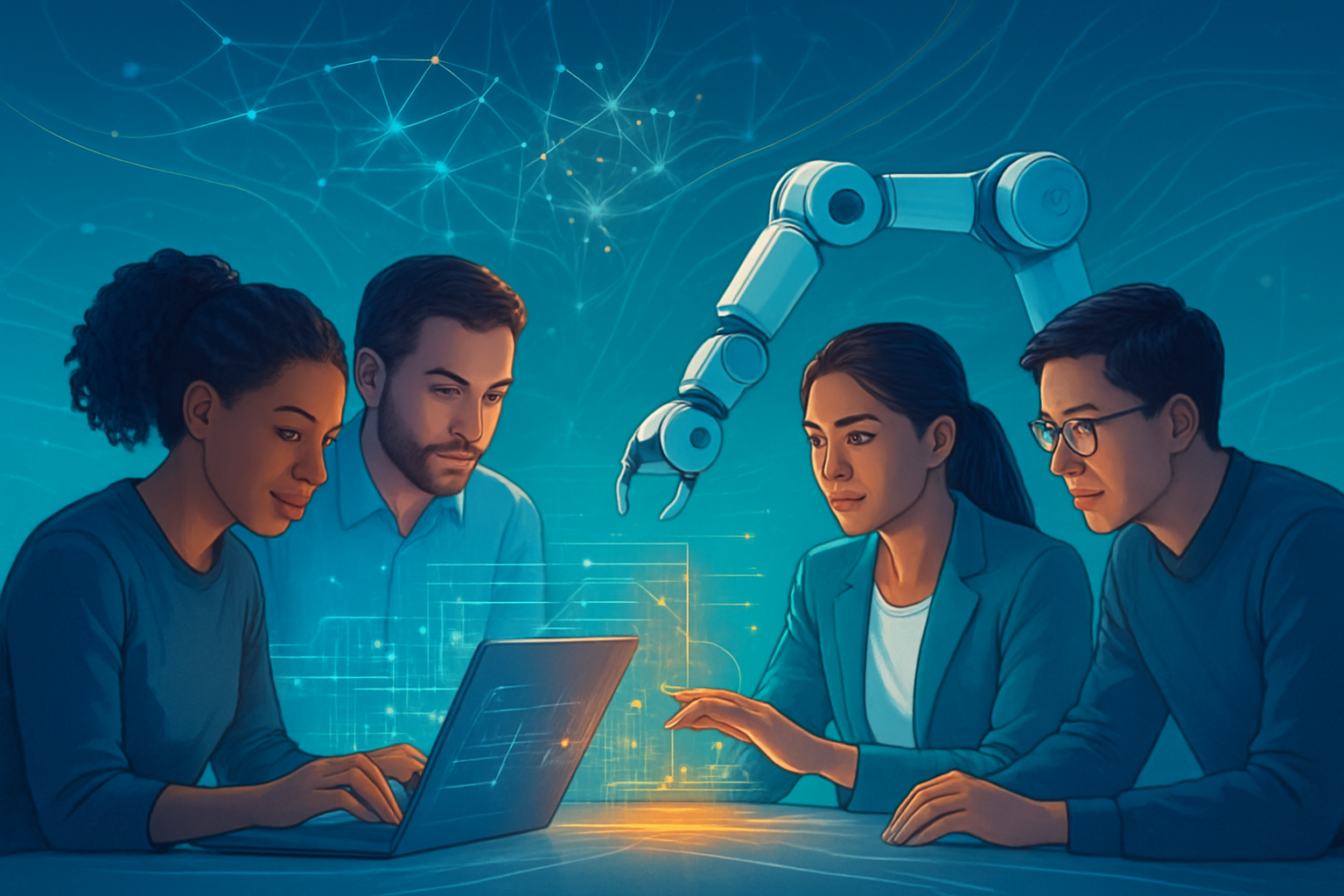
    Expert predictions largely converge on a future of pervasive human-AI collaboration, where AI augments human capabilities, allowing humans to focus on tasks requiring uniquely human skills. Human judgment, autonomy, and control will remain paramount. The focus will be on redesigning roles and workflows to create productive partnerships, making lifelong learning an imperative. While job displacement will occur, many experts predict a net creation of jobs, albeit with a significant transitional period. Ethical responsibility in designing and implementing AI systems will be crucial for workers.

    A New Era: Summarizing AI's Transformative Impact

    The integration of Artificial Intelligence into the tech workforce marks a pivotal moment in AI history, ushering in an era of profound transformation that is both disruptive and rich with opportunity. The key takeaway is a dual narrative: while AI automates routine tasks and displaces certain jobs, it simultaneously creates new, specialized roles and significantly enhances productivity. This "talent remix" is not merely a trend but a fundamental restructuring of how work is performed and valued.

    This phase of AI adoption, particularly with generative AI, is akin to a general-purpose technology like electricity or the internet, signifying its widespread applicability and potential as a long-term economic growth driver. Unlike previous automation waves, the speed and scale of AI's current impact are unprecedented, affecting white-collar and cognitive roles previously thought immune. While initial fears of mass unemployment persist, the consensus among many experts points to a net gain in jobs globally, albeit with a significant transitional period demanding a drastic change in required skills.

    The long-term impact will be a continuous evolution of job roles, with tasks shifting towards those requiring uniquely human skills such as creativity, critical thinking, emotional intelligence, and strategic thinking. AI is poised to significantly raise labor productivity, fostering new business models and improved cost structures. However, the criticality of reskilling and lifelong learning cannot be overstated; individuals and organizations must proactively invest in skill development to remain competitive. Addressing ethical dilemmas, such as algorithmic bias and data privacy, and mitigating the risk of widening economic inequality through equitable access to AI education and tools, will be paramount for ensuring a beneficial and inclusive future.

    What to watch for in the coming weeks and months: Expect an accelerated adoption and deeper integration of AI across enterprises, moving beyond experimentation to full business transformation with AI-native processes. Ongoing tech workforce adjustments, including layoffs in certain roles (especially entry-level and middle management) alongside intensified hiring for specialized AI and machine learning professionals, will continue. Investment in AI infrastructure will surge, creating construction jobs in the short term. The emphasis on AI fluency and human-centric skills will grow, with employers prioritizing candidates demonstrating both. The development and implementation of comprehensive reskilling programs by companies and educational institutions, alongside policy discussions around AI's impact on employment and worker protections, will gain momentum. Finally, continuous monitoring and research into AI's actual job impact will be crucial to understand the true pace and scale of this ongoing technological revolution.

    This content is intended for informational purposes only and represents analysis of current AI developments.

    TokenRing AI delivers enterprise-grade solutions for multi-agent AI workflow orchestration, AI-powered development tools, and seamless remote collaboration platforms. For more information, visit https://www.tokenring.ai/.