
Tag: Resource Management

  • pH7 Technologies Secures $25.6M Series B to Revolutionize Critical Metals Extraction

    pH7 Technologies Secures $25.6M Series B to Revolutionize Critical Metals Extraction

    Vancouver, BC – December 4, 2025 – pH7 Technologies, a Vancouver-based cleantech innovator, today announced the initial closing of its Series B financing round, securing a substantial USD $25.6 million. This significant investment, led by Fine Structure Ventures with key strategic participation from BHP Ventures (ASX: BHP, NYSE: BHP), marks a pivotal moment in the quest for sustainable resource management. The funding is poised to accelerate the scaling and commercialization of pH7's groundbreaking critical metals extraction technology, with an initial focus on meeting the escalating global demand for copper and other essential minerals. This timely infusion of capital underscores a growing industry recognition of the urgent need for environmentally responsible and economically viable solutions to extract and recycle the critical metals indispensable for the global energy transition.

    The successful Series B round, which also saw participation from Energy & Environment Investment (EEI), Siteground, Gaingels Fund, and Calm Venture, alongside continued support from existing investors, signals strong confidence in pH7's proprietary solvometallurgy platform. As the world grapples with the dual challenges of mineral scarcity and the environmental footprint of traditional mining, pH7 Technologies stands at the forefront of a potential paradigm shift. Their innovative approach promises to unlock new domestic sources of critical minerals and enhance the circularity of materials, thereby bolstering supply chain security and significantly reducing the ecological impact associated with metal production.

    A Technical Deep Dive into Near-Zero Impact Extraction

    At the heart of pH7 Technologies' promise is a proprietary, closed-loop extraction process that redefines critical and precious metals recovery. Diverging sharply from conventional methods like smelting or harsh acid-based chemical leaching, pH7's technology harnesses the novel science of solvometallurgy. This involves the use of a proprietary non-aqueous green solvent, allowing for metal extraction at ambient temperature and pressure. This low-energy, low-impact process can efficiently recover a diverse portfolio of metals, including copper, tin, platinum, palladium, rhodium, iridium, and gold, from a variety of sources, ranging from low-grade ores and mining tailings to spent catalysts and electronic waste.

    The technical specifications and capabilities of pH7's system present a compelling alternative to existing technologies. The company boasts a near-net-zero environmental footprint, eliminating wastewater generation and drastically cutting CO2e emissions and energy consumption. For instance, in applications like hydrogen fuel cell catalyst recycling, the technology can achieve up to a 99% carbon footprint reduction, a 95% improvement in energy efficiency, and near-zero water usage with no toxic emissions. This contrasts starkly with traditional pyrometallurgical methods that rely on high-temperature processes, releasing significant pollutants and greenhouse gases. Furthermore, pH7's method claims up to a 50% increased recovery rate, making previously uneconomic or unrecoverable resources viable.

    Initial reactions from the AI research community and industry experts, while still coalescing around the specific technical nuances of pH7's solvometallurgy, are largely positive regarding the broader implications. The emphasis on a closed-loop system, reduced energy consumption, and elimination of toxic byproducts aligns perfectly with the burgeoning focus on green technology and sustainable engineering. The ability to process diverse feedstocks, including waste streams, also positions pH7 as a key enabler for the circular economy, drawing significant interest from researchers and environmental advocates alike.

    Industry Implications and Competitive Landscape

    The successful funding round and the impending commercialization of pH7 Technologies' platform are set to send ripples across the critical minerals and broader tech industries. Companies heavily reliant on a secure and sustainable supply of critical metals, particularly those in the electric vehicle (EV), renewable energy, and electronics sectors, stand to benefit immensely. By offering a cleaner, more efficient, and potentially more cost-effective method of sourcing these vital materials, pH7 could help stabilize supply chains and reduce the geopolitical risks associated with traditional mining. Major players in these sectors, from EV manufacturers to battery producers and electronics giants, could see improved material security and a cleaner environmental profile for their products.

    The competitive implications for major mining companies and existing metal refiners are significant. While traditional mining giants like BHP (ASX: BHP, NYSE: BHP), an investor in pH7, are exploring new technologies to green their operations, pH7's approach could disrupt established processing methods. Its modular and scalable design offers the potential for decentralized processing, allowing mines and recyclers to handle materials on-site. This could reduce transportation costs and the dominance of large, centralized refining operations. For startups in the cleantech and resource recovery space, pH7's success serves as a powerful validation of innovative, environmentally conscious approaches, potentially attracting further investment into the sector.

    The potential disruption extends to existing products and services by offering a more sustainable alternative. Products manufactured with pH7-extracted metals could boast a significantly lower carbon and water footprint, providing a competitive advantage in markets increasingly sensitive to environmental impact. This could drive a shift in market positioning, with companies adopting pH7's technology gaining strategic advantages in terms of sustainability credentials and supply chain resilience. The investment from a major player like BHP also suggests a strategic pivot within the traditional mining sector towards embracing and integrating advanced, greener extraction technologies.

    Wider Significance in the Sustainable Resource Landscape

    pH7 Technologies' Series B funding and the advancement of its critical metals extraction technology fit squarely into the broader landscape of sustainable resource management and the global push for a circular economy. This development is not merely an incremental improvement; it represents a significant leap towards decarbonizing and de-risking the supply chains of essential materials. As the world transitions to renewable energy and electric transportation, the demand for critical metals like copper, lithium, cobalt, and rare earth elements is skyrocketing. Traditional extraction methods are often environmentally destructive, energy-intensive, and generate vast amounts of waste. pH7's solution directly addresses these challenges, offering a pathway to meet demand without exacerbating ecological damage.

    The impacts of widespread adoption could be transformative. Environmentally, it promises a drastic reduction in mining's carbon footprint, minimized water usage, and the elimination of toxic waste, contributing directly to climate change mitigation and biodiversity preservation. Economically, it could foster localized critical mineral supply chains, reducing reliance on volatile international markets and creating new job opportunities in advanced material processing. Socially, it could alleviate the environmental justice concerns often associated with conventional mining operations in vulnerable communities.

    While direct comparisons to AI milestones might seem distant, the underlying principle of leveraging advanced scientific and engineering breakthroughs to solve complex global challenges is shared. Just as AI is revolutionizing data processing and decision-making, pH7's technology is poised to revolutionize material processing, enabling a more intelligent and sustainable approach to resource utilization. Potential concerns, as with any disruptive technology, might include the scalability challenges of deploying such a novel system globally and the integration with existing infrastructure. However, the backing from major investors suggests confidence in overcoming these hurdles.

    Charting Future Developments and Expert Predictions

    Looking ahead, the $25.6 million Series B funding will primarily fuel the scaling and commercialization of pH7 Technologies' copper extraction capabilities. Near-term developments are expected to focus on pilot plant expansion, process optimization, and securing initial commercial partnerships for copper production. This will involve rigorous testing and validation to demonstrate the technology's robustness and economic viability at a larger scale. In the long term, the company plans to broaden its application to other critical metals, leveraging its versatile platform to extract tin, platinum group metals, and gold from various feedstocks, including urban mining sources like e-waste.

    Potential applications and use cases on the horizon are vast. Beyond primary extraction from ores, pH7's technology holds immense promise for processing mining tailings, which represent vast untapped reservoirs of critical minerals, and for enhancing the recycling rates of complex materials like spent catalysts and electronic components. This could significantly boost the circularity of these valuable resources, moving closer to a truly closed-loop material economy. Experts predict that as the technology matures and scales, it could become a standard for sustainable metal extraction, influencing regulatory frameworks and industry best practices.

    Challenges that need to be addressed include further de-risking the technology for large-scale industrial deployment, navigating complex permitting and regulatory landscapes, and securing off-take agreements with major industrial players. Furthermore, educating the market and demonstrating the clear economic advantages alongside the environmental benefits will be crucial. Experts anticipate that successful implementation by pH7 could catalyze a broader shift in investment towards cleantech solutions for resource extraction, potentially sparking a wave of innovation in sustainable mining and recycling technologies globally.

    A New Era for Sustainable Resource Management

    pH7 Technologies' $25.6 million Series B funding round represents more than just a financial milestone; it is a profound validation of a technology poised to redefine critical metals extraction. The key takeaway is the emergence of a truly sustainable, near-zero-impact solution for sourcing the materials essential for our modern world and the ongoing energy transition. By offering a closed-loop, energy-efficient, and non-toxic process, pH7 is setting a new benchmark for environmental responsibility in the mining and recycling industries. This development signifies a critical step in AI history, not directly through AI's internal mechanisms but through its application in solving one of humanity's most pressing resource challenges.

    This development's significance in the broader AI and tech landscape lies in its demonstration of how advanced scientific innovation, often supported by computational and data-driven approaches in its development, can yield tangible, real-world solutions to complex industrial problems. It underscores the increasing convergence of deep tech and environmental sustainability. The long-term impact could be a fundamental reshaping of global supply chains for critical minerals, leading to more resilient, localized, and environmentally sound production.

    What to watch for in the coming weeks and months includes further announcements regarding pilot project expansions, strategic partnerships for commercial deployment, and the initial performance metrics of the scaled-up copper extraction process. The success of pH7 Technologies could serve as a powerful blueprint for other cleantech innovators, ushering in a new era where economic prosperity and environmental stewardship are not mutually exclusive but deeply intertwined. The journey towards a truly circular and sustainable resource economy just gained significant momentum.


    This content is intended for informational purposes only and represents analysis of current AI developments.

    TokenRing AI delivers enterprise-grade solutions for multi-agent AI workflow orchestration, AI-powered development tools, and seamless remote collaboration platforms.
    For more information, visit https://www.tokenring.ai/.

  • The Ocean’s Digital Awakening: IoT and AI Charting a New Future for Marine Environments

    The Ocean’s Digital Awakening: IoT and AI Charting a New Future for Marine Environments

    The world's oceans, vast and enigmatic, are on the cusp of a profound digital transformation. Driven by increasing investment in ocean innovation, advanced connectivity and the Internet of Things (IoT) are rapidly becoming indispensable tools for understanding, managing, and protecting our planet's most vital ecosystem. This technological tide promises to revolutionize marine research, enhance resource management, and provide unprecedented capabilities for environmental monitoring, ushering in an era of real-time insights and data-driven decision-making for the blue economy.

    As of December 1, 2025, the vision of a connected ocean is rapidly moving from concept to reality. From smart buoys tracking elusive marine life to autonomous underwater vehicles (AUVs) mapping the deepest trenches, these innovations are equipping scientists, policymakers, and industries with the critical intelligence needed to address pressing global challenges, including climate change, overfishing, and pollution. The implications for sustainable development and our stewardship of marine resources are immense, promising a future where humanity's interaction with the ocean is guided by precise, actionable data.

    Unveiling the Subsea Internet: Technical Leaps and Innovations

    The deployment of IoT in marine environments, often termed the Subsea Internet of Things (SIoT) or Internet of Underwater Things (IoUT), represents a significant leap from traditional, sporadic data collection methods. This advancement is characterized by a confluence of specialized hardware, robust communication protocols, and sophisticated data analytics designed to overcome the ocean's inherent challenges: limited bandwidth, high latency, energy constraints, and harsh conditions.

    Key technical advancements include the miniaturization and increased sensitivity of underwater sensors, capable of measuring a wide array of parameters such as temperature, pressure, salinity, pH, dissolved oxygen, and even marine particles. Emerging eDNA sensors are also poised to revolutionize marine biological research by detecting genetic material from organisms in water samples. Communication, a major hurdle underwater, is being tackled through hybrid approaches. While acoustic communication remains the most widely used for long ranges, offering data transmission via sound waves, it is complemented by short-range, high-bandwidth optical communication and specialized electromagnetic technologies like Seatooth radio for challenging water-air interfaces. Crucially, innovations like Translational Acoustic-RF (TARF) communication enable seamless data transfer between underwater acoustic signals and airborne radio signals by sensing surface vibrations. This differs significantly from previous approaches that relied heavily on infrequent human-operated data retrieval or tethered systems, offering continuous, real-time monitoring capabilities. Initial reactions from the AI research community and industry experts highlight the potential for unprecedented data density and temporal resolution, opening new avenues for scientific discovery and operational efficiency.

    Further bolstering the SIoT are advancements in marine robotics. Autonomous Underwater Vehicles (AUVs) and Remotely Operated Vehicles (ROVs) are no longer just exploration tools; they are becoming mobile data mules and intelligent sensor platforms, performing tasks from seafloor mapping to environmental sampling. Unmanned Surface Vessels (USVs) act as vital surface gateways, receiving data from underwater sensors via acoustic links and relaying it to shore via satellite or cellular networks. The integration of edge computing allows for on-site data processing, reducing the need for constant, high-bandwidth transmission, while cloud platforms provide scalable storage and analysis capabilities. These integrated systems represent a paradigm shift, moving from isolated data points to a comprehensive, interconnected network that continuously monitors and reports on the state of our oceans.

    Corporate Tides: Beneficiaries and Competitive Shifts

    The burgeoning field of ocean IoT and connectivity is attracting significant attention and investment, poised to reshape the competitive landscape for tech giants, specialized startups, and established marine technology firms. Companies positioned to benefit immensely include those specializing in satellite communication, underwater robotics, sensor manufacturing, and AI/data analytics platforms.

    Major satellite communication providers like Iridium Communications Inc. (NASDAQ: IRDM) and Globalstar, Inc. (NYSE: GSAT) stand to gain from the increasing demand for reliable, global data transmission from remote ocean environments, particularly with the rise of Low Earth Orbit (LEO) satellite constellations. Companies developing advanced AUVs and ROVs, such as Kongsberg Gruppen ASA (OSL: KOG) and Teledyne Technologies Incorporated (NYSE: TDY), are seeing expanded markets for their autonomous systems as key components of the SIoT infrastructure. Sensor manufacturers, both large and specialized, will experience heightened demand for robust, accurate, and energy-efficient underwater sensors. AI labs and tech giants like Google (NASDAQ: GOOGL), Microsoft (NASDAQ: MSFT), and Amazon (NASDAQ: AMZN) are strategically positioning themselves to offer the cloud infrastructure, AI/ML processing power, and data analytics tools necessary to manage and interpret the vast datasets generated by these ocean networks. Their existing cloud services and AI expertise give them a significant competitive advantage in processing and deriving insights from marine data.

    This development could disrupt traditional marine surveying and monitoring services, shifting towards more automated, continuous, and less labor-intensive operations. Startups focused on niche solutions, such as battery-free underwater communication (e.g., Piezo-Acoustic Backscatter technology) or specialized marine AI applications, could carve out significant market shares by addressing specific technical challenges. The competitive implications are clear: companies that can integrate hardware, software, and communication solutions into cohesive, scalable platforms will lead the charge. Strategic partnerships between hardware manufacturers, communication providers, and AI specialists are becoming crucial for market positioning, fostering an ecosystem where collaborative innovation drives progress and market share.

    A Deeper Dive: Wider Significance and Global Implications

    The rise of advanced connectivity and IoT in ocean environments represents a pivotal moment in the broader AI and technology landscape, extending the reach of smart systems into one of Earth's last great frontiers. This development aligns perfectly with global trends towards pervasive sensing, real-time data analysis, and autonomous operations, pushing the boundaries of what is possible in extreme environments.

    The impacts are far-reaching. In environmental monitoring, continuous data streams from smart buoys and sensors will provide unprecedented insights into ocean health, enabling earlier detection of harmful algal blooms, hypoxic dead zones, and pollution. This real-time intelligence is critical for understanding and mitigating the effects of climate change, tracking phenomena like coral bleaching and ocean acidification with granular detail. For resource management, particularly in sustainable fishing and aquaculture, IoT devices offer the promise of precision monitoring, ensuring compliance with quotas, optimizing fish farm operations, and combating illegal, unreported, and unregulated (IUU) fishing through smart surveillance systems in Marine Protected Areas (MPAs). The ability to monitor offshore energy infrastructure, such as wind turbines and oil & gas platforms, for performance and predictive maintenance also significantly enhances operational efficiency and safety, while minimizing environmental risks. However, potential concerns include the energy consumption of these vast networks, the risk of acoustic pollution from underwater communication systems impacting marine life, data security, and the ethical implications of pervasive surveillance in marine ecosystems. This milestone can be compared to the advent of satellite imaging for terrestrial monitoring, but with the added complexity and challenge of the underwater domain, promising a similar revolution in our understanding and management of a critical global resource.

    Charting Uncharted Waters: Future Developments and Predictions

    The trajectory for connectivity and IoT in ocean environments points towards even more sophisticated and integrated systems in the coming years. Near-term developments are expected to focus on enhancing energy efficiency, improving the robustness of underwater communication, and further integrating AI for autonomous decision-making.

    Experts predict a significant expansion of cooperative multi-robot systems, where AUVs, ROVs, and USVs work in concert to conduct large-scale surveys and coordinated sampling missions, with machine learning algorithms enabling adaptive mission planning and real-time data interpretation. The drive towards batteryless and highly scalable ocean IoT deployments, leveraging technologies like Piezo-Acoustic Backscatter (PAB), is expected to reduce maintenance costs and environmental impact, making widespread, continuous monitoring more feasible. Long-term, the vision includes a truly global Subsea Cloud Computing architecture, where edge computing plays a critical role in processing massive marine datasets efficiently, enabling instantaneous insights. Potential applications on the horizon include highly automated deep-sea mining operations, advanced tsunami and hurricane forecasting systems that provide earlier and more accurate warnings, and sophisticated networks for tracking and predicting the movement of marine plastics. Challenges that need to be addressed include standardizing communication protocols across diverse platforms, developing truly robust and long-lasting power sources for deep-sea applications, and establishing international frameworks for data sharing and governance. Experts foresee a future where our oceans are no longer black boxes but transparent, digitally monitored environments, providing the foundational data for a sustainable blue economy.

    The Ocean's Digital Horizon: A Concluding Assessment

    The emergence of advanced connectivity and IoT in ocean environments marks a pivotal moment in our technological and environmental history. This development is not merely an incremental improvement but a fundamental shift in how humanity interacts with and understands its marine ecosystems. The key takeaway is the transition from sporadic, often manual, data collection to continuous, real-time, and autonomous monitoring, driven by a convergence of sensor technology, sophisticated communication networks, marine robotics, and powerful AI/ML analytics.

    This technological wave holds immense significance, offering unprecedented tools to tackle some of the most pressing global challenges of our time: climate change, biodiversity loss, and unsustainable resource exploitation. It promises to empower marine researchers with richer datasets, enable resource managers to implement more effective conservation and exploitation strategies, and provide environmental agencies with the intelligence needed to protect vulnerable ecosystems. As we move forward, the long-term impact will be measured not just in technological prowess but in the health and sustainability of our oceans. What to watch for in the coming weeks and months are further pilot projects scaling up to regional deployments, increasing standardization efforts across different technologies, and a growing number of public-private partnerships aimed at building out this crucial marine infrastructure. The digital awakening of the ocean is here, and its waves will undoubtedly shape our future.


    This content is intended for informational purposes only and represents analysis of current AI developments.

    TokenRing AI delivers enterprise-grade solutions for multi-agent AI workflow orchestration, AI-powered development tools, and seamless remote collaboration platforms.
    For more information, visit https://www.tokenring.ai/.
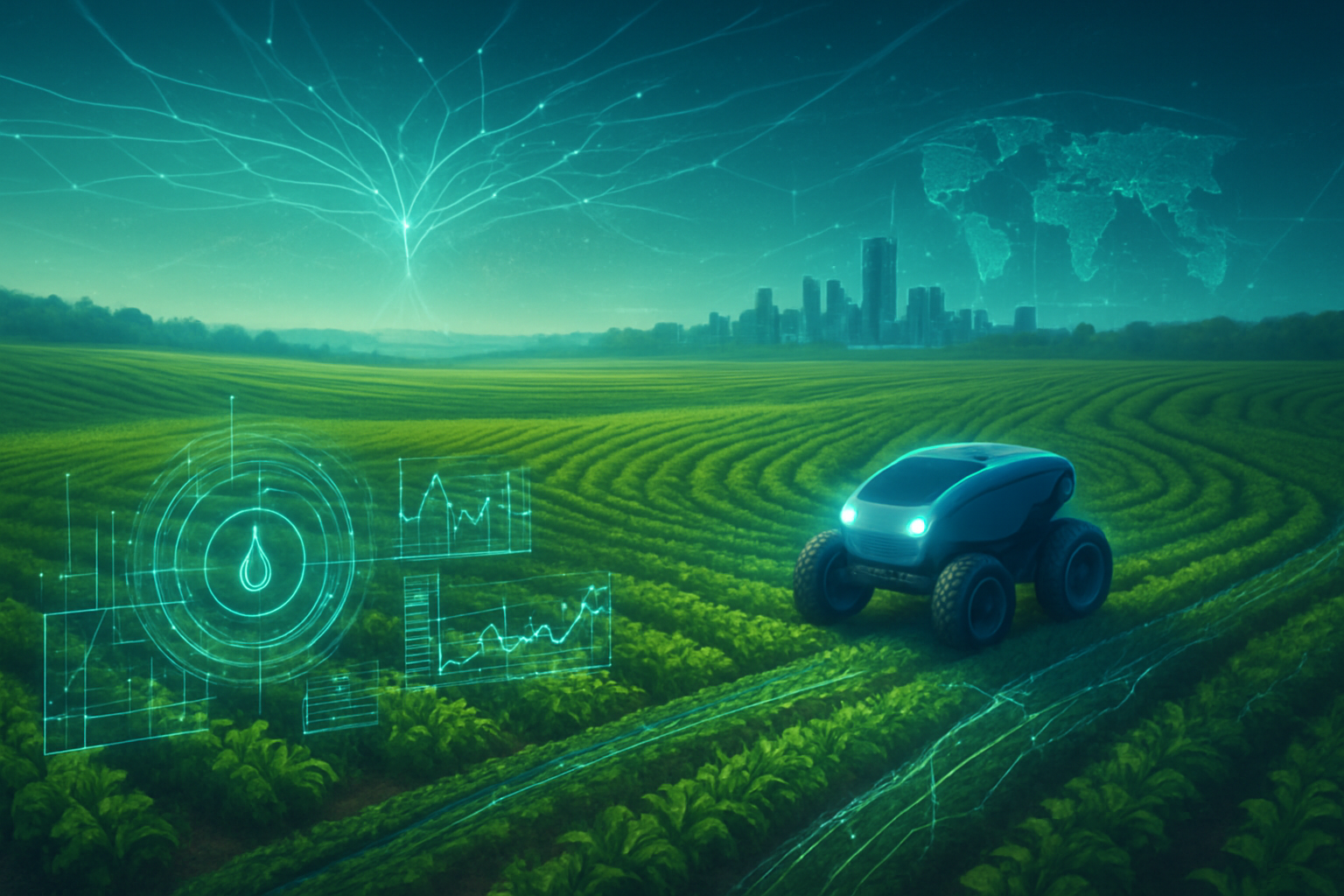
  • AI Fights Back: How Cutting-Edge Technology is Rewriting the Future of Food Security

    AI Fights Back: How Cutting-Edge Technology is Rewriting the Future of Food Security

    Global hunger, a persistent and devastating challenge, is meeting a formidable new adversary: artificial intelligence. As the world grapples with a burgeoning population, climate change, and geopolitical instabilities, AI is emerging as a transformative force, offering innovative solutions across the entire food system. From revolutionizing agricultural practices to optimizing complex supply chains and managing precious resources, AI's immediate significance lies in its capacity to amplify human efforts, making food production and distribution smarter, more efficient, and ultimately, more equitable. With the United Nations projecting a need for a 70% increase in food production by 2050 to feed 9.7 billion people, the strategic deployment of AI is not merely an advancement but a critical imperative for a sustainable and food-secure future.

    The power of AI in this fight stems from its unparalleled ability to process and analyze colossal datasets, discern intricate patterns, and generate actionable insights at speeds and scales impossible for human analysis alone. This leads to more informed decision-making and swifter responses to impending food crises. By enhancing rather than replacing human ingenuity, AI empowers farmers, humanitarian organizations, and policymakers to maximize their impact with available resources, playing a crucial role in predicting and mitigating shortages exacerbated by conflict, drought, and economic volatility. As of late 2025, the integration of AI into global food security initiatives is rapidly accelerating, demonstrating tangible breakthroughs that are already saving lives and building resilience in vulnerable communities worldwide.

    Precision Agriculture to Predictive Power: The Technical Edge of AI in Food Systems

    The technical advancements driving AI's impact on global hunger are multifaceted, spanning sophisticated algorithms, advanced robotics, and intelligent data analysis platforms. In agriculture, precision farming, powered by AI, represents a paradigm shift from broad-stroke methods to highly targeted interventions. Unlike traditional farming, which often relies on generalized practices across vast fields, AI-driven systems utilize data from a myriad of sources—including sensors, drones, satellites, and weather stations—to provide granular, real-time insights. For instance, companies like Blue River Technology (acquired by Deere & Company [NYSE: DE]) have developed systems like the LettuceBot, which employs computer vision and deep learning to differentiate weeds from crops, enabling precise herbicide application. This not only drastically reduces herbicide use—by up to 90% in some cases—but also minimizes environmental impact and cultivation costs, a stark contrast to the blanket spraying of previous eras.

    Furthermore, AI is making significant strides in crop yield optimization and genetic improvement. Platforms such as FarmView leverage AI to analyze vast genetic and environmental datasets, identifying optimal genetic markers for seeds that result in higher yields, enhanced nutritional content, and increased disease resistance in staple crops like sorghum. This intelligent crop breeding accelerates the development of resilient varieties, including drought-resistant wheat, a process that traditionally took decades through conventional breeding methods. In terms of pest and disease detection, deep learning AI models are enabling farmers to diagnose crop health issues through smartphone applications, often before visible symptoms appear, preventing catastrophic losses. Startups like Israel-based Prospera utilize AI to continuously analyze millions of data points from fields, detecting outbreaks of pests and diseases with remarkable accuracy and allowing for timely, targeted interventions, a significant leap from manual scouting or reactive treatments.

    Beyond the farm, AI is optimizing the notoriously complex global food supply chain. The World Food Programme's (WFP) "Optimus" program, for example, employs advanced mathematical models and AI algorithms to recommend optimal operational plans for food basket delivery. By analyzing past shipping routes, delivery times, and demand forecasts, Optimus identifies bottlenecks, predicts potential disruptions, and minimizes transport costs while maximizing impact, ensuring food reaches those in need more efficiently than traditional logistics planning. This differs from previous approaches that often relied on static models or human intuition, which struggled to adapt to dynamic variables like sudden crises or infrastructure damage. Initial reactions from the AI research community and humanitarian organizations have been overwhelmingly positive, highlighting AI's potential to not only streamline operations but also to enhance the accountability and effectiveness of aid efforts. The development of tools like DEEP (Digital Engine for Emergency Photo-analysis) and SKAI (developed by WFP and Google Research [NASDAQ: GOOGL]) further exemplifies this, using machine learning to automate post-disaster damage assessments from drone images, compressing critical insight delivery from weeks to mere hours—a crucial factor in rapid humanitarian response.

    Corporate Crossroads: AI's Impact on Tech Giants and Agri-Tech Innovators

    The burgeoning application of AI in combating global hunger is creating significant opportunities and competitive shifts among AI companies, tech giants, and a new wave of agri-tech startups. Major players like Google (NASDAQ: GOOGL), through initiatives such as Google Research's collaboration with the WFP on SKAI, are demonstrating how their core AI capabilities in machine learning and data analytics can be leveraged for humanitarian ends, simultaneously enhancing their public image and exploring new application domains for their technology. Similarly, Microsoft (NASDAQ: MSFT) has invested in AI for Earth initiatives, supporting projects that use AI to address environmental challenges, including food security. These tech giants stand to benefit by showcasing the societal impact of their AI platforms, attracting top talent, and potentially opening new markets for their cloud services and AI tools in the agricultural and humanitarian sectors.

    Traditional agricultural powerhouses are also keenly aware of this shift. Deere & Company (NYSE: DE), for instance, has strategically acquired AI-driven companies like Blue River Technology, integrating precision agriculture capabilities directly into their machinery and services. This move positions them at the forefront of smart farming, offering comprehensive solutions that combine hardware with intelligent software. This creates a competitive advantage over companies still primarily focused on conventional farm equipment, potentially disrupting the market for traditional agricultural inputs like fertilizers and pesticides by promoting more targeted, AI-guided applications. Startups, on the other hand, are flourishing in niche areas. Companies like Prospera, focused on AI-powered crop monitoring, or those developing AI for vertical farming, are attracting significant venture capital, demonstrating the market's confidence in specialized AI solutions. These startups often move with greater agility, innovating rapidly and challenging established players with focused, data-driven solutions.

    The competitive implications extend to major AI labs, which are increasingly seeing the agricultural and food security sectors as fertile ground for applying their research. The demand for robust AI models capable of handling diverse environmental data, predicting complex biological outcomes, and optimizing global logistics is pushing the boundaries of machine learning, computer vision, and predictive analytics. This could lead to new partnerships between AI research institutions and agricultural organizations, fostering innovation and creating new standards for data collection and analysis in the sector. Furthermore, the development of open-source AI tools specifically designed for agricultural applications could democratize access to these technologies, empowering smallholder farmers and creating a more level playing field, while also challenging companies that rely on proprietary, high-cost solutions. The strategic advantages lie with those companies that can effectively integrate AI across the entire food value chain, from seed to table, offering holistic, sustainable, and scalable solutions.

    A Wider Lens: AI's Transformative Role in the Global Landscape

    The integration of AI into the fight against global hunger is not an isolated phenomenon but rather a significant development within the broader AI landscape, reflecting a growing trend towards applying advanced intelligence to solve pressing global challenges. This movement signifies a maturation of AI, moving beyond consumer applications and enterprise optimization into areas of profound societal impact. It highlights AI's potential as a tool for sustainable development, aligning with global goals for poverty reduction, environmental protection, and improved health and well-being. The advancements in precision agriculture and supply chain optimization fit seamlessly into the broader push for sustainable practices, demonstrating how AI can enable more efficient resource use and reduce waste, which are critical in an era of climate change and diminishing natural resources.

    However, this wider significance also brings potential concerns. The "digital divide" remains a significant hurdle; smallholder farmers in developing nations, who often constitute the backbone of global food production, may lack access to the necessary technology, internet connectivity, or training to effectively utilize AI tools. This could exacerbate existing inequalities if not addressed through inclusive policies and accessible technology initiatives. Furthermore, data privacy and security, especially concerning agricultural data, are emerging as critical issues. Who owns the data generated by AI-powered farm equipment, and how is it protected from misuse? The reliance on complex AI systems also raises questions about transparency and accountability, particularly when critical decisions about food allocation or crop management are made by algorithms.

    Comparing this to previous AI milestones, the current applications in food security represent a shift from purely predictive or analytical tasks to prescriptive and interventionist roles. While earlier AI breakthroughs might have focused on optimizing financial markets or personalizing online experiences, the current wave is directly influencing physical systems and human livelihoods on a global scale. This marks a significant evolution, showcasing AI's capability to move from abstract problem-solving to tangible, real-world impact. It underscores the increasing recognition among AI developers and policymakers that the technology's greatest potential lies in addressing humanity's grand challenges, positioning AI as a critical enabler for a more resilient and equitable future, rather than just a driver of economic growth.

    The Horizon: Charting Future Developments and Overcoming Challenges

    Looking ahead, the trajectory of AI in combating global hunger promises even more profound and integrated solutions. In the near term, we can expect to see further refinement and widespread adoption of existing technologies. AI-powered remote crop monitoring, enhanced by 5G connectivity, will become more ubiquitous, providing real-time data and expert recommendations to farmers in increasingly remote areas. Robotic technology, combined with advanced computer vision, will move beyond mere detection to autonomous intervention, performing tasks like precise weeding, targeted nutrient application, and even selective harvesting of ripe produce, further reducing labor costs and increasing efficiency. We will also see AI playing a more significant role in the development of alternative food sources, with machine learning algorithms accelerating breakthroughs in lab-grown meats and plant-based proteins, optimizing their taste, texture, and nutritional profiles.

    Long-term developments are likely to involve the creation of highly integrated, self-optimizing food ecosystems. Imagine AI-driven networks that connect farms, distribution centers, and consumer demand in real-time, predicting surpluses and shortages with unprecedented accuracy and rerouting resources dynamically to prevent waste and alleviate hunger hotspots. The concept of "digital twins" for entire agricultural regions or even global food systems could emerge, allowing for sophisticated simulations and predictive modeling of various scenarios, from climate shocks to geopolitical disruptions. Experts predict that AI will become an indispensable component of national and international food security strategies, enabling proactive rather than reactive responses to crises.

    However, significant challenges need to be addressed to fully realize this potential. Ensuring equitable access to AI technologies for smallholder farmers remains paramount, requiring robust infrastructure development, affordable solutions, and comprehensive training programs. The ethical implications of AI in food systems, including data ownership, algorithmic bias in resource allocation, and the potential for job displacement in certain agricultural roles, must be carefully considered and mitigated through policy and responsible development. Furthermore, the need for high-quality, diverse, and representative data is crucial for training effective AI models that can perform reliably across different climates, soil types, and farming practices. What experts predict will happen next is a continued push towards collaborative initiatives between governments, tech companies, NGOs, and local communities to co-create AI solutions that are not only technologically advanced but also socially equitable and environmentally sustainable.

    A New Era of Food Security: AI's Enduring Legacy

    The journey of artificial intelligence in confronting global hunger marks a pivotal moment in both AI history and the ongoing quest for human well-being. The key takeaways from current developments are clear: AI is not just an incremental improvement but a foundational shift in how we approach food production, distribution, and resource management. Its ability to analyze vast datasets, optimize complex systems, and provide predictive insights is proving indispensable in creating more resilient and efficient food systems. From precision agriculture that maximizes yields while minimizing environmental impact, to intelligent supply chains that drastically reduce food waste and ensure timely delivery, AI is demonstrating its power to tackle one of humanity's most enduring challenges.

    This development's significance in AI history lies in its powerful demonstration of AI's capacity for profound societal impact, moving beyond commercial applications to address fundamental human needs. It underscores the technology's potential to be a force for good, provided it is developed and deployed responsibly and ethically. The long-term impact promises a future where food scarcity is not an inevitability but a solvable problem, where data-driven decisions lead to more equitable access to nutritious food, and where agriculture can thrive sustainably in the face of climate change.

    In the coming weeks and months, it will be crucial to watch for continued advancements in AI models specifically tailored for diverse agricultural environments, particularly in developing nations. We should also look for increased collaboration between public and private sectors to bridge the digital divide and ensure that AI's benefits are accessible to all. The ethical frameworks governing AI in food systems will also be a critical area of development, ensuring that these powerful tools are used responsibly and equitably. The fight against global hunger is far from over, but with AI now firmly on the front lines, the prospects for a food-secure world have never looked brighter.


    This content is intended for informational purposes only and represents analysis of current AI developments.

    TokenRing AI delivers enterprise-grade solutions for multi-agent AI workflow orchestration, AI-powered development tools, and seamless remote collaboration platforms.
    For more information, visit https://www.tokenring.ai/.