
Tag: Rubin

  • NVIDIA’s Unyielding Reign: Navigating the AI Semiconductor Battlefield of Late 2025

    NVIDIA’s Unyielding Reign: Navigating the AI Semiconductor Battlefield of Late 2025

    As 2025 draws to a close, NVIDIA (NASDAQ: NVDA) stands as an unassailable titan in the semiconductor and artificial intelligence (AI) landscape. Fuelled by an insatiable global demand for advanced computing, the company has not only solidified its dominant market share but continues to aggressively push the boundaries of innovation. Its recent financial results underscore this formidable position, with Q3 FY2026 (ending October 26, 2025) revenues soaring to a record $57.0 billion, a staggering 62% year-over-year increase, largely driven by its pivotal data center segment.

    NVIDIA's strategic foresight and relentless execution have positioned it as the indispensable infrastructure provider for the AI revolution. From powering the largest language models to enabling the next generation of robotics and autonomous systems, the company's hardware and software ecosystem are the bedrock upon which much of modern AI is built. However, this remarkable dominance also attracts intensifying competition from both established rivals and emerging players, alongside growing scrutiny over market concentration and complex supply chain dynamics.

    The Technological Vanguard: Blackwell, Rubin, and the CUDA Imperative

    NVIDIA's leadership in AI is a testament to its synergistic blend of cutting-edge hardware architectures and its pervasive software ecosystem. As of late 2025, the company's GPU roadmap remains aggressive and transformative.

    The Hopper architecture, exemplified by the H100 and H200 GPUs, laid critical groundwork with its fourth-generation Tensor Cores, Transformer Engine, and advanced NVLink Network, significantly accelerating AI training and inference. Building upon this, the Blackwell architecture, featuring the B200 GPU and the Grace Blackwell (GB200) Superchip, is now firmly established. Manufactured using a custom TSMC 4NP process, Blackwell GPUs pack 208 billion transistors and deliver up to 20 petaFLOPS of FP4 performance, representing a 5x increase over Hopper H100. The GB200, pairing two Blackwell GPUs with an NVIDIA Grace CPU, is optimized for trillion-parameter models, offering 30 times faster AI inference throughput compared to its predecessor. NVIDIA has even teased the Blackwell Ultra (B300) for late 2025, promising a further 1.5x performance boost and 288GB of HBM3e memory.

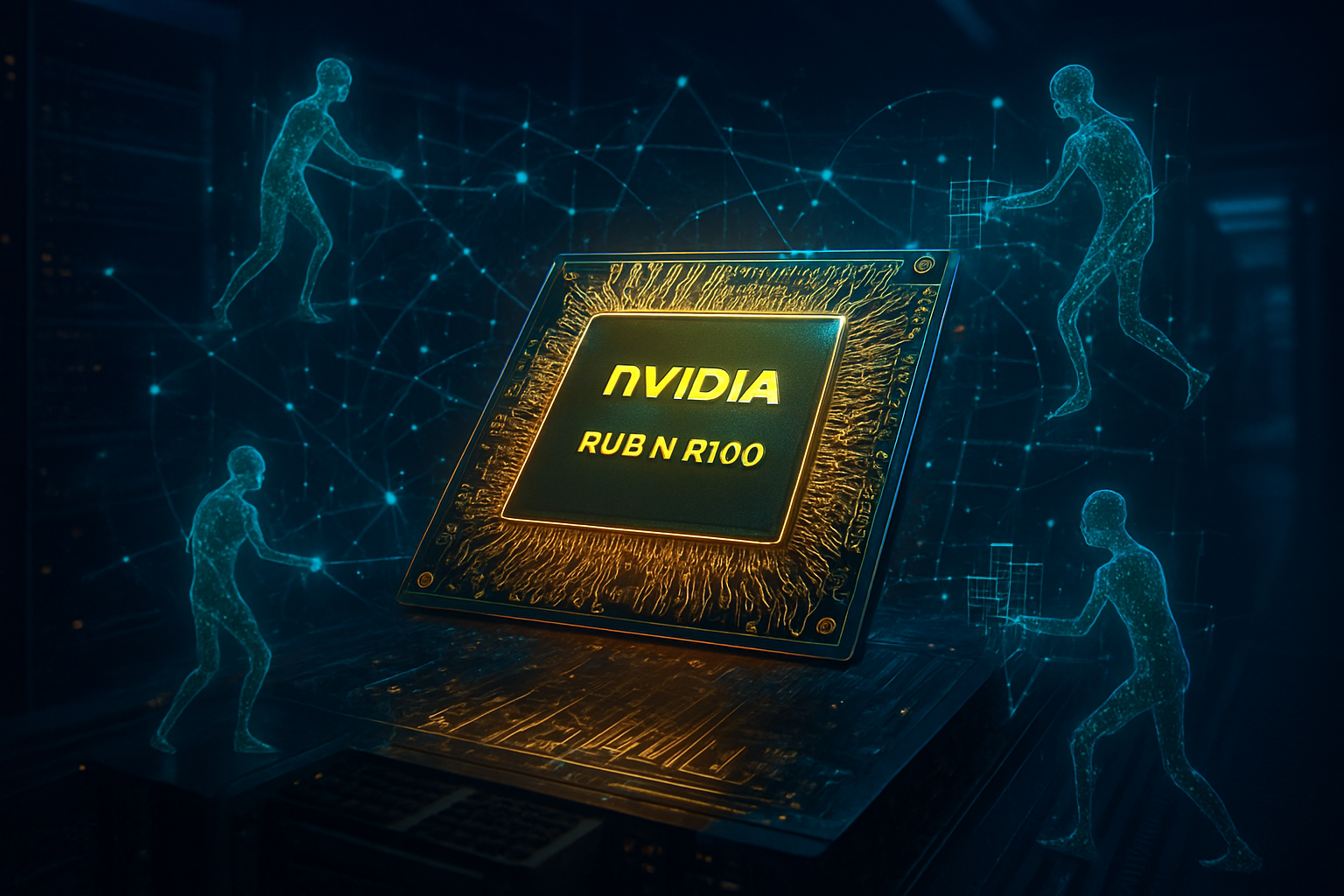
    Looking further ahead, the Rubin architecture, codenamed "Vera Rubin," is slated to succeed Blackwell, with initial deployments anticipated in late 2025 or early 2026. Rubin GPUs are expected to be fabricated on TSMC's advanced 3nm process, adopting a chiplet design and featuring a significant upgrade to HBM4 memory, providing up to 13 TB/s of bandwidth and 288 GB of memory capacity per GPU. The full Vera Rubin platform, integrating Rubin GPUs with a new "Vera" CPU and NVLink 6.0, projects astonishing performance figures, including 3.6 NVFP4 ExaFLOPS for inference.

    Crucially, NVIDIA's Compute Unified Device Architecture (CUDA) remains its most formidable strategic advantage. Launched in 2006, CUDA has evolved into the "lingua franca" of AI development, offering a robust programming interface, compiler, and a vast ecosystem of libraries (CUDA-X) optimized for deep learning. This deep integration with popular AI frameworks like TensorFlow and PyTorch creates significant developer lock-in and high switching costs, making it incredibly challenging for competitors to replicate its success. Initial reactions from the AI research community consistently acknowledge NVIDIA's strong leadership, often citing the maturity and optimization of the CUDA stack as a primary reason for their continued reliance on NVIDIA hardware, even as competing chips demonstrate theoretical performance gains.

    This technical prowess and ecosystem dominance differentiate NVIDIA significantly from its rivals. While Advanced Micro Devices (AMD) (NASDAQ: AMD) offers its Instinct MI series GPUs (MI300X, upcoming MI350) and the open-source ROCm software platform, ROCm generally has less developer adoption and a less mature ecosystem compared to CUDA. AMD's MI300X has shown competitiveness in AI inference, particularly for LLMs, but often struggles against NVIDIA's H200 and lacks the broad software optimization of CUDA. Similarly, Intel (NASDAQ: INTC), with its Gaudi AI accelerators and Max Series GPUs unified by the oneAPI software stack, aims for cross-architecture portability but faces an uphill battle against NVIDIA's established dominance and developer mindshare. Furthermore, hyperscalers like Google (NASDAQ: GOOGL) with its TPUs, Amazon Web Services (AWS) (NASDAQ: AMZN) with Inferentia/Trainium, and Microsoft (NASDAQ: MSFT) with Maia 100, are developing custom AI chips to optimize for their specific workloads and reduce NVIDIA dependence, but these are primarily for internal cloud use and do not offer the broad general-purpose utility of NVIDIA's GPUs.

    Shifting Sands: Impact on the AI Ecosystem

    NVIDIA's pervasive influence profoundly impacts the entire AI ecosystem, from leading AI labs to burgeoning startups, creating a complex dynamic of reliance, competition, and strategic maneuvering.

    Leading AI companies like OpenAI, Anthropic, and xAI are direct beneficiaries, heavily relying on NVIDIA's powerful GPUs for training and deploying their advanced AI models at scale. NVIDIA strategically reinforces this "virtuous cycle" through investments in these startups, further embedding its technology. However, these companies also grapple with the high cost and scarcity of GPU clusters, exacerbated by NVIDIA's significant pricing power.

    Tech giants, particularly hyperscale cloud service providers such as Microsoft, Alphabet (Google's parent company), Amazon, and Meta (NASDAQ: META), represent NVIDIA's largest customers and, simultaneously, its most formidable long-term competitors. They pour billions into NVIDIA's data center GPUs, with these four giants alone accounting for over 40% of NVIDIA's revenue. Yet, to mitigate dependence and gain greater control over their AI infrastructure, they are aggressively developing their own custom AI chips. This "co-opetition" defines the current landscape, where NVIDIA is both an indispensable partner and a target for in-house disruption.

    Beyond the giants, numerous companies benefit from NVIDIA's expansive ecosystem. Memory manufacturers like Micron Technology (NASDAQ: MU) and SK Hynix see increased demand for High-Bandwidth Memory (HBM). Taiwan Semiconductor Manufacturing Company (TSMC) (NYSE: TSM), NVIDIA's primary foundry, experiences higher utilization of its advanced manufacturing processes. Specialized GPU-as-a-service providers like CoreWeave and Lambda thrive by offering access to NVIDIA's hardware, while data center infrastructure companies and networking providers like Broadcom (NASDAQ: AVGO) and Marvell Technology (NASDAQ: MRVL) also benefit from the AI buildout. NVIDIA's strategic advantages, including its unassailable CUDA ecosystem, its full-stack AI platform approach (from silicon to software, including DGX systems and NVIDIA AI Enterprise), and its relentless innovation, are expected to sustain its influence for the foreseeable future.

    Broader Implications and Historical Parallels

    NVIDIA's commanding position in late 2025 places it at the epicenter of broader AI landscape trends, yet also brings significant concerns regarding market concentration and supply chain vulnerabilities.

    The company's near-monopoly in AI chips (estimated 70-95% market share) has drawn antitrust scrutiny from regulatory bodies in the USA, EU, and China. The proprietary nature of CUDA creates a significant "lock-in" effect for developers and enterprises, potentially stifling the growth of alternative hardware and software solutions. This market concentration has spurred major cloud providers to invest heavily in their own custom AI chips, seeking to diversify their infrastructure and reduce reliance on a single vendor. Despite NVIDIA's strong fundamentals, some analysts voice concerns about an "AI bubble," citing rapid valuation increases and "circular funding deals" where NVIDIA invests in AI companies that then purchase its chips.

    Supply chain vulnerabilities remain a persistent challenge. NVIDIA has faced production delays for advanced products like the GB200 NVL72 due to design complexities and thermal management issues. Demand for Blackwell chips "vastly exceeds supply" well into 2026, indicating potential bottlenecks in manufacturing and packaging, particularly for TSMC's CoWoS technology. Geopolitical tensions and U.S. export restrictions on advanced AI chips to China continue to impact NVIDIA's growth strategy, forcing the development of reduced-compute versions for the Chinese market and leading to inventory write-downs. NVIDIA's aggressive product cadence, with new architectures every six months, also strains its supply chain and manufacturing partners.

    NVIDIA's current influence in AI draws compelling parallels to pivotal moments in technological history. Its invention of the GPU in 1999 and the subsequent launch of CUDA in 2006 were foundational for the rise of modern AI, much like Intel's dominance in CPUs during the PC era or Microsoft's role with Windows. GPUs, initially for gaming, proved perfectly suited for the parallel computations required by deep learning, enabling breakthroughs like AlexNet in 2012 that ignited the modern AI era. While some compare the current AI boom to past speculative bubbles, a key distinction is that NVIDIA is a deeply established, profitable company reinvesting heavily in physical infrastructure, suggesting a more tangible demand compared to some speculative ventures of the past.

    The Horizon: Future Developments and Lingering Challenges

    NVIDIA's future outlook is characterized by continued aggressive innovation and strategic expansion into new AI domains, though significant challenges loom.

    In the near term (late 2025), the company will focus on the sustained deployment of its Blackwell architecture, with half a trillion dollars in orders confirmed for Blackwell and Rubin chips through 2026. The H200 will remain a key offering as Blackwell ramps up, driving "AI factories" – data centers optimized to "manufacture intelligence at scale." The expansion of NVIDIA's software ecosystem, including NVIDIA Inference Microservices (NIM) and NeMo, will be critical for simplifying AI application development. Experts predict an increasing deployment of "AI agents" in enterprises, driving demand for NVIDIA's compute.

    Longer term (beyond 2025), NVIDIA's vision extends to "Physical AI," with robotics identified as "the next phase of AI." Through platforms like Omniverse and Isaac, NVIDIA is investing heavily in an AI-powered robot workforce, developing foundation models like Isaac GR00T N1 for humanoid robotics. The automotive industry remains a key focus, with DRIVE Thor expected to leverage Blackwell architecture for autonomous vehicles. NVIDIA is also exploring quantum computing integration, aiming to link quantum systems with classical supercomputers via NVQLink and CUDA-Q. Potential applications span data centers, robotics, autonomous vehicles, healthcare (e.g., Clara AI Platform for drug discovery), and various enterprise solutions for real-time analytics and generative AI.

    However, NVIDIA faces enduring challenges. Intense competition from AMD and Intel, coupled with the rising tide of custom AI chips from tech giants, could erode its market share in specific segments. Geopolitical risks, particularly export controls to China, remain a significant headwind. Concerns about market saturation in AI training and the long-term durability of demand persist, alongside the inherent supply chain vulnerabilities tied to its reliance on TSMC for advanced manufacturing. NVIDIA's high valuation also makes its stock susceptible to volatility based on market sentiment and earnings guidance.

    Experts predict NVIDIA will maintain its strong leadership through late 2025 and mid-2026, with the AI chip market projected to exceed $150 billion in 2025. They foresee a shift towards liquid cooling in AI data centers and the proliferation of AI agents. While NVIDIA's dominance in AI data center GPUs (estimated 92% market share in 2025) is expected to continue, some analysts anticipate custom AI chips and AMD's offerings to gain stronger traction in 2026 and beyond, particularly for inference workloads. NVIDIA's long-term success will hinge on its continued innovation, its expansion into software and "Physical AI," and its ability to navigate a complex competitive and geopolitical landscape.

    A Legacy Forged in Silicon: The AI Era's Defining Force

    In summary, NVIDIA's competitive landscape in late 2025 is one of unparalleled dominance, driven by its technological prowess in GPU architectures (Hopper, Blackwell, Rubin) and the unyielding power of its CUDA software ecosystem. This full-stack approach has cemented its role as the foundational infrastructure provider for the global AI revolution, enabling breakthroughs across industries and powering the largest AI models. Its financial performance reflects this, with record revenues and an aggressive product roadmap that promises continued innovation.

    NVIDIA's significance in AI history is profound, akin to the foundational impact of Intel in the PC era or Microsoft with operating systems. Its pioneering work in GPU-accelerated computing and the establishment of CUDA as the industry standard were instrumental in igniting the deep learning revolution. This legacy continues to shape the trajectory of AI development, making NVIDIA an indispensable force.

    Looking ahead, NVIDIA's long-term impact will be defined by its ability to push into new frontiers like "Physical AI" through robotics, further entrench its software ecosystem, and maintain its innovation cadence amidst intensifying competition. The challenges of supply chain vulnerabilities, geopolitical tensions, and the rise of custom silicon from hyperscalers will test its resilience. What to watch in the coming weeks and months includes the successful rollout and demand for the Blackwell Ultra chips, NVIDIA's Q4 FY2026 earnings and guidance, the performance and market adoption of competitor offerings from AMD and Intel, and the ongoing efforts of hyperscalers to deploy their custom AI accelerators. Any shifts in TSMC's CoWoS capacity or HBM supply will also be critical indicators of future market dynamics and NVIDIA's pricing power.


    This content is intended for informational purposes only and represents analysis of current AI developments.

    TokenRing AI delivers enterprise-grade solutions for multi-agent AI workflow orchestration, AI-powered development tools, and seamless remote collaboration platforms.
    For more information, visit https://www.tokenring.ai/.
  • NVIDIA’s Earnings Ignite Tech Volatility: A Bellwether for the AI Revolution

    NVIDIA’s Earnings Ignite Tech Volatility: A Bellwether for the AI Revolution

    NVIDIA (NASDAQ: NVDA) recently delivered a stunning earnings report for its fiscal third quarter of 2026, released on Wednesday, November 19, 2025, significantly surpassing market expectations. While the results initially spurred optimism, they ultimately triggered a complex and volatile reaction across the broader tech market. This whipsaw effect, which saw NVIDIA's stock make a dramatic reversal and major indices like the S&P 500 and Nasdaq erase morning gains, underscores the company's unparalleled and increasingly pivotal role in shaping tech stock volatility and broader market trends. Its performance has become a critical barometer for the health and direction of the burgeoning artificial intelligence industry, signaling both immense opportunity and persistent market anxieties about the sustainability of the AI boom.

    The Unseen Engines of AI: NVIDIA's Technological Edge

    NVIDIA's exceptional financial performance is not merely a testament to strong market demand but a direct reflection of its deep-rooted technological leadership in the AI sector. The company's strategic foresight and relentless innovation in specialized AI hardware and its proprietary software ecosystem have created an almost unassailable competitive moat.

    The primary drivers behind NVIDIA's robust earnings are the explosive demand for AI infrastructure and the rapid adoption of its advanced GPU architectures. The surge in generative AI workloads, from large language model (LLM) training to complex inference tasks, requires unprecedented computational power, with NVIDIA's data center products at the forefront of this global build-out. Hyperscalers, enterprises, and even sovereign entities are investing billions, with NVIDIA's Data Center segment alone achieving a record $51.2 billion in revenue, up 66% year-over-year. CEO Jensen Huang highlighted the "off the charts" sales of its AI Blackwell platform, indicating sustained and accelerating demand.

    NVIDIA's hardware innovations, such as the H100 and H200 GPUs, and the newly launched Blackwell platform, are central to its market leadership. The Blackwell architecture, in particular, represents a significant generational leap, with systems like the GB200 and DGX GB200 offering up to 30 times faster AI inference throughput compared to H100-based systems. Production of Blackwell Ultra is ramping up, and Blackwell GPUs are reportedly sold out through at least 2025, with long-term orders for Blackwell and upcoming Rubin systems securing revenues exceeding $500 billion through 2025 and 2026.

    Beyond the raw power of its silicon, NVIDIA's proprietary Compute Unified Device Architecture (CUDA) software platform is its most significant strategic differentiator. CUDA provides a comprehensive programming interface and toolkit, deeply integrated with its GPUs, enabling millions of developers to optimize AI workloads. This robust ecosystem, built over 15 years, has become the de facto industry standard, creating high switching costs for customers and ensuring that NVIDIA GPUs achieve superior compute utilization for deep learning tasks. While competitors like Advanced Micro Devices (NASDAQ: AMD) with ROCm and Intel (NASDAQ: INTC) with oneAPI and Gaudi processors are investing heavily, they remain several years behind CUDA's maturity and widespread adoption, solidifying NVIDIA's dominant market share, estimated between 80% and 98% in the AI accelerator market.

    Initial reactions from the AI research community and industry experts largely affirm NVIDIA's continued dominance, viewing its strong fundamentals and demand visibility as a sign of a healthy and growing AI industry. However, the market's "stunning reversal" following the earnings, where NVIDIA's stock initially surged but then closed down, reignited the "AI bubble" debate, indicating that while NVIDIA's performance is stellar, anxieties about the broader market's valuation of AI remain.

    Reshaping the AI Landscape: Impact on Tech Giants and Startups

    NVIDIA's commanding performance reverberates throughout the entire AI industry ecosystem, creating a complex web of dependence, competition, and strategic realignment among tech giants and startups alike. Its earnings serve as a critical indicator, often boosting confidence across AI-linked companies.

    Major tech giants, including Microsoft (NASDAQ: MSFT), Alphabet (NASDAQ: GOOGL), Amazon (NASDAQ: AMZN), Meta Platforms (NASDAQ: META), and Oracle (NASDAQ: ORCL), are simultaneously NVIDIA's largest customers and its most formidable long-term competitors. These hyperscale cloud service providers (CSPs) are investing billions in NVIDIA's cutting-edge GPUs to power their own AI initiatives and offer AI-as-a-service to their vast customer bases. Their aggressive capital expenditures for NVIDIA's chips, including the next-generation Blackwell and Rubin series, directly fuel NVIDIA's growth. However, these same giants are also developing proprietary AI hardware—such as Google's TPUs, Amazon's Trainium/Inferentia, and Microsoft's Maia accelerators—to reduce their reliance on NVIDIA and optimize for specific internal workloads. This dual strategy highlights a landscape of co-opetition, where NVIDIA is both an indispensable partner and a target for in-house disruption.

    AI model developers like OpenAI, Anthropic, and xAI are direct beneficiaries of NVIDIA's powerful GPUs, which are essential for training and deploying their advanced AI models at scale. NVIDIA also strategically invests in these startups, fostering a "virtuous cycle" where their growth further fuels demand for NVIDIA's hardware. Conversely, AI startups in the chip industry face immense capital requirements and the daunting task of overcoming NVIDIA's established software moat. While companies like Intel's Gaudi 3 offer competitive performance and cost-effectiveness against NVIDIA's H100, they struggle to gain significant market share due to the lack of a mature and widely adopted software ecosystem comparable to CUDA.

    Companies deeply integrated into NVIDIA's ecosystem or providing complementary services stand to benefit most. This includes CSPs that offer NVIDIA-powered AI infrastructure, enterprises adopting AI solutions across various sectors (healthcare, autonomous driving, fintech), and NVIDIA's extensive network of solution providers and system integrators. These entities gain access to cutting-edge technology, a robust and optimized software environment, and integrated end-to-end solutions that accelerate their innovation and enhance their market positioning. However, NVIDIA's near-monopoly also attracts regulatory scrutiny, with antitrust investigations in regions like China, which could potentially open avenues for competitors.

    NVIDIA's Wider Significance: A New Era of Computing

    NVIDIA's ascent to its current market position is not just a corporate success story; it represents a fundamental shift in the broader AI landscape and the trajectory of the tech industry. Its performance serves as a crucial bellwether, dictating overall market sentiment and investor confidence in the AI revolution.

    NVIDIA's consistent overperformance and optimistic guidance reassure investors about the durability of AI demand and the accelerating expansion of AI infrastructure. As the largest stock on Wall Street by market capitalization, NVIDIA's movements heavily influence major indices like the S&P 500 and Nasdaq, often lifting the entire tech sector and boosting confidence in the "Magnificent 7" tech giants. Analysts frequently point to NVIDIA's results as providing the "clearest sightlines" into the pace and future of AI spending, indicating a sustained and transformative build-out.

    However, NVIDIA's near-monopoly in AI chips also raises significant concerns. The high market concentration means that a substantial portion of the AI industry relies on a single supplier, introducing potential risks related to supply chain disruptions or if competitors fail to innovate effectively. NVIDIA has historically commanded strong pricing power for its data center GPUs due to their unparalleled performance and the integral CUDA platform. While CEO Jensen Huang asserts that demand for Blackwell chips is "off the charts," the long-term sustainability of this pricing power could be challenged by increasing competition and customers seeking to diversify their supply chains.

    The immense capital expenditure by tech giants on AI infrastructure, much of which flows to NVIDIA, also prompts questions about its long-term sustainability. Over $200 billion was spent collectively by major tech companies on AI infrastructure in 2023 alone. Concerns about an "AI bubble" persist, particularly if tangible revenue and productivity gains from AI applications do not materialize at a commensurate pace. Furthermore, the environmental impact of this rapidly expanding infrastructure, with data centers consuming a growing share of global electricity and water, presents a critical sustainability challenge that needs urgent addressing.

    Comparing the current AI boom to previous tech milestones reveals both parallels and distinctions. While the rapid valuation increases and investor exuberance in AI stocks draw comparisons to the dot-com bubble of the late 1990s, today's leading AI firms, including NVIDIA, are generally established, highly profitable, and reinvesting existing cash flow into physical infrastructure. However, some newer AI startups still lack proven business models, and surveys continue to show investor concern about "bubble territory." NVIDIA's dominance in AI chips is also akin to Intel's (NASDAQ: INTC) commanding position in the PC microprocessor market during its heyday, both companies building strong technological leads and ecosystems. Yet, the AI landscape is arguably more complex, with major tech companies developing custom chips, potentially fostering more diversified competition in the long run.

    The Horizon of AI: Future Developments and Challenges

    The trajectory for NVIDIA and the broader AI market points towards continued explosive growth, driven by relentless innovation in GPU technology and the pervasive integration of AI across all facets of society. However, this future is also fraught with significant challenges, including intensifying competition, persistent supply chain constraints, and the critical need for energy efficiency.

    Demand for AI chips, particularly NVIDIA's GPUs, is projected to grow by 25% to 35% annually through 2027. NVIDIA itself has secured a staggering $500 billion in orders for its current Blackwell and upcoming Rubin chips for 2025-2026, signaling a robust and expanding pipeline. The company's GPU roadmap is aggressive: the Blackwell Ultra (B300 series) is anticipated in the second half of 2025, promising significant performance enhancements and reduced energy consumption. Following this, the "Vera Rubin" platform is slated for an accelerated launch in the third quarter of 2026, featuring a dual-chiplet GPU with 288GB of HBM4 memory and a 3.3-fold compute improvement over the B300. The Rubin Ultra, planned for late 2027, will further double FP4 performance, with "Feynman" hinted as the subsequent architecture, demonstrating a continuous innovation cycle.

    The potential applications of AI are set to revolutionize numerous industries. Near-term, generative AI models will redefine creativity in gaming, entertainment, and virtual reality, while agentic AI systems will streamline business operations through coding assistants, customer support, and supply chain optimization. Long-term, AI will expand into the physical world through robotics and autonomous vehicles, with platforms like NVIDIA Cosmos and Isaac Sim enabling advanced simulations and real-time operations. Healthcare, manufacturing, transportation, and scientific analysis will see profound advancements, with AI integrating into core enterprise systems like Microsoft SQL Server 2025 for GPU-optimized retrieval-augmented generation.

    Despite this promising outlook, the AI market faces formidable challenges. Competition is intensifying from tech giants developing custom AI chips (Google's TPUs, Amazon's Trainium, Microsoft's Maia) and rival chipmakers like AMD (with Instinct MI300X chips gaining traction with Microsoft and Meta) and Intel (positioning Gaudi as a cost-effective alternative). Chinese companies and specialized startups are also emerging. Supply chain constraints, particularly reliance on rare materials, geopolitical tensions, and bottlenecks in advanced packaging (CoWoS), remain a significant risk. Experts warn that even a 20% increase in demand could trigger another global chip shortage.

    Critically, the need for energy efficiency is becoming an urgent concern. The rapid expansion of AI is leading to a substantial increase in electricity consumption and carbon emissions, with AI applications projected to triple their share of data center power consumption by 2030. Solutions involve innovations in hardware (power-capping, carbon-efficient designs), developing smaller and smarter AI models, and establishing greener data centers. Some experts even caution that energy generation itself could become the primary constraint on future AI expansion.

    NVIDIA CEO Jensen Huang dismisses the notion of an "AI bubble," instead likening the current period to a "1996 Moment," signifying the early stages of a "10-year build out of this 4th Industrial Revolution." He emphasizes three fundamental shifts driving NVIDIA's growth: the transition to accelerated computing, the rise of AI-native tools, and the expansion of AI into the physical world. NVIDIA's strategy extends beyond chip design to actively building complete AI infrastructure, including a $100 billion partnership with Brookfield Asset Management for land, power, and data centers. Experts largely predict NVIDIA's continued leadership and a transformative, sustained growth trajectory for the AI industry, with AI becoming ubiquitous in smart devices and driving breakthroughs across sectors.

    A New Epoch: NVIDIA at the AI Vanguard

    NVIDIA's recent earnings report is far more than a financial triumph; it is a profound declaration of its central and indispensable role in architecting the ongoing artificial intelligence revolution. The record-breaking fiscal third quarter of 2026, highlighted by unprecedented revenue and dominant data center growth, solidifies NVIDIA's position as the foundational "picks and shovels" provider for the "AI gold rush." This development marks a critical juncture in AI history, underscoring how NVIDIA's pioneering GPU technology and its strategic CUDA software platform have become the bedrock upon which the current wave of AI advancements is being built.

    The long-term impact on the tech industry and society will be transformative. NVIDIA's powerful platforms are accelerating innovation across virtually every sector, from healthcare and climate modeling to autonomous vehicles and industrial digitalization. This era is characterized by new tech supercycles, driven by accelerated computing, generative AI, and the emergence of physical AI, all powered by NVIDIA's architecture. While market concentration and the sustainability of massive AI infrastructure spending present valid concerns, NVIDIA's deep integration into the AI ecosystem and its relentless innovation suggest a sustained influence on how technology evolves and reshapes human interaction with the digital and physical worlds.

    In the coming weeks and months, several key indicators will shape the narrative. For NVIDIA, watch for the seamless rollout and adoption of its Blackwell and upcoming Rubin platforms, the actual performance against its strong Q4 guidance, and any shifts in its robust gross margins. Geopolitical dynamics, particularly U.S.-China trade restrictions, will also bear close observation. Across the broader AI market, the continued capital expenditure by hyperscalers, the release of next-generation AI models (like GPT-5), and the accelerating adoption of AI across diverse industries will be crucial. Finally, the competitive landscape will be a critical watchpoint, as custom AI chips from tech giants and alternative offerings from rivals like AMD and Intel strive to gain traction, all while the persistent "AI bubble" debate continues to simmer. NVIDIA stands at the vanguard, navigating a rapidly evolving landscape where demand, innovation, and competition converge to define the future of AI.


    This content is intended for informational purposes only and represents analysis of current AI developments.

    TokenRing AI delivers enterprise-grade solutions for multi-agent AI workflow orchestration, AI-powered development tools, and seamless remote collaboration platforms.
    For more information, visit https://www.tokenring.ai/.

  • Nvidia’s Reign Unchallenged: A Deep Dive into its Multi-Trillion Dollar AI Semiconductor Empire

    Nvidia’s Reign Unchallenged: A Deep Dive into its Multi-Trillion Dollar AI Semiconductor Empire

    Nvidia (NASDAQ: NVDA) has firmly cemented its position as the undisputed titan of the artificial intelligence (AI) semiconductor market, with its market capitalization consistently hovering in the multi-trillion dollar range as of November 2025. The company's relentless innovation in GPU technology, coupled with its pervasive CUDA software ecosystem and strategic industry partnerships, has created a formidable moat around its leadership, making it an indispensable enabler of the global AI revolution. Despite recent market fluctuations, which saw its valuation briefly surpass $5 trillion before a slight pullback, Nvidia remains one of the world's most valuable companies, underpinning virtually every major AI advancement today.

    This profound dominance is not merely a testament to superior hardware but reflects a holistic strategy that integrates cutting-edge silicon with a comprehensive software stack. Nvidia's GPUs are the computational engines powering the most sophisticated AI models, from generative AI to advanced scientific research, making the company's trajectory synonymous with the future of artificial intelligence itself.

    Blackwell: The Engine of Next-Generation AI

    Nvidia's strategic innovation pipeline continues to set new benchmarks, with the Blackwell architecture, unveiled in March 2024 and becoming widely available in late 2024 and early 2025, leading the charge. This revolutionary platform is specifically engineered to meet the escalating demands of generative AI and large language models (LLMs), representing a monumental leap over its predecessors. As of November 2025, enhanced systems like Blackwell Ultra (B300 series) are anticipated, with its successor, "Rubin," already slated for mass production in Q4 2025.

    The Blackwell architecture introduces several groundbreaking advancements. GPUs like the B200 boast a staggering 208 billion transistors, more than 2.5 times the 80 billion in Hopper H100 GPUs, achieved through a dual-die design connected by a 10 TB/s chip-to-chip interconnect. Manufactured using a custom-built TSMC 4NP process, the B200 GPU delivers up to 20 petaFLOPS (PFLOPS) of FP4 AI compute, with native support for 4-bit floating point (FP4) AI and new MXFP6 and MXFP4 microscaling formats, effectively doubling performance and model sizes. For LLM inference, Blackwell promises up to a 30x performance leap over Hopper. Memory capacity is also significantly boosted, with the B200 offering 192 GB of HBM3e and the GB300 reaching 288 GB HBM3e, compared to Hopper's 80 GB HBM3. The fifth-generation NVLink on Blackwell provides 1.8 TB/s of bidirectional bandwidth per GPU, doubling Hopper's, and enabling model parallelism across up to 576 GPUs. Furthermore, Blackwell offers up to 25 times lower energy per inference, a critical factor given the growing energy demands of large-scale LLMs, and includes a second-generation Transformer Engine and a dedicated decompression engine for accelerated data processing.

    This leap in technology sharply differentiates Blackwell from previous generations and competitors. Unlike Hopper's monolithic die, Blackwell employs a chiplet design. It introduces native FP4 precision, significantly higher AI throughput, and expanded memory. While competitors like Advanced Micro Devices (NASDAQ: AMD) with its Instinct MI300X series and Intel (NASDAQ: INTC) with its Gaudi accelerators offer compelling alternatives, particularly in terms of cost-effectiveness and market access in regions like China, Nvidia's Blackwell maintains a substantial performance lead. Initial reactions from the AI research community and industry experts have been overwhelmingly positive, with demand described as "insane" and orders reportedly sold out for the next 12 months. CEOs from major tech companies like Alphabet (NASDAQ: GOOGL), Meta Platforms (NASDAQ: META), Microsoft (NASDAQ: MSFT), OpenAI, and Oracle (NYSE: ORCL) have publicly endorsed Blackwell's capabilities, underscoring its pivotal role in advancing generative AI.

    Reshaping the AI Ecosystem: Implications for Tech Giants and Startups

    Nvidia's continued dominance with Blackwell and future architectures like Rubin is profoundly reshaping the competitive landscape for major AI companies, tech giants, and burgeoning AI startups. While Nvidia remains an indispensable supplier, its market position is simultaneously catalyzing a strategic shift towards diversification among its largest customers.

    Major AI companies and hyperscale cloud providers, including Microsoft, Amazon (NASDAQ: AMZN), Google, Meta, and OpenAI, remain massive purchasers of Nvidia's GPUs. Their reliance on Nvidia's technology is critical for powering their extensive AI services, from cloud-based AI platforms to cutting-edge research. However, this deep reliance also fuels significant investment in developing custom AI chips (ASICs). Google, for instance, has introduced its seventh-generation Tensor Processing Unit (TPU), codenamed Ironwood, which is four times faster than its predecessor, and is expanding its external supply. Microsoft has launched its custom Maia 100 AI accelerator and Cobalt 100 cloud CPU for Azure, aiming to shift a majority of its AI workloads to homegrown silicon. Similarly, Meta is testing its in-house Meta Training and Inference Accelerator (MTIA) series to reduce dependency and infrastructure costs. OpenAI, while committing to deploy millions of Nvidia GPUs, including on the future Vera Rubin platform as part of a significant strategic partnership and investment, is also collaborating with Broadcom (NASDAQ: AVGO) and AMD for custom accelerators and its own chip development.

    This trend of internal chip development presents the most significant potential disruption to Nvidia's long-term dominance. Custom chips offer advantages in cost efficiency, ecosystem integration, and workload-specific performance, and are projected to capture over 40% of the AI chip market by 2030. The high cost of Nvidia's chips further incentivizes these investments. While Nvidia continues to be the primary beneficiary of the AI boom, generating massive revenue from GPU sales, its strategic investments into its customers also secure future demand. Hyperscale cloud providers, memory and component manufacturers (like Samsung (KRX: 005930) and SK Hynix (KRX: 000660)), and Nvidia's strategic partners also stand to benefit. AI startups face a mixed bag; while they can leverage cloud providers to access powerful Nvidia GPUs without heavy capital expenditure, access to the most cutting-edge hardware might be limited due to overwhelming demand from hyperscalers.

    Broader Significance: AI's Backbone and Emerging Challenges

    Nvidia's overwhelming dominance in AI semiconductors is not just a commercial success story; it's a foundational element shaping the entire AI landscape and its broader societal implications as of November 2025. With an estimated 85% to 94% market share in the AI GPU market, Nvidia's hardware and CUDA software platform are the de facto backbone of the AI revolution, enabling unprecedented advancements in generative AI, scientific discovery, and industrial automation.

    The company's continuous innovation, with architectures like Blackwell and the upcoming Rubin, is driving the capability to process trillion-parameter models, essential for the next generation of AI. This accelerates progress across diverse fields, from predictive diagnostics in healthcare to autonomous systems and advanced climate modeling. Economically, Nvidia's success, evidenced by its multi-trillion dollar market cap and projected $49 billion in AI-related revenue for 2025, is a significant driver of the AI-driven tech rally. However, this concentration of power also raises concerns about potential monopolies and accessibility. The high switching costs associated with the CUDA ecosystem make it difficult for smaller companies to adopt alternative hardware, potentially stifling broader ecosystem development.

    Geopolitical tensions, particularly U.S. export restrictions, significantly impact Nvidia's access to the crucial Chinese market. This has led to a drastic decline in Nvidia's market share in China's data center AI accelerator market, from approximately 95% to virtually zero. This geopolitical friction is reshaping global supply chains, fostering domestic chip development in China, and creating a bifurcated global AI ecosystem. Comparing this to previous AI milestones, Nvidia's current role highlights a shift where specialized hardware infrastructure is now the primary enabler and accelerator of algorithmic advances, a departure from earlier eras where software and algorithms were often the main bottlenecks.

    The Horizon: Continuous Innovation and Mounting Challenges

    Looking ahead, Nvidia's AI semiconductor strategy promises an unrelenting pace of innovation, while the broader AI landscape faces both explosive growth and significant challenges. In the near term (late 2024 – 2025), the Blackwell architecture, including the B100, B200, and GB200 Superchip, will continue its rollout, with the Blackwell Ultra expected in the second half of 2025. Beyond 2025, the "Rubin" architecture (including R100 GPUs and Vera CPUs) is slated for release in the first half of 2026, leveraging HBM4 and TSMC's 3nm EUV FinFET process, followed by "Rubin Ultra" and "Feynman" architectures. This commitment to an annual release cadence for new chip architectures, with major updates every two years, ensures continuous performance improvements focused on transistor density, memory bandwidth, specialized cores, and energy efficiency.

    The global AI market is projected to expand significantly, with the AI chip market alone potentially exceeding $200 billion by 2030. Expected developments include advancements in quantum AI, the proliferation of small language models, and multimodal AI systems. AI is set to drive the next phase of autonomous systems, workforce transformation, and AI-driven software development. Potential applications span healthcare (predictive diagnostics, drug discovery), finance (autonomous finance, fraud detection), robotics and autonomous vehicles (Nvidia's DRIVE Hyperion platform), telecommunications (AI-native 6G networks), cybersecurity, and scientific discovery.

    However, significant challenges loom. Data quality and bias, the AI talent shortage, and the immense energy consumption of AI data centers (a single rack of Blackwell GPUs consumes 120 kilowatts) are critical hurdles. Privacy, security, and compliance concerns, along with the "black box" problem of model interpretability, demand robust solutions. Geopolitical tensions, particularly U.S. export restrictions to China, continue to reshape global AI supply chains and intensify competition from rivals like AMD and Intel, as well as custom chip development by hyperscalers. Experts predict Nvidia will likely maintain its dominance in high-end AI outside of China, but competition is expected to intensify, with custom chips from tech giants projected to capture over 40% of the market share by 2030.

    A Legacy Forged in Silicon: The AI Future Unfolds

    In summary, Nvidia's enduring dominance in the AI semiconductor market, underscored by its Blackwell architecture and an aggressive future roadmap, is a defining feature of the current AI revolution. Its unparalleled market share, formidable CUDA ecosystem, and relentless hardware innovation have made it the indispensable engine powering the world's most advanced AI systems. This leadership is not just a commercial success but a critical enabler of scientific breakthroughs, technological advancements, and economic growth across industries.

    Nvidia's significance in AI history is profound, having provided the foundational computational infrastructure that enabled the deep learning revolution. Its long-term impact will likely include standardizing AI infrastructure, accelerating innovation across the board, but also potentially creating high barriers to entry and navigating complex geopolitical landscapes. As we move forward, the successful rollout and widespread adoption of Blackwell Ultra and the upcoming Rubin architecture will be crucial. Investors will be closely watching Nvidia's financial results for continued growth, while the broader industry will monitor intensifying competition, the evolving geopolitical landscape, and the critical imperative of addressing AI's energy consumption and ethical implications. Nvidia's journey will continue to be a bellwether for the future of artificial intelligence.


    This content is intended for informational purposes only and represents analysis of current AI developments.

    TokenRing AI delivers enterprise-grade solutions for multi-agent AI workflow orchestration, AI-powered development tools, and seamless remote collaboration platforms.
    For more information, visit https://www.tokenring.ai/.

  • Nvidia’s Arizona Gambit: Forging America’s AI Future with Domestic Chip Production

    Nvidia’s Arizona Gambit: Forging America’s AI Future with Domestic Chip Production

    Nvidia's (NASDAQ: NVDA) strategic pivot towards localizing the production of its cutting-edge artificial intelligence (AI) chips within the United States, particularly through significant investments in Arizona, marks a watershed moment in the global technology landscape. This bold initiative, driven by a confluence of surging AI demand, national security imperatives, and a push for supply chain resilience, aims to solidify America's leadership in the AI era. The immediate significance of this move is profound, establishing a robust domestic infrastructure for the "engines of the world's AI," thereby mitigating geopolitical risks and fostering an accelerated pace of innovation on U.S. soil.

    This strategic shift is a direct response to global calls for re-industrialization and a reduction in reliance on concentrated overseas manufacturing. By bringing the production of its most advanced AI processors, including the powerful Blackwell architecture, to U.S. facilities, Nvidia is not merely expanding its manufacturing footprint but actively reshaping the future of AI development and the stability of the critical AI chip supply chain. This commitment, underscored by substantial financial investment and extensive partnerships, positions the U.S. at the forefront of the burgeoning AI industrial revolution.

    Engineering the Future: Blackwell Chips and the Arizona Production Hub

    Nvidia's most powerful AI chip architecture, Blackwell, is now in full volume production at Taiwan Semiconductor Manufacturing Company's (NYSE: TSM) facilities in Phoenix, Arizona. This represents a historic departure from manufacturing these cutting-edge chips exclusively in Taiwan, with Nvidia CEO Jensen Huang heralding it as the first time the "engines of the world's AI infrastructure are being built in the United States." This advanced production leverages TSMC's capabilities to produce sophisticated 4-nanometer and 5-nanometer chips, with plans to advance to 3-nanometer, 2-nanometer, and even A16 technologies in the coming years.

    The Blackwell architecture itself is a marvel of engineering, with flagship products like the Blackwell Ultra designed to deliver up to 15 petaflops of performance for demanding AI workloads, each chip packing an astonishing 208 billion transistors. These chips feature an enhanced Transformer Engine optimized for large language models and a new Decompression Engine to accelerate database queries, representing a significant leap over their Hopper predecessors. Beyond wafer fabrication, Nvidia has forged critical partnerships for advanced packaging and testing operations in Arizona with companies like Amkor (NASDAQ: AMKR) and SPIL, utilizing complex chip-on-wafer-on-substrate (CoWoS) technology, specifically CoWoS-L, for its Blackwell chips.

    This approach differs significantly from previous strategies that heavily relied on a centralized, often overseas, manufacturing model. By diversifying its supply chain and establishing an integrated U.S. ecosystem—from fabrication in Arizona to packaging and testing in Arizona, and supercomputer assembly in Texas with partners like Foxconn (TWSE: 2317) and Wistron (TWSE: 3231)—Nvidia is building a more resilient and secure supply chain. While initial fabrication is moving to the U.S., a crucial aspect of high-end AI chip production, advanced packaging, still largely depends on facilities in Taiwan, though Amkor's upcoming Arizona plant by 2027-2028 aims to localize this critical process.

    Initial reactions from the AI research community and industry experts have been overwhelmingly positive, viewing Nvidia's technical pivot to U.S. production as a crucial step towards a more robust and secure AI infrastructure. Experts commend the move for strengthening the U.S. semiconductor supply chain and securing America's leadership in artificial intelligence, acknowledging the strategic importance of mitigating geopolitical risks. While acknowledging the higher manufacturing costs in the U.S. compared to Taiwan, the national security and supply chain benefits are widely considered paramount.

    Reshaping the AI Ecosystem: Implications for Companies and Competitive Dynamics

    Nvidia's aggressive push for AI chip production in the U.S. is poised to significantly reshape the competitive landscape for AI companies, tech giants, and startups. Domestically, U.S.-based AI labs, cloud providers, and startups stand to benefit immensely from faster and more reliable access to Nvidia's cutting-edge hardware. This localized supply chain can accelerate innovation cycles, reduce lead times, and provide a strategic advantage in developing and deploying next-generation AI solutions. Major American tech giants like Google (NASDAQ: GOOGL), Microsoft (NASDAQ: MSFT), Meta (NASDAQ: META), and Oracle (NYSE: ORCL), all significant customers of Nvidia's advanced chips, will benefit from enhanced supply chain resilience and potentially quicker access to the foundational hardware powering their vast AI initiatives.

    However, the implications extend beyond domestic advantages. Nvidia's U.S. production strategy, coupled with export restrictions on its most advanced chips to certain regions like China, creates a growing disparity in AI computing power globally. Non-U.S. companies in restricted regions may face significant limitations in acquiring top-tier Nvidia hardware, compelling them to invest more heavily in indigenous chip development or seek alternative suppliers. This could lead to a fragmented global AI landscape, where access to the most advanced hardware becomes a strategic national asset.

    The move also has potential disruptive effects on existing products and services. While it significantly strengthens supply chain resilience, the higher manufacturing costs in the U.S. could translate to increased prices for AI infrastructure and services, potentially impacting profit margins or being passed on to end-users. Conversely, the accelerated AI innovation within the U.S. due to enhanced hardware access could lead to the faster development and deployment of new AI products and services by American companies, potentially disrupting global market dynamics and establishing new industry standards.

    Nvidia's market positioning is further solidified by this strategy. It is positioning itself not just as a chip supplier but as a critical infrastructure partner for governments and major industries. By securing a domestic supply of its most advanced AI chips, Nvidia reinforces its technological leadership and aligns with U.S. policy goals of re-industrializing and maintaining a technological edge. This enhanced control over the domestic "AI technology stack" provides a unique competitive advantage, enabling closer integration and optimization of hardware and software, and propelling Nvidia's market valuation to an unprecedented $5 trillion.

    A New Industrial Revolution: Wider Significance and Geopolitical Chess

    Nvidia's U.S. AI chip production strategy is not merely an expansion of manufacturing; it's a foundational element of the broader AI landscape and an indicator of significant global trends. These chips are the "engines" powering the generative AI revolution, large language models, high-performance computing, robotics, and autonomous systems across every conceivable industry. The establishment of "AI factories"—data centers specifically designed for AI processing—underscores the profound shift towards AI as a core industrial infrastructure, driving what many are calling a new industrial revolution.

    The economic impacts are projected to be immense. Nvidia's commitment to produce up to $500 billion in AI infrastructure in the U.S. over the next four years is expected to create hundreds of thousands, if not millions, of high-quality jobs and generate trillions of dollars in economic activity. This strengthens the U.S. semiconductor industry and ensures its capacity to meet the surging global demand for AI technologies, reinforcing the "Made in America" agenda.

    Geopolitically, this move is a strategic chess piece. It aims to enhance supply chain resilience and reduce reliance on Asian production, particularly Taiwan, amidst escalating trade tensions and the ongoing technological rivalry with China. U.S. government incentives, such as the CHIPS and Science Act, and direct pressure have influenced this shift, with the goal of maintaining American technological dominance. However, U.S. export controls on advanced AI chips to China have created a complex "AI Cold War," impacting Nvidia's revenue from the Chinese market and intensifying the global race for AI supremacy.

    Potential concerns include the higher cost of manufacturing in the U.S., though Nvidia anticipates improved efficiency over time. More broadly, Nvidia's near-monopoly in high-performance AI chips has raised concerns about market concentration and potential anti-competitive practices, leading to antitrust scrutiny. The U.S. policy of reserving advanced AI chips for American companies and allies, while limiting access for rivals, also raises questions about global equity in AI development and could exacerbate the technological divide. This era is often compared to a new "industrial revolution," with Nvidia's rise built on decades of foresight in recognizing the power of GPUs for parallel computing, a bet that now underpins the pervasive industrial and economic integration of AI.

    The Road Ahead: Future Developments and Expert Predictions

    Nvidia's strategic expansion in the U.S. is a long-term commitment. In the near term, the focus will be on the full ramp-up of Blackwell chip production in Arizona and the operationalization of AI supercomputer manufacturing plants in Texas, with mass production expected in the next 12-15 months. Nvidia also unveiled its next-generation AI chip, "Vera Rubin" (or "Rubin"), at the GTC conference in October 2025, with Rubin GPUs slated for mass production in late 2026. This continuous innovation in chip architecture, coupled with localized production, will further cement the U.S.'s role as a hub for advanced AI hardware.

    These U.S.-produced AI chips and supercomputers are poised to be the "engines" for a new era of "AI factories," driving an "industrial revolution" across every sector. Potential applications include accelerating machine learning and deep learning processes, revolutionizing big data analytics, boosting AI capabilities in edge devices, and enabling the development of "physical AI" through digital twins and advanced robotics. Nvidia's partnerships with robotics companies like Figure also highlight its commitment to advancing next-generation humanoid robotics.

    However, significant challenges remain. The higher cost of domestic manufacturing is a persistent concern, though Nvidia views it as a necessary investment for national security and supply chain resilience. A crucial challenge is addressing the skilled labor shortage in advanced semiconductor manufacturing, packaging, and testing, even with Nvidia's plans for automation and robotics. Geopolitical shifts and export controls, particularly concerning China, continue to pose significant hurdles, with the U.S. government's stringent restrictions prompting Nvidia to develop region-specific products and navigate a complex regulatory landscape. Experts predict that these restrictions will compel China to further accelerate its indigenous AI chip development.

    Experts foresee that Nvidia's strategy will create hundreds of thousands, potentially millions, of high-quality jobs and drive trillions of dollars in economic security in the U.S. The decision to keep the most powerful AI chips primarily within the U.S. is seen as a pivotal moment for national competitive strength in AI. Nvidia is expected to continue its strategy of deep vertical integration, co-designing hardware and software across the entire stack, and expanding into areas like quantum computing and advanced telecommunications. Industry leaders also urge policymakers to strike a balance with export controls to safeguard national security without stifling innovation.

    A Defining Era: Wrap-Up and What to Watch For

    Nvidia's transformative strategy for AI chip production in the United States, particularly its deep engagement in Arizona, represents a historic milestone in U.S. manufacturing and a defining moment in AI history. By bringing the fabrication of its most advanced Blackwell AI chips to TSMC's facilities in Phoenix and establishing a comprehensive domestic ecosystem for supercomputer assembly and advanced packaging, Nvidia is actively re-industrializing the nation and fortifying its critical AI supply chain. The company's commitment of up to $500 billion in U.S. AI infrastructure underscores the profound economic and strategic benefits anticipated, including massive job creation and trillions in economic security.

    This development signifies a robust comeback for America in advanced semiconductor fabrication, cementing its role as a preeminent force in AI hardware development and significantly reducing reliance on Asian manufacturing amidst escalating geopolitical tensions. The U.S. government's proactive stance in prioritizing domestic production, coupled with policies to reserve advanced chips for American companies, carries profound national security implications, aiming to safeguard technological leadership in what is increasingly being termed the "AI industrial revolution."

    In the long term, this strategy is expected to yield substantial economic and strategic advantages for the U.S., accelerating AI innovation and infrastructure development domestically. However, the path forward is not without challenges, including the higher costs of U.S. manufacturing, the imperative to cultivate a skilled workforce, and the complex geopolitical landscape shaped by export restrictions and technological rivalries, particularly with China. The fragmentation of global supply chains and the intensification of the race for technological sovereignty will be defining features of this era.

    In the coming weeks and months, several key developments warrant close attention. Watch for further clarifications from the Commerce Department regarding "advanced" versus "downgraded" chip definitions, which will dictate global access to Nvidia's products. The operational ramp-up of Nvidia's supercomputer manufacturing plants in Texas will be a significant indicator of progress. Crucially, the completion and operationalization of Amkor's $2 billion packaging facility in Arizona by 2027-2028 will be pivotal, enabling full CoWoS packaging capabilities in the U.S. and further reducing reliance on Taiwan. The evolving competitive landscape, with other tech giants pursuing their own AI chip designs, and the broader geopolitical implications of these protectionist measures on international trade will continue to unfold, shaping the future of AI globally.


    This content is intended for informational purposes only and represents analysis of current AI developments.

    TokenRing AI delivers enterprise-grade solutions for multi-agent AI workflow orchestration, AI-powered development tools, and seamless remote collaboration platforms.
    For more information, visit https://www.tokenring.ai/.

  • Nvidia Shatters Records with $5 Trillion Valuation: A Testament to AI’s Unprecedented Economic Power

    Nvidia Shatters Records with $5 Trillion Valuation: A Testament to AI’s Unprecedented Economic Power

    In a monumental achievement that reverberates across the global technology landscape, NVIDIA Corporation (NASDAQ: NVDA) has officially reached an astonishing market valuation of $5 trillion. This unprecedented milestone, achieved on October 29, 2025, not only solidifies Nvidia's position as the world's most valuable company, surpassing tech titans like Apple (NASDAQ: AAPL) and Microsoft (NASDAQ: MSFT), but also serves as a stark, undeniable indicator of artificial intelligence's rapidly escalating economic might. The company's meteoric rise, adding a staggering $1 trillion to its market capitalization in just the last three months, underscores a seismic shift in economic power, firmly placing AI at the forefront of a new industrial revolution.

    Nvidia's journey to this historic valuation has been nothing short of spectacular, characterized by an accelerated pace that has left previous market leaders in its wake. From crossing the $1 trillion mark in June 2023 to hitting $2 trillion in March 2024—a feat accomplished in a mere 180 trading days—the company's growth trajectory has been fueled by an insatiable global demand for the computing power essential to developing and deploying advanced AI models. This $5 trillion valuation is not merely a number; it represents the immense investor confidence in Nvidia's indispensable role as the backbone of global AI infrastructure, a role that sees its advanced Graphics Processing Units (GPUs) powering everything from generative AI to autonomous vehicles and sophisticated robotics.

    The Unseen Engines of AI: Nvidia's Technical Prowess and Market Dominance

    Nvidia's stratospheric valuation is intrinsically linked to its unparalleled technical leadership in the field of AI, driven by a relentless pace of innovation in both hardware and software. At the core of its dominance are its state-of-the-art Graphics Processing Units (GPUs), which have become the de facto standard for AI training and inference. The H100 GPU, based on the Hopper architecture and built on a 5nm process with 80 billion transistors, exemplifies this prowess. Featuring fourth-generation Tensor Cores and a dedicated Transformer Engine with FP8 precision, the H100 delivers up to nine times faster training and an astonishing 30 times inference speedup for large language models compared to its predecessors. Its GH100 processor, with 16,896 shading units and 528 Tensor Cores, coupled with up to 96GB of HBM3 memory and the NVLink Switch System, enables exascale workloads by connecting up to 256 H100 GPUs with 900 GB/s bidirectional bandwidth.

    Looking ahead, Nvidia's recently unveiled Blackwell architecture, announced at GTC 2024, promises to redefine the generative AI era. Blackwell-architecture GPUs pack an incredible 208 billion transistors using a custom TSMC 4NP process, integrating two reticle-limited dies into a single, unified GPU. This architecture introduces fifth-generation Tensor Cores and native support for sub-8-bit data types like MXFP6 and MXFP4, effectively doubling performance and memory size for next-generation models while maintaining high accuracy. The GB200 Grace Blackwell Superchip, a cornerstone of this new architecture, integrates two high-performance Blackwell Tensor Core GPUs with an NVIDIA Grace CPU via the NVLink-C2C interconnect, creating a rack-scale system (GB200 NVL72) capable of 30x faster real-time trillion-parameter large language model inference.

    Beyond raw hardware, Nvidia's formidable competitive moat is significantly fortified by its comprehensive software ecosystem. The Compute Unified Device Architecture (CUDA) is Nvidia's proprietary parallel computing platform, providing developers with direct access to the GPU's power through a robust API. Since its inception in 2007, CUDA has cultivated a massive developer community, now supporting multiple programming languages and offering extensive libraries, debuggers, and optimization tools, making it the fundamental platform for AI and machine learning. Complementing CUDA are specialized libraries like cuDNN (CUDA Deep Neural Network library), which provides highly optimized routines for deep learning frameworks like TensorFlow and PyTorch, and TensorRT, an inference optimizer that can deliver up to 36 times faster inference performance by leveraging precision calibration, layer fusion, and automatic kernel tuning.

    This full-stack integration—from silicon to software—is what truly differentiates Nvidia from rivals like Advanced Micro Devices (NASDAQ: AMD) and Intel Corporation (NASDAQ: INTC). While AMD offers its Instinct GPUs with CDNA architecture and Intel provides Gaudi AI accelerators and Xeon CPUs for AI, neither has managed to replicate the breadth, maturity, or developer lock-in of Nvidia's CUDA ecosystem. Experts widely refer to CUDA as a "formidable barrier to entry" and a "durable moat," creating significant switching costs for customers deeply integrated into Nvidia's platform. The AI research community and industry experts consistently validate Nvidia's performance, with H100 GPUs being the industry standard for training large language models for tech giants, and the Blackwell architecture being heralded by CEOs of Google (NASDAQ: GOOGL), Meta Platforms (NASDAQ: META), Microsoft (NASDAQ: MSFT), and OpenAI as the "processor for the generative AI era."

    Reshaping the AI Landscape: Corporate Impacts and Competitive Dynamics

    Nvidia's unprecedented market dominance, culminating in its $5 trillion valuation, is fundamentally reshaping the competitive dynamics across the entire AI industry, influencing tech giants, AI startups, and its vast supply chain. AI companies of all sizes find themselves deeply reliant on Nvidia's GPUs and the pervasive CUDA software ecosystem, which have become the foundational compute engines for training and deploying advanced AI models. This reliance means that the speed and scale of AI innovation for many are inextricably linked to the availability and cost of Nvidia's hardware, creating a significant ecosystem lock-in that makes switching to alternative solutions challenging and expensive.

    For major tech giants and hyperscale cloud providers such as Amazon (NASDAQ: AMZN), Google (NASDAQ: GOOGL), and Microsoft (NASDAQ: MSFT), Nvidia is an indispensable partner and a formidable force. These companies are among Nvidia's largest customers, procuring vast quantities of GPUs to power their expansive cloud AI services and internal research initiatives. While these hyperscalers are aggressively investing in developing their own custom AI silicon to mitigate dependency and gain greater control over their AI infrastructure, they continue to be substantial buyers of Nvidia's offerings due to their superior performance and established ecosystem. Nvidia's strong market position allows it to significantly influence pricing and terms, directly impacting the operational costs and competitive strategies of these cloud AI behemoths.

    Nvidia's influence extends deeply into the AI startup ecosystem, where it acts not just as a hardware supplier but also as a strategic investor. Through its venture arm, Nvidia provides crucial capital, management expertise, and, most critically, access to its scarce and highly sought-after GPUs to numerous AI startups. Companies like Cohere (generative AI), Perplexity AI (AI search engine), and Reka AI (video analysis models) have benefited from Nvidia's backing, gaining vital resources that accelerate their development and solidify their market position. This strategic investment approach allows Nvidia to integrate advanced AI technologies into its own offerings, diversify its product portfolio, and effectively steer the trajectory of AI development, further reinforcing the centrality of its ecosystem.

    The competitive implications for rival chipmakers are profound. While companies like AMD (NASDAQ: AMD), Intel (NASDAQ: INTC), and Qualcomm (NASDAQ: QCOM) are actively developing their own AI accelerators—such as AMD's Instinct MI325 Series and Intel's Gaudi 3—they face an uphill battle against Nvidia's "nearly impregnable lead" and the deeply entrenched CUDA ecosystem. Nvidia's first-mover advantage, continuous innovation with architectures like Blackwell and the upcoming Rubin, and its full-stack AI strategy create a formidable barrier to entry. This dominance is not without scrutiny; Nvidia's accelerating market power has attracted global regulatory attention, with antitrust concerns being raised, particularly regarding its control over the CUDA software ecosystem and the impact of U.S. export controls on advanced AI chips to China.

    The Broader AI Canvas: Societal Impacts and Future Trajectories

    Nvidia's monumental $5 trillion valuation, achieved on October 29, 2025, transcends mere financial metrics; it serves as a powerful testament to the profound and accelerating impact of the AI revolution on the broader global landscape. Nvidia's GPUs and the ubiquitous CUDA software ecosystem have become the indispensable bedrock for AI model training and inference, effectively establishing the company as the foundational infrastructure provider for the AI age. Commanding an estimated 75% to 90% market share in the AI chip segment, with a staggering 92% share in data center GPUs, Nvidia's technological superiority and ecosystem lock-in have solidified its position with hyperscalers, cloud providers, and research institutions worldwide.

    This dominance is not just a commercial success story; it is a catalyst for a new industrial revolution. Nvidia's market capitalization now exceeds the GDP of several major nations, including Germany, India, Japan, and the United Kingdom, and surpasses the combined valuation of tech giants like Google (NASDAQ: GOOGL) and Meta Platforms (NASDAQ: META). Its stock performance has become a primary driver for the recent surge in global financial markets, firmly establishing AI as the central investment theme of the decade. This AI boom, with Nvidia at its "epicenter," is widely considered the next major industrial revolution, comparable to those driven by steam, electricity, and information technology, as industries leverage AI to unlock vast amounts of previously unused data.

    The impacts ripple across diverse sectors, fundamentally transforming industries and society. In healthcare and drug discovery, Nvidia's GPUs are accelerating breakthroughs, leading to faster research and development. In the automotive sector, partnerships with companies like Uber (NYSE: UBER) for robotaxis signal a significant shift towards fully autonomous vehicles. Manufacturing and robotics are being revolutionized by agentic AI and digital twins, enabling more intelligent factories and seamless human-robot interaction, potentially leading to a sharp decrease in the cost of industrial robots. Even traditional sectors like retail are seeing intelligent stores, optimized merchandising, and efficient supply chains powered by Nvidia's technology, while collaborations with telecommunications giants like Nokia (NYSE: NOK) on 6G technology point to future advancements in networking and data centers.

    However, Nvidia's unprecedented growth and market concentration also raise significant concerns. The immense power concentrated in Nvidia's hands, alongside a few other major AI players, has sparked warnings of a potential "AI bubble" with overheated valuations. The circular nature of some investments, such as Nvidia's investment in OpenAI (one of its largest customers), further fuels these concerns, with some analysts drawing parallels to the 2008 financial crisis if AI promises fall short. Global regulators, including the Bank of England and the IMF, have also flagged these risks. Furthermore, the high cost of advanced AI hardware and the technical expertise required can pose significant barriers to entry for individuals and smaller businesses, though cloud-based AI platforms are emerging to democratize access. Nvidia's dominance has also placed it at the center of geopolitical tensions, particularly the US-China tech rivalry, with US export controls on advanced AI chips impacting a significant portion of Nvidia's revenue from China sales and raising concerns from CEO Jensen Huang about long-term American technological leadership.

    The Horizon of AI: Expected Developments and Emerging Challenges

    Nvidia's trajectory in the AI landscape is poised for continued and significant evolution in the coming years, driven by an aggressive roadmap of hardware and software innovations, an expanding application ecosystem, and strategic partnerships. In the near term, the Blackwell architecture, announced at GTC 2024, remains central. Blackwell-architecture GPUs like the B100 and B200, with their 208 billion transistors and second-generation Transformer Engine, are purpose-built for generative AI workloads, accelerating large language model (LLM) training and inference. These chips, featuring new precisions and confidential computing capabilities, are already reportedly sold out for 2025 production, indicating sustained demand. The consumer-focused GeForce RTX 50 series, also powered by Blackwell, saw its initial launches in early 2025.

    Looking further ahead, Nvidia has unveiled its successor to Blackwell: the Vera Rubin Superchip, slated for mass production around Q3/Q4 2026, with the "Rubin Ultra" variant following in 2027. The Rubin architecture, named after astrophysicist Vera Rubin, will consist of a Rubin GPU and a Vera CPU, manufactured by TSMC using a 3nm process and utilizing HBM4 memory. These GPUs are projected to achieve 50 petaflops in FP4 performance, with Rubin Ultra doubling that to 100 petaflops. Nvidia is also pioneering NVQLink, an open architecture designed to tightly couple GPU supercomputing with quantum processors, signaling a strategic move towards hybrid quantum-classical computing. This continuous, yearly release cadence for data center products underscores Nvidia's commitment to maintaining its technological edge.

    Nvidia's proprietary CUDA software ecosystem remains a formidable competitive moat, with over 3 million developers and 98% of AI developers using the platform. In the near term, Nvidia continues to optimize CUDA for LLMs and inference engines, with its NeMo Framework and TensorRT-LLM integral to the Blackwell architecture's Transformer Engine. The company is also heavily focused on agentic AI, with the NeMo Agent Toolkit being a key software component. Notably, in October 2025, Nvidia announced it would open-source its Aerial software, including Aerial CUDA-Accelerated RAN, Aerial Omniverse Digital Twin (AODT), and the new Aerial Framework, empowering developers to build AI-native 5G and 6G RAN solutions. Long-term, Nvidia's partnership with Nokia (NYSE: NOK) to create an AI-RAN (Radio Access Network) platform, unifying AI and radio access workloads on an accelerated infrastructure for 5G-Advanced and 6G networks, showcases its ambition to embed AI into critical telecommunications infrastructure.

    The potential applications and use cases on the horizon are vast and transformative. Beyond generative AI and LLMs, Nvidia is a pivotal player in autonomous systems, collaborating with companies like Uber (NYSE: UBER), GM (NYSE: GM), and Mercedes-Benz (ETR: MBG) to develop self-driving platforms and launch autonomous fleets, with Uber aiming for 100,000 robotaxis by 2027. In scientific computing and climate modeling, Nvidia is building seven new supercomputers for the U.S. Department of Energy, including the largest, Solstice, deploying 100,000 Blackwell GPUs for scientific discovery and climate simulations. Healthcare and life sciences will see accelerated drug discovery, medical imaging, and personalized medicine, while manufacturing and industrial AI will leverage Nvidia's Omniverse platform and agentic AI for intelligent factories and "auto-pilot" chip design systems.

    Despite this promising outlook, significant challenges loom. Power consumption remains a critical concern as AI models grow, prompting Nvidia's "extreme co-design" approach and the development of more efficient architectures like Rubin. Competition is intensifying, with hyperscalers like Google (NASDAQ: GOOGL), Amazon (NASDAQ: AMZN), and Microsoft (NASDAQ: MSFT) heavily investing in custom AI silicon (e.g., TPUs, Trainium, Maia 100) to reduce dependency. Rival chipmakers like AMD (NASDAQ: AMD), Intel (NASDAQ: INTC), and Qualcomm (NASDAQ: QCOM) are also making concerted efforts to capture market share in data center and edge AI. Ethical considerations, including bias, privacy, and control, are paramount, with Nvidia emphasizing "Trustworthy AI" and states passing new AI safety and privacy laws. Finally, geopolitical tensions and U.S. export controls on advanced AI chips continue to impact Nvidia's market access in China, significantly affecting its revenue from the region and raising concerns from CEO Jensen Huang about long-term American technological leadership. Experts, however, generally predict Nvidia will maintain its leadership in high-end AI training and accelerated computing through continuous innovation and the formidable strength of its CUDA ecosystem, with some analysts forecasting a potential $6 trillion market capitalization by late 2026.

    A New Epoch: Nvidia's Defining Role in AI History

    Nvidia's market valuation soaring past $5 trillion on October 29, 2025, is far more than a financial headline; it marks a new epoch in AI history, cementing the company's indispensable role as the architect of the artificial intelligence revolution. This extraordinary ascent, from $1 trillion in May 2023 to $5 trillion in a little over two years, underscores the unprecedented demand for AI computing power and Nvidia's near-monopoly in providing the foundational infrastructure for this transformative technology. The company's estimated 86% control of the AI GPU market as of October 29, 2025 is a testament to its unparalleled hardware superiority, the strategic brilliance of its CUDA software ecosystem, and its foresight in anticipating the "AI supercycle."

    The key takeaways from Nvidia's explosive growth are manifold. Firstly, Nvidia has unequivocally transitioned from a graphics card manufacturer to the essential infrastructure provider of the AI era, making its GPUs and software ecosystem fundamental to global AI development. Secondly, the CUDA platform acts as an unassailable "moat," creating significant switching costs and deeply embedding Nvidia's hardware into the workflows of developers and enterprises worldwide. Thirdly, Nvidia's impact extends far beyond data centers, driving innovation across diverse sectors including autonomous driving, robotics, healthcare, and smart manufacturing. Lastly, the company's rapid innovation cycle, capable of producing new chips every six months, ensures it remains at the forefront of technological advancement.

    Nvidia's significance in AI history is profound and transformative. Its seminal step in 2006 with the release of CUDA, which unlocked the parallel processing capabilities of GPUs for general-purpose computing, proved prescient. This innovation laid the groundwork for the deep learning revolution of the 2010s, with researchers demonstrating that Nvidia GPUs could dramatically accelerate neural network training, effectively sparking the modern AI era. The company's hardware became the backbone for developing groundbreaking AI applications like OpenAI's ChatGPT, which was built upon 10,000 Nvidia GPUs. CEO Jensen Huang's vision, anticipating the broader application of GPUs beyond graphics and strategically investing in AI, has been instrumental in driving this technological revolution, fundamentally re-emphasizing hardware as a strategic differentiator in the semiconductor industry.

    Looking long-term, Nvidia is poised for continued robust growth, with analysts projecting the AI chip market to reach $621 billion by 2032. Its strategic pivots into AI infrastructure and open ecosystems, alongside diversification beyond hardware sales into areas like AI agents for industrial problems, will solidify its indispensable role in global AI development. However, this dominance also comes with inherent risks. Intensifying competition from rivals like AMD (NASDAQ: AMD), Intel (NASDAQ: INTC), and Qualcomm (NASDAQ: QCOM), as well as in-house accelerators from hyperscale cloud providers, threatens to erode its market share, particularly in the AI inference market. Geopolitical tensions, especially U.S.-China trade relations and export controls on advanced AI chips, remain a significant source of uncertainty, impacting Nvidia's market access in China. Concerns about a potential "AI bubble" also persist, with some analysts questioning the sustainability of rapid tech stock appreciation and the tangible returns on massive AI investments.

    In the coming weeks and months, all eyes will be on Nvidia's upcoming earnings reports for critical insights into its financial performance and management's commentary on market demand and competitive dynamics. The rollout of the Blackwell Ultra GB300 NVL72 in the second half of 2025 and the planned release of the Rubin platform in the second half of 2026, followed by Rubin Ultra in 2027, will be pivotal in showcasing next-generation AI capabilities. Developments from competitors, particularly in the inference market, and shifts in the geopolitical climate regarding AI chip exports, especially anticipated talks between President Trump and Xi Jinping about Nvidia's Blackwell chip, could significantly impact the company's trajectory. Ultimately, the question of whether enterprises begin to see tangible revenue returns from their significant AI infrastructure investments will dictate sustained demand for AI hardware and shape the future of this new AI epoch.


    This content is intended for informational purposes only and represents analysis of current AI developments.

    TokenRing AI delivers enterprise-grade solutions for multi-agent AI workflow orchestration, AI-powered development tools, and seamless remote collaboration platforms.
    For more information, visit https://www.tokenring.ai/.

  • Nvidia’s AI Factory Revolution: Blackwell and Rubin Forge the Future of Intelligence

    Nvidia’s AI Factory Revolution: Blackwell and Rubin Forge the Future of Intelligence

    Nvidia Corporation (NASDAQ: NVDA) is not just building chips; it's architecting the very foundations of a new industrial revolution powered by artificial intelligence. With its next-generation AI factory computing platforms, Blackwell and the upcoming Rubin, the company is dramatically escalating the capabilities of AI, pushing beyond large language models to unlock an era of reasoning and agentic AI. These platforms represent a holistic vision for transforming data centers into "AI factories" – highly optimized environments designed to convert raw data into actionable intelligence on an unprecedented scale, profoundly impacting every sector from cloud computing to robotics.

    The immediate significance of these developments lies in their ability to accelerate the training and deployment of increasingly complex AI models, including those with trillions of parameters. Blackwell, currently shipping, is already enabling unprecedented performance and efficiency for generative AI workloads. Looking ahead, the Rubin platform, slated for release in early 2026, promises to further redefine the boundaries of what AI can achieve, paving the way for advanced reasoning engines and real-time, massive-context inference that will power the next generation of intelligent applications.

    Engineering the Future: Power, Chips, and Unprecedented Scale

    Nvidia's Blackwell and Rubin architectures are engineered with meticulous detail, focusing on specialized power delivery, groundbreaking chip design, and revolutionary interconnectivity to handle the most demanding AI workloads.

    The Blackwell architecture, unveiled in March 2024, is a monumental leap from its Hopper predecessor. At its core is the Blackwell GPU, such as the B200, which boasts an astounding 208 billion transistors, more than 2.5 times that of Hopper. Fabricated on a custom TSMC (NYSE: TSM) 4NP process, each Blackwell GPU is a unified entity comprising two reticle-limited dies connected by a blazing 10 TB/s NV-High Bandwidth Interface (NV-HBI), a derivative of the NVLink 7 protocol. These GPUs are equipped with up to 192 GB of HBM3e memory, offering 8 TB/s bandwidth, and feature a second-generation Transformer Engine that adds support for FP4 (4-bit floating point) and MXFP6 precision, alongside enhanced FP8. This significantly accelerates inference and training for LLMs and Mixture-of-Experts models. The GB200 Grace Blackwell Superchip, integrating two B200 GPUs with one Nvidia Grace CPU via a 900GB/s ultra-low-power NVLink, serves as the building block for rack-scale systems like the liquid-cooled GB200 NVL72, which can achieve 1.4 exaflops of AI performance. The fifth-generation NVLink allows up to 576 GPUs to communicate with 1.8 TB/s of bidirectional bandwidth per GPU, a 14x increase over PCIe Gen5.

    Compared to Hopper (e.g., H100/H200), Blackwell offers a substantial generational leap: up to 2.5 times faster for training and up to 30 times faster for cluster inference, with a remarkable 25 times better energy efficiency for certain inference workloads. The introduction of FP4 precision and the ability to connect 576 GPUs within a single NVLink domain are key differentiators.

    Looking ahead, the Rubin architecture, slated for mass production in late 2025 and general availability in early 2026, promises to push these boundaries even further. Rubin GPUs will be manufactured by TSMC using a 3nm process, a generational leap from Blackwell's 4NP. They will feature next-generation HBM4 memory, with the Rubin Ultra variant (expected 2027) boasting a massive 1 TB of HBM4e memory per package and four GPU dies per package. Rubin is projected to deliver 50 petaflops performance in FP4, more than double Blackwell's 20 petaflops, with Rubin Ultra aiming for 100 petaflops. The platform will introduce a new custom Arm-based CPU named "Vera," succeeding Grace. Crucially, Rubin will feature faster NVLink (NVLink 6 or 7) doubling throughput to 260 TB/s, and a new CX9 link for inter-rack communication. A specialized Rubin CPX GPU, designed for massive-context inference (million-token coding, generative video), will utilize 128GB of GDDR7 memory. To support these demands, Nvidia is championing an 800 VDC power architecture for "gigawatt AI factories," promising increased scalability, improved energy efficiency, and reduced material usage compared to traditional systems.

    Initial reactions from the AI research community and industry experts have been overwhelmingly positive. Major tech players like Amazon Web Services (NASDAQ: AMZN), Google (NASDAQ: GOOGL), Meta Platforms (NASDAQ: META), Microsoft (NASDAQ: MSFT), Oracle (NYSE: ORCL), OpenAI, Tesla (NASDAQ: TSLA), and xAI have placed significant orders for Blackwell GPUs, with some analysts calling it "sold out well into 2025." Experts view Blackwell as "the most ambitious project Silicon Valley has ever witnessed," and Rubin as a "quantum leap" that will redefine AI infrastructure, enabling advanced agentic and reasoning workloads.

    Reshaping the AI Industry: Beneficiaries, Competition, and Disruption

    Nvidia's Blackwell and Rubin platforms are poised to profoundly reshape the artificial intelligence industry, creating clear beneficiaries, intensifying competition, and introducing potential disruptions across the ecosystem.

    Nvidia (NASDAQ: NVDA) itself is the primary beneficiary, solidifying its estimated 80-90% market share in AI accelerators. The "insane" demand for Blackwell and its rapid adoption, coupled with the aggressive annual update strategy towards Rubin, is expected to drive significant revenue growth for the company. TSMC (NYSE: TSM), as the exclusive manufacturer of these advanced chips, also stands to gain immensely.

    Cloud Service Providers (CSPs) are major beneficiaries, including Amazon Web Services (AWS), Microsoft Azure, Google Cloud, and Oracle Cloud Infrastructure (NYSE: ORCL), along with specialized AI cloud providers like CoreWeave and Lambda. These companies are heavily investing in Nvidia's platforms to build out their AI infrastructure, offering advanced AI tools and compute power to a broad range of businesses. Oracle, for example, is planning to build "giga-scale AI factories" using the Vera Rubin architecture. High-Bandwidth Memory (HBM) suppliers like Micron Technology (NASDAQ: MU), SK Hynix, and Samsung will see increased demand for HBM3e and HBM4. Data center infrastructure companies such as Super Micro Computer (NASDAQ: SMCI) and power management solution providers like Navitas Semiconductor (NASDAQ: NVTS) (developing for Nvidia's 800 VDC platforms) will also benefit from the massive build-out of AI factories. Finally, AI software and model developers like OpenAI and xAI are leveraging these platforms to train and deploy their next-generation models, with OpenAI planning to deploy 10 gigawatts of Nvidia systems using the Vera Rubin platform.

    The competitive landscape is intensifying. Nvidia's rapid, annual product refresh cycle with Blackwell and Rubin sets a formidable pace that rivals like Advanced Micro Devices (NASDAQ: AMD) and Intel (NASDAQ: INTC) struggle to match. Nvidia's robust CUDA software ecosystem, developer tools, and extensive community support remain a significant competitive moat. However, tech giants are also developing their own custom AI silicon (e.g., Google's TPUs, Amazon's Trainium/Inferentia, Microsoft's Maia) to reduce dependence on Nvidia and optimize for specific internal workloads, posing a growing challenge. This "AI chip war" is forcing accelerated innovation across the board.

    Potential disruptions include a widening performance gap between Nvidia and its competitors, making it harder for others to offer comparable solutions. The escalating infrastructure costs associated with these advanced chips could also limit access for smaller players. The immense power requirements of "gigawatt AI factories" will necessitate significant investments in new power generation and advanced cooling solutions, creating opportunities for energy providers but also raising environmental concerns. Finally, Nvidia's strong ecosystem, while a strength, can also lead to vendor lock-in, making it challenging for companies to switch hardware. Nvidia's strategic advantage lies in its technological leadership, comprehensive full-stack AI ecosystem (CUDA), aggressive product roadmap, and deep strategic partnerships, positioning it as the critical enabler of the AI revolution.

    The Dawn of a New Intelligence Era: Broader Significance and Future Outlook

    Nvidia's Blackwell and Rubin platforms are more than just incremental hardware upgrades; they are foundational pillars designed to power a new industrial revolution centered on artificial intelligence. They fit into the broader AI landscape as catalysts for the next wave of advanced AI, particularly in the realm of reasoning and agentic systems.

    The "AI factory" concept, championed by Nvidia, redefines data centers from mere collections of servers into specialized hubs for industrializing intelligence. This paradigm shift is essential for transforming raw data into valuable insights and intelligent models across the entire AI lifecycle. These platforms are explicitly designed to fuel advanced AI trends, including:

    • Reasoning and Agentic AI: Moving beyond pattern recognition to systems that can think, plan, and strategize. Blackwell Ultra and Rubin are built to handle the orders of magnitude more computing performance these require.
    • Trillion-Parameter Models: Enabling the efficient training and deployment of increasingly large and complex AI models.
    • Inference Ubiquity: Making AI inference more pervasive as AI integrates into countless devices and applications.
    • Full-Stack Ecosystem: Nvidia's comprehensive ecosystem, from CUDA to enterprise platforms and simulation tools like Omniverse, provides guaranteed compatibility and support for organizations adopting the AI factory model, even extending to digital twins and robotics.

    The impacts are profound: accelerated AI development, economic transformation (Blackwell-based AI factories are projected to generate significantly more revenue than previous generations), and cross-industry revolution across healthcare, finance, research, cloud computing, autonomous vehicles, and smart cities. These capabilities unlock possibilities for AI models that can simulate complex systems and even human reasoning.

    However, concerns persist regarding the initial cost and accessibility of these solutions, despite their efficiency gains. Nvidia's market dominance, while a strength, faces increasing competition from hyperscalers developing custom silicon. The sheer energy consumption of "gigawatt AI factories" remains a significant challenge, necessitating innovations in power delivery and cooling. Supply chain resilience is also a concern, given past shortages.

    Comparing Blackwell and Rubin to previous AI milestones highlights an accelerating pace of innovation. Blackwell dramatically surpasses Hopper in transistor count, precision (introducing FP4), and NVLink bandwidth, offering up to 2.5 times the training performance and 25 times better energy efficiency for inference. Rubin, in turn, is projected to deliver a "quantum jump," potentially 16 times more powerful than Hopper H100 and 2.5 times more FP4 inference performance than Blackwell. This relentless innovation, characterized by a rapid product roadmap, drives what some refer to as a "900x speedrun" in performance gains and significant cost reductions per unit of computation.

    The Horizon: Future Developments and Expert Predictions

    Nvidia's roadmap extends far beyond Blackwell, outlining a future where AI computing is even more powerful, pervasive, and specialized.

    In the near term, the Blackwell Ultra (B300-series), expected in the second half of 2025, will offer an approximate 1.5x speed increase over the base Blackwell model. This continuous iterative improvement ensures that the most cutting-edge performance is always within reach for developers and enterprises.

    Longer term, the Rubin AI platform, arriving in early 2026, will feature an entirely new architecture, advanced HBM4 memory, and NVLink 6. It's projected to offer roughly three times the performance of Blackwell. Following this, the Rubin Ultra (R300), slated for the second half of 2027, promises to be over 14 times faster than Blackwell, integrating four reticle-limited GPU chiplets into a single socket to achieve 100 petaflops of FP4 performance and 1TB of HBM4E memory. Nvidia is also developing the Vera Rubin NVL144 MGX-generation open architecture rack servers, designed for extreme scalability with 100% liquid cooling and 800-volt direct current (VDC) power delivery. This will support the NVIDIA Kyber rack server generation by 2027, housing up to 576 Rubin Ultra GPUs. Beyond Rubin, the "Feynman" GPU architecture is anticipated around 2028, further pushing the boundaries of AI compute.

    These platforms will fuel an expansive range of potential applications:

    • Hyper-realistic Generative AI: Powering increasingly complex LLMs, text-to-video systems, and multimodal content creation.
    • Advanced Robotics and Autonomous Systems: Driving physical AI, humanoid robots, and self-driving cars, with extensive training in virtual environments like Nvidia Omniverse.
    • Personalized Healthcare: Enabling faster genomic analysis, drug discovery, and real-time diagnostics.
    • Intelligent Manufacturing: Supporting self-optimizing factories and digital twins.
    • Ubiquitous Edge AI: Improving real-time inference for devices at the edge across various industries.

    Key challenges include the relentless pursuit of power efficiency and cooling solutions, which Nvidia is addressing through liquid cooling and 800 VDC architectures. Maintaining supply chain resilience amid surging demand and navigating geopolitical tensions, particularly regarding chip sales in key markets, will also be critical.

    Experts largely predict Nvidia will maintain its leadership in AI infrastructure, cementing its technological edge through successive GPU generations. The AI revolution is considered to be in its early stages, with demand for compute continuing to grow exponentially. Predictions include AI server penetration reaching 30% of all servers by 2029, a significant shift towards neuromorphic computing beyond the next three years, and AI driving 3.5% of global GDP by 2030. The rise of "AI factories" as foundational elements of future hyperscale data centers is a certainty. Nvidia CEO Jensen Huang envisions AI permeating everyday life with numerous specialized AIs and assistants, and foresees data centers evolving into "AI factories" that generate "tokens" as fundamental units of data processing. Some analysts even predict Nvidia could surpass a $5 trillion market capitalization.

    The Dawn of a New Intelligence Era: A Comprehensive Wrap-up

    Nvidia's Blackwell and Rubin AI factory computing platforms are not merely new product releases; they represent a pivotal moment in the history of artificial intelligence, marking the dawn of an era defined by unprecedented computational power, efficiency, and scale. These platforms are the bedrock upon which the next generation of AI — from sophisticated generative models to advanced reasoning and agentic systems — will be built.

    The key takeaways are clear: Nvidia (NASDAQ: NVDA) is accelerating its product roadmap, delivering annual architectural leaps that significantly outpace previous generations. Blackwell, currently operational, is already redefining generative AI inference and training with its 208 billion transistors, FP4 precision, and fifth-generation NVLink. Rubin, on the horizon for early 2026, promises an even more dramatic shift with 3nm manufacturing, HBM4 memory, and a new Vera CPU, enabling capabilities like million-token coding and generative video. The strategic focus on "AI factories" and an 800 VDC power architecture underscores Nvidia's holistic approach to industrializing intelligence.

    This development's significance in AI history cannot be overstated. It represents a continuous, exponential push in AI hardware, enabling breakthroughs that were previously unimaginable. While solidifying Nvidia's market dominance and benefiting its extensive ecosystem of cloud providers, memory suppliers, and AI developers, it also intensifies competition and demands strategic adaptation from the entire tech industry. The challenges of power consumption and supply chain resilience are real, but Nvidia's aggressive innovation aims to address them head-on.

    In the coming weeks and months, the industry will be watching closely for further deployments of Blackwell systems by major hyperscalers and early insights into the development of Rubin. The impact of these platforms will ripple through every aspect of AI, from fundamental research to enterprise applications, driving forward the vision of a world increasingly powered by intelligent machines.


    This content is intended for informational purposes only and represents analysis of current AI developments.

    TokenRing AI delivers enterprise-grade solutions for multi-agent AI workflow orchestration, AI-powered development tools, and seamless remote collaboration platforms.
    For more information, visit https://www.tokenring.ai/.