Tag: Rubin Platform

  • Samsung Reclaims AI Memory Crown: HBM4 Mass Production Set for February to Power NVIDIA’s Rubin Platform

    Samsung Reclaims AI Memory Crown: HBM4 Mass Production Set for February to Power NVIDIA’s Rubin Platform

    In a pivotal shift for the semiconductor industry, Samsung Electronics (KRX: 005930) is set to commence mass production of its next-generation High Bandwidth Memory 4 (HBM4) in February 2026. This milestone marks a significant turnaround for the South Korean tech giant, which has spent much of the last two years trailing its rivals in the lucrative AI memory sector. With this move, Samsung is positioning itself as the primary hardware backbone for the next wave of generative AI, having reportedly secured final qualification for NVIDIA’s (NASDAQ: NVDA) upcoming "Rubin" GPU architecture.

    The start of mass production is more than just a logistical achievement; it represents a technological "leapfrog" that could redefine the competitive landscape of AI hardware. By integrating its most advanced memory cells with cutting-edge logic die manufacturing, Samsung is offering a "one-stop shop" solution that promises to break the "memory wall"—the performance bottleneck that has long limited the speed and efficiency of Large Language Models (LLMs). As the industry prepares for the formal debut of the NVIDIA Rubin platform, Samsung’s HBM4 is poised to become the new gold standard for high-performance computing.

    Technical Superiority: 1c DRAM and the 4nm Logic Die

    The technical specifications of Samsung's HBM4 are a testament to the company’s aggressive R&D strategy over the past 24 months. At the heart of the new stack is Samsung’s 6th-generation 10nm-class (1c) DRAM. While competitors like SK Hynix (KRX: 000660) and Micron Technology (NASDAQ: MU) are largely relying on 5th-generation (1b) DRAM for their initial HBM4 production runs, Samsung has successfully skipped a generation in its production scaling. This 1c process allows for significantly higher bit density and a 20% improvement in power efficiency compared to previous iterations, a crucial factor for data centers struggling with the immense energy demands of AI clusters.

    Furthermore, Samsung is leveraging its unique position as both a memory manufacturer and a world-class foundry. Unlike its competitors, who often rely on third-party foundries like Taiwan Semiconductor Manufacturing Company (NYSE: TSM) for logic dies, Samsung is using its own 4nm foundry process to create the HBM4 logic die—the "brain" at the base of the memory stack that manages data flow. This vertical integration allows for tighter architectural optimization and reduced thermal resistance. The result is an industry-leading data transfer speed of 11.7 Gbps per pin, pushing total per-stack bandwidth to approximately 1.5 TB/s.

    Industry experts note that this shift to a 4nm logic die is a departure from the 12nm and 7nm processes used in previous generations. By using 4nm technology, Samsung can embed more complex logic directly into the memory stack, enabling preliminary data processing to occur within the memory itself rather than on the GPU. This "near-memory computing" approach is expected to significantly reduce the latency involved in training massive models with trillions of parameters.

    Reshaping the AI Competitive Landscape

    Samsung’s aggressive entry into the HBM4 market is a direct challenge to the dominance of SK Hynix, which has held the majority share of the HBM market since the rise of ChatGPT. For NVIDIA, the qualification of Samsung’s HBM4 provides a much-needed diversification of its supply chain. The Rubin platform, expected to be officially unveiled at NVIDIA's GTC conference in March 2026, will reportedly feature eight HBM4 stacks, providing a staggering 288 GB of VRAM and an aggregate bandwidth exceeding 22 TB/s. By securing Samsung as a primary supplier, NVIDIA can mitigate the supply shortages that plagued the H100 and B200 generations.

    The move also puts pressure on Micron Technology, which has been making steady gains in the U.S. market. While Micron’s HBM4 samples have shown promising results, Samsung’s ability to scale 1c DRAM by February gives it a first-mover advantage in the highest-performance tier. For tech giants like Microsoft (NASDAQ: MSFT), Google (NASDAQ: GOOGL), and Meta (NASDAQ: META), who are all designing their own custom AI silicon, Samsung’s "one-stop" HBM4 solution offers a streamlined path to high-performance memory integration without the logistical hurdles of coordinating between multiple vendors.

    Strategic advantages are also emerging for Samsung's foundry business. By proving the efficacy of its 4nm process for HBM4 logic dies, Samsung is demonstrating a competitive alternative to TSMC’s "CoWoS" (Chip on Wafer on Substrate) packaging dominance. This could entice other chip designers to look toward Samsung’s turnkey solutions, which combine advanced logic and memory in a single manufacturing pipeline.

    Broader Significance: The Evolution of the AI Architecture

    Samsung’s HBM4 breakthrough arrives at a critical juncture in the broader AI landscape. As AI models move toward "Reasoning" and "Agentic" workflows, the demand for memory bandwidth is outpacing the demand for raw compute power. The shift to HBM4 marks the first time that memory architecture has undergone a fundamental redesign, moving from a simple storage component to an active participant in the computing process.

    This development also addresses the growing concerns regarding the environmental impact of AI. With the 11.7 Gbps speed achieved at lower voltage levels due to the 1c process, Samsung is helping to bend the curve of energy consumption in the data center. Previous AI milestones were often characterized by "brute force" scaling; however, the HBM4 era is defined by architectural elegance and efficiency, signaling a more sustainable path for the future of artificial intelligence.

    In comparison to previous milestones, such as the transition from HBM2 to HBM3, the move to HBM4 is considered a "generational leap" rather than an incremental upgrade. The integration of 4nm foundry logic into the memory stack effectively blurs the line between memory and processor, a trend that many believe will eventually lead to fully integrated 3D-stacked chips where the GPU and RAM are inseparable.

    The Horizon: 16-Layer Stacks and Customized AI

    Looking ahead, the road doesn't end with the initial February production. Samsung and its rivals are already eyeing the next frontier: 16-layer HBM4 stacks. While the initial February rollout will focus on 12-layer stacks, Samsung is expected to sample 16-layer variants by mid-2026, which would push single-stack capacities to 48 GB. These high-density modules will be essential for the ultra-large-scale training required for "World Models" and advanced video generation AI.

    Furthermore, the industry is moving toward "Custom HBM." In the near future, we can expect to see HBM4 stacks where the logic die is specifically designed for a single customer’s workload—such as a stack optimized specifically for Google’s TPU or Amazon’s (NASDAQ: AMZN) Trainium chips. Experts predict that by 2027, the "commodity" memory market will have largely split into standard HBM and bespoke AI memory solutions, with Samsung's foundry-memory hybrid model serving as the blueprint for this transformation.

    Challenges remain, particularly regarding heat dissipation in 16-layer stacks. Samsung is currently perfecting advanced non-conductive film (NCF) bonding techniques to ensure that these towering stacks of silicon don't overheat under the intense workloads of a Rubin-class GPU. The resolution of these thermal challenges will dictate the pace of memory scaling through the end of the decade.

    A New Chapter in AI History

    Samsung’s successful launch of HBM4 mass production in February 2026 marks a defining moment in the "Memory Wars." By combining 6th-gen 10nm-class DRAM with 4nm logic dies, Samsung has not only closed the gap with its competitors but has set a new benchmark for the entire industry. The 11.7 Gbps speeds and the partnership with NVIDIA’s Rubin platform ensure that Samsung will remain at the heart of the AI revolution for years to come.

    As the industry looks toward the NVIDIA GTC event in March, all eyes will be on how these HBM4 chips perform in real-world benchmarks. For now, Samsung has sent a clear message: it is no longer a follower in the AI market, but a leader driving the hardware capabilities that make advanced artificial intelligence possible.

    The coming months will be crucial as Samsung ramps up its fabrication lines in Pyeongtaek and Hwaseong. Investors and tech analysts should watch for the first shipment reports in late February and early March, as these will provide the first concrete evidence of Samsung’s yield rates and its ability to meet the unprecedented demand of the Rubin era.


    This content is intended for informational purposes only and represents analysis of current AI developments.

    TokenRing AI delivers enterprise-grade solutions for multi-agent AI workflow orchestration, AI-powered development tools, and seamless remote collaboration platforms.
    For more information, visit https://www.tokenring.ai/.
  • The Rubin Era: NVIDIA’s Strategic Stranglehold on Advanced Packaging Redefines the AI Arms Race

    The Rubin Era: NVIDIA’s Strategic Stranglehold on Advanced Packaging Redefines the AI Arms Race

    As the tech industry pivots into 2026, NVIDIA (NASDAQ: NVDA) has fundamentally shifted the theater of war in the artificial intelligence sector. No longer is the battle fought solely on transistor counts or software moats; the new frontier is "advanced packaging." By securing approximately 60% of Taiwan Semiconductor Manufacturing Company's (NYSE: TSM) total Chip-on-Wafer-on-Substrate (CoWoS) capacity for the fiscal year—estimated at a staggering 700,000 to 850,000 wafers—NVIDIA has effectively cornered the market on the high-performance hardware necessary to power the next generation of autonomous AI agents.

    The announcement of the 'Rubin' platform (R100) at CES 2026 marks the official transition from the Blackwell architecture to a system-on-rack paradigm designed specifically for "Agentic AI." With this strategic lock on TSMC’s production lines, industry analysts have dubbed advanced packaging the "new currency" of the tech sector. While competitors scramble for the remaining 40% of the world's high-end assembly capacity, NVIDIA has built a logistical moat that may prove even more formidable than its CUDA software dominance.

    The Technical Leap: R100, HBM4, and the Vera Architecture

    The Rubin R100 is more than an incremental upgrade; it is a specialized engine for the era of reasoning. Manufactured on TSMC’s enhanced 3nm (N3P) process, the Rubin GPU packs a massive 336 billion transistors—a 1.6x density improvement over the Blackwell series. However, the most critical technical shift lies in the memory. Rubin is the first platform to fully integrate HBM4 (High Bandwidth Memory 4), featuring eight stacks that provide 288GB of capacity and a blistering 22 TB/s of bandwidth. This leap is made possible by a 2048-bit interface, doubling the width of HBM3e and finally addressing the "memory wall" that has plagued large language model (LLM) scaling.

    The platform also introduces the Vera CPU, which replaces the Grace series with 88 custom "Olympus" ARM cores. This CPU is architected to handle the complex orchestration required for multi-step AI reasoning rather than just simple data processing. To tie these components together, NVIDIA has transitioned entirely to CoWoS-L (Local Silicon Interconnect) packaging. This technology uses microscopic silicon bridges to "stitch" together multiple compute dies and memory stacks, allowing for a package size that is four to six times the limit of a standard lithographic reticle. Initial reactions from the research community highlight that Rubin’s 100-petaflop FP4 performance effectively halves the cost of token inference, bringing the dream of "penny-per-million-tokens" into reality.

    A Supply Chain Stranglehold: Packaging as the Strategic Moat

    NVIDIA’s decision to book 60% of TSMC’s CoWoS capacity for 2026 has sent shockwaves through the competitive landscape. Advanced Micro Devices (NASDAQ: AMD) and Intel Corporation (NASDAQ: INTC) now find themselves in a high-stakes game of musical chairs. While AMD’s new Instinct MI400 offers a competitive 432GB of HBM4, its ability to scale to the demands of hyperscalers is now physically limited by the available slots at TSMC’s AP8 and AP7 fabs. Analysts at Wedbush have noted that in 2026, "having the best chip design is useless if you don't have the CoWoS allocation to build it."

    In response to this bottleneck, major hyperscalers like Meta Platforms (NASDAQ: META) and Amazon (NASDAQ: AMZN) have begun diversifying their custom ASIC strategies. Meta has reportedly diverted a portion of its MTIA (Meta Training and Inference Accelerator) production to Intel’s packaging facilities in Arizona, utilizing Intel’s EMIB (Embedded Multi-Die Interconnect Bridge) technology as a hedge against the TSMC shortage. Despite these efforts, NVIDIA’s pre-emptive strike on the supply chain ensures that it remains the "default choice" for any organization looking to deploy AI at scale in the coming 24 months.

    Beyond Generative AI: The Rise of Agentic Infrastructure

    The broader significance of the Rubin platform lies in its optimization for "Agentic AI"—systems capable of autonomous planning and execution. Unlike the generative models of 2024 and 2025, which primarily predicted the next word in a sequence, 2026’s models are focused on "multi-turn reasoning." This shift requires hardware with ultra-low latency and persistent memory storage. NVIDIA has met this need by integrating Co-Packaged Optics (CPO) directly into the Rubin package, replacing copper transceivers with fiber optics to reduce inter-GPU communication power by 5x.

    This development signals a maturation of the AI landscape from a "gold rush" of model training to a "utility phase" of execution. The Rubin NVL72 rack-scale system, which integrates 72 Rubin GPUs, acts as a single massive computer with 260 TB/s of aggregate bandwidth. This infrastructure is designed to support thousands of autonomous agents working in parallel on tasks ranging from drug discovery to automated software engineering. The concern among some industry watchdogs, however, is the centralization of this power. With NVIDIA controlling the packaging capacity, the pace of AI innovation is increasingly dictated by a single company’s roadmap.

    The Future Roadmap: Glass Substrates and Panel-Level Scaling

    Looking beyond the 2026 rollout of Rubin, NVIDIA and TSMC are already preparing for the next physical frontier: Fan-Out Panel-Level Packaging (FOPLP). Current CoWoS technology is limited by the circular 300mm silicon wafers on which chips are built, leading to significant wasted space at the edges. By 2027 and 2028, NVIDIA is expected to transition to large rectangular glass or organic panels (600mm x 600mm) for its "Feynman" architecture.

    This transition will allow for three times as many chips per carrier, potentially easing the capacity constraints that defined the 2025-2026 era. Experts predict that glass substrates will become the standard by 2028, offering superior thermal stability and even higher interconnect density. However, the immediate challenge remains the yield rates of these massive panels. For now, the industry’s eyes are on the Rubin ramp-up in the second half of 2026, which will serve as the ultimate test of whether NVIDIA’s "packaging first" strategy can sustain its 1000% growth trajectory.

    A New Chapter in Computing History

    The launch of the Rubin platform and the strategic capture of TSMC’s CoWoS capacity represent a pivotal moment in semiconductor history. NVIDIA has successfully transformed itself from a chip designer into a vertically integrated infrastructure provider that controls the most critical bottlenecks in the global economy. By securing 60% of the world's most advanced assembly capacity, the company has effectively decided the winners and losers of the 2026 AI cycle before the first Rubin chip has even shipped.

    In the coming months, the industry will be watching for the first production yields of the R100 and the success of HBM4 integration from suppliers like SK Hynix (KRX: 000660), Samsung Electronics (KRX: 005930), and Micron Technology (NASDAQ: MU). As packaging continues to be the "new currency," the ability to innovate within these physical constraints will define the next decade of artificial intelligence. For now, the "Rubin Era" has begun, and the world’s compute capacity is firmly in NVIDIA’s hands.


    This content is intended for informational purposes only and represents analysis of current AI developments.

    TokenRing AI delivers enterprise-grade solutions for multi-agent AI workflow orchestration, AI-powered development tools, and seamless remote collaboration platforms.
    For more information, visit https://www.tokenring.ai/.
  • NVIDIA Seals $20 Billion ‘Acqui-Hire’ of Groq to Power Rubin Platform and Shatter the AI ‘Memory Wall’

    NVIDIA Seals $20 Billion ‘Acqui-Hire’ of Groq to Power Rubin Platform and Shatter the AI ‘Memory Wall’

    In a move that has sent shockwaves through Silicon Valley and global financial markets, NVIDIA (NASDAQ: NVDA) has officially finalized a landmark $20 billion strategic licensing and "acqui-hire" deal with Groq, the pioneer of the Language Processing Unit (LPU). Announced in late December 2025 and moving into full integration phase as of January 2026, the deal represents NVIDIA’s most aggressive maneuver to date to consolidate its lead in the burgeoning "Inference Economy." By absorbing Groq’s core intellectual property and its world-class engineering team—including legendary founder Jonathan Ross—NVIDIA aims to fuse Groq’s ultra-high-speed deterministic compute with its upcoming "Rubin" architecture, scheduled for a late 2026 release.

    The significance of this deal cannot be overstated; it marks a fundamental shift in NVIDIA's architectural philosophy. While NVIDIA has dominated the AI training market for a decade, the industry is rapidly pivoting toward high-volume inference, where speed and latency are the only metrics that matter. By integrating Groq’s specialized LPU technology, NVIDIA is positioning itself to solve the "memory wall"—the physical limitation where data transfer speeds between memory and processors cannot keep up with the demands of massive Large Language Models (LLMs). This acquisition signals the end of the era of general-purpose AI hardware and the beginning of a specialized, inference-first future.

    Breaking the Memory Wall: LPU Tech Meets the Rubin Platform

    The technical centerpiece of this $20 billion deal is the integration of Groq’s SRAM-based (Static Random Access Memory) architecture into NVIDIA’s Rubin platform. Unlike traditional GPUs that rely on High Bandwidth Memory (HBM), which resides off-chip and introduces significant latency penalties, Groq’s LPU utilizes a "software-defined hardware" approach. By placing memory directly on the chip and using a proprietary compiler to pre-schedule every data movement down to the nanosecond, Groq’s tech achieves deterministic performance. In early benchmarks, Groq systems have demonstrated the ability to run models like Llama 3 at speeds exceeding 400 tokens per second—roughly ten times faster than current-generation hardware.

    The Rubin platform, which succeeds the Blackwell architecture, will now feature a hybrid memory hierarchy. While Rubin will still utilize HBM4 for massive model parameters, it is expected to incorporate a "Groq-layer" of high-speed SRAM inference cores. This combination allows the system to overcome the "memory wall" by keeping the most critical, frequently accessed data in the ultra-fast SRAM buffer, while the broader model sits in HBM4. This architectural synergy is designed to support the next generation of "Agentic AI"—autonomous systems that require near-instantaneous reasoning and multi-step planning to function in real-time environments.

    Industry experts have reacted with a mix of awe and concern. Dr. Sarah Chen, lead hardware analyst at SemiAnalysis, noted that "NVIDIA essentially just bought the only viable threat to its inference dominance." The AI research community is particularly excited about the deterministic nature of the Groq-Rubin integration. Unlike current GPUs, which suffer from performance "jitter" due to complex hardware scheduling, the new architecture provides a guaranteed, constant latency. This is a prerequisite for safety-critical AI applications in robotics, autonomous vehicles, and high-frequency financial modeling.

    Strategic Dominance and the 'Acqui-Hire' Model

    This deal is a masterstroke of corporate strategy and regulatory maneuvering. By structuring the agreement as a $20 billion licensing deal combined with a mass talent migration—rather than a traditional acquisition—NVIDIA appears to have circumvented the protracted antitrust scrutiny that famously derailed its attempt to buy ARM in 2022. The deal effectively brings Groq’s 300+ engineers into the NVIDIA fold, with Jonathan Ross, a principal architect of the original Google TPU at Alphabet (NASDAQ: GOOGL), now serving as a Senior Vice President of Inference Architecture at NVIDIA.

    For competitors like Advanced Micro Devices (NASDAQ: AMD) and Intel (NASDAQ: INTC), the NVIDIA-Groq alliance creates a formidable barrier to entry. AMD has made significant strides with its MI300 and MI400 series, but it remains heavily reliant on HBM-based architectures. By pivoting toward the Groq-style SRAM model for inference, NVIDIA is diversifying its technological portfolio in a way that its rivals may struggle to replicate without similar multi-billion-dollar investments. Startups in the AI chip space, such as Cerebras and SambaNova, now face a landscape where the market leader has just absorbed their most potent architectural rival.

    The market implications extend beyond just hardware sales. By controlling the most efficient inference platform, NVIDIA is also solidifying its software moat. The integration of GroqWare—Groq's highly optimized compiler stack—into NVIDIA’s CUDA ecosystem means that developers will be able to deploy ultra-low-latency models without learning an entirely new programming language. This vertical integration ensures that NVIDIA remains the default choice for the world’s largest hyperscalers and cloud service providers, who are desperate to lower the cost-per-token of running AI services.

    A New Era of Real-Time, Agentic AI

    The broader significance of the NVIDIA-Groq deal lies in its potential to unlock "Agentic AI." Until now, AI has largely been a reactive tool—users prompt, and the model responds with a slight delay. However, the future of the industry revolves around agents that can think, plan, and act autonomously. These agents require "Fast Thinking" capabilities that current GPU architectures struggle to provide at scale. By incorporating LPU technology, NVIDIA is providing the "nervous system" required for AI that operates at the speed of human thought, or faster.

    This development also aligns with the growing trend of "Sovereign AI." Many nations are now building their own domestic AI infrastructure to ensure data privacy and national security. Groq had already established a strong foothold in this sector, recently securing a $1.5 billion contract for a data center in Saudi Arabia. By acquiring this expertise, NVIDIA is better positioned to partner with governments around the world, providing turnkey solutions that combine high-performance compute with the specific architectural requirements of sovereign data centers.

    However, the consolidation of such massive power in one company's hands remains a point of concern for the industry. Critics argue that NVIDIA’s "virtual buyout" of Groq further centralizes the AI supply chain, potentially leading to higher prices for developers and limited architectural diversity. Comparison to previous milestones, like the acquisition of Mellanox, suggests that NVIDIA will use this deal to tighten the integration of its networking and compute stacks, making it increasingly difficult for customers to "mix and match" components from different vendors.

    The Road to Rubin and Beyond

    Looking ahead, the next 18 months will be a period of intense integration. The immediate focus is on merging Groq’s compiler technology with NVIDIA’s TensorRT-LLM software. The first hardware fruit of this labor will likely be the R100 "Rubin" GPU. Sources close to the project suggest that NVIDIA is also exploring the possibility of "mini-LPUs"—specialized inference blocks that could be integrated into consumer-grade hardware, such as the rumored RTX 60-series, enabling near-instant local LLM processing on personal workstations.

    Predicting the long-term impact, many analysts believe this deal marks the beginning of the "post-GPU" era for AI. While the term "GPU" will likely persist as a brand, the internal architecture is evolving into a heterogeneous "AI System on a Chip." Challenges remain, particularly in scaling SRAM to the levels required for the trillion-parameter models of 2027 and beyond. Nevertheless, the industry expects that by the time the Rubin platform ships in late 2026, it will set a new world record for inference efficiency, potentially reducing the energy cost of AI queries by an order of magnitude.

    Conclusion: Jensen Huang’s Final Piece of the Puzzle

    The $20 billion NVIDIA-Groq deal is more than just a transaction; it is a declaration of intent. By bringing Jonathan Ross and his LPU technology into the fold, Jensen Huang has successfully addressed the one area where NVIDIA was perceived as potentially vulnerable: ultra-low-latency inference. The "memory wall," which has long been the Achilles' heel of high-performance computing, is finally being dismantled through a combination of SRAM-first design and deterministic software control.

    As we move through 2026, the tech world will be watching closely to see how quickly the Groq team can influence the Rubin roadmap. If successful, this integration will cement NVIDIA’s status not just as a chipmaker, but as the foundational architect of the entire AI era. For now, the "Inference Economy" has a clear leader, and the gap between NVIDIA and the rest of the field has never looked wider.


    This content is intended for informational purposes only and represents analysis of current AI developments.

    TokenRing AI delivers enterprise-grade solutions for multi-agent AI workflow orchestration, AI-powered development tools, and seamless remote collaboration platforms.
    For more information, visit https://www.tokenring.ai/.
  • NVIDIA Rubin Architecture Unleashed: The Dawn of the $0.01 Inference Era

    NVIDIA Rubin Architecture Unleashed: The Dawn of the $0.01 Inference Era

    LAS VEGAS — Just weeks after the conclusion of CES 2026, the global technology landscape is still reeling from NVIDIA’s (NASDAQ: NVDA) definitive unveil of the Rubin platform. Positioned as the successor to the already-formidable Blackwell architecture, Rubin is not merely an incremental hardware update; it is a fundamental reconfiguration of the AI factory. By integrating the new Vera CPU and R100 GPUs, NVIDIA has promised a staggering 10x reduction in inference costs, effectively signaling the end of the "expensive AI" era and the beginning of the age of autonomous, agentic systems.

    The significance of this launch cannot be overstated. As large language models (LLMs) transition from passive text generators to active "Agentic AI"—systems capable of multi-step reasoning, tool use, and autonomous decision-making—the demand for efficient, high-frequency compute has skyrocketed. NVIDIA’s Rubin platform addresses this by collapsing the traditional barriers between memory and processing, providing the infrastructure necessary for "swarms" of AI agents to operate at a fraction of today's operational expenditure.

    The Technical Leap: R100, Vera, and the End of the Memory Wall

    At the heart of the Rubin platform lies the R100 GPU, a marvel of engineering fabricated on TSMC's (NYSE: TSM) enhanced 3nm (N3P) process. The R100 utilizes a sophisticated chiplet-based design, packing 336 billion transistors into a single package—a 1.6x density increase over the Blackwell generation. Most critically, the R100 marks the industry’s first wide-scale adoption of HBM4 memory. With eight stacks of HBM4 delivering 22 TB/s of bandwidth, NVIDIA has effectively shattered the "memory wall" that has long throttled the performance of complex AI reasoning tasks.

    Complementing the R100 is the Vera CPU, NVIDIA's first dedicated high-performance processor designed specifically for the orchestration of AI workloads. Featuring 88 custom "Olympus" ARM cores (v9.2-A architecture), the Vera CPU replaces the previous Grace architecture. Vera is engineered to handle the massive data movement and logic orchestration required by agentic AI, providing 1.2 TB/s of LPDDR5X memory bandwidth. This "Superchip" pairing is then scaled into the Vera Rubin NVL72, a liquid-cooled rack-scale system that offers 260 TB/s of aggregate bandwidth—a figure NVIDIA CEO Jensen Huang famously claimed is "more than the throughput of the entire internet."

    The jump in efficiency is largely attributed to the third-generation Transformer Engine and the introduction of the NVFP4 format. These advancements allow for hardware-accelerated adaptive compression, enabling the Rubin platform to achieve a 10x reduction in the cost per inference token compared to Blackwell. Initial reactions from the research community have been electric, with experts noting that the ability to run multi-million token context windows with negligible latency will fundamentally change how AI models are designed and deployed.

    The Battle for the AI Factory: Hyperscalers and Competitors

    The launch has drawn immediate and vocal support from the world's largest cloud providers. Microsoft (NASDAQ: MSFT), Amazon (NASDAQ: AMZN), and Alphabet (NASDAQ: GOOGL) have already announced massive procurement orders for Rubin-class hardware. Microsoft’s Azure division confirmed that its upcoming "Fairwater" superfactories were pre-engineered to support the 132kW power density of the Rubin NVL72 racks. Google Cloud’s CEO Sundar Pichai emphasized that the Rubin platform is essential for the next generation of Gemini models, which are expected to function as fully autonomous research and coding agents.

    However, the Rubin launch has also intensified the competitive pressure on AMD (NASDAQ: AMD) and Intel (NASDAQ: INTC). At CES, AMD attempted to preempt NVIDIA’s announcement with its own Instinct MI455X and the "Helios" platform. While AMD’s offering boasts more HBM4 capacity (432GB per GPU), it lacks the tightly integrated CPU-GPU-Networking ecosystem that NVIDIA has cultivated with Vera and NVLink 6. Intel, meanwhile, is pivoting toward the "Sovereign AI" market, positioning its Gaudi 4 and Falcon Shores chips as price-to-performance alternatives for enterprises that do not require the bleeding-edge scale of the Rubin architecture.

    For the startup ecosystem, Rubin represents an "Inference Reckoning." The 90% drop in token costs means that the "LLM wrapper" business model is effectively dead. To survive, AI startups are now shifting their focus toward proprietary data flywheels and specialized agentic workflows. The barrier to entry for building complex, multi-agent systems has dropped, but the bar for providing actual, measurable ROI to enterprise clients has never been higher.

    Beyond the Chatbot: The Era of Agentic Significance

    The Rubin platform represents a philosophical shift in the AI landscape. Until now, the industry focus has been on training larger and more capable models. With Rubin, NVIDIA is signaling that the frontier has shifted to inference. The platform’s architecture is uniquely optimized for "Agentic AI"—systems that don't just answer questions, but execute tasks. Features like Inference Context Memory Storage (ICMS) offload the "KV cache" (the short-term memory of an AI agent) to dedicated storage tiers, allowing agents to maintain context over thousands of interactions without slowing down.

    This shift does not come without concerns, however. The power requirements for the Rubin platform are unprecedented. A single Rubin NVL72 rack consumes approximately 132kW, with "Ultra" configurations projected to hit 600kW per rack. This has sparked a "power-grid arms race," leading hyperscalers like Microsoft and Amazon to invest heavily in carbon-free energy solutions, including the restart of nuclear reactors. The environmental impact of these "AI mega-factories" remains a central point of debate among policymakers and environmental advocates.

    Comparatively, the Rubin launch is being viewed as the "GPT-4 moment" for hardware. Just as GPT-4 proved the viability of massive LLMs, Rubin is proving the viability of massive, low-cost inference. This breakthrough is expected to accelerate the deployment of AI in high-stakes fields like medicine, where autonomous agents can now perform real-time diagnostic reasoning, and legal services, where AI can navigate massive case-law databases with perfect memory and reasoning capabilities.

    The Horizon: What Comes After Rubin?

    Looking ahead, NVIDIA has already hinted at its post-Rubin roadmap, which includes an annual cadence of "Ultra" and "Super" refreshes. In the near term, we expect to see the rollout of the Rubin-Ultra in early 2027, which will likely push HBM4 capacity even further. The long-term development of "Sovereign AI" clouds—where nations build their own Rubin-powered data centers—is also gaining momentum, with significant interest from the EU and Middle Eastern sovereign wealth funds.

    The next major challenge for the industry will be the "data center bottleneck." While NVIDIA can produce chips at an aggressive pace, the physical infrastructure—the cooling systems, the power transformers, and the land—cannot be scaled as quickly. Experts predict that the next two years will be defined by how well companies can navigate these physical constraints. We are also likely to see a surge in demand for liquid-cooling technology, as the 2300W TDP of individual Rubin GPUs makes traditional air cooling obsolete.

    Conclusion: A New Chapter in AI History

    The launch of the NVIDIA Rubin platform at CES 2026 marks a watershed moment in the history of computing. By delivering a 10x reduction in inference costs and a dedicated architecture for agentic AI, NVIDIA has moved the industry closer to the goal of true autonomous intelligence. The platform’s combination of the R100 GPU, Vera CPU, and HBM4 memory sets a new benchmark that will take years for competitors to match.

    As we move into the second half of 2026, the focus will shift from the specs of the chips to the applications they enable. The success of the Rubin era will be measured not by teraflops or transistors, but by the reliability and utility of the AI agents that now have the compute they need to think, learn, and act. For now, one thing is certain: the cost of intelligence has just plummeted, and the world is about to change because of it.


    This content is intended for informational purposes only and represents analysis of current AI developments.

    TokenRing AI delivers enterprise-grade solutions for multi-agent AI workflow orchestration, AI-powered development tools, and seamless remote collaboration platforms.
    For more information, visit https://www.tokenring.ai/.
  • The Rubin Revolution: NVIDIA Resets the Ceiling for Agentic AI and Extreme Inference in 2026

    The Rubin Revolution: NVIDIA Resets the Ceiling for Agentic AI and Extreme Inference in 2026

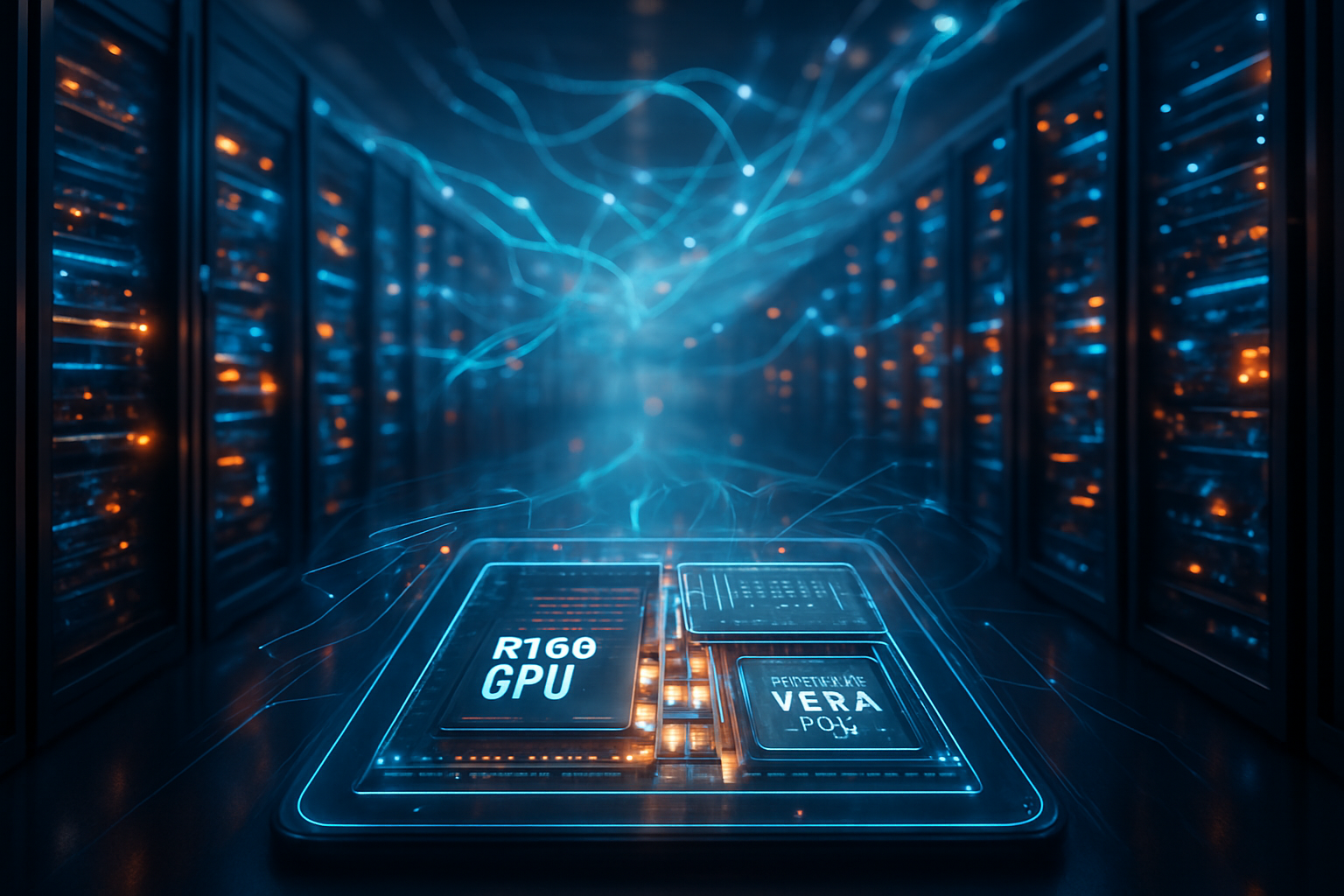
    As the world rings in early 2026, the artificial intelligence landscape has reached a definitive turning point. NVIDIA (NASDAQ: NVDA) has officially signaled the end of the "Generative Era" and the beginning of the "Agentic Era" with the full-scale transition to its Rubin platform. Unveiled in detail at CES 2026, the Rubin architecture is not merely an incremental update to the record-breaking Blackwell chips of 2025; it is a fundamental redesign of the AI supercomputer. By moving to a six-chip extreme-codesigned architecture, NVIDIA is attempting to solve the most pressing bottleneck of 2026: the cost and complexity of deploying autonomous AI agents at global scale.

    The immediate significance of the Rubin launch lies in its promise to reduce the cost of AI inference by nearly tenfold. While the industry spent 2023 through 2025 focused on the raw horsepower needed to train massive Large Language Models (LLMs), the priority has shifted toward "Agentic AI"—systems capable of multi-step reasoning, tool use, and autonomous execution. These workloads require a different kind of compute density and memory bandwidth, which the Rubin platform aims to provide. With the first Rubin-powered racks slated for deployment by major hyperscalers in the second half of 2026, the platform is already resetting expectations for what enterprise AI can achieve.

    The Six-Chip Symphony: Inside the Rubin Architecture

    The technical cornerstone of Rubin is its transition to an "extreme-codesigned" architecture. Rather than treating the GPU, CPU, and networking components as separate entities, NVIDIA (NASDAQ: NVDA) has engineered six core silicon elements to function as a single logical unit. This "system-on-rack" approach includes the Rubin GPU, the new Vera CPU, NVLink 6, the ConnectX-9 SuperNIC, the BlueField-4 DPU, and the Spectrum-6 Ethernet Switch. The flagship Rubin GPU features the groundbreaking HBM4 memory standard, doubling the interface width and delivering a staggering 22 TB/s of bandwidth—nearly triple that of the Blackwell generation.

    At the heart of the platform sits the Vera CPU, NVIDIA's most ambitious foray into custom silicon. Replacing the Grace architecture, Vera is built on a custom Arm-based "Olympus" core design specifically optimized for the data-orchestration needs of agentic AI. Featuring 88 cores and 176 concurrent threads, Vera is designed to eliminate the "jitter" and latency spikes that can derail real-time autonomous reasoning. When paired with the Rubin GPU via the 1.8 TB/s NVLink-C2C interconnect, the system achieves a level of hardware-software synergy that previously required massive software overhead to manage.

    Initial reactions from the AI research community have been centered on Rubin’s "Test-Time Scaling" capabilities. Modern agents often need to "think" longer before answering, generating thousands of internal reasoning tokens to verify a plan. The Rubin platform supports this through the BlueField-4 DPU, which manages up to 150 TB of "Context Memory" per rack. By offloading the Key-Value (KV) cache from the GPU to a dedicated storage layer, Rubin allows agents to maintain multi-million token contexts without starving the compute engine. Industry experts suggest this architecture is the first to truly treat AI memory as a tiered, scalable resource rather than a static buffer.

    A New Arms Race: Competitive Fallout and the Hyperscale Response

    The launch of Rubin has forced competitors to refine their strategies. Advanced Micro Devices (NASDAQ: AMD) is countering with its Instinct MI400 series, which focuses on a "high-capacity" play. AMD’s MI455X boasts up to 432GB of HBM4 memory—significantly more than the base Rubin GPU—making it a preferred choice for researchers working on massive, non-compressed models. However, AMD is fighting an uphill battle against NVIDIA’s vertically integrated stack. To compensate, AMD is championing the "UALink" and "Ultra Ethernet" open standards, positioning itself as the flexible alternative to NVIDIA’s proprietary ecosystem.

    Meanwhile, Intel (NASDAQ: INTC) has pivoted its data center strategy toward "Jaguar Shores," a rack-scale system that mirrors NVIDIA’s integrated approach but focuses on a "unified memory" architecture using Intel’s 18A manufacturing process. While Intel remains behind in the raw performance race as of January 2026, its focus on "Edge AI" and sovereign compute clusters has allowed it to secure a foothold in the European and Asian markets, where data residency and manufacturing independence are paramount.

    The major hyperscalers—Microsoft (NASDAQ: MSFT), Alphabet (NASDAQ: GOOGL), Amazon (NASDAQ: AMZN), and Meta Platforms (NASDAQ: META)—are navigating a complex relationship with NVIDIA. Microsoft remains the largest adopter, building its "Fairwater" superfactories specifically to house Rubin NVL72 racks. However, the "NVIDIA Tax" continues to drive these giants to develop their own silicon. Amazon’s Trainium3 and Google’s TPU v7 are now handling a significant portion of their internal, well-defined inference workloads. The Rubin platform’s strategic advantage is its versatility; while custom ASICs are excellent for specific tasks, Rubin is the "Swiss Army Knife" for the unpredictable, reasoning-heavy workloads that define the new agentic frontier.

    Beyond the Chips: Sovereignty, Energy, and the Physical AI Shift

    The Rubin transition is unfolding against a broader backdrop of "Physical AI" and a global energy crisis. By early 2026, the focus of the AI world has moved from digital chat into the physical environment. Humanoid robots and autonomous industrial systems now rely on the same high-performance inference that Rubin provides. The ability to process "world models"—AI that understands physics and 3D space—requires the extreme memory bandwidth that HBM4 and Rubin provide. This shift has turned the "compute-to-population" ratio into a new metric of national power, leading to the rise of "Sovereign AI" clusters in regions like France, the UAE, and India.

    However, the power demands of these systems have reached a fever pitch. A single Rubin-powered data center can consume as much electricity as a small city. This has led to a pivot toward modular nuclear reactors (SMRs) and advanced liquid cooling technologies. NVIDIA’s NVL72 and NVL144 systems are now designed for "warm-water cooling," allowing data centers to operate without the energy-intensive chillers used in previous decades. The broader significance of Rubin is thus as much about thermal efficiency as it is about FLOPS; it is an architecture designed for a world where power is the ultimate constraint.

    Concerns remain regarding vendor lock-in and the potential for a "demand air pocket" if the ROI on agentic AI does not materialize as quickly as the infrastructure is built. Critics argue that by controlling the CPU, GPU, and networking, NVIDIA is creating a "walled garden" that could stifle innovation in alternative architectures. Nonetheless, the sheer performance leap—delivering 50 PetaFLOPS of FP4 inference—has, for now, silenced most skeptics who were predicting an end to the AI boom.

    Looking Ahead: The Road to Rubin Ultra and Feynman

    NVIDIA’s roadmap suggests that the Rubin era is just the beginning. The company has already teased "Rubin Ultra" for 2027, which will transition to HBM4e memory and an even denser NVL576 rack configuration. Beyond that, the "Feynman" architecture planned for 2028 is rumored to target a 30x performance increase over the Blackwell generation, specifically aiming for the thresholds required for Artificial Superintelligence (ASI).

    In the near term, the industry will be watching the second-half 2026 rollout of Rubin systems very closely. The primary challenge will be the supply chain; securing enough HBM4 capacity and advanced packaging space at TSMC remains a bottleneck. Furthermore, as AI agents become more autonomous, the industry will face new regulatory and safety hurdles. The ability of Rubin’s hardware-level security features, built into the BlueField-4 DPU, to manage "agentic drift" will be a key area of study for researchers.

    A Legacy of Integration: Final Thoughts on the Rubin Transition

    The transition to the Rubin platform marks a historical moment in computing history. It is the moment when the GPU transitioned from being a "coprocessor" to becoming the core of a unified, heterogeneous supercomputing system. By codesigning every aspect of the stack, NVIDIA (NASDAQ: NVDA) has effectively reset the ceiling for what is possible in AI inference and autonomous reasoning.

    As we move deeper into 2026, the key takeaways are clear: the cost of intelligence is falling, the complexity of AI tasks is rising, and the infrastructure is becoming more integrated. Whether this leads to a sustainable new era of productivity or further consolidates power in the hands of a few tech giants remains the central question of the year. For now, the "Rubin Revolution" is in full swing, and the rest of the industry is once again racing to catch up.


    This content is intended for informational purposes only and represents analysis of current AI developments.

    TokenRing AI delivers enterprise-grade solutions for multi-agent AI workflow orchestration, AI-powered development tools, and seamless remote collaboration platforms.
    For more information, visit https://www.tokenring.ai/.
  • NVIDIA Shatters $100 Billion Annual Sales Barrier as the Rubin Era Beckons

    NVIDIA Shatters $100 Billion Annual Sales Barrier as the Rubin Era Beckons

    In a definitive moment for the silicon age, NVIDIA (NASDAQ: NVDA) has officially crossed the historic milestone of $100 billion in annual semiconductor sales, cementing its role as the primary architect of the global artificial intelligence revolution. According to financial data released in early 2026, the company’s revenue for the 2025 calendar year surged to an unprecedented $125.7 billion—a 64% increase over the previous year—making it the first chipmaker in history to reach such heights. This growth has been underpinned by the relentless demand for the Blackwell architecture, which has effectively sold out through the middle of 2026 as cloud providers and nation-states race to build "AI factories."

    The significance of this achievement cannot be overstated. As of January 12, 2026, a new report from Gartner indicates that global AI infrastructure spending is forecast to surpass $1.3 trillion this year. NVIDIA’s dominance in this sector has seen its market capitalization hover near the $4.5 trillion mark, as the company transitions from a component supplier to a full-stack infrastructure titan. With the upcoming "Rubin" platform already casting a long shadow over the industry, NVIDIA appears to be widening its lead even as competitors like AMD (NASDAQ: AMD) and Intel (NASDAQ: INTC) mount their most aggressive challenges to date.

    The Engine of Growth: From Blackwell to Rubin

    The engine behind NVIDIA’s record-breaking 2025 was the Blackwell architecture, specifically the GB200 NVL72 system, which redefined the data center as a single, massive liquid-cooled computer. Blackwell introduced the second-generation Transformer Engine and support for the FP4 precision format, allowing for a 30x increase in performance for large language model (LLM) inference compared to the previous H100 generation. Industry experts note that Blackwell was the fastest product ramp in semiconductor history, generating over $11 billion in its first full quarter of shipping. This success was not merely about raw compute; it was about the integration of Spectrum-X Ethernet and NVLink 5.0, which allowed tens of thousands of GPUs to act as a unified fabric.

    However, the technical community is already looking toward the Rubin platform, officially unveiled for a late 2026 release. Named after astronomer Vera Rubin, the new architecture represents a fundamental shift toward "Physical AI" and agentic workflows. The Rubin R100 GPU will be manufactured on TSMC’s (NYSE: TSM) advanced 3nm (N3P) process and will be the first to feature High Bandwidth Memory 4 (HBM4). With a 2048-bit memory interface, Rubin is expected to deliver a staggering 22 TB/s of bandwidth—nearly triple that of Blackwell—effectively shattering the "memory wall" that has limited the scale of Mixture-of-Experts (MoE) models.

    Paired with the Rubin GPU is the new Vera CPU, which replaces the Grace architecture. Featuring 88 custom "Olympus" cores based on the Armv9.2-A architecture, the Vera CPU is designed specifically to manage the high-velocity data movement required by autonomous AI agents. Initial reactions from AI researchers suggest that Rubin’s support for NVFP4 (4-bit floating point) with hardware-accelerated adaptive compression could reduce the energy cost of token generation by an order of magnitude, making real-time, complex reasoning agents economically viable for the first time.

    Market Dominance and the Competitive Response

    NVIDIA’s ascent has forced a strategic realignment across the entire tech sector. Hyperscalers like Microsoft (NASDAQ: MSFT), Alphabet (NASDAQ: GOOGL), and Amazon (NASDAQ: AMZN) remain NVIDIA’s largest customers, but they are also its most complex competitors as they scale their own internal silicon efforts, such as the Azure Maia and Google TPU v6. Despite these internal chips, the "CUDA moat" remains formidable. NVIDIA has moved up the software stack with NVIDIA Inference Microservices (NIMs), providing pre-optimized containers that allow enterprises to deploy models in minutes, a level of vertical integration that cloud-native chips have yet to match.

    The competitive landscape has narrowed into a high-stakes "rack-to-rack" battle. AMD (NASDAQ: AMD) has responded with its Instinct MI400 series and the "Helios" platform, which boasts up to 432GB of HBM4—significantly more capacity than NVIDIA’s R100. AMD’s focus on open-source software through ROCm 7.2 has gained traction among Tier-2 cloud providers and research labs seeking a "non-NVIDIA" alternative. Meanwhile, Intel (NASDAQ: INTC) has pivoted toward its "Jaguar Shores" unified architecture, focusing on the total cost of ownership (TCO) for enterprise inference, though it continues to trail in the high-end training market.

    For startups and smaller AI labs, NVIDIA’s dominance is a double-edged sword. While the performance of Blackwell and Rubin enables the training of trillion-parameter models, the extreme cost and power requirements of these systems create a high barrier to entry. This has led to a burgeoning market for "sovereign AI," where nations like Saudi Arabia and Japan are purchasing NVIDIA hardware directly to ensure domestic AI capabilities, bypassing traditional cloud intermediaries and further padding NVIDIA’s bottom line.

    Rebuilding the Global Digital Foundation

    The broader significance of NVIDIA crossing the $100 billion threshold lies in the fundamental shift from general-purpose computing to accelerated computing. As Gartner’s Rajeev Rajput noted in the January 2026 report, AI infrastructure is no longer a niche segment of the semiconductor market; it is the market. With $1.3 trillion in projected spending, the world is effectively rebuilding its entire digital foundation around the GPU. This transition is comparable to the shift from mainframes to client-server architecture, but occurring at ten times the speed.

    However, this rapid expansion brings significant concerns regarding energy consumption and the environmental impact of massive data centers. A single Rubin-based rack is expected to consume over 120kW of power, necessitating a revolution in liquid cooling and power delivery. Furthermore, the concentration of so much economic and technological power within a single company has invited increased regulatory scrutiny from both the U.S. and the EU, as policymakers grapple with the implications of one firm controlling the "oxygen" of the AI economy.

    Comparatively, NVIDIA’s milestone dwarfs previous semiconductor breakthroughs. When Intel dominated the PC era or Qualcomm (NASDAQ: QCOM) led the mobile revolution, their annual revenues took decades to reach these levels. NVIDIA has achieved this scale in less than three years of the "generative AI" era. This suggests that we are not in a typical hardware cycle, but rather a permanent re-architecting of how human knowledge is processed and accessed.

    The Horizon: Agentic AI and Physical Systems

    Looking ahead, the next 24 months will be defined by the transition from "Chatbots" to "Agentic AI"—systems that don't just answer questions but execute complex, multi-step tasks autonomously. Experts predict that the Rubin platform’s massive memory bandwidth will be the key enabler for these agents, allowing them to maintain massive "context windows" of information in real-time. We can expect to see the first widespread deployments of "Physical AI" in 2026, where NVIDIA’s Thor chips (derived from Blackwell/Rubin tech) power a new generation of humanoid robots and autonomous industrial systems.

    The challenges remain daunting. The supply chain for HBM4 memory, primarily led by SK Hynix and Samsung (KRX: 005930), remains a potential bottleneck. Any disruption in the production of these specialized memory chips could stall the rollout of the Rubin platform. Additionally, the industry must address the "inference efficiency" problem; as models grow, the cost of running them must fall faster than the models expand, or the $1.3 trillion investment in infrastructure may struggle to find a path to profitability.

    A Legacy in the Making

    NVIDIA’s historic $100 billion milestone and its projected path to $200 billion by the end of fiscal year 2026 signal the beginning of a new era in computing. The success of Blackwell has proven that the demand for AI compute is not a bubble but a structural shift in the global economy. As the Rubin platform prepares to enter the market with its HBM4-powered breakthrough, NVIDIA is effectively competing against its own previous successes as much as it is against its rivals.

    In the coming weeks and months, the tech world will be watching for the first production benchmarks of the Rubin R100 and the progress of the UXL Foundation’s attempt to create a cross-platform alternative to CUDA. While the competition is more formidable than ever, NVIDIA’s ability to co-design silicon, software, and networking into a single, cohesive unit continues to set the pace for the industry. For now, the "AI factory" runs on NVIDIA green, and the $1.3 trillion infrastructure boom shows no signs of slowing down.


    This content is intended for informational purposes only and represents analysis of current AI developments.

    TokenRing AI delivers enterprise-grade solutions for multi-agent AI workflow orchestration, AI-powered development tools, and seamless remote collaboration platforms.
    For more information, visit https://www.tokenring.ai/.
  • NVIDIA’s Rubin Platform: The Next Frontier in AI Supercomputing Begins Production

    NVIDIA’s Rubin Platform: The Next Frontier in AI Supercomputing Begins Production

    The artificial intelligence landscape has reached a pivotal milestone as NVIDIA (NASDAQ: NVDA) officially transitions its next-generation "Rubin" platform into the production phase. Named in honor of the pioneering astronomer Vera Rubin, whose work provided the first evidence of dark matter, the platform is designed to illuminate the next frontier of AI supercomputing. As of January 2, 2026, the Rubin architecture has moved beyond its initial sampling phase and into trial production, signaling a shift from the highly successful Blackwell era to a new epoch of "AI Factory" scale compute.

    The immediate significance of this announcement cannot be overstated. With the Rubin platform, NVIDIA is not merely iterating on its hardware; it is fundamentally redesigning the architecture of the data center. By integrating the new R100 GPU, the custom "Vera" CPU, and the world’s first implementation of HBM4 memory, NVIDIA aims to provide the massive throughput required for the next generation of trillion-parameter "World Models" and autonomous reasoning agents. This transition marks the first time a chiplet-based architecture has been deployed at this scale in the AI sector, promising a performance-per-watt leap that addresses the growing global concern over data center energy consumption.

    At the heart of the Rubin platform lies the R100 GPU, a technical marvel fabricated on the performance-enhanced 3nm (N3P) process from TSMC (NYSE: TSM). Moving away from the monolithic designs of the past, the R100 utilizes a sophisticated chiplet-based architecture housed within a massive 4x reticle size interposer. This design is brought to life using TSMC’s advanced CoWoS-L packaging, allowing for a 100x100mm substrate that accommodates more high-bandwidth memory (HBM) sites than ever before. Early benchmarks for the R100 indicate a staggering 2.5x to 3.3x performance leap in FP4 compute over the previous Blackwell architecture, providing roughly 50 petaflops of inference performance per GPU.

    The platform is further bolstered by the Vera CPU, the successor to the Arm-based Grace CPU. The Vera CPU features 88 custom "Olympus" Arm-compatible cores, supporting 176 logical threads through simultaneous multithreading (SMT). In a "Vera Rubin Superchip" configuration, the CPU and GPU are linked via NVLink-C2C (Chip-to-Chip) technology, boasting a bidirectional bandwidth of 1.8 TB/s. This allows for total cache coherency, which is essential for the complex, real-time data shuffling required by multi-modal AI models. Experts in the research community have noted that this tight integration effectively eliminates the traditional bottlenecks between memory and processing, allowing the Vera CPU to deliver twice the performance of its predecessor.

    Perhaps the most significant technical advancement is the integration of HBM4 memory. The Rubin R100 is the first GPU to utilize this standard, featuring 288GB of HBM4 memory across eight stacks with a 2,048-bit interface. This doubles the interface width of HBM3e and provides a memory bandwidth estimated between 13 TB/s and 15 TB/s. To secure this supply, NVIDIA has partnered with industry leaders including SK Hynix (KRX: 000660), Micron (NASDAQ: MU), and Samsung (KRX: 005930). This massive influx of bandwidth is specifically tuned for "Million-GPU" clusters, where the ability to move data between nodes is as critical as the compute power itself.

    The shift to the Rubin platform is sending ripples through the entire tech ecosystem, forcing competitors and partners alike to recalibrate their strategies. For major Cloud Service Providers (CSPs) like Microsoft (NASDAQ: MSFT), Amazon (NASDAQ: AMZN), and Alphabet (NASDAQ: GOOGL), the arrival of Rubin is both a blessing and a logistical challenge. Microsoft has already committed to a massive deployment of Rubin hardware to support its 1GW compute deal with Anthropic, while Amazon is integrating NVIDIA NVLink Fusion into its infrastructure to allow customers to blend Rubin's power with its own custom Trainium4 chips.

    In the competitive arena, AMD (NASDAQ: AMD) is attempting to counter the Rubin platform with its Instinct MI400 series. AMD’s strategy focuses on sheer memory capacity, offering 432GB of HBM4—nearly 1.5 times the initial capacity of the Rubin R100 (288GB). By emphasizing open standards like UALink and Ethernet, AMD hopes to attract enterprises looking to avoid "CUDA lock-in." Meanwhile, Intel (NASDAQ: INTC) has pivoted its roadmap to the "Jaguar Shores" chip, built on the Intel 18A process, which seeks to achieve system-level parity with NVIDIA through deep co-packaging with its Diamond Rapids Xeon CPUs.

    Despite these challenges, NVIDIA’s market positioning remains formidable. Analysts expect NVIDIA to maintain an 85-90% share of the AI data center GPU market through 2026, supported by an estimated $500 billion order backlog. The strategic advantage of the Rubin platform lies not just in the silicon, but in the "NVL144" rack-scale solutions. These liquid-cooled racks are becoming the blueprint for modern "AI Factories," providing a turnkey solution for nations and corporations looking to build domestic supercomputing centers. This "Sovereign AI" trend has become a significant revenue lever, as countries like Saudi Arabia and Japan seek to bypass traditional cloud providers.

    The broader significance of the Rubin platform lies in its role as the engine for the "AI Factory" era. As AI models transition from static text generators to dynamic agents capable of "World Modeling"—processing video, physical sensors, and reasoning in real-time—the demand for deterministic, high-efficiency compute has exploded. Rubin is the first platform designed from the ground up to support this transition. By focusing on FP4 and FP6 precision, NVIDIA is enabling a level of inference efficiency that makes the deployment of trillion-parameter models economically viable for a wider range of industries.

    However, the rapid scaling of these platforms has raised significant concerns regarding energy consumption and global supply chains. A single Rubin-based NVL144 rack is projected to draw over 500kW of power, making liquid cooling a mandatory requirement rather than an optional upgrade. This has triggered a massive infrastructure cycle, benefiting power management companies but also straining local energy grids. Furthermore, the "Year of HBM4" has led to a global shortage of DRAM, as memory manufacturers divert capacity to meet NVIDIA’s high-margin requirements, potentially driving up costs for consumer electronics.

    When compared to previous milestones like the launch of the H100 or the Blackwell architecture, Rubin represents a shift toward "system-level" scaling. It is no longer about the fastest chip, but about the most efficient cluster. The move to a chiplet-based architecture mirrors the evolution of the semiconductor industry at large, where physical limits on die size are being overcome by advanced packaging. This allows NVIDIA to maintain its trajectory of exponential performance growth, even as traditional Moore’s Law scaling becomes increasingly difficult and expensive.

    Looking ahead, the roadmap for the Rubin platform includes the "Rubin Ultra" variant, scheduled for 2027. This successor is expected to feature 12-high HBM4 stacks, potentially pushing memory capacity to 1TB per GPU and FP4 performance to 100 petaflops. In the near term, the industry will be watching the deployment of "Project Ceiba," a massive supercomputer being built by AWS that will now utilize the Rubin architecture to push the boundaries of climate modeling and drug discovery.

    The potential applications for Rubin-class compute extend far beyond chatbots. Experts predict that this level of processing power will be the catalyst for "Physical AI"—the integration of large-scale neural networks into robotics and autonomous manufacturing. The challenge will be in the software; as hardware capabilities leapfrog, the development of software stacks that can efficiently orchestrate "Million-GPU" clusters will be the next major hurdle. Furthermore, as AI models begin to exceed the context window limits of current hardware, the massive HBM4 bandwidth of Rubin will be essential for the next generation of long-context, multi-modal reasoning.

    NVIDIA’s Rubin platform represents more than just a hardware refresh; it is a foundational shift in how the world processes information. By combining the R100 GPU, the Vera CPU, and HBM4 memory into a unified, chiplet-based ecosystem, NVIDIA has solidified its dominance in an era where compute is the new oil. The transition to mass production in early 2026 marks the beginning of a cycle that will likely define the capabilities of artificial intelligence for the remainder of the decade.

    The key takeaways from this development are clear: the barrier to entry for high-end AI training is rising, the "AI Factory" is becoming the standard unit of compute, and the competition is shifting from individual chips to entire rack-scale systems. As the first Rubin-powered data centers come online in the second half of 2026, the tech industry will be watching closely to see if this massive leap in performance translates into the long-promised breakthrough in autonomous AI reasoning. For now, NVIDIA remains the undisputed architect of the intelligence age.


    This content is intended for informational purposes only and represents analysis of current AI developments.

    TokenRing AI delivers enterprise-grade solutions for multi-agent AI workflow orchestration, AI-powered development tools, and seamless remote collaboration platforms.
    For more information, visit https://www.tokenring.ai/.
  • The Rubin Revolution: NVIDIA Accelerates the AI Era with 2026 Launch of HBM4-Powered Platform

    The Rubin Revolution: NVIDIA Accelerates the AI Era with 2026 Launch of HBM4-Powered Platform

    As the calendar turns to 2026, the artificial intelligence industry stands on the precipice of its most significant hardware leap to date. NVIDIA (NASDAQ:NVDA) has officially moved into the production phase of its "Rubin" platform, the highly anticipated successor to the record-breaking Blackwell architecture. Named after the pioneering astronomer Vera Rubin, the new platform represents more than just a performance boost; it signals the definitive shift in NVIDIA’s strategy toward a relentless yearly release cadence, a move designed to maintain its stranglehold on the generative AI market and leave competitors in a state of perpetual catch-up.

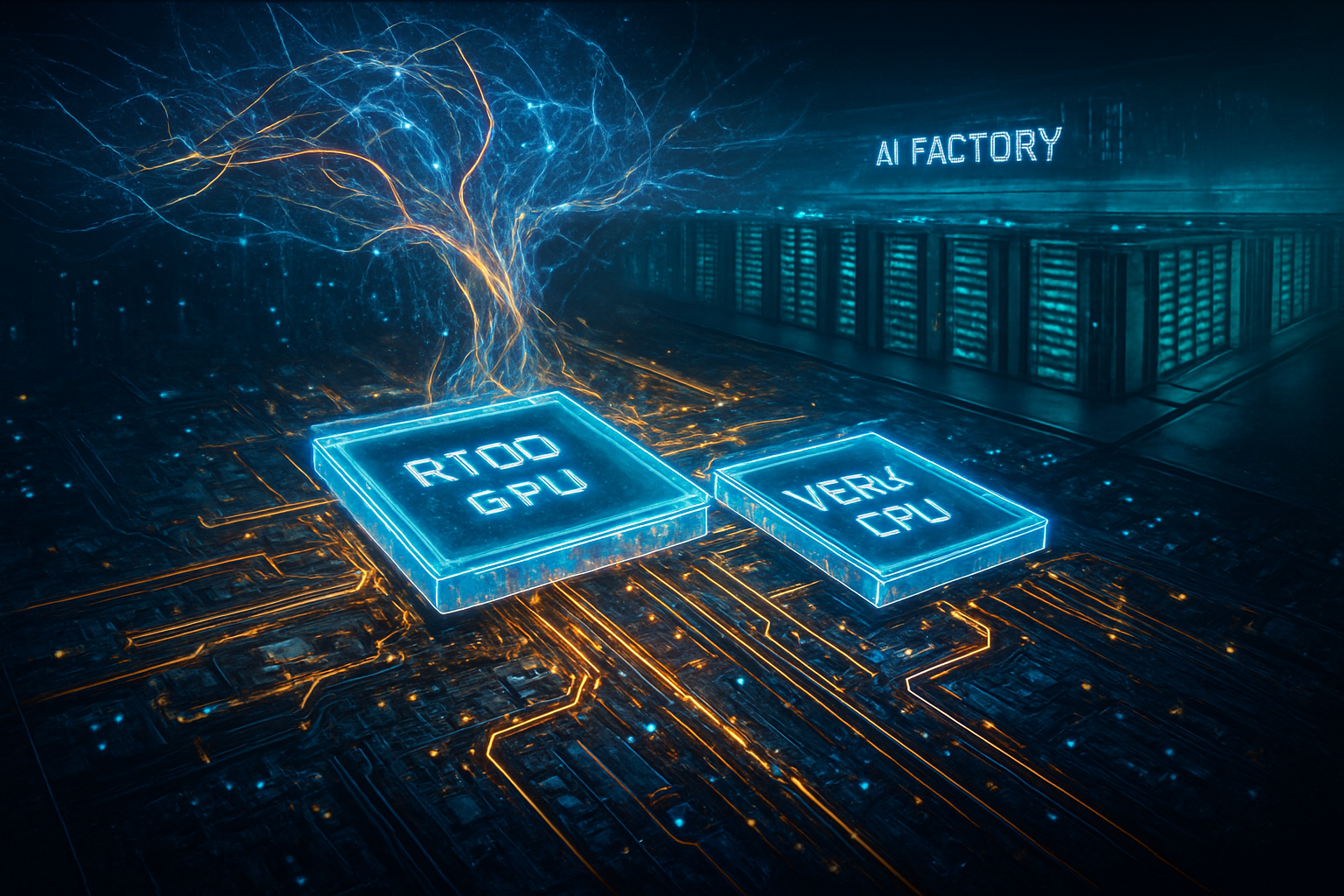
    The immediate significance of the Rubin launch cannot be overstated. By integrating the new Vera CPU, the R100 GPU, and next-generation HBM4 memory, NVIDIA is attempting to solve the "memory wall" and "power wall" that have begun to slow the scaling of trillion-parameter models. For hyperscalers and AI research labs, the arrival of Rubin means the ability to train next-generation "Agentic AI" systems that were previously computationally prohibitive. This release marks the transition from AI as a software feature to AI as a vertically integrated industrial process, often referred to by NVIDIA CEO Jensen Huang as the era of "AI Factories."

    Technical Mastery: Vera, Rubin, and the HBM4 Advantage

    The technical core of the Rubin platform is the R100 GPU, a marvel of semiconductor engineering that moves away from the monolithic designs of the past. Fabricated on the performance-enhanced 3nm (N3P) process from TSMC (NYSE:TSM), the R100 utilizes advanced CoWoS-L packaging to bridge multiple compute dies into a single, massive logical unit. Early benchmarks suggest that a single R100 GPU can deliver up to 50 Petaflops of FP4 compute—a staggering 2.5x increase over the Blackwell B200. This leap is made possible by NVIDIA’s adoption of System on Integrated Chips (SoIC) 3D-stacking, which allows for vertical integration of logic and memory, drastically reducing the physical distance data must travel and lowering power "leakage" that has plagued previous generations.

    A critical component of this architecture is the "Vera" CPU, which replaces the Grace CPU found in earlier superchips. Unlike its predecessor, which relied on standard Arm Neoverse designs, Vera is built on NVIDIA’s custom "Olympus" ARM cores. This transition to custom silicon allows for much tighter optimization between the CPU and GPU, specifically for the complex data-shuffling tasks required by multi-agent AI workflows. The resulting "Vera Rubin" superchip pairs the Vera CPU with two R100 GPUs via a 3.6 TB/s NVLink-6 interconnect, providing the bidirectional bandwidth necessary to treat the entire rack as a single, unified computer.

    Memory remains the most significant bottleneck in AI training, and Rubin addresses this by being the first architecture to fully adopt the HBM4 standard. These memory stacks, provided by lead partners like SK Hynix (KRX:000660) and Samsung (KRX:005930), offer a massive jump in both capacity and throughput. Standard R100 configurations now feature 288GB of HBM4, with "Ultra" versions expected to reach 512GB later this year. By utilizing a customized logic base die—co-developed with TSMC—the HBM4 modules are integrated directly onto the GPU package, allowing for bandwidth speeds exceeding 13 TB/s. This allows the Rubin platform to handle the massive KV caches required for the long-context windows that define 2026-era large language models.

    Initial reactions from the AI research community have been a mix of excitement and logistical concern. While the performance gains are undeniable, the power requirements for a full Rubin-based NVL144 rack are projected to exceed 500kW. Industry experts note that while NVIDIA has solved the compute problem, they have placed a massive burden on data center infrastructure. The shift to liquid cooling is no longer optional for Rubin adopters; it is a requirement. Researchers at major labs have praised the platform's deterministic processing capabilities, which aim to close the "inference gap" and allow for more reliable real-time reasoning in AI agents.

    Shifting the Industry Paradigm: The Impact on Hyperscalers and Competitors

    The launch of Rubin significantly alters the competitive landscape for the entire tech sector. For hyperscalers like Microsoft (NASDAQ:MSFT), Alphabet (NASDAQ:GOOGL), and Amazon (NASDAQ:AMZN), the Rubin platform is both a blessing and a strategic challenge. These companies are the primary purchasers of NVIDIA hardware, yet they are also developing their own custom AI silicon, such as Maia, TPU, and Trainium. NVIDIA’s shift to a yearly cadence puts immense pressure on these internal projects; if a cloud provider’s custom chip takes two years to develop, it may be two generations behind NVIDIA’s latest offering by the time it reaches the data center.

    Major AI labs, including OpenAI and Meta (NASDAQ:META), stand to benefit the most from the Rubin rollout. Meta, in particular, has been aggressive in its pursuit of massive compute clusters to power its Llama series of models. The increased memory bandwidth of HBM4 will allow these labs to move beyond static LLMs toward "World Models" that require high-speed video processing and multi-modal reasoning. However, the sheer cost of Rubin systems—estimated to be 20-30% higher than Blackwell—further widens the gap between the "compute-rich" elite and smaller AI startups, potentially centralizing AI power into fewer hands.

    For direct hardware competitors like AMD (NASDAQ:AMD) and Intel (NASDAQ:INTC), the Rubin announcement is a formidable hurdle. AMD’s MI300 and MI400 series have gained some ground by offering competitive memory capacities, but NVIDIA’s vertical integration of the Vera CPU and NVLink networking makes it difficult for "GPU-only" competitors to match system-level efficiency. To compete, AMD and Intel are increasingly looking toward open standards like the Ultra Accelerator Link (UALink), but NVIDIA’s proprietary ecosystem remains the gold standard for performance. Meanwhile, memory manufacturers like Micron (NASDAQ:MU) are racing to ramp up HBM4 production to meet the insatiable demand created by the Rubin production cycle.

    The market positioning of Rubin also suggests a strategic pivot toward "Sovereign AI." NVIDIA is increasingly selling entire "AI Factory" blueprints to national governments in the Middle East and Southeast Asia. These nations view the Rubin platform not just as hardware, but as a foundation for national security and economic independence. By providing a turnkey solution that includes compute, networking, and software (CUDA), NVIDIA has effectively commoditized the supercomputer, making it accessible to any entity with the capital to invest in the 2026 hardware cycle.

    Scaling the Future: Energy, Efficiency, and the AI Arms Race

    The broader significance of the Rubin platform lies in its role as the engine of the "AI scaling laws." For years, the industry has debated whether increasing compute and data would continue to yield intelligence gains. Rubin is NVIDIA’s bet that the ceiling is nowhere in sight. By delivering a 2.5x performance jump in a single generation, NVIDIA is effectively attempting to maintain a "Moore’s Law for AI," where compute power doubles every 12 to 18 months. This rapid advancement is essential for the transition from generative AI—which creates content—to agentic AI, which can plan, reason, and execute complex tasks autonomously.

    However, this progress comes with significant environmental and infrastructure concerns. The energy density of Rubin-based data centers is forcing a radical rethink of the power grid. We are seeing a trend where AI companies are partnering directly with energy providers to build "nuclear-powered" data centers, a concept that seemed like science fiction just a few years ago. The Rubin platform’s reliance on liquid cooling and specialized power delivery systems means that the "AI arms race" is no longer just about who has the best algorithms, but who has the most robust physical infrastructure.

    Comparisons to previous AI milestones, such as the 2012 AlexNet moment or the 2017 "Attention is All You Need" paper, suggest that we are currently in the "Industrialization Phase" of AI. If Blackwell was the proof of concept for trillion-parameter models, Rubin is the production engine for the trillion-agent economy. The integration of the Vera CPU is particularly telling; it suggests that the future of AI is not just about raw GPU throughput, but about the sophisticated orchestration of data between various compute elements. This holistic approach to system design is what separates the current era from the fragmented hardware landscapes of the past decade.

    There is also a growing concern regarding the "silicon ceiling." As NVIDIA moves to 3nm and looks toward 2nm for future architectures, the physical limits of transistor shrinking are becoming apparent. Rubin’s reliance on "brute-force" scaling—using massive packaging and multi-die configurations—indicates that the industry is moving away from traditional semiconductor scaling and toward "System-on-a-Chiplet" architectures. This shift ensures that NVIDIA remains at the center of the ecosystem, as they are one of the few companies with the scale and expertise to manage the immense complexity of these multi-die systems.

    The Road Ahead: Beyond Rubin and the 2027 Roadmap

    Looking forward, the Rubin platform is only the beginning of NVIDIA's 2026–2028 roadmap. Following the initial R100 rollout, NVIDIA is expected to launch the "Rubin Ultra" in 2027. This refresh will likely feature HBM4e (extended) memory and even higher interconnect speeds, targeting the training of models with 100 trillion parameters or more. Beyond that, early leaks have already begun to mention the "Feynman" architecture for 2028, named after the physicist Richard Feynman, which is rumored to explore even more exotic computing paradigms, possibly including early-stage photonic interconnects.

    The potential applications for Rubin-class compute are vast. In the near term, we expect to see a surge in "Real-time Digital Twins"—highly accurate, AI-powered simulations of entire cities or industrial supply chains. In healthcare, the Rubin platform’s ability to process massive genomic and proteomic datasets in real-time could lead to the first truly personalized, AI-designed medicines. However, the challenge remains in the software; as hardware capabilities explode, the burden shifts to developers to create software architectures that can actually utilize 50 Petaflops of compute without being throttled by data bottlenecks.

    Experts predict that the next two years will be defined by a "re-architecting" of the data center. As Rubin becomes the standard, we will see a move away from general-purpose cloud computing toward specialized "AI Clouds" that are physically optimized for the Vera Rubin superchips. The primary challenge will be the supply chain; while NVIDIA has booked significant capacity at TSMC, any geopolitical instability in the Taiwan Strait remains the single greatest risk to the Rubin rollout and the broader AI economy.

    A New Benchmark for the Intelligence Age

    The arrival of the NVIDIA Rubin platform marks a definitive turning point in the history of computing. By moving to a yearly release cadence and integrating custom CPU cores with HBM4 memory, NVIDIA has not only set a new performance benchmark but has fundamentally redefined what a "computer" is in the age of artificial intelligence. Rubin is no longer just a component; it is the central nervous system of the modern AI factory, providing the raw power and sophisticated orchestration required to move toward true machine intelligence.

    The key takeaway from the Rubin launch is that the pace of AI development is accelerating, not slowing down. For businesses and governments, the message is clear: the window for adopting and integrating these technologies is shrinking. Those who can harness the power of the Rubin platform will have a decisive advantage in the coming "Agentic Era," while those who hesitate risk being left behind by a hardware cycle that no longer waits for anyone.

    In the coming weeks and months, the industry will be watching for the first production benchmarks from "Rubin-powered" clusters and the subsequent response from the "Open AI" ecosystem. As the first Rubin units begin shipping to early-access customers this quarter, the world will finally see if this massive investment in silicon and power can deliver on the promise of the next great leap in human-machine collaboration.


    This content is intended for informational purposes only and represents analysis of current AI developments.

    TokenRing AI delivers enterprise-grade solutions for multi-agent AI workflow orchestration, AI-powered development tools, and seamless remote collaboration platforms.
    For more information, visit https://www.tokenring.ai/.