Tag: SAG-AFTRA

  • Hollywood’s Digital Fortress: One Year Inside California’s AI Likeness Laws AB 2602 and AB 1836

    Hollywood’s Digital Fortress: One Year Inside California’s AI Likeness Laws AB 2602 and AB 1836

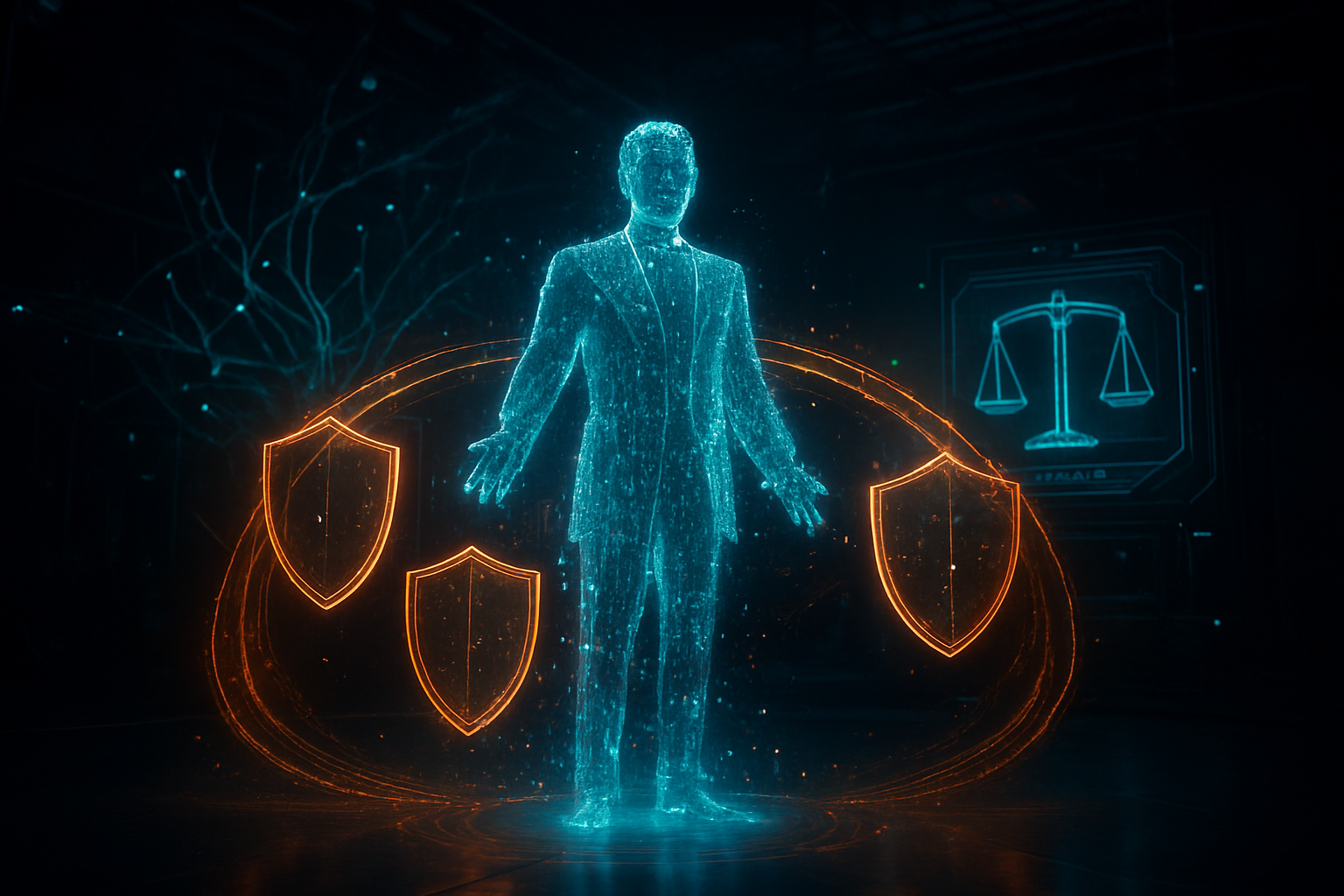
    As of February 2, 2026, the entertainment industry has undergone a seismic shift in how it treats human identity. Just over a year since California’s landmark digital replica laws—Assembly Bill 2602 and Assembly Bill 1836—went into effect on January 1, 2025, the "Wild West" era of generative AI in Hollywood has been replaced by a complex, high-stakes legal framework. These laws, born out of the historic 2023 SAG-AFTRA strikes, have created a "digital fortress" around performers, though that fortress is now facing its greatest challenge yet from federal preemption and new executive orders.

    The significance of these statutes cannot be overstated. For the first time, the law explicitly distinguishes between a human performance and a "digital replica"—a computer-generated representation that mimics an individual’s voice or likeness so closely that it could be mistaken for the real person. While 2024 was defined by the anxiety of displacement, 2025 became the year of the "AI Rider," as every major studio and tech firm was forced to navigate the strictest likeness protections in the world.

    The Technical and Legal Architecture of Protection

    AB 2602 and AB 1836 represent a two-pronged defense strategy designed by SAG-AFTRA and California legislators to safeguard the labor and legacies of performers. AB 2602 targets the contracts of living performers, rendering "unconscionable" any agreement that allows a studio to create a digital replica without a "reasonably specific description" of its use. Crucially, it mandates that performers must be represented by legal counsel or a labor union when signing such deals. This ended the practice of "perpetual rights" clauses that once sought to own an actor’s digital soul "in all media now known or hereafter devised."

    AB 1836, meanwhile, addresses the "digital resurrection" of deceased stars. It closed previous fair-use loopholes, requiring explicit consent from an estate before a digital replica of a deceased personality can be used in "expressive audiovisual works" or sound recordings. Technically, this law redefined the post-mortem right of publicity for the age of Sora and voice-cloning. By early 2026, the "Digital Replica" has been codified as a distinct legal asset, separate from traditional performance footage, requiring its own metadata and licensing chain. This differs from previous approaches which relied on vague "right of publicity" claims that were often toothless against transformative AI uses.

    Initial reactions in early 2025 were mixed; while performers hailed it as a victory for human labor, some AI researchers argued that the broad definitions could stifle "background" AI technologies used for harmless post-production fixes. However, the industry quickly standardized these definitions, with the SAG-AFTRA Interactive Media Agreement ratified in July 2025 further cementing these protections into the fabric of video game development and voice acting.

    Strategic Realignment: Disney, OpenAI, and the Tech Giants

    The implementation of these laws has forced a massive strategic pivot for tech giants and major studios. The Walt Disney Company (NYSE: DIS) and Netflix, Inc. (NASDAQ: NFLX) spent much of 2025 overhauling their legal departments to ensure compliance. Instead of resisting the laws, many have opted for "compliance through partnership." In December 2025, Disney signed a landmark deal with OpenAI (backed by Microsoft (NASDAQ: MSFT)) to create a "walled garden" for authorized digital replicas. This deal allows Disney to use OpenAI’s advanced video models, like Sora, to generate replicas of its own intellectual property while maintaining a strictly controlled legal framework for revenue sharing—effectively turning AB 1836 from a hurdle into a monetization tool.

    However, the competitive implications for other AI labs have been stark. Smaller startups have struggled with the "representation mandate" of AB 2602, as the cost of negotiating individual union-vetted contracts for AI training data is prohibitive. Meta Platforms, Inc. (NASDAQ: META) has been a vocal critic, arguing in early 2026 court filings that California’s specific protections create an "unconstitutional patchwork" that hinders American AI dominance. The disruption to existing services was most visible in the "Sora Backlash" of late 2025, where OpenAI was forced to implement "estate blocks" for figures like Robin Williams and Martin Luther King Jr. after their estates invoked AB 1836 to stop unauthorized viral clips.

    Wider Significance: Ethics, Estates, and the Sora Backlash

    Beyond the legal technicalities, AB 1836 and AB 2602 have become the ethical benchmark for the global AI landscape. The 2025 disputes involving the Williams and King estates highlighted the potential for AI to be used in "sycophantic" or politically motivated ways that dilute a performer’s lifelong brand. By empowering estates to act as "legacy guardians," California has set a precedent that is now being mirrored in international discussions at the EU AI Office. These laws are seen as a critical milestone in AI history, comparable to the first copyright protections for recorded music, marking the moment society decided that human identity is not mere "data" to be harvested.

    Potential concerns remain, particularly regarding the First Amendment. Some legal experts argue that AB 1836’s restrictions on "expressive works" could inadvertently ban legitimate satire or documentary filmmaking. Throughout 2025, several "fan-made" AI comedy specials were scrubbed from platforms like YouTube (owned by Alphabet Inc. (NASDAQ: GOOGL)) following legal notices from the estates of deceased comedians like George Carlin. This tension between the "right to be forgotten" (or at least, the right not to be resurrected) and the freedom of expression is the primary battleground as we enter 2026.

    The Horizon: Federal Preemption and the "NO FAKES" Era

    Looking ahead, the near-term focus is no longer on Sacramento, but on Washington D.C. In December 2025, a new Executive Order was signed by President Trump, which led to the creation of a Department of Justice AI Litigation Task Force in January 2026. This task force has specifically identified California’s AB 1836 and AB 2602 as targets for federal preemption. The argument is that these state-level protections are "cumbersome" and violate the First Amendment by creating a prior restraint on digital creativity.

    Experts predict that the "TRUMP AMERICA AI Act," currently being debated in early 2026, may attempt to nullify California’s specific performer protections in favor of a more "pro-innovation" federal standard. Meanwhile, the entertainment industry is keeping a close eye on the NO FAKES Act, a bipartisan federal bill that many hope will create a uniform national standard, potentially absorbing the best parts of California’s laws while providing a clearer path for tech companies to operate across state lines.

    Summary: A Turning Point for Digital Identity

    The first year of AB 2602 and AB 1836 has been a masterclass in the power of collective bargaining and legislative foresight. SAG-AFTRA’s leadership turned a moment of technological crisis into a permanent legal safeguard, ensuring that the human element remains at the heart of storytelling. The key takeaway from early 2026 is that while AI can replicate a voice or a face, the legal "right" to that identity remains firmly in human hands—at least in California.

    As we move further into 2026, the industry should watch for the Supreme Court's potential involvement in the preemption battles and the outcome of the DOJ’s challenge to California’s authority. The "Digital Replica" laws have proven that regulation can coexist with innovation, as seen in the Disney-OpenAI partnership, but the tug-of-war between state-level labor protections and federal AI ambitions is only just beginning.


    This content is intended for informational purposes only and represents analysis of current AI developments.

    TokenRing AI delivers enterprise-grade solutions for multi-agent AI workflow orchestration, AI-powered development tools, and seamless remote collaboration platforms.
    For more information, visit https://www.tokenring.ai/.
  • The Uncanny Valley of Stardom: AI Actresses Spark Hollywood Uproar and Ethical Debate

    The Uncanny Valley of Stardom: AI Actresses Spark Hollywood Uproar and Ethical Debate

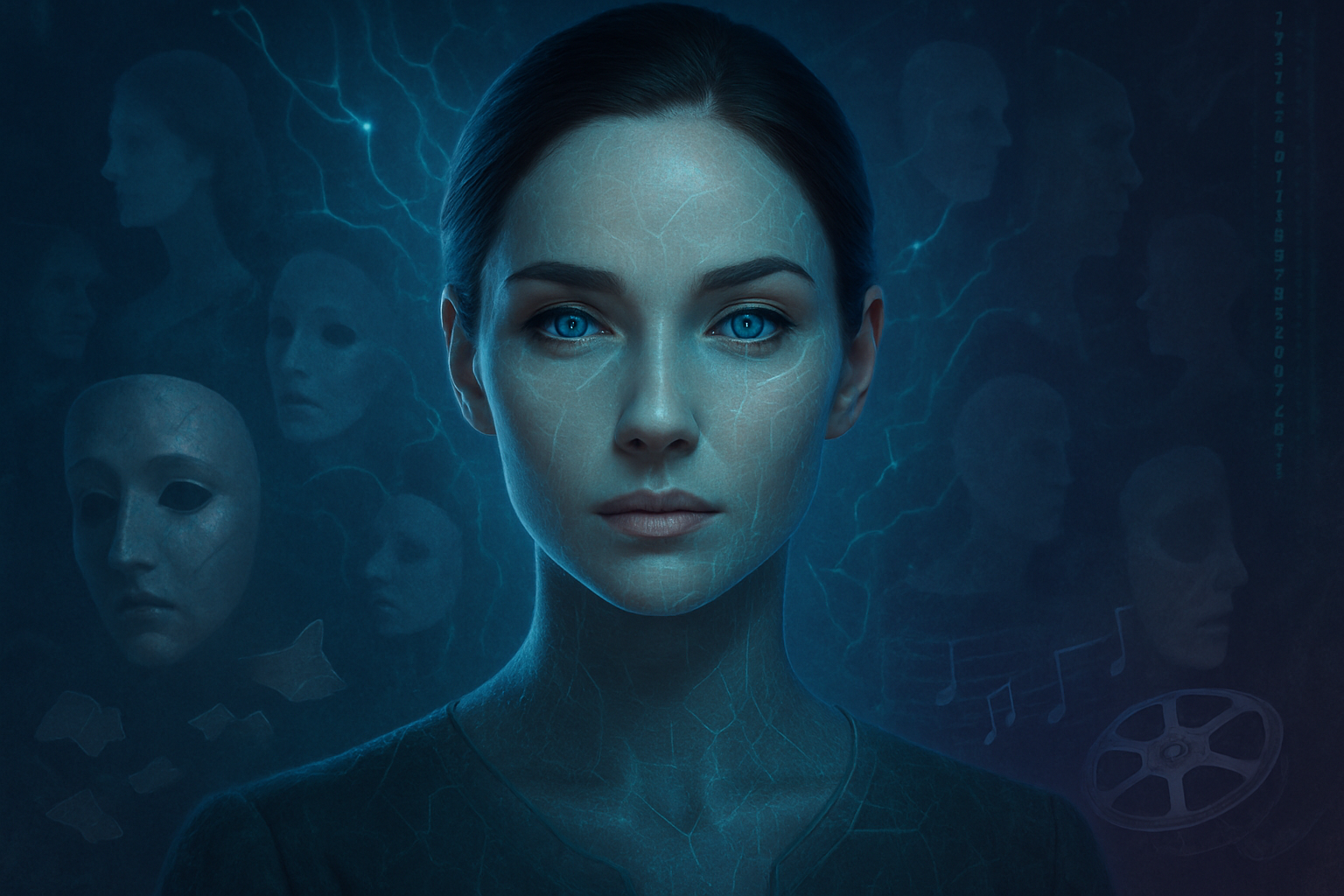
    The entertainment industry is grappling with an unprecedented challenge as AI-generated actresses move from speculative fiction to tangible reality. The controversy surrounding these digital performers, exemplified by figures like "Tilly Norwood," has ignited a fervent debate about the future of human creativity, employment, and the very essence of artistry in an increasingly AI-driven world. This development signals a profound shift, forcing Hollywood and society at large to confront the ethical, economic, and artistic implications of synthetic talent.

    The Digital Persona: How AI Forges New Stars

    The emergence of AI-generated actresses represents a significant technological leap, fundamentally differing from traditional CGI and sparking considerable debate among experts. Tilly Norwood, a prominent example, was developed by Xicoia, the AI division of the production company Particle6 Group, founded by Dutch actress-turned-producer Eline Van der Velden. Norwood's debut in the comedy sketch "AI Commissioner" featured 16 AI-generated characters, with the script itself refined using ChatGPT. The creation process leverages advanced AI algorithms, particularly natural language processing for developing unique personas and sophisticated generative models to produce photorealistic visuals, including modeling shots and "selfies" for social media.

    This technology goes beyond traditional CGI, which relies on meticulous manual 3D modeling, animation, and rendering by teams of artists. AI, conversely, generates content autonomously based on prompts, patterns, or extensive training data, often producing results in seconds. While CGI offers precise, pixel-level control, AI mimics realism based on its training data, sometimes leading to subtle inconsistencies or falling into the "uncanny valley." Tools like Artflow, Meta's (NASDAQ: META) AI algorithms for automatic acting (including lip-syncing and motions), Stable Diffusion, and LoRAs are commonly employed to generate highly realistic celebrity AI images. Particle6 has even suggested that using AI-generated actresses could slash production costs by up to 90%.

    Initial reactions from the entertainment industry have been largely negative. Prominent actors such as Emily Blunt, Whoopi Goldberg, Melissa Barrera, and Mara Wilson have publicly condemned the concept, citing fears of job displacement and the ethical implications of composite AI creations trained on human likenesses without consent. The Screen Actors Guild–American Federation of Television and Radio Artists (SAG-AFTRA) has unequivocally stated, "Tilly Norwood is not an actor; it's a character generated by a computer program that was trained on the work of countless professional performers — without permission or compensation." They argue that such creations lack life experience and emotion, and that audiences are not interested in content "untethered from the human experience."

    Corporate Calculus: AI's Impact on Tech Giants and Startups

    The rise of AI-generated actresses is profoundly reshaping the competitive landscape for AI companies, tech giants, and startups, creating new opportunities while intensifying ethical and competitive challenges. Companies specializing in generative media, such as HeyGen, Synthesia, LOVO, and ElevenLabs, are at the forefront, developing platforms for instant video generation, realistic avatars, and high-quality voice cloning. These innovations promise automated content creation, from marketing videos to interactive digital personas, often with simple text prompts.

    Major tech giants like Alphabet (NASDAQ: GOOGL), with its Gemini, Imagen, and Veo models, or those associated with OpenAI and Anthropic, are foundational players. They provide the underlying large language models and generative AI capabilities that power many AI-generated actress applications and offer the vast cloud infrastructure necessary to train and run these complex systems. Cloud providers like Google Cloud (NASDAQ: GOOGL), Amazon Web Services (NASDAQ: AMZN), and Microsoft Azure (NASDAQ: MSFT) stand to benefit immensely from the increased demand for computational resources.

    This trend also fuels a surge of innovative startups, often focusing on niche areas within generative media. These smaller companies leverage accessible foundational AI models from tech giants, allowing them to rapidly prototype and bring specialized products to market. The competitive implications are significant: increased demand for foundational models, platform dominance for integrated AI development ecosystems, and intense talent wars for specialized AI researchers and engineers. However, these companies also face growing scrutiny regarding ethical implications, data privacy, and intellectual property infringement, necessitating careful navigation to maintain brand perception and trust.

    A Broader Canvas: AI, Artistry, and Society

    The emergence of AI-generated actresses signifies a critical juncture within the broader AI landscape, aligning with trends in generative AI, deepfake technology, and advanced CGI. This phenomenon extends the capabilities of AI to create novel content across various creative domains, from scriptwriting and music composition to visual art. Virtual influencers, which have already gained traction in social media marketing, served as precursors, demonstrating the commercial viability and audience engagement potential of AI-generated personalities.

    The impacts on society and the entertainment industry are multifaceted. On one hand, AI offers new creative possibilities, expanded storytelling tools, streamlined production processes, and unprecedented flexibility and control over digital performers. It can also democratize content creation by lowering barriers to entry. On the other hand, the most pressing concern is job displacement for human actors and a perceived devaluation of human artistry. Critics argue that AI, despite its sophistication, cannot genuinely replicate the emotional depth, life experience, and unique improvisational capabilities that define human performance.

    Ethical concerns abound, particularly regarding intellectual property and consent. AI models are often trained on the likenesses and performances of countless professional actors without explicit permission or compensation, raising serious questions about copyright infringement and the right of publicity. The potential for hyper-realistic deepfake technology to spread misinformation and erode trust is also a significant societal worry. Furthermore, the ability of an AI "actress" to consent to sensitive scenes presents a complex ethical dilemma, as an AI lacks genuine agency or personal experience. This development forces a re-evaluation of what constitutes "acting" and "artistry" in the digital age, drawing comparisons to earlier technological shifts in cinema but with potentially more far-reaching implications for human creative endeavors.

    The Horizon: What Comes Next for Digital Performers

    The future of AI-generated actresses is poised for rapid evolution, ushering in both groundbreaking opportunities and complex challenges. In the near term, advancements will focus on achieving even greater realism and versatility. Expect to see improvements in hyper-realistic digital rendering, nuanced emotional expression, seamless voice synthesis and lip-syncing, and more sophisticated automated content creation assistance. AI will streamline scriptwriting, storyboarding, and visual effects, enabling filmmakers to generate ideas and enhance creative processes more efficiently.

    Long-term advancements could lead to fully autonomous AI performers capable of independent creative decision-making and real-time adaptations. Some experts even predict a major blockbuster movie with 90% AI-generated content before 2030. AI actresses are also expected to integrate deeply with the metaverse and virtual reality, inhabiting immersive virtual worlds and interacting with audiences in novel ways, akin to K-Pop's virtual idols. New applications will emerge across film, television, advertising, video games (for dynamic NPCs), training simulations, and personalized entertainment.

    However, significant challenges remain. Technologically, overcoming the "uncanny valley" and achieving truly authentic emotional depth that resonates deeply with human audiences are ongoing hurdles. Ethically, the specter of job displacement for human actors, the critical issues of consent and intellectual property for training data, and the potential for bias and misinformation embedded in AI systems demand urgent attention. Legally, frameworks for copyright, ownership, regulation, and compensation for AI-generated content are nascent and will require extensive development. Experts predict intensified debates and resistance from unions, leading to more legal battles. While AI will take over repetitive tasks, a complete replacement of human actors is considered improbable in the long term, with many envisioning a "middle way" where human and AI artistry coexist.

    A New Era of Entertainment: Navigating the Digital Divide

    The advent of AI-generated actresses marks a pivotal and controversial new chapter in the entertainment industry. Key takeaways include the rapid advancement of AI in creating hyperrealistic digital performers, the immediate and widespread backlash from human actors and unions concerned about job displacement and the devaluing of human artistry, and the dual promise of unprecedented creative efficiency versus profound ethical and legal dilemmas. This development signifies a critical inflection point in AI history, moving artificial intelligence from a supportive tool to a potential "talent" itself, challenging long-held definitions of acting and authorship.

    The long-term impact is poised to be multifaceted. While AI performers could drastically reduce production costs and unlock new forms of entertainment, they also threaten widespread job displacement and could lead to a homogenization of creative output. Societally, the prevalence of convincing AI-generated content could erode public trust and exacerbate issues of misinformation. Ethical questions surrounding consent, copyright, and the moral responsibility of creators to ensure AI respects individual autonomy will intensify.

    In the coming weeks and months, the industry will be closely watching for talent agencies officially signing AI-generated performers, which would set a significant precedent. Expect continued and intensified efforts by SAG-AFTRA and other global unions to establish concrete guidelines, robust contractual protections, and compensation structures for the use of AI in all aspects of performance. Technological refinements, particularly in overcoming the "uncanny valley" and enhancing emotional nuance, will be crucial. Ultimately, audience reception and market demand will heavily influence the trajectory of AI-generated actresses, alongside the development of new legal frameworks and the evolving business models of AI talent studios. The phenomenon demands careful consideration, ethical oversight, and a collaborative approach to shaping the future of creativity and entertainment.

    This content is intended for informational purposes only and represents analysis of current AI developments.

    TokenRing AI delivers enterprise-grade solutions for multi-agent AI workflow orchestration, AI-powered development tools, and seamless remote collaboration platforms.
    For more information, visit https://www.tokenring.ai/.