Tag: Satellite Technology

  • AI in Orbit: Charting the Future of Intelligent Systems in Space at the Upcoming 2025 Workshop

    AI in Orbit: Charting the Future of Intelligent Systems in Space at the Upcoming 2025 Workshop

    As humanity's gaze turns ever skyward, the integration of artificial intelligence into the fabric of space exploration and satellite technology is no longer a distant dream but an accelerating reality. The upcoming In-Space Physical AI Workshop, scheduled for November 6-7, 2025, at The Ion in Houston, Texas, stands as a pivotal moment in charting this intelligent frontier. Co-organized by Rice University's Nexus, in partnership with NASA, Purdue University, and Vanderbilt University, and with the significant new involvement of the U.S. Space Force, this workshop is poised to bring together a confluence of leading minds to define the next era of autonomous capabilities beyond Earth. Building on the foundational discussions of its 2023 predecessor, the 2025 event aims to propel the conversation forward, exploring how intelligent systems will revolutionize deep-space missions, establish a strategic economic presence in cislunar space, bolster national defense, and foster international collaboration in the cosmos.

    This highly anticipated gathering arrives at a critical juncture, with AI advancements rapidly reshaping industries worldwide. The workshop's focus on "physical AI" underscores a shift towards tangible, real-world applications of artificial intelligence in the harsh and unforgiving environment of space. From enhancing the autonomy of spacecraft and rovers to enabling sophisticated in-orbit servicing and manufacturing, the discussions will illuminate how AI is not merely an analytical tool but an active agent in extending human reach and capabilities across the solar system. The insights gleaned and collaborations forged at this event are expected to lay the groundwork for breakthroughs that will redefine our understanding and utilization of space for decades to come.

    Unpacking the Technical Blueprint: Deep Space Autonomy and Strategic Presence

    The 2025 In-Space Physical AI Workshop is structured around four strategic themes that highlight the cutting edge of AI integration in space: deep-space autonomy for long-duration missions, strategic economic presence in low-Earth orbit (LEO) and cislunar space, physical AI for national defense and planetary protection, and international collaboration in AI-enabled exploration. These themes represent a significant evolution from the discussions held at the November 2023 workshop, which focused more broadly on autonomous operations, robotic manipulation, human-robot collaboration, and the ethical implications of AI in space. The shift towards "deep-space autonomy" indicates a growing emphasis on AI systems capable of operating with minimal human intervention over vast distances and extended periods, crucial for missions to Mars and beyond.

    Technically, this involves advancements in on-board processing capabilities, robust machine learning algorithms for anomaly detection and self-correction, and sophisticated navigation and guidance systems that can adapt to unforeseen circumstances without real-time commands from Earth. Unlike previous approaches where missions relied heavily on pre-programmed sequences and constant ground control, AI-driven autonomy promises to enable spacecraft to make critical decisions, perform complex maneuvers, and even conduct scientific experiments independently. Initial reactions from the AI research community and industry experts suggest a strong enthusiasm for these developments, recognizing the potential to unlock missions previously deemed too complex or costly due to communication delays and operational limitations. The involvement of organizations like NASA (NASA) and the U.S. Space Force signals a clear intent to move beyond theoretical discussions to practical, deployable AI solutions for critical space applications.

    The concept of a "strategic economic presence in LEO and cislunar space" further underscores the technical ambition. This involves leveraging AI for optimizing satellite constellations, enabling in-orbit assembly and manufacturing, and managing complex logistics for lunar bases and resource extraction. AI's role here extends to predictive maintenance for satellites, optimizing communication networks, and even autonomous resource prospecting. These capabilities differ significantly from traditional satellite operations, which often involve manual adjustments and limited on-board intelligence. By embedding advanced AI, future space infrastructure can become more resilient, efficient, and capable of self-management, paving the way for a sustainable off-world economy. Experts are particularly keen on AI's potential to drive down operational costs and increase mission success rates, making space more accessible for commercial ventures.

    Corporate Orbit: How AI in Space Reshapes the Tech and Aerospace Landscape

    The burgeoning field of AI in space presents immense opportunities and competitive implications for a diverse array of companies, from established aerospace giants to nimble AI startups. Companies like NVIDIA (NASDAQ: NVDA), a confirmed participant in the 2025 workshop, stand to significantly benefit from the increased demand for high-performance computing hardware and specialized AI processors capable of operating in radiation-hardened environments. Their expertise in accelerated computing and AI platforms will be crucial for developing the on-board intelligence required for deep-space autonomy and advanced satellite operations. Similarly, companies specializing in AI software development, machine learning frameworks, and data analytics will find a fertile ground for innovation, providing the algorithms and intelligence layers that power these autonomous systems.

    The workshop's focus on a "strategic economic presence" in LEO and cislunar space directly benefits emerging commercial space companies like Axiom Space, an expected keynote speaker, and Intuitive Machines (NASDAQ: LUNR), whose representatives participated in the 2023 workshop. These companies are at the forefront of building commercial space stations, lunar landers, and in-space services, all of which will rely heavily on AI for efficient operations, resource management, and autonomous maintenance. AI will be a key differentiator, allowing these entities to offer more robust, cost-effective, and scalable solutions compared to traditional, more labor-intensive approaches. For established aerospace and defense contractors, the integration of AI into their product lines is not just an opportunity but a strategic imperative to remain competitive, pushing them to invest heavily in AI research and development, or acquire AI-focused startups.

    The potential for disruption is significant. Companies that fail to embrace AI in their space-related offerings risk being outmaneuvered by more agile competitors. AI's ability to optimize mission planning, reduce operational costs, and enable new capabilities could fundamentally alter market positioning. Startups specializing in specific AI applications for space, such as autonomous navigation, intelligent robotics for in-orbit servicing, or AI-powered data analysis for Earth observation, are particularly well-positioned to carve out lucrative niches. The involvement of the U.S. Space Force also signals a growing governmental demand for AI-enabled space capabilities, creating a substantial market for companies that can deliver secure and reliable intelligent systems for national defense and planetary protection.

    Beyond the Horizon: AI's Broader Significance in the Cosmic Tapestry

    The discussions at the In-Space Physical AI Workshop in 2025 represent more than just technical advancements; they signify a profound shift in humanity's approach to space, fitting into the broader AI landscape as a testament to the technology's pervasive and transformative power. This push for intelligent systems in orbit underscores a global trend towards greater autonomy and efficiency across all sectors, now extended to the final frontier. The impacts are multifaceted, ranging from accelerating scientific discovery by enabling more sophisticated and autonomous research platforms to enhancing global security through advanced space domain awareness and defense capabilities. On the civilian front, improved satellite technology, powered by AI, promises more accurate climate prediction, enhanced communication networks, and better resource management on Earth.

    However, the wider significance also brings potential concerns. The ethical implications of deploying highly autonomous AI systems in space, particularly in defense contexts, were highlighted in the 2023 workshop and remain a critical discussion point. Questions of accountability, control, and the potential for unintended consequences in complex, uncrewed missions necessitate careful consideration. Compared to previous AI milestones, such as the development of large language models or breakthroughs in computer vision, the integration of AI into physical space systems presents unique challenges related to extreme environmental conditions, limited repair options, and the critical nature of mission success. Nevertheless, the drive for AI in space mirrors historical milestones like the first satellite launch or lunar landing, representing a new frontier in human endeavor, albeit one powered by intelligent machines.

    The workshop's emphasis on international collaboration also speaks to the broader geopolitical landscape. As AI capabilities in space grow, so does the need for common standards, protocols, and ethical frameworks to ensure peaceful and sustainable use of this technology. The discussions aim to prevent a new "AI space race" from devolving into unchecked competition, instead fostering a collaborative environment where the benefits of AI in space can be shared for the betterment of all. This collaborative spirit, if successful, could set a precedent for how nations approach other global challenges, making the workshop a microcosm of a larger, more interconnected future.

    Gazing into the Cosmic Crystal Ball: Future Developments and Expert Predictions

    Looking ahead, the In-Space Physical AI Workshop in 2025 is expected to catalyze a wave of near-term and long-term developments in AI-driven space exploration. In the near term, experts predict a rapid increase in the deployment of AI-powered autonomous systems for satellite constellation management, in-orbit servicing, and enhanced Earth observation capabilities. This will likely involve more sophisticated AI for predictive maintenance, collision avoidance, and optimizing data downlink and processing. We can also anticipate advancements in AI for supporting human missions, such as intelligent assistants for astronauts and autonomous systems for habitat maintenance on lunar or Martian bases.

    On the horizon, potential applications are truly transformative. Long-term developments include fully autonomous deep-space probes capable of independent scientific discovery, AI-driven resource extraction and manufacturing in space, and advanced AI for planetary defense against asteroid threats. Experts predict that AI will be central to humanity's sustained presence on the Moon and Mars, enabling complex operations, scientific research, and even terraforming efforts that would be impossible with current technology. The challenges that need to be addressed include developing more robust, fault-tolerant AI systems for extreme environments, ensuring the ethical deployment of autonomous capabilities, and establishing international governance frameworks for AI in space.

    What experts predict will happen next is a continued convergence of AI, robotics, and advanced materials science to create truly intelligent and adaptable space systems. The focus will shift from simply automating tasks to enabling genuine intelligence and decision-making capabilities on board spacecraft. The involvement of academic institutions like Rice, Purdue, and Vanderbilt, alongside industry leaders and government agencies, suggests a concerted effort to push the boundaries of what's possible, ensuring that the next generation of space exploration is not just automated, but intelligently autonomous.

    Concluding Thoughts: A New Dawn for Intelligent Space Exploration

    The upcoming In-Space Physical AI Workshop in November 2025 represents a critical inflection point in the narrative of space exploration, marking a definitive shift towards an era dominated by intelligent systems. The key takeaways from the anticipated discussions will undoubtedly revolve around the imperative of deep-space autonomy, the strategic importance of an AI-enabled economic presence in cislunar space, the critical role of physical AI in national defense, and the undeniable need for international collaboration. This development is not merely an incremental step but a foundational re-imagining of how humanity will interact with and expand into the cosmos.

    Assessing this development's significance in AI history, it stands as a testament to the technology's evolution from theoretical constructs to practical, mission-critical applications in the most challenging environments imaginable. It underscores AI's capacity to extend human capabilities beyond biological limits, allowing for exploration and utilization of space on scales previously confined to science fiction. The long-term impact will be profound, fundamentally altering the economics of space, accelerating scientific discovery, and potentially safeguarding our planet through advanced orbital intelligence.

    In the coming weeks and months, what to watch for will be the concrete outcomes and collaborations stemming from this workshop. Keep an eye on announcements regarding new research initiatives, joint ventures between aerospace companies and AI firms, and policy discussions from space agencies and governments concerning the ethical and regulatory frameworks for AI in orbit. The journey towards a truly intelligent space future is just beginning, and the 2025 In-Space Physical AI Workshop is set to be a guiding light on that extraordinary path.


    This content is intended for informational purposes only and represents analysis of current AI developments.

    TokenRing AI delivers enterprise-grade solutions for multi-agent AI workflow orchestration, AI-powered development tools, and seamless remote collaboration platforms.
    For more information, visit https://www.tokenring.ai/.

  • SEALSQ Unveils Quantum Shield QS7001™ and WISeSat 3.0 PQC: A New Era of Quantum-Resistant Security Dawns for AI and Space

    SEALSQ Unveils Quantum Shield QS7001™ and WISeSat 3.0 PQC: A New Era of Quantum-Resistant Security Dawns for AI and Space

    Geneva, Switzerland – October 8, 2025 – As the specter of quantum computing looms large over the digital world, threatening to unravel the very fabric of modern encryption, SEALSQ Corp (NASDAQ: LAES) is poised to usher in a new era of cybersecurity. The company is on the cusp of launching its groundbreaking Quantum Shield QS7001™ chip and the WISeSat 3.0 PQC satellite, two innovations set to redefine quantum-resistant security in the semiconductor and satellite technology sectors. With the official unveiling of the QS7001 scheduled for October 20, 2025, and both products launching in mid-November 2025, SEALSQ is strategically positioning itself at the forefront of the global race to safeguard digital infrastructure against future quantum threats.

    These imminent launches are not merely product releases; they represent a proactive and critical response to the impending "Q-Day," when powerful quantum computers could render traditional cryptographic methods obsolete. By embedding NIST-standardized Post-Quantum Cryptography (PQC) algorithms directly into hardware and extending this robust security to orbital communications, SEALSQ is offering foundational solutions to protect everything from AI agents and IoT devices to critical national infrastructure and the burgeoning space economy. The implications are immediate and far-reaching, promising to secure sensitive data and communications for decades to come.

    Technical Fortifications Against the Quantum Storm

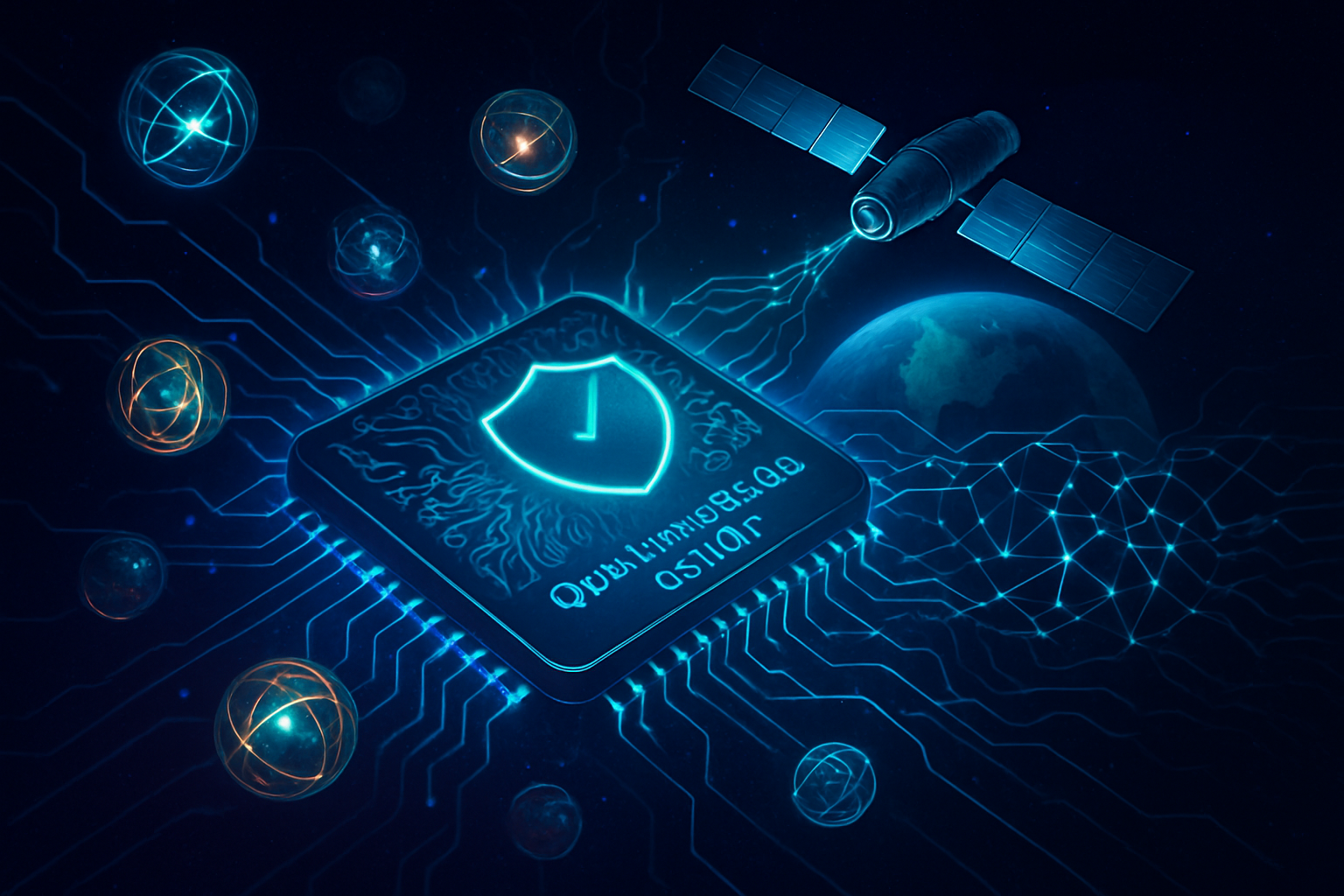
    SEALSQ's Quantum Shield QS7001™ and WISeSat 3.0 PQC are engineered with cutting-edge technical specifications that differentiate them significantly from existing security solutions. The QS7001 is designed as a secure hardware platform, featuring an 80MHz 32-bit Secured RISC-V CPU, 512KByte Flash, and dedicated hardware accelerators for both traditional and, crucially, NIST-standardized quantum-resistant algorithms. These include ML-KEM (CRYSTALS-Kyber) for key encapsulation and ML-DSA (CRYSTALS-Dilithium) for digital signatures, directly integrated into the chip's hardware, compliant with FIPS 203 and FIPS 204. This hardware-level embedding provides a claimed 10x faster performance, superior side-channel protection, and enhanced tamper resistance compared to software-based PQC implementations. The chip is also certified to Common Criteria EAL 5+, underscoring its robust security posture.

    Complementing this, WISeSat 3.0 PQC is a next-generation satellite platform that extends quantum-safe security into the unforgiving environment of space. Its core security component is SEALSQ's Quantum RootKey, a hardware-based root-of-trust module, making it the first satellite of its kind to offer robust protection against both classical and quantum cyberattacks. WISeSat 3.0 PQC supports NIST-standardized CRYSTALS-Kyber and CRYSTALS-Dilithium for encryption, authentication, and validation of software and data in orbit. This enables secure cryptographic key generation and management, secure command authentication, data encryption, and post-quantum key distribution from space. Furthermore, it integrates with blockchain and Web 3.0 technologies, including SEALCOIN digital tokens and Hedera Distributed Ledger Technology (DLT), to support decentralized IoT transactions and machine-to-machine transactions from space.

    These innovations mark a significant departure from previous approaches. While many PQC solutions rely on software updates or hardware accelerators that still depend on underlying software layers, SEALSQ's direct hardware integration for the QS7001 offers a more secure and efficient foundation. For WISeSat 3.0 PQC, extending this hardware-rooted, quantum-resistant security to space communications is a pioneering move, establishing a space-based proof-of-concept for Post-Quantum Key Distribution (QKD). Initial reactions from the AI research community and industry experts have been overwhelmingly positive, emphasizing the urgency and transformative potential. SEALSQ is widely seen as a front-runner, with its technologies expected to set a new standard for post-quantum protection, reflected in enthusiastic market responses and investor confidence.

    Reshaping the Competitive Landscape: Beneficiaries and Disruptions

    The advent of SEALSQ's Quantum Shield QS7001™ and WISeSat 3.0 PQC is poised to significantly reshape the competitive landscape across the technology sector, creating new opportunities and posing strategic challenges. A diverse array of companies stands to benefit from these quantum-resistant solutions. Direct partners like SEALCOIN AG, SEALSQ's parent company WISeKey International Holding Ltd (SIX: WIHN), and its subsidiary WISeSat.Space SA are at the forefront of integration, applying the technology to AI agent infrastructure, secure satellite communications, and IoT connectivity. AuthenTrend Technology is also collaborating to develop a quantum-proof fingerprint security key, while blockchain platforms such as Hedera (HBAR) and WeCan are incorporating SEALSQ's PQC into their core infrastructure.

    Beyond direct partners, key industries are set to gain immense advantages. AI companies will benefit from secure AI agents, confidential inference through homomorphic encryption, and trusted execution environments, crucial for sensitive applications. IoT and edge device manufacturers will find robust security for firmware, device authentication, and smart ecosystems. Defense and government contractors, healthcare providers, financial services, blockchain, and cryptocurrency firms will be able to safeguard critical data and transactions against quantum attacks. The automotive industry can secure autonomous vehicle communications, while satellite communication providers will leverage WISeSat 3.0 for quantum-safe space-based connectivity.

    SEALSQ's competitive edge lies in its hardware-based security, embedding NIST-recommended PQC algorithms directly into secure chips, offering superior efficiency and protection. This early market position in specialized niches like embedded systems, IoT, and satellite communications provides significant differentiation. While major tech giants like International Business Machines (NYSE: IBM), Alphabet (NASDAQ: GOOGL), Microsoft (NASDAQ: MSFT), and Amazon (NASDAQ: AMZN) are actively investing in PQC, SEALSQ's specialized hardware approach offers a distinct value proposition for edge and specialized environments where software-only solutions may not suffice. The potential disruption stems from the "harvest now, decrypt later" threat, which necessitates an urgent transition for virtually all companies relying on current cryptographic standards. This accelerates the shift to quantum-resistant security, making "crypto agility" an essential business imperative. SEALSQ's first-mover advantage, combined with its strategic alignment with anticipated regulatory compliance (e.g., CNSA 2.0, NIS2 Directive), positions it as a key player in securing the digital future.

    A Foundational Shift in the Broader AI and Cybersecurity Landscape

    SEALSQ's Quantum Shield QS7001™ and WISeSat 3.0 PQC represent more than just incremental advancements; they signify a foundational shift in how the broader AI landscape and cybersecurity trends will evolve. These innovations are critical for securing the vast and growing Internet of Things (IoT) and edge AI environments, where AI processing is increasingly moving closer to data sources. The QS7001, optimized for low-power IoT devices, and WISeSat 3.0, providing quantum-safe space-based communication for billions of IoT devices, are essential for ensuring data privacy and integrity for AI, protecting training datasets, proprietary models, and inferences against quantum attacks, particularly in sensitive sectors like healthcare and finance.

    Furthermore, these technologies are pivotal for enabling trusted AI identities and authentication. The QS7001 aims for "trusted AI identities," while WISeSat 3.0's Quantum RootKey provides a hardware-based root-of-trust for secure command authentication and quantum-resistant digital identities from space. This is fundamental for verifying the authenticity and integrity of AI agents, models, and data sources in distributed AI environments. SEALSQ is also developing "AI-powered security chips" and a Quantum AI (QAI) Framework that integrates PQC with AI for real-time decision-making and cryptographic optimization, aligning with the trend of using AI to manage and secure complex PQC deployments.

    The primary impact is the enablement of quantum-safe AI operations, effectively neutralizing the "harvest now, decrypt later" threat. This fosters enhanced trust and resilience in AI operations for critical applications and provides scalable, efficient security for IoT and edge AI. While the benefits are clear, potential concerns include the computational overhead and performance demands of PQC algorithms, which could impact latency for real-time AI. Integration complexity, cost, and potential vulnerabilities in PQC implementations (e.g., side-channel attacks, which AI itself could exploit) also remain challenges. Unlike previous AI milestones focused on enhancing AI capabilities (e.g., deep learning, large language models), SEALSQ's PQC solutions address a fundamental security vulnerability that threatens to undermine all digital security, including that of AI systems. They are not creating new AI capabilities but rather enabling the continued secure operation and trustworthiness of current and future AI systems, providing a new, quantum-resistant "root of trust" for the entire digital ecosystem.

    The Quantum Horizon: Future Developments and Expert Predictions

    The launch of Quantum Shield QS7001™ and WISeSat 3.0 PQC marks the beginning of an ambitious roadmap for SEALSQ Corp, with significant near-term and long-term developments on the horizon. In the immediate future (2025-2026), following the mid-November 2025 commercial launch of the QS7001 and its unveiling on October 20, 2025, SEALSQ plans to make development kits available, facilitating widespread integration. A Trusted Platform Module (TPM) version, the QVault TPM, is slated for launch in the first half of 2026, offering full PQC capability across all TPM functions. Additional WISeSat 3.0 PQC satellite launches are scheduled for November and December 2025, with a goal of deploying five PQC-enhanced satellites by the end of 2026, each featuring enhanced PQC hardware and deeper integration with Hedera and SEALCOIN.

    Looking further ahead (beyond 2026), SEALSQ envisions an expanded WISeSat constellation reaching 100 satellites, continuously integrating post-quantum secure chips for global, ultra-secure IoT connectivity. The company is also advancing a comprehensive roadmap for post-quantum cryptocurrency protection, embedding NIST-selected algorithms into blockchain infrastructures for transaction validation, wallet authentication, and securing consensus mechanisms. A full "SEAL Quantum-as-a-Service" (QaaS) platform is aimed for launch in 2025 to accelerate quantum computing adoption. SEALSQ has also allocated up to $20 million for strategic investments in startups advancing quantum computing, quantum security, or AI-powered semiconductor development, demonstrating a commitment to fostering the broader quantum ecosystem.

    Potential applications on the horizon are vast, spanning cryptocurrency, defense systems, healthcare, industrial automation, critical infrastructure, AI agents, biometric security, and supply chain security. However, challenges remain, including the looming "Q-Day," the complexity of migrating existing systems to quantum-safe standards (requiring "crypto-agility"), and the urgent need for regulatory compliance (e.g., NSA's CNSA 2.0 policy mandates PQC adoption by January 1, 2027). The "store now, decrypt later" threat also necessitates immediate action. Experts predict explosive growth for the global post-quantum cryptography market, with projections soaring from hundreds of billions to nearly $10 trillion by 2034. Companies like SEALSQ, with their early-mover advantage in commercializing PQC chips and satellites, are positioned for substantial growth, with SEALSQ projecting 50-100% revenue growth in 2026.

    Securing the Future: A Comprehensive Wrap-Up

    SEALSQ Corp's upcoming launch of the Quantum Shield QS7001™ and WISeSat 3.0 PQC marks a pivotal moment in the history of cybersecurity and the evolution of AI. The key takeaways from this development are clear: SEALSQ is delivering tangible, hardware-based solutions that directly embed NIST-standardized quantum-resistant algorithms, providing a level of security, efficiency, and tamper resistance superior to many software-based approaches. By extending this robust protection to both ground-based semiconductors and space-based communication, the company is addressing the "Q-Day" threat across critical infrastructure, AI, IoT, and the burgeoning space economy.

    This development's significance in AI history is not about creating new AI capabilities, but rather about providing the foundational security layer that will allow AI to operate safely and reliably in a post-quantum world. It is a proactive and essential step that ensures the trustworthiness and integrity of AI systems, data, and communications against an anticipated existential threat. The move toward hardware-rooted trust at scale, especially with space-based secure identities, sets a new paradigm for digital security.

    In the coming weeks and months, the tech world will be watching closely as SEALSQ (NASDAQ: LAES) unveils the QS7001 on October 20, 2025, and subsequently launches both products in mid-November 2025. The availability of development kits for the QS7001 and the continued deployment of WISeSat 3.0 PQC satellites will be crucial indicators of market adoption and the pace of transition to quantum-resistant standards. Further partnerships, the development of the QVault TPM, and progress on the quantum-as-a-service platform will also be key milestones to observe. SEALSQ's strategic investments in the quantum ecosystem and its projected revenue growth underscore the profound impact these innovations are expected to have on securing our increasingly interconnected and AI-driven future.


    This content is intended for informational purposes only and represents analysis of current AI developments.

    TokenRing AI delivers enterprise-grade solutions for multi-agent AI workflow orchestration, AI-powered development tools, and seamless remote collaboration platforms. For more information, visit https://www.tokenring.ai/.