Tag: SDV

  • The Silicon Revolution: Synopsys and NVIDIA Redefine the Future of Chip Design at CES 2026

    The Silicon Revolution: Synopsys and NVIDIA Redefine the Future of Chip Design at CES 2026

    The semiconductor industry reached a historic turning point at CES 2026 as Synopsys (NASDAQ: SNPS) and NVIDIA (NASDAQ: NVDA) unveiled a series of AI-driven breakthroughs that promise to fundamentally alter how the world's most complex chips are designed and manufactured. Central to the announcement was the maturation of the Synopsys.ai platform, which has transitioned from an experimental toolset into an industrial powerhouse capable of reducing chip design cycles by as much as 12 months. This acceleration represents a seismic shift for the technology sector, effectively compressing three years of traditional research and development into two.

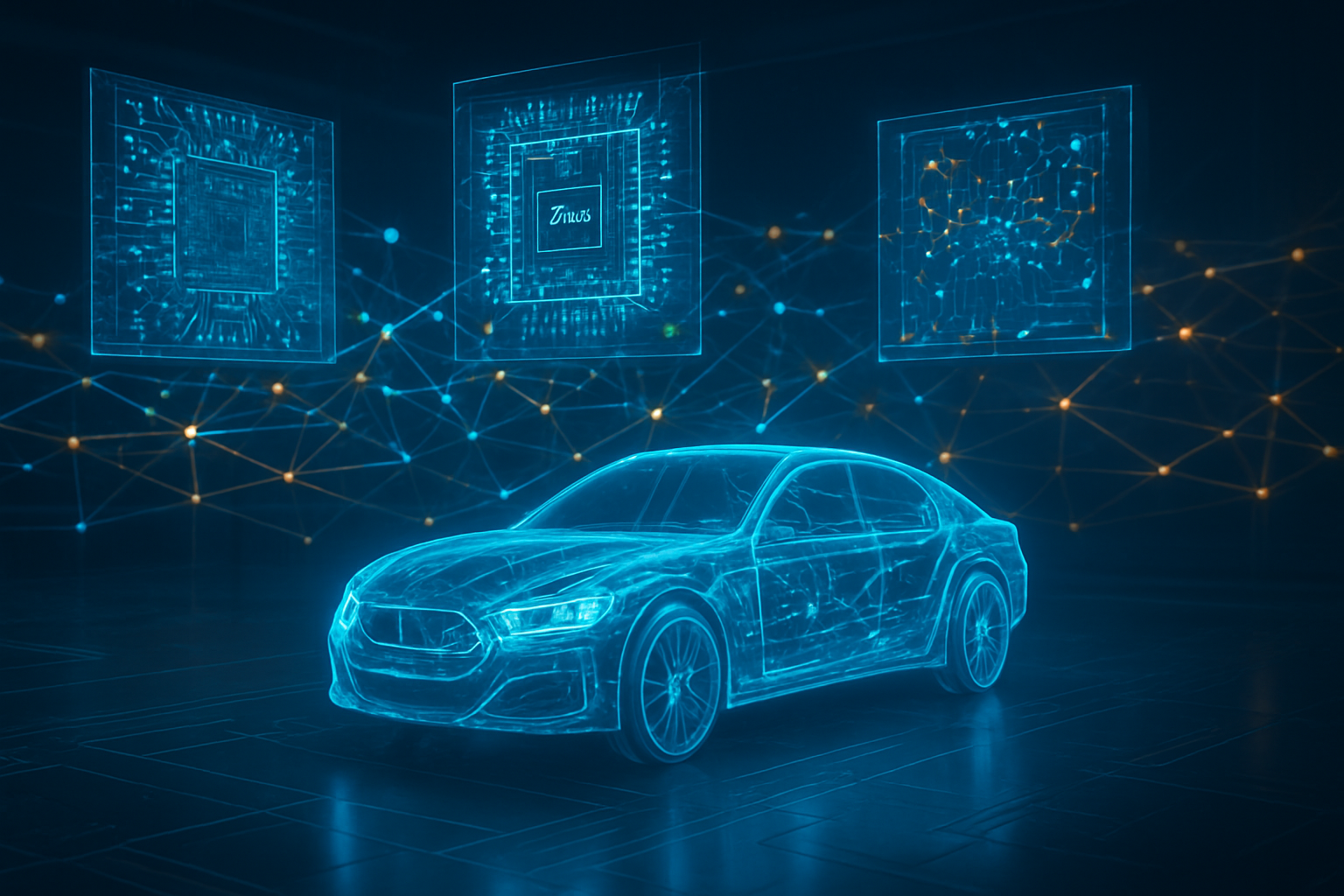
    The implications of this development extend far beyond the laboratory. By leveraging "agentic" AI and high-fidelity virtual prototyping, Synopsys is enabling a "software-first" approach to engineering, particularly in the burgeoning field of software-defined vehicles (SDVs). As chips become more complex at the 2nm and sub-2nm nodes, the traditional bottlenecks of physical prototyping and manual verification are being replaced by AI-native workflows. This evolution is being fueled by a multi-billion dollar commitment from NVIDIA, which is increasingly treating Electronic Design Automation (EDA) not just as a tool, but as a core pillar of its own hardware dominance.

    AgentEngineer and the Rise of Autonomous Chip Design

    The technical centerpiece of Synopsys’ CES showcase was the introduction of AgentEngineer™, an agentic AI framework that marks the next evolution of the Synopsys.ai suite. Unlike previous AI tools that functioned as simple assistants, AgentEngineer utilizes autonomous AI agents capable of reasoning, planning, and executing complex engineering tasks with minimal human intervention. These agents can handle "high-toil" repetitive tasks such as design rule checking, layout optimization, and verification, allowing human engineers to focus on high-level architecture.

    Synopsys also debuted its expanded virtualization portfolio, which integrates technology from its strategic acquisition of Ansys. This integration allows for the creation of "digital twins" of entire electronic stacks long before physical silicon exists. At the heart of this are new Virtualizer Development Kits (VDKs) designed for next-generation automotive architectures, including the Arm Zena compute subsystems and high-performance cores from NXP Semiconductors (NASDAQ: NXPI) and Texas Instruments (NASDAQ: TXN). By providing software teams with virtual System-on-Chip (SoC) models months in advance, Synopsys claims that the time for full system bring-up—once a grueling multi-month process—can now be completed in just a few days.

    This approach differs radically from previous EDA methodologies, which relied heavily on "sequential" development—where software development waited for hardware prototypes. The new "shift-left" paradigm allows for parallel development, slashing the time-to-market for complex systems. Industry experts have noted that the integration of multiphysics simulation (heat, stress, and electromagnetics) directly into the AI design loop represents a breakthrough that was considered a "holy grail" only a few years ago.

    NVIDIA’s $2 Billion Bet on the EDA Ecosystem

    The industry's confidence in this AI-driven future was underscored by NVIDIA’s massive strategic investment. In a move that sent shockwaves through the market, NVIDIA has committed approximately $2 billion to expand its partnership with Synopsys, purchasing millions of shares and deepening technical integration. NVIDIA is no longer just a customer of EDA tools; it is co-architecting the infrastructure. By accelerating the Synopsys EDA stack with its own CUDA libraries and GPU clusters, NVIDIA is optimizing its upcoming GPU architectures—including the newly announced Rubin platform—using the very tools it is helping to build.

    This partnership places significant pressure on other major players in the EDA space, such as Cadence Design Systems (NASDAQ: CDNS) and Siemens (OTC: SIEGY). At CES 2026, NVIDIA also announced an "Industrial AI Operating System" in collaboration with Siemens, which aims to bring generative and agentic workflows to the factory floor and PCB design. The competitive landscape is shifting from who has the best algorithms to who has the most integrated AI-native design stack backed by massive GPU compute power.

    For tech giants and startups alike, this development creates a "winner-takes-most" dynamic. Companies that can afford to integrate these high-end, AI-driven EDA tools will be able to iterate on hardware at a pace that traditional competitors cannot match. Startups in the AI chip space, in particular, may find the 12-month reduction in design cycles to be their only path to survival in a market where hardware becomes obsolete in eighteen months.

    A New Era of "Computers on Wheels" and 2nm Complexity

    The wider significance of these advancements lies in their ability to solve the "complexity wall" of sub-2nm manufacturing. As transistors approach atomic scales, the physics of chip design becomes increasingly unpredictable. AI is the only tool capable of managing the quadrillions of design variables involved in modern lithography. NVIDIA’s cuLitho computational lithography library, integrated with Synopsys and TSMC (NYSE: TSM) workflows, has already reduced lithography simulation times from weeks to overnight, making the mass production of 2nm chips economically viable.

    This shift is most visible in the automotive sector. The "software-defined vehicle" is no longer a buzzword; it is a necessity as cars transition into data centers on wheels. By virtualizing the entire vehicle electronics stack, Synopsys and its partners are reducing prototyping and testing costs by 20% to 60%. This fits into a broader trend where AI is being used to bridge the gap between the digital and physical worlds, a trend seen in other sectors like robotics and aerospace.

    However, the move toward autonomous AI designers also raises concerns. Industry leaders have voiced caution regarding the "black box" nature of AI-generated designs and the potential for systemic errors that human engineers might overlook. Furthermore, the concentration of such powerful design tools in the hands of a few dominant players could lead to a bottleneck in global innovation if access is not democratized.

    The Horizon: From Vera CPUs to Fully Autonomous Fab Integration

    Looking forward, the next two years are expected to bring even deeper integration between AI reasoning and hardware manufacturing. Experts predict that NVIDIA’s Vera CPU—specifically designed for reasoning-heavy agentic AI—will become the primary engine for next-generation EDA workstations. These systems will likely move beyond "assisting" designers to proposing entire architectural configurations based on high-level performance goals, a concept known as "intent-based design."

    The long-term goal is a closed-loop system where AI-driven EDA tools are directly linked to semiconductor fabrication plants (fabs). In this scenario, the design software would receive real-time telemetry from the manufacturing line, automatically adjusting chip layouts to account for minute variations in the production process. While challenges remain—particularly in the standardization of data across different vendors—the progress shown at CES 2026 suggests these hurdles are being cleared faster than anticipated.

    Conclusion: The Acceleration of Human Ingenuity

    The announcements from Synopsys and NVIDIA at CES 2026 mark a definitive end to the era of manual chip design. The ability to slash a year off the development cycle of a modern SoC is a feat of engineering that will ripple through every corner of the global economy, from faster smartphones to safer autonomous vehicles. The integration of agentic AI and virtual prototyping has turned the "shift-left" philosophy from a theoretical goal into a practical reality.

    As we look toward the remainder of 2026, the industry will be watching closely to see how these tools perform in high-volume production environments. The true test will be the first wave of 2nm AI chips designed entirely within these new autonomous frameworks. For now, one thing is certain: the speed of innovation is no longer limited by how fast we can draw circuits, but by how fast we can train the AI to draw them for us.


    This content is intended for informational purposes only and represents analysis of current AI developments.

    TokenRing AI delivers enterprise-grade solutions for multi-agent AI workflow orchestration, AI-powered development tools, and seamless remote collaboration platforms.
    For more information, visit https://www.tokenring.ai/.
  • Silicon Sovereignty: Rivian Unveils RAP1 Chip to Power the Future of Software-Defined Vehicles

    Silicon Sovereignty: Rivian Unveils RAP1 Chip to Power the Future of Software-Defined Vehicles

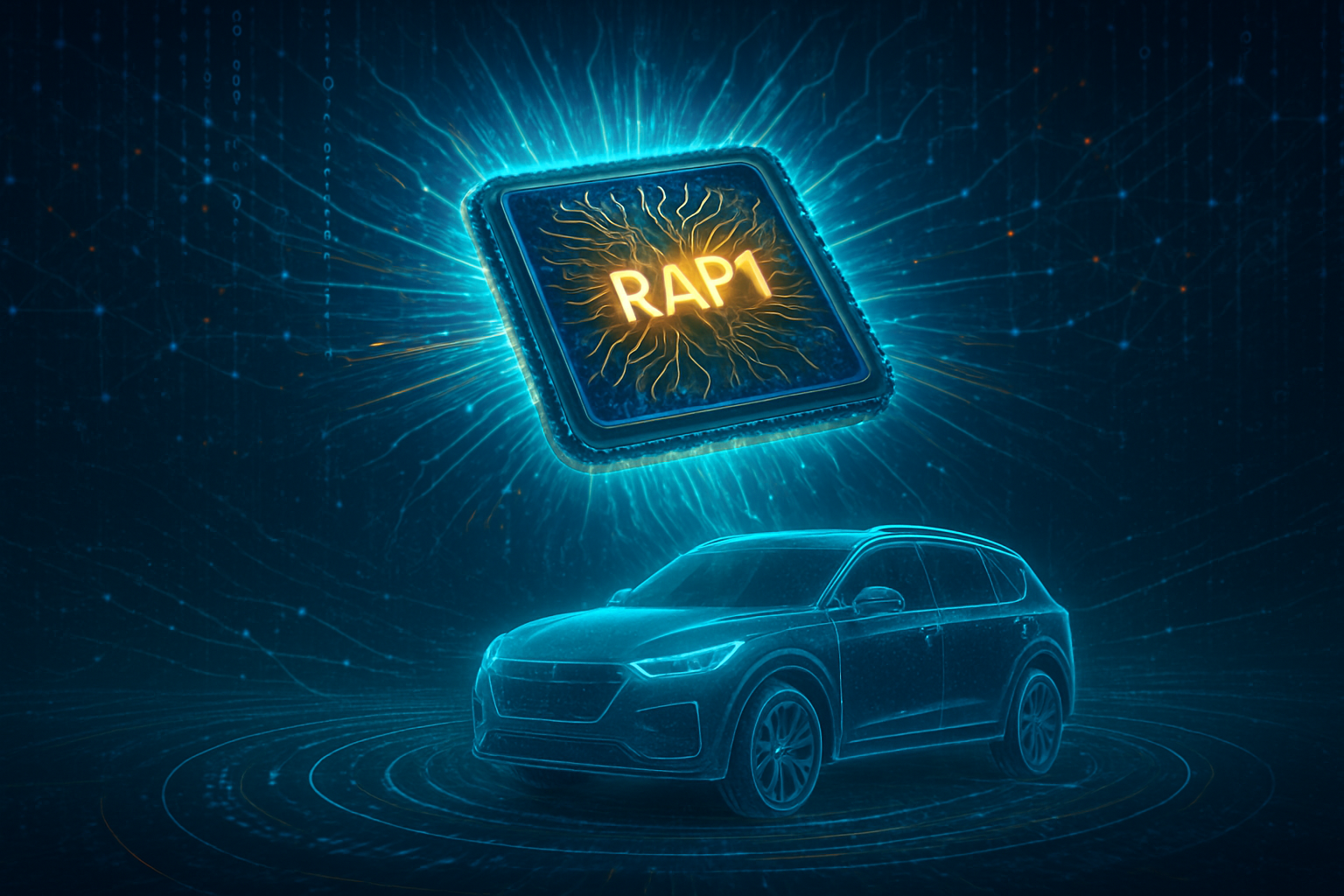
    In a move that signals a decisive shift toward "silicon sovereignty," Rivian (NASDAQ: RIVN) has officially entered the custom semiconductor race with the unveiling of its RAP1 (Rivian Autonomy Processor 1) chip. Announced during the company’s inaugural Autonomy & AI Day on December 11, 2025, the RAP1 is designed to be the foundational engine for Level 4 (L4) autonomous driving and the centerpiece of Rivian’s next-generation Software-Defined Vehicle (SDV) architecture.

    The introduction of the RAP1 marks the end of Rivian’s reliance on off-the-shelf processing solutions from traditional chipmakers. By designing its own silicon, Rivian joins an elite group of "full-stack" automotive companies—including Tesla (NASDAQ: TSLA) and several Chinese EV pioneers—that are vertically integrating hardware and software to unlock unprecedented levels of AI performance. This development is not merely a hardware upgrade; it is a strategic maneuver to control the entire intelligence stack of the vehicle, from the neural network architecture to the physical transistors that execute the code.

    The Technical Core: 1,800 TOPS and the Large Driving Model

    The RAP1 chip is a technical powerhouse, fabricated on a cutting-edge 5-nanometer (nm) process by TSMC (NYSE: TSM). At its heart, the chip utilizes the Armv9 architecture from Arm Holdings (NASDAQ: ARM), featuring 14 Arm Cortex-A720AE cores specifically optimized for automotive safety and high-performance computing. The most striking specification is its AI throughput: a single RAP1 chip delivers between 1,600 and 1,800 sparse INT8 TOPS (Trillion Operations Per Second). When integrated into Rivian’s new Autonomy Compute Module 3 (ACM3)—which utilizes dual RAP1 chips—the system achieves a combined performance that dwarfs the 254 TOPS of the previous-generation NVIDIA (NASDAQ: NVDA) DRIVE Orin platform.

    Beyond raw power, the RAP1 is architected to run Rivian’s "Large Driving Model" (LDM), an end-to-end AI system trained on massive datasets of real-world driving behavior. Unlike traditional modular stacks that separate perception, planning, and control, the LDM uses a unified neural network to process over 5 billion pixels per second from a suite of LiDAR, imaging radar, and high-resolution cameras. To handle the massive data flow between chips, Rivian developed "RivLink," a proprietary low-latency interconnect that allows multiple RAP1 units to function as a single, cohesive processor. This hardware-software synergy allows for "Eyes-Off" highway driving, where the vehicle handles all aspects of the journey under specific conditions, moving beyond the driver-assist systems common in 2024 and 2025.

    Reshaping the Competitive Landscape of Automotive AI

    The launch of the RAP1 has immediate and profound implications for the broader tech and automotive sectors. For years, NVIDIA has been the dominant supplier of high-end automotive AI chips, but Rivian’s pivot illustrates a growing trend of major customers becoming competitors. By moving in-house, Rivian claims it can reduce its system costs by approximately 30% compared to purchasing third-party silicon. This cost efficiency is a critical component of Rivian’s new "Autonomy+" subscription model, which is priced at $49.99 per month—significantly undercutting the premium pricing of Tesla’s Full Self-Driving (FSD) software.

    This development also intensifies the rivalry between Western EV makers and Chinese giants like Nio (NYSE: NIO) and Xpeng (NYSE: XPEV), both of whom have recently launched their own custom AI chips (the Shenji NX9031 and Turing AI chip, respectively). As of early 2026, the industry is bifurcating into two groups: those who design their own silicon and those who remain dependent on general-purpose chips from vendors like Qualcomm (NASDAQ: QCOM). Rivian’s move positions it firmly in the former camp, granting it the agility to push over-the-air (OTA) updates that are perfectly tuned to the underlying hardware, a strategic advantage that legacy automakers are still struggling to replicate.

    Silicon Sovereignty and the Era of the Software-Defined Vehicle

    The broader significance of the RAP1 lies in the realization of the Software-Defined Vehicle (SDV). In this paradigm, the vehicle is no longer a collection of mechanical parts with some added electronics; it is a high-performance computer on wheels where the hardware is a generic substrate for continuous AI innovation. Rivian’s zonal architecture collapses hundreds of independent Electronic Control Units (ECUs) into a unified system governed by the ACM3. This allows for deep vertical integration, enabling features like "Rivian Unified Intelligence" (RUI), which extends AI beyond driving to include sophisticated voice assistants and predictive maintenance that can diagnose mechanical issues before they occur.

    However, this transition is not without its concerns. The move toward proprietary silicon and closed-loop AI ecosystems raises questions about long-term repairability and the "right to repair." As vehicles become more like smartphones, the reliance on a single manufacturer for both hardware and software updates could lead to planned obsolescence. Furthermore, the push for Level 4 autonomy brings renewed scrutiny to safety and regulatory frameworks. While Rivian’s "belt and suspenders" approach—using LiDAR and radar alongside cameras—is intended to provide a safety margin over vision-only systems, the industry still faces the monumental challenge of proving that AI can handle "edge cases" with greater reliability than a human driver.

    The Road Ahead: R2 and the Future of Autonomous Mobility

    Looking toward the near future, the first vehicles to feature the RAP1 chip and the ACM3 module will be the Rivian R2, scheduled for production in late 2026. This mid-sized SUV is expected to be the volume leader for Rivian, and the inclusion of L4-capable hardware at a more accessible price point could accelerate the mass adoption of autonomous technology. Experts predict that by 2027, Rivian may follow the lead of its Chinese competitors by licensing its RAP1 technology to other smaller automakers, potentially transforming the company into a Tier 1 technology supplier for the wider industry.

    The long-term challenge for Rivian will be the continuous scaling of its AI models. As the Large Driving Model grows in complexity, the demand for even more compute power will inevitably lead to the development of a "RAP2" successor. Additionally, the integration of generative AI into the vehicle’s cabin—providing personalized, context-aware assistance—will require the RAP1 to balance driving tasks with high-level cognitive processing. The success of this endeavor will depend on Rivian’s ability to maintain its lead in silicon design while navigating the complex global supply chain for 5nm and 3nm semiconductors.

    A Watershed Moment for the Automotive Industry

    The unveiling of the RAP1 chip is a watershed moment that confirms the automotive industry has entered the age of AI. Rivian’s transition from a buyer of technology to a creator of silicon marks a coming-of-age for the company and a warning shot to the rest of the industry. By early 2026, the "Silicon Club"—comprising Tesla, Rivian, and the leading Chinese EV makers—has established a clear technological moat that legacy manufacturers will find increasingly difficult to cross.

    As we move forward into 2026, the focus will shift from the specifications on a datasheet to the performance on the road. The coming months will be defined by how well the RAP1 handles the complexities of real-world environments and whether consumers are willing to embrace the "Eyes-Off" future that Rivian is promising. One thing is certain: the battle for the future of transportation is no longer being fought in the engine bay, but in the microscopic architecture of the silicon chip.


    This content is intended for informational purposes only and represents analysis of current AI developments.

    TokenRing AI delivers enterprise-grade solutions for multi-agent AI workflow orchestration, AI-powered development tools, and seamless remote collaboration platforms.
    For more information, visit https://www.tokenring.ai/.
  • Silicon Renaissance: How Software-Defined Vehicles are Rewriting the Automotive Semiconductor Playbook

    Silicon Renaissance: How Software-Defined Vehicles are Rewriting the Automotive Semiconductor Playbook

    The automotive semiconductor industry has officially moved past the era of scarcity, entering a transformative phase where the vehicle is no longer a machine with computers, but a computer with wheels. As of December 2025, the market has not only recovered from the historic supply chain disruptions of the early 2020s but has surged to a record valuation exceeding $100 billion. This recovery is being fueled by a fundamental architectural shift: the rise of Software-Defined Vehicles (SDVs), which are radically altering the demand profile for silicon and centralizing the "brains" of modern transportation.

    The transition to SDVs marks the end of the "one chip, one function" era. Historically, a car might have contained over 100 discrete Electronic Control Units (ECUs), each managing a single task like power windows or engine timing. Today, leading automakers are consolidating these functions into powerful, centralized "zonal" architectures. This evolution has triggered an explosive demand for high-performance System-on-Chips (SoCs) capable of handling massive data throughput from cameras, radar, and LiDAR, while simultaneously running complex AI algorithms for autonomous driving and in-cabin experiences.

    The Technical Shift: From Distributed Logic to Centralized Intelligence

    The technical backbone of the 2025 automotive market is the "Zonal Architecture." Unlike traditional distributed systems, zonal architecture organizes the vehicle’s electronics by physical location rather than function. A single zonal controller now manages all electronic tasks within a specific quadrant of the vehicle, communicating back to a central high-performance computer. This shift has drastically reduced wiring complexity—shaving dozens of kilograms off vehicle weight—while requiring a new class of semiconductors. The demand has shifted from low-cost, 8-bit and 16-bit Microcontroller Units (MCUs) to sophisticated 32-bit real-time MCUs and multi-core SoCs built on 5nm and 3nm process nodes.

    Technical specifications for these new chips are staggering. For instance, the latest central compute platforms entering production in late 2025 boast performance metrics exceeding 2,000 TOPS (Tera Operations Per Second). This level of compute power is necessary to support "over-provisioning"—a strategy where manufacturers install more hardware than is initially needed. This allows for the "decoupling" of hardware and software lifecycles, enabling OEMs to push over-the-air (OTA) updates that can unlock new autonomous driving features or enhance powertrain efficiency years after the car has left the showroom.

    Industry experts note that this represents a departure from the "just-in-time" manufacturing philosophy toward a "future-proof" approach. Initial reactions from the research community highlight that while the number of individual chips per vehicle may actually decrease in some high-end models due to integration, the total semiconductor value per vehicle has skyrocketed. In premium electric vehicles (EVs), the silicon content now ranges between $1,500 and $2,000, nearly triple the value seen in internal combustion engine vehicles just five years ago.

    The Competitive Landscape: Silicon Giants and Strategic Realignment

    The shift toward centralized compute has created a new hierarchy among chipmakers. NVIDIA (NASDAQ: NVDA) has emerged as a dominant force in the high-end autonomous segment. Their DRIVE Thor SoC, which reached mass production in late 2025, has become the gold standard for Level 3 and Level 4 autonomous systems. By integrating functional safety, AI, and infotainment into a single platform, NVIDIA has reported a 72% year-over-year surge in automotive revenue, positioning itself as the primary partner for premium brands seeking "mind-off" driving capabilities.

    Meanwhile, Qualcomm (NASDAQ: QCOM) has successfully leveraged its mobile expertise to dominate the "digital cockpit." Through its Snapdragon Digital Chassis, Qualcomm offers a modular platform that integrates connectivity, infotainment, and advanced driver-assistance systems (ADAS). This strategy has proven highly effective in the mid-market and high-volume segments, where automakers prioritize cost-efficiency and seamless smartphone integration over raw autonomous horsepower. Qualcomm’s ability to offer a "one-stop-shop" for the SDV stack has made it a formidable challenger to both traditional automotive suppliers and pure-play AI labs.

    Traditional powerhouses like NXP Semiconductors (NASDAQ: NXPI) and Infineon Technologies (OTC: IFNNY) have not been sidelined; instead, they have evolved. NXP recently launched its S32K5 family, featuring embedded MRAM to accelerate OTA updates, while Infineon maintains a 30% share of the power semiconductor market. The growth of 800V EV architectures has led to a 60% surge in demand for Infineon’s Silicon Carbide (SiC) chips, which are essential for high-efficiency power inverters. Mobileye (NASDAQ: MBLY) also remains a critical player, holding a roughly 70% share of the global ADAS market with its EyeQ6 High chips, offering a balanced performance-to-price ratio that appeals to mass-market manufacturers.

    Broader Significance: The AI Landscape and the "Computer on Wheels"

    The evolution of automotive semiconductors is a microcosm of the broader AI landscape. The vehicle is becoming the ultimate "edge" device, requiring massive local compute power to process real-time sensor data without relying on the cloud. This fits into the larger trend of "Generative AI at the Edge," where 2025 model-year vehicles are beginning to feature localized Large Language Models (LLMs). These models allow for intuitive, natural-language voice assistants that can control vehicle functions and provide contextual information even in areas with poor cellular connectivity.

    However, this transition is not without its concerns. The concentration of compute power into a few high-end SoCs creates a new kind of supply chain vulnerability. While the general chip shortage has eased, a new bottleneck has emerged in High-Bandwidth Memory (HBM) and advanced foundry capacity, as automotive giants now compete directly with AI data center operators for the same 3nm wafers. Furthermore, the shift to SDVs raises significant cybersecurity questions; as vehicles become more reliant on software and OTA updates, the potential "attack surface" for hackers grows exponentially, necessitating hardware-level security features that were once reserved for military or banking applications.

    This milestone mirrors the transition of the mobile phone to the smartphone. Just as the iPhone turned a communication device into a platform for services, the SDV is turning the car into a recurring revenue stream for automakers. By selling software upgrades and features-on-demand, OEMs are shifting their business models from one-time hardware sales to long-term service relationships, a move that is only possible through the advanced silicon currently hitting the market.

    Future Horizons: GenAI and the Path to Level 4

    Looking ahead to 2026 and beyond, the industry is bracing for the next wave of innovation: the integration of multi-modal AI. Future SoCs will likely be designed to process not just visual and radar data, but also to understand complex human behaviors and environmental contexts through integrated AI agents. We expect to see the "democratization" of Level 3 autonomy, where the technology moves from $100,000 luxury sedans into $35,000 family crossovers, driven by the declining cost of high-performance silicon and improved manufacturing yields.

    The next major challenge will be power efficiency. As compute requirements climb, the energy "tax" that these chips levy on an EV’s battery becomes significant. Experts predict that the next generation of automotive chips will focus heavily on "performance-per-watt," utilizing exotic materials and novel packaging techniques to ensure that the car's "brain" doesn't significantly reduce its driving range. Additionally, the industry will need to address the "legacy tail"—ensuring that the millions of non-SDV vehicles still on the road can coexist safely with increasingly autonomous, software-driven fleets.

    A New Era for Autotech

    The recovery of the automotive semiconductor market in 2025 is more than a return to form; it is a complete reinvention. The industry has moved from a state of crisis to a state of rapid innovation, driven by the realization that silicon is the most critical component in the modern vehicle. The shift to Software-Defined Vehicles has permanently altered the competitive landscape, bringing tech giants and traditional Tier-1 suppliers into a complex, symbiotic ecosystem.

    As we look toward 2026, the key takeaways are clear: centralization is the new standard, AI is the new interface, and silicon is the new horsepower. The significance of this development in AI history cannot be overstated; the car has become the most sophisticated AI robot in the consumer world. For investors and consumers alike, the coming months will be defined by the first wave of truly "AI-native" vehicles hitting the roads, marking the beginning of a new era in mobility.


    This content is intended for informational purposes only and represents analysis of current AI developments.

    TokenRing AI delivers enterprise-grade solutions for multi-agent AI workflow orchestration, AI-powered development tools, and seamless remote collaboration platforms.
    For more information, visit https://www.tokenring.ai/.
  • The Silicon Engine: How SDV Chips are Turning the Modern Car into a High-Performance Data Center

    The Silicon Engine: How SDV Chips are Turning the Modern Car into a High-Performance Data Center

    The automotive industry has reached a definitive tipping point as of late 2025. The era of the internal combustion engine’s mechanical complexity has been superseded by a new era of silicon-driven sophistication. We are no longer witnessing the evolution of the car; we are witnessing the birth of the "Software-Defined Vehicle" (SDV), where the value of a vehicle is determined more by its lines of code and its central processor than by its horsepower or torque. This shift toward centralized compute architectures is fundamentally redesigning the anatomy of the automobile, effectively turning every new vehicle into a high-performance computer on wheels.

    The immediate significance of this transition cannot be overstated. By consolidating the dozens of disparate electronic control units (ECUs) that once governed individual functions—like windows, brakes, and infotainment—into a single, powerful "brain," automakers can now deliver over-the-air (OTA) updates that improve vehicle safety and performance overnight. For consumers, this means a car that gets better with age; for manufacturers, it represents a radical shift in business models, moving away from one-time hardware sales toward recurring software-driven revenue.

    The Rise of the Superchip: 2,000 TOPS and the Death of the ECU

    The technical backbone of this revolution is a new generation of "superchips" designed specifically for the rigors of automotive AI. Leading the charge is NVIDIA (NASDAQ:NVDA) with its DRIVE Thor platform, which entered mass production earlier this year. Built on the Blackwell GPU architecture, Thor delivers a staggering 2,000 TOPS (Trillion Operations Per Second)—an eightfold increase over its predecessor, Orin. What sets Thor apart is its ability to handle "multi-domain isolation." This allows the chip to simultaneously run the vehicle’s safety-critical autonomous driving systems, the digital instrument cluster, and the AI-powered infotainment system on a single piece of silicon without any risk of one process interfering with another.

    Meanwhile, Qualcomm (NASDAQ:QCOM) has solidified its position with the Snapdragon Ride Elite and Snapdragon Cockpit Elite platforms. Utilizing the custom-built Oryon CPU and an enhanced Hexagon NPU, Qualcomm’s latest offerings have seen a 12x increase in AI performance compared to previous generations. This hardware is already being integrated into 2026 models for brands like Mercedes-Benz (OTC:MBGYY) and Li Auto (NASDAQ:LI). Unlike previous iterations that required separate chips for the dashboard and the driving assists, these new platforms enable a "zonal architecture." In this setup, regional controllers (Front, Rear, Left, Right) aggregate data and power locally before sending it to the central brain, a move that BMW (OTC:BMWYY) claims has reduced wiring weight by 30% in its new "Neue Klasse" vehicles.

    This architecture differs sharply from the legacy "distributed" model. In older cars, if a sensor failed or a feature needed an update, it often required physical access to a specific, isolated ECU. Today’s centralized systems allow for "end-to-end" AI training. Instead of engineers writing thousands of "if-then" rules for every possible driving scenario, the car uses Transformer-based neural networks—similar to those powering Large Language Models (LLMs)—to "reason" through traffic by analyzing millions of hours of driving video. This leap in capability has moved the industry from basic lane-keeping to sophisticated, human-like autonomous navigation.

    The New Power Players: Silicon Giants vs. Traditional Giants

    The shift to SDVs has caused a massive seismic shift in the automotive supply chain. Traditional "Tier 1" suppliers like Bosch and Continental are finding themselves in a fierce battle for relevance as NVIDIA and Qualcomm emerge as the new primary partners for automakers. These silicon giants now command the most critical part of the vehicle's bill of materials, giving them unprecedented leverage over the future of transportation. For Tesla (NASDAQ:TSLA), the strategy remains one of fierce vertical integration. While Tesla’s AI5 (Hardware 5) chip has faced production delays—now expected in mid-2027—the company continues to push the limits of its existing AI4 hardware, proving that software optimization is just as critical as raw hardware power.

    The competitive landscape is also forcing traditional automakers into unexpected alliances. Volkswagen (OTC:VWAGY) made headlines this year with its $5 billion investment in Rivian (NASDAQ:RIVN), a move specifically designed to license Rivian’s advanced zonal architecture and software stack. This highlights a growing divide: companies that can build software in-house, and those that must buy it to survive. Startups like Zeekr (NYSE:ZK) are taking the middle ground, leveraging NVIDIA’s Thor to leapfrog established players and deliver Level 3 autonomous features to the mass market faster than their European and American counterparts.

    This disruption extends to the consumer experience. As cars become software platforms, tech giants like Google and Apple are looking to move beyond simple screen mirroring (like CarPlay) to deeper integration with the vehicle’s operating system. The strategic advantage now lies with whoever controls the "Digital Cockpit." With Qualcomm currently holding a dominant market share in cockpit silicon, they are well-positioned to dictate the future of the in-car user interface, potentially sidelining traditional infotainment developers.

    The "iPhone Moment" for the Automobile

    The broader significance of the SDV chip revolution is often compared to the "iPhone moment" for the mobile industry. Just as the smartphone transitioned from a communication device to a general-purpose computing platform, the car is transitioning from a transportation tool to a mobile living space. The integration of on-device LLMs means that AI assistants—powered by technologies like ChatGPT-4o or Google Gemini—can now handle complex, natural-language commands locally on the car’s chip. This ensures driver privacy and reduces latency, allowing the car to act as a proactive personal assistant that can adjust climate, suggest routes, and even manage the driver’s schedule.

    However, this transition is not without its concerns. The move to centralized compute creates a "single point of failure" risk that engineers are working tirelessly to mitigate through hardware redundancy. There are also significant questions regarding data privacy; as cars collect petabytes of video and sensor data to train their AI models, the question of who owns that data becomes a legal minefield. Furthermore, the environmental impact of manufacturing these advanced 3nm and 5nm chips, and the energy required to power 2,000 TOPS processors in an EV, are challenges that the industry must address to remain truly "green."

    Despite these hurdles, the milestone is clear: we have moved past the era of "assisted driving" into the era of "autonomous reasoning." The use of "Digital Twins" through platforms like NVIDIA Omniverse allows manufacturers to simulate billions of miles of driving in virtual worlds before a car ever touches asphalt. This has compressed development cycles from seven years down to less than three, fundamentally changing the pace of innovation in a century-old industry.

    The Road Ahead: 2nm Silicon and Level 4 Autonomy

    Looking toward the near future, the focus is shifting toward even more efficient silicon. Experts predict that by 2027, we will see the first automotive chips built on 2nm process nodes, offering even higher performance-per-watt. This will be crucial for the widespread rollout of Level 4 autonomy—where the car can handle all driving tasks in specific conditions without human intervention. While Tesla’s upcoming Cybercab is expected to launch on older hardware, the true "unsupervised" future will likely depend on the next generation of AI5 and Thor-class processors.

    We are also on the horizon of "Vehicle-to-Everything" (V2X) communication becoming standard. With the compute power now available on-board, cars will not only "see" the road with their own sensors but will also "talk" to smart city infrastructure and other vehicles to coordinate traffic flow and prevent accidents before they are even visible. The challenge remains the regulatory environment, which has struggled to keep pace with the rapid advancement of AI. Experts predict that 2026 will be a "year of reckoning" for global autonomous driving standards as governments scramble to certify these software-defined brains.

    A New Chapter in AI History

    The rise of SDV chips represents one of the most significant chapters in the history of applied artificial intelligence. We have moved from AI as a digital curiosity to AI as a mission-critical safety system responsible for human lives at 70 miles per hour. The key takeaway is that the car is no longer a static product; it is a dynamic, evolving entity. The successful automakers of the next decade will be those who view themselves as software companies first and hardware manufacturers second.

    As we look toward 2026, watch for the first production vehicles featuring NVIDIA Thor to hit the streets and for the further expansion of "End-to-End" AI models in consumer cars. The competition between the proprietary "walled gardens" of Tesla and the open merchant silicon of NVIDIA and Qualcomm will define the next era of mobility. One thing is certain: the silicon engine has officially replaced the internal combustion engine as the heart of the modern vehicle.


    This content is intended for informational purposes only and represents analysis of current AI developments.

    TokenRing AI delivers enterprise-grade solutions for multi-agent AI workflow orchestration, AI-powered development tools, and seamless remote collaboration platforms.
    For more information, visit https://www.tokenring.ai/.
  • NXP and eInfochips Forge Alliance to Power Software-Defined Vehicle Revolution

    NXP and eInfochips Forge Alliance to Power Software-Defined Vehicle Revolution

    Eindhoven, Netherlands & San Jose, CA – October 24, 2025 – In a strategic move set to significantly accelerate the development and deployment of software-defined vehicles (SDVs), NXP Semiconductors (NASDAQ: NXPI) has announced a multi-year partnership with eInfochips, an Arrow Electronics company. This collaboration, officially unveiled on October 23, 2025, is designed to revolutionize software distribution and elevate customer support for NXP's critical S32 platform, a cornerstone of the automotive industry's shift towards intelligent, connected, and autonomous vehicles. The alliance is poised to streamline the complex process of integrating advanced automotive software, promising faster innovation cycles and more robust solutions for manufacturers worldwide.

    This partnership comes at a pivotal time when the automotive sector is undergoing a profound transformation, driven by the increasing complexity of vehicle software. By leveraging eInfochips' extensive engineering expertise and NXP's cutting-edge S32 processors, the initiative aims to simplify access to essential software packages and provide unparalleled technical assistance, thereby empowering developers and accelerating the journey towards a fully software-defined automotive future.

    Technical Deep Dive: Enhancing the S32 Ecosystem for SDVs

    The core of this transformative partnership lies in bolstering the NXP S32 family of microcontrollers and microprocessors, which are central to modern automotive architectures. eInfochips, already recognized as an NXP Gold Partner, will now play a pivotal role in distributing standard and premium software packages and tools specifically tailored for the S32 platform. This includes critical components for connected car solutions, hardware acceleration, telemetry applications, and Fast Path Packet Forwarding on S32-based reference designs. The S32 platform, particularly with the integration of S32 CoreRide, is NXP's strategic answer to the demands of software-defined vehicles, providing a robust foundation for hardware-software integration and reference designs.

    This collaboration marks a significant departure from traditional software support models. By entrusting eInfochips with comprehensive software support and maintenance, NXP is creating a more agile and responsive ecosystem. This "best-in-class support" system is engineered to facilitate successful and efficient application development, dramatically reducing time-to-market for customers. Unlike previous approaches that might have involved more fragmented support channels, this consolidated effort ensures that NXP customers integrating S32 processors and microcontrollers receive consistent, high-quality technical and functional safety support, including ongoing assistance for battery energy storage systems. Initial reactions from the automotive embedded software community highlight the potential for this partnership to standardize and simplify development workflows, which has long been a challenge in the highly complex automotive domain.

    Competitive Implications and Market Positioning

    This strategic alliance carries significant implications for AI companies, tech giants, and startups operating within the automotive and embedded systems space. NXP Semiconductors (NASDAQ: NXPI) stands to significantly benefit by strengthening its position as a leading provider of automotive semiconductor solutions. By enhancing its software ecosystem and support services through eInfochips, NXP makes its S32 platform even more attractive to automotive OEMs and Tier 1 suppliers, who are increasingly prioritizing comprehensive software enablement. This move directly addresses a critical pain point in the industry: the complexity of integrating and maintaining software on high-performance automotive hardware.

    For tech giants and major AI labs venturing into automotive software, this partnership provides a more robust and supported platform for their innovations. Companies developing advanced driver-assistance systems (ADAS), infotainment systems, and autonomous driving algorithms will find a more streamlined path to deployment on NXP's S32 platform. Conversely, this development could intensify competitive pressures on other semiconductor manufacturers who may not offer as integrated or well-supported a software ecosystem. Startups specializing in automotive software development tools, middleware, or specific application development for SDVs might find new opportunities to collaborate within this expanded NXP-eInfochips ecosystem, potentially becoming solution partners or benefiting from improved platform stability. The partnership solidifies NXP's market positioning by offering a compelling, end-to-end solution that spans hardware, software, and critical support, thereby creating a strategic advantage in the rapidly evolving SDV landscape.

    Wider Significance in the AI and Automotive Landscape

    This partnership is a clear indicator of the broader trend towards software-defined everything, a paradigm shift that is profoundly impacting the AI and automotive industries. As vehicles become sophisticated rolling computers, the software stack becomes as critical, if not more so, than the hardware. This collaboration fits perfectly into the evolving AI landscape by providing a more accessible and supported platform for deploying AI-powered features, from advanced perception systems to predictive maintenance and personalized user experiences. The emphasis on streamlining software distribution and support directly addresses the challenges of managing complex AI models and algorithms in safety-critical automotive environments.

    The impacts are far-reaching. It promises to accelerate the adoption of advanced AI features in production vehicles by reducing development friction. Potential concerns, however, could revolve around the consolidation of software support, though NXP and eInfochips aim to deliver best-in-class service. This development can be compared to previous AI milestones where foundational platforms or ecosystems were significantly enhanced, such as the maturation of cloud AI platforms or specialized AI development kits. By making the underlying automotive computing platform more developer-friendly, NXP and eInfochips are effectively lowering the barrier to entry for AI innovation in vehicles, potentially leading to a faster pace of innovation and differentiation in the market. It underscores the critical importance of a robust software ecosystem for hardware providers in the age of AI.

    Future Developments and Expert Predictions

    Looking ahead, this partnership is expected to yield several near-term and long-term developments. In the near term, customers can anticipate a more seamless experience in acquiring and integrating NXP S32 software, coupled with enhanced, responsive technical support. This will likely translate into faster project timelines and reduced development costs for automotive OEMs and Tier 1 suppliers. Long-term, the collaboration is poised to foster an even richer ecosystem around the S32 CoreRide platform, potentially leading to the co-development of new software tools, specialized modules, and advanced reference designs optimized for AI and autonomous driving applications. We can expect to see more integrated solutions that combine NXP's hardware capabilities with eInfochips' software expertise, pushing the boundaries of what's possible in SDVs.

    Potential applications and use cases on the horizon include highly sophisticated AI inference at the edge within vehicles, advanced sensor fusion algorithms, and over-the-air (OTA) update capabilities that are more robust and secure. Challenges that need to be addressed include continuously scaling the support infrastructure to meet growing demands, ensuring seamless integration with diverse customer development environments, and staying ahead of rapidly evolving automotive software standards and cybersecurity threats. Experts predict that this kind of deep hardware-software partnership will become increasingly common as the industry moves towards greater software definition, ultimately leading to more innovative, safer, and more personalized driving experiences. The focus will shift even more towards integrated solutions rather than disparate components.

    A New Era for Automotive Software Ecosystems

    The partnership between NXP Semiconductors and eInfochips represents a significant milestone in the evolution of automotive software ecosystems. The key takeaway is the strategic emphasis on streamlining software distribution and providing comprehensive customer support for NXP's critical S32 platform, directly addressing the complexities inherent in developing software-defined vehicles. This collaboration is set to empower automotive manufacturers and developers, accelerating their journey towards bringing next-generation AI-powered vehicles to market.

    In the grand tapestry of AI history, this development underscores the growing importance of robust, integrated platforms that bridge the gap between advanced hardware and sophisticated software. It highlights that even the most powerful AI chips require a well-supported and accessible software ecosystem to unlock their full potential. The long-term impact will likely be a more efficient, innovative, and competitive automotive industry, where software differentiation becomes a primary driver of value. In the coming weeks and months, industry observers will be watching closely for initial customer feedback, the rollout of new software packages, and how this partnership further solidifies NXP's leadership in the software-defined vehicle space.


    This content is intended for informational purposes only and represents analysis of current AI developments.

    TokenRing AI delivers enterprise-grade solutions for multi-agent AI workflow orchestration, AI-powered development tools, and seamless remote collaboration platforms.
    For more information, visit https://www.tokenring.ai/.