Tag: SEALSQ

  • SEALSQ Unveils 2026-2030 Roadmap: The Dawn of CMOS-Compatible Quantum-AI Integration

    SEALSQ Unveils 2026-2030 Roadmap: The Dawn of CMOS-Compatible Quantum-AI Integration

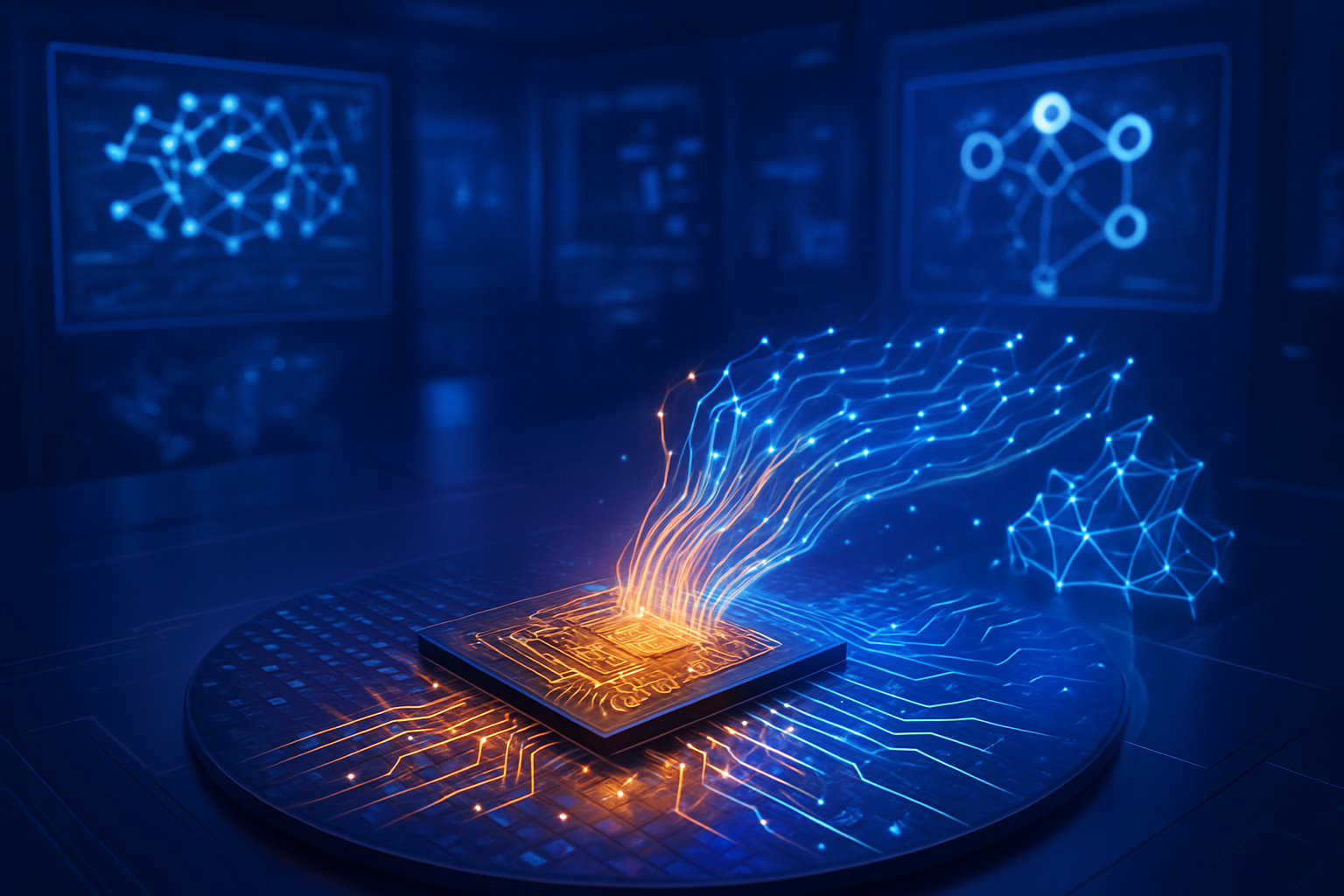
    In a move that signals a paradigm shift for the semiconductor and cybersecurity industries, SEALSQ Corp (NASDAQ:LAES) has officially unveiled its strategic roadmap for 2026–2030. The ambitious plan focuses on the industrialization of CMOS-compatible quantum technologies, aiming to bridge the gap between experimental quantum physics and mass-market digital infrastructure. By leveraging existing silicon manufacturing processes, SEALSQ intends to deliver scalable, secure quantum computing solutions that could redefine the foundations of artificial intelligence and global data security before the end of the decade.

    The announcement, made as 2025 draws to a close, positions SEALSQ at the forefront of the "Quantum-AI Convergence." The roadmap outlines a transition from current Post-Quantum Cryptography (PQC) hardware to the realization of a "secure sovereign quantum computer" by 2030. This strategy is designed to address the looming threat of "Q-Day"—the point at which quantum computers become powerful enough to break traditional encryption—while simultaneously providing the massive computational throughput required for the next generation of AI models.

    The Silicon Path to Quantum Supremacy: Technical Deep Dive

    At the heart of SEALSQ’s 2026-2030 plan is a commitment to CMOS-compatible quantum architectures. Unlike the massive, cryogenically cooled dilution refrigerators required by superconducting qubits—used by pioneers like IBM and Google—SEALSQ is betting on silicon spin qubits and "electrons on superfluid helium" technologies. Through partnerships with Quobly and EeroQ, SEALSQ aims to fabricate millions of high-fidelity qubits on standard 300mm silicon wafers. This approach allows the company to utilize the existing global semiconductor supply chain, drastically lowering the cost and physical footprint of quantum processors.

    The roadmap kicks off Phase 1 (2025-2026) with the commercial rollout of the QS7001 Quantum Shield and the QVault Trusted Platform Module (TPM). The QS7001 is a specialized 32-bit Secured RISC-V CPU designed to handle NIST-standardized PQC algorithms like CRYSTALS-Kyber and CRYSTALS-Dilithium. By implementing these algorithms in dedicated hardware rather than software, SEALSQ claims a 10x performance improvement, providing a critical security layer for IoT devices and AI edge servers that must resist future quantum attacks today.

    Moving into Phase 2 (2026-2028), the focus shifts to Quantum ASICs (QASICs) and the development of the "Quantum Corridor." This transnational infrastructure, spanning Spain, France, Switzerland, and the U.S., is intended to decentralize the manufacturing of quantum-secure components. The technical milestone for this period is the integration of cryogenic control electronics directly onto the silicon chip, a feat that would eliminate the "wiring bottleneck" currently hindering the scaling of quantum systems. By placing the control logic next to the qubits, SEALSQ expects to achieve the density required for fault-tolerant quantum computing.

    Initial reactions from the research community have been cautiously optimistic. While some physicists argue that silicon spin qubits still face significant coherence time challenges, industry experts note that SEALSQ’s strategy bypasses the "lab-to-fab" hurdle that has stalled other quantum startups. By sticking to CMOS-compatible materials, SEALSQ is effectively "piggybacking" on decades of silicon R&D, a move that many believe is the only viable path to shipping quantum-enabled devices in the millions.

    Market Disruption and the Competitive Landscape

    The 2026-2030 roadmap places SEALSQ in direct competition with both traditional semiconductor giants and specialized quantum hardware firms. By focusing on sovereign quantum capabilities, SEALSQ is positioning itself as a key partner for government and defense agencies in Europe and the U.S. who are wary of relying on foreign-controlled quantum infrastructure. This "sovereignty" angle provides a significant strategic advantage over competitors who rely on centralized, cloud-based quantum access models.

    Major AI labs and tech giants like Microsoft (NASDAQ:MSFT) and Alphabet (NASDAQ:GOOGL) may find SEALSQ’s hardware-first approach complementary or disruptive, depending on their own quantum progress. If SEALSQ successfully delivers compact, thumbnail-sized quantum processors via its EeroQ partnership, it could decentralize quantum power, moving it from massive data centers directly into high-end AI workstations and edge gateways. This would disrupt the current "Quantum-as-a-Service" market, which is currently dominated by a few players with large-scale superconducting systems.

    Furthermore, SEALSQ's acquisition of IC’Alps, a French ASIC design house, gives it the internal capability to produce custom chips for specific verticals such as medical diagnostics and autonomous systems. This vertical integration allows SEALSQ to offer "Quantum-AI-on-a-Chip" solutions, potentially capturing a significant share of the burgeoning AI security market. Startups in the AI space that adopt SEALSQ’s PQC-ready hardware early on may gain a competitive edge by offering "quantum-proof" data privacy guarantees to their enterprise clients.

    The Quantum-AI Convergence: Broader Implications

    The broader significance of SEALSQ’s roadmap lies in the "Convergence" initiative, where quantum computing, AI, and satellite communications are unified into a single secure ecosystem. As AI models become more complex, the energy required to train and run them is skyrocketing. SEALSQ intends to use quantum algorithms to solve partial differential equations (PDEs) that optimize chip manufacturing at nodes below 7nm. By reducing "IR Drop" (voltage loss) in next-gen AI accelerators, quantum technology is paradoxically being used to improve the efficiency of the very classical silicon that runs today’s LLMs.

    Security remains the most pressing concern. The roadmap addresses the "Harvest Now, Decrypt Later" threat, where malicious actors collect encrypted data today with the intent of decrypting it once quantum computers are available. By embedding PQC directly into AI accelerators, SEALSQ ensures that the massive datasets used for training AI—which often contain sensitive personal or corporate information—remain protected throughout their lifecycle. This is a critical development for the long-term viability of AI in regulated industries like finance and healthcare.

    Comparatively, this milestone mirrors the transition from vacuum tubes to transistors in the mid-20th century. Just as the transistor allowed computing to scale beyond the laboratory, SEALSQ’s CMOS-compatible roadmap aims to take quantum technology out of the liquid-helium vats and into the palm of the hand. The integration with WISeAI, a decentralized machine-learning model, further enhances this by using AI to monitor security networks for quantum-era vulnerabilities, creating a self-healing security loop.

    Looking Ahead: The Road to 2030

    In the near term, the industry will be watching for the successful rollout of the QS7001 Quantum Shield in early 2026. This will be the first "litmus test" for SEALSQ’s ability to move from theoretical roadmaps to tangible hardware sales. If the QS7001 gains traction in the IoT and automotive sectors, it will provide the necessary capital and validation to fund the more ambitious QASIC developments planned for 2027 and beyond.

    The long-term challenge remains the physical scaling of qubits. While CMOS compatibility solves the manufacturing problem, the "error correction" problem still looms large over the entire quantum industry. Experts predict that the next five years will see a "Quantum Cold War" of sorts, where companies race to demonstrate not just "quantum supremacy" in a lab, but "quantum utility" in a commercial product. SEALSQ’s focus on hybrid classical-quantum systems—where a quantum co-processor assists a classical CPU—is seen as the most realistic path to achieving this utility by 2030.

    Future applications on the horizon include real-time quantum-secured satellite links and AI models that can perform "blind computation," where the data remains encrypted even while it is being processed. These use cases would revolutionize global finance and national security, making data breaches of the current variety a relic of the past.

    Final Thoughts: A New Era of Secure Intelligence

    SEALSQ’s 2026-2030 strategic plan is more than just a corporate roadmap; it is a blueprint for the future of secure industrialization. By tethering the exotic potential of quantum physics to the proven reliability of silicon manufacturing, the company is attempting to solve the two greatest challenges of the digital age: the need for infinite computing power and the need for absolute data security.

    As we move into 2026, the significance of this development in AI history cannot be overstated. We are witnessing the birth of "Quantum-Native AI," where the security and processing capabilities are built into the hardware from the ground up. Investors and tech leaders should watch closely for the deployment of the "Quantum Corridor" and the first wave of PQC-certified devices. If SEALSQ executes on this vision, the 2030s will begin with a digital landscape that is fundamentally faster, smarter, and—most importantly—secure against the quantum storm.


    This content is intended for informational purposes only and represents analysis of current AI developments.

    TokenRing AI delivers enterprise-grade solutions for multi-agent AI workflow orchestration, AI-powered development tools, and seamless remote collaboration platforms.
    For more information, visit https://www.tokenring.ai/.

  • Sealsq (NASDAQ: LAES) Soars on Strategic AI Leadership Appointment, Signaling Market Confidence in Dedicated AI Vision

    Sealsq (NASDAQ: LAES) Soars on Strategic AI Leadership Appointment, Signaling Market Confidence in Dedicated AI Vision

    Geneva, Switzerland – December 1, 2025 – SEALSQ Corp (NASDAQ: LAES), a company at the forefront of semiconductors, PKI, and post-quantum technologies, has captured significant market attention following the strategic appointment of Dr. Ballester Lafuente as its Chief of Staff and Group AI Officer. The announcement, made on November 24, 2025, has been met with a strong positive market reaction, with the company's stock experiencing a notable surge, reflecting investor confidence in SEALSQ's dedicated push into artificial intelligence. This executive move underscores a growing trend in the tech industry where specialized AI leadership is seen as a critical catalyst for innovation and market differentiation, particularly for companies navigating the complex interplay of advanced technologies.

    The appointment of Dr. Lafuente is a clear signal of SEALSQ's intensified commitment to integrating AI across its extensive portfolio. With his official start on November 17, 2025, Dr. Lafuente is tasked with orchestrating the company's AI strategy, aiming to embed intelligent capabilities into semiconductors, Public Key Infrastructure (PKI), Internet of Things (IoT), satellite technology, and the burgeoning field of post-quantum technologies. This comprehensive approach is designed not just to enhance individual product lines but to fundamentally transform SEALSQ's operational efficiency, accelerate innovation cycles, and carve out a distinct competitive edge in the rapidly evolving global tech landscape. The market's enthusiastic response highlights the increasing value placed on robust, dedicated AI leadership in driving corporate strategy and unlocking future growth.

    The Architect of AI Integration: Dr. Lafuente's Vision for SEALSQ

    Dr. Ballester Lafuente brings a formidable background to his new dual role, positioning him as a pivotal figure in SEALSQ's strategic evolution. His extensive expertise spans AI, digital innovation, and cybersecurity, cultivated through a diverse career that includes serving as Head of IT Innovation at the International Institute for Management Development (IMD) in Lausanne, and as a Technical Program Manager at the EPFL Center for Digital Trust (C4DT). Dr. Lafuente's academic credentials are equally impressive, holding a PhD in Management Information Systems from the University of Geneva and an MSc in Security and Mobile Computing, underscoring his deep theoretical and practical understanding of complex technological ecosystems.

    His mandate at SEALSQ is far-reaching: to lead the holistic integration of AI across all facets of the company. This involves driving operational efficiency, enabling smarter processes, and accelerating innovation to achieve sustainable growth and market differentiation. Unlike previous approaches where AI might have been siloed within specific projects, Dr. Lafuente's appointment signifies a strategic shift towards viewing AI as a foundational engine for overall company performance. This vision is deeply intertwined with SEALSQ's existing initiatives, such as the "Convergence" initiative, launched in August 2025, which aims to unify AI with Post-Quantum Cryptography, Tokenization, and Satellite Connectivity into a cohesive framework for digital trust.

    Furthermore, Dr. Lafuente will play a crucial role in the SEALQUANTUM Initiative, a significant investment of up to $20 million earmarked for cutting-edge startups specializing in quantum computing, Quantum-as-a-Service (QaaS), and AI-driven semiconductor technologies. This initiative aims to foster innovations in AI-powered chipsets that seamlessly integrate with SEALSQ's post-quantum semiconductors, promising enhanced processing efficiency and security. His leadership is expected to be instrumental in advancing the company's Quantum-Resistant AI Security efforts at the SEALQuantum.com Lab, which is backed by a $30 million investment capacity and focuses on developing cryptographic technologies to protect AI models and data from future cyber threats, including those posed by quantum computers.

    Reshaping the AI Landscape: Competitive Implications and Market Positioning

    The appointment of a dedicated Group AI Officer by SEALSQ (NASDAQ: LAES) signals a strategic maneuver with significant implications for the broader AI industry, impacting established tech giants and emerging startups alike. By placing AI at the core of its executive leadership, SEALSQ aims to accelerate its competitive edge in critical sectors such as secure semiconductors, IoT, and post-quantum cryptography. This move positions SEALSQ to potentially challenge larger players who may have a more fragmented or less centralized approach to AI integration across their diverse product lines.

    Companies like SEALSQ, with their focused investment in AI leadership, stand to benefit from streamlined decision-making, faster innovation cycles, and a more coherent AI strategy. This could lead to the development of highly differentiated products and services, particularly in the niche but critical areas of secure hardware and quantum-resistant AI. For tech giants, such appointments by smaller, agile competitors serve as a reminder of the need for continuous innovation and strategic alignment in AI. While major AI labs and tech companies possess vast resources, a dedicated, cross-functional AI leader can provide the agility and strategic clarity that sometimes gets diluted in larger organizational structures.

    The potential disruption extends to existing products and services that rely on less advanced or less securely integrated AI. As SEALSQ pushes for AI-powered chipsets and quantum-resistant AI security, it could set new industry standards for trust and performance. This creates competitive pressure for others to enhance their AI security protocols and integrate AI more deeply into their core offerings. Market positioning and strategic advantages will increasingly hinge on not just having AI capabilities, but on having a clear, unified vision for how AI enhances security, efficiency, and innovation across an entire product ecosystem, a vision that Dr. Lafuente is now tasked with implementing.

    Broader Significance: AI Leadership in the Evolving Tech Paradigm

    SEALSQ's move to appoint a Group AI Officer fits squarely within the broader AI landscape and trends emphasizing the critical role of executive leadership in navigating complex technological shifts. In an era where AI is no longer a peripheral technology but a central pillar of innovation, companies are increasingly recognizing that successful AI integration requires dedicated, high-level strategic oversight. This trend reflects a maturation of the AI industry, moving beyond purely technical development to encompass strategic implementation, ethical considerations, and market positioning.

    The impacts of such appointments are multifaceted. They signal to investors, partners, and customers a company's serious commitment to AI, often translating into increased market confidence and, as seen with SEALSQ, a positive stock reaction. This dedication to AI leadership also helps to attract top-tier talent, as experts seek environments where their work is strategically valued and integrated. However, potential concerns can arise if the appointed leader lacks the necessary cross-functional influence or if the organizational culture is resistant to radical AI integration. The success of such a role heavily relies on the executive's ability to bridge technical expertise with business strategy.

    Comparisons to previous AI milestones reveal a clear progression. Early AI breakthroughs focused on algorithmic advancements; more recently, the focus shifted to large language models and generative AI. Now, the emphasis is increasingly on how these powerful AI tools are strategically deployed and governed within an enterprise. SEALSQ's appointment signifies that dedicated AI leadership is becoming as crucial as a CTO or CIO in guiding a company through the complexities of the digital age, underscoring that the strategic application of AI is now a key differentiator and a driver of long-term value.

    The Road Ahead: Anticipated Developments and Future Challenges

    The appointment of Dr. Ballester Lafuente heralds a new era for SEALSQ (NASDAQ: LAES), with several near-term and long-term developments anticipated. In the near term, we can expect a clearer articulation of SEALSQ's AI roadmap under Dr. Lafuente's leadership, focusing on tangible integrations within its semiconductor and PKI offerings. This will likely involve pilot programs and early product enhancements showcasing AI-driven efficiencies and security improvements. The company's "Convergence" initiative, unifying AI with post-quantum cryptography and satellite connectivity, is also expected to accelerate, leading to integrated solutions for digital trust that could set new industry benchmarks.

    Looking further ahead, the potential applications and use cases are vast. SEALSQ's investment in AI-powered chipsets through its SEALQUANTUM Initiative could lead to a new generation of secure, intelligent hardware, impacting sectors from IoT devices to critical infrastructure. We might see AI-enhanced security features becoming standard in their semiconductors, offering proactive threat detection and quantum-resistant protection for sensitive data. Experts predict that the combination of AI and post-quantum cryptography, under dedicated leadership, could create highly resilient digital trust ecosystems, addressing the escalating cyber threats of both today and the quantum computing era.

    However, significant challenges remain. Integrating AI across diverse product lines and legacy systems is complex, requiring substantial investment in R&D, talent acquisition, and infrastructure. Ensuring the ethical deployment of AI, maintaining data privacy, and navigating evolving regulatory landscapes will also be critical. Furthermore, the high volatility of SEALSQ's stock, despite its strategic moves, indicates that market confidence is contingent on consistent execution and tangible results. What experts predict will happen next is a period of intense development and strategic partnerships, as SEALSQ aims to translate its ambitious AI vision into market-leading products and sustained financial performance.

    A New Chapter in AI Strategy: The Enduring Impact of Dedicated Leadership

    The appointment of Dr. Ballester Lafuente as SEALSQ's (NASDAQ: LAES) Group AI Officer marks a significant inflection point, not just for the company, but for the broader discourse on AI leadership in the tech industry. The immediate market enthusiasm, reflected in the stock's positive reaction, underscores a clear takeaway: investors are increasingly valuing companies that demonstrate a clear, dedicated, and executive-level commitment to AI integration. This move transcends a mere hiring; it's a strategic declaration that AI is fundamental to SEALSQ's future and will be woven into the very fabric of its operations and product development.

    This development's significance in AI history lies in its reinforcement of a growing trend: the shift from viewing AI as a specialized technical function to recognizing it as a core strategic imperative that requires C-suite leadership. It highlights that the successful harnessing of AI's transformative power demands not just technical expertise, but also strategic vision, cross-functional collaboration, and a holistic approach to implementation. As AI continues to evolve at an unprecedented pace, companies that embed AI leadership at the highest levels will likely be best positioned to innovate, adapt, and maintain a competitive edge.

    In the coming weeks and months, the tech world will be watching SEALSQ closely. Key indicators to watch include further details on Dr. Lafuente's specific strategic initiatives, announcements of new AI-enhanced products or partnerships, and the company's financial performance as these strategies begin to yield results. The success of this appointment will serve as a powerful case study for how dedicated AI leadership can translate into tangible business value and market leadership in an increasingly AI-driven global economy.


    This content is intended for informational purposes only and represents analysis of current AI developments.

    TokenRing AI delivers enterprise-grade solutions for multi-agent AI workflow orchestration, AI-powered development tools, and seamless remote collaboration platforms.
    For more information, visit https://www.tokenring.ai/.
  • Quantum Leap in Security: SEALSQ and Quobly Forge Alliance for Unbreakable Quantum Systems

    Quantum Leap in Security: SEALSQ and Quobly Forge Alliance for Unbreakable Quantum Systems

    In a landmark collaboration set to redefine the landscape of quantum computing, SEALSQ (NASDAQ: LAES) and Quobly have announced a strategic partnership aimed at integrating secure semiconductor architectures with scalable quantum systems. This pioneering alliance, revealed on November 21, 2025, is poised to address the critical security challenges inherent in the nascent field of quantum computing, promising a future where quantum systems are not only powerful but also inherently unhackable by both classical and quantum adversaries. The immediate significance of this development lies in its proactive approach to quantum security, embedding robust, quantum-resistant protections directly into the foundational hardware of future quantum computers, rather than retrofitting them as an afterthought.

    The urgency of this collaboration stems from the looming threat of "Q-Day," the point at which sufficiently powerful quantum computers could break many of the cryptographic algorithms that secure today's digital world. By combining SEALSQ's expertise in post-quantum cryptography (PQC) and hardware-anchored security with Quobly's advancements in scalable silicon-based quantum microelectronics, the partnership aims to construct quantum systems that are "secure by design." This initiative is crucial for industries and governments worldwide that are increasingly reliant on quantum technologies for high-stakes applications, ensuring that the exponential processing power of quantum computers does not inadvertently open new vulnerabilities.

    Pioneering Quantum-Resistant Hardware for a Secure Quantum Future

    The technical heart of this collaboration lies in the native embedding of quantum-resistant security into large-scale, fault-tolerant quantum systems from their earliest design stages. SEALSQ brings its field-proven post-quantum cryptography (PQC) and Root-of-Trust (RoT) technologies to the table. This includes the development of post-quantum secure elements, Trusted Platform Modules (TPMs), and robust RoT frameworks, all designed to offer formidable protection for sensitive data against both classical and future quantum attacks. Their specialization in optimizing PQC algorithms for embedded devices and secure semiconductor personalization is a cornerstone of this integrated security strategy.

    Quobly, on the other hand, contributes its groundbreaking CMOS-compatible silicon spin qubit platform. Leveraging over 15 years of collaborative research in quantum physics and microelectronics, Quobly is at the forefront of building scalable quantum processors capable of hosting millions of high-fidelity silicon spin qubits on conventional wafers. This industrial-grade approach to quantum hardware is critical for transitioning quantum computing from experimental labs to robust, real-world deployment. The joint objective is to assess and co-evolve advanced security hardware and quantum processing architectures, aiming to be among the first to natively integrate hardware Root-of-Trust and PQC into large-scale, fault-tolerant quantum systems.

    This proactive integration marks a significant departure from previous approaches, where security measures were often layered on top of existing systems. By embedding quantum-resistant security at the hardware level from conception, the partnership ensures that quantum systems are inherently secure, mitigating the risks associated with future quantum threats. Initial reactions from the AI research community and industry experts have been overwhelmingly positive, highlighting the foresight and necessity of such a collaboration. Experts emphasize that securing quantum infrastructure now is paramount, given the long lead times for developing and deploying new cryptographic standards and hardware.

    Reshaping the Competitive Landscape for AI and Tech Giants

    This collaboration is poised to significantly impact AI companies, tech giants, and startups operating in the quantum and cybersecurity domains. Companies heavily invested in quantum computing research and development, particularly those with a focus on defense, finance, and critical infrastructure, stand to benefit immensely. The integrated secure quantum architecture offered by SEALSQ and Quobly could become a foundational component for building trusted quantum solutions, offering a distinct advantage in a market increasingly sensitive to security concerns.

    For major AI labs and tech companies like Google (NASDAQ: GOOGL), IBM (NYSE: IBM), and Microsoft (NASDAQ: MSFT), which are aggressively pursuing quantum computing initiatives, this development presents both opportunities and competitive pressures. While they may develop their own internal security solutions, the SEALSQ-Quobly partnership offers a specialized, hardware-centric approach that could set a new benchmark for secure quantum system design. This could potentially disrupt existing product roadmaps or force these giants to accelerate their own quantum-safe hardware integration efforts to remain competitive in offering truly secure quantum services.

    Startups focused on quantum security or quantum hardware could also find new avenues for collaboration or face intensified competition. The partnership's focus on sovereign quantum systems, particularly in Europe, suggests a strategic advantage for companies aligned with national security and industrialization goals. This move strengthens the market positioning of both SEALSQ and Quobly, establishing them as key players in the critical intersection of quantum computing and cybersecurity, and potentially influencing the adoption of specific security standards across the industry.

    Broader Implications for the AI Landscape and Beyond

    The collaboration between SEALSQ and Quobly fits squarely into the broader AI landscape and the accelerating trend towards quantum-safe computing. As AI models become more complex and data-intensive, the need for robust, uncompromisable computational infrastructure becomes paramount. Quantum computers, while offering unprecedented processing power for AI, also introduce new vulnerabilities if not secured properly. This partnership addresses a fundamental challenge: enabling the benefits of quantum AI without compromising data integrity or national security.

    The impacts extend beyond just quantum computing. By pioneering hardware Root-of-Trust in quantum systems, this initiative sets a precedent for enhanced resilience and security across diverse industries. From smart energy grids and medical systems to automotive and industrial automation, the embedding of PQC into semiconductor solutions will ensure organizations remain protected against future quantum threats. This proactive security approach is a critical step in building a more secure digital future, preventing potential catastrophic data breaches that could arise from the advent of powerful quantum computers.

    Comparisons to previous AI milestones underscore the significance of this development. Just as the development of secure internet protocols (like SSL/TLS) was crucial for the widespread adoption of e-commerce and online services, the integration of quantum-resistant security into quantum hardware is essential for the trusted industrial deployment of quantum computing. Potential concerns, however, include the complexity of integrating these advanced security features without impeding quantum performance, and the need for global standardization to ensure interoperability and widespread adoption of these secure quantum architectures.

    The Horizon: Quantum-Safe Applications and Future Challenges

    Looking ahead, the collaboration between SEALSQ and Quobly is expected to drive several near-term and long-term developments. In the near term, we can anticipate the release of proof-of-concept quantum processors featuring integrated PQC and hardware RoT, demonstrating the feasibility and performance of their combined technologies. This will likely be followed by pilot programs with defense, financial, and critical infrastructure clients, who have an immediate need for quantum-resistant solutions.

    Longer term, the potential applications and use cases are vast. This secure foundation could accelerate the development of truly secure quantum cloud services, quantum-enhanced AI for sensitive data analysis, and highly resilient communication networks. Experts predict that this partnership will pave the way for sovereign quantum computing capabilities, particularly for nations keen on controlling their quantum infrastructure for national security and economic independence. The integration of quantum-safe elements into everyday IoT devices and edge computing systems is also a plausible future development.

    However, significant challenges remain. The continuous evolution of quantum algorithms and potential breakthroughs in cryptanalysis will require ongoing research and development to ensure the PQC algorithms embedded today remain secure tomorrow. Standardization efforts will be crucial to ensure that these secure quantum architectures are widely adopted and interoperable across different quantum hardware platforms. Furthermore, the talent gap in quantum security and hardware engineering will need to be addressed to fully realize the potential of these developments. Experts predict a future where quantum security becomes an intrinsic part of all advanced computing, with this collaboration marking a pivotal moment in that transition.

    A New Era of Secure Quantum Computing Begins

    The collaboration between SEALSQ and Quobly represents a monumental step forward in the quest for truly secure quantum computing. By integrating secure semiconductor architectures with scalable quantum systems, the partnership is not just addressing a future threat but actively building the foundational security layer for the next generation of computing. The key takeaway is the shift from reactive security to proactive, hardware-anchored quantum-resistance, ensuring that the immense power of quantum computers can be harnessed safely.

    This development holds profound significance in AI history, marking a critical juncture where the focus expands beyond raw computational power to encompass the inherent security of the underlying infrastructure. It underscores the industry's growing recognition that without robust security, the transformative potential of quantum AI cannot be fully realized or trusted. This alliance sets a new benchmark for how quantum systems should be designed and secured, potentially influencing global standards and best practices.

    In the coming weeks and months, industry watchers should keenly observe the progress of SEALSQ and Quobly, particularly any announcements regarding prototypes, benchmarks, or further strategic partnerships. The success of this collaboration will be a strong indicator of the industry's ability to deliver on the promise of secure quantum computing, paving the way for a future where quantum advancements can benefit humanity without compromising our digital safety.


    This content is intended for informational purposes only and represents analysis of current AI developments.

    TokenRing AI delivers enterprise-grade solutions for multi-agent AI workflow orchestration, AI-powered development tools, and seamless remote collaboration platforms.
    For more information, visit https://www.tokenring.ai/.