
Tag: Self-Reliance

  • India’s Chip Dream Takes Shape: Tata Electronics’ Assam Plant Ignites Self-Reliance and Reshapes Global Supply Chains

    India’s Chip Dream Takes Shape: Tata Electronics’ Assam Plant Ignites Self-Reliance and Reshapes Global Supply Chains

    Jagiroad, Assam – November 7, 2025 – In a landmark development for India's ambitious drive towards semiconductor self-reliance, Union Finance Minister Nirmala Sitharaman today visited Tata Electronics' (NSE: TATAELXSI) cutting-edge semiconductor manufacturing facility in Jagiroad, Assam. Her presence underscored the national significance of this monumental project, which is poised to transform India into a crucial node in the global semiconductor supply chain and significantly bolster the nation's technological sovereignty. This greenfield Outsourced Semiconductor Assembly and Test (OSAT) unit represents a strategic leap, aiming to dramatically reduce India's historical dependence on imported chips and foster a robust, indigenous semiconductor ecosystem.

    The facility, a cornerstone of Prime Minister Narendra Modi's 'Viksit Bharat' vision, is more than just a manufacturing plant; it symbolizes India's resolve to move beyond being a consumer of technology to becoming a producer and innovator. As construction progresses rapidly, with the first phase expected to be operational by mid-2025 and full-scale production of "Made In India" chips slated for 2026, the Assam plant is set to address critical demands across diverse sectors, from electric vehicles and mobile devices to advanced AI applications and communication infrastructure.

    Engineering India's Semiconductor Future: A Deep Dive into Tata Electronics' OSAT Facility

    The Tata Electronics semiconductor facility in Jagiroad represents a staggering investment of approximately INR 27,000 crore (around US$3.6 billion), a testament to the scale of India's commitment to this high-tech sector. Approved by the Union Cabinet on February 29, 2024, and following a groundbreaking ceremony on August 3, 2024, the project has moved with remarkable speed, driven by the supportive framework of the India Semiconductor Mission and Assam's Electronics policy.

    This state-of-the-art OSAT unit will specialize in advanced packaging technologies, a critical phase in semiconductor manufacturing that involves assembling, testing, and packaging integrated circuits before they are deployed in electronic devices. The facility will initially deploy three key platform technologies: Wire Bond, Flip Chip, and Integrated Systems Packaging (ISP), with plans for a future roadmap to incorporate even more advanced packaging solutions. Once fully operational, the plant is projected to produce an impressive 4.83 crore (48.3 million) chips per day, employing indigenously developed technologies to cater to a vast array of applications including 5G communications, routers, and other consumer and industrial electronics, particularly for the burgeoning electric vehicle market.

    The establishment of such an advanced OSAT facility marks a significant departure from India's traditional role, which has historically been strong in chip design but heavily reliant on foreign manufacturing for production. By focusing on advanced packaging, Tata Electronics is not only building a crucial part of the semiconductor value chain domestically but also positioning India to capture a higher value segment. This strategic move aims to reduce the current import dependence, which stands at over 90% of India's semiconductor demand, and to build a resilient supply chain that can withstand global disruptions, distinguishing it from previous approaches that primarily focused on chip design.

    Reshaping the Competitive Landscape: Implications for Tech Giants and Startups

    The advent of Tata Electronics' (NSE: TATAELXSI) Assam plant carries profound implications for a wide spectrum of companies, from established tech giants to burgeoning startups, both domestically and internationally. Indian technology companies, particularly those in the automotive, consumer electronics, and telecommunications sectors, stand to benefit immensely from a reliable, localized source of high-quality packaged semiconductors. This domestic supply will mitigate risks associated with geopolitical tensions and global supply chain bottlenecks, offering greater stability and faster turnaround times for product development and manufacturing.

    Globally, the new OSAT facility positions India as a competitive alternative to existing semiconductor packaging hubs, predominantly located in East Asia. Companies like Apple (NASDAQ: AAPL), Samsung (KRX: 005930), and Qualcomm (NASDAQ: QCOM), which rely heavily on outsourced assembly and testing, may find India an attractive option for diversifying their supply chains, enhancing resilience, and potentially reducing costs in the long run. This development introduces a new dynamic into the competitive landscape, potentially disrupting the market positioning of established OSAT providers by offering a strategically located, high-capacity alternative.

    Furthermore, this initiative could catalyze the growth of a vibrant ecosystem of ancillary industries and startups in India. Companies involved in semiconductor design, materials, equipment, and testing services will find new opportunities for collaboration and expansion. The plant's focus on advanced packaging for sectors like AI and EVs will also fuel innovation within India's AI startups and automotive tech firms, providing them with crucial hardware components developed within the country. This strategic advantage could foster a new wave of innovation and product development, strengthening India's overall technological prowess and market share in critical global industries.

    A Pillar of India's Global Semiconductor Ambition and Geopolitical Resilience

    The Tata Electronics facility in Assam is far more than an isolated industrial project; it is a critical pillar in India's broader strategic vision to become a global semiconductor powerhouse. This endeavor is meticulously guided by the India Semiconductor Mission (ISM), launched in December 2021 with a substantial outlay of ₹76,000 crore (approximately US$10 billion), alongside the National Policy on Electronics (NPE) 2019. These policies aim to cultivate a sustainable semiconductor and display ecosystem across the entire value chain, offering attractive incentives, including the Production Linked Incentive (PLI) Scheme, to foster domestic manufacturing.

    The plant's strategic importance extends to global supply chain resilience. Amidst growing geopolitical uncertainties and the lessons learned from recent global chip shortages, nations worldwide are seeking to decentralize and diversify their semiconductor manufacturing capabilities. India, with its vast talent pool, growing market, and robust government support, is emerging as a compelling partner in this global recalibration. The "Made in Assam" chips are not only intended for domestic consumption but are also expected to be supplied to major international markets, including Japan, the United States, and Germany, thereby cementing India's role in the global technology infrastructure.

    Beyond economic benefits, the facility underscores India's commitment to strategic autonomy. By reducing its overwhelming reliance on chip imports, India enhances its national security and technological independence. This move draws parallels with efforts by other major economies, such as the United States and the European Union, to bring semiconductor manufacturing onshore. The project is expected to significantly boost industrialization in India's North-Eastern region, creating hundreds of thousands of direct and indirect jobs and contributing to holistic regional development, aligning with the vision of 'Viksit Bharat' and positioning India as a reliable and competitive player in the global technology arena.

    The Road Ahead: Cultivating a Comprehensive Semiconductor Ecosystem

    Looking ahead, the Tata Electronics (NSE: TATAELXSI) semiconductor facility in Assam is merely the beginning of a much larger journey for India. The initial focus on advanced OSAT technologies, including Wire Bond, Flip Chip, and Integrated Systems Packaging (ISP), is expected to pave the way for a broader expansion into even more sophisticated packaging solutions and potentially, over time, into more complex fabrication (fab) processes. Experts predict that the success of this and similar initiatives will embolden further investments across the semiconductor value chain, from materials and equipment manufacturing to design and R&D.

    The government's continued support through the India Semiconductor Mission and various incentive schemes will be crucial in overcoming challenges such as developing a highly skilled workforce, attracting top-tier global talent, and keeping pace with the rapid technological advancements in the semiconductor industry. Educational institutions and vocational training centers will need to align their curricula with the industry's demands, ensuring a steady supply of engineers and technicians. The collaboration between industry, academia, and government will be paramount for sustained growth.

    Experts anticipate that by the end of the decade, India's semiconductor market, projected to surge from approximately $38 billion in 2023 to $100-$110 billion by 2030, will not only cater to a significant portion of its domestic demand but also become a significant exporter of chips and related services. The success of the Assam plant will serve as a blueprint and a confidence booster for future projects, cementing India's position as a formidable force in the global semiconductor industry and a crucial contributor to the next generation of technological advancements. This development is not just about chips; it's about shaping India's future as a global leader in technology and innovation.

    A New Dawn for Indian Technology: The Long-Term Impact

    The establishment of Tata Electronics' (NSE: TATAELXSI) semiconductor manufacturing facility in Assam marks a pivotal moment in India's technological history. It signifies a decisive step towards achieving true self-reliance in a critical industry, moving beyond aspirations to concrete execution. The facility's rapid development, supported by substantial investment and robust government backing, underscores India's commitment to building a resilient and indigenous semiconductor ecosystem. This endeavor is set to not only fuel the nation's economic growth but also to fundamentally alter its strategic standing on the global stage.

    The long-term impact of this development will be multifaceted. Economically, it promises to create hundreds of thousands of high-value jobs, attract further foreign direct investment, and drive industrialization in previously underserved regions. Strategically, it will provide India with greater control over its technological destiny, reducing vulnerabilities to global supply chain shocks and geopolitical pressures. Environmentally, the focus on a "greenfield" facility emphasizes sustainable manufacturing practices, aligning with global efforts towards responsible industrial growth.

    As the plant moves towards full operational capacity in 2026, the world will be watching closely. Key milestones to watch for in the coming weeks and months include further announcements regarding technological partnerships, progress on workforce development initiatives, and the initial production runs. The success of the "Made In India" chips from Assam will undoubtedly inspire further investments and innovations, cementing India's position as a formidable force in the global semiconductor industry and a crucial contributor to the next generation of technological advancements. This development is not just about chips; it's about shaping India's future as a global leader in technology and innovation.


    This content is intended for informational purposes only and represents analysis of current AI developments.

    TokenRing AI delivers enterprise-grade solutions for multi-agent AI workflow orchestration, AI-powered development tools, and seamless remote collaboration platforms.
    For more information, visit https://www.tokenring.ai/.
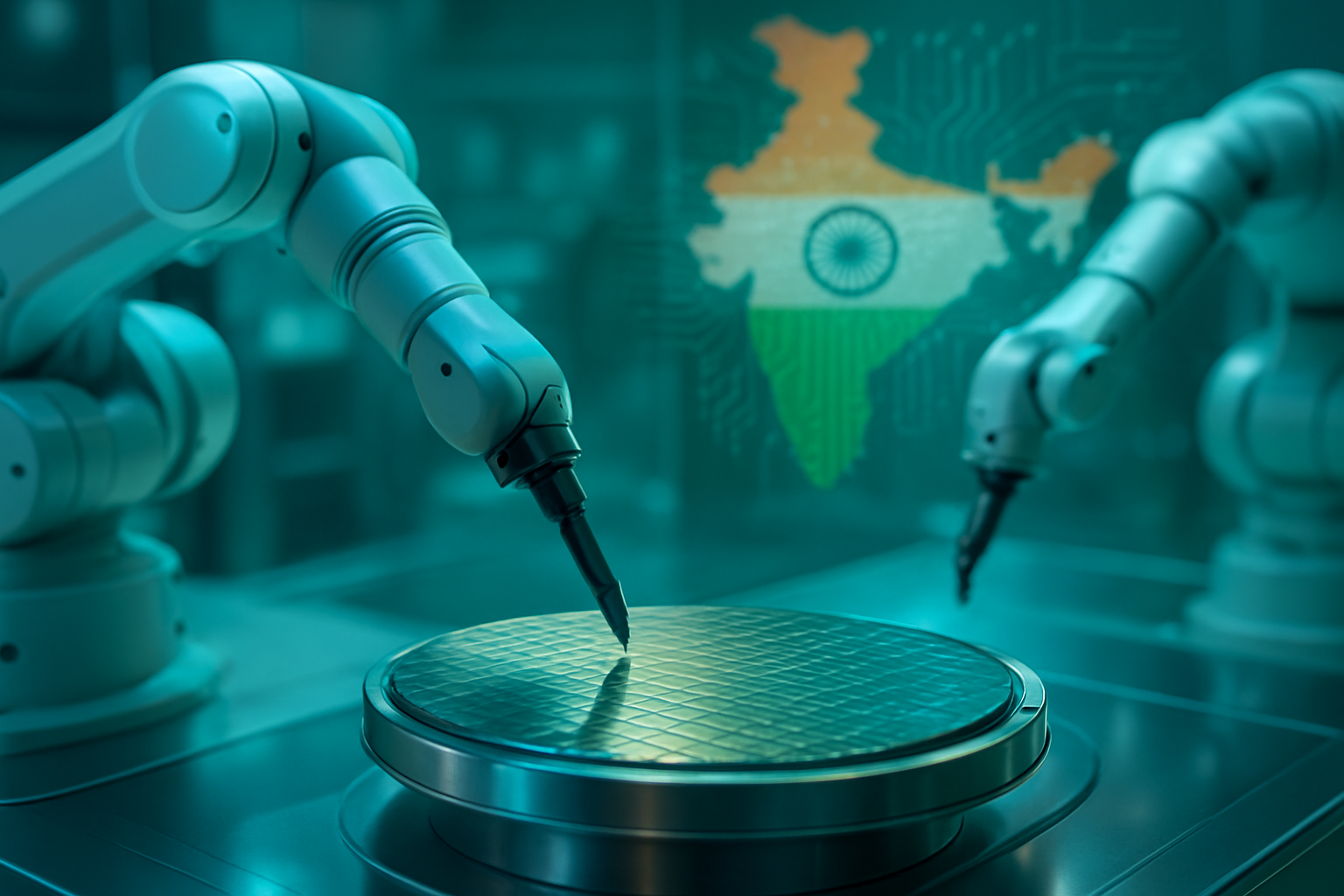
  • India’s Bold Bet: A New Era of Semiconductor Self-Reliance and Global Ambition

    India’s Bold Bet: A New Era of Semiconductor Self-Reliance and Global Ambition

    India is embarking on an ambitious journey to transform itself into a global powerhouse in semiconductor manufacturing, driven by a suite of aggressive government policies, substantial financial incentives, and strategic initiatives. This comprehensive national endeavor is not merely about establishing domestic production capabilities; it is a profound strategic move aimed at bolstering the nation's economic sovereignty, reducing critical import dependencies, and securing its technological future in an increasingly digital and geopolitically complex world. The immediate significance of this push cannot be overstated, as it promises to reshape India's industrial landscape, create high-skilled employment, and position the country as a pivotal player in the global technology supply chain.

    At its core, India's semiconductor strategy seeks to mitigate the vulnerabilities exposed by recent global supply chain disruptions, which highlighted the precariousness of relying heavily on a few concentrated manufacturing hubs. By fostering a robust domestic semiconductor ecosystem, India aims to build resilience against future shocks and ensure a secure supply of the foundational technology for everything from smartphones and electric vehicles to critical defense systems. This strategic imperative is also a significant economic driver, with projections indicating the Indian semiconductor market, valued at approximately $38 billion in 2023, could surge to $100-$110 billion by 2030, creating hundreds of thousands of jobs and fueling high-tech exports.

    The Blueprint for a Semiconductor Superpower: Policies, Incentives, and Strategic Initiatives

    India's journey towards semiconductor self-reliance is meticulously charted through several flagship government policies and programs designed to attract investment and cultivate a thriving domestic ecosystem. The National Policy on Electronics (NPE) 2019 laid the groundwork, aiming to position India as a global hub for Electronics System Design and Manufacturing (ESDM) by promoting domestic production and supporting high-tech projects, including semiconductor facilities. Building on this, the India Semiconductor Mission (ISM), launched in December 2021 with a substantial outlay of ₹76,000 crore (approximately US$10 billion), acts as the nodal agency for orchestrating the long-term development of a sustainable semiconductor and display ecosystem.

    Under the umbrella of the Semicon India Program, implemented through the ISM, the government offers attractive incentive support across the entire semiconductor value chain. A cornerstone of this strategy is the Production Linked Incentive (PLI) Scheme for Semiconductor Manufacturing, also launched in December 2021 with the same ₹76,000 crore outlay. This scheme provides direct financial support, including grants and tax rebates, covering up to 50% of the project cost for eligible companies establishing semiconductor fabrication units, display fabs, and Assembly, Testing, Marking, and Packaging (ATMP)/Outsourced Semiconductor Assembly and Test (OSAT) facilities. This direct financial backing is a significant departure from previous, less aggressive approaches, aiming to de-risk investments for global players.

    Further bolstering the ecosystem, the Design-Linked Incentive (DLI) Scheme, with a budget of INR 1,000 crore (US$114 million), specifically targets local startups and MSMEs, providing financial incentives and design infrastructure support for indigenous chip development. The Scheme for Promotion of Manufacturing of Electronic Components and Semiconductors (SPECS), notified in April 2020, offers a 25% capital expenditure incentive for electronic components and specialized sub-assemblies. Beyond federal initiatives, states like Gujarat, Uttar Pradesh, and Karnataka have introduced their own complementary policies, offering additional capital assistance, land cost reimbursements, and subsidized power tariffs, creating a competitive landscape for attracting investments. The government also allows 100% Foreign Direct Investment (FDI) in the ESDM sector via the automatic route, signaling an open door for international collaboration and technology transfer. These multi-pronged efforts, combined with a focus on talent development and the broader "Make in India" and "Design-led Manufacturing" initiatives, aim to foster not just manufacturing, but also indigenous design and intellectual property generation, ensuring higher economic value and strategic autonomy for India.

    Reshaping the Landscape: Impact on Companies and Competitive Dynamics

    India's aggressive push into semiconductor manufacturing is poised to significantly impact both domestic and international companies, reshaping competitive dynamics within the global tech industry. Major global chipmakers and display manufacturers are keenly eyeing India's incentives, with several already making commitments. Companies like Micron Technology (NASDAQ: MU), a leading U.S. memory chip manufacturer, has announced a significant investment of $2.75 billion to set up an ATMP facility in Gujarat, signaling a major vote of confidence in India's ecosystem. This move is expected to attract other players in the semiconductor supply chain to establish their presence in the region.

    The competitive implications are substantial. For existing global semiconductor giants, India presents an attractive new manufacturing hub, offering diversification away from traditional centers and access to a rapidly growing domestic market. However, it also introduces a new layer of competition, particularly for those who do not engage with India's incentive schemes. Domestically, Indian conglomerates and startups are set to benefit immensely. Companies like Tata Group and Vedanta Limited (NSE: VEDL) have expressed strong interest and are actively pursuing partnerships to establish fabrication units. The government's focus on design-linked incentives (DLI) is specifically designed to nurture local semiconductor design startups, potentially fostering a new generation of Indian "fabless" companies that design chips but outsource manufacturing. This could disrupt the existing product landscape by introducing more cost-effective and customized chip solutions for the Indian market, and potentially for global exports.

    The potential disruption extends to the broader electronics manufacturing services (EMS) sector, where companies like Foxconn (TWSE: 2317) and Pegatron (TWSE: 4938), already present in India for smartphone assembly, could integrate more deeply into the semiconductor supply chain by partnering with local entities or expanding their own component manufacturing. This strategic advantage for companies investing in India lies in their ability to leverage significant government subsidies, access a large and growing talent pool, and cater directly to India's burgeoning demand for electronics, from consumer devices to automotive and defense applications. The entry of major players and the fostering of a domestic ecosystem will inevitably lead to increased competition, but also to greater innovation and a more resilient global semiconductor supply chain, with India emerging as a crucial new node.

    Broader Significance: Geopolitics, Innovation, and Global Trends

    India's semiconductor manufacturing drive transcends mere industrial policy; it is a significant geopolitical move that aligns with broader global trends of supply chain de-risking and technological nationalism. In an era marked by increasing US-China tensions and the weaponization of technology, nations are prioritizing strategic autonomy in critical sectors like semiconductors. India's initiative positions it as a crucial alternative manufacturing destination, offering a democratic and stable environment compared to some existing hubs. This move fits squarely into the global landscape's shift towards diversifying manufacturing bases and building more resilient supply chains, a trend accelerated by the COVID-19 pandemic and ongoing geopolitical realignments.

    The impacts are multi-faceted. Economically, it promises to significantly reduce India's import bill for electronics, foster a high-tech manufacturing base, and create a ripple effect across ancillary industries. Technologically, it encourages indigenous research and development, potentially leading to breakthroughs tailored to India's unique market needs. However, the endeavor is not without potential concerns. The immense capital expenditure required for semiconductor fabs, the highly complex technological know-how, and the intense global competition pose significant challenges. Ensuring a steady supply of ultra-pure water, uninterrupted power, and a highly skilled workforce are critical operational hurdles that need to be consistently addressed. Comparisons to previous AI milestones, such as the rise of Silicon Valley or the emergence of East Asian manufacturing powerhouses, highlight the long-term vision required and the potential for transformative economic growth if successful.

    Moreover, India's push is a crucial step towards achieving technological sovereignty, enabling the nation to control the foundational components of its digital future. This is particularly vital for national security and defense applications, where reliance on foreign-made chips can pose significant risks. By fostering a domestic ecosystem, India aims to mitigate these vulnerabilities and ensure that its strategic technologies are built on secure foundations. The success of this initiative could fundamentally alter the global semiconductor map, reducing over-reliance on a few regions and contributing to a more distributed and resilient global technology infrastructure, thereby impacting global power dynamics and technological innovation for decades to come.

    The Road Ahead: Future Developments and Expert Predictions

    The coming years are expected to witness significant acceleration in India's semiconductor journey, marked by both near-term milestones and long-term strategic developments. In the near term, the focus will be on the operationalization of approved projects, particularly the ATMP facilities and the first fabrication units. Experts predict that India's first domestically produced semiconductor chip, likely from a facility like the one being set up by CG Power, could roll out by the end of 2025, marking a tangible achievement. This initial success will be crucial for building confidence and attracting further investment. The government is also expected to continue refining its incentive schemes, potentially introducing new support mechanisms to address specific gaps in the ecosystem, such as advanced packaging or specialized materials.

    Long-term developments will likely include the establishment of multiple high-volume fabrication units across different technology nodes, moving beyond assembly and testing to full-fledged chip manufacturing. This will be complemented by a burgeoning design ecosystem, with Indian startups increasingly developing intellectual property for a range of applications, from AI accelerators to IoT devices. Potential applications and use cases on the horizon are vast, spanning across consumer electronics, automotive (especially electric vehicles), telecommunications (5G/6G infrastructure), defense, and even space technology. The "Semicon City" concept, exemplified by Gujarat's initiative, is expected to proliferate, creating integrated clusters that combine manufacturing, research, and talent development.

    However, significant challenges need to be addressed. Securing access to advanced technology licenses from global leaders, attracting and retaining top-tier talent in a highly competitive global market, and ensuring sustainable infrastructure (power, water) will remain critical. Geopolitical shifts and global market fluctuations could also impact investment flows and the pace of development. Experts predict that while India's ambition is grand, the success will hinge on consistent policy implementation, seamless collaboration between industry and academia, and continued government commitment. The next decade will be pivotal in determining whether India can truly transform into a self-reliant semiconductor giant, with its impact reverberating across the global tech landscape.

    A New Dawn for Indian Tech: A Comprehensive Wrap-up

    India's determined push for self-reliance in semiconductor manufacturing marks a watershed moment in the nation's technological and economic history. The confluence of robust government policies, substantial financial incentives like the PLI and DLI schemes, and strategic initiatives under the India Semiconductor Mission underscores a clear national resolve to establish a comprehensive domestic semiconductor ecosystem. The key takeaways are clear: India is committed to de-risking global supply chains, fostering indigenous innovation, creating high-skilled employment, and achieving technological sovereignty. The immediate significance lies in enhancing national security and positioning India as a resilient player in the global technology arena.

    This development holds immense significance in AI history, not directly as an AI breakthrough, but as a foundational enabler for future AI advancements within India. Semiconductors are the bedrock upon which AI hardware is built, from powerful GPUs for training large language models to energy-efficient chips for edge AI applications. A strong domestic semiconductor industry will empower Indian AI companies and researchers to innovate more freely, develop specialized AI hardware, and reduce reliance on imported components, thereby accelerating India's progress in the global AI race. It represents a strategic investment in the underlying infrastructure that will fuel the next generation of AI innovation.

    Looking ahead, the long-term impact is poised to be transformative, positioning India as a significant contributor to the global technology supply chain and fostering a vibrant domestic innovation landscape. What to watch for in the coming weeks and months includes further announcements of investment from global chipmakers, progress on the ground at existing and newly approved fabrication sites, and the government's continued efforts to streamline regulatory processes and develop a robust talent pipeline. The success of this endeavor will not only redefine India's economic trajectory but also solidify its standing as a major force in the evolving global technological order.


    This content is intended for informational purposes only and represents analysis of current AI developments.

    TokenRing AI delivers enterprise-grade solutions for multi-agent AI workflow orchestration, AI-powered development tools, and seamless remote collaboration platforms.
    For more information, visit https://www.tokenring.ai/.