
Tag: Semiconductors

  • Semiconductor Titans Eye Trillion-Dollar Horizon: A Deep Dive into Market Dynamics and Investment Prospects

    Semiconductor Titans Eye Trillion-Dollar Horizon: A Deep Dive into Market Dynamics and Investment Prospects

    The global semiconductor industry stands at the precipice of unprecedented growth, projected to surge past the $700 billion mark in 2025 and potentially reach a staggering $1 trillion valuation by 2030. This meteoric rise, particularly evident in the current market landscape of October 2025, is overwhelmingly driven by the insatiable demand for Artificial Intelligence (AI) compute power, the relentless expansion of data centers, and the accelerating electrification of the automotive sector. Far from a fleeting trend, these foundational shifts are reshaping the industry's investment landscape, creating both immense opportunities and significant challenges for leading players.

    This comprehensive analysis delves into the current financial health and investment potential of key semiconductor companies, examining their recent performance, strategic positioning, and future outlook. As the bedrock of modern technology, the trajectory of these semiconductor giants offers a critical barometer for the broader tech industry and the global economy, making their market dynamics a focal point for investors and industry observers alike.

    The AI Engine: Fueling a New Era of Semiconductor Innovation

    The current semiconductor boom is fundamentally anchored in the burgeoning demands of Artificial Intelligence and High-Performance Computing (HPC). AI is not merely a segment but a pervasive force, driving innovation from hyperscale data centers to the smallest edge devices. The AI chip market alone is expected to exceed $150 billion in 2025, with high-bandwidth memory (HBM) sales projected to double from $15.2 billion in 2024 to an impressive $32.6 billion by 2026. This surge underscores the critical role of specialized components like Graphics Processing Units (GPUs) and Application-Specific Integrated Circuits (ASICs) in building the foundational infrastructure for AI.

    Technically, the industry is witnessing significant advancements in chip architecture and manufacturing. Innovations such as 3D packaging, chiplets, and the adoption of novel materials are crucial for addressing challenges like power consumption and enabling the next generation of semiconductor breakthroughs. These advanced packaging techniques, exemplified by TSMC's CoWoS technology, are vital for integrating more powerful and efficient AI accelerators. This differs from previous approaches that primarily focused on planar transistor scaling; the current emphasis is on holistic system-on-package integration to maximize performance and minimize energy use. Initial reactions from the AI research community and industry experts are overwhelmingly positive, highlighting these advancements as essential for scaling AI models and deploying sophisticated AI applications across diverse sectors.

    Competitive Battleground: Who Stands to Gain?

    The current market dynamics create distinct winners and pose strategic dilemmas for major AI labs, tech giants, and startups.

    NVIDIA (NASDAQ: NVDA), for instance, continues to dominate the AI and data center GPU market. Its Q3 FY2025 revenue of $35.1 billion, with data center revenue hitting a record $30.8 billion (up 112% year-over-year), unequivocally demonstrates its competitive advantage. The demand for its Hopper architecture and the anticipation for its upcoming Blackwell platform are "incredible," as foundation model makers scale AI training and inference. NVIDIA's strategic partnerships and continuous innovation solidify its market positioning, making it a primary beneficiary of the AI revolution.

    Taiwan Semiconductor Manufacturing Company (NYSE: TSM), as the world's leading contract chip manufacturer, is indispensable. Its Q3 2025 profit jumped 39% year-on-year to NT$452.3 billion ($14.77 billion), with revenue rising 30.3% to NT$989.9 billion ($33.1 billion). TSMC's advanced node technology (3nm, 4nm) and its heavy investment in advanced packaging (CoWoS) are critical for producing the high-performance chips required by AI leaders like NVIDIA. While experiencing some temporary packaging capacity constraints, demand for TSMC's services remains exceptionally strong, cementing its strategic advantage in the global supply chain.

    Advanced Micro Devices (NASDAQ: AMD) is rapidly gaining ground, with its stock rallying significantly in 2025. Its multi-year deal with OpenAI announced in October underscores the growing demand for its AI chips. AMD's relentless push into AI and expanding data center partnerships position it as a strong contender, challenging NVIDIA's dominance in certain segments. However, its sky-high P/E ratio of 102 suggests that much of its rapid growth is already priced in, requiring careful consideration for investors.

    Intel (NASDAQ: INTC), while facing challenges, is making a concerted effort to regain its competitive edge. Its stock has surged about 84% year-to-date in 2025, driven by significant government investments ($8.9 billion from the U.S. government) and strategic partnerships, including a $5 billion deal with NVIDIA. Intel's new Panther Lake (18A) processors and Crescent Island GPUs represent a significant technical leap, and successful execution of its foundry business could disrupt the current manufacturing landscape. However, its Foundry business remains unprofitable, and it continues to lose CPU market share to AMD and Arm-based chips, indicating a challenging path ahead.

    Qualcomm (NASDAQ: QCOM), a leader in wireless technologies, is benefiting from robust demand for 5G, IoT, and increasingly, AI-powered edge devices. Its Q3 fiscal 2025 earnings saw EPS of $2.77 and revenue of $10.37 billion, both exceeding expectations. Qualcomm's strong intellectual property and strategic adoption of the latest Arm technology for enhanced AI performance position it well in the mobile and automotive AI segments, though regulatory challenges pose a potential hurdle.

    Broader Implications: Geopolitics, Supply Chains, and Economic Currents

    The semiconductor industry's trajectory is deeply intertwined with broader geopolitical landscapes and global economic trends. The ongoing tensions between the US and China, in particular, are profoundly reshaping global trade and supply chains. US export controls on advanced technologies and China's strategic push for technological self-reliance are increasing supply chain risks and influencing investment decisions worldwide. This dynamic creates a complex environment where national security interests often intersect with economic imperatives, leading to significant government subsidies and incentives for domestic chip production, as seen with Intel in the US.

    Supply chain disruptions remain a persistent concern. Delays in new fabrication plant (fab) construction, shortages of critical materials (e.g., neon gas, copper, sometimes exacerbated by climate-related disruptions), and logistical bottlenecks continue to challenge the industry. Companies are actively diversifying their supply chains and forging strategic partnerships to enhance resilience, learning lessons from the disruptions of the early 2020s.

    Economically, while high-growth areas like AI and data centers thrive, legacy and consumer electronics markets face subdued growth and potential oversupply risks, particularly in traditional memory segments like DRAM and NAND. The industry is also grappling with a significant talent shortage, particularly for highly skilled engineers and researchers, which could impede future innovation and expansion. This current cycle, marked by unprecedented AI-driven demand, differs from previous cycles that were often more reliant on general consumer electronics or PC demand, making it more resilient to broad economic slowdowns in certain segments but also more vulnerable to specific technological shifts and geopolitical pressures.

    The Road Ahead: Future Developments and Emerging Horizons

    Looking ahead, the semiconductor industry is poised for continued rapid evolution, driven by advancements in AI, materials science, and manufacturing processes. Near-term developments will likely focus on further optimization of AI accelerators, including more energy-efficient designs and specialized architectures for different AI workloads (e.g., training vs. inference, cloud vs. edge). The integration of AI capabilities directly into System-on-Chips (SoCs) for a broader range of devices, from smartphones to industrial IoT, is also on the horizon.

    Long-term, experts predict significant breakthroughs in neuromorphic computing, quantum computing, and advanced materials beyond silicon, such as 2D materials and carbon nanotubes, which could enable entirely new paradigms of computing. The rise of "AI-first" chip design, where hardware is co-optimized with AI models, will become increasingly prevalent. Potential applications and use cases are vast, spanning fully autonomous systems, advanced medical diagnostics, personalized AI companions, and hyper-efficient data centers.

    However, several challenges need to be addressed. The escalating costs of R&D and manufacturing, particularly for advanced nodes, require massive capital expenditure and collaborative efforts. The increasing complexity of chip design necessitates new verification and validation methodologies. Furthermore, ensuring ethical AI development and addressing the environmental impact of energy-intensive AI infrastructure will be critical. Experts predict a continued consolidation in the foundry space, intense competition in the AI chip market, and a growing emphasis on sovereign semiconductor capabilities driven by national interests.

    Conclusion: Navigating the AI-Powered Semiconductor Boom

    The semiconductor market in October 2025 is characterized by a powerful confluence of AI-driven demand, data center expansion, and automotive electrification, propelling it towards a trillion-dollar valuation. Key players like NVIDIA (NASDAQ: NVDA), TSMC (NYSE: TSM), AMD (NASDAQ: AMD), Intel (NASDAQ: INTC), and Qualcomm (NASDAQ: QCOM) are strategically positioned to capitalize on this growth, albeit with varying degrees of success and risk.

    The significance of this development in AI history cannot be overstated; semiconductors are the literal building blocks of the AI revolution. Their performance and availability will dictate the pace of AI advancement across all sectors. Investors should closely monitor the financial health and strategic moves of these companies, paying particular attention to their innovation pipelines, manufacturing capacities, and ability to navigate geopolitical headwinds.

    In the coming weeks and months, investors should watch for the Q3 2025 earnings reports from Intel (scheduled for October 23, 2025), AMD (November 4, 2025), and Qualcomm (November 4, 2025), which will provide crucial insights into their current performance and future guidance. Furthermore, any new announcements regarding advanced packaging technologies, strategic partnerships, or significant government investments in domestic chip production will be key indicators of the industry's evolving landscape and long-term impact. The semiconductor market is not just a barometer of the tech world; it is its engine, and its current trajectory promises a future of profound technological transformation.


    This content is intended for informational purposes only and represents analysis of current AI developments.

    TokenRing AI delivers enterprise-grade solutions for multi-agent AI workflow orchestration, AI-powered development tools, and seamless remote collaboration platforms.
    For more information, visit https://www.tokenring.ai/.

  • The Silicon Backbone: How Semiconductors Drive the Automotive Revolution

    The Silicon Backbone: How Semiconductors Drive the Automotive Revolution

    Semiconductors have transcended their role as mere electronic components to become the indispensable foundation of the modern automotive industry. These tiny, yet powerful, chips are orchestrating a profound transformation, turning conventional vehicles into sophisticated, software-defined computing platforms. Their immediate significance lies in enabling everything from fundamental in-car electronics and advanced safety features to the cutting-edge realms of autonomous driving and electric vehicle efficiency, fundamentally reshaping how we interact with and perceive mobility.

    This pervasive integration of semiconductor technology is not just an incremental improvement; it is the core engine behind over 90% of automotive innovations, dictating the pace and direction of future developments. As the industry hurtles towards an era of fully autonomous, electric, and hyper-connected vehicles, the strategic importance of semiconductors continues to escalate, making them the ultimate determinant of a car's intelligence, safety, and performance.

    The Microscopic Engineers: Diving into Automotive Semiconductor Technology

    The automotive industry's metamorphosis into a high-tech sector is directly attributable to the diverse and specialized semiconductor applications embedded within every vehicle. Modern cars are veritable networks of these chips, ranging from 1,000 to 3,500 per vehicle, with electric vehicles (EVs) and autonomous platforms demanding even higher densities. These semiconductors fall into several critical categories, each with distinct technical specifications and roles.

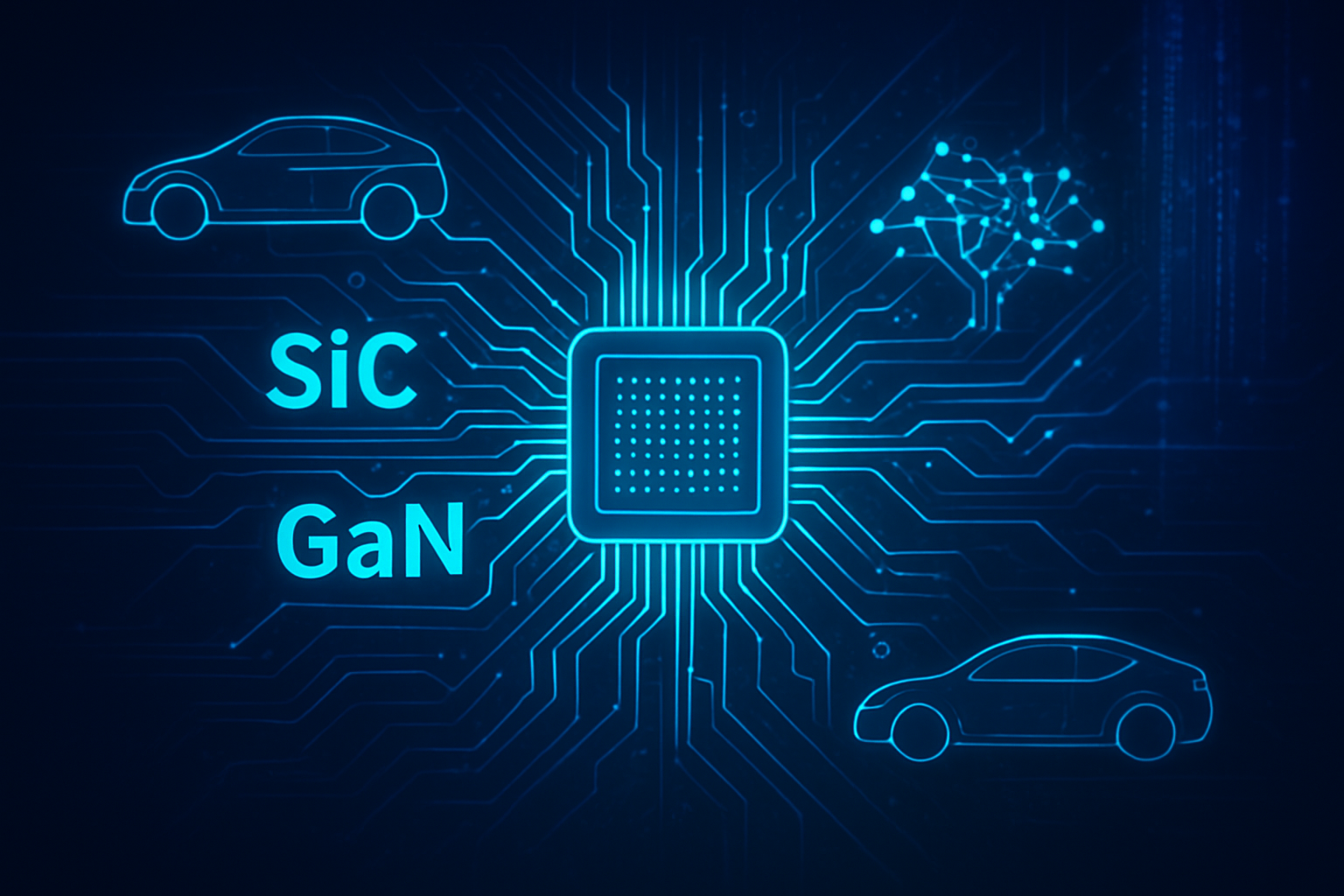
    Microcontrollers (MCUs) serve as the ubiquitous control centers, managing myriad functions from basic door locks (8-bit MCUs like Microchip PIC18-Q83/84) to complex engine and transmission control (32-bit MCUs featuring ARM Cortex-M or Renesas RH850, often utilizing advanced 28nm FD-SOI technology for efficiency). Power semiconductors, particularly crucial for EVs, handle power conversion and management. Traditional Insulated-Gate Bipolar Transistors (IGBTs) convert DC to AC for motors, while newer Wide-Bandgap (WBG) materials like Silicon Carbide (SiC) and Gallium Nitride (GaN) are revolutionizing efficiency. SiC, capable of handling up to 1700 volts, reduces energy loss by up to 50% in EV inverters, while GaN, ideal for onboard chargers and DC-DC converters, offers faster switching and higher thermal conductivity.

    Sensors and their interfaces are the vehicle's eyes and ears, relying on semiconductors to process vast data streams from LiDAR, radar, cameras, and ultrasonic sensors for ADAS and autonomous driving. AI accelerators and Systems-on-Chip (SoCs), like NVIDIA's (NASDAQ: NVDA) DRIVE platform or AMD's (NASDAQ: AMD) Versal AI Edge XA family, deliver massive processing power (e.g., up to 171 TOPS of AI performance) for real-time decision-making in autonomous systems. Communication chips, including automotive Ethernet and 5G/V2X modules, ensure high-speed, low-latency data exchange within the vehicle and with external infrastructure. This intricate web of silicon has propelled a fundamental architectural shift from fragmented, distributed Electronic Control Units (ECUs) to integrated domain and zonal controllers, significantly reducing wiring complexity and enabling software-defined vehicles (SDVs) with over-the-air (OTA) updates.

    Initial reactions from both the automotive and semiconductor industries underscore this profound shift. Automakers like Tesla (NASDAQ: TSLA) are increasingly designing their own chips (e.g., AI5) to gain design control and supply chain resilience, recognizing semiconductors as a core strategic asset. The global chip shortage (2021-2023) further solidified this perspective, prompting robust partnerships with semiconductor giants like Infineon (ETR: IFX), NXP Semiconductors (NASDAQ: NXPI), and STMicroelectronics (NYSE: STM). Semiconductor companies, in turn, are heavily investing in specialized, automotive-grade chips that meet stringent quality standards (ISO 26262 functional safety, -40°C to 125°C operating temperatures) and see the automotive sector as a primary growth driver, with the market projected to exceed $160 billion by 2032.

    Reshaping the Landscape: Industry Impact and Competitive Dynamics

    The escalating reliance on semiconductors, particularly those infused with AI capabilities, is creating a dynamic and highly competitive landscape across the automotive and technology sectors. This symbiotic relationship, where advanced chips enable more sophisticated AI and AI drives demand for even more powerful silicon, is reshaping market positioning and strategic advantages for a diverse array of players.

    Traditional semiconductor manufacturers like NVIDIA (NASDAQ: NVDA), TSMC (NYSE: TSM), Samsung (KRX: 005930), Infineon (ETR: IFX), NXP (NASDAQ: NXPI), and Qualcomm (NASDAQ: QCOM) are clear beneficiaries, experiencing surging demand for their specialized automotive-grade processors, power management units, and memory solutions. NVIDIA's GPUs, for instance, are pivotal for both training AI models in data centers and powering autonomous driving systems in vehicles. Simultaneously, a vibrant ecosystem of AI chip startups, such as Hailo, Kneron, and Black Sesame Technologies, is emerging, developing highly optimized edge AI solutions for computer vision and ADAS, challenging established players with innovative, power-efficient designs. Tech giants like Tesla (NASDAQ: TSLA), Google (NASDAQ: GOOGL), and Amazon (NASDAQ: AMZN) are also increasingly designing custom silicon to optimize for their unique AI workloads and reduce external dependencies, signaling a trend towards vertical integration.

    This intense competition is driving significant disruption. The shift to software-defined vehicles (SDVs), enabled by advanced semiconductors, is fundamentally altering the value proposition of a car, with software's share of vehicle cost projected to double by 2030. This creates immense opportunities for AI software and algorithm developers who can build robust platforms for sensor fusion, decision-making, and over-the-air (OTA) updates. However, it also poses challenges for traditional automotive suppliers who must adapt their business models. The recent chip shortages underscored the fragility of global supply chains, pushing automakers to forge closer, long-term partnerships with chipmakers and even consider in-house chip design to ensure resilience. Companies with diversified supply chains and strong relationships with foundries like TSMC (NYSE: TSM) and Samsung (KRX: 005930) are better positioned to navigate future volatilities.

    Market positioning is increasingly defined by the ability to deliver scalable, high-performance, and energy-efficient AI-centric architectures. Companies focusing on specialized chips like ASICs and NPUs for edge AI, alongside comprehensive software capabilities that enable flexible AI models and OTA updates, are gaining strategic advantages. The automotive semiconductor market is projected to exceed $88 billion by 2027, with AI chips in automotive seeing a significant compound annual growth rate (CAGR) of nearly 43% through 2034, underscoring the critical importance of these strategic investments and collaborations.

    Beyond the Dashboard: Wider Significance and Societal Implications

    The profound integration of semiconductors into the modern automotive industry carries a wider significance that extends far beyond vehicle performance, deeply influencing the broader AI landscape and societal norms. This convergence marks a pivotal trend in AI, where highly specialized hardware is becoming indispensable for realizing the full potential of artificial intelligence in real-world, safety-critical applications.

    Within the broader AI landscape, automotive semiconductors are driving the crucial trend of "edge AI," enabling complex AI processing to occur directly within the vehicle rather than relying solely on cloud connectivity. This necessitates the development of powerful yet energy-efficient Neural Processing Units (NPUs) and modular System-on-Chip (SoC) architectures. The automotive sector's demand for real-time, safety-critical AI processing is pushing the boundaries of chip design, influencing advancements in AI accelerators, sensor fusion technologies, and robust software frameworks. This makes the automotive industry a significant proving ground and driver of innovation for AI, mirroring how other sectors like mobile computing and data centers have historically shaped semiconductor development.

    Societally, the impact is multifaceted. On the positive side, AI-powered ADAS features, enabled by sophisticated chips, are demonstrably enhancing road safety by reducing human error, leading to fewer accidents and fatalities. Autonomous vehicles promise to further revolutionize mobility, offering increased accessibility for non-drivers, optimizing traffic flow, and potentially reducing congestion and energy consumption. AI also contributes to environmental benefits by improving the efficiency of electric vehicles and enabling smarter energy management. However, these advancements also introduce significant concerns. Ethical AI dilemmas arise in "no-win" accident scenarios, where autonomous systems must make life-or-death decisions, raising questions about accountability and programming biases. Data privacy is a major concern, as connected vehicles collect vast amounts of personal and operational data, necessitating robust cybersecurity measures to prevent misuse or theft. The energy consumption of powerful onboard AI computers also presents an environmental challenge, with projections suggesting that a global fleet of autonomous vehicles could consume energy comparable to all data centers today.

    Compared to previous AI milestones, the current automotive AI revolution stands out due to its reliance on specialized hardware for real-time, safety-critical applications. Earlier AI breakthroughs often leveraged general-purpose computing. In contrast, today's automotive AI demands purpose-built GPUs, ASICs, and NPUs to process immense sensor data and execute complex decision-making algorithms with unparalleled speed and reliability. This shift from automation to true autonomy, coupled with the sheer complexity and comprehensive integration of AI into every vehicle system, represents a leap that transforms the car into a software-defined computing platform, pushing the frontiers of AI development into a domain where reliability and safety are paramount.

    The Road Ahead: Future Developments and Expert Predictions

    The trajectory of semiconductors in the automotive industry points towards an even more integrated, intelligent, and efficient future, driven by continuous innovation in materials, architectures, and AI capabilities. Near-term and long-term advancements are poised to redefine the driving experience and the very nature of vehicles.

    In the near term, the widespread adoption of Wide-Bandgap (WBG) semiconductors, particularly Silicon Carbide (SiC) and Gallium Nitride (GaN), will accelerate. SiC is expected to dominate power electronics in 800V and higher voltage EV systems by 2030, offering superior efficiency, extended range, and faster charging. GaN, while earlier in its automotive journey, is gaining traction for onboard chargers and power inverters, promising even greater efficiency and miniaturization. The shift towards centralized computing architectures, consolidating multiple ECUs into powerful domain and zonal controllers powered by high-performance Systems-on-Chip (SoCs), will continue to simplify vehicle wiring, enhance scalability, and enable seamless over-the-air (OTA) updates. Advanced sensor technologies, including more precise 77-81 GHz radar, integrated solid-state LiDAR, and enhanced vision systems, will become more sophisticated and cost-effective, fueling higher levels of autonomous driving.

    Looking further ahead, potential applications include fully autonomous mobility-as-a-service (MaaS) fleets, highly personalized in-cabin experiences driven by advanced AI, and pervasive Vehicle-to-Everything (V2X) communication facilitated by 5G and future 6G networks, enabling real-time traffic optimization and accident prevention. In-cabin sensing, using cameras and UWB, will evolve to provide sophisticated driver monitoring and occupant detection for enhanced safety and comfort. Predictive maintenance, powered by AI-enabled semiconductors, will allow vehicles to self-diagnose issues and proactively schedule servicing. However, significant challenges remain. Manufacturing capacity and raw material sourcing for advanced chips, particularly for older technology nodes, continue to be a concern, necessitating strategic investments and diversified supply chains. Interoperability between complex software and hardware systems, along with the high costs of cutting-edge materials like SiC, also needs to be addressed for broader adoption.

    Experts predict a sustained surge in automotive semiconductor content, with the average value per vehicle projected to increase by 40% to over $1,400 by 2030. EV production is expected to represent over 40% of total vehicle production by 2030, serving as a massive demand driver for semiconductors. The automotive chip market is forecast to reach nearly $149 billion by 2030. Strategic partnerships between automakers and chipmakers, like Tesla's (NASDAQ: TSLA) recent $16.5 billion agreement with Samsung (KRX: 005930) for AI6 automotive chips, will become more common, alongside a growing trend towards in-house chip design to secure supply and optimize performance. The development of chiplet architectures, offering modularity and scalability, is also a key area to watch, promising more flexible and cost-effective solutions for future vehicle platforms.

    The Intelligent Core: A Comprehensive Wrap-up

    Semiconductors are unequivocally the strategic core of the modern automotive industry, serving as the essential building blocks for the ongoing revolution in mobility. From orchestrating fundamental vehicle functions to powering the intricate algorithms of autonomous driving, these tiny chips dictate the intelligence, safety, and efficiency of every modern car. Their pervasive integration has transformed vehicles into sophisticated, software-defined machines, marking a profound and indelible chapter in both automotive engineering and the broader history of artificial intelligence.

    The significance of this development in AI history cannot be overstated. The automotive sector's relentless demand for real-time, safety-critical AI processing has accelerated the development of specialized AI accelerators, robust sensor fusion technologies, and advanced edge computing capabilities. This has pushed AI beyond theoretical models into tangible, mass-produced applications that directly impact human lives, making the car a crucial proving ground for next-generation AI. The shift from distributed, hardware-centric architectures to centralized, software-defined platforms, enabled by powerful semiconductors, represents a fundamental re-imagining of vehicle design and functionality.

    Looking long-term, the impact is transformative. We are moving towards a future of enhanced safety, reduced congestion, and personalized mobility experiences, all underpinned by increasingly sophisticated silicon. The growth of electric vehicles, autonomous driving, and connected car technologies will continue to drive exponential demand for advanced semiconductors, with the automotive semiconductor market projected to reach nearly $149 billion by 2030. However, this trajectory is not without its challenges. Ensuring resilient supply chains, addressing the high costs of cutting-edge materials, resolving interoperability complexities, and mitigating ethical, privacy, and cybersecurity risks will be paramount.

    In the coming weeks and months, industry watchers should closely monitor key developments: the continued diversification and localization of semiconductor supply chains, especially for critical automotive-grade chips; further innovations in WBG materials like SiC and GaN; the deepening of strategic partnerships between automakers and chip manufacturers; and the evolution of chiplet architectures for greater flexibility and scalability. The continuous rollout of new automotive semiconductor solutions, such as Bosch's (ETR: BOSCH) Automotive Edge Computing platform and Infineon's (ETR: IFX) latest microcontrollers, will offer tangible insights into the industry's direction. Ultimately, the story of the modern car is increasingly the story of its semiconductors, and their ongoing evolution will determine the future of transportation.


    This content is intended for informational purposes only and represents analysis of current AI developments.

    TokenRing AI delivers enterprise-grade solutions for multi-agent AI workflow orchestration, AI-powered development tools, and seamless remote collaboration platforms.
    For more information, visit https://www.tokenring.ai/.

  • Silicon’s Quantum Leap: Semiconductors Pave the Way for a New Computing Era

    Silicon’s Quantum Leap: Semiconductors Pave the Way for a New Computing Era

    The intricate world of quantum computing is increasingly finding its bedrock in an unexpected yet familiar material: semiconductors. Once the exclusive domain of classical electronics, these ubiquitous materials are now proving to be the linchpin in advancing quantum technology, offering a scalable, robust, and manufacturable platform for the elusive quantum bit, or qubit. Recent breakthroughs in semiconductor fabrication, material purity, and qubit control are not just incremental improvements; they represent a fundamental shift, accelerating the journey from theoretical quantum mechanics to practical, real-world quantum computers.

    This synergy between traditional semiconductor manufacturing and cutting-edge quantum physics is poised to unlock unprecedented computational power. By leveraging decades of expertise in silicon-based fabrication, researchers are overcoming some of the most formidable challenges in quantum computing, including achieving higher qubit fidelity, extending coherence times, and developing pathways for massive scalability. The immediate significance of these developments is profound, promising to democratize access to quantum hardware and usher in an era where quantum capabilities are no longer confined to highly specialized laboratories but become an integral part of our technological infrastructure.

    Engineering the Quantum Future: Breakthroughs in Semiconductor Qubit Technology

    The journey towards practical quantum computing is being meticulously engineered at the atomic scale, with semiconductors serving as the canvas for groundbreaking innovations. Recent advancements have pushed the boundaries of qubit fidelity, material purity, and integration capabilities, fundamentally altering the landscape of quantum hardware development. These aren't just incremental steps; they represent a concerted effort to leverage established semiconductor manufacturing paradigms for a revolutionary new computing model.

    A critical metric, qubit fidelity, has seen remarkable progress. Researchers have achieved single-qubit gate fidelities exceeding 99.99% and two-qubit gate fidelities surpassing 99% in silicon spin qubits, a benchmark widely considered essential for building fault-tolerant quantum computers. Notably, some of these high-fidelity operations are now being demonstrated on chips manufactured in standard semiconductor foundries, a testament to the platform's industrial viability. This contrasts sharply with earlier quantum systems that often struggled to maintain coherence and perform operations with sufficient accuracy, making error correction an insurmountable hurdle. The ability to achieve such precision in a manufacturable silicon environment is a game-changer.

    Furthermore, material purity has emerged as a cornerstone of stable quantum operation. Natural silicon contains the silicon-29 isotope, whose nuclear spin acts as an uncontrollable source of noise, causing qubits to lose their quantum information. Scientists from the University of Manchester and the University of Melbourne have developed methods to engineer ultra-pure silicon-28, reducing the disruptive silicon-29 content to an unprecedented 2.3 parts per million. This targeted purification process, which is scalable and cost-effective, provides an almost pristine environment for qubits, dramatically extending their coherence times and reducing error rates compared to devices built on natural silicon.

    The inherent CMOS compatibility of silicon spin qubits is perhaps their most significant advantage. By utilizing standard Complementary Metal-Oxide-Semiconductor (CMOS) fabrication processes, quantum chip developers can tap into decades of established infrastructure and expertise. Companies like Intel (NASDAQ: INTC) and Diraq are actively fabricating two-qubit devices in 22nm FinFET and 300mm wafer-scale CMOS foundries, demonstrating that quantum hardware can be produced with high yield and precision, akin to classical processors. This approach differs fundamentally from other qubit modalities like superconducting circuits or trapped ions, which often require specialized, non-standard fabrication techniques, posing significant scaling challenges.

    Beyond the qubits themselves, the development of cryogenic control chips is revolutionizing system architecture. Traditional quantum computers require millions of wires to connect room-temperature control electronics to qubits operating at millikelvin temperatures, creating a "wiring bottleneck." Intel's "Horse Ridge" chip, fabricated using 22nm FinFET CMOS technology, and similar innovations from the University of Sydney and Microsoft (NASDAQ: MSFT), can operate at temperatures as low as 3 Kelvin. These chips integrate control electronics directly into the cryogenic environment, significantly reducing wiring complexity, power consumption, and latency, thereby enabling the control of thousands of qubits from a single, compact system.

    Initial reactions from the quantum computing research community and industry experts have been overwhelmingly optimistic, tempered with a realistic view of the challenges ahead. There's significant enthusiasm for silicon spin qubits as a "natural match" for the semiconductor industry, offering a clear path to scalability and fault tolerance. The achievement of ultra-pure silicon-28 is hailed as a "significant milestone" that could "revolutionize the future of quantum computing." While the realization of highly stable topological qubits, pursued by Microsoft, remains a challenging frontier, any verified progress generates considerable excitement for its potential to inherently protect quantum information from noise. The focus is now shifting towards translating these technical triumphs into practical, commercially viable quantum solutions.

    Reshaping the Tech Landscape: Competitive Shifts and Market Opportunities

    The rapid advancements in semiconductor quantum computing are not merely scientific curiosities; they are catalysts for a profound reshaping of the tech industry, poised to create new market leaders, disrupt established services, and ignite intense competition among global technology giants and agile startups alike. The compatibility of quantum devices with existing semiconductor fabrication processes provides a unique bridge to commercialization, benefiting a diverse ecosystem of companies.

    Major tech players like IBM (NYSE: IBM), Google (NASDAQ: GOOGL), and Intel (NASDAQ: INTC) are at the forefront, heavily investing in full-stack quantum systems, with significant portions of their research dedicated to semiconductor-based qubits. Intel, for instance, is a key proponent of silicon spin qubits, leveraging its deep expertise in chip manufacturing. Microsoft (NASDAQ: MSFT), while also pursuing a cloud-based quantum service through Azure, is uniquely focused on the challenging but potentially more robust topological qubits. These companies are not just building quantum computers; they are strategically positioning themselves to offer Quantum Computing as a Service (QCaaS), integrating quantum capabilities into their expansive cloud infrastructures.

    The ripple effect extends to the traditional semiconductor industry. Foundries like Taiwan Semiconductor Manufacturing Company (TSMC) (NYSE: TSM) are becoming indispensable, as the demand for ultra-precise fabrication and specialized materials for quantum chips escalates. Companies specializing in cryogenics (e.g., Oxford Instruments, Bluefors) and advanced control electronics (e.g., Keysight Technologies (NYSE: KEYS), Qblox) will also see burgeoning markets for their niche, yet critical, components. Furthermore, quantum computing itself holds the potential to revolutionize classical chip design and manufacturing, leading to more efficient classical processors through quantum-enhanced simulations and optimizations.

    For AI labs and software companies, the implications are transformative. Quantum computers promise to accelerate complex AI algorithms, leading to more sophisticated machine learning models, enhanced data processing, and optimized large-scale logistics. Companies like NVIDIA (NASDAQ: NVDA), already a powerhouse in AI-optimized GPUs, are exploring how their hardware can interface with and even accelerate quantum workloads. The competitive landscape will intensify as companies vie for access to these advanced computational tools, which will become a strategic advantage in developing next-generation AI applications.

    The most significant potential disruption lies in cybersecurity. The impending threat of quantum computers breaking current encryption standards (dubbed "Y2Q" or "Year to Quantum") necessitates a complete overhaul of global data security protocols. This creates an urgent, multi-billion-dollar market for quantum-resistant cryptographic solutions, where cybersecurity firms and tech giants are racing to develop and implement new standards. Beyond security, industries such as materials science, drug discovery, logistics, and finance are poised for radical transformation. Quantum algorithms can simulate molecular interactions with unprecedented accuracy, optimize complex supply chains, and perform sophisticated financial modeling, offering exponential speedups over classical methods and potentially disrupting existing product development cycles and operational efficiencies across numerous sectors.

    Companies are adopting diverse strategies to carve out their market share, ranging from full-stack development to specialization in specific qubit architectures or software layers. Cloud access and hybrid quantum-classical computing models are becoming standard, democratizing access to quantum resources. Strategic partnerships with academia and government, coupled with massive R&D investments, are critical for staying ahead in this rapidly evolving field. The race for quantum advantage is not just about building the most powerful machine; it's about establishing the foundational ecosystem for the next era of computation.

    A New Frontier: Quantum-Enhanced AI and its Broader Implications

    The seamless integration of semiconductor advancements in quantum computing is poised to usher in a new era for artificial intelligence, moving beyond the incremental gains of classical hardware to a paradigm shift in computational power and efficiency. This convergence is not just about faster processing; it's about enabling entirely new forms of AI, fundamentally altering the fabric of numerous industries and raising profound questions about security and ethics.

    Within the broader AI landscape, semiconductor quantum computing acts as a powerful accelerator, capable of tackling computational bottlenecks that currently limit the scale and complexity of deep learning and large language models. Quantum co-processors and full quantum AI chips can dramatically reduce the training times for complex AI models, which currently consume weeks of computation and vast amounts of energy on classical systems. This efficiency gain is critical as AI models continue to grow in size and sophistication. Furthermore, quantum principles are inspiring novel AI architectures, such as Quantum Neural Networks (QNNs), which promise more robust and expressive models by leveraging superposition and entanglement to represent and process data in entirely new ways. This synergistic relationship extends to AI's role in optimizing quantum and semiconductor design itself, creating a virtuous cycle where AI helps refine quantum algorithms, enhance error correction, and even improve the manufacturing processes of future classical and quantum chips.

    The impacts of this quantum-AI convergence will be felt across virtually every sector. In healthcare and biotechnology, it promises to revolutionize drug discovery and personalized medicine through unprecedented molecular simulations. Finance and logistics stand to gain from highly optimized algorithms for portfolio management, risk analysis, and supply chain efficiency. Crucially, in cybersecurity, while quantum computers pose an existential threat to current encryption, they also drive the urgent development of post-quantum cryptography (PQC) solutions, which will need to be embedded into semiconductor hardware to protect future AI operations. Quantum-enhanced AI could also be deployed for both advanced threat detection and, disturbingly, for more sophisticated malicious attacks.

    However, this transformative power comes with significant concerns. The most immediate is the security threat to existing cryptographic standards, necessitating a global transition to quantum-resistant algorithms. Beyond security, ethical implications are paramount. The inherent complexity of quantum systems could exacerbate issues of AI bias and explainability, making it even harder to understand and regulate AI decision-making. Questions of privacy, data sovereignty, and the potential for a widening digital divide between technologically advanced and developing regions also loom large. The potential for misuse of quantum-enhanced AI, from mass surveillance to sophisticated deepfakes, underscores the urgent need for robust ethical frameworks and governance.

    Comparing this moment to previous AI milestones reveals its profound significance. Experts view the advent of quantum AI in semiconductor design as a fundamental shift, akin to the transition from CPUs to GPUs that powered the deep learning revolution. Just as GPUs provided the parallel processing capabilities for complex AI workloads, quantum computers offer unprecedented parallelism and data representation, pushing beyond the physical limits of classical computing and potentially evolving Moore's Law into new paradigms. Demonstrations of "quantum supremacy," where quantum machines solve problems intractable for classical supercomputers, highlight this transformative potential, echoing the disruptive impact of the internet or personal computers. The race is on, with tech giants like IBM aiming for 100,000 qubits by 2033 and Google targeting a million-qubit system, signifying a strategic imperative for the next generation of computing.

    The Quantum Horizon: Near-Term Milestones and Long-Term Visions

    The journey of semiconductor quantum computing is marked by ambitious roadmaps and a clear vision for transformative capabilities in the coming years and decades. While significant challenges remain, experts predict a steady progression from current noisy intermediate-scale quantum (NISQ) devices to powerful, fault-tolerant quantum computers, driven by continuous innovation in semiconductor technology.

    In the near term (next 5-10 years), the focus will be on refining existing silicon spin qubit technologies, leveraging their inherent compatibility with CMOS manufacturing to achieve even higher fidelities and longer coherence times. A critical development will be the widespread adoption and improvement of hybrid quantum-classical architectures, where quantum processors act as accelerators for specific, computationally intensive tasks, working in tandem with classical semiconductor systems. The integration of advanced cryogenic control electronics, like those pioneered by Intel (NASDAQ: INTC), will become standard, enabling more scalable and efficient control of hundreds of qubits. Crucially, advancements in quantum error mitigation and the nascent development of logical qubits – where information is encoded across multiple physical qubits to protect against errors – will be paramount. Companies like Google (NASDAQ: GOOGL) and Microsoft (NASDAQ: MSFT) have already demonstrated logical qubits outperforming physical ones in error rates, a pivotal step towards true fault tolerance. Early physical silicon quantum chips with hundreds of qubits are expected to become increasingly accessible through cloud services, allowing businesses and researchers to explore quantum algorithms. The market itself is projected to see substantial growth, with estimates placing it to exceed $5 billion by 2033, driven by sustained venture capital investment.

    Looking further into the long term (beyond 10 years), the vision is to achieve fully fault-tolerant, large-scale quantum computers capable of addressing problems currently beyond the reach of any classical machine. Roadmaps from industry leaders like IBM (NYSE: IBM) anticipate reaching hundreds of logical qubits by the end of the decade, capable of millions of quantum gates, with a target of 2,000 logical qubits by 2033. Microsoft continues its ambitious pursuit of a million-qubit system based on topological qubits, which, if realized, promise inherent stability against environmental noise. This era will also see the maturation of advanced error correction codes, significantly reducing the overhead of physical qubits required for each logical qubit. Furthermore, quantum-accelerated AI is expected to become routine in semiconductor manufacturing itself, optimizing design cycles, refining processes, and enabling the discovery of entirely new materials and device concepts, potentially leading to post-CMOS paradigms.

    The potential applications and use cases on the horizon are vast and transformative. In drug discovery and materials science, quantum computers will simulate molecular interactions with unprecedented accuracy, accelerating the development of new pharmaceuticals, catalysts, and advanced materials for everything from batteries to next-generation semiconductors. Financial services will benefit from enhanced risk analysis and portfolio optimization. Critically, the synergy between quantum computing and AI is seen as a "mutually reinforcing power couple," poised to accelerate everything from high-dimensional machine learning tasks and pattern discovery to potentially even the development of Artificial General Intelligence (AGI). In cybersecurity, while the threat to current encryption is real, quantum computing is also essential for developing robust quantum-resistant cryptographic algorithms and secure quantum communication protocols.

    Despite this promising outlook, significant challenges must be addressed. Qubit stability and coherence remain a primary hurdle, as qubits are inherently fragile and susceptible to environmental noise. Developing robust error correction mechanisms that do not demand an unfeasible overhead of physical qubits is crucial. Scalability to millions of qubits requires atomic-scale precision in fabrication and seamless integration of complex control systems. The high infrastructure requirements and costs, particularly for extreme cryogenic cooling, pose economic barriers. Moreover, a persistent global talent shortage in quantum computing expertise threatens to slow widespread adoption and development.

    Experts predict that the first instances of "quantum advantage"—where quantum computers outperform classical methods for useful, real-world tasks—may be seen by late 2026, with more widespread practical applications emerging within 5 to 10 years. The continuous innovation, with the number of physical qubits doubling every one to two years since 2018, is expected to continue, leading to integrated quantum and classical platforms and, ultimately, autonomous AI-driven semiconductor design. Nations and corporations that successfully leverage quantum technology are poised to gain significant competitive advantages, reshaping the global electronics supply chain and reinforcing the strategic importance of semiconductor sovereignty.

    The Dawn of a Quantum Era: A Transformative Partnership

    The journey of quantum computing, particularly through the lens of semiconductor advancements, marks a pivotal moment in technological history, laying the groundwork for a future where computational capabilities transcend the limits of classical physics. The indispensable role of semiconductors, from hosting fragile qubits to controlling complex quantum operations, underscores their foundational importance in realizing this new era of computing.

    Key takeaways from this evolving landscape are manifold. Semiconductors provide a scalable and robust platform for qubits, leveraging decades of established manufacturing expertise. Breakthroughs in qubit fidelity, material purity (like ultra-pure silicon-28), and CMOS-compatible fabrication are rapidly bringing fault-tolerant quantum computers within reach. The development of cryogenic control chips is addressing the critical "wiring bottleneck," enabling the control of thousands of qubits from compact, integrated systems. This synergy between quantum physics and semiconductor engineering is not merely an incremental step but a fundamental shift, allowing for the potential mass production of quantum hardware.

    In the broader context of AI history, this development is nothing short of transformative. The convergence of semiconductor quantum computing with AI promises to unlock unprecedented computational power, enabling the training of vastly more complex AI models, accelerating data analysis, and tackling optimization problems currently intractable for even the most powerful supercomputers. This is akin to the shift from CPUs to GPUs that fueled the deep learning revolution, offering a pathway to overcome the inherent limitations of classical hardware and potentially catalyzing the development of Artificial General Intelligence (AGI). Furthermore, AI itself is playing a crucial role in optimizing quantum systems and semiconductor design, creating a virtuous cycle of innovation.

    The long-term impact is expected to be a profound revolution across numerous sectors. From accelerating drug discovery and materials science to revolutionizing financial modeling, logistics, and cybersecurity, quantum-enhanced AI will redefine what is computationally possible. While quantum computers are likely to augment rather than entirely replace classical systems, they will serve as powerful co-processors, accessible through cloud services, driving new efficiencies and innovations. However, this future also necessitates careful consideration of ethical frameworks, particularly concerning cybersecurity threats, potential biases in quantum AI, and privacy concerns, to ensure that these powerful technologies benefit all of humanity.

    In the coming weeks and months, the quantum computing landscape will continue its rapid evolution. We should watch for sustained improvements in qubit fidelity and coherence, with companies like IonQ (NYSE: IONQ) already announcing world records in two-qubit gate performance and ambitious plans for larger qubit systems. Progress in quantum error correction, such as Google's (NASDAQ: GOOGL) "below threshold" milestone and IBM's (NYSE: IBM) fault-tolerant roadmap, will be critical indicators of maturation. The continued development of hybrid quantum-classical architectures, new semiconductor materials like hexagonal GeSi, and advanced quantum AI frameworks will also be key areas to monitor. As investments pour into this sector and collaborations intensify, the race to achieve practical quantum advantage and reshape the global electronics supply chain will undoubtedly accelerate, ushering in a truly quantum era.


    This content is intended for informational purposes only and represents analysis of current AI developments.

    TokenRing AI delivers enterprise-grade solutions for multi-agent AI workflow orchestration, AI-powered development tools, and seamless remote collaboration platforms.
    For more information, visit https://www.tokenring.ai/.

  • The New Silicon Curtain: Geopolitics Reshapes Global Semiconductor Landscape

    The New Silicon Curtain: Geopolitics Reshapes Global Semiconductor Landscape

    The global semiconductor industry, once a paragon of hyper-efficient, specialized global supply chains, is now undeniably at the epicenter of escalating geopolitical tensions and strategic national interests. This profound shift signifies a fundamental re-evaluation of semiconductors, elevating them from mere components to critical strategic assets vital for national security, economic power, and technological supremacy. The immediate consequence is a rapid and often disruptive restructuring of manufacturing and trade policies worldwide, ushering in an era where resilience and national interest frequently supersede traditional economic efficiencies.

    Nations are increasingly viewing advanced chips as "the new oil," essential for everything from cutting-edge AI and electric vehicles to sophisticated military systems and critical infrastructure. This perception has ignited a global race for technological autonomy and supply chain security, most notably driven by the intense rivalry between the United States and China. The ramifications are sweeping, leading to fragmented supply chains, massive government investments, and the potential emergence of distinct technological ecosystems across the globe.

    Policy Battlegrounds: Tariffs, Export Controls, and the Race for Reshoring

    The current geopolitical climate has birthed a complex web of policies, trade disputes, and international agreements that are fundamentally altering how semiconductors are produced, supplied, and distributed. At the forefront is the US-China technological rivalry, characterized by the United States' aggressive implementation of export controls aimed at curbing China's access to advanced semiconductor manufacturing equipment, Electronic Design Automation (EDA) software, and high-end AI chips. These measures, often citing national security concerns, have forced global semiconductor companies to navigate a bifurcated market, impacting their design, production, and sales strategies. For instance, the October 2022 US export controls and subsequent updates have significantly restricted the ability of US companies and companies using US technology from supplying certain advanced chips and chip-making tools to China, compelling Chinese firms to accelerate their indigenous research and development efforts.

    In response, China is vigorously pursuing self-sufficiency through massive state-backed investments and initiatives like the National Integrated Circuit Industry Investment Fund (Big Fund), aiming to create an "all-Chinese supply chain" and reduce its reliance on foreign technology. Meanwhile, other nations are also enacting their own strategic policies. The European Chips Act, for example, mobilizes over €43 billion in public and private investment to double the EU's global market share in semiconductors from 10% to 20% by 2030. Similarly, India has introduced a $10 billion incentive scheme to attract semiconductor manufacturing and design, positioning itself as a new hub in the global supply chain.

    These policies mark a significant departure from the previous globalized model, which prioritized cost-effectiveness and specialized regional expertise. The new paradigm emphasizes "techno-nationalism" and reshoring, where governments are willing to subsidize domestic production heavily, even if it means higher manufacturing costs. For example, producing advanced 4nm chips in the US can be approximately 30% more expensive than in Taiwan. This willingness to absorb higher costs underscores the strategic imperative placed on supply chain resilience and national control over critical technologies, fundamentally reshaping investment decisions and global manufacturing footprints across the semiconductor industry.

    Shifting Sands: How Geopolitics Reshapes the Semiconductor Corporate Landscape

    The geopolitical realignment of the semiconductor industry is creating both immense opportunities and significant challenges for established tech giants, specialized chipmakers, and emerging startups alike. Companies like Taiwan Semiconductor Manufacturing Company (TSMC) (TWSE: 2330), the world's leading contract chip manufacturer, are strategically diversifying their manufacturing footprint, investing billions in new fabrication plants in the United States (Arizona) and Europe (Germany and Japan). While these moves are partly driven by customer demand, they are largely a response to governmental incentives like the US CHIPS and Science Act and the European Chips Act, aimed at de-risking supply chains and fostering domestic production. These investments, though costly, position TSMC to benefit from government subsidies and secure access to critical markets, albeit at potentially higher operational expenses.

    Similarly, Samsung Electronics (KRX: 005930) and Intel Corporation (NASDAQ: INTC) are making substantial domestic investments, leveraging national incentives to bolster their foundry services and advanced manufacturing capabilities. Intel, in particular, is positioning itself as a Western alternative for cutting-edge chip production, with ambitious plans for new fabs in the US and Europe. These companies stand to benefit from direct financial aid, tax breaks, and a more secure operating environment in geopolitically aligned regions. However, they also face the complex challenge of navigating export controls and trade restrictions, which can limit their access to certain markets or necessitate the development of region-specific product lines.

    Conversely, companies heavily reliant on the Chinese market or those involved in supplying advanced equipment to China face significant headwinds. US-based equipment manufacturers like Applied Materials (NASDAQ: AMAT), Lam Research (NASDAQ: LRCX), and KLA Corporation (NASDAQ: KLAC) have had to adjust their sales strategies and product offerings to comply with export restrictions, impacting their revenue streams from China. Chinese semiconductor companies, while facing restrictions on advanced foreign technology, are simultaneously experiencing a surge in domestic investment and demand, fostering the growth of local champions in areas like mature node production, packaging, and design. This dynamic is leading to a bifurcation of the market, where companies must increasingly choose sides or develop complex strategies to operate within multiple, often conflicting, regulatory frameworks.

    The Broader Implications: A New Era of Tech Sovereignty and Strategic Competition

    The increasing influence of geopolitics on semiconductor manufacturing transcends mere trade policy; it represents a fundamental shift in the global technological landscape, ushering in an era of tech sovereignty and intensified strategic competition. This trend fits squarely within broader global movements towards industrial policy and national security-driven economic strategies. The reliance on a single geographic region, particularly Taiwan, for over 90% of the world's most advanced logic chips has been identified as a critical vulnerability, amplifying geopolitical concerns and driving a global scramble for diversification.

    The impacts are profound. Beyond the immediate economic effects of increased costs and fragmented supply chains, there are significant concerns about the future of global innovation. A "Silicon Curtain" is emerging, potentially leading to bifurcated technological ecosystems where different regions develop distinct standards, architectures, and supply chains. This could hinder the free flow of ideas and talent, slowing down the pace of global AI and technological advancement. For instance, the development of cutting-edge AI chips, which rely heavily on advanced manufacturing processes, could see parallel and potentially incompatible development paths in the West and in China.

    Comparisons to historical industrial shifts are apt. Just as nations once competed for control over oil fields and steel production, the current geopolitical contest centers on the "digital oil" of semiconductors. This competition is arguably more complex, given the intricate global nature of chip design, manufacturing, and supply. While past milestones like the space race spurred innovation through competition, the current semiconductor rivalry carries the added risk of fragmenting the very foundation of global technological progress. The long-term implications include potential de-globalization of critical technology sectors, increased geopolitical instability, and a world where technological leadership is fiercely guarded as a matter of national survival.

    The Road Ahead: Regionalization, Innovation, and Enduring Challenges

    Looking ahead, the semiconductor industry is poised for continued transformation, driven by an interplay of geopolitical forces and technological imperatives. In the near term, we can expect further regionalization of supply chains. More fabrication plants will be built in the US, Europe, Japan, and India, fueled by ongoing government incentives. This will lead to a more geographically diverse, albeit potentially less cost-efficient, manufacturing base. Companies will continue to invest heavily in advanced packaging technologies and materials science, seeking ways to circumvent or mitigate the impact of export controls on leading-edge lithography equipment. We may also see increased collaboration among geopolitically aligned nations to share research, development, and manufacturing capabilities, solidifying regional tech blocs.

    Longer-term developments will likely involve a push towards greater vertical integration within specific regions, as nations strive for end-to-end control over their semiconductor ecosystems, from design and IP to manufacturing and packaging. The development of new materials and novel chip architectures, potentially less reliant on current advanced lithography techniques, could also emerge as a strategic imperative. Experts predict a continued focus on "chiplets" and heterogeneous integration as a way to achieve high performance while potentially sidestepping some of the most advanced (and geopolitically sensitive) manufacturing steps. This modular approach could offer greater flexibility and resilience in a fragmented world.

    However, significant challenges remain. The global talent shortage in semiconductor engineering and manufacturing is acute and will only worsen with the push for reshoring. Attracting and training a sufficient workforce will be critical for the success of national semiconductor ambitions. Furthermore, the economic viability of operating multiple, geographically dispersed, high-cost fabs will be a constant pressure point for companies. The risk of oversupply in certain mature nodes, as countries rush to build capacity, could also emerge. What experts predict is a sustained period of strategic competition, where geopolitical considerations will continue to heavily influence investment, innovation, and trade policies, compelling the industry to balance national security with global economic realities.

    A New Global Order for Silicon: Resilience Over Efficiency

    The profound influence of geopolitics on global semiconductor manufacturing and trade policies marks a pivotal moment in technological history. The era of a seamlessly integrated, efficiency-driven global supply chain is rapidly giving way to a more fragmented, security-conscious landscape. Key takeaways include the reclassification of semiconductors as strategic national assets, the vigorous implementation of export controls and tariffs, and massive government-backed initiatives like the US CHIPS Act and European Chips Act aimed at reshoring and diversifying production. This shift is compelling major players like TSMC, Samsung, and Intel to undertake multi-billion dollar investments in new regions, transforming the competitive dynamics of the industry.

    This development's significance in AI history cannot be overstated, as the availability and control of advanced AI chips are intrinsically linked to national technological leadership. The emergence of a "Silicon Curtain" risks bifurcating innovation pathways, potentially slowing global AI progress while simultaneously fostering localized breakthroughs in distinct technological ecosystems. The long-term impact points towards a more resilient but potentially less efficient and more costly global semiconductor industry, where national interests dictate supply chain architecture.

    In the coming weeks and months, observers should watch for further announcements regarding new fab constructions, particularly in nascent semiconductor regions like India and Southeast Asia. The ongoing effectiveness and adaptation of export controls, as well as the progress of indigenous chip development in China, will be critical indicators. Finally, the ability of governments to sustain massive subsidies and attract sufficient talent will determine the ultimate success of these ambitious national semiconductor strategies. The geopolitical chessboard of silicon is still being laid, and its final configuration will define the future of technology for decades to come.


    This content is intended for informational purposes only and represents analysis of current AI developments.

    TokenRing AI delivers enterprise-grade solutions for multi-agent AI workflow orchestration, AI-powered development tools, and seamless remote collaboration platforms.
    For more information, visit https://www.tokenring.ai/.
  • AI Supercharges Silicon: The Unprecedented Era of AI-Driven Semiconductor Innovation

    AI Supercharges Silicon: The Unprecedented Era of AI-Driven Semiconductor Innovation

    The symbiotic relationship between Artificial Intelligence (AI) and semiconductor technology has entered an unprecedented era, with AI not only driving an insatiable demand for more powerful chips but also fundamentally reshaping their design, manufacturing, and future development. This AI Supercycle, as industry experts term it, is accelerating innovation across the entire semiconductor value chain, promising to redefine the capabilities of computing and intelligence itself. As of October 23, 2025, the impact is evident in surging market growth, the emergence of specialized hardware, and revolutionary changes in chip production, signaling a profound shift in the technological landscape.

    This transformative period is marked by a massive surge in demand for high-performance semiconductors, particularly those optimized for AI workloads. The explosion of generative AI (GenAI) and large language models (LLMs) has created an urgent need for chips capable of immense computational power, driving semiconductor market projections to new heights, with the global market expected to reach $697.1 billion in 2025. This immediate significance underscores AI's role as the primary catalyst for growth and innovation, pushing the boundaries of what silicon can achieve.

    The Technical Revolution: AI Designs Its Own Future

    The technical advancements spurred by AI are nothing short of revolutionary, fundamentally altering how chips are conceived, engineered, and produced. AI is no longer just a consumer of advanced silicon; it is an active participant in its creation.

    Specific details highlight AI's profound influence on chip design through advanced Electronic Design Automation (EDA) tools. Companies like Synopsys (NASDAQ: SNPS) with its DSO.ai (Design Space Optimization AI) and Cadence Design Systems (NASDAQ: CDNS) with its Cerebrus AI Studio are at the forefront. Synopsys DSO.ai, the industry's first autonomous AI application for chip design, leverages reinforcement learning to explore design spaces trillions of times larger than previously possible, autonomously optimizing for power, performance, and area (PPA). This has dramatically reduced design optimization cycles for complex chips, such as a 5nm chip, from six months to just six weeks—a 75% reduction in time-to-market. Similarly, Cadence Cerebrus AI Studio employs agentic AI technology, allowing autonomous AI agents to orchestrate complete chip implementation flows, offering up to 10x productivity and 20% PPA improvements. These tools differ from previous manual and iterative design approaches by automating multi-objective optimization and exploring design configurations that human engineers might overlook, leading to superior outcomes and unprecedented speed.

    Beyond design, AI is driving the emergence of entirely new semiconductor architectures tailored for AI workloads. Neuromorphic chips, inspired by the human brain, represent a significant departure from traditional Von Neumann architectures. Examples like IBM's TrueNorth and Intel's Loihi 2 feature millions of programmable neurons, processing information through spiking neural networks (SNNs) in a parallel, event-driven manner. This non-Von Neumann approach offers up to 1000x improvements in energy efficiency for specific AI inference tasks compared to traditional GPUs, making them ideal for low-power edge AI applications. Neural Processing Units (NPUs) are another specialized architecture, purpose-built to accelerate neural network computations like matrix multiplication and addition. Unlike general-purpose GPUs, NPUs are optimized for AI inference, achieving similar or better performance benchmarks with exponentially less power, making them crucial for on-device AI functions in smartphones and other battery-powered devices.

    In manufacturing, AI is transforming fabrication plants through predictive analytics and precision automation. AI-powered real-time monitoring, predictive maintenance, and advanced defect detection are ensuring higher quality, efficiency, and reduced downtime. Machine learning models analyze vast datasets from optical inspection systems and electron microscopes to identify microscopic defects with up to 95% accuracy, significantly improving upon earlier rule-based techniques that were around 85%. This optimization of yields, coupled with AI-driven predictive maintenance reducing unplanned downtime by up to 50%, is critical for the capital-intensive semiconductor industry. Initial reactions from the AI research community and industry experts have been overwhelmingly positive, recognizing AI as an indispensable force for managing increasing complexity and accelerating innovation, though concerns about AI model verification and data quality persist.

    Corporate Chessboard: Winners, Disruptors, and Strategic Plays

    The AI-driven semiconductor revolution is redrawing the competitive landscape, creating clear beneficiaries, disrupting established norms, and prompting strategic shifts among tech giants, AI labs, and semiconductor manufacturers.

    Leading the charge among public companies are AI chip designers and GPU manufacturers. NVIDIA (NASDAQ: NVDA) remains dominant, holding significant pricing power in the AI chip market due to its GPUs being foundational for deep learning and neural network training. AMD (NASDAQ: AMD) is emerging as a strong challenger, expanding its CPU and GPU offerings for AI and actively acquiring talent. Intel (NASDAQ: INTC) is also making strides with its Xeon Scalable processors and Gaudi accelerators, aiming to regain market footing through its integrated manufacturing capabilities. Semiconductor foundries are experiencing unprecedented demand, with Taiwan Semiconductor Manufacturing Company (TSMC) (NYSE: TSM) manufacturing an estimated 90% of the chips used for training and running generative AI systems. EDA software providers like Synopsys and Cadence Design Systems are indispensable, as their AI-powered tools streamline chip design. Memory providers such as Micron Technology (NASDAQ: MU) are also benefiting from the demand for High-Bandwidth Memory (HBM) required by AI workloads.

    Major AI labs and tech giants like Google, Amazon (NASDAQ: AMZN), Microsoft (NASDAQ: MSFT), and Meta (NASDAQ: META) are increasingly pursuing vertical integration by designing their own custom AI silicon—examples include Google's Axion and TPUs, Microsoft's Azure Maia 100, and Amazon's Trainium. This strategy aims to reduce dependence on external suppliers, control their hardware roadmaps, and gain a competitive moat. This vertical integration poses a potential disruption to traditional fabless chip designers who rely solely on external foundries, as tech giants become both customers and competitors. Startups such as Cerebras Systems, Etched, Lightmatter, and Tenstorrent are also innovating with specialized AI accelerators and photonic computing, aiming to challenge established players with novel architectures and superior efficiency.

    The market is characterized by an "infrastructure arms race," where access to advanced fabrication capabilities and specialized AI hardware dictates competitive advantage. Companies are focusing on developing purpose-built AI chips for specific workloads (training vs. inference, cloud vs. edge), investing heavily in AI-driven design and manufacturing, and building strategic alliances. The disruption extends to accelerated obsolescence for less efficient chips, transformation of chip design and manufacturing processes, and evolution of data centers requiring specialized cooling and power management. Consumer electronics are also seeing refresh cycles driven by AI-powered features in "AI PCs" and "generative AI smartphones." The strategic advantages lie in specialization, vertical integration, and the ability to leverage AI to accelerate internal R&D and manufacturing.

    A New Frontier: Wider Significance and Lingering Concerns

    The AI-driven semiconductor revolution fits into the broader AI landscape as a foundational layer, enabling the current wave of generative AI and pushing the boundaries of what AI can achieve. This symbiotic relationship, often dubbed an "AI Supercycle," sees AI demanding more powerful chips, while advanced chips empower even more sophisticated AI. It represents AI's transition from merely consuming computational power to actively participating in its creation, making it a ubiquitous utility.

    The societal impacts are vast, powering everything from advanced robotics and autonomous vehicles to personalized healthcare and smart cities. AI-driven semiconductors are critical for real-time language processing, advanced driver-assistance systems (ADAS), and complex climate modeling. Economically, the global market for AI chips is projected to surpass $150 billion by 2025, contributing an additional $300 billion to the semiconductor industry's revenue by 2030. This growth fuels massive investment in R&D and manufacturing. Technologically, these advancements enable new levels of computing power and efficiency, leading to the development of more complex chip architectures like neuromorphic computing and heterogeneous integration with advanced packaging.

    However, this rapid advancement is not without its concerns. Energy consumption is a significant challenge; the computational demands of training and running complex AI models are skyrocketing, leading to a dramatic increase in energy use by data centers. U.S. data center CO2 emissions have tripled since 2018, and TechInsights forecasts a 300% increase in CO2 emissions from AI accelerators alone between 2025 and 2029. Geopolitical risks are also paramount, with the race for advanced semiconductor technology becoming a flashpoint between nations, leading to export controls and efforts towards technological sovereignty. The concentration of over 90% of the world's most advanced chip manufacturing in Taiwan and South Korea creates critical supply chain vulnerabilities. Furthermore, market concentration is a concern, as the economic gains are largely consolidated among a handful of dominant firms, raising questions about industry resilience and single points of failure.

    In terms of significance, the current era of AI-driven semiconductor advancements is considered profoundly impactful, comparable to, and arguably surpassing, previous AI milestones like the deep learning breakthrough of the 2010s. Unlike earlier phases that focused on algorithmic improvements, this period is defined by the sheer scale of computational resources deployed and AI's active role in shaping its own foundational hardware. It represents a fundamental shift in ambition and scope, extending Moore's Law and operationalizing AI at a global scale.

    The Horizon: Future Developments and Expert Outlook

    Looking ahead, the synergy between AI and semiconductors promises even more transformative developments in both the near and long term, pushing the boundaries of what is technologically possible.

    In the near term (1-3 years), we can expect hyper-personalized manufacturing and optimization, with AI dynamically adjusting fabrication parameters in real-time to maximize yield and performance. AI-driven EDA tools will become even more sophisticated, further accelerating chip design cycles from system architecture to detailed implementation. The demand for specialized AI chips—GPUs, ASICs, NPUs—will continue to soar, driving intense focus on energy-efficient designs to mitigate the escalating energy consumption of AI. Enhanced supply chain management, powered by AI, will become crucial for navigating geopolitical complexities and optimizing inventory. Long-term (beyond 3 years) developments include a continuous acceleration of technological progress, with AI enabling the creation of increasingly powerful and specialized computing devices. Neuromorphic and brain-inspired computing architectures will mature, with AI itself being used to design and optimize these novel paradigms. The integration of quantum computing simulations with AI for materials science and device physics is on the horizon, promising to unlock new materials and architectures. Experts predict that silicon hardware will become almost "codable" like software, with reconfigurable components allowing greater flexibility and adaptation to evolving AI algorithms.

    Potential applications and use cases are vast, spanning data centers and cloud computing, where AI accelerators will drive core AI workloads, to pervasive edge AI in autonomous vehicles, IoT devices, and smartphones for real-time processing. AI will continue to enhance manufacturing and design processes, and its impact will extend across industries like telecommunications (5G, IoT, network management), automotive (ADAS), energy (grid management, renewables), healthcare (drug discovery, genomic analysis), and robotics. However, significant challenges remain. Energy efficiency is paramount, with data center power consumption projected to triple by 2030, necessitating urgent innovations in chip design and cooling. Material science limitations are pushing silicon technology to its physical limits, requiring breakthroughs in new materials and 2D semiconductors. The integration of quantum computing, while promising, faces challenges in scalability and practicality. The cost of advanced AI systems and chip development, data privacy and security, and supply chain resilience amidst geopolitical tensions are also critical hurdles. Experts predict the global AI chip market to exceed $150 billion in 2025 and reach $400 billion by 2027, with AI-related semiconductors growing five times faster than non-AI applications. The next phase of AI will be defined by its integration into physical systems, not just model size.

    The Silicon Future: A Comprehensive Wrap-up

    In summary, the confluence of AI and semiconductor technology marks a pivotal moment in technological history. AI is not merely a consumer but a co-creator, driving unprecedented demand and catalyzing radical innovation in chip design, architecture, and manufacturing. Key takeaways include the indispensable role of AI-powered EDA tools, the rise of specialized AI chips like neuromorphic processors and NPUs, and AI's transformative impact on manufacturing efficiency and defect detection.

    This development's significance in AI history is profound, representing a foundational shift that extends Moore's Law and operationalizes AI at a global scale. It is a collective bet on AI as the next fundamental layer of technological progress, dwarfing previous commitments in its ambition. The long-term impact will be a continuous acceleration of technological capabilities, enabling a future where intelligence is deeply embedded in every facet of our digital and physical world.

    What to watch for in the coming weeks and months includes continued advancements in energy-efficient AI chip designs, the strategic moves of tech giants in custom silicon development, and the evolving geopolitical landscape influencing supply chain resilience. The industry will also be closely monitoring breakthroughs in novel materials and the initial steps towards practical quantum-AI integration. The race for AI supremacy is inextricably linked to the race for semiconductor leadership, making this a dynamic and critical area of innovation for the foreseeable future.


    This content is intended for informational purposes only and represents analysis of current AI developments.

    TokenRing AI delivers enterprise-grade solutions for multi-agent AI workflow orchestration, AI-powered development tools, and seamless remote collaboration platforms.
    For more information, visit https://www.tokenring.ai/.

  • SkyWater Technology Navigates Volatile Market: Institutional Confidence Fuels Strategic Growth Amidst Shifting Fortunes

    SkyWater Technology Navigates Volatile Market: Institutional Confidence Fuels Strategic Growth Amidst Shifting Fortunes

    SkyWater Technology (NASDAQ: SKYT), a pivotal player in the U.S. semiconductor manufacturing landscape, has experienced a period of significant market volatility, characterized by sharp fluctuations in its market capitalization. Despite a substantial decline from its all-time high valuation in 2021, the company has demonstrated remarkable resilience and recent growth, largely bolstered by increasing institutional investor confidence and strategic positioning within critical sectors. This dynamic interplay of market forces and strategic initiatives underscores SkyWater's evolving role in the domestic and global technology ecosystem.

    The immediate significance of SkyWater's recent performance lies in its dual narrative: a challenging journey back from peak valuations, juxtaposed with strong recent gains and a clear strategic vision. While the company's stock has faced headwinds, including a year-to-date decline of over 34% in 2025 and a sharp short-term decrease in late October, it has simultaneously achieved an impressive 89.03% increase in market cap over the past year. This complex picture reflects not only the inherent volatility of the semiconductor industry but also the impact of SkyWater's strategic adjustments, such as the transformative acquisition of Infineon's Fab 25, aimed at bolstering its manufacturing capacity and diversifying revenue streams. For investors, this translates into a high-risk, high-reward scenario, with the potential for long-term growth driven by its unique positioning in U.S. semiconductor reshoring and advanced computing.

    A Deep Dive into Market Dynamics and Institutional Footprints

    SkyWater Technology's journey through the market has been a rollercoaster. The company reached its all-time high stock closing price of $34.35 on September 7, 2021. As of October 22, 2025, the stock trades around $15.43, representing a substantial decline from its peak. This translates to an estimated market capitalization decrease of approximately 54.82% from its peak of around $1.66 billion to its current ~$752.99 million. This decline occurred over a period of roughly four years, highlighting the prolonged challenges faced since its post-IPO surge.

    However, a closer look at more recent performance reveals a significant turnaround. Over the past year leading up to October 22, 2025, SkyWater's market cap has surged by 89.03%, with its stock price gaining 60.73%. This robust recovery has been closely tied to the activity of institutional investors, who collectively hold a substantial portion of SkyWater's shares, ranging from 32% to 70% across various reporting periods. Major institutional players include Vanguard Group Inc., Ameriprise Financial Inc., BlackRock, Inc., Baillie Gifford & Co, Emerald Advisers, LLC, Erste Asset Management GmbH, and Geode Capital Management, LLC.

    Recent institutional buying activity has been noteworthy, with Vanguard Group Inc. boosting its holdings by 106.95%, Ameriprise Financial Inc. by 15.717%, BNP Paribas Financial Markets by 56.4%, and CWM LLC by a remarkable 291.3% in recent quarters. While some institutions like BlackRock, Inc. have slightly decreased their stakes, the overall trend points towards increasing institutional accumulation, reflected in a high "Fund Sentiment Score." This institutional confidence stands in contrast to observed insider selling, where, for instance, Director Loren A. Unterseher sold over 756,000 shares for approximately $9.1 million in August 2025, reducing his ownership by 8.48%. Despite this, SkyWater's recent stock performance has outpaced both the broader US Semiconductor industry (38.4% return) and the general US Market (16.7% return) over the past year, signaling a strong recovery in a competitive landscape dominated by much larger players like GlobalFoundries and ON Semiconductor.

    Institutional Backing and Competitive Edge in the Foundry Space

    The significant and growing institutional investment in SkyWater Technology has largely served to stabilize its stock and provide positive momentum, signaling a growing belief in the company's strategic direction and long-term potential. The consistent accumulation by major funds, despite periods of market volatility and insider selling, underscores a perceived value in SkyWater's unique competitive positioning. This institutional endorsement is further validated by positive analyst coverage, including Stifel initiating a "Buy" rating with a $25.00 price target, suggesting substantial upside.

    This financial backing directly reinforces SkyWater's distinct competitive advantages within the semiconductor foundry space. As the only U.S. investor-owned and -operated pure-play semiconductor foundry, SkyWater is a strategic asset for the U.S. government's initiatives to reshore semiconductor manufacturing and reduce reliance on foreign supply chains. Its "Technology as a Service" (TaaS) model, which combines advanced R&D with wafer fabrication, allows for collaborative co-development with customers, effectively de-risking SkyWater's financial exposure by having customers finance manufacturing equipment.

    Furthermore, the company's focus on Advanced Technology Services (ATS), particularly for government, defense, aerospace, and emerging areas like quantum computing and silicon photonics, positions it in high-margin, high-growth niches. SkyWater's DMEA-accredited Trusted Foundry status provides a "deep and durable competitive moat" against foreign competitors, ensuring secure and reliable microelectronics for national security applications. The recent acquisition of Infineon's 200 mm fab in Austin, Texas, is a strategic move to quadruple its manufacturing capacity and support both commercial and government partners, further solidifying its role in strengthening domestic supply chains. While the semiconductor industry remains fiercely competitive with giants like TSMC and Intel, SkyWater's specialized focus, government backing, and institutional confidence allow it to thrive in critical, high-value markets.

    Broader Significance: Powering the Future of U.S. Tech and AI

    SkyWater Technology's market performance and the trends in institutional investment are deeply intertwined with the broader semiconductor industry landscape and pivotal technological shifts. The global semiconductor market is currently undergoing a transformative period driven by the insatiable demand for artificial intelligence (AI), the strategic imperative of supply chain resilience, and escalating geopolitical tensions. SkyWater, through its unique model and U.S.-centric operations, is at the nexus of these trends.

    The surge in AI, 5G, and IoT applications is fueling an unprecedented demand for customized and advanced semiconductor solutions. This necessitates foundries capable of delivering specialized manufacturing processes for efficient, high-performance chips. Beyond general-purpose GPUs, the need for pervasive AI at the edge, in autonomous systems, and advanced scientific computing—coupled with heterogeneous integration and advanced packaging—is paramount. SkyWater's engagement in quantum computing, transitioning from research to practical applications, positions it as a key enabler for next-generation computing paradigms. The company's DMEA-accredited Trusted Foundry status is particularly critical in this context, making it a secure and reliable partner for U.S. national security and the development of sensitive AI infrastructure.

    However, the specialized foundry landscape is not without its challenges. Smaller players like SkyWater navigate an inherently capital-intensive industry, facing immense investment requirements for state-of-the-art fabs, talent shortages, and persistent supply chain vulnerabilities. Despite these hurdles, SkyWater’s strategic focus on its "Technology as a Service" model and its role in U.S. semiconductor reshoring efforts provide a distinct advantage. With CHIPS Act funding and customer co-investments, SkyWater is expanding its capacity and developing critical technologies like 90nm Strategic Rad-Hard processes. Its partnerships, such as with Deca Technologies for advanced packaging and with quantum innovators like D-Wave and PsiQuantum, highlight its collaborative approach to addressing complex industry needs, differentiating it from larger foundries that primarily focus on high-volume, leading-edge logic.

    Future Horizons: Expansion, Innovation, and Navigating Challenges

    Looking ahead, SkyWater Technology is poised for significant near-term and long-term developments, driven by strategic expansion and a relentless focus on innovation. In the near term, the company anticipates sequential revenue growth in Q4 2025, with quantum revenue projected to grow over 30% in 2025 and into 2026. The transformative acquisition of Infineon's Fab 25 is expected to contribute at least $300 million annually starting Q3 2025, significantly boosting revenue and cash flow and quadrupling SkyWater's manufacturing capacity. Long-term, the company targets $600 million in revenue and a 10% adjusted EBITDA margin by 2026, aiming for sustained growth by specializing in technologies critical for U.S. leadership in semiconductor innovation.

    SkyWater's future applications and use cases span a broad spectrum of high-growth markets. Beyond its core aerospace and defense segments (with a focus on radiation-hardened electronics), the company is actively expanding into quantum computing, AI infrastructure (including neuromorphic computing), 5G/6G, automotive, bio-health, and industrial IoT. Its development in integrated photonics and superconducting ICs further underscores its commitment to enabling cutting-edge technologies. The company's TaaS model, coupled with customer-funded capital expenditures, is central to de-risking these ambitious development paths.

    However, this promising outlook is not without its challenges. Near-term headwinds include potential gross margin compression due to the Fab 25 acquisition's purchase accounting, delays in Department of Defense program funding, and the inherent complexity of integrating a quadrupled manufacturing capacity and a large new workforce. The company also faces long-term competitive pressure from larger global foundries, the risk of technology obsolescence in a rapidly evolving industry, and the need to diversify its customer base beyond significant reliance on new acquisitions like Infineon. Despite these challenges, expert predictions and company statements consistently emphasize SkyWater's strategic importance and its potential to become a cornerstone of the U.S. semiconductor ecosystem.

    A Crucial Juncture: SkyWater's Path Forward

    In summary, SkyWater Technology (NASDAQ: SKYT) stands at a crucial juncture, embodying both the volatility and the immense potential of the modern semiconductor industry. While its market capitalization experienced a significant decline from its 2021 peak, the robust recent gains, coupled with substantial and growing institutional investor confidence, paint a picture of a company regaining its footing and strategically positioning itself for future growth. The role of institutional investors has been pivotal in stabilizing the stock and signaling credibility, reinforcing SkyWater's unique value proposition as the only U.S. investor-owned pure-play foundry.

    The significance of these developments extends far beyond SkyWater's balance sheet. The company is a critical enabler of U.S. semiconductor independence, advanced computing capabilities, and secure supply chains, aligning directly with national strategic priorities. Its "Technology as a Service" model, combined with key acquisitions like Fab 25 and substantial CHIPS Act funding, provides a strong foundation for capacity expansion and technological innovation. While the path to consistent profitability remains a key watchpoint, with current forecasts suggesting unprofitability for the next three years, the anticipated improvements in gross and EBITDA margins by 2028 offer a compelling long-term narrative.

    For investors and industry observers, the coming weeks and months will be critical. The release of SkyWater Technology's fiscal third-quarter 2025 financial results on November 5, 2025, will provide vital insights into its operational performance and progress towards profitability. Further developments regarding government funding for Aerospace and Defense programs, the successful integration and utilization of Fab 25, and the company's ability to diversify its customer base will all be key indicators. Monitoring changes in analyst price targets and insider trading activity will also offer valuable signals as SkyWater navigates its ambitious growth trajectory and solidifies its indispensable role in the evolving U.S. tech landscape.


    This content is intended for informational purposes only and represents analysis of current AI developments.

    TokenRing AI delivers enterprise-grade solutions for multi-agent AI workflow orchestration, AI-powered development tools, and seamless remote collaboration platforms.
    For more information, visit https://www.tokenring.ai/.

  • Vietnam’s High-Tech Ambitions Soar: A New Era of US Trade and Strategic Partnership

    Vietnam’s High-Tech Ambitions Soar: A New Era of US Trade and Strategic Partnership

    Hanoi, Vietnam – October 23, 2025 – Vietnam is rapidly accelerating its pursuit of high-tech American goods, particularly in the critical sectors of aircraft and semiconductors, signaling a profound shift in its economic and geopolitical strategy. This intensified interest is not merely about acquiring advanced technology; it represents a deliberate effort to deepen technological collaboration with the United States, diversify global supply chains, and elevate Vietnam's position in the international arena. The flurry of delegation exchanges, high-level meetings, and significant investment pledges underscores a burgeoning strategic partnership with far-reaching implications for global trade and regional stability.

    This strategic pivot is driven by Vietnam's ambitious goals to modernize its economy, enhance its defense capabilities, and mitigate trade imbalances with the U.S. By actively seeking to import more American high-tech products, Vietnam aims to rebalance its substantial trade surplus with the U.S., which reached $104.4 billion in 2024, thereby reducing the risk of trade disputes and strengthening its diplomatic ties. The move also positions Vietnam as a crucial player in the ongoing global restructuring of supply chains, offering an attractive alternative for companies looking to diversify their manufacturing and R&D operations away from traditional hubs.

    Unpacking the High-Tech Influx: Aircraft and Semiconductor Specifics

    Vietnam's embrace of American high-tech is manifesting through concrete agreements and significant investments across both its commercial and defense sectors. The specifics reveal a clear intent to upgrade capabilities and integrate more deeply into advanced global ecosystems.

    In the aviation sector, Vietnamese carriers are making substantial commitments to American manufacturers. Vietjet has a standing order for 200 Boeing (NYSE: BA) 737 MAX aircraft, with 14 scheduled for delivery in 2025, part of a deal potentially valued at $20 billion. Similarly, Vietnam Airlines finalized a $7.8 billion agreement with Boeing in September 2023 for 50 737 MAX aircraft, aiming to modernize its narrow-body fleet and expand routes. Beyond commercial aviation, Vietnam is also eyeing military hardware, with reports of an agreement to purchase at least 24 Lockheed Martin (NYSE: LMT) F-16 V fighter jets and consideration for C-130J military transport planes. The Textron Aviation (NYSE: TXT) T-6C trainer aircraft have already begun delivery, with the first five of 12 arriving in November 2024, crucial for modernizing pilot training. These procurements mark a significant diversification away from Vietnam's historical reliance on Russian arms and a strategic alignment with Western defense technology.

    The semiconductor industry is witnessing an even more profound transformation. Vietnam is actively positioning itself as a critical node in the global semiconductor supply chain, attracting major US investments. Intel (NASDAQ: INTC) has invested over $1.5 billion in its chip assembly and test manufacturing facility in Ho Chi Minh City, its largest global facility of its kind. Nvidia (NASDAQ: NVDA) has committed $250 million to partnerships with Vietnamese companies like Viettel, FPT, Vingroup, and VNG, focusing on AI and semiconductor design. Amkor Technology (NASDAQ: AMKR) unveiled its $1.6 billion assembly, testing, and packaging (ATP) plant in Bac Ninh province in October 2023. Other US giants like Qualcomm (NASDAQ: QCOM), Marvell (NASDAQ: MRVL), and Synopsys (NASDAQ: SNPS) are also expanding their footprints. Vietnam's imports of computers, electronics, and components from the US surged to over $4.34 billion in 2024, up from $3.8 billion in 2023. This marks a strategic shift from low-value assembly towards higher-value activities like chip design, research, and advanced manufacturing, aiming to establish foundational capabilities across the semiconductor value chain.

    Corporate Beneficiaries and Competitive Shifts

    The surge in Vietnam's high-tech imports from the US presents a mutually beneficial scenario, creating significant opportunities for both American and Vietnamese companies while reshaping competitive landscapes.

    On the American side, Boeing (NYSE: BA) stands as a primary beneficiary, securing massive commercial aircraft orders from Vietnam Airlines and VietJet, solidifying its presence in Southeast Asia's rapidly growing aviation market. The potential for Lockheed Martin (NYSE: LMT) to supply F-16 fighter jets and C-130J transport planes represents a landmark shift in Vietnam's defense procurement, opening a significant new market for the company and diversifying Vietnam's military suppliers. In semiconductors, Intel (NASDAQ: INTC) continues to leverage its substantial existing investment in Vietnam, with potential for further expansion in assembly and testing. Qualcomm (NASDAQ: QCOM) benefits from Vietnam becoming its second-largest global market, with expanding R&D centers in Hanoi focused on wireless technology, IoT, and AI. These companies gain not only from direct sales but also from the strategic advantage of diversified supply chains and strengthened partnerships in a geopolitically crucial region.

    Vietnamese companies, while still developing their advanced manufacturing capabilities, are also poised for significant growth. Vietnam Airlines and VietJet directly benefit from fleet modernization, enhancing their operational efficiency and expanding their route networks. In the semiconductor realm, FPT Corporation, a leading Vietnamese IT conglomerate, is making strides in chip design and outsourcing services, having already designed commercialized power management integrated circuits. Viettel, the state-owned military-telecoms conglomerate, is actively involved in researching and manufacturing microchips for various applications. Companies like Universal Alloy Corporation Vietnam (UACV) are integrating into global aerospace supply chains by manufacturing advanced aircraft parts for Boeing. This influx of US technology and investment facilitates technology transfer, workforce development, and the gradual ascent of Vietnamese industries up the global value chain, fostering a more skilled workforce and increased domestic capabilities in design and production.

    Wider Significance: Geopolitics, Supply Chains, and a New Era of Partnership

    Vietnam's deepening engagement with US high-tech industries carries profound wider significance, reshaping the international trade landscape, influencing geopolitical trends, and contributing to the ongoing restructuring of global supply chains.

    This strategic alignment is a cornerstone of the "Comprehensive Strategic Partnership" elevated between the U.S. and Vietnam in September 2023. This partnership is largely driven by shared strategic and economic interests, particularly a mutual concern over China's increasing assertiveness in the region. The U.S. actively encourages Vietnam to reduce its reliance on Chinese-made components, aligning with a broader "tech decoupling" strategy. Vietnam, in turn, employs a nimble "bamboo diplomacy," aiming to maintain good relations with all major powers while cautiously pivoting towards US technology and defense. This pivot, including potential F-16 fighter jet purchases, strengthens defense ties and diversifies Vietnam's arms sources away from Russia, aligning it more closely with US security interests in the Indo-Pacific.

    Vietnam has emerged as a critical "outpost" in the global supply chain restructuring, benefiting significantly from the "China+1" strategy, where companies diversify production away from China. Major tech corporations like Qualcomm (NASDAQ: QCOM), Google (NASDAQ: GOOGL), Meta (NASDAQ: META), NVIDIA (NASDAQ: NVDA), Intel (NASDAQ: INTC), and Samsung (KRX: 005930) are increasing investments and expanding operations in Vietnam, particularly in semiconductors. The country is strategically shifting from basic electronics assembly towards higher-value activities like chip design and fabrication, with Vietnam approving its first wafer fabrication plant in March 2025. This aligns with the US CHIPS Act, which encourages foreign investment in Vietnam's semiconductor and electronics sectors. By 2027, Vietnam's semiconductor market is projected to reach US$31.28 billion, underscoring its growing role.

    However, this deepening relationship comes with potential concerns. Vietnam's heavy reliance on the US market for its tech exports (30% of its GDP in 2024) creates vulnerability to shifts in US trade policy. The US pressure to reduce Chinese components puts Hanoi in a delicate position between its largest trading partner (China) and its largest export market (US). The July 2025 trade deal, imposing a 20% tariff on most Vietnamese exports to the US and a 40% tariff on transshipped goods, introduces uncertainty, potentially making Vietnamese semiconductors less competitive. This current high-tech trade signifies a dramatic evolution from previous milestones like the 1995 normalization of relations or the 2001 Bilateral Trade Agreement, which focused on basic trade liberalization. The current phase is characterized by a strategic, high-tech, and geopolitically charged partnership, including the first significant US arms sales to Vietnam since the war.

    Future Horizons: Growth, Challenges, and Expert Predictions

    The trajectory of US-Vietnam high-tech trade points towards continued robust growth, though not without significant challenges that both nations must address.

    In the near-term (2026-2028), Vietnam's semiconductor industry is projected to grow at an 11.6% CAGR, reaching US$31.28 billion by 2027. Foreign direct investment will continue to pour into OSAT facilities and R&D centers, with Amkor (NASDAQ: AMKR) and Hana Micron expanding significantly. Vietnam's first wafer fabrication plant, approved in March 2025, is a key step towards higher-value chip manufacturing. Nvidia (NASDAQ: NVDA) and the Vietnamese government's AI cooperation agreement in December 2024 will establish an AI R&D center, fueling domestic innovation. For aviation, the near-term will see aggressive airport expansion, with Long Thanh International Airport's first phase opening in 2026. Deliveries of Textron Aviation (NYSE: TXT) T-6C trainers will continue, and discussions for Lockheed Martin (NYSE: LMT) C-130J airlifters and F-16 fighter jets could materialize into agreements.

    Looking further ahead (2029-2035), Vietnam aims to become a global semiconductor hub by 2050, with experts predicting an annual growth rate of 20-25% for its semiconductor sector over the next decade. This long-term vision focuses on talent development, manufacturing capacity, and global integration, particularly in high-performance computing and AI technologies. In aviation, Vietnam plans for 33 airports by 2050, requiring vast investment and fostering a significant market for US aircraft. The development of Aircraft Maintenance, Repair & Overhaul (MRO) centers will also create new avenues for US suppliers.

    However, significant challenges persist. A critical issue is the severe shortage of a skilled workforce; Vietnam aims to train 50,000 semiconductor engineers by 2030, but the demand is far greater. Infrastructure constraints, particularly stable energy supply for advanced semiconductor fabrication and the massive investment required for airport expansion, remain hurdles. Geopolitical sensitivities, especially regarding military sales and Vietnam's delicate balancing act between the US and China, will continue to shape decisions. Experts predict that while Vietnam could become one of the fastest-growing emerging markets by 2035, new US tariffs could impede growth if Vietnamese firms do not diversify markets and upgrade to higher-value production to remain competitive. The US, through initiatives like the ITSI-CHIPS Workforce Accelerator Program, is actively supporting Vietnam in addressing these challenges.

    A New Chapter in AI and Global Trade

    Vietnam's escalating interest in importing high-tech American goods, particularly aircraft and semiconductors, marks a pivotal moment in its economic development and its relationship with the United States. This strategic pivot is a testament to Vietnam's ambition to transform its economy into a high-value manufacturing and innovation hub, while simultaneously navigating the complex geopolitical landscape of the Indo-Pacific.

    The immediate significance lies in the tangible economic benefits for both nations – expanded markets for US aerospace and semiconductor giants, and critical technology transfer and investment for Vietnam. More profoundly, it solidifies the "Comprehensive Strategic Partnership," positioning Vietnam as a crucial partner in the US strategy for resilient supply chains and a free and open Indo-Pacific. This shift represents a departure from previous trade dynamics, moving beyond basic goods to embrace advanced technology and strategic defense cooperation. The July 2025 trade deal, while introducing tariffs, also incentivizes Vietnam to increase domestic value content, driving further industrial upgrading.

    As we look to the coming weeks and months, key indicators to watch will include the progress of major infrastructure projects like Long Thanh International Airport, the rate of foreign direct investment into Vietnam's semiconductor sector, and the tangible outcomes of workforce development initiatives. The delicate balance Vietnam maintains with its major trading partners, particularly amidst US-China tensions, will also be a critical factor influencing the pace and direction of this high-tech trade evolution. This new chapter promises to be dynamic, challenging, and ultimately, transformative for both Vietnam and the broader international trade arena.


    This content is intended for informational purposes only and represents analysis of current AI developments.

    TokenRing AI delivers enterprise-grade solutions for multi-agent AI workflow orchestration, AI-powered development tools, and seamless remote collaboration platforms.
    For more information, visit https://www.tokenring.ai/.
  • Mouser Electronics Revs Up Automotive Innovation with New Resource Center, Reshaping Semiconductor Distribution

    Mouser Electronics Revs Up Automotive Innovation with New Resource Center, Reshaping Semiconductor Distribution

    October 23, 2025 – In a significant move poised to accelerate technological advancements across the automotive industry, Mouser Electronics (NASDAQ: MSM) officially launched its comprehensive online Automotive Resource Center on January 27, 2025. This strategic initiative, with further announcements on January 28, 2025, provides electronic design engineers with an unparalleled digital hub for the latest information and components, fundamentally reshaping the distribution landscape for semiconductors and electronic parts critical to modern vehicle development. By centralizing a vast array of technical content and product solutions, Mouser aims to empower engineers to navigate the complex and rapidly evolving automotive sector, from electric powertrains to advanced autonomous systems.

    The immediate significance of this launch lies in its direct response to the automotive industry's profound transformation. With the proliferation of electric and hybrid vehicles, the rapid progression of autonomous driving capabilities, and the shift towards software-defined architectures, the demand for sophisticated electronic components and specialized semiconductors has surged exponentially. Mouser's new center acts as a crucial conduit, not only providing access to these vital components but also equipping engineers with the knowledge base required to implement them effectively. This proactive approach by a leading global distributor is set to streamline design cycles, foster innovation, and ensure a robust supply chain for the cutting-edge technologies defining the future of transportation.

    A Deep Dive into Mouser's Automotive Engineering Nexus

    Mouser's Automotive Resource Center is far more than a simple product catalog; it is an intricately designed online ecosystem tailored to the specific needs of automotive electronic design engineers. The hub features an extensive, curated library of technical resources, including insightful articles, in-depth blogs, comprehensive eBooks, informative videos, and detailed product information, all meticulously compiled by Mouser's technical experts and its network of trusted manufacturing partners. This rich content is intuitively organized into key sub-sections such as Electric Vehicles/Hybrid Electric Vehicles (EV/HEV), autonomy (encompassing Advanced Driver-Assistance Systems – ADAS), infotainment systems, and traditional engine and drivetrain technologies. The center also provides forward-looking insights into emerging innovations in commercial vehicles and future truck technologies, ensuring engineers are always at the forefront of industry trends.

    Technically, the platform is engineered to support a broad spectrum of advanced automotive applications. Engineers can find detailed information and direct access to components for complex systems like brushless direct current (BLDC) motors, an array of sophisticated sensors crucial for ADAS and autonomous driving, high-performance computing units, LiDAR technology, Vehicle-to-Everything (V2X) communication protocols, advanced thermal management solutions vital for EV batteries, and components for next-generation 48V electrical systems. Each listed product is accompanied by comprehensive data sheets, supplier-specific reference designs, application notes, and engineering tools, providing a complete package for design and development.

    This comprehensive approach significantly differentiates Mouser's offering from previous, often fragmented, methods of component sourcing and technical information gathering. Traditionally, engineers would scour multiple manufacturer websites, industry forums, and technical journals. Mouser's centralized hub consolidates these resources, drastically reducing research time and accelerating the New Product Introduction (NPI) process. Furthermore, Mouser emphasizes that all products available through the center are 100% certified and genuine, with full traceability from its manufacturing partners—a critical assurance for an industry where safety and reliability are paramount. Initial reactions from the engineering community have been overwhelmingly positive, with many highlighting the center's potential to significantly streamline their design workflows and provide faster access to cutting-edge technology.

    Competitive Implications and Market Dynamics

    The introduction of Mouser's Automotive Resource Center stands to significantly benefit a wide range of stakeholders, primarily electronic design engineers and purchasing professionals within the automotive sector. These individuals gain a powerful, centralized tool that simplifies the often-complex process of identifying, researching, and procuring specialized components. Mouser's manufacturing partners also stand to gain, as their latest innovations are prominently featured and readily accessible to a global engineering audience, potentially accelerating adoption rates for their automotive-grade products.

    From a competitive standpoint, this move solidifies Mouser Electronics' strategic advantage in the global electronics distribution market. By proactively addressing the unique and demanding needs of the automotive industry, Mouser strengthens its market positioning against other major distributors. The comprehensive nature of the center, combined with Mouser's established reputation for NPI leadership, creates a compelling value proposition that could draw significant market share. This initiative has the potential to disrupt traditional sourcing channels, as engineers may increasingly rely on a single, trusted source for both components and technical expertise.

    For major AI labs and tech giants heavily invested in autonomous driving and electric vehicle development, the center offers a streamlined path to innovation. Companies like NVIDIA (NASDAQ: NVDA), Intel (NASDAQ: INTC), and Qualcomm (NASDAQ: QCOM), which supply crucial AI processors and connectivity solutions, can see their components more easily integrated into new designs. Startups in the automotive tech space, often with leaner resources, will find the curated information and readily available components invaluable for rapidly prototyping and bringing their innovative solutions to market. Mouser's commitment to quality and traceability further ensures that these companies can build with confidence, adhering to the stringent safety standards of the automotive industry.

    Broader Significance in the AI and Automotive Landscape

    Mouser's Automotive Resource Center fits squarely into the broader trends of digitalization, specialization, and accelerated innovation within the AI and automotive landscapes. As vehicles become increasingly software-defined and reliant on artificial intelligence for everything from ADAS to predictive maintenance, the complexity of their electronic architectures escalates. This resource center directly supports this evolution by providing the foundational components and knowledge necessary to build these intelligent systems. It underscores a growing industry recognition that seamless access to both hardware and comprehensive technical guidance is paramount for continued progress in AI-driven automotive applications.

    The impacts of this development are far-reaching. It promises to foster faster innovation cycles, allowing automotive manufacturers and their suppliers to bring new features and vehicle models to market more rapidly. By improving design efficiency and ensuring reliable sourcing of critical components, the center helps mitigate some of the supply chain challenges that have plagued the industry in recent years. While no explicit concerns are immediately apparent, the sheer volume of information could necessitate robust search and filtering capabilities to prevent information overload. This initiative represents a significant step beyond traditional component distribution, transforming the distributor into a vital partner in the engineering and design process, a role that was previously more fragmented across multiple vendors and information sources.

    Comparing this to previous AI milestones, while not an AI breakthrough itself, Mouser's center is an enabler of such breakthroughs in the automotive sector. Just as cloud computing platforms democratized access to AI training resources, this center democratizes access to the hardware and knowledge required to implement AI at the edge in vehicles. It echoes the industry's move towards ecosystem building, where suppliers offer not just products, but comprehensive solutions and support, much like how major semiconductor companies provide extensive development kits and software ecosystems for their AI accelerators.

    The Road Ahead: Future Developments and Expert Predictions

    Looking ahead, the Automotive Resource Center is expected to undergo continuous evolution, mirroring the rapid pace of innovation in the automotive sector. Near-term developments will likely include the expansion of its content library to cover even more niche applications and emerging technologies, such as advanced sensor fusion techniques, vehicle cybersecurity solutions, and next-generation battery management systems. Long-term, the platform could integrate more interactive tools, AI-powered recommendation engines for components, and perhaps even virtual prototyping environments that leverage the available product data.

    Potential applications and use cases on the horizon are vast. As autonomous driving capabilities advance to higher SAE levels, the center will be crucial for engineers designing redundant systems, high-speed data processing units, and sophisticated perception modules. For EV/HEV, it will support the development of more efficient power electronics, faster charging solutions, and more durable battery technologies. The increasing prevalence of Vehicle-to-Everything (V2X) communication will also drive demand for specialized RF components and secure connectivity modules, all of which the center is poised to support.

    However, challenges remain. The sheer speed of technological change in automotive electronics necessitates constant updates and curation of the center's content. Ensuring component availability amidst global supply chain fluctuations will also be an ongoing task. Experts predict that such comprehensive resource centers will become indispensable tools for engineers, shifting the role of distributors from mere component providers to essential knowledge and solution partners. The trend towards software-defined vehicles will further emphasize the need for integrated hardware-software resources, and platforms like Mouser's will be pivotal in bridging that gap.

    A New Era for Automotive Electronics Sourcing

    Mouser Electronics' launch of its comprehensive online Automotive Resource Center marks a pivotal moment in the distribution of semiconductors and electronic components for the automotive industry. The key takeaway is the strategic shift from a transactional component supplier to an indispensable technical resource and design partner. By offering a meticulously curated collection of technical content alongside a vast, traceable inventory of automotive-grade components, Mouser has created a powerful ecosystem designed to accelerate innovation.

    This development's significance in the broader context of AI history, particularly within the automotive domain, cannot be overstated. While not an AI breakthrough itself, it is a critical enabler, providing the necessary infrastructure for engineers to design and implement the complex AI systems that power modern and future vehicles. It underscores the increasing interdependence of hardware, software, and knowledge in driving technological progress. The long-term impact will likely be a more efficient, innovative, and resilient automotive electronics supply chain, fostering faster development cycles and ultimately leading to safer, smarter, and more sustainable vehicles.

    In the coming weeks and months, industry watchers will be keen to observe the adoption rate of the Automotive Resource Center among engineers, the breadth of new product introductions it facilitates, and how competing distributors respond to this enhanced value proposition. Mouser's proactive move sets a new benchmark for supporting the high-stakes, high-innovation world of automotive electronics.


    This content is intended for informational purposes only and represents analysis of current AI developments.

    TokenRing AI delivers enterprise-grade solutions for multi-agent AI workflow orchestration, AI-powered development tools, and seamless remote collaboration platforms.
    For more information, visit https://www.tokenring.ai/.

  • Escalating Tech Tensions: EU Considers DUV Export Ban as China Weaponizes Rare Earths

    Escalating Tech Tensions: EU Considers DUV Export Ban as China Weaponizes Rare Earths

    Brussels, Belgium – October 23, 2025 – The global technology landscape is bracing for significant upheaval as the European Union actively considers a ban on the export of Deep Ultraviolet (DUV) lithography machines to China. This potential retaliatory measure comes in direct response to Beijing's recently expanded and strategically critical export controls on rare earth elements, igniting fears of a deepening "tech cold war" and unprecedented disruptions to the global semiconductor supply chain and international relations. The move signals a dramatic escalation in the ongoing struggle for technological dominance and strategic autonomy, with profound implications for industries worldwide, from advanced electronics to electric vehicles and defense systems.

    The proposed DUV machine export ban is not merely a symbolic gesture but a calculated counter-move targeting China's industrial ambitions, particularly its drive for self-sufficiency in semiconductor manufacturing. While the EU's immediate focus remains on diplomatic de-escalation, the discussions underscore a growing determination among Western powers to protect critical technologies and reduce strategic dependencies. This tit-for-tat dynamic, where essential resources and foundational manufacturing equipment are weaponized, marks a critical juncture in international trade policy, moving beyond traditional tariffs to controls over the very building blocks of the digital economy.

    The Technical Chessboard: DUV Lithography Meets Rare Earth Dominance

    The core of this escalating trade dispute lies in two highly specialized and strategically vital technological domains: DUV lithography and rare earth elements. Deep Ultraviolet (DUV) lithography is the workhorse of the semiconductor industry, employing deep ultraviolet light (typically 193 nm) to print intricate circuit patterns onto silicon wafers. While Extreme Ultraviolet (EUV) lithography is used for the most cutting-edge chips (7nm and below), DUV technology remains indispensable for manufacturing over 95% of chip layers globally, powering everything from smartphone touchscreens and memory chips to automotive navigation systems. The Netherlands-based ASML Holding N.V. (AMS: ASML, NASDAQ: ASML) is the world's leading manufacturer of these sophisticated machines, and the Dutch government has already implemented national export restrictions on some advanced DUV technology to China since early 2023, largely in coordination with the United States. An EU-wide ban would solidify and expand such restrictions.

    China, on the other hand, holds an overwhelming dominance in the global rare earth market, controlling approximately 70% of global rare earth mining and a staggering 90% of global rare earth processing. These 17 elements are crucial for a vast array of high-tech applications, including permanent magnets for electric vehicles and wind turbines, advanced electronics, and critical defense systems. Beijing's strategic tightening of export controls began in April 2025 with seven heavy rare earth elements. However, the situation escalated dramatically on October 9, 2025, when China's Ministry of Commerce and the General Administration of Customs announced comprehensive new measures, effective November 8, 2025. These expanded controls added five more rare earth elements (including holmium, erbium, and europium) and, crucially, extended restrictions to include processing equipment and associated technologies. Furthermore, new "foreign direct product" rules, mirroring US regulations, are set to take effect on December 1, 2025, allowing China to restrict products made abroad using Chinese rare earth materials or technologies. This represents a strategic shift from volume-based restrictions to "capability-based controls," aimed at preserving China's technological lead in the rare earth value chain.

    The proposed EU DUV ban would be a direct, reciprocal response to China's "capability-based controls." While China targets the foundational materials and processing knowledge for high-tech manufacturing, the EU would target the foundational equipment necessary for China to produce a wide range of essential semiconductors. This differs significantly from previous trade disputes, as it directly attacks the technological underpinnings of industrial capacity, rather than just finished goods or raw materials. Initial reactions from policy circles suggest a strong sentiment within the EU that such a measure, though drastic, might be necessary to demonstrate resolve and counter China's economic coercion.

    Competitive Implications Across the Tech Spectrum

    The ripple effects of such a trade conflict would be felt across the entire technology ecosystem, impacting established tech giants, semiconductor manufacturers, and emerging startups alike. For ASML Holding N.V. (AMS: ASML, NASDAQ: ASML), the world's sole producer of EUV and a major producer of DUV lithography systems, an EU-wide ban would further solidify existing restrictions on its sales to China, potentially impacting its revenue streams from the Chinese market, though it would also align with broader Western efforts to control advanced technology exports. Chinese semiconductor foundries, such as Semiconductor Manufacturing International Corporation (HKG: 0981, SSE: 688046), would face significant challenges in expanding or even maintaining their mature node production capabilities without access to new DUV machines, hindering their ambition for self-sufficiency.

    On the other side, European industries heavily reliant on rare earths – including automotive manufacturers transitioning to electric vehicles, renewable energy companies building wind turbines, and defense contractors – would face severe supply chain disruptions, production delays, and increased costs. While the immediate beneficiaries of such a ban might be non-Chinese rare earth processing companies or alternative DUV equipment manufacturers (if any could scale up quickly), the broader impact is likely to be negative for global trade and economic efficiency. US tech giants, while not directly targeted by the EU's DUV ban, would experience indirect impacts through global supply chain instability, potential increases in chip prices, and a more fragmented global market.

    This situation forces companies to re-evaluate their global supply chain strategies, accelerating trends towards "de-risking" and diversification away from single-country dependencies. Market positioning will increasingly be defined by access to critical resources and foundational technologies, potentially leading to significant investment in domestic or allied production capabilities for both rare earths and semiconductors. Startups and smaller innovators, particularly those in hardware development, could face higher barriers to entry due to increased component costs and supply chain uncertainties.

    A Defining Moment in the Broader AI Landscape

    While not directly an AI advancement, this geopolitical struggle over DUV machines and rare earths has profound implications for the broader AI landscape. AI development, from cutting-edge research to deployment in various applications, is fundamentally dependent on hardware – the chips, sensors, and power systems that rely on both advanced and mature node semiconductors, and often incorporate rare earth elements. Restrictions on DUV machines could slow China's ability to produce essential chips for AI accelerators, edge AI devices, and the vast data centers that fuel AI development. Conversely, rare earth controls impact the magnets in advanced robotics, drones, and other AI-powered physical systems, as well as the manufacturing processes for many electronic components.

    This scenario fits into a broader trend of technological nationalism and the weaponization of economic dependencies. It highlights the growing recognition that control over foundational technologies and critical raw materials is paramount for national security and economic competitiveness in the age of AI. The potential concerns are widespread: economic decoupling could lead to less efficient global innovation, higher costs for consumers, and a slower pace of technological advancement in affected sectors. There's also the underlying concern that such controls could impact military applications, as both DUV machines and rare earths are vital for defense technologies.

    Comparing this to previous AI milestones, this event signifies a shift from celebrating breakthroughs in algorithms and models to grappling with the geopolitical realities of their underlying hardware infrastructure. It underscores that the "AI race" is not just about who has the best algorithms, but who controls the means of production for the chips and components that power them. This is a critical juncture where supply chain resilience and strategic autonomy become as important as computational power and data access for national AI strategies.

    The Path Ahead: Diplomacy, Diversification, and Disruption

    The coming weeks and months will be crucial in determining the trajectory of this escalating tech rivalry. Near-term developments will center on the outcomes of diplomatic engagements between the EU and China. EU Trade Commissioner Maroš Šefčovič has invited Chinese Commerce Minister Wang Wentao to Brussels for face-to-face negotiations following a "constructive" video call in October 2025. The effectiveness of China's new rare earth export controls, which become effective on November 8, 2025, and their extraterritorial "foreign direct product" rules on December 1, 2025, will also be closely watched. The EU's formal decision regarding the DUV export ban, and whether it materializes as a collective measure or remains a national prerogative like the Netherlands', will be a defining moment.

    In the long term, experts predict a sustained push towards diversification of rare earth supply chains, with significant investments in mining and processing outside China, particularly in North America, Australia, and Europe. Similarly, efforts to onshore or "friend-shore" semiconductor manufacturing will accelerate, with initiatives like the EU Chips Act and the US CHIPS Act gaining renewed urgency. However, these efforts face immense challenges, including the high cost and environmental impact of establishing new rare earth processing facilities, and the complexity and capital intensity of building advanced semiconductor fabs. What experts predict is a more fragmented global tech ecosystem, where supply chains are increasingly bifurcated along geopolitical lines, leading to higher production costs and potentially slower innovation in certain areas.

    Potential applications and use cases on the horizon might include new material science breakthroughs to reduce reliance on specific rare earths, or advanced manufacturing techniques that require less sophisticated lithography. However, the immediate future is more likely to be dominated by efforts to secure existing supply chains and mitigate risks.

    A Critical Juncture in AI's Global Fabric

    In summary, the EU's consideration of a DUV machine export ban in response to China's rare earth controls represents a profound and potentially irreversible shift in global trade and technology policy. This development underscores the escalating tech rivalry between major powers, where critical resources and foundational manufacturing capabilities are increasingly weaponized as instruments of geopolitical leverage. The implications are severe, threatening to fragment global supply chains, increase costs, and reshape international relations for decades to come.

    This moment will be remembered as a critical juncture in AI history, not for a breakthrough in AI itself, but for defining the geopolitical and industrial landscape upon which future AI advancements will depend. It highlights the vulnerability of a globally interconnected technological ecosystem to strategic competition and the urgent need for nations to balance interdependence with strategic autonomy. What to watch for in the coming weeks and months are the outcomes of the diplomatic negotiations, the practical enforcement and impact of China's rare earth controls, and the EU's ultimate decision regarding DUV export restrictions. These actions will set the stage for the future of global technology and the trajectory of AI development.


    This content is intended for informational purposes only and represents analysis of current AI developments.

    TokenRing AI delivers enterprise-grade solutions for multi-agent AI workflow orchestration, AI-powered development tools, and seamless remote collaboration platforms.
    For more information, visit https://www.tokenring.ai/.
  • Lam Research: A Silent Powerhouse Fueling the AI Revolution and Delivering Shareholder Value

    Lam Research: A Silent Powerhouse Fueling the AI Revolution and Delivering Shareholder Value

    Lam Research (NASDAQ: LRCX) stands as a critical enabler in the relentless march of Artificial Intelligence, a company whose sophisticated wafer fabrication equipment underpins the creation of nearly every advanced chip powering today's AI systems. While often operating behind the scenes, its indispensable role in the semiconductor industry positions it as a compelling investment for those seeking both exposure to the booming AI sector and consistent shareholder returns through dividends. As the global demand for more powerful and efficient AI chips intensifies, Lam Research's foundational technologies are proving to be not just relevant, but absolutely essential.

    The company's strategic alignment with the AI revolution, coupled with a robust track record of dividend growth, presents a unique proposition. Lam Research's advancements in critical chip manufacturing processes directly facilitate the development of next-generation AI accelerators and memory solutions, ensuring its continued relevance in an industry projected to see over $1 trillion in AI hardware investments by 2030. For investors, this translates into a potentially lucrative opportunity to participate in AI's expansion while benefiting from a financially stable, dividend-paying tech giant.

    Enabling the Future: Lam Research's Technical Prowess in AI Chip Manufacturing

    Lam Research's role in the AI sector extends far beyond general semiconductor equipment; it is a vital enabler of the most advanced chip architectures and packaging technologies essential for next-generation AI. The company's innovations in deposition, etch, and advanced packaging are setting new benchmarks for precision, performance, and efficiency, distinguishing its offerings from conventional approaches.

    A cornerstone of AI hardware, High-Bandwidth Memory (HBM), relies heavily on Lam Research's expertise. HBM's 3D stacked architecture, which layers multiple memory dies to significantly reduce data travel distance and enhance speed, demands exacting precision in manufacturing. Lam Research's Syndion® etch systems are crucial for creating the microscopic Through Silicon Vias (TSVs) that connect these layers, with the company noted as an exclusive supplier of TSV etching equipment for HBM products. Complementing this, SABRE 3D® deposition tools fill these TSVs with copper, ensuring uniform and optimal aspect ratios. Furthermore, its Striker® Atomic Layer Deposition (ALD) product can produce film-coating layers just a few atoms thick, vital for consistent HBM performance.

    Beyond HBM, Lam Research is instrumental in the transition to sub-3nm node logic architectures, particularly Gate-All-Around (GAA) transistors, which are critical for future AI processors. Their atomic-level innovations in ALD and etch technologies facilitate the precise sculpting of these intricate, high-aspect-ratio structures. The ALTUS® Halo ALD tool, unveiled in 2025, represents a significant breakthrough by depositing molybdenum (Mo) with unprecedented uniformity. Molybdenum offers a 50% reduction in resistivity for nano-scale wires compared to traditional tungsten, eliminating the need for additional barrier layers and significantly accelerating chip performance—a crucial advantage over previous metallization techniques. This, alongside Atomic Layer Etching (ALE), provides atomic-level control over material removal, positioning Lam Research with over 80% market share in advanced node etch equipment (sub-5nm).

    In advanced packaging, Lam Research's VECTOR® TEOS 3D, introduced in 2025, addresses critical manufacturing challenges for 3D stacking and heterogeneous integration. This advanced deposition tool provides ultra-thick, uniform inter-die gapfill, capable of depositing dielectric films up to 60 microns thick (and scalable beyond 100 microns) between dies. It boasts approximately 70% faster throughput and up to a 20% improvement in cost efficiency compared to previous gapfill solutions, while tackling issues like wafer distortion and film defects. These technical advancements collectively ensure that Lam Research remains at the forefront of enabling the physical infrastructure required for the ever-increasing demands of AI computation.

    Shaping the Competitive Edge: Lam Research's Impact on AI Companies

    Lam Research's foundational technologies are not merely incremental improvements; they are indispensable enablers shaping the competitive landscape for AI companies, tech giants, and even nascent startups. By providing the critical equipment for advanced chip manufacturing, Lam Research (NASDAQ: LRCX) directly empowers the titans of the AI world to push the boundaries of what's possible. Leading-edge chip manufacturers such as Taiwan Semiconductor Manufacturing Company (TSMC: TPE), Samsung Electronics (KRX: 005930), and Intel (NASDAQ: INTC) are direct beneficiaries, relying heavily on Lam's advanced etch and deposition systems to produce the complex logic and High-Bandwidth Memory (HBM) chips that power AI. Their ability to meet the soaring demand for AI components is inextricably linked to Lam's technological prowess.

    The impact extends to major AI labs and tech giants like NVIDIA (NASDAQ: NVDA), Google (NASDAQ: GOOGL), Microsoft (NASDAQ: MSFT), and Amazon (NASDAQ: AMZN), who invest billions in developing proprietary AI accelerators and data center infrastructure. Lam Research's role in ensuring a robust supply chain of cutting-edge AI chips allows these companies to rapidly deploy new AI models and services, accelerating their AI hardware roadmaps and granting them a significant competitive advantage. For example, the availability of advanced packaging and HBM, facilitated by Lam's tools, directly translates into more powerful and energy-efficient AI systems, which are crucial for maintaining leadership in AI development and deployment.

    Lam Research's innovations also introduce a level of disruption, particularly by moving beyond traditional 2D scaling methods. Its focus on 3D integration, new materials, and atomic-level processes challenges established manufacturing paradigms. This technological leap can create new industry ecosystems, potentially even paving the way for novel chip designs like rectangular AI chips on glass carriers. While this raises the barrier to entry for new players in chip manufacturing, it also ensures that AI startups, though not direct customers, benefit indirectly from the overall advancements and efficiencies. Access to more powerful and cost-effective components through advanced foundries ultimately enables these startups to innovate and compete.

    In the broader market, Lam Research has solidified its position as a "critical enabler" and a "quiet supplier" in the AI chip boom. It's not just a hardware vendor but a strategic partner, co-developing production standards with industry leaders. This deep integration, coupled with its dominant market share in critical wafer fabrication steps (e.g., approximately 45% in the etch market, and 80% in sub-5nm etch equipment), ensures its sustained relevance. Its robust financial health, fueled by AI-driven capital expenditures, allows for heavy R&D investment in future AI architectures, reinforcing its long-term strategic advantage and making it an indispensable part of the AI hardware supply chain.

    Wider Significance: Lam Research in the Broader AI Landscape

    Lam Research's pivotal role in the AI landscape extends far beyond its direct technological contributions; it is fundamentally shaping the broader trajectory of artificial intelligence itself. The company's advanced wafer fabrication equipment is the silent engine driving several overarching AI trends, most notably the insatiable demand for computational power. As AI models, particularly large language models (LLMs) and generative AI, grow in complexity, their need for exponentially more sophisticated and energy-efficient chips intensifies. Lam Research's equipment directly enables chipmakers to meet this demand, ensuring that the physical hardware can keep pace with algorithmic breakthroughs and the continuous co-evolution of hardware and software.

    The impact of Lam Research's innovations is profound. By providing the crucial manufacturing capabilities for next-generation AI accelerators and memory, the company directly accelerates the development and deployment of new AI models and services by tech giants and research labs alike. This, in turn, fuels significant economic growth, as evidenced by the robust capital expenditures from chipmakers striving to capitalize on the AI boom. Furthermore, Lam's focus on solving complex manufacturing challenges, such as 3D integration, backside power delivery, and the adoption of new materials, ensures that the hardware necessary for future AI breakthroughs will continue to evolve, positioning it as a long-term strategic partner for the entire AI industry.

    However, this foundational role also brings potential concerns. The heavy reliance on a few key equipment suppliers like Lam Research creates a degree of supply chain vulnerability. Any significant operational disruptions or geopolitical tensions impacting global trade could ripple through the entire AI hardware ecosystem. Additionally, a substantial portion of Lam Research's revenue stems from a concentrated customer base, including TSMC, Samsung, and Intel. While this signifies strong partnerships, any material reduction in their capital expenditure could affect Lam's performance. The increasing complexity of manufacturing, while enabling advanced AI, also raises barriers to entry, potentially concentrating power among established semiconductor giants and their equipment partners.

    Comparing Lam Research's current significance to previous AI milestones reveals its unique position. While earlier AI advancements relied on general-purpose computing, the deep learning revolution of the 2010s underscored the indispensable need for specialized hardware, particularly GPUs. Lam Research's role today is arguably even more foundational. It's not just designing the accelerators, but providing the fundamental tools—at an atomic scale—that allow those advanced chips and their complex memory systems (like HBM) to be manufactured at scale. This signifies a critical transition from theoretical AI to widespread, practical implementation, with Lam Research literally building the physical infrastructure for intelligence, thereby enabling the next wave of AI breakthroughs.

    The Road Ahead: Future Developments for Lam Research in AI

    The trajectory for Lam Research (NASDAQ: LRCX) in the AI space is marked by continuous innovation and strategic alignment with the industry's most demanding requirements. In the near term, the company anticipates sustained robust capital expenditure from chip manufacturers, driven by the escalating need for AI accelerators and High-Bandwidth Memory (HBM). This will translate into continued strong demand for Lam's advanced etch and deposition systems, which are indispensable for producing leading-edge logic nodes like Gate-All-Around (GAA) transistors and the complex HBM stacks. A significant operational development includes the integration of a "human first, computer last" (HF-CL) approach in process development, a hybrid model that leverages human expertise with AI algorithms to potentially reduce chip development costs by 50% and accelerate time-to-market.

    Looking further ahead, Lam Research envisions profound transformations in materials science and 3D integration, which will be critical for the next wave of AI. The long-term trend towards heterogeneous integration—combining diverse chip types into single, often 3D-stacked packages—will drive demand for its advanced packaging solutions, including the SABRE 3D systems and the VECTOR® TEOS 3D. Experts, including Lam's CEO Tim Archer, predict that AI is "probably the biggest fundamental technology revolution of our lifetimes," forecasting that the semiconductor market, fueled by AI, could exceed $1 trillion by 2030 and potentially $2 trillion by 2040. This expansion will necessitate continuous advancements in novel memory technologies and new transistor architectures, areas where Lam is actively innovating.

    These advancements will enable a wide array of future AI applications and use cases. Beyond more powerful AI chips for data centers and larger language models, Lam's technology will facilitate the development of advanced AI at the edge for critical applications like autonomous vehicles, robotics, and smart infrastructure. Internally, Lam Research will continue to deploy sophisticated AI-powered solutions for yield optimization and process control, using tools like its Fabtex™ Yield Optimizer and virtual silicon digital twins to enhance manufacturing efficiency. Generative AI is also expected to assist in creating entirely new chip design architectures and simulations, further compressing design cycles.

    However, challenges remain. The substantial cost of implementing and maintaining advanced AI systems in fabrication facilities, coupled with concerns about data security and the "explainability" of AI models in critical manufacturing decisions, must be addressed. The inherent cyclicality of Wafer Fabrication Equipment (WFE) investments and customer concentration also pose risks, as do geopolitical headwinds and regulatory restrictions that could impact revenue streams. Despite these hurdles, experts largely predict a strong future for Lam Research, with analysts forecasting significant revenue growth and adjusted earnings per share increases, driven by robust AI-related demand and the increasing complexity of chips. Lam's strategic alignment and leadership in advanced manufacturing position it to remain a foundational and indispensable player in the unfolding AI revolution.

    A Cornerstone of AI: Investment Appeal and Long-Term Outlook

    Lam Research (NASDAQ: LRCX) stands as a pivotal, albeit often "quiet," architect of the artificial intelligence revolution, serving as a critical enabler in the manufacturing of advanced AI chips. Its specialized wafer fabrication equipment and services are not merely components in a supply chain; they are foundational to the development of the high-performance semiconductors that power every facet of AI, from sophisticated data centers to burgeoning edge applications. The company's consistent strong financial performance, evidenced by record revenues and margins, underscores its indispensable role in the AI-driven semiconductor equipment market, making it a compelling case for investors seeking exposure to AI growth alongside consistent shareholder returns.

    Lam Research's significance in AI history is rooted in its continuous innovation in the foundational processes of semiconductor manufacturing. Without its precise deposition and etch capabilities, the ever-increasing complexity and density required for AI chips—such as High-Bandwidth Memory (HBM) and leading-edge logic nodes like 2nm and 3nm—would be unattainable. The company's forward-thinking approach, including its research into leveraging AI itself to optimize chip development processes, highlights its commitment to accelerating the entire industry's progress. This positions Lam Research as more than just a supplier; it is a long-term strategic partner actively shaping the physical infrastructure of intelligence.

    The long-term impact of Lam Research on AI is poised to be profound and enduring. By consistently pushing the boundaries of wafer fabrication equipment, the company ensures that the physical limitations of chip design are continually overcome, directly enabling the next generations of AI innovation. As AI workloads become more demanding and sophisticated, the need for smaller, more complex, and energy-efficient semiconductors will only intensify, solidifying Lam Research's position as a long-term strategic partner for the entire AI ecosystem. With the semiconductor industry projected to reach nearly $1 trillion by 2030, with AI accounting for half of that growth, Lam Research is strategically positioned to benefit significantly from this expansion.

    In the coming weeks and months, investors and industry observers should closely monitor several key areas. Continued robust capital expenditure by chip manufacturers focusing on AI accelerators and high-performance memory, particularly in 2nm and 3nm process technologies and 3D integration, will be a direct indicator of demand for Lam Research's advanced equipment. The actual impact of evolving geopolitical regulations, especially concerning shipments to certain domestic China customers, will also be crucial, though Lam anticipates global multinational spending to offset some of this decline. Furthermore, watch for the adoption of cutting-edge technologies like its Cryo 3.0 dielectric etch and Halo Molly ALD tool, which will further solidify its market leadership. For those looking for an AI dividend stock, Lam Research's strong financial health, consistent dividend growth (averaging around 15% annually over the past five years), and sustainable payout ratio make it an attractive consideration, offering a disciplined way to participate in the AI boom.


    This content is intended for informational purposes only and represents analysis of current AI developments.

    TokenRing AI delivers enterprise-grade solutions for multi-agent AI workflow orchestration, AI-powered development tools, and seamless remote collaboration platforms.
    For more information, visit https://www.tokenring.ai/.