
Tag: Semiconductors

  • The AI Memory Supercycle: Micron Shatters Records as HBM Capacity Sells Out Through 2026

    The AI Memory Supercycle: Micron Shatters Records as HBM Capacity Sells Out Through 2026

    In a definitive signal that the artificial intelligence infrastructure boom is far from over, Micron Technology (NASDAQ: MU) has delivered a fiscal first-quarter 2026 earnings report that has sent shockwaves through the semiconductor industry. Reporting a staggering $13.64 billion in revenue—a 57% year-over-year increase—Micron has not only beaten analyst expectations but has fundamentally redefined the market's understanding of the "AI Memory Supercycle." The company's guidance for the second quarter was even more audacious, projecting revenue of $18.7 billion, a figure that implies a massive 132% growth compared to the previous year.

    The significance of these numbers cannot be overstated. As of late December 2025, it has become clear that memory is no longer a peripheral component of the AI stack; it is the fundamental "oxygen" that allows AI accelerators to breathe. Micron’s announcement that its High Bandwidth Memory (HBM) capacity for the entire 2026 calendar year is already sold out highlights a critical bottleneck in the global AI supply chain. With major hyperscalers locked into long-term agreements, the industry is entering an era where the ability to compute is strictly governed by the ability to store and move data at lightning speeds.

    The Technical Evolution: From HBM3E to the HBM4 Frontier

    The technical drivers behind Micron’s record-breaking quarter lie in the rapid adoption of HBM3E and the impending transition to HBM4. High Bandwidth Memory is uniquely engineered to provide the massive data throughput required by modern Large Language Models (LLMs). Unlike traditional DDR5 memory, HBM stacks DRAM dies vertically and connects them directly to the processor using a silicon interposer. Micron’s current HBM3E 12-high stacks offer industry-leading power efficiency and bandwidth, but the demand has already outpaced the company’s ability to manufacture them.

    The manufacturing process for HBM is notoriously "wafer-intensive." For every bit of HBM produced, approximately three bits of standard DRAM capacity are lost due to the complexity of the stacking and through-silicon via (TSV) processes. This "capacity asymmetry" is a primary reason for the persistent supply crunch. Furthermore, AI servers now require six to eight times more DRAM than conventional enterprise servers, creating a multiplier effect on demand that the industry has never seen before.

    Looking ahead, the shift toward HBM4 is slated for mid-2026. This next generation of memory is expected to offer bandwidth exceeding 2.0 TB/s per stack—a 60% improvement over HBM3E—while utilizing a 12nm logic process. This transition represents a significant architectural shift, as HBM4 will increasingly blur the lines between memory and logic, allowing for even tighter integration with next-generation AI accelerators.

    A New Competitive Landscape for Tech Giants

    The "sold out" status of Micron’s 2026 capacity creates a complex strategic environment for the world’s largest tech companies. NVIDIA (NASDAQ: NVDA), Meta Platforms (NASDAQ: META), and Microsoft (NASDAQ: MSFT) are currently in a high-stakes race to secure enough HBM to power their upcoming data center expansions. Because Micron can currently only fulfill about half to two-thirds of the requirements for some of its largest customers, these tech giants are forced to navigate a "scarcity economy" for silicon.

    For NVIDIA, Micron’s roadmap is particularly vital. Micron has already begun sampling its 36GB HBM4 modules, which are positioned as the primary memory solution for NVIDIA’s upcoming Vera Rubin AI architecture. This partnership gives Micron a strategic advantage over competitors like SK Hynix and Samsung, as it solidifies its role as a preferred supplier for the most advanced AI chips on the planet.

    Meanwhile, startups and smaller AI labs may find themselves at a disadvantage. As the "big three" memory producers (Micron, SK Hynix, and Samsung) prioritize high-margin HBM for hyperscalers, the availability of standard DRAM for other sectors could tighten, driving up costs across the entire electronics industry. This market positioning has led analysts at JPMorgan Chase (NYSE: JPM) and Morgan Stanley (NYSE: MS) to suggest that "Memory is the New Compute," shifting the power dynamics of the semiconductor sector.

    The Structural Shift: Why This Cycle is Different

    The term "AI Memory Supercycle" describes a structural shift in the industry rather than a typical boom-and-bust commodity cycle. Historically, the memory market has been plagued by volatility, with periods of oversupply leading to price crashes. However, the current environment is driven by multi-year infrastructure build-outs that are less sensitive to consumer spending and more tied to the fundamental race for AGI (Artificial General Intelligence).

    The wider significance of Micron's $13.64 billion quarter is the realization that the Total Addressable Market (TAM) for HBM is expanding much faster than anticipated. Micron now expects the HBM market to reach $100 billion by 2028, a milestone previously not expected until 2030 or later. This accelerated timeline suggests that the integration of AI into every facet of enterprise software and consumer technology is happening at a breakneck pace.

    However, this growth is not without concerns. The extreme capital intensity required to build new fabs—Micron has raised its FY2026 CapEx to $20 billion—means that the barrier to entry is higher than ever. There are also potential risks regarding the geographic concentration of manufacturing, though Micron’s expansion into Idaho and Syracuse, New York, supported by the CHIPS Act, provides a degree of domestic supply chain security that is increasingly valuable in the current geopolitical climate.

    Future Horizons: The Road to Mid-2026 and Beyond

    As we look toward the middle of 2026, the primary focus will be the mass production ramp of HBM4. This transition will be the most significant technical hurdle for the industry in years, as it requires moving to more advanced logic processes and potentially adopting "base die" customization where the memory is tailored specifically for the processor it sits next to.

    Beyond HBM, we are likely to see the emergence of new memory architectures like CXL (Compute Express Link), which allows for memory pooling across data centers. This could help alleviate some of the supply pressures by allowing for more efficient use of existing resources. Experts predict that the next eighteen months will be defined by "co-engineering," where memory manufacturers like Micron work hand-in-hand with chip designers from the earliest stages of development.

    The challenge for Micron will be executing its massive capacity expansion without falling into the traps of the past. Building the Syracuse and Idaho fabs is a multi-year endeavor that must perfectly time the market's needs. If AI demand remains on its current trajectory, even these massive investments may only barely keep pace with the world's hunger for data.

    Final Reflections on a Watershed Moment

    Micron’s fiscal Q1 2026 results represent a watershed moment in AI history. By shattering revenue records and guiding for an even more explosive Q2, the company has proved that the AI revolution is as much about the "bits" of memory as it is about the "flops" of processing power. The fact that 2026 capacity is already spoken for is the ultimate validation of the AI Memory Supercycle.

    For investors and industry observers, the key takeaway is that the bottleneck for AI progress has shifted. While GPU availability was the story of 2024 and 2025, the narrative of 2026 will be defined by HBM supply. Micron has successfully transformed itself from a cyclical commodity producer into a high-tech cornerstone of the global AI economy.

    In the coming weeks, all eyes will be on how competitors respond and whether the supply chain can keep up with the $18.7 billion quarterly demand Micron has forecasted. One thing is certain: the era of "Memory as the New Compute" has officially arrived, and Micron Technology is leading the charge.


    This content is intended for informational purposes only and represents analysis of current AI developments.

    TokenRing AI delivers enterprise-grade solutions for multi-agent AI workflow orchestration, AI-powered development tools, and seamless remote collaboration platforms.
    For more information, visit https://www.tokenring.ai/.
  • Beijing’s Silent Mandate: China Enforces 50% Domestic Tool Rule to Shield AI Ambitions

    Beijing’s Silent Mandate: China Enforces 50% Domestic Tool Rule to Shield AI Ambitions

    In a move that signals a decisive shift in the global technology cold war, Beijing has informally implemented a strict 50% domestic semiconductor equipment mandate for all new chip-making capacity. This "window guidance," enforced through the state’s rigorous approval process for new fabrication plants, requires domestic chipmakers to source at least half of their manufacturing tools from local suppliers. The directive is a cornerstone of China’s broader strategy to immunize its domestic artificial intelligence and high-performance computing sectors against escalating Western export controls.

    The significance of this mandate cannot be overstated. By creating a guaranteed market for domestic champions, China is accelerating its transition from a buyer of foreign technology to a self-sufficient powerhouse. This development directly supports the production of advanced silicon necessary for the next generation of large language models (LLMs) and autonomous systems, ensuring that China’s AI roadmap remains unhindered by geopolitical friction.

    Breakthroughs in the Clean Room: 7nm Testing and Localized Etching

    The technical heart of this mandate lies in the rapid advancement of etching and cleaning technologies, sectors once dominated by American and Japanese firms. Reports as of late 2025 confirm that Semiconductor Manufacturing International Corporation (HKG: 0981), or SMIC, has successfully integrated domestic etching tools into its 7nm production lines for pilot testing. These tools, primarily supplied by Naura Technology Group (SZSE: 002371), are performing critical "patterning" tasks that define the microscopic architecture of advanced AI accelerators. This represents a significant leap from just two years ago, when domestic tools were largely relegated to "mature" nodes of 28nm and above.

    Unlike previous self-sufficiency attempts that focused on low-end hardware, the current push emphasizes "learning-by-doing" on advanced nodes. In addition to etching, China has achieved nearly 50% self-sufficiency in cleaning and photoresist-removal tools. Firms like ACM Research (Shanghai) and Naura have developed advanced single-wafer cleaning systems that are now being integrated into SMIC’s most sophisticated process flows. These tools are essential for maintaining the high yields required for 7nm and 5nm production, where even a single microscopic particle can ruin a multi-thousand-dollar AI chip.

    Initial reactions from the global semiconductor research community suggest a mix of surprise and concern. While Western experts previously argued that China was decades away from replicating the precision of high-end etching gear, the sheer volume of state-backed R&D—bolstered by the $47.5 billion "Big Fund" Phase III—has compressed this timeline. The ability to test these tools in real-world, high-volume environments like SMIC’s fabs provides a feedback loop that is rapidly closing the performance gap with Western counterparts.

    The Great Decoupling: Market Winners and the Squeeze on US Giants

    The 50% mandate has created a bifurcated market where domestic firms are experiencing explosive growth at the expense of established Silicon Valley titans. Naura Technology Group has recently ascended to become the world’s sixth-largest semiconductor equipment maker, reporting a 30% revenue jump in the first half of 2025. Similarly, Advanced Micro-Fabrication Equipment Inc. (SSE: 688012), known as AMEC, has seen its revenue soar by 44%, driven by its specialized Capacitively Coupled Plasma (CCP) etching tools which are now capable of handling nearly all etching steps for 5nm processes.

    Conversely, the impact on U.S. equipment makers has transitioned from a temporary setback to a structural exclusion. Applied Materials, Inc. (NASDAQ: AMAT) has estimated a $710 million hit to its fiscal 2026 revenue as its share of the Chinese market continues to dwindle. Lam Research Corporation (NASDAQ: LRCX), which specializes in the very etching tools that AMEC and Naura are now replicating, has seen its China-based revenue drop significantly as local fabs swap out foreign gear for "good enough" domestic alternatives.

    Even firms that were once considered indispensable are feeling the pressure. While KLA Corporation (NASDAQ: KLAC) remains more resilient due to the extreme complexity of metrology and inspection tools, it now faces long-term competition from state-funded Chinese startups like Hwatsing and RSIC. The strategic advantage has shifted: Chinese chipmakers are no longer just buying tools; they are building a protected ecosystem that ensures their long-term survival in the AI era, regardless of future sanctions from Washington or The Hague.

    AI Sovereignty and the "Whole-Nation" Strategy

    This mandate is a critical component of China's broader AI landscape, where hardware sovereignty is viewed as a prerequisite for national security. By forcing a 50% domestic adoption rate, Beijing is ensuring that its AI industry is not built on a "foundation of sand." If the U.S. were to further restrict the export of tools from companies like ASML Holding N.V. (NASDAQ: ASML) or Tokyo Electron, China’s existing domestic capacity would act as a vital buffer, allowing for the continued production of the Ascend and Biren AI chips that power its domestic data centers.

    The move mirrors previous industrial milestones, such as China’s rapid dominance in the high-speed rail and solar panel industries. By utilizing a "whole-nation" approach, the government is absorbing the initial costs of lower-performing domestic tools to provide the scale necessary for technological convergence. This strategy addresses the primary concern of many industry analysts: that domestic tools might initially lead to lower yields. Beijing’s response is clear—yields can be improved through iteration, but a total cutoff from foreign technology cannot be easily mitigated without a local manufacturing base.

    However, this aggressive push toward self-sufficiency also raises concerns about global supply chain fragmentation. As China moves toward its 100% domestic goal, the global semiconductor industry risks splitting into two incompatible ecosystems. This could lead to increased costs for AI development globally, as the economies of scale provided by a unified global market begin to erode.

    The Road to 100%: What Lies Ahead

    Looking toward the near-term, industry insiders expect the 50% threshold to be just the beginning. Under the 15th Five-Year Plan (2026–2030), Beijing is projected to raise the informal mandate to 70% or higher by 2027. The ultimate goal is 100% domestic equipment for the entire supply chain, including the most challenging frontier: Extreme Ultraviolet (EUV) lithography. While China still lags significantly in lithography, the progress made in etching and cleaning provides a blueprint for how they intend to tackle the rest of the stack.

    The next major challenge will be the development of local alternatives for high-end metrology and chemical mechanical polishing (CMP) tools. Experts predict that the next two years will see a flurry of domestic acquisitions and state-led mergers as China seeks to consolidate its fragmented equipment sector into a few "national champions" capable of competing with the likes of Applied Materials on a global stage.

    A Final Assessment of the Semiconductor Shift

    The implementation of the 50% domestic equipment mandate marks a point of no return for the global chip industry. China has successfully leveraged its massive internal market to force a technological evolution that many thought was impossible under the weight of Western sanctions. By securing the tools of production, Beijing is effectively securing its future in artificial intelligence, ensuring that its researchers and companies have the silicon necessary to compete in the global AI race.

    In the coming weeks and months, investors and policy analysts should watch for the official release of the 15th Five-Year Plan details, which will likely codify these informal mandates into long-term national policy. The era of a globalized, borderless semiconductor supply chain is ending, replaced by a new reality of "silicon nationalism" where the ability to build the machine that builds the chip is the ultimate form of power.


    This content is intended for informational purposes only and represents analysis of current AI developments.

    TokenRing AI delivers enterprise-grade solutions for multi-agent AI workflow orchestration, AI-powered development tools, and seamless remote collaboration platforms.
    For more information, visit https://www.tokenring.ai/.

  • Silicon Sovereignty: Apple Taps Intel’s 18A for Future Mac and iPad Chips in Landmark “Made in America” Shift

    Silicon Sovereignty: Apple Taps Intel’s 18A for Future Mac and iPad Chips in Landmark “Made in America” Shift

    In a move that signals a seismic shift in the global semiconductor landscape, Apple (NASDAQ: AAPL) has officially qualified Intel’s (NASDAQ: INTC) 1.8nm-class process node, known as 18A, for its next generation of entry-level M-series chips. This breakthrough, confirmed by late-2025 industry surveys and supply chain analysis, marks the first time in over half a decade that Apple has looked beyond TSMC (NYSE: TSM) for its leading-edge silicon needs. Starting in 2027, the processors powering the MacBook Air and iPad Pro are expected to be manufactured domestically, bringing "Apple Silicon: Made in America" from a political aspiration to a commercial reality.

    The immediate significance of this partnership cannot be overstated. For Intel, securing Apple as a foundry customer is the ultimate validation of its "IDM 2.0" strategy and its ambitious goal to reclaim process leadership. For Apple, the move provides a critical geopolitical hedge against the concentration of advanced manufacturing in Taiwan while diversifying its supply chain. As Intel’s Fab 52 in Arizona begins to ramp up for high-volume production, the tech industry is witnessing the birth of a genuine duopoly in advanced chip manufacturing, ending years of undisputed dominance by TSMC.

    Technical Breakthrough: The 18A Node, RibbonFET, and PowerVia

    The technical foundation of this partnership rests on Intel’s 18A node, specifically the performance-optimized 18AP variant. According to renowned supply chain analyst Ming-Chi Kuo, Apple has been working with Intel’s Process Design Kit (PDK) version 0.9.1GA, with simulations showing that the 18A architecture meets Apple’s stringent requirements for power efficiency and thermal management. The 18A process is Intel’s first to fully integrate two revolutionary technologies: RibbonFET and PowerVia. These represent the most significant architectural change in transistor design since the introduction of FinFET over a decade ago.

    RibbonFET is Intel’s implementation of Gate-All-Around (GAA) transistor architecture. Unlike the previous FinFET design, where the gate sits on three sides of the channel, RibbonFET wraps the gate entirely around the silicon "ribbons." This provides superior electrostatic control, drastically reducing current leakage—a vital factor for the thin, fanless designs of the MacBook Air and iPad Pro. By minimizing leakage, Apple can drive higher performance at lower voltages, extending battery life while maintaining the "cool and quiet" user experience that has defined the M-series era.

    Complementing RibbonFET is PowerVia, Intel’s industry-leading backside power delivery solution. In traditional chip design, power and signal lines are bundled together on the front of the wafer, leading to "routing congestion" and voltage drops. PowerVia moves the power delivery network to the back of the silicon wafer, separating it from the signal wires. This decoupling eliminates the "IR drop" (voltage loss), allowing the chip to operate more efficiently. Technical specifications suggest that PowerVia alone contributes to a 30% increase in transistor density, as it frees up significant space on the front side of the chip for more logic.

    Initial reactions from the semiconductor research community have been overwhelmingly positive, though cautious regarding yields. While TSMC’s 2nm (N2) node remains a formidable competitor, Intel’s early lead in implementing backside power delivery has given it a temporary technical edge. Industry experts note that by qualifying the 18AP variant, Apple is targeting a 15-20% improvement in performance-per-watt over current 3nm designs, specifically optimized for the mobile System-on-Chip (SoC) workloads that define the iPad and entry-level Mac experience.

    Strategic Realignment: Diversifying Beyond TSMC

    The industry implications of Apple’s shift to Intel Foundry are profound, particularly for the competitive balance between the United States and East Asia. For years, TSMC has enjoyed a near-monopoly on Apple’s high-end business, a relationship that has funded TSMC’s rapid advancement. By moving the high-volume MacBook Air and iPad Pro lines to Intel, Apple is effectively "dual-sourcing" its most critical components. This provides Apple with immense negotiating leverage and ensures that a single geopolitical or natural disaster in the Taiwan Strait cannot paralyze its entire product roadmap.

    Intel stands to benefit the most from this development, as Apple joins other "anchor" customers like Microsoft (NASDAQ: MSFT) and Amazon (NASDAQ: AMZN). Microsoft has already committed to using 18A for its Maia AI accelerators, and Amazon is co-developing an AI fabric chip on the same node. However, Apple’s qualification is the "gold standard" of validation. It signals to the rest of the industry that Intel’s foundry services are capable of meeting the world’s highest standards for volume, quality, and precision. This could trigger a wave of other fabless companies, such as NVIDIA (NASDAQ: NVDA) or Qualcomm (NASDAQ: QCOM), to reconsider Intel for their 2027 and 2028 product cycles.

    For TSMC, the loss of a portion of Apple’s business is a strategic blow, even if it remains the primary manufacturer for the iPhone’s A-series and the high-end M-series "Pro" and "Max" chips. TSMC currently holds over 70% of the foundry market share, but Intel’s aggressive roadmap and domestic manufacturing footprint are beginning to eat into that dominance. The market is shifting from a TSMC-centric world to one where "geographic diversity" is as important as "nanometer count."

    Startups and smaller AI labs may also see a trickle-down benefit. As Intel ramps up its 18A capacity at Fab 52 to meet Apple’s demand, the overall availability of advanced-node manufacturing in the U.S. will increase. This could lower the barrier to entry for domestic hardware startups that previously struggled to secure capacity at TSMC’s overbooked facilities. The presence of a world-class foundry on American soil simplifies logistics, reduces IP theft concerns, and aligns with the growing "Buy American" sentiment in the enterprise tech sector.

    Geopolitical Significance: The Arizona Fab and U.S. Sovereignty

    Beyond the corporate balance sheets, this breakthrough carries immense geopolitical weight. The "Apple Silicon: Made in America" initiative is a direct result of the CHIPS and Science Act, which provided the financial framework for Intel to build its $32 billion Fab 52 at the Ocotillo campus in Arizona. As of late 2025, Fab 52 is fully operational, representing the first facility in the United States capable of mass-producing 2nm-class silicon. This transition addresses a long-standing vulnerability in the U.S. tech ecosystem: the total reliance on overseas manufacturing for the "brains" of modern computing.

    This development fits into a broader trend of "technological sovereignism," where major powers are racing to secure their own semiconductor supply chains. The Apple-Intel partnership is a high-profile win for U.S. industrial policy. It demonstrates that with the right combination of government incentives and private-sector execution, the "center of gravity" for advanced manufacturing can be pulled back toward the West. This move is likely to be viewed by policymakers as a major milestone in national security, ensuring that the chips powering the next generation of personal and professional computing are shielded from international trade disputes.

    However, the shift is not without its concerns. Critics point out that Intel’s 18A yields, currently estimated in the 55% to 65% range, still trail TSMC’s mature processes. There is a risk that if Intel cannot stabilize these yields by the 2027 launch window, Apple could face supply shortages or higher costs. Furthermore, the bifurcation of Apple's supply chain—with some chips made in Arizona and others in Hsinchu—adds a new layer of complexity to its legendary logistics machine. Apple will have to manage two different sets of design rules and manufacturing tolerances for the same M-series family.

    Comparatively, this milestone is being likened to the 2005 "Apple-Intel" transition, when Steve Jobs announced that Macs would move from PowerPC to Intel processors. While that was a change in architecture, this is a change in the very fabric of how those architectures are realized. It represents the maturation of the "IDM 2.0" vision, proving that Intel can compete as a service provider to its former rivals, and that Apple is willing to prioritize supply chain resilience over a decade-long partnership with TSMC.

    The Road to 2027 and Beyond: 14A and High-NA EUV

    Looking ahead, the 18A breakthrough is just the beginning of a multi-year roadmap. Intel is already looking toward its 14A (1.4nm) node, which is slated for risk production in 2027 and mass production in 2028. The 14A node will be the first to utilize "High-NA" EUV (Extreme Ultraviolet) lithography at scale, a technology that promises even greater precision and density. If Intel successfully executes the 18A ramp for Apple, it is highly likely that more of Apple’s portfolio—including the flagship iPhone chips—could migrate to Intel’s 14A or future "PowerDirect" enabled nodes.

    Experts predict that the next major challenge will be the integration of advanced packaging. As chips become more complex, the way they are stacked and connected (using technologies like Intel’s Foveros) will become as important as the transistors themselves. We expect to see Apple and Intel collaborate on custom packaging solutions in Arizona, potentially creating "chiplet" designs for future M-series Ultra processors that combine Intel-made logic with memory and I/O from other domestic suppliers.

    The near-term focus will remain on the release of PDK 1.0 and 1.1 in early 2026. These finalized design rules will allow Apple to "tape out" the final designs for the 2027 MacBook Air. If these milestones are met without delay, it will confirm that Intel has truly returned to the "Tick-Tock" cadence of execution that once made it the undisputed king of the silicon world. The tech industry will be watching the yield reports from Fab 52 closely over the next 18 months as the true test of this partnership begins.

    Conclusion: A New Era for Global Silicon

    The qualification of Intel’s 18A node by Apple marks a turning point in the history of computing. It represents the successful convergence of advanced materials science, aggressive industrial policy, and strategic corporate pivoting. For Intel, it is a hard-won victory that justifies years of massive investment and structural reorganization. For Apple, it is a masterful move that secures its future against global instability while continuing to push the boundaries of what is possible in portable silicon.

    The key takeaways are clear: the era of TSMC’s total dominance is ending, and the era of domestic, advanced-node manufacturing has begun. The technical advantages of RibbonFET and PowerVia will soon be in the hands of millions of consumers, powering the next generation of AI-capable Macs and iPads. As we move toward 2027, the success of this partnership will be measured not just in gigahertz or battery life, but in the stability and sovereignty of the global tech supply chain.

    In the coming months, keep a close eye on Intel’s quarterly yield updates and any further customer announcements for the 18A and 14A nodes. The "silicon race" has entered a new, more competitive chapter, and for the first time in a long time, the most advanced chips in the world will once again bear the mark: "Made in the USA."


    This content is intended for informational purposes only and represents analysis of current AI and semiconductor developments.

    TokenRing AI delivers enterprise-grade solutions for multi-agent AI workflow orchestration, AI-powered development tools, and seamless remote collaboration platforms.
    For more information, visit https://www.tokenring.ai/.
  • NVIDIA’s $20 Billion Christmas Eve Gambit: The Groq “Reverse Acqui-hire” and the Future of AI Inference

    NVIDIA’s $20 Billion Christmas Eve Gambit: The Groq “Reverse Acqui-hire” and the Future of AI Inference

    In a move that sent shockwaves through Silicon Valley on Christmas Eve 2025, NVIDIA (NASDAQ: NVDA) announced a transformative $20 billion strategic partnership with Groq, the pioneer of Language Processing Unit (LPU) technology. Structured as a "reverse acqui-hire," the deal involves NVIDIA paying a massive licensing fee for Groq’s intellectual property while simultaneously bringing on Groq’s founder and CEO, Jonathan Ross—the legendary inventor of Google’s (NASDAQ: GOOGL) Tensor Processing Unit (TPU)—to lead a new high-performance inference division. This tactical masterstroke effectively neutralizes one of NVIDIA’s most potent architectural rivals while positioning the company to dominate the burgeoning AI inference market.

    The timing and structure of the deal are as significant as the technology itself. By opting for a licensing and talent-acquisition model rather than a traditional merger, NVIDIA CEO Jensen Huang has executed a sophisticated "regulatory arbitrage" play. This maneuver is designed to bypass the intense antitrust scrutiny from the Department of Justice and global regulators that has previously dogged the company’s expansion efforts. As the AI industry shifts its focus from the massive compute required to train models to the efficiency required to run them at scale, NVIDIA’s move signals a definitive pivot toward an inference-first future.

    Breaking the Memory Wall: LPU Technology and the Vera Rubin Integration

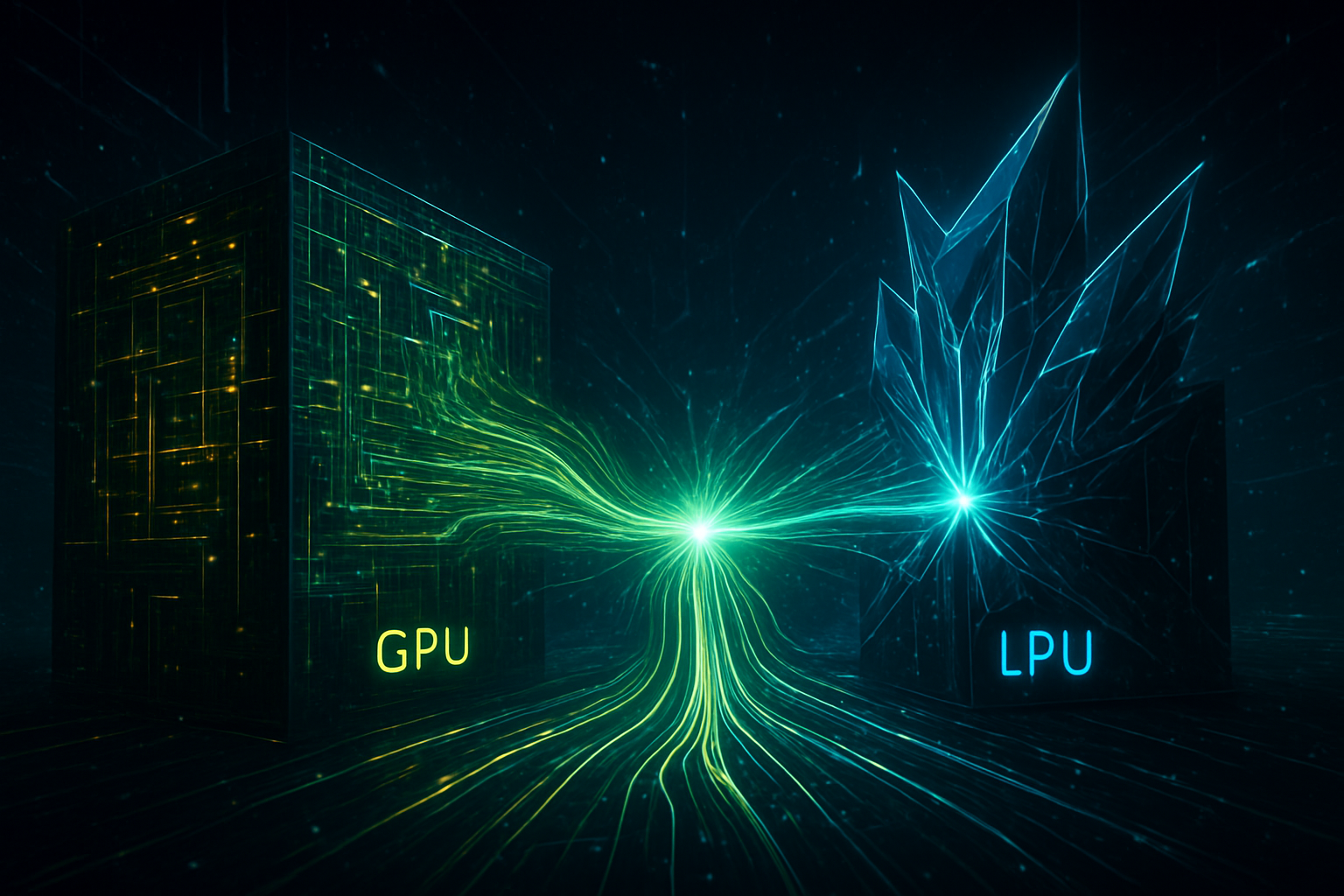
    At the heart of this $20 billion deal is Groq’s proprietary LPU technology, which represents a fundamental departure from the GPU-centric world NVIDIA helped create. Unlike traditional GPUs that rely on High Bandwidth Memory (HBM)—a component currently plagued by global supply chain shortages—Groq’s architecture utilizes on-chip SRAM (Static Random Access Memory). This "software-defined" hardware approach eliminates the "memory bottleneck" by keeping data on the chip, allowing for inference speeds up to 10 times faster than current state-of-the-art GPUs while reducing energy consumption by a factor of 20.

    The technical implications are profound. Groq’s architecture is entirely deterministic, meaning the system knows exactly where every bit of data is at any given microsecond. This eliminates the "jitter" and latency spikes common in traditional parallel processing, making it the gold standard for real-time applications like autonomous agents and high-speed LLM (Large Language Model) interactions. NVIDIA plans to integrate these LPU cores directly into its upcoming 2026 "Vera Rubin" architecture. The Vera Rubin chips, which are already expected to feature HBM4 and the new Vera CPU (NASDAQ: ARM), will now become hybrid powerhouses capable of utilizing GPUs for massive training workloads and LPU cores for lightning-fast, deterministic inference.

    Industry experts have reacted with a mix of awe and trepidation. "NVIDIA just bought the only architecture that threatened their inference moat," noted one senior researcher at OpenAI. By bringing Jonathan Ross into the fold, NVIDIA isn't just buying technology; it's acquiring the architectural philosophy that allowed Google to stay competitive with its TPUs for a decade. Ross’s move to NVIDIA marks a full-circle moment for the industry, as the man who built Google’s AI hardware foundation now takes the reins of the world’s most valuable semiconductor company.

    Neutralizing the TPU Threat and Hedging Against HBM Shortages

    This strategic move is a direct strike against Google’s (NASDAQ: GOOGL) internal hardware advantage. For years, Google’s TPUs have provided a cost and performance edge for its own AI services, such as Gemini and Search. By incorporating LPU technology, NVIDIA is effectively commoditizing the specialized advantages that TPUs once held, offering a superior, commercially available alternative to the rest of the industry. This puts immense pressure on other cloud competitors like Amazon (NASDAQ: AMZN) and Microsoft (NASDAQ: MSFT), who have been racing to develop their own in-house silicon to reduce their reliance on NVIDIA.

    Furthermore, the deal serves as a critical hedge against the fragile HBM supply chain. As manufacturers like SK Hynix and Samsung struggle to keep up with the insatiable demand for HBM3e and HBM4, NVIDIA’s move into SRAM-based LPU technology provides a "Plan B" that doesn't rely on external memory vendors. This vertical integration of inference technology ensures that NVIDIA can continue to deliver high-performance AI factories even if the global memory market remains constrained. It also creates a massive barrier to entry for competitors like AMD (NASDAQ: AMD) and Intel (NASDAQ: INTC), who are still heavily reliant on traditional GPU and HBM architectures to compete in the high-end AI space.

    Regulatory Arbitrage and the New Antitrust Landscape

    The "reverse acqui-hire" structure of the Groq deal is a direct response to the aggressive antitrust environment of 2024 and 2025. With the US Department of Justice and European regulators closely monitoring NVIDIA’s market dominance, a standard $20 billion acquisition of Groq would have likely faced years of litigation and a potential block. By licensing the IP and hiring the talent while leaving Groq as a semi-independent cloud entity, NVIDIA has followed the playbook established by Microsoft’s earlier deal with Inflection AI. This allows NVIDIA to absorb the "brains" and "blueprints" of its competitor without the legal headache of a formal merger.

    This move highlights a broader trend in the AI landscape: the consolidation of power through non-traditional means. As the barrier between software and hardware continues to blur, the most valuable assets are no longer just physical factories, but the specific architectural designs and the engineers who create them. However, this "stealth consolidation" is already drawing the attention of critics who argue that it allows tech giants to maintain monopolies while evading the spirit of antitrust laws. The Groq deal will likely become a landmark case study for regulators looking to update competition frameworks for the AI era.

    The Road to 2026: The Vera Rubin Era and Beyond

    Looking ahead, the integration of Groq’s LPU technology into the Vera Rubin platform sets the stage for a new era of "Artificial Superintelligence" (ASI) infrastructure. In the near term, we can expect NVIDIA to release specialized "Inference-Only" cards based on Groq’s designs, targeting the edge computing and enterprise sectors that prioritize latency over raw training power. Long-term, the 2026 launch of the Vera Rubin chips will likely represent the most significant architectural shift in NVIDIA’s history, moving away from a pure GPU focus toward a heterogeneous computing model that combines the best of GPUs, CPUs, and LPUs.

    The challenges remain significant. Integrating two fundamentally different architectures—the parallel-processing GPU and the deterministic LPU—into a single, cohesive software stack like CUDA will require a monumental engineering effort. Jonathan Ross will be tasked with ensuring that this transition is seamless for developers. If successful, the result will be a computing platform that is virtually untouchable in its versatility, capable of handling everything from the world’s largest training clusters to the most responsive real-time AI agents.

    A New Chapter in AI History

    NVIDIA’s Christmas Eve announcement is more than just a business deal; it is a declaration of intent. By securing the LPU technology and the leadership of Jonathan Ross, NVIDIA has addressed its two biggest vulnerabilities: the memory bottleneck and the rising threat of specialized inference chips. This $20 billion move ensures that as the AI industry matures from experimental training to mass-market deployment, NVIDIA remains the indispensable foundation upon which the future is built.

    As we look toward 2026, the significance of this moment will only grow. The "reverse acqui-hire" of Groq may well be remembered as the move that cemented NVIDIA’s dominance for the next decade, effectively ending the "inference wars" before they could truly begin. For competitors and regulators alike, the message is clear: NVIDIA is not just participating in the AI revolution; it is architecting the very ground it stands on.


    This content is intended for informational purposes only and represents analysis of current AI developments.

    TokenRing AI delivers enterprise-grade solutions for multi-agent AI workflow orchestration, AI-powered development tools, and seamless remote collaboration platforms.
    For more information, visit https://www.tokenring.ai/.
  • China Shatters the Silicon Ceiling: Shenzhen Validates First Domestic EUV Lithography Prototype

    China Shatters the Silicon Ceiling: Shenzhen Validates First Domestic EUV Lithography Prototype

    In a move that fundamentally redraws the map of the global semiconductor industry, Chinese state media and industry reports confirmed on December 17, 2025, that a high-security research facility in Shenzhen has successfully validated a functional prototype of a domestic Extreme Ultraviolet (EUV) lithography machine. This milestone, described by analysts as a "Manhattan Project" moment for Beijing, marks the first time a Chinese-made system has successfully generated a stable 13.5nm EUV beam and integrated it with an optical system capable of wafer exposure.

    The validation of this prototype represents a direct challenge to the Western-led blockade of advanced chipmaking equipment. For years, the denial of EUV tools from ASML Holding N.V. (NASDAQ: ASML) was considered a permanent "hard ceiling" that would prevent China from progressing beyond the 7nm node with commercial efficiency. By proving the viability of a domestic EUV light source and optical assembly, China has signaled that it is no longer a question of if it can produce the world’s most advanced chips, but when it will scale that production to meet the demands of its burgeoning artificial intelligence sector.

    Breaking the 13.5nm Barrier: The Physics of Independence

    The Shenzhen prototype, developed through a "whole-of-nation" effort coordinated by Huawei Technologies and Shenzhen SiCarrier Technologies, deviates significantly from the established architecture used by ASML. While ASML’s industry-standard machines utilize Laser-Produced Plasma (LPP)—where high-power CO2 lasers vaporize tin droplets—the Chinese prototype employs Laser-Induced Discharge Plasma (LDP). Technical insiders report that while LDP currently produces a lower power output, estimated between 100W and 150W compared to ASML’s 250W+ systems, it offers a more stable and cost-effective path for initial domestic integration.

    This technical divergence is a strategic necessity. By utilizing LDP and a massive, factory-floor-sized physical footprint, Chinese engineers have successfully bypassed hundreds of restricted patents and components. The system integrates a light source developed by the Harbin Institute of Technology and high-precision reflective mirrors from the Changchun Institute of Optics (CIOMP). Initial testing has confirmed that the machine can achieve the precision required for single-exposure patterning at the 5nm node, a feat that previously required prohibitively expensive and low-yield multi-patterning techniques using older Deep Ultraviolet (DUV) machines.

    The reaction from the global research community has been one of cautious astonishment. While Western experts note that the prototype is not yet ready for high-volume manufacturing, the successful validation of the "physics package"—the generation and control of the 13.5nm wavelength—proves that China has mastered the most difficult aspect of modern lithography. Industry analysts suggest that the team, which reportedly includes dozens of former ASML engineers and specialists, has effectively compressed a decade of semiconductor R&D into less than four years.

    Shifting the AI Balance: Huawei and the Ascend Roadmap

    The immediate beneficiary of this breakthrough is China’s domestic AI hardware ecosystem, led by Huawei and Semiconductor Manufacturing International Corporation (HKG: 0981), commonly known as SMIC. Prior to this validation, SMIC’s attempt to produce 5nm-class chips using DUV multi-patterning resulted in yields as low as 20%, making the production of high-end AI processors like the Huawei Ascend series economically unsustainable. With the EUV prototype now validated, SMIC is projected to recover yields toward the 60% threshold, drastically lowering the cost of domestic AI silicon.

    This development poses a significant competitive threat to NVIDIA Corporation (NASDAQ: NVDA). Huawei has already utilized the momentum of this breakthrough to announce the Ascend 950 series, scheduled for a Q1 2026 debut. Enabled by the "EUV-refined" manufacturing process, the Ascend 950 is projected to reach performance parity with Nvidia’s H100 in training tasks and offer superior efficiency in inference. By moving away from the "power-hungry" architectures necessitated by DUV constraints, Huawei can now design monolithic, high-density chips that compete directly with the best of Silicon Valley.

    Furthermore, the validation of a domestic EUV path secures the supply chain for Chinese tech giants like Baidu, Inc. (NASDAQ: BIDU) and Alibaba Group Holding Limited (NYSE: BABA), who have been aggressively developing their own large language models (LLMs). With a guaranteed domestic source of high-performance compute, these companies can continue their AI scaling laws without the looming threat of further tightened US export controls on H100 or Blackwell-class GPUs.

    Geopolitical Fallout and the End of the "Hard Ceiling"

    The broader significance of the Shenzhen validation cannot be overstated. It marks the effective end of the "hard ceiling" strategy employed by the US and its allies. For years, the assumption was that China could never replicate the complex supply chain of ASML, which relies on thousands of specialized suppliers across Europe and the US. However, by creating a "shadow supply chain" of over 100,000 domestic parts, Beijing has demonstrated a level of industrial mobilization rarely seen in the 21st century.

    This milestone also highlights a shift in the global AI landscape from "brute-force" clusters to "system-level" efficiency. Until now, China had to compensate for its lagging chip technology by building massive, inefficient clusters of lower-end chips. The move toward EUV allows for a transition to "System-on-Chip" (SoC) designs that are physically smaller and significantly more energy-efficient. This is critical for the deployment of AI at the edge—in autonomous vehicles, robotics, and consumer electronics—where power constraints are as important as raw FLOPS.

    However, the breakthrough also raises concerns about an accelerating "tech decoupling." As China achieves semiconductor independence, the global industry may split into two distinct and incompatible ecosystems. This could lead to a divergence in AI safety standards, hardware architectures, and software frameworks, potentially complicating international cooperation on AI governance and climate goals that require global compute resources.

    The Road to 2nm: What Comes Next?

    Looking ahead, the validation of this prototype is merely the first step in a long-term roadmap. The "Shenzhen Cluster" is now focused on increasing the power output of the LDP light source to 250W, which would allow for the high-speed throughput required for mass commercial production. Experts predict that the first "EUV-refined" chips will begin rolling off SMIC’s production lines in late 2026, with 3nm R&D already underway using a secondary, even more ambitious project involving Steady-State Micro-Bunching (SSMB) particle accelerators.

    The ultimate goal for China is to reach the 2nm frontier by 2028 and achieve full commercial parity with Taiwan Semiconductor Manufacturing Company (NYSE: TSM) by the end of the decade. The challenges remain immense: the reliability of domestic photoresists, the longevity of the reflective mirrors, and the integration of advanced packaging (Chiplets) must all be perfected. Yet, with the validation of the EUV prototype, the most significant theoretical and physical hurdle has been cleared.

    A New Era for Global Silicon

    In summary, the validation of China's first domestic EUV lithography prototype in Shenzhen is a watershed moment for the 2020s. It proves that the technological gap between the West and China is closing faster than many anticipated, driven by massive state investment and a focused "whole-of-nation" strategy. The immediate impact will be felt in the AI sector, where domestic chips like the Huawei Ascend 950 will soon have a viable, high-yield manufacturing path.

    As we move into 2026, the tech industry should watch for the first wafer samples from this new EUV line and the potential for a renewed "chip war" as the US considers even more drastic measures to maintain its lead. For now, the "hard ceiling" has been shattered, and the race for 2nm supremacy has officially become a two-player game.


    This content is intended for informational purposes only and represents analysis of current AI developments.

    TokenRing AI delivers enterprise-grade solutions for multi-agent AI workflow orchestration, AI-powered development tools, and seamless remote collaboration platforms.
    For more information, visit https://www.tokenring.ai/.

  • Nvidia Consolidates AI Dominance with $20 Billion Acquisition of Groq’s Assets and Talent

    Nvidia Consolidates AI Dominance with $20 Billion Acquisition of Groq’s Assets and Talent

    In a move that has fundamentally reshaped the semiconductor landscape on the eve of 2026, Nvidia (NASDAQ: NVDA) announced a landmark $20 billion deal to acquire the core intellectual property and top engineering talent of Groq, the high-performance AI inference startup. The transaction, finalized on December 24, 2025, represents Nvidia's most aggressive effort to date to secure its lead in the burgeoning "inference economy." By absorbing Groq’s revolutionary Language Processing Unit (LPU) technology, Nvidia is pivoting its focus from the massive compute clusters used to train models to the real-time, low-latency infrastructure required to run them at scale.

    The deal is structured as a strategic asset acquisition and "acqui-hire," bringing approximately 80% of Groq’s engineering workforce—including founder and former Google TPU architect Jonathan Ross—directly into Nvidia’s fold. While the Groq corporate entity will technically remain independent to operate its existing GroqCloud services, the heart of its innovation engine has been transplanted into Nvidia. This maneuver is widely seen as a preemptive strike against specialized hardware competitors that were beginning to challenge the efficiency of general-purpose GPUs in high-speed AI agent applications.

    Technical Superiority: The Shift to Deterministic Inference

    The centerpiece of this acquisition is Groq’s proprietary LPU architecture, which represents a radical departure from the traditional GPU designs that have powered the AI boom thus far. Unlike Nvidia’s current H100 and Blackwell chips, which rely on High Bandwidth Memory (HBM) and probabilistic scheduling, the LPU is a deterministic system. By using on-chip SRAM (Static Random-Access Memory), Groq’s hardware eliminates the "memory wall" that slows down data retrieval. This allows for internal bandwidth of a staggering 80 TB/s, enabling the processing of large language models (LLMs) with near-zero latency.

    In recent benchmarks, Groq’s hardware demonstrated the ability to run Meta’s Llama 3 70B model at speeds of 280 to 300 tokens per second—nearly triple the throughput of a standard Nvidia H100 deployment. More importantly, Groq’s "Time-to-First-Token" (TTFT) metrics sit at a mere 0.2 seconds, providing the "human-speed" responsiveness essential for the next generation of autonomous AI agents. The AI research community has largely hailed the move as a technical masterstroke, noting that merging Groq’s software-defined hardware with Nvidia’s mature CUDA ecosystem could create an unbeatable platform for real-time AI.

    Industry experts point out that this acquisition addresses the "Inference Flip," a market transition occurring throughout 2025 where the revenue generated from running AI models surpassed the revenue from training them. By integrating Groq’s kernel-less execution model, Nvidia can now offer a hybrid solution: GPUs for massive parallel training and LPUs for lightning-fast, energy-efficient inference. This dual-threat capability is expected to significantly reduce the "cost-per-token" for enterprise customers, making sophisticated AI more accessible and cheaper to operate.

    Reshaping the Competitive Landscape

    The $20 billion deal has sent shockwaves through the executive suites of Advanced Micro Devices (NASDAQ: AMD) and Intel (NASDAQ: INTC). AMD, which had been gaining ground with its MI300 and MI325 series accelerators, now faces a competitor that has effectively neutralized the one area where specialized startups were winning: latency. Analysts suggest that AMD may now be forced to accelerate its own specialized ASIC development or seek its own high-profile acquisition to remain competitive in the real-time inference market.

    Intel’s position is even more complex. In a surprising development late in 2025, Nvidia took a $5 billion equity stake in Intel to secure priority access to U.S.-based foundry services. While this partnership provides Intel with much-needed capital, the Groq acquisition ensures that Nvidia remains the primary architect of the AI hardware stack, potentially relegating Intel to a junior partner or contract manufacturer role. For other AI chip startups like Cerebras and Tenstorrent, the deal signals a "consolidation era" where independent hardware ventures may find it increasingly difficult to compete against Nvidia’s massive R&D budget and newly acquired IP.

    Furthermore, the acquisition has significant implications for "Sovereign AI" initiatives. Nations like Saudi Arabia and the United Arab Emirates had recently made multi-billion dollar commitments to build massive compute clusters using Groq hardware to reduce their reliance on Nvidia. With Groq’s future development now under Nvidia’s control, these nations face a recalibrated geopolitical reality where the path to AI independence once again leads through Santa Clara.

    Wider Significance and Regulatory Scrutiny

    This acquisition fits into a broader trend of "informal consolidation" within the tech industry. By structuring the deal as an asset purchase and talent transfer rather than a traditional merger, Nvidia likely hopes to avoid the regulatory hurdles that famously scuttled its attempt to buy Arm Holdings (NASDAQ: ARM) in 2022. However, the Federal Trade Commission (FTC) and the Department of Justice (DOJ) have already signaled they are closely monitoring "acqui-hires" that effectively remove competitors from the market. The $20 billion price tag—nearly three times Groq’s last private valuation—underscores the strategic necessity Nvidia felt to absorb its most credible rival.

    The deal also highlights a pivot in the AI narrative from "bigger models" to "faster agents." In 2024 and early 2025, the industry was obsessed with the sheer parameter count of models like GPT-5 or Claude 4. By late 2025, the focus shifted to how these models can interact with the world in real-time. Groq’s technology is the "engine" for that interaction. By owning this engine, Nvidia isn't just selling chips; it is controlling the speed at which AI can think and act, a milestone comparable to the introduction of the first consumer GPUs in the late 1990s.

    Potential concerns remain regarding the "Nvidia Tax" and the lack of diversity in the AI supply chain. Critics argue that by absorbing the most promising alternative architectures, Nvidia is creating a monoculture that could stifle innovation in the long run. If every major AI service is eventually running on a variation of Nvidia-owned IP, the industry’s resilience to supply chain shocks or pricing shifts could be severely compromised.

    The Horizon: From Blackwell to 'Vera Rubin'

    Looking ahead, the integration of Groq’s LPU technology is expected to be a cornerstone of Nvidia’s future "Vera Rubin" architecture, slated for release in late 2026 or early 2027. Experts predict a "chiplet" approach where a single AI server could contain both traditional GPU dies for context-heavy processing and Groq-derived LPU dies for instantaneous token generation. This hybrid design would allow for "agentic AI" that can reason deeply while communicating with users without any perceptible delay.

    In the near term, developers can expect a fusion of Groq’s software-defined scheduling with Nvidia’s CUDA. Jonathan Ross is reportedly leading a dedicated "Real-Time Inference" division within Nvidia to ensure that the transition is seamless for the millions of developers already using Groq’s API. The goal is a "write once, deploy anywhere" environment where the software automatically chooses the most efficient hardware—GPU or LPU—for the task at hand.

    The primary challenge will be the cultural and technical integration of two very different hardware philosophies. Groq’s "software-first" approach, where the compiler dictates every movement of data, is a departure from Nvidia’s more flexible but complex hardware scheduling. If Nvidia can successfully marry these two worlds, the resulting infrastructure could power everything from real-time holographic assistants to autonomous robotic fleets with unprecedented efficiency.

    A New Chapter in the AI Era

    Nvidia’s $20 billion acquisition of Groq’s assets is more than just a corporate transaction; it is a declaration of intent for the next phase of the AI revolution. By securing the fastest inference technology on the planet, Nvidia has effectively built a moat around the "real-time" future of artificial intelligence. The key takeaways are clear: the era of training-dominance is evolving into the era of inference-dominance, and Nvidia is unwilling to cede even a fraction of that territory to challengers.

    This development will likely be remembered as a pivotal moment in AI history—the point where the "intelligence" of the models became inseparable from the "speed" of the hardware. As we move into 2026, the industry will be watching closely to see how the FTC responds to this unconventional deal structure and whether competitors like AMD can mount a credible response to Nvidia's new hybrid architecture.

    For now, the message to the market is unmistakable. Nvidia is no longer just a GPU company; it is the fundamental infrastructure provider for the real-time AI world. The coming months will reveal the first fruits of this acquisition as Groq’s technology begins to permeate the Nvidia AI Enterprise stack, potentially bringing "human-speed" AI to every corner of the global economy.


    This content is intended for informational purposes only and represents analysis of current AI developments.

    TokenRing AI delivers enterprise-grade solutions for multi-agent AI workflow orchestration, AI-powered development tools, and seamless remote collaboration platforms.
    For more information, visit https://www.tokenring.ai/.

  • The Backside Revolution: How PowerVia Propels Intel into the Lead of the AI Silicon Race

    The Backside Revolution: How PowerVia Propels Intel into the Lead of the AI Silicon Race

    As the calendar turns to late 2025, the semiconductor industry is witnessing its most profound architectural shift in over a decade. The arrival of Backside Power Delivery (BSPD), spearheaded by Intel Corporation (NASDAQ: INTC) and its proprietary PowerVia technology, has fundamentally altered the physics of chip design. By physically separating power delivery from signal routing, Intel has solved a decade-long "traffic jam" on the silicon wafer, providing a critical performance boost just as the demand for generative AI reaches its zenith.

    This breakthrough is not merely an incremental improvement; it is a total reimagining of how electricity reaches the billions of transistors that power modern AI models. While traditional chips struggle with electrical interference and "voltage drop" as they shrink, PowerVia allows for more efficient power distribution, higher clock speeds, and significantly denser logic. For Intel, this represents a pivotal moment in its "five nodes in four years" strategy, potentially reclaiming the manufacturing crown from long-time rival Taiwan Semiconductor Manufacturing Company (NYSE: TSM).

    Unclogging the Silicon Arteries: The PowerVia Advantage

    For nearly fifty years, chips have been built like a layer cake, with transistors at the bottom and all the wiring—both for data signals and power—layered on top. As transistors shrank to the "Angstrom" scale, these wires became so crowded that they began to interfere with one another. Power lines, which are relatively bulky, would block the path of delicate signal wires, leading to a phenomenon known as "crosstalk" and causing significant voltage drops (IR drop) as electricity struggled to navigate the maze. Intel’s PowerVia solves this by moving the entire power delivery network to the "backside" of the silicon wafer, leaving the "front side" exclusively for data signals.

    Technically, PowerVia achieves this through the use of nano-Through Silicon Vias (nTSVs). These are microscopic vertical tunnels that pass directly through the silicon substrate to connect the backside power layers to the transistors. This approach eliminates the need for power to travel through 10 to 20 layers of metal on the front side. By shortening the path to the transistor, Intel has successfully reduced IR drop by nearly 30%, allowing transistors to switch faster and more reliably. Initial data from Intel’s 18A node, currently in high-volume manufacturing, shows frequency gains of up to 6% at the same power level compared to traditional front-side designs.

    Beyond speed, the removal of power lines from the front side has unlocked a massive amount of "real estate" for logic. Chip designers can now pack transistors much closer together, achieving density improvements of up to 30%. This is a game-changer for AI accelerators, which require massive amounts of logic and memory to process large language models. The industry response has been one of cautious optimism followed by rapid adoption, as experts recognize that BSPD is no longer a luxury, but a necessity for the next generation of high-performance computing.

    A Two-Year Head Start: Intel 18A vs. TSMC A16

    The competitive landscape of late 2025 is defined by a rare "first-mover" advantage for Intel. While Intel’s 18A node is already powering the latest "Panther Lake" consumer chips and "Clearwater Forest" server processors, TSMC is still in the preparation phase for its own BSPD implementation. TSMC has opted to skip a basic backside delivery on its 2nm node, choosing instead to debut an even more advanced version, called Super PowerRail, on its A16 (1.6nm) process. However, A16 is not expected to reach high-volume production until the second half of 2026, giving Intel a roughly 1.5 to 2-year lead in the commercial application of this technology.

    This lead has already begun to shift the strategic positioning of major AI chip designers. Companies that have traditionally relied solely on TSMC, such as NVIDIA Corporation (NASDAQ: NVDA) and Apple Inc. (NASDAQ: AAPL), are now closely monitoring Intel's foundry yields. Intel’s 18A yields are currently reported to be stabilizing between 60% and 70%, a healthy figure for a node of this complexity. The pressure is now on TSMC to prove that its Super PowerRail—which connects power directly to the transistor’s source and drain rather than using Intel's nTSV method—will offer superior efficiency that justifies the wait.

    For the market, this creates a fascinating dynamic. Intel is using its manufacturing lead to lure high-profile foundry customers who are desperate for the power efficiency gains that BSPD provides. Microsoft Corporation (NASDAQ: MSFT) and Amazon.com, Inc. (NASDAQ: AMZN) have already signed on to use Intel’s advanced nodes for their custom AI silicon, such as the Maia 2 and Trainium 2 chips. This disruption to the existing foundry hierarchy could lead to a more diversified supply chain, reducing the industry's heavy reliance on a single geographic region for the world's most advanced chips.

    Powering the AI Infrastructure: Efficiency at Scale

    The wider significance of Backside Power Delivery cannot be overstated in the context of the global AI energy crisis. As data centers consume an ever-increasing share of the world’s electricity, the 15-20% performance-per-watt improvement offered by PowerVia is a critical sustainability tool. For hyperscale cloud providers, a 20% reduction in power consumption translates to hundreds of millions of dollars saved in cooling costs and electricity bills. BSPD is effectively "free performance" that helps mitigate the thermal throttling issues that have plagued high-wattage AI chips like NVIDIA's Blackwell series.

    Furthermore, BSPD enables a new era of "computational density." By clearing the front-side metal layers, engineers can more easily integrate High Bandwidth Memory (HBM) and implement complex chiplet architectures. This allows for larger logic dies on the same interposer, as the power delivery no longer clutters the high-speed interconnects required for chip-to-chip communication. This fits into the broader trend of "system-level" scaling, where the entire package, rather than just the individual transistor, is optimized for AI workloads.

    However, the transition to BSPD is not without its concerns. The manufacturing process is significantly more complex, requiring advanced wafer bonding and thinning techniques that increase the risk of defects. There are also long-term reliability questions regarding the thermal management of the backside power layers, which are now physically closer to the silicon substrate. Despite these challenges, the consensus among AI researchers is that the benefits far outweigh the risks, marking this as a milestone comparable to the introduction of FinFET transistors in the early 2010s.

    The Road to Sub-1nm: What Lies Ahead

    Looking toward 2026 and beyond, the industry is already eyeing the next evolution of power delivery. While Intel’s PowerVia and TSMC’s Super PowerRail are the current gold standard, research is already underway for "direct-to-gate" power delivery, which could further reduce resistance. We expect to see Intel refine its 18A process into "14A" by 2027, potentially introducing even more aggressive backside routing. Meanwhile, TSMC’s A16 will likely be the foundation for the first sub-1nm chips, where BSPD will be an absolute requirement for the transistors to function at all.

    The potential applications for this technology extend beyond the data center. As AI becomes more prevalent in "edge" devices, the power savings of BSPD will enable more sophisticated on-device AI for smartphones and wearable tech without sacrificing battery life. Experts predict that by 2028, every flagship processor in the world—from laptops to autonomous vehicles—will utilize some form of backside power delivery. The challenge for the next three years will be scaling these complex manufacturing processes to meet the insatiable global demand for silicon.

    A New Era of Silicon Sovereignty

    In summary, Backside Power Delivery represents a total architectural pivot that has arrived just in time to sustain the AI revolution. Intel’s PowerVia has provided the company with a much-needed technical edge, proving that its aggressive manufacturing roadmap was more than just marketing rhetoric. By being the first to market with 18A, Intel has forced the rest of the industry to accelerate their timelines, ultimately benefiting the entire ecosystem with more efficient and powerful hardware.

    As we look ahead to the coming months, the focus will shift from technical "proofs of concept" to high-volume execution. Watch for Intel's quarterly earnings reports and foundry updates to see if they can maintain their yield targets, and keep a close eye on TSMC’s A16 risk production milestones in early 2026. This is a marathon, not a sprint, but for the first time in a decade, the lead runner has changed, and the stakes for the future of AI have never been higher.


    This content is intended for informational purposes only and represents analysis of current AI developments.

    TokenRing AI delivers enterprise-grade solutions for multi-agent AI workflow orchestration, AI-powered development tools, and seamless remote collaboration platforms.
    For more information, visit https://www.tokenring.ai/.

  • The Great Silicon Decoupling: How RISC-V Became the Geopolitical Pivot of Global Computing in 2025

    The Great Silicon Decoupling: How RISC-V Became the Geopolitical Pivot of Global Computing in 2025

    As of December 29, 2025, the global semiconductor landscape has reached a definitive turning point, marked by the meteoric rise of the open-source RISC-V architecture. Long viewed as a niche academic project or a low-power alternative for simple microcontrollers, RISC-V has officially matured into the "third pillar" of the industry, challenging the long-standing duopoly held by x86 and ARM Holdings (NASDAQ: ARM). Driven by a volatile cocktail of geopolitical trade restrictions, a global push for chip self-sufficiency, and the insatiable demand for custom AI accelerators, RISC-V now commands an unprecedented 25% of the global System-on-Chip (SoC) market.

    The significance of this shift cannot be overstated. For decades, the foundational blueprints of computing were locked behind proprietary licenses, leaving nations and corporations vulnerable to shifting trade policies and escalating royalty fees. However, in 2025, the "royalty-free" nature of RISC-V has transformed it from a technical choice into a strategic imperative. From the data centers of Silicon Valley to the state-backed foundries of Shenzhen, the architecture is being utilized to bypass traditional export controls, enabling a new era of "sovereign silicon" that is fundamentally reshaping the balance of power in the digital age.

    The Technical Ascent: From Embedded Roots to Data Center Dominance

    The technical narrative of 2025 is dominated by the arrival of high-performance RISC-V cores that rival the best of proprietary designs. A major milestone was reached this month with the full-scale deployment of the third-generation XiangShan CPU, developed by the Chinese Academy of Sciences. Utilizing the "Kunminghu" architecture, benchmarks released in late 2025 indicate that this open-source processor has achieved performance parity with the ARM Neoverse N2, proving that the collaborative, open-source model can produce world-class server-grade silicon. This breakthrough has silenced critics who once argued that RISC-V could never compete in high-performance computing (HPC) environments.

    Further accelerating this trend is the maturation of the RISC-V Vector (RVV) 1.0 extensions, which have become the gold standard for specialized AI workloads. Unlike the rigid instruction sets of Intel (NASDAQ: INTC) or ARM, RISC-V allows engineers to add custom "secret sauce" instructions to their chips without breaking compatibility with the broader software ecosystem. This extensibility was a key factor in NVIDIA (NASDAQ: NVDA) announcing its historic decision in July 2025 to port its proprietary CUDA platform to RISC-V. By allowing its industry-leading AI software stack to run on RISC-V host processors, NVIDIA has effectively decoupled its future from the x86 and ARM architectures that have dominated the data center for 40 years.

    The reaction from the AI research community has been overwhelmingly positive, as the open nature of the ISA allows for unprecedented transparency in hardware-software co-design. Experts at the recent RISC-V Industry Development Conference noted that the ability to "peek under the hood" of the processor architecture is leading to more efficient AI inference models. By tailoring the hardware directly to the mathematical requirements of Large Language Models (LLMs), companies are reporting up to a 40% improvement in energy efficiency compared to general-purpose legacy architectures.

    The Corporate Land Grab: Consolidation and Competition

    The corporate world has responded to the RISC-V surge with a wave of massive investments and strategic acquisitions. On December 10, 2025, Qualcomm (NASDAQ: QCOM) sent shockwaves through the industry with its $2.4 billion acquisition of Ventana Micro Systems. This move is widely seen as Qualcomm’s "declaration of independence" from ARM. By integrating Ventana’s high-performance RISC-V cores into its custom Oryon CPU roadmap, Qualcomm can now develop "ARM-free" chipsets for its Snapdragon platforms, avoiding the escalating licensing disputes and royalty costs that have plagued its relationship with ARM in recent years.

    Tech giants are also moving to secure their own "sovereign silicon" pipelines. Meta Platforms (NASDAQ: META) disclosed this month that its next-generation Meta Training and Inference Accelerator (MTIA) chips are being re-architected around RISC-V to optimize AI inference for its Llama-4 models. Similarly, Alphabet (NASDAQ: GOOGL) has expanded its use of RISC-V in its Tensor Processing Units (TPUs), citing the need for a more flexible architecture that can keep pace with the rapid evolution of generative AI. These moves suggest that the era of buying "off-the-shelf" processors is coming to an end for the world’s largest hyperscalers, replaced by a trend toward bespoke, in-house designs.

    The competitive implications for incumbents are stark. While ARM remains a dominant force in mobile, its market share in the data center and IoT sectors is under siege. The "royalty-free" model of RISC-V has created a price-to-performance ratio that is increasingly difficult for proprietary vendors to match. Startups like Tenstorrent, led by industry legend Jim Keller, have capitalized on this by launching the Ascalon core in late 2025, specifically targeting the high-end AI accelerator market. This has forced legacy players to rethink their business models, with some analysts predicting that even Intel may eventually be forced to offer RISC-V foundry services to remain relevant in a post-x86 world.

    Geopolitics and the Push for Chip Self-Sufficiency

    Nowhere is the impact of RISC-V more visible than in the escalating technological rivalry between the United States and China. In 2025, RISC-V became the cornerstone of China’s national strategy to achieve semiconductor self-sufficiency. Just today, on December 29, 2025, reports surfaced of a new policy framework finalized by eight Chinese government agencies, including the Ministry of Industry and Information Technology (MIIT). This policy effectively mandates the adoption of RISC-V for government procurement and critical infrastructure, positioning the architecture as the national standard for "sovereign silicon."

    This move is a direct response to the U.S. "AI Diffusion Rule" finalized in January 2025, which tightened export controls on advanced AI hardware and software. Because the RISC-V International organization is headquartered in neutral Switzerland, it has remained largely immune to direct U.S. export bans, providing Chinese firms like Alibaba Group (NYSE: BABA) a legal pathway to develop world-class chips. Alibaba’s T-Head division has already capitalized on this, launching the XuanTie C930 server-grade CPU and securing a $390 million contract to power China Unicom’s latest AI data centers.

    The result is what analysts are calling "The Great Silicon Decoupling." China now accounts for nearly 50% of global RISC-V shipments, creating a bifurcated supply chain where the East relies on open-source standards while the West balances between legacy proprietary systems and a cautious embrace of RISC-V. This shift has also spurred Europe to action; the DARE (Digital Autonomy with RISC-V in Europe) project achieved a major milestone in October 2025 with the production of the "Titania" AI Processing Unit, designed to ensure that the EU is not left behind in the race for hardware sovereignty.

    The Horizon: Automotive and the Future of Software-Defined Vehicles

    Looking ahead, the next major frontier for RISC-V is the automotive industry. The shift toward Software-Defined Vehicles (SDVs) has created a demand for standardized, high-performance computing platforms that can handle everything from infotainment to autonomous driving. In mid-2025, the Quintauris joint venture—comprising industry heavyweights Bosch, Infineon (OTC: IFNNY), and NXP Semiconductors (NASDAQ: NXPI)—launched the first standardized RISC-V profiles for real-time automotive safety. This standardization is expected to drastically reduce development costs and accelerate the deployment of Level 4 autonomous features by 2027.

    Beyond automotive, the future of RISC-V lies in the "Linux moment" for hardware. Just as Linux became the foundational layer for global software, RISC-V is poised to become the foundational layer for all future silicon. We are already seeing the first signs of this with the release of the RuyiBOOK in late 2025, the first high-end consumer laptop powered entirely by a RISC-V processor. While software compatibility remains a challenge, the rapid adaptation of major operating systems like Android and various Linux distributions suggests that a fully functional RISC-V consumer ecosystem is only a few years away.

    However, challenges remain. The U.S. Trade Representative (USTR) recently concluded a Section 301 investigation into China’s non-market policies regarding RISC-V, suggesting that the architecture may yet become a target for future trade actions. Furthermore, while the hardware is maturing, the software ecosystem—particularly for high-end gaming and professional creative suites—still lags behind x86. Addressing these "last mile" software hurdles will be the primary focus for the RISC-V community as we head into 2026.

    A New Era for the Semiconductor Industry

    The events of 2025 have proven that RISC-V is no longer just an alternative; it is an inevitability. The combination of technical parity, corporate backing from the likes of NVIDIA and Qualcomm, and its role as a geopolitical "safe haven" has propelled the architecture to heights few thought possible a decade ago. It has become the primary vehicle through which nations are asserting their digital sovereignty and companies are escaping the "tax" of proprietary licensing.

    As we look toward 2026, the industry should watch for the first wave of RISC-V powered smartphones and the continued expansion of the architecture into the most advanced 2nm and 1.8nm manufacturing nodes. The "Great Silicon Decoupling" is well underway, and the open-source movement has finally claimed its place at the heart of the global hardware stack. In the long view of AI history, the rise of RISC-V may be remembered as the moment when the "black box" of the CPU was finally opened, democratizing the power to innovate at the level of the transistor.


    This content is intended for informational purposes only and represents analysis of current AI developments.

    TokenRing AI delivers enterprise-grade solutions for multi-agent AI workflow orchestration, AI-powered development tools, and seamless remote collaboration platforms.
    For more information, visit https://www.tokenring.ai/.

  • The High-Voltage Revolution: How ON Semiconductor’s SiC Dominance is Powering the 2026 EV Surge

    The High-Voltage Revolution: How ON Semiconductor’s SiC Dominance is Powering the 2026 EV Surge

    As 2025 draws to a close, the global automotive industry is undergoing a foundational shift in its power architecture, moving away from traditional silicon toward wide-bandgap (WBG) materials like Silicon Carbide (SiC) and Gallium Nitride (GaN). At the heart of this transition is ON Semiconductor (Nasdaq: ON), which has spent the final quarter of 2025 cementing its status as the linchpin of the electric vehicle (EV) supply chain. With the recent announcement of a massive $6 billion share buyback program and the finalization of a $2 billion expansion in the Czech Republic, onsemi is signaling that the era of "range anxiety" is being replaced by an era of high-efficiency, AI-optimized power delivery.

    The significance of this moment cannot be overstated. As of December 29, 2025, the industry has reached a tipping point where 800-volt EV architectures—which allow for ultra-fast charging and significantly lighter wiring—have moved from niche luxury features to the standard for mid-market vehicles. This shift is driven almost entirely by the superior thermal and electrical properties of SiC and GaN. By enabling power inverters to operate at higher temperatures and frequencies with minimal energy loss, these materials are effectively adding up to 7% more range to EVs without increasing battery size, a breakthrough that is reshaping the economics of sustainable transport.

    Technical Breakthroughs: EliteSiC M3e and the Rise of Vertical GaN

    The technical narrative of 2025 has been dominated by onsemi’s mass production of its EliteSiC M3e MOSFET technology. Unlike previous generations of planar SiC devices, the M3e architecture has successfully reduced conduction losses by a staggering 30%, a feat that was previously thought to require a more complex transition to trench-based designs. This efficiency gain is critical for the latest generation of traction inverters, which convert DC battery power into the AC power that drives the vehicle’s motors. Industry experts have noted that the M3e’s ability to handle higher power densities has allowed OEMs to shrink the footprint of the power electronics bay by nearly 20%, providing more cabin space and improving vehicle aerodynamics.

    Parallel to the SiC advancement is the emergence of Vertical GaN technology, which onsemi unveiled in late 2025. While traditional GaN has been limited to lower-power applications like on-board chargers and DC-DC converters, Vertical GaN aims to bring GaN’s extreme switching speeds to the high-power traction inverter. This development is particularly relevant for the AI-driven mobility sector; as EVs become increasingly autonomous, the demand for high-speed data processing and real-time power modulation grows. Vertical GaN allows for the kind of rapid-response power switching required by AI-managed drivetrains, which can adjust torque and energy consumption in millisecond intervals based on road conditions and sensor data.

    The transition from 6-inch to 8-inch (200mm) SiC wafers has also reached a critical milestone this month. By moving to larger wafers, onsemi and its peers are achieving significant economies of scale, effectively lowering the cost-per-die. This manufacturing evolution is what has finally allowed SiC to compete on a cost-basis with traditional silicon in the $35,000 to $45,000 EV price bracket. Initial reactions from the research community suggest that the 8-inch transition is the "Moore’s Law moment" for power electronics, paving the way for a 2026 where high-efficiency semiconductors are no longer a premium bottleneck but a commodity staple.

    Market Dominance and Strategic Financial Maneuvers

    Financially, onsemi is ending 2025 in a position of unprecedented strength. The company’s board recently authorized a new $6 billion share repurchase program set to begin on January 1, 2026. This follows a year in which onsemi returned nearly 100% of its free cash flow to shareholders, a move that has bolstered investor confidence despite the capital-intensive nature of semiconductor fabrication. By committing to return roughly one-third of its market capitalization over the next three years, onsemi is positioning itself as the "value play" in a high-growth sector, distinguishing itself from more volatile competitors like Wolfspeed (NYSE: WOLF).

    The competitive landscape has also been reshaped by onsemi’s $2 billion investment in Rožnov, Czech Republic. With the European Commission recently approving €450 million in state aid under the European Chips Act, this facility is set to become Europe’s first vertically integrated SiC manufacturing hub. This move provides a strategic advantage over STMicroelectronics (NYSE: STM) and Infineon Technologies (OTC: IFNNY), as it secures a localized, resilient supply chain for European giants like Volkswagen and BMW. Furthermore, onsemi’s late-2025 partnership with GlobalFoundries (Nasdaq: GFS) to co-develop 650V GaN products indicates a multi-pronged approach to dominating both the high-power and mid-power segments of the market.

    Market analysts point out that onsemi’s aggressive expansion in China has also paid dividends. In 2025, the company’s SiC revenue in the Chinese market doubled, driven by deep integration with domestic OEMs like Geely. While other Western tech firms have struggled with geopolitical headwinds, onsemi’s "brownfield" strategy—upgrading existing facilities rather than building entirely new ones—has allowed it to scale faster and more efficiently than its rivals. This strategic positioning has made onsemi the primary beneficiary of the global shift toward 800V platforms, leaving competitors scrambling to catch up with its production yields.

    The Wider Significance: AI, Decarbonization, and the New Infrastructure

    The growth of SiC and GaN is more than just an automotive story; it is a fundamental component of the broader AI and green energy landscape. In late 2025, we are seeing a convergence between EV power electronics and AI data center infrastructure. The same Vertical GaN technology that enables faster EV charging is now being deployed in the power supply units (PSUs) of AI server racks. As AI models grow in complexity, the energy required to train them has skyrocketed, making power efficiency a top-tier operational priority. Wide-bandgap semiconductors are the only viable solution for reducing the massive heat signatures and energy waste associated with the next generation of AI chips.

    This development fits into a broader trend of "Electrification 2.0," where the focus has shifted from merely building batteries to optimizing how every milliwatt of power is used. The integration of AI-optimized power management systems—software that uses machine learning to predict power demand and adjust semiconductor switching in real-time—is becoming a standard feature in both EVs and smart grids. By reducing energy loss during power conversion, onsemi’s hardware is effectively acting as a catalyst for global decarbonization efforts, making the transition to renewable energy more economically viable.

    However, the rapid adoption of these materials is not without concerns. The industry remains heavily reliant on a few key geographic regions for raw materials, and the environmental impact of SiC crystal growth—a high-heat, energy-intensive process—is under increasing scrutiny. Comparisons are being drawn to the early days of the microprocessor boom; while the benefits are immense, the sustainability of the supply chain will be the defining challenge of the late 2020s. Experts warn that without continued innovation in recycling and circular manufacturing, the "green" revolution could face its own resource constraints.

    Looking Ahead: The 2026 Outlook and Beyond

    As we look toward 2026, the industry is bracing for the full-scale implementation of the 8-inch wafer transition. This move is expected to further depress prices, potentially leading to a "price war" in the SiC space that could force consolidation among smaller players. We also expect to see the first commercial vehicles featuring GaN in the main traction inverter by late 2026, a milestone that would represent the final frontier for Gallium Nitride in the automotive sector.

    Near-term developments will likely focus on "integrated power modules," where SiC MOSFETs are packaged directly with AI-driven controllers. This "smart power" approach will allow for even greater levels of efficiency and predictive maintenance, where a vehicle can diagnose a potential inverter failure before it occurs. Predictably, the next big challenge will be the integration of these semiconductors into the burgeoning "Vehicle-to-Grid" (V2G) infrastructure, where EVs act as mobile batteries to stabilize the power grid during peak demand.

    Summary of the High-Voltage Shift

    The events of late 2025 have solidified Silicon Carbide and Gallium Nitride as the "new oil" of the automotive and AI industries. ON Semiconductor’s strategic pivot toward vertical integration and aggressive capital returns has positioned it as the dominant leader in this space. By successfully scaling the EliteSiC M3e platform and securing a foothold in the European and Chinese markets, onsemi has turned the technical advantages of wide-bandgap materials into a formidable economic moat.

    As we move into 2026, the focus will shift from proving the technology to perfecting the scale. The transition to 8-inch wafers and the rise of Vertical GaN represent the next chapter in a story that is as much about energy efficiency as it is about transportation. For investors and industry watchers alike, the coming months will be defined by how well these companies can manage their massive capacity expansions while navigating a complex geopolitical and environmental landscape. One thing is certain: the high-voltage revolution is no longer a future prospect—it is the present reality.


    This content is intended for informational purposes only and represents analysis of current AI developments.

    TokenRing AI delivers enterprise-grade solutions for multi-agent AI workflow orchestration, AI-powered development tools, and seamless remote collaboration platforms.
    For more information, visit https://www.tokenring.ai/.
  • Sustainability in the Fab: The Race for Net-Zero Water and Energy

    Sustainability in the Fab: The Race for Net-Zero Water and Energy

    As the artificial intelligence "supercycle" continues to accelerate, driving global chip sales to a record $72.7 billion in October 2025, the semiconductor industry is facing an unprecedented resource crisis. The transition to 2nm and 1.4nm manufacturing nodes has proven to be a double-edged sword: while these chips power the next generation of generative AI, their production requires up to 2.3 times more water and 3.5 times more electricity than previous generations. In response, the world’s leading foundries have transformed their operations, turning the "mega-fab" into a laboratory for radical sustainability and "Net-Zero" resource management.

    This shift has moved beyond corporate social responsibility into the realm of operational necessity. In late 2025, water scarcity in hubs like Arizona and Taiwan has made "Net-Positive" water status—where a company returns more water to the ecosystem than it withdraws—the new gold standard for the industry. From Micron’s billion-dollar conservation funds to TSMC’s pioneering reclaimed water plants, the race to build the first truly circular semiconductor ecosystem is officially on, powered by the very AI these facilities were built to produce.

    The Technical Frontiers of Ultrapure Water and Zero Liquid Discharge

    At the heart of the sustainability push is the management of Ultrapure Water (UPW), a substance thousands of times cleaner than pharmaceutical-grade water. In the 2nm era, even a "killer particle" as small as 10nm can ruin a wafer, making the purification process more intensive than ever. To combat the waste associated with this purity, companies like Micron Technology (NASDAQ: MU) have committed to a $1 billion sustainability initiative. As of late 2025, Micron has already deployed over $406 million of this fund, achieving a 66% global water conservation rate. Their planned $100 billion mega-fab in Clay, New York, is currently implementing a "Green CHIPS" framework designed to achieve near-100% water conservation through massive internal recycling loops.

    Taiwan Semiconductor Manufacturing Company (NYSE: TSM), or TSMC, has taken a different but equally ambitious path with its industrial-scale reclaimed water plants. In Taiwan’s Southern Taiwan Science Park, TSMC’s facilities reached a milestone in 2025, supplying nearly 67,000 metric tons of recycled water daily. Meanwhile, at its Phoenix, Arizona campus, TSMC broke ground in August 2025 on a new 15-acre Industrial Reclamation Water Plant (IRWP). Once fully operational, this facility is designed to recycle 90% of the fab's industrial wastewater, reducing the daily demand of a single fab from 4.75 million gallons to under 1.2 million gallons—a critical achievement in the water-stressed American Southwest.

    Technologically, these "Net-Zero" systems rely on a complex hierarchy of purification. Modern fabs in 2025 utilize segmented waste streams, separating chemical rinses from hydrofluoric acid waste to treat them individually. Advanced techniques such as Pulse-Flow Reverse Osmosis (PFRO) and Electrodeionization (EDI) are now standard, allowing for 98% water recovery. Furthermore, the introduction of 3D-printed spacers in membrane filtration—a technology backed by Micron—has significantly reduced the energy required to push water through these microscopic filters, addressing the energy-water nexus head-on.

    Competitive Advantages and the Rise of 'Green' Silicon

    The push for sustainability is reshaping the competitive landscape for chipmakers like Intel (NASDAQ: INTC) and Samsung Electronics (KRX: 005930). Intel’s Q4 2025 update confirmed that its 18A (1.8nm) process node is not just a performance leader but a sustainability one, delivering a 40% reduction in power consumption compared to older nodes. By simplifying the processing flow by 44% through advanced EUV lithography, Intel has reduced the total material intensity of its most advanced chips. This "green silicon" approach provides a strategic advantage as major customers like Microsoft (NASDAQ: MSFT) and NVIDIA (NASDAQ: NVDA) now demand verified "carbon and water receipts" for every wafer to meet their own 2030 net-zero goals.

    Samsung has countered with its own massive milestones, announcing in October 2025 that it achieved the UL Solutions "Zero Waste to Landfill" Platinum designation across all its global manufacturing sites. In South Korea, Samsung’s collaboration with the Ministry of Environment now supplies 120,000 tonnes of reclaimed water per day to its Giheung and Hwaseong fabs. For these giants, sustainability is no longer just about compliance; it is a market positioning tool. Foundries that can guarantee production continuity in water-stressed regions while lowering the carbon footprint of the end product are winning the lion's share of long-term supply contracts from sustainability-conscious tech titans.

    AI as the Architect of the Sustainable Fab

    Perhaps the most poetic development of 2025 is the use of AI to optimize the very factories that create it. "Agentic AI" ecosystems, such as those launched by Schneider Electric (EPA: SU) in mid-2025, now act as autonomous stewards of fab resources. these AI agents monitor thousands of sensors in real-time, making independent adjustments to chiller settings, HVAC airflow, and ultrapure water flow rates. This has led to an average 20% improvement in operational energy efficiency across modern mega-fabs.

    Digital Twin technology has also become a standard requirement for new construction. Companies like Applied Materials (NASDAQ: AMAT) are utilizing their EPIC platform to create high-fidelity virtual replicas of the manufacturing process. By simulating gas usage and chemical reactions before a single wafer is processed, these AI-driven systems have achieved a 50% reduction in gas usage and significantly reduced wafer scrap. This "yield-as-sustainability" metric is crucial; by reducing the number of defective chips, fabs indirectly save millions of gallons of water and megawatts of power that would have been "wasted" on failed silicon.

    The Road to 2030: Challenges and Next Steps

    Looking ahead, the industry faces the daunting task of scaling these "Net-Zero" successes as they move toward 1.4nm and 1nm nodes. While 90% water recycling is achievable today, the final 10%—often referred to as the "brine challenge"—remains difficult and energy-intensive to treat. Experts predict that the next three years will see a surge in investment toward Zero Liquid Discharge (ZLD) technologies that can evaporate and crystallize the final waste streams into solid minerals, leaving no liquid waste behind.

    Furthermore, the integration of AI into the power grid itself is a major focus for 2026. The U.S. Department of Energy’s "Genesis Mission," launched in December 2025, aims to use AI to coordinate the massive energy demands of semiconductor clusters with renewable energy availability. As fabs become larger and more complex, the ability to "load-balance" a mega-fab against a city’s power grid will be the next great frontier in industrial AI applications.

    A New Era for Semiconductor Manufacturing

    The semiconductor industry's evolution in 2025 marks a definitive end to the era of "growth at any cost." The race for Net-Zero water and energy has proven that high-performance computing and environmental stewardship are not mutually exclusive. Through a combination of radical transparency, multi-billion dollar infrastructure investments, and the deployment of agentic AI, the industry is setting a blueprint for how heavy industry can adapt to a resource-constrained world.

    As we move into 2026, the focus will shift from building these sustainable systems to proving their long-term resilience. The success of TSMC’s Arizona plant and Micron’s New York mega-fab will be the ultimate litmus test for the industry's green ambitions. For now, the "Sustainability in the Fab" movement has demonstrated that the most important breakthrough in the AI era might not be the chips themselves, but the sustainable way in which we make them.


    This content is intended for informational purposes only and represents analysis of current AI developments.

    TokenRing AI delivers enterprise-grade solutions for multi-agent AI workflow orchestration, AI-powered development tools, and seamless remote collaboration platforms.
    For more information, visit https://www.tokenring.ai/.