
Tag: Semiconductors

  • AI’s Insatiable Appetite Propels Semiconductor Sales to Record Heights, Unveiling Supply Chain Vulnerabilities

    AI’s Insatiable Appetite Propels Semiconductor Sales to Record Heights, Unveiling Supply Chain Vulnerabilities

    The relentless and accelerating demand for Artificial Intelligence (AI) is catapulting the global semiconductor industry into an unprecedented era of prosperity, with sales shattering previous records and setting the stage for a trillion-dollar market by 2030. As of December 2025, this AI-driven surge is not merely boosting revenue; it is fundamentally reshaping chip design, manufacturing, and the entire technological landscape. However, this boom also casts a long shadow, exposing critical vulnerabilities in the supply chain, particularly a looming shortage of high-bandwidth memory (HBM) and escalating geopolitical pressures that threaten to constrain future innovation and accessibility.

    This transformative period is characterized by explosive growth in specialized AI chips, massive investments in AI infrastructure, and a rapid evolution towards more sophisticated AI applications. While companies at the forefront of AI hardware stand to reap immense benefits, the industry grapples with the intricate challenges of scaling production, securing raw materials, and navigating a complex global political environment, all while striving to meet the insatiable appetite of AI for processing power and memory.

    The Silicon Gold Rush: Unpacking the Technical Drivers and Challenges

    The current semiconductor boom is intrinsically linked to the escalating computational requirements of advanced AI, particularly generative AI models. These models demand colossal amounts of processing power and, crucially, high-speed memory to handle vast datasets and complex algorithms. The global semiconductor market is on track to reach between $697 billion and $800 billion in 2025, a new record, with the AI chip market alone projected to exceed $150 billion. This staggering growth is underpinned by several key technical factors and advancements.

    At the heart of this surge are specialized AI accelerators, predominantly Graphics Processing Units (GPUs) from industry leaders like NVIDIA (NASDAQ: NVDA) and Advanced Micro Devices (NASDAQ: AMD), alongside custom Application-Specific Integrated Circuits (ASICs) developed by hyperscale tech giants such as Amazon (NASDAQ: AMZN), Microsoft (NASDAQ: MSFT), Google (NASDAQ: GOOGL), and Meta (NASDAQ: META). These chips are designed for parallel processing, making them exceptionally efficient for the matrix multiplications and tensor operations central to neural networks. This approach differs significantly from traditional CPU-centric computing, which, while versatile, lacks the parallel processing capabilities required for large-scale AI training and inference. The shift has driven NVIDIA's data center GPU sales up by a staggering 200% year-over-year in fiscal 2025, contributing to its overall fiscal 2025 revenue of $130.5 billion.

    A critical bottleneck and a significant technical challenge emerging from this demand is the unprecedented scarcity of High-Bandwidth Memory (HBM). HBM, a type of stacked synchronous dynamic random-access memory (SDRAM), offers significantly higher bandwidth compared to traditional DRAM, making it indispensable for AI accelerators. HBM revenue is projected to surge by up to 70% in 2025, reaching an impressive $21 billion. This intense demand has triggered a "supercycle" in DRAM, with reports of prices tripling year-over-year by late 2025 and inventories shrinking dramatically. The technical complexity of HBM manufacturing, involving advanced packaging techniques like 3D stacking, limits its production capacity and makes it difficult to quickly ramp up supply, exacerbating the shortage. This contrasts sharply with previous memory cycles driven by PC or mobile demand, where conventional DRAM could be scaled more readily.

    Initial reactions from the AI research community and industry experts highlight both excitement and apprehension. While the availability of more powerful hardware fuels rapid advancements in AI capabilities, concerns are mounting over the escalating costs and potential for an "AI divide," where only well-funded entities can afford the necessary infrastructure. Furthermore, the reliance on a few key manufacturers for advanced chips and HBM creates significant supply chain vulnerabilities, raising questions about future innovation stability and accessibility for smaller players.

    Corporate Fortunes and Competitive Realignment in the AI Era

    The AI-driven semiconductor boom is profoundly reshaping corporate fortunes, creating clear beneficiaries while simultaneously intensifying competitive pressures and strategic realignments across the tech industry. Companies positioned at the nexus of AI hardware and infrastructure are experiencing unprecedented growth and market dominance.

    NVIDIA (NASDAQ: NVDA) unequivocally stands as the primary beneficiary, having established an early and commanding lead in the AI GPU market. Its CUDA platform and ecosystem have become the de facto standard for AI development, granting it a significant competitive moat. The company's exceptional revenue growth, particularly from its data center division, underscores its pivotal role in powering the global AI infrastructure build-out. Close behind, Advanced Micro Devices (NASDAQ: AMD) is rapidly gaining traction with its MI series of AI accelerators, presenting a formidable challenge to NVIDIA's dominance and offering an alternative for hyperscalers and enterprises seeking diversified supply. Intel (NASDAQ: INTC), while facing a steeper climb, is also aggressively investing in its Gaudi accelerators and foundry services, aiming to reclaim a significant share of the AI chip market.

    Beyond the chip designers, semiconductor foundries like Taiwan Semiconductor Manufacturing Company (TSMC) (NYSE: TSM) are critical beneficiaries. As the world's largest contract chip manufacturer, TSMC's advanced process nodes (5nm, 3nm, 2nm) are essential for producing the cutting-edge AI chips from NVIDIA, AMD, and custom ASIC developers. The demand for these advanced nodes ensures TSMC's order books remain full, driving significant capital expenditures and technological leadership. Similarly, memory manufacturers like Samsung Electronics (KRX: 005930), SK Hynix (KRX: 000660), and Micron Technology (NASDAQ: MU) are seeing a massive surge in demand and pricing power for their HBM products, which are crucial components for AI accelerators.

    The competitive implications for major AI labs and tech companies are substantial. Hyperscale cloud providers like Amazon Web Services, Microsoft Azure, and Google Cloud are engaged in a fierce "AI infrastructure race," heavily investing in AI chips and data centers. Their strategic move towards developing custom AI ASICs, often in collaboration with companies like Broadcom (NASDAQ: AVGO), aims to optimize performance, reduce costs, and lessen reliance on a single vendor. This trend could disrupt the traditional chip vendor-customer relationship, giving tech giants more control over their AI hardware destiny. For startups and smaller AI labs, the soaring costs of AI hardware and HBM could become a significant barrier to entry, potentially consolidating AI development power among the few with deep pockets. The market positioning of companies like Synopsys (NASDAQ: SNPS) and Cadence Design Systems (NASDAQ: CDNS), which provide AI-driven Electronic Design Automation (EDA) tools, also benefits as chip designers leverage AI to accelerate complex chip development cycles.

    Broader Implications: Reshaping the Global Tech Landscape

    The AI-driven semiconductor boom extends its influence far beyond corporate balance sheets, casting a wide net across the broader AI landscape and global technological trends. This phenomenon is not merely an economic uptick; it represents a fundamental re-prioritization of resources and strategic thinking within the tech industry and national governments alike.

    This current surge fits perfectly into the broader trend of AI becoming the central nervous system of modern technology. From cloud computing to edge devices, AI integration is driving the need for specialized, powerful, and energy-efficient silicon. The "race to build comprehensive large-scale models" is the immediate catalyst, but the long-term vision includes the proliferation of "Agentic AI" across enterprise and consumer applications and "Physical AI" for autonomous robots and vehicles, all of which will further intensify semiconductor demand. This contrasts with previous tech milestones, such as the PC boom or the internet era, where hardware demand was more distributed across various components. Today, the singular focus on high-performance AI chips and HBM creates a more concentrated and intense demand profile.

    The impacts are multi-faceted. On one hand, the advancements in AI hardware are accelerating the development of increasingly sophisticated AI models, leading to breakthroughs in areas like drug discovery, material science, and personalized medicine. On the other hand, significant concerns are emerging. The most pressing is the exacerbation of supply chain constraints, particularly for HBM and advanced packaging. This scarcity is not just a commercial inconvenience; it's a strategic vulnerability. Geopolitical tensions, tariffs, and trade policies have, for the first time, become the top concern for semiconductor leaders, surpassing economic downturns. Nations worldwide, spurred by initiatives like the US CHIPS and Science Act and China's "Made in China 2025," are now engaged in a fierce competition to onshore semiconductor manufacturing, driven by a strategic imperative for self-sufficiency and supply chain resilience.

    Another significant concern is the environmental footprint of this growth. The energy demands of manufacturing advanced chips and powering vast AI data centers are substantial, raising questions about sustainability and the industry's carbon emissions. Furthermore, the reallocation of wafer capacity from commodity DRAM to HBM is leading to a shortage of conventional DRAM, impacting consumer markets with reports of DRAM prices tripling, stock rationing, and projected price hikes of 15-20% for PCs in early 2026. This creates a ripple effect, where the AI boom inadvertently makes everyday electronics more expensive and less accessible.

    The Horizon: Anticipating Future Developments and Challenges

    Looking ahead, the AI-driven semiconductor landscape is poised for continuous, rapid evolution, marked by both innovative solutions and persistent challenges. Experts predict a future where the current bottlenecks will drive significant investment into new technologies and manufacturing paradigms.

    In the near term, we can expect continued aggressive investment in High-Bandwidth Memory (HBM) production capacity by major memory manufacturers. This will include expanding existing fabs and potentially developing new manufacturing techniques to alleviate the current shortages. There will also be a strong push towards more efficient chip architectures, including further specialization of AI ASICs and the integration of Neuromorphic Processing Units (NPUs) into a wider range of devices, from edge servers to AI-enabled PCs and mobile devices. These NPUs are designed to mimic the human brain's neural structure, offering superior energy efficiency for inference tasks. Advanced packaging technologies, such as chiplets and 3D stacking beyond HBM, will become even more critical for integrating diverse functionalities and overcoming the physical limits of Moore's Law.

    Longer term, the industry is expected to double down on materials science research to find alternatives to current silicon-based semiconductors, potentially exploring optical computing or quantum computing for specific AI workloads. The development of "Agentic AI" and "Physical AI" (for autonomous robots and vehicles) will drive demand for even more sophisticated and robust edge AI processing capabilities, necessitating highly integrated and power-efficient System-on-Chips (SoCs). Challenges that need to be addressed include the ever-increasing power consumption of AI models, the need for more sustainable manufacturing practices, and the development of a global talent pool capable of innovating at this accelerated pace.

    Experts predict that the drive for domestic semiconductor manufacturing will intensify, leading to a more geographically diversified, albeit potentially more expensive, supply chain. We can also expect a greater emphasis on open-source hardware and software initiatives to democratize access to AI infrastructure and foster broader innovation, mitigating the risk of an "AI oligarchy." The interplay between AI and cybersecurity will also become crucial, as the increasing complexity of AI systems presents new attack vectors that require advanced hardware-level security features.

    A New Era of Silicon: Charting AI's Enduring Impact

    The current AI-driven semiconductor boom represents a pivotal moment in technological history, akin to the dawn of the internet or the mobile revolution. The key takeaway is clear: AI's insatiable demand for processing power and high-speed memory is not a fleeting trend but a fundamental force reshaping the global tech industry. Semiconductor sales are not just reaching record highs; they are indicative of a profound, structural shift in how technology is designed, manufactured, and deployed.

    This development's significance in AI history cannot be overstated. It underscores that hardware innovation remains as critical as algorithmic breakthroughs for advancing AI capabilities. The ability to build and scale powerful AI models is directly tied to the availability of cutting-edge silicon, particularly specialized accelerators and high-bandwidth memory. The current memory shortages and supply chain constraints highlight the inherent fragility of a highly concentrated and globally interdependent industry, forcing a re-evaluation of national and corporate strategies.

    The long-term impact will likely include a more decentralized and resilient semiconductor manufacturing ecosystem, albeit potentially at a higher cost. We will also see continued innovation in chip architecture, materials, and packaging, pushing the boundaries of what AI can achieve. The implications for society are vast, from accelerating scientific discovery to raising concerns about economic disparities and geopolitical stability.

    In the coming weeks and months, watch for announcements regarding new HBM production capacities, further investments in domestic semiconductor fabs, and the unveiling of next-generation AI accelerators. The competitive dynamics between NVIDIA, AMD, Intel, and the hyperscalers will continue to be a focal point, as will the evolving strategies of governments worldwide to secure their technological futures. The silicon gold rush is far from over; indeed, it is only just beginning to reveal its full, transformative power.


    This content is intended for informational purposes only and represents analysis of current AI developments.

    TokenRing AI delivers enterprise-grade solutions for multi-agent AI workflow orchestration, AI-powered development tools, and seamless remote collaboration platforms.
    For more information, visit https://www.tokenring.ai/.

  • AI Titans Nvidia and Broadcom: Powering the Future of Intelligence

    As of late 2025, the artificial intelligence landscape continues its unprecedented expansion, with semiconductor giants Nvidia (NASDAQ: NVDA) and Broadcom (NASDAQ: AVGO) firmly established as the "AI favorites." These companies, through distinct yet complementary strategies, are not merely supplying components; they are architecting the very infrastructure upon which the global AI revolution is being built. Nvidia dominates the general-purpose AI accelerator market with its comprehensive full-stack ecosystem, while Broadcom excels in custom AI silicon and high-speed networking solutions critical for hyperscale data centers. Their innovations are driving the rapid advancements in AI, from the largest language models to sophisticated autonomous systems, solidifying their indispensable roles in shaping the future of technology.

    The Technical Backbone: Nvidia's Full Stack vs. Broadcom's Specialized Infrastructure

    Both Nvidia and Broadcom are pushing the boundaries of what's technically possible in AI, albeit through different avenues. Their latest offerings showcase significant leaps from previous generations and carve out unique competitive advantages.

    Nvidia's approach is a full-stack ecosystem, integrating cutting-edge hardware with a robust software platform. At the heart of its hardware innovation is the Blackwell architecture, exemplified by the GB200. Unveiled at GTC 2024, Blackwell represents a revolutionary leap for generative AI, featuring 208 billion transistors and combining two large dies into a unified GPU via a 10 terabit-per-second (TB/s) NVIDIA High-Bandwidth Interface (NV-HBI). It introduces a Second-Generation Transformer Engine with FP4 support, delivering up to 30 times faster real-time trillion-parameter LLM inference and 25 times more energy efficiency than its Hopper predecessor. The Nvidia H200 GPU, an upgrade to the Hopper-architecture H100, focuses on memory and bandwidth, offering 141GB of HBM3e memory and 4.8 TB/s bandwidth, making it ideal for memory-bound AI and HPC workloads. These advancements significantly outpace previous GPU generations by integrating more transistors, higher bandwidth interconnects, and specialized AI processing units.

    Crucially, Nvidia's hardware is underpinned by its CUDA platform. The recent CUDA 13.1 release introduces the "CUDA Tile" programming model, a fundamental shift that abstracts low-level hardware details, simplifying GPU programming and potentially making future CUDA code more portable. This continuous evolution of CUDA, along with libraries like cuDNN and TensorRT, maintains Nvidia's formidable software moat, which competitors like AMD (NASDAQ: AMD) with ROCm and Intel (NASDAQ: INTC) with OpenVINO are striving to bridge. Nvidia's specialized AI software, such as NeMo for generative AI, Omniverse for industrial digital twins, BioNeMo for drug discovery, and the open-source Nemotron 3 family of models, further extends its ecosystem, offering end-to-end solutions that are often lacking in competitor offerings. Initial reactions from the AI community highlight Blackwell as revolutionary and CUDA Tile as the "most substantial advancement" to the platform in two decades, solidifying Nvidia's dominance.

    Broadcom, on the other hand, specializes in highly customized solutions and the critical networking infrastructure for AI. Its custom AI chips (XPUs), such as those co-developed with Google (NASDAQ: GOOGL) for its Tensor Processing Units (TPUs) and Meta (NASDAQ: META) for its MTIA chips, are Application-Specific Integrated Circuits (ASICs) tailored for high-efficiency, low-power AI inference and training. Broadcom's innovative 3.5D eXtreme Dimension System in Package (XDSiP™) platform integrates over 6000 mm² of silicon and up to 12 HBM stacks into a single package, utilizing Face-to-Face (F2F) 3.5D stacking for 7x signal density and 10x power reduction compared to Face-to-Back approaches. This custom silicon offers optimized performance-per-watt and lower Total Cost of Ownership (TCO) for hyperscalers, providing a compelling alternative to general-purpose GPUs for specific workloads.

    Broadcom's high-speed networking solutions are equally vital. The Tomahawk series (e.g., Tomahawk 6, the industry's first 102.4 Tbps Ethernet switch) and Jericho series (e.g., Jericho 4, offering 51.2 Tbps capacity and 3.2 Tbps HyperPort technology) provide the ultra-low-latency, high-throughput interconnects necessary for massive AI compute clusters. The Trident 5-X12 chip even incorporates an on-chip neural-network inference engine, NetGNT, for real-time traffic pattern detection and congestion control. Broadcom's leadership in optical interconnects, including VCSEL, EML, and Co-Packaged Optics (CPO) like the 51.2T Bailly, addresses the need for higher bandwidth and power efficiency over longer distances. These networking advancements are crucial for knitting together thousands of AI accelerators, often providing superior latency and scalability compared to proprietary interconnects like Nvidia's NVLink for large-scale, open Ethernet environments. The AI community recognizes Broadcom as a "foundational enabler" of AI infrastructure, with its custom solutions eroding Nvidia's pricing power and fostering a more competitive market.

    Reshaping the AI Landscape: Impact on Companies and Competitive Dynamics

    The innovations from Nvidia and Broadcom are profoundly reshaping the competitive landscape for AI companies, tech giants, and startups, creating both immense opportunities and significant strategic challenges.

    Nvidia's full-stack AI ecosystem provides a powerful strategic advantage, creating a strong ecosystem lock-in. For AI companies (general), access to Nvidia's powerful GPUs (Blackwell, H200) and comprehensive software (CUDA, NeMo, Omniverse, BioNeMo, Nemotron 3) accelerates development and deployment, lowering the initial barrier to entry for AI innovation. However, the high cost of top-tier Nvidia hardware and potential vendor lock-in remain significant challenges, especially for startups looking to scale rapidly.

    Tech giants like Google (NASDAQ: GOOGL), Microsoft (NASDAQ: MSFT), Meta (NASDAQ: META), and Amazon (NASDAQ: AMZN) are engaged in complex "build vs. buy" decisions. While they continue to rely on Nvidia's GPUs for demanding AI training due to their unmatched performance and mature ecosystem, many are increasingly pursuing a "build" strategy by developing custom AI chips (ASICs/XPUs) to optimize performance, power efficiency, and cost for their specific workloads. This is where Broadcom (NASDAQ: AVGO) becomes a critical partner, supplying components and expertise for these custom solutions, such as Google's TPUs and Meta's MTIA chips. Broadcom's estimated 70% share of the custom AI ASIC market positions it as the clear number two AI compute provider behind Nvidia. This diversification away from general-purpose GPUs can temper Nvidia's long-term pricing power and foster a more competitive market for large-scale, specialized AI deployments.

    Startups benefit from Nvidia's accessible software tools and cloud-based offerings, which can lower the initial barrier to entry for AI development. However, they face intense competition from well-funded tech giants that can afford to invest heavily in both Nvidia's and Broadcom's advanced technologies, or develop their own custom silicon. Broadcom's custom solutions could open niche opportunities for startups specializing in highly optimized, energy-efficient AI applications if they can secure partnerships with hyperscalers or leverage tailored hardware.

    The competitive implications are significant. Nvidia's (NASDAQ: NVDA) market share in AI accelerators (estimated over 80%) remains formidable, driven by its full-stack innovation and ecosystem lock-in. Its integrated platform is positioned as the essential infrastructure for "AI factories." However, Broadcom's (NASDAQ: AVGO) custom silicon offerings enable hyperscalers to reduce reliance on a single vendor and achieve greater control over their AI hardware destiny, leading to potential cost savings and performance optimization for their unique needs. The rapid expansion of the custom silicon market, propelled by Broadcom's collaborations, could challenge Nvidia's traditional GPU sales by 2026, with Broadcom's ASICs offering up to 75% cost savings and 50% lower power consumption for certain workloads. Broadcom's dominance in high-speed Ethernet switches and optical interconnects also makes it indispensable for building the underlying infrastructure of large AI data centers, enabling scalable and efficient AI operations, and benefiting from the shift towards open Ethernet standards over Nvidia's InfiniBand. This dynamic interplay fosters innovation, offers diversified solutions, and signals a future where specialized hardware and integrated, efficient systems will increasingly define success in the AI landscape.

    Broader Significance: AI as the New Industrial Revolution

    The strategies and products of Nvidia and Broadcom signify more than just technological advancements; they represent the foundational pillars of what many are calling the new industrial revolution driven by AI. Their contributions fit into a broader AI landscape characterized by unprecedented scale, specialization, and the pervasive integration of intelligent systems.

    Nvidia's (NASDAQ: NVDA) vision of AI as an "industrial infrastructure," akin to electricity or cloud computing, underscores its foundational role. By pioneering GPU-accelerated computing and establishing the CUDA platform as the industry standard, Nvidia transformed the GPU from a mere graphics processor into the indispensable engine for AI training and complex simulations. This has had a monumental impact on AI development, drastically reducing the time needed to train neural networks and process vast datasets, thereby enabling the development of larger and more complex AI models. Nvidia's full-stack approach, from hardware to software (NeMo, Omniverse), fosters an ecosystem where developers can push the boundaries of AI, leading to breakthroughs in autonomous vehicles, robotics, and medical diagnostics. This echoes the impact of early computing milestones, where foundational hardware and software platforms unlocked entirely new fields of scientific and industrial endeavor.

    Broadcom's (NASDAQ: AVGO) significance lies in enabling the hyperscale deployment and optimization of AI. Its custom ASICs allow major cloud providers to achieve superior efficiency and cost-effectiveness for their massive AI operations, particularly for inference. This specialization is a key trend in the broader AI landscape, moving beyond a "one-size-fits-all" approach with general-purpose GPUs towards workload-specific hardware. Broadcom's high-speed networking solutions are the critical "plumbing" that connect tens of thousands to millions of AI accelerators into unified, efficient computing clusters. This ensures the necessary speed and bandwidth for distributed AI workloads, a scale previously unimaginable. The shift towards specialized hardware, partly driven by Broadcom's success with custom ASICs, parallels historical shifts in computing, such as the move from general-purpose CPUs to GPUs for specific compute-intensive tasks, and even the evolution seen in cryptocurrency mining from GPUs to purpose-built ASICs.

    However, this rapid growth and dominance also raise potential concerns. The significant market concentration, with Nvidia holding an estimated 80-95% market share in AI chips, has led to antitrust investigations and raises questions about vendor lock-in and pricing power. While Broadcom provides a crucial alternative in custom silicon, the overall reliance on a few key suppliers creates supply chain vulnerabilities, exacerbated by intense demand, geopolitical tensions, and export restrictions. Furthermore, the immense energy consumption of AI clusters, powered by these advanced chips, presents a growing environmental and operational challenge. While both companies are working on more energy-efficient designs (e.g., Nvidia's Blackwell platform, Broadcom's co-packaged optics), the sheer scale of AI infrastructure means that overall energy consumption remains a significant concern for sustainability. These concerns necessitate careful consideration as AI continues its exponential growth, ensuring that the benefits of this technological revolution are realized responsibly and equitably.

    The Road Ahead: Future Developments and Expert Predictions

    The future of AI semiconductors, largely charted by Nvidia and Broadcom, promises continued rapid innovation, expanding applications, and evolving market dynamics.

    Nvidia's (NASDAQ: NVDA) near-term developments include the continued rollout of its Blackwell generation GPUs and further enhancements to its CUDA platform. The company is actively launching new AI microservices, particularly targeting vertical markets like healthcare to improve productivity workflows in diagnostics, drug discovery, and digital surgery. Long-term, Nvidia is already developing the next-generation Rubin architecture beyond Blackwell. Its strategy involves evolving beyond just chip design to a more sophisticated business, emphasizing physical AI through robotics and autonomous systems, and agentic AI capable of perceiving, reasoning, planning, and acting autonomously. Nvidia is also exploring deeper integration with advanced memory technologies and engaging in strategic partnerships for next-generation personal computing and 6G development. Experts largely predict Nvidia will remain the dominant force in AI accelerators, with Bank of America projecting significant growth in AI semiconductor sales through 2026, driven by its full-stack approach and deep ecosystem lock-in. However, challenges include potential market saturation by mid-2025 leading to cyclical downturns, intensifying competition in inference, and navigating geopolitical trade policies.

    Broadcom's (NASDAQ: AVGO) near-term focus remains on its custom AI chips (XPUs) and high-speed networking solutions for hyperscale cloud providers. It is transitioning to offering full "system sales," providing integrated racks with multiple components, and leveraging acquisitions like VMware to offer virtualization and cloud infrastructure software with new AI features. Broadcom's significant multi-billion dollar orders for custom ASICs and networking components, including a substantial collaboration with OpenAI for custom AI accelerators and networking systems (deploying from late 2026 to 2029), imply substantial future revenue visibility. Long-term, Broadcom will continue to advance its custom ASIC offerings and optical interconnect solutions (e.g., 1.6-terabit-per-second components) to meet the escalating demands of AI infrastructure. The company aims to strengthen its position as hyperscalers increasingly seek tailored solutions, and to capture a growing share of custom silicon budgets as customers diversify beyond general-purpose GPUs. J.P. Morgan anticipates explosive growth in Broadcom's AI-related semiconductor revenue, projecting it could reach $55-60 billion by fiscal year 2026 and potentially surpass $100 billion by fiscal year 2027. Some experts even predict Broadcom could outperform Nvidia by 2030, particularly as the AI market shifts more towards inference, where custom ASICs can offer greater efficiency.

    Potential applications and use cases on the horizon for both companies are vast. Nvidia's advancements will continue to power breakthroughs in generative AI, autonomous vehicles (NVIDIA DRIVE Hyperion), robotics (Isaac GR00T Blueprint), and scientific computing. Broadcom's infrastructure will be fundamental to scaling these applications in hyperscale data centers, enabling the massive LLMs and proprietary AI stacks of tech giants. The overarching challenges for both companies and the broader industry include ensuring sufficient power availability for data centers, maintaining supply chain resilience amidst geopolitical tensions, and managing the rapid pace of technological innovation. Experts predict a long "AI build-out" phase, spanning 8-10 years, as traditional IT infrastructure is upgraded for accelerated and AI workloads, with a significant shift from AI model training to broader inference becoming a key trend.

    A New Era of Intelligence: Comprehensive Wrap-up

    Nvidia (NASDAQ: NVDA) and Broadcom (NASDAQ: AVGO) stand as the twin titans of the AI semiconductor era, each indispensable in their respective domains, collectively propelling artificial intelligence into its next phase of evolution. Nvidia, with its dominant GPU architectures like Blackwell and its foundational CUDA software platform, has cemented its position as the full-stack leader for AI training and general-purpose acceleration. Its ecosystem, from specialized software like NeMo and Omniverse to open models like Nemotron 3, ensures that it remains the go-to platform for developers pushing the boundaries of AI.

    Broadcom, on the other hand, has strategically carved out a crucial niche as the backbone of hyperscale AI infrastructure. Through its highly customized AI chips (XPUs/ASICs) co-developed with tech giants and its market-leading high-speed networking solutions (Tomahawk, Jericho, optical interconnects), Broadcom enables the efficient and scalable deployment of massive AI clusters. It addresses the critical need for optimized, cost-effective, and power-efficient silicon for inference and the robust "plumbing" that connects millions of accelerators.

    The significance of their contributions cannot be overstated. They are not merely components suppliers but architects of the "AI factory," driving innovation, accelerating development, and reshaping competitive dynamics across the tech industry. While Nvidia's dominance in general-purpose AI is undeniable, Broadcom's rise signifies a crucial trend towards specialization and diversification in AI hardware, offering alternatives that mitigate vendor lock-in and optimize for specific workloads. Challenges remain, including market concentration, supply chain vulnerabilities, and the immense energy consumption of AI infrastructure.

    As we look ahead to the coming weeks and months, watch for continued rapid iteration in GPU architectures and software platforms from Nvidia, further solidifying its ecosystem. For Broadcom, anticipate more significant design wins for custom ASICs with hyperscalers and ongoing advancements in high-speed, power-efficient networking solutions that will underpin the next generation of AI data centers. The complementary strategies of these two giants will continue to define the trajectory of AI, making them essential players to watch in this transformative era.


    This content is intended for informational purposes only and represents analysis of current AI developments.

    TokenRing AI delivers enterprise-grade solutions for multi-agent AI workflow orchestration, AI-powered development tools, and seamless remote collaboration platforms.
    For more information, visit https://www.tokenring.ai/.

  • The Unseen Foundation of AI: New Critical Mineral Facilities Bolster Next-Gen Semiconductor Revolution

    The Unseen Foundation of AI: New Critical Mineral Facilities Bolster Next-Gen Semiconductor Revolution

    As the global race for Artificial Intelligence dominance intensifies, the spotlight often falls on groundbreaking algorithms, vast datasets, and ever-more powerful neural networks. However, beneath the surface of these digital marvels lies a physical reality: the indispensable role of highly specialized materials. In late 2025, the establishment of new processing facilities for critical minerals like gallium, germanium, and indium is emerging as a pivotal development, quietly underpinning the future of next-generation AI semiconductors. These often-overlooked elements are not merely components; they are the very building blocks enabling the speed, efficiency, and advanced capabilities required by the AI systems of tomorrow, with their secure supply now recognized as a strategic imperative for technological leadership.

    The immediate significance of these facilities cannot be overstated. With AI demand soaring, the technological advancements it promises are directly tied to the availability and purity of these critical minerals. They are the key to unlocking the next leap in chip performance, ensuring that the relentless pace of AI innovation can continue unhindered by supply chain vulnerabilities or material limitations. From powering hyper-efficient data centers to enabling the intricate sensors of autonomous systems, the reliable supply of gallium, germanium, and indium is not just an economic concern, but a national security priority that will define the trajectory of AI development for decades to come.

    The Microscopic Architects: Gallium, Germanium, and Indium's Role in AI's Future

    The technical specifications and capabilities offered by gallium, germanium, and indium represent a significant departure from traditional silicon-centric approaches, pushing the boundaries of what AI semiconductors can achieve. Gallium, particularly in compounds like gallium nitride (GaN) and gallium arsenide (GaAs), is instrumental for high-performance computing. GaN chips deliver dramatically faster processing speeds, superior energy efficiency, and enhanced thermal management compared to their silicon counterparts. These attributes are critical for the power-hungry demands of advanced AI systems, vast data centers, and the next generation of Graphics Processing Units (GPUs) from companies like Nvidia (NASDAQ: NVDA) and AMD (NASDAQ: AMD). Beyond GaN, research into gallium oxide promises chips five times more conductive than silicon, leading to reduced energy loss and higher operational parameters crucial for future AI accelerators. Furthermore, liquid gallium alloys are finding their way into thermal interface materials (TIMs), efficiently dissipating the intense heat generated by high-density AI processors.

    Germanium, on the other hand, is a cornerstone for high-speed data transmission within the sprawling infrastructure of AI. Germanium-based fiber optic cables are essential for the rapid, low-latency data transfer between processing units in large AI data centers, preventing bottlenecks that could cripple performance. Breakthroughs in germanium-on-silicon layers are enabling the creation of faster, cooler, and more energy-efficient chips, significantly boosting charge mobility for AI data centers, 5G/6G networks, and edge devices. Its compatibility with existing silicon technology allows for hybrid semiconductor approaches, offering a pathway to integrate new capabilities without a complete overhaul of manufacturing. Moreover, novel hybrid alloys incorporating germanium, carbon, silicon, and tin are under development for quantum computing and advanced microelectronics, designed to be compatible with current CMOS manufacturing processes.

    Indium completes this trio of critical minerals, serving as a vital component in advanced displays, touchscreens, and high-frequency electronics. For AI, indium-containing compounds are crucial for high-performance processors demanding faster switching speeds, higher heat loads, and cleaner signal transmission. While indium tin oxide (ITO) is widely known for transparent conductive oxides in touchscreens, recent innovations leverage amorphous indium oxide for novel 3D stacking of transistors and memory within AI chips. This promises faster computing, reduced energy consumption, and significantly higher integration density. Indium selenide is also emerging as a "golden semiconductor" material, holding immense potential for next-generation, high-performance, low-power chips applicable across AI, autonomous driving, and smart terminals. The initial reactions from the AI research community and industry experts underscore a collective sigh of relief, acknowledging that securing these supply chains is as critical as the innovations themselves, recognizing the vulnerability posed by concentrated processing capacity, particularly from China's export controls on gallium and germanium first announced in 2023.

    Reshaping the AI Landscape: Corporate Strategies and Competitive Edges

    The secure and diversified supply of gallium, germanium, and indium through new processing facilities will profoundly affect AI companies, tech giants, and startups alike, reshaping competitive dynamics and strategic advantages. Semiconductor manufacturers like Intel (NASDAQ: INTC), Nvidia (NASDAQ: NVDA), AMD (NASDAQ: AMD), and Taiwan Semiconductor Manufacturing Company (TSMC) (NYSE: TSM) stand to benefit immensely from a stable and reliable source of these critical materials. Their ability to consistently produce cutting-edge AI chips, unhampered by supply disruptions, will directly translate into market leadership and sustained innovation. Companies heavily invested in AI hardware development, such as those building specialized AI accelerators or advanced data center infrastructure, will find their roadmaps significantly de-risked.

    Conversely, companies that fail to secure access to these essential minerals could face significant competitive disadvantages. The reliance on a single source or volatile supply chains could lead to production delays, increased costs, and ultimately, a slowdown in their AI product development and deployment. This scenario could disrupt existing products or services, particularly those at the forefront of AI innovation that demand the highest performance and efficiency. For tech giants with vast AI operations, securing these materials is not just about profit, but about maintaining their competitive edge in cloud AI services, autonomous systems, and advanced consumer electronics. Startups, often agile but resource-constrained, might find opportunities in specialized niches, perhaps focusing on novel material applications or recycling technologies, but their success will still hinge on the broader availability of processed minerals. The strategic advantage will increasingly lie with nations and corporations that invest in domestic or allied processing capabilities, fostering resilience and independence in the critical AI supply chain.

    A New Era of Material Geopolitics and AI's Broader Implications

    The drive for new rare earths and critical minerals processing facilities for gallium, germanium, and indium fits squarely into the broader AI landscape and ongoing global trends, particularly those concerning geopolitical stability and national security. The concentration of critical mineral processing in a few regions, notably China, which controls a significant portion of gallium and germanium refining, has exposed profound supply chain vulnerabilities. China's past and recent export controls have served as a stark reminder of the potential for economic and technological leverage, pushing nations like the U.S. and its allies to prioritize supply chain diversification. This initiative is not merely about economic resilience; it's about securing technological sovereignty in an era where AI leadership is increasingly tied to national power.

    The impacts extend beyond geopolitics to environmental considerations. The establishment of new processing facilities, especially those focused on sustainable extraction and recycling, can mitigate the environmental footprint often associated with mining and refining. Projects like MTM's Texas facility, aiming to recover critical metals from industrial waste and electronic scrap by late 2025, exemplify a push towards a more circular economy for these materials. However, potential concerns remain regarding the energy consumption and waste generation of new facilities, necessitating stringent environmental regulations and continuous innovation in green processing technologies. This shift also represents a significant comparison to previous AI milestones; while the early AI era was built on the foundation of readily available silicon, the next phase demands a more complex and diversified material palette, elevating the importance of these "exotic" elements from niche materials to strategic commodities. The U.S. Energy Department's funding initiatives for rare earth recovery and the use of AI in material discovery underscore these strategic priorities, highlighting how secure access to these materials is fundamental to the entire AI ecosystem, from data centers to "Physical AI" applications like robotics and defense systems.

    The Horizon of Innovation: Future Developments in AI Materials

    Looking ahead, the establishment of new critical mineral processing facilities promises to unlock a wave of near-term and long-term developments in AI. In the immediate future, we can expect accelerated research and development into novel semiconductor architectures that fully leverage the superior properties of gallium, germanium, and indium. This includes the widespread adoption of GaN transistors in high-power AI applications, the integration of germanium-on-silicon layers for enhanced chip performance, and the exploration of 3D stacked indium oxide memory for ultra-dense and efficient AI accelerators. The reliability of supply will foster greater investment in these advanced material sciences, moving them from laboratory curiosities to mainstream manufacturing.

    Potential applications and use cases on the horizon are vast and transformative. Beyond powering more efficient data centers, these minerals are crucial for the advancement of "Physical AI," encompassing humanoid robots, autonomous vehicles, and sophisticated drone systems that require highly sensitive sensors, robust communication, and efficient onboard processing. Furthermore, these materials are foundational for emerging fields like quantum computing, where their unique electronic properties are essential for creating stable qubits and advanced quantum processors. The challenges that need to be addressed include scaling production to meet exponential AI demand, discovering new economically viable deposits, and perfecting recycling technologies to create a truly sustainable supply chain. Experts predict a future where material science and AI development become intrinsically linked, with AI itself being used to discover and optimize new materials, creating a virtuous cycle of innovation. Facilities like ElementUSA's planned Louisiana plant and Korea Zinc's Crucible Metals plant in Tennessee, supported by CHIPS incentives, are examples of efforts expected to bolster domestic production in the coming years.

    Securing the Future of AI: A Strategic Imperative

    In summary, the emergence of new processing facilities for essential minerals like gallium, germanium, and indium represents a critical inflection point in the history of Artificial Intelligence. These facilities are not merely about raw material extraction; they are about securing the foundational elements necessary for the next generation of AI semiconductors, ensuring the continued trajectory of technological progress. The key takeaways include the indispensable role of these minerals in enabling faster, more energy-efficient, and denser AI chips, the profound geopolitical implications of their supply chain security, and the urgent need for diversified and sustainable processing capabilities.

    This development's significance in AI history is comparable to the discovery and widespread adoption of silicon itself, marking a transition to a more complex, specialized, and geopolitically sensitive material landscape. The long-term impact will be a more resilient, innovative, and potentially decentralized AI ecosystem, less vulnerable to single points of failure. What to watch for in the coming weeks and months are further announcements regarding new facility constructions, government incentives for critical mineral processing, and advancements in material science that leverage these elements. The global scramble for technological leadership in AI is now as much about what's beneath the ground as it is about what's in the cloud.


    This content is intended for informational purposes only and represents analysis of current AI developments.

    TokenRing AI delivers enterprise-grade solutions for multi-agent AI workflow orchestration, AI-powered development tools, and seamless remote collaboration platforms.
    For more information, visit https://www.tokenring.ai/.

  • Taiwan’s Silicon Shield: The Unseen Architect of the AI Revolution

    Taiwan’s Silicon Shield: The Unseen Architect of the AI Revolution

    Taiwan stands as the undisputed heart of the global semiconductor industry, a tiny island nation whose technological prowess underpins virtually every advanced electronic device and, crucially, the entire burgeoning field of Artificial Intelligence. Producing over 60% of the world's semiconductors and a staggering 90% of the most advanced chips, Taiwan's role is not merely significant; it is indispensable. This unparalleled dominance, primarily spearheaded by the Taiwan Semiconductor Manufacturing Company (TSMC) (NYSE: TSM), has made the nation an irreplaceable partner for tech giants and AI innovators worldwide, dictating the pace and potential of technological progress.

    The immediate significance of Taiwan's semiconductor supremacy cannot be overstated. As AI models grow exponentially in complexity and demand for computational power, the need for cutting-edge, energy-efficient processors becomes paramount. Taiwan's foundries are the exclusive manufacturers of the specialized GPUs and AI accelerators that train and deploy these sophisticated AI systems, making the island the silent architect behind breakthroughs in generative AI, autonomous vehicles, high-performance computing, and smart technologies. Any disruption to this delicate ecosystem would send catastrophic ripples across the global economy and halt the AI revolution in its tracks.

    Geopolitical Currents Shaping a Technological Triumph

    Taiwan's ascendancy to its current technological zenith is a story deeply interwoven with shrewd industrial policy, strategic international partnerships, and a demanding geopolitical landscape. In the 1980s, the Taiwanese government, recognizing the strategic imperative of semiconductors, made substantial investments in R&D and fostered institutions like the Industrial Technology Research Institute (ITRI). This state-led initiative, including providing nearly half of TSMC's initial capital in 1987, laid the groundwork for acquiring critical technology and cultivating a highly skilled engineering workforce.

    A pivotal moment was the pioneering of the "pure-play" foundry model by Morris Chang, TSMC's founder. By exclusively focusing on manufacturing chips designed by other companies, TSMC avoided direct competition with its clients, creating a low-barrier-to-entry platform for countless fabless chip design companies globally. This strategic neutrality and reliability attracted major international clients, including American tech giants like Apple (NASDAQ: AAPL), NVIDIA (NASDAQ: NVDA), and AMD (NASDAQ: AMD), who became heavily reliant on Taiwan's manufacturing capabilities. Today, TSMC commands over 64% of the global dedicated contract chipmaking market.

    This technological triumph has given rise to the concept of the "silicon shield," a geopolitical theory asserting that Taiwan's indispensable role in the global semiconductor supply chain acts as a deterrent against potential aggression, particularly from mainland China. The premise is twofold: China's own economy and military are heavily dependent on Taiwanese chips, making a conflict economically devastating for Beijing, and the global reliance on these chips, especially by major economic and military powers, would likely compel international intervention in the event of a cross-strait conflict. While debated, the "silicon shield" remains a significant factor in Taiwan's security calculus, compelling the government to keep its most advanced AI chip production within the country.

    However, Taiwan's semiconductor industry operates under intense geopolitical pressures. The ongoing US-China tech war, with its export controls and calls for decoupling, places Taiwanese firms in a precarious position. China's aggressive pursuit of semiconductor self-sufficiency poses a long-term strategic threat, while escalating cross-strait tensions raise the specter of a conflict that could incur a $10 trillion loss to the global economy. Furthermore, global diversification efforts, such as the U.S. CHIPS and Science Act and the European Chips Act, seek to reduce reliance on Taiwan, though replicating its sophisticated, 60-year-old ecosystem proves challenging and costly.

    The Indispensable Enabler for the AI Ecosystem

    Taiwan's semiconductor industry is the critical enabler of the AI revolution, directly impacting AI companies, tech giants, and startups across the globe. TSMC's unparalleled expertise in advanced process nodes—such as 3nm, 2nm, and the upcoming A16 nodes—along with sophisticated packaging technologies like CoWoS (Chip-on-Wafer-on-Substrate), are fundamental for manufacturing the high-performance, energy-efficient chips required by AI. These innovations enable the massive parallel processing necessary for training complex machine learning algorithms, allowing for unprecedented speed and efficiency in data processing.

    Leading AI hardware designers like NVIDIA (NASDAQ: NVDA) rely exclusively on TSMC for manufacturing their cutting-edge GPUs, which are the workhorses of AI training and inference. Similarly, Apple (NASDAQ: AAPL) depends on TSMC for its custom silicon, influencing its entire product roadmap. Other tech giants such as AMD (NASDAQ: AMD), Qualcomm (NASDAQ: QCOM), Google (NASDAQ: GOOGL), and Broadcom (NASDAQ: AVGO) also leverage TSMC's foundry services for their processors and AI-focused chips. Even innovative AI startups, including those developing specialized AI accelerators, collaborate with TSMC to bring their designs to fruition, benefiting from its deep experience in cutting-edge AI chip production.

    This concentration of advanced manufacturing in Taiwan creates significant competitive implications. Companies with strong relationships and guaranteed access to TSMC's advanced nodes gain a substantial strategic advantage, leading to superior product performance, power efficiency, and faster time-to-market. This dynamic can widen the gap between industry leaders and those with less access to the latest silicon. TSMC's pure-play foundry model fosters deep expertise and significant economies of scale, making it incredibly difficult for integrated device manufacturers (IDMs) to catch up in advanced node technology. Furthermore, Taiwan's unique position allows it to build an "AI shield," transforming its technological dominance into diplomatic capital by making itself even more indispensable to global AI infrastructure.

    Despite these strategic advantages, potential disruptions loom large. Geopolitical tensions with China remain the most significant threat, with a conflict potentially leading to catastrophic global economic consequences. The concentration of advanced chip manufacturing in Taiwan also presents a single point of failure for the global tech supply chain, exacerbated by the island's susceptibility to natural disasters like earthquakes and typhoons. While countries are investing heavily in diversifying their semiconductor production, replicating Taiwan's sophisticated ecosystem and talent pool remains a monumental challenge. Taiwan's strategic advantages, however, are multifaceted: unparalleled technological prowess, a complete semiconductor ecosystem, mass production capabilities, and a dominant share in the AI/HPC market, further bolstered by government support and synergy.

    The Broader AI Landscape: A Foundational Pillar

    Taiwan's semiconductor industry is not merely a participant in the AI revolution; it is its foundational pillar, inextricably linked to the broader AI landscape and global technology trends. The island's near-monopoly on advanced chip production means that the very "power and complexity" of AI models are dictated by Taiwan's manufacturing capabilities. Without the continuous advancements from TSMC and its ecosystem partners, the current explosion in AI capabilities, from generative AI to autonomous systems, would simply not be possible.

    This foundational role extends beyond AI to virtually every sector reliant on advanced computing. Taiwan's ability to produce smaller, faster, and more efficient chips dictates the pace of innovation in smartphones, cloud infrastructure, medical technology, and even advanced military systems. Furthermore, Taiwan's leadership in advanced packaging technologies like CoWoS is as crucial as transistor design in enhancing chip interconnect efficiency and lowering power consumption for AI and HPC applications.

    However, this centrality creates significant vulnerabilities. The geopolitical risks associated with cross-strait tensions are immense, with the potential for a conflict to trigger a global economic shock far exceeding any recent crisis. The extreme concentration of advanced manufacturing in Taiwan also represents a critical single point of failure for the global technology ecosystem, making it susceptible to natural disasters or cyberattacks. Taiwan's heavy economic reliance on semiconductors, while providing leverage, also exposes it to external shocks. Moreover, the immense power and water demands of advanced fabrication plants strain Taiwan's limited natural resources, posing energy security challenges.

    Compared to previous AI milestones, Taiwan's current role is arguably more critical and concentrated. Earlier AI breakthroughs relied on general-purpose computing, but today's deep learning and large language models demand unprecedented computational power and specialized hardware. Taiwan's advanced chips are not just incremental improvements; they are the "enablers of the next generation of AI capabilities." This level of foundational dependence on a single geographical location for such a transformative technology is unique to the current AI era, transforming semiconductors into a geopolitical tool and making the "silicon shield" and the emerging "AI shield" central to Taiwan's defense and international relations.

    The Horizon: Sustained Dominance and Evolving Challenges

    In the near-term, Taiwan's semiconductor industry is poised to further solidify its indispensable role in AI. TSMC is set to begin mass production of 2-nanometer (2nm) chips in the second half of 2025, promising substantial improvements in performance and energy efficiency crucial for next-generation AI applications. The company also expects to double its 2.5D advanced packaging capacity, such as CoWoS, by 2026, directly addressing the growing demand for high-performance AI and cloud computing solutions. Taiwan is projected to control up to 90% of global AI server manufacturing capacity by 2025, cementing its pivotal role in the AI infrastructure supply chain.

    Long-term, Taiwan aims to transcend its role as solely a hardware provider, diversifying into an AI power in its own right. Beyond nanometer-scale advancements, sustained innovation in strategic technologies like quantum computing, silicon photonics, and robotics is expected. The Taiwanese government continues to fuel this growth through initiatives like the "AI Taiwan Action Plan" and the "Semiconductor Development Programme," aiming to rank among the world's top five countries in computing power by 2040. Potential applications for these advanced chips are vast, ranging from even more powerful high-performance AI and computing in data centers to ubiquitous edge AI in IoT devices, autonomous vehicles, advanced healthcare diagnostics, and next-generation consumer electronics.

    However, significant challenges persist. The escalating energy demands of advanced data centers and fabrication plants are straining Taiwan's energy grid, which relies heavily on imported energy. Geopolitical risks, particularly the US-China tech war and cross-strait tensions, continue to pose strategic threats, necessitating careful navigation of export controls and supply chain diversification efforts. Talent shortages and the immense capital investment required to maintain cutting-edge R&D and manufacturing capabilities remain ongoing concerns. While global efforts to diversify semiconductor production are underway, experts largely predict Taiwan's continued dominance due to TSMC's enduring technological lead, its comprehensive ecosystem advantage, and the evolving "AI shield" concept.

    A Legacy Forged in Silicon and Strategy

    Taiwan's pivotal role in the global semiconductor industry is a testament to decades of strategic foresight, relentless innovation, and a unique business model. Its dominance is not merely a matter of economic success; it is a critical component of global technological advancement and geopolitical stability. As the AI revolution accelerates, Taiwan's advanced chips will remain the indispensable "lifeblood" powering the next generation of intelligent systems, from the most complex large language models to the most sophisticated autonomous technologies.

    The significance of this development in AI history is profound. Taiwan's semiconductor prowess has transformed hardware from a mere component into the very enabler and accelerator of AI, fundamentally shaping its trajectory. This has also intertwined cutting-edge technology with high-stakes geopolitics, making the "silicon shield" and the emerging "AI shield" central to Taiwan's defense and international relations.

    In the coming weeks and months, the world will watch closely as TSMC continues its aggressive push into 2nm production and advanced packaging, further solidifying Taiwan's lead. The ongoing geopolitical maneuvering between the US and China, along with global efforts to diversify supply chains, will also shape the industry's future. Yet, one thing remains clear: Taiwan's tiny island continues to cast an immense shadow over the future of AI and global technology, making its stability and continued innovation paramount for us all.


    This content is intended for informational purposes only and represents analysis of current AI developments.

    TokenRing AI delivers enterprise-grade solutions for multi-agent AI workflow orchestration, AI-powered development tools, and seamless remote collaboration platforms.
    For more information, visit https://www.tokenring.ai/.

  • Semiconductor Showdown: Is AI Fueling a Boom or Brewing a Bubble?

    Semiconductor Showdown: Is AI Fueling a Boom or Brewing a Bubble?

    As 2025 draws to a close, the global technology industry finds itself at a critical juncture, grappling with a fervent debate that could shape its trajectory for years to come: is the unprecedented demand for semiconductors, fueled by the relentless advance of artificial intelligence, creating a sustainable boom or merely inflating a dangerous "chip bubble"? This discussion is far from academic, carrying immediate and profound significance for investors, innovators, and consumers alike, as it influences everything from strategic investments and supply chain resilience to the very pace of AI innovation. The stakes are immense, with market sentiment precariously balanced between the undeniable transformative power of AI and lingering echoes of past speculative frenzies.

    The core of the contention lies in the dual nature of AI's impact on the semiconductor market. On one hand, AI is heralded as a "generational demand driver," pushing chip sales to new highs and necessitating massive investments in advanced manufacturing. On the other, concerns are mounting over potential overvaluation, the concentration of AI revenues, and the historical cyclicality of the chip industry, prompting comparisons to the dot-com era. Understanding the nuanced arguments from both sides is crucial to navigating this complex and rapidly evolving landscape.

    The Technical Tides: Unpacking AI's Demand and Market Dynamics

    The current surge in semiconductor demand is intrinsically linked to the insatiable appetite of artificial intelligence, particularly generative AI, for immense computational power. This isn't merely a generalized increase; it's a highly specific demand for advanced processing units, high-bandwidth memory, and sophisticated packaging technologies. At the heart of this demand are Graphics Processing Units (GPUs) from companies like Nvidia (NASDAQ: NVDA), which have become the de facto standard for AI training and inference due to their parallel processing capabilities.

    Beyond GPUs, the AI revolution is driving demand for other critical components. High Bandwidth Memory (HBM), such as HBM3 and the upcoming HBM4, is experiencing unprecedented scarcity, with manufacturers like SK Hynix (KRX: 000660) reportedly selling out their HBM4 production through 2026. This highlights a fundamental shift in AI system architecture where memory bandwidth is as crucial as raw processing power. Advanced manufacturing nodes (e.g., 2nm, 3nm) and packaging technologies like CoWoS (Chip-on-Wafer-on-Substrate) from foundries like Taiwan Semiconductor Manufacturing Company (NYSE: TSM) are also seeing skyrocketing demand. TSMC, a pivotal player, anticipates its CoWoS capacity to reach 70,000 wafers per month in 2025 – a 100% year-over-year increase – and further to 90,000 wpm by late 2026. This level of investment and capacity expansion differs significantly from previous tech booms, as it is largely driven by tangible infrastructure deployment from profitable hyperscalers rather than purely speculative ventures.

    Initial reactions from the AI research community and industry experts are largely optimistic about AI's long-term growth potential, viewing the current demand as a fundamental shift rather than a temporary spike. However, a cautious undertone exists regarding the pace of investment and the potential for oversupply if demand were to decelerate unexpectedly. The sheer scale of investment in AI data centers, projected by McKinsey to reach $5 trillion through 2030, underscores the industry's belief in sustained growth, yet also raises questions about the sustainability of such rapid expansion.

    Corporate Crossroads: Winners, Losers, and Strategic Shifts

    The "chip bubble" debate has profound implications for AI companies, tech giants, and startups, creating a landscape of clear beneficiaries and potential disruptors. Hyperscale cloud providers such as Alphabet (NASDAQ: GOOGL), Microsoft (NASDAQ: MSFT), and Amazon (NASDAQ: AMZN) stand to benefit immensely. These companies are not only the primary customers for advanced AI chips but are also leveraging their vast resources to develop proprietary AI accelerators and integrate AI deeply into their service offerings, generating significant returns on invested capital. Their ability to deploy existing cash flow into tangible AI infrastructure, unlike many dot-com startups, provides a crucial buffer against speculative downturns.

    Chip manufacturers like Nvidia (NASDAQ: NVDA), AMD (NASDAQ: AMD), and Intel (NASDAQ: INTC), along with memory giants like SK Hynix (KRX: 000660) and Micron Technology (NASDAQ: MU), are at the forefront of this boom. Nvidia, in particular, has seen its valuation soar due to its dominance in AI GPUs. However, this success also places them under scrutiny regarding market concentration and the sustainability of their growth rates. The competitive landscape is intensifying, with tech giants increasingly designing their own custom AI chips (e.g., Google's TPUs, Amazon's Inferentia and Trainium chips), potentially disrupting the market dominance of traditional chipmakers in the long term.

    For startups, the situation is more nuanced. While the overall AI boom presents immense opportunities, concerns about a "bubble" could lead to a tightening of venture capital funding, making it harder for nascent companies to secure the necessary capital for R&D and scaling. This could inadvertently stifle innovation, concentrating power and progress within larger, more established entities. Market positioning is crucial, with companies focusing on niche AI applications, efficient model deployment, or specialized hardware/software co-design poised to gain strategic advantages.

    The Broader Canvas: AI's Place in the Tech Epoch

    The current semiconductor market debate is not merely about chips; it's a critical barometer for the broader AI landscape and its trajectory. AI is widely recognized as a "generational demand driver," akin to the internet or mobile computing in its transformative potential. This places the current surge in chip demand within a larger trend of technological re-platforming, where AI capabilities are becoming foundational across industries, from healthcare and finance to manufacturing and entertainment.

    However, this rapid ascent also brings potential concerns. The specter of oversupply looms, a historical characteristic of the semiconductor industry's cyclical nature. While AI demand is robust, aggressive scaling by foundries and memory makers, if not perfectly matched by sustained end-user adoption and profitability, could lead to future inventory corrections and margin pressures. There are also valid questions about market overvaluation, with some analysts pointing to high price-to-earnings ratios for AI-related stocks and a significant portion of asset allocators identifying an "AI bubble" as a major tail risk. An August 2025 MIT report noted that despite $30-40 billion in enterprise investment into Generative AI, 95% of organizations were seeing zero return on investment, sparking skepticism about immediate profitability.

    Comparing this to previous AI milestones, such as the expert systems boom of the 1980s or the early machine learning enthusiasm, reveals a key difference: the current AI wave is underpinned by unprecedented computational power and vast datasets, leading to demonstrable, often astonishing, capabilities. Yet, like any nascent technology, it is prone to hype cycles. The critical distinction for late 2025 is whether the current investment is building genuinely valuable infrastructure and services or if it's primarily driven by speculative fervor. Geopolitical tensions, particularly between the US and China, further complicate the picture, accelerating efforts towards domestic manufacturing and reshaping global supply chains, adding another layer of uncertainty to market stability.

    Peering into the Future: What Comes Next

    Looking ahead, the semiconductor market is poised for continued dynamism, with experts predicting both significant growth and ongoing challenges. In the near term, the demand for advanced AI chips, particularly HBM and cutting-edge process nodes, is expected to remain exceptionally strong. This will drive further capital expenditure from major chipmakers and foundries, reinforcing supply chain resilience efforts, especially in regions like the US and Europe, spurred by initiatives like the CHIPS and Science Act. A major PC refresh cycle, partly driven by Windows 10 end-of-life and the advent of "AI PCs," is also anticipated to boost demand for edge AI capabilities.

    Long-term developments include the continued diversification of AI chip architectures beyond traditional GPUs, with more specialized accelerators for specific AI workloads. We can expect significant advancements in materials science and packaging technologies to overcome physical limitations and improve energy efficiency. Potential applications on the horizon span ubiquitous AI integration into daily life, from hyper-personalized digital assistants and autonomous systems to drug discovery and climate modeling.

    However, several challenges need to be addressed. The energy consumption of large AI models and data centers is a growing concern, necessitating breakthroughs in power-efficient computing. The talent gap in AI research and semiconductor engineering also needs to be closed to sustain innovation. Furthermore, the ethical implications of widespread AI deployment, including data privacy and algorithmic bias, will require robust regulatory frameworks. Experts predict a period of intense competition and innovation, where companies that can demonstrate clear ROI from their AI investments and navigate the complex geopolitical landscape will thrive, while those relying solely on hype may face significant headwinds.

    The AI Semiconductor Saga: A Concluding Chapter in Progress

    In summary, the debate surrounding a potential "chip bubble" versus sustained AI-driven growth in the semiconductor market is one of the most defining narratives of late 2025. Key takeaways include the unprecedented demand for specialized AI hardware, the significant investments by hyperscalers in tangible infrastructure, and the dual forces of market optimism tempered by concerns of overvaluation and historical cyclicality. The immediate significance lies in heightened market volatility, strategic investment shifts, and a renewed focus on demonstrating tangible returns from AI.

    This development marks a pivotal moment in AI history, underscoring the technology's profound impact on the fundamental building blocks of the digital world. Unlike previous AI "winters," the current era is characterized by real-world applications and massive economic investment, suggesting a more resilient foundation. However, the rapid pace of innovation and investment also demands vigilance.

    In the coming weeks and months, market watchers should pay close attention to several indicators: the actual profitability reported by companies heavily invested in AI, the absorption rate of newly expanded manufacturing capacities, and any shifts in venture capital funding for AI startups. The trajectory of geopolitical policies affecting semiconductor supply chains will also be critical. Ultimately, whether the current environment evolves into a sustained boom or corrects into a bubble will depend on the intricate interplay of technological innovation, market discipline, and global economic forces.


    This content is intended for informational purposes only and represents analysis of current AI developments.

    TokenRing AI delivers enterprise-grade solutions for multi-agent AI workflow orchestration, AI-powered development tools, and seamless remote collaboration platforms.
    For more information, visit https://www.tokenring.ai/.

  • AI’s Trillion-Dollar Catalyst: Nvidia and Broadcom Soar Amidst Semiconductor Revolution

    AI’s Trillion-Dollar Catalyst: Nvidia and Broadcom Soar Amidst Semiconductor Revolution

    The artificial intelligence revolution has profoundly reshaped the global technology landscape, with its most immediate and dramatic impact felt within the semiconductor industry. As of late 2025, leading chipmakers like Nvidia (NASDAQ: NVDA) and Broadcom (NASDAQ: AVGO) have witnessed unprecedented surges in their market valuations and stock performance, directly fueled by the insatiable demand for the specialized hardware underpinning the AI boom. This surge signifies not just a cyclical upturn but a fundamental revaluation of companies at the forefront of AI infrastructure, presenting both immense opportunities and complex challenges for investors navigating this new era of technological supremacy.

    The AI boom has acted as a powerful catalyst, driving a "giga cycle" of demand and investment within the semiconductor sector. Global semiconductor sales are projected to reach over $800 billion in 2025, with AI-related demand accounting for nearly half of the projected $697 billion sales in 2025. The AI chip market alone is expected to surpass $150 billion in revenue in 2025, a significant increase from $125 billion in 2024. This unprecedented growth underscores the critical role these companies play in enabling the next generation of intelligent technologies, from advanced data centers to autonomous systems.

    The Silicon Engine of AI: From GPUs to Custom ASICs

    The technical backbone of the AI revolution lies in specialized silicon designed for parallel processing and high-speed data handling. At the forefront of this are Nvidia's Graphics Processing Units (GPUs), which have become the de facto standard for training and deploying complex AI models, particularly large language models (LLMs). Nvidia's dominance stems from its CUDA platform, a proprietary parallel computing architecture that allows developers to harness the immense processing power of GPUs for AI workloads. The upcoming Blackwell GPU platform is anticipated to further solidify Nvidia's leadership, offering enhanced performance, efficiency, and scalability crucial for ever-growing AI demands. This differs significantly from previous computing paradigms that relied heavily on general-purpose CPUs, which are less efficient for the highly parallelizable matrix multiplication operations central to neural networks.

    Broadcom, while less visible to the public, has emerged as a "silent winner" through its strategic focus on custom AI chips (XPUs) and high-speed networking solutions. The company's ability to design application-specific integrated circuits (ASICs) tailored to the unique requirements of hyperscale data centers has secured massive contracts with tech giants. For instance, Broadcom's $21 billion deal with Anthropic for Google's custom Ironwood chips highlights its pivotal role in enabling bespoke AI infrastructure. These custom ASICs offer superior power efficiency and performance for specific AI tasks compared to off-the-shelf GPUs, making them highly attractive for companies looking to optimize their vast AI operations. Furthermore, Broadcom's high-bandwidth networking hardware is essential for connecting thousands of these powerful chips within data centers, ensuring seamless data flow that is critical for training and inference at scale.

    The initial reaction from the AI research community and industry experts has been overwhelmingly positive, recognizing the necessity of this specialized hardware to push the boundaries of AI. Researchers are continuously optimizing algorithms to leverage these powerful architectures, while industry leaders are pouring billions into building out the necessary infrastructure.

    Reshaping the Tech Titans: Market Dominance and Strategic Shifts

    The AI boom has profoundly reshaped the competitive landscape for tech giants and startups alike, with semiconductor leaders like Nvidia and Broadcom emerging as indispensable partners. Nvidia, with an estimated 90% market share in AI GPUs, is uniquely positioned. Its chips power everything from cloud-based AI services offered by Amazon (NASDAQ: AMZN) Web Services and Microsoft (NASDAQ: MSFT) Azure to autonomous vehicle platforms and scientific research. This broad penetration gives Nvidia significant leverage and makes it a critical enabler for any company venturing into advanced AI. The company's Data Center division, encompassing most of its AI-related revenue, is expected to double in fiscal 2025 (calendar 2024) to over $100 billion, from $48 billion in fiscal 2024, showcasing its central role.

    Broadcom's strategic advantage lies in its deep partnerships with hyperscalers and its expertise in custom silicon. By developing bespoke AI chips, Broadcom helps these tech giants optimize their AI infrastructure for cost and performance, creating a strong barrier to entry for competitors. While this strategy involves lower-margin custom chip deals, the sheer volume and long-term contracts ensure significant, recurring revenue streams. Broadcom's AI semiconductor revenue increased by 74% year-over-year in its latest quarter, illustrating the success of this approach. This market positioning allows Broadcom to be an embedded, foundational component of the most advanced AI data centers, providing a stable, high-growth revenue base.

    The competitive implications are significant. While Nvidia and Broadcom enjoy dominant positions, rivals like Advanced Micro Devices (NASDAQ: AMD) and Intel (NASDAQ: INTC) are aggressively investing in their own AI chip offerings. AMD's Instinct accelerators are gaining traction, and Intel is pushing its Gaudi series and custom silicon initiatives. Furthermore, the rise of hyperscalers developing in-house AI chips (e.g., Google's TPUs, Amazon's Trainium/Inferentia) poses a potential long-term challenge, though these companies often still rely on external partners for specialized components or manufacturing. This dynamic environment fosters innovation but also demands constant strategic adaptation and technological superiority from the leading players to maintain their competitive edge.

    The Broader AI Canvas: Impacts and Future Horizons

    The current surge in semiconductor demand driven by AI fits squarely into the broader AI landscape as a foundational requirement for continued progress. Without the computational horsepower provided by companies like Nvidia and Broadcom, the sophisticated large language models, advanced computer vision systems, and complex reinforcement learning agents that define today's AI breakthroughs would simply not be possible. This era can be compared to the dot-com boom's infrastructure build-out, but with a more tangible and immediate impact on real-world applications and enterprise solutions. The demand for high-bandwidth memory (HBM), crucial for training LLMs, is projected to grow by 70% in 2025, underscoring the depth of this infrastructure need.

    However, this rapid expansion is not without its concerns. The immense run-up in stock prices and high valuations of leading AI semiconductor companies have fueled discussions about a potential "AI bubble." While underlying demand remains robust, investor scrutiny on profitability, particularly concerning lower-margin custom chip deals (as seen with Broadcom's recent stock dip), highlights a need for sustainable growth strategies. Geopolitical risks, especially the U.S.-China tech rivalry, also continue to influence investments and create potential bottlenecks in the global semiconductor supply chain, adding another layer of complexity.

    Despite these concerns, the wider significance of this period is undeniable. It marks a critical juncture where AI moves beyond theoretical research into widespread practical deployment, necessitating an unprecedented scale of specialized hardware. This infrastructure build-out is as significant as the advent of the internet itself, laying the groundwork for a future where AI permeates nearly every aspect of industry and daily life.

    Charting the Course: Expected Developments and Future Applications

    Looking ahead, the trajectory for AI-driven semiconductor demand remains steeply upward. In the near term, expected developments include the continued refinement of existing AI architectures, with a focus on energy efficiency and specialized capabilities for edge AI applications. Nvidia's Blackwell platform and subsequent generations are anticipated to push performance boundaries even further, while Broadcom will likely expand its portfolio of custom silicon solutions for a wider array of hyperscale and enterprise clients. Analysts expect Nvidia to generate $160 billion from data center sales in 2025, a nearly tenfold increase from 2022, demonstrating the scale of anticipated growth.

    Longer-term, the focus will shift towards more integrated AI systems-on-a-chip (SoCs) that combine processing, memory, and networking into highly optimized packages. Potential applications on the horizon include pervasive AI in robotics, advanced personalized medicine, fully autonomous systems across various industries, and the development of truly intelligent digital assistants that can reason and interact seamlessly. Challenges that need to be addressed include managing the enormous power consumption of AI data centers, ensuring ethical AI development, and diversifying the supply chain to mitigate geopolitical risks. Experts predict that the semiconductor industry will continue to be the primary enabler for these advancements, with innovation in materials science and chip design playing a pivotal role.

    Furthermore, the trend of software-defined hardware will likely intensify, allowing for greater flexibility and optimization of AI workloads on diverse silicon. This will require closer collaboration between chip designers, software developers, and AI researchers to unlock the full potential of future AI systems. The demand for high-bandwidth, low-latency interconnects will also grow exponentially, further benefiting companies like Broadcom that specialize in networking infrastructure.

    A New Era of Silicon: AI's Enduring Legacy

    In summary, the impact of artificial intelligence on leading semiconductor companies like Nvidia and Broadcom has been nothing short of transformative. These firms have not only witnessed their market values soar to unprecedented heights, with Nvidia briefly becoming a $4 trillion company and Broadcom approaching $2 trillion, but they have also become indispensable architects of the global AI infrastructure. Their specialized GPUs, custom ASICs, and high-speed networking solutions are the fundamental building blocks powering the current AI revolution, driving a "giga cycle" of demand that shows no signs of abating.

    This development's significance in AI history cannot be overstated; it marks the transition of AI from a niche academic pursuit to a mainstream technological force, underpinned by a robust and rapidly evolving hardware ecosystem. The ongoing competition from rivals and the rise of in-house chip development by hyperscalers will keep the landscape dynamic, but Nvidia and Broadcom have established formidable leads. Investors, while mindful of high valuations and potential market volatility, continue to view these companies as critical long-term plays in the AI era.

    In the coming weeks and months, watch for continued innovation in chip architectures, strategic partnerships aimed at optimizing AI infrastructure, and the ongoing financial performance of these semiconductor giants as key indicators of the AI industry's health and trajectory.


    This content is intended for informational purposes only and represents analysis of current AI developments.

    TokenRing AI delivers enterprise-grade solutions for multi-agent AI workflow orchestration, AI-powered development tools, and seamless remote collaboration platforms.
    For more information, visit https://www.tokenring.ai/.
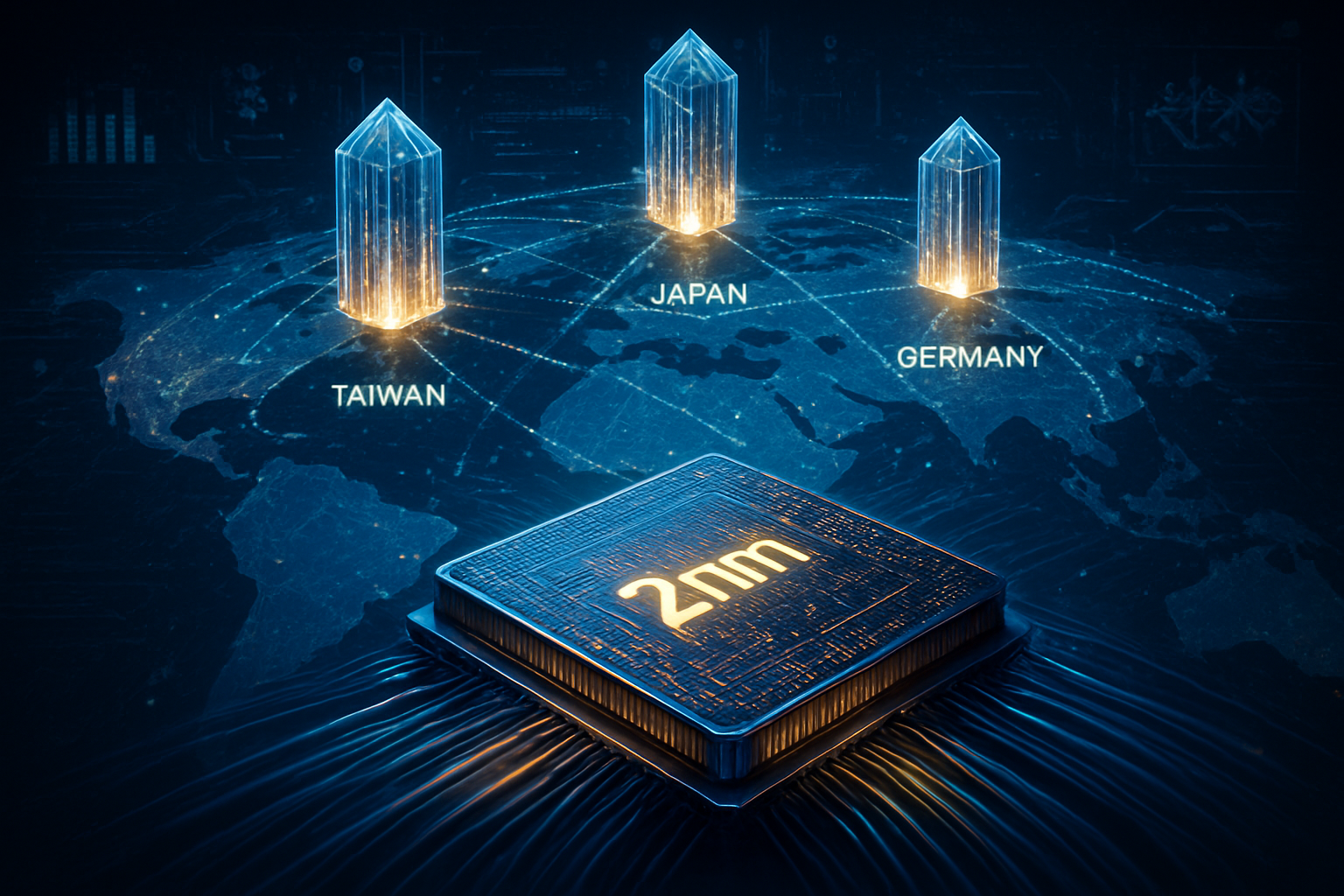
  • Broadcom Soars as J.P. Morgan Touts AI Chip Dominance, Projecting Exponential Growth

    Broadcom Soars as J.P. Morgan Touts AI Chip Dominance, Projecting Exponential Growth

    New York, NY – December 16, 2025 – In a significant endorsement reverberating across the semiconductor industry, J.P. Morgan has firmly positioned Broadcom (NASDAQ: AVGO) as a premier chip pick, citing the company's commanding lead in the burgeoning artificial intelligence (AI) chip market as a pivotal growth engine. This bullish outlook, reinforced by recent analyst reports, underscores Broadcom's critical role in powering the next generation of AI infrastructure and its potential for unprecedented revenue expansion in the coming years.

    The investment bank's confidence stems from Broadcom's strategic dominance in custom AI Application-Specific Integrated Circuits (ASICs) and its robust high-performance networking portfolio, both indispensable components for hyperscale data centers and advanced AI workloads. With AI-related revenue projections soaring, J.P. Morgan's analysis, reiterated as recently as December 2025, paints a picture of a company uniquely poised to capitalize on the insatiable demand for AI compute, solidifying its status as a cornerstone of the AI revolution.

    The Architecture of AI Dominance: Broadcom's Technical Edge

    Broadcom's preeminence in the AI chip landscape is deeply rooted in its sophisticated technical offerings, particularly its custom AI chips, often referred to as XPUs, and its high-speed networking solutions. Unlike off-the-shelf general-purpose processors, Broadcom specializes in designing highly customized ASICs tailored for the specific, intensive demands of leading AI developers and cloud providers.

    A prime example of this technical prowess is Broadcom's collaboration with tech giants like Alphabet's Google and Meta Platforms (NASDAQ: META). Broadcom is a key supplier for Google's Tensor Processing Units (TPUs), with J.P. Morgan anticipating substantial revenue contributions from the ongoing ramp-up of Google's TPU v6 (codenamed Ironwood) and future v7 projects. Similarly, Broadcom is instrumental in Meta's Meta Training and Inference Accelerator (MTIA) chip project, powering Meta's vast AI initiatives. This custom ASIC approach allows for unparalleled optimization in terms of performance, power efficiency, and cost for specific AI models and workloads, offering a distinct advantage over more generalized GPU architectures for certain applications. The firm also hinted at early work on an XPU ASIC for a new customer, potentially OpenAI, signaling further expansion of its custom silicon footprint.

    Beyond the custom processors, Broadcom's leadership in high-performance networking is equally critical. The escalating scale of AI models and the distributed nature of AI training and inference demand ultra-fast, low-latency communication within data centers. Broadcom's Tomahawk 5 and upcoming Tomahawk 6 switching chips, along with its Jericho routers, are foundational to these AI clusters. J.P. Morgan highlights the "significant dollar content capture opportunities in scale-up networking," noting that Broadcom offers 5 to 10 times more content in these specialized AI networking environments compared to traditional networking setups, demonstrating a clear technical differentiation and market capture.

    Reshaping the AI Ecosystem: Implications for Tech Giants and Startups

    Broadcom's fortified position in AI chips carries profound implications for the entire AI ecosystem, influencing the competitive dynamics among tech giants, shaping the strategies of AI labs, and even presenting opportunities and challenges for startups. Companies that heavily invest in AI research and deployment, particularly those operating at hyperscale, stand to benefit directly from Broadcom's advanced and efficient custom silicon and networking solutions.

    Hyperscale cloud providers and AI-centric companies like Google and Meta, already leveraging Broadcom's custom XPUs, gain a strategic advantage through optimized hardware that can accelerate their AI development cycles and reduce operational costs associated with massive compute infrastructure. This deep integration allows these tech giants to push the boundaries of AI capabilities, from training larger language models to deploying more sophisticated recommendation engines. For competitors without similar custom silicon partnerships, this could necessitate increased R&D investment in their own chip designs or a reliance on more generic, potentially less optimized, hardware solutions.

    The competitive landscape among major AI labs is also significantly impacted. As the demand for specialized AI hardware intensifies, Broadcom's ability to deliver high-performance, custom solutions becomes a critical differentiator. This could lead to a 'hardware arms race' where access to cutting-edge custom ASICs dictates the pace of AI innovation. For startups, while the direct cost of custom silicon might be prohibitive, the overall improvement in AI infrastructure efficiency driven by Broadcom's technologies could lead to more accessible and powerful cloud-based AI services, fostering innovation by lowering the barrier to entry for complex AI applications. Conversely, startups developing their own AI hardware might face an even steeper climb against the entrenched advantages of Broadcom and its hyperscale partners.

    Broadcom's Role in the Broader AI Landscape and Future Trends

    Broadcom's ascendance in the AI chip sector is not merely a corporate success story but a significant indicator of broader trends within the AI landscape. It underscores a fundamental shift towards specialized hardware as the backbone of advanced AI, moving beyond general-purpose CPUs and even GPUs for specific, high-volume workloads. This specialization allows for unprecedented gains in efficiency and performance, which are crucial as AI models grow exponentially in size and complexity.

    The impact of this trend is multifaceted. It highlights the growing importance of co-design—where hardware and software are developed in tandem—to unlock the full potential of AI. Broadcom's custom ASIC approach is a testament to this, enabling deep optimization that is difficult to achieve with standardized components. This fits into the broader AI trend of "AI factories," where massive compute clusters are purpose-built for continuous AI model training and inference, demanding the kind of high-bandwidth, low-latency networking that Broadcom provides.

    Potential concerns, however, include the increasing concentration of power in the hands of a few chip providers and their hyperscale partners. While custom silicon drives efficiency, it also creates higher barriers to entry for smaller players and could limit hardware diversity in the long run. Comparisons to previous AI milestones, such as the initial breakthroughs driven by GPU acceleration, reveal a similar pattern of hardware innovation enabling new AI capabilities. Broadcom's current trajectory suggests that custom silicon and advanced networking are the next frontier, potentially unlocking AI applications that are currently computationally infeasible.

    The Horizon of AI: Expected Developments and Challenges Ahead

    Looking ahead, Broadcom's trajectory in the AI chip market points to several expected near-term and long-term developments. In the near term, J.P. Morgan anticipates a continued aggressive ramp-up in Broadcom's AI-related semiconductor revenue, projecting a staggering 65% year-over-year increase to approximately $20 billion in fiscal year 2025, with further acceleration to at least $55 billion to $60 billion by fiscal year 2026. Some even suggest it could surpass $100 billion by fiscal year 2027. This growth will be fueled by the ongoing deployment of current-generation custom XPUs and the rapid transition to next-generation platforms like Google's TPU v7.

    Potential applications and use cases on the horizon are vast. As Broadcom continues to innovate with its 2nm 3.5D AI XPU product tape-out on track, it will enable even more powerful and efficient AI models, leading to breakthroughs in areas such as generative AI, autonomous systems, scientific discovery, and personalized medicine. The company is also moving towards providing complete AI rack-level deployment solutions, offering a more integrated and turnkey approach for customers, which could further solidify its market position and value proposition.

    However, challenges remain. The intense competition in the semiconductor space, the escalating costs of advanced chip manufacturing, and the need for continuous innovation to keep pace with rapidly evolving AI algorithms are significant hurdles. Supply chain resilience and geopolitical factors could also impact production and distribution. Experts predict that the demand for specialized AI hardware will only intensify, pushing companies like Broadcom to invest heavily in R&D and forge deeper partnerships with leading AI developers to co-create future solutions. The race for ever-more powerful and efficient AI compute will continue to be a defining characteristic of the tech industry.

    A New Era of AI Compute: Broadcom's Defining Moment

    Broadcom's emergence as a top chip pick for J.P. Morgan, driven by its unparalleled strength in AI chips, marks a defining moment in the history of artificial intelligence. This development is not merely about stock performance; it encapsulates a fundamental shift in how AI is built and scaled. The company's strategic focus on custom AI Application-Specific Integrated Circuits (ASICs) and its leadership in high-performance networking are proving to be indispensable for the hyperscale AI deployments that underpin today's most advanced AI models and services.

    The key takeaway is clear: specialized hardware is becoming the bedrock of advanced AI, and Broadcom is at the forefront of this transformation. Its ability to provide tailored silicon solutions for tech giants like Google and Meta, combined with its robust networking portfolio, creates an "AI Trifecta" that positions it for sustained, exponential growth. This development signifies a maturation of the AI industry, where the pursuit of efficiency and raw computational power demands highly optimized, purpose-built infrastructure.

    In the coming weeks and months, the industry will be watching closely for further updates on Broadcom's custom ASIC projects, especially any new customer engagements like the hinted partnership with OpenAI. The progress of its 2nm 3.5D AI XPU product and its expansion into full AI rack-level solutions will also be crucial indicators of its continued market trajectory. Broadcom's current standing is a testament to its foresight and execution in a rapidly evolving technological landscape, cementing its legacy as a pivotal enabler of the AI-powered future.


    This content is intended for informational purposes only and represents analysis of current AI developments.

    TokenRing AI delivers enterprise-grade solutions for multi-agent AI workflow orchestration, AI-powered development tools, and seamless remote collaboration platforms.
    For more information, visit https://www.tokenring.ai/.
  • AMD Navigates Choppy Waters: Strategic AI Bets Drive Growth Amidst Fierce Semiconductor Rivalry

    Advanced Micro Devices (NASDAQ: AMD) finds itself at a pivotal juncture in December 2025, experiencing significant "crosscurrents" that are simultaneously propelling its stock to new highs while testing its strategic resolve in the cutthroat semiconductor industry. The company's aggressive pivot towards artificial intelligence (AI) and data center solutions has fueled a remarkable surge in its market valuation, yet it faces an uphill battle against entrenched competitors and the inherent execution risks of an ambitious product roadmap. This dynamic environment shapes AMD's immediate future and its long-term trajectory in the global tech landscape.

    The immediate significance of AMD's current position lies in its dual nature: a testament to its innovation and strategic foresight in capturing a slice of the booming AI market, and a cautionary tale of the intense competition that defines the semiconductor space. With its stock rallying significantly year-to-date and positive analyst sentiment, AMD is clearly benefiting from the AI supercycle. However, the shadow of dominant players like Nvidia (NASDAQ: NVDA) and the re-emergence of Intel (NASDAQ: INTC) loom large, creating a complex narrative of opportunity and challenge that defines AMD's strategic shifts.

    AMD's AI Arsenal: A Deep Dive into Strategic Innovation

    AMD's strategic shifts are deeply rooted in its commitment to becoming a major player in the AI accelerator market, a domain previously dominated by a single competitor. At the core of this strategy is the Instinct MI series of GPUs. The Instinct MI350 Series, heralded as the fastest-ramping product in AMD's history, is already seeing significant deployment by hyperscalers such as Oracle Cloud Infrastructure (NYSE: ORCL). Looking ahead, AMD has outlined an aggressive roadmap, with the "Helios" systems powered by MI450 GPUs anticipated in Q3 2026, promising leadership rack-scale performance. Further out, the MI500 family is slated for 2027, signaling a sustained innovation pipeline.

    Technically, AMD is not just focusing on raw hardware power; it's also refining its software ecosystem. Improvements to its ROCm software stack are crucial, enabling the MI300X to expand its capabilities beyond inferencing to include more demanding training tasks—a critical step in challenging Nvidia's CUDA ecosystem. This move aims to provide developers with a more robust and flexible platform, fostering broader adoption. AMD's approach differs from previous strategies by emphasizing an open ecosystem, contrasting with Nvidia's proprietary CUDA, hoping to attract a wider developer base and address the growing demand for diverse AI hardware solutions. Initial reactions from the AI research community and industry experts have been cautiously optimistic, acknowledging AMD's significant strides while noting the persistent challenge of overcoming Nvidia's established lead and ecosystem lock-in.

    Beyond dedicated AI accelerators, AMD is also broadening its portfolio. Its EPYC server CPUs continue to gain market share in cloud and enterprise environments, with next-gen "Venice" server CPUs specifically targeting AI-driven infrastructure. The company is also making inroads into the AI PC market, with Ryzen chips powering numerous notebook and desktop platforms, and next-gen "Gorgon" and "Medusa" processors expected to deliver substantial AI performance enhancements. This comprehensive approach, including the acquisition of ZT Systems to capture opportunities in the AI accelerator infrastructure market, positions AMD to address various facets of the AI compute landscape, from data centers to edge devices.

    Reshaping the AI Landscape: Competitive Ripples and Market Dynamics

    AMD's strategic advancements and aggressive push into AI are sending ripples across the entire AI ecosystem, significantly impacting tech giants, specialized AI companies, and emerging startups. Companies heavily invested in cloud infrastructure and AI development, such as Microsoft (NASDAQ: MSFT), Meta Platforms (NASDAQ: META), and OpenAI, stand to benefit directly from AMD's expanding portfolio. Their partnerships with AMD, including a landmark 6-gigawatt infrastructure deal with OpenAI and collaborations for cloud services, indicate a desire to diversify their AI hardware supply chains, reducing reliance on a single vendor and potentially fostering greater innovation and cost efficiency.

    The competitive implications for major AI labs and tech companies are profound. Nvidia, the undisputed market leader in AI data center GPUs, faces its most credible challenger yet. While Nvidia's Blackwell platform and the CUDA ecosystem remain formidable competitive moats, AMD's MI series and open ROCm stack offer an alternative that could erode Nvidia's market share over time, particularly in segments less dependent on CUDA's unique optimizations. Intel's aggressive re-entry into the AI accelerator market with Gaudi 3 further intensifies this rivalry, offering competitive performance and an open ecosystem to directly challenge both Nvidia and AMD. This three-way competition could lead to accelerated innovation, more competitive pricing, and a broader range of choices for AI developers and enterprises.

    Potential disruption to existing products or services could arise as AMD's solutions gain traction, forcing incumbents to adapt or risk losing market share. For startups and smaller AI companies, the availability of diverse and potentially more accessible hardware options from AMD could lower barriers to entry, fostering innovation and enabling new applications. AMD's market positioning is bolstered by its diversified product strategy, spanning CPUs, GPUs, and adaptive computing, which provides multiple growth vectors and resilience against single-market fluctuations. However, the company's ability to consistently execute its ambitious product roadmap and effectively scale its software ecosystem will be critical in translating these strategic advantages into sustained market leadership.

    Broader Implications: AMD's Role in the Evolving AI Narrative

    AMD's current trajectory fits squarely within the broader AI landscape, which is characterized by an insatiable demand for compute power and a race among chipmakers to deliver the next generation of accelerators. The company's efforts underscore a significant trend: the decentralization of AI compute power beyond a single dominant player. This competition is crucial for the healthy development of AI, preventing monopolies and encouraging diverse architectural approaches, which can lead to more robust and versatile AI systems.

    The impacts of AMD's strategic shifts extend beyond market share. Increased competition in the AI chip sector could drive down hardware costs over time, making advanced AI capabilities more accessible to a wider range of industries and organizations. This could accelerate the adoption of AI across various sectors, from healthcare and finance to manufacturing and logistics. However, potential concerns include the complexity of managing multiple AI hardware ecosystems, as developers may need to optimize their models for different platforms, and the potential for supply chain vulnerabilities if demand continues to outstrip manufacturing capacity.

    Comparisons to previous AI milestones highlight the current era's focus on hardware optimization and ecosystem development. While early AI breakthroughs centered on algorithmic innovations, the current phase emphasizes the infrastructure required to scale these algorithms. AMD's push, alongside Intel's resurgence, represents a critical phase in democratizing access to high-performance AI compute, reminiscent of how diversified CPU markets fueled the PC revolution. The ability to offer viable alternatives to the market leader is a significant step towards a more open and competitive AI future.

    The Road Ahead: Future Developments and Expert Predictions

    Looking ahead, the semiconductor industry, and AMD's role within it, is poised for rapid evolution. Near-term developments will likely focus on the continued ramp-up of AMD's MI350 series and the introduction of the MI450, aiming to solidify its projected 5-10% share of the AI accelerator market by the end of 2025, with ambitions to reach 15-20% in specific segments in subsequent years. Long-term, the MI500 family and next-gen "Helios" systems will push performance boundaries further, while the company's "Venice" EPYC CPUs and "Gorgon"/"Medusa" AI PC processors will continue to diversify its AI-enabled product offerings.

    Potential applications and use cases on the horizon include more sophisticated large language models running on more accessible hardware, accelerated scientific discovery, advanced robotics, and pervasive AI capabilities integrated into everyday devices. AMD's strategic partnerships, such as the $10 billion global AI infrastructure deal with Saudi Arabia's HUMAIN, also suggest a future where AI infrastructure becomes a critical component of national digital strategies. Challenges that need to be addressed include further optimizing the ROCm software stack to rival the maturity and breadth of CUDA, navigating complex global supply chains, and maintaining a rapid pace of innovation to stay ahead in a fiercely competitive environment.

    Experts predict that the AI chip market will continue its explosive growth, potentially reaching $500 billion by 2028. Many analysts forecast robust long-term growth for AMD, with some projecting over 60% revenue CAGR in its data center business and over 80% CAGR in data center AI. However, these predictions come with the caveat that AMD must consistently execute its ambitious plans and effectively compete against well-entrenched rivals. The next few years will be crucial in determining if AMD can sustain its momentum and truly establish itself as a co-leader in the AI hardware revolution.

    A Comprehensive Wrap-Up: AMD's Moment in AI History

    In summary, Advanced Micro Devices (NASDAQ: AMD) is navigating a period of unprecedented opportunity and intense competition, driven by the explosive growth of artificial intelligence. Key takeaways include its strong financial performance in Q3 2025, an aggressive AI accelerator roadmap with the Instinct MI series, crucial partnerships with tech giants, and a diversified portfolio spanning CPUs, GPUs, and AI PCs. These tailwinds are balanced by significant headwinds from Nvidia's market dominance, Intel's aggressive resurgence with Gaudi 3, and the inherent execution risks associated with a rapid product and ecosystem expansion.

    This development holds significant weight in AI history, marking a crucial phase where the AI hardware market is becoming more competitive and diversified. AMD's efforts to provide a viable alternative to existing solutions are vital for fostering innovation, preventing monopolies, and democratizing access to high-performance AI compute. Its strategic shifts could lead to a more dynamic and competitive landscape, ultimately benefiting the entire AI industry.

    For the long term, AMD's success hinges on its ability to consistently deliver on its ambitious product roadmap, continue to refine its ROCm software ecosystem, and leverage its strategic partnerships to secure market share. The high valuation of its stock reflects immense market expectations, meaning that any missteps or slowdowns could have a significant impact. In the coming weeks and months, investors and industry observers will be closely watching for further updates on MI350 deployments, the progress of its next-gen MI450 and MI500 series, and any new partnership announcements that could further solidify its position in the AI race. The battle for AI compute dominance is far from over, and AMD is clearly a central player in this unfolding drama.


    This content is intended for informational purposes only and represents analysis of current AI developments.

    TokenRing AI delivers enterprise-grade solutions for multi-agent AI workflow orchestration, AI-powered development tools, and seamless remote collaboration platforms.
    For more information, visit https://www.tokenring.ai/.

  • QuantumDiamonds Unveils State-of-the-Art Microchip Testing Plant in Munich: A Quantum Leap for Semiconductor Quality and AI

    QuantumDiamonds Unveils State-of-the-Art Microchip Testing Plant in Munich: A Quantum Leap for Semiconductor Quality and AI

    Munich, Germany – December 16, 2025 – QuantumDiamonds GmbH, a pioneering German company in quantum sensing for semiconductor inspection, has announced a monumental €152 million ($178.5 million USD) investment to establish a state-of-the-art production facility in Munich. This groundbreaking plant is set to become the world's first dedicated to the production of advanced quantum-based chip testing systems, marking a pivotal moment for semiconductor quality, performance, and Europe's strategic position in the global microelectronics landscape. The facility, backed by significant support from the German federal and Bavarian governments under the European Chips Act, aims to tackle the escalating challenges of microchip defect detection, particularly in the complex architectures vital for artificial intelligence (AI) and high-performance computing.

    The immediate significance of this development is profound. As the demand for dense, high-performance AI chips continues to surge, traditional testing methods are struggling to keep pace with the intricate 2.5D and 3D heterogeneous architectures now commonplace. QuantumDiamonds' proprietary Quantum Diamond Microscopy (QDM) technology offers a non-destructive solution to map electrical currents inside chip packages with unprecedented precision, enabling the visualization of defects previously undetectable by conventional tools. This promises to significantly accelerate fault localization, improve chip yields, and generate substantial cost savings for manufacturers, ultimately leading to more reliable and affordable technology across numerous sectors.

    Detailed Technical Coverage: Quantum Diamond Microscopy Unveiled

    The core of QuantumDiamonds' innovation lies in its Quantum Diamond Microscopy (QDM) technology, which leverages nitrogen-vacancy (NV) centers embedded in synthetic diamonds. These atomic-scale defects act as highly sensitive quantum sensors, capable of detecting and measuring minute magnetic fields generated by electrical currents within a microchip. The QDM.1 system boasts impressive technical specifications, offering a lateral resolution down to 1 μm and a depth resolution down to 0.5 μm, capable of imaging metallization with feature sizes as small as 200 nm. Crucially, it provides 3D insight into chip defects with a depth reach of up to 500 µm and can image wide fields of view up to 3mm x 3mm, with automatic stitching for larger areas. Operating robustly at room temperature, QDM eliminates the need for complex cryogenic or vacuum setups, a significant advantage over some advanced testing methods. The system also integrates smart software and AI for rapid data analysis, converting magnetic field data into detailed, machine learning-enhanced 3D interactive visualizations of electrical activity.

    This approach fundamentally differs from previous microchip testing methods, which often suffer from limitations in invasiveness, speed, and visibility. Conventional techniques like optical scanning, thermal imaging, lock-in thermography, and CT X-ray imaging struggle with the multi-layered complexity of modern chips. Optical microscopes, for instance, typically only view the first layer, rendering deeper defects invisible. QDM, by contrast, images magnetic fields that penetrate all layers, providing a comprehensive, non-destructive 3D view of internal flaws. It offers significantly higher resolution (up to 100 times smaller details), lower noise (100-1,000 times lower), and higher sensitivity (3-10 times) compared to traditional tools, enabling faster and more accurate fault localization.

    Initial reactions from the AI research community and industry experts have been overwhelmingly positive. QuantumDiamonds has already partnered with nine of the ten largest chip manufacturers globally for proof-of-concept projects, demonstrating strong industry validation. Dr. David Su, former director of TSMC's (TWSE: 2330) (NYSE: TSM) failure analysis team and now a QuantumDiamonds advisor, has highlighted the technology's "significant promise" in addressing non-destructive fault isolation in advanced packaging. The European Innovation Council has even drawn comparisons between QuantumDiamonds' potential and that of ASML (AMS: ASML) (NASDAQ: ASML), a global leader in semiconductor lithography, underscoring its perceived revolutionary impact on post-production enablement. The sentiment is that QDM is a "game-changer" for the semiconductor industry, crucial for the continued advancement of Moore's Law and the escalating demands of the AI era.

    Industry Repercussions: How QuantumDiamonds Shapes AI and Tech Giants

    QuantumDiamonds' new Munich plant and its QDM technology are set to profoundly reshape the competitive landscape for AI companies, tech giants, and startups. Companies developing AI hardware and software stand to gain immensely from the promise of higher quality, more reliable, and ultimately more affordable high-performance chips. As AI workloads push chipmakers towards denser, more complex architectures, the ability to accurately detect and localize defects within these intricate designs becomes paramount for optimal AI performance and reduced failure rates. This technology also offers enhanced cybersecurity by detecting malicious alterations in chips, thereby strengthening the reliability of critical AI systems.

    Major tech giants, often at the forefront of chip design and manufacturing, will benefit significantly from improved production yields and accelerated innovation cycles. The QDM technology enables them to detect previously invisible defects, leading to better chip designs, enhanced production efficiency, and substantial cost reductions in their semiconductor manufacturing processes. Companies like TSMC (TWSE: 2330) (NYSE: TSM) and Intel (NASDAQ: INTC), which has already inspected microchips using QuantumDiamonds' sensors, are actively engaging with this technology. For startups in AI hardware or specialized chip development, access to more precise and non-destructive testing can accelerate their development timelines, reduce prototyping costs, and improve the market readiness of their innovative chip designs, potentially leveling the playing field.

    The competitive implications are clear: major AI labs and tech companies that integrate QDM into their R&D and production processes will gain a significant edge, producing more reliable and higher-performing chips, leading to faster time-to-market and substantial cost efficiencies. This disruptive technology is poised to render many conventional inspection methods obsolete. QDM's ability to provide non-destructive, 3D, layer-specific insights into complex chip packages—avoiding damage and allowing tested chips to be sold—is a game-changer. QuantumDiamonds has strategically positioned itself as a pioneer, backed by strong industry validation, significant public investment under the European Chips Act, and a global demand for its unique capabilities, with the European Innovation Council likening its potential to that of ASML.

    Broader Horizons: Quantum Sensing's Role in the Global Tech Landscape

    QuantumDiamonds' Munich plant and QDM technology fit squarely into the broader AI landscape and current technological trends, particularly the escalating demand for advanced semiconductors to power AI, IoT, and high-performance computing. The ability to precisely test and validate these increasingly complex chips is crucial for the continued progress of AI, as defects can severely impede performance and inflate costs. This development also highlights the synergistic relationship between quantum technology and AI, where quantum sensing provides unprecedented data for AI-driven optimization processes in chip design and manufacturing.

    The impact on the semiconductor industry is transformative. By providing superior defect detection capabilities, QDM addresses a critical bottleneck that traditional methods cannot resolve, leading to improved production efficiency, accelerated design cycles, higher yields, and lower costs. This translates to more reliable and affordable technology across all sectors reliant on advanced electronics. Beyond semiconductors, the underlying quantum sensing technology holds immense potential for applications in medical diagnostics, defense, energy, and materials science, suggesting a wider revolution in precision measurement.

    While the promise is vast, challenges remain. Scaling production of quantum-grade diamond sensors, ensuring precise control of defect placement, and mitigating environmental noise are ongoing hurdles. The interpretation of "massive amounts of data" generated by QDM devices also requires sophisticated machine learning algorithms, which QuantumDiamonds has developed. The establishment of the Munich plant, however, is a direct and significant outcome of the European Chips Act, which aims to double Europe's global semiconductor production share to 20% by 2030. By choosing Germany for this facility, QuantumDiamonds reinforces Europe's position not just in manufacturing, but in high-value equipment and advanced metrology, making it a strategic player in the global semiconductor competition. This initiative is a critical step for Europe in securing its high-tech future and maintaining a competitive edge in an era of intense global competition for semiconductor dominance.

    The Road Ahead: Future Trajectories for QuantumDiamonds and Quantum Sensing

    QuantumDiamonds is embarking on an ambitious journey to scale its production and global footprint. In the near term, construction of the Munich facility is slated to begin immediately, signifying a crucial transition from research to global industrial production. This hub will encompass production lines for quantum-grade diamond substrates, cleanroom integration of QDM inspection systems, and joint development laboratories with semiconductor partners. Initial QDM system deployments have already commenced in Europe, with further installations planned for the first quarter of 2026 in the United States and Taiwan, targeting major semiconductor manufacturers.

    Looking further ahead, QuantumDiamonds aims to become a foundational player in the semiconductor industry, with its long-term vision extending to developing next-generation metrology platforms that continually push the boundaries of chipmaking. The company plans to expand its QDM technology beyond magnetic field sensing to incorporate temperature sensing using NV centers in diamonds. Beyond semiconductors, the broader field of quantum sensing, including diamond-based technologies, holds immense potential for diverse sectors such as medical diagnostics, defense, energy exploration, civil engineering, and materials science. Experts predict quantum sensing will revolutionize conventional semiconductor testing, enabling unprecedented fault localization and significantly improving efficiency and yields.

    However, challenges for broader adoption include standardization and industrialization of quantum sensor manufacturing, miniaturization and cost reduction for mass-market applications, and the development of a robust quantum sensing ecosystem. The talent shortage in highly specialized fields like quantum technology also remains a concern. Despite these hurdles, experts widely regard quantum sensing as the most mature segment of quantum technology, with a clear path to industrial scaling and significant market growth projected, particularly in the semiconductor sector.

    Conclusion: A New Era for Semiconductor Quality and AI Innovation

    QuantumDiamonds' investment in a state-of-the-art microchip testing plant in Munich represents a monumental stride forward for the semiconductor industry and the future of AI. By commercializing Quantum Diamond Microscopy, the company is introducing a disruptive technology that addresses critical inspection bottlenecks in advanced chip manufacturing, promising unprecedented levels of quality, performance, and efficiency. This development not only bolsters Europe's strategic position in the global semiconductor landscape under the European Chips Act but also lays the groundwork for more reliable, powerful, and secure AI-driven technologies.

    The key takeaways are clear: QDM offers non-destructive, ultra-precise 3D defect detection that surpasses conventional methods, significantly improving chip yields and reducing costs. This innovation is crucial for the continued advancement of AI and high-performance computing, where complex chip architectures demand flawless components. In the coming weeks and months, observers should closely watch the commencement of construction for the Munich facility, the planned international deployments of QDM systems, and further developments in QuantumDiamonds' product roadmap, particularly their ambition to launch in-line quality control products for fabrication lines around 2028. The expansion of quantum sensing capabilities beyond magnetic fields will also be a key indicator of its long-term impact across diverse industries. QuantumDiamonds is not just building a plant; it is forging a new era for semiconductor quality and AI innovation.


    This content is intended for informational purposes only and represents analysis of current AI developments.

    TokenRing AI delivers enterprise-grade solutions for multi-agent AI workflow orchestration, AI-powered development tools, and seamless remote collaboration platforms.
    For more information, visit https://www.tokenring.ai/.

  • Institutional Confidence: Jackson Wealth Management Boosts Stake in TSMC

    Institutional Confidence: Jackson Wealth Management Boosts Stake in TSMC

    Jackson Wealth Management LLC has recently signaled its continued confidence in the semiconductor giant Taiwan Semiconductor Manufacturing Company (NYSE: TSM), increasing its holdings during the third quarter of 2025. The investment firm acquired an additional 11,455 shares, bringing its total ownership to 35,537 shares, valued at approximately $9.925 million as of the end of the reporting period on September 30, 2025. This move, while not a seismic shift in market dynamics, reflects a broader trend of institutional conviction in TSMC's long-term growth trajectory and its pivotal role in the global technology ecosystem.

    This institutional purchase, disclosed in a Securities and Exchange Commission (SEC) filing on October 3, 2025, underscores the ongoing appeal of TSMC to wealth management firms looking for stable, high-growth investments. While individual institutional adjustments are routine, the collective pattern of such investments provides insight into the perceived health and future prospects of the companies involved. For TSMC, a company that regularly makes headlines with multi-billion dollar strategic investments, Jackson Wealth Management's increased stake serves as a testament to its enduring value proposition amidst a competitive and rapidly evolving tech landscape.

    Unpacking the Institutional Play: A Deeper Look at TSMC's Investor Appeal

    Jackson Wealth Management LLC's decision to bolster its position in Taiwan Semiconductor Manufacturing Company (NYSE: TSM) during the third quarter of 2025, culminating in holdings valued at nearly $10 million, is indicative of a calculated investment strategy rather than a speculative gamble. This particular increase of 11,455 shares, pushing their total to 35,537, positions the firm as a solid, albeit not dominant, institutional holder. Such incremental increases by wealth management firms are often driven by a fundamental belief in the underlying company's financial health, market leadership, and future growth potential, rather than short-term market fluctuations.

    Compared to previous approaches, this investment behavior is consistent with how many institutional investors manage their portfolios, gradually accumulating shares of companies with strong fundamentals. While not a "blockbuster" acquisition designed to dramatically shift market perception, it reflects a sustained, positive outlook. Initial reactions from financial analysts, while not specifically singling out Jackson Wealth Management's move, generally align with a bullish sentiment towards TSMC, citing its technological dominance in advanced node manufacturing and its indispensable role in the global semiconductor supply chain. Experts often emphasize TSMC's strategic importance over individual institutional trades, pointing to the company's own massive capital expenditure plans, such as the $100 billion investment in new facilities, as more significant market drivers.

    This steady accumulation by institutional players contrasts sharply with more volatile, speculative trading patterns seen in emerging or unproven technologies. Instead, it mirrors a long-term value investment approach, where the investor is betting on the continued execution of a well-established, profitable enterprise. The investment community often views such moves as a vote of confidence, particularly given TSMC's critical role in powering everything from artificial intelligence accelerators to advanced consumer electronics, making it a foundational element of modern technological progress.

    The decision to increase holdings in TSMC also highlights the ongoing demand for high-quality semiconductor manufacturing capabilities. As the world becomes increasingly digitized and AI-driven, the need for cutting-edge chips manufactured by companies like TSMC is only set to intensify. This makes TSMC a compelling choice for institutional investors seeking exposure to the fundamental growth drivers of the technology sector, insulating them somewhat from the transient trends that often characterize other parts of the market.

    Ripple Effects Across the Semiconductor Ecosystem

    Jackson Wealth Management LLC's increased stake in Taiwan Semiconductor Manufacturing Company (NYSE: TSM) has significant implications, not just for TSMC itself, but for a broader spectrum of companies within the AI and technology sectors. Primarily, TSMC stands to benefit from continued institutional confidence, which can help stabilize its stock price and provide a solid foundation for its ambitious expansion plans, including multi-billion dollar fabs in Arizona and Japan. This investor backing is crucial for a capital-intensive industry like semiconductor manufacturing, enabling TSMC to continue investing heavily in R&D and advanced process technologies.

    From a competitive standpoint, this sustained institutional interest further solidifies TSMC's market positioning against rivals such as Samsung Foundry and Intel Foundry Services (NASDAQ: INTC). While Samsung (KRX: 005930) is a formidable competitor, and Intel is making aggressive moves to re-establish its foundry leadership, TSMC's consistent ability to attract and retain significant institutional investment underscores its perceived technological lead and operational excellence. This competitive advantage is particularly critical in the race to produce the most advanced chips for AI, high-performance computing, and next-generation mobile devices.

    The potential disruption to existing products or services from this investment is indirect but profound. By enabling TSMC to maintain its technological edge and expand its capacity, this institutional support ultimately benefits the myriad of fabless semiconductor companies—like NVIDIA (NASDAQ: NVDA), AMD (NASDAQ: AMD), and Apple (NASDAQ: AAPL)—that rely on TSMC for their chip production. These companies, in turn, power the AI revolution, cloud computing, and consumer electronics markets. Any factor that strengthens TSMC indirectly strengthens its customers, potentially accelerating innovation and driving down costs for advanced chips across the industry.

    Furthermore, this investment reflects a strategic advantage for TSMC in a geopolitical landscape increasingly focused on semiconductor supply chain resilience. As nations seek to onshore more chip production, institutional investments in key players like TSMC signal confidence in the company's ability to navigate these complex dynamics and continue its global expansion while maintaining profitability. This market positioning reinforces TSMC's role as a critical enabler of technological progress and a bellwether for the broader tech industry.

    Broader Implications in the Global AI and Tech Landscape

    Jackson Wealth Management LLC's investment in Taiwan Semiconductor Manufacturing Company (NYSE: TSM) fits seamlessly into the broader AI landscape and current technological trends, underscoring the foundational role of advanced semiconductor manufacturing in driving innovation. The relentless demand for faster, more efficient chips to power AI models, data centers, and edge devices makes TSMC an indispensable partner for virtually every major technology company. This institutional endorsement highlights the market's recognition of TSMC as a critical enabler of the AI revolution, rather than just a component supplier.

    The impacts of such investments are far-reaching. They contribute to TSMC's financial stability, allowing it to continue its aggressive capital expenditure plans, which include building new fabs and developing next-generation process technologies. This, in turn, ensures a steady supply of cutting-edge chips for AI developers and hardware manufacturers, preventing bottlenecks that could otherwise stifle innovation. Without TSMC's advanced manufacturing capabilities, the pace of AI development, from large language models to autonomous systems, would undoubtedly slow.

    Potential concerns, however, also exist. While the investment is a positive signal, the concentration of advanced chip manufacturing in a single company like TSMC raises geopolitical considerations. Supply chain resilience, especially in the context of global tensions, remains a critical discussion point. Any disruption to TSMC's operations, whether from natural disasters or geopolitical events, could have catastrophic ripple effects across the global technology industry. Institutional investors, while confident in TSMC's operational strength, are also implicitly betting on the stability of the geopolitical environment that allows TSMC to thrive.

    Comparisons to previous AI milestones reveal a consistent pattern: advancements in AI are inextricably linked to advancements in hardware. Just as the rise of GPUs propelled deep learning, the continuous miniaturization and efficiency gains achieved by foundries like TSMC are crucial for the next wave of AI breakthroughs. This investment, therefore, is not merely about a financial transaction; it's about backing the very infrastructure upon which future AI innovations will be built, much like past investments in internet infrastructure paved the way for the digital age.

    The Road Ahead: Future Developments for TSMC and the Semiconductor Sector

    Looking ahead, the sustained institutional confidence exemplified by Jackson Wealth Management LLC's increased stake in Taiwan Semiconductor Manufacturing Company (NYSE: TSM) points to several expected near-term and long-term developments for both TSMC and the broader semiconductor industry. In the near term, TSMC is anticipated to continue its aggressive rollout of advanced process technologies, moving towards 2nm and beyond. This will involve significant capital expenditures, and sustained institutional investment provides the necessary financial bedrock for these endeavors. The company's focus on expanding its global manufacturing footprint, particularly in the US and Japan, will also be a key development to watch, aiming to mitigate geopolitical risks and diversify its production base.

    Potential applications and use cases on the horizon are vast and directly tied to TSMC's technological leadership. As AI models become more complex and pervasive, the demand for custom AI accelerators and energy-efficient processing units will skyrocket. TSMC's advanced packaging technologies, such as CoWoS (Chip-on-Wafer-on-Substrate), will be crucial for integrating these complex systems. We can expect to see further advancements in areas like quantum computing, advanced robotics, and immersive virtual/augmented reality, all powered by chips manufactured at TSMC's fabs.

    However, several challenges need to be addressed. The escalating costs of developing and building new fabs, coupled with the increasing complexity of semiconductor manufacturing, pose significant hurdles. Talent acquisition and retention in a highly specialized field also remain critical. Geopolitical tensions, particularly concerning Taiwan, represent an ongoing concern that could impact investor sentiment and operational stability. Furthermore, the industry faces pressure to adopt more sustainable manufacturing practices, adding another layer of complexity.

    Experts predict that the "fabless-foundry" model, pioneered by TSMC, will continue to dominate, with an increasing specialization in both chip design and manufacturing. They anticipate continued strong demand for TSMC's services, driven by the insatiable appetite for AI, 5G, and high-performance computing. What experts predict will happen next is a continued arms race in semiconductor technology, with TSMC at the forefront, pushing the boundaries of what's possible in chip design and production, further cementing its role as a linchpin of the global technology economy.

    A Cornerstone Investment in the Age of AI

    Jackson Wealth Management LLC's decision to increase its holdings in Taiwan Semiconductor Manufacturing Company (NYSE: TSM) during the third quarter of 2025 serves as a compelling summary of institutional belief in the foundational strength of the global semiconductor industry. This investment, valued at approximately $9.925 million and encompassing 35,537 shares, while not a standalone market-mover, is a significant indicator of sustained confidence in TSMC's pivotal role in the ongoing technological revolution, particularly in the realm of artificial intelligence. It underscores the understanding that advancements in AI are directly predicated on the continuous innovation and reliable supply of cutting-edge semiconductors.

    This development's significance in AI history cannot be overstated. TSMC is not merely a chip manufacturer; it is the enabler of virtually every significant AI breakthrough in recent memory, providing the silicon backbone for everything from advanced neural networks to sophisticated data centers. Institutional investments like this are critical for providing the capital necessary for TSMC to continue its relentless pursuit of smaller, more powerful, and more efficient chips, which are the lifeblood of future AI development. It represents a vote of confidence in the long-term trajectory of both TSMC and the broader AI ecosystem it supports.

    Final thoughts on the long-term impact revolve around resilience and innovation. As the world becomes increasingly reliant on advanced technology, the stability and growth of companies like TSMC are paramount. This investment signals that despite geopolitical complexities and economic fluctuations, the market recognizes the indispensable nature of TSMC's contributions. It reinforces the idea that strategic investments in core technology providers are essential for global progress.

    In the coming weeks and months, what to watch for will be TSMC's continued execution on its ambitious expansion plans, particularly the progress of its new fabs and the development of next-generation process technologies. Further institutional filings will also provide insights into evolving market sentiment towards the semiconductor sector. The interplay between technological innovation, geopolitical stability, and sustained financial backing will ultimately dictate the pace and direction of the AI-driven future, with TSMC remaining a central figure in this unfolding narrative.


    This content is intended for informational purposes only and represents analysis of current AI developments.

    TokenRing AI delivers enterprise-grade solutions for multi-agent AI workflow orchestration, AI-powered development tools, and seamless remote collaboration platforms.
    For more information, visit https://www.tokenring.ai/.