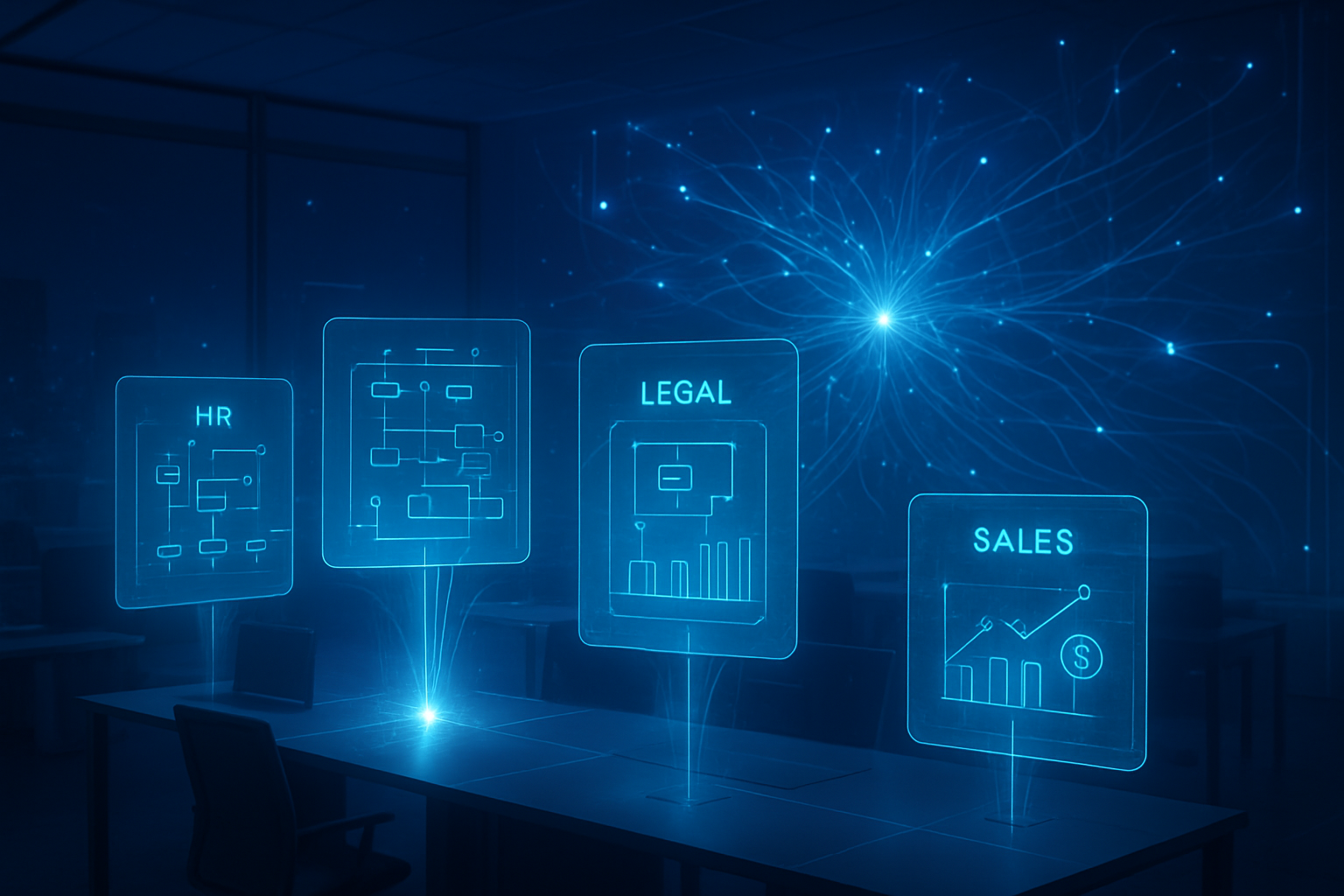
SANTA CLARA, CA & TOKYO, JAPAN – November 6, 2025 – In a landmark move poised to redefine enterprise automation, ServiceNow (NYSE: NOW) and NTT DATA, a global digital business and IT services leader, announced an expanded strategic partnership on November 5, 2025 (or November 6, 2025, depending on reporting), to deliver global Agentic AI solutions. This deepens an existing collaboration, aiming to accelerate AI-led transformation for businesses worldwide by deploying intelligent, autonomous AI agents capable of orchestrating complex workflows with minimal human oversight. The alliance signifies a critical juncture in the evolution of enterprise AI, moving beyond reactive tools to proactive, goal-driven systems that promise unprecedented levels of efficiency, innovation, and strategic agility.
The expanded partnership designates NTT DATA as a strategic AI delivery partner for ServiceNow, focusing on co-developing and co-selling AI-powered solutions. This initiative is set to scale AI-powered automation across enterprise, commercial, and mid-market segments globally. A key aspect of this collaboration involves NTT DATA becoming a "lighthouse customer" for ServiceNow's AI platform, internally adopting and scaling ServiceNow AI Agents and Global Business Services across its own vast operations. This internal deployment will serve as a real-world testament to the solutions' impact on productivity, efficiency, and customer experience, while also advancing new AI deployment models through ServiceNow's "Now Next AI" program.
Unpacking the Technical Core: ServiceNow's Agentic AI and NTT DATA's Global Reach
At the heart of this partnership lies ServiceNow's sophisticated Agentic AI platform, meticulously engineered for trust and scalability within demanding enterprise environments. This platform uniquely unifies artificial intelligence, data, and workflow automation into a single, cohesive architecture. Its technical prowess is built upon several foundational components designed to enable autonomous, intelligent action across an organization.
Key capabilities include the AI Control Tower, a central management system for governing and optimizing all AI assets, whether native or third-party, ensuring secure and scalable deployment. The AI Agent Fabric facilitates seamless collaboration among specialized AI agents across diverse tasks and departments, crucial for orchestrating complex, multi-step workflows. Complementing this is the Workflow Data Fabric, which provides frictionless data integration through over 240 out-of-the-box connectors, a zero-copy architecture, streaming capabilities via Apache Kafka, and integration with unstructured data sources like SharePoint and Confluence. This ensures AI agents have access to the rich, contextual insights needed for intelligent decision-making. Furthermore, ServiceNow's AI agents are natively integrated into the platform, leveraging billions of data points and millions of automations across customer instances for rapid learning and effective autonomous action. The platform offers thousands of pre-built agents for various functions, alongside an AI Agent Studio for no-code custom agent creation. Underpinning these capabilities is RaptorDB, a high-performance database, and integration with NVIDIA's Nemotron 15B model, which together reduce latency and ensure swift task execution.
NTT DATA's role as a strategic AI delivery partner is to integrate and leverage these capabilities globally. This involves joint development and deployment of AI-driven solutions, enhancing automation and operational efficiency worldwide. By adopting ServiceNow's AI platform internally, NTT DATA will not only drive its own digital transformation but also gain invaluable insights and expertise to deliver these solutions to its vast client base. Their strategic advisory, implementation, and managed services will ensure organizations realize faster time to value from ServiceNow AI solutions, particularly through initiatives like the "Now Next AI" program, which embeds AI engineering expertise directly into customer enterprise transformation projects.
This "Agentic AI" paradigm represents a significant leap from previous automation and AI generations. Unlike traditional Robotic Process Automation (RPA), which is rigid and rule-based, Agentic AI operates with autonomy, planning multi-step operations and adapting to dynamic environments without constant human intervention. It also diverges from earlier generative AI or predictive AI, which are primarily reactive, providing insights or content but requiring human or external systems to take action. Agentic AI bridges this gap by autonomously acting on insights, making decisions, planning actions, and executing tasks to achieve a desired goal, possessing persistent memory and the ability to orchestrate complex, collaborative efforts across multiple agents. Industry analysts, including Gartner and IDC, project a rapid increase in enterprise adoption, with Gartner predicting that 33% of enterprise software applications will incorporate agentic AI models by 2028, up from less than 1% in 2024. Experts view this as the "next major evolution" in AI, set to redefine how software interacts with users, making AI proactive, adaptive, and deeply integrated into daily operations.
Reshaping the AI Landscape: Competitive Implications for Tech Giants and Startups
The expanded partnership between ServiceNow and NTT DATA is poised to significantly reshape the competitive landscape of enterprise AI automation, sending ripples across tech giants, specialized AI companies, and startups alike. This formidable alliance combines ServiceNow's leading AI platform with NTT DATA's immense global delivery and integration capabilities, creating a powerful, end-to-end solution provider for businesses seeking comprehensive AI-led transformation.
Direct competitors in the enterprise AI automation space, particularly those offering similar platform capabilities and extensive implementation services, will face intensified pressure. Companies like UiPath (NYSE: PATH) and Automation Anywhere, dominant players in Robotic Process Automation (RPA), are already expanding into more intelligent automation. This partnership directly challenges their efforts to move beyond traditional, rule-based automation towards more autonomous, Agentic AI. Similarly, Pega Systems (NASDAQ: PEGA), known for its low-code and intelligent automation platforms, will find increased competition in orchestrating complex workflows where Agentic AI excels. In the IT Service Management (ITSM) and IT Operations Management (ITOM) domains, where ServiceNow is a leader, competitors such as Jira Service Management (NASDAQ: TEAM), BMC Helix ITSM, Ivanti Neurons for ITSM, and Freshservice (NASDAQ: FRSH), which are also heavily investing in AI, will face a stronger, more integrated offering. Furthermore, emerging Agentic AI specialists like Ema and Beam AI, which are focused on Agentic Process Automation (APA), will contend with a powerful incumbent in the enterprise market.
For tech giants with broad enterprise offerings, the implications are substantial. Microsoft (NASDAQ: MSFT), with its Dynamics 365, Azure AI, and Power Platform, offers a strong suite of enterprise applications and automation tools. The ServiceNow-NTT DATA partnership will compete directly for large enterprise transformation projects, especially those prioritizing deep integration and end-to-end Agentic AI solutions within a unified platform. While Microsoft's native integration within its own ecosystem is a strength, the specialized, combined expertise of ServiceNow and NTT DATA could offer a compelling alternative. Similarly, Google (NASDAQ: GOOGL), with Google Cloud AI and Workspace, provides extensive AI services. However, this partnership offers a more specialized and deeply integrated Agentic AI solution within the ServiceNow ecosystem, potentially attracting customers who favor a holistic platform for IT and business workflows over a collection of discrete AI services. IBM (NYSE: IBM), a long-standing player in enterprise AI with Watson, and Salesforce (NYSE: CRM), with Einstein embedded in its CRM platform, will also see increased competition. While Salesforce excels in customer-centric AI, the ServiceNow-NTT DATA offering targets broader enterprise automation beyond just CRM, potentially encroaching on Salesforce's adjacent automation opportunities.
For AI companies and startups, the landscape becomes more challenging. Specialized AI startups focusing solely on Agentic AI or foundational generative AI models might find it harder to secure large enterprise contracts against a comprehensive, integrated offering backed by a global service provider. These smaller players may need to pivot towards strategic partnerships with other enterprise platforms or service providers to remain competitive. Niche automation vendors could struggle if the ServiceNow-NTT DATA partnership provides a more holistic, enterprise-wide Agentic AI solution that subsumes or replaces their specialized offerings. Generalist IT consulting and system integrators that lack deep, specialized expertise in Agentic AI platforms like ServiceNow's, or the global delivery mechanism of NTT DATA, may find themselves at a disadvantage when bidding for major AI-led transformation projects. The partnership signals a market shift towards integrated platforms and comprehensive service delivery, demanding rapid evolution from all players to remain relevant in this accelerating field.
The Broader AI Canvas: Impacts, Concerns, and Milestones
The expanded partnership between ServiceNow and NTT DATA in Agentic AI is not merely a corporate announcement; it represents a significant marker in the broader evolution of artificial intelligence, underscoring a pivotal shift towards more autonomous and intelligent enterprise systems. This collaboration highlights the growing maturity of AI, moving beyond individual task automation or reactive intelligence to systems capable of complex decision-making, planning, and execution with minimal human oversight.
Within the current AI landscape, this alliance reinforces the trend towards integrated, end-to-end AI solutions that combine platform innovation with global implementation scale. The market is increasingly demanding AI that can orchestrate entire business processes, adapt to real-time conditions, and deliver measurable business outcomes. Deloitte forecasts a rapid uptake, with 25% of enterprises currently using generative AI expected to launch agentic AI pilots in 2025, doubling to 50% by 2027. The ServiceNow-NTT DATA partnership directly addresses this demand, positioning both companies to capitalize on the next wave of AI adoption by providing a robust platform and the necessary expertise for responsible AI scaling and deployment across diverse industries and geographies.
The potential societal and economic impacts of widespread Agentic AI adoption are profound. Economically, Agentic AI is poised to unlock trillions in additional value, with McKinsey estimating a potential contribution of $2.6 trillion to $4.4 trillion annually to the global economy. It promises substantial cost savings, enhanced productivity, and operational agility, with AI agents capable of accelerating business processes by 30% to 50%. This can foster new revenue opportunities, enable hyper-personalized customer engagement, and even reshape organizational structures by flattening hierarchies as AI takes over coordination and routine decision-making tasks. Societally, however, the implications are more nuanced. While Agentic AI will likely transform workforces, automating repetitive roles and increasing demand for skills requiring creativity, complex judgment, and human interaction, it also raises concerns about job displacement and the need for large-scale reskilling initiatives. Ethical dilemmas abound, including questions of accountability for autonomous AI decisions, the potential for amplified biases in training data, and critical issues surrounding data privacy and security as these systems access vast amounts of sensitive information.
Emerging concerns regarding widespread adoption are multifaceted. Trust remains a primary barrier, stemming from worries about data accuracy, privacy, and the overall reliability of autonomous AI. The "black-box" problem, where it's difficult to understand how AI decisions are reached, raises questions about human oversight and accountability. Bias and fairness are ongoing challenges, as agentic AI can amplify biases from its training data. New security risks emerge, including data exfiltration through agent-driven workflows and "agent hijacking." Integration complexity with legacy systems, a pervasive issue in enterprises, also presents a significant hurdle, demanding sophisticated solutions to bridge data silos. The lack of skilled personnel capable of deploying, managing, and optimizing Agentic AI systems necessitates substantial investment in training and upskilling. Furthermore, the high initial costs, the lack of skilled personnel, and the ongoing maintenance required for AI model degradation pose practical challenges that organizations must address.
Comparing this development to previous AI milestones reveals a fundamental paradigm shift. Early AI and Robotic Process Automation (RPA) focused on rule-based, deterministic task automation. The subsequent era of intelligent automation, combining RPA with machine learning, allowed for processing unstructured content and data-driven decisions, but these systems largely remained reactive. The recent surge in generative AI, powered by large language models (LLMs), enabled content creation and more natural human-AI interaction, yet still primarily responded to human prompts. Agentic AI, as advanced by the ServiceNow-NTT DATA partnership, is a leap beyond these. It transforms AI from merely enhancing individual productivity to AI as a proactive, goal-driven collaborator. It introduces the capability for systems to plan, reason, execute multi-step workflows, and adapt autonomously. This moves enterprises beyond basic automation to intelligent orchestration, promising unprecedented levels of efficiency, innovation, and resilience. The partnership's focus on responsible AI scaling, demonstrated through NTT DATA's "lighthouse customer" approach, is crucial for building trust and ensuring ethical deployment as these powerful autonomous systems become increasingly integrated into core business processes.
The Horizon of Autonomy: Future Developments and Challenges
The expanded partnership between ServiceNow and NTT DATA marks a significant acceleration towards a future where Agentic AI is deeply embedded in the fabric of global enterprises. This collaboration is expected to drive both near-term operational enhancements and long-term strategic transformations, pushing the boundaries of what autonomous systems can achieve within complex business environments.
In the near term, we can anticipate a rapid expansion of jointly developed and co-sold AI-powered solutions, directly impacting how organizations manage workflows and drive efficiency. NTT DATA's role as a strategic AI delivery partner will see them deploying AI-powered automation at scale across various market segments, leveraging their global reach. Critically, NTT DATA's internal adoption of ServiceNow's AI platform as a "lighthouse customer" will provide tangible, real-world proof of concept, demonstrating the benefits of AI Agents and Global Business Services in enhancing productivity and customer experience. This internal scaling, alongside the "Now Next AI" program, which embeds AI engineering expertise directly into customer transformation projects, will set new benchmarks for AI deployment models.
Looking further ahead, the long-term vision encompasses widespread AI-powered automation across virtually every industry and geography. This initiative is geared towards accelerating innovation, enhancing productivity, and fostering sustainable growth for enterprises by seamlessly integrating ServiceNow's agentic AI platform with NTT DATA's extensive delivery capabilities and industry-specific knowledge. The partnership aims to facilitate a paradigm shift where AI moves beyond mere assistance to become a genuine orchestrator of business processes, enabling measurable business impact at every stage of an organization's AI journey. This multi-year initiative will undoubtedly play a crucial role in shaping how enterprises deploy and scale AI technologies, solidifying both companies' positions as leaders in digital transformation.
The potential applications and use cases for Agentic AI on the horizon are vast and transformative. We can expect to see autonomous supply chain orchestration, where AI agents monitor global events, predict demand, re-route shipments, and manage inventory dynamically. Hyper-personalized customer experience and support will evolve, with agents handling complex service requests end-to-end, providing contextual answers, and intelligently escalating issues. In software development, automated code generation and intelligent development assistants will streamline the entire lifecycle. Agentic AI will also revolutionize proactive cybersecurity threat detection and response, autonomously identifying and neutralizing threats. Other promising areas include intelligent financial portfolio management, autonomous manufacturing and quality control, personalized healthcare diagnostics, intelligent legal document analysis, dynamic resource allocation, and predictive sales and marketing optimization. Gartner predicts that by 2029, agentic AI will autonomously resolve 80% of common customer service issues, while 75% of enterprise software engineers will use AI code assistants by 2028.
However, the path to widespread adoption is not without its challenges. Building trust and addressing ethical risks remain paramount, requiring transparent, explainable AI and robust governance frameworks. Integration complexity with legacy systems continues to be a significant hurdle for many enterprises, demanding sophisticated solutions to bridge data silos. The lack of skilled personnel capable of deploying, managing, and optimizing Agentic AI systems necessitates substantial investment in training and upskilling. Furthermore, balancing the costs of enterprise-grade AI deployment with demonstrable ROI, ensuring data quality and accessibility, and managing AI model degradation and continuous maintenance are critical operational challenges that need to be effectively addressed.
Experts predict a rapid evolution and significant market growth for Agentic AI, with the market value potentially reaching $47.1 billion by the end of 2030. The integration of agentic AI capabilities into enterprise software is expected to become ubiquitous, with Gartner forecasting 33% by 2028. This will lead to the emergence of hybrid workforces where humans and intelligent agents collaborate seamlessly, and even new roles like "agent managers" to oversee AI operations. The future will likely see a shift towards multi-agent systems for complex, enterprise-wide tasks and the rise of specialized "vertical agents" that can manage entire business processes more efficiently than traditional SaaS solutions. Ultimately, experts anticipate a future where autonomous decision-making by AI agents becomes commonplace, with 15% of day-to-day work decisions potentially made by agentic AI by 2028, fundamentally reshaping how businesses operate and create value.
A New Era of Enterprise Autonomy: The Road Ahead
The expanded partnership between ServiceNow and NTT DATA to deliver global Agentic AI solutions represents a pivotal moment in the ongoing evolution of enterprise technology. This collaboration is far more than a simple business agreement; it signifies a strategic alignment to accelerate the mainstream adoption of truly autonomous, intelligent systems that can fundamentally transform how organizations operate. The immediate significance lies in democratizing access to advanced AI capabilities, combining ServiceNow's innovative platform with NTT DATA's extensive global delivery network to ensure that Agentic AI is not just a theoretical concept but a practical, scalable reality for businesses worldwide.
This development holds immense significance in the history of AI, marking a decisive shift from AI as a reactive tool to AI as a proactive, goal-driven collaborator. Previous milestones focused on automating individual tasks or generating content; Agentic AI, however, introduces the capability for systems to plan, reason, execute multi-step workflows, and adapt autonomously. This moves enterprises beyond basic automation to intelligent orchestration, promising unprecedented levels of efficiency, innovation, and resilience. The partnership's focus on responsible AI scaling, demonstrated through NTT DATA's "lighthouse customer" approach, is crucial for building trust and ensuring ethical deployment as these powerful autonomous systems become increasingly integrated into core business processes.
Looking ahead, the long-term impact of this partnership will likely be seen in the profound reshaping of enterprise structures, workforce dynamics, and competitive landscapes. As Agentic AI becomes more pervasive, businesses will experience significant cost savings, accelerated decision-making, and the unlocking of new revenue streams through hyper-personalized services and optimized operations. However, this transformation will also necessitate continuous investment in reskilling workforces, developing robust AI governance frameworks, and addressing complex ethical considerations to ensure equitable and beneficial outcomes.
In the coming weeks and months, the industry will be closely watching for the initial deployments and case studies emerging from this partnership. Key indicators will include the specific types of Agentic AI solutions that gain traction, the measurable business impacts reported by early adopters, and how the "Now Next AI" program translates into tangible enterprise transformations. The competitive responses from other tech giants and specialized AI firms will also be crucial, as they scramble to match the integrated platform-plus-services model offered by ServiceNow and NTT DATA. This alliance is not just about technology; it's about pioneering a new era of enterprise autonomy, and its unfolding will be a defining narrative in the future of artificial intelligence.
This content is intended for informational purposes only and represents analysis of current AI developments.
TokenRing AI delivers enterprise-grade solutions for multi-agent AI workflow orchestration, AI-powered development tools, and seamless remote collaboration platforms.
For more information, visit https://www.tokenring.ai/.