Tag: Shopify

  • Shopify’s Winter ’26 ‘Renaissance’ Edition: The Rise of Agentic Storefronts

    Shopify’s Winter ’26 ‘Renaissance’ Edition: The Rise of Agentic Storefronts

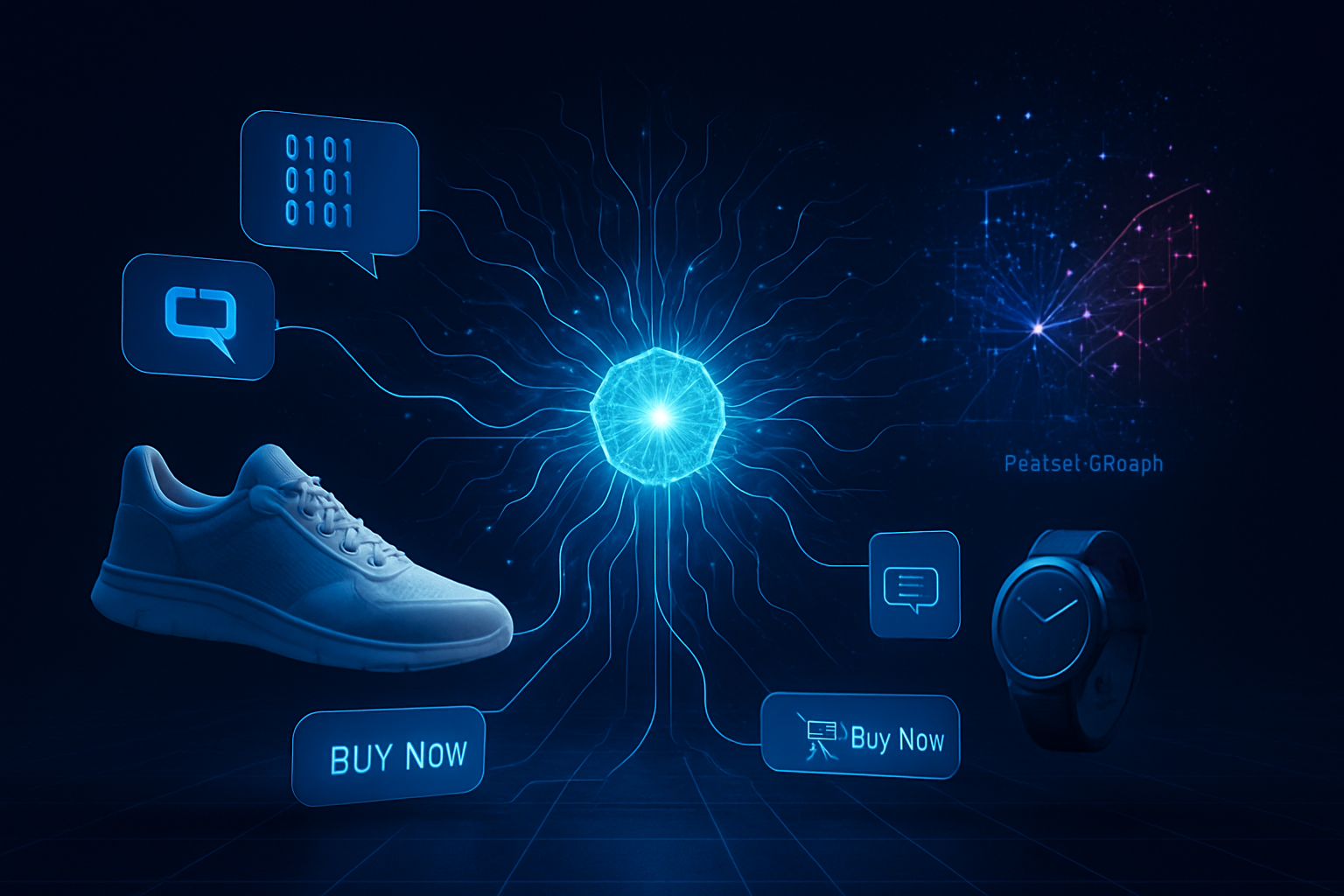
    In a move that signals the end of the web browser’s monopoly on digital retail, Shopify Inc. (NYSE: SHOP) has officially launched its Winter ’26 ‘Renaissance’ Edition. The centerpiece of this semi-annual release is a radical new infrastructure known as "Agentic Storefronts," which allows products to be discovered, negotiated, and purchased entirely within AI-native environments. By decoupling the checkout process from traditional websites and embedding it directly into platforms like ChatGPT and Perplexity, Shopify is positioning itself as the underlying "commerce operating system" for a world where AI agents, not humans, do the window shopping.

    The "Renaissance" branding is no accident; Shopify is pitching this as a rebirth of commerce for the post-SaaS era. As of late January 2026, the company has successfully transitioned from a platform that hosts websites to a decentralized product graph. This allows merchants to meet consumers wherever a conversation is happening—be it a voice-activated smart assistant, a research-heavy session on Perplexity, or a creative brainstorming thread in OpenAI’s latest models. The immediate significance is clear: the "destination URL" is no longer the primary goal of digital marketing; instead, "presence" within the latent space of Large Language Models (LLMs) has become the new retail frontier.

    Breaking the Browser: The Technical Architecture of Agentic Commerce

    The technical backbone of the Winter ’26 Edition is the Universal Commerce Protocol (UCP), an open-source standard co-developed by Shopify and Google (NASDAQ: GOOGL). UCP replaces traditional web-scraping methods with a standardized language that allows AI agents to interact directly with a merchant’s backend. This allows an AI to perform complex tasks that were previously impossible without a visual interface, such as checking real-time inventory, applying dynamic loyalty discounts, and validating shipping constraints in sub-100ms response times. This shifts the merchant’s priority from Search Engine Optimization (SEO) to Generative Engine Optimization (GEO), where the goal is to provide high-fidelity, machine-readable data that an AI agent can trust and recommend.

    Alongside UCP, Shopify has introduced Storefront Model Context Protocol (MCP) servers. This implementation allows developers to connect any LLM—whether it’s a massive model from Anthropic or a nimble, local Llama variant—directly to a store’s live commerce data. This is supported by SimGym, a high-fidelity simulation environment where merchants can stress-test their "agentic logic." In SimGym, brands can run millions of simulated interactions with autonomous shoppers to see how their pricing strategies and discount codes perform when negotiated by AI agents before these features ever touch a real customer.

    The move marks a departure from the "headless" commerce trends of the early 2020s. While headless commerce focused on decoupling the frontend from the backend, Agentic Storefronts effectively remove the human-facing frontend entirely for a segment of the buyer journey. Industry experts have lauded this as a breakthrough in reducing friction, noting that it solves the "last mile" problem of AI discovery—the transition from talking about a product to actually owning it.

    The Battle for the 'Product Graph': Strategic Implications for Big Tech

    This development reshapes the competitive landscape for tech giants and AI startups alike. By partnering with OpenAI and Perplexity, Shopify has secured a "Day 1" advantage for its merchants. In ChatGPT, a new "Instant Checkout" feature allows users to buy products directly within the chat interface, with Shopify acting as the silent merchant of record. Similarly, Perplexity’s "Buy with Pro" integration uses Shopify’s specialized LLMs to enrich product data, ensuring that conversational search results are not only accurate but also actionable.

    This puts significant pressure on Amazon.com, Inc. (NASDAQ: AMZN), which has traditionally relied on being the starting point for product searches. As more consumers turn to general-purpose AI assistants for discovery, Amazon’s "walled garden" approach faces a structural threat. If Shopify can successfully aggregate enough merchant data into a "Master Product Graph of the Internet," it effectively turns every AI interface into a Shopify-powered storefront, bypassing the need for a central marketplace. Meanwhile, Microsoft Corp. (NASDAQ: MSFT) has also joined the fray, integrating Shopify’s Agentic Storefronts into Copilot, allowing enterprise users to handle procurement and office supply restocks via simple natural language commands.

    For startups, the "Agentic Plan" is a potential game-changer. Shopify is now offering its AI distribution network to brands on competing platforms like Magento or BigCommerce (NASDAQ: BIGC). This "Trojan Horse" strategy allows Shopify to capture transaction volume even from merchants who don’t use their core website builder, further solidifying their grip on the global commerce infrastructure.

    A New AI Milestone: From Information to Transaction

    The Winter ’26 Edition represents a wider shift in the AI landscape: the transition from "Information AI" to "Action AI." For years, AI was limited to summarizing text or generating images; now, it is capable of executing financial transactions and managing logistics. This follows the broader industry trend of "Distributed Presence," where a brand’s value is no longer tied to its physical or digital real estate, but to its ability to be correctly represented in the "mind" of an AI.

    However, this transition is not without its concerns. Marketing agencies have already begun to point out the "post-purchase gap." While Agentic Storefronts are excellent for discovery and the initial sale, the customer service journey—returns, tracking, and nuanced troubleshooting—still often requires a hand-off to human-centric web portals or support agents. There is also the "hallucination risk"; if an AI agent misrepresents a product's capabilities or promises a discount that the UCP doesn't recognize, the merchant faces a potential branding and legal nightmare.

    Comparatively, this milestone is being likened to the launch of the original iPhone App Store. Just as that event forced every business to have a mobile strategy, the Winter ’26 Edition is forcing every retailer to have an "agentic strategy." The focus is shifting from "how does my website look?" to "how does my brand behave when interrogated by an AI?"

    The Horizon: Fully Autonomous Shopping Agents

    Looking ahead, the next phase of this evolution will likely involve "Fully Autonomous Agents"—software entities that have their own budgets and the authority to make purchases without human intervention. Imagine a home maintenance agent that realizes a dishwasher part is failing and autonomously shops for the best price, checks compatibility via the UCP, and handles the checkout through a Shopify Agentic Storefront, all while the homeowner is at work.

    Near-term developments will likely focus on closing the post-purchase loop, bringing returns and tracking into the same AI conversation. Developers are already using Shopify’s "Hydrogen" framework to build custom, brand-specific agents that act as personal shoppers with a deep understanding of a customer’s specific tastes and past purchase history. The challenge remains in standardization; while UCP is a strong start, universal adoption across all AI labs will be necessary to prevent a fragmented experience where some products are "AI-buyable" and others are not.

    Final Reflections: The Renaissance of Retail

    Shopify’s Winter ’26 'Renaissance' Edition is more than a software update; it is a declaration that the era of the static storefront is over. By providing the tools for Agentic Storefronts, Shopify (NYSE: SHOP) has successfully pivoted from being a tool for building websites to being the essential protocol for the future of trade. The integration with ChatGPT and Perplexity proves that the most valuable real estate in 2026 is no longer a URL, but the conversational interface.

    The key takeaway for the industry is that the barrier between "finding" and "buying" has been permanently lowered. In the coming months, watch for a surge in "AI-first" brands—companies that launch without a traditional website, opting instead to exist solely as a data feed within the agentic ecosystem. As we move further into 2026, the success of this development will be measured not by web traffic, but by how seamlessly AI agents can navigate the complexities of human commerce.


    This content is intended for informational purposes only and represents analysis of current AI developments.

    TokenRing AI delivers enterprise-grade solutions for multi-agent AI workflow orchestration, AI-powered development tools, and seamless remote collaboration platforms.
    For more information, visit https://www.tokenring.ai/.
  • The Death of the Checkout Button: How Google, Shopify, and Walmart’s New Protocol Handed the Credit Card to AI

    The Death of the Checkout Button: How Google, Shopify, and Walmart’s New Protocol Handed the Credit Card to AI

    The landscape of global retail has shifted overnight following the official launch of the Universal Commerce Protocol (UCP) at the 2026 National Retail Federation's "Retail’s Big Show." Led by a powerhouse coalition including Alphabet Inc. (NASDAQ: GOOGL), Shopify Inc. (NYSE: SHOP), and Walmart Inc. (NYSE: WMT), the new open standard represents the most significant evolution in digital trade since the introduction of SSL encryption. UCP effectively creates a standardized, machine-readable language that allows AI agents to navigate the web, negotiate prices, and execute financial transactions autonomously, signaling the beginning of the "agentic commerce" era.

    For consumers, this means the end of traditional "window shopping" and the friction of multi-step checkout pages. Instead of a human user manually searching for a product, comparing prices, and entering credit card details, a personal AI agent can now interpret a simple voice command—"find me the best deal on a high-performance blender and have it delivered by Friday"—and execute the entire lifecycle of the purchase across any UCP-compliant retailer. This development marks a transition from a web built for human clicks to a web built for autonomous API calls.

    The Mechanics of the Universal Commerce Protocol

    Technically, UCP is being hailed by developers as the "HTTP of Commerce." Released under the Apache 2.0 license, the protocol functions as an abstraction layer over existing retail infrastructure. At its core, UCP utilizes a specialized version of the Model Context Protocol (MCP), which allows Large Language Models (LLMs) to securely access real-time inventory, shipping tables, and personalized pricing data. Merchants participating in the ecosystem host a standardized manifest at a .well-known/ucp endpoint, which acts as a digital welcome mat for AI agents, detailing exactly what capabilities the storefront supports—from "negotiation" to "loyalty-linking."

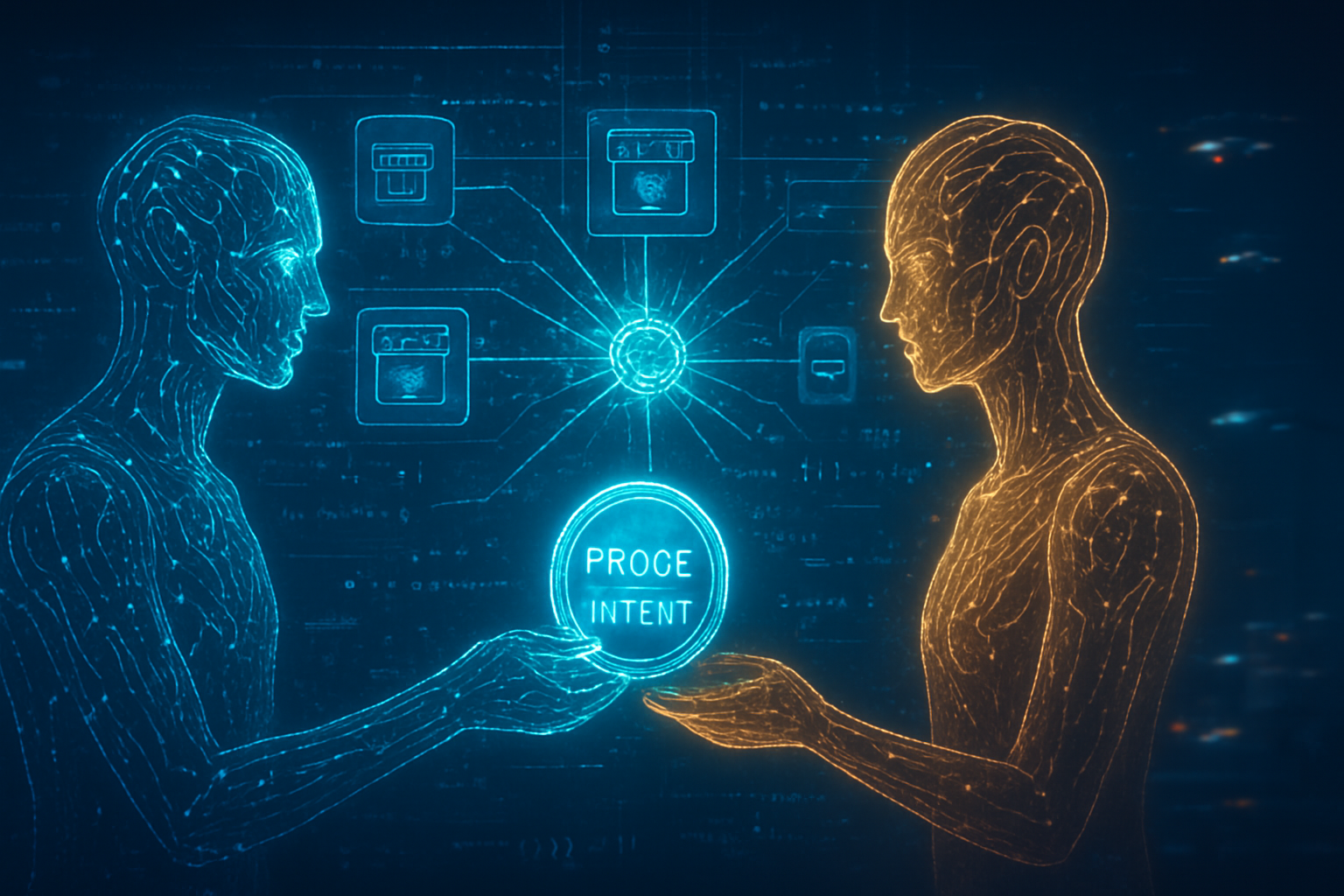
    One of the most innovative technical specifications within UCP is the Agent Payments Protocol (AP2). To solve the "trust gap"—the fear that an AI might go on an unauthorized spending spree—AP2 introduces a cryptographic "Proof of Intent" system. Before a transaction can be finalized, the agent must generate a tokenized signature from the user’s secure wallet, which confirms the specific item and price ceiling for that individual purchase. This ensures that while the agent can browse and negotiate autonomously, it cannot deviate from the user’s explicit financial boundaries. Initial reactions from the AI research community have been overwhelmingly positive, with experts noting that UCP provides the first truly scalable framework for "AI-to-AI" negotiation, where a consumer's agent talks directly to a merchant's "Sales Agent" to settle terms in milliseconds.

    The Alliance Against the "Everything Store"

    Industry analysts view the collaboration between Google, Shopify, and Walmart as a coordinated strategic strike against the closed-loop dominance of Amazon.com, Inc. (NASDAQ: AMZN). By establishing an open standard, these companies are effectively creating a decentralized alternative to the Amazon ecosystem. Shopify has already integrated UCP across its entire merchant base, making millions of independent stores "agent-ready" instantly. This allows a small boutique to offer the same level of frictionless, AI-driven purchasing power as a tech giant, provided they adhere to the UCP standard.

    The competitive implications are profound. For Google, UCP transforms Google Gemini from a search engine into a powerful transaction engine, keeping users within their ecosystem while they shop. For Walmart and Target Corporation (NYSE: TGT), it ensures their inventory is at the "fingertips" of every major AI agent, regardless of whether that agent was built by OpenAI, Anthropic, or Apple. This move shifts the competitive advantage away from who has the best website interface and toward who has the most efficient supply chain and the most competitive real-time pricing APIs.

    The Social and Ethical Frontier of Agentic Commerce

    The broader significance of UCP extends into the very fabric of how our economy functions. We are witnessing the birth of "Headless Commerce," a trend where the frontend user interface is increasingly bypassed. While this offers unprecedented convenience, it also raises significant concerns regarding data privacy and "algorithmic price discrimination." Consumer advocacy groups have already begun questioning whether AI agents, in their quest to find the "best price," might inadvertently share too much personal data, or if merchants will use UCP to offer dynamic pricing that fluctuates based on an individual user's perceived "urgency" to buy.

    Furthermore, UCP represents a pivot point in the AI landscape. It moves AI from the realm of "content generation" to "economic agency." This shift mirrors previous milestones like the launch of the App Store or the migration to the cloud, but with a more autonomous twist. The concern remains that as we delegate our purchasing power to machines, the "serendipity" of shopping—discovering a product you didn't know you wanted—will be replaced by a sterile, hyper-optimized experience governed purely by parameters and protocols.

    The Road Ahead: From Assistants to Economic Actors

    In the near term, expect to see an explosion of "agent-first" shopping apps and browser extensions that leverage UCP to automate routine household purchases. We are also likely to see the emergence of "Bargain Agents"—AI specialized specifically in negotiating bulk discounts or finding hidden coupons across the UCP network. However, the road ahead is not without challenges; the industry must still solve the "returns and disputes" problem. If an AI agent buys the wrong item due to a misinterpreted prompt, who is legally liable—the user, the AI developer, or the merchant?

    Long-term, experts predict that UCP will lead to a "negotiation-based economy." Rather than static prices listed on a screen, prices could become fluid, determined by millisecond-long auctions between consumer agents and merchant agents. As this technology matures, the "purchase" may become just one part of a larger autonomous workflow, where your AI agent not only buys your groceries but also coordinates the drone delivery through a UCP-integrated logistics provider, all without a single human notification.

    A New Era for Global Trade

    The launch of the Universal Commerce Protocol marks a definitive end to the "search-and-click" era of the internet. By standardizing how AI interacts with the marketplace, Google, Shopify, and Walmart have laid the tracks for a future where commerce is invisible, ubiquitous, and entirely autonomous. The key takeaway from this launch is that the value in the retail chain has shifted from the "digital shelf" to the "digital agent."

    As we move into the coming months, the industry will be watching closely to see how quickly other major retailers and financial institutions adopt the UCP standard. The success of this protocol will depend on building a critical mass of "agent-ready" endpoints and maintaining a high level of consumer trust in the AP2 security layer. For now, the checkout button is still here—but it’s starting to look like a relic of a slower, more manual past.


    This content is intended for informational purposes only and represents analysis of current AI developments.

    TokenRing AI delivers enterprise-grade solutions for multi-agent AI workflow orchestration, AI-powered development tools, and seamless remote collaboration platforms.
    For more information, visit https://www.tokenring.ai/.

  • The End of the Storefront: Shopify and Perplexity Usher in the Era of Agentic Commerce

    The End of the Storefront: Shopify and Perplexity Usher in the Era of Agentic Commerce

    The traditional e-commerce landscape is undergoing its most radical transformation since the dawn of the mobile web. In a series of landmark announcements during the "Winter '26 RenAIssance" event and the National Retail Federation's "Big Show" this month, Shopify (NYSE: SHOP) has unveiled its vision for "Agentic Storefronts." This new infrastructure shift allows products to be discovered, compared, and purchased entirely within the conversational interfaces of AI platforms like Perplexity, ChatGPT, and Gemini. Rather than redirecting users to a traditional website, Shopify is effectively dissolving the storefront into the background, turning AI assistants into autonomous shopping agents capable of executing complex transactions.

    The immediate significance of this development cannot be overstated. For decades, the "click" has been the primary currency of the internet. However, with the integration of Shopify’s global product catalog into Perplexity’s "Buy with Pro" and Google’s (NASDAQ: GOOGL) new Universal Commerce Protocol, the industry is shifting toward a "Zero-Click" economy. In this new paradigm, the marketing funnel—awareness, consideration, and purchase—is collapsing into a single, goal-oriented conversation. For consumers, this means the end of manual form-filling and site-hopping; for merchants, it represents a high-stakes race to become "agent-ready" or risk total invisibility in an AI-dominated search landscape.

    Technical Foundations: From Web Pages to Agentic Protocols

    At the heart of this shift is the Universal Commerce Protocol (UCP), a collaborative open standard co-announced in January 2026 by Shopify, Google, and major retailers like Walmart (NYSE: WMT) and Target (NYSE: TGT). Unlike previous API integrations that required bespoke connections for every store, UCP provides a standardized language for AI agents to interact with a merchant’s backend. This allows an AI to understand real-time inventory levels, complex loyalty program rules, and subscription billing logic across thousands of different brands simultaneously. For the first time, an AI agent can act as a "Universal Cart," building a single order containing a pair of boots from one Shopify merchant and organic wool socks from another, then executing a unified checkout in a single step.

    To support this, Shopify has retooled its entire platform to be "agent-ready by default." This involves the use of specialized Large Language Models (LLMs) that automatically enrich merchant data—transforming basic product descriptions into structured, machine-readable "knowledge graphs." These graphs allow AI agents to answer nuanced questions that traditional search engines struggle with, such as "Which of these cameras is best for a beginner vlogger who mostly shoots in low light?" By providing high-fidelity data directly to the AI, Shopify ensures that its merchants' products are recommended accurately and persuasively.

    To mitigate the risk of "AI hallucinations"—where an agent might mistakenly promise a discount or a feature that doesn't exist—Shopify introduced "SimGym." This technical sandbox allows merchants to run millions of simulated "agentic shoppers" through their store to stress-test how different AI models interact with their pricing and logic. This ensures that when a real-world agent from Perplexity or OpenAI attempts a purchase, the transaction flows seamlessly without technical friction or pricing errors. Initial reactions from the AI research community have praised the move as a necessary "interoperability layer" that prevents the fragmentation of the AI-driven economy.

    The Battle for the Shopping Operating System

    This shift has ignited a fierce strategic conflict between the "Aggregators" and the "Infrastructure" providers. Tech giants like Amazon (NASDAQ: AMZN) and Alphabet Inc. (NASDAQ: GOOGL) are vying to become the primary interface for shopping. Amazon’s Rufus assistant has recently moved into a "Buy for Me" beta, allowing the agent to navigate external websites and handle form-filling for users, effectively turning the Amazon app into a universal browser for all commerce. Meanwhile, OpenAI has introduced "Conversational Ads" in ChatGPT, where brands pay to be the "suggested action" within a relevant dialogue, such as suggesting a specific brand of hiking gear when a user asks for a mountain itinerary.

    Shopify’s strategy with Agentic Storefronts is a direct defensive maneuver against this encroachment. By positioning itself as the "Utility Grid" of commerce, Shopify aims to ensure that no matter which AI interface a consumer chooses, the underlying transaction and data remain under the merchant's control. Shopify's "Agentic Plan" even allows non-Shopify brands to list their products in the Shopify Catalog to gain this AI visibility, a move that directly challenges the walled gardens of Amazon and Google Shopping. This decentralization ensures that the merchant remains the "Seller of Record," preserving their direct relationship with the customer and their first-party data.

    For startups and mid-tier AI labs, this development is a massive boon. By leveraging the Universal Commerce Protocol and Shopify’s infrastructure, smaller AI companies can offer "shopping capabilities" that rival those of the tech giants without needing to build their own massive e-commerce backends. This levels the playing field, allowing niche AI assistants—such as those focused on fashion, home improvement, or sustainable living—to become powerful sales channels. However, the competitive pressure is mounting on legacy search engines, as high-intent "buy" queries move away from traditional blue links and toward agentic platforms.

    Redefining the Retail Landscape: The Rise of GEO

    The broader significance of agentic commerce lies in the death of traditional Search Engine Optimization (SEO) and the rise of Generative Engine Optimization (GEO). In 2026, appearing on the first page of Google is no longer the ultimate goal; instead, brands must focus on being the "chosen recommendation" of an AI agent. This requires a fundamental shift in marketing, as "Agentic Architects" replace traditional SEO specialists. These new professionals focus on ensuring a brand's data is verified, structured, and "trustworthy" enough for an AI to stake its reputation on a recommendation.

    However, this transition is not without concerns. The "Inertia Tax" is becoming a real threat for legacy retailers who have failed to clean their product data. AI agents are increasingly ignoring stores with inconsistent data or slow API responses, leading to a massive loss in traffic and revenue for those who haven't modernized. Furthermore, liability remains a contentious issue. If an AI agent from a third-party platform misquotes a price or a warranty, current industry standards generally place the legal burden on the merchant. This has led to the emergence of "Compliance Agents"—specialized AI systems whose sole job is to monitor and audit what other bots are saying about a brand in real-time.

    Comparatively, this milestone is being viewed as the "iPhone moment" for e-commerce. Just as the smartphone shifted commerce from desktops to pockets, agentic storefronts are shifting commerce from active browsing to passive, goal-oriented fulfillment. The focus has moved from "Where can I buy this?" to "Get me this," representing a move toward an internet that is increasingly invisible but more functional than ever before.

    The Horizon: Autonomous Personal Shoppers

    In the near term, we can expect the rollout of "Automatic Price-Drop Buying," a feature already being piloted by Amazon’s Rufus. Users will soon be able to set a "buy order" for a specific item, and their AI agent will autonomously scan the web and execute the purchase the moment the price hits the target. Beyond simple transactions, we are moving toward "Proactive Commerce," where AI agents, aware of a user's schedule and past habits, might say, "I noticed you’re low on coffee and have a busy week ahead; I’ve ordered your favorite blend from the local roaster to arrive tomorrow morning."

    The long-term challenge will be the "Identity and Trust" layer. As AI agents gain more autonomy, verifying the identity of the buyer and the legitimacy of the merchant becomes paramount. We expect the development of "Agentic Passports," decentralized identity markers that allow agents to prove they have the user's permission to spend money without sharing sensitive credit card details directly with every merchant. Experts predict that by the end of 2027, over 40% of all digital transactions will be initiated and completed by AI agents without a human ever visiting a product page.

    Conclusion: A New Era of Frictionless Exchange

    The launch of Shopify’s Agentic Storefronts and the adoption of the Universal Commerce Protocol mark a definitive end to the "search and click" era of the internet. By allowing commerce to happen natively within the world’s most powerful AI models, Shopify and Perplexity are setting the stage for a future where the friction of shopping is virtually eliminated. The key takeaways for the industry are clear: data is the new storefront, and interoperability is the new competitive advantage.

    This development will likely be remembered as the moment when AI transitioned from a novelty tool to the fundamental engine of the global economy. As we move deeper into 2026, the industry will be watching closely to see how the "Inertia Tax" affects legacy retailers and whether the Universal Commerce Protocol can truly hold its ground against the walled gardens of Big Tech. For now, one thing is certain: the way we buy things has changed forever, and the "store" as we knew it is becoming a ghost of the pre-agentic past.


    This content is intended for informational purposes only and represents analysis of current AI developments.

    TokenRing AI delivers enterprise-grade solutions for multi-agent AI workflow orchestration, AI-powered development tools, and seamless remote collaboration platforms.
    For more information, visit https://www.tokenring.ai/.
  • The HTTP of Shopping: Google Unveils Universal Commerce Protocol to Power the AI Agent Economy

    The HTTP of Shopping: Google Unveils Universal Commerce Protocol to Power the AI Agent Economy

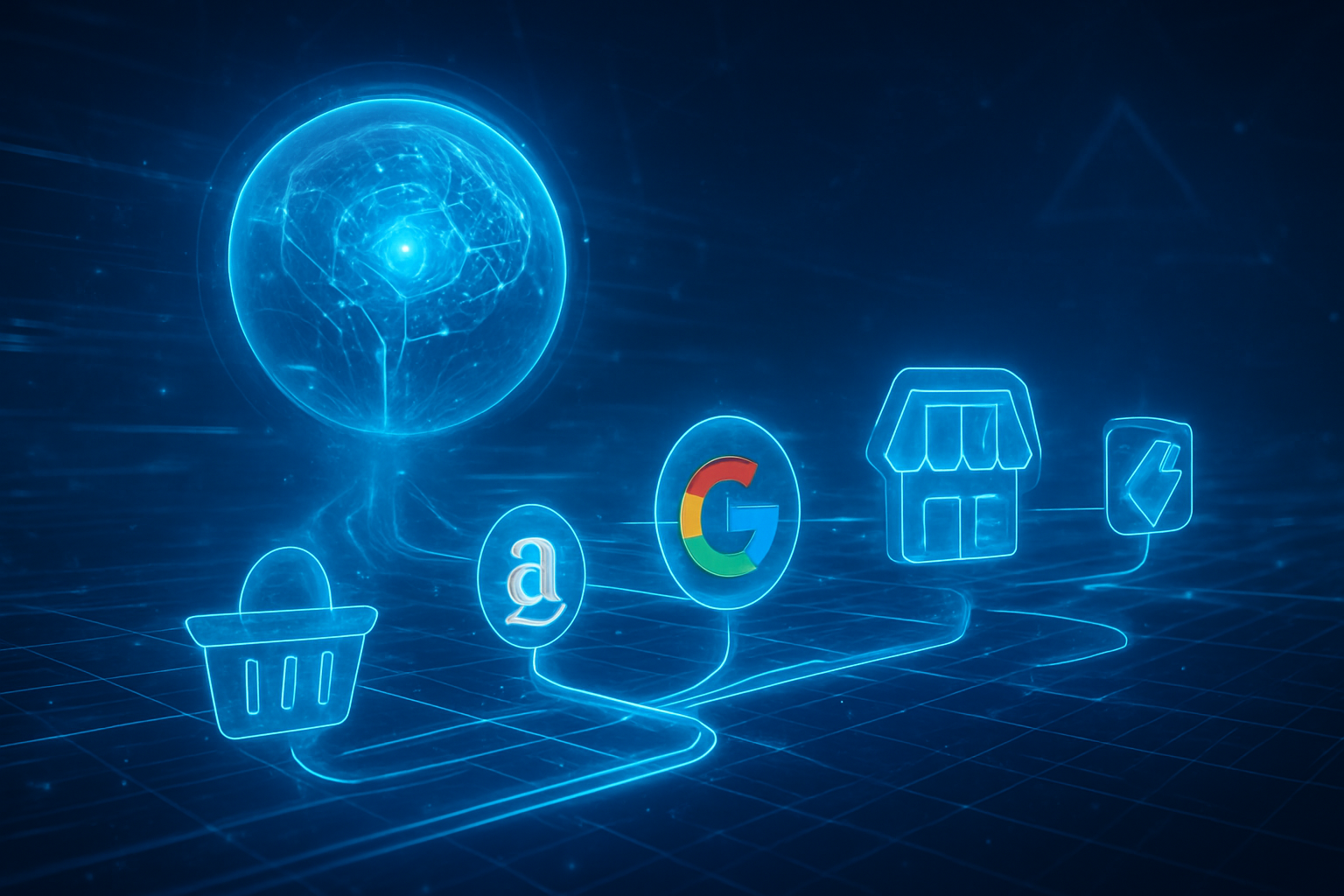
    In a landmark announcement at the National Retail Federation (NRF) conference on January 11, 2026, Alphabet Inc. (NASDAQ: GOOGL) officially launched the Universal Commerce Protocol (UCP), an open-source standard designed to enable AI agents to execute autonomous purchases across the web. Developed in collaboration with retail powerhouses like Shopify Inc. (NYSE: SHOP) and Walmart Inc. (NYSE: WMT), UCP acts as a "common language" for commerce, allowing AI assistants to move beyond simple product recommendations to managing the entire transaction lifecycle—from discovery and price negotiation to secure checkout and delivery coordination.

    The significance of this development cannot be overstated, as it marks the definitive transition from "search-based" e-commerce to "agentic commerce." For decades, online shopping has relied on human users navigating fragmented websites, manually filling carts, and entering payment data. With UCP, an AI agent—whether it is Google’s Gemini, a specialized brand assistant, or an autonomous personal shopper—can now "talk" directly to a merchant’s backend, understanding real-time inventory levels, applying loyalty discounts, and finalizing orders without the user ever having to visit a traditional storefront.

    The Technical Architecture of Autonomous Buying

    At its core, UCP is a decentralized, "transport-agnostic" protocol published under the Apache 2.0 license. Unlike previous attempts at standardized shopping, UCP does not require a central marketplace. Instead, it utilizes a "server-selects" model for capability negotiation. When an AI agent initiates a commerce request, it queries a merchant’s standardized endpoint (typically located at /.well-known/ucp). The merchant’s server then "advertises" its capabilities—such as support for guest checkout, subscription management, or same-day delivery via the "Trust Triangle" framework. This intersection algorithm ensures that the agent and the retailer can synchronize their features instantly, regardless of the underlying platform.

    Security is handled through a sophisticated cryptographic "Trust Triangle" involving the User (the holder), the Business (the verifier), and the Payment Credential Provider (the issuer). Rather than handing over raw credit card details to an AI agent, users authorize a "mandate" via the Agent Payments Protocol (AP2). This mandate grants the agent a temporary, tokenized digital key to act within specific constraints, such as a $200 spending limit. This architecture ensures that even if an AI agent is compromised, the user’s primary financial data remains secure within a "Credential Provider" like Google Wallet or Apple Pay, which is managed by Apple Inc. (NASDAQ: AAPL).

    Industry experts have compared the launch of UCP to the introduction of HTTP in the early 1990s. "We are moving from an N×N problem to a 1×N solution," noted one lead developer on the project. Previously, five different AI agents would have needed thousands of bespoke integrations to work with a thousand different retailers. UCP collapses that complexity into a single interoperable standard, allowing any compliant agent to shop at any compliant store. This is bolstered by the protocol's compatibility with the Model Context Protocol (MCP), which allows AI models to call these commercial tools as native functions within their reasoning chains.

    Initial reactions from the AI research community have been largely positive, though some caution remains regarding the "agentic gap." While the technical pipes are now in place, researchers at firms like Gartner and Forrester point out that consumer trust remains a hurdle. Gartner predicts that while 2026 is the "inaugural year" of this technology, it may take until 2027 for multi-agent frameworks to handle the majority of end-to-end retail functions. Early testers have praised the protocol's ability to handle complex "multi-stop" shopping trips—for instance, an agent buying a specific brand of organic flour from Walmart and a niche sourdough starter from a Shopify-powered boutique in a single voice command.

    A New Competitive Landscape for Retail Giants

    The rollout of UCP creates a powerful counter-weight to the "walled garden" model perfected by Amazon.com, Inc. (NASDAQ: AMZN). While Amazon has dominated e-commerce by controlling the entire stack—from search to logistics—UCP empowers "open web" retailers to fight back. By adopting the protocol, a small merchant on Shopify can now be just as accessible to a Gemini-powered agent as a massive wholesaler. This allows retailers to remain the "Merchant of Record," retaining their direct customer relationships, branding, and data, rather than ceding that control to a third-party marketplace.

    For tech giants, the strategic advantages are clear. Google is positioning itself as the primary gateway for the next generation of intent-based traffic. By hosting the protocol and integrating it deeply into the Gemini app and Google Search's "AI Mode," the company aims to become the "operating system" for commerce. Meanwhile, Shopify has already integrated UCP into its core infrastructure, launching a new "Agentic Plan" that allows even non-Shopify brands to list their products in a UCP-compliant catalog, effectively turning Shopify into a massive, agent-friendly database.

    The competitive pressure is most visible in the partnership between Walmart and Google. By linking Walmart+ accounts directly to Gemini via UCP, users can now receive personalized recommendations based on their entire omnichannel purchase history. If a user tells Gemini, "I need the usual groceries delivered in two hours," the agent uses UCP to check Walmart's local inventory, apply the user's membership benefits, and trigger a same-day delivery—all within a chat interface. This seamlessness directly challenges Amazon’s "Buy with Prime" by offering a similarly frictionless experience across a much broader array of independent retailers.

    However, the protocol also raises significant antitrust questions. Regulators in the EU and the US are already scrutinizing whether Google’s role as both the protocol’s architect and a major agent provider creates an unfair advantage. There are concerns that Google could prioritize UCP-compliant merchants in search results or use the data gathered from agent interactions to engage in sophisticated price discrimination. As AI agents begin to negotiate prices on behalf of users, the traditional concept of a "list price" may vanish, replaced by a dynamic, agent-to-agent bidding environment.

    The Broader Significance: From Web to World

    UCP represents a fundamental shift in the AI landscape, moving large language models (LLMs) from being "knowledge engines" to "action engines." This milestone is comparable to the release of the first mobile App Store; it provides the infrastructure for a whole new class of applications. The move toward agentic commerce suggests that the primary way humans interact with the internet is shifting from "browsing" to "delegating." In this new paradigm, the quality of a retailer’s API and its UCP compliance may become more important than the aesthetic design of its website.

    The impact on consumer behavior could be profound. With autonomous agents handling the drudgery of price comparison and checkout, "cart abandonment"—a trillion-dollar problem in e-commerce—could be virtually eliminated. However, this raises concerns about impulsive or unauthorized spending. The "Trust Triangle" and the use of verifiable credentials are intended to mitigate these risks, but the social impact of removing the "friction" from spending money remains a topic of intense debate among behavioral economists.

    Furthermore, UCP's introduction highlights a growing trend of "Model-to-Model" (M2M) interaction. We are entering an era where a user’s AI agent might negotiate with a merchant’s AI agent to find the best possible deal. This "Agent2Agent" (A2A) communication is a core component of the UCP roadmap, envisioning a world where software handles the complexities of supply and demand in real-time, leaving humans to simply set the high-level goals.

    The Road Ahead: Global Rollout and Challenges

    In the near term, the industry can expect a rapid expansion of UCP capabilities. Phase 1, which launched this month, focuses on native checkout within the U.S. market. By late 2026, Google and its partners plan to roll out Phase 2, which will include international expansion into markets like India and Brazil, as well as the integration of post-purchase support. This means AI agents will soon be able to autonomously track packages, initiate returns, and resolve customer service disputes using the same standardized protocol.

    One of the primary challenges moving forward will be the standardization of "Product Knowledge." While UCP handles the transaction, the industry still lacks a universal way for agents to understand the nuanced attributes of every product (e.g., "Will this couch fit through my specific door frame?"). Future developments are expected to focus on "Spatial Commerce" and more advanced "Reasoning APIs" that allow agents to query a product’s physical dimensions and compatibility with a user’s existing environment before making a purchase.

    Experts also predict the rise of "Vertical Agents"—AI shoppers specialized in specific categories like high-end fashion, hardware, or groceries. These agents will leverage UCP to scan the entire web for the best value while providing expert-level advice. As these specialized agents proliferate, the race will be on for retailers to ensure their backend systems are "agent-ready," moving away from legacy databases toward real-time, UCP-enabled inventories.

    Summary of the New Commerce Era

    The launch of the Universal Commerce Protocol is a defining moment in the history of artificial intelligence. By standardizing the way AI agents interact with the global retail ecosystem, Google and its partners have laid the tracks for a multi-trillion-dollar agentic economy. The key takeaways from this announcement are the move toward decentralized, open standards, the empowerment of independent retailers against "walled gardens," and the introduction of "Trust Triangle" security to protect autonomous transactions.

    As we look toward the coming months, the industry will be watching for the first wave of "Agent-First" shopping apps and the potential response from competitors like Amazon. The significance of UCP lies not just in its code, but in its ability to turn the dream of a "personal digital assistant" into a practical reality that can navigate the physical and commercial world on our behalf. For businesses and consumers alike, the era of "browsing" is ending; the era of "doing" has begun.


    This content is intended for informational purposes only and represents analysis of current AI developments.

    TokenRing AI delivers enterprise-grade solutions for multi-agent AI workflow orchestration, AI-powered development tools, and seamless remote collaboration platforms.
    For more information, visit https://www.tokenring.ai/.