Tag: SiC

  • Beyond Silicon: The Dawn of a New Era in Chip Performance

    Beyond Silicon: The Dawn of a New Era in Chip Performance

    The relentless pursuit of faster, more efficient, and smaller chips to power the burgeoning demands of artificial intelligence, 5G/6G communications, electric vehicles, and quantum computing is pushing the semiconductor industry beyond the traditional confines of silicon. For decades, silicon has been the undisputed champion of electronics, but its inherent physical limitations are becoming increasingly apparent as the industry grapples with the challenges of Moore's Law. A new wave of emerging semiconductor materials is now poised to redefine chip performance, offering pathways to overcome these barriers and usher in an era of unprecedented technological advancement.

    These novel materials are not merely incremental improvements; they represent a fundamental shift in how advanced chips will be designed and manufactured. Their immediate significance lies in their ability to deliver superior performance and efficiency, enable further miniaturization, and provide enhanced thermal management crucial for increasingly powerful and dense computing architectures. From ultra-thin 2D materials to robust wide-bandgap semiconductors, the landscape of microelectronics is undergoing a profound transformation, promising a future where computing power is not only greater but also more sustainable and versatile.

    The Technical Revolution: Unpacking the Next-Gen Chip Materials

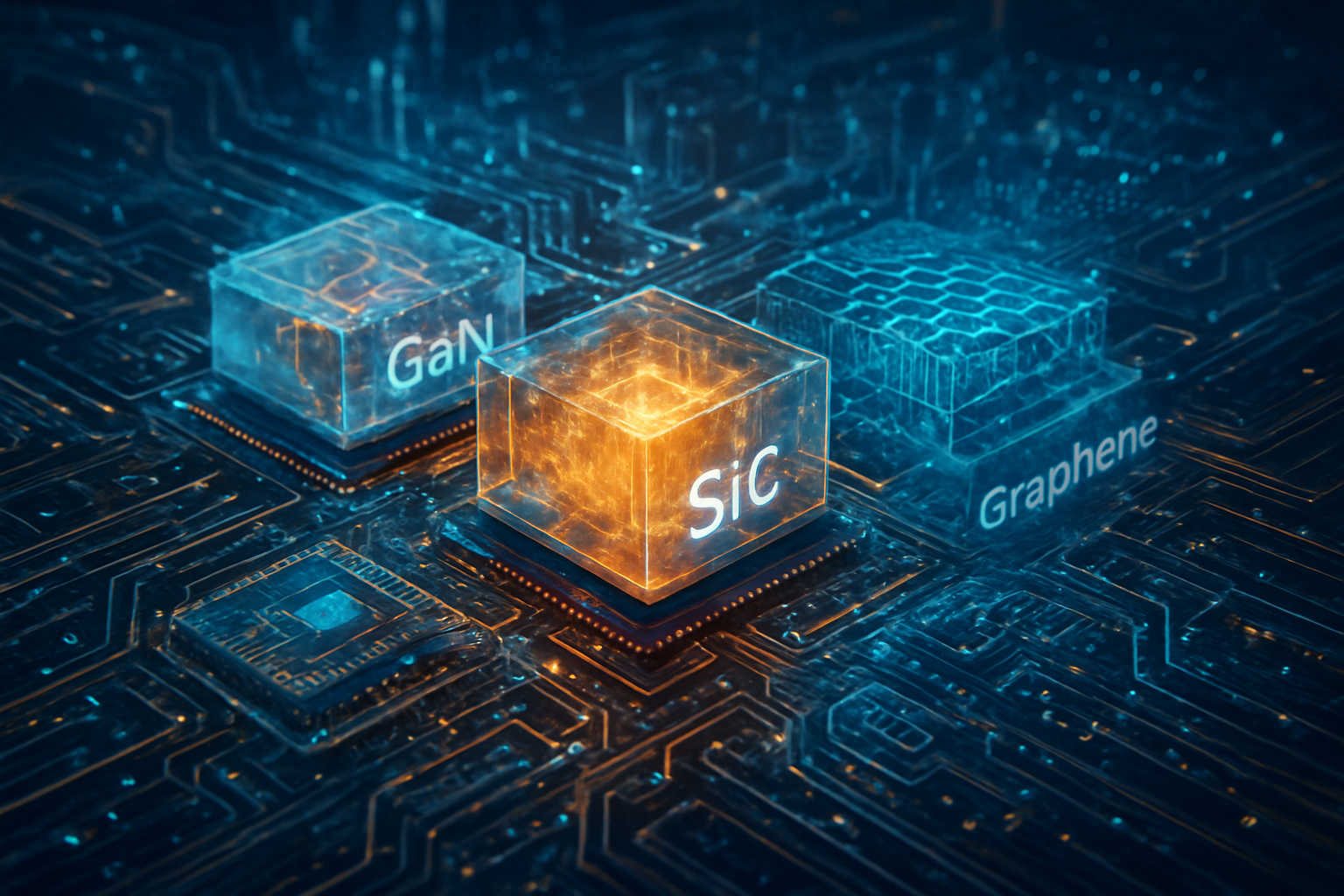
    The drive to transcend silicon's limitations has ignited a technical revolution in materials science, yielding a diverse array of emerging semiconductor compounds, each with unique properties poised to redefine chip performance. These innovations are not merely incremental upgrades but represent fundamental shifts in transistor design, power management, and overall chip architecture. The materials drawing significant attention include two-dimensional (2D) materials like graphene and molybdenum disulfide (MoS₂), wide-bandgap semiconductors such as Gallium Nitride (GaN) and Silicon Carbide (SiC), as well as more exotic contenders like indium-based compounds, chalcogenides, ultra-wide band gap (UWBG) materials, and superatomic semiconductors.

    Among the most promising are 2D materials. Graphene, a single layer of carbon atoms, boasts electron mobility up to 100 times greater than silicon, though its traditional lack of a bandgap hindered digital logic applications. Recent breakthroughs in 2024, however, have enabled the creation of semiconducting graphene on silicon carbide substrates with a usable bandgap of 0.6 eV, paving the way for ultra-fast graphene transistors. Molybdenum disulfide (MoS₂), another 2D material, offers a direct bandgap (1.2 eV in bulk) and high on/off current ratios (up to 10⁸), making it highly suitable for field-effect transistors (FETs) with electron mobilities reaching 700 cm²/Vs. These atomically thin materials provide superior electrostatic control and inherent scalability, mitigating short-channel effects prevalent in miniaturized silicon transistors. The AI research community views 2D materials with immense promise for ultra-fast, energy-efficient transistors and novel device architectures for future AI and flexible electronics.

    Gallium Nitride (GaN) and Silicon Carbide (SiC) represent the vanguard of wide-bandgap (WBG) semiconductors. GaN, with a bandgap of 3.4 eV, allows devices to handle higher breakdown voltages and offers switching speeds up to 100 times faster than silicon, coupled with superior thermal conductivity. This translates to significantly reduced energy losses and improved efficiency in high-power and high-frequency applications. SiC, with a bandgap of approximately 3.26 eV, shares similar advantages, excelling in high-power applications due to its ability to withstand higher voltages and temperatures, boasting thermal conductivity three times better than silicon. While silicon (NASDAQ: NVDA) remains dominant due to its established infrastructure, GaN and SiC are carving out significant niches in power electronics for electric vehicles, 5G infrastructure, and data centers. The power electronics community has embraced GaN, with the global GaN semiconductor market projected to surpass $28.3 billion by 2028, largely driven by AI-enabled innovation in design and manufacturing.

    Beyond these, indium-based materials like Indium Arsenide (InAs) and Indium Selenide (InSe) offer exceptionally high electron mobility, promising to triple intrinsic switching speeds and improve energy efficiency by an order of magnitude compared to current 3nm silicon technology. Indium-based materials are also critical for advancing Extreme Ultraviolet (EUV) lithography, enabling smaller, more precise features and 3D circuit production. Chalcogenides, a diverse group including sulfur, selenium, or tellurium compounds, are being explored for non-volatile memory and switching devices due to their unique phase change and threshold switching properties, offering higher data storage capacity than traditional flash memory. Meanwhile, Ultra-wide Band Gap (UWBG) materials such as gallium oxide (Ga₂O₃) and aluminum nitride (AlN) possess bandgaps significantly larger than 3 eV, allowing them to operate under extreme conditions of high voltage and temperature, pushing performance boundaries even further. Finally, superatomic semiconductors, exemplified by Re₆Se₈Cl₂, present a revolutionary approach where information is carried by "acoustic exciton-polarons" that move with unprecedented efficiency, theoretically enabling processing speeds millions of times faster than silicon. This discovery has been hailed as a potential "breakthrough in the history of chipmaking," though challenges like the scarcity and cost of rhenium remain. The overarching sentiment from the AI research community and industry experts is that these materials are indispensable for overcoming silicon's physical limits and fueling the next generation of AI-driven computing, with AI itself becoming a powerful tool in their discovery and optimization.

    Corporate Chessboard: The Impact on Tech Giants and Startups

    The advent of emerging semiconductor materials is fundamentally reshaping the competitive landscape of the technology industry, creating both immense opportunities and significant disruptive pressures for established giants, AI labs, and nimble startups alike. Companies that successfully navigate this transition stand to gain substantial strategic advantages, while those slow to adapt risk being left behind in the race for next-generation computing.

    A clear set of beneficiaries are the manufacturers and suppliers specializing in these new materials. In the realm of Gallium Nitride (GaN) and Silicon Carbide (SiC), companies like Wolfspeed (NYSE: WOLF), a leader in SiC wafers and power devices, and Infineon Technologies AG (OTCQX: IFNNY), which acquired GaN Systems, are solidifying their positions. ON Semiconductor (NASDAQ: ON) has significantly boosted its SiC market share, supplying major electric vehicle manufacturers. Other key players include STMicroelectronics (NYSE: STM), ROHM Co., Ltd. (OTCPK: ROHCY), Mitsubishi Electric Corporation (OTCPK: MIELY), Sumitomo Electric Industries (OTCPK: SMTOY), and Qorvo, Inc. (NASDAQ: QRVO), all investing heavily in GaN and SiC solutions for automotive, 5G, and power electronics. For 2D materials, major foundries like TSMC (NYSE: TSM) and Intel (NASDAQ: INTC) are investing in research and integration, alongside specialized firms such as Graphenea and Haydale Graphene Industries plc (LON: HAYD). In the indium-based materials sector, AXT Inc. (NASDAQ: AXTI) is a prominent manufacturer of indium phosphide substrates, and Indium Corporation leads in indium-based thermal interface materials.

    The implications for major AI labs and tech giants are profound. Hyperscale cloud providers like Alphabet (NASDAQ: GOOGL), Amazon (NASDAQ: AMZN), Microsoft (NASDAQ: MSFT), and Meta Platforms, Inc. (NASDAQ: META) are increasingly developing custom silicon and in-house AI chips. These companies will be major consumers of advanced components made from emerging materials, directly benefiting from enhanced performance for their AI workloads, improved cost efficiency, and greater supply chain resilience. For traditional chip designers like NVIDIA (NASDAQ: NVDA) and Advanced Micro Devices (NASDAQ: AMD), the imperative is to leverage these materials through advanced manufacturing processes and packaging to maintain their lead in AI accelerators. Intel (NASDAQ: INTC) is aggressively pushing its Gaudi accelerators and building out its AI software ecosystem, while simultaneously investing in new production facilities capable of handling advanced process nodes. The shift signifies a move towards more diversified hardware strategies across the industry, reducing reliance on single material or vendor ecosystems.

    The potential for disruption to existing products and services is substantial. While silicon remains the bedrock of modern electronics, emerging materials are already displacing it in niche applications, particularly in power electronics and RF. The long-term trajectory suggests a broader displacement in mass-market devices from the mid-2030s. This transition promises faster, more energy-efficient AI solutions, accelerating the development and deployment of AI across all sectors. Furthermore, these materials are enabling entirely new device architectures, such as monolithic 3D (M3D) integration and gate-all-around (GAA) transistors, which allow for unprecedented performance and energy efficiency in smaller footprints, challenging traditional planar designs. The flexibility offered by 2D materials also paves the way for innovative wearable and flexible electronics, creating entirely new product categories. Crucially, emerging semiconductors are at the core of the quantum revolution, with materials like UWBG compounds potentially critical for developing stable qubits, thereby disrupting traditional computing paradigms.

    Companies that successfully integrate these materials will gain significant market positioning and strategic advantages. This includes establishing technological leadership, offering products with superior performance differentiation (speed, efficiency, power handling, thermal management), and potentially achieving long-term cost reductions as manufacturing processes scale. Supply chain resilience, especially important in today's geopolitical climate, is enhanced by diversifying material sourcing. Niche players specializing in specific materials can dominate their segments, while strategic partnerships and acquisitions, such as Infineon's move to acquire GaN Systems, will be vital for accelerating adoption and market penetration. Ultimately, the inherent energy efficiency of wide-bandgap semiconductors positions companies using them favorably in a market increasingly focused on sustainable solutions and reducing the enormous energy consumption of AI workloads.

    A New Horizon: Wider Significance and Societal Implications

    The emergence of these advanced semiconductor materials marks a pivotal moment in the broader AI landscape, signaling a fundamental shift in how computational power will be delivered and sustained. The relentless growth of AI, particularly in generative models, large language models, autonomous systems, and edge computing, has placed unprecedented demands on hardware, pushing traditional silicon to its limits. Data centers, the very heart of AI infrastructure, are projected to see their electricity consumption rise by as much as 50% annually from 2023 to 2030, highlighting an urgent need for more energy-efficient and powerful computing solutions—a need that these new materials are uniquely positioned to address.

    The impacts of these materials on AI are multifaceted and transformative. 2D materials like graphene and MoS₂, with their atomic thinness and tunable bandgaps, are ideal for in-memory and neuromorphic computing, enabling logic and data storage simultaneously to overcome the Von Neumann bottleneck. Their ability to maintain high carrier mobility at sub-10 nm scales promises denser, more energy-efficient integrated circuits and advanced 3D monolithic integration. Gallium Nitride (GaN) and Silicon Carbide (SiC) are critical for power efficiency, reducing energy loss in AI servers and data centers, thereby mitigating the environmental footprint of AI. GaN's high-frequency capabilities also bolster 5G infrastructure, crucial for real-time AI data processing. Indium-based semiconductors are vital for high-speed optical interconnects within and between data centers, significantly reducing latency, and for enabling advanced Extreme Ultraviolet (EUV) lithography for ever-smaller chip features. Chalcogenides hold promise for next-generation memory and neuromorphic devices, offering pathways to more efficient "in-memory" computation. Ultra-wide bandgap (UWBG) materials will enable robust AI applications in extreme environments and efficient power management for increasingly power-hungry AI data centers. Most dramatically, superatomic semiconductors like Re₆Se₈Cl₂, could deliver processing speeds millions of times faster than silicon, potentially unlocking AI capabilities currently unimaginable by minimizing heat loss and maximizing information transfer efficiency.

    Despite their immense promise, the widespread adoption of these materials faces significant challenges. Cost and scalability remain primary concerns; many new materials are more expensive to produce than silicon, and scaling manufacturing to meet global AI demand is a monumental task. Manufacturing complexity also poses a hurdle, requiring the development of new, standardized processes for material synthesis, wafer production, and device fabrication. Ensuring material quality and long-term reliability in diverse AI applications is an ongoing area of research. Furthermore, integration challenges involve seamlessly incorporating these novel materials into existing semiconductor ecosystems and chip architectures. Even with improved efficiency, the increasing power density of AI chips will necessitate advanced thermal management solutions, such as microfluidics, to prevent overheating.

    Comparing this materials-driven shift to previous AI milestones reveals a deeper level of innovation. The early AI era relied on general-purpose CPUs. The Deep Learning Revolution was largely catalyzed by the widespread adoption of GPUs (NASDAQ: NVDA), which provided the parallel processing power needed for neural networks. This was followed by the development of specialized AI Accelerators (ASICs) by companies like Alphabet (NASDAQ: GOOGL), further optimizing performance within the silicon paradigm. These past breakthroughs were primarily architectural innovations, optimizing how silicon chips were used. In contrast, the current wave of emerging materials represents a fundamental shift at the material level, aiming to move beyond the physical limitations of silicon itself. Just as GPUs broke the CPU bottleneck, these new materials are designed to break the material-science bottlenecks of silicon regarding power consumption and speed. This focus on fundamental material properties, coupled with an explicit drive for energy efficiency and sustainability—a critical concern given AI's growing energy footprint—differentiates this era. It promises not just incremental gains but potentially transformative leaps, enabling new AI architectures like neuromorphic computing and unlocking AI capabilities that are currently too large, too slow, or too energy-intensive to be practical.

    The Road Ahead: Future Developments and Expert Predictions

    The trajectory of emerging semiconductor materials points towards a future where chip performance is dramatically enhanced, driven by a mosaic of specialized materials each tailored for specific applications. The near-term will see continued refinement of fabrication methods for 2D materials, with MIT researchers already developing low-temperature growth technologies for integrating transition metal dichalcogenides (TMDs) onto silicon chips. Chinese scientists have also made strides in mass-producing wafer-scale 2D indium selenide (InSe) semiconductors. These efforts aim to overcome scalability and uniformity challenges, pushing 2D materials into niche applications like high-performance sensors, flexible displays, and initial prototypes for ultra-efficient transistors. Long-term, 2D materials are expected to enable monolithic 3D integration, extending Moore's Law and fostering entirely new device types like "atomristor" non-volatile switches, with the global 2D materials market projected to reach $4 billion by 2031.

    Gallium Nitride (GaN) is poised for a breakthrough year in 2025, with a major industry shift towards 300mm wafers, spearheaded by Infineon Technologies AG (OTCQX: IFNNY) and Intel (NASDAQ: INTC). This will significantly boost manufacturing efficiency and cost-effectiveness. GaN's near-term adoption will accelerate in consumer electronics, particularly fast chargers, with the market for mobile fast charging projected to reach $700 million in 2025. Long-term, GaN will become a cornerstone for high-power and high-frequency applications across 5G/6G infrastructure, electric vehicles, and data centers, with some experts predicting it will become the "go-to solution for next-generation power applications." The global GaN semiconductor market is projected to reach $28.3 billion by 2028.

    For Silicon Carbide (SiC), near-term developments include its continued dominance in power modules for electric vehicles and industrial applications, driven by increased strategic partnerships between manufacturers like Wolfspeed (NYSE: WOLF) and automotive OEMs. Efforts to reduce costs through improved manufacturing and larger 200mm wafers, with Bosch planning production by 2026, will be crucial. Long-term, SiC is forecasted to become the de facto standard for high-performance power electronics, expanding into a broader range of applications and research areas such as high-temperature CMOS and biosensors. The global SiC chip market is projected to reach approximately $12.8 billion by 2025.

    Indium-based materials, such as Indium Phosphide (InP) and Indium Selenide (InSe), are critical enablers for next-generation Extreme Ultraviolet (EUV) lithography in the near term, allowing for more precise features and advanced 3D circuit production. Chinese researchers have already demonstrated InSe transistors outperforming silicon's projected capabilities for 2037. InP is also being explored for RF applications beyond 100 GHz, supporting 6G communication. Long-term, InSe could become a successor to silicon for ultra-high-performance, low-power chips across AI, autonomous vehicles, and military applications, with the global indium phosphide market projected to reach $8.3 billion by 2030.

    Chalcogenides are anticipated to play a crucial role in next-generation memory and logic ICs in the near term, leveraging their unique phase change and threshold switching properties. Researchers are focusing on growing high-quality thin films for direct integration with silicon. Long-term, chalcogenides are expected to become core materials for future semiconductors, driving high-performance and low-power devices, particularly in neuromorphic and in-memory computing.

    Ultra-wide bandgap (UWBG) materials will see near-term adoption in niche applications demanding extreme robustness, high-temperature operation, and high-voltage handling beyond what SiC and GaN can offer. Research will focus on reducing defects and improving material quality. Long-term, UWBG materials will further push the boundaries of power electronics, enabling even higher efficiency and power density in critical applications, and fostering advanced sensors and detectors for harsh environments.

    Finally, superatomic semiconductors like Re₆Se₈Cl₂ are in their nascent stages, with near-term efforts focused on fundamental research and exploring similar materials. Long-term, if practical transistors can be developed, they could revolutionize electronics speed, transmitting data hundreds or thousands of times faster than silicon, potentially allowing processors to operate at terahertz frequencies. However, due to the rarity and high cost of elements like Rhenium, initial commercial applications are likely to be in specialized, high-value sectors like aerospace or quantum computing.

    Across all these materials, significant challenges remain. Scalability and manufacturing complexity are paramount, requiring breakthroughs in cost-effective, high-volume production. Integration with existing silicon infrastructure is crucial, as is ensuring material quality, reliability, and defect control. Concerns about supply chain vulnerabilities for rare elements like gallium, indium, and rhenium also need addressing. Experts predict a future of application-specific material selection, where a diverse ecosystem of materials is optimized for different tasks. This will be coupled with increased reliance on heterogeneous integration and advanced packaging. AI-driven chip design is already transforming the industry, accelerating the development of specialized chips. The relentless pursuit of energy efficiency will continue to drive material innovation, as the semiconductor industry is projected to exceed $1 trillion by 2030, fueled by pervasive digitalization and AI. While silicon will remain dominant in the near term, new electronic materials are expected to gradually displace it in mass-market devices from the mid-2030s as they mature from research to commercialization.

    The Silicon Swan Song: A Comprehensive Wrap-up

    The journey beyond silicon represents one of the most significant paradigm shifts in the history of computing, rivaling the transition from vacuum tubes to transistors. The key takeaway is clear: the era of a single dominant semiconductor material is drawing to a close, giving way to a diverse and specialized materials ecosystem. Emerging materials such as 2D compounds, Gallium Nitride (GaN), Silicon Carbide (SiC), indium-based materials, chalcogenides, ultra-wide bandgap (UWBG) semiconductors, and superatomic materials are not merely incremental improvements; they are foundational innovations poised to redefine performance, efficiency, and functionality across the entire spectrum of advanced chips.

    This development holds immense significance for the future of AI and the broader tech industry. These materials are directly addressing the escalating demands for computational power, energy efficiency, and miniaturization that silicon is increasingly struggling to meet. They promise to unlock new capabilities for AI, enabling more powerful and sustainable models, driving advancements in autonomous systems, 5G/6G communications, electric vehicles, and even laying the groundwork for quantum computing. The shift is not just about faster chips but about fundamentally more efficient and versatile computing, crucial for mitigating the growing energy footprint of AI and expanding its reach into new applications and extreme environments. This transition is reminiscent of past hardware breakthroughs, like the widespread adoption of GPUs for deep learning, but it goes deeper, fundamentally altering the building blocks of computation itself.

    Looking ahead, the long-term impact will be a highly specialized semiconductor landscape where materials are chosen based on application-specific needs. This will necessitate deep collaboration between material scientists, chip designers, and manufacturers to overcome challenges related to cost, scalability, integration, and supply chain resilience. The coming weeks and months will be crucial for observing continued breakthroughs in material synthesis, large-scale wafer production, and the development of novel device architectures. Watch for the increased adoption of GaN and SiC in power electronics and RF applications, advanced packaging and 3D stacking techniques, and further breakthroughs in 2D materials. The application of AI itself in materials discovery will accelerate R&D cycles, creating a virtuous loop of innovation. Progress in Indium Phosphide capacity expansion and initial developments in UWBG and superatomic semiconductors will also be key indicators of future trends. The race to move beyond silicon is not just a technological challenge but a strategic imperative that will shape the future of artificial intelligence and, by extension, much of modern society.

    This content is intended for informational purposes only and represents analysis of current AI developments.

    TokenRing AI delivers enterprise-grade solutions for multi-agent AI workflow orchestration, AI-powered development tools, and seamless remote collaboration platforms.
    For more information, visit https://www.tokenring.ai/.
  • Electric Revolution Fuels Semiconductor Boom: A New Era for Automotive Innovation

    Electric Revolution Fuels Semiconductor Boom: A New Era for Automotive Innovation

    The automotive industry is undergoing a profound transformation, spearheaded by the rapid ascent of Electric Vehicles (EVs). This electrifying shift is not merely about sustainable transportation; it's a powerful catalyst reshaping the global semiconductor market, driving unprecedented demand and accelerating innovation at an astounding pace. As the world transitions from gasoline-powered engines to electric powertrains, the humble automobile is evolving into a sophisticated, software-defined supercomputer on wheels, with semiconductors becoming its very nervous system.

    This monumental change signifies a new frontier for technological advancement. EVs, by their very nature, are far more reliant on complex electronic systems for everything from propulsion and power management to advanced driver-assistance systems (ADAS) and immersive infotainment. Consequently, the semiconductor content per vehicle is skyrocketing, creating a massive growth engine for chipmakers and fundamentally altering strategic priorities across the tech and automotive sectors. The immediate significance of this trend lies in its potential to redefine competitive landscapes, forge new industry partnerships, and push the boundaries of what's possible in mobility, while also presenting significant challenges related to supply chain resilience and production costs.

    Unpacking the Silicon Heartbeat of Electric Mobility

    The technical demands of electric vehicles are pushing semiconductor innovation into overdrive, moving far beyond the traditional silicon-based chips of yesteryear. An average internal combustion engine (ICE) vehicle contains approximately $400 to $600 worth of semiconductors, but an EV's semiconductor content can range from $1,500 to $3,000 – a two to three-fold increase. This exponential rise is primarily driven by several key areas requiring highly specialized and efficient chips.

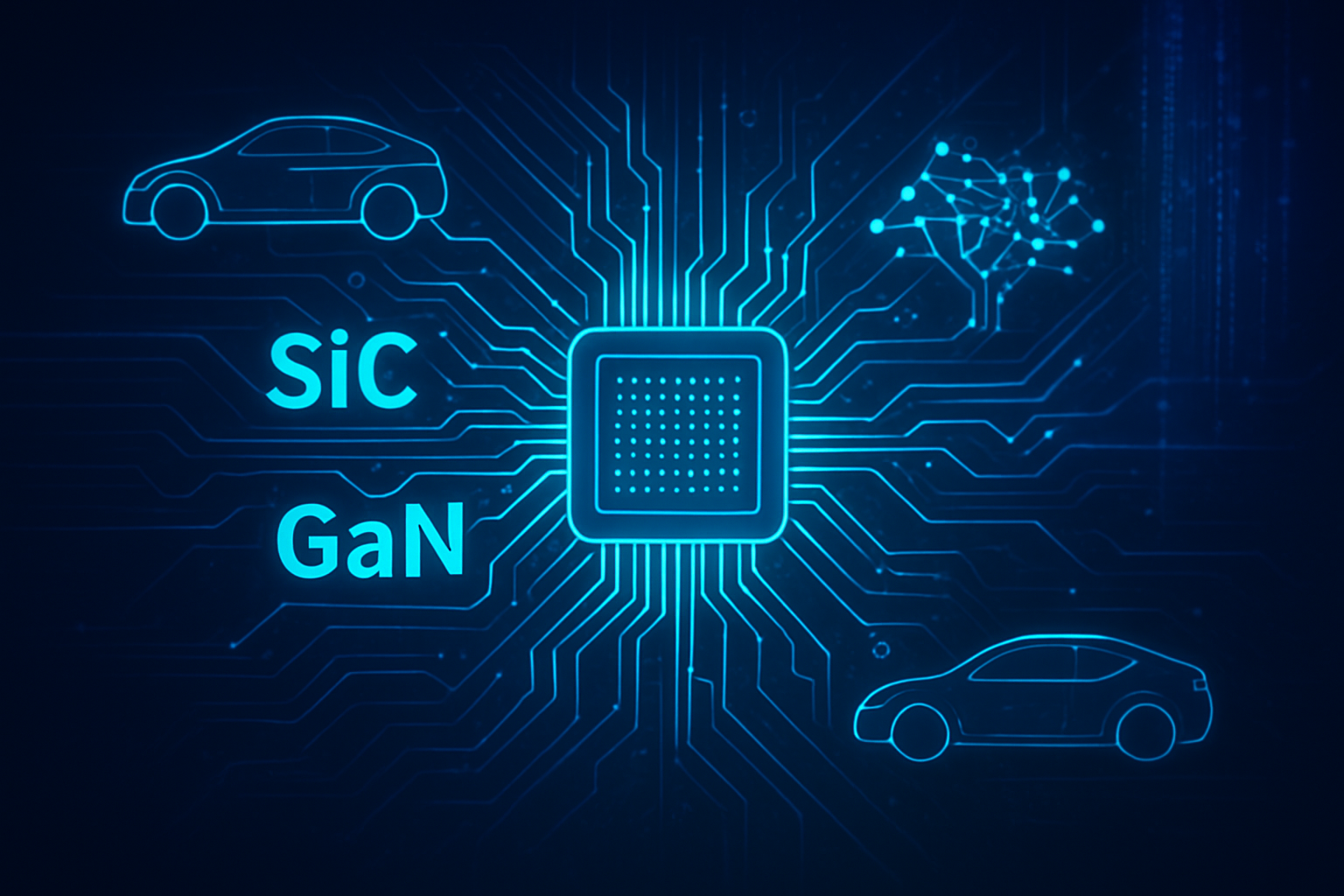
    Power semiconductors, constituting 30-40% of an EV's total semiconductor demand, are the backbone of electric powertrains. They manage critical functions like charging, inverter operation, and energy conversion. A major technical leap here is the widespread adoption of Wide-Bandgap (WBG) materials, specifically Silicon Carbide (SiC) and Gallium Nitride (GaN). These materials offer superior efficiency, higher voltage tolerance, and significantly lower energy loss compared to traditional silicon. For instance, SiC demand in automotive power electronics is projected to grow by 30% annually, with SiC adoption in EVs expected to exceed 60% by 2030, up from less than 20% in 2022. This translates to longer EV ranges, faster charging times, and improved overall power density.

    Beyond power management, Battery Management Systems (BMS) are crucial for EV safety and performance, relying on advanced semiconductors to monitor charge, health, and temperature. The market for EV BMS semiconductors is expected to reach $7 billion by 2028, with intelligent BMS chips seeing a 15% CAGR between 2023 and 2030. Furthermore, the push for Advanced Driver-Assistance Systems (ADAS) and, eventually, autonomous driving, necessitates high-performance processors, AI accelerators, and a plethora of sensors (LiDAR, radar, cameras). These systems demand immense computational power to process vast amounts of data in real-time, driving a projected 20% CAGR for AI chips in automotive applications. The shift towards Software-Defined Vehicles (SDVs) also means greater reliance on advanced semiconductors to enable over-the-air updates, real-time data processing, and enhanced functionalities, transforming cars into sophisticated computing platforms rather than just mechanical machines.

    Corporate Maneuvers in the Chip-Driven Automotive Arena

    The surging demand for automotive semiconductors is creating a dynamic competitive landscape, with established chipmakers, automotive giants, and innovative startups all vying for a strategic advantage. Companies like Infineon Technologies AG (ETR: IFX), NXP Semiconductors N.V. (NASDAQ: NXP), STMicroelectronics N.V. (NYSE: STM), and ON Semiconductor Corporation (NASDAQ: ON) are among the primary beneficiaries, experiencing substantial growth in their automotive divisions. These companies are heavily investing in R&D for SiC and GaN technologies, as well as high-performance microcontrollers (MCUs) and System-on-Chips (SoCs) tailored for EV and ADAS applications.

    The competitive implications are significant. Major AI labs and tech companies, such as NVIDIA Corporation (NASDAQ: NVDA) and Intel Corporation (NASDAQ: INTC), are also making aggressive inroads into the automotive sector, particularly in the realm of AI and autonomous driving platforms. NVIDIA's Drive platform, for example, offers a comprehensive hardware and software stack for autonomous vehicles, directly challenging traditional automotive suppliers. This influx of tech giants brings advanced AI capabilities and software expertise, potentially disrupting existing supply chains and forcing traditional automotive component manufacturers to adapt quickly or risk being marginalized. Automakers, in turn, are increasingly forming direct partnerships with semiconductor suppliers, and some, like Tesla Inc. (NASDAQ: TSLA), are even designing their own chips to secure supply and gain a competitive edge in performance and cost.

    This strategic pivot is leading to potential disruptions for companies that fail to innovate or secure critical supply. The market positioning is shifting from a focus on mechanical prowess to electronic and software sophistication. Companies that can deliver integrated, high-performance, and energy-efficient semiconductor solutions, particularly those leveraging advanced materials and AI, stand to gain significant market share. The ability to manage complex software-hardware co-design and ensure robust supply chain resilience will be critical strategic advantages in this evolving ecosystem.

    Broader Implications and the Road Ahead for AI

    The growth of the automotive semiconductor market, propelled by EV adoption, fits perfectly into the broader AI landscape and the increasing trend of "edge AI" – bringing artificial intelligence capabilities closer to the data source. Modern EVs are essentially mobile data centers, generating terabytes of sensor data that need to be processed in real-time for ADAS, autonomous driving, and personalized in-cabin experiences. This necessitates powerful, energy-efficient AI processors and specialized memory solutions, driving innovation not just in automotive, but across the entire AI hardware spectrum.

    The impacts are far-reaching. On one hand, it's accelerating the development of robust, low-latency AI inference engines, pushing the boundaries of what's possible in real-world, safety-critical applications. On the other hand, it raises significant concerns regarding supply chain vulnerabilities. The "chip crunch" of recent years painfully highlighted the automotive sector's dependence on a concentrated number of semiconductor manufacturers, leading to production halts and significant economic losses. This has spurred governments, like the U.S. with its CHIPS Act, to push for reshoring manufacturing and diversifying supply chains to mitigate future disruptions, adding a geopolitical dimension to semiconductor development.

    Comparisons to previous AI milestones are apt. Just as the smartphone revolution drove miniaturization and power efficiency in consumer electronics, the EV revolution is now driving similar advancements in high-performance, safety-critical computing. It's a testament to the idea that AI's true potential is unlocked when integrated deeply into physical systems, transforming them into intelligent agents. The convergence of AI, electrification, and connectivity is creating a new paradigm for mobility that goes beyond mere transportation, impacting urban planning, energy grids, and even societal interaction with technology.

    Charting the Course: Future Developments and Challenges

    Looking ahead, the automotive semiconductor market is poised for continuous, rapid evolution. Near-term developments will likely focus on further optimizing SiC and GaN power electronics, achieving even higher efficiencies and lower costs. We can expect to see more integrated System-on-Chips (SoCs) that combine multiple vehicle functions—from infotainment to ADAS and powertrain control—into a single, powerful unit, reducing complexity and improving performance. The development of AI-native chips specifically designed for automotive edge computing, capable of handling complex sensor fusion and decision-making for increasingly autonomous vehicles, will also be a major area of focus.

    On the horizon, potential applications and use cases include truly autonomous vehicles operating in diverse environments, vehicles that can communicate seamlessly with city infrastructure (V2I) and other vehicles (V2V) to optimize traffic flow and safety, and highly personalized in-cabin experiences driven by advanced AI. Experts predict a future where vehicles become dynamic platforms for services, generating new revenue streams through software subscriptions and data-driven offerings. The move towards zonal architectures, where vehicle electronics are organized into computing zones rather than distributed ECUs, will further drive the need for centralized, high-performance processors and robust communication networks.

    However, significant challenges remain. Ensuring the functional safety and cybersecurity of increasingly complex, AI-driven automotive systems is paramount. The cost of advanced semiconductors can still be a barrier to mass-market EV adoption, necessitating continuous innovation in manufacturing processes and design efficiency. Furthermore, the talent gap in automotive software and AI engineering needs to be addressed to keep pace with the rapid technological advancements. What experts predict next is a continued arms race in chip design and manufacturing, with a strong emphasis on sustainability, resilience, and the seamless integration of hardware and software to unlock the full potential of electric, autonomous, and connected mobility.

    A New Dawn for Automotive Technology

    In summary, the growth of the automotive semiconductor market, fueled by the relentless adoption of electric vehicles, represents one of the most significant technological shifts of our time. It underscores a fundamental redefinition of the automobile, transforming it from a mechanical conveyance into a highly sophisticated, AI-driven computing platform. Key takeaways include the dramatic increase in semiconductor content per vehicle, the emergence of advanced materials like SiC and GaN as industry standards, and the intense competition among traditional chipmakers, tech giants, and automakers themselves.

    This development is not just a chapter in AI history; it's a foundational re-architecture of the entire mobility ecosystem. Its significance lies in its power to accelerate AI innovation, drive advancements in power electronics, and fundamentally alter global supply chains. The long-term impact will be felt across industries, from energy and infrastructure to urban planning and consumer electronics, as the lines between these sectors continue to blur.

    In the coming weeks and months, watch for announcements regarding new partnerships between chip manufacturers and automotive OEMs, further breakthroughs in SiC and GaN production, and the unveiling of next-generation AI processors specifically designed for autonomous driving. The journey towards a fully electric, intelligent, and connected automotive future is well underway, and semiconductors are undeniably at the heart of this revolution.


    This content is intended for informational purposes only and represents analysis of current AI developments.

    TokenRing AI delivers enterprise-grade solutions for multi-agent AI workflow orchestration, AI-powered development tools, and seamless remote collaboration platforms.
    For more information, visit https://www.tokenring.ai/.