
Tag: Siemens

  • The 100MW AI Factory: Siemens and nVent Standardize the Future of Hyperscale Infrastructure

    The 100MW AI Factory: Siemens and nVent Standardize the Future of Hyperscale Infrastructure

    The explosive growth of generative AI has officially moved beyond the laboratory and into the heavy industrial phase. As of January 2026, the industry is shifting away from bespoke, one-off data center builds toward standardized, high-density "AI Factories." Leading this charge is a landmark partnership between Siemens AG (OTCMKTS: SIEGY) and nVent Electric plc (NYSE: NVT), who have unveiled a comprehensive 100MW blueprint designed specifically to house the massive compute clusters required by the latest generation of large language models and industrial AI systems.

    This blueprint represents a critical turning point in global tech infrastructure. By providing a pre-validated, modular architecture that integrates high-density power management with advanced liquid cooling, Siemens and nVent are addressing the primary "bottleneck" of the AI era: the inability of traditional data centers to handle the extreme thermal and electrical demands of modern GPUs. The significance of this announcement lies in its ability to shorten the time-to-market for hyperscalers and enterprise operators from years to months, effectively creating a "plug-and-play" template for 100MW to 500MW AI facilities.

    Scaling the Power Wall: Technical Specifications of the 100MW Blueprint

    The technical core of the Siemens-nVent blueprint is its focus on the NVIDIA Corporation (NASDAQ: NVDA) Blackwell and Rubin architectures, specifically the DGX GB200 NVL72 system. While traditional data centers were built to support 10kW to 15kW per rack, the new blueprint is engineered for densities exceeding 120kW per rack. To manage this nearly ten-fold increase in heat, nVent has integrated its state-of-the-art Direct Liquid Cooling (DLC) technology. This includes high-capacity Coolant Distribution Units (CDUs) and standardized manifolds that allow for liquid-to-chip cooling, ensuring that even under peak "all-core" AI training loads, the system maintains thermal stability without the need for massive, energy-inefficient air conditioning arrays.

    Siemens provides the "electrical backbone" through its Sentron and Sivacon medium and low voltage distribution systems. Unlike previous approaches that relied on static power distribution, this architecture is "grid-interactive." It features integrated software that allows the 100MW site to function as a virtual power plant, capable of adjusting its consumption in real-time based on grid stability or renewable energy availability. This is controlled via the Siemens Xcelerator platform, which uses a digital twin of the entire facility to simulate heat-load changes and electrical stress before they occur, effectively automating much of the operational oversight.

    This modular approach differs significantly from previous generations of data center design, which often required fragmented engineering from multiple vendors. The Siemens and nVent partnership eliminates this fragmentation by offering a "Lego-like" scalability. Operators can deploy 20MW blocks as needed, eventually scaling to a half-gigawatt site within the same physical footprint. Initial reactions from the industry have been overwhelmingly positive, with researchers noting that this level of standardization is the only way to meet the projected demand for AI training capacity over the next decade.

    A New Competitive Frontier for the AI Infrastructure Market

    The strategic alliance between Siemens and nVent places them in direct competition with other infrastructure giants like Vertiv Holdings Co (NYSE: VRT) and Schneider Electric (OTCMKTS: SBGSY). For nVent, this partnership solidifies its position as the premier provider of liquid cooling hardware, a market that has seen triple-digit growth as air cooling becomes obsolete for top-tier AI training. For Siemens, the blueprint serves as a gateway to embedding its Industrial AI Operating System into the very foundation of the world’s most powerful compute sites.

    Major cloud providers such as Microsoft (NASDAQ: MSFT), Amazon (NASDAQ: AMZN), and Alphabet Inc. (NASDAQ: GOOGL) stand to benefit the most from this development. These hyperscalers are currently in a race to build "sovereign AI" and proprietary clusters at a scale never before seen. By adopting a pre-validated blueprint, they can mitigate the risks of hardware failure and supply chain delays. Furthermore, the ability to operate at 120kW+ per rack allows these companies to pack more compute power into smaller real estate footprints, significantly lowering the total cost of ownership for AI services.

    The market positioning here is clear: the infrastructure providers who can offer the most efficient "Tokens-per-Watt" will win the contracts of the future. This blueprint shifts the focus away from simple Power Usage Effectiveness (PUE) toward a more holistic measure of AI productivity. By optimizing the link between the power grid and the GPU chip, Siemens and nVent are creating a strategic advantage for companies that need to balance massive AI ambitions with increasingly strict environmental and energy-efficiency regulations.

    The Broader Significance: Sustainability and the "Tokens-per-Watt" Era

    In the context of the broader AI landscape, this 100MW blueprint is a direct response to the "energy crisis" narratives that have plagued the industry since late 2024. As AI models require exponentially more power, the ability to build data centers that are grid-interactive and highly efficient is no longer a luxury—it is a requirement for survival. This move mirrors previous milestones in the tech industry, such as the standardization of server racks in the early 2000s, but at a scale and complexity that is orders of magnitude higher.

    However, the rapid expansion of 100MW sites has raised concerns among environmental groups and grid operators. The sheer volume of water required for liquid cooling systems and the massive electrical pull of these "AI Factories" can strain local infrastructures. The Siemens-nVent architecture attempts to address this through closed-loop liquid systems that minimize water consumption and by using AI-driven energy management to smooth out power spikes. It represents a shift toward "responsible scaling," where the growth of AI is tied to the modernization of the underlying energy grid.

    Compared to previous breakthroughs, this development highlights the "physicality" of AI. While the public often focuses on the software and the neural networks, the battle for AI supremacy is increasingly being fought with copper, coolant, and silicon. The move to standardized 100MW blueprints suggests that the industry is maturing, moving away from the "wild west" of experimental builds toward a structured, industrial-scale deployment phase that can support the global economy's transition to AI-integrated operations.

    The Road Ahead: From 100MW to Gigawatt Clusters

    Looking toward the near-term future, experts predict that the 100MW blueprint is merely a baseline. By late 2026 and 2027, we expect to see the emergence of "Gigawatt Clusters"—facilities five to ten times the size of the current blueprint—supporting the next generation of "General Purpose" AI models. These future developments will likely incorporate more advanced forms of cooling, such as two-phase immersion, and even more integrated power solutions like on-site small modular reactors (SMRs) to ensure a steady supply of carbon-free energy.

    The primary challenges remaining involve the supply chain for specialized components like CDUs and high-voltage switchgear. While Siemens and nVent have scaled their production, the global demand for these components is currently outstripping supply. Furthermore, as AI compute moves closer to the "edge," we may see scaled-down versions of this blueprint (1MW to 5MW) designed for urban environments, allowing for real-time AI processing in smart cities and autonomous transport networks.

    What experts are watching for next is the integration of "infrastructure-aware" AI. This would involve the AI models themselves adjusting their training parameters based on the real-time thermal and electrical health of the data center. In this scenario, the "AI Factory" becomes a living organism, optimizing its own physical existence to maximize compute output while minimizing its environmental footprint.

    Final Assessment: The Industrialization of Intelligence

    The Siemens and nVent 100MW blueprint is more than just a technical document; it is a manifesto for the industrialization of artificial intelligence. By standardizing the way we power and cool the world's most powerful computers, these two companies have provided the foundation upon which the next decade of AI progress will be built. The transition to liquid-cooled, high-density, grid-interactive facilities is now the gold standard for the industry.

    In the coming weeks and months, the focus will shift to the first full-scale implementations of this architecture, such as the one currently operating at Siemens' own factory in Erlangen, Germany. As more hyperscalers adopt these modular blocks, the speed of AI deployment will likely accelerate, bringing more powerful models to market faster than ever before. For the tech industry, the message is clear: the age of the bespoke data center is over; the age of the AI Factory has begun.


    This content is intended for informational purposes only and represents analysis of current AI developments.

    TokenRing AI delivers enterprise-grade solutions for multi-agent AI workflow orchestration, AI-powered development tools, and seamless remote collaboration platforms.
    For more information, visit https://www.tokenring.ai/.
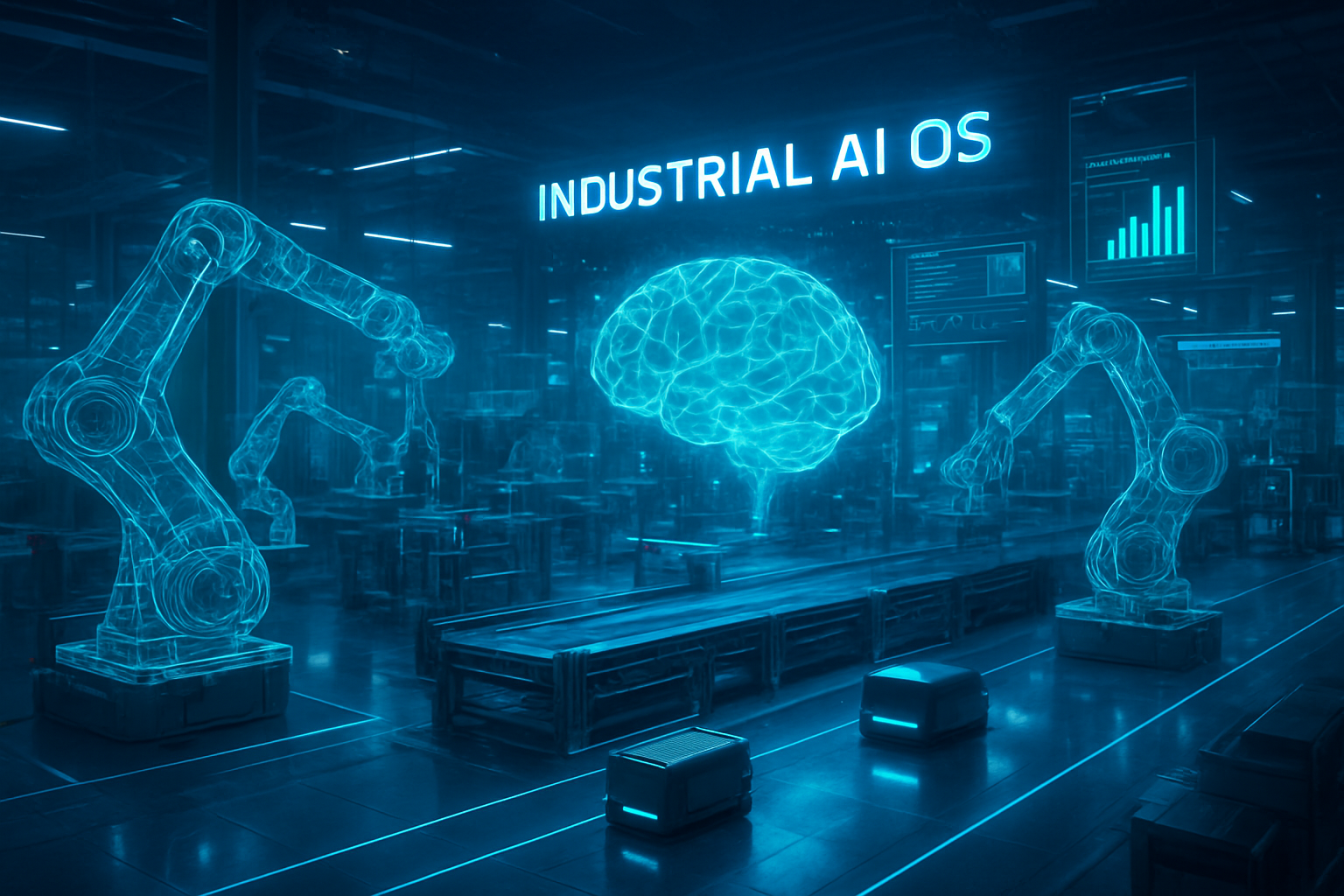
  • The Rise of the Industrial AI OS: NVIDIA and Siemens Redefine the Factory Floor in Erlangen

    The Rise of the Industrial AI OS: NVIDIA and Siemens Redefine the Factory Floor in Erlangen

    In a move that signals the dawn of a new era in autonomous manufacturing, NVIDIA (NASDAQ: NVDA) and Siemens (ETR: SIE) have announced the formal launch of the world’s first "Industrial AI Operating System" (Industrial AI OS). Revealed at CES 2026 earlier this month, this strategic expansion of their long-standing partnership represents a fundamental shift in how factories are designed and operated. By moving beyond passive simulations to "active intelligence," the new system allows industrial environments to autonomously optimize their own operations, marking the most significant convergence of generative AI and physical automation to date.

    The immediate significance of this development lies in its ability to bridge the gap between virtual planning and physical reality. At the heart of this announcement is the transformation of the digital twin—once a mere 3D model—into a living, breathing software entity that can control the shop floor. For the manufacturing sector, this means the promise of the "Industrial Metaverse" has finally moved from a conceptual buzzword to a deployable, high-performance reality that is already delivering double-digit efficiency gains in real-world environments.

    The "AI Brain": Engineering the Future of Automation

    The core of the Industrial AI OS is a unified software-defined architecture that fuses Siemens’ Xcelerator platform with NVIDIA’s high-density AI infrastructure. At the center of this stack is what the companies call the "AI Brain"—a software-defined automation layer that leverages NVIDIA Blackwell GPUs and the Omniverse platform to analyze factory data in real-time. Unlike traditional manufacturing systems that rely on rigid, pre-programmed logic, the AI Brain uses "Physics-Based AI" and NVIDIA’s PhysicsNeMo generative models to simulate thousands of "what-if" scenarios every second, identifying the most efficient path forward and deploying those instructions directly to the production line.

    One of the most impressive technical breakthroughs is the integration of "software-in-the-loop" testing, which virtually eliminates the risk of downtime. By the time a new process or material flow is introduced to the physical machines, it has already been validated in a physics-accurate digital twin with nearly 100% accuracy. Siemens also teased the upcoming release of the "Digital Twin Composer" in mid-2026, a tool designed to allow non-experts to build photorealistic, physics-perfect 3D environments that link live IoT data from the factory floor directly into the simulation.

    Industry experts have reacted with overwhelming positivity, noting that this differentiates itself from previous approaches by its sheer scale and real-time capability. While earlier digital twins were often siloed or required massive manual updates, the Industrial AI OS is inherently dynamic. Researchers in the AI community have specifically praised the use of CUDA-X libraries to accelerate the complex thermodynamics and fluid dynamics simulations required for energy optimization, a task that previously took days but now occurs in milliseconds.

    Market Shifting: A New Standard for Industrial Tech

    This collaboration solidifies NVIDIA’s position as the indispensable backbone of industrial intelligence, while simultaneously repositioning Siemens as a software-first technology powerhouse. By moving their simulation portfolio onto NVIDIA’s generative AI stack, Siemens is effectively future-proofing its Xcelerator ecosystem against competitors like PTC (NASDAQ: PTC) or Rockwell Automation (NYSE: ROK). The strategic advantage is clear: Siemens provides the domain expertise and operational technology (OT) data, while NVIDIA provides the massive compute power and AI models necessary to make that data actionable.

    The ripple effects will be felt across the tech giant landscape. Cloud providers like Microsoft (NASDAQ: MSFT) and Amazon (NASDAQ: AMZN) are now competing to host these massive "Industrial AI Clouds." In fact, Deutsche Telekom (FRA: DTE) has already jumped into the fray, recently launching a dedicated cloud facility in Munich specifically to support the compute-heavy requirements of the Industrial AI OS. This creates a new high-margin revenue stream for telcos and cloud providers who can offer the low-latency connectivity required for real-time factory synchronization.

    Furthermore, the "Industrial AI OS" threatens to disrupt traditional consulting and industrial engineering services. If a factory can autonomously optimize its own material flow and energy consumption, the need for periodic, expensive efficiency audits by third-party firms may diminish. Instead, the value is shifting toward the platforms that provide continuous, automated optimization. Early adopters like PepsiCo (NASDAQ: PEP) and Foxconn (TPE: 2317) have already begun evaluating the OS to optimize their global supply chains, signaling a move toward a standardized, AI-driven manufacturing template.

    The Erlangen Blueprint: Sustainability and Efficiency in Action

    The real-world proof of this technology is found at the Siemens Electronics Factory in Erlangen (GWE), Germany. Recognized by the World Economic Forum as a "Digital Lighthouse," the Erlangen facility serves as a living laboratory for the Industrial AI OS. The results are staggering: by using AI-driven digital twins to orchestrate its fleet of 30 Automated Guided Vehicles (AGVs), the factory has achieved a 40% reduction in material circulation. These vehicles, which collectively travel the equivalent of five times around the Earth every year, now operate with such precision that bottlenecks have been virtually eliminated.

    Sustainability is perhaps the most significant outcome of the Erlangen implementation. Using the digital twin to simulate and optimize the production hall’s ventilation and cooling systems has led to a 70% reduction in ventilation energy. Over the past four years, the factory has reported a 42% decrease in total energy consumption while simultaneously increasing productivity by 69%. This sets a new benchmark for "green manufacturing," proving that environmental goals and industrial growth are not mutually exclusive when managed by high-performance AI.

    This development fits into a broader trend of "sovereign AI" and localized manufacturing. As global supply chains face increasing volatility, the ability to run highly efficient, automated factories close to home becomes a matter of economic security. The Erlangen model demonstrates that AI can offset higher labor costs in regions like Europe and North America by delivering unprecedented levels of efficiency and resource management. This milestone is being compared to the introduction of the first programmable logic controllers (PLCs) in the 1960s—a shift from hardware-centric to software-augmented production.

    Future Horizons: From Single Factories to Global Networks

    Looking ahead, the near-term focus will be the global rollout of the Digital Twin Composer and the expansion of the Industrial AI OS to more diverse sectors, including automotive and pharmaceuticals. Experts predict that by 2027, "Self-Healing Factories" will become a reality, where the AI OS not only optimizes flow but also predicts mechanical failures and autonomously orders replacement parts or redirects production to avoid outages. The partnership is also expected to explore the use of humanoid robotics integrated with the AI OS, allowing for even more flexible and adaptive assembly lines.

    However, challenges remain. The transition to an AI-led operating system requires a massive upskilling of the industrial workforce and a significant initial investment in GPU-heavy infrastructure. There are also ongoing discussions regarding data privacy and the "black box" nature of generative AI in critical infrastructure. Experts suggest that the next few years will see a push for more "Explainable AI" (XAI) within the Industrial AI OS to ensure that human operators can understand and audit the decisions made by the autonomous "AI Brain."

    A New Era of Autonomous Production

    The collaboration between NVIDIA and Siemens marks a watershed moment in the history of industrial technology. By successfully deploying a functional Industrial AI OS at the Erlangen factory, the two companies have provided a roadmap for the future of global manufacturing. The key takeaways are clear: the digital twin is no longer just a model; it is a management system. Sustainability is no longer just a goal; it is a measurable byproduct of AI-driven optimization.

    This development will likely be remembered as the point where the "Industrial Metaverse" moved from marketing hype to a quantifiable industrial standard. As we move into the middle of 2026, the industry will be watching closely to see how quickly other global manufacturers can replicate the "Erlangen effect." For now, the message is clear: the factories of the future will not just be run by people or robots, but by an intelligent operating system that never stops learning.


    This content is intended for informational purposes only and represents analysis of current AI developments.

    TokenRing AI delivers enterprise-grade solutions for multi-agent AI workflow orchestration, AI-powered development tools, and seamless remote collaboration platforms.
    For more information, visit https://www.tokenring.ai/.
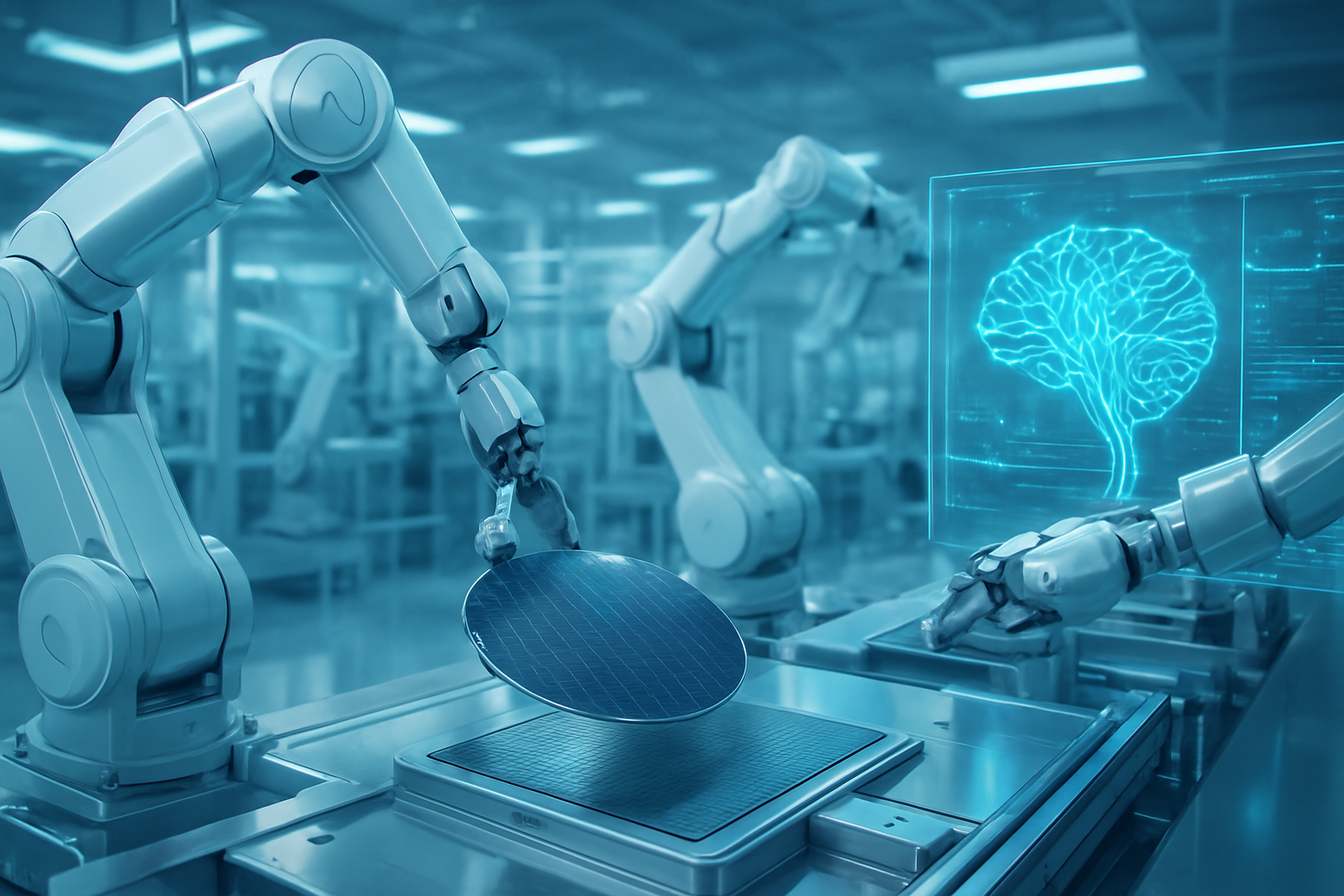
  • AI Takes the Fab Floor: Siemens and GlobalFoundries Forge Alliance for Smart Chip Manufacturing

    AI Takes the Fab Floor: Siemens and GlobalFoundries Forge Alliance for Smart Chip Manufacturing

    In a landmark strategic partnership announced on December 11-12, 2025, industrial titan Siemens (ETR: SIE) and leading specialty foundry GlobalFoundries (NASDAQ: GFS) revealed a groundbreaking collaboration aimed at integrating Artificial Intelligence (AI) to fundamentally transform chip manufacturing. This alliance is set to usher in a new era of enhanced efficiency, unprecedented automation, and heightened reliability across the semiconductor production lifecycle, from initial design to final product management.

    The immediate significance of this announcement cannot be overstated. It represents a pivotal step in addressing the surging global demand for critical semiconductors, which are the bedrock of advanced technologies such as AI, autonomous systems, defense, energy, and connectivity. By embedding AI deeply into the fabrication process, Siemens and GlobalFoundries are not just optimizing production; they are strategically fortifying the global supercomputing ecosystem and bolstering regional chip independence, ensuring a more robust and predictable supply chain for the increasingly complex chips vital for national leadership in advanced technologies.

    AI-Powered Precision: A New Era for Chip Production

    This strategic collaboration between Siemens and GlobalFoundries is set to revolutionize semiconductor manufacturing through a deep integration of AI-driven technologies. At its core, the partnership will deploy AI-enabled software, sophisticated sensors, and real-time control systems directly into the heart of fabrication facilities. Key technical capabilities include "Smart Fab Automation" for real-time optimization of production lines, "Predictive Maintenance" utilizing machine learning to anticipate and prevent equipment failures, and extensive use of "Digital Twins" to simulate and optimize manufacturing processes virtually before physical implementation.

    Siemens brings to the table its comprehensive suite of industrial automation, energy, and digitalization technologies, alongside advanced software for chip design, manufacturing execution systems (MES), and product lifecycle management (PLM). GlobalFoundries contributes its specialized process technology and design expertise, notably from its MIPS company, which specializes in RISC-V processor IP, to accelerate the development of custom semiconductor solutions. This integrated approach is a stark departure from previous methods, which largely relied on static automation and reactive problem-solving. The new AI systems are proactive and learning, capable of predicting failures, optimizing processes in real-time, and even self-correcting, thereby drastically reducing variability and minimizing production delays. Initial reactions from the AI research community and industry experts have been overwhelmingly positive, hailing the partnership as a "blueprint" for future fabs and a "pivotal transition from theoretical AI capabilities to tangible, real-world impact" on the foundational semiconductor industry.

    Reshaping the Tech Landscape: Impact on AI Giants and Startups

    The strategic partnership between Siemens and GlobalFoundries is poised to send ripples across the tech industry, impacting AI companies, tech giants, and startups alike. Both Siemens (ETR: SIE) and GlobalFoundries (NASDAQ: GFS) stand as primary beneficiaries, with Siemens solidifying its leadership in industrial AI and GlobalFoundries gaining a significant competitive edge through enhanced efficiency, reliability, and sustainability in its offerings. Customers of GlobalFoundries, particularly those in the high-growth AI, HPC, and automotive sectors, will benefit from improved production quality, predictability, and potentially lower costs of specialized semiconductors.

    For major AI labs and tech companies, the competitive implications are substantial. Those leveraging the outputs of this partnership will gain a significant advantage through more reliable, energy-efficient, and high-yield semiconductor components. Conversely, competitors lacking similar AI-driven manufacturing strategies may find themselves at a disadvantage, pressured to make significant investments in AI integration to remain competitive. This collaboration also strengthens the foundational AI infrastructure by providing better hardware for training advanced AI models and deploying them at scale.

    The partnership could disrupt existing products and services by setting a new benchmark for semiconductor manufacturing excellence. Less integrated fab management systems and traditional industrial automation solutions may face accelerated obsolescence. Furthermore, the availability of more reliable and high-performance chips could raise customer expectations for quality and lead times, pressing chip designers and foundries that cannot meet these new standards. Strategically, this alliance positions both companies to capitalize on the increasing global demand for localized and resilient semiconductor supply chains, bolstering regional chip independence and contributing to geopolitical advantages.

    A Broader Horizon: AI's Role in Global Semiconductor Resilience

    This Siemens GlobalFoundries partnership fits squarely within the broader AI landscape as a critical response to the escalating demand for AI chips and the increasing complexity of modern chip manufacturing. It signifies the maturation of industrial AI, moving beyond theoretical applications to practical, large-scale implementation in foundational industries. The collaboration also aligns perfectly with the Industry 4.0 movement, emphasizing smart manufacturing, comprehensive digitalization, and interconnected systems across the entire semiconductor lifecycle.

    The wider impacts of this development are multifaceted. Technologically, it promises enhanced manufacturing efficiency and reliability, with projections of up to a 40% reduction in downtime and a 32% improvement in product quality. Economically, it aims to strengthen supply chain resilience and facilitate localized manufacturing, particularly in strategic regions like the US and Europe, thereby reducing geopolitical vulnerabilities. Furthermore, the integration of AI-guided energy systems in fabs will contribute to sustainability goals by lowering production costs and reducing the carbon footprint. This initiative also accelerates innovation, allowing for faster time-to-market for new chips and potentially extending AI-driven capabilities to other advanced industries like robotics and energy systems.

    However, potential concerns include the technical complexity of integrating advanced AI with legacy infrastructure, the scarcity and security of proprietary manufacturing data, the need to address skill gaps in the workforce, and the substantial costs associated with this transition. Compared to previous AI milestones, such as AI in Electronic Design Automation (EDA) tools that reduced chip design times, this partnership represents a deeper, more comprehensive integration of AI into the physical manufacturing process itself. It marks a shift from reactive to proactive manufacturing and focuses on creating "physical AI chips at scale," where AI is used not only to make chips more efficiently but also to power the expansion of AI into the physical world.

    The Road Ahead: Future Developments in Smart Fabs

    In the near term, the Siemens GlobalFoundries AI partnership is expected to focus on the comprehensive deployment and optimization of AI-driven predictive maintenance and digital twin technologies within GlobalFoundries' fabrication plants. This will lead to tangible improvements in equipment uptime and overall manufacturing yield, with initial deployment results and feature announcements anticipated in the coming months. The immediate goals are to solidify smart fab automation, enhance process control, and establish robust, AI-powered systems for anticipating equipment failures.

    Looking further ahead, the long-term vision is to establish fully autonomous and intelligent fabs that operate with minimal human intervention, driven by AI-enabled software, real-time sensor feedback, and advanced robotics. This will lead to a more efficient, resilient, and sustainable global semiconductor ecosystem capable of meeting the escalating demands of an AI-driven future. Potential applications on the horizon include rapid prototyping and mass production of highly specialized AI accelerators, self-optimizing chips that dynamically adjust design parameters based on real-time feedback, and advanced AI algorithms for defect detection and quality control. Experts predict a continued surge in demand for AI-optimized facilities, driving accelerated investment and a new era of hardware-software co-design specifically tailored for AI.

    Despite the immense potential, several challenges need to be addressed. These include the complex integration with legacy infrastructure, ensuring AI safety and standardization, developing a highly skilled workforce, mitigating cybersecurity vulnerabilities, and managing the extreme precision and cost associated with advanced process nodes. The industry will also need to focus on power and thermal management for high-performance AI chips and ensure the explainability and validation of AI models in critical manufacturing processes. Experts emphasize that AI will primarily augment human engineers, providing predictive insights and automated optimization tools, rather than entirely replacing human expertise.

    A Defining Moment for AI in Industry

    The strategic partnership between Siemens (ETR: SIE) and GlobalFoundries (NASDAQ: GFS) represents a defining moment in the application of AI to industrial processes, particularly within the critical semiconductor manufacturing sector. The key takeaways underscore a profound shift towards AI-driven automation, predictive maintenance, and comprehensive digitalization, promising unprecedented levels of efficiency, reliability, and supply chain resilience. This collaboration is not merely an incremental improvement; it signifies a fundamental re-imagining of how chips are designed and produced.

    In the annals of AI history, this alliance will likely be remembered as a pivotal moment where AI transitioned from primarily data-centric applications to deeply embedded, real-world industrial transformation. Its long-term impact is expected to be transformative, fostering a more robust, sustainable, and regionally independent global semiconductor ecosystem. By setting a new benchmark for smart fabrication facilities, it has the potential to become a blueprint for AI integration across other advanced manufacturing sectors, accelerating innovation and strengthening national leadership in AI and advanced technologies.

    In the coming weeks and months, industry observers should closely monitor the initial deployment results from GlobalFoundries' fabs, which will provide concrete evidence of the partnership's effectiveness. Further announcements regarding specific AI-powered tools and features are highly anticipated. It will also be crucial to observe how competing foundries and industrial automation firms respond to this new benchmark, as well as the ongoing efforts to address challenges such as workforce development and cybersecurity. The success of this collaboration will not only shape the future of chip manufacturing but also serve as a powerful testament to AI's transformative potential across the global industrial landscape.


    This content is intended for informational purposes only and represents analysis of current AI developments.

    TokenRing AI delivers enterprise-grade solutions for multi-agent AI workflow orchestration, AI-powered development tools, and seamless remote collaboration platforms.
    For more information, visit https://www.tokenring.ai/.

  • AI Transforms Chip Manufacturing: Siemens and GlobalFoundries Forge Future of Semiconductor Production

    AI Transforms Chip Manufacturing: Siemens and GlobalFoundries Forge Future of Semiconductor Production

    December 12, 2025 – In a landmark announcement set to redefine the landscape of semiconductor manufacturing, industrial powerhouse Siemens (ETR: SIE) and leading specialty foundry GlobalFoundries (NASDAQ: GF) have unveiled a significant expansion of their strategic partnership. This collaboration, revealed on December 11-12, 2025, is poised to integrate advanced Artificial Intelligence (AI) into the very fabric of chip design and production, promising unprecedented levels of efficiency, reliability, and supply chain resilience. The move signals a critical leap forward in leveraging AI not just for software, but for the intricate physical processes that underpin the modern digital world.

    This expanded alliance is more than just a business agreement; it's a strategic imperative to address the surging global demand for essential semiconductors, particularly those powering the rapidly evolving fields of AI, autonomous systems, defense, energy, and connectivity. By embedding AI directly into fab tools and operational workflows, Siemens and GlobalFoundries aim to accelerate the development and manufacturing of specialized solutions, bolster regional chip independence, and ensure a more robust and predictable supply chain for the increasingly complex chips vital to national leadership in AI and advanced technologies.

    AI's Deep Integration: A New Era for Fab Automation

    The core of this transformative partnership lies in the deep integration of AI-driven technologies across every stage of semiconductor manufacturing. Siemens is bringing its extensive suite of industrial automation, energy, and building digitalization technologies, including advanced software for chip design, manufacturing, and product lifecycle management. GlobalFoundries, in turn, contributes its specialized process technology and design expertise, notably from its MIPS company, a leader in RISC-V processor IP, crucial for accelerating tailored semiconductor solutions. Together, they envision fabs operating on a foundation of AI-enabled software, real-time sensor feedback, robotics, and predictive maintenance, all cohesively integrated to eliminate manufacturing fragility and ensure continuous operation.

    This collaboration is set to deploy advanced AI-enabled software, sensors, and real-time control systems directly within fab automation environments. Key technical capabilities include centralized AI-enabled automation, predictive maintenance, and the extensive use of digital twins to simulate and optimize manufacturing processes. This approach is designed to enhance equipment uptime, improve operational efficiency, and significantly boost yield reliability—a critical factor for high-performance computing (HPC) and AI workloads where even minor variations can impact chip performance. Furthermore, AI-guided energy systems are being implemented to align with HPC sustainability goals, lowering production costs and reducing the carbon footprint of chip fabrication.

    Historically, semiconductor manufacturing has relied on highly optimized, but largely static, automation and control systems. While advanced, these systems often react to issues rather than proactively preventing them. The Siemens-GlobalFoundries partnership represents a significant departure by embedding proactive, learning AI systems that can predict failures, optimize processes in real-time, and even self-correct. This shift from reactive to predictive and prescriptive manufacturing, driven by AI and digital twins, promises to reduce variability, minimize delays, and provide unprecedented control over complex production lines. Initial reactions from the AI research community and industry experts are overwhelmingly positive, highlighting the potential for these AI integrations to drastically cut costs, accelerate time-to-market, and overcome the physical limitations of traditional manufacturing.

    Reshaping the Competitive Landscape: Winners and Disruptors

    This expanded partnership has profound implications for AI companies, tech giants, and startups across the globe. Siemens (ETR: SIE) and GlobalFoundries (NASDAQ: GF) themselves stand to be major beneficiaries, solidifying their positions at the forefront of industrial automation and specialty chip manufacturing, respectively. Siemens' comprehensive digitalization portfolio, now deeply integrated with GF's fabrication expertise, creates a powerful, end-to-end solution that could become a de facto standard for future smart fabs. GlobalFoundries gains a significant strategic advantage by offering enhanced reliability, efficiency, and sustainability to its customers, particularly those in the high-growth AI and automotive sectors.

    The competitive implications for other major AI labs and tech companies are substantial. Companies heavily reliant on custom or specialized semiconductors will benefit from more reliable and efficient production. However, competing industrial automation providers and other foundries that do not adopt similar AI-driven strategies may find themselves at a disadvantage, struggling to match the efficiency, yield, and speed offered by the Siemens-GF model. This partnership could disrupt existing products and services by setting a new benchmark for semiconductor manufacturing excellence, potentially accelerating the obsolescence of less integrated or AI-deficient fab management systems. From a market positioning perspective, this alliance strategically positions both companies to capitalize on the increasing demand for localized and resilient semiconductor supply chains, especially in regions like the US and Europe, which are striving for greater chip independence.

    A Wider Significance: Beyond the Fab Floor

    This collaboration fits seamlessly into the broader AI landscape, signaling a critical trend: the maturation of AI from theoretical models to practical, industrial-scale applications. It underscores the growing recognition that AI's transformative power extends beyond data centers and consumer applications, reaching into the foundational industries that power our digital world. The impacts are far-reaching, promising not only economic benefits through increased efficiency and reduced costs but also geopolitical advantages by strengthening regional semiconductor supply chains and fostering national leadership in AI.

    The partnership also addresses critical sustainability concerns by leveraging AI-guided energy systems in fabs, aligning with global efforts to reduce the carbon footprint of energy-intensive industries. Potential concerns, however, include the complexity of integrating such advanced AI systems into legacy infrastructure, the need for a highly skilled workforce to manage these new technologies, and potential cybersecurity vulnerabilities inherent in highly interconnected systems. When compared to previous AI milestones, such as the breakthroughs in natural language processing or computer vision, this development represents a crucial step in AI's journey into the physical world, demonstrating its capacity to optimize complex industrial processes rather than just intellectual tasks. It signifies a move towards truly intelligent manufacturing, where AI acts as a central nervous system for production.

    The Horizon of Intelligent Manufacturing: What Comes Next

    Looking ahead, the expanded Siemens-GlobalFoundries partnership foreshadows a future of increasingly autonomous and intelligent semiconductor manufacturing. Near-term developments are expected to focus on the full deployment and optimization of the AI-driven predictive maintenance and digital twin technologies across GF's fabs, leading to measurable improvements in uptime and yield. In the long term, experts predict the emergence of fully autonomous fabs, where AI not only monitors and optimizes but also independently manages production schedules, identifies and resolves issues, and even adapts to new product designs with minimal human intervention.

    Potential applications and use cases on the horizon include the rapid prototyping and mass production of highly specialized AI accelerators and neuromorphic chips, designed to power the next generation of AI systems. The integration of AI throughout the design-to-manufacturing pipeline could also lead to "self-optimizing" chips, where design parameters are dynamically adjusted based on real-time manufacturing feedback. Challenges that need to be addressed include the development of robust AI safety protocols, standardization of AI integration interfaces across different equipment vendors, and addressing the significant data privacy and security implications of such interconnected systems. Experts predict that this partnership will serve as a blueprint for other industrial sectors, driving a broader adoption of AI-enabled industrial automation and setting the stage for a new era of smart manufacturing globally.

    A Defining Moment for AI in Industry

    In summary, the expanded partnership between Siemens and GlobalFoundries represents a defining moment for the application of AI in industrial settings, particularly within the critical semiconductor sector. The key takeaways are the strategic integration of AI for predictive maintenance, operational optimization, and enhanced supply chain resilience, coupled with a strong focus on sustainability and regional independence. This development's significance in AI history cannot be overstated; it marks a pivotal transition from theoretical AI capabilities to tangible, real-world impact on the foundational industry of the digital age.

    The long-term impact is expected to be a more efficient, resilient, and sustainable global semiconductor ecosystem, capable of meeting the escalating demands of an AI-driven future. What to watch for in the coming weeks and months are the initial deployment results from GlobalFoundries' fabs, further announcements regarding specific AI-powered tools and features, and how competing foundries and industrial automation firms respond to this new benchmark. This collaboration is not just about making chips faster; it's about fundamentally rethinking how the world makes chips, with AI at its intelligent core.


    This content is intended for informational purposes only and represents analysis of current AI developments.

    TokenRing AI delivers enterprise-grade solutions for multi-agent AI workflow orchestration, AI-powered development tools, and seamless remote collaboration platforms.
    For more information, visit https://www.tokenring.ai/.