Tag: Silicon Carbide

  • Powering the Autonomous Future: Tata and ROHM’s SiC Alliance Sparks an Automotive AI Revolution

    Powering the Autonomous Future: Tata and ROHM’s SiC Alliance Sparks an Automotive AI Revolution

    The global transition toward fully autonomous, software-defined vehicles has hit a critical bottleneck: the "power wall." As next-generation automotive AI systems demand unprecedented levels of compute, the energy required to fuel these "digital brains" is threatening to cannibalize the driving range of electric vehicles (EVs). In a landmark move to bridge this gap, Tata Electronics and ROHM Co., Ltd. (TYO: 6963) announced a strategic partnership in late December 2025 to mass-produce Silicon Carbide (SiC) semiconductors. This collaboration is set to become the bedrock of the "Automotive AI" revolution, providing the high-efficiency power foundation necessary for the fast-charging EVs and high-performance AI processors of tomorrow.

    The significance of this partnership, finalized on December 22, 2025, extends far beyond simple component manufacturing. By combining the massive industrial scale of the Tata Group with the advanced wide-bandgap (WBG) expertise of ROHM, the alliance aims to localize a complete semiconductor ecosystem in India. This move is specifically designed to support the 800V electrical architectures required by high-end autonomous platforms, ensuring that the heavy energy draw of AI inference does not compromise vehicle performance or charging speeds.

    The SiC Advantage: Enabling the AI "Brain"

    At the heart of this development is Silicon Carbide (SiC), a wide-bandgap material that is rapidly replacing traditional silicon in high-performance power electronics. Unlike standard silicon, SiC can handle significantly higher voltages and temperatures while reducing energy loss by up to 50%. In the context of an EV, this efficiency translates into a 10% increase in driving range or the ability to use smaller, lighter battery packs. However, for the AI research community, the most critical aspect of SiC is its ability to support the massive power requirements of high-performance compute modules like the NVIDIA (NASDAQ: NVDA) DRIVE Thor or Qualcomm (NASDAQ: QCOM) Snapdragon Ride platforms.

    These AI "brains" can consume upwards of 500W to 1,000W to process the petabytes of data coming from LiDAR, Radar, and high-resolution cameras. Traditional silicon power systems often struggle with the thermal management and stable voltage regulation required by these chips, leading to "thermal throttling" where the AI must slow down to prevent overheating. The Tata-ROHM SiC modules solve this by offering three times the thermal conductivity of silicon, allowing AI processors to run at peak performance for longer durations. This technical leap enables Level 3 and Level 4 autonomous maneuvers to be executed with higher precision and lower latency, as the underlying power delivery system remains stable even under extreme computational loads.

    Strategic Realignment in the Global EV Market

    The partnership places the Tata Group at the center of the global semiconductor and automotive supply chains. Tata Motors (NSE: TATAMOTORS) and its luxury subsidiary, Jaguar Land Rover (JLR), are poised to be the primary beneficiaries, integrating these SiC components into their upcoming 2026 vehicle lineups. This strategic move directly challenges the dominance of Tesla (NASDAQ: TSLA), which was an early adopter of SiC technology but now faces a more crowded and technologically advanced field. By securing a localized supply of SiC, Tata reduces its dependence on external foundries and insulates itself from the geopolitical volatility that has plagued the chip industry in recent years.

    For ROHM (TYO: 6963), the deal provides a massive manufacturing partner and a gateway into the burgeoning Indian EV market, which is projected to grow exponentially through 2030. The collaboration also disrupts the existing market positioning of traditional Tier-1 suppliers. As Tata Electronics builds out its $11 billion fabrication plant in Dholera, Gujarat, in partnership with PSMC, the company is evolving from a consumer electronics manufacturer into a vertically integrated powerhouse capable of producing everything from the AI software to the power semiconductors that run it. This level of integration is a strategic advantage that few companies, other than perhaps BYD or Tesla, currently possess.

    A New Era of Hardware-Optimized AI

    The Tata-ROHM alliance reflects a broader shift in the AI landscape: the transition from "software-defined" to "hardware-optimized" intelligence. For years, the focus of the AI industry was on training larger models; now, the focus has shifted to the "edge"—the physical hardware that must run these models in real-time in the real world. In the automotive sector, this means that the physical properties of the semiconductor—its bandgap, its thermal resistance, and its switching speed—are now as important as the neural network architecture itself.

    This development also carries significant geopolitical weight. India’s Semiconductor Mission is no longer just a policy goal; with the Dholera "Fab" and the ROHM partnership, it is becoming a tangible reality. By focusing on SiC and wide-bandgap materials, India is skipping the legacy silicon competition and moving straight to the cutting-edge materials that will define the next decade of green technology. While concerns remain regarding the massive water and energy requirements of such fabrication plants, the potential for India to become a "plus-one" to Taiwan and Japan in the global chip supply chain is a milestone that mirrors the early breakthroughs in the global software industry.

    The Roadmap to 2027 and Beyond

    Looking ahead, the near-term roadmap for this partnership is aggressive. Mass production of the first automotive-grade MOSFETs is expected to begin in 2026 at Tata’s assembly and test facility in Assam, with pilot production of SiC wafers at the Dholera plant scheduled for 2027. These components will be integral to Tata Motors’ newly unveiled "T.idal" architecture—a software-defined vehicle platform showcased at CES 2026 that centralizes all compute functions into a single, SiC-powered "super-brain."

    Future applications extend beyond just passenger cars. The high-density power management offered by SiC is a prerequisite for the next generation of electric vertical take-off and notation (eVTOL) aircraft and autonomous heavy-duty trucking. Experts predict that as SiC costs continue to fall due to the scale provided by the Tata-ROHM partnership, we will see a "democratization" of high-performance AI in vehicles, moving advanced ADAS features from luxury models into entry-level commuter cars. The primary challenge remains the yield rates of SiC wafer production, which are notoriously difficult to master, but the combined expertise of ROHM and PSMC provides a strong technical foundation to overcome these hurdles.

    Summary of the Automotive AI Shift

    The partnership between Tata Electronics and ROHM marks a pivotal moment in the history of automotive technology. It represents the successful convergence of power electronics and artificial intelligence, solving the "power wall" that has long hindered the deployment of high-performance autonomous systems. Key takeaways from this development include:

    • Energy Efficiency: SiC enables a 10% range boost and 50% faster charging, freeing up the "power budget" for AI compute.
    • Vertical Integration: Tata Motors (NSE: TATAMOTORS) is securing its future by controlling the semiconductor supply chain from fabrication to the vehicle floor.
    • Geopolitical Shift: India is emerging as a critical hub for next-generation wide-bandgap semiconductors, challenging established players.

    As we move into 2026, the industry will be watching the Dholera facility closely. The successful rollout of the first batch of "Made in India" SiC chips will not only validate Tata’s $11 billion bet but will also signal the start of a new era where the intelligence of a vehicle is limited only by the efficiency of the materials powering it.


    This content is intended for informational purposes only and represents analysis of current AI developments.

    TokenRing AI delivers enterprise-grade solutions for multi-agent AI workflow orchestration, AI-powered development tools, and seamless remote collaboration platforms.
    For more information, visit https://www.tokenring.ai/.
  • India’s Silicon Ambition: Tata and ROHM Forge Strategic Alliance as Semiconductor Mission Hits High Gear

    India’s Silicon Ambition: Tata and ROHM Forge Strategic Alliance as Semiconductor Mission Hits High Gear

    As of January 12, 2026, India’s quest to become a global semiconductor powerhouse has reached a critical inflection point. The partnership between Tata Electronics and ROHM Co., Ltd. (TYO: 6963) marks a definitive shift from theoretical policy to high-stakes industrial execution. By focusing on automotive power MOSFETs—the literal workhorses of the electric vehicle (EV) revolution—this collaboration is positioning India not just as a consumer of chips, but as a vital node in the global silicon supply chain.

    This development is the centerpiece of the India Semiconductor Mission (ISM) 2.0, a $20 billion federal initiative designed to insulate the nation from global supply shocks while capturing a significant share of the burgeoning green energy and automotive markets. With the automotive industry rapidly electrifying, the localized production of power semiconductors is no longer a luxury; it is a strategic necessity for India’s economic sovereignty and its goal of becoming a $100 billion semiconductor market by 2030.

    Technical Precision: The Power Behind the EV Revolution

    The initial phase of the Tata-ROHM partnership centers on the production of an automotive-grade N-channel 100V, 300A Silicon (Si) MOSFET. These components are housed in a specialized TO-Leadless (TOLL) package, which offers superior thermal management and a significantly smaller footprint compared to traditional packaging. This technical specification is critical for modern EV architectures, where space is at a premium and heat dissipation is the primary barrier to battery efficiency. By utilizing ROHM’s advanced design and process expertise, Tata Electronics is bypassing the initial "learning curve" that often plagues new entrants in the semiconductor space.

    Beyond standard silicon, the roadmap for this partnership is paved with Wide-Bandgap (WBG) materials, specifically Silicon Carbide (SiC) and Gallium Nitride (GaN). These materials represent the cutting edge of power electronics, allowing for higher voltage operation and up to 50% less energy loss compared to traditional silicon-based chips. The technical transfer from ROHM—a global leader in SiC technology—ensures that India’s manufacturing capabilities will be future-proofed against the next generation of power-hungry applications, from high-speed rail to advanced renewable energy grids.

    The infrastructure supporting this technical leap is equally impressive. Tata Electronics is currently finalizing its $3 billion Outsourced Semiconductor Assembly and Test (OSAT) facility in Jagiroad, Assam. This site is slated for pilot production by mid-2026, serving as the primary hub for the ROHM-designed MOSFETs. Meanwhile, the $11 billion Dholera Fab in Gujarat, a joint venture between Tata and Taiwan’s PSMC, is moving toward its goal of producing 28nm to 110nm nodes, providing the "front-end" fabrication capacity that will eventually complement the backend packaging efforts.

    Disrupting the Global Supply Chain: Market Impacts

    The implications for the global semiconductor market are profound. For years, the industry has looked for a "China+1" alternative, and India is now presenting a credible, large-scale solution. The Tata-ROHM alliance directly benefits Tata Motors Ltd. (NSE: TATAMOTORS), which can now look forward to a vertically integrated supply chain for its EV lineup. This reduces lead times and protects the company from the volatility of the international chip market, providing a significant competitive advantage over global rivals who remain dependent on East Asian foundries.

    Furthermore, the emergence of India as a packaging hub is attracting other major players. Micron Technology, Inc. (NASDAQ: MU) is already nearing commercial production at its Sanand facility, and CG Power & Industrial Solutions (NSE: CGPOWER), in partnership with Renesas, is transitioning from pilot to commercial-scale operations. This cluster effect is creating a competitive ecosystem where startups and established giants alike can find the infrastructure needed to scale. For global chipmakers, the message is clear: India is no longer just a design center for the likes of Intel (NASDAQ: INTC) or NVIDIA (NASDAQ: NVDA); it is becoming a manufacturing destination.

    However, this disruption comes with challenges for existing leaders in the power semiconductor space. Companies like Infineon and STMicroelectronics, which have long dominated the automotive sector, now face a well-funded, state-backed competitor in the Indian market. As Tata scales its OSAT and fab capabilities, the cost-competitiveness of Indian-made chips could pressure global margins, particularly in the mid-range automotive and industrial segments.

    A Geopolitical Milestone in the AI and Silicon Landscape

    The broader significance of the India Semiconductor Mission extends far beyond the factory floor. It is a masterstroke in economic diplomacy and geopolitical de-risking. By securing partnerships with Japanese firms like ROHM and Taiwanese giants like PSMC, India is weaving itself into the security architecture of the democratic tech alliance. This fits into a global trend where nations are treating semiconductor capacity as a pillar of national defense, akin to oil reserves or food security.

    Comparatively, India’s progress mirrors the early stages of China’s semiconductor push, but with a distinct focus on the "back-end" first. By mastering OSAT (packaging and testing) before moving into full-scale leading-edge logic fabrication, India is building a sustainable talent pool and infrastructure. This "packaging-first" strategy, supported by companies like Kaynes Technology India (NSE: KAYNES) and Bharat Electronics Ltd. (NSE: BEL), ensures immediate revenue and job creation while the more complex fab projects mature.

    There are, of course, concerns. The capital-intensive nature of semiconductor manufacturing requires consistent policy support across multiple government terms. Additionally, the environmental impact of large-scale fabs—particularly regarding water usage and chemical waste—remains a point of scrutiny. However, the integration of AI-driven manufacturing processes within these new plants is expected to optimize resource usage, making India’s new fabs some of the most efficient in the world.

    The Horizon: What’s Next for India’s Silicon Valley?

    Looking ahead to the remainder of 2026 and 2027, the focus will shift from construction to yield. The industry will be watching the Jagiroad and Sanand facilities closely to see if they can achieve the high-volume, high-quality yields required by the global automotive industry. Success here will likely trigger a second wave of investment, potentially bringing 14nm or even 7nm logic fabrication to Indian soil as the ecosystem matures.

    We also expect to see a surge in "Fabless" startups within India, incentivized by the government’s Design Linked Incentive (DLI) scheme. With local manufacturing facilities available, these startups can design chips specifically for the Indian market—such as low-cost sensors for agriculture or specialized processors for local telecommunications—and have them manufactured and packaged domestically. This will complete the "design-to-delivery" loop that has been the holy grail of Indian industrial policy for decades.

    A New Era of Industrial Sovereignty

    The partnership between Tata and ROHM is more than a business deal; it is a proof of concept for a nation’s ambition. By the end of 2026, the "Made in India" label on a power MOSFET will signify a major victory for the India Semiconductor Mission. It marks the moment when India successfully bridged the gap between its world-class software capabilities and the physical hardware that powers the modern world.

    As we move forward, the key metrics to watch will be the speed of technology transfer in the SiC space and the ability of the Dholera fab to meet its production milestones. The long-term impact of these developments will likely be felt for decades, as India cements its role as the third pillar of the global semiconductor industry, alongside East Asia and the West. For now, the silicon surge is well and truly underway.


    This content is intended for informational purposes only and represents analysis of current AI and semiconductor developments.

    TokenRing AI delivers enterprise-grade solutions for multi-agent AI workflow orchestration, AI-powered development tools, and seamless remote collaboration platforms.
    For more information, visit https://www.tokenring.ai/.
  • The Electric Nerve System: How Silicon Carbide and AI Are Rewriting the Rules of EV Range and Charging

    The Electric Nerve System: How Silicon Carbide and AI Are Rewriting the Rules of EV Range and Charging

    As of early 2026, the global automotive and energy sectors have reached a definitive turning point: the era of "standard silicon" in high-performance electronics is effectively over. Silicon Carbide (SiC), once a high-cost niche material, has emerged as the essential "nervous system" for the next generation of electric vehicles (EVs) and artificial intelligence infrastructure. This shift was accelerated by a series of breakthroughs in late 2025, most notably the successful industry-wide transition to 200mm (8-inch) wafer manufacturing and the integration of generative AI into the semiconductor design process.

    The immediate significance of this development cannot be overstated. For consumers, the SiC revolution has translated into "10C" charging speeds—enabling vehicles to add 400 kilometers of range in just five minutes—and a dramatic reduction in "range anxiety" as powertrain efficiency climbs toward 99%. For the tech industry, the convergence of SiC and AI has created a feedback loop: AI is being used to design more efficient SiC chips, while those very chips are now powering the 800V data centers required to train the next generation of Large Language Models (LLMs).

    The 200mm Revolution and AI-Driven Crystal Growth

    The technical landscape of 2026 is dominated by the move to 200mm SiC wafers, a transition that has increased chip yields by nearly 80% compared to the 150mm standards of 2023. Leading this charge is onsemi (Nasdaq: ON), which recently unveiled its EliteSiC M3e platform. Unlike previous iterations, the M3e utilizes AI-optimized crystal growth techniques to minimize defects in the SiC ingots. This technical feat has resulted in a 30% reduction in conduction losses and a 50% reduction in turn-off losses, allowing for smaller, cooler inverters that can handle the extreme power demands of modern 800V vehicle architectures.

    Furthermore, the industry has seen a massive shift toward "trench MOSFET" designs, exemplified by the CoolSiC Generation 2 from Infineon Technologies (OTCQX: IFNNY). By etching microscopic trenches into the semiconductor material, engineers have managed to pack more power-switching capability into a smaller footprint. This differs from the older planar technology by significantly reducing parasitic resistance, which in turn allows for higher switching frequencies. The result is a traction inverter that is not only more efficient but also 20% more power-dense, allowing automakers to reclaim space within the vehicle chassis for larger batteries or more cabin room.

    Initial reactions from the research community have highlighted the role of "digital twins" in this advancement. Companies like Wolfspeed (NYSE: WOLF) are now using AI-driven metrology to scan wafers at micron-scale resolution, identifying potential failure points before the chips are even cut. This "predictive manufacturing" has solved the yield issues that plagued the SiC industry for a decade, finally bringing the cost of wide-gap semiconductors within reach of mass-market, "affordable" EVs.

    Tesla vs. BYD: A Tale of Two SiC Strategies

    The market impact of these advancements is most visible in the ongoing rivalry between Tesla (Nasdaq: TSLA) and BYD (OTCQX: BYDDY). In 2026, these two giants have taken divergent paths to SiC dominance. Tesla has focused on "SiC Optimization," successfully implementing a strategy to reduce the physical amount of SiC material in its powertrains by 75% through advanced packaging and high-efficiency MOSFETs. This lean approach has allowed the Tesla "Cybercab" and next-gen compact models to achieve an industry-leading efficiency of 6 miles per kWh, prioritizing range through surgical engineering rather than massive battery packs.

    Conversely, BYD has leaned into "Maximum Performance," vertically integrating its own 1,500V SiC chip production. This has enabled their latest "Han L" and "Tang L" models to support Megawatt Flash Charging, effectively making the EV refueling experience as fast as a traditional gasoline stop. BYD has also extended SiC technology beyond the powertrain and into its "Yunnian-Z" active suspension system, which uses SiC-based controllers to adjust dampening 1,000 times per second, providing a ride quality that was technically impossible with slower, silicon-based IGBTs.

    The competitive implications extend to the chipmakers themselves. The recent partnership between Nvidia (Nasdaq: NVDA) and onsemi to develop 800V power distribution systems for AI data centers illustrates how SiC is no longer just an automotive story. As AI workloads create massive "power spikes," SiC’s ability to handle high heat and rapid switching has made it the preferred choice for the server racks powering the world’s most advanced AI models. This dual-demand from both the EV and AI sectors has positioned SiC manufacturers as the new gatekeepers of the energy transition.

    Wider Significance: The Energy Backbone of the 2020s

    Beyond the automotive sector, the rise of SiC represents a fundamental milestone in the broader AI and energy landscape. We are witnessing the birth of the "Smart Grid" in real-time, where SiC-enabled bi-directional chargers allow EVs to function as mobile batteries for the home and the grid (Vehicle-to-Grid, or V2G). Because SiC inverters lose so little energy during the conversion process, the dream of using millions of parked EVs to stabilize renewable energy sources has finally become economically viable in 2026.

    However, this rapid transition has raised concerns regarding the supply chain for high-purity carbon and silicon. While the 200mm transition has improved yields, the raw material requirements are immense. Comparisons are already being drawn to the early days of the lithium-ion battery boom, with experts warning that "substrate security" will be the next geopolitical flashpoint. Much like the AI chip "compute wars" of 2024, the "SiC wars" of 2026 are as much about securing raw materials and manufacturing capacity as they are about circuit design.

    The Horizon: 1,500V Architectures and Agentic AI Design

    Looking forward, the next 24 months will likely see the standardization of 1,500V architectures in heavy-duty transport and high-end consumer EVs. This shift will further slash charging times and allow for thinner, lighter wiring throughout the vehicle, reducing weight and cost. We are also seeing the emergence of "Agentic AI" in Electronic Design Automation (EDA). Tools from companies like Synopsys (Nasdaq: SNPS) now allow engineers to use natural language to generate optimized SiC chip layouts, potentially shortening the design cycle for custom power modules from years to months.

    On the horizon, the integration of Gallium Nitride (GaN) alongside SiC—often referred to as "Power Hybrids"—is expected to become common. While SiC handles the heavy lifting of the traction inverter, GaN will manage auxiliary power systems and onboard chargers, leading to even greater efficiency gains. The challenge remains scaling these complex manufacturing processes to meet the demands of a world that is simultaneously electrifying its transport and "AI-ifying" its infrastructure.

    A New Era of Power Efficiency

    The developments of late 2025 and early 2026 have cemented Silicon Carbide as the most critical material in the modern technology stack. By solving the dual challenges of EV range and AI power consumption, SiC has moved from a premium upgrade to a foundational necessity. The transition to 200mm wafers and the implementation of AI-driven manufacturing have finally broken the cost barriers that once held this technology back.

    As we move through 2026, the key metrics to watch will be the adoption rates of 800V/1,500V systems in mid-market vehicles and the successful ramp-up of new SiC "super-fabs" in the United States and Europe. The "Electric Nerve System" is now fully operational, and its impact on how we move, work, and power our digital lives will be felt for decades to come.


    This content is intended for informational purposes only and represents analysis of current AI and semiconductor developments.

    TokenRing AI delivers enterprise-grade solutions for multi-agent AI workflow orchestration, AI-powered development tools, and seamless remote collaboration platforms.
    For more information, visit https://www.tokenring.ai/.
  • Beyond Silicon: Georgia Tech’s Graphene Breakthrough Ignites a New Era of Terahertz Computing

    Beyond Silicon: Georgia Tech’s Graphene Breakthrough Ignites a New Era of Terahertz Computing

    In a milestone that many physicists once deemed impossible, researchers at the Georgia Institute of Technology have successfully created the world’s first functional semiconductor made from graphene. Led by Walter de Heer, a Regents’ Professor of Physics, the team has overcome the "band gap" hurdle that has stalled graphene research for two decades. This development marks a pivotal shift in materials science, offering a viable successor to silicon as the industry reaches the physical limits of traditional microchip architecture.

    The significance of this breakthrough cannot be overstated. By achieving a functional graphene semiconductor, the researchers have unlocked a material that allows electrons to move with ten times the mobility of silicon. As of early 2026, this discovery has transitioned from a laboratory curiosity to the centerpiece of a multi-billion-dollar push to redefine high-performance computing, promising electronics that are not only orders of magnitude faster but also significantly cooler and more energy-efficient.

    Technical Mastery: The Birth of Semiconducting Epitaxial Graphene

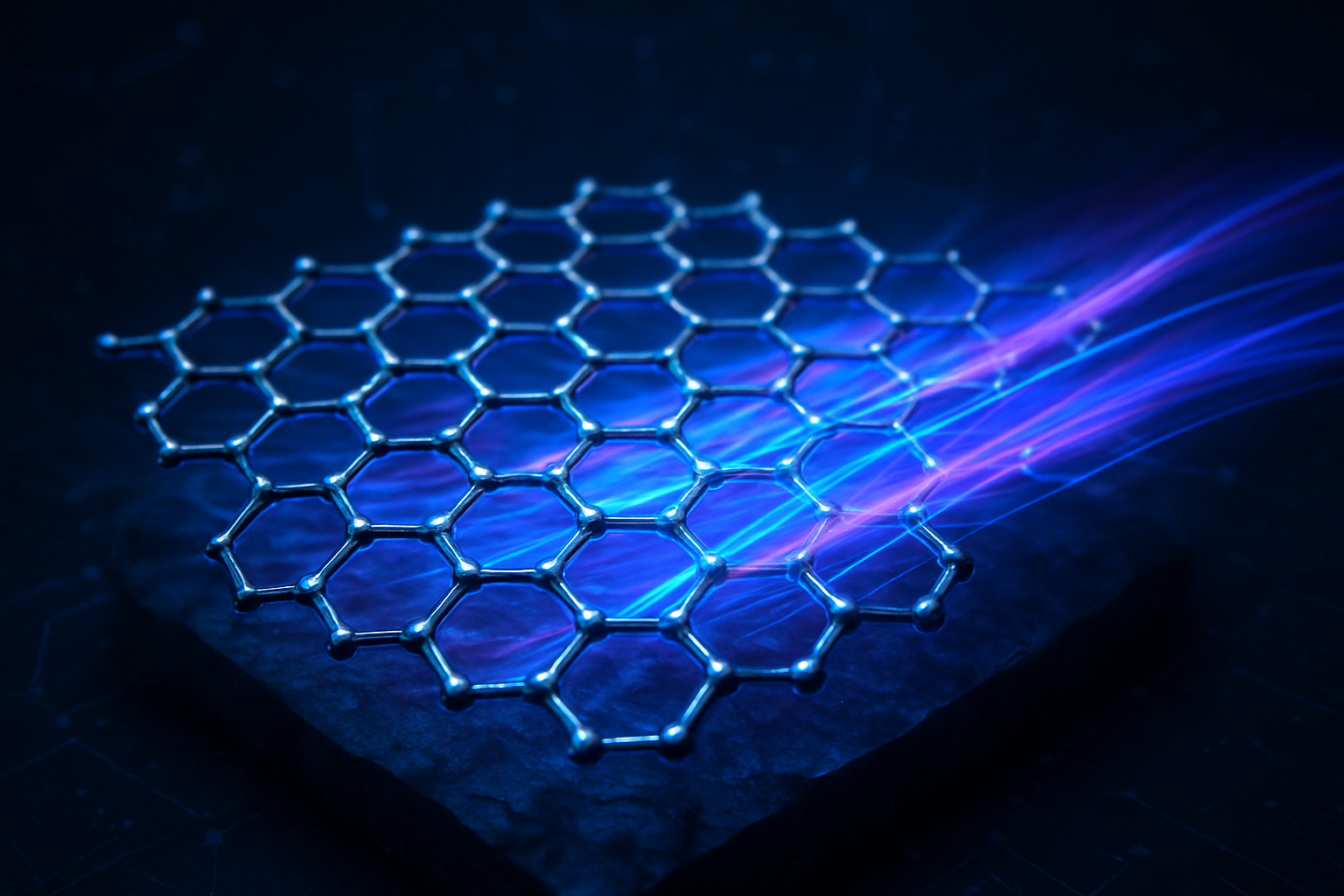
    The technical foundation of this breakthrough lies in a process known as Confinement Controlled Sublimation (CCS). The Georgia Tech team utilized silicon carbide (SiC) wafers, heating them to extreme temperatures exceeding 1,000°C in specialized induction furnaces. During this process, silicon atoms evaporate from the surface, leaving behind a thin layer of carbon that crystallizes into graphene. The innovation was not just in growing the graphene, but in the "buffer layer"—the first layer of carbon that chemically bonds to the SiC substrate. By perfecting a quasi-equilibrium annealing method, the researchers produced "semiconducting epitaxial graphene" (SEG) that exhibits a band gap of 0.6 electron volts (eV).

    A band gap is the essential property that allows a semiconductor to switch "on" and "off," a fundamental requirement for the binary logic used in digital computers. Standard graphene is a semimetal, meaning it lacks this gap and behaves more like a conductor, making it historically useless for transistors. The Georgia Tech breakthrough effectively "taught" graphene how to behave like a semiconductor without destroying its extraordinary electrical properties. This resulted in a room-temperature electron mobility exceeding 5,000 cm²/Vs—roughly ten times the mobility of bulk silicon (approx. 1,400 cm²/Vs).

    Initial reactions from the global research community have been transformative. Experts previously viewed 2D semiconductors as a distant dream due to the difficulty of scaling them without introducing defects. However, the SEG method produces a material that is chemically, mechanically, and thermally robust. Unlike other exotic materials that require entirely new manufacturing ecosystems, this epitaxial graphene is compatible with standard microelectronics processing, meaning it can theoretically be integrated into existing fabrication facilities with manageable modifications.

    Industry Impact: A High-Stakes Shift for Semiconductor Giants

    The commercial implications of functional graphene have sent ripples through the semiconductor supply chain. Companies specializing in silicon carbide are at the forefront of this transition. Wolfspeed, Inc. (NYSE:WOLF), the global leader in SiC materials, has seen renewed interest in its high-quality wafer production as the primary substrate for graphene growth. Similarly, onsemi (NASDAQ:ON) and STMicroelectronics (NYSE:STM) are positioning themselves as key material providers, leveraging their existing SiC infrastructure to support the burgeoning demand for epitaxial graphene research and pilot production lines.

    Foundries are also beginning to pivot. GlobalFoundries (NASDAQ:GFS), which established a strategic partnership with Georgia Tech for semiconductor research, is currently a prime candidate for pilot-testing graphene-on-SiC logic gates. The ability to integrate graphene into "feature-rich" manufacturing nodes could allow GlobalFoundries to offer a unique performance tier for AI accelerators and high-frequency communication chips. Meanwhile, equipment manufacturers like CVD Equipment Corp (NASDAQ:CVV) and Aixtron SE (ETR:AIXA) are reporting increased orders for the specialized chemical vapor deposition and induction furnace systems required to maintain the precise quasi-equilibrium states needed for SEG production.

    For fabless giants like NVIDIA (NASDAQ:NVDA) and Advanced Micro Devices, Inc. (NASDAQ:AMD), the breakthrough offers a potential escape from the "thermal wall" of silicon. As AI models grow in complexity, the heat generated by silicon-based GPUs has become a primary bottleneck. Graphene’s high mobility means electrons move with less resistance, generating far less heat even at higher clock speeds. Analysts suggest that if graphene-based logic can be successfully scaled, it could lead to AI accelerators that operate in the Terahertz (THz) range—a thousand times faster than the Gigahertz (GHz) chips dominant today.

    Wider Significance: Sustaining Moore’s Law in the AI Era

    The transition to graphene represents more than just a faster chip; it is a fundamental survival strategy for Moore’s Law. For decades, the industry has relied on shrinking silicon transistors, but as we approach the atomic scale, quantum tunneling and heat dissipation have made further progress increasingly difficult. Graphene, being a truly two-dimensional material, allows for the ultimate miniaturization of electronics. This breakthrough fits into the broader AI landscape by providing a hardware roadmap that can actually keep pace with the exponential growth of neural network parameters.

    However, the shift also raises significant concerns regarding the global supply chain. The reliance on high-purity silicon carbide wafers could create new geopolitical dependencies, as the manufacturing of these substrates is concentrated among a few specialized players. Furthermore, while graphene is compatible with existing tools, the transition requires a massive retooling of the industry’s "recipe books." Comparing this to previous milestones, such as the introduction of FinFET transistors or High-K Metal Gates, the move to graphene is far more radical—it is the first time since the 1950s that the industry has seriously considered replacing the primary semiconductor material itself.

    From a societal perspective, the impact of "cooler" electronics is profound. Data centers currently consume a significant portion of the world’s electricity, much of which is used for cooling silicon chips. A shift to graphene-based hardware could drastically reduce the carbon footprint of the AI revolution. By enabling THz computing, this technology also paves the way for real-time, low-latency applications in autonomous vehicles, edge AI, and advanced telecommunications that were previously hampered by the processing limits of silicon.

    The Horizon: Scaling for a Terahertz Future

    Looking ahead, the primary challenge remains scaling. While the Georgia Tech team has proven the concept on 100mm and 200mm wafers, the industry standard for logic is 300mm. Near-term developments are expected to focus on the "Schottky barrier" problem—managing the interface between graphene and metal contacts to ensure that the high mobility of the material isn't lost at the connection points. DARPA’s Next Generation Microelectronics Manufacturing (NGMM) program, which Georgia Tech joined in 2025, is currently funding research into 3D Heterogeneous Integration (3DHI) to stack graphene layers with traditional CMOS circuits.

    In the long term, we can expect to see the first specialized graphene-based "co-processors" appearing in high-end scientific computing and defense applications by the late 2020s. These will likely be hybrid chips where silicon handles standard logic and graphene handles high-speed data processing or RF communications. Experts predict that once the manufacturing yields stabilize, graphene could become the standard for "beyond-CMOS" electronics, potentially leading to consumer devices that can run for weeks on a single charge while processing AI tasks locally at speeds that currently require a server farm.

    A New Chapter in Computing History

    The breakthrough in functional graphene semiconductors at Georgia Tech is a watershed moment that will likely be remembered as the beginning of the post-silicon era. By solving the band gap problem and demonstrating ten-fold mobility gains, Walter de Heer and his team have provided the industry with a clear path forward. This is not merely an incremental improvement; it is a fundamental reimagining of how we build the brains of our digital world.

    As we move through 2026, the industry is watching for the first results of pilot manufacturing runs and the successful integration of graphene into complex 3D architectures. The transition will be slow and capital-intensive, but the potential rewards—computing speeds in the terahertz range and a dramatic reduction in energy consumption—are too significant to ignore. For the first time in seventy years, the throne of silicon is truly under threat, and the future of AI hardware looks remarkably like carbon.


    This content is intended for informational purposes only and represents analysis of current AI developments.

    TokenRing AI delivers enterprise-grade solutions for multi-agent AI workflow orchestration, AI-powered development tools, and seamless remote collaboration platforms.
    For more information, visit https://www.tokenring.ai/.
  • The Silicon Carbide Revolution: How AI-Driven Semiconductor Breakthroughs are Recharging the Global Power Grid and AI Infrastructure

    The Silicon Carbide Revolution: How AI-Driven Semiconductor Breakthroughs are Recharging the Global Power Grid and AI Infrastructure

    The transition to a high-efficiency, electrified future has reached a critical tipping point as of January 2, 2026. Recent breakthroughs in Silicon Carbide (SiC) research and manufacturing are fundamentally reshaping the landscape of power electronics. By moving beyond traditional silicon and embracing wide bandgap (WBG) materials, the industry is unlocking unprecedented performance in electric vehicles (EVs), renewable energy storage, and, most crucially, the massive power-hungry data centers that fuel modern generative AI.

    The immediate significance of these developments lies in the convergence of AI and hardware. While AI models demand more energy than ever before, AI-driven manufacturing techniques are simultaneously being used to perfect the very SiC chips required to manage that power. This symbiotic relationship has accelerated the shift toward 200mm (8-inch) wafer production and next-generation "trench" architectures, promising a new era of energy efficiency that could reduce global data center power consumption by nearly 10% over the next decade.

    The Technical Edge: M3e Platforms and AI-Optimized Crystal Growth

    At the heart of the recent SiC surge is a series of technical milestones that have pushed the material's performance limits. In late 2025, onsemi (NASDAQ:ON) unveiled its EliteSiC M3e technology, a landmark development in planar MOSFET architecture. The M3e platform achieved a staggering 30% reduction in conduction losses and a 50% reduction in turn-off losses compared to previous generations. This leap is vital for 800V EV traction inverters and high-density AI power supplies, where reducing the "thermal signature" is the primary bottleneck for increasing compute density.

    Simultaneously, Infineon Technologies (OTC:IFNNY) has successfully scaled its CoolSiC Generation 2 (G2) MOSFETs. These devices offer up to 20% better power density and are specifically designed to support multi-level topologies in data center Power Supply Units (PSUs). Unlike previous approaches that relied on simple silicon replacements, these new SiC designs are "smart," featuring integrated gate drivers that minimize parasitic inductance. This allows for switching frequencies that were previously unattainable, enabling smaller, lighter, and more efficient power converters.

    Perhaps the most transformative technical advancement is the integration of AI into the manufacturing process itself. SiC is notoriously difficult to produce due to "killer defects" like basal plane dislocations. New systems from Applied Materials (NASDAQ:AMAT), such as the PROVision 10 with ExtractAI technology, now use deep learning to identify these microscopic flaws with 99% accuracy. By analyzing datasets from the crystal growth process (boule formation), AI models can now predict wafer failure before slicing even begins, leading to a 30% reduction in yield detraction—a move that has been hailed by the research community as the "holy grail" of SiC production.

    The Scale War: Industry Giants and the 200mm Transition

    The competitive landscape of 2026 is defined by a "Scale War" as major players race to transition from 150mm to 200mm (8-inch) wafers. This shift is essential for driving down costs and meeting the projected $10 billion market demand. Wolfspeed (NYSE:WOLF) has taken a commanding lead with its $5 billion "John Palmour" (JP) Manufacturing Center in North Carolina. As of this month, the facility has moved into high-volume 200mm crystal production, increasing the company's wafer capacity by tenfold compared to its legacy sites.

    In Europe, STMicroelectronics (NYSE:STM) has countered with its fully integrated Silicon Carbide Campus in Sicily. This site represents the first time a manufacturer has handled the entire SiC lifecycle—from raw powder and 200mm substrate growth to finished modules—on a single campus. This vertical integration provides a massive strategic advantage, allowing STMicro to supply major automotive partners like Tesla (NASDAQ:TSLA) and BMW with a more resilient and cost-effective supply chain.

    The disruption to existing products is already visible. Legacy silicon-based Insulated Gate Bipolar Transistors (IGBTs) are rapidly being phased out of high-performance applications. Startups and major AI labs are the primary beneficiaries, as the new SiC-based 12 kW PSU designs from Infineon and onsemi have reached 99.0% peak efficiency. This allows AI clusters to handle massive "power spikes"—surging from 0% to 200% load in microseconds—without the voltage sags that can crash intensive AI training batches.

    Broader Significance: Decarbonization and the AI Power Crisis

    The wider significance of the SiC breakthrough extends far beyond the semiconductor fab. As generative AI continues its exponential growth, the strain on global power grids has become a top-tier geopolitical concern. SiC is the "invisible enabler" of the AI revolution; without the efficiency gains provided by wide bandgap semiconductors, the energy costs of training next-generation Large Language Models (LLMs) would be economically and environmentally unsustainable.

    Furthermore, the shift to SiC-enabled 800V DC architectures in data centers is a major milestone in the green energy transition. By moving to higher-voltage DC distribution, facilities can eliminate multiple energy-wasting conversion stages and reduce the need for heavy copper cabling. Research from late 2025 indicates that these architectures can reduce overall data center energy consumption by up to 7%. This aligns with broader global trends toward decarbonization and the "electrification of everything."

    However, this transition is not without concerns. The extreme concentration of SiC manufacturing capability in a handful of high-tech facilities in the U.S., Europe, and Malaysia creates new supply chain vulnerabilities. Much like the advanced logic chips produced by TSMC, the world is becoming increasingly dependent on a very specific type of hardware to keep its digital and physical infrastructure running. Comparing this to previous milestones, the SiC 200mm transition is being viewed as the "lithography moment" for power electronics—a fundamental shift in how we manage the world's energy.

    Future Horizons: 300mm Wafers and the Rise of Gallium Nitride

    Looking ahead, the next frontier for SiC research is already appearing on the horizon. While 200mm is the current gold standard, industry experts predict that the first 300mm (12-inch) SiC pilot lines could emerge by late 2028. This would further commoditize high-efficiency power electronics, making SiC viable for even low-cost consumer appliances. Additionally, the interplay between SiC and Gallium Nitride (GaN) is expected to evolve, with SiC dominating high-voltage applications (EVs, Grids) and GaN taking over lower-voltage, high-frequency roles (consumer electronics, 5G/6G base stations).

    We also expect to see "Smart Power" modules becoming more autonomous. Future iterations will likely feature edge-AI chips embedded directly into the power module to perform real-time health monitoring and predictive maintenance. This would allow a power grid or an EV fleet to "heal" itself by rerouting power or adjusting switching parameters the moment a potential failure is detected. The challenge remains the high initial cost of material synthesis, but as AI-driven yield optimization continues to improve, those barriers are falling faster than anyone predicted two years ago.

    Conclusion: The Nervous System of the Energy Transition

    The breakthroughs in Silicon Carbide technology witnessed at the start of 2026 mark a definitive end to the era of "good enough" silicon power. The convergence of AI-driven manufacturing and wide bandgap material science has created a virtuous cycle of efficiency. SiC is no longer just a niche material for luxury EVs; it has become the nervous system of the modern energy transition, powering everything from the AI clusters that think for us to the electric grids that sustain us.

    As we move through the coming weeks and months, watch for further announcements regarding 200mm yield rates and the deployment of 800V DC architectures in hyperscale data centers. The significance of this development in the history of technology cannot be overstated—it is the hardware foundation upon which the sustainable AI era will be built. The "Silicon" in Silicon Valley may soon be sharing its namesake with "Carbide" as the primary driver of technological progress.


    This content is intended for informational purposes only and represents analysis of current AI developments.

    TokenRing AI delivers enterprise-grade solutions for multi-agent AI workflow orchestration, AI-powered development tools, and seamless remote collaboration platforms.
    For more information, visit https://www.tokenring.ai/.

  • The High-Voltage Revolution: How ON Semiconductor’s SiC Dominance is Powering the 2026 EV Surge

    The High-Voltage Revolution: How ON Semiconductor’s SiC Dominance is Powering the 2026 EV Surge

    As 2025 draws to a close, the global automotive industry is undergoing a foundational shift in its power architecture, moving away from traditional silicon toward wide-bandgap (WBG) materials like Silicon Carbide (SiC) and Gallium Nitride (GaN). At the heart of this transition is ON Semiconductor (Nasdaq: ON), which has spent the final quarter of 2025 cementing its status as the linchpin of the electric vehicle (EV) supply chain. With the recent announcement of a massive $6 billion share buyback program and the finalization of a $2 billion expansion in the Czech Republic, onsemi is signaling that the era of "range anxiety" is being replaced by an era of high-efficiency, AI-optimized power delivery.

    The significance of this moment cannot be overstated. As of December 29, 2025, the industry has reached a tipping point where 800-volt EV architectures—which allow for ultra-fast charging and significantly lighter wiring—have moved from niche luxury features to the standard for mid-market vehicles. This shift is driven almost entirely by the superior thermal and electrical properties of SiC and GaN. By enabling power inverters to operate at higher temperatures and frequencies with minimal energy loss, these materials are effectively adding up to 7% more range to EVs without increasing battery size, a breakthrough that is reshaping the economics of sustainable transport.

    Technical Breakthroughs: EliteSiC M3e and the Rise of Vertical GaN

    The technical narrative of 2025 has been dominated by onsemi’s mass production of its EliteSiC M3e MOSFET technology. Unlike previous generations of planar SiC devices, the M3e architecture has successfully reduced conduction losses by a staggering 30%, a feat that was previously thought to require a more complex transition to trench-based designs. This efficiency gain is critical for the latest generation of traction inverters, which convert DC battery power into the AC power that drives the vehicle’s motors. Industry experts have noted that the M3e’s ability to handle higher power densities has allowed OEMs to shrink the footprint of the power electronics bay by nearly 20%, providing more cabin space and improving vehicle aerodynamics.

    Parallel to the SiC advancement is the emergence of Vertical GaN technology, which onsemi unveiled in late 2025. While traditional GaN has been limited to lower-power applications like on-board chargers and DC-DC converters, Vertical GaN aims to bring GaN’s extreme switching speeds to the high-power traction inverter. This development is particularly relevant for the AI-driven mobility sector; as EVs become increasingly autonomous, the demand for high-speed data processing and real-time power modulation grows. Vertical GaN allows for the kind of rapid-response power switching required by AI-managed drivetrains, which can adjust torque and energy consumption in millisecond intervals based on road conditions and sensor data.

    The transition from 6-inch to 8-inch (200mm) SiC wafers has also reached a critical milestone this month. By moving to larger wafers, onsemi and its peers are achieving significant economies of scale, effectively lowering the cost-per-die. This manufacturing evolution is what has finally allowed SiC to compete on a cost-basis with traditional silicon in the $35,000 to $45,000 EV price bracket. Initial reactions from the research community suggest that the 8-inch transition is the "Moore’s Law moment" for power electronics, paving the way for a 2026 where high-efficiency semiconductors are no longer a premium bottleneck but a commodity staple.

    Market Dominance and Strategic Financial Maneuvers

    Financially, onsemi is ending 2025 in a position of unprecedented strength. The company’s board recently authorized a new $6 billion share repurchase program set to begin on January 1, 2026. This follows a year in which onsemi returned nearly 100% of its free cash flow to shareholders, a move that has bolstered investor confidence despite the capital-intensive nature of semiconductor fabrication. By committing to return roughly one-third of its market capitalization over the next three years, onsemi is positioning itself as the "value play" in a high-growth sector, distinguishing itself from more volatile competitors like Wolfspeed (NYSE: WOLF).

    The competitive landscape has also been reshaped by onsemi’s $2 billion investment in Rožnov, Czech Republic. With the European Commission recently approving €450 million in state aid under the European Chips Act, this facility is set to become Europe’s first vertically integrated SiC manufacturing hub. This move provides a strategic advantage over STMicroelectronics (NYSE: STM) and Infineon Technologies (OTC: IFNNY), as it secures a localized, resilient supply chain for European giants like Volkswagen and BMW. Furthermore, onsemi’s late-2025 partnership with GlobalFoundries (Nasdaq: GFS) to co-develop 650V GaN products indicates a multi-pronged approach to dominating both the high-power and mid-power segments of the market.

    Market analysts point out that onsemi’s aggressive expansion in China has also paid dividends. In 2025, the company’s SiC revenue in the Chinese market doubled, driven by deep integration with domestic OEMs like Geely. While other Western tech firms have struggled with geopolitical headwinds, onsemi’s "brownfield" strategy—upgrading existing facilities rather than building entirely new ones—has allowed it to scale faster and more efficiently than its rivals. This strategic positioning has made onsemi the primary beneficiary of the global shift toward 800V platforms, leaving competitors scrambling to catch up with its production yields.

    The Wider Significance: AI, Decarbonization, and the New Infrastructure

    The growth of SiC and GaN is more than just an automotive story; it is a fundamental component of the broader AI and green energy landscape. In late 2025, we are seeing a convergence between EV power electronics and AI data center infrastructure. The same Vertical GaN technology that enables faster EV charging is now being deployed in the power supply units (PSUs) of AI server racks. As AI models grow in complexity, the energy required to train them has skyrocketed, making power efficiency a top-tier operational priority. Wide-bandgap semiconductors are the only viable solution for reducing the massive heat signatures and energy waste associated with the next generation of AI chips.

    This development fits into a broader trend of "Electrification 2.0," where the focus has shifted from merely building batteries to optimizing how every milliwatt of power is used. The integration of AI-optimized power management systems—software that uses machine learning to predict power demand and adjust semiconductor switching in real-time—is becoming a standard feature in both EVs and smart grids. By reducing energy loss during power conversion, onsemi’s hardware is effectively acting as a catalyst for global decarbonization efforts, making the transition to renewable energy more economically viable.

    However, the rapid adoption of these materials is not without concerns. The industry remains heavily reliant on a few key geographic regions for raw materials, and the environmental impact of SiC crystal growth—a high-heat, energy-intensive process—is under increasing scrutiny. Comparisons are being drawn to the early days of the microprocessor boom; while the benefits are immense, the sustainability of the supply chain will be the defining challenge of the late 2020s. Experts warn that without continued innovation in recycling and circular manufacturing, the "green" revolution could face its own resource constraints.

    Looking Ahead: The 2026 Outlook and Beyond

    As we look toward 2026, the industry is bracing for the full-scale implementation of the 8-inch wafer transition. This move is expected to further depress prices, potentially leading to a "price war" in the SiC space that could force consolidation among smaller players. We also expect to see the first commercial vehicles featuring GaN in the main traction inverter by late 2026, a milestone that would represent the final frontier for Gallium Nitride in the automotive sector.

    Near-term developments will likely focus on "integrated power modules," where SiC MOSFETs are packaged directly with AI-driven controllers. This "smart power" approach will allow for even greater levels of efficiency and predictive maintenance, where a vehicle can diagnose a potential inverter failure before it occurs. Predictably, the next big challenge will be the integration of these semiconductors into the burgeoning "Vehicle-to-Grid" (V2G) infrastructure, where EVs act as mobile batteries to stabilize the power grid during peak demand.

    Summary of the High-Voltage Shift

    The events of late 2025 have solidified Silicon Carbide and Gallium Nitride as the "new oil" of the automotive and AI industries. ON Semiconductor’s strategic pivot toward vertical integration and aggressive capital returns has positioned it as the dominant leader in this space. By successfully scaling the EliteSiC M3e platform and securing a foothold in the European and Chinese markets, onsemi has turned the technical advantages of wide-bandgap materials into a formidable economic moat.

    As we move into 2026, the focus will shift from proving the technology to perfecting the scale. The transition to 8-inch wafers and the rise of Vertical GaN represent the next chapter in a story that is as much about energy efficiency as it is about transportation. For investors and industry watchers alike, the coming months will be defined by how well these companies can manage their massive capacity expansions while navigating a complex geopolitical and environmental landscape. One thing is certain: the high-voltage revolution is no longer a future prospect—it is the present reality.


    This content is intended for informational purposes only and represents analysis of current AI developments.

    TokenRing AI delivers enterprise-grade solutions for multi-agent AI workflow orchestration, AI-powered development tools, and seamless remote collaboration platforms.
    For more information, visit https://www.tokenring.ai/.
  • The Silicon Carbide Revolution: Fuji Electric and Robert Bosch Standardize Power Modules to Supercharge EV Adoption

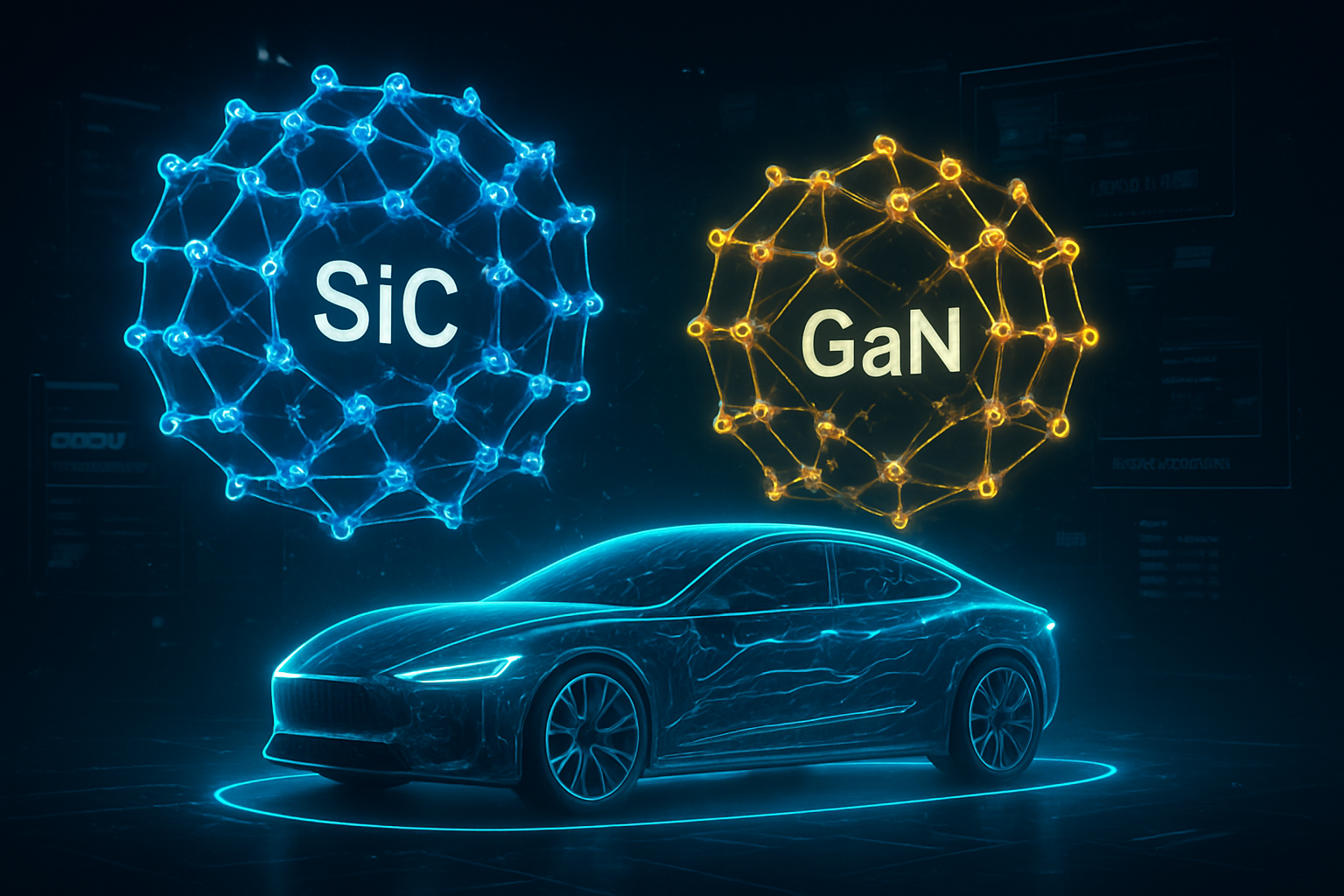
    The Silicon Carbide Revolution: Fuji Electric and Robert Bosch Standardize Power Modules to Supercharge EV Adoption

    The global transition toward electric mobility has reached a critical inflection point as two of the world’s most influential engineering powerhouses, Fuji Electric Co., Ltd. (TSE: 6504), and Robert Bosch GmbH, have solidified a strategic partnership to standardize Silicon Carbide (SiC) power semiconductor modules. This collaboration, which has matured into a cornerstone of the 2025 automotive supply chain, focuses on the development of "package-compatible" modules designed to harmonize the physical and electrical interfaces of high-efficiency inverters. By aligning their manufacturing standards, the two companies are addressing one of the most significant bottlenecks in EV production: the lack of interchangeable, high-performance power components.

    The immediate significance of this announcement lies in its potential to de-risk the EV supply chain while simultaneously pushing the boundaries of vehicle performance. As the industry moves toward 800-volt architectures and increasingly sophisticated AI-driven energy management systems, the ability to dual-source package-compatible SiC modules allows automakers to scale production without the fear of vendor lock-in or mechanical redesigns. This standardization is expected to be a primary catalyst for the next wave of EV adoption, offering consumers longer driving ranges and faster charging times through superior semiconductor efficiency.

    The Engineering of Efficiency: Trench Gates and Package Compatibility

    At the heart of the Fuji-Bosch alliance is a shared commitment to 3rd-generation Silicon Carbide technology. Unlike traditional silicon-based Insulated Gate Bipolar Transistors (IGBTs), which have dominated power electronics for decades, SiC MOSFETs offer significantly lower switching losses and higher thermal conductivity. The partnership specifically targets the 750-volt and 1,200-volt classes, utilizing advanced "trench gate" structures that allow for higher current densities in a smaller footprint. By leveraging Fuji Electric’s proprietary 3D wiring packaging and Bosch’s PM6.1 platform, the modules achieve inverter efficiencies exceeding 99%, effectively reducing energy waste by up to 80% compared to legacy silicon systems.

    The "package-compatible" nature of these modules is perhaps the most disruptive technical feature. Historically, power modules have been proprietary, forcing Original Equipment Manufacturers (OEMs) to design their inverters around a specific supplier's mechanical footprint. The Fuji-Bosch standard ensures that the outer dimensions, terminal positions, and mounting points are identical. This "plug-and-play" capability for high-power semiconductors means that a single inverter design can accommodate either a Bosch or a Fuji Electric module. This level of standardization is unprecedented in the high-power semiconductor space and mirrors the early standardization of battery cell formats that helped stabilize the EV market.

    Initial reactions from the semiconductor research community have been overwhelmingly positive, with experts noting that this move effectively creates a "second source" ecosystem for SiC. While competitors like STMicroelectronics (NYSE: STM) and Infineon Technologies AG (ETR: IFX) have led the market through sheer volume, the Fuji-Bosch alliance offers a unique value proposition: the reliability of two world-class manufacturers providing identical form factors. This technical synergy is viewed as a direct response to the supply chain vulnerabilities exposed in recent years, ensuring that the "brain" of the EV—the inverter—remains resilient against localized disruptions.

    Redefining the Semiconductor Supply Chain and Market Dynamics

    This partnership creates a formidable challenge to the current hierarchy of the power semiconductor market. By standardizing their offerings, Fuji Electric and Bosch are positioning themselves as the preferred partners for Tier 1 suppliers and major automakers like the Volkswagen Group or Toyota Motor Corporation (TSE: 7203). For Fuji Electric, the alliance provides a massive entry point into the European automotive market, where Bosch maintains a dominant footprint. Conversely, Bosch gains access to Fuji’s cutting-edge 3G SiC manufacturing capabilities, ensuring a steady supply of high-yield wafers and chips as global demand for SiC is projected to triple by 2027.

    The competitive implications extend to the very top of the tech industry. As EVs become "computers on wheels," the demand for efficient power delivery to support high-performance AI chips—such as those from NVIDIA Corporation (NASDAQ: NVDA)—has skyrocketed. These AI-defined vehicles require massive amounts of power for autonomous driving sensors and real-time data processing. The efficiency gains provided by the Fuji-Bosch SiC modules ensure that this increased "compute load" does not come at the expense of the vehicle’s driving range. By optimizing the power stage, these modules allow more of the battery's energy to be diverted to the onboard AI systems that define the modern driving experience.

    Furthermore, this development is likely to disrupt the pricing power of existing SiC leaders. As the Fuji-Bosch standard gains traction, it may force other players to adopt similar compatible footprints or risk being designed out of future vehicle platforms. The market positioning here is clear: Fuji and Bosch are not just selling a component; they are selling a standard. This strategic advantage is particularly potent in 2025, as automakers are under intense pressure to lower the "Total Cost of Ownership" (TCO) for EVs to achieve mass-market parity with internal combustion engines.

    The Silicon Carbide Catalyst in the AI-Defined Vehicle

    The broader significance of this partnership transcends simple hardware manufacturing; it is a foundational step in the evolution of the "AI-Defined Vehicle" (ADV). In the current landscape, the efficiency of the power powertrain is the primary constraint on how much intelligence a vehicle can possess. Every watt saved in the inverter is a watt that can be used for edge AI processing, high-fidelity sensor fusion, and sophisticated infotainment systems. By improving inverter efficiency, Fuji Electric and Bosch are effectively expanding the "energy budget" for AI, enabling more advanced autonomous features without requiring larger, heavier, and more expensive battery packs.

    This shift fits into a wider trend of "electrification meeting automation." Just as AI has revolutionized software development, SiC is revolutionizing the physics of power. The transition to SiC is often compared to the transition from vacuum tubes to silicon transistors in the mid-20th century—a fundamental leap that enables entirely new architectures. However, the move to SiC also brings concerns regarding the raw material supply chain. The production of SiC wafers is significantly more energy-intensive and complex than traditional silicon, leading to potential bottlenecks in the availability of high-quality "boules" (the crystalline ingots from which wafers are sliced).

    Despite these concerns, the Fuji-Bosch alliance is seen as a stabilizing force. By standardizing the packaging, they allow for a more efficient allocation of the global SiC supply. If one manufacturing facility faces a production delay, the "package-compatible" nature of the modules allows the industry to pivot to the other partner's supply without halting vehicle production lines. This level of systemic redundancy is a hallmark of a maturing industry and a necessary prerequisite for the widespread adoption of Level 3 and Level 4 autonomous driving systems, which require absolute reliability in power delivery.

    The Road to 800-Volt Dominance and Beyond

    Looking ahead, the next 24 to 36 months will likely see the rapid proliferation of 800-volt battery systems, driven in large part by the availability of these standardized SiC modules. Higher voltage systems allow for significantly faster charging—potentially adding 200 miles of range in under 15 minutes—but they require the robust thermal management and high-voltage tolerance that only SiC can provide. Experts predict that by 2026, the Fuji-Bosch standard will be the benchmark for mid-to-high-range EVs, with potential applications extending into electric heavy-duty trucking and even urban air mobility (UAM) drones.

    The next technical challenge on the horizon involves the integration of "Smart Sensing" directly into the SiC modules. Future iterations of the Fuji-Bosch partnership are expected to include embedded sensors that use AI to monitor the "health" of the semiconductor in real-time, predicting failures before they occur. This "proactive maintenance" capability will be essential for fleet operators and autonomous taxi services, where vehicle uptime is the primary metric of success. As we move toward 2030, the line between power electronics and digital logic will continue to blur, with SiC modules becoming increasingly "intelligent" components of the vehicle's central nervous system.

    A New Standard for the Electric Era

    The partnership between Fuji Electric and Robert Bosch marks a definitive end to the "Wild West" era of proprietary EV power electronics. By prioritizing package compatibility and standardization, these two giants have provided a blueprint for how the industry can scale to meet the ambitious electrification targets of the late 2020s. The resulting improvements in inverter efficiency and driving range are not just incremental upgrades; they are the keys to unlocking the mass-market potential of electric vehicles.

    As we look toward the final weeks of 2025 and into 2026, the industry will be watching closely to see how quickly other manufacturers adopt this new standard. The success of this alliance serves as a powerful reminder that in the race toward a sustainable and AI-driven future, collaboration on foundational hardware is just as important as competition in software. For the consumer, the impact will be felt in the form of more affordable, longer-range EVs that charge faster and perform better, finally bridging the gap between the internal combustion past and the electrified future.


    This content is intended for informational purposes only and represents analysis of current AI and technology developments.

    TokenRing AI delivers enterprise-grade solutions for multi-agent AI workflow orchestration, AI-powered development tools, and seamless remote collaboration platforms.
    For more information, visit https://www.tokenring.ai/.
  • The Silent Revolution: How SiC and GaN are Powering the AI Infrastructure and EV Explosion

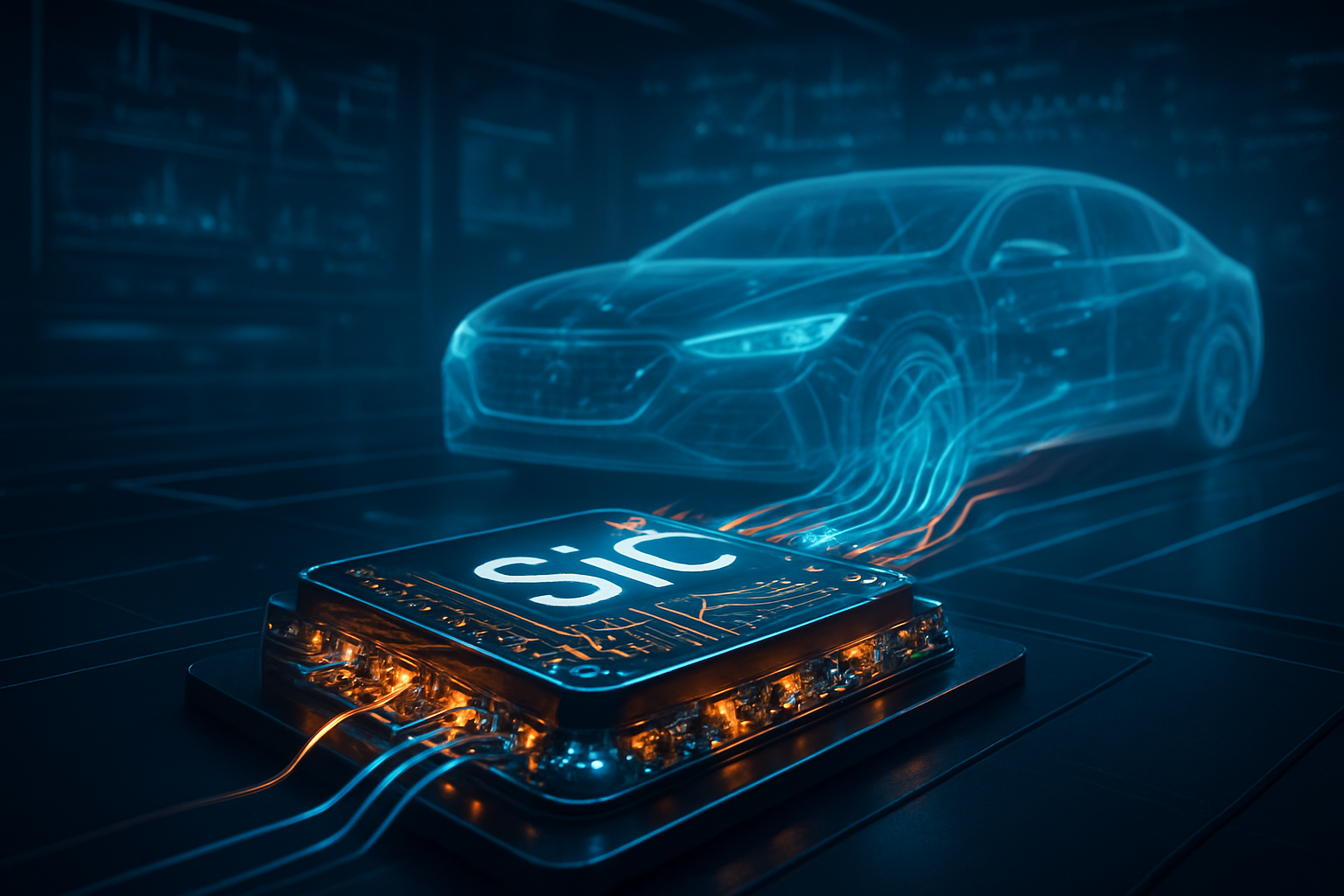
    The Silent Revolution: How SiC and GaN are Powering the AI Infrastructure and EV Explosion

    As of December 24, 2025, the semiconductor industry has reached a historic inflection point. The "Energy Wall"—a term coined by researchers to describe the physical limits of traditional silicon in high-power applications—has finally been breached. In its place, Wide-Bandgap (WBG) semiconductors, specifically Silicon Carbide (SiC) and Gallium Nitride (GaN), have emerged as the foundational pillars of the modern digital and automotive economy. These materials are no longer niche technologies for specialized hardware; they are now the essential components enabling the massive power demands of generative AI data centers and the 800-volt charging speeds of the latest electric vehicles (EVs).

    The significance of this transition cannot be overstated. With next-generation AI accelerators now drawing upwards of 2 kilowatts per package, the efficiency losses associated with legacy silicon-based power systems have become unsustainable. By leveraging the superior physical properties of SiC and GaN, engineers have managed to shrink power supply units by 50% while simultaneously slashing energy waste. This shift is effectively decoupling the growth of AI compute from the exponential rise in energy consumption, providing a critical lifeline for a power-hungry industry.

    Breaking the Silicon Ceiling: The Rise of 200mm and 300mm WBG

    The technical superiority of WBG materials lies in their "bandgap"—the energy required for electrons to move from the valence band to the conduction band. Traditional silicon has a bandgap of approximately 1.1 electron volts (eV), whereas SiC and GaN boast bandgaps of 3.2 eV and 3.4 eV, respectively. This allows these materials to operate at much higher voltages, temperatures, and frequencies without breaking down. In late 2025, the industry has successfully transitioned to 200mm (8-inch) SiC wafers, a move led by STMicroelectronics (NYSE: STM) at its Catania "Silicon Carbide Campus." This transition has increased chip yield per wafer by over 50%, finally bringing the cost of SiC closer to that of high-end silicon.

    Furthermore, 2025 has seen the commercial debut of Vertical GaN (vGaN), a breakthrough spearheaded by onsemi (NASDAQ: ON). Unlike traditional lateral GaN, which conducts current across the surface of the chip, vGaN conducts current through the substrate. This allows GaN to compete directly with SiC in the 1200V range, making it suitable for the heavy-duty traction inverters found in electric trucks and industrial machinery. Meanwhile, Infineon Technologies (OTC: IFNNY) has begun sampling the world’s first 300mm GaN-on-Silicon wafers, a feat that promises to revolutionize the economics of power electronics by leveraging existing high-volume silicon manufacturing lines.

    These advancements differ from previous technologies by offering a "triple threat" of benefits: higher switching frequencies, lower on-resistance, and superior thermal conductivity. In practical terms, this means that power converters can use smaller capacitors and inductors, leading to more compact and lightweight designs. Industry experts have lauded these developments as the most significant change in power electronics since the invention of the MOSFET in the 1960s, noting that the "Silicon-only" era of power management is effectively over.

    Market Dominance and the AI Power Supply Gold Rush

    The shift toward WBG materials has triggered a massive realignment among semiconductor giants. STMicroelectronics (NYSE: STM) currently holds a commanding 29% share of the SiC market, largely due to its long-standing partnership with major EV manufacturers and its early investment in 200mm production. However, onsemi (NASDAQ: ON) has rapidly closed the gap, securing multi-billion dollar long-term supply agreements with automotive OEMs and emerging as the leader in the newly formed vGaN segment.

    The AI data center market has become the new primary battleground for these companies. As hyperscalers like Amazon and Google deploy 12kW Power Supply Units (PSUs) to support the latest AI clusters, the demand for GaN has skyrocketed. These PSUs, which utilize SiC for high-voltage AC-DC conversion and GaN for high-frequency DC-DC switching, achieve 98% efficiency. This is a critical metric for data center operators, as every 1% increase in efficiency can save millions of dollars in electricity and cooling costs annually.

    The competitive landscape has also seen dramatic shifts for legacy players. Wolfspeed (NYSE: WOLF), once the pure-play leader in SiC, emerged from a successful Chapter 11 restructuring in September 2025. With its Mohawk Valley Fab finally reaching 30% utilization, the company is stabilizing its supply chain and refocusing on high-purity SiC substrates, where it still holds a 33% global market share. This restructuring has allowed Wolfspeed to remain a vital supplier to other chipmakers while shedding the debt that hampered its growth during the 2024 downturn.

    Societal Impact: Efficiency as the New Sustainability

    The broader significance of the WBG revolution extends far beyond corporate balance sheets; it is a critical component of global sustainability efforts. In the EV sector, the adoption of 800V architectures enabled by SiC has virtually eliminated "range anxiety" for the average consumer. By allowing for 15-minute "flash charging" and increasing vehicle range by 7-10% without increasing battery size, WBG materials are making EVs more practical and affordable for the mass market.

    In the realm of AI, WBG semiconductors are solving the "PUE Crisis" (Power Usage Effectiveness). By reducing the heat generated during power conversion, these materials have lowered the energy demand of data center cooling systems by an estimated 40%. This allows AI companies to pack more compute density into existing facilities, delaying the need for costly new grid connections and reducing the environmental footprint of large language model training.

    However, the rapid transition has not been without concerns. The concentration of SiC substrate production remains a geopolitical flashpoint, with Chinese players like SICC and Tankeblue aggressively gaining market share and undercutting Western prices. This has led to increased calls for "local-for-local" supply chains to ensure that the critical infrastructure of the AI era is not vulnerable to trade disruptions.

    The Horizon: Ultra-Wide Bandgap and AI-Optimized Power

    Looking ahead to 2026 and beyond, the industry is already eyeing the next frontier: Ultra-Wide Bandgap (UWBG) materials. Research into Gallium Oxide and Diamond-based semiconductors is accelerating, with the goal of creating chips that can handle even higher voltages and temperatures than SiC. These materials could eventually power the next generation of orbital satellites and deep-sea exploration equipment, where environmental conditions are too extreme for current technology.

    Another burgeoning field is "Cognitive Power Electronics." Tesla recently revealed a system that uses real-time AI to adjust SiC switching frequencies based on driving conditions and battery state-of-health. This software-defined approach to power management allows for a 75% reduction in SiC content while maintaining the same level of performance, potentially lowering the cost of entry-level EVs. Experts predict that this marriage of AI and WBG hardware will become the standard for all high-performance energy systems by the end of the decade.

    A New Era for Energy and Intelligence

    The transition to Silicon Carbide and Gallium Nitride represents a fundamental shift in how humanity manages energy. By moving past the physical limitations of silicon, the semiconductor industry has provided the necessary infrastructure to support the dual revolutions of artificial intelligence and electrified transportation. The developments of 2025 have proven that efficiency is not just a secondary goal, but a primary enabler of technological progress.

    As we move into 2026, the key metrics to watch will be the continued scaling of 300mm GaN production and the integration of AI-driven material discovery to further enhance chip reliability. The "Silent Revolution" of WBG semiconductors may not always capture the headlines like the latest AI model, but it is the indispensable engine driving the future of innovation.


    This content is intended for informational purposes only and represents analysis of current AI developments.

    TokenRing AI delivers enterprise-grade solutions for multi-agent AI workflow orchestration, AI-powered development tools, and seamless remote collaboration platforms.
    For more information, visit https://www.tokenring.ai/.

  • The Efficiency Frontier: How AI-Driven Silicon Carbide and Gallium Nitride are Redefining the Electric Vehicle

    The Efficiency Frontier: How AI-Driven Silicon Carbide and Gallium Nitride are Redefining the Electric Vehicle

    The global automotive industry has reached a pivotal inflection point as of late 2025, driven by a fundamental shift in the materials that power our vehicles. The era of traditional silicon-based power electronics is rapidly drawing to a close, replaced by a new generation of "wide-bandgap" (WBG) semiconductors: Silicon Carbide (SiC) and Gallium Nitride (GaN). This transition is not merely a hardware upgrade; it is a sophisticated marriage of advanced material science and artificial intelligence that is enabling the 800-volt architectures and 500-mile ranges once thought impossible for mass-market electric vehicles (EVs).

    This technological leap comes at a critical time. As of December 22, 2025, the EV market has shifted its focus from raw battery capacity to "efficiency-first" engineering. By utilizing AI-optimized SiC and GaN components, automakers are achieving up to 99% inverter efficiency, effectively adding 30 to 50 miles of range to vehicles without increasing the size—or the weight—of the battery pack. This "silent revolution" in the drivetrain is what finally allows EVs to achieve price and performance parity with internal combustion engines across all vehicle segments.

    The Physics of Performance: Breaking the Silicon Ceiling

    The technical superiority of SiC and GaN stems from their wide bandgap—a physical property that allows these materials to operate at much higher voltages, temperatures, and frequencies than standard silicon. While traditional silicon has a bandgap of approximately 1.1 electron volts (eV), SiC sits at 3.3 eV and GaN at 3.4 eV. In practical terms, this means these semiconductors can withstand electric fields ten times stronger than silicon, allowing for thinner device layers and significantly lower internal resistance.

    In late 2025, the industry has standardized around 800V architectures, a move made possible by these materials. High-voltage systems allow for thinner wiring—reducing vehicle weight—and enable "ultra-fast" charging sessions that can replenish 80% of a battery in under 15 minutes. Furthermore, the higher switching frequencies of GaN, which can now reach the megahertz range in traction inverters, allow for much smaller passive components like inductors and capacitors. This has led to the "shrinking" of the power electronics block; a 2025-model traction inverter is roughly 40% smaller and 50% lighter than its 2021 predecessor.

    The integration of AI has been the "secret sauce" in mastering these difficult-to-manufacture materials. Throughout 2025, companies like Infineon Technologies (OTCMKTS: IFNNY) have utilized Convolutional Neural Networks (CNNs) to achieve a breakthrough in 300mm GaN-on-Silicon manufacturing. By using AI-driven defect classification, Infineon has reached 99% accuracy in identifying nanoscale lattice mismatches during the epitaxy process, a feat that was previously the primary bottleneck to mass-market GaN adoption. Initial reactions from the research community suggest that this 300mm milestone will drop the cost of GaN power chips by nearly 50% by the end of 2026.

    Market Dynamics: A New Hierarchy of Power

    The shift to WBG semiconductors has fundamentally reshaped the competitive landscape for chipmakers and OEMs alike. STMicroelectronics (NYSE: STM) currently maintains the largest market share in the SiC space, largely due to its long-standing partnership with Tesla (NASDAQ: TSLA). However, the market saw a massive shakeup in mid-2025 when Wolfspeed (NYSE: WOLF) emerged from a strategic Chapter 11 restructuring. Now operating as a "pure-play" SiC powerhouse, Wolfspeed has pivoted its focus toward 200mm wafer production at its Mohawk Valley fab, recently securing a massive multi-year supply agreement with Toyota for their next-generation e-mobility platforms.

    Meanwhile, ON Semiconductor (NASDAQ: ON), under its EliteSiC brand, has aggressively captured the Asian market. Their recent partnership with Xiaomi for the YU7 SUV highlights a growing trend: the "Vertical GaN" (vGaN) breakthrough. By using AI to optimize the vertical structure of GaN crystals, ON Semi has created chips that handle the high-power loads of heavy SUVs—a domain previously reserved exclusively for SiC. This creates a new competitive front between SiC and GaN, potentially disrupting the established product roadmaps of major power electronics suppliers.

    Tesla, ever the industry disruptor, has taken a different strategic path. In late 2025, the company revealed it has successfully reduced the SiC content in its "Next-Gen" platform by 75% without sacrificing performance. This was achieved through "Cognitive Power Electronics"—an AI-driven gate driver system that uses real-time machine learning to adjust switching frequencies based on driving conditions. This software-centric approach allows Tesla to use fewer, smaller chips, giving them a significant cost advantage over legacy manufacturers who are still reliant on high volumes of raw WBG material.

    The AI Connection: From Material Discovery to Real-Time Management

    The significance of the SiC and GaN transition extends far beyond the hardware itself; it represents the first major success of AI-driven material science. Throughout 2024 and 2025, researchers have utilized Neural Network Potentials (NNPs), such as the PreFerred Potential (PFP) model, to simulate atomic interactions in semiconductor substrates. This AI-led approach accelerated the discovery of new high-k dielectrics for SiC MOSFETs, a process that would have taken decades using traditional trial-and-error laboratory methods.

    Beyond the factory floor, AI is now embedded directly into the vehicle's power management system. Modern Battery Management Systems (BMS), such as those found in the 2025 Hyundai (OTCMKTS: HYMTF) IONIQ 5, use Recurrent Neural Networks (RNNs) to monitor the "State of Health" (SOH) of individual power transistors. These systems can predict a semiconductor failure up to three months in advance by analyzing subtle deviations in thermal signatures and switching transients. This "predictive maintenance" for the drivetrain is a milestone that mirrors the evolution of jet engine monitoring in the aerospace industry.

    However, this transition is not without concerns. The reliance on complex AI models to manage high-voltage power electronics introduces new cybersecurity risks. Industry experts have warned that a "malicious firmware update" targeting the AI-driven gate drivers could theoretically cause a catastrophic failure of the inverter. As a result, 2025 has seen a surge in "Secure-BMS" startups focusing on hardware-level encryption for the data streams flowing between the battery cells and the WBG power modules.

    The Road Ahead: 2026 and Beyond

    Looking toward 2026, the industry expects the "GaN-ification" of the on-board charger (OBC) and DC-DC converter to be nearly 100% complete in new EV models. The next frontier is the integration of WBG materials into wireless charging pads. AI models are currently being trained to manage the complex electromagnetic fields required for high-efficiency wireless power transfer, with initial 11kW systems expected to debut in premium German EVs by late next year.

    The primary challenge remaining is the scaling of 300mm manufacturing. While Infineon has proven the concept, the capital expenditure required to transition the entire industry away from 150mm and 200mm lines is immense. Experts predict a "two-tier" market for the next few years: premium vehicles utilizing AI-optimized 300mm GaN and SiC for maximum efficiency, and budget EVs utilizing "hybrid inverters" that mix traditional silicon IGBTs with small amounts of SiC to balance cost.

    Furthermore, as AI compute loads within the vehicle increase—driven by Level 4 autonomous driving systems—the power demand of the "AI brain" itself is becoming a factor. In late 2025, NVIDIA (NASDAQ: NVDA) and MediaTek announced a joint venture to develop WBG-based power delivery modules specifically for AI chips, ensuring that the energy saved by the SiC drivetrain isn't immediately consumed by the car's self-driving computer.

    A New Foundation for Electrification

    The transition to Silicon Carbide and Gallium Nitride marks the end of the "experimental" phase of electric mobility. By leveraging the unique physical properties of these wide-bandgap materials and the predictive power of artificial intelligence, the automotive industry has solved the twin problems of range anxiety and slow charging. The developments of 2025 have proven that the future of the EV is not just about bigger batteries, but about smarter, more efficient power conversion.

    In the history of AI, this period will likely be remembered as the moment when artificial intelligence moved from the "cloud" to the "core" of physical infrastructure. The ability to design, manufacture, and manage power at the atomic level using machine learning has fundamentally changed our relationship with energy. As we move into 2026, the industry will be watching closely to see if the cost reductions promised by 300mm manufacturing can finally bring $25,000 high-performance EVs to the global mass market.

    For now, the message is clear: the silicon age of the automobile is over. The WBG era, powered by AI, has begun.


    This content is intended for informational purposes only and represents analysis of current AI developments.

    TokenRing AI delivers enterprise-grade solutions for multi-agent AI workflow orchestration, AI-powered development tools, and seamless remote collaboration platforms.
    For more information, visit https://www.tokenring.ai/.
  • The Power Behind the Processing: OSU’s Anant Agarwal Elected to NAI for Semiconductor Breakthroughs

    The Power Behind the Processing: OSU’s Anant Agarwal Elected to NAI for Semiconductor Breakthroughs

    The National Academy of Inventors (NAI) has officially named Dr. Anant Agarwal, a Professor of Electrical and Computer Engineering at The Ohio State University (OSU), to its prestigious Class of 2025. This election marks a pivotal recognition of Agarwal’s decades-long work in wide-bandgap (WBG) semiconductors—specifically Silicon Carbide (SiC) and Gallium Nitride (GaN)—which have become the unsung heroes of the modern artificial intelligence revolution. As AI models grow in complexity, the hardware required to train and run them has hit a "power wall," and Agarwal’s innovations provide the critical efficiency needed to scale these systems sustainably.

    The significance of this development cannot be overstated as the tech industry grapples with the massive energy demands of next-generation data centers. While much of the public's attention remains on the logic chips designed by companies like NVIDIA (NASDAQ:NVDA), the power electronics that deliver electricity to those chips are often the limiting factor in performance and density. Dr. Agarwal’s election to the NAI highlights a shift in the AI hardware narrative: the most important breakthroughs are no longer just about how we process data, but how we manage the massive amounts of energy required to do so.

    Revolutionizing Power with Silicon Carbide and AI-Driven Screening

    Dr. Agarwal’s work at the SiC Power Devices Reliability Lab at OSU focuses on the "ruggedness" and reliability of Silicon Carbide MOSFETs, which are capable of operating at much higher voltages, temperatures, and frequencies than traditional silicon. A primary technical challenge in SiC technology has been the instability of the gate oxide layer, which often leads to device failure under the high-stress environments typical of AI server racks. Agarwal’s team has pioneered a threshold voltage adjustment technique using low-field pulses, effectively stabilizing the devices and ensuring they can handle the volatile power cycles of high-performance computing.

    Perhaps the most groundbreaking technical advancement from Agarwal’s lab in the 2024-2025 period is the development of an Artificial Neural Network (ANN)-based screening methodology for semiconductor manufacturing. Traditional testing methods for SiC MOSFETs often involve destructive testing or imprecise statistical sampling. Agarwal’s new approach uses machine learning to predict the Short-Circuit Withstand Time (SCWT) of individual packaged chips. This allows manufacturers to identify and discard "weak" chips that might otherwise fail after a few months in a data center, reducing field failure rates from several percentage points to parts-per-million levels.

    Furthermore, Agarwal is pushing the boundaries of "smart" power chips through SiC CMOS technology. By integrating both N-channel and P-channel MOSFETs on a single SiC die, his research has enabled power chips that can operate at voltages exceeding 600V while maintaining six times the power density of traditional silicon. This allows for a massive reduction in the physical size of power supplies, a critical requirement for the increasingly cramped environments of AI-optimized server blades.

    Strategic Impact on the Semiconductor Giants and AI Infrastructure

    The commercial implications of Agarwal’s research are already being felt across the semiconductor industry. Companies like Wolfspeed (NYSE:WOLF), where Agarwal previously served as a technical leader, stand to benefit from the increased reliability and yield of SiC wafers. As the industry moves toward 200mm wafer production, the ANN-based screening techniques developed at OSU provide a competitive edge in maintaining quality control at scale. Major power semiconductor players, including ON Semiconductor (NASDAQ:ON) and STMicroelectronics (NYSE:STM), are also closely watching these developments as they race to supply the power-hungry AI market.

    For AI giants like NVIDIA and Google (NASDAQ:GOOGL), the adoption of Agarwal’s high-density power conversion technology is a strategic necessity. Current AI GPUs require hundreds of amps of current at very low voltages (often around 1V). Converting power from the 48V or 400V DC rails of a modern data center down to the 1V required by the chip is traditionally an inefficient process that generates immense heat. By using the 3.3 kV and 1.2 kV SiC MOSFETs commercialized through Agarwal’s spin-out, NoMIS Power, data centers can achieve higher-frequency switching, which significantly reduces the size of transformers and capacitors, allowing for more compute density per rack.

    This shift disrupts the existing cooling and power delivery market. Traditional liquid cooling providers and power module manufacturers are having to pivot as SiC-based systems can operate at junction temperatures up to 200°C. This thermal resilience allows for air-cooled power modules in environments that previously required expensive and complex liquid cooling setups, potentially lowering the capital expenditure for new AI startups and mid-sized data center operators.

    The Broader AI Landscape: Efficiency as the New Frontier

    Dr. Agarwal’s innovations fit into a broader trend where energy efficiency is becoming the primary metric for AI success. For years, the industry followed "Moore’s Law" for logic, but power electronics lagged behind. We are now entering what experts call the "Second Electronics Revolution," moving from the Silicon Age to the Wide-Bandgap Age. This transition is essential for the "decarbonization" of AI; without the efficiency gains provided by SiC and GaN, the carbon footprint of global AI training would likely become ecologically and politically untenable.

    The wider significance also touches on national security and domestic manufacturing. Through his leadership in PowerAmerica, Agarwal has been instrumental in ensuring the United States maintains a robust supply chain for wide-bandgap semiconductors. As geopolitical tensions influence the semiconductor trade, the ability to manufacture high-reliability power electronics domestically at OSU and through partners like Wolfspeed provides a strategic safeguard for the U.S. tech economy.

    However, the rapid transition to SiC is not without concerns. The manufacturing process for SiC is significantly more energy-intensive and complex than for standard silicon. While Agarwal’s work improves the reliability and usage efficiency, the industry still faces a steep curve in scaling the raw material production. Comparisons are often made to the early days of the microprocessor revolution—we are currently in the "scaling" phase of power semiconductors, where the innovations of today will determine the infrastructure of the next thirty years.

    Future Horizons: Smart Chips and 3.3kV AI Rails

    Looking ahead to 2026 and beyond, the industry expects a surge in the adoption of 3.3 kV SiC MOSFETs for AI power rails. NoMIS Power’s recent launch of these devices in late 2025 is just the beginning. Near-term developments will likely focus on integrating Agarwal's ANN-based screening directly into the automated test equipment (ATE) used by global chip foundries. This would standardize "reliability-as-a-service" for any company purchasing SiC-based power modules.

    On the horizon, we may see the emergence of "autonomous power modules"—chips that use Agarwal’s SiC CMOS technology to monitor their own health and adjust their operating parameters in real-time to prevent failure. Such "self-healing" hardware would be a game-changer for edge AI applications, such as autonomous vehicles and remote satellite systems, where manual maintenance is impossible. Experts predict that the next five years will see SiC move from a "premium" alternative to the baseline standard for all high-performance computing power delivery.

    A Legacy of Innovation and the Path Forward

    Dr. Anant Agarwal’s election to the National Academy of Inventors is a well-deserved recognition of a career that has bridged the gap between fundamental physics and industrial application. From his early days at Cree to his current leadership at Ohio State, his focus on the "ruggedness" of technology has ensured that the AI revolution is built on a stable and efficient foundation. The key takeaway for the industry is clear: the future of AI is as much about the power cord as it is about the processor.

    As we move into 2026, the tech community should watch for the results of the first large-scale deployments of ANN-screened SiC modules in hyperscale data centers. If these devices deliver the promised reduction in failure rates and energy overhead, they will solidify SiC as the bedrock of the AI era. Dr. Agarwal’s work serves as a reminder that true innovation often happens in the layers of technology we rarely see, but without which the digital world would grind to a halt.


    This content is intended for informational purposes only and represents analysis of current AI developments.

    TokenRing AI delivers enterprise-grade solutions for multi-agent AI workflow orchestration, AI-powered development tools, and seamless remote collaboration platforms.
    For more information, visit https://www.tokenring.ai/.