
Tag: SK Hynix

  • The High-Bandwidth Memory Arms Race: HBM4 and the Quest for Trillion-Parameter AI Supremacy

    The High-Bandwidth Memory Arms Race: HBM4 and the Quest for Trillion-Parameter AI Supremacy

    As of January 1, 2026, the artificial intelligence industry has reached a critical hardware inflection point. The transition from the HBM3E era to the HBM4 generation is no longer a roadmap projection but a high-stakes reality. Driven by the voracious memory requirements of 100-trillion parameter AI models, the "Big Three" memory makers—Samsung Electronics (KRX: 005930), SK Hynix (KRX: 000660), and Micron Technology (NASDAQ: MU)—are locked in a fierce capacity race to supply the next generation of AI accelerators.

    This shift represents more than just a speed bump; it is a fundamental architectural change. With NVIDIA (NASDAQ: NVDA) and Advanced Micro Devices (NASDAQ: AMD) rolling out their most ambitious chips to date, the availability of HBM4 has become the primary bottleneck for AI progress. The ability to house entire massive language models within active memory is the new frontier, and the early winners of 2026 are those who can master the complex physics of 12-layer and 16-layer HBM4 stacking.

    The HBM4 Breakthrough: Doubling the Data Highway

    The defining characteristic of HBM4 is the doubling of the memory interface width from 1024-bit to 2048-bit. This "GPT-4 moment" for hardware allows for a massive leap in data throughput without the exponential power consumption increases that plagued late-stage HBM3E. Current 2026 specifications show HBM4 stacks reaching bandwidths between 2.0 TB/s and 2.8 TB/s per stack. Samsung has taken an early lead in volume, having secured Production Readiness Approval (PRA) from NVIDIA in late 2025 and commencing mass production of 12-Hi (12-layer) HBM4 at its Pyeongtaek facility this month.

    Technically, HBM4 introduces hybrid bonding and custom logic dies, moving away from the traditional micro-bump interface. This allows for a thinner profile and better thermal management, which is essential as GPUs now regularly exceed 1,000 watts of power draw. SK Hynix, which dominated the HBM3E cycle, has shifted its strategy to a "One-Team" alliance with Taiwan Semiconductor Manufacturing Company (NYSE: TSM), utilizing TSMC’s 5nm and 3nm nodes for the base logic dies. This collaboration aims to provide a more "system-level" memory solution, though their full-scale volume ramp is not expected until the second quarter of 2026.

    Initial reactions from the AI research community have been overwhelmingly positive, as the increased memory capacity directly translates to lower latency in inference. Experts at leading AI labs note that HBM4 is the first memory technology designed specifically for the "post-transformer" era, where the "memory wall"—the gap between processor speed and memory access—has been the single greatest hurdle to achieving real-time reasoning in models exceeding 50 trillion parameters.

    The Strategic Battle: Samsung’s Resurgence and the SK Hynix-TSMC Alliance

    The competitive landscape has shifted dramatically in early 2026. Samsung, which struggled to gain traction during the HBM3E transition, has leveraged its position as an integrated device manufacturer (IDM). By handling memory production, logic die design, and advanced packaging internally, Samsung has offered a "turnkey" HBM4 solution that has proven attractive to NVIDIA for its new Rubin R100 platform. This vertical integration has allowed Samsung to reclaim significant market share that it had previously lost to SK Hynix.

    Meanwhile, Micron Technology has carved out a niche as the performance leader. In early January 2026, Micron confirmed that its entire HBM4 production capacity for the year is already sold out, largely due to massive pre-orders from hyperscalers like Microsoft and Google. Micron’s 1β (1-beta) DRAM process has allowed it to achieve 2.8 TB/s speeds, slightly edging out the standard JEDEC specifications and making its stacks the preferred choice for high-frequency trading and specialized scientific research clusters.

    The implications for AI labs are profound. The scarcity of HBM4 means that only the most well-funded organizations will have access to the hardware necessary to train 100-trillion parameter models in a reasonable timeframe. This reinforces the "compute moat" held by tech giants, as the cost of a single HBM4-equipped GPU node is expected to rise by 30% compared to the previous generation. However, the increased efficiency of HBM4 may eventually lower the total cost of ownership by reducing the number of nodes required to maintain the same level of performance.

    Breaking the Memory Wall: Scaling to 100-Trillion Parameters

    The HBM4 capacity race is fundamentally about the feasibility of the next generation of AI. As we move into 2026, the industry is no longer satisfied with 1.8-trillion parameter models like GPT-4. The goal is now 100 trillion parameters—a scale that mimics the complexity of the human brain's synaptic connections. Such models require multi-terabyte memory pools just to store their weights. Without HBM4’s 2048-bit interface and 64GB-per-stack capacity, these models would be forced to rely on slower inter-chip communication, leading to "stuttering" in AI reasoning.

    Compared to previous milestones, such as the introduction of HBM2 or HBM3, the move to HBM4 is seen as a more significant structural shift. It marks the first time that memory manufacturers are becoming "co-designers" of the AI processor. The use of custom logic dies means that the memory is no longer a passive storage bin but an active participant in data pre-processing. This helps address the "thermal ceiling" that threatened to stall GPU development in 2024 and 2025.

    However, concerns remain regarding the environmental impact and supply chain fragility. The manufacturing process for HBM4 is significantly more complex and has lower yields than standard DDR5 memory. This has led to a "bifurcation" of the semiconductor market, where resources are being diverted away from consumer electronics to feed the AI beast. Analysts warn that any disruption in the supply of high-purity chemicals or specialized packaging equipment could halt the production of HBM4, potentially causing a global "AI winter" driven by hardware shortages rather than a lack of algorithmic progress.

    Beyond HBM4: The Roadmap to HBM5 and "Feynman" Architectures

    Even as HBM4 begins its mass-market rollout, the industry is already looking toward HBM5. SK Hynix recently unveiled its 2029-2031 roadmap, confirming that HBM5 has moved into the formal design phase. Expected to debut around 2028, HBM5 is projected to feature a 4096-bit interface—doubling the width again—and utilize "bumpless" copper-to-copper direct bonding. This will likely support NVIDIA’s rumored "Feynman" architecture, which aims for a 10x increase in compute density over the current Rubin platform.

    In the near term, 2027 will likely see the introduction of HBM4E (Extended), which will push stack heights to 16-Hi and 20-Hi. This will enable a single GPU to carry over 1TB of high-bandwidth memory. Such a development would allow for "edge AI" servers to run massive models locally, potentially solving many of the privacy and latency issues currently associated with cloud-based AI.

    The challenge moving forward will be cooling. As memory stacks get taller and more dense, the heat generated in the middle of the stack becomes difficult to dissipate. Experts predict that 2026 and 2027 will see a surge in liquid-to-chip cooling adoption in data centers to accommodate these HBM4-heavy systems. The "memory-centric" era of computing is here, and the innovations in HBM5 will likely focus as much on thermal physics as on electrical engineering.

    A New Era of Compute: Final Thoughts

    The HBM4 capacity race of 2026 marks the end of general-purpose hardware dominance in the data center. We have entered an era where memory is the primary differentiator of AI capability. Samsung’s aggressive return to form, SK Hynix’s strategic alliance with TSMC, and Micron’s sold-out performance lead all point to a market that is maturing but remains incredibly volatile.

    In the history of AI, the HBM4 transition will likely be remembered as the moment when hardware finally caught up to the ambitions of software architects. It provides the necessary foundation for the 100-trillion parameter models that will define the latter half of this decade. For the tech industry, the key takeaway is clear: the "Memory Wall" has not been demolished, but HBM4 has built a massive, high-speed bridge over it.

    In the coming weeks and months, the industry will be watching the initial benchmarks of the NVIDIA Rubin R100 and the AMD Instinct MI400. These results will reveal which memory partner—Samsung, SK Hynix, or Micron—has delivered the best real-world performance. As 2026 unfolds, the success of these hardware platforms will determine the pace at which artificial general intelligence (AGI) moves from a theoretical goal to a practical reality.


    This content is intended for informational purposes only and represents analysis of current AI developments.

    TokenRing AI delivers enterprise-grade solutions for multi-agent AI workflow orchestration, AI-powered development tools, and seamless remote collaboration platforms.
    For more information, visit https://www.tokenring.ai/.
  • The Battle for AI’s Brain: SK Hynix and Samsung Clash Over Next-Gen HBM4 Dominance

    The Battle for AI’s Brain: SK Hynix and Samsung Clash Over Next-Gen HBM4 Dominance

    As of January 1, 2026, the global semiconductor landscape is defined by a singular, high-stakes conflict: the "HBM War." High-bandwidth memory (HBM) has transitioned from a specialized component to the most critical bottleneck in the artificial intelligence supply chain. With the demand for generative AI models continuing to outpace hardware availability, the rivalry between the two South Korean titans, SK Hynix (KRX: 000660) and Samsung Electronics (KRX: 005930), has reached a fever pitch. While SK Hynix enters 2026 holding the crown of market leader, Samsung is leveraging its massive industrial scale to mount a comeback that could reshape the future of AI silicon.

    The immediate significance of this development cannot be overstated. The industry is currently transitioning from the mature HBM3E standard, which powers the current generation of AI accelerators, to the paradigm-shifting HBM4 architecture. This next generation of memory is not merely an incremental speed boost; it represents a fundamental change in how computers are built. By moving toward 3D stacking and placing memory directly onto logic chips, the industry is attempting to shatter the "memory wall"—the physical limit on how fast data can move between a processor and its memory—which has long been the primary constraint on AI performance.

    The Technical Leap: 2048-bit Interfaces and the 3D Stacking Revolution

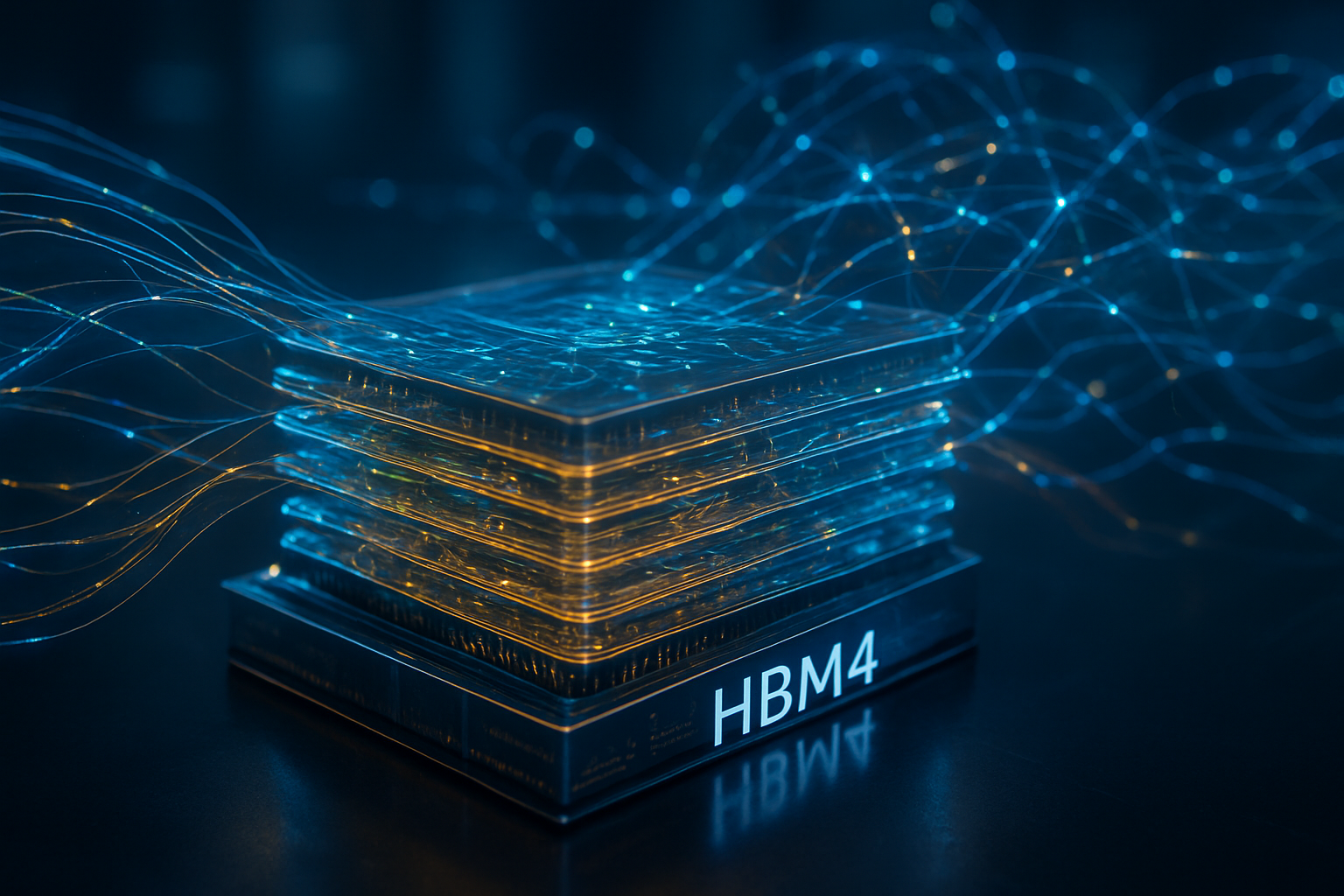
    The technical specifications of the upcoming HBM4 modules, slated for mass production in February 2026, represent a gargantuan leap over the HBM3E standard that dominated 2024 and 2025. HBM4 doubles the memory interface width from 1024-bit to 2048-bit, enabling bandwidth speeds exceeding 2.0 to 2.8 terabytes per second (TB/s) per stack. This massive throughput is essential for the 100-trillion parameter models expected to emerge later this year, which require near-instantaneous access to vast datasets to maintain low latency in real-time applications.

    Perhaps the most significant architectural change is the evolution of the "Base Die"—the bottom layer of the HBM stack. In previous generations, this die was manufactured using standard memory processes. With HBM4, the base die is being shifted to high-performance logic processes, such as 5nm or 4nm nodes. This allows for the integration of custom logic directly into the memory stack, effectively blurring the line between memory and processor. SK Hynix has achieved this through a landmark "One-Team" alliance with TSMC (NYSE: TSM), using the latter's world-class foundry capabilities to manufacture the base die. In contrast, Samsung is utilizing its "All-in-One" strategy, handling everything from DRAM production to logic die fabrication and advanced packaging within its own ecosystem.

    The manufacturing methods have also diverged into two competing philosophies. SK Hynix continues to refine its Advanced MR-MUF (Mass Reflow Molded Underfill) process, which has proven superior in thermal dissipation and yield stability for 12-layer stacks. Samsung, however, is aggressively pivoting to Hybrid Bonding (copper-to-copper direct bonding) for its 16-layer HBM4 samples. By eliminating the micro-bumps traditionally used to connect layers, Hybrid Bonding significantly reduces the height of the stack and improves electrical efficiency. Initial reactions from the AI research community suggest that while MR-MUF is the reliable choice for today, Hybrid Bonding may be the inevitable winner as stacks grow to 20 layers and beyond.

    Market Positioning: The Race to Supply the "Rubin" Era

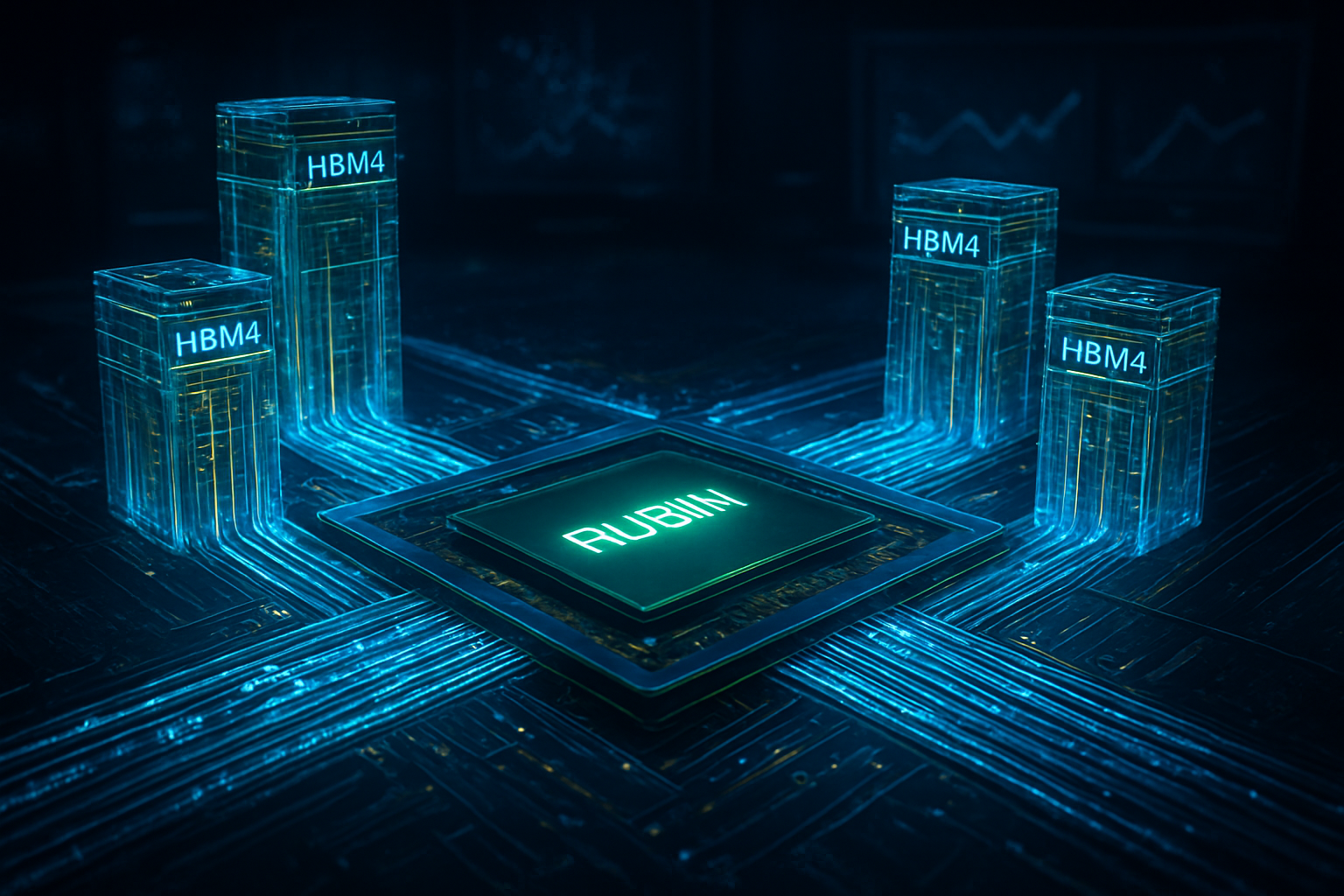
    The primary arbiter of this war remains NVIDIA (NASDAQ: NVDA). As of early 2026, SK Hynix maintains a dominant market share of approximately 57% to 60%, largely due to its status as the primary supplier for NVIDIA’s Blackwell and Blackwell Ultra platforms. However, the upcoming NVIDIA "Rubin" (R100) platform, designed specifically for HBM4, has created a clean slate for competition. Each Rubin GPU is expected to utilize eight HBM4 stacks, making the procurement of these chips the single most important strategic goal for cloud service providers like Microsoft (NASDAQ: MSFT) and Google (NASDAQ: GOOGL).

    Samsung, which held roughly 22% to 30% of the market at the end of 2025, is betting on its "turnkey" advantage to reclaim the lead. By offering a one-stop-shop service—where memory, logic, and packaging are handled under one roof—Samsung claims it can reduce supply chain timelines by up to 20% compared to the SK Hynix and TSMC partnership. This vertical integration is a powerful lure for AI labs looking to secure guaranteed volume in a market where shortages are still common. Meanwhile, Micron Technology (NASDAQ: MU) remains a formidable third player, capturing nearly 20% of the market by focusing on high-efficiency HBM3E for specialized AMD (NASDAQ: AMD) and custom hyperscaler chips.

    The competitive implications are stark: if Samsung can successfully qualify its 16-layer HBM4 with NVIDIA before SK Hynix, it could trigger a massive shift in market share. Conversely, if the SK Hynix-TSMC alliance continues to deliver superior yields, Samsung may find itself relegated to a secondary supplier role for another generation. For AI startups and major labs, this competition is a double-edged sword; while it drives innovation and theoretically lowers prices, the divergence in technical standards (MR-MUF vs. Hybrid Bonding) adds complexity to hardware design and procurement strategies.

    Shattering the Memory Wall: Wider Significance for the AI Landscape

    The shift toward HBM4 and 3D stacking fits into a broader trend of "domain-specific" computing. For decades, the industry followed the von Neumann architecture, where memory and processing are separate. The HBM4 era marks the beginning of the end for this paradigm. By placing memory directly on logic chips, the industry is moving toward a "near-memory computing" model. This is crucial for power efficiency; in modern AI workloads, moving data between the chip and the memory often consumes more energy than the actual calculation itself.

    This development also addresses a growing concern among environmental and economic observers: the staggering power consumption of AI data centers. HBM4’s increased efficiency per gigabyte of bandwidth is a necessary evolution to keep the growth of AI sustainable. However, the transition is not without risks. The complexity of 3D stacking and Hybrid Bonding increases the potential for catastrophic yield failures, which could lead to sudden price spikes or supply chain disruptions. Furthermore, the deepening alliance between SK Hynix and TSMC centralizes a significant portion of the AI hardware ecosystem in a few key partnerships, raising concerns about market concentration.

    Compared to previous milestones, such as the transition from DDR4 to DDR5, the HBM3E-to-HBM4 shift is far more disruptive. It is not just a component upgrade; it is a re-engineering of the semiconductor stack. This transition mirrors the early days of the smartphone revolution, where the integration of various components into a single System-on-Chip (SoC) led to a massive explosion in capability and efficiency.

    Looking Ahead: HBM4E and the Custom Memory Era

    In the near term, the industry is watching for the first "Production Readiness Approval" (PRA) for HBM4-equipped GPUs. Experts predict that the first half of 2026 will be defined by a "war of nerves" as Samsung and SK Hynix race to meet NVIDIA’s stringent quality standards. Beyond HBM4, the roadmap already points toward HBM4E, which is expected to push 3D stacking to 20 layers and introduce even more complex logic integration, potentially allowing for AI inference tasks to be performed entirely within the memory stack itself.

    One of the most anticipated future developments is the rise of "Custom HBM." Instead of buying off-the-shelf memory modules, tech giants like Amazon (NASDAQ: AMZN) and Meta (NASDAQ: META) are beginning to request bespoke HBM designs tailored to their specific AI silicon. This would allow for even tighter integration and better performance for specific workloads, such as large language model (LLM) training or recommendation engines. The challenge for memory makers will be balancing the high volume required by NVIDIA with the specialized needs of these custom-chip customers.

    Conclusion: A New Chapter in Semiconductor History

    The HBM war between SK Hynix and Samsung represents a defining moment in the history of artificial intelligence. As we move into 2026, the successful deployment of HBM4 will determine which companies lead the next decade of AI innovation. SK Hynix’s current dominance, built on engineering precision and a strategic alliance with TSMC, is being tested by Samsung’s massive vertical integration and its bold leap into Hybrid Bonding.

    The key takeaway for the industry is that memory is no longer a commodity; it is a strategic asset. The ability to stack 16 layers of DRAM onto a logic die with micrometer precision is now as important to the future of AI as the algorithms themselves. In the coming weeks and months, the industry will be watching for yield reports and qualification announcements that will signal who has the upper hand in the Rubin era. For now, the "memory wall" is being dismantled, layer by layer, in the cleanrooms of South Korea and Taiwan.


    This content is intended for informational purposes only and represents analysis of current AI developments.

    TokenRing AI delivers enterprise-grade solutions for multi-agent AI workflow orchestration, AI-powered development tools, and seamless remote collaboration platforms.
    For more information, visit https://www.tokenring.ai/.

  • The HBM4 Race Heats Up: Samsung and SK Hynix Deliver Paid Samples for NVIDIA’s Rubin GPUs

    The HBM4 Race Heats Up: Samsung and SK Hynix Deliver Paid Samples for NVIDIA’s Rubin GPUs

    The global race for semiconductor supremacy has reached a fever pitch as the calendar turns to 2026. In a move that signals the imminent arrival of the next generation of artificial intelligence, both Samsung Electronics (KRX: 005930) and SK Hynix (KRX: 000660) have officially transitioned from prototyping to the delivery of paid final samples of 6th-generation High Bandwidth Memory (HBM4) to NVIDIA (NASDAQ: NVDA). These samples are currently undergoing final quality verification for integration into NVIDIA’s highly anticipated 'Rubin' R100 GPUs, marking the start of a new era in AI hardware capability.

    The delivery of paid samples is a critical milestone, indicating that the technology has matured beyond experimental stages and is meeting the rigorous performance and reliability standards required for mass-market data center deployment. As NVIDIA prepares to roll out the Rubin architecture in early 2026, the battle between the world’s leading memory makers is no longer just about who can produce the fastest chips, but who can manufacture them at the unprecedented scale required by the "AI arms race."

    Technical Breakthroughs: Doubling the Data Highway

    The transition from HBM3e to HBM4 represents the most significant architectural shift in the history of high-bandwidth memory. While previous generations focused on incremental speed increases, HBM4 fundamentally redesigns the interface between the memory and the processor. The most striking change is the doubling of the data bus width from 1,024-bit to a massive 2,048-bit interface. This "wider road" allows for a staggering increase in data throughput without the thermal and power penalties associated with simply increasing clock speeds.

    NVIDIA’s Rubin R100 GPU, the primary beneficiary of this advancement, is expected to be a powerhouse of efficiency and performance. Built on TSMC (NYSE: TSM)’s advanced N3P (3nm) process, the Rubin architecture utilizes a chiplet-based design that incorporates eight HBM4 stacks. This configuration provides a total of 288GB of VRAM and a peak bandwidth of 13 TB/s—a 60% increase over the current Blackwell B100. Furthermore, HBM4 introduces 16-layer stacking (16-Hi), allowing for higher density and capacity per stack, which is essential for the trillion-parameter models that are becoming the industry standard.

    The industry has also seen a shift in how these chips are built. SK Hynix has formed a "One-Team" alliance with TSMC to manufacture the HBM4 logic base die using TSMC’s logic processes, rather than traditional memory processes. This allows for tighter integration and lower latency. Conversely, Samsung is touting its "turnkey" advantage, using its own 4nm foundry to produce the base die, memory cells, and advanced packaging in-house. Initial reactions from the research community suggest that this diversification of manufacturing approaches is critical for stabilizing the global supply chain as demand continues to outstrip supply.

    Shifting the Competitive Landscape

    The HBM4 rollout is poised to reshape the hierarchy of the semiconductor industry. For Samsung, this is a "redemption arc" moment. After trailing SK Hynix during the HBM3e cycle, Samsung is planning a massive 50% surge in HBM production capacity by 2026, aiming for a monthly output of 250,000 wafers. By leveraging its vertically integrated structure, Samsung hopes to recapture its position as the world’s leading memory supplier and secure a larger share of NVIDIA’s lucrative contracts.

    SK Hynix, however, is not yielding its lead easily. As the incumbent preferred supplier for NVIDIA, SK Hynix has already established a mass production system at its M16 and M15X fabs, with full-scale manufacturing slated to begin in February 2026. The company’s deep technical partnership with NVIDIA and TSMC gives it a strategic advantage in optimizing memory for the Rubin architecture. Meanwhile, Micron Technology (NASDAQ: MU) remains a formidable third player, focusing on high-efficiency HBM4 designs that target the growing market for edge AI and specialized accelerators.

    For NVIDIA, the availability of HBM4 from multiple reliable sources is a strategic win. It reduces reliance on a single supplier and provides the necessary components to maintain its yearly release cycle. The competition between Samsung and SK Hynix also exerts downward pressure on costs and accelerates the pace of innovation, ensuring that NVIDIA remains the undisputed leader in AI training and inference hardware.

    Breaking the "Memory Wall" and the Future of AI

    The broader significance of the HBM4 transition lies in its ability to address the "Memory Wall"—the growing bottleneck where processor performance outpaces the ability of memory to feed it data. As AI models move toward 10-trillion and 100-trillion parameters, the sheer volume of data that must be moved between the GPU and memory becomes the primary limiting factor in performance. HBM4’s 13 TB/s bandwidth is not just a luxury; it is a necessity for the next generation of multimodal AI that can process video, voice, and text simultaneously in real-time.

    Energy efficiency is another critical factor. Data centers are increasingly constrained by power availability and cooling requirements. By doubling the interface width, HBM4 can achieve higher throughput at lower clock speeds, reducing the energy cost per bit by approximately 40%. This efficiency gain is vital for the sustainability of gigawatt-scale AI clusters and helps cloud providers manage the soaring operational costs of AI infrastructure.

    This milestone mirrors previous breakthroughs like the transition to DDR memory or the introduction of the first HBM chips, but the stakes are significantly higher. The ability to supply HBM4 has become a matter of national economic security for South Korea and a cornerstone of the global AI economy. As the industry moves toward 2026, the successful integration of HBM4 into the Rubin platform will likely be remembered as the moment when AI hardware finally caught up to the ambitions of AI software.

    The Road Ahead: Customization and HBM4e

    Looking toward the near future, the HBM4 era will be defined by customization. Unlike previous generations that were "off-the-shelf" components, HBM4 allows for the integration of custom logic dies. This means that AI companies can potentially request specific features to be baked directly into the memory stack, such as specialized encryption or data compression, further blurring the lines between memory and processing.

    Experts predict that once the initial Rubin rollout is complete, the focus will quickly shift to HBM4e (Extended), which is expected to appear around late 2026 or early 2027. This iteration will likely push stacking to 20 or 24 layers, providing even greater density for the massive "sovereign AI" projects being undertaken by nations around the world. The primary challenge remains yield rates; as the complexity of 16-layer stacks and hybrid bonding increases, maintaining high production yields will be the ultimate test for Samsung and SK Hynix.

    A New Benchmark for AI Infrastructure

    The delivery of paid HBM4 samples to NVIDIA marks a definitive turning point in the AI hardware narrative. It signals that the industry is ready to support the next leap in artificial intelligence, providing the raw data-handling power required for the world’s most complex neural networks. The fierce competition between Samsung and SK Hynix has accelerated this timeline, ensuring that the Rubin architecture will launch with the most advanced memory technology ever created.

    As we move into 2026, the key metrics to watch will be the yield rates of these 16-layer stacks and the performance benchmarks of the first Rubin-powered clusters. This development is more than just a technical upgrade; it is the foundation upon which the next generation of AI breakthroughs—from autonomous scientific discovery to truly conversational agents—will be built. The HBM4 race has only just begun, and the implications for the global tech landscape will be felt for years to come.


    This content is intended for informational purposes only and represents analysis of current AI developments.

    TokenRing AI delivers enterprise-grade solutions for multi-agent AI workflow orchestration, AI-powered development tools, and seamless remote collaboration platforms.
    For more information, visit https://www.tokenring.ai/.

  • The Great Memory Pivot: HBM4 and the 3D Stacking Revolution of 2026

    The Great Memory Pivot: HBM4 and the 3D Stacking Revolution of 2026

    As 2025 draws to a close, the semiconductor industry is standing at the precipice of its most significant architectural shift in a decade. The transition to High Bandwidth Memory 4 (HBM4) has moved from theoretical roadmaps to the factory floors of the world’s largest chipmakers. This week, industry leaders confirmed that the first qualification samples of HBM4 are reaching key partners, signaling the end of the HBM3e era and the beginning of a new epoch in AI hardware.

    The stakes could not be higher. As AI models like GPT-5 and its successors push toward the 100-trillion parameter mark, the "memory wall"—the bottleneck where data cannot move fast enough from memory to the processor—has become the primary constraint on AI progress. HBM4, with its radical 2048-bit interface and the nascent implementation of hybrid bonding, is designed to shatter this wall. For the titans of the industry, the race to master this technology by the 2026 product cycle will determine who dominates the next phase of the AI revolution.

    The 2048-Bit Leap: Engineering the Future of Data

    The technical specifications of HBM4 represent a departure from nearly every standard that preceded it. For the first time, the industry is doubling the memory interface width from 1024-bit to 2048-bit. This change allows HBM4 to achieve bandwidths exceeding 2.0 terabytes per second (TB/s) per stack without the punishing power consumption associated with the high clock speeds of HBM3e. By late 2025, SK Hynix (KRX: 000660) and Samsung Electronics (KRX: 005930) have both reported successful pilot runs of 12-layer (12-Hi) HBM4, with 16-layer stacks expected to follow by mid-2026.

    Central to this transition is the move toward "hybrid bonding," a process that replaces traditional micro-bumps with direct copper-to-copper connections. Unlike previous generations that relied on Thermal Compression (TC) bonding, hybrid bonding eliminates the gap between DRAM layers, reducing the total height of the stack and significantly improving thermal conductivity. This is critical because JEDEC, the global standards body, recently set the HBM4 package thickness limit at 775 micrometers (μm). To fit 16 layers into that vertical space, manufacturers must thin DRAM wafers to a staggering 30μm—roughly one-third the thickness of a human hair—creating immense challenges for manufacturing yields.

    The industry reaction has been one of cautious optimism tempered by the sheer complexity of the task. While SK Hynix has leaned on its proven Advanced MR-MUF (Mass Reflow Molded Underfill) technology for its initial 12-layer HBM4, Samsung has taken a more aggressive "leapfrog" approach, aiming to be the first to implement hybrid bonding at scale for 16-layer products. Industry experts note that the move to a 2048-bit interface also requires a fundamental redesign of the logic base die, leading to unprecedented collaborations between memory makers and foundries like TSMC (NYSE: TSM).

    A New Power Dynamic: Foundries and Memory Makers Unite

    The HBM4 era is fundamentally altering the competitive landscape for AI companies. No longer can memory be treated as a commodity; it is now an integral part of the processor's logic. This has led to the formation of "mega-alliances." SK Hynix has solidified a "one-team" partnership with TSMC to manufacture the HBM4 logic base die on 5nm and 12nm nodes. This alliance aims to ensure that SK Hynix memory is perfectly tuned for the upcoming NVIDIA (NASDAQ: NVDA) "Rubin" R100 GPUs, which are expected to be the first major accelerators to utilize HBM4 in 2026.

    Samsung Electronics, meanwhile, is leveraging its unique position as the world’s only "turnkey" provider. By offering memory production, logic die fabrication on its own 4nm process, and advanced 2.5D/3D packaging under one roof, Samsung hopes to capture customers who want to bypass the complex TSMC supply chain. However, in a sign of the market's pragmatism, Samsung also entered a partnership with TSMC in late 2025 to ensure its HBM4 stacks remain compatible with TSMC’s CoWoS (Chip on Wafer on Substrate) packaging, ensuring it doesn't lose out on the massive NVIDIA and AMD (NASDAQ: AMD) contracts.

    For Micron Technology (NASDAQ: MU), the transition is a high-stakes catch-up game. After successfully gaining market share with HBM3e, Micron is currently ramping up its 12-layer HBM4 samples using its 1-beta DRAM process. While reports of yield issues surfaced in the final quarter of 2025, Micron remains a critical third pillar in the supply chain, particularly for North American clients looking to diversify their sourcing away from purely South Korean suppliers.

    Breaking the Memory Wall: Why 3D Stacking Matters

    The broader significance of HBM4 lies in its potential to move from 2.5D packaging to true 3D stacking—placing the memory directly on top of the GPU logic. This "memory-on-logic" architecture is the holy grail of AI hardware, as it reduces the distance data must travel from millimeters to microns. The result is a projected 10% to 15% reduction in latency and a massive 40% to 70% reduction in the energy required to move each bit of data. In an era where AI data centers are consuming gigawatts of power, these efficiency gains are not just beneficial; they are essential for the industry's survival.

    However, this transition introduces the "thermal crosstalk" problem. When memory is stacked directly on a GPU that generates 700W to 1000W of heat, the thermal energy can bleed into the DRAM layers, causing data corruption or requiring aggressive "refresh" cycles that tank performance. Managing this heat is the primary hurdle of late 2025. Engineers are currently experimenting with double-sided liquid cooling and specialized thermal interface materials to "sandwich" the heat between cooling plates.

    This shift mirrors previous milestones like the introduction of the first HBM by AMD in 2015, but at a vastly different scale. If the industry successfully navigates the thermal and yield challenges of HBM4, it will enable the training of models with hundreds of trillions of parameters, moving the needle from "Large Language Models" to "World Models" that can process video, logic, and physical simulations in real-time.

    The Road to 2026: What Lies Ahead

    Looking forward, the first half of 2026 will be defined by the "Battle of the Accelerators." NVIDIA’s Rubin architecture and AMD’s Instinct MI400 series are both designed around the capabilities of HBM4. These chips are expected to offer more than 0.5 TB of memory per GPU, with aggregate bandwidths nearing 20 TB/s. Such specs will allow a single server rack to hold the entire weights of a frontier-class model in active memory, drastically reducing the need for complex, multi-node communication.

    The next major challenge on the horizon is the standardization of "Bufferless HBM." By removing the buffer die entirely and letting the GPU's memory controller manage the DRAM directly, latency could be slashed further. However, this requires an even tighter level of integration between companies that were once competitors. Experts predict that by late 2026, we will see the first "custom HBM" solutions, where companies like Google (NASDAQ: GOOGL) or Amazon (NASDAQ: AMZN) co-design the HBM4 logic die specifically for their internal AI TPUs.

    Summary of a Pivotal Year

    The transition to HBM4 in late 2025 marks the moment when memory stopped being a peripheral component and became the heart of AI compute. The move to a 2048-bit interface and the pilot programs for hybrid bonding represent a massive engineering feat that has pushed the limits of material science and manufacturing precision. As SK Hynix, Samsung, and Micron prepare for mass production in early 2026, the focus has shifted from "can we build it?" to "can we yield it?"

    This development is more than a technical upgrade; it is a strategic realignment of the global semiconductor industry. The partnerships between memory giants and foundries like TSMC have created a new "AI Silicon Alliance" that will define the next decade of computing. As we move into 2026, the success of these HBM4 integrations will be the primary factor in determining the speed and scale of AI's integration into every facet of the global economy.


    This content is intended for informational purposes only and represents analysis of current AI developments.

    TokenRing AI delivers enterprise-grade solutions for multi-agent AI workflow orchestration, AI-powered development tools, and seamless remote collaboration platforms.
    For more information, visit https://www.tokenring.ai/.

  • HBM4 Wars: Samsung and SK Hynix Fast-Track the Future of AI Memory

    HBM4 Wars: Samsung and SK Hynix Fast-Track the Future of AI Memory

    The high-stakes race for semiconductor supremacy has entered a blistering new phase as the industry’s titans prepare for the "HBM4 Wars." With artificial intelligence workloads demanding unprecedented memory bandwidth, Samsung Electronics (KRX: 005930) and SK Hynix (KRX: 000660) have both officially fast-tracked their next-generation High Bandwidth Memory (HBM4) for mass production in early 2026. This acceleration, moving the timeline up by nearly six months from original projections, signals a desperate scramble to supply the hardware backbone for NVIDIA (NASDAQ: NVDA) and its upcoming "Rubin" GPU architecture.

    As of late December 2025, the rivalry between the two South Korean memory giants has shifted from incremental improvements to a fundamental architectural overhaul. HBM4 is not merely a faster version of its predecessor, HBM3e; it represents a paradigm shift where memory and logic manufacturing converge. With internal benchmarks showing performance leaps of up to 69% in end-to-end AI service delivery, the winner of this race will likely dictate the pace of AI evolution for the next three years.

    The 2,048-Bit Revolution: Breaking the Memory Wall

    The technical leap from HBM3e to HBM4 is the most significant in the technology's history. While HBM3e utilized a 1,024-bit interface, HBM4 doubles this to a 2,048-bit interface. This architectural change allows for massive increases in data throughput without requiring unsustainable increases in clock speeds. Samsung has reported internal test speeds reaching 11.7 Gbps per pin, while SK Hynix is targeting a steady 10 Gbps. These specifications translate to a staggering bandwidth of up to 2.8 TB/s per stack—nearly triple what was possible just two years ago.

    A critical innovation in HBM4 is the transition of the "base die"—the foundational layer of the memory stack—from a standard memory process to a high-performance logic process. SK Hynix has partnered with Taiwan Semiconductor Manufacturing Company (NYSE: TSM) to produce these logic dies using TSMC’s 5nm and 12nm FinFET nodes. In contrast, Samsung is leveraging its unique "turnkey" advantage, using its own 4nm logic foundry to manufacture the base die, memory cells, and advanced packaging in-house. This "one-stop-shop" approach aims to reduce latency and power consumption by up to 40% compared to HBM3e.

    Initial reactions from the AI research community have been overwhelmingly positive, particularly regarding the 16-high (16-Hi) stack configurations. These stacks will enable single GPUs to access up to 64GB of HBM4 memory, a necessity for the trillion-parameter Large Language Models (LLMs) that are becoming the industry standard. Industry experts note that the move to "buffer-less" HBM4 designs, which remove certain interface layers to save power and space, will be crucial for the next generation of mobile and edge AI applications.

    Strategic Alliances and the Battle for NVIDIA’s Rubin

    The immediate beneficiary of this memory war is NVIDIA, whose upcoming Rubin (R100) platform is designed specifically to harness HBM4. By securing early production slots for February 2026, NVIDIA ensures that its hardware will remain the undisputed leader in AI training and inference. However, the competitive landscape for the memory makers themselves is shifting. SK Hynix, which has long enjoyed a dominant position as NVIDIA’s primary HBM supplier, now faces a resurgent Samsung that has reportedly stabilized its 4nm yields at over 90%.

    For tech giants like Google (NASDAQ: GOOGL) and Meta (NASDAQ: META), the HBM4 fast-tracking offers a lifeline for their custom AI chip programs. Both companies are looking to diversify their supply chains away from a total reliance on NVIDIA, and the availability of HBM4 allows their proprietary TPUs and MTIA chips to compete on level ground. Meanwhile, Micron Technology (NASDAQ: MU) remains a formidable third player, though it is currently trailing slightly behind the aggressive 2026 mass production timelines set by its Korean rivals.

    The strategic advantage in this era will be defined by "custom HBM." Unlike previous generations where memory was a commodity, HBM4 is becoming a semi-custom product. Samsung’s ability to offer a hybrid model—using its own foundry or collaborating with TSMC for specific clients—positions it as a flexible partner for companies like Amazon (NASDAQ: AMZN) that require highly specific memory configurations for their data centers.

    The Broader AI Landscape: Sustaining the Intelligence Explosion

    The fast-tracking of HBM4 is a direct response to the "memory wall"—the phenomenon where processor speeds outpace the ability of memory to deliver data. In the broader AI landscape, this development is essential for the transition from generative text to multimodal AI and autonomous agents. Without the bandwidth provided by HBM4, the energy costs and latency of running advanced AI models would become economically unviable for most enterprises.

    However, this rapid advancement brings concerns regarding the environmental impact and the concentration of power within the "triangular alliance" of NVIDIA, TSMC, and the memory makers. The sheer power required to operate these HBM4-equipped clusters is immense, pushing data centers to adopt liquid cooling and more efficient power delivery systems. Furthermore, the complexity of 16-high HBM4 stacks introduces significant manufacturing risks; a single defect in one of the 16 layers can render the entire stack useless, leading to potential supply shocks if yields do not remain stable.

    Comparatively, the leap to HBM4 is being viewed as the "GPT-4 moment" for hardware. Just as GPT-4 redefined what was possible in software, HBM4 is expected to unlock a new tier of real-time AI capabilities, including high-fidelity digital twins and real-time global-scale translation services that were previously hindered by memory bottlenecks.

    Future Horizons: Beyond 2026 and the 16-Hi Frontier

    Looking beyond the initial 2026 rollout, the industry is already eyeing the development of HBM5 and "3D-stacked" memory-on-logic. The long-term goal is to move memory directly on top of the GPU compute dies, virtually eliminating the distance data must travel. While HBM4 uses advanced packaging like CoWoS (Chip-on-Wafer-on-Substrate), the next decade will likely see the total integration of these components into a single "AI super-chip."

    In the near term, the challenge remains the successful mass production of 16-high stacks. While 12-high stacks are the current target for early 2026, the "Rubin Ultra" variant expected in 2027 will demand the full 64GB capacity of 16-high HBM4. Experts predict that the first half of 2026 will be characterized by a "yield war," where the company that can most efficiently manufacture these complex vertical structures will capture the lion's share of the market.

    A New Chapter in Semiconductor History

    The acceleration of HBM4 marks a pivotal moment in the history of semiconductors. The traditional boundaries between memory and logic are dissolving, replaced by a collaborative ecosystem where foundries and memory makers must work in lockstep. Samsung’s aggressive comeback and SK Hynix’s established partnership with TSMC have created a duopoly that will drive the AI industry forward for the foreseeable future.

    As we head into 2026, the key indicators of success will be the first "Production Readiness Approval" (PRA) certificates from NVIDIA and the initial performance data from the first Rubin-based clusters. For the tech industry, the HBM4 wars are more than just a corporate rivalry; they are the primary engine of the AI revolution, ensuring that the silicon can keep up with the soaring ambitions of artificial intelligence.


    This content is intended for informational purposes only and represents analysis of current AI developments.

    TokenRing AI delivers enterprise-grade solutions for multi-agent AI workflow orchestration, AI-powered development tools, and seamless remote collaboration platforms.
    For more information, visit https://www.tokenring.ai/.

  • AI-Driven DRAM Shortage Intensifies as SK Hynix and Samsung Pivot to HBM4 Production

    AI-Driven DRAM Shortage Intensifies as SK Hynix and Samsung Pivot to HBM4 Production

    The explosive growth of generative artificial intelligence has triggered a massive structural shortage in the global DRAM market, with industry analysts warning that prices are likely to reach a historic peak by mid-2026. As of late December 2025, the memory industry is undergoing its most significant transformation in decades, driven by a desperate need for High-Bandwidth Memory (HBM) to power the next generation of AI supercomputers.

    The shift has fundamentally altered the competitive landscape, as major manufacturers like SK Hynix (KRX: 000660) and Samsung Electronics (KRX: 005930) aggressively reallocate up to 40% of their advanced wafer capacity toward specialized AI memory. This pivot has left the commodity PC and smartphone markets in a state of supply rationing, signaling the arrival of a "memory super-cycle" that experts believe could reshape the semiconductor industry through the end of the decade.

    The Technical Leap to HBM4 and the Wafer War

    The current shortage is primarily fueled by the rapid transition from HBM3E to the upcoming HBM4 standard. While HBM3E is the current workhorse for NVIDIA (NASDAQ: NVDA) H200 and Blackwell GPUs, HBM4 represents a massive architectural leap. Technical specifications for HBM4 include a doubling of the memory interface from 1024-bit to 2048-bit, enabling bandwidth speeds of up to 2.8 TB/s per stack. This evolution is necessary to feed the massive data requirements of trillion-parameter models, but it comes at a significant cost to production efficiency.

    Manufacturing HBM4 is exponentially more complex than standard DDR5 memory. The process requires advanced Through-Silicon Via (TSV) stacking and, for the first time, utilizes foundry-level logic processes for the base die. Because HBM requires roughly twice the wafer area of standard DRAM for the same number of bits, and current yields are hovering between 50% and 60%, every AI-grade chip produced effectively "cannibalizes" the capacity of three to four standard PC RAM chips. This technical bottleneck is the primary engine driving the 171.8% year-over-year price surge observed in late 2025.

    Industry experts and researchers at firms like TrendForce note that this is a departure from previous cycles where oversupply eventually corrected prices. Instead, the complexity of HBM4 production has created a "yield wall." Even as manufacturers like Micron Technology (NASDAQ: MU) attempt to scale, the physical limitations of stacking 12 and 16 layers of DRAM with precision are keeping supply tight and prices at record highs.

    Market Upheaval: SK Hynix Challenges the Throne

    The AI boom has upended the traditional hierarchy of the memory market. For the first time in nearly 40 years, Samsung’s undisputed lead in memory revenue was successfully challenged by SK Hynix in early 2025. By leveraging its "first-mover" advantage and a tight partnership with NVIDIA, SK Hynix has captured approximately 60% of the HBM market share. Although Samsung has recently cleared technical hurdles for its 12-layer HBM3E and begun volume shipments to reclaim some ground, the race for dominance in the HBM4 era remains a dead heat.

    This competition is forcing strategic shifts across the board. Micron Technology recently made the drastic decision to wind down its famous "Crucial" consumer brand, signaling a total exit from the DIY PC RAM market to focus exclusively on high-margin enterprise AI and automotive sectors. Meanwhile, tech giants like OpenAI are moving to secure their own futures; reports indicate a landmark deal where OpenAI has secured long-term supply agreements for nearly 40% of global DRAM wafer output through 2029 to support its massive "Stargate" data center initiative.

    For AI labs and tech giants, memory has become the new "oil." Companies that failed to secure long-term HBM contracts in 2024 are now finding themselves priced out of the market or facing lead times that stretch into 2027. This has created a strategic advantage for well-capitalized firms that can afford to subsidize the skyrocketing costs of memory to maintain their lead in the AI arms race.

    A Wider Crisis for the Global Tech Landscape

    The implications of this shortage extend far beyond the walls of data centers. As manufacturers pivot 40% of their wafer capacity to HBM, the supply of "commodity" DRAM—the memory found in laptops, smartphones, and home appliances—has been severely rationed. Major PC manufacturers like Dell (NYSE: DELL) and Lenovo have already begun hiking system prices by 15% to 20% to offset these costs, reversing a decade-long trend of falling memory prices for consumers.

    This structural shift mirrors previous silicon shortages, such as the 2020-2022 automotive chip crisis, but with a more permanent outlook. The "memory super-cycle" is not just a temporary spike; it represents a fundamental change in how silicon is valued. Memory is no longer a cheap, interchangeable commodity but a high-performance logic component. There are growing concerns that this "AI tax" on memory will lead to a contraction in the global PC market, as entry-level devices are forced to ship with inadequate RAM to remain affordable.

    Furthermore, the concentration of memory production into AI-focused high-margin products raises geopolitical concerns. With the majority of HBM production concentrated in South Korea and a significant portion of the supply pre-sold to a handful of American tech giants, smaller nations and industries are finding themselves at the bottom of the priority list for essential computing components.

    The Road to 2026: What Lies Ahead

    Looking toward the near future, the industry is bracing for an even tighter squeeze. Both SK Hynix and Samsung have reportedly accelerated their HBM4 production schedules, moving mass production forward to February 2026 to meet the demands of NVIDIA’s "Rubin" architecture. Analysts project that DRAM prices will rise an additional 40% to 50% through the first half of 2026 before any potential plateau is reached.

    The next frontier in this evolution is "Custom HBM." In late 2026 and 2027, we expect to see the first memory stacks where the logic die is custom-built for specific AI chips, such as those from Amazon (NASDAQ: AMZN) or Google (NASDAQ: GOOGL). This will further complicate the manufacturing process, making memory even more of a specialized, high-cost component. Relief is not expected until 2027, when new mega-fabs like Samsung’s P4L and SK Hynix’s M15X reach volume production.

    The primary challenge for the industry will be balancing this AI gold rush with the needs of the broader electronics ecosystem. If the shortage of commodity DRAM becomes too severe, it could stifle innovation in other sectors, such as edge computing and the Internet of Things (IoT), which rely on cheap, abundant memory to function.

    Final Assessment: A Permanent Shift in Computing

    The current AI-driven DRAM shortage marks a turning point in the history of computing. We are witnessing the end of the era of "cheap memory" and the beginning of a period where the ability to store and move data is as valuable—and as scarce—as the ability to process it. The pivot to HBM4 is not just a technical upgrade; it is a declaration that the future of the semiconductor industry is inextricably linked to the trajectory of artificial intelligence.

    In the coming weeks and months, market watchers should keep a close eye on the yield rates of HBM4 pilot lines and the quarterly earnings of PC OEMs. If yield rates fail to improve, the 2026 price peak could be even higher than currently forecasted. For now, the "memory super-cycle" shows no signs of slowing down, and its impact will be felt in every corner of the technology world for years to come.


    This content is intended for informational purposes only and represents analysis of current AI developments.

    TokenRing AI delivers enterprise-grade solutions for multi-agent AI workflow orchestration, AI-powered development tools, and seamless remote collaboration platforms.
    For more information, visit https://www.tokenring.ai/.

  • Silicon Sovereignty: Asia’s Semiconductor Renaissance Triggers 40% Growth Explosion in 2025

    Silicon Sovereignty: Asia’s Semiconductor Renaissance Triggers 40% Growth Explosion in 2025

    As 2025 draws to a close, the global technology landscape has been fundamentally reshaped by what economists are calling "Asia’s Semiconductor Renaissance." After years of supply chain volatility and a cautious recovery, the Asia-Pacific (APAC) region has staged a historic industrial surge, with semiconductor sales jumping a staggering 43.1% annually. This growth, far outpacing the global average, has been fueled by an insatiable demand for artificial intelligence infrastructure, cementing the region’s status as the indispensable heartbeat of the AI era.

    The significance of this recovery cannot be overstated. By December 2024, the industry was still navigating the tail-end of a "chip winter," but the breakthrough of 2025 has turned that into a permanent "AI spring." Led by titans in Taiwan, South Korea, and Japan, the region has transitioned from being a mere manufacturing hub to becoming the primary architect of the hardware that powers generative AI, large language models, and autonomous systems. This renaissance has pushed the APAC semiconductor market toward a projected value of $466.52 billion by year-end, signaling a structural shift in global economic power.

    The 2nm Era and the HBM Revolution

    The technical catalyst for this renaissance lies in the successful transition to the "Angstrom Era" of chipmaking and the explosion of High-Bandwidth Memory (HBM). In the fourth quarter of 2025, Taiwan Semiconductor Manufacturing Company (NYSE: TSM) officially commenced volume production of its 2-nanometer (2nm) process node. Utilizing a revolutionary Gate-All-Around (GAA) transistor architecture, these chips offer a 15% speed improvement and a 30% reduction in power consumption compared to the previous 3nm generation. This advancement has allowed AI accelerators to pack more processing power into smaller, more energy-efficient footprints, a critical requirement for the massive data centers being built by tech giants.

    Simultaneously, the "Memory Wars" between South Korean giants Samsung Electronics (KRX: 005930) and SK Hynix (KRX: 000660) reached a fever pitch with the mass production of HBM4. This next-generation memory provides the massive data throughput necessary for real-time AI inference. SK Hynix reported that HBM products now account for a record 77% of its revenue, with its 2026 capacity already fully booked by customers. Furthermore, the industry has solved the "packaging bottleneck" through the rapid expansion of Chip-on-Wafer-on-Substrate (CoWoS) technology. By tripling its CoWoS capacity in 2025, TSMC has enabled the production of ultra-complex AI modules that combine logic and memory in a single, high-performance package, a feat that was considered a manufacturing hurdle only 18 months ago.

    Market Dominance and the Corporate Rebound

    The financial results of 2025 reflect a period of unprecedented prosperity for Asian chipmakers. TSMC has solidified what many analysts describe as a "manufacturing monopoly," with its foundry market share climbing to an estimated 70.2%. This dominance is bolstered by its role as the sole manufacturer for NVIDIA (NASDAQ: NVDA) and Apple (NASDAQ: AAPL), whose demand for Blackwell Ultra and M-series chips has kept Taiwanese fabs running at over 100% utilization. Meanwhile, Samsung Electronics staged a dramatic comeback in the third quarter of 2025, reclaiming the top spot in global memory sales with $19.4 billion in revenue, largely by securing high-profile contracts for next-generation gaming consoles and AI servers.

    The equipment sector has also seen a windfall. Tokyo Electron (TYO: 8035) reported record earnings, with over 40% of its revenue now derived specifically from AI-related fabrication equipment. This shift has placed immense pressure on Western competitors like Intel (NASDAQ: INTC), which has struggled to match the yield consistency and rapid scaling of its Asian counterparts. The competitive implication is clear: the strategic advantage in AI has shifted from those who design the software to those who can reliably manufacture the increasingly complex hardware at scale. Startups in the AI space are now finding that their primary bottleneck isn't venture capital or talent, but rather securing "wafer starts" in Asian foundries.

    Geopolitical Shifts and the Silicon Shield

    Beyond the balance sheets, the 2025 renaissance carries profound geopolitical weight. Japan, once a fading power in semiconductors, has re-emerged as a formidable player. The government-backed venture Rapidus achieved a historic milestone in July 2025 by successfully prototyping a 2nm GAA transistor, signaling that Japan is back in the race for the leading edge. This resurgence is supported by over $32 billion in subsidies, aiming to create a "Silicon Island" in Hokkaido that serves as a high-tech counterweight in the region.

    China, despite facing stringent Western export controls, has demonstrated surprising resilience. SMIC (HKG: 0981) reportedly achieved a "5nm breakthrough" using advanced multi-patterning techniques. While these chips remain significantly more expensive to produce than TSMC’s—with yields estimated at only 33%—they have allowed China to maintain a degree of domestic self-sufficiency for its own AI ambitions. Meanwhile, Southeast Asia has evolved into a "Silicon Shield." Countries like Malaysia and Vietnam now account for nearly 30% of global semiconductor exports, specializing in advanced testing, assembly, and packaging. This diversification has created a more resilient supply chain, less vulnerable to localized disruptions than the concentrated models of the past decade.

    The Horizon: Towards the Trillion-Dollar Market

    Looking ahead to 2026 and beyond, the momentum of this renaissance shows no signs of slowing. The industry is already eyeing the 1.4nm roadmap, with research and development shifting toward silicon photonics—a technology that uses light instead of electricity to transmit data between chips, potentially solving the looming energy crisis in AI data centers. Experts predict that the global semiconductor market is now on a definitive trajectory to hit the $1 trillion mark by 2030, with Asia expected to capture more than 60% of that value.

    However, challenges remain. The intense energy requirements of 2nm fabrication facilities and the massive water consumption of advanced fabs are creating environmental hurdles that will require innovative sustainable engineering. Additionally, the talent shortage in specialized semiconductor engineering remains a critical concern. To address this, we expect to see a surge in public-private partnerships across Taiwan, South Korea, and Japan to fast-track a new generation of "lithography-native" engineers. The next phase of development will likely focus on "Edge AI"—bringing the power of the data center to local devices, a transition that will require a whole new class of low-power, high-performance Asian-made silicon.

    A New Chapter in Computing History

    The 2025 Semiconductor Renaissance marks a definitive turning point in the history of technology. It is the year the industry moved past the "scarcity mindset" of the pandemic era and entered an era of "AI-driven abundance." The 43% jump in regional sales is not just a statistical anomaly; it is a testament to the successful integration of advanced physics, massive capital investment, and strategic national policies. Asia has not only recovered its footing but has built a foundation that will support the next several decades of computational progress.

    As we move into 2026, the world will be watching the continued ramp-up of 2nm production and the first commercial applications of HBM4. The "Silicon Sovereignty" established by Asian nations this year has redefined the global order of innovation. For tech giants and startups alike, the message is clear: the future of AI is being written in the cleanrooms of the Asia-Pacific.


    This content is intended for informational purposes only and represents analysis of current AI developments.

    TokenRing AI delivers enterprise-grade solutions for multi-agent AI workflow orchestration, AI-powered development tools, and seamless remote collaboration platforms.
    For more information, visit https://www.tokenring.ai/.

  • The High-Bandwidth Bottleneck: Inside the 2025 Memory Race and the HBM4 Pivot

    The High-Bandwidth Bottleneck: Inside the 2025 Memory Race and the HBM4 Pivot

    As 2025 draws to a close, the artificial intelligence industry finds itself locked in a high-stakes "Memory Race" that has fundamentally shifted the economics of computing. In the final quarter of 2025, High-Bandwidth Memory (HBM) contract prices have surged by a staggering 30%, driven by an insatiable demand for the specialized silicon required to feed the next generation of AI accelerators. This price spike reflects a critical bottleneck: while GPU compute power has scaled exponentially, the ability to move data in and out of those processors—the "Memory Wall"—has become the primary constraint for trillion-parameter model training.

    The current market volatility is not merely a supply-demand imbalance but a symptom of a massive industrial pivot. As of December 24, 2025, the industry is aggressively transitioning from the current HBM3e standard to the revolutionary HBM4 architecture. This shift is being forced by the upcoming release of next-generation hardware like NVIDIA’s (NASDAQ: NVDA) Rubin architecture and AMD’s (NASDAQ: AMD) Instinct MI400 series, both of which require the massive throughput that only HBM4 can provide. With 2025 supply effectively sold out since mid-2024, the Q4 price surge highlights the desperation of AI cloud providers and enterprises to secure the memory needed for the 2026 deployment cycle.

    Doubling the Pipes: The Technical Leap to HBM4

    The transition to HBM4 represents the most significant architectural overhaul in the history of stacked memory. Unlike previous generations which offered incremental speed bumps, HBM4 doubles the memory interface width from 1024-bit to 2048-bit. This "wider is better" approach allows for massive bandwidth gains—reaching up to 2.8 TB/s per stack—without requiring the extreme clock speeds that lead to overheating. By moving to a wider bus, manufacturers can maintain lower data rates per pin (around 6.4 to 8.0 Gbps) while still nearly doubling the total throughput compared to HBM3e.

    A pivotal technical development in 2025 was the JEDEC Solid State Technology Association’s decision to relax the package thickness specification to 775 micrometers (μm). This change has allowed the "Big Three" memory makers to utilize 16-high (16-Hi) stacks using existing bonding technologies like Advanced MR-MUF (Mass Reflow Molded Underfill). Furthermore, HBM4 introduces the "logic base die," where the bottom layer of the memory stack is manufactured using advanced logic processes from foundries like TSMC (NYSE: TSM). This allows for direct integration of custom features and improved thermal management, effectively blurring the line between memory and the processor itself.

    Initial reactions from the AI research community have been a mix of relief and concern. While the throughput of HBM4 is essential for the next leap in Large Language Models (LLMs), the complexity of these 16-layer stacks has led to lower yields than previous generations. Experts at the 2025 International Solid-State Circuits Conference noted that the integration of logic dies requires unprecedented cooperation between memory makers and foundries, creating a new "triangular alliance" model of semiconductor manufacturing that departs from the traditional siloed approach.

    Market Dominance and the "One-Stop Shop" Strategy

    The memory race has reshaped the competitive landscape for the world’s leading semiconductor firms. SK Hynix (KRX: 000660) continues to hold a dominant market share, exceeding 50% in the HBM segment. Their early partnership with NVIDIA and TSMC has given them a first-mover advantage, with SK Hynix shipping the first 12-layer HBM4 samples in late 2025. Their "Advanced MR-MUF" technology has proven to be a reliable workhorse, allowing them to scale production faster than competitors who initially bet on more complex bonding methods.

    However, Samsung Electronics (KRX: 005930) has staged a formidable comeback in late 2025 by leveraging its unique position as a "one-stop shop." Samsung is the only company capable of providing HBM design, logic die foundry services, and advanced packaging all under one roof. This vertical integration has allowed Samsung to win back significant orders from major AI labs looking to simplify their supply chains. Meanwhile, Micron Technology (NASDAQ: MU) has carved out a lucrative niche by positioning itself as the power-efficiency leader. Micron’s HBM4 samples reportedly consume 30% less power than the industry average, a critical selling point for data center operators struggling with the cooling requirements of massive AI clusters.

    The financial implications for these companies are profound. To meet HBM demand, manufacturers have reallocated up to 30% of their standard DRAM wafer capacity to HBM production. This "capacity cannibalization" has not only fueled the 30% HBM price surge but has also caused a secondary price spike in consumer DDR5 and mobile LPDDR5X markets. For the memory giants, this represents a transition from a commodity-driven business to a high-margin, custom-silicon model that more closely resembles the logic chip industry.

    Breaking the Memory Wall in the Broader AI Landscape

    The urgency behind the HBM4 transition stems from a fundamental shift in the AI landscape: the move toward "Agentic AI" and trillion-parameter models that require near-instantaneous access to vast datasets. The "Memory Wall"—the gap between how fast a processor can calculate and how fast it can access data—has become the single greatest hurdle to achieving Artificial General Intelligence (AGI). HBM4 is the industry's most aggressive attempt to date to tear down this wall, providing the bandwidth necessary for real-time reasoning in complex AI agents.

    This development also carries significant geopolitical weight. As HBM becomes as strategically important as the GPUs themselves, the concentration of production in South Korea (SK Hynix and Samsung) and the United States (Micron) has led to increased government scrutiny of supply chain resilience. The 30% price surge in Q4 2025 has already prompted calls for more diversified manufacturing, though the extreme technical barriers to entry for HBM4 make it unlikely that new players will emerge in the near term.

    Furthermore, the energy implications of the memory race cannot be ignored. While HBM4 is more efficient per bit than its predecessors, the sheer volume of memory being packed into each server rack is driving data center power density to unprecedented levels. A single NVIDIA Rubin GPU is expected to feature up to 12 HBM4 stacks, totaling over 400GB of VRAM per chip. Scaling this across a cluster of tens of thousands of GPUs creates a power and thermal challenge that is pushing the limits of liquid cooling and data center infrastructure.

    The Horizon: HBM4e and the Path to 2027

    Looking ahead, the roadmap for high-bandwidth memory shows no signs of slowing down. Even as HBM4 begins its volume ramp-up in early 2026, the industry is already looking toward "HBM4e" and the eventual adoption of Hybrid Bonding. Hybrid Bonding will eliminate the need for traditional "bumps" between layers, allowing for even tighter stacking and better thermal performance, though it is not expected to reach high-volume manufacturing until 2027.

    In the near term, we can expect to see more "custom HBM" solutions. Instead of buying off-the-shelf memory stacks, hyperscalers like Google and Amazon may work directly with memory makers to customize the logic base die of their HBM4 stacks to optimize for specific AI workloads. This would further blur the lines between memory and compute, leading to a more heterogeneous and specialized hardware ecosystem. The primary challenge remains yield; as stack heights reach 16 layers and beyond, the probability of a single defective die ruining an entire expensive stack increases, making quality control the ultimate arbiter of success.

    A Defining Moment in Semiconductor History

    The Q4 2025 memory price surge and the subsequent HBM4 pivot mark a defining moment in the history of the semiconductor industry. Memory is no longer a supporting player in the AI revolution; it is now the lead actor. The 30% price hike is a clear signal that the "Memory Race" is the new front line of the AI war, where the ability to manufacture and secure advanced silicon is the ultimate competitive advantage.

    As we move into 2026, the industry will be watching the production yields of HBM4 and the initial performance benchmarks of NVIDIA’s Rubin and AMD’s MI400. The success of these platforms—and the continued evolution of AI itself—depends entirely on the industry's ability to scale these complex, 2048-bit memory "superhighways." For now, the message from the market is clear: in the era of generative AI, bandwidth is the only currency that matters.


    This content is intended for informational purposes only and represents analysis of current AI developments.

    TokenRing AI delivers enterprise-grade solutions for multi-agent AI workflow orchestration, AI-powered development tools, and seamless remote collaboration platforms.
    For more information, visit https://www.tokenring.ai/.
  • The HBM Gold Rush: Samsung and SK Hynix Pivot to HBM4 as Prices Soar

    The HBM Gold Rush: Samsung and SK Hynix Pivot to HBM4 as Prices Soar

    As 2025 draws to a close, the semiconductor landscape has been fundamentally reshaped by an insatiable hunger for artificial intelligence. What began as a surge in demand for GPUs has evolved into a full-scale "Gold Rush" for High-Bandwidth Memory (HBM), the critical silicon that feeds data to AI accelerators. Industry giants Samsung Electronics (KRX: 005930) and SK Hynix (KRX: 000660) are reporting record-breaking profit margins, fueled by a strategic pivot that is draining the supply of traditional DRAM to prioritize the high-margin HBM stacks required by the next generation of AI data centers.

    This week, as the industry looks toward 2026, the transition to the HBM4 standard has reached a fever pitch. With NVIDIA (NASDAQ: NVDA) preparing its upcoming "Rubin" architecture, the world’s leading memory makers are locked in a high-stakes race to qualify their 12-layer and 16-layer HBM4 samples. The financial stakes could not be higher: for the first time in history, memory manufacturers are reporting gross margins exceeding 60%, surpassing even the elite foundries they supply. This shift marks the end of the commodity era for memory, transforming DRAM into a specialized, high-performance compute platform.

    The Technical Leap to HBM4: Doubling the Pipe

    The HBM4 standard represents the most significant architectural shift in memory technology in a decade. Unlike the incremental transition from HBM3 to HBM3E, HBM4 doubles the interface width from 1024-bit to a massive 2048-bit bus. This "widening of the pipe" allows for unprecedented data transfer speeds, with SK Hynix and Micron Technology (NASDAQ: MU) demonstrating bandwidths exceeding 2.0 TB/s per stack. In practical terms, a single HBM4-equipped AI accelerator can process data at speeds that were previously only possible by combining multiple older-generation cards.

    One of the most critical technical advancements in late 2025 is the move toward 16-layer (16-Hi) stacks. Samsung has taken a technological lead in this area by committing to "bumpless" hybrid bonding. This manufacturing technique eliminates the traditional microbumps used to connect layers, allowing for thinner stacks and significantly improved thermal dissipation—a vital factor as AI chips generate increasingly intense heat. Meanwhile, SK Hynix has refined its Advanced Mass Reflow Molded Underfill (MR-MUF) process to maintain its dominance in yield and reliability, securing its position as the primary supplier for NVIDIA’s high-volume orders.

    Furthermore, the boundary between memory and logic is blurring. For the first time, memory makers are collaborating with Taiwan Semiconductor Manufacturing Company (NYSE: TSM) to manufacture the "base die" of the HBM stack on advanced 3nm and 5nm processes. This allows the memory controller to be integrated directly into the stack's base, offloading tasks from the main GPU and further increasing system efficiency. While SK Hynix and Micron have embraced this "one-team" approach with TSMC, Samsung is leveraging its unique position as both a memory maker and a foundry to offer a "turnkey" HBM4 solution, though it has recently opened the door to supporting TSMC-produced base dies to satisfy customer flexibility.

    Market Disruption: The Death of Cheap DRAM

    The pivot to HBM4 has sent shockwaves through the broader electronics market. To meet the demand for AI memory, Samsung, SK Hynix, and Micron have reallocated nearly 30% of their total DRAM wafer capacity to HBM production. Because HBM dies are significantly larger and more complex to manufacture than standard DDR5 or LPDDR5X chips, this shift has created a severe supply vacuum in the consumer and enterprise PC markets. As of December 2024, contract prices for traditional DRAM have surged by over 30% quarter-on-quarter, a trend that experts expect to continue well into 2026.

    For tech giants like Apple (NASDAQ: AAPL), Dell (NYSE: DELL), and HP (NYSE: HPQ), this means rising component costs for laptops and smartphones. However, the memory makers are largely indifferent to these pressures, as the margins on HBM are nearly triple those of commodity DRAM. SK Hynix recently posted record quarterly revenue of 24.45 trillion won, with HBM products accounting for a staggering 77% of its DRAM revenue. Samsung has seen a similar resurgence, with its Device Solutions division reclaiming the top spot in global memory revenue as its HBM4 prototypes passed qualification milestones in Q4 2025.

    This shift has also created a new competitive hierarchy. Micron, once considered a distant third in the HBM race, has successfully captured approximately 25% of the market by positioning itself as the power-efficiency leader. Micron’s HBM4 samples reportedly consume 30% less power than competing designs, a crucial selling point for hyperscalers like Microsoft (NASDAQ: MSFT) and Google (NASDAQ: GOOGL) who are struggling with the massive energy requirements of their AI clusters.

    The Broader AI Landscape: Infrastructure as the Bottleneck

    The HBM gold rush highlights a fundamental truth of the current AI era: the bottleneck is no longer just the logic of the GPU, but the ability to feed that logic with data. As LLMs (Large Language Models) grow in complexity, the "memory wall" has become the primary obstacle to performance. HBM4 is seen as the bridge that will allow the industry to move from 100-trillion parameter models to the quadrillion-parameter models expected in late 2026 and 2027.

    However, this concentration of production in South Korea and Taiwan has raised fresh concerns about supply chain resilience. With 100% of the world's HBM4 supply currently tied to just three companies and one primary foundry partner (TSMC), any geopolitical instability in the region could bring the global AI revolution to a grinding halt. This has led to increased pressure from the U.S. and European governments for these companies to diversify their advanced packaging facilities, resulting in Micron’s massive new investments in Idaho and Samsung’s expanded presence in Texas.

    Future Horizons: Custom HBM and Beyond

    Looking beyond the current HBM4 ramp-up, the industry is already eyeing "Custom HBM." In this upcoming phase, major AI players like Amazon (NASDAQ: AMZN) and Meta (NASDAQ: META) will no longer buy off-the-shelf memory. Instead, they will co-design the logic dies of their HBM stacks to include proprietary accelerators or security features. This will further entrench the partnership between memory makers and foundries, potentially leading to a future where memory and compute are fully integrated into a single 3D-stacked package.

    Experts predict that HBM4E will follow as early as 2027, pushing bandwidth even further. However, the immediate challenge remains scaling 16-layer production. Yields for these ultra-dense stacks remain lower than their 12-layer counterparts, and the industry must perfect hybrid bonding at scale to prevent overheating. If these hurdles are overcome, the AI data center of 2026 will possess an order of magnitude more memory bandwidth than the most advanced systems of 2024.

    Conclusion: A New Era of Silicon Dominance

    The transition to HBM4 represents more than just a technical upgrade; it is the definitive signal that the AI boom is a permanent structural shift in the global economy. Samsung, SK Hynix, and Micron have successfully pivoted from being suppliers of a commodity to being the gatekeepers of AI progress. Their record margins and sold-out capacity through 2026 reflect a market where performance is prized above all else, and price is no object for the titans of the AI industry.

    As we move into 2026, the key metrics to watch will be the mass-production yields of 16-layer HBM4 and the success of Samsung’s "turnkey" strategy versus the SK Hynix-TSMC alliance. For now, the message from Seoul and Boise is clear: the AI gold rush is only just beginning, and the memory makers are the ones selling the most expensive shovels in history.


    This content is intended for informational purposes only and represents analysis of current AI developments.

    TokenRing AI delivers enterprise-grade solutions for multi-agent AI workflow orchestration, AI-powered development tools, and seamless remote collaboration platforms. For more information, visit https://www.tokenring.ai/.
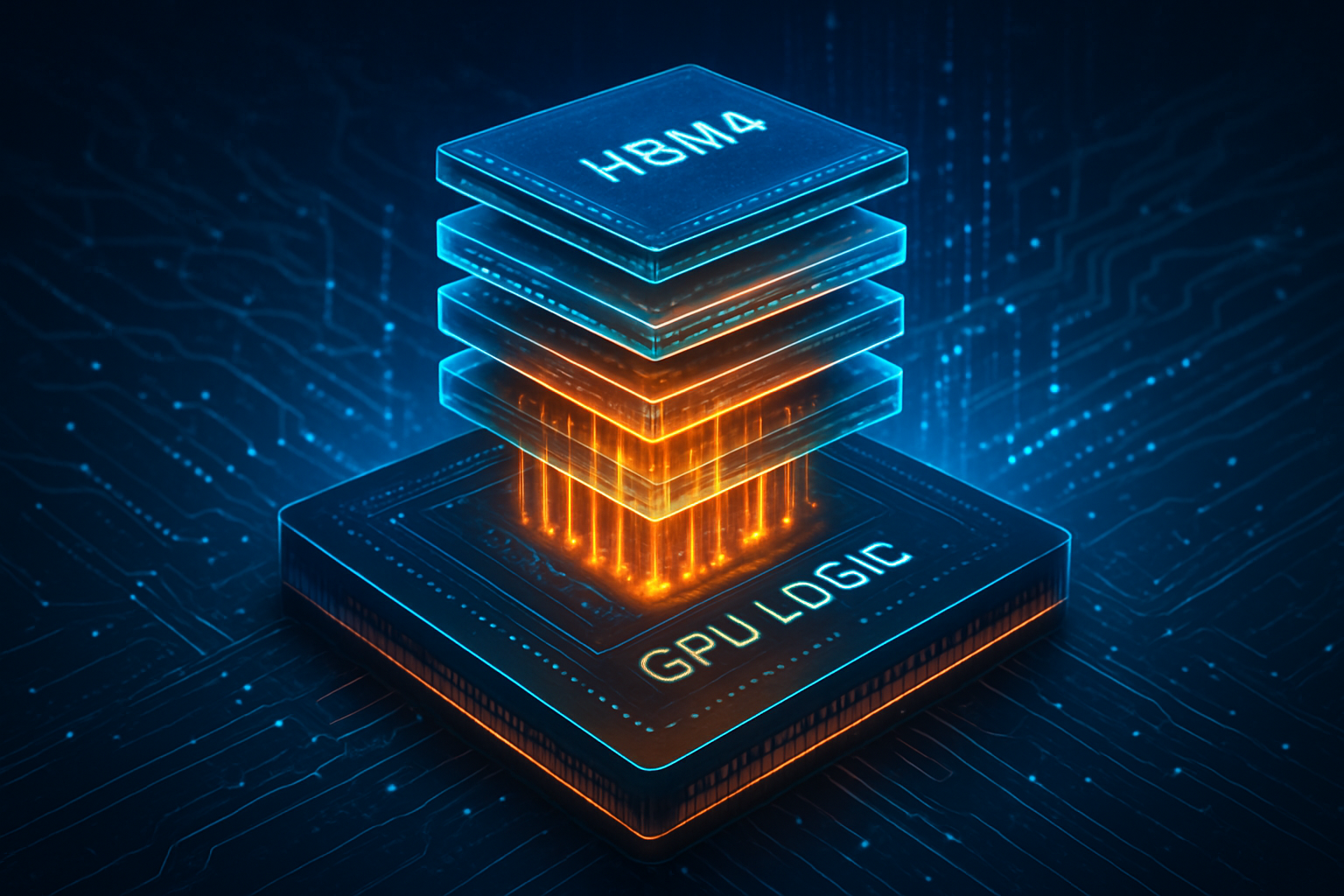
  • HBM3e vs. Mobile DRAM: The Great Memory Capacity Pivot Handing Samsung the iPhone Supply Chain

    HBM3e vs. Mobile DRAM: The Great Memory Capacity Pivot Handing Samsung the iPhone Supply Chain

    As of late 2025, the global semiconductor landscape has undergone a seismic shift, driven by the insatiable demand for High Bandwidth Memory (HBM3e) in AI data centers. This "Great Memory Capacity Pivot" has seen industry leaders SK Hynix (KRX: 000660) and Micron Technology (NASDAQ: MU) aggressively reallocate their production lines to serve the AI boom, inadvertently creating a massive supply vacuum in the mobile DRAM market. This strategic retreat by two of the "Big Three" memory makers has allowed Samsung Electronics (KRX: 005930) to step in as the primary, and in some cases exclusive, memory supplier for Apple (NASDAQ: AAPL) and its latest iPhone 17 and upcoming iPhone 18 lineups.

    The significance of this development cannot be overstated. For years, Apple has maintained a diversified supply chain, meticulously balancing orders between the three major memory manufacturers to ensure competitive pricing and supply stability. However, the technical complexity and high profit margins of HBM3e have forced a choice: fuel the world’s AI supercomputers or support the next generation of consumer electronics. By choosing the former, SK Hynix and Micron have fundamentally altered the economics of the smartphone market, leaving Samsung to reap the rewards of its massive fabrication scale and commitment to mobile innovation.

    The Technical Trade-off: HBM3e vs. Mobile DRAM

    The manufacturing reality of HBM3e is the primary catalyst for this shift. High Bandwidth Memory is not just another chip; it is a complex stack of DRAM dies connected via Through-Silicon Vias (TSVs). Industry data from late 2024 and throughout 2025 reveals a punishing "wafer capacity trade-off." For every single bit of HBM produced, approximately three bits of standard mobile DRAM (LPDDR) capacity are lost. This 3:1 ratio is a result of the lower yields associated with vertical stacking and the sheer amount of silicon required for the advanced packaging of HBM3e, which is currently the backbone of Nvidia (NASDAQ: NVDA) Blackwell and Hopper architectures.

    While SK Hynix and Micron pivoted their "wafer starts" toward these high-margin AI contracts, Samsung utilized its unparalleled production capacity to refine the LPDDR5X technology required for modern smartphones. The technical specifications of the memory found in the recently released iPhone 17 Pro are a testament to this focus. Samsung developed an ultra-thin LPDDR5X module measuring just 0.65mm—the thinnest in the industry. This engineering feat was essential for Apple's design goals, particularly for the rumored "iPhone 17 Air" model, which demanded a reduction in internal component height without sacrificing performance.

    Initial reactions from hardware analysts suggest that Samsung’s technical edge in mobile DRAM has never been sharper. Beyond the thinness, the new 12GB LPDDR5X modules offer a 21.2% improvement in thermal resistance and a 25% reduction in power consumption compared to previous generations. These metrics are critical for "Apple Intelligence," the suite of on-device AI features that requires constant, high-speed memory access, which traditionally generates significant heat and drains battery life.

    Strategic Realignment: Samsung’s Market Dominance

    The strategic implications of this pivot are profound. By late 2025, reports indicate that Samsung has secured an unprecedented 60% to 70% of the memory orders for the iPhone 17 series. This dominance is expected to persist into the iPhone 18 cycle, as Apple has already requested large-scale supply commitments from the South Korean giant. For Samsung, this represents a major victory in its multi-year effort to regain market share lost during previous semiconductor cycles.

    For SK Hynix and Micron, the decision to prioritize HBM3e was a calculated gamble on the longevity of the AI infrastructure boom. While they are currently enjoying record profits from AI server contracts, their reduced presence in the mobile market has weakened their leverage with Apple. This has led to a "RAM crisis" in the consumer sector; as supply dwindled, the cost of 12GB LPDDR5X modules surged from approximately $30 in early 2025 to nearly $70 by the end of the year. Apple, sensing this volatility, moved early to lock in Samsung’s capacity, effectively insulating itself from the worst of the price hikes while leaving competitors to scramble for remaining supply.

    This disruption extends beyond just Apple. Startups and smaller smartphone manufacturers are finding it increasingly difficult to source high-specification DRAM, as the majority of the world's supply is now split between AI data centers and a few elite consumer electronics contracts. Samsung’s ability to serve both markets—albeit with a heavier focus on mobile for Apple—positions them as the ultimate gatekeeper of the "On-Device AI" era.

    The Wider Significance: On-Device AI and the Memory Wall

    The "Great Memory Capacity Pivot" fits into a broader trend where memory, rather than raw processing power, has become the primary bottleneck for AI. As "Apple Intelligence" matures, the demand for RAM has skyrocketed. The iPhone 17 Pro’s jump to 12GB of RAM was a direct response to the requirements of running large language models (LLMs) natively on the device. Without this memory overhead, the sophisticated generative AI features promised by Apple would be forced to rely on cloud processing, compromising privacy and latency.

    This shift mirrors previous milestones in the AI landscape, such as the transition from CPU to GPU training. Now, the industry is hitting a "memory wall," where the ability to store and move data quickly is more important than the speed of the calculation itself. The scarcity of mobile DRAM caused by the HBM boom highlights a growing tension between centralized AI (the cloud) and decentralized AI (on-device). As more companies attempt to follow Apple’s lead in bringing GenAI to the pocket, the strain on global memory production will only intensify.

    There are growing concerns about the long-term impact of this supply chain concentration. With Samsung holding such a large portion of the mobile DRAM market, any manufacturing hiccup or geopolitical tension in the region could have catastrophic effects on the global electronics industry. Furthermore, the rising cost of memory is likely to be passed on to consumers, potentially making high-end, AI-capable smartphones a luxury inaccessible to many.

    Future Horizons: iPhone 18 and LPDDR6

    Looking ahead to 2026, the roadmap for the iPhone 18 suggests an even deeper integration of Samsung’s memory technology. Early supply chain leaks from the spring of 2025 indicate that Apple is planning a move to a six-channel LPDDR5X configuration for the iPhone 18. This architecture would drastically increase memory bandwidth, potentially allowing for the native execution of even larger and more complex AI models that currently require "Private Cloud Compute."

    The industry is also closely watching the development of LPDDR6. While LPDDR5X is the current standard, the next generation of mobile memory is expected to enter mass production by late 2026. Experts predict that Samsung will use its current momentum to lead the LPDDR6 transition, further cementing its role as the primary partner for Apple’s long-term AI strategy. However, the challenge remains: as long as HBM3e and its successors (like HBM4) continue to offer higher margins, the tension between AI servers and consumer devices will persist.

    The next few months will be critical as manufacturers begin to finalize their 2026 production schedules. If the AI boom shows any signs of cooling, SK Hynix and Micron may attempt to pivot back to mobile DRAM, but by then, Samsung’s technological and contractual lead may be insurmountable.

    Summary and Final Thoughts

    The "Great Memory Capacity Pivot" represents a fundamental restructuring of the semiconductor industry. Driven by the explosive growth of AI, the shift of manufacturing resources toward HBM3e has created a vacuum that Samsung has expertly filled, securing its position as the primary architect of Apple’s mobile memory future. The iPhone 17 and 18 are not just smartphones; they are the first generation of devices born from a world where memory is the most precious commodity in tech.

    The key takeaways from this shift are clear:

    • Samsung’s Dominance: By maintaining mobile DRAM scale while others pivoted to HBM, Samsung has secured 60-70% of the iPhone 17/18 memory supply.
    • The AI Tax: The 3:1 production trade-off between HBM and DRAM has led to a significant price increase for high-end mobile RAM.
    • On-Device AI Requirements: The move to 12GB of RAM and advanced six-channel architectures is a direct result of the "Apple Intelligence" push.

    As we move into 2026, the industry will be watching to see if Samsung can maintain this dual-track success or if the sheer weight of AI demand will eventually force even them to choose between the data center and the smartphone. For now, the "Great Memory Capacity Pivot" has a clear winner, and its name is etched onto the 12GB modules inside the latest iPhones.


    This content is intended for informational purposes only and represents analysis of current AI developments.

    TokenRing AI delivers enterprise-grade solutions for multi-agent AI workflow orchestration, AI-powered development tools, and seamless remote collaboration platforms.
    For more information, visit https://www.tokenring.ai/.