Tag: skills gap

  • The Great Reskilling: Navigating the AI Tsunami in a Rapidly Evolving Job Market

    The Great Reskilling: Navigating the AI Tsunami in a Rapidly Evolving Job Market

    The global workforce stands at a critical juncture, facing an unprecedented wave of technological transformation driven by advancements in Artificial Intelligence (AI), automation, cloud computing, and cybersecurity. This digital revolution is not merely altering how we work but fundamentally redefining the very nature of employment, demanding an urgent and continuous adaptation of skills from individuals, businesses, and educational institutions alike. The immediate significance of this shift cannot be overstated; it is a matter of sustained employability, economic growth, and societal resilience in the face of rapid change.

    As routine tasks become increasingly automated, the demand for human skills is pivoting towards areas that leverage creativity, critical thinking, complex problem-solving, and emotional intelligence—attributes that machines cannot yet replicate. This dynamic environment is creating new job roles at a dizzying pace, from AI prompt engineers to data ethicists, while simultaneously displacing positions reliant on repetitive labor. The urgency of this transformation is amplified by the accelerated pace of technological evolution, where skill sets can become obsolete within years, necessitating a proactive and continuous learning mindset to "future-proof" careers and ensure organizational agility.

    The Digital Dynamo: Unpacking the Technologies Reshaping Work

    The current technological revolution, primarily spearheaded by advancements in Artificial Intelligence and automation, represents a significant departure from previous industrial shifts, demanding a new paradigm of workforce adaptation. Unlike the mechanical automation of the past that primarily augmented physical labor, today's AI systems are increasingly capable of performing cognitive tasks, analyzing vast datasets, and even generating creative content, thus impacting a much broader spectrum of professions.

    At the heart of this transformation are several key technological advancements. Machine Learning (ML), a subset of AI, enables systems to learn from data without explicit programming, leading to sophisticated predictive analytics, personalized recommendations, and autonomous decision-making. Large Language Models (LLMs), such as those developed by OpenAI (NASDAQ: MSFT), Google (NASDAQ: GOOGL), and Anthropic, have dramatically advanced natural language processing, allowing for human-like text generation, translation, and summarization, impacting roles from content creation to customer service. Robotics Process Automation (RPA) automates repetitive, rule-based tasks within business processes, freeing human workers for more complex activities. Furthermore, cloud computing provides the scalable infrastructure necessary for these AI applications, while data analytics tools are essential for extracting insights from the massive amounts of data generated.

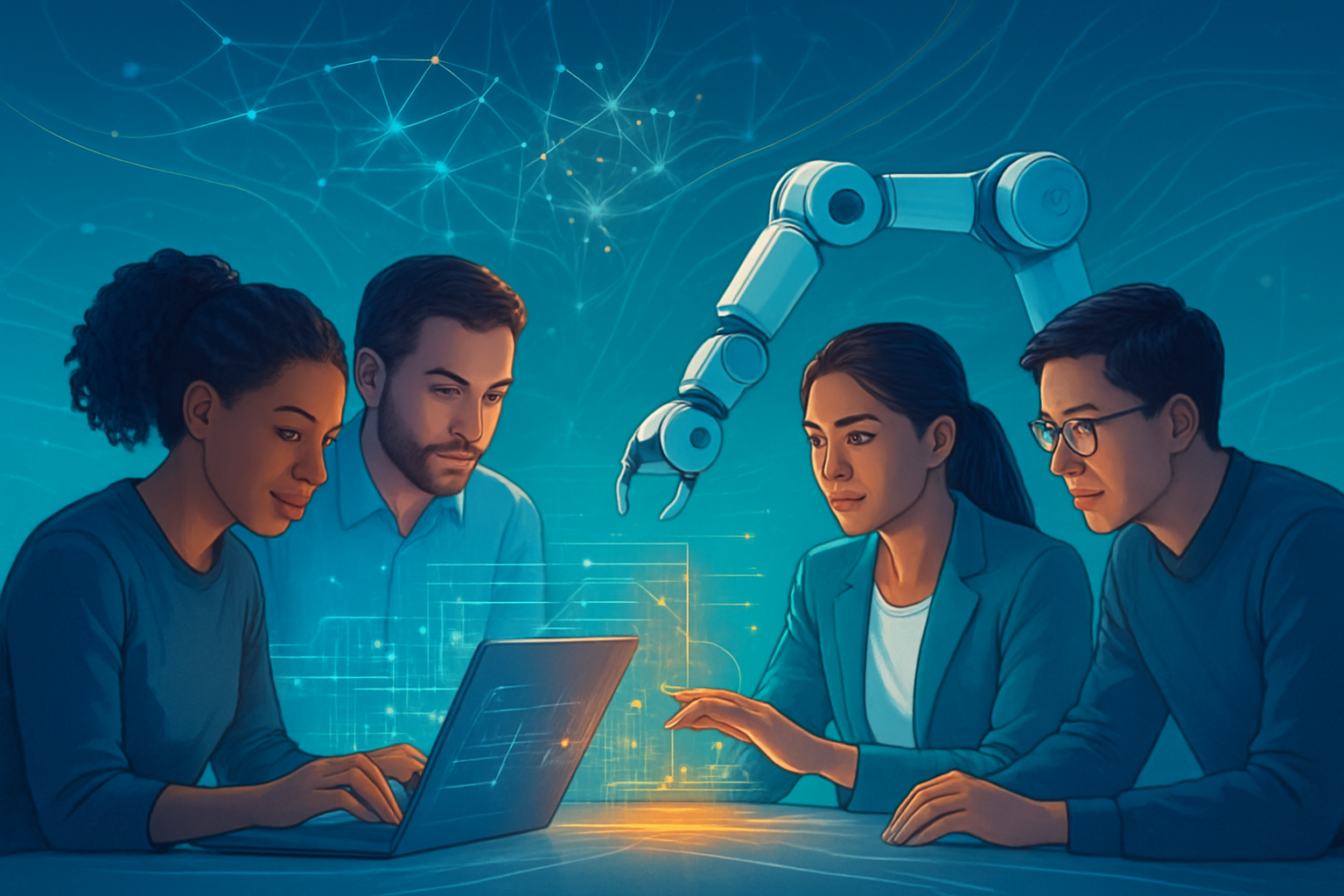
    This differs significantly from previous technological approaches where automation was often confined to specific, well-defined tasks. Modern AI, particularly generative AI, exhibits a level of adaptability and generalized capability that allows it to learn and perform across diverse domains, blurring the lines between human and machine capabilities. For instance, an AI can now draft legal documents, write software code, or design marketing campaigns—tasks previously considered exclusive to highly skilled human professionals. Initial reactions from the AI research community and industry experts highlight both immense excitement and cautious optimism. While many celebrate the potential for unprecedented productivity gains and the creation of entirely new industries, there are also concerns regarding job displacement, the ethical implications of autonomous systems, and the imperative for robust reskilling initiatives to prevent a widening skills gap. The consensus is that symbiotic human-AI collaboration will be the hallmark of future work.

    Corporate Crossroads: Navigating the AI-Driven Competitive Landscape

    The accelerating pace of AI and automation is profoundly reshaping the competitive landscape for companies across all sectors, creating clear beneficiaries, formidable disruptors, and urgent strategic imperatives for adaptation. Companies that proactively embrace and integrate these technologies into their operations and products stand to gain significant competitive advantages, while those that lag risk obsolescence.

    Tech giants with substantial investments in AI research and development, such as Alphabet (NASDAQ: GOOGL), Microsoft (NASDAQ: MSFT), Amazon (NASDAQ: AMZN), and Meta Platforms (NASDAQ: META), are clear beneficiaries. These companies are not only developing foundational AI models and infrastructure but also embedding AI capabilities into their vast ecosystems of products and services, from cloud platforms and enterprise software to consumer applications. Their ability to attract top AI talent, coupled with massive data resources, positions them at the forefront of innovation. Similarly, specialized AI startups, like Anthropic and Hugging Face, are emerging as powerful disruptors, often focusing on niche applications or developing innovative open-source models that challenge the dominance of larger players.

    The competitive implications are far-reaching. Major AI labs and tech companies are engaged in an intense race for AI supremacy, investing heavily in R&D, acquiring promising startups, and forming strategic partnerships. This competition is driving rapid advancements but also raises concerns about market concentration. Existing products and services across various industries face potential disruption. For instance, traditional customer service models are being transformed by AI-powered chatbots, while generative AI is altering workflows in creative industries, software development, and even legal services. Companies that fail to integrate AI risk losing market share to more agile competitors offering AI-enhanced solutions that deliver greater efficiency, personalization, or innovation.

    Market positioning and strategic advantages are increasingly tied to a company's "AI quotient"—its ability to develop, deploy, and leverage AI effectively. This includes not only technological prowess but also a strategic vision for workforce transformation, data governance, and ethical AI implementation. Companies that successfully reskill their workforces to collaborate with AI, rather than be replaced by it, will foster innovation and maintain a critical human advantage. Conversely, firms that view AI solely as a cost-cutting measure, without investing in their human capital, may find themselves with a disengaged workforce and a diminished capacity for future growth and adaptation.

    Beyond the Code: AI's Broad Societal Tapestry and Ethical Crossroads

    The ongoing AI revolution is not merely a technological shift; it is a profound societal transformation that resonates across the broader AI landscape, impacting economic structures, ethical considerations, and our very understanding of work. This era fits squarely into the trend of increasing automation and intelligence augmentation, representing a significant leap from previous AI milestones and setting the stage for a future where human-AI collaboration is ubiquitous.

    One of the most significant impacts is the redefinition of human value in the workplace. As AI takes on more analytical and repetitive tasks, the emphasis shifts to uniquely human capabilities: creativity, critical thinking, complex problem-solving, emotional intelligence, and interpersonal communication. This necessitates a fundamental re-evaluation of educational curricula and corporate training programs to cultivate these "soft skills" alongside digital literacy. Furthermore, the rise of AI exacerbates concerns about job displacement in certain sectors, particularly for roles involving routine tasks. While new jobs are being created, there's a critical need for robust reskilling and upskilling initiatives to ensure a just transition and prevent a widening socioeconomic gap.

    Potential concerns extend beyond employment. The ethical implications of AI, including bias in algorithms, data privacy, and accountability for autonomous systems, are at the forefront of public discourse. Unchecked AI development could perpetuate existing societal inequalities or create new ones, necessitating strong regulatory frameworks and ethical guidelines. The debate around "explainable AI" (XAI) is gaining traction, demanding transparency in how AI systems make decisions, especially in critical applications like healthcare, finance, and legal judgments.

    Comparisons to previous AI milestones, such as the development of expert systems or the Deep Blue chess victory, highlight the qualitative difference of the current era. Today's generative AI, with its ability to understand and create human-like content, represents a more generalized form of intelligence that permeates a wider array of human activities. This is not just about machines performing specific tasks better, but about machines collaborating in creative and cognitive processes. The broader AI landscape is trending towards hybrid intelligence, where humans and AI work synergistically, each augmenting the other's strengths. This trend underscores the importance of developing interfaces and workflows that facilitate seamless collaboration, moving beyond mere tool usage to integrated partnership.

    The Horizon of Work: Anticipating AI's Next Chapter

    The trajectory of AI and its impact on the workforce points towards a future characterized by continuous evolution, novel applications, and persistent challenges that demand proactive solutions. Near-term developments are expected to focus on refining existing generative AI models, improving their accuracy, reducing computational costs, and integrating them more deeply into enterprise software and everyday tools. We can anticipate more specialized AI agents capable of handling complex, multi-step tasks, further automating workflows in areas like software development, scientific research, and personalized education.

    In the long term, experts predict the emergence of more sophisticated multi-modal AI, capable of understanding and generating content across various formats—text, image, audio, and video—simultaneously. This will unlock new applications in fields such as immersive media, advanced robotics, and comprehensive virtual assistants. The development of AI for scientific discovery is also on the horizon, with AI systems accelerating breakthroughs in material science, drug discovery, and climate modeling. Furthermore, AI-powered personalized learning platforms are expected to become commonplace, dynamically adapting to individual learning styles and career goals, making continuous skill acquisition more accessible and efficient.

    Potential applications and use cases on the horizon include highly personalized healthcare diagnostics and treatment plans, AI-driven urban planning for smart cities, and autonomous systems for complex logistical challenges. The "copilot" model, where AI assists human professionals in various tasks, will expand beyond coding to encompass legal research, architectural design, and strategic business analysis.

    However, several challenges need to be addressed. The ethical governance of AI remains paramount, requiring international collaboration to establish standards for bias mitigation, data privacy, and accountability. The skills gap will continue to be a significant hurdle, necessitating massive investments in public and private reskilling initiatives to ensure a broad segment of the workforce can adapt. Furthermore, ensuring equitable access to AI technologies and education will be crucial to prevent a digital divide from exacerbating existing societal inequalities. Experts predict that the ability to effectively collaborate with AI will become a fundamental literacy, as essential as reading and writing, shaping the curriculum of future education systems and the hiring practices of leading companies.

    The Reskilling Imperative: A Call to Action for the AI Era

    The transformative power of Artificial Intelligence and automation has irrevocably altered the global job market, ushering in an era where continuous skill acquisition is not merely advantageous but absolutely essential for individuals and organizations alike. The key takeaway from this technological epoch is clear: the future of work is not about humans versus machines, but about humans with machines. This necessitates a profound shift in mindset, moving away from static job roles towards dynamic skill sets that can evolve with technological advancements.

    This development marks a significant moment in AI history, moving beyond theoretical advancements to tangible, pervasive impacts on daily work life. It underscores the rapid maturation of AI from a specialized research field to a foundational technology driving economic and social change. The long-term impact will be the creation of a more efficient, innovative, and potentially more fulfilling work environment, provided that society collectively addresses the challenges of reskilling, ethical governance, and equitable access.

    In the coming weeks and months, critical areas to watch include the continued development of highly specialized AI models, the emergence of new regulatory frameworks for AI ethics and deployment, and the acceleration of corporate and governmental initiatives focused on workforce upskilling. The integration of AI into educational systems will also be a key indicator of readiness for the future. The ability of societies to adapt their educational and training infrastructures will be paramount in determining whether the AI revolution leads to widespread prosperity or increased societal stratification.


    This content is intended for informational purposes only and represents analysis of current AI developments.

    TokenRing AI delivers enterprise-grade solutions for multi-agent AI workflow orchestration, AI-powered development tools, and seamless remote collaboration platforms.
    For more information, visit https://www.tokenring.ai/.
  • Silicon’s Struggle: A Global Race to Bridge the Semiconductor Skills Gap

    Silicon’s Struggle: A Global Race to Bridge the Semiconductor Skills Gap

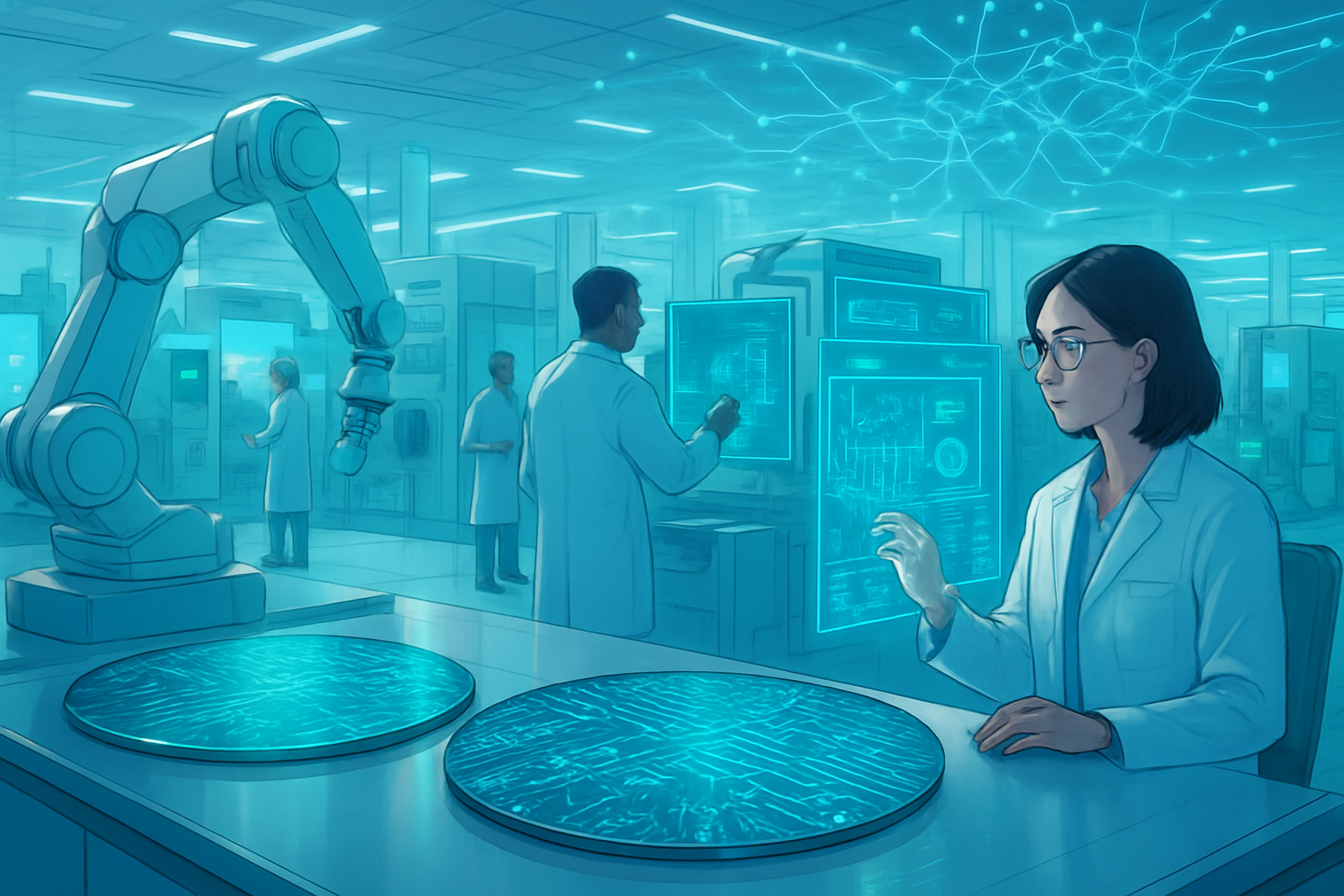
    The global semiconductor industry, a foundational pillar of modern technology and a critical enabler for the burgeoning AI revolution, finds itself at a pivotal crossroads in late 2025. While demand for advanced chips soars, fueled by innovations in artificial intelligence, electric vehicles, and data centers, a severe and escalating skills gap threatens to derail this unprecedented growth. Governments and industry leaders worldwide are now engaged in a frantic, multi-faceted effort to cultivate a robust advanced manufacturing workforce, recognizing that a failure to do so could have profound implications for economic competitiveness, national security, and the pace of technological advancement. This concerted push aims not just to fill immediate vacancies but to fundamentally reshape the talent pipeline for an industry projected to reach a trillion-dollar valuation by 2030.

    Unpacking the Workforce Crisis: Technical Solutions and Strategic Shifts

    The semiconductor workforce crisis is characterized by both a quantitative and qualitative deficit. Projections indicate a need for over one million additional skilled workers globally by 2030, with the U.S. alone potentially facing a shortfall of up to 300,000 skilled workers in the same timeframe. This isn't merely a numbers game; the industry demands highly specialized expertise in cutting-edge areas like extreme ultraviolet (EUV) lithography, 3D chip stacking, advanced packaging, and the integration of AI and machine learning into manufacturing processes. Roles from technicians (projected 39% shortfall in the U.S.) to master's and PhD-level engineers (26% shortfall) are acutely affected, highlighting a systemic issue fueled by an aging workforce, an insufficient educational pipeline, intense competition for STEM talent, and the rapid evolution of manufacturing technologies.

    In response, a wave of strategic initiatives and technical solutions is being deployed, marking a significant departure from previous, often fragmented, workforce development efforts. A cornerstone of this new approach in the United States is the CHIPS and Science Act of 2022, which, by 2025, has already allocated nearly $300 million in dedicated workforce funds to support over 25 CHIPS-funded manufacturing facilities across 12 states. Crucially, it has also invested $250 million in the National Semiconductor Technology Center (NSTC) Workforce Center of Excellence. The NSTC, with a symposium expected in September 2025, is establishing a Technical Advisory Board to guide curriculum development and workforce standards, focusing on grants for projects that train technicians—a role accounting for roughly 60% of new positions and requiring less than a bachelor's degree. This targeted investment in vocational and associate-level training represents a significant shift towards practical, job-ready skills, differing from past reliance solely on four-year university pipelines.

    Beyond federal legislation, the current landscape is defined by unprecedented collaboration between industry, academia, and government. Over 50 community colleges have either launched or expanded semiconductor-related programs, often in direct partnership with major chipmakers like Intel Corporation (NASDAQ: INTC), Taiwan Semiconductor Manufacturing Company (NYSE: TSM), Samsung Electronics Co., Ltd. (KRX: 005930), and Micron Technology, Inc. (NASDAQ: MU). These companies, as part of their CHIPS Act awards, have committed substantial funds to workforce development, establishing apprenticeships, "earn-and-learn" programs, and specialized bootcamps. Furthermore, 14 states have collectively committed over $300 million in new funding, often incentivized by the CHIPS Program Office, to foster local talent ecosystems. The integration of AI and automation is also playing a dual role: creating new mission-critical skills requirements while simultaneously being leveraged for recruitment, skills assessment, and personalized training to streamline workforce development and accelerate upskilling, a stark contrast to older, more manual training methodologies. This multi-pronged, collaborative strategy is designed to create a more agile and responsive talent pipeline capable of adapting to the industry's rapid technological advancements.

    Corporate Giants and Nimble Startups: Navigating the Talent Tsunami

    The escalating semiconductor skills gap has profound implications for every player in the tech ecosystem, from established tech giants and major AI labs to burgeoning startups. At its core, the ability to secure and cultivate a highly specialized workforce is rapidly becoming the ultimate strategic advantage in an industry where human capital directly translates into innovation capacity and market leadership.

    Leading semiconductor manufacturers, the very backbone of the digital economy, are at the forefront of this impact. Companies like Intel Corporation (NASDAQ: INTC), Taiwan Semiconductor Manufacturing Company (NYSE: TSM), Samsung Electronics Co., Ltd. (KRX: 005930), Micron Technology, Inc. (NASDAQ: MU), and GlobalFoundries (NASDAQ: GFS) are not merely recipients of government incentives but active participants in shaping the future workforce. Their substantial investments in training programs, collaborations with educational institutions (such as Arizona State University and Maricopa Community Colleges), and establishment of state-of-the-art training facilities are crucial. These efforts, often amplified by funding from initiatives like the U.S. CHIPS and Science Act, provide a direct competitive edge by securing a pipeline of talent essential for operating and expanding new fabrication plants (fabs). Without skilled engineers and technicians, these multi-billion-dollar investments risk underutilization, leading to delayed product development and increased operational costs.

    For major AI labs and tech giants like NVIDIA Corporation (NASDAQ: NVDA), whose dominance in AI hardware is predicated on advanced chip design and manufacturing, the skills gap translates into an intensified talent war. The scarcity of professionals proficient in areas like AI-specific chip architecture, machine learning integration, and advanced process technologies drives up compensation and benefits, raising the barrier to entry for smaller players. Companies that can effectively attract and retain this elite talent gain a significant strategic advantage in the race for AI supremacy. Conversely, startups, particularly those focused on novel AI hardware or specialized silicon, face an existential challenge. Without the deep pockets of their larger counterparts, attracting highly specialized chip designers and manufacturing experts becomes incredibly difficult, potentially stifling groundbreaking innovation at its earliest stages and creating an imbalance where promising AI hardware concepts struggle to move from design to production.

    The potential for disruption to existing products and services is considerable. A persistent talent shortage can lead to significant delays in product development and rollout, particularly for advanced AI applications requiring custom silicon. This can slow the pace of innovation across the entire tech sector. Moreover, the scarcity of talent drives up labor costs, which can translate into higher overall production costs for electronics and AI hardware, potentially impacting consumer prices and profit margins. However, this challenge is also catalyzing innovation in workforce management. Companies are increasingly leveraging AI and automation not just in manufacturing, but in recruitment, skills assessment, and personalized training. This redefines job roles, augmenting human capabilities and allowing engineers to focus on higher-value tasks, thereby enhancing productivity and offering a strategic advantage to those who effectively integrate these tools into their human capital strategies. The market positioning of tech firms is thus increasingly defined not just by their intellectual property or capital, but by their ability to cultivate and leverage a highly skilled workforce, making human capital the new battleground for competitive differentiation.

    Wider Significance: A Geopolitical Imperative and AI's Foundation

    The concerted global effort to bridge the semiconductor skills gap transcends mere industry economics; it represents a critical geopolitical imperative and a foundational challenge for the future of artificial intelligence. Semiconductors are the bedrock of virtually every modern technology, from smartphones and autonomous vehicles to advanced weaponry and the vast data centers powering AI. A robust, domestically controlled semiconductor workforce is therefore inextricably linked to national security, economic sovereignty, and technological leadership in the 21st century.

    This current push fits squarely into a broader global trend of reshoring and regionalizing critical supply chains, a movement significantly accelerated by recent geopolitical tensions and the COVID-19 pandemic. Governments, particularly in the U.S. (with the CHIPS and Science Act) and Europe (with the European Chips Act), are investing hundreds of billions to boost domestic chip production and reduce reliance on a highly concentrated East Asian supply chain. However, these massive capital investments in new fabrication plants will yield little without the human talent to design, build, and operate them. The skills gap thus becomes the ultimate bottleneck, threatening to undermine these strategic national initiatives. Addressing it is not just about producing more chips, but about ensuring that nations have the capacity to innovate and control their technological destiny.

    The implications for the broader AI landscape are particularly profound. The "AI supercycle" is driving unprecedented demand for specialized AI accelerators, GPUs, and custom silicon, pushing the boundaries of chip design and manufacturing. Without a sufficient pool of highly skilled engineers and technicians capable of working with advanced materials, complex lithography, and novel chip architectures, the pace of AI innovation itself could slow. This could lead to delays in developing next-generation AI models, limit the efficiency of AI systems, and potentially restrict the widespread deployment of AI-powered solutions across industries. The skills gap is, in essence, a constraint on the very foundation upon which future AI breakthroughs will be built.

    Potential concerns, however, also accompany these efforts. The intense competition for talent could exacerbate existing inequalities, with smaller companies or less affluent regions struggling to attract and retain skilled workers. There's also the risk that rapid technological advancements, particularly in AI and automation, could create a perpetual cycle of upskilling requirements, making it challenging for workforce development programs to keep pace. Comparisons to previous technological milestones, such as the space race or the early days of the internet, reveal a similar pattern: grand visions require equally grand investments in human capital. However, the current challenge is unique in its global scale and the foundational nature of the technology involved. The ability to successfully bridge this gap will not only dictate the success of national semiconductor strategies but also profoundly shape the future trajectory of AI and its transformative impact on society.

    The Road Ahead: Sustained Investment and Evolving Paradigms

    Looking beyond 2025, the trajectory of the semiconductor industry will be profoundly shaped by its ability to cultivate and sustain a robust, highly skilled workforce. Experts predict that the talent shortage, particularly for engineers and technicians, will intensify further before showing significant signs of improvement, with a global need for over one million additional skilled workers by 2030. This necessitates not just continued investment but a fundamental transformation in how talent is sourced, trained, and retained.

    In the near term (2025-2027), we can expect an accelerated surge in demand for engineers and technicians, with annual demand growth potentially doubling in some areas. This will drive an intensified focus on strategic partnerships between semiconductor companies and educational institutions, including universities, community colleges, and vocational schools. These collaborations will be crucial for developing specialized training programs, fast-track certifications, and expanding apprenticeships and internships. Companies like Intel Corporation (NASDAQ: INTC) are already pioneering accelerated training programs, such as their 10-day Quick Start Semiconductor Technician Training, which are likely to become more prevalent. Furthermore, the integration of advanced technologies like AI, digital twins, virtual reality (VR), and augmented reality (AR) into training methodologies is expected to become commonplace, boosting efficiency and accelerating learning curves for complex manufacturing processes. Government initiatives, particularly the U.S. CHIPS and Science Act and the European Chips Act, will continue to be pivotal, with their allocated funding driving significant workforce development efforts.

    Longer term (2028-2030 and beyond), the industry anticipates a more holistic workforce transformation. This will involve adapting job requirements to attract a wider talent pool and tapping into non-traditional sources. Efforts to enhance the semiconductor industry's brand image and improve diversity, equity, and inclusion (DEI) will be vital to attract a new generation of workers who might otherwise gravitate towards other tech sectors. Educational curricula will become even more tightly integrated with industry needs, ensuring graduates are job-ready for roles in advanced manufacturing and cleanroom operations. Potential applications and use cases for a well-staffed semiconductor sector are vast and critical for global progress: from accelerating breakthroughs in Artificial Intelligence (AI) and Machine Learning (ML), including generative AI chips and high-performance computing, to enabling advancements in electric vehicles, next-generation telecommunications (5G/6G), and the burgeoning Internet of Things (IoT). A skilled workforce is also foundational for cutting-edge fields like quantum computing and advanced packaging technologies.

    However, significant challenges remain. The widening talent gap, exacerbated by an aging workforce nearing retirement and persistent low industry appeal compared to other tech fields, poses a continuous threat. The rapid pace of technological change, encompassing innovations like extreme ultraviolet (EUV) lithography and 3D chip stacking, constantly shifts required skill sets, making it difficult for traditional educational pipelines to keep pace. Competition for talent from other high-growth industries like clean energy and cybersecurity is fierce. Experts predict that strategic workforce planning will remain a top priority for semiconductor executives, emphasizing talent development and retention. AI is seen as a double-edged sword: while driving demand for advanced chips, it is also expected to become a crucial tool for alleviating engineering talent shortages by streamlining operations and boosting productivity. Ultimately, the future success of the semiconductor industry will depend not only on technological advancements but critically on the human capital it can attract, develop, and retain, making the race for chip sovereignty intrinsically linked to the race for talent.

    Wrap-Up: A Defining Moment for AI's Foundation

    The global semiconductor industry stands at a defining juncture, grappling with a profound skills gap that threatens to undermine unprecedented demand and strategic national initiatives. This detailed examination reveals a critical takeaway: the future of artificial intelligence, economic competitiveness, and national security hinges on the urgent and sustained development of a robust advanced manufacturing workforce for semiconductors. The current landscape, marked by significant governmental investment through legislation like the U.S. CHIPS and Science Act, and intensified collaboration between industry and academia, represents a concerted effort to fundamentally reshape the talent pipeline.

    This development is not merely another industry trend; it is a foundational challenge that will dictate the pace of technological progress for decades to come. The ability of major players like Intel Corporation (NASDAQ: INTC), Taiwan Semiconductor Manufacturing Company (NYSE: TSM), Samsung Electronics Co., Ltd. (KRX: 005930), and Micron Technology, Inc. (NASDAQ: MU) to secure and cultivate skilled personnel will directly impact their market positioning, competitive advantage, and capacity for innovation. For AI companies and tech giants, a stable supply of human talent capable of designing and manufacturing cutting-edge chips is as critical as the capital and research itself.

    The long-term impact of successfully bridging this gap will be transformative, enabling continued breakthroughs in AI, advanced computing, and critical infrastructure. Conversely, failure to address this challenge could lead to prolonged innovation bottlenecks, increased geopolitical vulnerabilities, and economic stagnation. As we move into the coming weeks and months, watch for further announcements regarding new educational partnerships, vocational training programs, and strategic investments aimed at attracting and retaining talent. The effectiveness of these initiatives will be a crucial barometer for the industry's health and the broader trajectory of technological advancement. The race for silicon sovereignty is ultimately a race for human ingenuity and skill, and the stakes could not be higher.


    This content is intended for informational purposes only and represents analysis of current AI developments.

    TokenRing AI delivers enterprise-grade solutions for multi-agent AI workflow orchestration, AI-powered development tools, and seamless remote collaboration platforms.
    For more information, visit https://www.tokenring.ai/.