
Tag: Small Language Models

  • The Death of Cloud Dependency: How Small Language Models Like Llama 3.2 and FunctionGemma Rewrote the AI Playbook

    The Death of Cloud Dependency: How Small Language Models Like Llama 3.2 and FunctionGemma Rewrote the AI Playbook

    The artificial intelligence landscape has reached a decisive tipping point. As of January 26, 2026, the era of the "Cloud-First" AI dominance is officially ending, replaced by a "Localized AI" revolution that places the power of superintelligence directly into the pockets of billions. While the tech world once focused on massive models with trillions of parameters housed in energy-hungry data centers, today’s most significant breakthroughs are happening at the "Hyper-Edge"—on smartphones, smart glasses, and IoT sensors that operate with total privacy and zero latency.

    The announcement today from Alphabet Inc. (NASDAQ: GOOGL) regarding FunctionGemma, a 270-million parameter model designed for on-device API calling, marks the latest milestone in a journey that began with Meta Platforms, Inc. (NASDAQ: META) and its release of Llama 3.2 in late 2024. These "Small Language Models" (SLMs) have evolved from being mere curiosities to the primary engine of modern digital life, fundamentally changing how we interact with technology by removing the tether to the cloud for routine, sensitive, and high-speed tasks.

    The Technical Evolution: From 3B Parameters to 1.58-Bit Efficiency

    The shift toward localized AI was catalyzed by the release of Llama 3.2’s 1B and 3B models in September 2024. These models were the first to demonstrate that high-performance reasoning did not require massive server racks. By early 2026, the industry has refined these techniques through Knowledge Distillation and Mixture-of-Experts (MoE) architectures. Google’s new FunctionGemma (270M) takes this to the extreme, utilizing a "Thinking Split" architecture that allows the model to handle complex function calls locally, reaching 85% accuracy in translating natural language into executable code—all without sending a single byte of data to a remote server.

    A critical technical breakthrough fueling this rise is the widespread adoption of BitNet (1.58-bit) architectures. Unlike the traditional 16-bit or 8-bit floating-point models of 2024, 2026’s edge models use ternary weights (-1, 0, 1), drastically reducing the memory bandwidth and power consumption required for inference. When paired with the latest silicon like the MediaTek (TPE: 2454) Dimensity 9500s, which features native 1-bit hardware acceleration, these models run at speeds exceeding 220 tokens per second. This is significantly faster than human reading speed, making AI interactions feel instantaneous and fluid rather than conversational and laggy.

    Furthermore, the "Agentic Edge" has replaced simple chat interfaces. Today’s SLMs are no longer just talking heads; they are autonomous agents. Thanks to the integration of Microsoft Corp. (NASDAQ: MSFT) and its Model Context Protocol (MCP), models like Phi-4-mini can now interact with local files, calendars, and secure sensors to perform multi-step workflows—such as rescheduling a missed flight and updating all stakeholders—entirely on-device. This differs from the 2024 approach, where "agents" were essentially cloud-based scripts with high latency and significant privacy risks.

    Strategic Realignment: How Tech Giants are Navigating the Edge

    This transition has reshaped the competitive landscape for the world’s most powerful tech companies. Qualcomm Inc. (NASDAQ: QCOM) has emerged as a dominant force in the AI era, with its recently leaked Snapdragon 8 Elite Gen 6 "Pro" rumored to hit 6GHz clock speeds on a 2nm process. Qualcomm’s focus on NPU-first architecture has forced competitors to rethink their hardware strategies, moving away from general-purpose CPUs toward specialized AI silicon that can handle 7B+ parameter models on a mobile thermal budget.

    For Meta Platforms, Inc. (NASDAQ: META), the success of the Llama series has solidified its position as the "Open Source Architect" of the edge. By releasing the weights for Llama 3.2 and its 2025 successor, Llama 4 Scout, Meta has created a massive ecosystem of developers who prefer Meta’s architecture for private, self-hosted deployments. This has effectively sidelined cloud providers who relied on high API fees, as startups now opt to run high-efficiency SLMs on their own hardware.

    Meanwhile, NVIDIA Corporation (NASDAQ: NVDA) has pivoted its strategy to maintain dominance in a localized world. Following its landmark $20 billion acquisition of Groq in early 2026, NVIDIA has integrated ultra-high-speed Language Processing Units (LPUs) into its edge computing stack. This move is aimed at capturing the robotics and autonomous vehicle markets, where real-time inference is a life-or-death requirement. Apple Inc. (NASDAQ: AAPL) remains the leader in the consumer segment, recently announcing Apple Creator Studio, which uses a hybrid of on-device OpenELM models for privacy and Google Gemini for complex, cloud-bound creative tasks, maintaining a premium "walled garden" experience that emphasizes local security.

    The Broader Impact: Privacy, Sovereignty, and the End of Latency

    The rise of SLMs represents a paradigm shift in the social contract of the internet. For the first time since the dawn of the smartphone, "Privacy by Design" is a functional reality rather than a marketing slogan. Because models like Llama 3.2 and FunctionGemma can process voice, images, and personal data locally, the risk of data breaches or corporate surveillance during routine AI interactions has been virtually eliminated for users of modern flagship devices. This "Offline Necessity" has made AI accessible in environments with poor connectivity, such as rural areas or secure government facilities, democratizing the technology.

    However, this shift also raises concerns regarding the "AI Divide." As high-performance local AI requires expensive, cutting-edge NPUs and LPDDR6 RAM, a gap is widening between those who can afford "Private AI" on flagship hardware and those relegated to cloud-based services that may monetize their data. This mirrors previous milestones like the transition from desktop to mobile, where the hardware itself became the primary gatekeeper of innovation.

    Comparatively, the transition to SLMs is seen as a more significant milestone than the initial launch of ChatGPT. While ChatGPT introduced the world to generative AI, the rise of on-device SLMs has integrated AI into the very fabric of the operating system. In 2026, AI is no longer a destination—a website or an app you visit—but a pervasive, invisible layer of the user interface that anticipates needs and executes tasks in real-time.

    The Horizon: 1-Bit Models and Wearable Ubiquity

    Looking ahead, experts predict that the next eighteen months will focus on the "Shrink-to-Fit" movement. We are moving toward a world where 1-bit models will enable complex AI to run on devices as small as a ring or a pair of lightweight prescription glasses. Meta’s upcoming "Avocado" and "Mango" models, developed by their recently reorganized Superintelligence Labs, are expected to provide "world-aware" vision capabilities for the Ray-Ban Meta Gen 3 glasses, allowing the device to understand and interact with the physical environment in real-time.

    The primary challenge remains the "Memory Wall." While NPUs have become incredibly fast, the bandwidth required to move model weights from memory to the processor remains a bottleneck. Industry insiders anticipate a surge in Processing-in-Memory (PIM) technologies by late 2026, which would integrate AI processing directly into the RAM chips themselves, potentially allowing even smaller devices to run 10B+ parameter models with minimal heat generation.

    Final Thoughts: A Localized Future

    The evolution from the massive, centralized models of 2023 to the nimble, localized SLMs of 2026 marks a turning point in the history of computation. By prioritizing efficiency over raw size, companies like Meta, Google, and Microsoft have made AI more resilient, more private, and significantly more useful. The legacy of Llama 3.2 is not just in its weights or its performance, but in the shift in philosophy it inspired: that the most powerful AI is the one that stays with you, works for you, and never needs to leave your palm.

    In the coming weeks, the industry will be watching the full rollout of Google’s FunctionGemma and the first benchmarks of the Snapdragon 8 Elite Gen 6. As these technologies mature, the "Cloud AI" of the past will likely be reserved for only the most massive scientific simulations, while the rest of our digital lives will be powered by the tiny, invisible giants living inside our pockets.


    This content is intended for informational purposes only and represents analysis of current AI developments.

    TokenRing AI delivers enterprise-grade solutions for multi-agent AI workflow orchestration, AI-powered development tools, and seamless remote collaboration platforms.
    For more information, visit https://www.tokenring.ai/.

  • The End of the Parameter Race: Falcon-H1R 7B Signals a New Era of ‘Intelligence Density’ in AI

    The End of the Parameter Race: Falcon-H1R 7B Signals a New Era of ‘Intelligence Density’ in AI

    On January 5, 2026, the Technology Innovation Institute (TII) of Abu Dhabi fundamentally shifted the trajectory of the artificial intelligence industry with the release of the Falcon-H1R 7B. While the AI community spent the last three years focused on the pursuit of trillion-parameter "frontier" models, TII’s latest offering achieves what was previously thought impossible: delivering state-of-the-art reasoning and mathematical capabilities within a compact, 7-billion-parameter footprint. This release marks the definitive start of the "Great Compression" era, where the value of a model is no longer measured by its size, but by its "intelligence density"—the ratio of cognitive performance to computational cost.

    The Falcon-H1R 7B is not merely another incremental update to the Falcon series; it is a structural departure from the industry-standard Transformer architecture. By successfully integrating a hybrid Transformer-Mamba design, TII has addressed the "quadratic bottleneck" that has historically limited AI performance and efficiency. This development signifies a critical pivot in global AI strategy, moving away from brute-force scaling and toward sophisticated architectural innovation that prioritizes real-world utility, edge-device compatibility, and environmental sustainability.

    Technically, the Falcon-H1R 7B is a marvel of hybrid engineering. Unlike traditional models that rely solely on self-attention mechanisms, the H1R (which stands for Hybrid-Reasoning) interleaves standard Transformer layers with Mamba-based State Space Model (SSM) layers. This allows the model to maintain the high-quality contextual understanding of Transformers while benefiting from the linear scaling and low memory overhead of Mamba. The result is a model that can process massive context windows—up to 10 million tokens in certain configurations—with a throughput of 1,500 tokens per second per GPU, nearly doubling the speed of standard 8-billion-parameter models released by competitors in late 2025.

    Beyond the architecture, the Falcon-H1R 7B introduces a specialized "test-time reasoning" framework known as DeepConf (Deep Confidence). This mechanism allows the model to pause and "think" through complex problems using a reinforcement-learning-driven scaling law. During benchmarks, the model achieved an 88.1% score on the AIME-24 mathematics challenge, outperforming models twice its size, such as the 15-billion-parameter Apriel 1.5. In agentic coding tasks, it surpassed the 32-billion-parameter Qwen3, proving that logical depth is no longer strictly tied to parameter count.

    The AI research community has reacted with a mix of awe and strategic recalibration. Experts note that TII has effectively moved the Pareto frontier of AI, establishing a new gold standard for "Reasoning at the Edge." Initial feedback from researchers at organizations like Stanford and MIT suggests that the Falcon-H1R’s ability to perform high-level logic entirely on local hardware—such as the latest generation of AI-enabled laptops—will democratize access to advanced research tools that were previously gated by expensive cloud-based API costs.

    The implications for the tech sector are profound, particularly for companies focused on enterprise integration. Tech giants like Microsoft Corporation (Nasdaq: MSFT) and Alphabet Inc. (Nasdaq: GOOGL) are now facing a reality where "smaller is better" for the majority of business use cases. For enterprise-grade applications, the ROI of a 7B model that can run on a single local server far outweighs the cost and latency of a massive frontier model. This shift favors firms that specialize in specialized, task-oriented AI rather than general-purpose giants.

    NVIDIA Corporation (Nasdaq: NVDA) also finds itself in a transitional period; while the demand for high-end H100 and B200 chips remains strong for training, the Falcon-H1R 7B is optimized for the emerging "100-TOPS" consumer hardware market. This strengthens the position of companies like Apple Inc. (Nasdaq: AAPL) and Advanced Micro Devices, Inc. (Nasdaq: AMD), whose latest NPUs (Neural Processing Units) can now run sophisticated reasoning models locally. Startups that had been struggling with high inference costs are already migrating their workloads to the Falcon-H1R, leveraging its open-source license to build proprietary, high-speed agents without the "cloud tax."

    Strategically, TII has positioned Abu Dhabi as a global leader in "sovereign AI." By releasing the model under the permissive Falcon TII License, they are effectively commoditizing the reasoning layer of the AI stack. This disrupts the business models of labs that charge per-token for reasoning capabilities. As more developers adopt efficient, local models, the "moat" around proprietary closed-source models is beginning to look increasingly like a hurdle rather than a competitive advantage.

    The Falcon-H1R 7B fits into a broader 2026 trend toward "Sustainable Intelligence." The environmental cost of training and running AI has become a central concern for global regulators and corporate ESG (Environmental, Social, and Governance) boards. By delivering top-tier performance at a fraction of the energy consumption, TII is providing a blueprint for how AI can continue to advance without an exponential increase in carbon footprint. This milestone is being compared to the transition from vacuum tubes to transistors—a leap in efficiency that allows the technology to become ubiquitous rather than being confined to massive, energy-hungry data centers.

    However, this efficiency also brings new concerns. The ability to run highly capable reasoning models on consumer-grade hardware makes "jailbreaking" and malicious use more difficult to control. Unlike cloud-based models that can be monitored and censored at the source, an efficient local model like the Falcon-H1R 7B is entirely in the hands of the user. This raises the stakes for the ongoing debate over AI safety and the responsibilities of open-source developers in an era where "frontier-grade" logic is available to anyone with a smartphone.

    In the long term, the shift toward efficiency signals the end of the first "AI Gold Rush," which was defined by resource accumulation. We are now entering the "Industrialization Phase," where the focus is on refinement, reliability, and integration. The Falcon-H1R 7B is the clearest evidence yet that the path to Artificial General Intelligence (AGI) may not be through building a bigger brain, but through building a smarter, more efficient one.

    Looking ahead, the next 12 to 18 months will likely see an explosion in "Reasoning-at-the-Edge" applications. Expect to see smartphones with integrated personal assistants that can solve complex logistical problems, draft legal documents, and write code entirely offline. The hybrid Transformer-Mamba architecture is also expected to evolve, with researchers already eyeing "Falcon-H2" models that might combine even more diverse architectural elements to handle multimodal data—video, audio, and sensory input—with the same linear efficiency.

    The next major challenge for the industry will be "context-management-at-scale." While the H1R handles 10 million tokens efficiently, the industry must now figure out how to help users navigate and curate those massive streams of information. Additionally, we will see a surge in "Agentic Operating Systems," where models like Falcon-H1R act as the central reasoning engine for every interaction on a device, moving beyond the "chat box" interface to a truly proactive AI experience.

    The release of the Falcon-H1R 7B represents a watershed moment for artificial intelligence in 2026. By shattering the myth that high-level reasoning requires massive scale, the Technology Innovation Institute has forced a total re-evaluation of AI development priorities. The focus has officially moved from the "Trillion Parameter Era" to the "Intelligence Density Era," where efficiency, speed, and local autonomy are the primary metrics of success.

    The key takeaway for 2026 is clear: the most powerful AI is no longer the one in the largest data center; it is the one that can think the fastest on the device in your pocket. As we watch the fallout from this release in the coming weeks, the industry will be looking to see how competitors respond to TII’s benchmark-shattering performance. The "Great Compression" has only just begun, and the world of AI will never look the same.


    This content is intended for informational purposes only and represents analysis of current AI developments.

    TokenRing AI delivers enterprise-grade solutions for multi-agent AI workflow orchestration, AI-powered development tools, and seamless remote collaboration platforms.
    For more information, visit https://www.tokenring.ai/.

  • The Great AI Compression: How Small Language Models and Edge AI Conquered the Consumer Market

    The Great AI Compression: How Small Language Models and Edge AI Conquered the Consumer Market

    The era of "bigger is better" in artificial intelligence has officially met its match. As of early 2026, the tech industry has pivoted from the pursuit of trillion-parameter cloud giants toward a more intimate, efficient, and private frontier: the "Great Compression." This shift is defined by the rise of Small Language Models (SLMs) and Edge AI—technologies that have moved sophisticated reasoning from massive data centers directly onto the silicon in our pockets and on our desks.

    This transformation represents a fundamental change in the AI power dynamic. By prioritizing efficiency over raw scale, companies like Microsoft (NASDAQ:MSFT) and Apple (NASDAQ:AAPL) have enabled a new generation of high-performance AI experiences that operate entirely offline. This development isn't just a technical curiosity; it is a strategic move that addresses the growing consumer demand for data privacy, reduces the staggering energy costs of cloud computing, and eliminates the latency that once hampered real-time AI interactions.

    The Technical Leap: Distillation, Quantization, and the 100-TOPS Threshold

    The technical prowess of 2026-era SLMs is a result of several breakthrough methodologies that have narrowed the capability gap between local and cloud models. Leading the charge is Microsoft’s Phi-4 series. The Phi-4-mini, a 3.8-billion parameter model, now routinely outperforms 2024-era flagship models in logical reasoning and coding tasks. This is achieved through advanced "knowledge distillation," where massive frontier models act as "teachers" to train smaller "student" models using high-quality synthetic data—essentially "textbook" learning rather than raw web-scraping.

    Perhaps the most significant technical milestone is the commercialization of 1-bit quantization (BitNet 1.58b). By using ternary weights (-1, 0, and 1), developers have drastically reduced the memory and power requirements of these models. A 7-billion parameter model that once required 16GB of VRAM can now run comfortably in less than 2GB, allowing it to fit into the base memory of standard smartphones. Furthermore, "inference-time scaling"—a technique popularized by models like Phi-4-Reasoning—allows these small models to "think" longer on complex problems, using search-based logic to find correct answers that previously required models ten times their size.

    This software evolution is supported by a massive leap in hardware. The 2026 standard for "AI PCs" and flagship mobile devices now requires a minimum of 50 to 100 TOPS (Trillion Operations Per Second) of dedicated NPU performance. Chips like the Qualcomm (NASDAQ:QCOM) Snapdragon 8 Elite Gen 5 and Intel (NASDAQ:INTC) Core Ultra Series 3 feature "Compute-in-Memory" architectures. This design solves the "memory wall" by processing AI data directly within memory modules, slashing power consumption by nearly 50% and enabling sub-second response times for complex multimodal tasks.

    The Strategic Pivot: Silicon Sovereignty and the End of the "Cloud Hangover"

    The rise of Edge AI has reshaped the competitive landscape for tech giants and startups alike. For Apple (NASDAQ:AAPL), the "Local-First" doctrine has become a primary differentiator. By integrating Siri 2026 with "Visual Screen Intelligence," Apple allows its devices to "see" and interact with on-screen content locally, ensuring that sensitive user data never leaves the device. This has forced competitors to follow suit or risk being labeled as privacy-invasive. Alphabet/Google (NASDAQ:GOOGL) has responded with Gemini 3 Nano, a model optimized for the Android ecosystem that handles everything from live translation to local video generation, positioning the cloud as a secondary "knowledge layer" rather than the primary engine.

    This shift has also disrupted the business models of major AI labs. The "Cloud Hangover"—the realization that scaling massive models is economically and environmentally unsustainable—has led companies like Meta (NASDAQ:META) to focus on "Mixture-of-Experts" (MoE) architectures for their smaller models. The Llama 4 Scout series uses a clever routing system to activate only a fraction of its parameters at any given time, allowing high-end consumer GPUs to run models that rival the reasoning depth of GPT-4 class systems.

    For startups, the democratization of SLMs has lowered the barrier to entry. No longer dependent on expensive API calls to OpenAI or Anthropic, new ventures are building "Zero-Trust" AI applications for healthcare and finance. These apps perform fraud detection and medical diagnostic analysis locally on a user's device, bypassing the regulatory and security hurdles associated with cloud-based data processing.

    Privacy, Latency, and the Demise of the 200ms Delay

    The wider significance of the SLM revolution lies in its impact on the user experience and the broader AI landscape. For years, the primary bottleneck for AI adoption was latency—the "200ms delay" inherent in sending a request to a server and waiting for a response. Edge AI has effectively killed this lag. In sectors like robotics and industrial manufacturing, where a 200ms delay can be the difference between a successful operation and a safety failure, <20ms local decision loops have enabled a new era of "Industry 4.0" automation.

    Furthermore, the shift to local AI addresses the growing "AI fatigue" regarding data privacy. As consumers become more aware of how their data is used to train massive models, the appeal of an AI that "stays at home" is immense. This has led to the rise of the "Personal AI Computer"—dedicated, offline appliances like the ones showcased at CES 2026 that treat intelligence as a private utility rather than a rented service.

    However, this transition is not without concerns. The move toward local AI makes it harder for centralized authorities to monitor or filter the output of these models. While this enhances free speech and privacy, it also raises challenges regarding the local generation of misinformation or harmful content. The industry is currently grappling with how to implement "on-device guardrails" that are effective but do not infringe on the user's control over their own hardware.

    Beyond the Screen: The Future of Wearable Intelligence

    Looking ahead, the next frontier for SLMs and Edge AI is the world of wearables. By late 2026, experts predict that smart glasses and augmented reality (AR) headsets will be the primary beneficiaries of the "Great Compression." Using multimodal SLMs, devices like Meta’s (NASDAQ:META) latest Ray-Ban iterations and rumored glasses from Apple can provide real-time HUD translation and contextual "whisper-mode" assistants that understand the wearer's environment without an internet connection.

    We are also seeing the emergence of "Agentic SLMs"—models specifically designed not just to chat, but to act. Microsoft’s Fara-7B is a prime example, an agentic model that runs locally on Windows to control system-level UI, performing complex multi-step workflows like organizing files, responding to emails, and managing schedules autonomously. The challenge moving forward will be refining the "handoff" between local and cloud models, creating a seamless hybrid orchestration where the device knows exactly when it needs the extra "brainpower" of a trillion-parameter model and when it can handle the task itself.

    A New Chapter in AI History

    The rise of SLMs and Edge AI marks a pivotal moment in the history of computing. We have moved from the "Mainframe Era" of AI—where intelligence was centralized in massive, distant clusters—to the "Personal AI Era," where intelligence is ubiquitous, local, and private. The significance of this development cannot be overstated; it represents the maturation of AI from a flashy web service into a fundamental, invisible layer of our daily digital existence.

    As we move through 2026, the key takeaways are clear: efficiency is the new benchmark for excellence, privacy is a non-negotiable feature, and the NPU is the most important component in modern hardware. Watch for the continued evolution of "1-bit" models and the integration of AI into increasingly smaller form factors like smart rings and health patches. The "Great Compression" has not diminished the power of AI; it has simply brought it home.


    This content is intended for informational purposes only and represents analysis of current AI developments.

    TokenRing AI delivers enterprise-grade solutions for multi-agent AI workflow orchestration, AI-powered development tools, and seamless remote collaboration platforms.
    For more information, visit https://www.tokenring.ai/.

  • The Small Model Revolution: Powerful AI That Runs Entirely on Your Phone

    The Small Model Revolution: Powerful AI That Runs Entirely on Your Phone

    For years, the narrative of artificial intelligence was defined by "bigger is better." Massive, power-hungry models like GPT-4 required sprawling data centers and billion-dollar investments to function. However, as of early 2026, the tide has officially turned. The "Small Model Revolution"—a movement toward highly efficient Small Language Models (SLMs) like Meta’s Llama 3.2 1B and 3B—has successfully migrated world-class intelligence from the cloud directly into the silicon of our smartphones. This shift marks a fundamental change in how we interact with technology, moving away from centralized, latency-heavy APIs toward instant, private, and local digital assistants.

    The significance of this transition cannot be overstated. By January 2026, the industry has reached an "Inference Inflection Point," where the majority of daily AI tasks—summarizing emails, drafting documents, and even complex coding—are handled entirely on-device. This development has effectively dismantled the "Cloud Tax," the high operational costs and privacy risks associated with sending personal data to remote servers. What began as a technical experiment in model compression has matured into a sophisticated ecosystem where your phone is no longer just a portal to an AI; it is the AI.

    The Architecture of Efficiency: How SLMs Outperform Their Weight Class

    The technical breakthrough that enabled this revolution lies in the transition from training models from scratch to "knowledge distillation" and "structured pruning." When Meta Platforms Inc. (NASDAQ: META) released Llama 3.2 in late 2024, it demonstrated that a 3-billion parameter model could achieve reasoning capabilities that previously required 10 to 20 times the parameters. Engineers achieved this by using larger "teacher" models to train smaller "students," effectively condensing the logic and world knowledge of a massive LLM into a compact footprint. These models feature a massive 128K token context window, allowing them to process entire books or long legal documents locally on a mobile device without running out of memory.

    This software efficiency is matched by unprecedented hardware synergy. The latest mobile chipsets, such as the Qualcomm Inc. (NASDAQ: QCOM) Snapdragon 8 Elite and the Apple Inc. (NASDAQ: AAPL) A19 Pro, are specifically designed with dedicated Neural Processing Units (NPUs) to handle these workloads. By early 2026, these chips deliver over 80 Tera Operations Per Second (TOPS), allowing a model like Llama 3.2 1B to run at speeds exceeding 30 tokens per second. This is faster than the average human reading speed, making the AI feel like a seamless extension of the user’s own thought process rather than a slow, typing chatbot.

    Furthermore, the integration of Grouped-Query Attention (GQA) has solved the memory bandwidth bottleneck that previously plagued mobile AI. By reducing the amount of data the processor needs to fetch from the phone’s RAM, SLMs can maintain high performance while consuming significantly less battery. Initial reactions from the research community have shifted from skepticism about "small model reasoning" to a race for "ternary" efficiency. We are now seeing the emergence of 1.58-bit models—often called "BitNet" architectures—which replace complex multiplications with simple additions, potentially reducing AI energy footprints by another 70% in the coming year.

    The Silicon Power Play: Tech Giants Battle for the Edge

    The shift to local processing has ignited a strategic war among tech giants, as the control of AI moves from the data center to the device. Apple has leveraged its vertical integration to position "Apple Intelligence" as a privacy-first moat, ensuring that sensitive user data never leaves the iPhone. By early 2026, the revamped Siri, powered by specialized on-device foundation models, has become the primary interface for millions, performing multi-step tasks like "Find the receipt from my dinner last night and add it to my expense report" without ever touching the cloud.

    Meanwhile, Microsoft Corporation (NASDAQ: MSFT) has pivoted its Phi model series to target the enterprise sector. Models like Phi-4 Mini have achieved reasoning parity with the original GPT-4, allowing businesses to deploy "Agentic OS" environments on local laptops. This has been a massive disruption for cloud-only providers; enterprises in regulated industries like healthcare and finance are moving away from expensive API subscriptions in favor of self-hosted SLMs. Alphabet Inc. (NASDAQ: GOOGL) has responded with its Gemma 3 series, which is natively multimodal, allowing Android devices to process text, image, and video inputs simultaneously on a single chip.

    The competitive landscape is no longer just about who has the largest model, but who has the most efficient one. This has created a "trickle-down" effect where startups can now build powerful AI applications without the massive overhead of cloud computing costs. Market data from late 2025 indicates that the cost to achieve high-level AI performance has plummeted by over 98%, leading to a surge in specialized "Edge AI" startups that focus on everything from real-time translation to autonomous local coding assistants.

    The Privacy Paradigm and the End of the Cloud Tax

    The wider significance of the Small Model Revolution is rooted in digital sovereignty. For the first time since the rise of the cloud, users have regained control over their data. Because SLMs process information locally, they are inherently immune to the data breaches and privacy concerns that have dogged centralized AI. This is particularly critical in the wake of the EU AI Act, which reached full compliance requirements in 2026. Local processing allows companies to satisfy strict GDPR and HIPAA requirements by ensuring that patient records or proprietary trade secrets remain behind the corporate firewall.

    Beyond privacy, the "democratization of intelligence" is a key social impact. In regions with limited internet connectivity, on-device AI provides a "pocket brain" that works in airplane mode. This has profound implications for education and emergency services in developing nations, where access to high-speed data is not guaranteed. The move to SLMs has also mitigated the "Cloud Tax"—the recurring monthly fees that were becoming a barrier to AI adoption for small businesses. By moving inference to the user's hardware, the marginal cost of an AI query has effectively dropped to zero.

    However, this transition is not without concerns. The rise of powerful, uncensored local models has sparked debates about AI safety and the potential for misuse. Unlike cloud models, which can be "turned off" or filtered by the provider, a model running locally on a phone is much harder to regulate. This has led to a new focus on "on-device guardrails"—lightweight safety layers that run alongside the SLM to prevent the generation of harmful content while respecting the user's privacy.

    Beyond Chatbots: The Rise of the Autonomous Agent

    Looking toward the remainder of 2026 and into 2027, the focus is shifting from "chatting" to "acting." The next generation of SLMs, such as the rumored Llama 4 "Scout" series, are being designed as autonomous agents with "screen awareness." These models will be able to "see" what is on a user's screen and navigate apps just like a human would. This will transform smartphones from passive tools into proactive assistants that can book travel, manage calendars, and coordinate complex projects across multiple platforms without manual intervention.

    Another major frontier is the integration of 6G edge computing. While the models themselves run locally, 6G will allow for "split-inference," where a mobile device handles the privacy-sensitive parts of a task and offloads the most compute-heavy reasoning to a nearby edge server. This hybrid approach promises to deliver the power of a trillion-parameter model with the latency of a local one. Experts predict that by 2028, the distinction between "local" and "cloud" AI will have blurred entirely, replaced by a fluid "Intelligence Fabric" that scales based on the task at hand.

    Conclusion: A New Era of Personal Computing

    The Small Model Revolution represents one of the most significant milestones in the history of artificial intelligence. It marks the transition of AI from a distant, mysterious power housed in massive server farms to a personal, private, and ubiquitous utility. The success of models like Llama 3.2 1B and 3B has proven that intelligence is not a function of size alone, but of architectural elegance and hardware optimization.

    As we move further into 2026, the key takeaway is that the "AI in your pocket" is no longer a toy—it is a sophisticated tool capable of handling the majority of human-AI interactions. The long-term impact will be a more resilient, private, and cost-effective digital world. In the coming weeks, watch for major announcements at the upcoming spring hardware summits, where the next generation of "Ternary" chips and "Agentic" operating systems are expected to push the boundaries of what a handheld device can achieve even further.


    This content is intended for informational purposes only and represents analysis of current AI developments.

    TokenRing AI delivers enterprise-grade solutions for multi-agent AI workflow orchestration, AI-powered development tools, and seamless remote collaboration platforms.
    For more information, visit https://www.tokenring.ai/.

  • The Rise of Small Language Models: How Llama 3.2 and Phi-3 are Revolutionizing On-Device AI

    The Rise of Small Language Models: How Llama 3.2 and Phi-3 are Revolutionizing On-Device AI

    As we enter 2026, the landscape of artificial intelligence has undergone a fundamental shift from massive, centralized data centers to the silicon in our pockets. The "bigger is better" mantra that dominated the early 2020s has been challenged by a new generation of Small Language Models (SLMs) that prioritize efficiency, privacy, and speed. What began as an experimental push by tech giants in 2024 has matured into a standard where high-performance AI no longer requires an internet connection or a subscription to a cloud provider.

    This transformation was catalyzed by the release of Meta Platforms, Inc. (NASDAQ:META) Llama 3.2 and Microsoft Corporation (NASDAQ:MSFT) Phi-3 series, which proved that models with fewer than 4 billion parameters could punch far above their weight. Today, these models serve as the backbone for "Agentic AI" on smartphones and laptops, enabling real-time, on-device reasoning that was previously thought to be the exclusive domain of multi-billion parameter giants.

    The Engineering of Efficiency: From Llama 3.2 to Phi-4

    The technical foundation of the SLM movement lies in the art of compression and specialized architecture. Meta’s Llama 3.2 1B and 3B models were pioneers in using structured pruning and knowledge distillation—a process where a massive "teacher" model (like Llama 3.1 405B) trains a "student" model to retain core reasoning capabilities in a fraction of the size. By utilizing Grouped-Query Attention (GQA), these models significantly reduced memory bandwidth requirements, allowing them to run fluidly on standard mobile RAM.

    Microsoft's Phi-3 and the subsequent Phi-4-mini-flash models took a different approach, focusing on "textbook quality" data. Rather than scraping the entire web, Microsoft researchers curated high-quality synthetic data to teach the models logic and STEM subjects. By early 2026, the Phi-4 series has introduced hybrid architectures like SambaY, which combines State Space Models (SSM) with traditional attention mechanisms. This allows for 10x higher throughput and near-instantaneous response times, effectively eliminating the "typing" lag associated with cloud-based LLMs.

    The integration of BitNet 1.58-bit technology has been another technical milestone. This "ternary" approach allows models to operate using only -1, 0, and 1 as weights, drastically reducing the computational power required for inference. When paired with 4-bit and 8-bit quantization, these models can occupy 75% less space than their predecessors while maintaining nearly identical accuracy in common tasks like summarization, coding assistance, and natural language understanding.

    Industry experts initially viewed SLMs as "lite" versions of real AI, but the reaction has shifted to one of awe as benchmarks narrow the gap. The AI research community now recognizes that for 80% of daily tasks—such as drafting emails, scheduling, and local data analysis—an optimized 3B parameter model is not just sufficient, but superior due to its zero-latency performance.

    A New Competitive Battlefield for Tech Titans

    The rise of SLMs has redistributed power across the tech ecosystem, benefiting hardware manufacturers and device OEMs as much as the software labs. Qualcomm Incorporated (NASDAQ:QCOM) has emerged as a primary beneficiary, with its Snapdragon 8 Elite (Gen 5) chipsets featuring dedicated NPUs (Neural Processing Units) capable of 80+ TOPS (Tera Operations Per Second). This hardware allows the latest Llama and Phi models to run entirely on-device, creating a massive incentive for consumers to upgrade to "AI-native" hardware.

    Apple Inc. (NASDAQ:AAPL) has leveraged this trend to solidify its ecosystem through Apple Intelligence. By running a 3B-parameter "controller" model locally on the A19 Pro chip, Apple ensures that Siri can handle complex requests—like "Find the document my boss sent yesterday and summarize the third paragraph"—without ever sending sensitive user data to the cloud. This has forced Alphabet Inc. (NASDAQ:GOOGL) to accelerate its own on-device Gemini Nano deployments to maintain the competitiveness of the Android ecosystem.

    For startups, the shift toward SLMs has lowered the barrier to entry for AI integration. Instead of paying exorbitant API fees to OpenAI or Anthropic, developers can now embed open-source models like Llama 3.2 directly into their applications. This "local-first" approach reduces operational costs to nearly zero and removes the privacy hurdles that previously prevented AI from being used in highly regulated sectors like healthcare and legal services.

    The strategic advantage has moved from those who own the most GPUs to those who can most effectively optimize models for the edge. Companies that fail to provide a compelling on-device experience are finding themselves at a disadvantage, as users increasingly prioritize privacy and the ability to use AI in "airplane mode" or areas with poor connectivity.

    Privacy, Latency, and the End of the 'Cloud Tax'

    The wider significance of the SLM revolution cannot be overstated; it represents the "democratization of intelligence" in its truest form. By moving processing to the device, the industry has addressed the two biggest criticisms of the LLM era: privacy and environmental impact. On-device AI ensures that a user’s most personal data—messages, photos, and calendar events—never leaves the local hardware, mitigating the risks of data breaches and intrusive profiling.

    Furthermore, the environmental cost of AI is being radically restructured. Cloud-based AI requires massive amounts of water and electricity to maintain data centers. In contrast, running an optimized 1B-parameter model on a smartphone uses negligible power, shifting the energy burden from centralized grids to individual, battery-efficient devices. This shift mirrors the transition from mainframes to personal computers in the 1980s, marking a move toward personal agency and digital sovereignty.

    However, this transition is not without concerns. The proliferation of powerful, offline AI models makes content moderation and safety filtering more difficult. While cloud providers can update their "guardrails" instantly, an SLM running on a disconnected device operates according to its last local update. This has sparked ongoing debates among policymakers about the responsibility of model weights and the potential for offline models to be used for generating misinformation or malicious code without oversight.

    Compared to previous milestones like the release of GPT-4, the rise of SLMs is a "quiet revolution." It isn't defined by a single world-changing demo, but by the gradual, seamless integration of intelligence into every app and interface we use. It is the transition of AI from a destination we visit (a chat box) to a layer of the operating system that anticipates our needs.

    The Road Ahead: Agentic AI and Screen Awareness

    Looking toward the remainder of 2026 and into 2027, the focus is shifting from "chatting" to "doing." The next generation of SLMs, such as the rumored Llama 4 Scout, are expected to feature "screen awareness," where the model can see and interact with any application the user is currently running. This will turn smartphones into true digital agents capable of multi-step task execution, such as booking a multi-leg trip by interacting with various travel apps on the user's behalf.

    We also expect to see the rise of "Personalized SLMs," where models are continuously fine-tuned on a user's local data in real-time. This would allow an AI to learn a user's specific writing style, professional jargon, and social nuances without that data ever being shared with a central server. The technical challenge remains balancing this continuous learning with the limited thermal and battery budgets of mobile devices.

    Experts predict that by 2028, the distinction between "Small" and "Large" models may begin to blur. We are likely to see "federated" systems where a local SLM handles the majority of tasks but can seamlessly "delegate" hyper-complex reasoning to a larger cloud model when necessary—a hybrid approach that optimizes for both speed and depth.

    Final Reflections on the SLM Era

    The rise of Small Language Models marks a pivotal chapter in the history of computing. By proving that Llama 3.2 and Phi-3 could deliver sophisticated intelligence on consumer hardware, Meta and Microsoft have effectively ended the era of cloud-only AI. This development has transformed the smartphone from a communication tool into a proactive personal assistant, all while upholding the critical pillars of user privacy and operational efficiency.

    The significance of this shift lies in its permanence; once intelligence is decentralized, it cannot be easily clawed back. The "Cloud Tax"—the cost, latency, and privacy risks of centralized AI—is finally being disrupted. As we look forward, the industry's focus will remain on squeezing every drop of performance out of the "small" to ensure that the future of AI is not just powerful, but personal and private.

    In the coming months, watch for the rollout of Android 16 and iOS 26, which are expected to be the first operating systems built entirely around these local, agentic models. The revolution is no longer in the cloud; it is in your hand.


    This content is intended for informational purposes only and represents analysis of current AI developments.

    TokenRing AI delivers enterprise-grade solutions for multi-agent AI workflow orchestration, AI-powered development tools, and seamless remote collaboration platforms.
    For more information, visit https://www.tokenring.ai/.
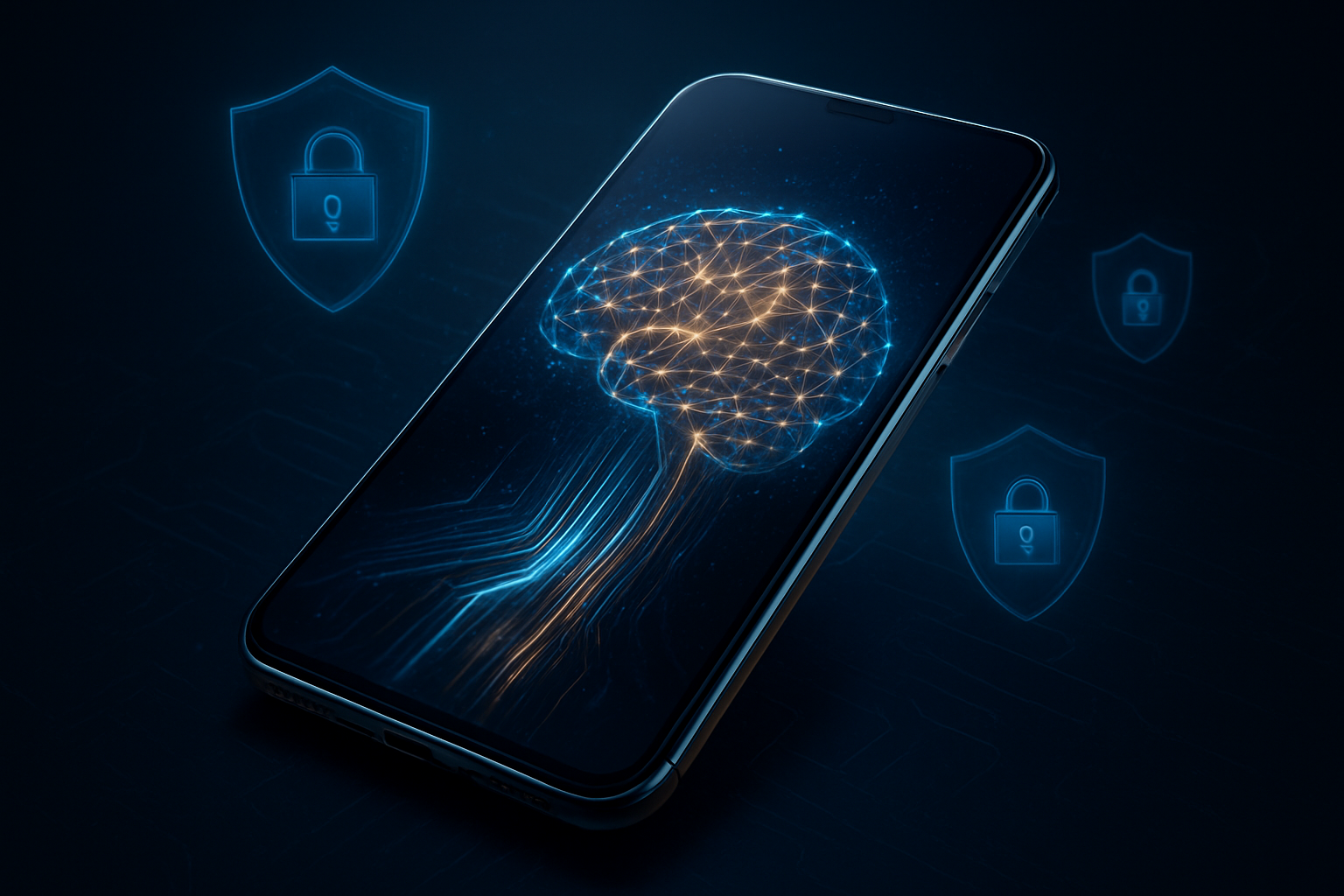
  • Samsung’s “Ghost in the Machine”: How the Galaxy S26 is Redefining Privacy with On-Device SLM Reasoning

    Samsung’s “Ghost in the Machine”: How the Galaxy S26 is Redefining Privacy with On-Device SLM Reasoning

    As the tech world approaches the dawn of 2026, the focus of the smartphone industry has shifted from raw megapixels and screen brightness to the "brain" inside the pocket. Samsung Electronics (KRX: 005930) is reportedly preparing to unveil its most ambitious hardware-software synergy to date with the Galaxy S26 series. Moving away from the cloud-dependent AI models that defined the previous two years, Samsung is betting its future on sophisticated on-device Small Language Model (SLM) reasoning. This development marks a pivotal moment in consumer technology, where the promise of a "continuous AI" companion—one that functions entirely without an internet connection—becomes a tangible reality.

    The immediate significance of this shift cannot be overstated. By migrating complex reasoning tasks from massive server farms to the palm of the hand, Samsung is addressing the two biggest hurdles of the AI era: latency and privacy. The rumored "Galaxy AI 2.0" stack, debuting with the S26, aims to provide a seamless, persistent intelligence that learns from user behavior in real-time without ever uploading sensitive personal data to the cloud. This move signals a departure from the "Hybrid AI" model favored by competitors, positioning Samsung as a leader in "Edge AI" and data sovereignty.

    The Architecture of Local Intelligence: SLMs and 2nm Silicon

    At the heart of the Galaxy S26’s technical breakthrough is a next-generation version of Samsung Gauss, the company’s proprietary AI suite. Unlike the massive Large Language Models (LLMs) that require gigawatts of power, Samsung is utilizing heavily quantized Small Language Models (SLMs) ranging from 3-billion to 7-billion parameters. These models are optimized for the device’s Neural Processing Unit (NPU) using LoRA (Low-Rank Adaptation) adapters. This allows the phone to "hot-swap" between specialized functions—such as real-time voice translation, complex document synthesis, or predictive text—without the overhead of a general-purpose model, ensuring that reasoning remains instantaneous.

    The hardware enabling this is equally revolutionary. Samsung is rumored to be utilizing its new 2nm Gate-All-Around (GAA) process for the Exynos 2600 chipset, which reportedly delivers a staggering 113% boost in NPU performance over its predecessor. In regions receiving the Qualcomm (NASDAQ: QCOM) Snapdragon 8 Gen 5, the "Elite 2" variant is expected to feature a Hexagon NPU capable of processing 200 tokens per second. These chips are supported by the new LPDDR6 RAM standard, which provides the massive memory throughput (up to 10.7 Gbps) required to hold "semantic embeddings" in active memory. This allows the AI to maintain context across different applications, effectively "remembering" a conversation in one app to provide relevant assistance in another.

    This approach differs fundamentally from previous generations. Where the Galaxy S24 and S25 relied on "Cloud-Based Processing" for complex tasks, the S26 is designed for "Continuous AI." A new AI Runtime Engine manages workloads across the CPU, GPU, and NPU to ensure that background reasoning—such as "Now Nudges" that predict user needs—doesn't drain the battery. Initial reactions from the AI research community have been overwhelmingly positive, with experts noting that Samsung's focus on "system-level priority" for AI tasks could finally solve the "jank" associated with background mobile processing.

    Shifting the Power Dynamics of the AI Market

    Samsung’s aggressive pivot to on-device reasoning creates a complex ripple effect across the tech industry. For years, Google, a subsidiary of Alphabet Inc. (NASDAQ: GOOGL), has been the primary provider of AI features for Android through its Gemini ecosystem. By developing a robust, independent SLM stack, Samsung is effectively reducing its reliance on Google’s cloud infrastructure. This strategic decoupling gives Samsung more control over its product roadmap and profit margins, as it no longer needs to pay the massive "compute tax" associated with third-party cloud AI services.

    The competitive implications for Apple Inc. (NASDAQ: AAPL) are equally significant. While Apple Intelligence has focused on privacy, Samsung’s rumored 2nm hardware gives it a potential "first-mover" advantage in raw local processing power. If the S26 can truly run 7B-parameter models with zero lag, it may force Apple to accelerate its own silicon development or increase the base RAM of its future iPhones to keep pace. Furthermore, the specialized "Heat Path Block" (HPB) technology in the Exynos 2600 addresses the thermal throttling issues that have plagued mobile AI, potentially setting a new industry standard for sustained performance.

    Startups and smaller AI labs may also find a new distribution channel through Samsung’s LoRA-based architecture. By allowing specialized adapters to be "plugged into" the core Gauss model, Samsung could create a marketplace for on-device AI tools, disrupting the current dominance of cloud-based AI subscription models. This positions Samsung not just as a hardware manufacturer, but as a gatekeeper for a new era of decentralized, local software.

    Privacy as a Premium: The End of the Data Trade-off

    The wider significance of the Galaxy S26 lies in its potential to redefine the relationship between consumers and their data. For the past decade, the industry standard has been a "data for services" trade-off. Samsung’s focus on on-device SLM reasoning challenges this paradigm. Features like "Flex Magic Pixel"—which uses AI to adjust screen viewing angles when it detects "shoulder surfing"—and local data redaction for images ensure that personal information never leaves the device. This is a direct response to growing global concerns over data breaches and the ethical use of AI training data.

    This trend fits into a broader movement toward "Data Sovereignty," where users maintain absolute control over their digital footprint. By providing "Scam Detection" that analyzes call patterns locally, Samsung is turning the smartphone into a proactive security shield. This marks a shift from AI as a "gimmick" to AI as an essential utility. However, this transition is not without concerns. Critics point out that "Continuous AI" that is always listening and learning could be seen as a double-edged sword; while the data stays local, the psychological impact of a device that "knows everything" about its owner remains a topic of intense debate among ethicists.

    Comparatively, this milestone is being likened to the transition from dial-up to broadband. Just as broadband enabled a new class of "always-on" internet services, on-device SLM reasoning enables "always-on" intelligence. It moves the needle from "Reactive AI" (where a user asks a question) to "Proactive AI" (where the device anticipates the user's needs), representing a fundamental evolution in human-computer interaction.

    The Road Ahead: Contextual Agents and Beyond

    Looking toward the near-term future, the success of the Galaxy S26 will likely trigger a "RAM war" in the smartphone industry. As on-device models grow in sophistication, the demand for 24GB or even 32GB of mobile RAM will become the new baseline for flagship devices. We can also expect to see these SLM capabilities trickle down into Samsung’s broader ecosystem, including tablets, laptops, and SmartThings-enabled home appliances, creating a unified "Local Intelligence" network that doesn't rely on a central server.

    The long-term potential for this technology involves the creation of truly "Personal AI Agents." These agents will be capable of performing complex multi-step tasks—such as planning a full travel itinerary or managing a professional calendar—entirely within the device's secure enclave. The challenge that remains is one of "Model Decay"; as local models are cut off from the vast, updating knowledge of the internet, Samsung will need to find a way to provide "Differential Privacy" updates that keep the SLMs current without compromising user anonymity.

    Experts predict that by the end of 2026, the ability to run a high-reasoning SLM locally will be the primary differentiator between "premium" and "budget" devices. Samsung's move with the S26 is the first major shot fired in this new battleground, setting the stage for a decade where the most powerful AI isn't in the cloud, but in your pocket.

    A New Chapter in Mobile Computing

    The rumored capabilities of the Samsung Galaxy S26 represent a landmark shift in the AI landscape. By prioritizing on-device SLM reasoning, Samsung is not just releasing a new phone; it is proposing a new philosophy for mobile computing—one where privacy, speed, and intelligence are inextricably linked. The combination of 2nm silicon, high-speed LPDDR6 memory, and the "Continuous AI" of One UI 8.5 suggests that the era of the "Cloud-First" smartphone is drawing to a close.

    As we look toward the official announcement in early 2026, the tech industry will be watching closely to see if Samsung can deliver on these lofty promises. If the S26 successfully bridges the gap between local hardware constraints and high-level AI reasoning, it will go down as one of the most significant milestones in the history of artificial intelligence. For consumers, the message is clear: the future of AI is private, it is local, and it is always on.


    This content is intended for informational purposes only and represents analysis of current AI developments.

    TokenRing AI delivers enterprise-grade solutions for multi-agent AI workflow orchestration, AI-powered development tools, and seamless remote collaboration platforms.
    For more information, visit https://www.tokenring.ai/.

  • Microsoft Unleashes Fara-7B: A New Era of On-Device, Action-Oriented AI Takes Control

    Microsoft Unleashes Fara-7B: A New Era of On-Device, Action-Oriented AI Takes Control

    In a significant stride for artificial intelligence, Microsoft (NASDAQ: MSFT) officially announced and released its Fara-7B model on November 24, 2025. This groundbreaking development, placing the event firmly in the recent past relative to December 5, 2025, introduces an "agentic" small language model (SLM) meticulously engineered for computer use. Fara-7B is not merely another chatbot; it is designed to interact with computer interfaces, such as a mouse and keyboard, by visually interpreting screenshots of a browser window and then autonomously executing single-step actions to complete tasks for users.

    This release signals a pivotal shift in the AI landscape, moving beyond purely language-based AI to action models capable of executing real-world tasks directly on a computer. Its immediate significance lies in its ability to operate on-device, offering unprecedented privacy by keeping sensitive data local, coupled with reduced latency and competitive performance against much larger models. Fara-7B's open-weight nature further democratizes access to sophisticated AI capabilities, fostering innovation across the developer community.

    Fara-7B: The Technical Blueprint for On-Device Autonomy

    Microsoft's Fara-7B is a pioneering 7-billion-parameter "agentic" SLM, specifically tailored for Computer Use Agent (CUA) tasks. Built upon the Qwen 2.5-VL-7B architecture, this multimodal decoder-only model processes screenshots of a computer interface alongside text-based user goals and historical interactions. Its core capability lies in generating a "chain of thought" for internal reasoning, followed by grounded actions like predicting click coordinates, typing text, or scrolling.

    Key technical specifications include its compact 7 billion parameters, enabling on-device execution, particularly on forthcoming Windows 11 Copilot+ PCs equipped with Neural Processing Units (NPUs). It boasts an impressive 128,000-token context length, crucial for managing complex, multi-step tasks. Fara-7B was trained on a massive, fully synthetic dataset of 145,603 verified trajectories, encompassing over one million individual actions across more than 70,000 unique domains, generated using Microsoft's novel FaraGen multi-agent pipeline. This efficient training, utilizing 64 H100 GPUs over 2.5 days, results in a model capable of completing tasks in an average of ~16 steps, significantly fewer than comparable models, leading to a lower estimated cost per task of about $0.025.

    Fara-7B distinguishes itself from previous approaches through "pixel sovereignty" – its ability to operate entirely on the local device, ensuring sensitive data remains private. Unlike most powerful AI agents that rely on cloud infrastructure, Fara-7B's visual-first interaction directly processes screenshots, mimicking human observation without depending on accessibility trees or underlying code. This end-to-end single model design, rather than complex multi-model stacks, allows it to achieve state-of-the-art performance in its class, even outperforming larger systems like OpenAI's GPT-4o when configured for web browsing tasks.

    Initial reactions from the AI research community have been overwhelmingly positive. Experts describe Fara-7B as a "groundbreaking innovation" and one of the "most exciting AI releases in the past few months." The open-weight accessibility under an MIT license has been widely applauded, expected to foster community experimentation and accelerate development. The emphasis on privacy and efficiency through on-device execution is a major draw, particularly for enterprises handling sensitive data. While acknowledging its experimental nature and potential for inaccuracies or hallucinations on complex tasks, Microsoft (NASDAQ: MSFT) has been transparent, advising sandboxed environments and incorporating robust safety features, including a high refusal rate for harmful tasks and critical point detection requiring user consent.

    Reshaping the AI Industry: Impact on Companies and Competitive Dynamics

    The release of Microsoft Fara-7B is set to ripple across the AI industry, creating new opportunities and intensifying competition. Several entities stand to significantly benefit from this development. Users and manufacturers of Windows 11 Copilot+ PCs, for instance, will gain a strong selling point as Fara-7B can run natively on these devices, offering personal automation with enhanced privacy. Developers and researchers, empowered by Fara-7B's open-weight nature and MIT license, now have an accessible and efficient tool to build and experiment with agentic AI applications, fostering broader innovation. Companies with stringent data privacy requirements will find Fara-7B's on-device processing a compelling solution, while industries reliant on repetitive web tasks, such as customer service, e-commerce, and travel, can leverage its automation capabilities for increased efficiency.

    For major AI labs and tech companies, Fara-7B presents significant competitive implications. Microsoft (NASDAQ: MSFT) solidifies its position in agentic AI and on-device processing, challenging the notion that only massive, cloud-based models can deliver sophisticated agentic functionality. This could pressure other large language model (LLM) providers like OpenAI (NASDAQ: OPENA) and Anthropic to develop more efficient, specialized smaller models or to further justify the cost and complexity of their larger offerings for specific use cases. Fara-7B's innovative approach of compressing multi-agent system behavior into a single multimodal decoder-only model, along with its synthetic data generation techniques (FaraGen), could inspire a new wave of architectural innovation across the industry.

    Potential disruptions to existing products and services are considerable. Cloud-dependent automation tools, especially those handling sensitive data or requiring low latency, may face competition from Fara-7B's on-device, privacy-enhanced alternative. Traditional Robotic Process Automation (RPA) could see certain aspects disrupted, particularly for dynamic web environments, as Fara-7B's visual, human-like interaction offers a more robust and flexible approach. Furthermore, Fara-7B's capabilities in information retrieval and task-oriented results could enhance or integrate with existing search tools, while personal digital assistants might evolve to incorporate its "computer use agent" functionalities, enabling more complex, multi-step actions.

    Strategically, Fara-7B positions Microsoft (NASDAQ: MSFT) with a significant advantage in efficiency, accessibility, and privacy-first on-device AI. Its compact size and open-weight release democratize agentic capabilities, while its focus on local processing directly addresses growing data privacy concerns. By specializing as a Computer Use Agent, Fara-7B carves out a distinct niche, potentially outperforming larger, general-purpose LLMs in this specific domain. It also serves as a crucial foundation for future AI-powered operating systems, hinting at a deeper integration between AI and personal computing. The open and experimental nature of its release fosters community-driven innovation, further accelerating its development and diverse applications.

    A Broader AI Perspective: Trends, Impacts, and Milestones

    Microsoft Fara-7B's introduction is a significant event that resonates with several overarching trends in the AI landscape. It underscores the growing importance of Small Language Models (SLMs) and on-device AI, where models balance strong performance with lower resource usage, faster response times, and enhanced privacy through local execution. Fara-7B is a prime example of "agentic AI," systems designed to act autonomously to achieve user goals, marking a clear shift from purely conversational AI to systems that actively interact with and control computing environments. Its open-weight release aligns with the burgeoning open-source AI movement, challenging proprietary systems and fostering global collaboration. Moreover, its ability to "see" screenshots and interpret visual information for action highlights the increasing significance of multimodal AI.

    The impacts of Fara-7B are far-reaching. Its on-device operation and "pixel sovereignty" greatly enhance privacy, a critical factor for regulated industries. This local execution also slashes latency and costs, with Microsoft (NASDAQ: MSFT) estimating a full task at around 2.5 cents, a stark contrast to the roughly 30 cents for large-scale cloud-based agents. Fara-7B democratizes access to sophisticated AI automation, making it available to a wider range of users and developers without extensive computational resources. This, in turn, enables the automation of numerous routine web tasks, from filling forms to booking travel and managing online accounts.

    However, potential concerns persist. Microsoft (NASDAQ: MSFT) acknowledges Fara-7B's experimental nature, noting its struggles with accuracy on complex tasks, susceptibility to instructional errors, and occasional hallucinations. The inherent security risks of an AI directly controlling a computer necessitate robust safeguards and responsible use, with Microsoft recommending sandboxed environments and implementing "Critical Points" for human intervention before sensitive actions.

    Comparing Fara-7B to previous AI milestones reveals its unique significance. At 7 billion parameters, it is substantially smaller than models like GPT-3 (which had over 175 billion parameters upon its debut in 2020), yet it demonstrates competitive, and in some benchmarks, superior performance to much larger agentic systems like OpenAI's (NASDAQ: OPENA) GPT-4o for web browsing tasks. This challenges the notion that "bigger is always better" and highlights the efficacy of specialized architectural design and high-quality synthetic data. Fara-7B continues the trend seen in other efficient SLMs like Llama 2-7B and Mistral 7B, extending the capabilities of compact models into the "computer use agent" domain, proving their ability to learn from complex, multi-agent systems. It represents a pivotal step towards practical, private, and efficient on-device AI agents, setting a new precedent for personal AI assistance and automated digital workflows.

    The Horizon: Future Developments for Agentic AI

    The unveiling of Microsoft Fara-7B signals a dynamic future for agentic AI, promising transformative changes in human-computer interaction. As a research preview, Fara-7B's immediate evolution will likely focus on refining its ability to automate everyday web tasks, with its open-source nature fostering community-driven enhancements. However, it's a stepping stone in Microsoft's (NASDAQ: MSFT) broader strategy to integrate "autonomous-ish" agents—semi-autonomous but human-supervised—across its product ecosystem by 2027.

    In the near term (2025-2027), we anticipate a surge in agentic AI adoption, with Deloitte predicting a full transition from generative to agentic AI by 2027. Experts foresee approximately 1 billion AI agents in service by the end of fiscal year 2026, driving an explosion in the AI orchestration market, which is predicted to triple in size to over $30 billion by 2027. The focus will be on multi-agent collaboration, hyper-personalization, and self-improvement capabilities. Long-term (2028-2030 and beyond), agentic AI is expected to be integrated into 33% of enterprise software applications, making 15% of day-to-day work decisions autonomously, and resolving 80% of common customer service issues by 2029, potentially reducing operational costs by 30%. The market value of agentic AI is projected to reach $47.1 billion by 2030, with some even predicting the first billion-dollar company run almost entirely by AI agents by 2028.

    Potential applications span every industry. In healthcare, agentic AI could revolutionize personalized care, diagnostics (e.g., detecting subtle patterns in medical imaging), and drug discovery. Finance could see enhanced fraud detection, portfolio management, and automated trading. Customer service will benefit from highly personalized interactions and autonomous issue resolution. Supply chain and logistics will leverage agents for proactive risk management and optimization. IT and software development will see automation in code reviews, bug detection, and cybersecurity. HR can streamline recruitment and payroll, while government services will become more efficient. For individuals, models like Fara-7B will enable seamless automation of daily web tasks.

    Despite this immense potential, challenges remain. Ethical concerns regarding bias and the need for human nuance in autonomous decisions are paramount. Technical complexities, such as managing multi-agent systems and emergent behaviors, require continuous innovation. Data privacy and security risks necessitate robust protocols. Ensuring reliability and predictability in autonomous systems, along with clear goal alignment and human oversight, are critical. Furthermore, establishing comprehensive governance and regulatory frameworks is vital for ethical and compliant deployment.

    Experts predict that 2026 will be an inflection point, with agentic AI moving from experimentation to becoming a foundational force in enterprises. This will reshape organizational structures, emphasizing human-AI collaboration. The rise of complex agent ecosystems, with a strong focus on "Governance and Ethics by Design" and "Agentic AI Ops," is expected. Third-party guardrails for AI agents will become prevalent, and enterprises will significantly increase their investment in this transformative technology. The emergence of specialized, industry-specific agents is also anticipated, demonstrating higher accuracy than generic systems.

    A Transformative Leap for AI: The Road Ahead

    The release of Microsoft (NASDAQ: MSFT) Fara-7B marks a watershed moment in the evolution of artificial intelligence. Its core innovation lies in its capacity as an "agentic" small language model, capable of visually interpreting and interacting with computer interfaces to perform complex tasks directly on a user's device. This on-device functionality is a key takeaway, offering unparalleled privacy, reduced latency, and cost-efficiency—a significant departure from the cloud-centric paradigm that has dominated AI.

    Fara-7B's significance in AI history cannot be overstated. It represents a tangible shift from purely generative AI to truly action-oriented intelligence, moving us closer to the long-held vision of autonomous digital assistants. By demonstrating state-of-the-art performance within its compact 7-billion-parameter class, even outperforming larger models in specific web automation benchmarks, Fara-7B challenges the conventional wisdom that bigger models are always better. This breakthrough democratizes access to advanced AI automation, making sophisticated capabilities more accessible to a broader range of developers and users.

    The long-term impact of Fara-7B and similar agentic models is poised to be transformative. We are entering an era where personal computers will become considerably more autonomous and anticipatory, capable of handling a vast array of routine and complex digital tasks, thereby significantly enhancing human productivity and reducing digital friction. The emphasis on local processing and "pixel sovereignty" sets a new standard for privacy in AI, fostering greater user trust and accelerating adoption. Furthermore, Microsoft's (NASDAQ: MSFT) decision to release Fara-7B as open-weight under an MIT license is a strategic move that will undoubtedly catalyze global innovation in agentic AI.

    In the coming weeks and months, several key developments warrant close attention. The broader AI community's experimentation with the open-source Fara-7B will likely yield a diverse array of novel applications and use cases. We should also monitor ongoing performance refinements, particularly regarding accuracy on complex operations and mitigation of hallucinations, alongside the evolution of benchmarks to contextualize its performance. The seamless integration of silicon-optimized Fara-7B with Copilot+ PCs and Windows 11 will be a critical indicator of its practical impact. Finally, observing the evolving discourse around responsible AI for agentic models, including best practices for sandboxing and effective human oversight, will be crucial as these powerful agents gain more control over our digital environments. The competitive landscape will also be one to watch, as other tech giants react to Microsoft's bold move into on-device agentic AI.


    This content is intended for informational purposes only and represents analysis of current AI developments.

    TokenRing AI delivers enterprise-grade solutions for multi-agent AI workflow orchestration, AI-powered development tools, and seamless remote collaboration platforms.
    For more information, visit https://www.tokenring.ai/.