Tag: Snapdragon X Elite

  • Qualcomm Defeats Arm in High-Stakes Licensing War: The Battle for the Future of Custom Silicon

    Qualcomm Defeats Arm in High-Stakes Licensing War: The Battle for the Future of Custom Silicon

    As of January 19, 2026, the cloud of uncertainty that once threatened to derail the global semiconductor industry has finally lifted. Following a multi-year legal saga that many analysts dubbed an "existential crisis" for the Windows-on-Arm and Android ecosystems, Qualcomm (NASDAQ: QCOM) has emerged as the definitive victor in its high-stakes battle against Arm Holdings (NASDAQ: ARM). The resolution marks a monumental shift in the power dynamics between IP architects and the chipmakers who build the silicon powering today's AI-driven world.

    The legal showdown, which centered on whether Qualcomm could use custom CPU cores acquired through its $1.4 billion purchase of startup Nuvia, reached a decisive conclusion in late 2025. After a dramatic jury trial in December 2024 and a subsequent "complete victory" ruling by a Delaware judge in September 2025, the threat of an architectural license cancellation—which would have forced Qualcomm to halt sales of its flagship Snapdragon processors—has been effectively neutralized. For the tech industry, this result ensures the continued growth of the "Copilot+" PC category and the next generation of AI-integrated smartphones.

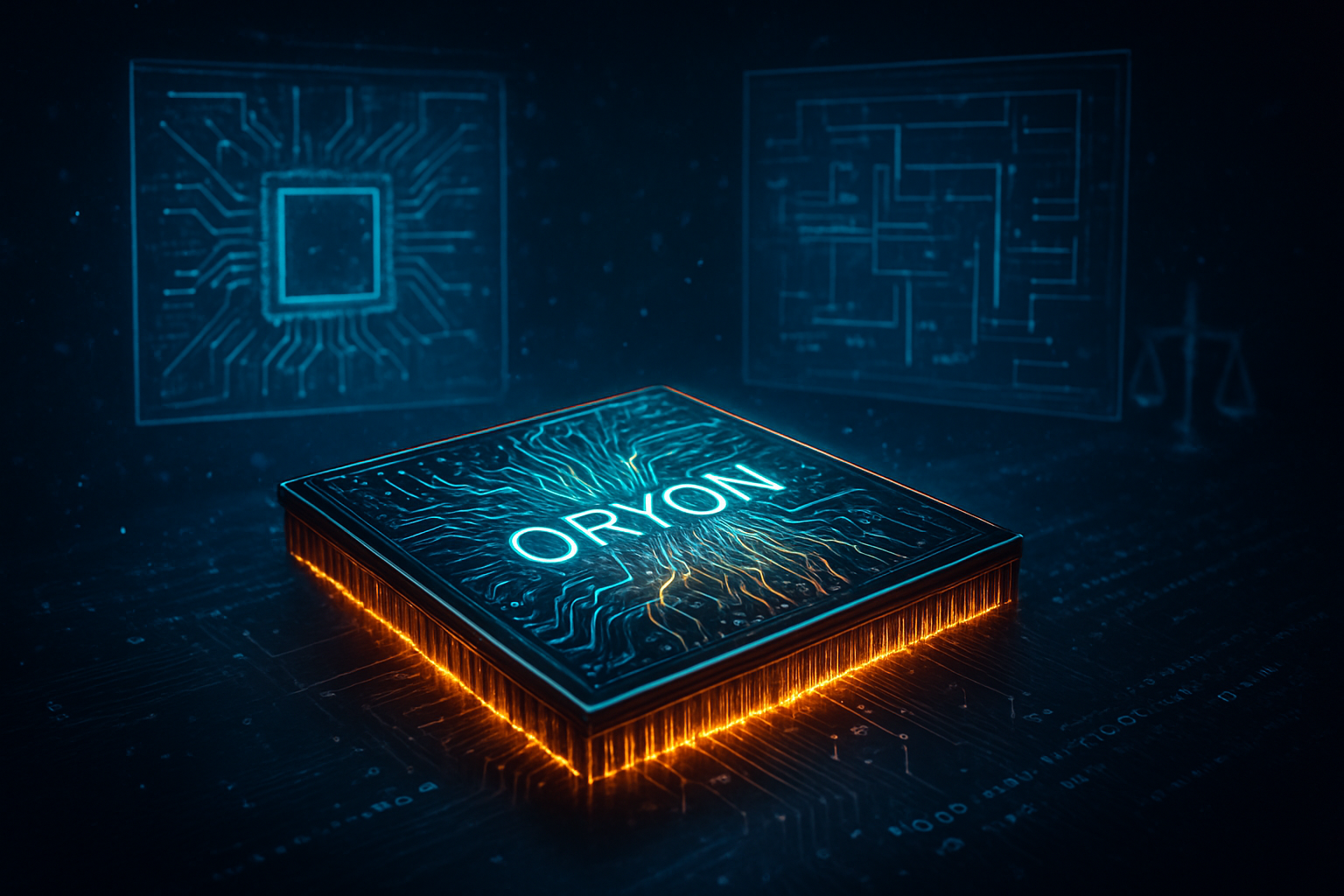
    The Verdict that Saved the Oryon Core

    The core of the dispute originated in 2022, when Arm sued Qualcomm, alleging that the chipmaker had breached its licensing agreements by incorporating Nuvia’s custom "Oryon" CPU designs into its products without Arm's explicit consent and a higher royalty rate. The tension reached a fever pitch in late 2024 when Arm issued a 60-day notice to cancel Qualcomm's entire architectural license. However, the December 2024 jury trial in the U.S. District Court for the District of Delaware shifted the momentum. Jurors found that Qualcomm had not breached its primary Architecture License Agreement (ALA), validating the company's right to integrate Nuvia-derived technology across its portfolio.

    Technically, this victory preserved the Oryon CPU architecture, which represents a radical departure from the standard "off-the-shelf" Arm Cortex designs used by most competitors. Oryon provides Qualcomm with the performance-per-watt necessary to compete directly with Apple (NASDAQ: AAPL) and Intel (NASDAQ: INTC) in the high-end laptop market. While a narrow mistrial occurred in late 2024 regarding Nuvia’s specific startup license, Judge Maryellen Noreika issued a final judgment in September 2025, dismissing Arm’s remaining claims and rejecting their request for a new trial. This ruling confirmed that Qualcomm's broad, existing licenses legally covered the custom work performed by the Nuvia team, effectively ending Arm's attempts to "claw back" the technology.

    Impact on the Tech Giants and the AI PC Revolution

    The stabilization of Qualcomm’s licensing status provides much-needed certainty for the broader hardware ecosystem. Microsoft (NASDAQ: MSFT), which has heavily bet on Qualcomm’s Snapdragon X Elite chips to power its "Copilot+" AI PC initiative, can now scale its roadmap without the fear of supply chain disruptions or legal injunctions. Similarly, PC manufacturers like Dell Technologies (NYSE: DELL), HP Inc. (NYSE: HPQ), and Lenovo (HKG: 0992) have accelerated their 2026 product cycles, integrating the second-generation Oryon cores into a wider array of consumer and enterprise laptops.

    For Arm, the defeat is a significant strategic blow. The company had hoped to leverage the Nuvia acquisition to force a new, more lucrative royalty structure—potentially charging a percentage of the entire device price rather than just the chip price. With the court siding with Qualcomm, Arm’s ability to "re-negotiate" legacy licenses during corporate acquisitions has been severely curtailed. This development has forced Arm to pivot its strategy toward its "Total Design" ecosystem, attempting to provide more value-added services to other partners like NVIDIA (NASDAQ: NVDA) and Amazon (NASDAQ: AMZN) to offset the lost potential revenue from Qualcomm.

    A Watershed Moment for the AI Landscape

    The Qualcomm-Arm battle is more than just a contract dispute; it is a milestone in the "AI Silicon Era." As AI workloads move from the cloud to the "edge" (on-device), the ability to design custom, highly efficient CPU cores has become the ultimate competitive advantage. By successfully defending its right to innovate on top of the Arm instruction set without punitive fees, Qualcomm has set a precedent that benefits other companies pursuing custom silicon strategies. It reinforces the idea that an architectural license provides a stable foundation for long-term R&D, rather than a lease that can be revoked at the whim of the IP owner.

    Furthermore, this case has highlighted the growing friction between the foundational builders of technology (Arm) and those who implement it at scale (Qualcomm). The industry is increasingly wary of "vendor lock-in," and the aggression shown by Arm during this trial has accelerated the industry's interest in RISC-V, the open-source alternative to Arm. Even in victory, Qualcomm has signaled its intent to diversify, acquiring the RISC-V specialist Ventana Micro Systems in December 2025 to ensure it is never again vulnerable to a single IP provider’s legal maneuvers.

    What’s Next: Appeals and the RISC-V Hedge

    While the district court case is settled in Qualcomm's favor, the legal machinery continues to churn. Arm filed an official appeal in October 2025, seeking to overturn the September final judgment. Legal experts suggest the appeal could take another year to resolve, though most believe an overturn is unlikely given the clarity of the jury's original findings. Meanwhile, the tables have turned: Qualcomm is now pursuing its own countersuit against Arm for "improper interference" and breach of contract, seeking billions in damages for the reputational and operational harm caused by the 60-day cancellation threat. That trial is set to begin in March 2026.

    In the near term, look for Qualcomm to continue its aggressive rollout of the Snapdragon 8 Elite (mobile) and Snapdragon X Gen 2 (PC) platforms. These chips are now being manufactured using TSMC’s (NYSE: TSM) advanced 2nm processes, and with the legal hurdles removed, Qualcomm is expected to capture a larger share of the premium Windows laptop market. The industry will also closely watch the development of the "Qualcomm-Ventana" RISC-V partnership, which could produce its first commercial silicon by 2027, potentially ending the Arm-Qualcomm era altogether.

    Final Thoughts: A New Balance of Power

    The conclusion of the Arm vs. Qualcomm trial marks the end of an era of uncertainty that began in 2022. Qualcomm’s victory is a testament to the importance of intellectual property independence for major chipmakers. It ensures that the Android and Windows-on-Arm ecosystems remain competitive, diverse, and capable of delivering the local AI processing power that the modern software landscape demands.

    As we look toward the remainder of 2026, the focus will shift from the courtroom to the consumer. With the legal "sword of Damocles" removed, the industry can finally focus on the actual performance of these chips. For now, Qualcomm stands taller than ever, having defended its core technology and secured its place as the primary architect of the next generation of intelligent devices.


    This content is intended for informational purposes only and represents analysis of current AI and semiconductor developments as of January 2026.

    TokenRing AI delivers enterprise-grade solutions for multi-agent AI workflow orchestration, AI-powered development tools, and seamless remote collaboration platforms.
    For more information, visit https://www.tokenring.ai/.
  • The AI PC Arms Race: Qualcomm, AMD, and Intel Battle for the NPU Market

    The AI PC Arms Race: Qualcomm, AMD, and Intel Battle for the NPU Market

    As of late 2025, the personal computing landscape has undergone its most radical transformation since the transition to the internet era. The "AI PC" is no longer a marketing buzzword but the industry standard, with AI-capable shipments now accounting for nearly 40% of the global market. At the heart of this revolution is the Neural Processing Unit (NPU), a specialized silicon engine designed to handle the complex mathematical workloads of generative AI locally, without relying on the cloud. What began as a tentative step by Qualcomm (NASDAQ: QCOM) in 2024 has erupted into a full-scale three-way war involving AMD (NASDAQ: AMD) and Intel (NASDAQ: INTC), as each silicon giant vies to define the future of local intelligence.

    The stakes could not be higher. For the first time in decades, the dominant x86 architecture is facing a legitimate threat from ARM-based designs on Windows, while simultaneously fighting an internal battle over which chip can provide the highest "TOPS" (Trillions of Operations Per Second). As we close out 2025, the competition has shifted from simply meeting Microsoft (NASDAQ: MSFT) Copilot+ requirements to a sophisticated game of architectural efficiency, where the winner is determined by how much AI a laptop can process while still maintaining a 20-hour battery life.

    The Silicon Showdown: NPU Architectures and the 80-TOPS Threshold

    Technically, the AI PC market has matured into three distinct architectural philosophies. Qualcomm (NASDAQ: QCOM) recently stole the headlines at its late 2025 Snapdragon Summit with the unveiling of the Snapdragon X2 Elite. Built on a cutting-edge 3nm process, the X2 Elite’s Hexagon NPU has jumped to a staggering 80 TOPS, nearly doubling the performance of the first-generation chips that launched the Copilot+ era. By utilizing its mobile-first heritage, Qualcomm’s "Oryon Gen 3" CPU cores and upgraded NPU deliver a level of performance-per-watt that remains the benchmark for ultra-portable laptops, often exceeding 22 hours of real-world productivity.

    AMD (NASDAQ: AMD) has taken a different route, focusing on "Platform TOPS"—the combined power of the CPU, NPU, and its powerful integrated Radeon graphics. While its mainstream Ryzen AI 300 "Strix Point" and the newer "Krackan Point" chips hold steady at 50 NPU TOPS, the high-end Ryzen AI Max 300 (formerly known as Strix Halo) has redefined the "AI Workstation." By integrating a massive 40-unit RDNA 3.5 GPU alongside the XDNA 2 NPU, AMD allows creators to run massive Large Language Models (LLMs) like Llama 3 70B entirely on a laptop, a feat previously reserved for desktop rigs with discrete NVIDIA (NASDAQ: NVDA) cards.

    Intel (NASDAQ: INTC) has staged a massive comeback in late 2025 with its "all-in" transition to the Intel 18A process node. While Lunar Lake (Core Ultra Series 2) stabilized Intel's market share earlier in the year, the imminent broad release of Panther Lake (Core Ultra Series 3) represents the company’s most advanced architecture to date. Panther Lake’s NPU 5 delivers 50 TOPS of dedicated AI performance, but when combined with the new Xe3 "Celestial" GPU, the platform reaches a "Total Platform TOPS" of 180. This "tiled" approach allows Intel to maintain its dominance in the enterprise sector, offering the best compatibility for legacy x86 software while matching the efficiency gains seen in ARM-based competitors.

    Disruption and Dominance: The Impact on the Tech Ecosystem

    This silicon arms race has sent shockwaves through the broader tech industry, fundamentally altering the strategies of software giants and hardware OEMs alike. Microsoft (NASDAQ: MSFT) has been the primary beneficiary and orchestrator, using its "Windows AI Foundry" to standardize how developers access these new NPUs. By late 2025, the "Copilot+ PC" brand has become the gold standard for consumers, forcing legacy software companies to pivot. Adobe (NASDAQ: ADBE), for instance, has optimized its Creative Cloud suite to offload background tasks like audio tagging in Premiere Pro and object masking in Photoshop directly to the NPU, reducing the need for expensive cloud-based processing and improving real-time performance for users.

    The competitive implications for hardware manufacturers like Dell (NYSE: DELL), HP (NYSE: HPQ), and Lenovo have been equally profound. These OEMs are no longer tethered to a single silicon provider; instead, they are diversifying their lineups to play to each chipmaker's strengths. Dell’s 2025 XPS line now features a "tri-platform" strategy, offering Intel for enterprise stability, AMD for high-end creative performance, and Qualcomm for executive-level mobility. This shift has weakened the traditional "Wintel" duopoly, as Qualcomm’s 25% share in the consumer laptop segment marks the most successful ARM-on-Windows expansion in history.

    Furthermore, the rise of the NPU is disrupting the traditional GPU market. While NVIDIA (NASDAQ: NVDA) remains the king of high-end data centers and discrete gaming GPUs, the integrated NPUs from Intel, AMD, and Qualcomm are beginning to cannibalize the low-to-mid-range discrete GPU market. For many users, the "AI-accelerated" integrated graphics and dedicated NPUs are now sufficient for photo editing, video rendering, and local AI assistant tasks, reducing the necessity of a dedicated graphics card in premium thin-and-light laptops.

    The Local Intelligence Revolution: Privacy, Latency, and Sovereignty

    The wider significance of the AI PC era lies in the shift toward "Local AI" or "Edge AI." Until recently, most generative AI interactions were cloud-dependent, raising significant concerns regarding data privacy and latency. The 2025 generation of NPUs has largely solved this by enabling "Sovereign AI"—the ability for individuals and corporations to run sensitive AI workloads entirely within their own hardware firewall. Features like Windows Recall, which creates a local semantic index of a user's digital life, would be a privacy nightmare in the cloud but is made viable by the local processing power of the NPU.

    This trend mirrors previous industry milestones, such as the shift from mainframes to personal computers or the transition from dial-up to broadband. By bringing AI "to the edge," the industry is reducing the massive energy costs associated with centralized data centers. In 2025, we are seeing the emergence of a "Hybrid AI" model, where the NPU handles continuous, low-power tasks like live translation and eye-contact correction, while the cloud is reserved for massive, trillion-parameter model training.

    However, this transition has not been without its concerns. The rapid obsolescence of non-AI PCs has created a "digital divide" in the corporate world, where employees on older hardware lack access to the productivity-enhancing "Click to Do" and "Cocreator" features available on Copilot+ devices. Additionally, the industry is still grappling with the "TOPS" metric, which some critics argue is becoming as misleading as "Megahertz" was in the 1990s, as it doesn't always reflect real-world AI performance or software optimization.

    The Horizon: NVIDIA’s Entry and the 100-TOPS Era

    Looking ahead to 2026, the AI PC market is braced for another seismic shift: the rumored entry of NVIDIA (NASDAQ: NVDA) into the PC CPU market. Reports suggest NVIDIA is collaborating with MediaTek to develop a high-end ARM-based SoC (internally dubbed "N1X") that pairs Blackwell-architecture graphics with high-performance CPU cores. While production hurdles have reportedly pushed the commercial launch to late 2026, the prospect of an NVIDIA-powered Windows laptop has already caused competitors to accelerate their roadmaps.

    We are also moving toward the "100-TOPS NPU" as the next psychological and technical milestone. Experts predict that by 2027, the NPU will be capable of running fully multimodal AI agents that can not only generate text and images but also "see" and "interact" with the user's operating system in real-time with zero latency. The challenge will shift from raw hardware power to software orchestration—ensuring that the NPU, GPU, and CPU can share memory and workloads seamlessly without draining the battery.

    Conclusion: A New Era of Personal Computing

    The battle between Qualcomm, AMD, and Intel has effectively ended the era of the "passive" personal computer. In late 2025, the PC has become a proactive partner, capable of understanding context, automating workflows, and protecting user privacy through local silicon. Qualcomm has successfully broken the x86 stranglehold with its efficiency-first ARM designs, AMD has pushed the boundaries of integrated performance for creators, and Intel has leveraged its massive scale and new 18A manufacturing to ensure it remains the backbone of the enterprise world.

    This development marks a pivotal chapter in AI history, representing the democratization of generative AI. As we look toward 2026, the focus will shift from hardware specifications to the actual utility of these local models. Watch for the "NVIDIA factor" to shake up the market in the coming months, and for a new wave of "NPU-native" software that will make today's AI features look like mere prototypes. The AI PC arms race is far from over, but the foundation for the next decade of computing has been firmly laid.


    This content is intended for informational purposes only and represents analysis of current AI developments.

    TokenRing AI delivers enterprise-grade solutions for multi-agent AI workflow orchestration, AI-powered development tools, and seamless remote collaboration platforms.
    For more information, visit https://www.tokenring.ai/.