Tag: Software

  • The Brain-Inspired Revolution: Neuromorphic Architectures Propel AI Beyond the Horizon

    The Brain-Inspired Revolution: Neuromorphic Architectures Propel AI Beyond the Horizon

    In a groundbreaking era of artificial intelligence, a revolutionary computing paradigm known as neuromorphic computing is rapidly gaining prominence, promising to redefine the very foundations of how machines learn, process information, and interact with the world. Drawing profound inspiration from the human brain's intricate structure and functionality, this technology is moving far beyond its initial applications in self-driving cars, poised to unlock unprecedented levels of energy efficiency, real-time adaptability, and cognitive capabilities across a vast spectrum of industries. As the conventional Von Neumann architecture increasingly strains under the demands of modern AI, neuromorphic computing emerges as a pivotal solution, heralding a future of smarter, more sustainable, and truly intelligent machines.

    Technical Leaps: Unpacking the Brain-Inspired Hardware and Software

    Neuromorphic architectures represent a radical departure from traditional computing, fundamentally rethinking how processing and memory interact. Unlike the Von Neumann architecture, which separates the CPU and memory, leading to the infamous "Von Neumann bottleneck," neuromorphic chips integrate these functions directly within artificial neurons and synapses. This allows for massively parallel, event-driven processing, mirroring the brain's efficient communication through discrete electrical "spikes."

    Leading the charge in hardware innovation are several key players. Intel (NASDAQ: INTC) has been a significant force with its Loihi series. The original Loihi chip, introduced in 2017, demonstrated a thousand-fold improvement in efficiency for certain neural networks. Its successor, Loihi 2 (released in 2021), advanced with 1 million artificial neurons and 120 million synapses, optimizing for scale, speed, and efficiency using spiking neural networks (SNNs). Most notably, in 2024, Intel unveiled Hala Point, the world's largest neuromorphic system, boasting an astounding 1.15 billion neurons and 128 billion synapses across 1,152 Loihi 2 processors. Deployed at Sandia National Laboratories, Hala Point is showcasing significant efficiency gains for robotics, healthcare, and IoT applications, processing signals 20 times faster than a human brain for some tasks.

    IBM (NYSE: IBM) has also made substantial contributions with its TrueNorth chip, an early neuromorphic processor accommodating 1 million programmable neurons and 256 million synapses with remarkable energy efficiency (70 milliwatts). In 2023, IBM introduced NorthPole, a chip designed for highly efficient artificial neural network inference, claiming 25 times more energy efficiency and 22 times faster performance than NVIDIA's V100 GPU for specific inference tasks.

    Other notable hardware innovators include BrainChip (ASX: BRN) with its Akida neuromorphic processor, an ultra-low-power, event-driven chip optimized for edge AI inference and learning. The University of Manchester's SpiNNaker (Spiking Neural Network Architecture) and its successor SpiNNaker 2 are million-core supercomputers designed to simulate billions of neurons. Heidelberg University's BrainScaleS-2 and Stanford University's Neurogrid also contribute to the diverse landscape of neuromorphic hardware. Startups like SynSense and Innatera are developing ultra-low-power, event-driven processors for real-time AI. Furthermore, advancements extend to event-based sensors, such as Prophesee's Metavision, which only activate upon detecting changes, leading to high temporal resolution and extreme energy efficiency.

    Software innovations are equally critical, albeit still maturing. The core computational model is the Spiking Neural Network (SNN), which encodes information in the timing and frequency of spikes, drastically reducing computational overhead. New training paradigms are emerging, as traditional backpropagation doesn't directly translate to spike-based systems. Open-source frameworks like BindsNET, Norse, Rockpool, snnTorch, Spyx, and SpikingJelly are facilitating SNN simulation and training, often leveraging existing deep learning infrastructures like PyTorch.

    The AI research community and industry experts have expressed "overwhelming positivity" towards neuromorphic computing, viewing it as a "breakthrough year" as the technology transitions from academia to tangible commercial products. While optimism abounds regarding its energy efficiency and real-time AI capabilities, challenges remain, including immature software ecosystems, the need for standardized tools, and proving a clear value proposition against established GPU solutions for mainstream applications. Some current neuromorphic processors still face latency and scalability issues, leading to a debate on whether they will remain niche or become a mainstream alternative, particularly for the "extreme edge" segment.

    Corporate Chessboard: Beneficiaries, Disruptors, and Strategic Plays

    Neuromorphic computing is poised to fundamentally reshape the competitive landscape for AI companies, tech giants, and startups, creating a new arena for innovation and strategic advantage. Its inherent benefits in energy efficiency, real-time processing, and adaptive learning are driving a strategic pivot across the industry.

    Tech giants are heavily invested in neuromorphic computing, viewing it as a critical area for future AI leadership. Intel (NASDAQ: INTC), through its Intel Neuromorphic Research Community (INRC) and the recent launch of Hala Point, is positioning itself as a leader in large-scale neuromorphic systems. These efforts are not just about research; they aim to deliver significant efficiency gains for demanding AI applications in robotics, healthcare, and IoT, potentially reducing power consumption by orders of magnitude compared to traditional processors. IBM (NYSE: IBM) continues its pioneering work with TrueNorth and NorthPole, focusing on developing highly efficient AI inference engines that push the boundaries of performance per watt. Qualcomm (NASDAQ: QCOM) is developing its Zeroth platform, a brain-inspired computing architecture for mobile devices, robotics, and wearables, aiming to enable advanced AI operations directly on the device, reducing cloud dependency and enhancing privacy. Samsung is also heavily invested, exploring specialized processors and integrated memory solutions. These companies are engaged in a competitive race to develop neuromorphic chips with specialized architectures, focusing on energy efficiency, real-time learning, and robust hardware-software co-design for a new generation of AI applications.

    Startups are finding fertile ground in this emerging field, often focusing on niche market opportunities. BrainChip (ASX: BRN) is a pioneer with its Akida neuromorphic processor, targeting ultra-low-power edge AI inference and learning, especially for smart cameras and IoT devices. GrAI Matter Labs develops brain-inspired AI processors for edge applications, emphasizing ultra-low latency for machine vision in robotics and AR/VR. Innatera Nanosystems specializes in ultra-low-power analog neuromorphic processors for advanced cognitive applications, while SynSense focuses on neuromorphic sensing and computing solutions for real-time AI. Other innovative startups include MemComputing, Rain.AI, Opteran, Aspirare Semi, Vivum Computing, and General Vision Inc., all aiming to disrupt the market with unique approaches to brain-inspired computing.

    The competitive implications are profound. Neuromorphic computing is emerging as a disruptive force to the traditional GPU-dominated AI hardware market. While GPUs from companies like NVIDIA (NASDAQ: NVDA) are powerful, their energy intensity is a growing concern. The rise of neuromorphic computing could prompt these tech giants to strategically pivot towards specialized AI silicon or acquire neuromorphic expertise. Companies that successfully integrate neuromorphic computing stand to gain significant strategic advantages through superior energy efficiency, real-time decision-making, enhanced data privacy and security (due to on-chip learning), and inherent robustness. However, challenges remain, including the current decreased accuracy when converting deep neural networks to spiking neural networks, a lack of benchmarks, limited accessibility, and emerging cybersecurity threats like neuromorphic mimicry attacks (NMAs).

    A Broader Canvas: AI Landscape, Ethics, and Historical Echoes

    Neuromorphic computing represents more than just an incremental improvement; it's a fundamental paradigm shift that is reshaping the broader AI landscape. By moving beyond the traditional Von Neumann architecture, which separates processing and memory, neuromorphic systems inherently address the "Von Neumann bottleneck," a critical limitation for modern AI workloads. This brain-inspired design, utilizing artificial neurons and synapses that communicate via "spikes," promises unprecedented energy efficiency, processing speed, and real-time adaptability—qualities that are increasingly vital as AI models grow in complexity and computational demand.

    Its alignment with current AI trends is clear. As deep learning models become increasingly energy-intensive, neuromorphic computing offers a sustainable path forward, potentially reducing power consumption by orders of magnitude. This efficiency is crucial for the widespread deployment of AI in power-constrained edge devices and for mitigating the environmental impact of large-scale AI computations. Furthermore, its ability for on-chip, real-time learning and adaptation directly addresses the limitations of traditional AI, which often requires extensive offline retraining on massive, labeled datasets.

    However, this transformative technology also brings significant societal and ethical considerations. The ability of neuromorphic systems to learn and make autonomous decisions raises critical questions about accountability, particularly in applications like autonomous vehicles and environmental management. Like traditional AI, neuromorphic systems are susceptible to algorithmic bias if trained on flawed data, necessitating robust frameworks for explainability and transparency. Privacy and security are paramount, as these systems will process vast amounts of data, making compliance with data protection regulations crucial. The complex nature of neuromorphic chips also introduces new vulnerabilities, requiring advanced defense mechanisms against potential breaches and novel attack vectors. On a deeper philosophical level, the development of machines that can mimic human cognitive functions so closely prompts profound questions about human-machine interaction, consciousness, and even the legal status of highly advanced AI.

    Compared to previous AI milestones, neuromorphic computing stands out as a foundational infrastructural shift. While breakthroughs in deep learning and specialized AI accelerators transformed the field by enabling powerful pattern recognition, neuromorphic computing offers a new computational substrate. It moves beyond the energy crisis of current AI by providing significantly higher energy efficiency and enables real-time, adaptive learning with smaller datasets—a capability vital for autonomous and personalized AI that continuously learns and evolves. This shift is akin to the advent of specialized AI accelerators, providing a new hardware foundation upon which the next generation of algorithmic breakthroughs can be built, pushing the boundaries of what machines can learn and achieve.

    The Horizon: Future Trajectories and Expert Predictions

    The future of neuromorphic computing is brimming with potential, with both near-term and long-term advancements poised to revolutionize artificial intelligence and computation. Experts anticipate a rapid evolution, driven by continued innovation in hardware, software, and a growing understanding of biological intelligence.

    In the near term (1-5 years, extending to 2030), the most prominent development will be the widespread proliferation of neuromorphic chips in edge AI and Internet of Things (IoT) devices. This includes smart home systems, drones, robots, and various sensors, enabling localized, real-time data processing with enhanced AI capabilities, crucial for resource-constrained environments. Hardware will continue to improve with cutting-edge materials and architectures, including the integration of memristive devices that mimic synaptic connections for even lower power consumption. The development of spintronic devices is also expected to contribute to significant power reduction and faster switching speeds, potentially enabling truly neuromorphic AI hardware by 2030.

    Looking further into the long term (beyond 2030), the vision for neuromorphic computing includes achieving truly cognitive AI and potentially Artificial General Intelligence (AGI). This promises more efficient learning, real-time adaptation, and robust information processing that closely mirrors human cognitive functions. Experts predict the emergence of hybrid computing systems, seamlessly combining traditional CPU/GPU cores with neuromorphic processors to leverage the strengths of each. Novel materials beyond silicon, such as graphene and carbon nanotubes, coupled with 3D integration and nanotechnology, will allow for denser component integration, enhancing performance and energy efficiency. The refinement of advanced learning algorithms inspired by neuroscience, including unsupervised, reinforcement, and continual learning, will be a major focus.

    Potential applications on the horizon are vast, spanning across multiple sectors. Beyond autonomous systems and robotics, neuromorphic computing will enhance AI systems for machine learning and cognitive computing tasks, especially where energy-efficient processing is critical. It will revolutionize sensory processing for smart cameras, traffic management, and advanced voice recognition. In cybersecurity, it will enable advanced threat detection and anomaly recognition due to its rapid pattern identification capabilities. Healthcare stands to benefit significantly from real-time data processing for wearable health monitors, intelligent prosthetics, and even brain-computer interfaces (BCI). Scientific research will also be advanced through more efficient modeling and simulation in fields like neuroscience and epidemiology.

    Despite this immense promise, several challenges need to be addressed. The lack of standardized benchmarks and a mature software ecosystem remains a significant hurdle. Developing algorithms that accurately mimic intricate neural processes and efficiently train spiking neural networks is complex. Hardware scalability, integration with existing systems, and manufacturing variations also pose technical challenges. Furthermore, current neuromorphic systems may not always match the accuracy of traditional computers for certain tasks, and the interdisciplinary nature of the field requires extensive collaboration across bioscience, mathematics, neuroscience, and computer science.

    However, experts are overwhelmingly optimistic. The neuromorphic computing market is projected for substantial growth, with estimates suggesting it will reach USD 54.05 billion by 2035, driven by the demand for higher-performing integrated circuits and the increasing need for AI and machine learning. Many believe neuromorphic computing will revolutionize AI by enabling algorithms to run at the edge, addressing the anticipated end of Moore's Law, and significantly reducing the escalating energy demands of current AI models. The next wave of AI is expected to be a "marriage of physics and neuroscience," with neuromorphic chips leading the way to more human-like intelligence.

    A New Era of Intelligence: The Road Ahead

    Neuromorphic computing stands as a pivotal development in the annals of AI history, representing not merely an evolution but a fundamental re-imagination of computational architecture. Its core principle—mimicking the human brain's integrated processing and memory—offers a compelling solution to the "Von Neumann bottleneck" and the escalating energy demands of modern AI. By prioritizing energy efficiency, real-time adaptability, and on-chip learning through spiking neural networks, neuromorphic systems promise to usher in a new era of intelligent machines that are inherently more sustainable, responsive, and capable of operating autonomously in complex, dynamic environments.

    The significance of this development cannot be overstated. It provides a new computational substrate that can enable the next generation of algorithmic breakthroughs, pushing the boundaries of what machines can learn and achieve. While challenges persist in terms of software ecosystems, standardization, and achieving universal accuracy, the industry is witnessing a critical inflection point as neuromorphic computing transitions from promising research to tangible commercial products.

    In the coming weeks and months, the tech world will be watching for several key developments. Expect further commercialization and product rollouts from major players like Intel (NASDAQ: INTC) with its Loihi series and BrainChip (ASX: BRN) with its Akida processor, alongside innovative startups like Innatera. Increased funding and investment in neuromorphic startups will signal growing confidence in the market. Key milestones anticipated for 2026 include the establishment of standardized neuromorphic benchmarks through IEEE P2800, mass production of neuromorphic microcontrollers, and the potential approval of the first medical devices powered by this technology. The integration of neuromorphic edge AI into consumer electronics, IoT, and lifestyle devices, possibly showcased at events like CES 2026, will mark a significant step towards mainstream adoption. Continued advancements in materials, architectures, and user-friendly software development tools will be crucial for wider acceptance. Furthermore, strategic partnerships between academia and industry, alongside growing industry adoption in niche verticals like cybersecurity, event-based vision, and autonomous robotics, will underscore the technology's growing impact. The exploration by companies like Mercedes-Benz (FWB: MBG) into BrainChip's Akida for in-vehicle AI highlights the tangible interest from major industries.

    Neuromorphic computing is not just a technological advancement; it's a philosophical leap towards building AI that more closely resembles biological intelligence. As we move closer to replicating the brain's incredible efficiency and adaptability, the long-term impact on healthcare, autonomous systems, edge computing, and even our understanding of intelligence itself will be profound. The journey from silicon to synthetic consciousness is long, but neuromorphic architectures are undoubtedly paving a fascinating and critical path forward.


    This content is intended for informational purposes only and represents analysis of current AI developments.

    TokenRing AI delivers enterprise-grade solutions for multi-agent AI workflow orchestration, AI-powered development tools, and seamless remote collaboration platforms.
    For more information, visit https://www.tokenring.ai/.

  • AMD Unleashes AI Ambition: Strategic Partnerships and Next-Gen Instinct Accelerators Position Chipmaker as a Formidable NVIDIA Challenger

    AMD Unleashes AI Ambition: Strategic Partnerships and Next-Gen Instinct Accelerators Position Chipmaker as a Formidable NVIDIA Challenger

    Advanced Micro Devices' (NASDAQ: AMD) aggressive push into the AI hardware and software market has culminated in a series of groundbreaking announcements and strategic partnerships, fundamentally reshaping the competitive landscape of the semiconductor industry. With the unveiling of its MI300 series accelerators, the robust ROCm software ecosystem, and pivotal collaborations with industry titans like OpenAI and Oracle (NYSE: ORCL), Advanced Micro Devices (NASDAQ: AMD) is not merely participating in the AI revolution; it's actively driving a significant portion of it. These developments, particularly the multi-year, multi-generation agreement with OpenAI and the massive Oracle Cloud Infrastructure (OCI) deployment, signal a profound validation of AMD's comprehensive AI strategy and its potential to disrupt NVIDIA's (NASDAQ: NVDA) long-held dominance in AI compute.

    Detailed Technical Coverage

    The core of AMD's AI offensive lies in its Instinct MI300 series accelerators and the upcoming MI350 and MI450 generations. The AMD Instinct MI300X, launched in December 2023, stands out with its CDNA3 architecture, featuring an unprecedented 192 GB of HBM3 memory, 5.3 TB/s of peak memory bandwidth, and 153 billion transistors. This dense memory configuration is crucial for handling the massive parameter counts of modern generative AI models, offering leadership efficiency and performance. The accompanying AMD Instinct MI300X Platform integrates eight MI300X OAM devices, pooling 1.5 TB of HBM3 memory and achieving theoretical peak performance of 20.9 PFLOPs (FP8), providing a robust foundation for large-scale AI training and inference.

    Looking ahead, the AMD Instinct MI350 Series, based on the CDNA 4 architecture, is set to introduce support for new low-precision data types like FP4 and FP6, further enhancing efficiency for AI workloads. Oracle has already announced the general availability of OCI Compute with AMD Instinct MI355X GPUs, highlighting the immediate adoption of these next-gen accelerators. Beyond that, the AMD Instinct MI450 Series, slated for 2026, promises even greater capabilities with up to 432 GB of HBM4 memory and an astounding 20 TB/s of memory bandwidth, positioning AMD for significant future deployments with key partners like OpenAI and Oracle.

    AMD's approach significantly differs from traditional monolithic GPU designs by leveraging state-of-the-art die stacking and chiplet technology. This modular design allows for greater flexibility, higher yields, and improved power efficiency, crucial for the demanding requirements of AI and HPC. Furthermore, AMD's unwavering commitment to its open-source ROCm software stack directly challenges NVIDIA's proprietary CUDA ecosystem. The recent ROCm 7.0 Platform release significantly boosts AI inference performance (up to 3.5x over ROCm 6), expands compatibility to Windows and Radeon GPUs, and introduces full support for MI350 series and FP4/FP6 data types. This open strategy aims to foster broader developer adoption and mitigate vendor lock-in, a common pain point for hyperscalers.

    Initial reactions from the AI research community and industry experts have been largely positive, viewing AMD's advancements as a critical step towards diversifying the AI compute landscape. Analysts highlight the OpenAI partnership as a "major validation" of AMD's AI strategy, signaling that AMD is now a credible alternative to NVIDIA. The emphasis on open standards, coupled with competitive performance metrics, has garnered attention from major cloud providers and AI firms eager to reduce their reliance on a single supplier and optimize their total cost of ownership (TCO) for massive AI infrastructure deployments.

    Impact on AI Companies, Tech Giants, and Startups

    AMD's aggressive foray into the AI accelerator market, spearheaded by its Instinct MI300X and MI450 series GPUs and fortified by its open-source ROCm software stack, is sending ripples across the entire AI industry. Tech giants like Microsoft (NASDAQ: MSFT), Meta Platforms (NASDAQ: META), and Oracle (NYSE: ORCL) are poised to be major beneficiaries, gaining a crucial alternative to NVIDIA's (NASDAQ: NVDA) dominant AI hardware. Microsoft Azure already supports AMD ROCm software, integrating it to scale AI workloads, and plans to leverage future generations of Instinct accelerators. Meta is actively deploying MI300X for its Llama 405B models, and Oracle Cloud Infrastructure (OCI) is building a massive AI supercluster with 50,000 MI450 Series GPUs, marking a significant diversification of their AI compute infrastructure. This diversification reduces vendor lock-in, potentially leading to better pricing, more reliable supply chains, and greater flexibility in hardware choices for these hyperscalers.

    The competitive implications for major AI labs and tech companies are profound. For NVIDIA, AMD's strategic partnerships, particularly the multi-year, multi-generation agreement with OpenAI, represent the most direct and significant challenge to its near-monopoly in AI GPUs. While NVIDIA maintains a substantial lead with its mature CUDA ecosystem, AMD's Instinct series offers competitive performance, especially in memory-intensive workloads, often at a more attractive price point. OpenAI's decision to partner with AMD signifies a strategic effort to diversify its chip suppliers and directly influence AMD's hardware and software development, intensifying the competitive pressure on NVIDIA to innovate faster and potentially adjust its pricing strategies.

    This shift also brings potential disruption to existing products and services across the AI landscape. AMD's focus on an open ecosystem with ROCm and its deep software integration efforts (including making OpenAI's Triton language compatible with AMD chips) makes it easier for developers to utilize AMD hardware. This fosters innovation by providing viable alternatives to CUDA, potentially reducing costs and increasing access to high-performance compute. AI companies, especially those building large language models, can leverage AMD's memory-rich GPUs for larger models without extensive partitioning. Startups, often constrained by long waitlists and high costs for NVIDIA chips, can find a credible alternative hardware provider, lowering the barrier to entry for scalable AI infrastructure through AMD-powered cloud instances.

    Strategically, AMD is solidifying its market positioning as a strong contender and credible alternative to NVIDIA, moving beyond a mere "second-source" mentality. The Oracle deal alone is projected to bring substantial revenue and position AMD as a preferred partner for large-scale AI infrastructure. Analysts project significant growth in AMD's AI-related revenues, potentially reaching $20 billion by 2027. This strong positioning is built on a foundation of high-performance hardware, a robust and open software ecosystem, and critical strategic alliances that are reshaping how the industry views and procures AI compute.

    Wider Significance

    AMD's aggressive push into the AI sector, marked by its advanced Instinct GPUs and strategic alliances, fits squarely into the broader AI landscape's most critical trends: the insatiable demand for high-performance compute, the industry's desire for supply chain diversification, and the growing momentum for open-source ecosystems. The sheer scale of the deals, particularly the "6 gigawatt agreement" with OpenAI and Oracle's deployment of 50,000 MI450 Series GPUs, underscores the unprecedented demand for AI infrastructure. This signifies a crucial maturation of the AI market, where major players are actively seeking alternatives to ensure resilience and avoid vendor lock-in, a trend that will profoundly impact the future trajectory of AI development.

    The impacts of AMD's strategy are multifaceted. Increased competition in the AI hardware market will undoubtedly accelerate innovation, potentially leading to more advanced hardware, improved software tools, and better price-performance ratios for customers. This diversification of AI compute power is vital for mitigating risks associated with reliance on a single vendor and ensures greater flexibility in sourcing essential compute. Furthermore, AMD's steadfast commitment to its open-source ROCm platform directly challenges NVIDIA's proprietary CUDA, fostering a more collaborative and open AI development community. This open approach, akin to the rise of Linux against proprietary operating systems, could democratize access to high-performance AI compute, driving novel approaches and optimizations across the industry. The high memory capacity of AMD's GPUs also influences AI model design, allowing larger models to fit onto a single GPU, simplifying development and deployment.

    However, potential concerns temper this optimistic outlook. Supply chain challenges, particularly U.S. export controls on advanced AI chips and reliance on TSMC for manufacturing, pose revenue risks and potential bottlenecks. While AMD is exploring mitigation strategies, these remain critical considerations. The maturity of the ROCm software ecosystem, while rapidly improving, still lags behind NVIDIA's CUDA in terms of overall breadth of optimized libraries and community support. Developers migrating from CUDA may face a learning curve or encounter varying performance. Nevertheless, AMD's continuous investment in ROCm and strategic partnerships are actively bridging this gap. The immense scale of AI infrastructure deals also raises questions about financing and the development of necessary power infrastructure, which could pose risks if economic conditions shift.

    Comparing AMD's current AI strategy to previous AI milestones reveals a similar pattern of technological competition and platform shifts. NVIDIA's CUDA established a proprietary advantage, much like Microsoft's Windows in the PC era. AMD's embrace of open-source ROCm is a direct challenge to this, aiming to prevent a single vendor from completely dictating the future of AI. This "AI supercycle," as AMD CEO Lisa Su describes it, is akin to other major technological disruptions, where massive investments drive rapid innovation and reshape industries. AMD's emergence as a viable alternative at scale marks a crucial inflection point, moving towards a more diversified and competitive landscape, which historically has spurred greater innovation and efficiency across the tech world.

    Future Developments

    AMD's trajectory in the AI market is defined by an aggressive and clearly articulated roadmap, promising continuous innovation in both hardware and software. In the near term (1-3 years), the company is committed to an annual release cadence for its Instinct accelerators. The Instinct MI325X, with 288GB of HBM3E memory, is expected to see widespread system availability in Q1 2025. Following this, the Instinct MI350 Series, based on the CDNA 4 architecture and built on TSMC’s 3nm process, is slated for 2025, introducing support for FP4 and FP6 data types. Oracle Cloud Infrastructure (NYSE: ORCL) is already deploying MI355X GPUs at scale, signaling immediate adoption. Concurrently, the ROCm software stack will see continuous optimization and expansion, ensuring compatibility with a broader array of AI frameworks and applications. AMD's "Helios" rack-scale solution, integrating GPUs, future EPYC CPUs, and Pensando networking, is also expected to move from reference design to volume deployment by 2026.

    Looking further ahead (3+ years), AMD's long-term vision includes the Instinct MI400 Series in 2026, featuring the CDNA-Next architecture and projecting 432GB of HBM4 memory with 20TB/s bandwidth. This generation is central to the massive deployments planned with Oracle (50,000 MI450 chips starting Q3 2026) and OpenAI (1 gigawatt of MI450 computing power by H2 2026). Beyond that, the Instinct MI500X Series and EPYC "Verano" CPUs are planned for 2027, potentially leveraging TSMC's A16 (1.6 nm) process. These advancements will power a vast array of applications, from hyperscale AI model training and inference in data centers and cloud environments to high-performance, low-latency AI inference at the edge for autonomous vehicles, industrial automation, and healthcare. AMD is also expanding its AI PC portfolio with Ryzen AI processors, bringing advanced AI capabilities directly to consumer and business devices.

    Despite this ambitious roadmap, significant challenges remain. NVIDIA's (NASDAQ: NVDA) entrenched dominance and its mature CUDA software ecosystem continue to be AMD's primary hurdle; while ROCm is rapidly evolving, sustained effort is needed to bridge the gap in developer adoption and library support. AMD also faces critical supply chain risks, particularly in scaling production of its advanced chips and navigating geopolitical export controls. Pricing pressure from intensifying competition and the immense energy demands of scaling AI infrastructure are additional concerns. However, experts are largely optimistic, predicting substantial market share gains (up to 30% in next-gen data center infrastructure) and significant revenue growth for AMD's AI segment, potentially reaching $20 billion by 2027. The consensus is that while execution is key, AMD's open ecosystem strategy and competitive hardware position it as a formidable contender in the evolving AI landscape.

    Comprehensive Wrap-up

    Advanced Micro Devices (NASDAQ: AMD) has undeniably emerged as a formidable force in the AI market, transitioning from a challenger to a credible co-leader in the rapidly evolving landscape of AI computing. The key takeaways from its recent strategic maneuvers are clear: a potent combination of high-performance Instinct MI series GPUs, a steadfast commitment to the open-source ROCm software ecosystem, and transformative partnerships with AI behemoths like OpenAI and Oracle (NYSE: ORCL) are fundamentally reshaping the competitive dynamics. AMD's superior memory capacity in its MI300X and future GPUs, coupled with an attractive total cost of ownership (TCO) and an open software model, positions it for substantial market share gains, particularly in the burgeoning inference segment of AI workloads.

    These developments mark a significant inflection point in AI history, introducing much-needed competition into a market largely dominated by NVIDIA (NASDAQ: NVDA). OpenAI's decision to partner with AMD, alongside Oracle's massive GPU deployment, serves as a profound validation of AMD's hardware and, crucially, its ROCm software platform. This establishes AMD as an "essential second source" for high-performance GPUs, mitigating vendor lock-in and fostering a more diversified, resilient, and potentially more innovative AI infrastructure landscape. The long-term impact points towards a future where AI development is less constrained by proprietary ecosystems, encouraging broader participation and accelerating the pace of innovation across the industry.

    Looking ahead, investors and industry observers should closely monitor several key areas. Continued investment and progress in the ROCm ecosystem will be paramount to further close the feature and maturity gap with CUDA and drive broader developer adoption. The successful rollout and deployment of the next-generation MI350 series (expected mid-2025) and MI400 series (2026) will be critical to sustaining AMD's competitive edge and meeting the escalating demand for advanced AI workloads. Keep an eye out for additional partnership announcements with other major AI labs and cloud providers, leveraging the substantial validation provided by the OpenAI and Oracle deals. Tracking AMD's actual market share gains in the AI GPU segment and observing NVIDIA's competitive response, particularly regarding its pricing strategies and upcoming hardware, will offer further insights into the unfolding AI supercycle. Finally, AMD's quarterly earnings reports, especially data center segment revenue and updated guidance for AI chip sales, will provide tangible evidence of the impact of these strategic moves in the coming weeks and months.


    This content is intended for informational purposes only and represents analysis of current AI developments.

    TokenRing AI delivers enterprise-grade solutions for multi-agent AI workflow orchestration, AI-powered development tools, and seamless remote collaboration platforms.
    For more information, visit https://www.tokenring.ai/.
  • The Dawn of On-Device Intelligence: AI PCs Reshape the Computing Landscape

    The Dawn of On-Device Intelligence: AI PCs Reshape the Computing Landscape

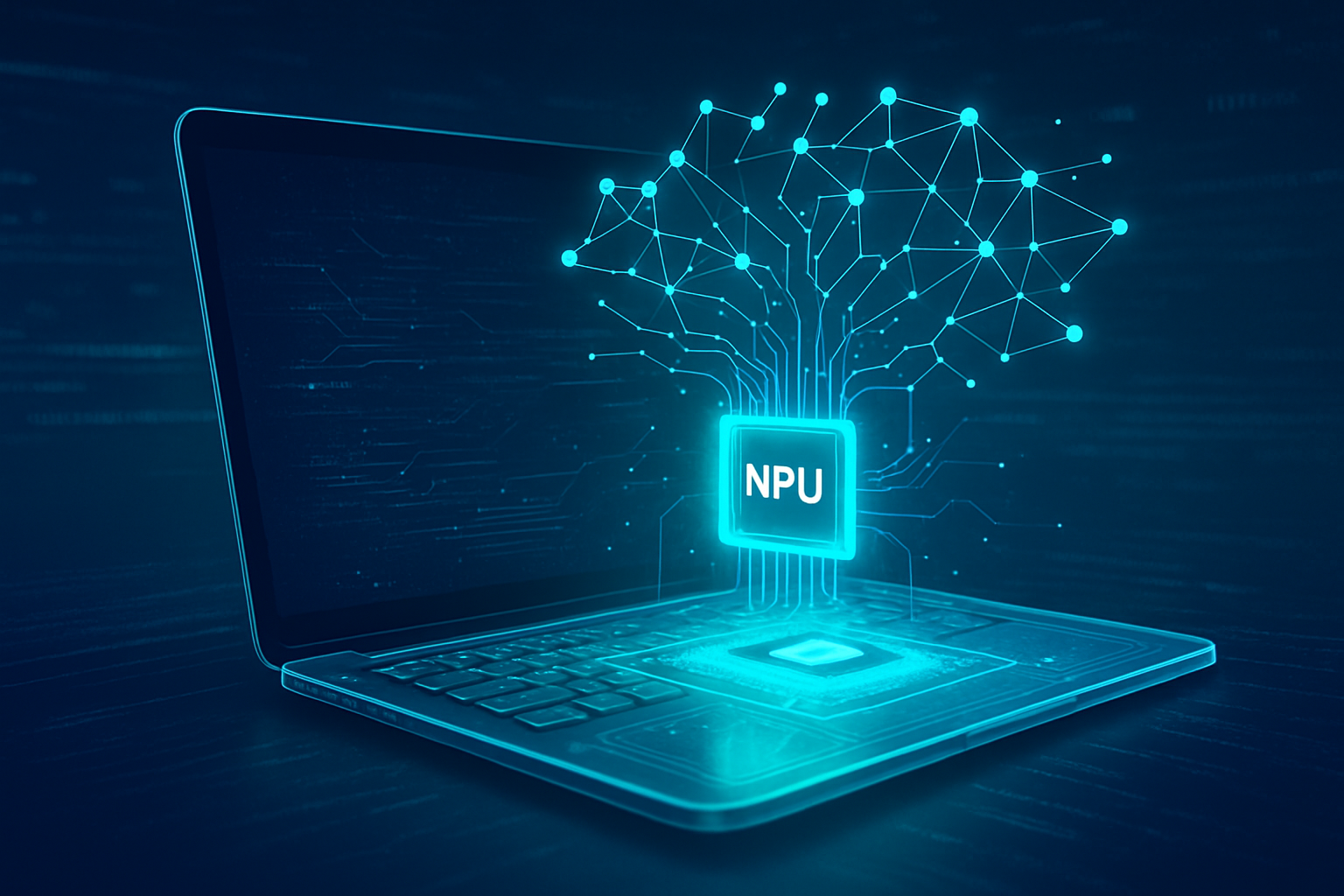
    The personal computing world is undergoing a profound transformation with the rapid emergence of "AI PCs." These next-generation devices are engineered with dedicated hardware, most notably Neural Processing Units (NPUs), designed to efficiently execute artificial intelligence tasks directly on the device, rather than relying solely on cloud-based solutions. This paradigm shift promises a future of computing that is more efficient, secure, personalized, and responsive, fundamentally altering how users interact with their machines and applications.

    The immediate significance of AI PCs lies in their ability to decentralize AI processing. By moving AI workloads from distant cloud servers to the local device, these machines address critical limitations of cloud-centric AI, such as network latency, data privacy concerns, and escalating operational costs. This move empowers users with real-time AI capabilities, enhanced data security, and the ability to run sophisticated AI models offline, marking a pivotal moment in the evolution of personal technology and setting the stage for a new era of intelligent computing experiences.

    The Engine of Intelligence: A Deep Dive into AI PC Architecture

    The distinguishing characteristic of an AI PC is its specialized architecture, built around a powerful Neural Processing Unit (NPU). Unlike traditional PCs that primarily leverage the Central Processing Unit (CPU) for general-purpose tasks and the Graphics Processing Unit (GPU) for graphics rendering and some parallel processing, AI PCs integrate an NPU specifically designed to accelerate AI neural networks, deep learning, and machine learning tasks. These NPUs excel at performing massive amounts of parallel mathematical operations with exceptional power efficiency, making them ideal for sustained AI workloads.

    Leading chip manufacturers like Intel (NASDAQ: INTC), AMD (NASDAQ: AMD), and Qualcomm (NASDAQ: QCOM) are at the forefront of this integration, embedding NPUs into their latest processor lines. Apple (NASDAQ: AAPL) has similarly incorporated its Neural Engine into its M-series chips, demonstrating a consistent industry trend towards dedicated AI silicon. Microsoft (NASDAQ: MSFT) has further solidified the category with its "Copilot+ PC" initiative, establishing a baseline hardware requirement: an NPU capable of over 40 trillion operations per second (TOPS). This benchmark ensures optimal performance for its integrated Copilot AI assistant and a suite of local AI features within Windows 11, often accompanied by a dedicated Copilot Key on the keyboard for seamless AI interaction.

    This dedicated NPU architecture fundamentally differs from previous approaches by offloading AI-specific computations from the CPU and GPU. While GPUs are highly capable for certain AI tasks, NPUs are engineered for superior power efficiency and optimized instruction sets for AI algorithms, crucial for extending battery life in mobile form factors like laptops. This specialization ensures that complex AI computations do not monopolize general-purpose processing resources, thereby enhancing overall system performance, energy efficiency, and responsiveness across a range of applications from real-time language translation to advanced creative tools. Initial reactions from the AI research community and industry experts have been overwhelmingly positive, highlighting the potential for greater accessibility to powerful AI models and a significant boost in user productivity and privacy.

    Reshaping the Tech Ecosystem: Competitive Shifts and Strategic Imperatives

    The rise of AI PCs is creating a dynamic landscape of competition and collaboration, profoundly affecting tech giants, AI companies, and startups alike. Chipmakers are at the epicenter of this revolution, locked in an intense battle to develop and integrate powerful AI accelerators. Intel (NASDAQ: INTC) is pushing its Core Ultra and upcoming Lunar Lake processors, aiming for higher Trillions of Operations Per Second (TOPS) performance in their NPUs. Similarly, AMD (NASDAQ: AMD) is advancing its Ryzen AI processors with XDNA architecture, while Qualcomm (NASDAQ: QCOM) has made a significant entry with its Snapdragon X Elite and Snapdragon X Plus platforms, boasting high NPU performance (45 TOPS) and redefining efficiency, particularly for ARM-based Windows PCs. While Nvidia (NASDAQ: NVDA) dominates the broader AI chip market with its data center GPUs, it is also actively partnering with PC manufacturers to bring AI capabilities to laptops and desktops.

    Microsoft (NASDAQ: MSFT) stands as a primary catalyst, having launched its "Copilot+ PC" initiative, which sets stringent minimum hardware specifications, including an NPU with 40+ TOPS. This strategy aims for deep AI integration at the operating system level, offering features like "Recall" and "Cocreator," and initially favored ARM-based Qualcomm chips, though Intel and AMD are rapidly catching up with their own compliant x86 processors. This move has intensified competition within the Windows ecosystem, challenging traditional x86 dominance and creating new dynamics. PC manufacturers such as HP (NYSE: HPQ), Dell Technologies (NYSE: DELL), Lenovo (HKG: 0992), Acer (TWSE: 2353), Asus (TWSE: 2357), and Samsung (KRX: 005930) are actively collaborating with these chipmakers and Microsoft, launching diverse AI PC models and anticipating a major catalyst for the next PC refresh cycle, especially driven by enterprise adoption.

    For AI software developers and model providers, AI PCs present a dual opportunity: creating new, more sophisticated on-device AI experiences with enhanced privacy and reduced latency, while also necessitating a shift in development paradigms. The emphasis on NPUs will drive optimization of applications for these specialized chips, moving certain AI workloads from generic CPUs and GPUs for improved power efficiency and performance. This fosters a "hybrid AI" strategy, combining the scalability of cloud computing with the efficiency and privacy of local AI processing. Startups also find a dynamic environment, with opportunities to develop innovative local AI solutions, benefiting from enhanced development environments and potentially reducing long-term operational costs associated with cloud resources, though talent acquisition and adapting to heterogeneous hardware remain challenges. The global AI PC market is projected for rapid growth, with some forecasts suggesting it could reach USD 128.7 billion by 2032, and comprise over half of the PC market by next year, signifying a massive industry-wide shift.

    The competitive landscape is marked by both fierce innovation and potential disruption. The race for NPU performance is intensifying, while Microsoft's strategic moves are reshaping the Windows ecosystem. While a "supercycle" of adoption is debated due to macroeconomic uncertainties and the current lack of exclusive "killer apps," the long-term trend points towards significant growth, primarily driven by enterprise adoption seeking enhanced productivity, improved data privacy, and cost reduction through reduced cloud dependency. This heralds a potential obsolescence for older PCs lacking dedicated AI hardware, necessitating a paradigm shift in software development to fully leverage the CPU, GPU, and NPU in concert, while also introducing new security considerations related to local AI model interactions.

    A New Chapter in AI's Journey: Broadening the Horizon of Intelligence

    The advent of AI PCs marks a pivotal moment in the broader artificial intelligence landscape, solidifying the trend of "edge AI" and decentralizing computational power. Historically, major AI breakthroughs, particularly with large language models (LLMs) like those powering ChatGPT, have relied heavily on massive, centralized cloud computing resources for training and inference. AI PCs represent a crucial shift by bringing AI inference and smaller, specialized AI models (SLMs) directly to the "edge" – the user's device. This move towards on-device processing enhances accessibility, reduces latency, and significantly boosts privacy by keeping sensitive data local, thereby democratizing powerful AI capabilities for individuals and businesses without extensive infrastructure investments. Industry analysts predict a rapid ascent, with AI PCs potentially comprising 80% of new computer sales by late 2025 and over 50% of laptops shipped by 2026, underscoring their transformative potential.

    The impacts of this shift are far-reaching. AI PCs are poised to dramatically enhance productivity and efficiency by streamlining workflows, automating repetitive tasks, and providing real-time insights through sophisticated data analysis. Their ability to deliver highly personalized experiences, from tailored recommendations to intelligent assistants that anticipate user needs, will redefine human-computer interaction. Crucially, dedicated AI processors (NPUs) optimize AI tasks, leading to faster processing and significantly reduced power consumption, extending battery life and improving overall system performance. This enables advanced applications in creative fields like photo and video editing, more precise real-time communication features, and robust on-device security protocols, making generative AI features more efficient and widely available.

    However, the rapid integration of AI into personal devices also introduces potential concerns. While local processing offers privacy benefits, the increased embedding of AI capabilities on devices necessitates robust security measures to prevent data breaches or unauthorized access, especially as cybercriminals might attempt to tamper with local AI models. The inherent bias present in AI algorithms, derived from training datasets, remains a challenge that could lead to discriminatory outcomes if not meticulously addressed. Furthermore, the rapid refresh cycle driven by AI PC adoption raises environmental concerns regarding e-waste, emphasizing the need for sustainable manufacturing and disposal practices. A significant hurdle to widespread adoption also lies in educating users and businesses about the tangible value and effective utilization of AI PC capabilities, as some currently perceive them as a "gimmick."

    Comparing AI PCs to previous technological milestones, their introduction echoes the transformative impact of the personal computer itself, which revolutionized work and creativity decades ago. Just as the GPU revolutionized graphics and scientific computing, the NPU is a dedicated hardware milestone for AI, purpose-built to efficiently handle the next generation of AI workloads. While historical AI breakthroughs like IBM's Deep Blue (1997) or AlphaGo's victory (2016) demonstrated AI's capabilities in specialized domains, AI PCs focus on the application and localization of such powerful models, making them a standard, on-device feature for everyday users. This signifies an ongoing journey where technology increasingly adapts to and anticipates human needs, marking AI PCs as a critical step in bringing advanced intelligence into the mainstream of daily life.

    The Road Ahead: Evolving Capabilities and Emerging Horizons

    The trajectory of AI PCs points towards an accelerated evolution in both hardware and software, promising increasingly sophisticated on-device intelligence in the near and long term. In the immediate future (2024-2026), the focus will be on solidifying the foundational elements. We will see the continued proliferation of powerful NPUs from Intel (NASDAQ: INTC), Qualcomm (NASDAQ: QCOM), and AMD (NASDAQ: AMD), with a relentless pursuit of higher TOPS performance and greater power efficiency. Operating systems like Microsoft Windows, particularly with its Copilot+ PC initiative, and Apple Intelligence, will become deeply intertwined with AI, offering integrated AI capabilities across the OS and applications. The end-of-life for Windows 10 in 2025 is anticipated to fuel a significant PC refresh cycle, driving widespread adoption of these AI-enabled machines. Near-term applications will center on enhancing productivity through automated administrative tasks, improving collaboration with AI-powered video conferencing features, and providing highly personalized user experiences that adapt to individual preferences, alongside faster content creation and enhanced on-device security.

    Looking further ahead (beyond 2026), AI PCs are expected to become the ubiquitous standard, seamlessly integrated into daily life and business operations. Future hardware innovations may extend beyond current NPUs to include nascent technologies like quantum computing and neuromorphic computing, offering unprecedented processing power for complex AI tasks. A key development will be the seamless synergy between local AI processing on the device and scalable cloud-based AI resources, creating a robust hybrid AI environment that optimizes for performance, efficiency, and data privacy. AI-driven system management will become autonomous, intelligently allocating resources, predicting user needs, and optimizing workflows. Experts predict the rise of "Personal Foundation Models," AI systems uniquely tailored to individual users, proactively offering solutions and information securely from the device without constant cloud reliance. This evolution promises proactive assistance, real-time data analysis for faster decision-making, and transformative impacts across various industries, from smart homes to urban infrastructure.

    Despite this promising outlook, several challenges must be addressed. The current high cost of advanced hardware and specialized software could hinder broader accessibility, though economies of scale are expected to drive prices down. A significant skill gap exists, necessitating extensive training to help users and businesses understand and effectively leverage the capabilities of AI PCs. Data privacy and security remain paramount concerns, especially with features like Microsoft's "Recall" sparking debate; robust encryption and adherence to regulations are crucial. The energy consumption of powerful AI models, even on-device, requires ongoing optimization for power-efficient NPUs and models. Furthermore, the market awaits a definitive "killer application" that unequivocally demonstrates the superior value of AI PCs over traditional machines, which could accelerate commercial refreshes. Experts, however, remain optimistic, with market projections indicating massive growth, forecasting AI PC shipments to double to over 100 million in 2025, becoming the norm by 2029, and commercial adoption leading the charge.

    A New Era of Intelligence: The Enduring Impact of AI PCs

    The emergence of AI PCs represents a monumental leap in personal computing, signaling a definitive shift from cloud-centric to a more decentralized, on-device intelligence paradigm. This transition, driven by the integration of specialized Neural Processing Units (NPUs), is not merely an incremental upgrade but a fundamental redefinition of what a personal computer can achieve. The immediate significance lies in democratizing advanced AI capabilities, offering enhanced privacy, reduced latency, and greater operational efficiency by bringing powerful AI models directly to the user's fingertips. This move is poised to unlock new levels of productivity, creativity, and personalization across consumer and enterprise landscapes, fundamentally altering how we interact with technology.

    The long-term impact of AI PCs is profound, positioning them as a cornerstone of future technological ecosystems. They are set to drive a significant refresh cycle in the PC market, with widespread adoption expected in the coming years. Beyond hardware specifications, their true value lies in fostering a new generation of AI-first applications that leverage local processing for real-time, context-aware assistance. This shift will empower individuals and businesses with intelligent tools that adapt to their unique needs, automate complex tasks, and enhance decision-making. The strategic investments by tech giants like Microsoft (NASDAQ: MSFT), Intel (NASDAQ: INTC), AMD (NASDAQ: AMD), and Qualcomm (NASDAQ: QCOM) underscore the industry's conviction in this new computing era, promising continuous innovation in both silicon and software.

    As we move forward, it will be crucial to watch for the development of compelling "killer applications" that fully showcase the unique advantages of AI PCs, driving broader consumer adoption beyond enterprise use. The ongoing advancements in NPU performance and power efficiency, alongside the evolution of hybrid AI strategies that seamlessly blend local and cloud intelligence, will be key indicators of progress. Addressing challenges related to data privacy, ethical AI implementation, and user education will also be vital for ensuring a smooth and beneficial transition to this new era of intelligent computing. The AI PC is not just a trend; it is the next frontier of personal technology, poised to reshape our digital lives for decades to come.


    This content is intended for informational purposes only and represents analysis of current AI developments.

    TokenRing AI delivers enterprise-grade solutions for multi-agent AI workflow orchestration, AI-powered development tools, and seamless remote collaboration platforms.
    For more information, visit https://www.tokenring.ai/.