Tag: Software-Defined Vehicles

  • Rivian and Volkswagen Forge AI-Powered Future with Groundbreaking SDV Platform

    Rivian and Volkswagen Forge AI-Powered Future with Groundbreaking SDV Platform

    Palo Alto, CA & Wolfsburg, Germany – November 20, 2025 – In a landmark collaboration set to redefine the automotive landscape, electric vehicle innovator Rivian Automotive, Inc. (NASDAQ: RIVN) and global automotive giant Volkswagen AG (XTRA: VOW3) have joined forces to develop a cutting-edge software-defined vehicle (SDV) platform. This strategic alliance, formalized as Rivian and Volkswagen Group Technologies (RV Tech), an equally owned joint venture established in November 2024, is poised to accelerate the integration of advanced AI and machine learning into future vehicles, promising a new era of intelligent mobility and setting a potential industry standard for automotive software. With Volkswagen committing up to $5.8 billion to the venture, the partnership signals a profound shift in how vehicles are designed, built, and experienced, emphasizing a software-first approach that prioritizes continuous innovation and enhanced user capabilities.

    The immediate significance of this collaboration is multi-faceted. For Rivian, the substantial financial injection provides crucial capital for its growth, including the ramp-up of its highly anticipated R2 line. It also validates Rivian's pioneering electrical architecture and software, extending its reach far beyond its own brand. For Volkswagen, the partnership offers a vital shortcut in its race to develop advanced SDVs, addressing previous challenges with in-house software development and positioning it to compete more effectively with tech-forward EV leaders. The broader automotive industry sees this as a clear indicator of the necessity for traditional automakers to embrace external expertise and collaboration to navigate the complex, software-driven future of mobility, with the potential for RV Tech to license its platform to other manufacturers.

    The Technical Backbone: Zonal Architecture and Unified AI

    At the heart of the Rivian-Volkswagen SDV platform lies a state-of-the-art zonal electronic architecture. This design represents a radical departure from traditional automotive electrical/electronic (E/E) architectures, which typically rely on a fragmented network of numerous Electronic Control Units (ECUs) each managing specific functions. Instead, RV Tech’s approach consolidates computing power into powerful, modular central computers that control all vehicle functions within defined zones. Rivian's second-generation (Gen 2) architecture, which forms the basis for this collaboration, aims to reduce the number of in-house developed ECUs from 17 to just seven, a significant decrease compared to the 60+ found in equivalent traditional electric cars. This consolidation drastically simplifies vehicle wiring, potentially cutting harness length by 1.6 miles and reducing weight by 44 pounds per vehicle, leading to a projected 40% cost reduction in the electrical Bill of Materials (BOM).

    The software technology underpinning this platform is built on a software-first philosophy, where a unified software stack runs across all vehicle systems. This integrated approach, leveraging AI and machine learning, is foundational for advanced capabilities such as highly automated driving features and sophisticated infotainment systems. Crucially, the platform supports continuous over-the-air (OTA) updates, allowing for ongoing feature enhancements, performance optimization, and the seamless deployment of new AI-driven functionalities throughout the vehicle’s lifecycle. This differs significantly from previous approaches where software updates were often tied to hardware cycles or required dealership visits. Initial reactions from industry experts have lauded the strategic benefits for Volkswagen, enabling it to "lift-and-shift a ready-made architecture" and accelerate its transition to a pure zonal design, thereby avoiding significant in-house development hurdles. However, some reports from late 2025 indicate integration challenges, with tensions arising from adapting Rivian's EV-centric software stack to Volkswagen's diverse portfolio, potentially delaying some Audi, Porsche, and Volkswagen model launches.

    The RV Tech joint venture has rapidly expanded its international engineering team to over 1,500 employees across the USA, Canada, Sweden, Serbia, and a newly established hub in Berlin, fostering a global approach to SDV development. Since spring 2025, RV Tech has successfully defined the hardware and electronic architecture specifications for reference vehicles from Volkswagen, Audi, and Scout brands. Development work on engineering prototypes commenced in summer 2025 at RV Tech facilities in Palo Alto and Irvine, California, with rigorous winter validation testing scheduled to begin in Q1 2026. This technical foundation is expected to be integrated into Rivian's R2, R3, and R3X product lines, with the R2 slated for launch in the first half of 2026, and the Volkswagen ID.EVERY1 set to be the first production vehicle to feature this SDV architecture in 2027.

    Reshaping the AI and Automotive Landscape

    The Rivian-Volkswagen SDV collaboration carries profound implications for AI companies, tech giants, and startups alike. Companies specializing in robust and scalable AI infrastructure, particularly cloud providers like Amazon Web Services (NASDAQ: AMZN), which Rivian already utilizes, and data management platforms such as Databricks, stand to benefit significantly from the increased demand for underlying computational power and data processing. The joint venture's ambition to create a "standard technology stack" for the wider automotive industry, potentially offering its co-developed electrical architecture and software for licensing, could create new market opportunities for AI companies capable of developing specialized, modular applications that integrate seamlessly with RV Tech's platform. This includes niche solutions for advanced sensor fusion, edge AI optimization, or specific in-car experiences.

    Conversely, AI companies and startups attempting to build entire automotive software stacks or proprietary autonomous driving systems will face heightened competition from RV Tech's well-funded and globally scalable solution. Major tech giants like Alphabet (NASDAQ: GOOGL) (with Android Automotive OS and Waymo) and Microsoft (NASDAQ: MSFT) (with Azure) will also find a formidable competitor in RV Tech, as it aims to become a foundational software layer for vehicles. If successful, this could limit the market share for alternative proprietary automotive software solutions. The collaboration also poses a significant disruption to traditional Tier 1 automotive suppliers, who have historically provided discrete ECUs and fragmented software. These suppliers will need to pivot rapidly towards offering holistic software modules, advanced sensors, or specialized processing units compatible with zonal SDV architectures.

    The partnership also intensifies pressure on other Original Equipment Manufacturers (OEMs), underscoring the challenges of developing complex automotive software in-house. Volkswagen's strategic shift to partner with Rivian, following struggles with its own software arm, Cariad, could serve as a blueprint for other automakers to pursue similar alliances or accelerate their internal AI and software initiatives. By combining Rivian's agile software expertise with Volkswagen's manufacturing might, RV Tech directly challenges EV leaders like Tesla, which, while having its own proprietary stack, is noted to lag in pure zonal architecture integration. The explicit intention to license the SDV platform to other automakers, and potentially even for internal combustion engine (ICE) vehicles, could establish RV Tech as a foundational technology provider, generating new, high-margin revenue and potentially setting a de facto industry standard for automotive software and AI integration, akin to Android in the mobile sector.

    Broader Significance and the AI Evolution

    The Rivian-Volkswagen SDV collaboration is a powerful testament to the broader AI landscape's evolution and its profound impact on the automotive sector. This partnership firmly places the SDV at the center of future mobility, transforming vehicles into dynamic, AI-powered platforms capable of continuous learning and improvement. The emphasis on in-vehicle intelligence, driven by the zonal architecture and powerful central computing, is foundational for developing advanced automated driving features, predictive maintenance, and highly personalized user experiences. This aligns with the global trend predicting that most vehicles will be AI-powered and software-defined by 2035, with the market for AI in automotive projected to exceed $850 billion by 2030.

    This current phase of automotive AI, exemplified by RV Tech, represents a significant leap from earlier milestones. Initial AI applications in vehicles were confined to simpler tasks like engine management or basic ADAS features, relying on rule-based systems. The last decade saw the proliferation of more sophisticated ADAS, leveraging sensors and AI for real-time hazard detection, and enhanced infotainment systems with voice recognition. However, the SDV paradigm shifts AI from being an additive feature to being an integral part of the vehicle's core operating system. This enables holistic "digital driving experiences" that evolve post-purchase through continuous OTA updates, moving beyond siloed AI applications to a foundational transformation of the vehicle's intelligence. Unlike AI breakthroughs in controlled environments, automotive AI operates in dynamic, real-world scenarios with critical safety implications, demanding exceptionally high levels of reliability and ethical consideration in its development.

    Despite the immense promise, the collaboration faces potential concerns. Reports from late 2025 highlight "turbulence" within the joint venture, citing integration difficulties and potential delays for several Volkswagen Group models. Tensions over software customization versus standardization, with Rivian favoring a streamlined system and VW brands seeking more flexibility, pose significant challenges. The adaptation of Rivian's EV-centric software for Volkswagen's diverse portfolio, potentially including ICE vehicles, also presents a complex technical hurdle. Furthermore, ensuring robust cybersecurity and data privacy will be paramount as vehicles become more interconnected and reliant on AI. Nevertheless, the strategic importance of this collaboration in accelerating Volkswagen's SDV capabilities and solidifying Rivian's technological leadership underscores its transformative potential.

    Future Horizons and Expert Predictions

    In the near term, the Rivian-Volkswagen SDV collaboration is set to hit critical milestones. Following the finalization of hardware specifications in spring 2025 and the commencement of engineering prototype development in summer 2025, rigorous winter validation testing of reference vehicles (from Volkswagen, Audi, and Scout brands) is scheduled for Q1 2026. This testing will be crucial for evaluating the SDV architecture's real-world performance under extreme conditions. Rivian's R2 midsize SUV, slated for launch in the first half of 2026, will be an early demonstration of the joint venture's advancements, with Rivian planning to integrate RV Tech's technologies across its R2, R3, and R3X product lines. The Volkswagen ID.EVERY1 is expected to be the first production vehicle from the Volkswagen Group to feature the SDV architecture, with a mass production launch targeted for 2027.

    Looking further ahead, Volkswagen Group intends to sequentially integrate the joint SDV architecture into its next-generation electric vehicles built on the Scalable Systems Platform (SSP). The ambitious long-term goal is to deploy this architecture across an impressive 30 million units by 2030, covering a wide range of segments, price points, and international markets. Potential applications and use cases on the horizon include increasingly sophisticated autonomous driving capabilities, highly personalized and responsive infotainment systems, and advanced predictive maintenance features that leverage AI to anticipate and address issues before they arise. The SDV platform's modularity and OTA capabilities mean vehicles will continuously improve throughout their lifespan, offering new features and enhanced performance to consumers.

    However, several challenges need to be addressed for the collaboration to fully realize its potential. The reported software integration difficulties and cultural differences between Rivian's agile startup culture and Volkswagen's more traditional corporate structure require careful navigation. Experts predict that while the partnership is a vital step for Volkswagen to overcome its legacy software issues and accelerate its SDV transition, the full benefits may take several years to materialize. The ability to effectively standardize key software components while allowing for brand-specific customization will be a delicate balancing act. Nevertheless, analysts widely agree that this collaboration will significantly hasten Volkswagen's SDV capabilities, simplify the implementation of autonomy and AI functions, and lead to substantial cost savings through reduced wiring and ECU counts.

    A New Chapter in AI-Driven Mobility

    The Rivian-Volkswagen SDV collaboration represents a pivotal moment in the history of automotive AI, signaling a definitive shift towards software-defined, AI-powered vehicles as the industry standard. The key takeaways from this venture are the strategic importance of combining agile software expertise with global manufacturing scale, the transformative potential of zonal electronic architectures, and the critical role of continuous OTA updates in delivering an evolving user experience. This partnership is not merely about building better cars; it's about creating intelligent, adaptable mobility platforms that can continuously learn, improve, and offer new functionalities throughout their lifecycle.

    The significance of this development in AI history within the automotive sector cannot be overstated. It underscores the recognition by even the most established automakers that software, AI, and data are now the primary differentiators, moving beyond traditional hardware and engineering prowess. The long-term impact is expected to be transformative, leading to more efficient vehicle development, substantial cost reductions, and an enhanced, personalized driving experience for consumers. Should RV Tech succeed in licensing its platform to other automakers, it could establish a de facto industry standard, profoundly influencing the trajectory of automotive software and AI integration for decades to come.

    In the coming weeks and months, all eyes will be on the Q1 2026 winter testing of the reference vehicles, which will provide crucial insights into the SDV architecture's real-world performance. The launch of Rivian's R2 vehicles in the first half of 2026 will also offer an early glimpse of the joint venture's technological advancements in a production vehicle. Furthermore, it will be critical to monitor how the reported integration challenges and "turbulence" within the joint venture are addressed, and whether any strategic adjustments are made to ensure the timely delivery of Volkswagen Group's upcoming SDV models. The success of this collaboration will not only shape the future of Rivian and Volkswagen but will also serve as a powerful barometer for the entire automotive industry's ability to embrace and leverage the full potential of artificial intelligence.


    This content is intended for informational purposes only and represents analysis of current AI developments.

    TokenRing AI delivers enterprise-grade solutions for multi-agent AI workflow orchestration, AI-powered development tools, and seamless remote collaboration platforms.
    For more information, visit https://www.tokenring.ai/.
  • The AI-Driven Revolution Under the Hood: Automotive Computing Accelerates into a Software-Defined Future

    The AI-Driven Revolution Under the Hood: Automotive Computing Accelerates into a Software-Defined Future

    The automotive industry is in the midst of an unprecedented technological upheaval, as the traditional mechanical beast transforms into a sophisticated, software-defined machine powered by artificial intelligence (AI). As of late 2025, a confluence of advancements in AI, Advanced Driver-Assistance Systems (ADAS), and connected vehicle technologies is fueling an insatiable demand for semiconductors, fundamentally reshaping vehicle architectures and paving the way for a new era of mobility. This shift is not merely incremental but a foundational change, promising enhanced safety, unparalleled personalization, and entirely new economic models within the transportation sector.

    The immediate significance of this transformation is palpable across the industry. Vehicle functionality is increasingly dictated by complex software rather than static hardware, leading to a robust automotive semiconductor market projected to exceed $85 billion in 2025. This surge is driven by the proliferation of high-performance processors, memory, and specialized AI accelerators required to manage the deluge of data generated by modern vehicles. From autonomous driving capabilities to predictive maintenance to hyper-personalized in-cabin experiences, AI is the central nervous system of the contemporary automobile, demanding ever more powerful and efficient computing solutions.

    The Silicon Brain: Unpacking the Technical Core of Automotive AI

    The architectural shift in automotive computing is moving decisively from a multitude of distributed Electronic Control Units (ECUs) to centralized, high-performance computing (HPC) platforms and zonal architectures. This change is driven by the need for greater processing power, reduced complexity, and the ability to implement over-the-air (OTA) software updates.

    Leading semiconductor giants are at the forefront of this evolution, developing highly specialized Systems-on-Chips (SoCs) and platforms. NVIDIA (NASDAQ: NVDA) is a key player with its DRIVE Thor superchip, slated for 2025 vehicle models. Thor consolidates automated driving, parking, driver monitoring, and infotainment onto a single chip, boasting up to 1000 Sparse INT8 TOPS and integrating an inference transformer engine for accelerating complex deep neural networks. Its configurable power consumption and ability to connect two SoCs via NVLink-C2C technology highlight its scalability and power.

    Similarly, Qualcomm (NASDAQ: QCOM) introduced its Snapdragon Ride Flex SoC family at CES 2023, designed to handle mixed-criticality workloads for digital cockpits, ADAS, and autonomous driving on a single hardware platform. Built on a 4nm process, it features a dedicated ASIL-D safety island and supports multiple operating systems through isolated virtual machines, offering scalable performance from 50 TOPS to a future capability of 2000 TOPS.

    Intel's (NASDAQ: INTC) Mobileye continues to innovate with its EyeQ6 family, with the EyeQ6L (Lite) targeting entry-to-premium ADAS and the EyeQ6H (High) for premium ADAS (Level 2+) and partial autonomous vehicle capabilities. Both are manufactured on a 7nm process, with the EyeQ6H delivering compute power equivalent to two EyeQ5 SoCs. Intel also unveiled a 2nd-generation AI-enhanced SDV SoC at Auto Shanghai in April 2025, featuring a multi-process node chiplet architecture projected to offer up to a 10x increase in AI performance for generative and multimodal AI.

    This technical evolution marks a significant departure from previous approaches. The traditional distributed ECU model, with dozens of separate controllers, led to wiring complexity, increased weight, and limited scalability. Centralized computing, exemplified by NVIDIA's Thor or Tesla's (NASDAQ: TSLA) early Autopilot hardware, consolidates processing. Zonal architectures, adopted by Volkswagen's Scalable Systems Platform (SSP) and GM's Ultifi, bridge the gap by organizing ECUs based on physical location, reducing wiring and enabling faster OTA updates. These architectures are foundational for the Software-Defined Vehicle (SDV), where features are primarily software-driven and continuously upgradeable. The AI research community and industry experts largely view these shifts with excitement, acknowledging the necessity of powerful, centralized platforms to meet the demands of advanced AI. However, concerns regarding the complexity of ensuring safety, managing vast data streams, and mitigating cybersecurity risks in these highly integrated systems remain prominent.

    Corporate Crossroads: Navigating the AI Automotive Landscape

    The rapid evolution of automotive computing is creating both immense opportunities and significant competitive pressures for AI companies, tech giants, and startups. The transition to software-defined vehicles (SDVs) means intelligence is increasingly a software domain, powered by cloud connectivity, edge computing, and real-time data analytics.

    AI semiconductor companies are clear beneficiaries. NVIDIA (NASDAQ: NVDA) has solidified its position as a leader, offering a full-stack "cloud-to-car" platform that includes its DRIVE hardware and DriveOS software. Its automotive revenue surged 72% year-over-year in Q1 FY 2026, targeting $5 billion for the full fiscal year, with major OEMs like Toyota, General Motors (NYSE: GM), Volvo (OTC: VOLVY), Mercedes-Benz (OTC: MBGAF), and BYD (OTC: BYDDF) adopting its technology. Qualcomm (NASDAQ: QCOM), with its Snapdragon Digital Chassis, is also making significant inroads, integrating infotainment, ADAS, and in-cabin systems into a unified architecture. Qualcomm's automotive segment revenue increased by 59% year-over-year in Q2 FY 2025, boasting a $45 billion design-win pipeline. Intel's (NASDAQ: INTC) Mobileye maintains a strong presence in ADAS, focusing on chips and software, though its full autonomous driving efforts are perceived by some as lagging.

    Tech giants are leveraging their AI expertise to develop and deploy autonomous driving solutions. Alphabet's (NASDAQ: GOOGL) Waymo is a leader in the robotaxi sector, with fully driverless operations expanding across major U.S. cities, adopting a "long game" strategy focused on safe, gradual scaling. Tesla (NASDAQ: TSLA) remains a pioneer with its advanced driver assistance systems and continuous OTA updates. However, in mid-2025, reports emerged of Tesla disbanding its Dojo supercomputer team, potentially pivoting to a hybrid model involving external partners for AI training while focusing internal resources on inference-centric chips (AI5 and AI6) for in-vehicle real-time decision-making. Amazon (NASDAQ: AMZN), through Zoox, has also launched a limited robotaxi service in Las Vegas.

    Traditional automakers, or Original Equipment Manufacturers (OEMs), are transforming into "Original Experience Manufacturers," heavily investing in software-defined architectures and forging deep partnerships with tech firms to gain AI and data analytics expertise. This aims to reduce manufacturing costs and unlock new revenue streams through subscription services. Startups like Applied Intuition (autonomous software tooling) and Wayve (embodied AI for human driving behavior) are also accelerating innovation in niche areas. The competitive landscape is now a battleground for SDVs, with data emerging as a critical strategic asset. Companies with extensive real-world driving data, like Tesla and Waymo, have a distinct advantage in training and refining AI models. This disruption is reshaping traditional supply chains, forcing Tier 1 and Tier 2 suppliers to rapidly adopt AI to remain relevant.

    A New Era of Mobility: Broader Implications and Societal Shifts

    The integration of AI, ADAS, and connected vehicle technologies represents a significant societal and economic shift, marking a new era of mobility that extends far beyond the confines of the vehicle itself. This evolution fits squarely into the broader AI landscape, showcasing trends like ubiquitous AI, the proliferation of edge AI, and the transformative power of generative AI.

    The wider significance is profound. The global ADAS market alone is projected to reach USD 228.2 billion by 2035, underscoring the economic magnitude of this transformation. AI is now central to designing, building, and updating vehicles, with a focus on enhancing safety, improving user experience, and enabling predictive maintenance. By late 2025, Level 2 and Level 2+ autonomous systems are widely adopted, leading to a projected reduction in traffic accidents, as AI systems offer faster reaction times and superior hazard detection compared to human drivers. Vehicles are becoming mobile data hubs, communicating via V2X (Vehicle-to-Everything) technology, which is crucial for real-time services, traffic management, and OTA updates. Edge AI, processing data locally, is critical for low-latency decision-making in safety-critical autonomous functions, enhancing both performance and privacy.

    However, this revolution is not without its concerns. Ethical dilemmas surrounding AI decision-making in high-stakes situations, such as prioritizing passenger safety over pedestrians, remain a significant challenge. Accountability in accidents involving AI systems is a complex legal and moral question. Safety is paramount, and while AI aims to reduce accidents, issues like mode transitions (human takeover), driver distraction, and system malfunctions pose risks. Cybersecurity threats are escalating due to increased connectivity, with vehicles becoming vulnerable to data breaches and remote hijacking, necessitating robust hardware-level security and secure OTA updates. Data privacy is another major concern, as connected vehicles generate vast amounts of personal and telemetric data, requiring stringent protection and transparent policies. Furthermore, the potential for AI algorithms to perpetuate biases from training data necessitates careful development and oversight.

    Compared to previous AI milestones, such as IBM's Deep Blue defeating Garry Kasparov or Watson winning Jeopardy!, automotive AI represents a move from specific, complex tasks to real-world, dynamic environments with immediate life-and-death implications. It builds upon decades of research, from early theoretical concepts to practical, widespread deployment, overcoming previous "AI winters" through breakthroughs in machine learning, deep learning, and computer vision. The current phase emphasizes integration, interconnectivity, and the critical need for ethical considerations, reflecting a maturation of AI development where responsible implementation and societal impact are central.

    The Road Ahead: Future Developments and Expert Predictions

    The trajectory of automotive computing, propelled by AI, ADAS, and connected vehicles, points towards an even more transformative future. Near-term developments (late 2025-2027/2028) will see the widespread enhancement of Level 2+ ADAS features, becoming more adaptive and personalized through machine learning. The emergence of Level 3 autonomous driving will expand, with conditional automation available in premium models for specific conditions. Conversational AI, integrating technologies like ChatGPT, will become standard, offering intuitive voice control for navigation, entertainment, and even self-service maintenance. Hyper-personalization, predictive maintenance, and further deployment of 5G and V2X communication will also characterize this period.

    Looking further ahead (beyond 2028), the industry anticipates the scaling of Level 4 and Level 5 autonomy, with robotaxis and autonomous fleets becoming more common in geo-fenced areas and commercial applications. Advanced sensor fusion, combining data from LiDAR, radar, and cameras with AI, will create highly accurate 360-degree environmental awareness. The concept of the Software-Defined Vehicle (SDV) will fully mature, with software defining core functionalities and enabling continuous evolution through OTA updates. AI-driven vehicle architectures will demand unprecedented computational power, with Level 4 systems requiring hundreds to thousands of TOPS. Connected cars will seamlessly integrate with smart city infrastructure, optimizing urban mobility and traffic management.

    Potential applications include drastically enhanced safety, autonomous driving services (robotaxis, delivery vans), hyper-personalized in-car experiences, AI-optimized manufacturing and supply chains, intelligent EV charging and grid integration, and real-time traffic management.

    However, significant challenges remain. AI still struggles with "common sense" and unpredictable real-world scenarios, while sensor performance can be hampered by adverse weather. Robust infrastructure, including widespread 5G, is essential. Cybersecurity and data privacy are persistent concerns, demanding continuous innovation in protective measures. Regulatory and legal frameworks are still catching up to the technology, with clear guidelines needed for safety certification, liability, and insurance. Public acceptance and trust are crucial, requiring transparent communication and demonstrable safety records. High costs for advanced autonomy also remain a barrier to mass adoption.

    Experts predict exponential growth, with the global market for AI in the automotive sector projected to exceed $850 billion by 2030. The ADAS market alone is forecast to reach $99.345 billion by 2030. By 2035, most vehicles on the road are expected to be AI-powered and software-defined. Chinese OEMs are rapidly advancing in EVs and connected car services, posing a competitive challenge to traditional players. The coming years will be defined by the industry's ability to address these challenges while continuing to innovate at an unprecedented pace.

    A Transformative Journey: The Road Ahead for Automotive AI

    The evolving automotive computing market, driven by the indispensable roles of AI, ADAS, and connected vehicle technologies, represents a pivotal moment in both automotive and artificial intelligence history. The key takeaway is clear: the vehicle of the future is fundamentally a software-defined, AI-powered computer on wheels, deeply integrated into a broader digital ecosystem. This transformation promises a future of vastly improved safety, unprecedented efficiency, and highly personalized mobility experiences.

    This development's significance in AI history cannot be overstated. It marks AI's transition from specialized applications to a critical, safety-involved, real-world domain that impacts millions daily. It pushes the boundaries of edge AI, real-time decision-making, and ethical considerations in autonomous systems. The long-term impact will be a complete reimagining of transportation, urban planning, and potentially even vehicle ownership models, shifting towards Mobility-as-a-Service and a data-driven economy. Autonomous vehicles are projected to contribute trillions to the global GDP by 2030, driven by productivity gains and new services.

    In the coming weeks and months, several critical areas warrant close observation. The ongoing efforts toward regulatory harmonization and policy evolution across different regions will be crucial for scalable deployment of autonomous technologies. The stability of the semiconductor supply chain, particularly regarding geopolitical influences on chip availability, will continue to impact production. Watch for the expanded operational design domains (ODDs) of Level 3 systems and the cautious but steady deployment of Level 4 robotaxi services in more cities. The maturation of Software-Defined Vehicle (SDV) architectures and the industry's ability to manage complex software, cybersecurity risks, and reduce recalls will be key indicators of success. Finally, keep an eye on innovations in AI for manufacturing and supply chain efficiency, alongside new cybersecurity measures designed to protect increasingly connected vehicles. The automotive computing market is truly at an inflection point, promising a dynamic and revolutionary future for mobility.


    This content is intended for informational purposes only and represents analysis of current AI developments.

    TokenRing AI delivers enterprise-grade solutions for multi-agent AI workflow orchestration, AI-powered development tools, and seamless remote collaboration platforms.
    For more information, visit https://www.tokenring.ai/.
  • NXP and eInfochips Forge Alliance to Power Software-Defined Vehicle Revolution

    NXP and eInfochips Forge Alliance to Power Software-Defined Vehicle Revolution

    Eindhoven, Netherlands & San Jose, CA – October 24, 2025 – In a strategic move set to significantly accelerate the development and deployment of software-defined vehicles (SDVs), NXP Semiconductors (NASDAQ: NXPI) has announced a multi-year partnership with eInfochips, an Arrow Electronics company. This collaboration, officially unveiled on October 23, 2025, is designed to revolutionize software distribution and elevate customer support for NXP's critical S32 platform, a cornerstone of the automotive industry's shift towards intelligent, connected, and autonomous vehicles. The alliance is poised to streamline the complex process of integrating advanced automotive software, promising faster innovation cycles and more robust solutions for manufacturers worldwide.

    This partnership comes at a pivotal time when the automotive sector is undergoing a profound transformation, driven by the increasing complexity of vehicle software. By leveraging eInfochips' extensive engineering expertise and NXP's cutting-edge S32 processors, the initiative aims to simplify access to essential software packages and provide unparalleled technical assistance, thereby empowering developers and accelerating the journey towards a fully software-defined automotive future.

    Technical Deep Dive: Enhancing the S32 Ecosystem for SDVs

    The core of this transformative partnership lies in bolstering the NXP S32 family of microcontrollers and microprocessors, which are central to modern automotive architectures. eInfochips, already recognized as an NXP Gold Partner, will now play a pivotal role in distributing standard and premium software packages and tools specifically tailored for the S32 platform. This includes critical components for connected car solutions, hardware acceleration, telemetry applications, and Fast Path Packet Forwarding on S32-based reference designs. The S32 platform, particularly with the integration of S32 CoreRide, is NXP's strategic answer to the demands of software-defined vehicles, providing a robust foundation for hardware-software integration and reference designs.

    This collaboration marks a significant departure from traditional software support models. By entrusting eInfochips with comprehensive software support and maintenance, NXP is creating a more agile and responsive ecosystem. This "best-in-class support" system is engineered to facilitate successful and efficient application development, dramatically reducing time-to-market for customers. Unlike previous approaches that might have involved more fragmented support channels, this consolidated effort ensures that NXP customers integrating S32 processors and microcontrollers receive consistent, high-quality technical and functional safety support, including ongoing assistance for battery energy storage systems. Initial reactions from the automotive embedded software community highlight the potential for this partnership to standardize and simplify development workflows, which has long been a challenge in the highly complex automotive domain.

    Competitive Implications and Market Positioning

    This strategic alliance carries significant implications for AI companies, tech giants, and startups operating within the automotive and embedded systems space. NXP Semiconductors (NASDAQ: NXPI) stands to significantly benefit by strengthening its position as a leading provider of automotive semiconductor solutions. By enhancing its software ecosystem and support services through eInfochips, NXP makes its S32 platform even more attractive to automotive OEMs and Tier 1 suppliers, who are increasingly prioritizing comprehensive software enablement. This move directly addresses a critical pain point in the industry: the complexity of integrating and maintaining software on high-performance automotive hardware.

    For tech giants and major AI labs venturing into automotive software, this partnership provides a more robust and supported platform for their innovations. Companies developing advanced driver-assistance systems (ADAS), infotainment systems, and autonomous driving algorithms will find a more streamlined path to deployment on NXP's S32 platform. Conversely, this development could intensify competitive pressures on other semiconductor manufacturers who may not offer as integrated or well-supported a software ecosystem. Startups specializing in automotive software development tools, middleware, or specific application development for SDVs might find new opportunities to collaborate within this expanded NXP-eInfochips ecosystem, potentially becoming solution partners or benefiting from improved platform stability. The partnership solidifies NXP's market positioning by offering a compelling, end-to-end solution that spans hardware, software, and critical support, thereby creating a strategic advantage in the rapidly evolving SDV landscape.

    Wider Significance in the AI and Automotive Landscape

    This partnership is a clear indicator of the broader trend towards software-defined everything, a paradigm shift that is profoundly impacting the AI and automotive industries. As vehicles become sophisticated rolling computers, the software stack becomes as critical, if not more so, than the hardware. This collaboration fits perfectly into the evolving AI landscape by providing a more accessible and supported platform for deploying AI-powered features, from advanced perception systems to predictive maintenance and personalized user experiences. The emphasis on streamlining software distribution and support directly addresses the challenges of managing complex AI models and algorithms in safety-critical automotive environments.

    The impacts are far-reaching. It promises to accelerate the adoption of advanced AI features in production vehicles by reducing development friction. Potential concerns, however, could revolve around the consolidation of software support, though NXP and eInfochips aim to deliver best-in-class service. This development can be compared to previous AI milestones where foundational platforms or ecosystems were significantly enhanced, such as the maturation of cloud AI platforms or specialized AI development kits. By making the underlying automotive computing platform more developer-friendly, NXP and eInfochips are effectively lowering the barrier to entry for AI innovation in vehicles, potentially leading to a faster pace of innovation and differentiation in the market. It underscores the critical importance of a robust software ecosystem for hardware providers in the age of AI.

    Future Developments and Expert Predictions

    Looking ahead, this partnership is expected to yield several near-term and long-term developments. In the near term, customers can anticipate a more seamless experience in acquiring and integrating NXP S32 software, coupled with enhanced, responsive technical support. This will likely translate into faster project timelines and reduced development costs for automotive OEMs and Tier 1 suppliers. Long-term, the collaboration is poised to foster an even richer ecosystem around the S32 CoreRide platform, potentially leading to the co-development of new software tools, specialized modules, and advanced reference designs optimized for AI and autonomous driving applications. We can expect to see more integrated solutions that combine NXP's hardware capabilities with eInfochips' software expertise, pushing the boundaries of what's possible in SDVs.

    Potential applications and use cases on the horizon include highly sophisticated AI inference at the edge within vehicles, advanced sensor fusion algorithms, and over-the-air (OTA) update capabilities that are more robust and secure. Challenges that need to be addressed include continuously scaling the support infrastructure to meet growing demands, ensuring seamless integration with diverse customer development environments, and staying ahead of rapidly evolving automotive software standards and cybersecurity threats. Experts predict that this kind of deep hardware-software partnership will become increasingly common as the industry moves towards greater software definition, ultimately leading to more innovative, safer, and more personalized driving experiences. The focus will shift even more towards integrated solutions rather than disparate components.

    A New Era for Automotive Software Ecosystems

    The partnership between NXP Semiconductors and eInfochips represents a significant milestone in the evolution of automotive software ecosystems. The key takeaway is the strategic emphasis on streamlining software distribution and providing comprehensive customer support for NXP's critical S32 platform, directly addressing the complexities inherent in developing software-defined vehicles. This collaboration is set to empower automotive manufacturers and developers, accelerating their journey towards bringing next-generation AI-powered vehicles to market.

    In the grand tapestry of AI history, this development underscores the growing importance of robust, integrated platforms that bridge the gap between advanced hardware and sophisticated software. It highlights that even the most powerful AI chips require a well-supported and accessible software ecosystem to unlock their full potential. The long-term impact will likely be a more efficient, innovative, and competitive automotive industry, where software differentiation becomes a primary driver of value. In the coming weeks and months, industry observers will be watching closely for initial customer feedback, the rollout of new software packages, and how this partnership further solidifies NXP's leadership in the software-defined vehicle space.


    This content is intended for informational purposes only and represents analysis of current AI developments.

    TokenRing AI delivers enterprise-grade solutions for multi-agent AI workflow orchestration, AI-powered development tools, and seamless remote collaboration platforms.
    For more information, visit https://www.tokenring.ai/.
  • Arm Powers Geely EX5: A New Era of Software-Defined, AI-Driven Mobility

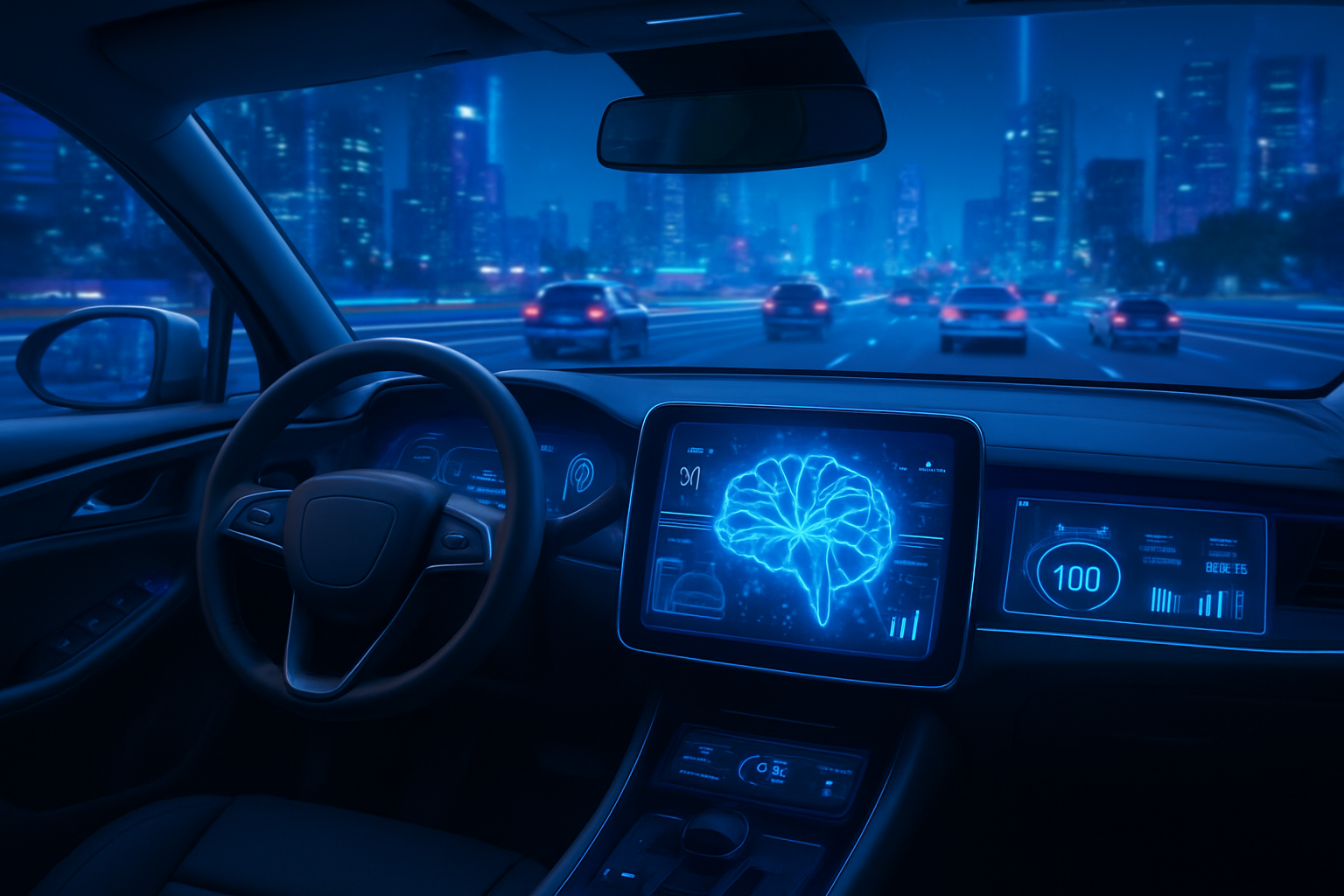
    The automotive world is witnessing a profound transformation, with software and artificial intelligence (AI) increasingly defining the driving experience. A prime example of this paradigm shift is the collaboration between Arm Holdings plc (NASDAQ: ARM), the global semiconductor intellectual property giant, and Chinese automotive powerhouse Geely Automobile Holdings Limited (HKEX: 0175). This partnership has culminated in the integration of advanced software-driven intelligence into Geely's all-electric SUV, the EX5, heralding a new era of smart, connected, and continuously evolving vehicles.

    Announced with the EX5's global debut in September 2024 and further enhanced by recent updates through September 2025, this initiative showcases how Arm's robust compute platform and Automotive Enhanced (AE) technologies are delivering intelligent performance, real-time safety, and a suite of advanced driving features. The Geely EX5 is not just a car; it's a mobile computing platform, designed to offer a personalized and intuitive journey, setting a new benchmark for software-defined vehicles (SDVs) and AI integration in the global automotive sector.

    Under the Hood: The Technical Prowess of Arm in Geely EX5

    At the core of the Geely EX5's intelligent capabilities lies the SiEngine StarEagle (SE1000) System-on-Chip (SoC), a powerful processor built upon Arm's Automotive Enhanced (AE) technologies. This heterogeneous compute architecture is specifically engineered to handle the complex demands of modern intelligent vehicles. The SE1000 SoC integrates several critical Arm components:

    • Arm Cortex-A CPUs: These high-performance processors are dedicated to application processing, managing computationally intensive tasks for infotainment, intelligent performance features, and high-level software functionalities.
    • Arm Cortex-R CPUs: Crucially, these processors are responsible for real-time control and safety functions. With their deterministic response times and inherent safety features, Cortex-R CPUs are ideal for critical vehicle operations where immediate and reliable processing is paramount, often meeting stringent Automotive Safety Integrity Level (ASIL) certifications.
    • Arm Mali GPUs: These graphics processing units power the EX5's rich visual interfaces, seamless screen integration, and other graphical demands of the in-vehicle experience, contributing to the responsive and engaging infotainment system.
    • Arm Image Signal Processors (ISPs): Optimized for demanding computer and human vision use cases, these processors are vital for camera-based intelligence, supporting advanced driver-assistance systems (ADAS) and other vision-based features.

    Arm's Automotive Enhanced (AE) technologies provide ASIL-certified Intellectual Property (IP), ensuring functional safety is deeply embedded in the hardware and software architecture. This commitment to safety-by-design is a cornerstone of the EX5's platform, offering features like transient fault protection (TFP) for critical applications.

    This integrated approach represents a significant departure from previous automotive technologies. Historically, vehicles relied on a multitude of disparate electronic control units (ECUs), each handling a specific function. The Arm-based platform facilitates a shift to a "software-defined, ever-evolving dynamic machine." Geely's Global Intelligent New Energy Architecture (GEA) platform and the GEEA 3.0 electronic and electrical architecture further exemplify this, consolidating 14 traditional body control modules into just two, creating a "Central Super Brain + regional control" system. This design fully supports seamless, whole-vehicle over-the-air (OTA) upgrades, a capability largely absent in older, hardware-centric vehicles. The EX5's comprehensive Level 2 ADAS, featuring 13 functions like Adaptive Cruise Control (ACC), Automatic Emergency Braking (AEB), and Lane Keeping Assist (LKA), directly benefits from this powerful and reliable Arm platform, providing a more intuitive and safer driving experience than ever before.

    Reshaping the AI and Tech Landscape

    The Arm and Geely collaboration, with SiEngine as the silicon provider, carries significant competitive implications across the AI and tech industries.

    Direct Beneficiaries:

    • SiEngine: As the direct supplier of the StarEagle (SE1000) SoC, SiEngine benefits immensely, validating their Arm-based automotive semiconductor solutions.
    • Geely Auto Group (HKEX: 0175): By integrating these advanced Arm-based chips, Geely strengthens its competitive stance in the burgeoning EV and intelligent vehicle market, positioning the EX5 as a leader in "intelligent mobility."
    • Arm Holdings plc (NASDAQ: ARM): Arm solidifies its market leadership in foundational IP for automotive computing. With a significant portion of in-vehicle infotainment (IVI) and ADAS already running on Arm technology, this collaboration reinforces its indispensable role in AI-driven vehicles.
    • Arm's Ecosystem Partners: Companies like Amazon Web Services (AWS) (NASDAQ: AMZN), Cadence Design Systems (NASDAQ: CDNS), Siemens (ETR: SIE), and BlackBerry (NYSE: BB) QNX, who collaborate with Arm on its automotive ecosystem, benefit from the accelerated development and deployment of AI-enabled vehicles.

    Competitive Implications and Disruption:
    The intense competition in the automotive AI chipset market, dominated by players like NVIDIA Corporation (NASDAQ: NVDA), Tesla, Inc. (NASDAQ: TSLA), Mobileye Global Inc. (NASDAQ: MBLY), and Huawei, is further intensified by Arm's robust push. Arm's strategy of providing comprehensive hardware and software platforms, including virtual prototyping solutions, significantly reduces automotive development cycles by up to two years. This disrupts traditional, lengthy development processes, forcing competitors to accelerate their own innovation timelines. The shift towards "AI-defined cars," where AI capabilities are central to product differentiation and OTA updates are crucial for AI model enhancements, fundamentally alters market positioning. Tech giants like Tesla and Google (NASDAQ: GOOGL) are increasingly designing custom silicon, and the success of Arm-based chips in vehicles like the EX5 could encourage other OEMs or Tier 1 suppliers to either develop their own custom Arm-based SoCs or deepen partnerships with specialized automotive chip designers.

    Broader Significance: AI Everywhere in Mobility

    The Arm-Geely EX5 collaboration is a microcosm of broader trends sweeping across the AI landscape and the automotive sector. It underscores the accelerating shift towards edge AI and onboard processing, where critical decisions for autonomous driving and ADAS are made in real-time within the vehicle, minimizing latency and enhancing privacy. This aligns with the vision of Software-Defined Vehicles (SDVs), where vehicle functionalities are increasingly defined and updated through software, allowing for continuous improvements and new feature rollouts via OTA updates. Geely's "AI cockpit" strategy, moving towards an AI-native operating system with unified AI Agents, exemplifies this profound integration.

    Impacts: This collaboration accelerates innovation and time-to-market for AI-powered features, democratizes advanced AI capabilities across different vehicle segments, and intensifies competition among chip designers, software providers, and automakers. It also opens new revenue streams through subscription-based services and predictive maintenance.

    Potential Concerns: The extensive collection of vehicle and user data raises significant data privacy and security concerns, necessitating robust cybersecurity measures. The complexity of integrating diverse AI systems and ensuring seamless interaction between hardware and software from multiple suppliers presents integration challenges. Furthermore, as AI takes on more decision-making roles in autonomous vehicles, ethical considerations surrounding unavoidable accident scenarios become paramount, requiring transparency and accountability in algorithms.

    Comparison to Previous AI Milestones: This development marks a significant progression from earlier AI milestones. Initial AI applications in automotive were rudimentary, focusing on basic driver assistance like ABS and cruise control. The late 2000s and 2010s saw more sophisticated ADAS, leveraging sensors and machine learning for perception. The current phase, exemplified by the EX5, moves beyond merely adding AI tools to existing systems. It embraces AI-native architectures from the ground up, integrating large AI models for human-like interaction and personalization, and leveraging edge-to-cloud AI integration for robust, continuously learning systems. This represents a leap towards truly "AI-defined cars," fundamentally rethinking the vehicle as an intelligent, adaptive, and personalized mobility solution.

    The Road Ahead: Future Developments in Automotive AI

    The trajectory set by collaborations like Arm and Geely points to an exciting future for AI-driven, software-defined vehicles.

    Near-Term Developments (Next 1-3 Years): We can expect a continued focus on the mass deployment of Level 2+ (L2+) and Level 3 (L3) autonomous driving capabilities, with enhanced ADAS features becoming standard. Personalized in-vehicle experiences will deepen, with AI-driven infotainment systems and voice assistants learning driver preferences for truly customized journeys. Over-the-Air (OTA) updates will become ubiquitous, enabling continuous improvement and the introduction of new functionalities. AI-driven predictive maintenance will ensure higher reliability and safety, while enhanced cybersecurity will be paramount to protect connected vehicles.

    Long-Term Developments (5+ Years): The long-term vision includes widespread adoption of fully autonomous vehicles (L4 and L5), with robotaxi solutions becoming more common. Vehicles will evolve into "AI-defined vehicles" (AIVs), where edge AI runs the majority of workloads directly in the car, enabling deeper personalization and intelligence. Seamless integration with smart city ecosystems through Vehicle-to-Everything (V2X) communication will optimize traffic flow and enhance safety. New business models will emerge, shifting from one-time car sales to recurring revenue from digital services. Generative AI will transform the entire automotive value chain, from design and engineering to autonomous driving simulation and training.

    Challenges: Significant hurdles remain, including regulatory and legal complexity in establishing global standards for AI safety and data use. Cybersecurity vulnerabilities will require constant vigilance. Integration and scalability of complex AI systems, coupled with talent shortages in specialized AI and embedded systems development, present ongoing challenges. Consumer trust and acceptance will be crucial, necessitating a focus on safety and reliability.

    Expert Predictions: Experts predict widespread SDV adoption within 5-10 years, with AI becoming a core enabler across all facets of vehicle development and operation. OEMs are transforming into "Original Experience Manufacturers," where the software-defined experience is central to brand value. Global collaboration on AI standards and leveraging automation to overcome development bottlenecks are also anticipated.

    Wrap-Up: A Defining Moment in AI History

    The collaboration enabling the Geely EX5 stands as a defining moment in AI history, demonstrating the practical and scalable integration of advanced AI compute into mainstream automotive platforms. It solidifies Arm's position as a foundational technology provider for intelligent mobility and showcases Geely's ambitious vision for an "AI-defined" future.

    The key takeaway is clear: the vehicle is rapidly transforming from a mere mode of transport into a sophisticated, software-driven, and AI-powered mobile companion. This development signifies a shift towards vehicles that are not only smarter and safer but also continuously evolving and deeply personalized.

    In the coming weeks and months, watch for:

    • Geely EX5 Market Performance: Real-world feedback and sales figures for the EX5, particularly as it launches in new markets like the UK in Q4 2025.
    • OTA Updates: Further announcements from Geely regarding new AI functionalities and feature enhancements delivered via over-the-air updates.
    • Geely's "Full-Domain AI" Expansion: The integration of Geely's comprehensive AI system, including its "AI digital chassis" and "hyper-anthropomorphic intelligent agents" like "Eva," into other upcoming models.
    • Competitive Responses: How other major automakers and tech companies respond with their own AI integration strategies and product announcements.
    • Regulatory Developments: Progress in establishing clear global regulations and ethical guidelines for AI in autonomous driving and data privacy.

    The future of mobility is intelligent, connected, and software-defined, and the Arm-Geely EX5 is a compelling preview of what's to come.


    This content is intended for informational purposes only and represents analysis of current AI developments.

    TokenRing AI delivers enterprise-grade solutions for multi-agent AI workflow orchestration, AI-powered development tools, and seamless remote collaboration platforms.
    For more information, visit https://www.tokenring.ai/.
  • General Motors to Power Next-Gen In-Car AI with Google Gemini by 2026, Revolutionizing Driver Interaction

    General Motors to Power Next-Gen In-Car AI with Google Gemini by 2026, Revolutionizing Driver Interaction

    General Motors (NYSE: GM) is set to redefine the in-car experience, announcing plans to integrate Google's (NASDAQ: GOOGL) advanced Gemini AI assistant into its vehicles starting in 2026. This strategic move positions GM at the forefront of a burgeoning trend within the automotive industry: the adoption of generative AI to create more intuitive, natural-sounding, and highly responsive driver interactions. Building on an established partnership with Google, this integration promises to transform how drivers and passengers engage with their vehicles, moving beyond rudimentary voice commands to truly conversational AI.

    This significant development underscores a broader industry shift, where automakers are racing to leverage cutting-edge artificial intelligence to enhance safety, convenience, and personalization. By embedding Gemini, GM aims to offer a sophisticated digital co-pilot capable of understanding complex requests, providing contextual information, and seamlessly managing various vehicle functions, thereby setting a new benchmark for automotive intelligence and user experience.

    The Dawn of Conversational Co-Pilots: Gemini's Technical Leap in Automotive AI

    The integration of Google Gemini into GM's vehicles by 2026 signifies a profound technical evolution in automotive AI, moving light-years beyond the rudimentary voice assistants of yesteryear. At its core, Gemini's power lies in its multimodal capabilities and advanced natural language understanding, setting a new benchmark for in-car interaction. Unlike previous systems that processed different data types in isolation, Gemini is designed to inherently understand and reason across text, voice, images, and contextual cues from the vehicle's environment simultaneously. This means it can interpret camera video to spot pedestrians, LiDAR for distance mapping, radar for object detection, and even audio like sirens, integrating all this information in real-time to provide a truly comprehensive understanding of the driving situation.

    This leap is fundamentally about moving from rule-based, command-and-response systems to generative AI. Older assistants required precise phrasing and often struggled with accents or follow-up questions, leading to frustrating interactions. Gemini, powered by large language models (LLMs), liberates drivers from these constraints, enabling natural, conversational dialogue. It understands nuance, intent, and subtle implications, allowing for fluid conversations without the need for memorized commands. Furthermore, Gemini offers contextual awareness and personalization, remembering user preferences and past interactions to provide proactive, tailored suggestions—whether recommending a scenic route based on calendar events, warning about weather, or suggesting a coffee stop with specific criteria, all while considering real-time traffic and even the vehicle's EV battery status. This hybrid processing approach, balancing on-device AI for instant responses with cloud-based AI for complex tasks, ensures both responsiveness and depth of capability.

    Initial reactions from the AI research community and industry experts are a blend of excitement and cautious optimism. On one hand, the potential for enhanced user experience, improved safety through real-time, context-aware ADAS support, and streamlined vehicle design and manufacturing processes is widely acknowledged. Experts foresee generative AI creating "empathetic" in-car assistants that can adapt to a driver's mood or provide engaging conversations to combat drowsiness. However, significant concerns persist, particularly regarding data privacy and security given the vast amounts of sensitive data collected (location, biometrics, driver behavior). The "hallucination" problem inherent in LLMs, where models can produce arbitrary or incorrect outputs, poses a critical safety challenge in an automotive context. Furthermore, the "black box" dilemma of algorithmic transparency, computational demands, ethical considerations in accident scenarios, and the high cost of training and maintaining such sophisticated AI systems remain key challenges that require ongoing attention and collaboration between automakers, tech providers, and regulators.

    Shifting Gears: The Competitive Implications of Generative AI in the Automotive Sector

    The integration of Google Gemini into General Motors' (NYSE: GM) vehicles by 2026 is poised to send ripples across the AI landscape, profoundly impacting major AI labs, tech giants, and burgeoning startups. Google (NASDAQ: GOOGL) stands as a primary beneficiary, significantly extending the reach and influence of its Gemini AI model from consumer devices into a vast automotive fleet. This deep integration, building upon GM's existing "Google built-in" platform, not only solidifies Google's critical foothold in the lucrative in-car AI market but also provides an invaluable source of real-world data for further training and refinement of its multimodal AI capabilities in a unique, demanding environment. This move intensifies the "Automotive AI Wars," forcing competitors to accelerate their own strategies.

    For other major AI labs, such as OpenAI, Anthropic, and Mistral, the GM-Google partnership escalates the pressure to secure similar automotive deals. While Mercedes-Benz (ETR: MBG) has already integrated ChatGPT (backed by OpenAI), and Stellantis (NYSE: STLA) partners with French AI firm Mistral, GM's stated intention to test foundational models from "OpenAI, Anthropic, and other AI firms" for broader applications beyond Gemini suggests ongoing opportunities for these labs to compete for specialized AI solutions within the automotive ecosystem. Meta's (NASDAQ: META) Llama model, for instance, is already finding utility with automotive AI companies like Impel, showcasing the diverse applications of these foundational models.

    Among tech giants, Microsoft (NASDAQ: MSFT), Amazon (NASDAQ: AMZN), and Apple (NASDAQ: AAPL) face renewed impetus to sharpen their automotive AI strategies. Microsoft, leveraging its Azure cloud platform, is actively pursuing AI-enabled insights and autonomous driving platforms. This deal will likely prompt Microsoft to further differentiate its offerings, potentially by deepening ties with other automakers and emphasizing its enterprise AI solutions for manufacturing and R&D. Amazon, through AWS, is a major cloud infrastructure provider for AI, but the Gemini integration underscores the need for a more comprehensive and deeply integrated in-car AI strategy beyond its existing Alexa presence. Apple, having reportedly pivoted to focus heavily on generative AI, will likely enhance Siri with generative AI and push its "edge compute" capabilities within its vast device ecosystem to offer highly personalized and secure in-car experiences through iOS integration, potentially bypassing direct automaker partnerships for core AI functionality.

    For startups in the automotive AI space, the landscape becomes both more challenging and potentially more opportunistic. They face heightened competition from well-resourced tech giants, making it harder to gain market share. However, the projected substantial growth of the overall automotive AI market, from $4.8 billion in 2024 to an estimated $186.4 billion by 2034, creates ample space for specialized innovation. Startups focusing on niche solutions—such as advanced sensor fusion, predictive maintenance, or specific retail AI applications—may find pathways to success, potentially becoming attractive acquisition targets or strategic partners for larger players looking to fill technology gaps. The strategic advantages for Google and GM lie in deep integration and ecosystem lock-in, offering an enhanced user experience, data-driven innovation, and leadership in the software-defined vehicle era, fundamentally shifting vehicle differentiation from hardware to software and AI capabilities.

    Beyond the Dashboard: Gemini's Broader Impact on AI and Society

    General Motors' (NYSE: GM) decision to integrate Google Gemini into its vehicles by 2026 is far more than an automotive upgrade; it represents a pivotal moment in the broader AI landscape, signaling the mainstreaming of generative and multimodal AI into everyday consumer life. This move aligns perfectly with several overarching AI trends: the pervasive adoption of Large Language Models (LLMs) in physical environments, the rise of multimodal AI capable of processing diverse inputs simultaneously (text, voice, images, environmental data), and the evolution towards truly contextual and conversational AI. Gemini aims to transform the car into an "AI-first ecosystem," where the vehicle becomes an "agentic" AI, capable of not just processing information but also taking action and accomplishing tasks through rich, natural interaction.

    The societal impacts of such deep AI integration are multifaceted. Drivers can anticipate a significantly enhanced experience, marked by intuitive, personalized interactions that reduce cognitive load and potentially improve safety through advanced hands-free controls and proactive assistance. This could also dramatically increase accessibility for individuals with limited mobility, offering greater independence. Economically, GM anticipates robust revenue growth from software and services, unlocking new streams through personalized features and predictive maintenance. However, this also raises questions about job market transformation in sectors reliant on human drivers and the ethical implications of in-vehicle customized advertising. On a positive note, AI-optimized connected vehicles could contribute to more sustainable transportation by reducing congestion and fuel usage, supporting environmental goals.

    Beyond privacy, several critical ethical concerns come to the forefront. Building and maintaining public trust in AI systems, especially in safety-critical applications, is paramount. The "black box" nature of some AI decision-making processes, coupled with potential algorithmic bias stemming from unrepresentative training data, demands rigorous attention to transparency, fairness, and explainability (XAI). The historical omission of female dummies in crash tests, leading to higher injury rates for women, serves as a stark reminder of how biases can manifest. Furthermore, assigning accountability and liability in scenarios where AI systems make decisions, particularly in unavoidable accidents, remains a complex challenge. The increasing autonomy of in-car AI also raises profound questions about the balance of control between human and machine, and the ethical implications of AI systems acting independently.

    This integration stands as a significant milestone, building upon and surpassing previous AI advancements. It represents a dramatic evolution from rudimentary, command-based in-car voice assistants and even Google's earlier Google Assistant, offering a fluid, conversational, and context-aware experience. While separate, it also complements the progression of Advanced Driver-Assistance Systems (ADAS) and autonomous driving initiatives like GM's Super Cruise, moving towards a more holistic, AI-driven vehicle environment. Compared to consumer tech AI assistants like Siri or Alexa, Gemini's multimodal capabilities and deep ecosystem integration suggest a more profound and integrated AI experience, potentially processing visual data from inside and outside the car. Ultimately, GM's embrace of Gemini is not merely an incremental update; it signals a fundamental shift in how vehicles will interact with their occupants and the broader digital world, demanding careful development and responsible deployment to ensure societal benefits outweigh potential risks.

    The Road Ahead: What's Next for Automotive AI

    GM's integration of Google Gemini by 2026 is merely the beginning of a profound transformation in automotive AI, setting the stage for a future where vehicles are not just modes of transport but intelligent, intuitive, and deeply integrated digital companions. In the near term, drivers can anticipate an immediate enhancement in conversational AI, with Gemini serving as the default voice recognition system, enabling more natural, multi-turn dialogues for everything from climate control to complex navigation queries. This will usher in truly personalized in-car experiences, where the AI learns driver preferences and proactively adjusts settings, infotainment suggestions, and even routes. We'll also see advancements in predictive maintenance, with AI systems monitoring vehicle components to anticipate issues before they arise, and further refinement of Advanced Driver-Assistance Systems (ADAS) through enhanced data processing and decision-making algorithms.

    Looking further ahead, the long-term vision includes the widespread adoption of "eyes-off" autonomous driving, with GM planning to debut Level 3 autonomy by 2028, starting with vehicles like the Cadillac Escalade IQ. This will be supported by new centralized computing platforms, also launching around 2028, significantly boosting AI performance and enabling fully software-defined vehicles (SDVs) that can gain new features and improvements throughout their lifespan via over-the-air updates. Beyond basic assistance, vehicles will host proprietary AI companions capable of handling complex, contextual queries and learning from individual driving habits. Advanced Vehicle-to-Everything (V2X) communication, enhanced by AI, will optimize traffic flow and prevent accidents, while future infotainment could incorporate AI-driven augmented reality and emotion-based personalization, deeply integrated into smart home ecosystems.

    The potential applications and use cases are vast. AI agents could proactively open trunks for drivers with shopping bags, provide real-time traffic delay notifications based on calendar appointments, or offer in-depth vehicle knowledge by integrating the entire owner's manual for instant troubleshooting. In commercial sectors, AI will continue to optimize logistics and fleet management. For Electric Vehicles (EVs), AI will enhance energy management, optimizing battery health, charging efficiency, and predicting ideal charging times and locations. Ultimately, AI will elevate safety through improved predictive capabilities and driver monitoring for fatigue or distraction. However, significant challenges persist, including the immense data and computational constraints of LLMs, ensuring the safety and security of complex AI systems (including preventing "hallucinations"), addressing privacy concerns, seamlessly integrating the AI development lifecycle with automotive production, and establishing robust ethical frameworks and regulations.

    Experts predict that AI will become the core differentiator in the automotive industry, evolving from an optional feature to an essential layer across the entire vehicle stack. The future will see a shift towards seamless, integrated, and adaptive AI systems that reduce manual tasks through specialized agents. There will be an increasing focus on "domain-tuned" LLMs, specifically optimized for automotive retail environments and safety research, moving beyond general-purpose models for critical applications. This continuous innovation will span the entire automotive value chain—from design and production to sales and after-sales services—making cars smarter, factories more adaptive, and supply chains more predictive. The consensus is clear: AI will be the backbone of future mobility, transforming not just how we drive, but how we experience and interact with our vehicles.

    The Intelligent Turn: A New Era for Automotive and AI

    General Motors' (NYSE: GM) planned integration of Google Gemini into its vehicles by 2026 marks a watershed moment, fundamentally reshaping the in-car experience and solidifying the automotive industry's pivot towards software-defined vehicles driven by advanced AI. The key takeaway is a dramatic shift from rudimentary voice commands to genuinely conversational, context-aware interactions, powered by Gemini's multimodal capabilities and natural language processing. This deep integration with Google Automotive Services (GAS) promises seamless access to Google's vast ecosystem, transforming the vehicle into an intelligent extension of the driver's digital life and a central component of GM's strategy for robust revenue growth from software and services.

    In the annals of AI history, this move is significant for bringing advanced generative AI directly into the vehicle cockpit, pushing the boundaries of human-AI interaction in a driving environment. It underscores a broader industry trend where AI is becoming a core differentiator, moving beyond mere infotainment to influence vehicle design, safety, and operational efficiency. The long-term impact will redefine what consumers expect from their vehicles, with personalized, intuitive experiences becoming the norm. For GM, this integration is central to its electrification and technology roadmap, enabling continuous improvement and new features throughout a vehicle's lifespan. However, the journey will also necessitate careful navigation of persistent challenges, including data privacy and security, the probabilistic nature of generative AI requiring rigorous safety testing, and the complex ethical considerations of AI decision-making in critical automotive functions.

    As we approach 2026, the industry will be closely watching for specific details regarding which GM models will first receive the Gemini update and the exact features available at launch. Real-world performance and user feedback on Gemini's natural language understanding, accuracy, and responsiveness will be crucial. Furthermore, the deepening integrations of Gemini with vehicle-specific functions—from diagnostics to predictive maintenance and potentially GM's Super Cruise system—will be a key area of observation. The competitive responses from other automakers and tech giants, alongside the rapid evolution of Gemini itself with new features and capabilities from Google (NASDAQ: GOOGL), will shape the trajectory of in-car AI. Finally, while distinct from Gemini, the development and public reception of GM's planned "eyes-off" autonomous driving capabilities, particularly in the 2028 Cadillac Escalade IQ, will be closely watched for how these advanced driving systems seamlessly interact with the AI assistant to create a truly cohesive user experience. The era of the intelligent vehicle has arrived, and its evolution promises to be one of the most exciting narratives in technology.


    This content is intended for informational purposes only and represents analysis of current AI developments.

    TokenRing AI delivers enterprise-grade solutions for multi-agent AI workflow orchestration, AI-powered development tools, and seamless remote collaboration platforms.
    For more information, visit https://www.tokenring.ai/.