
Tag: Solar Energy

  • Polysilicon’s Ascendant Reign: Fueling the AI Era and Green Revolution

    Polysilicon’s Ascendant Reign: Fueling the AI Era and Green Revolution

    The polysilicon market is experiencing an unprecedented boom, driven by the relentless expansion of the electronics and solar energy industries. This high-purity form of silicon, a fundamental building block for both advanced semiconductors and photovoltaic cells, is not merely a commodity; it is the bedrock upon which the future of artificial intelligence (AI) and the global transition to sustainable energy are being built. With market valuations projected to reach between USD 106.2 billion and USD 155.87 billion by 2030-2034, polysilicon's critical role in powering our digital world and decarbonizing our planet has never been more pronounced. Its rapid expansion underscores a pivotal moment where technological advancement and environmental imperatives converge, making its supply chain and production innovations central to global progress.

    This surge is predominantly fueled by the insatiable demand for solar panels, which account for a staggering 76% to 91.81% of polysilicon consumption, as nations worldwide push towards aggressive renewable energy targets. Concurrently, the burgeoning electronics sector, propelled by the proliferation of 5G, AI, IoT, and electric vehicles (EVs), continues to drive the need for ultra-high purity polysilicon essential for cutting-edge microchips. The intricate dance between supply, demand, and technological evolution in this market is shaping the competitive landscape for tech giants, influencing geopolitical strategies, and dictating the pace of innovation in critical sectors.

    The Micro-Mechanics of Purity: Siemens vs. FBR and the Quest for Perfection

    The production of polysilicon is a highly specialized and energy-intensive endeavor, primarily dominated by two distinct technologies: the established Siemens process and the emerging Fluidized Bed Reactor (FBR) technology. Each method strives to achieve the ultra-high purity levels required, albeit with different efficiencies and environmental footprints.

    The Siemens process, developed by Siemens AG (FWB: SIE) in 1954, remains the industry's workhorse, particularly for electronics-grade polysilicon. It involves reacting metallurgical-grade silicon with hydrogen chloride to produce trichlorosilane (SiHCl₃), which is then rigorously distilled to achieve exceptional purity (often 9N to 11N, or 99.9999999% to 99.999999999%). This purified gas then undergoes chemical vapor deposition (CVD) onto heated silicon rods, growing them into large polysilicon ingots. While highly effective in achieving stringent purity, the Siemens process is energy-intensive, consuming 100-200 kWh/kg of polysilicon, and operates in batches, making it less efficient than continuous methods. Companies like Wacker Chemie AG (FWB: WCH) and OCI Company Ltd. (KRX: 010060) have continuously refined the Siemens process, improving energy efficiency and yield over decades, proving it to be a "moving target" for alternatives. Wacker, for instance, developed a new ultra-pure grade in 2023 for sub-3nm chip production, with metallic contamination below 5 parts per trillion (ppt).

    Fluidized Bed Reactor (FBR) technology, on the other hand, represents a significant leap towards more sustainable and cost-effective production. In an FBR, silicon seed particles are suspended and agitated by a silicon-containing gas (like silane or trichlorosilane), allowing silicon to deposit continuously onto the particles, forming granules. FBR boasts significantly lower energy consumption (up to 80-90% less electricity than Siemens), a continuous production cycle, and higher output per reactor volume. Companies like GCL Technology Holdings Ltd. (HKG: 3800) and REC Silicon ASA (OSL: RECSI) have made substantial investments in FBR, with GCL-Poly announcing in 2021 that its FBR granular polysilicon achieved monocrystalline purity requirements, potentially outperforming the Siemens process in certain parameters. This breakthrough could drastically reduce the carbon footprint and energy consumption for high-efficiency solar cells. However, FBR still faces challenges such as managing silicon dust (fines), unwanted depositions, and ensuring consistent quality, which historically has limited its widespread adoption for the most demanding electronic-grade applications.

    The distinction between electronics-grade (EG-Si) and solar-grade (SoG-Si) polysilicon is paramount. EG-Si demands ultra-high purity (9N to 11N) to prevent even trace impurities from compromising the performance of sophisticated semiconductor devices. SoG-Si, while still requiring high purity (6N to 9N), has a slightly higher tolerance for certain impurities, balancing cost-effectiveness with solar cell efficiency. The shift towards more efficient solar cell architectures (e.g., N-type TOPCon, heterojunction) is pushing the purity requirements for SoG-Si closer to those of EG-Si, driving further innovation in both production methods. Initial reactions from the industry highlight a dual focus: continued optimization of the Siemens process for the most critical semiconductor applications, and aggressive development of FBR technology to meet the massive, growing demand for solar-grade material with a reduced environmental impact.

    Corporate Chessboard: Polysilicon's Influence on Tech Giants and AI Innovators

    The polysilicon market's dynamics profoundly impact a diverse ecosystem of companies, from raw material producers to chipmakers and renewable energy providers, with significant implications for the AI sector.

    Major Polysilicon Producers are at the forefront. Chinese giants like Tongwei Co., Ltd. (SHA: 600438), GCL Technology Holdings Ltd. (HKG: 3800), Daqo New Energy Corp. (NYSE: DQ), Xinte Energy Co., Ltd. (HKG: 1799), and Asia Silicon (Qinghai) Co., Ltd. dominate the solar-grade market, leveraging cost advantages in raw materials, electricity, and labor. Their rapid capacity expansion has led to China controlling approximately 89% of global solar-grade polysilicon production in 2022. For ultra-high purity electronic-grade polysilicon, companies like Wacker Chemie AG (FWB: WCH), Hemlock Semiconductor Operations LLC (a joint venture involving Dow Inc. (NYSE: DOW) and Corning Inc. (NYSE: GLW)), Tokuyama Corporation (TYO: 4043), and REC Silicon ASA (OSL: RECSI) are critical suppliers, catering to the exacting demands of the semiconductor industry. These firms benefit from premium pricing and long-term contracts for their specialized products.

    The Semiconductor Industry, the backbone of AI, is heavily reliant on a stable supply of high-purity polysilicon. Companies like Intel Corporation (NASDAQ: INTC), Samsung Electronics Co., Ltd. (KRX: 005930), and Taiwan Semiconductor Manufacturing Company Limited (NYSE: TSM) require vast quantities of electronic-grade polysilicon to produce the advanced silicon wafers that become microprocessors, GPUs, and memory chips essential for AI training and inference. Disruptions in polysilicon supply, such as those experienced during the COVID-19 pandemic, can cascade into global chip shortages, directly hindering AI development and deployment. The fact that China, despite its polysilicon dominance, currently lacks the equipment and expertise to produce semiconductor-grade polysilicon at scale creates a strategic vulnerability for non-Chinese chip manufacturers, fostering a push for diversified and localized supply chains, as seen with Hemlock Semiconductor securing a federal grant to expand U.S. production.

    For the Solar Energy Industry, which consumes the lion's share of polysilicon, price volatility and supply chain stability are critical. Solar panel manufacturers, including major players like Longi Green Energy Technology Co., Ltd. (SHA: 601012) and JinkoSolar Holding Co., Ltd. (NYSE: JKS), are directly impacted by polysilicon costs. Recent increases in polysilicon prices, driven by Chinese policy shifts and production cuts, are expected to lead to higher solar module prices, potentially affecting project economics. Companies with vertical integration, from polysilicon production to module assembly, like GCL-Poly, gain a competitive edge by controlling costs and ensuring supply.

    The implications for AI companies, tech giants, and startups are profound. The escalating demand for high-performance AI chips means a continuous and growing need for ultra-high purity electronic-grade polysilicon. This specialized demand, representing a smaller but crucial segment of the overall polysilicon market, could strain existing supply chains. Furthermore, the immense energy consumption of AI data centers (an "unsustainable trajectory") creates a bottleneck in power generation, making access to reliable and affordable energy, increasingly from solar, a strategic imperative. Companies that can secure stable supplies of high-purity polysilicon and leverage energy-efficient technologies (like silicon photonics) will gain a significant competitive advantage. The interplay between polysilicon supply, semiconductor manufacturing, and renewable energy generation directly influences the scalability and sustainability of AI development globally.

    A Foundational Pillar: Polysilicon's Broader Significance in the AI and Green Landscape

    Polysilicon's expanding market transcends mere industrial growth; it is a foundational pillar supporting two of the most transformative trends of our era: the proliferation of artificial intelligence and the global transition to clean energy. Its significance extends to sustainable technology, geopolitical dynamics, and environmental stewardship.

    In the broader AI landscape, polysilicon underpins the very hardware that enables intelligent systems. Every advanced AI model, from large language models to complex neural networks, relies on high-performance silicon-based semiconductors for processing, memory, and high-speed data transfer. The continuous evolution of AI demands increasingly powerful and efficient chips, which in turn necessitates ever-higher purity and quality of electronic-grade polysilicon. Innovations in silicon photonics, allowing light-speed data transmission on silicon chips, are directly tied to polysilicon advancements, promising to address the data transfer bottlenecks that limit AI's scalability and energy efficiency. Thus, the robust health and growth of the polysilicon market are not just relevant; they are critical enablers for the future of AI.

    For sustainable technology, polysilicon is indispensable. It is the core material for photovoltaic solar cells, which are central to decarbonizing global energy grids. As countries commit to aggressive renewable energy targets, the demand for solar panels, and consequently solar-grade polysilicon, will continue to soar. By facilitating the widespread adoption of solar power, polysilicon directly contributes to reducing greenhouse gas emissions and mitigating climate change. Furthermore, advancements in polysilicon recycling from decommissioned solar panels are fostering a more circular economy, reducing waste and the environmental impact of primary production.

    However, this vital material is not without its potential concerns. The most significant is the geopolitical concentration of its supply chain. China's overwhelming dominance in polysilicon production, particularly solar-grade, creates strategic dependencies and vulnerabilities. Allegations of forced labor in the Xinjiang region, a major polysilicon production hub, have led to international sanctions, such as the U.S. Uyghur Forced Labor Prevention Act (UFLPA), disrupting global supply chains and creating a bifurcated market. This geopolitical tension drives efforts by countries like the U.S. to incentivize domestic polysilicon and solar manufacturing to enhance supply chain resilience and reduce reliance on a single, potentially contentious, source.

    Environmental considerations are also paramount. While polysilicon enables clean energy, its production is notoriously energy-intensive, often relying on fossil fuels, leading to a substantial carbon footprint. The Siemens process, in particular, requires significant electricity and can generate toxic byproducts like silicon tetrachloride, necessitating careful management and recycling. The industry is actively pursuing "sustainable polysilicon production" through energy efficiency, waste heat recovery, and the integration of renewable energy sources into manufacturing processes, aiming to lower its environmental impact.

    Comparing polysilicon to other foundational materials, its dual role in both advanced electronics and mainstream renewable energy is unique. While rare-earth elements are vital for specialized magnets and lithium for batteries, silicon, and by extension polysilicon, forms the very substrate of digital intelligence and the primary engine of solar power. Its foundational importance is arguably unmatched, making its market dynamics a bellwether for both technological progress and global sustainability efforts.

    The Horizon Ahead: Navigating Polysilicon's Future

    The polysilicon market stands at a critical juncture, with near-term challenges giving way to long-term growth opportunities, driven by relentless innovation and evolving global priorities. Experts predict a dynamic landscape shaped by technological advancements, new applications, and persistent geopolitical and environmental considerations.

    In the near-term, the market is grappling with significant overcapacity, particularly from China's rapid expansion, which has led to polysilicon prices falling below cash costs for many manufacturers. This oversupply, coupled with seasonal slowdowns in solar installations, is creating inventory build-up. However, this period of adjustment is expected to pave the way for a more balanced market as demand continues its upward trajectory.

    Long-term developments will be characterized by a relentless pursuit of higher purity and efficiency. Fluidized Bed Reactor (FBR) technology is expected to gain further traction, with continuous improvements aimed at reducing manufacturing costs and energy consumption. Breakthroughs like GCL-Poly's (HKG: 3800) FBR granular polysilicon achieving monocrystalline purity requirements signal a shift towards more sustainable and efficient production methods for solar-grade material. For electronics, the demand for ultra-high purity polysilicon (11N or higher) for sub-3nm chip production will intensify, pushing the boundaries of existing Siemens process refinements, as demonstrated by Wacker Chemie AG's (FWB: WCH) recent innovations.

    Polysilicon recycling is also emerging as a crucial future development. As millions of solar panels reach the end of their operational life, closed-loop silicon recycling initiatives will become increasingly vital, offering both environmental benefits and enhancing supply chain resilience. While currently facing economic hurdles, especially for older p-type wafers, advancements in recycling technologies and the growth of n-type and tandem cells are expected to make polysilicon recovery a more viable and significant part of the supply chain by 2035.

    Potential new applications extend beyond traditional solar panels and semiconductors. Polysilicon is finding its way into advanced sensors, Microelectromechanical Systems (MEMS), and critical components for electric and hybrid vehicles. Innovations in thin-film solar cells using polycrystalline silicon are enabling new architectural integrations, such as bent or transparent solar modules, expanding possibilities for green building design and ubiquitous energy harvesting.

    Ongoing challenges include the high energy consumption and associated carbon footprint of polysilicon production, which will continue to drive innovation towards greener manufacturing processes and greater reliance on renewable energy sources for production facilities. Supply chain resilience remains a top concern, with geopolitical tensions and trade restrictions prompting significant investments in domestic polysilicon production in regions like North America and Europe to reduce dependence on concentrated foreign supply. Experts, such as Bernreuter Research, even predict a potential new shortage by 2028 if aggressive capacity elimination continues, underscoring the cyclical nature of this market and the critical need for strategic planning.

    A Future Forged in Silicon: Polysilicon's Enduring Legacy

    The rapid expansion of the polysilicon market is more than a fleeting trend; it is a profound testament to humanity's dual pursuit of advanced technology and a sustainable future. From the intricate circuits powering artificial intelligence to the vast solar farms harnessing the sun's energy, polysilicon is the silent, yet indispensable, enabler.

    The key takeaways are clear: polysilicon is fundamental to both the digital revolution and the green energy transition. Its market growth is driven by unprecedented demand from the semiconductor and solar industries, which are themselves experiencing explosive growth. While the established Siemens process continues to deliver ultra-high purity for cutting-edge electronics, emerging FBR technology promises more energy-efficient and sustainable production for the burgeoning solar sector. The market faces critical challenges, including geopolitical supply chain concentration, energy-intensive production, and price volatility, yet it is responding with continuous innovation in purity, efficiency, and recycling.

    This development's significance in AI history cannot be overstated. Without a stable and increasingly pure supply of polysilicon, the exponential growth of AI, which relies on ever more powerful and energy-efficient chips, would be severely hampered. Similarly, the global push for renewable energy, a critical component of AI's sustainability given its immense data center energy demands, hinges on the availability of affordable, high-quality solar-grade polysilicon. Polysilicon is, in essence, the physical manifestation of the digital and green future.

    Looking ahead, the long-term impact of the polysilicon market's trajectory will be monumental. It will shape the pace of AI innovation, determine the success of global decarbonization efforts, and influence geopolitical power dynamics through control over critical raw material supply chains. The drive for domestic production in Western nations and the continuous technological advancements, particularly in FBR and recycling, will be crucial in mitigating risks and ensuring a resilient supply.

    What to watch for in the coming weeks and months includes the evolution of polysilicon prices, particularly how the current oversupply resolves and whether new shortages emerge as predicted. Keep an eye on new announcements regarding FBR technology breakthroughs and commercial deployments, as these could dramatically shift the cost and environmental footprint of polysilicon production. Furthermore, monitor governmental policies and investments aimed at diversifying supply chains and incentivizing sustainable manufacturing practices outside of China. The story of polysilicon is far from over; it is a narrative of innovation, challenge, and profound impact, continuing to unfold at the very foundation of our technological world.

    This content is intended for informational purposes only and represents analysis of current AI developments.

    TokenRing AI delivers enterprise-grade solutions for multi-agent AI workflow orchestration, AI-powered development tools, and seamless remote collaboration platforms.
    For more information, visit https://www.tokenring.ai/.
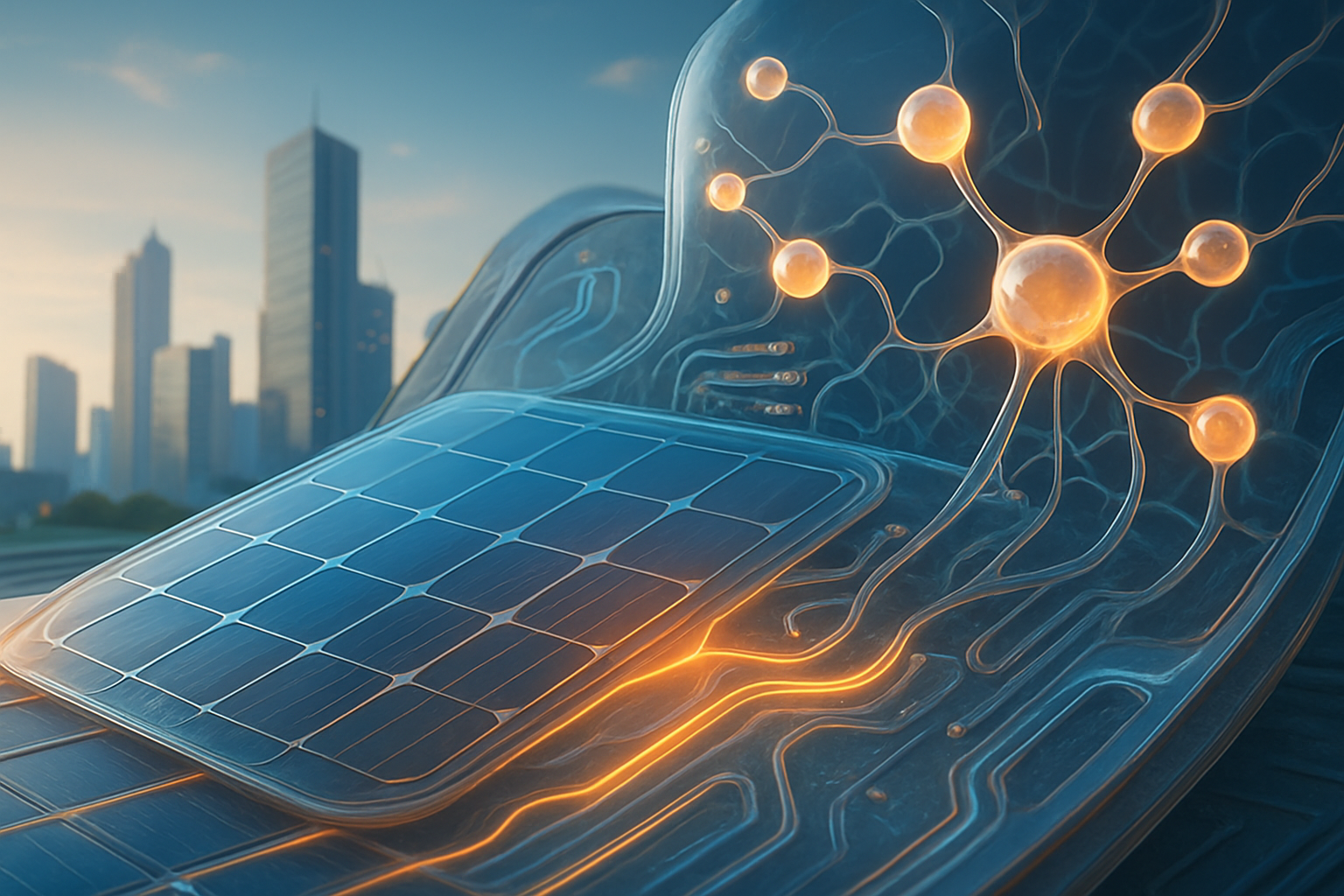
  • Organic Semiconductors Harness Quantum Physics: A Dual Revolution for Solar Energy and AI Hardware

    Organic Semiconductors Harness Quantum Physics: A Dual Revolution for Solar Energy and AI Hardware

    A groundbreaking discovery originating from the University of Cambridge has sent ripples through the scientific community, revealing the unprecedented presence of Mott-Hubbard physics within organic semiconductor molecules. This revelation, previously believed to be exclusive to inorganic metal oxide systems, marks a pivotal moment for materials science, promising to fundamentally reshape the landscapes of solar energy harvesting and artificial intelligence hardware. By demonstrating that complex quantum mechanical behaviors can be engineered into organic materials, this breakthrough offers a novel pathway for developing highly efficient, cost-effective, and flexible technologies, from advanced solar panels to the next generation of energy-efficient AI computing.

    The core of this transformative discovery lies in an organic radical semiconductor molecule named P3TTM, which, unlike its conventional counterparts, possesses an unpaired electron. This unique "radical" nature enables strong electron-electron interactions, a defining characteristic of Mott-Hubbard physics. This phenomenon describes materials where electron repulsion is so significant that it creates an energy gap, causing them to behave as insulators despite theoretical predictions of conductivity. The ability to harness this quantum behavior within a single organic compound not only challenges over a century of established physics but also unlocks a new paradigm for efficient charge generation, paving the way for a dual revolution in sustainable energy and advanced computing.

    Unveiling Mott-Hubbard Physics in Organic Materials: A Quantum Leap

    The technical heart of this breakthrough resides in the meticulous identification and exploitation of Mott-Hubbard physics within the organic radical semiconductor P3TTM. This molecule's distinguishing feature is an unpaired electron, which confers upon it unique magnetic and electronic properties. These properties are critical because they facilitate the strong electron-electron interactions (Coulomb repulsion) that are the hallmark of Mott-Hubbard physics. Traditionally, materials exhibiting Mott-Hubbard behavior, known as Mott insulators, are inorganic metal oxides where strong electron correlations lead to electron localization and an insulating state, even when band theory predicts metallic conductivity. The Cambridge discovery unequivocally demonstrates that such complex quantum mechanical phenomena can be precisely engineered into organic materials.

    This differs profoundly from previous approaches in organic electronics, particularly in solar cell technology. Conventional organic photovoltaics (OPVs) typically rely on a blend of two different organic materials – an electron donor and an electron acceptor (like fullerenes or more recently, non-fullerene acceptors, NFAs) – to create an interface where charge separation occurs. This multi-component approach, while effective in achieving efficiencies exceeding 18% in NFA-based cells, introduces complexity in material synthesis, morphology control, and device fabrication. The P3TTM discovery, by contrast, suggests the possibility of highly efficient charge generation from a single organic compound, simplifying device architecture and potentially reducing manufacturing costs and complexity significantly.

    The implications for charge generation are profound. In Mott-Hubbard systems, the strong electron correlations can lead to unique mechanisms for charge separation and transport, potentially bypassing some of the limitations of exciton diffusion and dissociation in conventional organic semiconductors. The ability to control these quantum mechanical interactions opens up new avenues for designing materials with tailored electronic properties. While specific initial reactions from the broader AI research community and industry experts are still emerging as the full implications are digested, the fundamental physics community has expressed significant excitement over challenging long-held assumptions about where Mott-Hubbard physics can manifest. Experts anticipate that this discovery will spur intense research into other radical organic semiconductors and their potential to exhibit similar quantum phenomena, with a clear focus on practical applications in energy and computing. The potential for more robust, efficient, and simpler device fabrication methods is a key point of interest.

    Reshaping the AI Hardware Landscape: A New Frontier for Innovation

    The advent of Mott-Hubbard physics in organic semiconductors presents a formidable challenge and an immense opportunity for the artificial intelligence industry, promising to reshape the competitive landscape for tech giants, established AI labs, and nimble startups alike. This breakthrough, which enables the creation of highly energy-efficient and flexible AI hardware, could fundamentally alter how AI models are trained, deployed, and scaled.

    One of the most critical benefits for AI hardware is the potential for significantly enhanced energy efficiency. As AI models grow exponentially in complexity and size, the power consumption and heat dissipation of current silicon-based hardware pose increasing challenges. Organic Mott-Hubbard materials could drastically reduce the energy footprint of AI systems, leading to more sustainable and environmentally friendly AI solutions, a crucial factor for data centers and edge computing alike. This aligns perfectly with the growing "Green AI" movement, where companies are increasingly seeking to minimize the environmental impact of their AI operations.

    The implications for neuromorphic computing are particularly profound. Organic Mott-Hubbard materials possess the unique ability to mimic biological neuron behavior, specifically the "integrate-and-fire" mechanism, making them ideal candidates for brain-inspired AI accelerators. This could lead to a new generation of high-performance, low-power neuromorphic devices that overcome the limitations of traditional silicon technology in complex machine learning tasks. Companies already specializing in neuromorphic computing, such as Intel (NASDAQ: INTC) with its Loihi chip and IBM (NYSE: IBM) with TrueNorth, stand to benefit immensely by potentially leveraging these novel organic materials to enhance their brain-like AI accelerators, pushing the boundaries of what's possible in efficient, cognitive AI.

    This shift introduces a disruptive alternative to the current AI hardware market, which is largely dominated by silicon-based GPUs from companies like NVIDIA (NASDAQ: NVDA) and custom ASICs from giants such as Google (NASDAQ: GOOGL) and Amazon (NASDAQ: AMZN). Established tech giants heavily invested in silicon face a strategic imperative: either invest aggressively in R&D for organic Mott-Hubbard materials to maintain leadership or risk being outmaneuvered by more agile competitors. Conversely, the lower manufacturing costs and inherent flexibility of organic semiconductors could empower startups to innovate in AI hardware without the prohibitive capital requirements of traditional silicon foundries. This could spark a wave of new entrants, particularly in specialized areas like flexible AI devices, wearable AI, and distributed AI at the edge, where rigid silicon components are often impractical. Early investors in organic electronics and novel material science could gain a significant first-mover advantage, redefining competitive landscapes and carving out new market opportunities.

    A Paradigm Shift: Organic Mott-Hubbard Physics in the Broader AI Landscape

    The discovery of Mott-Hubbard physics in organic semiconductors, specifically in molecules like P3TTM, marks a paradigm shift that resonates far beyond the immediate realms of material science and into the very core of the broader AI landscape. This breakthrough, identified by researchers at the University of Cambridge, not only challenges long-held assumptions about quantum mechanical behaviors but also offers a tangible pathway toward a future where AI is both more powerful and significantly more sustainable. As of October 2025, this development is poised to accelerate several key trends defining the current era of artificial intelligence.

    This innovation fits squarely into the urgent need for hardware innovation in AI. The exponential growth in the complexity and scale of AI models necessitates a continuous push for more efficient and specialized computing architectures. While silicon-based GPUs, ASICs, and FPGAs currently dominate, the slowing pace of Moore's Law and the increasing power demands are driving a search for "beyond silicon" materials. Organic Mott-Hubbard semiconductors provide a compelling new class of materials that promise superior energy efficiency, flexibility, and potentially lower manufacturing costs, particularly for specialized AI tasks at the edge and in neuromorphic computing.

    One of the most profound impacts is on the "Green AI" movement. The colossal energy consumption and carbon footprint of large-scale AI training and deployment have become a pressing environmental concern, with some estimates comparing AI's energy demand to that of entire countries. Organic Mott-Hubbard semiconductors, with their Earth-abundant composition and low-energy manufacturing processes, offer a critical pathway to developing a "green AI" hardware paradigm. This allows for high-performance computing to coexist with environmental responsibility, a crucial factor for tech giants and startups aiming for sustainable operations. Furthermore, the inherent flexibility and low-cost processing of these materials could lead to ubiquitous, flexible, and wearable AI-powered electronics, smart textiles, and even bio-integrated devices, extending AI's reach into novel applications and form factors.

    However, this transformative potential comes with its own set of challenges and concerns. Long-term stability and durability of organic radical semiconductors in real-world applications remain a key hurdle. Developing scalable and cost-effective manufacturing techniques that seamlessly integrate with existing semiconductor fabrication processes, while ensuring compatibility with current software and programming paradigms, will require significant R&D investment. Moreover, the global race for advanced AI chips already carries significant geopolitical implications, and the emergence of new material classes could intensify this competition, particularly concerning access to raw materials and manufacturing capabilities. It is also crucial to remember that while these hardware advancements promise more efficient AI, they do not alleviate existing ethical concerns surrounding AI itself, such as algorithmic bias, privacy invasion, and the potential for misuse. More powerful and pervasive AI systems necessitate robust ethical guidelines and regulatory frameworks.

    Comparing this breakthrough to previous AI milestones reveals its significance. Just as the invention of the transistor and the subsequent silicon age laid the hardware foundation for the entire digital revolution and modern AI, the organic Mott-Hubbard discovery opens a new material frontier, potentially leading to a "beyond silicon" paradigm. It echoes the GPU revolution for deep learning, which enabled the training of previously impractical large neural networks. The organic Mott-Hubbard semiconductors, especially for neuromorphic chips, could represent a similar leap in efficiency and capability, addressing the power and memory bottlenecks that even advanced GPUs face for modern AI workloads. Perhaps most remarkably, this discovery also highlights the symbiotic relationship where AI itself is acting as a "scientific co-pilot," accelerating material science research and actively participating in the discovery of new molecules and the understanding of their underlying physics, creating a virtuous cycle of innovation.

    The Horizon of Innovation: What's Next for Organic Mott-Hubbard Semiconductors

    The discovery of Mott-Hubbard physics in organic semiconductors heralds a new era of innovation, with experts anticipating a wave of transformative developments in both solar energy harvesting and AI hardware in the coming years. As of October 2025, the scientific community is buzzing with the potential of these materials to unlock unprecedented efficiencies and capabilities.

    In the near term (the next 1-5 years), intensive research will focus on synthesizing new organic radical semiconductors that exhibit even more robust and tunable Mott-Hubbard properties. A key area of investigation is the precise control of the insulator-to-metal transition in these materials through external parameters like voltage or electromagnetic pulses. This ability to reversibly and ultrafast control conductivity and magnetism in nanodevices is crucial for developing next-generation electronic components. For solar energy, researchers are striving to push laboratory power conversion efficiencies (PCEs) of organic solar cells (OSCs) consistently beyond 20% and translate these gains to larger-area devices, while also making significant strides in stability to achieve operational lifetimes exceeding 16 years. The role of artificial intelligence, particularly machine learning, will be paramount in accelerating the discovery and optimization of these organic materials and device designs, streamlining research that traditionally takes decades.

    Looking further ahead (beyond 5 years), the understanding of Mott-Hubbard physics in organic materials hints at a fundamental shift in material design. This could lead to the development of truly all-organic, non-toxic, and single-material solar devices, simplifying manufacturing and reducing environmental impact. For AI hardware, the long-term vision includes revolutionary energy-efficient computing systems that integrate processing and memory in a single unit, mimicking biological brains with unprecedented fidelity. Experts predict the emergence of biodegradable and sustainable organic-based computing systems, directly addressing the growing environmental concerns related to electronic waste. The goal is to achieve revolutionary advances that improve the energy efficiency of AI computing by more than a million-fold, potentially through the integration of ionic synaptic devices into next-generation AI chips, enabling highly energy-efficient deep neural networks and more bio-realistic spiking neural networks.

    Despite this exciting potential, several significant challenges need to be addressed for organic Mott-Hubbard semiconductors to reach widespread commercialization. Consistently fabricating uniform, high-quality organic semiconductor thin films with controlled crystal structures and charge transport properties across large scales remains a hurdle. Furthermore, many current organic semiconductors lack the robustness and durability required for long-term practical applications, particularly in demanding environments. Mitigating degradation mechanisms and ensuring long operational lifetimes will be critical. A complete fundamental understanding and precise control of the insulator-to-metal transition in Mott materials are still subjects of advanced physics research, and integrating these novel organic materials into existing or new device architectures presents complex engineering challenges for scalability and compatibility with current manufacturing processes.

    However, experts remain largely optimistic. Researchers at the University of Cambridge, who spearheaded the initial discovery, believe this insight will pave the way for significant advancements in energy harvesting applications, including solar cells. Many anticipate that organic Mott-Hubbard semiconductors will be key in ushering in an era where high-performance computing coexists with environmental responsibility, driven by their potential for unprecedented efficiency and flexibility. The acceleration of material science through AI is also seen as a crucial factor, with AI not just optimizing existing compounds but actively participating in the discovery of entirely new molecules and the understanding of their underlying physics. The focus, as predicted by experts, will continue to be on "unlocking novel approaches to charge generation and control," which is critical for future electronic components powering AI systems.

    Conclusion: A New Dawn for Sustainable AI and Energy

    The groundbreaking discovery of Mott-Hubbard physics in organic semiconductor molecules represents a pivotal moment in materials science, poised to fundamentally transform both solar energy harvesting and the future of AI hardware. The ability to harness complex quantum mechanical behaviors within a single organic compound, exemplified by the P3TTM molecule, not only challenges decades of established physics but also unlocks unprecedented avenues for innovation. This breakthrough promises a dual revolution: more efficient, flexible, and sustainable solar energy solutions, and the advent of a new generation of energy-efficient, brain-inspired AI accelerators.

    The significance of this development in AI history cannot be overstated. It signals a potential "beyond silicon" era, offering a compelling alternative to the traditional hardware that currently underpins the AI revolution. By enabling highly energy-efficient neuromorphic computing and contributing to the "Green AI" movement, organic Mott-Hubbard semiconductors are set to address critical challenges facing the industry, from burgeoning energy consumption to the demand for more flexible and ubiquitous AI deployments. This innovation, coupled with AI's growing role as a "scientific co-pilot" in material discovery, creates a powerful feedback loop that will accelerate technological progress.

    Looking ahead, the coming weeks and months will be crucial for observing initial reactions from a wider spectrum of the AI industry and for monitoring early-stage research into new organic radical semiconductors. We should watch for further breakthroughs in material synthesis, stability enhancements, and the first prototypes of devices leveraging this physics. The integration challenges and the development of scalable manufacturing processes will be key indicators of how quickly this scientific marvel translates into commercial reality. The long-term impact promises a future where AI systems are not only more powerful and intelligent but also seamlessly integrated, environmentally sustainable, and accessible, redefining the relationship between computing, energy, and the physical world.

    This content is intended for informational purposes only and represents analysis of current AI developments.

    TokenRing AI delivers enterprise-grade solutions for multi-agent AI workflow orchestration, AI-powered development tools, and seamless remote collaboration platforms.
    For more information, visit https://www.tokenring.ai/.

  • Organic Molecule Breakthrough Unveils New Era for Solar Energy, Paving Way for Sustainable AI

    Organic Molecule Breakthrough Unveils New Era for Solar Energy, Paving Way for Sustainable AI

    Cambridge, UK – October 1, 2025 – A groundbreaking discovery by researchers at the University of Cambridge has sent ripples through the scientific community, potentially revolutionizing solar energy harvesting and offering a critical pathway towards truly sustainable artificial intelligence solutions. Scientists have uncovered Mott-Hubbard physics, a quantum mechanical phenomenon previously observed only in inorganic metal oxides, within a single organic radical semiconductor molecule. This breakthrough promises to simplify solar panel design, making them lighter, more cost-effective, and entirely organic.

    The implications of this discovery, published today, are profound. By demonstrating the potential for efficient charge generation within a single organic material, the research opens the door to a new generation of solar cells that could power everything from smart cities to vast AI data centers with unprecedented environmental efficiency. This fundamental shift could significantly reduce the colossal energy footprint of modern AI, transforming how we develop and deploy intelligent systems.

    Unpacking the Quantum Leap in Organic Semiconductors

    The core of this monumental achievement lies in the organic radical semiconductor molecule, P3TTM. Professors Hugo Bronstein and Sir Richard Friend, leading the interdisciplinary team from Cambridge's Yusuf Hamied Department of Chemistry and the Department of Physics, observed Mott-Hubbard physics at play within P3TTM. This phenomenon, which describes how electron-electron interactions can localize electrons and create insulating states in materials that would otherwise be metallic, has been a cornerstone of understanding inorganic semiconductors. Its discovery in a single organic molecule challenges over a century of established physics, suggesting that charge generation and transport can be achieved with far simpler material architectures than previously imagined.

    Historically, organic solar cells have relied on blends of donor and acceptor materials to facilitate charge separation, a complex process that often limits efficiency and stability. The revelation that a single organic material can exhibit Mott-Hubbard physics implies that these complex blends might no longer be necessary. This simplification could drastically reduce manufacturing complexity and cost, while potentially boosting the intrinsic efficiency and longevity of organic photovoltaic (OPV) devices. Unlike traditional silicon-based solar cells, which are rigid and energy-intensive to produce, these organic counterparts are inherently flexible, lightweight, and can be fabricated using solution-based processes, akin to printing or painting.

    This breakthrough is further amplified by concurrent advancements in AI-driven materials science. For instance, an interdisciplinary team at the University of Illinois Urbana-Champaign, in collaboration with Professor Alán Aspuru-Guzik from the University of Toronto, recently used AI and automated chemical synthesis to identify principles for improving the photostability of light-harvesting molecules, making them four times more stable. Similarly, researchers at the Karlsruhe Institute of Technology (KIT) and the Helmholtz Institute Erlangen-Nuremberg for Renewable Energies (HI ERN) leveraged AI to rapidly discover new organic molecules for perovskite solar cells, achieving efficiencies in weeks that would traditionally take years. These parallel developments underscore a broader trend where AI is not just optimizing existing technologies but fundamentally accelerating the discovery of new materials and physical principles. Initial reactions from the AI research community and industry experts are overwhelmingly positive, highlighting the potential for a symbiotic relationship where advanced materials power AI, and AI accelerates materials discovery.

    Reshaping the Landscape for Tech Giants and AI Innovators

    This organic molecule breakthrough stands to significantly benefit a wide array of companies across the tech and energy sectors. Traditional solar manufacturers may face disruption as the advantages of flexible, lightweight, and potentially ultra-low-cost organic solar cells become more apparent. Companies specializing in flexible electronics, wearable technology, and the Internet of Things (IoT) are poised for substantial gains, as the new organic materials offer a self-sustaining power source that can be seamlessly integrated into diverse form factors.

    Major AI labs and tech companies, particularly those grappling with the escalating energy demands of their large language models and complex AI infrastructures, stand to gain immensely. Companies like Google (Alphabet Inc.), Amazon, and Microsoft, which operate vast data centers, could leverage these advancements to significantly reduce their carbon footprint and achieve ambitious sustainability goals. The ability to generate power more efficiently and locally could lead to more resilient and distributed AI operations. Startups focused on edge AI and sustainable computing will find fertile ground, as the new organic solar cells can power remote sensors, autonomous devices, and localized AI processing units without relying on traditional grid infrastructure.

    The competitive implications are clear: early adopters of this technology, both in materials science and AI application, will gain a strategic advantage. Companies investing in the research and development of these organic semiconductors, or those integrating them into their product lines, will lead the charge towards a greener, more decentralized energy future. This development could disrupt existing energy product markets by offering a more versatile and environmentally friendly alternative, shifting market positioning towards innovation in materials and sustainable integration.

    A New Pillar in the AI Sustainability Movement

    This breakthrough in organic semiconductors fits perfectly into the broader AI landscape's urgent drive towards sustainability. As AI models grow in complexity and computational power, their energy consumption has become a significant concern. This discovery offers a tangible path to mitigating AI's environmental impact, allowing for the deployment of powerful AI systems with a reduced carbon footprint. It represents a crucial step in making AI not just intelligent, but also inherently green.

    The impacts are far-reaching: from powering vast data centers with renewable energy to enabling self-sufficient edge AI devices in remote locations. It could democratize access to AI by reducing energy barriers, fostering innovation in underserved areas. Potential concerns, however, include the scalability of manufacturing these novel organic materials and ensuring their long-term stability and efficiency in diverse real-world conditions, though recent AI-enhanced photostability research addresses some of these. This milestone can be compared to the early breakthroughs in silicon transistor technology, which laid the foundation for modern computing; this organic molecule discovery could do the same for sustainable energy and, by extension, sustainable AI.

    This development highlights a critical trend: the convergence of disparate scientific fields. AI is not just a consumer of energy but a powerful tool accelerating scientific discovery, including in materials science. This symbiotic relationship is key to tackling some of humanity's most pressing challenges, from climate change to resource scarcity. The ethical implications of AI's energy consumption are increasingly under scrutiny, and breakthroughs like this offer a proactive solution, aligning technological advancement with environmental responsibility.

    The Horizon: From Lab to Global Impact

    In the near term, experts predict a rapid acceleration in the development of single-material organic solar cells, moving from laboratory demonstrations to pilot-scale production. The immediate focus will be on optimizing the efficiency and stability of P3TTM-like molecules and exploring other organic systems that exhibit similar quantum phenomena. We can expect to see early applications in niche markets such as flexible displays, smart textiles, and advanced packaging, where the lightweight and conformable nature of these solar cells offers unique advantages.

    Longer-term, the potential applications are vast and transformative. Imagine buildings with fully transparent, energy-generating windows, or entire urban landscapes seamlessly integrated with power-producing surfaces. Self-powered IoT networks could proliferate, enabling unprecedented levels of environmental monitoring, smart infrastructure, and precision agriculture. The vision of truly sustainable AI solutions, powered by ubiquitous, eco-friendly energy sources, moves closer to reality. Challenges remain, including scaling up production, further improving power conversion efficiencies to rival silicon in all contexts, and ensuring robust performance over decades. However, the integration of AI in materials discovery and optimization is expected to significantly shorten the development cycle.

    Experts predict that this breakthrough marks the beginning of a new era in energy science, where organic materials will play an increasingly central role. The ability to engineer energy-harvesting properties at the molecular level, guided by AI, will unlock capabilities previously thought impossible. What happens next is a race to translate fundamental physics into practical, scalable solutions that can power the next generation of technology, especially the burgeoning field of artificial intelligence.

    A Sustainable Future Powered by Organic Innovation

    The discovery of Mott-Hubbard physics in an organic semiconductor molecule is not just a scientific curiosity; it is a pivotal moment in the quest for sustainable energy and responsible AI development. By offering a path to simpler, more efficient, and environmentally friendly solar energy harvesting, this breakthrough promises to reshape the energy landscape and significantly reduce the carbon footprint of the rapidly expanding AI industry.

    The key takeaways are clear: organic molecules are no longer just a niche alternative but a frontline contender in renewable energy. The convergence of advanced materials science and artificial intelligence is creating a powerful synergy, accelerating discovery and overcoming long-standing challenges. This development's significance in AI history cannot be overstated, as it provides a tangible solution to one of the industry's most pressing ethical and practical concerns: its immense energy consumption.

    In the coming weeks and months, watch for further announcements from research institutions and early-stage companies as they race to build upon this foundational discovery. The focus will be on translating this quantum leap into practical applications, validating performance, and scaling production. The future of sustainable AI is becoming increasingly reliant on breakthroughs in materials science, and this organic molecule revolution is lighting the way forward.


    This content is intended for informational purposes only and represents analysis of current AI developments.

    TokenRing AI delivers enterprise-grade solutions for multi-agent AI workflow orchestration, AI-powered development tools, and seamless remote collaboration platforms. For more information, visit https://www.tokenring.ai/.