
Tag: Sovereign AI

  • The Rise of the Silicon Fortress: How the SAFE Chips Act and Sovereign AI are Redefining National Security

    The Rise of the Silicon Fortress: How the SAFE Chips Act and Sovereign AI are Redefining National Security

    In the opening days of 2026, the global technology landscape has undergone a fundamental transformation. The era of "AI globalism"—where models were trained on borderless clouds and chips flowed freely through complex international supply chains—has officially ended. In its place, the "Sovereign AI" movement has emerged as the dominant geopolitical force, treating artificial intelligence not merely as a software innovation, but as the primary engine of national power and a critical component of state infrastructure.

    This shift has been accelerated by the landmark passage of the Secure and Feasible Exports (SAFE) of Chips Act of 2025, a piece of legislation that has effectively codified the "Silicon Fortress" strategy. By mandating domestic control over the entire AI stack—from the raw silicon to the model weights—nations are no longer competing for digital supremacy; they are building domestic ecosystems designed to ensure that their "intelligence" remains entirely within their own borders.

    The Architecture of Autonomy: Technical Details of the SAFE Chips Act

    The SAFE Chips Act, passed in late 2025, represents a significant escalation from previous executive orders. Unlike the original CHIPS and Science Act, which focused primarily on manufacturing incentives, the SAFE Chips Act introduces a statutory 30-month freeze on exporting the most advanced AI architectures—including the latest Rubin series from NVIDIA (NASDAQ: NVDA)—to "foreign adversary" nations. This legislative "lockdown" ensures that the executive branch cannot unilaterally ease export controls for trade concessions, making chip denial a permanent fixture of national security law.

    Technically, the movement is characterized by a shift toward "Hardened Domestic Stacks." This involves the implementation of supply chain telemetry, where software hooks embedded in the hardware allow governments to track the real-time location and utilization of high-end GPUs. Furthermore, the Building Chips in America Act has provided critical NEPA (National Environmental Policy Act) exemptions, allowing domestic fabs operated by Intel (NASDAQ: INTC) and TSMC (NYSE: TSM) to accelerate their 2nm and 1.8nm production timelines by as much as three years. The goal is a "closed-loop" ecosystem where a nation's data never leaves a domestic server, powered by chips designed and fabricated on home soil.

    Initial reactions from the AI research community have been starkly divided. While security-focused researchers at institutions like Stanford’s HAI have praised the move toward "verifiable silicon" and "backdoor-free" hardware, others fear a "Balkanization" of AI. Leading figures, including former OpenAI co-founder Ilya Sutskever, have noted that this fragmentation may hinder global safety alignment, as different nations develop siloed models with divergent ethical guardrails and technical standards.

    The Sovereign-as-a-Service Model: Industry Impacts

    The primary beneficiaries of this movement have been the "Sovereign-as-a-Service" providers. NVIDIA (NASDAQ: NVDA) has successfully pivoted from being a component supplier to a national infrastructure partner. CEO Jensen Huang has famously remarked that "AI is the new oil," and the company’s 2026 projections suggest that over $20 billion in revenue will come from building "National AI Factories" in regions like the Middle East and Europe. These factories are essentially turnkey sovereign clouds that guarantee data residency and legal jurisdiction to the host nation.

    Other major players are following suit. Oracle (NYSE: ORCL) and Microsoft (NASDAQ: MSFT) have expanded their "Sovereign Cloud" offerings, providing governments with air-gapped environments that meet the stringent requirements of the SAFE Chips Act. Meanwhile, domestic memory manufacturers like Micron (NASDAQ: MU) are seeing record demand as nations scramble to secure every component of the hardware stack. Conversely, companies with heavy reliance on globalized supply chains, such as ASML (NASDAQ: ASML), are navigating a complex "dual-track" market, producing restricted "Sovereign-compliant" tools for Western markets while managing strictly controlled exports elsewhere.

    This development has disrupted the traditional startup ecosystem. While tech giants can afford to build specialized regional versions of their products, smaller AI labs are finding it increasingly difficult to scale across borders. The competitive advantage has shifted to those who can navigate the "Regulatory Sovereignty" of the EU’s AI Continent Action Plan or the hardware mandates of the U.S. SAFE Chips Act, creating a high barrier to entry that favors established incumbents with deep government ties.

    Geopolitical Balkanization and the "Silicon Shield"

    The wider significance of the Sovereign AI movement lies in the "Great Decoupling" of the global tech economy. We are witnessing the birth of "Silicon Shields"—national chip ecosystems so integrated into a country's defense and economic architecture that they serve as a deterrent against external interference. This is a departure from the "interdependence" theory of the early 2000s, which argued that global trade would prevent conflict. In 2026, the prevailing theory is "Resilience through Redundancy."

    However, this trend raises significant concerns regarding the "AI Premium." Developing specialized, sovereign-hosted hardware is exponentially more expensive than mass-producing global versions. Experts at the Council on Foreign Relations warn that this could lead to a two-tier world: "Intelligence-Rich" nations with domestic fabs and "Intelligence-Poor" nations that must lease compute at high costs, potentially exacerbating global inequality. Furthermore, the push for sovereignty is driving a resurgence in open-source hardware, with European and Asian researchers increasingly turning to RISC-V architectures to bypass U.S. proprietary controls and the SAFE Chips Act's restrictions.

    Comparatively, this era is being called the "Apollo Moment" of AI. Just as the space race forced nations to build their own aerospace industries, the Sovereign AI movement is forcing a massive reinvestment in domestic physics, chemistry, and material science. The "substrate" of intelligence—the silicon itself—is now viewed with the same strategic reverence once reserved for nuclear energy.

    The Horizon: Agentic Governance and 2nm Supremacy

    Looking ahead, the next phase of this movement will likely focus on "Agentic Governance." As AI transitions from passive chatbots to autonomous agents capable of managing physical infrastructure, the U.S. and EU are already drafting the Agentic OS Act of 2027. This legislation will likely mandate that any AI agent operating in critical sectors—such as the power grid or financial markets—must run on a sovereign-certified operating system and domestic hardware.

    Near-term developments include the first commercial exports of "Made in India" memory modules from Micron's Sanand plant and the mass production of 2nm chips by Japan’s Rapidus Corp by 2027. Challenges remain, particularly regarding the massive energy requirements of these domestic AI factories. Experts predict that the next "SAFE" act may not be about chips, but about "Sovereign Energy," as nations look to pair AI data centers with modular nuclear reactors to ensure total infrastructure independence.

    A New Chapter in AI History

    The Sovereign AI movement and the SAFE Chips Act represent a definitive pivot in the history of technology. We have moved from an era of "Software is Eating the World" to "Hardware is Securing the World." The key takeaway for 2026 is that ownership of the substrate is now the ultimate form of sovereignty. Nations that cannot produce their own intelligence will find themselves at the mercy of those who can.

    As we look toward the remainder of the year, the industry will be watching for the first "Sovereign-only" model releases—AI systems trained on domestic data, for domestic use, on domestic chips. The significance of this development cannot be overstated; it is the moment AI became a state-level utility. In the coming months, the success of the SAFE Chips Act will be measured not by how many chips it stops from moving, but by how many domestic ecosystems it manages to start.


    This content is intended for informational purposes only and represents analysis of current AI developments.

    TokenRing AI delivers enterprise-grade solutions for multi-agent AI workflow orchestration, AI-powered development tools, and seamless remote collaboration platforms.
    For more information, visit https://www.tokenring.ai/.

  • Japan’s $6 Billion Sovereign AI Push: A National Effort to Secure Silicon and Software

    Japan’s $6 Billion Sovereign AI Push: A National Effort to Secure Silicon and Software

    In a decisive move to reclaim its status as a global technological powerhouse, the Japanese government has announced a massive 1 trillion yen ($6.34 billion) support package aimed at fostering "Sovereign AI" over the next five years. This initiative, formalized in late 2025 as part of the nation’s first-ever National AI Basic Plan, represents a historic public-private partnership designed to secure Japan’s strategic autonomy. By building a domestic ecosystem that includes the world's largest Japanese-language foundational models and a robust semiconductor supply chain, Tokyo aims to insulate itself from the growing geopolitical volatility surrounding artificial intelligence.

    The significance of this announcement cannot be overstated. For decades, Japan has grappled with a "digital deficit"—a heavy reliance on foreign software and cloud infrastructure that has drained capital and left the nation’s data vulnerable to external shifts. This new initiative, led by SoftBank Group Corp. (TSE: 9984) and a consortium of ten other major firms, seeks to flip the script. By merging advanced large-scale AI models with Japan’s world-leading robotics sector—a concept the government calls "Physical AI"—Japan is positioning itself to lead the next phase of the AI revolution: the integration of intelligence into the physical world.

    The Technical Blueprint: 1 Trillion Parameters and "Physical AI"

    At the heart of this five-year push is the development of a domestic foundational AI model of unprecedented scale. Unlike previous Japanese models that often lagged behind Western counterparts in raw power, the new consortium aims to build a 1 trillion-parameter model. This scale would place Japan’s domestic AI on par with global leaders like GPT-4 and Gemini, but with a critical distinction: it will be trained primarily on high-quality, domestically sourced Japanese data. This focus is intended to eliminate the "cultural hallucinations" and linguistic nuances that often plague foreign models when applied to Japanese legal, medical, and business contexts.

    To power this massive computational undertaking, the Japanese government is subsidizing the procurement of tens of thousands of state-of-the-art GPUs, primarily from NVIDIA (NASDAQ: NVDA). This hardware will be housed in a new network of AI-specialized data centers across the country, including a massive facility in Hokkaido. Technically, the project represents a shift toward "Sovereign Compute," where the entire stack—from the silicon to the software—is either owned or strategically secured by the state and its domestic partners.

    Furthermore, the initiative introduces the concept of "Physical AI." While the first wave of generative AI focused on text and images, Japan is pivoting toward models that can perceive and interact with the physical environment. By integrating these 1 trillion-parameter models with advanced sensor data and mechanical controls, the project aims to create a "universal brain" for robotics. This differs from previous approaches that relied on narrow, task-specific algorithms; the goal here is to create general-purpose AI that can allow robots to learn complex manual tasks through observation and minimal instruction, a breakthrough that could revolutionize manufacturing and elder care.

    Market Impact: SoftBank’s Strategic Rebirth

    The announcement has sent ripples through the global tech industry, positioning SoftBank Group Corp. (TSE: 9984) as the central architect of Japan’s AI future. SoftBank is not only leading the consortium but has also committed an additional 2 trillion yen ($12.7 billion) of its own capital to build the necessary data center infrastructure. This move, combined with its ownership of Arm Holdings (NASDAQ: ARM), gives SoftBank an almost vertical influence over the AI stack, from chip architecture to the end-user foundational model.

    Other major players in the consortium stand to see significant strategic advantages. Companies like NTT (TSE: 9432) and Fujitsu (TSE: 6702) are expected to integrate the sovereign model into their enterprise services, offering Japanese corporations a "secure-by-default" AI alternative to US-based clouds. Meanwhile, specialized infrastructure providers like Sakura Internet (TSE: 3778) have seen their market valuations surge as they become the de facto landlords of Japan’s sovereign compute power.

    For global tech giants like Microsoft (NASDAQ: MSFT) and Google (NASDAQ: GOOGL), Japan’s push for sovereignty presents a complex challenge. While these firms currently dominate the Japanese market, the government’s mandate for "Sovereign AI" in public administration and critical infrastructure may limit their future growth in these sectors. However, industry experts suggest that the "Physical AI" component could actually create a new market for collaboration, as US software giants may look to Japanese hardware and robotics firms to provide the "bodies" for their digital "brains."

    National Security and the Demographic Crisis

    The broader significance of this $6 billion investment lies in its intersection with Japan’s most pressing national challenges: economic security and a shrinking workforce. By reducing the "digital deficit," Japan aims to stop the outflow of billions of dollars in licensing fees to foreign tech firms, essentially treating AI infrastructure as a public utility as vital as the electrical grid or water supply. In an era where AI capabilities are increasingly tied to national power, "Sovereign AI" is viewed as a necessary defense against potential "AI embargoes" or data privacy breaches.

    Societally, the focus on "Physical AI" is a direct response to Japan’s demographic time bomb. With a rapidly aging population and a chronic labor shortage, the country is betting that AI-powered robotics can fill the gap in sectors like logistics, construction, and nursing. This marks a departure from the "AI as a replacement for white-collar workers" narrative prevalent in the West. In Japan, the narrative is one of "AI as a savior" for a society that simply does not have enough human hands to function.

    However, the push is not without concerns. Critics point to the immense energy requirements of the planned data centers, which could strain Japan’s already fragile power grid. There are also questions regarding the "closed" nature of a sovereign model; while it protects national interests, some researchers worry it could lead to "Galapagos Syndrome," where Japanese technology becomes so specialized for the domestic market that it fails to find success globally.

    The Road Ahead: From Silicon to Service

    Looking toward the near-term, the first phase of the rollout is expected to begin in early fiscal 2026. The consortium will focus on the grueling task of data curation and initial model training on the newly established GPU clusters. In the long term, the integration of SoftBank’s recently acquired robotics assets—including the $5.3 billion acquisition of ABB’s robotics business—will be the true test of the "Physical AI" vision. We can expect to see the first "Sovereign AI" powered humanoid robots entering pilot programs in Japanese hospitals and factories by 2027.

    The primary challenge remains the global talent war. While Japan has the capital and the hardware, it faces a shortage of top-tier AI researchers compared to the US and China. To address this, the government has announced simplified visa tracks for AI talent and massive funding for university research programs. Experts predict that the success of this initiative will depend less on the 1 trillion yen budget and more on whether Japan can foster a startup culture that can iterate as quickly as Silicon Valley.

    A New Chapter in AI History

    Japan’s $6 billion Sovereign AI push represents a pivotal moment in the history of the digital age. It is a bold declaration that the era of "borderless" AI may be coming to an end, replaced by a world where nations treat computational power and data as sovereign territory. By focusing on the synergy between software and its world-class hardware, Japan is not just trying to catch up to the current AI leaders—it is trying to leapfrog them into a future where AI is physically embodied.

    As we move into 2026, the global tech community will be watching Japan closely. The success or failure of this initiative will serve as a blueprint for other nations—from the EU to the Middle East—seeking their own "Sovereign AI." For now, Japan has placed its bets: 1 trillion yen, 1 trillion parameters, and a future where the next great AI breakthrough might just have "Made in Japan" stamped on its silicon.


    This content is intended for informational purposes only and represents analysis of current AI developments.

    TokenRing AI delivers enterprise-grade solutions for multi-agent AI workflow orchestration, AI-powered development tools, and seamless remote collaboration platforms.
    For more information, visit https://www.tokenring.ai/.

  • Musk’s xAI Hits $200 Billion Valuation in Historic $10 Billion Round Fueled by Middle Eastern Capital

    Musk’s xAI Hits $200 Billion Valuation in Historic $10 Billion Round Fueled by Middle Eastern Capital

    In a move that has fundamentally reshaped the competitive landscape of the artificial intelligence industry, Elon Musk’s xAI has officially closed a staggering $10 billion funding round, catapulting the company to a $200 billion valuation. This milestone, finalized in late 2025, places xAI on a near-equal financial footing with OpenAI, marking one of the most rapid value-creation events in the history of Silicon Valley. The funding, a mix of $5 billion in equity and $5 billion in debt, reflects the market's immense appetite for the "brute force" infrastructure strategy Musk has championed since the company’s inception.

    The significance of this capital injection extends far beyond the balance sheet. With major participation from Middle Eastern sovereign wealth funds and a concentrated focus on expanding its massive "Colossus" compute cluster in Memphis, Tennessee, xAI is signaling its intent to dominate the AI era through sheer scale. This development arrives as the industry shifts from purely algorithmic breakthroughs to a "compute-first" paradigm, where the entities with the largest hardware footprints and the most reliable energy pipelines are poised to lead the race toward Artificial General Intelligence (AGI).

    The Colossus of Memphis: A New Benchmark in AI Infrastructure

    At the heart of xAI’s valuation is its unprecedented infrastructure play in Memphis. As of December 30, 2025, the company’s "Colossus" supercomputer has officially surpassed 200,000 GPUs, integrating a sophisticated mix of NVIDIA (NASDAQ: NVDA) H100s, H200s, and the latest Blackwell-generation GB200 chips. This cluster is widely recognized by industry experts as the largest and most powerful AI training system currently in operation. Unlike traditional data centers that can take years to commission, xAI’s first phase was brought online in a record-breaking 122 days, a feat that has left veteran infrastructure providers stunned.

    The technical specifications of the Memphis site are equally formidable. To support the massive computational load required for the newly released Grok-4 model, xAI has secured over 1 gigawatt (GW) of power capacity. The company has also broken ground on "Colossus 2," a 1 million-square-foot expansion designed to house an additional 800,000 GPUs by 2026. To circumvent local grid limitations and environmental cooling challenges, xAI has deployed innovative—if controversial—solutions, including its own $80 million greywater recycling plant and a fleet of mobile gas turbines to provide immediate, off-grid power.

    Initial reactions from the AI research community have been a mix of awe and skepticism. While many acknowledge that the sheer volume of compute has allowed xAI to close the gap with OpenAI’s GPT-5 and Google’s Gemini 2.0, some researchers argue that the "compute-at-all-costs" approach may be hitting diminishing returns. However, xAI’s shift toward synthetic data generation—using its own models to train future iterations—suggests a strategic pivot intended to solve the looming "data wall" problem that many of its competitors are currently facing.

    Shifting the Power Balance: Competitive Implications for AI Giants

    This massive funding round and infrastructure build-out have sent shockwaves through the "Magnificent Seven" and the broader startup ecosystem. By securing $10 billion, xAI has ensured it has the runway to compete for the most expensive commodity in the world: advanced semiconductors. This puts immediate pressure on OpenAI and its primary benefactor, Microsoft (NASDAQ: MSFT), as well as Anthropic and its backers, Amazon (NASDAQ: AMZN) and Google (NASDAQ: GOOGL). The $200 billion valuation effectively ends the era where OpenAI was the undisputed heavyweight in the private AI market.

    Hardware vendors are among the primary beneficiaries of xAI's aggressive expansion. Beyond the windfall for NVIDIA, companies like Dell (NYSE: DELL) and Super Micro Computer (NASDAQ: SMCI) have established dedicated local operations in Memphis to service xAI’s hardware needs. This "Digital Delta" has created a secondary market of high-tech employment and logistics that rivals traditional tech hubs. For startups, however, the barrier to entry has never been higher; with xAI burning an estimated $1 billion per month on infrastructure, the "table stakes" for building a frontier-tier foundation model have now reached the tens of billions of dollars.

    Strategically, xAI is positioning itself as the "unfiltered" and "pro-humanity" alternative to the more guarded models produced by Silicon Valley’s established giants. By leveraging real-time data from the X platform and potentially integrating with Tesla (NASDAQ: TSLA) for real-world robotics data, Musk is building a vertically integrated AI ecosystem that is difficult for competitors to replicate. The $200 billion valuation reflects investor confidence that this multi-pronged data and compute strategy will yield the first truly viable path to AGI.

    Sovereign Compute and the Global AI Arms Race

    The participation of Middle Eastern sovereign wealth funds—including Saudi Arabia’s Public Investment Fund (PIF), Qatar Investment Authority (QIA), and Abu Dhabi’s MGX—marks a pivotal shift in the geopolitics of AI. These nations are no longer content to be mere consumers of technology; they are using their vast capital reserves to secure "sovereign compute" capabilities. By backing xAI, these funds are ensuring their regions have guaranteed access to the most advanced AI models and the infrastructure required to run them, effectively trading oil wealth for digital sovereignty.

    This trend toward sovereign AI raises significant concerns regarding the centralization of power. As AI becomes the foundational layer for global economies, the fact that a single private company, backed by foreign states, controls a significant portion of the world’s compute power is a subject of intense debate among policymakers. Furthermore, the environmental impact of the Memphis cluster has drawn fire from groups like the Southern Environmental Law Center, who argue that the 1GW power draw and massive water requirements are unsustainable.

    Comparatively, this milestone echoes the early days of the aerospace industry, where only a few entities possessed the resources to reach orbit. xAI’s $200 billion valuation is a testament to the fact that AI has moved out of the realm of pure software and into the realm of heavy industry. The scale of the Memphis cluster is a physical manifestation of the belief that intelligence is a function of scale—a hypothesis that is being tested at a multi-billion dollar price point.

    The Horizon: Synthetic Data and the Path to 1 Million GPUs

    Looking ahead, xAI’s trajectory is focused on reaching the "1 million GPU" milestone by late 2026. This level of compute is intended to facilitate the training of Grok-5, which Musk has teased as a model capable of autonomous reasoning across complex scientific domains. To achieve this, the company will need to navigate the logistical nightmare of securing enough electricity to power a small city, a challenge that experts predict will lead xAI to invest directly in modular nuclear reactors or massive solar arrays in the coming years.

    Near-term developments will likely focus on the integration of xAI’s models into a wider array of consumer and enterprise applications. From advanced coding assistants to the brain for Tesla’s Optimus humanoid robots, the use cases for Grok’s high-reasoning capabilities are expanding. However, the reliance on synthetic data—training models on AI-generated content—remains a "high-risk, high-reward" strategy. If successful, it could decouple AI progress from the limitations of human-generated internet data; if it fails, it could lead to "model collapse," where AI outputs become increasingly distorted over time.

    Experts predict that the next 12 to 18 months will see a further consolidation of the AI industry. With xAI now valued at $200 billion, the pressure for an Initial Public Offering (IPO) will mount, though Musk has historically preferred to keep his most ambitious projects private during their high-growth phases. The industry will be watching closely to see if the Memphis "Digital Delta" can deliver on its promise or if it becomes a cautionary tale of over-leveraged infrastructure.

    A New Chapter in the History of Artificial Intelligence

    The closing of xAI’s $10 billion round is more than just a financial transaction; it is a declaration of the new world order in technology. By achieving a $200 billion valuation in less than three years, xAI has shattered records and redefined what is possible for a private startup. The combination of Middle Eastern capital, Tennessee-based heavy infrastructure, and Musk’s relentless pursuit of scale has created a formidable challenger to the established AI hierarchy.

    As we look toward 2026, the key takeaways are clear: the AI race has entered a phase of industrial-scale competition where capital and kilowatts are the primary currencies. The significance of this development in AI history cannot be overstated; it represents the moment when AI moved from the laboratory to the factory floor. Whether this "brute force" approach leads to the breakthrough of AGI or serves as a high-water mark for the AI investment cycle remains to be seen. For now, all eyes are on Memphis, where the hum of 200,000 GPUs is the sound of the future being built in real-time.


    This content is intended for informational purposes only and represents analysis of current AI developments.

    TokenRing AI delivers enterprise-grade solutions for multi-agent AI workflow orchestration, AI-powered development tools, and seamless remote collaboration platforms.
    For more information, visit https://www.tokenring.ai/.

  • The Trillion-Dollar Threshold: How the ‘AI Supercycle’ is Rewriting the Semiconductor Playbook

    The Trillion-Dollar Threshold: How the ‘AI Supercycle’ is Rewriting the Semiconductor Playbook

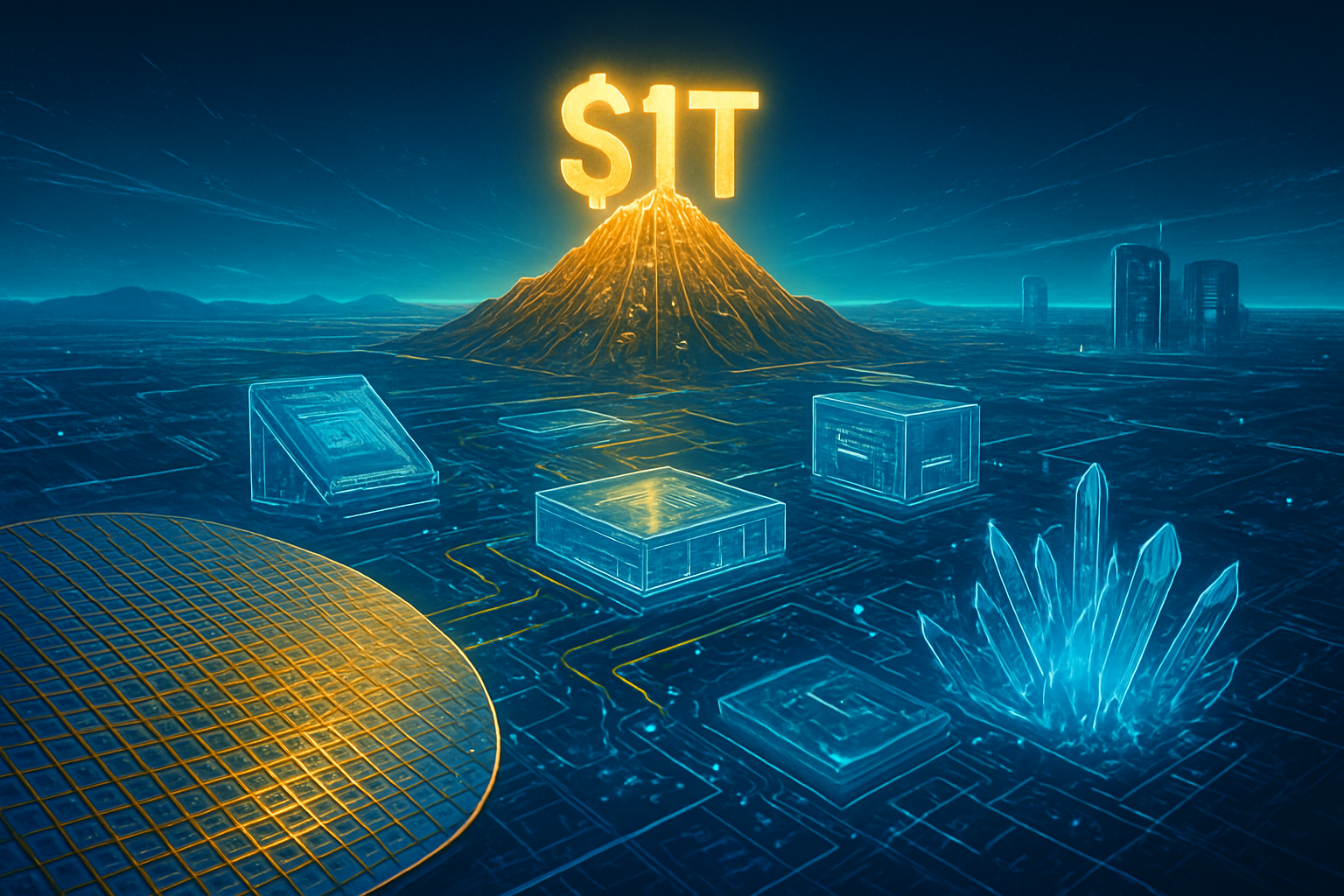
    As 2025 draws to a close, the global semiconductor industry is no longer just a cyclical component of the tech sector—it has become the foundational engine of the global economy. According to the World Semiconductor Trade Statistics (WSTS) Autumn 2025 forecast, the industry is on a trajectory to reach a staggering $975.5 billion in revenue by 2026, a 26.3% year-over-year increase that places the historic $1 trillion milestone within reach. This explosive growth is being fueled by what analysts have dubbed the "AI Supercycle," a structural shift driven by the transition from generative chatbots to autonomous AI agents that demand unprecedented levels of compute and memory.

    The significance of this milestone cannot be overstated. For decades, the chip industry was defined by the "boom-bust" cycles of PCs and smartphones. However, the current expansion is different. With hyperscale capital expenditure from giants like Microsoft (NASDAQ: MSFT) and Alphabet (NASDAQ: GOOGL) projected to exceed $600 billion in 2026, the demand for high-performance logic and specialized memory is decoupling from traditional consumer electronics trends. We are witnessing the birth of the "AI Factory" era, where silicon is the new oil and compute capacity is the ultimate measure of national and corporate power.

    The Dawn of the Rubin Era and the HBM4 Revolution

    Technically, the industry is entering its most ambitious phase yet. As of December 2024, NVIDIA (NASDAQ: NVDA) has successfully moved beyond its Blackwell architecture, with the first silicon for the Rubin platform having already taped out at TSMC (NYSE: TSM). Unlike previous generations, Rubin is a chiplet-based architecture designed specifically for the "Year of the Agent" in 2026. It integrates the new Vera CPU—featuring 88 custom ARM cores—and introduces the NVLink 6 interconnect, which doubles rack-scale bandwidth to a massive 260 TB/s.

    Complementing these logic gains is a radical shift in memory architecture. The industry is currently validating HBM4 (High-Bandwidth Memory 4), which doubles the physical interface width from 1024-bit to 2048-bit. This jump allows for bandwidth exceeding 2.0 TB/s per stack, a necessity for the massive parameter counts of next-generation agentic models. Furthermore, TSMC is officially beginning mass production of its 2nm (N2) node this month. Utilizing Gate-All-Around (GAA) nanosheet transistors for the first time, the N2 node offers a 30% power reduction over the previous 3nm generation—a critical metric as data centers struggle with escalating energy costs.

    Strategic Realignment: The Winners of the Supercycle

    The business landscape is being reshaped by those who can master the "memory-to-compute" ratio. SK Hynix (KRX: 000660) continues to lead the HBM market with a projected 50% share for 2026, leveraging its advanced MR-MUF packaging technology. However, Samsung (KRX: 005930) is mounting a significant challenge with its "turnkey" strategy, offering a one-stop-shop for HBM4 logic dies and foundry services to regain the favor of major AI chip designers. Meanwhile, Micron (NASDAQ: MU) has already announced that its entire 2026 HBM production capacity is "sold out" via long-term supply agreements, highlighting the desperation for supply among hyperscalers.

    For the "Big Five" tech giants, the strategic advantage has shifted toward custom silicon. Amazon (NASDAQ: AMZN) and Meta (NASDAQ: META) are increasingly deploying their own AI inference chips (Trainium and MTIA, respectively) to reduce their multi-billion dollar reliance on external vendors. This "internalization" of the supply chain is creating a two-tiered market: high-end training remains dominated by NVIDIA’s Rubin and Blackwell, while specialized inference is becoming a battleground for custom ASICs and ARM-based architectures.

    Sovereign AI and the Global Energy Crisis

    Beyond the balance sheets, the AI Supercycle is triggering a geopolitical and environmental reckoning. "Sovereign AI" has emerged as a dominant trend in late 2025, with nations like Saudi Arabia and the UAE treating compute capacity as a strategic national asset. This "Compute Sovereignty" movement is driving massive localized infrastructure projects, as countries seek to build domestic LLMs to ensure they are not merely "technological vassals" to US-based providers.

    However, this growth is colliding with the physical limits of power grids. The projected electricity demand for AI data centers is expected to double by 2030, reaching levels equivalent to the total consumption of Japan. This has led to an unlikely alliance between Big Tech and nuclear energy. Microsoft and Amazon have recently signed landmark deals to restart decommissioned nuclear reactors and invest in Small Modular Reactors (SMRs). In 2026, the success of a chip company may depend as much on its energy efficiency as its raw TFLOPS performance.

    The Road to 1.4nm and Photonic Computing

    Looking ahead to 2026 and 2027, the roadmap enters the "Angstrom Era." Intel (NASDAQ: INTC) is racing to be the first to deploy High-NA EUV lithography for its 14A (1.4nm) node, a move that could determine whether the company can reclaim its manufacturing crown from TSMC. Simultaneously, the industry is pivoting toward photonic computing to break the "interconnect bottleneck." By late 2026, we expect to see the first mainstream adoption of Co-Packaged Optics (CPO), using light instead of electricity to move data between GPUs, potentially reducing interconnect power consumption by 30%.

    The challenges remain daunting. The "compute divide" between nations that can afford these $100 billion clusters and those that cannot is widening. Additionally, the shift toward agentic AI—where AI systems can autonomously execute complex workflows—requires a level of reliability and low-latency processing that current edge infrastructure is only beginning to support.

    Final Thoughts: A New Era of Silicon Hegemony

    The semiconductor industry’s approach to the $1 trillion revenue milestone is more than just a financial achievement; it is a testament to the fact that silicon has become the primary driver of global productivity. As we move into 2026, the "AI Supercycle" will continue to force a radical convergence of energy policy, national security, and advanced physics.

    The key takeaways for the coming months are clear: watch the yield rates of TSMC’s 2nm production, the speed of the nuclear-to-data-center integration, and the first real-world benchmarks of NVIDIA’s Rubin architecture. We are no longer just building chips; we are building the cognitive infrastructure of the 21st century.


    This content is intended for informational purposes only and represents analysis of current AI developments.

    TokenRing AI delivers enterprise-grade solutions for multi-agent AI workflow orchestration, AI-powered development tools, and seamless remote collaboration platforms.
    For more information, visit https://www.tokenring.ai/.
  • The Silicon Supercycle: NVIDIA and Marvell Set to Redefine AI Infrastructure in 2026

    The Silicon Supercycle: NVIDIA and Marvell Set to Redefine AI Infrastructure in 2026

    As we stand at the threshold of 2026, the artificial intelligence semiconductor market has transcended its status as a high-growth niche to become the foundational engine of the global economy. With the total addressable market for AI silicon projected to hit $121.7 billion this year, the industry is witnessing a historic "supercycle" driven by an insatiable demand for compute power. While 2025 was defined by the initial ramp of Blackwell GPUs, 2026 is shaping up to be the year of architectural transition, where the focus shifts from raw training capacity to massive-scale inference and sovereign AI infrastructure.

    The landscape is currently dominated by two distinct but complementary forces: the relentless innovation of NVIDIA (NASDAQ:NVDA) in general-purpose AI hardware and the strategic rise of Marvell Technology (NASDAQ:MRVL) in the custom silicon and connectivity space. As hyperscalers like Microsoft (NASDAQ:MSFT) and Alphabet (NASDAQ:GOOGL) prepare to deploy capital expenditures exceeding $500 billion collectively in 2026, the battle for silicon supremacy has moved to the 2-nanometer (2nm) frontier, where energy efficiency and interconnect bandwidth are the new currencies of power.

    The Leap to 2nm and the Rise of the Rubin Architecture

    The technical narrative of 2026 is dominated by the transition to the 2nm manufacturing node, led by Taiwan Semiconductor Manufacturing Company (NYSE:TSM). This shift introduces Gate-All-Around (GAA) transistor architecture, which offers a 45% reduction in power consumption compared to the aging 5nm standards. For NVIDIA, this technological leap is the backbone of its next-generation "Vera Rubin" platform. While the Blackwell Ultra (B300) remains the workhorse for enterprise data centers in early 2026, the second half of the year will see the mass deployment of the Rubin R100 series.

    The Rubin architecture represents a paradigm shift in AI hardware design. Unlike previous generations that focused primarily on floating-point operations per second (FLOPS), Rubin is engineered for the "inference era." It integrates the new Vera CPU, which doubles chip-to-chip bandwidth to 1,800 GB/s, and utilizes HBM4 memory—the first generation of High Bandwidth Memory to offer 13 TB/s of bandwidth. This allows for the processing of trillion-parameter models with a fraction of the latency seen in 2024-era hardware. Industry experts note that the Rubin CPX, a specialized variant of the GPU, is specifically designed for massive-context inference, addressing the growing need for AI models that can "remember" and process vast amounts of real-time data.

    The reaction from the research community has been one of cautious optimism regarding the energy-to-performance ratio. Early benchmarks suggest that Rubin systems will provide a 3.3x performance boost over Blackwell Ultra configurations. However, the complexity of 2nm fabrication has led to a projected 50% price hike for wafers, sparking a debate about the sustainability of hardware costs. Despite this, the demand remains "sold out" through most of 2026, as the industry's largest players race to secure the first batches of 2nm silicon to maintain their competitive edge in the AGI (Artificial General Intelligence) race.

    Custom Silicon and the Optical Interconnect Revolution

    While NVIDIA captures the headlines with its flagship GPUs, Marvell Technology (NASDAQ:MRVL) has quietly become the indispensable "plumbing" of the AI data center. In 2026, Marvell's data center revenue is expected to account for over 70% of its total business, driven by two critical sectors: custom Application-Specific Integrated Circuits (ASICs) and high-speed optical connectivity. As hyperscalers like Amazon (NASDAQ:AMZN) and Meta (NASDAQ:META) seek to reduce their total cost of ownership and reliance on third-party silicon, they are increasingly turning to Marvell to co-develop custom AI accelerators.

    Marvell’s custom ASIC business is projected to grow by 25% in 2026, positioning it as a formidable challenger to Broadcom (NASDAQ:AVGO). These custom chips are optimized for specific internal workloads, such as recommendation engines or video processing, providing better efficiency than general-purpose GPUs. Furthermore, Marvell has pioneered the transition to 1.6T PAM4 DSPs (Digital Signal Processors), which are essential for the optical interconnects that link tens of thousands of GPUs into a single "supercomputer." As clusters scale to 100,000+ units, the bottleneck is no longer the chip itself, but the speed at which data can move between them.

    The strategic advantage for Marvell lies in its early adoption of Co-Packaged Optics (CPO) and its acquisition of photonic fabric specialists. By integrating optical connectivity directly onto the chip package, Marvell is addressing the "power wall"—the point at which moving data consumes more energy than processing it. This has created a symbiotic relationship where NVIDIA provides the "brains" of the data center, while Marvell provides the "nervous system." Competitive implications are significant; companies that fail to master these high-speed interconnects in 2026 will find their hardware clusters underutilized, regardless of how fast their individual GPUs are.

    Sovereign AI and the Shift to Global Infrastructure

    The broader significance of the 2026 semiconductor outlook lies in the emergence of "Sovereign AI." Nations are no longer content to rely on a few Silicon Valley giants for their AI needs; instead, they are treating AI compute as a matter of national security and economic sovereignty. Significant projects, such as the UK’s £18 billion "Stargate UK" cluster and Saudi Arabia’s $100 billion "Project Transcendence," are driving a new wave of demand that is decoupled from the traditional tech cycle. These projects require specialized, secure, and often localized semiconductor supply chains.

    This trend is also forcing a shift from AI training to AI inference. In 2024 and 2025, the market was obsessed with training larger and larger models. In 2026, the focus has moved to "serving" those models to billions of users. Inference workloads are growing at a faster compound annual growth rate (CAGR) than training, which favors hardware that can operate efficiently at the edge and in smaller regional data centers. This shift is beneficial for companies like Intel (NASDAQ:INTC) and Samsung (KRX:005930), who are aggressively courting custom silicon customers with their own 2nm and 18A process nodes as alternatives to TSMC.

    However, this massive expansion comes with significant environmental and logistical concerns. The "Gigawatt-scale" data centers of 2026 are pushing local power grids to their limits. This has made liquid cooling a standard requirement for high-density racks, creating a secondary market for thermal management technologies. The comparison to previous milestones, such as the mobile internet revolution or the shift to cloud computing, falls short; the AI silicon boom is moving at a velocity that requires a total redesign of power, cooling, and networking infrastructure every 12 to 18 months.

    Future Horizons: Beyond 2nm and the Road to 2027

    Looking toward the end of 2026 and into 2027, the industry is already preparing for the sub-2nm era. TSMC and its competitors are already outlining roadmaps for 1.4nm nodes, which will likely utilize even more exotic materials and transistor designs. The near-term development to watch is the integration of AI-driven design tools—AI chips designed by AI—which is expected to accelerate the development cycle of new architectures even further.

    The primary challenge remains the "energy gap." While 2nm GAA transistors are more efficient, the sheer volume of chips being deployed means that total energy consumption continues to rise. Experts predict that the next phase of innovation will focus on "neuromorphic" computing and alternative architectures that mimic the human brain's efficiency. In the meantime, the industry must navigate the geopolitical complexities of semiconductor manufacturing, as the concentration of advanced node production in East Asia remains a point of strategic vulnerability for the global economy.

    A New Era of Computing

    The AI semiconductor market of 2026 represents the most significant technological pivot of the 21st century. NVIDIA’s transition to the Rubin architecture and Marvell’s dominance in custom silicon and optical fabrics are not just corporate success stories; they are the blueprints for the next era of human productivity. The move to 2nm manufacturing and the rise of sovereign AI clusters signify that we have moved past the "experimental" phase of AI and into the "infrastructure" phase.

    As we move through 2026, the key metrics for success will no longer be just TFLOPS or wafer yields, but rather "performance-per-watt" and "interconnect-latency." The coming months will be defined by the first real-world deployments of 2nm Rubin systems and the continued expansion of custom ASIC programs among the hyperscalers. For investors and industry observers, the message is clear: the silicon supercycle is just getting started, and the foundations laid in 2026 will determine the trajectory of artificial intelligence for the next decade.


    This content is intended for informational purposes only and represents analysis of current AI developments.

    TokenRing AI delivers enterprise-grade solutions for multi-agent AI workflow orchestration, AI-powered development tools, and seamless remote collaboration platforms.
    For more information, visit https://www.tokenring.ai/.

  • The Nvidia Paradox: Why a $4.3 Trillion Valuation is Just the Beginning

    The Nvidia Paradox: Why a $4.3 Trillion Valuation is Just the Beginning

    As of December 19, 2025, Nvidia (NASDAQ:NVDA) has achieved a feat once thought impossible: maintaining a market valuation of $4.3 trillion while simultaneously being labeled as "cheap" by a growing chorus of Wall Street analysts. While the sheer magnitude of the company's market cap makes it the most valuable entity on Earth—surpassing the likes of Apple (NASDAQ:AAPL) and Microsoft (NASDAQ:MSFT)—the financial metrics underlying this growth suggest that the market may still be underestimating the velocity of the artificial intelligence revolution.

    The "Nvidia Paradox" refers to the counter-intuitive reality where a stock's price rises by triple digits, yet its valuation multiples actually shrink. This phenomenon is driven by earnings growth that is outstripping even the most bullish stock price targets. As the world shifts from general-purpose computing to accelerated computing and generative AI, Nvidia has positioned itself not just as a chip designer, but as the primary architect of the global "AI Factory" infrastructure.

    The Math Behind the 'Bargain'

    The primary driver for the "cheap" designation is Nvidia’s forward price-to-earnings (P/E) ratio. Despite the $4.3 trillion valuation, the stock is currently trading at approximately 24x to 25x its projected earnings for the next fiscal year. To put this in perspective, this multiple places Nvidia in the 11th percentile of its historical valuation over the last decade. For nearly 90% of the past ten years, investors were paying a higher premium for Nvidia's earnings than they are today, even though the company's competitive moat has never been wider.

    Furthermore, the Price/Earnings-to-Growth (PEG) ratio—a favorite metric for growth investors—has dipped below 0.7x. In traditional valuation theory, any PEG ratio under 1.0 is considered undervalued. This suggests that the market has not fully priced in the 50% to 60% revenue growth projected for 2026. This disconnect is largely due to the massive earnings compression caused by the Blackwell architecture's rollout, which has seen unprecedented demand, with systems reportedly sold out for the next four quarters.

    Technically, the transition from the Blackwell B200 series to the upcoming Rubin R100 platform is the catalyst for this sustained growth. While Blackwell focused on massive efficiency gains in training, the Rubin architecture—utilizing Taiwan Semiconductor Manufacturing Co.'s (NYSE:TSM) 3nm process and next-generation HBM4 memory—is designed to treat an entire data center as a single, unified computer. This "rack-scale" approach makes it increasingly difficult for analysts to compare Nvidia to traditional semiconductor firms like Intel (NASDAQ:INTC) or AMD (NASDAQ:AMD), as Nvidia is effectively selling entire "AI Factories" rather than individual components.

    Initial reactions from the industry highlight that Nvidia’s move to a one-year release cycle (Blackwell in 2024, Rubin in 2026) has created a "velocity gap" that competitors are struggling to bridge. Industry experts note that by the time rivals release a chip to compete with Blackwell, Nvidia is already shipping Rubin, effectively resetting the competitive clock every twelve months.

    The Infrastructure Moat and the Hyperscaler Arms Race

    The primary beneficiaries of Nvidia’s continued dominance are the "Hyperscalers"—Microsoft, Alphabet (NASDAQ:GOOGL), Amazon (NASDAQ:AMZN), and Meta (NASDAQ:META). These companies have collectively committed over $400 billion in capital expenditures for 2025, a significant portion of which is flowing directly into Nvidia’s coffers. For these tech giants, the risk of under-investing in AI infrastructure is far greater than the risk of over-spending, as AI becomes the core engine for cloud services, search, and social media recommendation algorithms.

    Nvidia’s strategic advantage is further solidified by its CUDA software ecosystem, which remains the industry standard for AI development. While companies like AMD (NASDAQ:AMD) have made strides with their MI300 and MI350 series chips, the "switching costs" for moving away from Nvidia’s software stack are prohibitively high for most enterprise customers. This has allowed Nvidia to capture over 90% of the data center GPU market, leaving competitors to fight for the remaining niche segments.

    The potential disruption to existing services is profound. As Nvidia scales its "AI Factories," traditional CPU-based data centers are becoming obsolete for modern workloads. This has forced a massive re-architecting of the global cloud, where the value is shifting from general-purpose processing to specialized AI inference. This shift favors Nvidia’s integrated systems, such as the NVL72 rack, which integrates 72 GPUs and 36 CPUs into a single liquid-cooled unit, providing a level of performance that standalone chips cannot match.

    Strategically, Nvidia has also insulated itself from potential spending plateaus by Big Tech. By diversifying into enterprise AI and "Sovereign AI," the company has tapped into national budgets and public sector capital, creating a secondary layer of demand that is less sensitive to the cyclical nature of the consumer tech market.

    Sovereign AI: The New Industrial Revolution

    Perhaps the most significant development in late 2025 is the rise of "Sovereign AI." Nations such as Japan, France, Saudi Arabia, and the United Kingdom have begun treating AI capabilities as a matter of national security and digital autonomy. This shift represents a "New Industrial Revolution," where data is the raw material and Nvidia’s AI Factories are the refineries. By building domestic AI infrastructure, these nations ensure that their cultural values, languages, and sensitive data remain within their own borders.

    This movement has transformed Nvidia from a silicon vendor into a geopolitical partner. Sovereign AI initiatives are projected to contribute over $20 billion to Nvidia’s revenue in the coming fiscal year, providing a hedge against any potential cooling in the U.S. cloud market. This trend mirrors the historical development of national power grids or telecommunications networks; countries that do not own their AI infrastructure risk becoming "digital colonies" of foreign tech powers.

    Comparisons to previous milestones, such as the mobile internet or the dawn of the web, often fall short because of the speed of AI adoption. While the internet took decades to fully transform the global economy, the transition to AI-driven productivity is happening in a matter of years. The "Inference Era"—the phase where AI models are not just being trained but are actively running millions of tasks per second—is driving a recurring demand for "intelligence tokens" that functions more like a utility than a traditional hardware cycle.

    However, this dominance does not come without concerns. Antitrust scrutiny in the U.S. and Europe remains a persistent headwind, as regulators worry about Nvidia’s "full-stack" lock-in. Furthermore, the immense power requirements of AI Factories have sparked a global race for energy solutions, leading Nvidia to partner with energy providers to optimize the power-to-performance ratio of its massive GPU clusters.

    The Road to Rubin and Beyond

    Looking ahead to 2026, the tech world is focused on the mass production of the Rubin architecture. Named after astronomer Vera Rubin, this platform will feature the new "Vera" CPU and HBM4 memory, promising a 3x performance leap over Blackwell. This rapid cadence is designed to keep Nvidia ahead of the "AI scaling laws," which dictate that as models grow larger, they require exponentially more compute power to remain efficient.

    In the near term, expect to see Nvidia move deeper into the field of physical AI and humanoid robotics. The company’s GR00T project, a foundation model for humanoid robots, is expected to see its first large-scale industrial deployments in 2026. This expands Nvidia’s Total Addressable Market (TAM) from the data center to the factory floor, as AI begins to interact with and manipulate the physical world.

    The challenge for Nvidia will be managing its massive supply chain. Producing 1,000 AI racks per week is a logistical feat that requires flawless execution from partners like TSMC and SK Hynix. Any disruption in the semiconductor supply chain or a geopolitical escalation in the Taiwan Strait remains the primary "black swan" risk for the company’s $4.3 trillion valuation.

    A New Benchmark for the Intelligence Age

    The Nvidia Paradox serves as a reminder that in a period of exponential technological change, traditional valuation metrics can be misleading. A $4.3 trillion market cap is a staggering number, but when viewed through the lens of a 25x forward P/E and a 0.7x PEG ratio, the stock looks more like a value play than a speculative bubble. Nvidia has successfully transitioned from a gaming chip company to the indispensable backbone of the global intelligence economy.

    Key takeaways for investors and industry observers include the company's shift toward a one-year innovation cycle, the emergence of Sovereign AI as a major revenue pillar, and the transition from model training to large-scale inference. As we head into 2026, the primary metric to watch will be the "utilization of intelligence"—how effectively companies and nations can turn their massive investments in Nvidia hardware into tangible economic productivity.

    The coming months will likely see further volatility as the market digests these massive figures, but the underlying trend is clear: the demand for compute is the new oil of the 21st century. As long as Nvidia remains the only company capable of refining that oil at scale, its "expensive" valuation may continue to be the biggest bargain in tech.


    This content is intended for informational purposes only and represents analysis of current AI developments.

    TokenRing AI delivers enterprise-grade solutions for multi-agent AI workflow orchestration, AI-powered development tools, and seamless remote collaboration platforms.
    For more information, visit https://www.tokenring.ai/.

  • The Rise of Sovereign AI: Why Nations are Racing to Build Their Own Silicon Ecosystems

    The Rise of Sovereign AI: Why Nations are Racing to Build Their Own Silicon Ecosystems

    As of late 2025, the global technology landscape has shifted from a race for software dominance to a high-stakes battle for "Sovereign AI." No longer content with renting compute power from a handful of Silicon Valley giants, nations are aggressively building their own end-to-end AI stacks—encompassing domestic data, indigenous models, and, most critically, homegrown semiconductor ecosystems. This movement represents a fundamental pivot in geopolitics, where digital autonomy is now viewed as the ultimate prerequisite for national security and economic survival.

    The urgency behind this trend is driven by a desire to escape the "compute monopoly" held by a few major players. By investing billions into custom silicon and domestic fabrication, countries like Japan, India, France, and the UAE are attempting to insulate themselves from supply chain shocks and foreign export controls. The result is a fragmented but rapidly innovating global market where "AI nationalism" is the new status quo, fueling an unprecedented demand for specialized hardware tailored to local languages, cultural norms, and specific industrial needs.

    The Technical Frontier: From General GPUs to Custom ASICs

    The technical backbone of the Sovereign AI movement is a shift away from general-purpose hardware toward Application-Specific Integrated Circuits (ASICs) and advanced fabrication nodes. In Japan, the government-backed venture Rapidus, in collaboration with IBM (NYSE: IBM), has accelerated its timeline to achieve mass production of 2nm logic chips by 2027. This leap is designed to power a new generation of domestic AI supercomputers that prioritize energy efficiency—a critical factor as AI power consumption threatens national grids. Japan’s Sakura Internet (TYO: 3778) has already deployed massive clusters utilizing NVIDIA (NASDAQ: NVDA) Blackwell architecture, but the long-term goal remains a transition to Japanese-designed silicon.

    In India, the technical focus has landed on the "IndiaAI Mission," which recently saw the deployment of the PARAM Rudra supercomputer series across major academic hubs. Unlike previous iterations, these systems are being integrated with India’s first indigenously designed 3nm chips, aimed at processing "Vikas" (developmental) data. Meanwhile, in France, the Jean Zay supercomputer is being augmented with wafer-scale engines from companies like Cerebras, allowing for the training of massive foundation models like those from Mistral AI without the latency overhead of traditional GPU clusters.

    This shift differs from previous approaches because it prioritizes "data residency" at the hardware level. Sovereign systems are being designed with hardware-level encryption and "clean room" environments that ensure sensitive state data never leaves domestic soil. Industry experts note that this is a departure from the "cloud-first" era, where data was often processed in whichever jurisdiction offered the cheapest compute. Now, the priority is "trusted silicon"—hardware whose entire provenance, from design to fabrication, can be verified by the state.

    Market Disruptions and the Rise of the "National Stack"

    The push for Sovereign AI is creating a complex web of winners and losers in the corporate world. While NVIDIA (NASDAQ: NVDA) remains the dominant provider of AI training hardware, the rise of national initiatives is forcing the company to adapt its business model. NVIDIA has increasingly moved toward "Sovereign AI as a Service," helping nations build local data centers while navigating complex export regulations. However, the move toward custom silicon presents a long-term threat to NVIDIA’s dominance, as nations look to AMD (NASDAQ: AMD), Broadcom (NASDAQ: AVGO), and Marvell Technology (NASDAQ: MRVL) for custom ASIC design services.

    Cloud giants like Oracle (NYSE: ORCL) and Microsoft (NASDAQ: MSFT) are also pivoting. Oracle has been particularly aggressive in the Middle East, partnering with the UAE’s G42 to build the "Stargate UAE" cluster—a 1-gigawatt facility that functions as a sovereign cloud. This strategic positioning allows these tech giants to remain relevant by acting as the infrastructure partners for national projects, even as those nations move toward hardware independence. Conversely, startups specializing in AI inferencing, such as Groq, are seeing massive inflows of sovereign wealth, with Saudi Arabia’s Alat investing heavily to build the world’s largest inferencing hub in the Kingdom.

    The competitive landscape is also seeing the emergence of "Regional Champions." Companies like Samsung Electronics (KRX: 005930) and TSMC (NYSE: TSM) are being courted by nations with hundred-billion-dollar incentives to build domestic mega-fabs. The UAE, for instance, is currently in advanced negotiations to bring TSMC production to the Gulf, a move that would fundamentally alter the semiconductor supply chain and reduce the world's reliance on the Taiwan Strait.

    Geopolitical Significance and the New "Oil"

    The broader significance of Sovereign AI cannot be overstated; it is the "space race" of the 21st century. In 2025, data is no longer just "the new oil"—it is the refined fuel that powers national intelligence. By building domestic AI ecosystems, nations are ensuring that the economic "rent" generated by AI stays within their borders. France’s President Macron recently highlighted this, noting that a nation that exports its raw data to buy back "foreign intelligence" is effectively a digital colony.

    However, this trend brings significant concerns regarding fragmentation. As nations build AI models aligned with their own cultural and legal frameworks, the "splinternet" is evolving into the "split-intelligence" era. A model trained on Saudi values may behave fundamentally differently from one trained on French or Indian data. This raises questions about global safety standards and the ability to regulate AI on an international scale. If every nation has its own "sovereign" black box, finding common ground on AI alignment and existential risk becomes exponentially more difficult.

    Comparatively, this milestone mirrors the development of national nuclear programs in the mid-20th century. Just as nuclear energy and weaponry became the hallmarks of a superpower, AI compute capacity is now the metric of a nation's "hard power." The "Pax Silica" alliance—a group including the U.S., Japan, and South Korea—is an attempt to create a "trusted" supply chain, effectively creating a technological bloc that stands in opposition to the AI development tracks of China and its partners.

    The Horizon: 2nm Production and Beyond

    Looking ahead, the next 24 to 36 months will be defined by the "Tapeout Race." Saudi Arabia is expected to see its first domestically designed AI chips hit the market by mid-2026, while Japan’s Rapidus aims to have its 2nm pilot line operational by late 2025. These developments will likely lead to a surge in edge-AI applications, where custom silicon allows for high-performance AI to be embedded in everything from national power grids to autonomous defense systems without needing a constant connection to a centralized cloud.

    The long-term challenge remains the talent war. While a nation can buy GPUs and build fabs, the specialized engineering talent required to design world-class silicon is still concentrated in a few global hubs. Experts predict that we will see a massive increase in "educational sovereignism," with countries like India and the UAE launching aggressive programs to train hundreds of thousands of semiconductor engineers. The ultimate goal is a "closed-loop" ecosystem where a nation can design, manufacture, and train AI entirely within its own borders.

    A New Era of Digital Autonomy

    The rise of Sovereign AI marks the end of the era of globalized, borderless technology. As of December 2025, the "National Stack" has become the standard for any country with the capital and ambition to compete on the world stage. The race to build domestic semiconductor ecosystems is not just about chips; it is about the preservation of national identity and the securing of economic futures in an age where intelligence is the primary currency.

    In the coming months, watchers should keep a close eye on the "Stargate" projects in the Middle East and the progress of the Rapidus 2nm facility in Japan. These projects will serve as the litmus test for whether a nation can truly break free from the gravity of Silicon Valley. While the challenges are immense—ranging from energy constraints to talent shortages—the momentum behind Sovereign AI is now irreversible. The map of the world is being redrawn, one transistor at a time.


    This content is intended for informational purposes only and represents analysis of current AI developments.

    TokenRing AI delivers enterprise-grade solutions for multi-agent AI workflow orchestration, AI-powered development tools, and seamless remote collaboration platforms.
    For more information, visit https://www.tokenring.ai/.

  • The Goldilocks Rally: How Cooling Inflation and the ‘Sovereign AI’ Boom Pushed Semiconductors to All-Time Highs

    The Goldilocks Rally: How Cooling Inflation and the ‘Sovereign AI’ Boom Pushed Semiconductors to All-Time Highs

    As 2025 draws to a close, the global financial markets are witnessing a historic convergence of macroeconomic stability and relentless technological expansion. On December 18, 2025, the semiconductor sector solidified its position as the undisputed engine of the global economy, with the PHLX Semiconductor Sector (SOX) Index hovering near its recent all-time high of 7,490.28. This massive rally, which has seen chip stocks surge by over 35% year-to-date, is being fueled by a "perfect storm": a decisive cooling of inflation that has allowed the Federal Reserve to pivot toward aggressive interest rate cuts, and a second wave of artificial intelligence (AI) investment known as "Sovereign AI."

    The significance of this moment cannot be overstated. For the past two years, the tech sector has grappled with the dual pressures of high borrowing costs and "AI skepticism." However, the November Consumer Price Index (CPI) report, which showed inflation dropping to a surprising 2.7%—well below the 3.1% forecast—has effectively silenced the bears. With the Federal Open Market Committee (FOMC) delivering its third consecutive 25-basis-point rate cut on December 10, the cost of capital for massive AI infrastructure projects has plummeted just as the industry transitions from the "training phase" to the even more compute-intensive "inference phase."

    The Rise of the 'Rubin' Era and the 3nm Transition

    The technical backbone of this rally lies in the rapid acceleration of the semiconductor roadmap, specifically the transition to 3nm process nodes and the introduction of next-generation architectures. NVIDIA (NASDAQ: NVDA) has dominated headlines with the formal preview of its "Vera Rubin" architecture, the successor to the highly successful Blackwell platform. Built on TSMC (NYSE: TSM) N3P (3nm) process, the Vera Rubin R100 GPU represents a paradigm shift from individual accelerators to "AI Factories." By utilizing advanced CoWoS-L packaging, NVIDIA has achieved a 4x reticle design, allowing for a staggering 50 PFLOPS of FP4 precision—roughly 2.5 times the performance of the Blackwell B200.

    While NVIDIA remains the leader, AMD (NASDAQ: AMD) has successfully carved out a massive share of the AI inference market with its Instinct MI350 series. Launched in late 2025, the MI350 is built on the CDNA 4 architecture and features 288GB of HBM3e memory. AMD’s strategic integration of ZT Systems has allowed the company to offer full-stack AI rack solutions that compete directly with NVIDIA’s GB200 NVL72 systems. Industry experts note that the MI350’s 35x improvement in inference efficiency over the previous generation has made it the preferred choice for hyperscalers like Meta (NASDAQ: META) and Microsoft (NASDAQ: MSFT), who are increasingly focused on the operational costs of running live AI models.

    The "bottleneck breaker" of late 2025, however, is High Bandwidth Memory 4 (HBM4). As GPU logic speeds have outpaced data delivery, the "Memory Wall" became a critical concern for AI developers. The shift to HBM4, led by SK Hynix (KRX: 000660) and Micron (NASDAQ: MU), has doubled the interface width to 2048-bit, providing up to 13.5 TB/s of bandwidth. This breakthrough allows a single GPU to hold trillion-parameter models in local memory, drastically reducing the latency and energy consumption associated with data transfer. Micron’s blowout earnings report on December 17, which sent the stock up 15%, served as a validation of this trend, proving that the AI rally is no longer just about the chips, but the entire memory and networking ecosystem.

    Hyperscalers and the New Competitive Landscape

    The cooling inflation environment has acted as a green light for "Big Tech" to accelerate their capital expenditure (Capex). Major players like Amazon (NASDAQ: AMZN) and Google (NASDAQ: GOOGL) have signaled that their 2026 budgets will prioritize AI infrastructure over almost all other initiatives. This has created a massive backlog for foundries like TSMC, which is currently operating at 100% capacity for its advanced CoWoS packaging. The strategic advantage has shifted toward companies that can secure guaranteed supply; consequently, long-term supply agreements have become the most valuable currency in Silicon Valley.

    For the major AI labs and tech giants, the competitive implications are profound. The ability to deploy "Vera Rubin" clusters at scale in 2026 will likely determine the leaders of the next generation of Large Language Models (LLMs). Companies that hesitated during the high-interest-rate environment of 2023-2024 are now finding themselves at a significant disadvantage, as the "compute divide" between the haves and the have-nots continues to widen. Startups, meanwhile, are pivoting toward "Edge AI" and specialized inference chips to avoid competing directly with the trillion-dollar hyperscalers for data center space.

    The market positioning of ASML (NASDAQ: ASML) and ARM (NASDAQ: ARM) has also strengthened. As the industry moves toward 2nm production in late 2025, ASML’s High-NA EUV lithography machines have become indispensable. Similarly, ARM’s custom "Vera CPU" and its integration into NVIDIA’s Grace-Rubin superchips have cemented the Arm architecture as the standard for AI orchestration, challenging the traditional dominance of x86 processors in the data center.

    Sovereign AI: The Geopolitical Catalyst

    Beyond the corporate sector, the late 2025 rally is being propelled by the "Sovereign AI" movement. Nations are now treating compute capacity as a critical national resource, similar to energy or food security. This trend has moved from theory to massive capital deployment. Saudi Arabia’s HUMAIN Project, a $77 billion initiative, has already secured tens of thousands of Blackwell and Rubin chips to build domestic AI clusters powered by the Kingdom's vast solar resources. Similarly, the UAE’s "Stargate" cluster, built in partnership with Microsoft and OpenAI, aims to reach 5GW of capacity by the end of the decade.

    This shift represents a fundamental change in the AI landscape. Unlike the early days of the AI boom, which were driven by a handful of US-based tech companies, the current phase is global. France has committed €10 billion to build a decarbonized supercomputer powered by nuclear energy, while India’s IndiaAI Mission is deploying over 50,000 GPUs to support indigenous model training. This "National Compute" trend provides a massive, non-cyclical floor for semiconductor demand, as government budgets are less sensitive to the short-term market fluctuations that typically affect the tech sector.

    However, this global race for AI supremacy has raised concerns regarding energy consumption and "compute nationalism." The massive power requirements of these national clusters—some reaching 1GW or more—are straining local power grids and forcing a rapid acceleration of modular nuclear reactor (SMR) technology. Furthermore, as countries build their own "walled gardens" of AI infrastructure, the dream of a unified, global AI ecosystem is being replaced by a fragmented landscape of culturally and politically aligned models.

    The Road to 2nm and Beyond

    Looking ahead, the semiconductor sector shows no signs of slowing down. The most anticipated development for 2026 is the transition to mass production of 2nm chips. TSMC has already begun accepting orders for its 2nm process, with Apple (NASDAQ: AAPL) and NVIDIA expected to be the first in line. This transition will introduce "GAAFET" (Gate-All-Around Field-Effect Transistor) technology, offering a 15% speed improvement and a 30% reduction in power consumption compared to the 3nm node.

    In the near term, the industry will focus on the deployment of HBM4-equipped GPUs and the integration of "Liquid-to-Air" cooling systems in data centers. As power densities per rack exceed 100kW, traditional air cooling is no longer viable, leading to a boom for specialized thermal management companies. Experts predict that the next frontier will be "Optical Interconnects," which use light instead of electricity to move data between chips, potentially solving the final bottleneck in AI scaling.

    The primary challenge remains the geopolitical tension surrounding the semiconductor supply chain. While the "Goldilocks" macro environment has eased financial pressures, the concentration of advanced manufacturing in East Asia remains a systemic risk. Efforts to diversify production to the United States and Europe through the CHIPS Act are progressing, but it will take several more years before these regions can match the scale and efficiency of the existing Asian ecosystem.

    A Historic Milestone for the Silicon Economy

    The semiconductor rally of late 2025 marks a definitive turning point in economic history. It is the moment when "Silicon" officially replaced "Oil" as the world's most vital commodity. The combination of cooling inflation and the explosion of Sovereign AI has created a structural demand for compute that is decoupled from traditional business cycles. For investors, the takeaway is clear: semiconductors are no longer a cyclical "tech play," but the fundamental infrastructure of the 21st-century economy.

    As we move into 2026, the industry's focus will shift from "how many chips can we build?" to "how much power can we find?" The energy constraints of AI factories will likely be the defining narrative of the coming year. For now, however, the "Santa Claus Rally" in chip stocks provides a festive end to a year of extraordinary growth. Investors should keep a close eye on the first batch of 2nm test results from TSMC and the official launch of the Vera Rubin platform in early 2026, as these will be the next major catalysts for the sector.


    This content is intended for informational purposes only and represents analysis of current AI developments.

    TokenRing AI delivers enterprise-grade solutions for multi-agent AI workflow orchestration, AI-powered development tools, and seamless remote collaboration platforms.
    For more information, visit https://www.tokenring.ai/.


    Note: Public companies mentioned include NVIDIA (NASDAQ: NVDA), AMD (NASDAQ: AMD), TSMC (NYSE: TSM), Micron (NASDAQ: MU), ASML (NASDAQ: ASML), ARM (NASDAQ: ARM), Microsoft (NASDAQ: MSFT), Amazon (NASDAQ: AMZN), Meta (NASDAQ: META), Apple (NASDAQ: AAPL), Alphabet/Google (NASDAQ: GOOGL), Samsung (KRX: 005930), and SK Hynix (KRX: 000660).

  • Korea’s AI Ambition Ignites: NVIDIA Delivers 260,000 GPUs in Landmark Deal

    Korea’s AI Ambition Ignites: NVIDIA Delivers 260,000 GPUs in Landmark Deal

    SEOUL, South Korea – November 1, 2025 – South Korea is poised to dramatically accelerate its artificial intelligence capabilities as NVIDIA (NASDAQ: NVDA) embarks on a monumental initiative to supply over 260,000 high-performance GPUs to the nation. This landmark agreement, announced on October 31, 2025, during the Asia-Pacific Economic Cooperation (APEC) summit in Gyeongju, signifies an unprecedented investment in AI infrastructure that promises to cement Korea's position as a global AI powerhouse. The deal, estimated to be worth between $7.8 billion and $10.5 billion by 2030, is set to fundamentally reshape the technological landscape of the entire region.

    The immediate significance of this massive influx of computing power cannot be overstated. With an projected increase in AI GPU capacity from approximately 65,000 to over 300,000 units, South Korea is rapidly establishing itself as one of the world's premier AI computing hubs. This strategic move is not merely about raw processing power; it's a foundational step towards achieving "Sovereign AI," fostering national technological self-reliance, and driving an AI transformation across the nation's most vital industries.

    Unprecedented AI Infrastructure Boost: The Blackwell Era Arrives in Korea

    The core of this monumental supply chain initiative centers on NVIDIA's latest Blackwell series GPUs, representing the cutting edge of AI acceleration technology. These GPUs are designed to handle the most demanding AI workloads, from training colossal large language models (LLMs) to powering complex simulations and advanced robotics. The technical specifications of the Blackwell architecture boast significant leaps in processing power, memory bandwidth, and energy efficiency compared to previous generations, enabling faster model training, more intricate AI deployments, and a substantial reduction in operational costs for compute-intensive tasks.

    A significant portion of this allocation, 50,000 GPUs, is earmarked for the South Korean government's Ministry of Science and ICT, specifically to bolster the National AI Computing Center and other public cloud service providers. This strategic deployment aims to accelerate the development of proprietary AI foundation models tailored to Korean linguistic and cultural nuances, fostering a robust domestic AI ecosystem. This approach differs from simply relying on global AI models by enabling localized innovation and ensuring data sovereignty, a critical aspect of national technological security.

    Initial reactions from the AI research community and industry experts have been overwhelmingly positive, bordering on euphoric. Dr. Kim Min-Joon, a leading AI researcher at KAIST, remarked, "This isn't just an upgrade; it's a paradigm shift. The sheer scale of this deployment will allow our researchers and engineers to tackle problems previously deemed computationally infeasible, pushing the boundaries of what's possible in AI." The focus on establishing "AI factories" within major conglomerates also signifies a pragmatic, industry-driven approach to AI integration, moving beyond theoretical research to practical, large-scale application.

    Reshaping the AI Competitive Landscape: A Boost for Korean Titans

    This massive GPU infusion is set to profoundly impact South Korea's leading AI companies, tech giants, and burgeoning startups. The primary beneficiaries are the nation's industrial behemoths: Samsung Electronics (KRX: 005930), SK Group (KRX: 034730), Hyundai Motor Group (KRX: 005380), and Naver Cloud (KRX: 035420). Each of these conglomerates will receive substantial allocations, enabling them to establish dedicated "AI factories" and embed advanced AI capabilities deep within their operational frameworks.

    Samsung Electronics, for instance, will deploy 50,000 GPUs to integrate AI across its semiconductor manufacturing processes, leveraging digital twin technology for real-time optimization and predictive maintenance. This will not only enhance efficiency but also accelerate the development of next-generation intelligent devices, including advanced home robots. Similarly, SK Group's allocation of 50,000 GPUs will fuel the creation of Asia's first industrial AI cloud, focusing on semiconductor research, digital twin applications, and AI agent development, providing critical AI computing resources to a wider ecosystem of startups and small manufacturers.

    Hyundai Motor Group's 50,000 GPUs will accelerate AI model training and validation for advancements in manufacturing, autonomous driving, and robotics, potentially disrupting existing automotive R&D cycles and accelerating time-to-market for AI-powered vehicles. Naver Cloud's acquisition of 60,000 GPUs will significantly expand its AI infrastructure, allowing it to develop a highly specialized Korean-language large language model (LLM) and a next-generation "physical AI" platform bridging digital and physical spaces. These moves will solidify their market positioning against global competitors and provide strategic advantages in localized AI services and industrial applications.

    Broader Significance: Korea's Ascent in the Global AI Arena

    This landmark NVIDIA-Korea collaboration fits squarely into the broader global AI landscape as nations increasingly vie for technological supremacy and "AI sovereignty." The sheer scale of this investment signals South Korea's unwavering commitment to becoming a top-tier AI nation, challenging the dominance of established players like the United States and China. It represents a strategic pivot towards building robust, self-sufficient AI capabilities rather than merely being a consumer of foreign AI technologies.

    The impacts extend beyond national prestige. This initiative is expected to drive significant economic growth, foster innovation across various sectors, and create a highly skilled workforce in AI and related fields. Potential concerns, however, include the immense power consumption associated with such a large-scale AI infrastructure, necessitating significant investments in renewable energy and efficient cooling solutions. There are also ethical considerations surrounding the widespread deployment of advanced AI, which the Korean government will need to address through robust regulatory frameworks.

    Comparisons to previous AI milestones underscore the transformative nature of this deal. While breakthroughs like AlphaGo's victory over Go champions captured public imagination, this NVIDIA deal represents a foundational, infrastructural investment akin to building the highways and power grids of the AI era. It's less about a single AI achievement and more about enabling an entire nation to achieve a multitude of AI breakthroughs, positioning Korea as a critical hub in the global AI supply chain, particularly for high-bandwidth memory (HBM) which is crucial for NVIDIA's GPUs.

    The Road Ahead: AI Factories and Sovereign Innovation

    The near-term developments will focus on the rapid deployment and operationalization of these 260,000 GPUs across the various recipient organizations. We can expect to see an accelerated pace of AI model development, particularly in areas like advanced manufacturing, autonomous systems, and specialized LLMs. In the long term, these "AI factories" are anticipated to become central innovation hubs, fostering new AI-driven products, services, and entirely new industries.

    Potential applications and use cases on the horizon are vast, ranging from highly personalized healthcare solutions powered by AI diagnostics to fully autonomous smart cities managed by sophisticated AI systems. The focus on "physical AI" and digital twins suggests a future where AI seamlessly integrates with the physical world, revolutionizing everything from industrial robotics to urban planning. However, challenges remain, including the continuous need for highly skilled AI talent, ensuring data privacy and security in a hyper-connected AI ecosystem, and developing robust ethical guidelines for AI deployment.

    Experts predict that this investment will not only boost Korea's domestic AI capabilities but also attract further international collaboration and investment, solidifying its role as a key player in global AI R&D. The competitive landscape for AI hardware and software will intensify, with NVIDIA reinforcing its dominant position while simultaneously boosting its HBM suppliers in Korea. The coming years will reveal the full extent of this transformative initiative.

    A New Chapter for Korean AI: Unlocking Unprecedented Potential

    In summary, NVIDIA's delivery of 260,000 GPUs to South Korea marks a pivotal moment in the nation's technological history and a significant development in the global AI race. This massive investment in AI infrastructure, particularly the cutting-edge Blackwell series, is set to dramatically enhance Korea's computing power, accelerate the development of sovereign AI capabilities, and catalyze AI transformation across its leading industries. The establishment of "AI factories" within conglomerates like Samsung, SK, Hyundai, and Naver will drive innovation and create new economic opportunities.

    This development's significance in AI history is profound, representing a national-level commitment to building the foundational compute power necessary for the next generation of AI. It underscores the strategic importance of hardware in the AI era and positions South Korea as a critical hub for both AI development and the semiconductor supply chain.

    In the coming weeks and months, industry watchers will be closely observing the deployment progress, the initial performance benchmarks of the new AI factories, and the first wave of AI innovations emerging from this unprecedented computational boost. This initiative is not merely an upgrade; it is a declaration of intent, signaling Korea's ambition to lead the world into the future of artificial intelligence.


    This content is intended for informational purposes only and represents analysis of current AI developments.

    TokenRing AI delivers enterprise-grade solutions for multi-agent AI workflow orchestration, AI-powered development tools, and seamless remote collaboration platforms.
    For more information, visit https://www.tokenring.ai/.

  • GITEX GLOBAL 2025 Wraps Up: A New Era of AI-Native Societies and Unprecedented Global Collaboration

    GITEX GLOBAL 2025 Wraps Up: A New Era of AI-Native Societies and Unprecedented Global Collaboration

    Dubai, UAE – October 17, 2025 – GITEX GLOBAL 2025, the world's largest and most influential technology event, concluded today in Dubai, marking its 45th edition with record international participation and a resounding focus on the acceleration towards "AI-native societies." Over five days, the event, co-located with the startup showcase Expand North Star, transformed the Dubai World Trade Centre (DWTC) and Dubai Harbour into a nexus for global technological discourse, cementing Dubai's strategic position as a leading hub for innovation. The overwhelming sentiment was clear: artificial intelligence is no longer a futuristic concept but the foundational backbone of global digital economies and societal transformation.

    The event's conclusion signifies a pivotal moment for the tech industry, reaffirming the UAE's leadership in digital transformation and AI innovation. With unprecedented scale and diversity, GITEX GLOBAL 2025 brought together over 6,800 technology companies, 2,000 startups, and delegations from more than 180 countries. This convergence fostered cross-border collaboration, intense deal-making, and critical partnerships, setting the agenda for what is widely being termed the "decade of AI." Discussions centered on ethical AI use, regulatory frameworks, and the urgent need for secure, sovereign AI infrastructure, signaling a proactive global effort to co-architect innovation rather than merely react to technological advancements.

    Breakthrough Innovations Chart the Course for an AI-Driven Future

    GITEX GLOBAL 2025 served as the launchpad for a plethora of groundbreaking AI innovations, showcasing advancements that promise to redefine human interaction with technology and revolutionize critical sectors from healthcare to governance. These breakthroughs underscored a significant shift from theoretical AI discussions to tangible, real-world applications.

    Among the most captivating showcases were the advancements in smart contact lenses for glucose monitoring by XPANCEO. This deep-tech company unveiled prototypes integrating miniature electrochemical sensors into contact lenses, capable of detecting glucose levels in tear fluid. This non-invasive, continuous monitoring approach represents a significant departure from traditional blood tests or subcutaneous CGMs, offering a more convenient and less intrusive method for diabetes management. The lenses also demonstrated efficient wireless power links and microdisplays for augmented reality, hinting at a future where health monitoring and digital interaction merge seamlessly within wearable optics. Initial reactions hailed these lenses as a "glimpse into the next frontier of wearable computing," with the potential to be life-changing for millions.

    Another monumental revelation came from Paradromics, led by CEO Matt Angle, which announced a "major milestone in medical science" with the world's first successful brain-computer implant (BCI). Implanted in the motor cortex, this high-data BCI aims to enable individuals who cannot speak to communicate by directly translating their intended speech from neural activity. This represents a leap beyond earlier, more rudimentary BCI systems, offering higher bandwidth and sophisticated decoding algorithms for direct and impactful clinical applications. Experts at GITEX GLOBAL 2025 lauded this as a significant step towards "life-changing innovations at the intersection of science and technology."

    In the realm of biotechnology, Mammoth Biosciences, co-founded by CEO Trevor Martin, presented how their Nobel-winning CRISPR gene-editing technology is being dramatically advanced through AI integration. By leveraging AI, Mammoth Biosciences aims to enhance the precision, efficiency, and safety of gene editing, accelerating drug discovery and therapeutic development. Their focus on curing genetic diseases across the liver, muscle, and brain by "rewriting the code of life" using AI-driven diagnostics generated immense excitement. Martin's session on "Synthetic Biology: A World Without Disease and Superhuman Possibilities" captured the imagination of audiences, with the AI research community viewing this as a powerful convergence driving breakthroughs towards a "world without disease."

    Furthermore, Abu Dhabi's Department of Government Enablement (DGE) unveiled TAMM AutoGov, heralded as the "world's first AI Public Servant." This platform, part of the broader TAMM 4.0 upgrade, autonomously manages over 1,100 recurring administrative tasks such as license renewals and bill payments. Leveraging Microsoft Azure OpenAI Service (NASDAQ: MSFT) and G42 Compass 2.0, which includes the high-performing Arabic Large Language Model JAIS, TAMM AutoGov moves beyond traditional e-government services to anticipatory governance. It proactively predicts citizen needs and triggers services, aiming to free individuals from administrative burdens. This transformative platform was praised as a "transformative moment in AI history," showcasing Abu Dhabi's ambition to become the world's first "AI-native government" by 2027.

    Shifting Tides: Corporate Impact and Competitive Realignments

    The AI breakthroughs and the sheer scale of participation at GITEX GLOBAL 2025 are poised to profoundly reshape the competitive landscape for AI companies, tech giants, and startups alike. The event underscored a global "capital arms race" in AI infrastructure and an intensifying competition for AI supremacy.

    Tech giants like Microsoft (NASDAQ: MSFT), Amazon (AWS) (NASDAQ: AMZN), Google Cloud (NASDAQ: GOOGL), and Alibaba Cloud (NYSE: BABA) stand to benefit immensely as the foundational infrastructure providers for AI development and deployment. Their extensive cloud offerings, AI-optimized data analytics, and hybrid cloud orchestration are in high demand for building "sovereign AI" infrastructures that meet national demands for data residency and control. These companies leveraged GITEX to showcase their comprehensive AI ecosystems, from Microsoft's Copilot and Agentic AI push to Google AI's Gemini models, solidifying their roles in shaping large-scale AI applications.

    Specialized AI companies and startups also found a crucial platform. Mammoth Biosciences, Paradromics, and XPANCEO are gaining significant strategic advantages by innovating in nascent but high-potential AI domains, attracting early investment and talent. The co-located Expand North Star event, celebrating its tenth anniversary, connected over 2,000 startups with 1,200 investors, providing vital opportunities for funding, exposure, and partnerships. Startups focusing on niche, domain-specific AI applications across Web3, AR, cybersecurity, fintech, digital health, and sustainability are particularly well-positioned to thrive. However, a "market correction" is anticipated, where undifferentiated AI companies may struggle against larger, more integrated players.

    The competitive implications are stark. The event highlighted an ongoing global race for AI technological innovation, intensifying competition among industry giants. Gartner anticipates a market correction in the agentic AI space, leading to larger tech companies acquiring smaller, specialized AI firms to bolster their portfolios. The sheer scale of data and computational power required for advanced AI continues to give cloud providers a significant edge. Furthermore, companies that prioritize and demonstrably implement responsible and ethical AI practices, such as Anthropic, will likely gain a competitive advantage in a world increasingly concerned with AI's societal impact. The rise of open-source AI models also democratizes development, posing a challenge to proprietary models while fostering a collaborative ecosystem.

    The potential for disruption to existing products and services is immense. The proliferation of agentic AI, capable of autonomous decision-making and task execution, threatens to entirely replace existing products focused on manual tasks. Generative AI is reshaping creative industries, while AI-powered diagnostics could significantly alter traditional medical services. Advancements in autonomous vehicles and flying cars, showcased by XPeng AeroHT (NYSE: XPEV) and GOVY, could disrupt established transportation models. The increasing sophistication of AI-driven cyberattacks necessitates equally advanced AI-led security platforms, rendering older solutions less effective. Companies that fail to integrate AI to augment human capabilities rather than simply replace them risk falling behind.

    A New Global AI Paradigm: Broader Significance and Societal Shifts

    GITEX GLOBAL 2025 underscored a profound shift in the broader AI landscape, moving from fragmented adoption to a concerted global effort towards building "AI-native societies" and "nation-scale intelligence strategies." This signifies a deep, systemic integration of AI into governance, economic infrastructure, and daily life, marking a crucial trend in AI's evolution from research to large-scale industrial transformation.

    The event highlighted a global "capital arms race" in AI infrastructure, with massive investments in compute clusters, data centers, and advanced chips to support large models. This emphasis on foundational infrastructure is a key differentiator from previous AI milestones, where algorithmic advancements often took precedence. Discussions between leaders from OpenAI (private), G42 (private), Microsoft (NASDAQ: MSFT), and others explored moving beyond experimentation into full AI integration, with the UAE itself aiming to become the world's first fully AI-native government by 2027.

    The impacts are far-reaching. The unveiling of platforms like TAMM AutoGov exemplifies the potential for enhanced government efficiency and proactive service delivery. Breakthroughs in healthcare, such as AI-driven gene-editing and brain-computer interfaces, promise significant advancements in curing genetic diseases and enabling new medical solutions. AI is also recognized as a driver of economic growth and innovation, projected to create thousands of new jobs and contribute significantly to GDP in regions like Abu Dhabi. Furthermore, AI is increasingly deployed to enhance cybersecurity, with discussions on AI threat detection and adaptive protection for critical infrastructure.

    However, these advancements are not without their concerns. Ethical AI and governance were central themes, with panel discussions focusing on developing frameworks to ensure safe, equitable, and human-centered AI. The UAE Minister of State for AI called for "agile policymaking" and "well-informed regulation" to mitigate evolving AI risks. Job displacement due to AI automation was a significant concern, with a UNCTAD report suggesting up to 40% of global jobs may be impacted. Experts like Sam Altman and Peng Xiao emphasized the need for adaptability, experimentation, and proactive upskilling to navigate these changes. Data sovereignty emerged as a major discussion point, with nations and enterprises seeking to build autonomous compute infrastructure through open-source and locally governed AI, addressing concerns about data privacy and model ownership. The digital divide, over-reliance on technology, and the rise of AI-enabled cybercrime were also highlighted as critical challenges requiring international cooperation.

    Compared to previous AI milestones, GITEX GLOBAL 2025 marked a clear transition from individual breakthroughs to full AI integration, where AI is becoming foundational to societal design, deployment, operation, and maintenance. The focus moved beyond rule-based systems in government to self-learning, autonomous platforms. The event also demonstrated an accelerated focus on practical implementation of regulatory and ethical frameworks, moving beyond principles to measurable practices.

    The AI Horizon: Future Developments and Expert Predictions

    Looking ahead, the innovations and discussions at GITEX GLOBAL 2025 paint a vivid picture of an accelerating and transformative AI future, characterized by deep integration, national strategic importance, and continuous innovation across all sectors.

    In the near-term (1-3 years), we can expect widespread deployment and refinement of specialized AI systems. Generative AI and LLMs will be integrated more deeply into enterprise tools, customer service, and content creation, moving from pilot projects to production at scale. The concept of "Agentic AI," where autonomous AI systems plan, reason, and act independently, will lead to AI assistants synthesizing complex data for real-time decision support, particularly in government services. Enhanced smart city and government AI, exemplified by Abu Dhabi's TAMM AutoGov, will set global benchmarks for AI governance, automating routine interactions and providing anticipatory services. AI-powered cybersecurity will also see rapid advancements to counter increasingly sophisticated AI-driven threats. The proliferation of on-device AI and specialized hardware, such as Acer's (TWSE: 2353) AI laptops and AMD's (NASDAQ: AMD) Instinct™ GPUs, will enable real-time processing without constant cloud dependency.

    The long-term (5+ years) vision sees the realization of "AI-native societies" and sovereign AI solutions, where AI is integral to a nation's design, deployment, and maintenance, reducing dependence on foreign infrastructure. Transformative digital health and biosciences will continue to advance, with AI-driven gene-editing, brain-computer interfaces, and new drug discoveries becoming more prevalent. Integrated physical AI and robotics will play a larger role in smart infrastructure and automation, with platforms like NVIDIA's (NASDAQ: NVDA) Cosmos revolutionizing robotics training through synthetic data. A critical long-term focus will also be on sustainable AI infrastructure, developing energy-efficient data centers and smart energy policies to support AI's immense compute demands.

    Potential applications on the horizon are vast, ranging from predictive urban management and automated governance to enhanced public safety through AI-powered policing and emergency response systems. AI will also drive intelligent financial services, resource optimization in water and energy management, and highly personalized experiences in daily routines. Advanced healthcare diagnostics, medical imaging, and patient monitoring will become standard, with AI aiding in groundbreaking gene-editing research.

    However, significant challenges remain. The immense energy and infrastructure demands of AI, especially LLMs, necessitate sustainable energy sources and robust infrastructure. Experts like Peng Xiao and Sam Altman stressed that the "cost of intelligence eventually will equal the cost of energy." Ethical deployment and data governance remain crucial, with ongoing debates about algorithmic bias and intellectual property. The tension between AI's productivity gains and potential job displacement requires proactive strategies for workforce adaptation. Cybersecurity for AI systems is a frontline issue, as hackers increasingly leverage generative AI for advanced attacks. Finally, addressing the digital divide and ensuring equitable access to AI benefits globally are paramount.

    Experts at GITEX GLOBAL 2025 painted a picture of an accelerating and transformative AI future. Thomas Pramotedham, CEO of Presight (ADX: PRESIGHT), declared that "AI is now a strategic resource. Countries that master it are securing their digital sovereignty and strengthening their economies." Sam Altman and Peng Xiao asserted that the world is in the early stages of becoming "AI native," requiring strong political leadership. The global AI market is projected to reach nearly $4.8 trillion by 2033, according to UNCTAD, driving an unprecedented race in computing power and data ecosystems. Jim Keller, CEO of Tenstorrent (private), urged nations to build autonomous compute infrastructure through open source, emphasizing it as a path for innovation and ownership of AI intellectual property. The consensus is clear: AI is not merely a technological advancement but a fundamental shift in how societies will operate and evolve.

    A Landmark Event for the AI Era: Comprehensive Wrap-Up

    GITEX GLOBAL 2025 concluded as a landmark event, solidifying its place in AI history as a catalyst for unprecedented global collaboration and a definitive platform for showcasing the trajectory of artificial intelligence. The key takeaways underscore a global paradigm shift: AI is transitioning from an experimental phase to deep, systemic integration across all critical sectors, driving the formation of "AI-native societies" and requiring robust, sovereign AI infrastructures. The event highlighted a collective commitment to not only advance AI capabilities but also to strategically manage its profound societal and economic implications on a national and global scale.

    The significance of this development cannot be overstated. From non-invasive health monitoring via smart contact lenses and groundbreaking brain-computer interfaces to AI-driven gene-editing and the world's first AI public servant, GITEX GLOBAL 2025 demonstrated that AI is rapidly moving from augmenting human capabilities to autonomously managing complex tasks and reshaping fundamental aspects of life. This acceleration demands agile policymaking, robust ethical frameworks, and continuous investment in sustainable infrastructure and talent development.

    In the coming weeks and months, the tech world will be watching closely for the continued deployment of agentic AI systems, further advancements in specialized AI hardware, and the practical implementation of sovereign AI strategies by nations and enterprises. The ongoing dialogue around ethical AI, data governance, and workforce transformation will remain critical. GITEX GLOBAL 2025 has set a clear agenda for the "decade of AI," challenging governments, industries, and individuals to embrace adaptability, foster innovation, and proactively shape a future where intelligence is deeply embedded, responsibly managed, and globally accessible.


    This content is intended for informational purposes only and represents analysis of current AI developments.

    TokenRing AI delivers enterprise-grade solutions for multi-agent AI workflow orchestration, AI-powered development tools, and seamless remote collaboration platforms.
    For more information, visit https://www.tokenring.ai/.