Tag: Space AI

  • Titan’s New Brain: NASA’s Dragonfly Mission Enters Integration Phase with Unprecedented Autonomous AI

    Titan’s New Brain: NASA’s Dragonfly Mission Enters Integration Phase with Unprecedented Autonomous AI

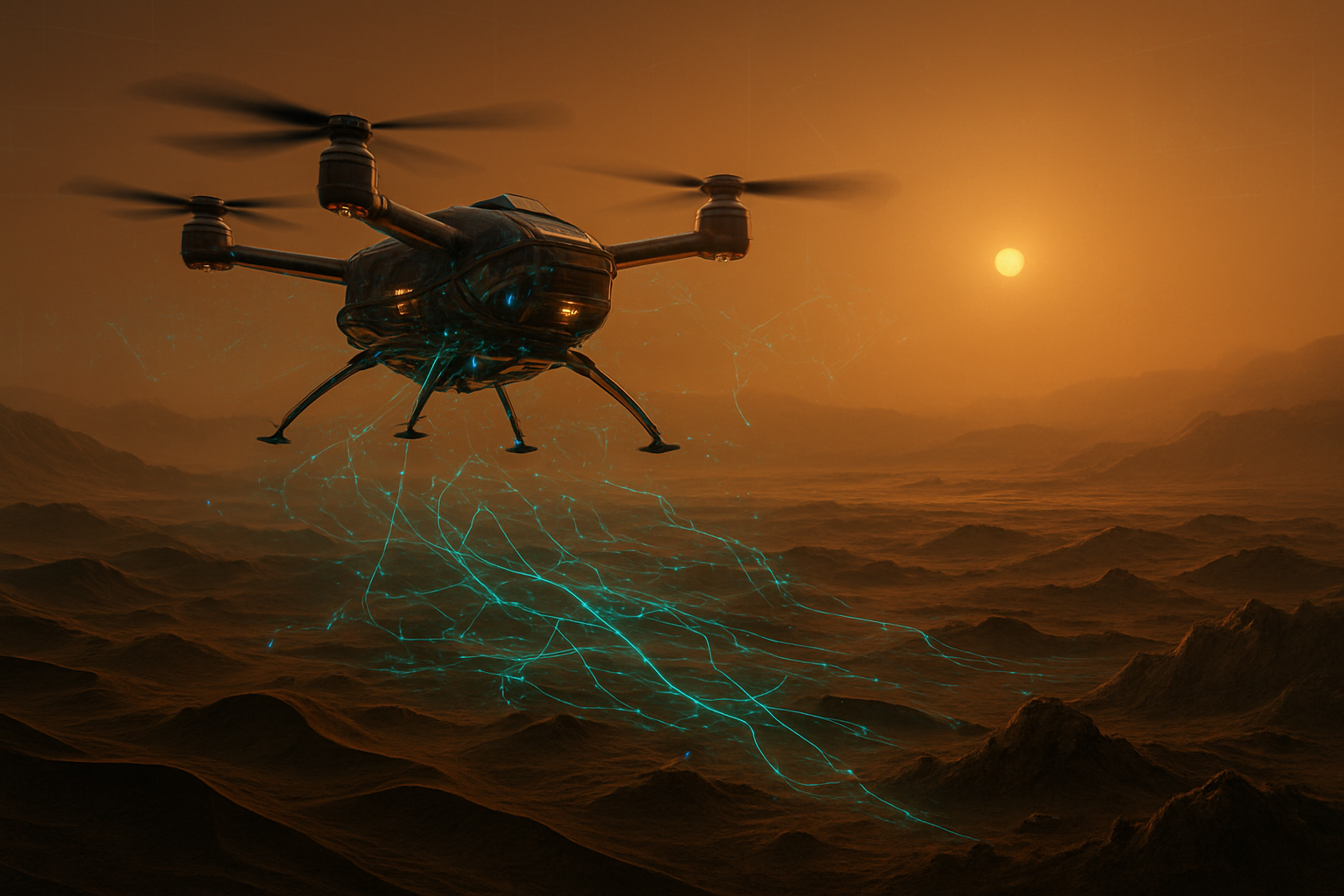
    As of February 2, 2026, NASA’s ambitious Dragonfly mission has officially transitioned into Phase D, marking the commencement of the "Iron Bird" integration and testing phase at the Johns Hopkins Applied Physics Laboratory (APL). This pivotal milestone signifies that the mission has moved from the drawing board to the physical assembly of flight hardware. Dragonfly, a nuclear-powered rotorcraft destined for Saturn’s moon Titan, represents the most significant leap in autonomous deep-space exploration since the landing of the Perseverance rover. With a scheduled launch in July 2028 aboard a SpaceX Falcon Heavy, the mission is now racing to finalize the sophisticated AI that will serve as the craft's "brain" during its multi-year residence on the alien moon.

    The immediate significance of this development lies in the sheer complexity of the environment Dragonfly must conquer. Titan is located approximately 1.5 billion kilometers from Earth, creating a one-way communication delay of 70 to 90 minutes. This lag renders traditional "joystick" piloting impossible. Unlike the Mars rovers, which crawl at a measured pace and often wait for ground-station approval before moving, Dragonfly is designed for rapid, high-speed aerial sorties across Titan’s dunes and craters. To survive, it must possess a level of hierarchical autonomy never before seen in a planetary explorer, capable of making split-second decisions about flight stability, hazard avoidance, and even scientific prioritization without human intervention.

    Technical Foundations: From Visual Odometry to Neuromorphic Acceleration

    At the heart of Dragonfly’s navigation suite is an advanced Terrain Relative Navigation (TRN) system, which has evolved significantly from the versions used by Perseverance. In the thick, hazy atmosphere of Titan—which is four times denser than Earth's—Dragonfly’s AI utilizes U-Net-like deep learning architectures for real-time Hazard Detection and Avoidance (HDA). During its 105-minute descent and subsequent "hops" of up to 8 kilometers, the craft’s AI processes monocular grayscale imagery and lidar data to infer terrain slope and roughness. This allows the rotorcraft to identify safe landing zones on-the-fly, a critical capability given that much of Titan remains unmapped at the high resolutions required for landing.

    A major technical breakthrough finalized in late 2025 is the integration of the SAKURA-II AI co-processor. Moving away from traditional Field-Programmable Gate Arrays (FPGAs), these radiation-hardened AI accelerators provide the massive computational throughput required for real-time computer vision while maintaining an incredibly lean energy budget. This hardware enables "Science Autonomy," a secondary AI layer developed at NASA Goddard. This system acts as an onboard curator, autonomously analyzing data from the Dragonfly Mass Spectrometer (DraMS) to identify biologically relevant chemical signatures. By prioritizing the most interesting samples for transmission, the AI ensures that mission-critical discoveries are downlinked first, maximizing the value of the mission’s limited bandwidth.

    This approach differs fundamentally from previous technology by shifting the "decision-making" burden from Earth to the edge of the solar system. Previous missions relied on "thinking-while-driving" for obstacle avoidance; Dragonfly implements "thinking-while-flying." The AI must manage not only navigation but also the thermal dynamics of its Multi-Mission Radioisotope Thermoelectric Generator (MMRTG). In Titan’s cryogenic environment, the AI autonomously adjusts internal heat distribution to prevent the electronics from freezing or overheating, balancing the craft's thermal state with its flight power requirements in real-time.

    The Industrial Ripple Effect: Lockheed Martin and the Space AI Market

    The successful transition to hardware integration has sent a clear signal to the aerospace and defense sectors. Lockheed Martin (NYSE: LMT), the prime contractor for the cruise stage and aeroshell, stands as a primary beneficiary of the Dragonfly program. The mission’s rigorous requirements for autonomous thermal management and entry, descent, and landing (EDL) systems have allowed Lockheed Martin to solidify its lead in high-stakes autonomous aerospace engineering. Industry analysts suggest that the "flight-proven" AI frameworks developed for Dragonfly will likely be adapted for future defense applications, particularly in long-endurance autonomous drones operating in contested or signal-denied environments on Earth.

    Beyond traditional defense giants, the mission highlights a growing synergy between specialized AI labs and space agencies. While the core flight software was developed by APL and NASA, the mission has utilized ground-based assists from large language models and generative AI for mission planning simulations. In late 2025, NASA demonstrated the use of advanced LLMs to process orbital imagery and generate valid navigation waypoints, a technique now being integrated into Dragonfly’s ground-support systems. This trend indicates a disruption in how mission architectures are designed, moving toward a model where AI agents handle the preliminary "drudge work" of trajectory planning and anomaly detection, allowing human scientists to focus on high-level strategy.

    The strategic advantage gained by companies involved in Dragonfly’s AI cannot be overstated. As the "Space AI" market expands, the ability to demonstrate hardware and software that can survive the radiation of deep space and the cryogenic temperatures of the outer solar system becomes a premium credential. This positioning is critical as private entities like SpaceX and Blue Origin look toward long-term goals of lunar and Martian colonization, where autonomous resource management and navigation will be the baseline requirements for success.

    A New Era of Autonomous Deep-Space Exploration

    The Dragonfly mission fits into a broader trend in the AI landscape: the transition from centralized "cloud" AI to hyper-efficient "edge" AI. In the context of deep space, there is no cloud; the edge is everything. Dragonfly is a testament to how far autonomous systems have come since the simple programmed sequences of the Voyager era. It represents a paradigm shift where the spacecraft is no longer just a remote-controlled sensor but a robotic field researcher. This shift toward "Science Autonomy" is a milestone comparable to the first successful autonomous landing on Mars, as it marks the first time AI will be given the authority to decide which scientific data is "important" enough to send home.

    However, this level of autonomy brings potential concerns, primarily regarding the "black box" nature of deep learning in mission-critical environments. If the HDA system misidentifies a methane pool as a solid landing site, there is no way for Earth to intervene. To mitigate this, NASA has implemented "Hierarchical Autonomy," where human controllers send high-level waypoint commands, but the AI holds final veto power based on its local sensor data. This collaborative model between human and machine is becoming the gold standard for AI deployment in high-stakes, unpredictable environments.

    Comparisons to past milestones are frequent in the aerospace community. If the Mars rovers were the equivalent of early self-driving cars, Dragonfly is the equivalent of a fully autonomous, long-range drone operating in a blizzard. Its success would prove that AI can handle "2 hours of terror"—the extended, complex descent through Titan’s thick atmosphere—which is far more operationally demanding than the "7 minutes of terror" associated with Mars landings.

    Future Horizons: From Titan to the Icy Moons

    Looking ahead, the technologies being refined for Dragonfly in early 2026 are expected to pave the way for even more ambitious missions. Experts predict that the autonomous flight algorithms and SAKURA-II hardware will be the blueprint for future "Cryobot" missions to Europa or Enceladus, where robots must navigate through thick ice shells to reach subsurface oceans. In these environments, communication will be even more restricted, making Dragonfly’s level of science autonomy a mandatory requirement rather than a luxury.

    In the near term, we can expect to see the "Iron Bird" tests at APL yield a wealth of data on how Dragonfly’s subsystems interact. Any anomalies discovered during this 2026 testing phase will be critical for refining the final flight software. Challenges remain, particularly in the realm of "long-tail" scenarios—unpredictable weather events on Titan like methane rain or shifting sand dunes—that the AI must be robust enough to handle. The next 24 months will focus heavily on "adversarial simulation," where the AI is subjected to thousands of simulated Titan environments to ensure it can recover from any conceivable flight error.

    Summary and Final Thoughts

    NASA’s Dragonfly mission represents a watershed moment in the history of artificial intelligence and space exploration. By integrating advanced deep learning, neuromorphic co-processors, and autonomous data prioritization, the mission is poised to turn a distant, mysterious moon into a laboratory for the next generation of AI. As of February 2026, the transition into hardware integration marks the beginning of the end for the mission's development phase, moving it one step closer to its 2028 launch.

    The significance of Dragonfly lies not just in the potential for scientific discovery on Titan, but in the validation of AI as a reliable pilot in the most extreme environments known to man. For the tech industry, it is a masterclass in edge computing and robust software design. In the coming weeks and months, all eyes will be on the APL integration labs as the "Iron Bird" begins its first simulated flights. These tests will determine if the AI "brain" of Dragonfly is truly ready to carry the torch of human curiosity into the outer solar system.


    This content is intended for informational purposes only and represents analysis of current AI developments.

    TokenRing AI delivers enterprise-grade solutions for multi-agent AI workflow orchestration, AI-powered development tools, and seamless remote collaboration platforms.
    For more information, visit https://www.tokenring.ai/.
  • Silicon in the Stars: Starcloud and Nvidia Pioneer On-Orbit AI Training with Gemma Model

    Silicon in the Stars: Starcloud and Nvidia Pioneer On-Orbit AI Training with Gemma Model

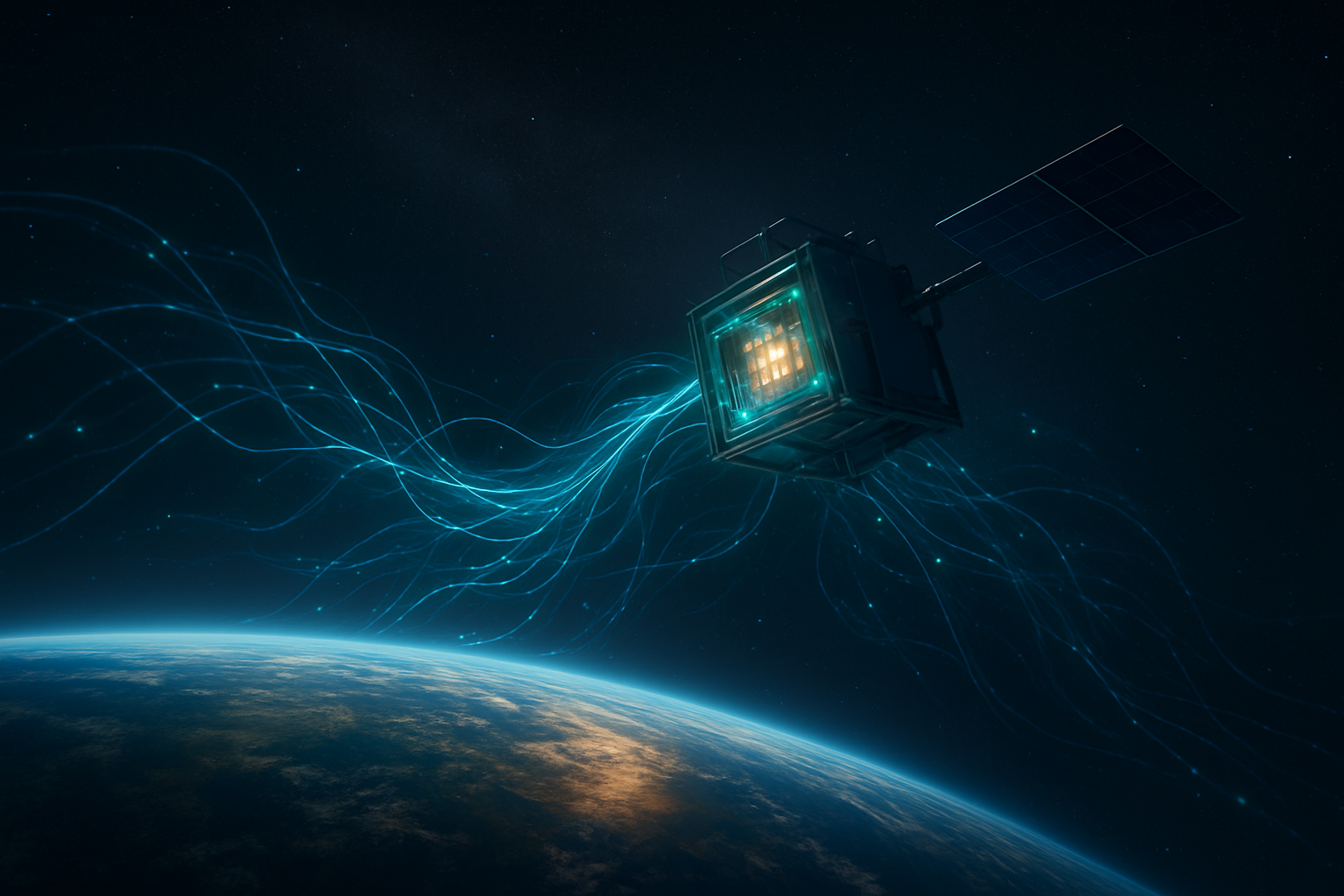
    In a landmark achievement for both the aerospace and artificial intelligence industries, the startup Starcloud (formerly Lumen Orbit) has successfully demonstrated the first-ever high-performance AI training and fine-tuning operations in space. Utilizing the Starcloud-1 microsatellite, which launched in November 2025, the mission confirmed that data-center-grade hardware can not only survive the harsh conditions of Low Earth Orbit (LEO) but also perform complex generative AI tasks. This breakthrough marks the birth of "orbital computing," a paradigm shift that promises to move the heavy lifting of AI processing from terrestrial data centers to the stars.

    The mission’s success was punctuated by the successful fine-tuning of Google’s Gemma model and the training of a smaller architecture from scratch while traveling at over 17,000 miles per hour. By proving that massive compute power can be harnessed in orbit, Starcloud and its partner, Nvidia (NASDAQ:NVDA), have opened the door to a new era of real-time satellite intelligence. The immediate significance is profound: rather than sending raw, massive datasets back to Earth for slow processing, satellites can now "think" in-situ, delivering actionable insights in seconds rather than hours.

    Technical Breakthroughs: The H100 Goes Galactic

    The technical centerpiece of the Starcloud-1 mission was the deployment of an Nvidia (NASDAQ:NVDA) H100 Tensor Core GPU—the same powerhouse used in the world’s most advanced AI data centers—inside a 60 kg microsatellite. Previously, space-based AI was limited to low-power "edge" chips like the Nvidia Jetson, which are designed for simple inference tasks. Starcloud-1, however, provided roughly 100 times the compute capacity of any previous orbital processor. To protect the non-radiation-hardened H100 from the volatile environment of space, the team employed a combination of novel physical shielding and "adaptive software" that can detect and correct bit-flips caused by cosmic rays in real-time.

    The mission achieved two historic firsts in AI development. First, the team successfully fine-tuned Alphabet Inc.'s (NASDAQ:GOOGL) open-source Gemma model, allowing the LLM to process and respond to queries from orbit. In a more rigorous test, they performed the first-ever "from scratch" training of an AI model in space using the NanoGPT architecture. The model was trained on the complete works of William Shakespeare while in orbit, eventually gaining the ability to generate text in a Shakespearean dialect. This demonstrated that the iterative, high-intensity compute cycles required for deep learning are now viable outside of Earth’s atmosphere.

    Industry experts have reacted with a mix of awe and strategic recalibration. "We are no longer just looking at 'smart' sensors; we are looking at autonomous orbital brains," noted one senior researcher at the Jet Propulsion Laboratory. The ability to handle high-wattage, high-heat components in a vacuum was previously thought to be a decade away, but Starcloud’s use of passive radiative cooling—leveraging the natural cold of deep space—has proven that orbital data centers can be even more thermally efficient than their water-hungry terrestrial counterparts.

    Strategic Implications for the AI and Space Economy

    The success of Starcloud-1 is a massive win for Nvidia (NASDAQ:NVDA), cementing its dominance in the AI hardware market even as it expands into the "final frontier." By proving that its enterprise-grade silicon can function in space, Nvidia has effectively created a new market segment for its upcoming Blackwell (B200) architecture, which Starcloud has already announced will power its next-generation Starcloud-2 satellite in late 2026. This development places Nvidia in a unique position to provide the backbone for a future "orbital cloud" that could bypass traditional terrestrial infrastructure.

    For the broader tech landscape, this mission signals a major disruption to the satellite services market. Traditional players like Maxar or Planet Labs may face pressure to upgrade their constellations to include high-performance compute capabilities. Startups that specialize in Synthetic-Aperture Radar (SAR) or hyperspectral imaging stand to benefit the most; these sensors generate upwards of 10 GB of data per second, which is notoriously expensive and slow to downlink. By processing this data on-orbit using Nvidia-powered Starcloud clusters, these companies can offer "Instant Intelligence" services, potentially rendering "dumb" satellites obsolete.

    Furthermore, the competitive landscape for AI labs is shifting. As terrestrial data centers face increasing scrutiny over their massive energy and water consumption, the prospect of "zero-emission" AI training powered by 24/7 unfiltered solar energy in orbit becomes highly attractive. Companies like Starcloud are positioning themselves not just as satellite manufacturers, but as "orbital landlords" for AI companies looking to scale their compute needs sustainably.

    The Broader Significance: Latency, Sustainability, and Safety

    The most immediate impact of orbital computing will be felt in remote sensing and disaster response. Currently, if a satellite detects a wildfire or a naval incursion, the raw data must wait for a "ground station pass" to be downlinked, processed, and analyzed. This creates a latency of minutes or even hours. Starcloud-1 demonstrated that AI can analyze this data in-situ, sending only the "answer" (e.g., coordinates of a fire) via low-bandwidth, low-latency links. This reduction in latency is critical for time-sensitive applications, from military intelligence to environmental monitoring.

    From a sustainability perspective, the mission addresses one of the most pressing concerns of the AI boom: the carbon footprint. Terrestrial data centers are among the largest consumers of electricity and water globally. In contrast, an orbital data center harvests solar energy directly, without atmospheric interference, and uses the vacuum of space for cooling. Starcloud projects that a mature orbital server farm could reduce the carbon-dioxide emissions associated with AI training by over 90%, providing a "green" path for the continued growth of large-scale models.

    However, the move to orbital AI is not without concerns. The deployment of high-performance GPUs in space raises questions about space debris and the "Kessler Syndrome," as these satellites are more complex and potentially more prone to failure than simpler models. There are also geopolitical and security implications: an autonomous, AI-driven satellite capable of processing sensitive data in orbit could operate outside the reach of traditional terrestrial regulations, leading to calls for new international frameworks for "Space AI" ethics and safety.

    The Horizon: Blackwell and 5GW Orbital Farms

    Looking ahead, the roadmap for orbital computing is aggressive. Starcloud has already begun preparations for Starcloud-2, which will feature the Nvidia (NASDAQ:NVDA) Blackwell architecture. This next mission aims to scale the compute power by another factor of ten, focusing on multi-agent AI orchestration where a swarm of satellites can collaborate to solve complex problems, such as tracking thousands of moving objects simultaneously or managing global telecommunications traffic autonomously.

    Experts predict that by the end of the decade, we could see the first "orbital server farms" operating at the 5-gigawatt scale. These would be massive structures, potentially assembled in orbit, designed to handle the bulk of the world’s AI training. Near-term applications include real-time "digital twins" of the Earth that update every few seconds, and autonomous deep-space probes that can make complex scientific decisions without waiting for instructions from Earth, which can take hours to arrive from the outer solar system.

    The primary challenges remaining are economic and logistical. While the cost of launch has plummeted thanks to reusable rockets from companies like SpaceX, the cost of specialized shielding and the assembly of large-scale structures in space remains high. Furthermore, the industry must develop standardized protocols for "inter-satellite compute sharing" to ensure that the orbital cloud is as resilient and interconnected as the terrestrial internet.

    A New Chapter in AI History

    The successful training of NanoGPT and the fine-tuning of Gemma in orbit will likely be remembered as the moment the AI industry broke free from its terrestrial tethers. Starcloud and Nvidia have proven that the vacuum of space is not a barrier, but an opportunity—a place where the constraints of cooling, land use, and energy availability are fundamentally different. This mission has effectively moved the "edge" of edge computing 300 miles above the Earth’s surface.

    As we move into 2026, the focus will shift from "can it be done?" to "how fast can we scale it?" The Starcloud-1 mission is a definitive proof of concept that will inspire a new wave of investment in space-based infrastructure. In the coming months, watch for announcements regarding "Orbital-as-a-Service" (OaaS) platforms and partnerships between AI labs and aerospace firms. The stars are no longer just for observation; they are becoming the next great frontier for the world’s most powerful minds—both human and artificial.


    This content is intended for informational purposes only and represents analysis of current AI developments.

    TokenRing AI delivers enterprise-grade solutions for multi-agent AI workflow orchestration, AI-powered development tools, and seamless remote collaboration platforms.
    For more information, visit https://www.tokenring.ai/.