
Tag: Sports Tech

  • AI on Ice: How Artificial Intelligence is Reshaping Olympic Figure Skating

    AI on Ice: How Artificial Intelligence is Reshaping Olympic Figure Skating

    Artificial intelligence (AI) is rapidly revolutionizing the elegant and demanding world of Olympic figure skating, introducing unprecedented precision and objectivity across training, performance analysis, and judging. These advancements mark a significant shift from traditional, often subjective, human evaluation methods, promising to reshape how athletes prepare, how performances are evaluated, and ultimately, the fairness and development within the sport. The integration of AI systems, leveraging advanced computer vision and machine learning, provides data-driven analysis that enhances fairness, consistency, and training insights, fundamentally transforming the pursuit of excellence on ice.

    The immediate impact of AI's foray into figure skating includes increased transparency in judging, expedited scoring processes, and significantly enhanced athlete development through personalized training regimens. This technological leap not only augments human capabilities but is actively transforming the sport, promising optimized athletic development and a new standard for competitive fairness. From meticulously dissecting jump rotations to providing real-time feedback on intricate footwork, AI is becoming an indispensable tool for skaters, coaches, and governing bodies alike, pushing the boundaries of what's possible in this visually stunning sport.

    The Algorithmic Edge: Deep Dive into AI's Technical Revolution

    The technical application of AI in figure skating spans several critical areas, offering a level of detail and objectivity previously unattainable. At its core, advanced computer vision and machine learning algorithms are trained on vast datasets of skating performances, enabling them to recognize, track, and analyze human movement with incredible accuracy. This differs significantly from previous approaches that relied heavily on human observation, which, while skilled, is inherently susceptible to the limitations of real-time processing and subjective interpretation.

    In training methodologies, AI is profoundly impacting athlete development by offering highly personalized and precise feedback. Machine learning algorithms analyze a skater's performance data over time, identifying specific patterns and trends to create customized training programs. These programs are designed to improve strength, flexibility, balance, and endurance, even leveraging general AI chatbots like ChatGPT for tailored weekly plans. Real-time movement analysis, powered by advanced computer vision and pose estimation technologies, tracks intricate movements during elements like spins, jumps, and footwork, providing instant feedback on form and technique. Tools like the OOFSkate app, developed by computer science experts, analyze critical jump metrics—height, rotational speed, airtime, and landing quality—from a standard phone or tablet camera, detecting minute errors like a quarter-revolution short on a quad toe loop. This sensor-free feedback is a game-changer, allowing for immediate corrections and accelerated skill acquisition.

    For performance analysis, AI offers an unprecedented level of detail and objectivity. Systems excel at providing objective technical evaluations of elements that are complex and difficult for human judges to consistently measure, such as precisely determining the exact degrees of rotation in jumps, the position of the landing foot, the depth of edges, and the height and rotational speed of jumps. This precision helps identify critical deductions like under-rotations and incorrect edge calls. In synchronized skating, AI can analyze footage to enhance synchronization and formation precision across multiple skaters, identifying moments when a team is out of sync. Companies like Fujitsu (TYO: 6702) are adapting their high-precision skeleton recognition AI, originally for gymnastics, for figure skating to enhance analysis and fan engagement.

    Perhaps the most impactful application is in judging. AI is being developed to mitigate human bias, subjective interpretations, and inconsistencies that have historically affected human judging. By standardizing evaluation metrics, AI systems contribute to a fairer competitive environment. Emerging computer vision technology shows significant promise in objectively assessing technical elements, allowing human judges to concentrate on evaluating the artistic merit and emotional impact of a performance. The International Skating Union (ISU) is actively developing and planning to introduce technologies utilizing AI and augmented reality to accurately determine the number of turns in jumps and assess pre-rotation. While a complete replacement of human judges is not imminent, the prevailing view suggests a hybrid judging system, combining AI's consistency and objectivity in technical evaluation with human judges' indispensable ability to assess artistic merit, emotional connection, and overall presentation.

    AI's Impact on the Tech Landscape: Who Benefits?

    The revolution of AI in figure skating, and sports in general, presents a fertile ground for innovation and market disruption, benefiting a diverse range of AI companies, tech giants, and nimble startups. Companies specializing in computer vision, motion capture, and machine learning platforms stand to gain significantly. Their core technologies are directly applicable to analyzing complex human movement, making them crucial partners for sports federations and training academies.

    Major tech giants like Google (NASDAQ: GOOGL), Microsoft (NASDAQ: MSFT), and Amazon (NASDAQ: AMZN), with their extensive cloud AI services and research arms, are well-positioned to offer the scalable infrastructure and advanced machine learning tools required for processing vast amounts of video data and developing sophisticated analytical models. Their investments in AI research and development, particularly in areas like pose estimation and real-time analytics, can be easily repurposed for sports applications. These companies could provide the backbone for national skating federations or even the ISU to develop their proprietary AI judging and training systems.

    Startups focused on sports tech and specialized AI solutions are also poised for significant growth. Companies developing niche applications, like the aforementioned OOFSkate app, demonstrate the potential for smaller, agile teams to create highly effective tools that address specific needs within the sport. These startups can carve out market share by offering specialized software, hardware (e.g., smart sensors for ice rinks), or consultation services tailored to figure skating. The competitive landscape will likely see a rise in partnerships between sports organizations and these AI innovators, leading to new product offerings in performance tracking, injury prevention, and fan engagement.

    The disruption to existing products or services primarily affects traditional coaching methodologies and manual analysis tools. As AI provides more objective and detailed feedback, coaches who fail to integrate these technologies might find themselves at a disadvantage. However, rather than replacing human expertise, AI is more likely to augment it, empowering coaches with data-driven insights to make more informed decisions. The market positioning for AI labs and tech companies will increasingly lean towards offering comprehensive, end-to-end solutions for sports performance, from data acquisition and analysis to personalized training recommendations and objective scoring aids.

    Wider Significance: A Paradigm Shift for Sports and AI Ethics

    The integration of AI into Olympic figure skating is not an isolated phenomenon but rather a microcosm of a broader trend reshaping competitive sports globally. It signifies a paradigm shift towards data-driven decision-making and objective performance evaluation, moving away from purely subjective human judgment. This aligns with broader AI landscape trends focusing on explainable AI, real-time analytics, and the application of AI in complex, high-stakes environments. The success of AI in dissecting the intricate movements of figure skating demonstrates its capability to tackle other visually complex sports, from gymnastics to diving, potentially standardizing evaluation across many disciplines.

    The impacts are profound. For athletes, it means access to unparalleled insights into their technique, enabling faster improvement and a reduced risk of injury through biomechanical analysis. For coaches, it transforms their role from primary evaluators to strategic facilitators, leveraging AI data to refine training plans. For fans, it could lead to a more transparent and arguably fairer sport, with clearer explanations for scores and potentially new ways to engage with performance data. However, this also raises potential concerns. The reliance on AI for judging, even in a hybrid system, brings forth questions about algorithmic bias – if the training data reflects existing human biases, the AI could perpetuate them. There are also ethical considerations regarding data privacy for athletes and the potential for over-optimization, where the pursuit of algorithmic perfection might stifle artistic expression or innovative, unconventional techniques.

    Comparing this to previous AI milestones, the application in figure skating stands alongside breakthroughs in chess, Go, and even medical diagnostics. While AI in games like chess proved its ability to master complex rules, its application in figure skating demonstrates AI's capacity to interpret nuanced visual information and contribute to subjective domains, bridging the gap between objective data and artistic expression. The ongoing development by the ISU highlights a crucial trend: governing bodies are actively embracing AI as a tool for integrity and advancement, rather than resisting it. This acceptance marks a significant step in AI's journey from academic curiosity to practical, impactful application in areas traditionally considered human-exclusive.

    The Horizon: Future Developments and Challenges

    The future of AI in figure skating promises even more sophisticated applications and deeper integration. In the near term, we can expect enhanced real-time feedback systems that provide immediate, actionable insights to skaters and coaches during practice, perhaps through augmented reality displays or haptic feedback devices. The refinement of AI-powered injury prevention systems will be crucial, utilizing predictive analytics based on biomechanical data to identify early warning signs of potential injuries, leading to personalized prehabilitation programs. The ISU's efforts will likely lead to the formal implementation of AI-assisted judging for technical elements, starting with jump rotations and edge calls, further solidifying its role in official competitions.

    Long-term developments could include fully adaptive AI coaching systems that not only analyze performance but also dynamically adjust training schedules, dietary recommendations, and mental preparation strategies based on an athlete's real-time physiological and psychological state. We might see AI-generated choreography suggestions that optimize for both technical scoring potential and artistic impact, pushing creative boundaries while adhering to competitive requirements. The concept of a "Synchrobot" for synchronized skating, capable of consistently analyzing body lines and leg angles across multiple skaters for unison, could become a reality, working in conjunction with human judges.

    However, significant challenges need to be addressed. The inherent complexity of the sport's intricate movements demands extensive, high-quality, and diverse datasets to train AI systems effectively, avoiding biases and ensuring robustness across different body types and skating styles. Ethical considerations regarding algorithmic transparency, accountability, and the potential impact on the sport's artistic integrity will require ongoing dialogue and careful governance. Experts predict that the next phase will involve a delicate balance between leveraging AI's analytical power and preserving the human element of artistry, emotion, and subjective interpretation that defines figure skating. The goal isn't to replace human judgment entirely but to create a symbiotic relationship where AI elevates the sport's fairness and performance standards.

    Wrapping Up: AI's Enduring Legacy on Ice

    The integration of AI into Olympic figure skating represents a monumental shift, fundamentally redefining training methodologies, performance analysis, and judging. The key takeaways are clear: AI offers unprecedented objectivity and precision, enabling personalized athlete development, unbiased technical evaluation, and a potential for greater transparency in scoring. From real-time jump analysis to mitigating human biases in judging, AI is proving to be an indispensable tool for advancing the sport.

    This development's significance in AI history lies in its application to a highly nuanced, visually complex, and traditionally subjective domain. It showcases AI's capability not just for data processing but for interpreting intricate human performance and contributing to artistic evaluation. It underscores the broader trend of AI moving beyond enterprise applications into the fabric of human endeavors, including elite sports.

    Looking ahead, the long-term impact will likely see figure skating become a more data-informed, equitable, and perhaps even safer sport. The collaboration between AI and human expertise will be crucial, ensuring that technology enhances rather than diminishes the artistry and passion that defines skating. In the coming weeks and months, it will be vital to watch for further announcements from the International Skating Union regarding their AI implementation plans, the emergence of new sports tech startups, and the ongoing dialogue around the ethical implications of AI in competitive sports. The ice is set for AI to leave an indelible mark on figure skating's future.


    This content is intended for informational purposes only and represents analysis of current AI developments.

    TokenRing AI delivers enterprise-grade solutions for multi-agent AI workflow orchestration, AI-powered development tools, and seamless remote collaboration platforms.
    For more information, visit https://www.tokenring.ai/.
  • Beyond the Ice Rink: AI Unlocks Peak Performance Across Every Field

    Beyond the Ice Rink: AI Unlocks Peak Performance Across Every Field

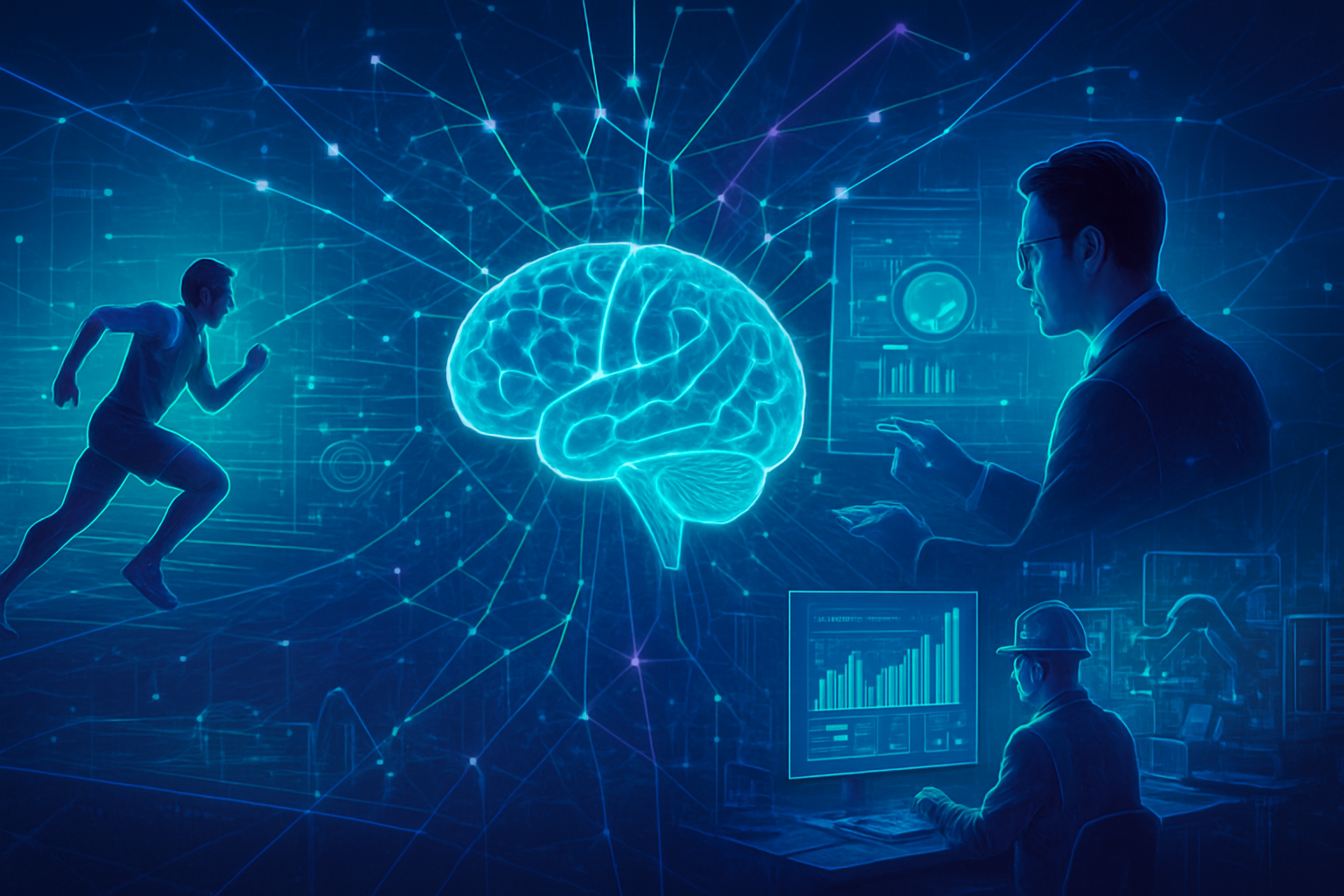
    The application of Artificial Intelligence (AI) in performance analysis, initially gaining traction in niche areas like figure skating, is rapidly expanding its reach across a multitude of high-performance sports and skilled professions. This seismic shift signals the dawn of a new era in data-driven performance optimization, promising unprecedented insights and immediate, actionable feedback to athletes, professionals, and organizations alike. AI is transforming how we understand, measure, and improve human capabilities by leveraging advanced machine learning, deep learning, natural language processing, and predictive analytics to process vast datasets at speeds impossible for human analysis, thereby minimizing bias and identifying subtle patterns that previously went unnoticed.

    This transformative power extends beyond individual athletic prowess, impacting team strategies, talent identification, injury prevention, and even the operational efficiency and strategic decision-making within complex professional environments. From meticulously dissecting a golfer's swing to optimizing a manufacturing supply chain or refining an employee's professional development path, AI is becoming the ubiquitous coach and analyst, driving a paradigm shift towards continuous, objective, and highly personalized improvement across all high-stakes domains.

    The AI Revolution Extends Beyond the Rink: A New Era of Data-Driven Performance Optimization

    The technical bedrock of AI in performance analysis is built upon sophisticated algorithms, diverse data sources, and the imperative for real-time capabilities. At its core, computer vision (CV) plays a pivotal role, utilizing deep learning architectures like Convolutional Neural Networks (CNNs), Spatiotemporal Transformers, and Graph Convolutional Networks (GCNs) for advanced pose estimation. These algorithms meticulously track and reconstruct human movement in 2D and 3D, identifying critical body points and biomechanical inefficiencies in actions ranging from a swimmer's stroke to a dancer's leap. Object detection and tracking algorithms, such as YOLO models, further enhance this by measuring speed, acceleration, and trajectories of athletes and equipment in dynamic environments. Beyond vision, a suite of machine learning (ML) models, including Deep Learning Architectures (e.g., CNN-LSTM hybrids), Logistic Regression, Support Vector Machines (SVM), and Random Forest, are deployed for tasks like injury prediction, talent identification, tactical analysis, and employee performance evaluation, often achieving high accuracy rates. Reinforcement Learning is also emerging, capable of simulating countless scenarios to test and refine strategies.

    These algorithms are fed by a rich tapestry of data sources. High-resolution video footage from multiple cameras provides the visual raw material for movement and tactical analysis, with platforms like SkillCorner even generating tracking data from standard video. Wearable sensors, including GPS trackers, accelerometers, gyroscopes, and heart rate monitors, collect crucial biometric and movement data, offering insights into speed, power output, and physiological responses. Companies like Zebra MotionWorks (NASDAQ: ZBRA) in the NFL and Wimu Pro exemplify this, providing advanced positional and motion data. In professional contexts, comprehensive datasets from job portals, industry reports, and internal employee records contribute to a holistic performance picture.

    A key differentiator of AI-driven performance analysis is its real-time capability, a significant departure from traditional, retrospective methods. AI systems can analyze data streams instantaneously, providing immediate feedback during training or competition, allowing for swift adjustments to technique or strategy. This enables in-game decision support for coaches and rapid course correction for professionals. However, achieving true real-time performance presents technical challenges such as latency from model complexity, hardware constraints, and network congestion. Solutions involve asynchronous processing, dynamic batch management, data caching, and increasingly, edge computing, which processes data locally to minimize reliance on external networks.

    Initial reactions from the AI research community and industry experts are largely optimistic, citing enhanced productivity, objective and detailed analysis, and proactive strategies for injury prevention and talent identification. Many professionals (around 75%) believe AI boosts their productivity, with some experiencing 25-50% improvements. However, concerns persist regarding algorithmic bias, the difficulty in evaluating subjective aspects like artistic merit, data quality and scarcity, and the challenges of generalizing findings from controlled environments to unpredictable real-world settings. Ethical considerations, including data privacy, algorithmic transparency, and cybersecurity risks, also remain critical areas of focus, with a recognized shortage of data scientists and engineers in many sports organizations.

    Shifting Tides: How AI Performance Analysis Reshapes the Tech Landscape

    The integration of AI into performance analysis is not merely an enhancement; it's a profound reshaping of the competitive landscape for AI companies, established tech giants, and agile startups. Companies specializing in AI development and solutions, particularly those focused on human-AI collaboration platforms and augmented intelligence tools, stand to gain significantly. Developing interpretable, controllable, and ethically aligned AI models will be crucial for securing a competitive edge in an intensely competitive AI stack.

    Major tech giants like Alphabet (NASDAQ: GOOGL), Meta Platforms (NASDAQ: META), Amazon (NASDAQ: AMZN), Spotify (NYSE: SPOT), TikTok (privately held by ByteDance), YouTube (part of Alphabet), and Alibaba (NYSE: BABA) are already leveraging AI performance analysis to optimize their vast ecosystems. This includes enhancing sophisticated recommendation engines, streamlining supply chains, and improving human resources management. For instance, Amazon Personalize offers tailored product recommendations, Spotify curates personalized playlists, and TikTok's algorithm adapts content in real-time. IBM's (NYSE: IBM) AI-driven systems assist managers in identifying high-potential employees, leading to increased internal promotions. These giants benefit from their extensive data resources and computational power, enabling them to optimize AI models for cost-efficiency and scalability.

    Startups, while lacking the scale of tech giants, can leverage AI performance analysis to scale faster and derive deeper insights from their data. By understanding consumer behavior, sales history, and market trends, they can implement personalized marketing and product tailoring, boosting revenue and growth. AI tools empower startups to predict future customer behaviors, optimize inventory, and make informed decisions on product launches. Furthermore, AI can identify skill gaps in employees and recommend tailored training, enhancing productivity. Startups in niche areas, such as AI-assisted therapy or ethical AI auditing, are poised for significant growth by augmenting human expertise with AI.

    The rise of AI in performance analysis intensifies competition across the entire AI stack, from hardware to foundation models and applications. Companies that prioritize human-AI collaboration and integrate human judgment and oversight into AI workflows will gain a significant competitive advantage. Investing in research to bridge the gap between AI's analytical power and human cognitive strengths, such as common sense reasoning and ethical frameworks, will be crucial for differentiation. Strategic metrics that focus on user engagement, business impact, operational efficiency, robustness, fairness, and scalability, as demonstrated by companies like Netflix (NASDAQ: NFLX) and Alphabet, will define competitive success.

    This technological shift also carries significant disruptive potential. Traditional business models face obsolescence as AI creates new markets and fundamentally alters existing ones. Products and services built on publicly available information are at high risk, as frontier AI companies can easily synthesize these sources, challenging traditional market research. Generative AI tools are already diverting traffic from established platforms like Google Search, and the emergence of "agentic AI" systems could reduce current software platforms to mere data repositories, threatening traditional software business models. Companies that fail to effectively integrate human oversight into their AI systems risk significant failures and public distrust, particularly in critical sectors.

    A Broader Lens: Societal Implications and Ethical Crossroads of AI in Performance

    The widespread adoption of AI in performance analysis is not merely a technological advancement; it's a societal shift with profound implications that extend into ethical considerations. This integration firmly places AI in performance analysis within the broader AI landscape, characterized by a transition from raw computational power to an emphasis on efficiency, commercial validation, and increasingly, ethical deployment. It reflects a growing trend towards practical application, moving AI from isolated pilots to strategic, integrated operations across various business functions.

    One of the most significant societal impacts revolves around transparency and accountability. Many AI algorithms operate as "black boxes," making their decision-making processes opaque. This lack of transparency can erode trust, especially in performance evaluations, making it difficult for individuals to understand or challenge feedback. Robust regulations and accountability mechanisms are crucial to ensure organizations are responsible for AI-related decisions. Furthermore, AI-driven automation has the potential to exacerbate socioeconomic inequality by displacing jobs, particularly those involving manual or repetitive tasks, and potentially even affecting white-collar professions. This could lead to wage declines and an uneven distribution of economic benefits, placing a burden on vulnerable populations.

    Potential concerns are multifaceted, with privacy at the forefront. AI systems often collect and analyze vast amounts of personal and sensitive data, including productivity metrics, behavioral patterns, and even biometric data. This raises significant privacy concerns regarding consent, data security, and the potential for intrusive surveillance. Inadequate security measures can lead to data breaches and non-compliance with data protection regulations like GDPR and CCPA. Algorithmic bias is another critical concern. AI algorithms, trained on historical data, can perpetuate and amplify existing human biases (e.g., gender or racial biases), leading to discriminatory outcomes in performance evaluations, hiring, and promotions. Addressing this requires diverse and representative datasets.

    The fear of job displacement due to AI-driven automation is a major societal concern, raising fears of widespread unemployment. While AI may create new job opportunities in areas like AI development and ethical oversight, there is a clear need for workforce reskilling and education programs to mitigate economic disruptions and help workers transition to AI-enhanced roles.

    Comparing this to previous AI milestones, AI in performance analysis represents a significant evolution. Early AI developments, like ELIZA (1960s) and expert systems (1980s), demonstrated problem-solving but were often rule-based. The late 1980s saw a shift to probabilistic approaches, laying the groundwork for modern machine learning. The current "AI revolution" (2010s-Present), fueled by computational power, big data, and deep learning, has brought breakthroughs like convolutional neural networks (CNNs) for image recognition and recurrent neural networks (RNNs) for natural language processing. Milestones like AlphaGo defeating the world's Go champion in 2016 showcased AI's ability to master complex strategic games. More recently, advanced natural language models like ChatGPT-3 and GPT-4 have demonstrated AI's ability to understand and generate human-like text, and even process images and videos, marking a substantial leap. AI in performance analysis directly benefits from these advancements, leveraging enhanced data processing, predictive analytics, and sophisticated algorithms for identifying complex patterns, far surpassing the capabilities of earlier, narrower AI applications.

    The Horizon Ahead: Navigating the Future of AI-Powered Performance

    The future of AI in performance analysis promises a continuous evolution, moving towards even more sophisticated, integrated, and intelligent systems. In the near term, we can expect significant advancements in real-time performance tracking, with AI-powered systems offering continuous feedback and replacing traditional annual reviews across various domains. Advanced predictive analytics will become even more precise, forecasting sales trends, employee performance, and market shifts with greater accuracy, enabling proactive management and strategic planning. Automated reporting and insights, powered by Natural Language Processing (NLP), will streamline data analysis and report generation, providing quick, actionable snapshots of performance. Furthermore, AI will refine feedback and coaching mechanisms, generating more objective and constructive guidance while also detecting biases in human-written feedback.

    Looking further ahead, long-term developments will see the emergence of "Performance Intelligence" systems. These unified platforms will transcend mere assessment, actively anticipating success by merging performance tracking, objectives and key results (OKRs), and learning analytics to recommend personalized coaching, optimize workloads, and forecast team outcomes. Explainable AI (XAI) will become paramount, addressing the "black box" problem by enhancing transparency and interpretability of AI models, fostering trust and accountability. Edge analytics, processing data closer to its source, will become more prevalent, particularly with the integration of emerging technologies like 5G, enabling faster, real-time insights. AI will also automate increasingly complex tasks, such as financial forecasting, risk assessment, and dynamic goal optimization, where AI autonomously adjusts goals based on market shifts.

    The potential applications and use cases on the horizon are vast and transformative. In Human Resources, AI will provide unbiased, data-driven employee performance evaluations, identify top performers, forecast future leaders, and significantly reduce bias in promotions. It will also facilitate personalized development plans, talent retention by identifying "flight risks," and skills gap analysis to recommend tailored training. In business operations and IT, AI will continue to optimize healthcare, retail, finance, manufacturing, and application performance monitoring (APM), ensuring seamless operations and predictive maintenance. In sports, AI will further enhance athlete performance optimization through real-time monitoring, personalized training, injury prevention, and sophisticated skill development feedback.

    However, several significant challenges need to be addressed for AI in performance analysis to reach its full potential. Data quality remains a critical hurdle; inaccurate, inconsistent, or biased data can lead to flawed insights and unreliable AI models. Algorithmic bias, perpetuating existing human prejudices, requires diverse and representative datasets. The lack of transparency and explainability in many AI systems can lead to mistrust. Ethical and privacy concerns surrounding extensive employee monitoring, data security, and the potential misuse of sensitive information are paramount. High costs, a lack of specialized expertise, resistance to change, and integration difficulties with existing systems also present substantial barriers. Furthermore, AI "hallucinations" – where AI tools produce nonsensical or inaccurate outputs – necessitate human verification to prevent significant liability.

    Experts predict a continued and accelerated integration of AI, moving beyond a mere trend to a fundamental shift in organizational operations. A 2021 McKinsey study indicated that 70% of organizations will incorporate AI by 2025, with Gartner forecasting that 75% of HR teams plan AI integration in performance management. The decline of traditional annual reviews will continue, replaced by continuous, real-time, AI-driven feedback. The performance management software market is projected to double to $12 billion by 2032. By 2030, over 80% of large enterprises are expected to adopt AI-driven systems that merge performance tracking, OKRs, and learning analytics into unified platforms. Experts emphasize the necessity of AI for data-driven decision-making, improved efficiency, and innovation, while stressing the importance of ethical AI frameworks, robust data privacy policies, and transparency in algorithms to foster trust and ensure fairness.

    The Unfolding Narrative: A Concluding Look at AI's Enduring Impact

    The integration of AI into performance analysis marks a pivotal moment in the history of artificial intelligence, transforming how we understand, measure, and optimize human and organizational capabilities. The key takeaways underscore AI's reliance on advanced machine learning, natural language processing, and predictive analytics to deliver real-time, objective, and actionable insights. This has led to enhanced decision-making, significant operational efficiencies, and a revolution in talent management across diverse industries, from high-performance sports to complex professional fields. Companies are reporting substantial improvements in productivity and decision-making speed, highlighting the tangible benefits of this technological embrace.

    This development signifies AI's transition from an experimental technology to an indispensable tool for modern organizations. It’s not merely an incremental improvement over traditional methods but a foundational change, allowing for the processing and interpretation of massive datasets at speeds and with depths of insight previously unimaginable. This evolution positions AI as a critical component for future success, augmenting human intelligence and fostering more precise, agile, and strategic operations in an increasingly competitive global market.

    The long-term impact of AI in performance analysis is poised to be transformative, fundamentally reshaping organizational structures and the nature of work itself. With McKinsey projecting a staggering $4.4 trillion in added productivity growth potential from corporate AI use cases, AI will continue to be a catalyst for redesigning workflows, accelerating innovation, and fostering a deeply data-driven organizational culture. However, this future necessitates a careful balance, emphasizing human-AI collaboration, ensuring transparency and interpretability of AI models through Explainable AI (XAI), and continuously addressing critical issues of data quality and algorithmic bias. The ultimate goal is to leverage AI to amplify human capabilities, not to diminish critical thinking or autonomy.

    In the coming weeks and months, several key trends bear close watching. The continued emphasis on Explainable AI (XAI) will be crucial for building trust and accountability in sensitive areas. We can expect to see further advancements in edge analytics and real-time processing, enabling even faster insights in dynamic environments. The scope of AI-powered automation will expand to increasingly complex tasks, moving beyond simple data processing to areas like financial forecasting and strategic planning. The shift towards continuous feedback and adaptive performance systems, moving away from static annual reviews, will become more prevalent. Furthermore, the development of multimodal AI and advanced reasoning capabilities will open new avenues for nuanced problem-solving. Finally, expect intensified efforts in ethical AI governance, robust data privacy policies, and proactive mitigation of algorithmic bias as AI becomes more pervasive across all aspects of performance analysis.


    This content is intended for informational purposes only and represents analysis of current AI developments.

    TokenRing AI delivers enterprise-grade solutions for multi-agent AI workflow orchestration, AI-powered development tools, and seamless remote collaboration platforms.
    For more information, visit https://www.tokenring.ai/.

  • AI and 5G Unite: Bristol Lab Unveils Game-Changing Tech for Immersive Match Days

    AI and 5G Unite: Bristol Lab Unveils Game-Changing Tech for Immersive Match Days

    BRISTOL, UK – November 28, 2025 – The future of live sports entertainment has arrived, heralded by a groundbreaking fusion of Artificial Intelligence (AI) and 5G technology developed at the University of Bristol's Smart Internet Lab. Dubbed Project ARANA, this innovative system is set to redefine the match day experience, transforming traditional stadiums into hyper-connected, intelligent venues that offer fans unprecedented levels of engagement and convenience. Following successful trials at the MK Dons stadium, this technology promises to bring the rich, data-driven insights and seamless connectivity of home viewing directly to the stands, addressing long-standing issues of poor mobile service in crowded environments.

    Project ARANA represents a significant leap forward in how technology enhances public gatherings, moving beyond basic Wi-Fi to create a truly interactive and personalized experience. Its immediate significance lies in its ability to solve the pervasive problem of network congestion at large-scale events, while simultaneously unlocking a new realm of fan-centric services, from real-time player statistics to in-seat food ordering. This development positions the University of Bristol and its partners at the forefront of the smart stadium revolution, setting a new benchmark for immersive live entertainment.

    The Technical Playbook: How AI and 5G Transform the Stadium

    At its core, Project ARANA leverages a robust, fully integrated 5G private network, distinguishing itself from conventional cellular solutions that often buckle under the strain of thousands of simultaneous users. This private network is engineered with advanced 5G broadcast capabilities, allowing for the efficient, cost-effective distribution of high-bandwidth content to a massive audience. By intelligently pushing data and managing network traffic in real-time, the system ensures ultra-fast, stable internet access across the entire venue, eliminating notorious dead zones and buffering delays that plague traditional stadium connectivity.

    The true innovation, however, lies in the deep integration of Artificial Intelligence. Madevo, a University of Bristol spin-out and AI firm, has developed cutting-edge AI models and a proprietary AI cloud technology that enables stadiums to host their own private AI network. This AI backbone is crucial for delivering real-time insights and personalized content. For instance, in collaboration with Nokia (NYSE: NOK), the system employs advanced video analytics to generate critical data, such as precise player coordinates for tactical analysis and live performance metrics like a striker's speed, all available instantly to fans' mobile devices. This differs markedly from previous approaches, which either relied on limited public Wi-Fi or struggled with the scale required for truly interactive, data-rich experiences, often leaving fans feeling disconnected despite being physically present. Initial reactions from trial participants at Stadium MK have been overwhelmingly positive, highlighting the seamless connectivity and the novelty of having such detailed, real-time information at their fingertips.

    Strategic Implications: A New Frontier for Tech Giants and Startups

    This breakthrough technology carries significant implications for a diverse range of companies, from established tech giants to agile startups. Companies like Weaver Labs, with their Cell-Stack platform offering Network-as-a-Service solutions, stand to benefit immensely from the demand for private 5G and OpenRAN architectures in sports venues. Madevo, as a key AI innovator in the project, is poised to become a leader in AI cloud solutions for large-scale public environments. Nokia, already a collaborator, could see expanded opportunities in real-time video analytics and network infrastructure for smart stadiums globally.

    Furthermore, the involvement of major players such as Meta (NASDAQ: META), Samsung (KRX: 005930), and Capgemini (EPA: CAP) underscores the strategic importance of this development. These companies could leverage their expertise in VR/AR, mobile devices, and system integration, respectively, to further enhance the ARANA ecosystem, potentially offering new hardware or software solutions that integrate seamlessly with the platform. This creates competitive implications for other network providers and sports technology companies, pushing them to innovate rapidly in fan engagement and connectivity. The potential for disruption to existing stadium infrastructure and fan experience products is substantial, as ARANA sets a new, higher standard. Companies that can adapt and integrate with such advanced AI and 5G platforms will gain significant market positioning and strategic advantages in the rapidly evolving sports and entertainment sector.

    Wider Significance: Reshaping the Live Event Landscape

    Project ARANA fits squarely into the broader trend of AI and 5G convergence, illustrating how these powerful technologies can combine to create genuinely transformative experiences. Its success in a complex, high-density environment like a sports stadium signals a paradigm shift not just for sports entertainment, but also for other large-scale public events such as concerts, festivals, and conferences. The impacts extend beyond mere entertainment, touching on urban planning and smart city initiatives, where reliable, high-bandwidth connectivity and real-time data analytics can enhance public safety, crowd management, and emergency response.

    However, with such advanced capabilities come potential concerns, particularly regarding data privacy and security, given the collection and analysis of extensive fan data. Ensuring robust safeguards will be paramount for widespread adoption. This development can be compared to previous AI milestones that democratized access to information or personalized experiences, but in a live, physical setting. Just as streaming services revolutionized home entertainment, ARANA has the potential to revolutionize the live event experience, making it more interactive, informative, and enjoyable. It highlights a future where physical presence is augmented, not replaced, by digital intelligence.

    Future Developments: The Road Ahead for Immersive Experiences

    Looking ahead, the near-term future for Project ARANA involves wider commercial deployment and additional trials, with further applications and deeper fan engagement features expected to be showcased at Stadium MK early next year. These trials will likely explore more sophisticated AI applications, such as predictive analytics for crowd flow and personalized content delivery based on individual fan preferences. Long-term, this technology lays the groundwork for the evolution towards 6G and beyond, with the University of Bristol's Smart Internet Lab continuing its mission to define future connectivity standards and large-scale experimental platforms.

    Potential applications and use cases on the horizon are vast, including hyper-personalized augmented reality (AR) overlays for live game viewing, real-time betting insights integrated with live action, and enhanced accessibility features for all attendees. Challenges that need to be addressed include the significant infrastructure investment required for widespread deployment, ensuring interoperability with diverse mobile devices, and navigating regulatory landscapes concerning data usage. Experts predict that within the next decade, smart, AI and 5G-powered venues will become the norm, offering ubiquitous connectivity and immersive digital layers that seamlessly blend with the physical world, fundamentally altering how we interact with live events.

    A New Era for Live Entertainment

    Project ARANA represents a pivotal moment in the convergence of AI and 5G, offering a compelling vision for the future of live entertainment. The key takeaway is the successful demonstration of how intelligent network design, combined with advanced AI analytics, can overcome the inherent challenges of high-density environments to deliver a superior fan experience. This development's significance in AI history lies in its practical application of complex AI and 5G principles to solve a real-world problem, moving beyond theoretical discussions to tangible, impactful solutions.

    The long-term impact of this technology will likely extend far beyond sports, influencing how all large public gatherings are designed and managed, fostering more interactive, efficient, and safer environments. As we move into the coming weeks and months, the rollout of further trials and the commercialization efforts of the partners involved will be crucial to watch. This initiative not only showcases the power of collaborative innovation but also sets a new precedent for what consumers can expect from live events, promising a future where every moment is enhanced by intelligent, seamless technology.


    This content is intended for informational purposes only and represents analysis of current AI developments.

    TokenRing AI delivers enterprise-grade solutions for multi-agent AI workflow orchestration, AI-powered development tools, and seamless remote collaboration platforms.
    For more information, visit https://www.tokenring.ai/.

  • Temple University’s JournAI: A Game-Changer in AI-Powered Student-Athlete Wellness

    Temple University’s JournAI: A Game-Changer in AI-Powered Student-Athlete Wellness

    PHILADELPHIA, PA – October 9, 2025 – Temple University has secured a prestigious NCAA Innovations in Research and Practice Grant, marking a significant breakthrough in the application of artificial intelligence for student-athlete well-being. The grant, announced on September 12, 2025, will fund the full development of JournAI, an AI-powered mentorship application designed to provide holistic support for college athletes. This initiative positions Temple University at the forefront of leveraging AI for personalized wellness and development, signaling a new era for student support in collegiate sports.

    JournAI, envisioned as an AI-driven virtual mentor named "Sam," aims to guide student-athletes through the multifaceted challenges of their demanding lives. From career planning and leadership skill development to crucial mental health support and financial literacy, Sam will offer accessible, confidential, and personalized assistance. The project's immediate significance lies in its recognition by the NCAA, which selected Temple from over 100 proposals, underscoring the innovative potential of AI to enhance the lives of student-athletes beyond their athletic performance.

    The AI Behind the Mentor: Technical Details and Distinctive Approach

    JournAI functions as an AI-powered mentor, primarily through text-based interactions with its virtual persona, "Sam." This accessible format is critical, allowing student-athletes to engage with mentorship opportunities directly on their mobile devices, circumventing the severe time constraints imposed by rigorous training, competition, and travel schedules. The core functionalities span a wide range of life skills: career planning, leadership development, mental health support (offering an unbiased ear and a safe space), and financial literacy (covering topics like loans and money management). The system is designed to foster deeper, more holistic conversations, preparing athletes for adulthood.

    While specific proprietary technical specifications remain under wraps, JournAI's text-based interaction implies the use of advanced Natural Language Processing (NLP) capabilities. This allows "Sam" to understand athlete input, generate relevant conversational responses, and guide discussions across diverse topics. The robustness of its underlying AI model is evident in its ability to draw from various knowledge domains and personalize interactions, adapting to the athlete's specific needs. It's crucial to distinguish this from an email-based journaling product also named "JournAI"; Temple's initiative is an app-based virtual mentor for student-athletes.

    This approach significantly differs from previous student-athlete support mechanisms. Traditional programs often struggle with accessibility due to scheduling conflicts and resource limitations. JournAI bypasses these barriers by offering on-demand, mobile-first support. Furthermore, while conventional services often focus on academic eligibility, JournAI emphasizes holistic development, acknowledging the unique pressures student-athletes face. It acts as a complementary tool, preparing athletes for more productive conversations with human staff rather than replacing them. The NCAA's endorsement, with Temple being one of only three institutions to receive the grant, highlights the strong validation from a crucial industry stakeholder, though broader AI research community reactions are yet to be widely documented beyond this recognition.

    Market Implications: AI Companies, Tech Giants, and Startups

    The advent of AI-powered personalized mentorship, exemplified by JournAI, carries substantial competitive implications for AI companies, tech giants, and startups across wellness, education, and HR sectors. Companies specializing in AI development, particularly those with strong NLP and machine learning capabilities, stand to benefit significantly by developing the core technologies that power these solutions.

    Major tech companies and AI labs will find that hyper-personalization becomes a key differentiator. Generic wellness or educational platforms will struggle to compete with solutions that offer tailored experiences based on individual needs and data. This shift necessitates heavy investment in R&D to refine AI models capable of empathetic and nuanced guidance. Companies with robust data governance and ethical AI frameworks will also gain a strategic advantage, as trust in handling sensitive personal data is paramount. The trend is moving towards "total wellness platforms" that integrate various aspects of well-being, encouraging consolidation or strategic partnerships.

    JournAI's model has the potential to disrupt existing products and services by enhancing them. Traditional student-athlete support programs, often reliant on peer mentorship and academic advisors, can be augmented by AI, providing 24/7 access to guidance and covering a wider range of topics. This can alleviate the burden on human staff and offer more consistent, data-driven support. Similarly, general mentorship programs can become more scalable and effective through AI-driven matching, personalized learning paths, and automated progress tracking. While AI cannot replicate the full empathy of human interaction, it can provide valuable insights and administrative assistance. Companies that successfully combine AI's efficiency with human expertise through hybrid models will gain a significant market advantage, focusing on seamless integration, data privacy, and specialized niches like student-athlete wellness.

    Broader Significance: AI Landscape and Societal Impact

    JournAI fits squarely into the broader AI landscape as a powerful demonstration of personalized wellness and education. It aligns with the industry's shift towards individualized solutions, leveraging AI to offer tailored support in mental health, career development, and life skills. This trend is already evident in various AI-driven health coaching, fitness tracking, and virtual therapy platforms, where users are increasingly willing to share data for personalized guidance. In education, AI is revolutionizing learning experiences by adapting content, pace, and difficulty to individual student needs, a principle JournAI applies to holistic development.

    The potential impacts on student-athlete well-being and development are profound. JournAI offers enhanced mental wellness support by providing a readily available, safe, and judgment-free space for emotional expression, crucial for a demographic facing immense pressure. It can foster self-awareness, improve emotional regulation, reduce stress, and build resilience. By guiding athletes through career planning and financial literacy, it prepares them for life beyond sports, where only a small percentage will turn professional.

    However, the integration of AI like JournAI also raises significant concerns. Privacy and data security are paramount, given the extensive collection of sensitive personal data, including journal entries. Risks of misuse, unauthorized access, and data breaches are real, requiring robust data protection protocols and transparent policies. Over-reliance on AI is another concern; while convenient, it could diminish interpersonal skills, hinder critical thinking, and create a "false sense of support" if athletes forgo necessary human professional help during crises. AI's current struggle with understanding complex human emotions and cultural nuances means it cannot fully replicate the empathy of human mentors. Other ethical considerations include algorithmic bias, transparency (users need to understand why AI suggests certain actions), and consent for participation.

    Comparing JournAI to previous AI milestones reveals its reliance on recent breakthroughs. Early AI in education (1960s-1970s) focused on basic computer-based instruction and intelligent tutoring systems. The internet era (1990s-2000s) expanded access, with adaptive learning platforms emerging. The most significant leap, foundational for JournAI, comes from advancements in Natural Language Processing (NLP) and large language models (LLMs), particularly post-2010. The launch of ChatGPT (late 2022) enabled natural, human-like dialogue, allowing AI to understand context, emotion, and intent over longer conversations – a capability crucial for JournAI's empathetic interaction. Thus, JournAI represents a sophisticated evolution of intelligent tutoring systems applied to emotional and mental well-being, leveraging modern human-computer interaction.

    Future Developments: The Road Ahead for AI Mentorship

    The future of AI-powered mentorship, exemplified by JournAI, promises a deeply integrated and proactive approach to individual development. In the near term (1-5 years), AI mentors are expected to become highly specialized, delivering hyper-personalized experiences with custom plans based on genetic information, smart tracker data, and user input. Real-time adaptive coaching, adjusting training regimens and offering conversational guidance based on biometric data (e.g., heart rate variability, sleep patterns), will become standard. AI will also streamline administrative tasks for human mentors, allowing them to focus on more meaningful interactions, and smarter mentor-mentee matching algorithms will emerge.

    Looking further ahead (5-10+ years), AI mentors are predicted to evolve into holistic well-being integrators, seamlessly combining mental health monitoring with physical wellness coaching. Expect integration with smart environments, where AI interacts with smart home gyms and wearables. Proactive preventive care will be a hallmark, with AI predicting health risks and recommending targeted interventions, potentially syncing with medical professionals. Experts envision AI fundamentally reshaping healthcare accessibility by providing personalized health education adapted to individual literacy levels and cultural backgrounds. The goal is for AI to develop a more profound understanding and nuanced response to human emotions, though this remains a significant challenge.

    For student-athlete support, AI offers a wealth of future applications. Beyond holistic development and transition support (like JournAI), AI can optimize performance through personalized training, injury prevention (identifying risks with high accuracy), and optimized nutrition and recovery plans. Academically, adaptive learning will tailor content to individual styles. Crucially, AI mentors will continue to provide 24/7 confidential mental health support and financial literacy education, especially pertinent for navigating Name, Image, and Likeness (NIL) income. Challenges for widespread adoption include addressing ethical concerns (bias, misinformation), improving emotional intelligence and nuanced understanding, ensuring data quality, privacy, and security, navigating regulatory gaps, and overcoming infrastructure costs. Experts consistently predict that AI will augment, not replace, human intelligence, emphasizing a collaborative model where human mentors remain crucial for interpreting insights and providing emotional support.

    Wrap-up: A New Dawn for Student-Athlete Support

    Temple University's JournAI project is a pivotal development in the landscape of AI-powered wellness and mentorship. Its core mission to provide accessible, personalized, and holistic support for student-athletes through an AI-driven virtual mentor marks a significant step forward. By addressing critical aspects like mental health, career readiness, and financial literacy, JournAI aims to equip student-athletes with the tools necessary for success both during and after their collegiate careers, enhancing their overall well-being.

    This initiative's significance in AI history lies in its sophisticated application of modern AI, particularly advanced NLP and large language models, to a traditionally underserved and high-pressure demographic. It showcases AI's potential to move beyond mere information retrieval to offer empathetic, personalized guidance that complements human interaction. The NCAA grant not only validates Temple's innovative approach but also signals a broader acceptance of AI as a legitimate tool for fostering personal development within educational and athletic institutions.

    The long-term impact on student-athletes could be transformative, fostering greater resilience, self-awareness, and preparedness for life's transitions. For the broader educational and sports technology landscape, JournAI sets a precedent, likely inspiring other institutions to explore similar AI-driven mentorship models. This could lead to a proliferation of personalized support systems, potentially improving retention, academic performance, and mental health outcomes across various student populations.

    In the coming weeks and months, observers should closely watch the expansion of JournAI's pilot program and the specific feedback gathered from student-athletes. Key metrics on its efficacy in improving mental health, academic success, and career readiness will be crucial. Furthermore, attention should be paid to how Temple University addresses data privacy, security, and ethical considerations as the app scales. The evolving balance between AI-driven support and essential human interaction will remain a critical point of observation, as will the emergence of similar initiatives from other institutions, all contributing to a new era of personalized, AI-augmented student support.


    This content is intended for informational purposes only and represents analysis of current AI developments.

    TokenRing AI delivers enterprise-grade solutions for multi-agent AI workflow orchestration, AI-powered development tools, and seamless remote collaboration platforms. For more information, visit https://www.tokenring.ai/.