Tag: State-Sponsored Hacking

  • The AI Cyber War: Microsoft Warns of Escalating State-Sponsored Threats from Russia and China

    The AI Cyber War: Microsoft Warns of Escalating State-Sponsored Threats from Russia and China

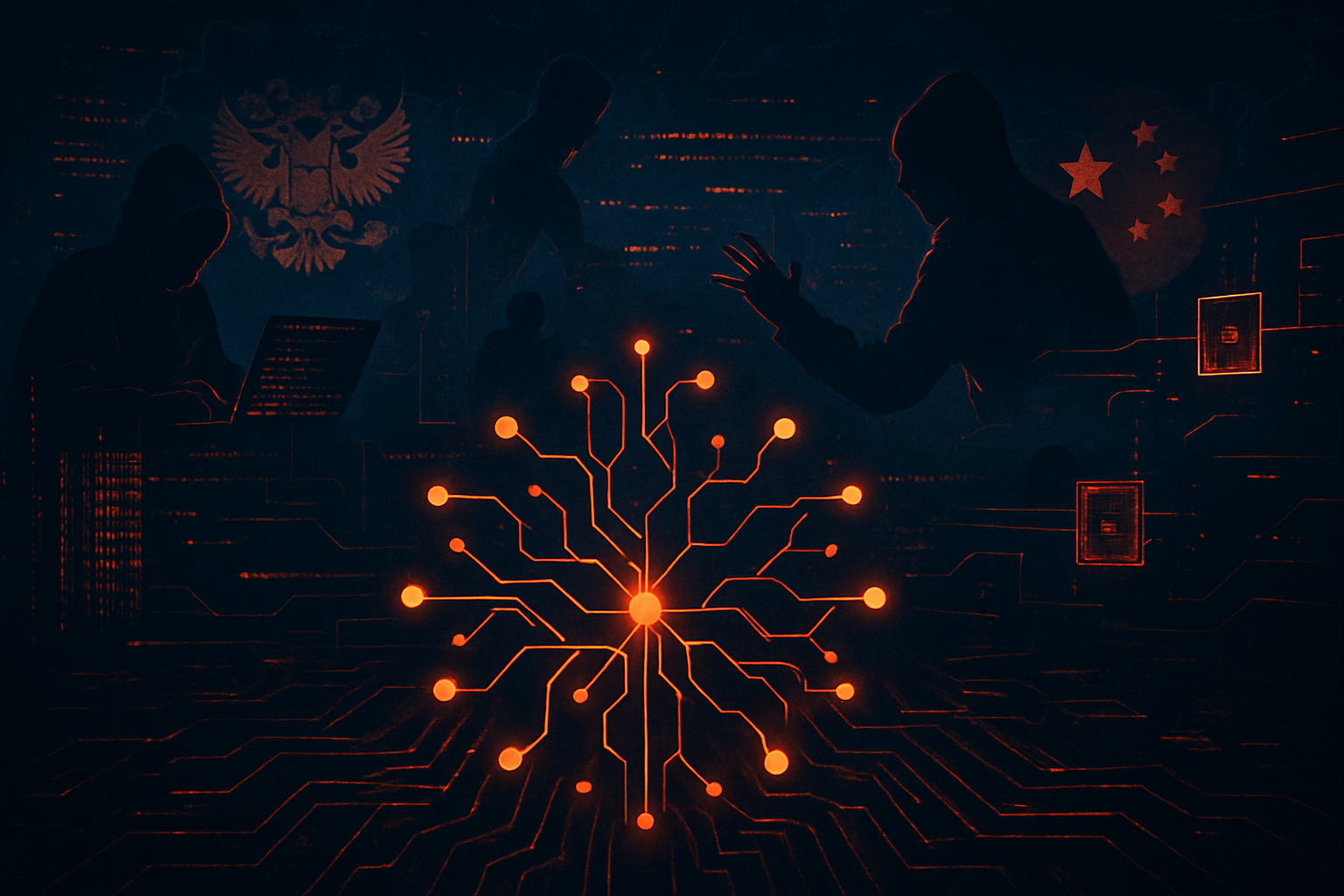
    The global cybersecurity landscape has entered a new and perilous era, characterized by the dramatic escalation of artificial intelligence (AI) in cyberattacks orchestrated by state-sponsored actors, particularly from Russia and China. Microsoft (NASDAQ: MSFT) has issued urgent warnings, highlighting AI's role as a "force multiplier" for adversaries, enabling unprecedented levels of sophistication, scale, and evasion in digital warfare. This development, rapidly unfolding throughout 2025, signals a critical juncture for national security, demanding immediate and robust defensive measures.

    According to Microsoft's annual Digital Threats Report, released in October 2025, state-sponsored groups from Russia, China, Iran, and North Korea have significantly ramped up their adoption of AI for online deception and cyberattacks against the United States and its allies. In July 2025 alone, Microsoft identified over 200 instances of foreign adversaries using AI to create fake content online—a staggering figure that more than doubles the number from July 2024 and represents a tenfold increase compared to 2023. This rapid integration of AI underscores a fundamental shift, where AI is no longer a futuristic concept but a present-day weapon enhancing malicious operations.

    The Technical Edge: How AI Redefines Cyber Offensive Capabilities

    The integration of AI marks a significant departure from traditional cyberattack methodologies, granting state-sponsored actors advanced technical capabilities across the entire attack lifecycle.

    Large Language Models (LLMs) are at the forefront of this evolution, enhancing reconnaissance, social engineering, and vulnerability research. Actors like Russia's Forest Blizzard are leveraging LLMs to gather intelligence on sensitive technologies, while North Korea's Emerald Sleet utilizes them to identify experts and security flaws. LLMs facilitate the creation of hyper-personalized, grammatically flawless, and contextually relevant phishing emails and messages at an unprecedented scale, making them virtually indistinguishable from legitimate communications. Furthermore, AI assists in rapidly researching publicly reported vulnerabilities and understanding security flaws, with AI-assisted Vulnerability Research and Exploit Development (VRED) poised to accelerate access to critical systems. LLMs are also used for scripting, coding, and developing code to evade detection.

    Automation, powered by AI, is streamlining and scaling every stage of cyberattacks. This includes automating entire attack processes, from reconnaissance to executing complex multi-stage attacks with minimal human intervention, vastly increasing the attack surface. Sophisticated deception, particularly through deepfakes, is another growing concern. Generative AI models are used to create hyper-realistic deepfakes, including digital clones of senior government officials, for highly convincing social engineering attacks and disinformation campaigns. North Korea has even pioneered the use of AI personas to create fake American identities to secure remote tech jobs within U.S. organizations, leading to data theft.

    Finally, AI is revolutionizing malware creation, making it more adaptive and evasive. AI assists in streamlining coding tasks, scripting malware functions, and developing adaptive, polymorphic malware that can self-modify to bypass signature-based antivirus solutions. Generative AI tools are readily available on the dark web, offering step-by-step instructions for developing ransomware and other malicious payloads, lowering the barrier to entry for less skilled attackers. This enables attacks to operate at a speed and sophistication far beyond human capabilities, accelerating vulnerability discovery, payload crafting, and evasion of anomaly detection. Initial reactions from the AI research community and industry experts, including Amy Hogan-Burney, Microsoft's VP for customer security and trust, emphasize an "AI Security Paradox"—the properties that make generative AI valuable also create unique security risks, demanding a radical shift towards AI-driven defensive strategies.

    Reshaping the Tech Landscape: Opportunities and Disruptions

    The escalating use of AI in cyberattacks is fundamentally reshaping the tech industry, presenting both significant threats and new opportunities, particularly for companies at the forefront of AI-driven defensive solutions.

    The global AI in cybersecurity market is experiencing explosive growth, projected to reach between $93.75 billion by 2030 and $234.64 billion by 2032. Established cybersecurity firms like IBM (NYSE: IBM), Palo Alto Networks (NASDAQ: PANW), Cisco Systems (NASDAQ: CSCO), CrowdStrike (NASDAQ: CRWD), Darktrace (LSE: DARK), Fortinet (NASDAQ: FTNT), Zscaler (NASDAQ: ZS), and Check Point Software Technologies Ltd. (NASDAQ: CHKP) are heavily investing in integrating AI into their platforms. These companies are positioned for long-term growth by offering advanced, AI-enhanced security solutions, such as CrowdStrike's AI-driven systems for real-time threat detection and Darktrace's Autonomous Response technology. Tech giants like Microsoft (NASDAQ: MSFT) and Amazon Web Services (AWS) are leveraging their extensive AI research and infrastructure to develop advanced defensive capabilities, using AI systems to identify threats, close detection gaps, and protect users.

    Competitive implications for major AI labs and tech companies are profound. There's an urgent need for increased R&D investment in AI security, developing AI models resilient to adversarial attacks, and building robust defensive AI capabilities into core products. The demand for cybersecurity professionals with AI and machine learning expertise is skyrocketing, leading to intense talent wars. Companies will face pressure to embed AI-driven security features directly into their offerings, covering network, endpoint, application, and cloud security. Failure to adequately defend against AI-powered state-sponsored attacks can lead to severe reputational damage and significant financial losses, elevating cybersecurity to a boardroom priority. Strategic partnerships between AI labs, cybersecurity firms, and government agencies will become crucial for collective defense.

    AI cyberattacks pose several disruptive threats to existing products and services. Enhanced social engineering and phishing, powered by generative AI, can easily trick employees and users, compromising data and credentials. Adaptive and evasive malware, capable of learning and modifying its code in real-time, renders many legacy security measures obsolete. AI-powered tools can rapidly scan networks, identify weaknesses, and develop custom exploits, accelerating the "breakout time" of attacks. Attackers can also target AI models themselves through adversarial AI, manipulating machine learning models by corrupting training data or tricking AI into misclassifying threats, introducing a new attack surface.

    To gain strategic advantages, companies must shift from reactive to proactive, predictive AI defense. Offering comprehensive, end-to-end AI security solutions that integrate AI across various security domains will be crucial. AI can significantly improve Security Information and Event Management (SIEM) and Endpoint Detection and Response (EDR), allowing security teams to focus on genuine threats. Adopting a "Secure by Design" approach for AI systems and prioritizing responsible AI governance will build trust and differentiate companies. The continuous innovation and adaptability in the "battle between defensive AI and offensive AI" will be critical for success and survival in the evolving digital landscape.

    Wider Significance: A New Era of Geopolitical Cyber Warfare

    The increasing use of AI in state-sponsored cyberattacks represents a profound shift in global security, embedding AI as a central component of a new global rivalry and demanding a fundamental re-evaluation of defensive strategies.

    This development fits into the broader AI landscape as a critical manifestation of AI's dual-use nature—its capacity to be a tool for both immense benefit and significant harm. The current trend points to an accelerating "AI arms race," where both attackers and defenders are leveraging AI, creating a constantly shifting equilibrium. The rise of autonomous AI agents and multi-agent systems introduces new attack vectors and vulnerabilities. The proliferation of generative AI has also lowered the barrier to entry for cybercriminals, enabling even those with limited technical expertise to launch devastating campaigns.

    The broader impacts and potential concerns are far-reaching. Societally, AI-driven attacks threaten critical public services like hospitals, transportation, and power grids, directly impacting people's lives and well-being. The proliferation of AI-generated fake content and deepfakes can sow discord, manipulate public opinion, and undermine public trust in institutions and media, creating a "new era of digital deception." For national security, AI significantly boosts state-sponsored cyber espionage, making it easier to collect classified information and target defense organizations. The targeting of critical infrastructure poses significant risks, while AI's sophistication makes attribution even harder, complicating response efforts and deterrence. In international relations, the weaponization of AI in cyber warfare intensifies the global competition for AI dominance, contributing to an increasingly volatile geopolitical situation and blurring the lines between traditional espionage, information manipulation, and criminal hacking.

    Comparing this development to previous AI milestones reveals its unique significance. Unlike earlier AI applications that might have assisted in specific tasks, current AI capabilities, particularly generative AI, allow adversaries to operate at a scale and speed "never seen before." What once took days or weeks of manual effort can now be accomplished in seconds. Previous AI breakthroughs lacked the adaptive and autonomous nature now seen in AI-powered cyber tools, which can adapt in real-time and even evolve to evade detection. The ability of AI to generate hyper-realistic synthetic media creates an unprecedented blurring of realities, impacting public trust and the integrity of information in ways rudimentary propaganda campaigns of the past could not achieve. Moreover, governments now view AI not just as a productivity tool but as a "source of power" and a central component of a new global rivalry, directly fostering an "AI-driven cyber arms race."

    The Horizon: Future Developments and the AI Cyber Arms Race

    The future of AI in cyberattacks portends an escalating "AI cyber arms race," where both offensive capabilities and defensive strategies will reach unprecedented levels of sophistication and autonomy.

    In the near-term (late 2025 – 2026), state-sponsored actors will significantly enhance their cyber operations through AI, focusing on automation, deception, and rapid exploitation. Expect more sophisticated and scalable influence campaigns, leveraging AI to produce automatic and large-scale disinformation, deepfakes, and synthetic media to manipulate public perception. Hyper-personalized social engineering and phishing campaigns will become even more prevalent, crafted by AI to exploit individual psychological vulnerabilities. AI-driven malware will be capable of autonomously learning, adapting, and evolving to evade detection, while AI will accelerate the discovery and exploitation of zero-day vulnerabilities. The weaponization of IoT devices for large-scale attacks also looms as a near-term threat.

    Looking further ahead (beyond 2026), experts predict the emergence of fully autonomous cyber warfare, where AI systems battle each other in real-time with minimal human intervention. AI in cyber warfare is also expected to integrate with physical weapon systems, creating hybrid threats. Offensive AI applications will include automated reconnaissance and vulnerability discovery, adaptive malware and exploit generation, and advanced information warfare campaigns. On the defensive side, AI will power real-time threat detection and early warning systems, automate incident response, enhance cyber threat intelligence, and lead to the development of autonomous cyber defense systems. Generative AI will also create realistic attack simulations for improved preparedness.

    However, significant challenges remain. The continuous "AI arms race" demands constant innovation. Attribution difficulties will intensify due to AI's ability to hide tracks and leverage the cybercriminal ecosystem. Ethical and legal implications of delegating decisions to machines raise fundamental questions about accountability. Bias in AI systems, vulnerabilities within AI systems themselves (e.g., prompt injection, data poisoning), and privacy concerns related to massive data harvesting all need to be addressed. Experts predict that by 2025, AI will be used by both attackers for smarter attacks and defenders for real-time threat detection. An escalation in state-sponsored attacks is expected, characterized by increased sophistication and the use of AI-driven malware. This will necessitate a focus on AI-powered defense, new regulations, ethical frameworks, and the development of unified security platforms.

    A Critical Juncture: Securing the AI Future

    The increasing use of AI in cyberattacks by state-sponsored actors represents a critical and transformative moment in AI history. It signifies AI's transition into a primary weapon in geopolitical conflicts, demanding a fundamental re-evaluation of how societies approach cybersecurity and national defense.

    The key takeaways are clear: AI has dramatically amplified the capabilities of malicious actors, enabling faster, smarter, and more evasive cyber operations. This has ushered in an "AI cyber arms race" where the stakes are incredibly high, threatening critical infrastructure, democratic processes, and public trust. The significance of this development cannot be overstated; it marks AI's mastery over complex strategic planning and deception in cyber warfare, moving beyond earlier theoretical advancements to tangible, real-world threats. The long-term impact points towards a future of autonomous cyber warfare, integrated hybrid threats, and a continuous struggle to maintain digital sovereignty and public trust in an increasingly AI-driven information environment.

    In the coming weeks and months, the world must watch for the continued acceleration of this AI arms race, with a focus on securing AI models themselves from attack, the rise of agentic AI leading to public breaches, and increasingly sophisticated deception tactics. Governments and organizations must prioritize bolstering cyber resilience, adopting advanced AI-powered cybersecurity tools for better threat detection and response, and extensively training their teams to recognize and counter these evolving threats. The United Kingdom's National Cyber Security Centre (NCSC) emphasizes that keeping pace with AI-cyber developments will be critical for cyber resilience for the decade to come. This is not merely a technological challenge, but a societal one, requiring coordinated action, international cooperation, and a proactive approach to secure our digital future.


    This content is intended for informational purposes only and represents analysis of current AI developments.

    TokenRing AI delivers enterprise-grade solutions for multi-agent AI workflow orchestration, AI-powered development tools, and seamless remote collaboration platforms.
    For more information, visit https://www.tokenring.ai/.
  • The AI Cyberwar: State-Sponsored Hackers and Malicious Actors Unleash a New Era of Digital Deception and Intrusion

    The AI Cyberwar: State-Sponsored Hackers and Malicious Actors Unleash a New Era of Digital Deception and Intrusion

    October 16, 2025 – The digital battleground has been irrevocably reshaped by artificial intelligence, as state-sponsored groups and independent malicious actors alike are leveraging advanced AI capabilities to orchestrate cyberattacks of unprecedented sophistication and scale. Reports indicate a dramatic surge in AI-powered campaigns, with nations such as Russia, China, Iran, and North Korea intensifying their digital assaults on the United States, while a broader ecosystem of hackers employs AI to steal credentials and gain unauthorized access at an alarming rate. This escalating threat marks a critical juncture in cybersecurity, demanding a fundamental re-evaluation of defensive strategies as AI transforms both the offense and defense in the digital realm.

    The immediate significance of this AI integration is profound: traditional cybersecurity measures are increasingly outmatched by dynamic, adaptive AI-driven threats. The global cost of cybercrime is projected to soar, underscoring the urgency of this challenge. As AI-generated deception becomes indistinguishable from reality and automated attacks proliferate, the cybersecurity community faces a defining struggle to protect critical infrastructure, economic stability, and national security from a rapidly evolving adversary.

    The Technical Edge: How AI Elevates Cyber Warfare

    The technical underpinnings of these new AI-powered cyberattacks reveal a significant leap in offensive capabilities. AI is no longer merely an auxiliary tool but a core component enabling entirely new forms of digital warfare and crime.

    One of the most concerning advancements is the rise of sophisticated deception. Generative AI models are being used to create hyper-realistic deepfakes, including digital clones of senior government officials, which can be deployed in highly convincing social engineering attacks. Poorly worded phishing emails, a traditional tell-tale sign of malicious intent, are now seamlessly translated into fluent, contextually relevant English, making them virtually indistinguishable from legitimate communications. Iranian state-affiliated groups, for instance, have been actively seeking AI assistance to develop new electronic deception methods and evade detection.

    AI is also revolutionizing reconnaissance and vulnerability research. Attackers are leveraging AI to rapidly research companies, intelligence agencies, satellite communication protocols, radar technology, and publicly reported vulnerabilities. North Korean hackers have specifically employed AI to identify experts on their country's military capabilities and to pinpoint known security flaws in systems. Furthermore, AI assists in malware development and automation, streamlining coding tasks, scripting malware functions, and even developing adaptive, evasive polymorphic malware that can self-modify to bypass signature-based antivirus solutions. Generative AI tools are readily available on the dark web, offering step-by-step instructions for developing ransomware and other malicious payloads.

    The methods for unauthorized access have also grown more insidious. North Korea has pioneered the use of AI personas to create fake American identities, which are then used to secure remote tech jobs within US organizations. This insider access is subsequently exploited to steal secrets or install malware. In a critical development, China-backed hackers maintained long-term unauthorized access to systems belonging to F5, Inc. (NASDAQ: FFIV), a leading application delivery and security company. This breach, discovered in October 2025, resulted in the theft of portions of the BIG-IP product’s source code and details about undisclosed security flaws, prompting an emergency directive from the US Cybersecurity and Infrastructure Security Agency (CISA) due to the "significant cyber threat" it posed to federal networks utilizing F5 products. Russian state hackers, meanwhile, have employed sophisticated cyberespionage campaigns, manipulating system certificates to disguise their activities as trusted applications and gain diplomatic intelligence.

    Beyond state actors, other malicious actors are driving an explosive rise in credential theft. The first half of 2025 saw a staggering 160% increase in compromised credentials, with 1.8 billion logins stolen. This surge is fueled by AI-powered phishing and the proliferation of "malware-as-a-service" (MaaS) offerings. Generative AI models, such as advanced versions of GPT-4, enable the rapid creation of hyper-personalized, grammatically flawless, and contextually relevant phishing emails and messages at unprecedented speed and scale. Deepfake technology has also become a cornerstone of organized cybercrime, with deepfake vishing (voice phishing) surging over 1,600% in the first quarter of 2025. Criminals use synthetic audio and video clones to impersonate CEOs, CFOs, or family members, tricking victims into urgent money transfers or revealing sensitive information. Notable incidents include a European energy conglomerate losing $25 million due to a deepfake audio clone of their CFO and a British engineering firm losing a similar amount after a deepfake video call impersonating their CFO. These deepfake services are now widely available on the dark web, democratizing advanced attack capabilities for less-experienced hackers through "cybercrime-as-a-service" models.

    Competitive Implications for the Tech Industry

    The escalating threat of AI-powered cyberattacks presents a complex landscape of challenges and opportunities for AI companies, tech giants, and startups. While the immediate impact is a heightened security risk, it also catalyzes innovation in defensive AI.

    Cybersecurity firms specializing in AI-driven threat detection and response stand to benefit significantly. Companies like Palo Alto Networks (NASDAQ: PANW), CrowdStrike Holdings, Inc. (NASDAQ: CRWD), and Fortinet, Inc. (NASDAQ: FTNT) are already heavily invested in AI and machine learning to identify anomalies, predict attacks, and automate responses. This new wave of AI-powered attacks will accelerate the demand for their advanced solutions, driving growth in their enterprise-grade offerings. Startups focusing on niche areas such as deepfake detection, behavioral biometrics, and sophisticated anomaly detection will also find fertile ground for innovation and market entry.

    For major AI labs and tech companies like Microsoft Corp. (NASDAQ: MSFT), Alphabet Inc. (NASDAQ: GOOGL), and International Business Machines Corp. (NYSE: IBM), the competitive implications are twofold. On one hand, they are at the forefront of developing the very AI technologies being weaponized, placing a significant responsibility on them to implement robust safety and ethical guidelines for their models. OpenAI, for instance, has already confirmed attempts by state-affiliated groups to misuse its AI chatbot services. On the other hand, these tech giants possess the resources and expertise to develop powerful defensive AI tools, integrating them into their cloud platforms, operating systems, and enterprise security suites. Their ability to secure their own AI models against adversarial attacks and to provide AI-powered defenses to their vast customer bases will become a critical competitive differentiator.

    The development of AI-powered attacks also poses a significant disruption to existing products and services, particularly those relying on traditional, signature-based security. Legacy systems are increasingly vulnerable, necessitating substantial investment in upgrades or complete overhauls. Companies that fail to adapt their security posture will face increased risks of breaches, reputational damage, and financial losses. This creates a strong market pull for innovative AI-driven security solutions that can proactively identify and neutralize sophisticated threats.

    In terms of market positioning and strategic advantages, companies that can demonstrate a strong commitment to AI safety, develop transparent and explainable AI defenses, and offer comprehensive, adaptive security platforms will gain a significant edge. The ability to leverage AI not just for threat detection but also for automated incident response, threat intelligence analysis, and even proactive threat hunting will be paramount. This situation is fostering an intense "AI arms race" where the speed and effectiveness of AI deployment in both offense and defense will determine market leadership and national security.

    The Wider Significance: An AI Arms Race and Societal Impact

    The escalating threat of AI-powered cyberattacks fits squarely into the broader AI landscape as a critical and concerning trend: the weaponization of advanced artificial intelligence. This development underscores the dual-use nature of AI technology, where innovations designed for beneficial purposes can be repurposed for malicious intent. It highlights an accelerating AI arms race, where nation-states and criminal organizations are investing heavily in offensive AI capabilities, forcing a parallel and equally urgent investment in defensive AI.

    The impacts are far-reaching. Economically, the projected global cost of cybercrime reaching $24 trillion by 2027 is a stark indicator of the financial burden. Businesses face increased operational disruptions, intellectual property theft, and regulatory penalties from data breaches. Geopolitically, the use of AI by state-sponsored groups intensifies cyber warfare, blurring the lines between traditional conflict and digital aggression. Critical infrastructure, from energy grids to financial systems, faces unprecedented exposure to outages and sabotage, with severe societal consequences.

    Potential concerns are manifold. The ability of AI to generate hyper-realistic deepfakes erodes trust in digital information and can be used for widespread disinformation campaigns, undermining democratic processes and public discourse. The ease with which AI can be used to create sophisticated phishing and social engineering attacks increases the vulnerability of individuals, leading to identity theft, financial fraud, and emotional distress. Moreover, the increasing autonomy of AI in attack vectors raises questions about accountability and control, particularly as AI-driven malware becomes more adaptive and evasive. The targeting of AI models themselves through prompt injection or data poisoning introduces novel attack surfaces and risks, threatening the integrity and reliability of AI systems across all sectors.

    Comparisons to previous AI milestones reveal a shift from theoretical advancements to practical, often dangerous, applications. While early AI breakthroughs focused on tasks like image recognition or natural language processing, the current trend showcases AI's mastery over human-like deception and complex strategic planning in cyber warfare. This isn't just about AI performing tasks better; it's about AI performing malicious tasks with human-level cunning and machine-level scale. It represents a more mature and dangerous phase of AI adoption, where the technology's power is being fully realized by adversarial actors. The speed of this adoption by malicious entities far outpaces the development and deployment of robust, standardized defensive measures, creating a dangerous imbalance.

    Future Developments: The Unfolding Cyber Landscape

    The trajectory of AI-powered cyberattacks suggests a future defined by continuous innovation in both offense and defense, posing significant challenges that demand proactive solutions.

    In the near-term, we can expect an intensification of the trends already observed. Deepfake technology will become even more sophisticated and accessible, making it increasingly difficult for humans to distinguish between genuine and synthetic media in real-time. This will necessitate the widespread adoption of advanced deepfake detection technologies and robust authentication mechanisms beyond what is currently available. AI-driven phishing and social engineering will become hyper-personalized, leveraging vast datasets to craft highly effective, context-aware lures that exploit individual psychological vulnerabilities. The "malware-as-a-service" ecosystem will continue to flourish, democratizing advanced attack capabilities for a wider array of cybercriminals.

    Long-term developments will likely see the emergence of highly autonomous AI agents capable of orchestrating multi-stage cyberattacks with minimal human intervention. These agents could conduct reconnaissance, develop custom exploits, penetrate networks, exfiltrate data, and even adapt their strategies in real-time to evade detection. The concept of "AI vs. AI" in cybersecurity will become a dominant paradigm, with defensive AI systems constantly battling offensive AI systems in a perpetual digital arms race. We might also see the development of AI systems specifically designed to probe and exploit weaknesses in other AI systems, leading to a new class of "AI-native" vulnerabilities.

    Potential applications and use cases on the horizon for defensive AI include predictive threat intelligence, where AI analyzes global threat data to anticipate future attack vectors; self-healing networks that can automatically detect, isolate, and remediate breaches; and AI-powered cyber-physical system protection for critical infrastructure. AI could also play a crucial role in developing "digital immune systems" for organizations, constantly learning and adapting to new threats.

    However, significant challenges need to be addressed. The explainability of AI decisions in both attack and defense remains a hurdle; understanding why an AI flagged a threat or why an AI-driven attack succeeded is vital for improvement. The ethical implications of deploying autonomous defensive AI, particularly concerning potential false positives or unintended collateral damage, require careful consideration. Furthermore, the sheer volume and velocity of AI-generated threats will overwhelm human analysts, emphasizing the need for highly effective and trustworthy automated defenses. Experts predict that the sophistication gap between offensive and defensive AI will continue to fluctuate, but the overall trend will be towards more complex and persistent threats, requiring continuous innovation and international cooperation to manage.

    Comprehensive Wrap-Up: A Defining Moment in AI History

    The current surge in AI-powered cyberattacks represents a pivotal moment in the history of artificial intelligence, underscoring its profound and often perilous impact on global security. The key takeaways are clear: AI has become an indispensable weapon for both state-sponsored groups and other malicious actors, enabling unprecedented levels of deception, automation, and unauthorized access. Traditional cybersecurity defenses are proving inadequate against these dynamic threats, necessitating a radical shift towards AI-driven defensive strategies. The human element remains a critical vulnerability, as AI-generated scams become increasingly convincing, demanding heightened vigilance and advanced training.

    This development's significance in AI history cannot be overstated. It marks the transition of AI from a tool of innovation and convenience to a central player in geopolitical conflict and global crime. It highlights the urgent need for responsible AI development, robust ethical frameworks, and international collaboration to mitigate the risks associated with powerful dual-use technologies. The "AI arms race" is not a future prospect; it is a current reality, reshaping the cybersecurity landscape in real-time.

    Final thoughts on the long-term impact suggest a future where cybersecurity is fundamentally an AI-versus-AI battle. Organizations and nations that fail to adequately invest in and integrate AI into their defensive strategies will find themselves at a severe disadvantage. The integrity of digital information, the security of critical infrastructure, and the trust in online interactions are all at stake. This era demands a holistic approach, combining advanced AI defenses with enhanced human training and robust policy frameworks.

    What to watch for in the coming weeks and months includes further emergency directives from cybersecurity agencies, increased public-private partnerships aimed at sharing threat intelligence and developing defensive AI, and accelerated investment in AI security startups. The legal and ethical debates surrounding autonomous defensive AI will also intensify. Ultimately, the ability to harness AI for defense as effectively as it is being weaponized for offense will determine the resilience of our digital world.


    This content is intended for informational purposes only and represents analysis of current AI developments.

    TokenRing AI delivers enterprise-grade solutions for multi-agent AI workflow orchestration, AI-powered development tools, and seamless remote collaboration platforms.
    For more information, visit https://www.tokenring.ai/.