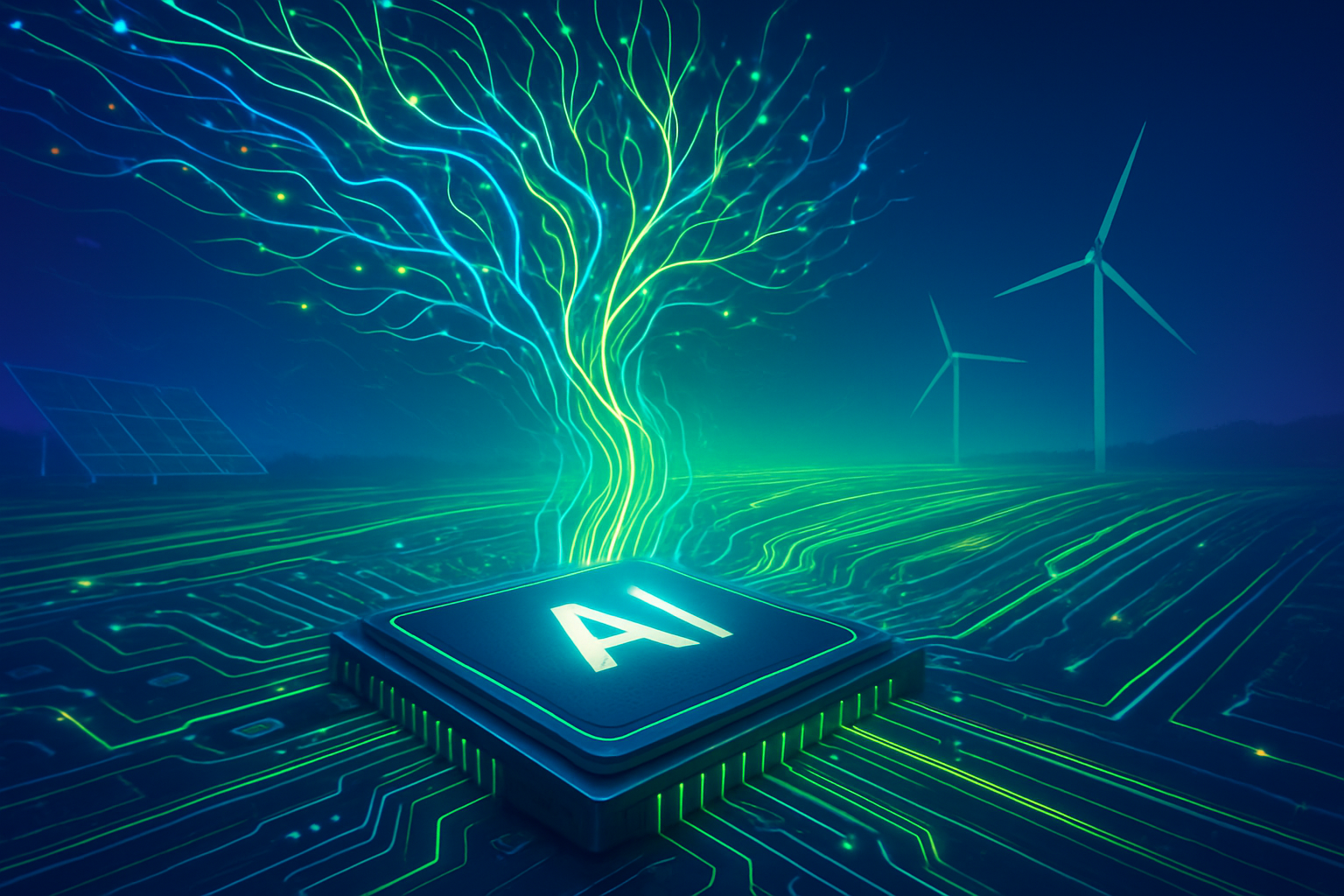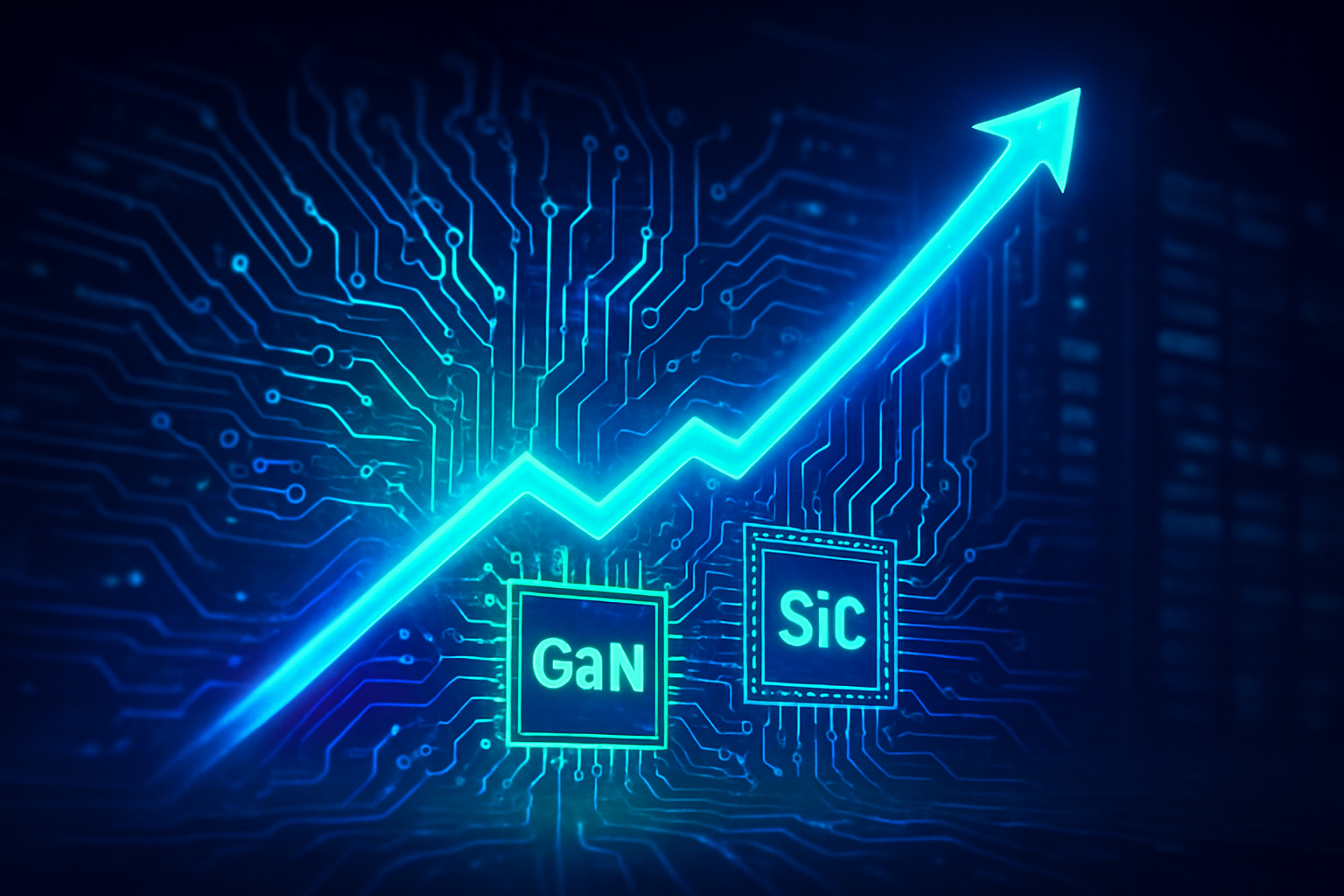
Navitas Semiconductor (NASDAQ: NVTS) has recently experienced an unprecedented surge in its stock value, driven by a pivotal strategic partnership with AI giant Nvidia (NASDAQ: NVDA). This collaboration, focused on developing cutting-edge Gallium Nitride (GaN) and Silicon Carbide (SiC) power devices for Nvidia's next-generation AI infrastructure, has ignited investor confidence and significantly repositioned Navitas within the burgeoning power semiconductor market. The dramatic stock rally, particularly following announcements in June and October 2025, underscores the critical role of advanced power management solutions in the era of escalating AI computational demands.
The partnership with Nvidia represents a significant validation of Navitas's wide-bandgap semiconductor technology, signaling a strategic shift for the company towards higher-growth, higher-margin sectors like AI data centers, electric vehicles (EVs), and renewable energy. This move is poised to redefine efficiency standards in high-power applications, offering substantial improvements in performance, density, and cost savings for hyperscale operators. The market's enthusiastic response reflects a broader recognition of Navitas's potential to become a foundational technology provider in the rapidly evolving landscape of artificial intelligence infrastructure.
Technical Prowess Driving the AI Revolution
The core of Navitas Semiconductor's recent success and the Nvidia partnership lies in its proprietary Gallium Nitride (GaN) and Silicon Carbide (SiC) technologies. These wide-bandgap materials are not merely incremental improvements over traditional silicon-based power semiconductors; they represent a fundamental leap forward in power conversion efficiency and density, especially crucial for the demanding requirements of modern AI data centers.
Specifically, Navitas's GaNFast™ power ICs integrate GaN power, drive, control, sensing, and protection functions onto a single chip. This integration enables significantly faster power delivery, higher system density, and superior energy efficiency compared to conventional silicon solutions. GaN's inherent advantages, such as higher electron mobility and lower gate capacitance, make it ideal for high-frequency, high-performance power designs. For Nvidia's 800V HVDC architecture, this translates into power supplies that are not only smaller and lighter but also dramatically more efficient, reducing wasted energy and heat generation – a critical concern in densely packed AI server racks.
Complementing GaN, Navitas's GeneSiC™ technology addresses applications requiring higher voltages, offering robust efficiency and reliability for systems up to 6,500V. SiC's superior thermal conductivity, rugged design, and high dielectric breakdown strength make it perfectly suited for the higher-power demands of AI factory computing platforms, electric vehicle charging, and industrial power supplies. The combination of GaN and SiC allows Navitas to offer a comprehensive suite of power solutions that can cater to the diverse and extreme power requirements of Nvidia's cutting-edge AI infrastructure, which standard silicon technology struggles to meet without significant compromises in size, weight, and efficiency.
Initial reactions from the AI research community and industry experts have been overwhelmingly positive. Many view this collaboration as a game-changer, not just for Navitas but for the entire AI industry. Experts highlight that the efficiency gains promised by Navitas's technology—up to 5% improvement and a 45% reduction in copper usage per 1MW rack—are not trivial. These improvements translate directly into massive operational cost savings for hyperscale data centers, lower carbon footprints, and the ability to pack more computational power into existing footprints, thereby accelerating the deployment and scaling of AI capabilities globally.
Reshaping the Competitive Landscape
The strategic partnership between Navitas Semiconductor and Nvidia carries profound implications for AI companies, tech giants, and startups across the industry. Navitas (NASDAQ: NVTS) itself stands to be a primary beneficiary, solidifying its position as a leading innovator in wide-bandgap semiconductors. The endorsement from a market leader like Nvidia (NASDAQ: NVDA) not only validates Navitas's technology but also provides a significant competitive advantage in securing future design wins and market share in the high-growth AI, EV, and energy sectors.
For Nvidia, this partnership ensures access to state-of-the-art power solutions essential for maintaining its dominance in AI computing. As AI models grow in complexity and computational demands skyrocket, efficient power delivery becomes a bottleneck. By integrating Navitas's GaN and SiC technologies, Nvidia can offer more powerful, energy-efficient, and compact AI systems, further entrenching its lead over competitors like Advanced Micro Devices (NASDAQ: AMD) and Intel (NASDAQ: INTC) in the AI accelerator market. This collaboration enables Nvidia to push the boundaries of what's possible in AI infrastructure, directly impacting the performance and scalability of AI applications globally.
The ripple effect extends to other power semiconductor manufacturers. Companies focused solely on traditional silicon-based power management solutions may face significant disruption. The superior performance of GaN and SiC in high-frequency and high-voltage applications creates a clear competitive gap that will be challenging to bridge without substantial investment in wide-bandbandgap technologies. This could accelerate the transition across the industry towards GaN and SiC, forcing competitors to either acquire specialized expertise or rapidly develop their own next-generation solutions. Startups innovating in power electronics may find new opportunities for collaboration or acquisition as larger players seek to catch up.
Beyond direct competitors, hyperscale cloud providers and data center operators, such as Amazon (NASDAQ: AMZN) with AWS, Microsoft (NASDAQ: MSFT) with Azure, and Google (NASDAQ: GOOGL) with Google Cloud, stand to benefit immensely. The promise of reduced energy consumption and cooling costs, coupled with increased power density, directly addresses some of their most significant operational challenges. This strategic alignment positions Navitas and Nvidia at the forefront of a paradigm shift in data center design and efficiency, potentially setting new industry standards and influencing procurement decisions across the entire tech ecosystem.
Broader Significance in the AI Landscape
Navitas Semiconductor's strategic partnership with Nvidia and the subsequent stock surge are not merely isolated corporate events; they signify a crucial inflection point in the broader AI landscape. This development underscores the increasingly critical role of specialized hardware, particularly in power management, in unlocking the full potential of artificial intelligence. As AI models become larger and more complex, the energy required to train and run them escalates dramatically. Efficient power delivery is no longer a secondary consideration but a fundamental enabler for continued AI advancement.
The adoption of GaN and SiC technologies by a leading AI innovator like Nvidia validates the long-held promise of wide-bandgap semiconductors. This fits perfectly into the overarching trend of "AI infrastructure optimization," where every component, from processors to interconnects and power supplies, is being re-evaluated and redesigned for maximum performance and efficiency. The impact is far-reaching: it addresses growing concerns about the environmental footprint of AI, offering a path towards more sustainable computing. By reducing energy waste, Navitas's technology contributes to lower operational costs for data centers, which in turn can make advanced AI more accessible and economically viable for a wider range of applications.
Potential concerns, however, include the scalability of GaN and SiC production to meet potentially explosive demand, and the initial higher manufacturing costs compared to silicon. While Navitas is addressing supply chain strengthening through partnerships like the one with GlobalFoundries (NASDAQ: GF) for US-based GaN manufacturing (announced November 20, 2025), ensuring consistent, high-volume, and cost-effective supply will be paramount. Nevertheless, the long-term benefits in terms of efficiency and performance are expected to outweigh these initial challenges.
This milestone can be compared to previous breakthroughs in AI hardware, such as the widespread adoption of GPUs for parallel processing or the development of specialized AI accelerators like TPUs. Just as those innovations removed computational bottlenecks, the advancement in power semiconductors is now tackling the energy bottleneck. It highlights a maturing AI industry that is optimizing not just algorithms but the entire hardware stack, moving towards a future where AI systems are not only intelligent but also inherently efficient and sustainable.
The Road Ahead: Future Developments and Predictions
The strategic alliance between Navitas Semiconductor and Nvidia, fueled by the superior performance of GaN and SiC power semiconductors, sets the stage for significant near-term and long-term developments in AI infrastructure. In the near term, we can expect to see the accelerated integration of Navitas's 800V HVDC power devices into Nvidia's next-generation AI factory computing platforms. This will likely lead to the rollout of more energy-efficient and higher-density AI server racks, enabling data centers to deploy more powerful AI workloads within existing or even smaller footprints. The focus will be on demonstrating tangible efficiency gains and cost reductions in real-world deployments.
Looking further ahead, the successful deployment of GaN and SiC in AI data centers is likely to catalyze broader adoption across other high-power applications. Potential use cases on the horizon include more efficient electric vehicle charging infrastructure, enabling faster charging times and longer battery life; advanced renewable energy systems, such as solar inverters and wind turbine converters, where minimizing energy loss is critical; and industrial power supplies requiring robust, compact, and highly efficient solutions. Experts predict a continued shift away from silicon in these demanding sectors, with wide-bandgap materials becoming the de facto standard for high-performance power electronics.
However, several challenges need to be addressed for these predictions to fully materialize. Scaling up manufacturing capacity for GaN and SiC to meet the anticipated exponential demand will be crucial. This involves not only expanding existing fabrication facilities but also developing more cost-effective production methods to bring down the unit price of these advanced semiconductors. Furthermore, the industry will need to invest in training a workforce skilled in designing, manufacturing, and deploying systems that leverage these novel materials. Standardization efforts for GaN and SiC components and modules will also be important to foster wider adoption and ease integration.
Experts predict that the momentum generated by the Nvidia partnership will position Navitas (NASDAQ: NVTS) as a key enabler of the AI revolution, with its technology becoming indispensable for future generations of AI hardware. They foresee a future where power efficiency is as critical as processing power in determining the competitiveness of AI systems, and Navitas is currently at the forefront of this critical domain. The coming years will likely see further innovations in wide-bandgap materials, potentially leading to even greater efficiencies and new applications currently unforeseen.
A New Era for Power Semiconductors in AI
Navitas Semiconductor's dramatic stock surge, propelled by its strategic partnership with Nvidia, marks a significant turning point in the power semiconductor market and its indispensable role in the AI era. The key takeaway is the undeniable validation of Gallium Nitride (GaN) and Silicon Carbide (SiC) technologies as essential components for the next generation of high-performance, energy-efficient AI infrastructure. This collaboration highlights how specialized hardware innovation, particularly in power management, is crucial for overcoming the energy and density challenges posed by increasingly complex AI workloads.
This development holds immense significance in AI history, akin to previous breakthroughs in processing and memory that unlocked new computational paradigms. It underscores a maturation of the AI industry, where optimization is extending beyond software and algorithms to the fundamental physics of power delivery. The efficiency gains offered by Navitas's wide-bandgap solutions—reduced energy consumption, lower cooling requirements, and higher power density—are not just technical achievements; they are economic imperatives and environmental responsibilities for the hyperscale data centers powering the AI revolution.
Looking ahead, the long-term impact of this partnership is expected to be transformative. It is poised to accelerate the broader adoption of GaN and SiC across various high-power applications, from electric vehicles to renewable energy, establishing new benchmarks for performance and sustainability. The success of Navitas (NASDAQ: NVTS) in securing a foundational role in Nvidia's (NASDAQ: NVDA) AI ecosystem will likely inspire further investment and innovation in wide-bandgap technologies from competitors and startups alike.
In the coming weeks and months, industry observers should watch for further announcements regarding the deployment of Nvidia's AI platforms incorporating Navitas's technology, as well as any updates on Navitas's manufacturing scale-up efforts and additional strategic partnerships. The performance of Navitas's stock, and indeed the broader power semiconductor market, will serve as a bellwether for the ongoing technological shift towards more efficient and sustainable high-power electronics, a shift that is now inextricably linked to the future of artificial intelligence.
This content is intended for informational purposes only and represents analysis of current AI developments.
TokenRing AI delivers enterprise-grade solutions for multi-agent AI workflow orchestration, AI-powered development tools, and seamless remote collaboration platforms.
For more information, visit https://www.tokenring.ai/.