Tag: Super Power Rail

  • TSMC’s A16 Roadmap: The Angstrom Era and the Breakthrough of Super Power Rail Technology

    TSMC’s A16 Roadmap: The Angstrom Era and the Breakthrough of Super Power Rail Technology

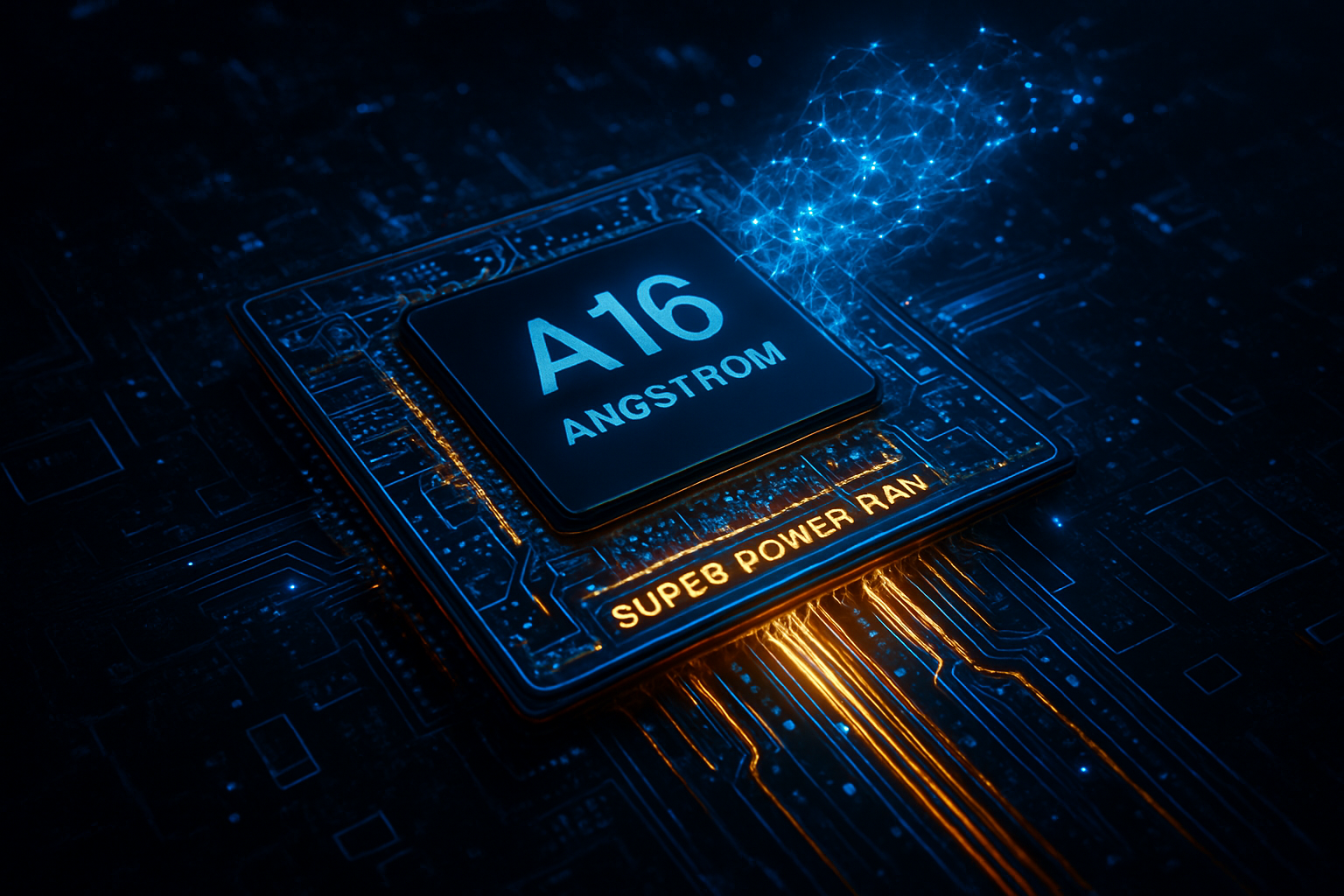
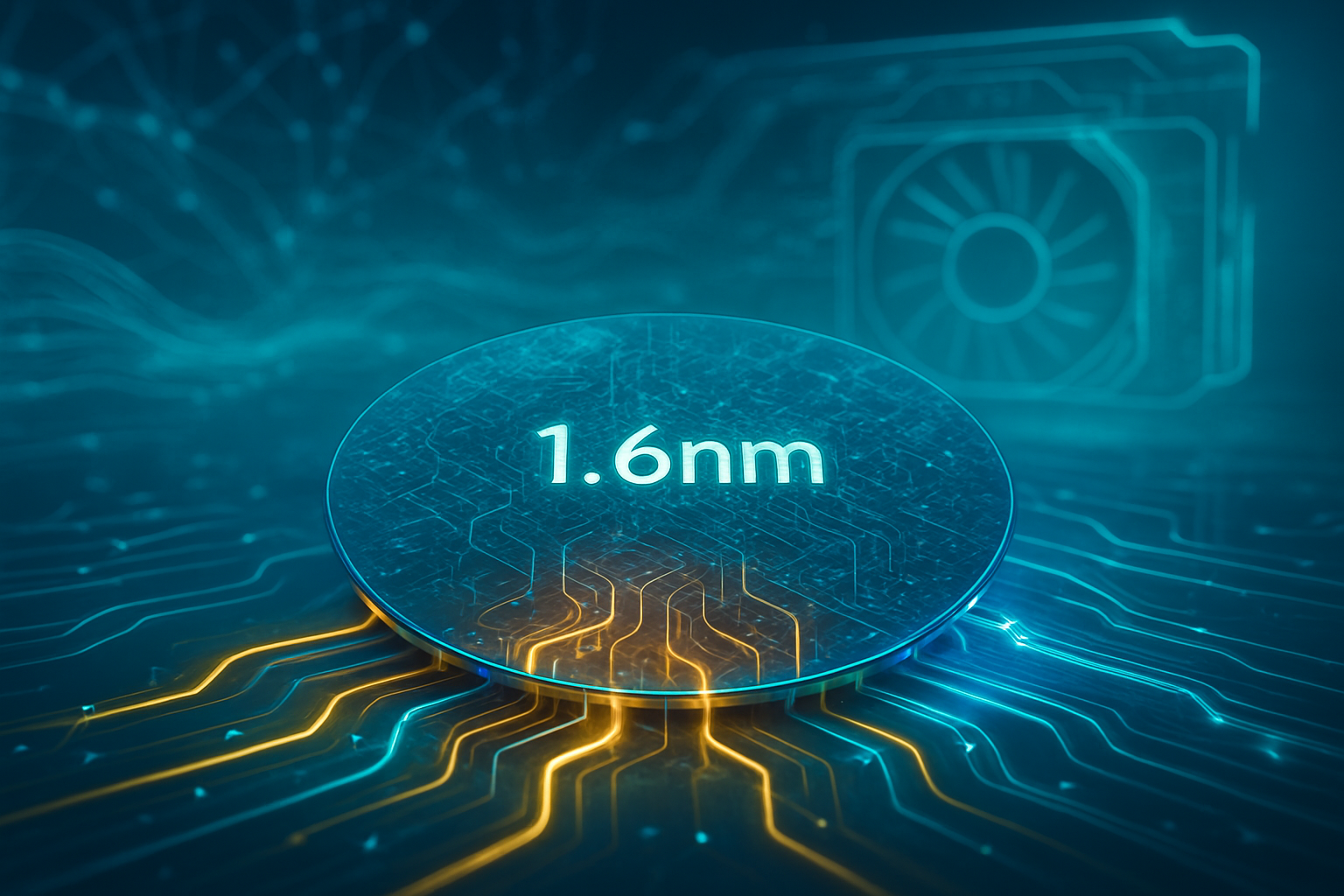
    As the global race for artificial intelligence supremacy accelerates, the physical limits of silicon have long been viewed as the ultimate finish line. However, Taiwan Semiconductor Manufacturing Company (NYSE:TSM) has just moved that line significantly further. In a landmark announcement detailing its roadmap for the "Angstrom Era," TSMC has unveiled the A16 process node—a 1.6nm-class technology scheduled for mass production in the second half of 2026. This development marks a pivotal shift in semiconductor architecture, moving beyond simple transistor shrinking to a fundamental redesign of how chips are powered and cooled.

    The significance of the A16 node lies in its departure from traditional manufacturing paradigms. By introducing the "Super Power Rail" (SPR) technology, TSMC is addressing the "power wall" that has threatened to stall the progress of next-generation AI accelerators. As of December 31, 2025, the industry is already seeing a massive shift in demand, with AI giants and hyperscalers pivoting their long-term hardware strategies to align with this 1.6nm milestone. The A16 node is not just a marginal improvement; it is the foundation upon which the next decade of generative AI and high-performance computing (HPC) will be built.

    The Technical Leap: Super Power Rail and the 1.6nm Frontier

    The A16 process represents TSMC’s first foray into the Angstrom-scale nomenclature, utilizing a refined version of the Gate-All-Around (GAA) nanosheet transistor architecture. While the 2nm (N2) node, currently entering high-volume production, laid the groundwork for GAAFETs, A16 introduces the revolutionary Super Power Rail. This is a sophisticated backside power delivery network (BSPDN) that relocates the power distribution circuitry from the top of the silicon wafer to the bottom. Unlike earlier iterations of backside power, such as Intel’s (NASDAQ:INTC) PowerVia, TSMC’s SPR connects the power network directly to the source and drain of the transistors.

    This direct-contact approach is significantly more complex to manufacture but yields substantial electrical benefits. By separating signal routing on the front side from power delivery on the backside, SPR eliminates the "routing congestion" that often plagues high-density AI chips. The results are quantifiable: A16 promises an 8-10% improvement in clock speeds at the same voltage and a staggering 15-20% reduction in power consumption compared to the N2P (2nm enhanced) node. Furthermore, the node offers a 1.1x increase in logic density, allowing chip designers to pack more processing cores into the same physical footprint.

    Initial reactions from the semiconductor research community have been overwhelmingly positive, though some experts note the immense manufacturing hurdles. Moving power to the backside requires advanced wafer-bonding and thinning techniques that must be executed with atomic-level precision. However, TSMC’s decision to stick with existing Extreme Ultraviolet (EUV) lithography tools for the initial A16 ramp—rather than immediately jumping to the more expensive "High-NA" EUV machines—suggests a calculated strategy to maintain high yields while delivering cutting-edge performance.

    The AI Gold Rush: Nvidia, OpenAI, and the Battle for Capacity

    The announcement of the A16 roadmap has triggered a "foundry gold rush" among the world’s most powerful tech companies. Nvidia (NASDAQ:NVDA), which currently holds a dominant position in the AI data center market, has reportedly secured exclusive early access to A16 capacity for its 2027 "Feynman" GPU architecture. For Nvidia, the 20% power reduction offered by A16 is a critical competitive advantage, as data center operators struggle to manage the heat and electricity demands of massive H100 and Blackwell clusters.

    In a surprising strategic shift, OpenAI has also emerged as a key stakeholder in the A16 era. Working alongside partners like Broadcom (NASDAQ:AVGO) and Marvell (NASDAQ:MRVL), OpenAI is reportedly developing its own custom silicon—an "eXtreme Processing Unit" (XPU)—optimized specifically for its GPT-5 and Sora models. By leveraging TSMC’s A16 node, OpenAI aims to achieve a level of vertical integration that could eventually reduce its reliance on off-the-shelf hardware. Meanwhile, Apple (NASDAQ:AAPL), traditionally TSMC’s largest customer, is expected to utilize A16 for its 2027 "M6" and "A21" chips, ensuring that its edge-AI capabilities remain ahead of the competition.

    The competitive implications extend beyond chip designers to other foundries. Intel, which has been vocal about its "five nodes in four years" strategy, is currently shipping its 18A (1.8nm) node with PowerVia technology. While Intel reached the market first with backside power, TSMC’s A16 is widely viewed as a more refined and efficient implementation. Samsung (KRX:005930) has also faced challenges, with reports indicating that its 2nm GAA yields have trailed behind TSMC’s, leading some customers to migrate their 2026 and 2027 orders to the Taiwanese giant.

    Wider Significance: Energy, Geopolitics, and the Scaling Laws

    The transition to A16 and the Angstrom era carries profound implications for the broader AI landscape. As of late 2025, AI data centers are projected to consume nearly 50% of global data center electricity. The efficiency gains provided by Super Power Rail technology are therefore not just a technical luxury but an economic and environmental necessity. For hyperscalers like Microsoft (NASDAQ:MSFT) and Meta (NASDAQ:META), adopting A16-based silicon could translate into billions of dollars in annual operational savings by reducing cooling requirements and electricity overhead.

    This development also reinforces the geopolitical importance of the semiconductor supply chain. TSMC’s market capitalization reached a historic $1.5 trillion in late 2025, reflecting its status as the "foundry utility" of the global economy. However, the concentration of such critical technology in Taiwan remains a point of strategic concern. In response, TSMC has accelerated the installation of advanced equipment at its Arizona and Japan facilities, with plans to bring A16-class production to U.S. soil by 2028 to satisfy the security requirements of domestic AI labs.

    When compared to previous milestones, such as the transition from FinFET to GAAFET, the move to A16 represents a shift in focus from "smaller" to "smarter." The industry is moving away from the simple pursuit of Moore’s Law—doubling transistor counts—and toward "System-on-Wafer" scaling. In this new paradigm, the way a chip is integrated, powered, and interconnected is just as important as the size of the transistors themselves.

    The Road to Sub-1nm: What Lies Beyond A16

    Looking ahead, the A16 node is merely the first chapter in the Angstrom Era. TSMC has already begun preliminary research into the A14 (1.4nm) and A10 (1nm) nodes, which are expected to arrive in the late 2020s. These future nodes will likely incorporate even more exotic materials, such as two-dimensional (2D) semiconductors like molybdenum disulfide (MoS2), to replace silicon in the transistor channel. The goal is to continue the scaling trajectory even as silicon reaches its atomic limits.

    In the near term, the industry will be watching the ramp-up of TSMC’s N2 (2nm) node in 2025 as a bellwether for A16’s success. If TSMC can maintain its historical yield rates with GAAFETs, the transition to A16 and Super Power Rail in 2026 will likely be seamless. However, challenges remain, particularly in the realm of packaging. As chips become more complex, advanced 3D packaging technologies like CoWoS (Chip on Wafer on Substrate) will be required to connect A16 dies to high-bandwidth memory (HBM4), creating a potential bottleneck in the supply chain.

    Experts predict that the success of A16 will trigger a new wave of AI applications that were previously computationally "too expensive." This includes real-time, high-fidelity video generation and autonomous agents capable of complex, multi-step reasoning. As the hardware becomes more efficient, the cost of "inference"—running an AI model—will drop, leading to the widespread integration of advanced AI into every aspect of consumer electronics and industrial automation.

    Summary and Final Thoughts

    TSMC’s A16 roadmap and the introduction of Super Power Rail technology represent a defining moment in the history of computing. By moving power delivery to the backside of the wafer and achieving the 1.6nm threshold, TSMC has provided the AI industry with the thermal and electrical headroom needed to continue its exponential growth. With mass production slated for the second half of 2026, the A16 node is positioned to be the engine of the next AI supercycle.

    The takeaway for investors and industry observers is clear: the semiconductor industry has entered a new era where architectural innovation is the primary driver of value. While competitors like Intel and Samsung are making significant strides, TSMC’s ability to execute on its Angstrom roadmap has solidified its position as the indispensable partner for the world’s leading AI companies. In the coming months, all eyes will be on the initial yield reports from the 2nm ramp-up, which will serve as the ultimate validation of TSMC’s path toward the A16 future.


    This content is intended for informational purposes only and represents analysis of current AI developments.

    TokenRing AI delivers enterprise-grade solutions for multi-agent AI workflow orchestration, AI-powered development tools, and seamless remote collaboration platforms.
    For more information, visit https://www.tokenring.ai/.
  • The Silicon Frontier: TSMC’s A16 and Super Power Rail Redefine the AI Chip Race

    The Silicon Frontier: TSMC’s A16 and Super Power Rail Redefine the AI Chip Race

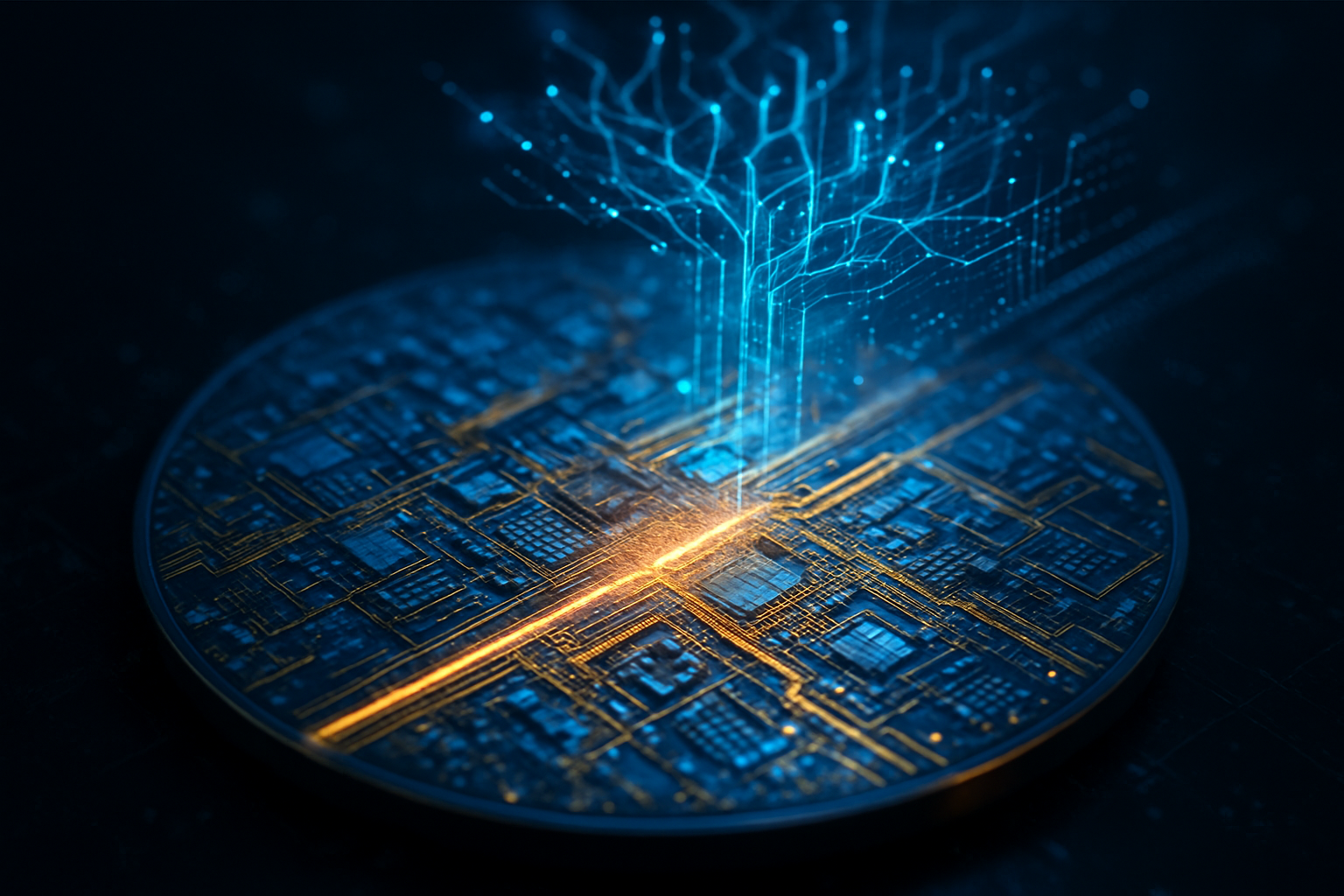
    As the global appetite for artificial intelligence continues to outpace existing hardware capabilities, the semiconductor industry has reached a historic inflection point. Taiwan Semiconductor Manufacturing Company (NYSE: TSM), the world’s largest contract chipmaker, has officially entered the "Angstrom Era" with the unveiling of its A16 process. This 1.6nm-class node represents more than just a reduction in transistor size; it introduces a fundamental architectural shift known as "Super Power Rail" (SPR). This breakthrough is designed to solve the physical bottlenecks that have long plagued high-performance computing, specifically the routing congestion and power delivery issues that limit the scaling of next-generation AI accelerators.

    The significance of A16 cannot be overstated. For the first time in decades, the primary driver for leading-edge process nodes has shifted from mobile devices to AI data centers. While Apple Inc. (NASDAQ: AAPL) has traditionally been the first to adopt TSMC’s newest technologies, the A16 node is being tailor-made for the massive, power-hungry GPUs and custom ASICs that fuel Large Language Models (LLMs). By moving the power delivery network to the backside of the wafer, TSMC is effectively doubling the available space for signal routing, enabling a leap in performance and energy efficiency that was previously thought to be hitting a physical wall.

    The Architecture of Angstrom: Nanosheets and Super Power Rails

    Technically, the A16 process is an evolution of TSMC’s 2nm (N2) family, utilizing second-generation Gate-All-Around (GAA) Nanosheet transistors. However, the true innovation lies in the Super Power Rail (SPR), TSMC’s proprietary implementation of Backside Power Delivery (BSPDN). In traditional chip manufacturing, both signal wires and power lines are crammed onto the front side of the silicon wafer. As transistors shrink, these wires compete for space, leading to "routing congestion" and significant "IR drop"—a phenomenon where voltage decreases as it travels through the complex web of circuitry. SPR solves this by moving the entire power delivery network to the backside of the wafer, allowing the front side to be dedicated exclusively to signal routing.

    Unlike the "PowerVia" approach currently being deployed by Intel Corporation (NASDAQ: INTC), which uses nano-Through Silicon Vias (nTSVs) to bridge the power network to the transistors, TSMC’s Super Power Rail connects the power network directly to the transistor’s source and drain. This direct-contact scheme is significantly more complex to manufacture but offers superior electrical characteristics. According to TSMC, A16 provides an 8% to 10% speed boost at the same voltage compared to its N2P process, or a 15% to 20% reduction in power consumption at the same clock speed. Furthermore, the removal of power rails from the front side allows for a logic density improvement of up to 1.1x, enabling more transistors to be packed into the same physical area.

    Initial reactions from the AI research community and industry experts have been overwhelmingly positive, though cautious regarding the manufacturing complexity. Dr. Wei-Chung Hsu, a senior semiconductor analyst, noted that "A16 is the most aggressive architectural change we’ve seen since the transition to FinFET. By decoupling power and signal, TSMC is giving chip designers a clean slate to optimize for the 1000-watt chips that the AI era demands." This sentiment is echoed by EDA (Electronic Design Automation) partners who are already racing to update their software tools to handle the unique thermal and routing challenges of backside power.

    The AI Power Play: NVIDIA and OpenAI Take the Lead

    The shift to A16 has triggered a massive realignment among tech giants. For the first decade of the smartphone era, Apple was the undisputed "anchor tenant" for every new TSMC node. However, as of late 2025, reports indicate that NVIDIA Corporation (NASDAQ: NVDA) has secured the lion's share of A16 capacity for its upcoming "Feynman" architecture GPUs, expected to arrive in 2027. These chips will be the first to leverage Super Power Rail to manage the extreme power densities required for trillion-parameter model training.

    Furthermore, the A16 era marks the entry of new players into the leading-edge foundry market. OpenAI is reportedly working with Broadcom Inc. (NASDAQ: AVGO) to design its first in-house AI inference chips on the A16 node, aiming to reduce its multi-billion dollar reliance on external hardware vendors. This move positions OpenAI not just as a software leader, but as a vertical integrator capable of competing with established silicon incumbents. Meanwhile, Advanced Micro Devices (NASDAQ: AMD) is expected to follow suit, utilizing A16 for its MI400 series to maintain parity with NVIDIA’s performance gains.

    Intel, however, remains a formidable challenger. While Samsung Electronics (KRX: 005930) has reportedly delayed its 1.4nm mass production to 2029 due to yield issues, Intel’s 14A node is on track for 2026/2027. Intel is betting heavily on ASML’s (NASDAQ: ASML) High-NA EUV lithography—a technology TSMC has notably deferred for the A16 node in favor of more mature, cost-effective standard EUV. This creates a fascinating strategic divergence: TSMC is prioritizing architectural innovation (SPR), while Intel is prioritizing lithographic precision. For AI startups and cloud providers, this competition is a boon, offering two distinct paths to sub-2nm performance and a much-needed diversification of the global supply chain.

    Beyond Moore’s Law: The Broader Implications for AI Infrastructure

    The arrival of A16 and backside power delivery is more than a technical milestone; it is a necessity for the survival of the AI boom. Current AI data centers are facing a "power wall," where the energy required to cool and power massive GPU clusters is becoming the primary constraint on growth. By delivering a 20% reduction in power consumption, A16 allows data center operators to either reduce their carbon footprint or, more likely, pack 20% more compute power into the same energy envelope. This efficiency is critical as the industry moves toward "sovereign AI," where nations seek to build their own localized data centers to protect data privacy.

    However, the transition to A16 is not without its concerns. The cost of manufacturing these "Angstrom-class" wafers is skyrocketing, with industry estimates placing the price of a single A16 wafer at nearly $50,000. This represents a significant jump from the $20,000 price point seen during the 5nm era. Such high costs could lead to a bifurcation of the tech industry, where only the wealthiest "hyperscalers" like Microsoft (NASDAQ: MSFT), Alphabet (NASDAQ: GOOGL), and Amazon (NASDAQ: AMZN) can afford the absolute cutting edge, potentially widening the gap between AI leaders and smaller startups.

    Thermal management also presents a new set of challenges. With the power delivery network moved to the back of the chip, "hot spots" are now buried under layers of metal, making traditional top-side cooling less effective. This is expected to accelerate the adoption of liquid cooling and immersion cooling technologies in AI data centers, as traditional air cooling reaches its physical limits. The A16 node is thus acting as a catalyst for innovation across the entire data center stack, from the transistor level up to the facility's cooling infrastructure.

    The Roadmap Ahead: From 1.6nm to 1.4nm and Beyond

    Looking toward the future, TSMC’s A16 is just the beginning of a rapid-fire roadmap. Risk production is scheduled to begin in early 2026, with volume production ramping up in the second half of the year. This puts the first A16-powered AI chips on the market by early 2027. Following closely behind is the A14 (1.4nm) node, which will likely integrate the High-NA EUV machines that TSMC is currently evaluating in its research labs. This progression suggests that the cadence of semiconductor innovation has actually accelerated in response to the AI gold rush, defying predictions that Moore’s Law was nearing its end.

    Near-term developments will likely focus on "3D IC" packaging, where A16 logic chips are stacked directly on top of HBM4 (High Bandwidth Memory) or other logic dies. This "System-on-Integrated-Chips" (SoIC) approach will be necessary to keep the data flowing fast enough to satisfy A16’s increased processing power. Experts predict that the next two years will see a flurry of announcements regarding "chiplet" ecosystems, as designers mix and match A16 high-performance cores with older, cheaper nodes for less critical functions to manage the soaring costs of 1.6nm silicon.

    A New Era of Compute

    TSMC’s A16 process and the introduction of Super Power Rail represent a masterful response to the unique demands of the AI era. By moving power delivery to the backside of the wafer, TSMC has bypassed the routing bottlenecks that threatened to stall chip performance, providing a clear path to 1.6nm and beyond. The shift in lead customers from mobile to AI underscores the changing priorities of the global economy, as the race for compute power becomes the defining competition of the 21st century.

    As we look toward 2026 and 2027, the industry will be watching two things: the yield rates of TSMC’s SPR implementation and the success of Intel’s High-NA EUV strategy. The duopoly between TSMC and Intel at the leading edge will provide the foundation for the next generation of AI breakthroughs, from real-time video generation to autonomous scientific discovery. While the costs are higher than ever, the potential rewards of Angstrom-class silicon ensure that the silicon frontier will remain the most watched space in technology for years to come.


    This content is intended for informational purposes only and represents analysis of current AI developments.

    TokenRing AI delivers enterprise-grade solutions for multi-agent AI workflow orchestration, AI-powered development tools, and seamless remote collaboration platforms.
    For more information, visit https://www.tokenring.ai/.