Tag: Supercomputer

  • The Velocity of Intelligence: Inside xAI’s ‘Colossus’ and the 122-Day Sprint to 100,000 GPUs

    The Velocity of Intelligence: Inside xAI’s ‘Colossus’ and the 122-Day Sprint to 100,000 GPUs

    In the heart of Memphis, Tennessee, a technological titan has risen with a speed that has left the traditional data center industry in a state of shock. Known as "Colossus," this massive supercomputer cluster—the brainchild of Elon Musk’s xAI—was constructed from the ground up in a mere 122 days. Built to fuel the development of the Grok large language models, the facility initially housed 100,000 NVIDIA (NASDAQ:NVDA) H100 GPUs, creating what is widely considered the most powerful AI training cluster on the planet. As of January 27, 2026, the facility has not only proven its operational viability but has already begun a massive expansion phase that targets a scale previously thought impossible.

    The significance of Colossus lies not just in its raw compute power, but in the sheer logistical audacity of its creation. While typical hyperscale data centers of this magnitude often require three to four years of planning, permitting, and construction, xAI managed to achieve "power-on" status in less than four months. This rapid deployment has fundamentally rewritten the playbook for AI infrastructure, signaling a shift where speed-to-market is the ultimate competitive advantage in the race toward Artificial General Intelligence (AGI).

    Engineering the Impossible: Technical Specs and the 122-Day Miracle

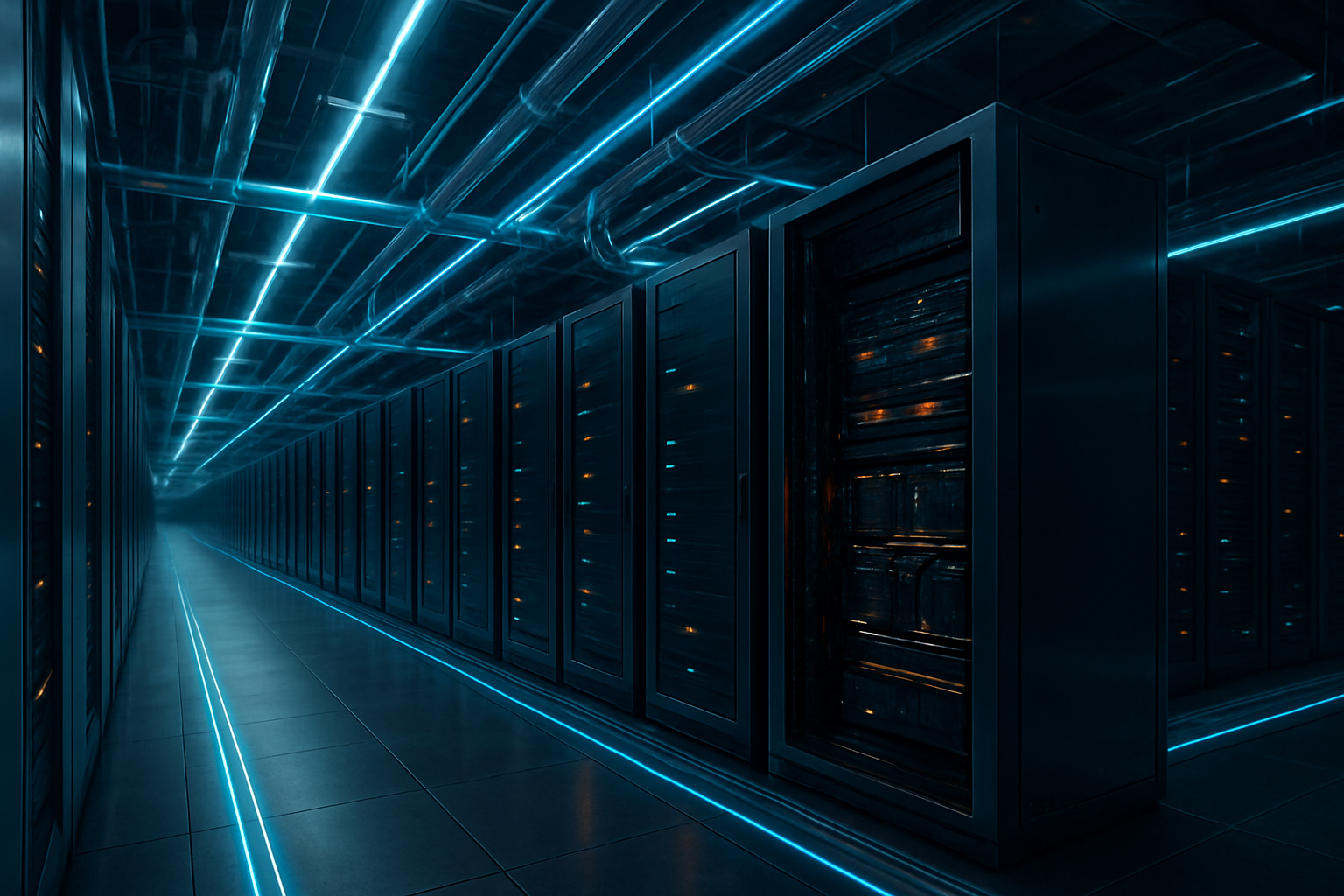
    The technical foundation of Colossus is a masterclass in modern hardware orchestration. The initial deployment of 100,000 H100 GPUs was made possible through a strategic partnership with Super Micro Computer, Inc. (NASDAQ:SMCI) and Dell Technologies (NYSE:DELL), who each supplied approximately 50% of the server racks. To manage the immense heat generated by such a dense concentration of silicon, the entire system utilizes an advanced liquid-cooling architecture. Each building block consists of specialized racks housing eight 4U Universal GPU servers, which are then grouped into 512-GPU "mini-clusters" to optimize data flow and thermal management.

    Beyond the raw chips, the networking fabric is what truly separates Colossus from its predecessors. The cluster utilizes NVIDIA’s Spectrum-X Ethernet platform, a networking technology specifically engineered for multi-tenant, hyperscale AI environments. While standard Ethernet often suffers from significant packet loss and throughput drops at this scale, Spectrum-X enables a staggering 95% data throughput. This is achieved through advanced congestion control and Remote Direct Memory Access (RDMA), ensuring that the GPUs spend more time calculating and less time waiting for data to travel across the network.

    Initial reactions from the AI research community have ranged from awe to skepticism regarding the sustainability of such a build pace. Industry experts noted that the 19-day window between the first server rack arriving on the floor and the commencement of AI training is a feat of engineering logistics that has never been documented in the private sector. By bypassing traditional utility timelines through the use of 20 mobile natural gas turbines and a 150 MW Tesla (NASDAQ:TSLA) Megapack battery system, xAI demonstrated a "full-stack" approach to infrastructure that most competitors—reliant on third-party data center providers—simply cannot match.

    Shifting the Power Balance: Competitive Implications for Big Tech

    The existence of Colossus places xAI in a unique strategic position relative to established giants like OpenAI, Google, and Meta. By owning and operating its own massive-scale infrastructure, xAI avoids the "compute tax" and scheduling bottlenecks associated with public cloud providers. This vertical integration allows for faster iteration cycles for the Grok models, potentially allowing xAI to bridge the gap with its more established rivals in record time. For NVIDIA, the project serves as a premier showcase for the Hopper and now the Blackwell architectures, proving that their hardware can be deployed at a "gigawatt scale" when paired with aggressive engineering.

    This development creates a high-stakes "arms race" for physical space and power. Competitors are now forced to reconsider their multi-year construction timelines, as the 122-day benchmark set by xAI has become the new metric for excellence. Major AI labs that rely on Microsoft or AWS may find themselves at a disadvantage if they cannot match the sheer density of compute available in Memphis. Furthermore, the massive $5 billion deal reported between xAI and Dell for the next generation of Blackwell-based servers underscores a shift where the supply chain itself becomes a primary theater of war.

    Strategic advantages are also emerging in the realm of talent and capital. The ability to build at this speed attracts top-tier hardware and infrastructure engineers who are frustrated by the bureaucratic pace of traditional tech firms. For investors, Colossus represents a tangible asset that justifies the massive valuations of xAI, moving the company from a "software-only" play to a powerhouse that controls the entire stack—from the silicon and cooling to the weights of the neural networks themselves.

    The Broader Landscape: Environmental Challenges and the New AI Milestone

    Colossus fits into a broader trend of "gigafactory-scale" computing, where the focus has shifted from algorithmic efficiency to the brute force of massive hardware clusters. This milestone mirrors the historical shift in the 1940s toward massive industrial projects like the Manhattan Project, where the physical scale of the equipment was as important as the physics behind it. However, this scale comes with significant local and global impacts. The Memphis facility has faced scrutiny over its massive water consumption for cooling and its reliance on mobile gas turbines, highlighting the growing tension between rapid AI advancement and environmental sustainability.

    The potential concerns regarding power consumption are not trivial. As Colossus moves toward a projected 2-gigawatt capacity by the end of 2026, the strain on local electrical grids will be immense. This has led xAI to expand into neighboring Mississippi with a new facility nicknamed "MACROHARDRR," strategically placed to leverage different power resources. This geographical expansion suggests that the future of AI will not be determined by code alone, but by which companies can successfully secure and manage the largest shares of the world's energy and water resources.

    Comparisons to previous AI breakthroughs, such as the original AlphaGo or the release of GPT-3, show a marked difference in the nature of the milestone. While those were primarily mathematical and research achievements, Colossus is an achievement of industrial manufacturing and logistical coordination. It marks the era where AI training is no longer a laboratory experiment but a heavy industrial process, requiring the same level of infrastructure planning as a major automotive plant or a semiconductor fabrication facility.

    Looking Ahead: Blackwell, Grok-3, and the Road to 1 Million GPUs

    The future of the Memphis site and its satellite extensions is focused squarely on the next generation of silicon. xAI has already begun integrating NVIDIA's Blackwell (GB200) GPUs, which promise a 30x performance increase for LLM inference over the H100s currently in the racks. As of January 2026, tens of thousands of these new chips are reportedly coming online, with the ultimate goal of reaching a total of 1 million GPUs across all xAI sites. This expansion is expected to provide the foundation for Grok-3 and subsequent models, which Musk has hinted will surpass the current state-of-the-art in reasoning and autonomy.

    Near-term developments will likely include the full transition of the Memphis grid from mobile turbines to a more permanent, high-capacity substation, coupled with an even larger deployment of Tesla Megapacks for grid stabilization. Experts predict that the next major challenge will not be the hardware itself, but the data required to keep such a massive cluster utilized. With 1 million GPUs, the "data wall"—the limit of high-quality human-generated text available for training—becomes a very real obstacle, likely pushing xAI to lean more heavily into synthetic data generation and video-based training.

    The long-term applications for a cluster of this size extend far beyond chatbots. The immense compute capacity is expected to be used for complex physical simulations, the development of humanoid robot brains (Tesla's Optimus), and potentially even genomic research. As the "gigawatt scale" becomes the new standard for Tier-1 AI labs, the industry will watch closely to see if this massive investment in hardware translates into the elusive breakthrough of AGI or if it leads to a plateau in diminishing returns for LLM scaling.

    A New Era of Industrial Intelligence

    The story of Colossus is a testament to what can be achieved when the urgency of a startup is applied to the scale of a multi-billion dollar industrial project. In just 122 days, xAI turned a vacant facility into the world’s most concentrated hub of intelligence, fundamentally altering the expectations for AI infrastructure. The collaboration between NVIDIA, Supermicro, and Dell has proven that the global supply chain can move at "Elon time" when the stakes—and the capital—are high enough.

    As we look toward the remainder of 2026, the success of Colossus will be measured by the capabilities of the models it produces. If Grok-3 achieves the leap in reasoning that its creators predict, the Memphis cluster will be remembered as the cradle of a new era of compute. Regardless of the outcome, the 122-day sprint has set a permanent benchmark, ensuring that the race for AI supremacy will be as much about concrete, copper, and cooling as it is about algorithms and data.


    This content is intended for informational purposes only and represents analysis of current AI developments.

    TokenRing AI delivers enterprise-grade solutions for multi-agent AI workflow orchestration, AI-powered development tools, and seamless remote collaboration platforms.
    For more information, visit https://www.tokenring.ai/.
  • The $500 Billion Bet: Microsoft and OpenAI’s ‘Project Stargate’ Ushers in the Era of AI Superfactories

    The $500 Billion Bet: Microsoft and OpenAI’s ‘Project Stargate’ Ushers in the Era of AI Superfactories

    As of January 2026, the landscape of global infrastructure has been irrevocably altered by the formal expansion of Project Stargate, a massive joint venture between Microsoft Corp. (NASDAQ: MSFT) and OpenAI. What began in 2024 as a rumored $100 billion supercomputer project has ballooned into a staggering $500 billion initiative aimed at building a series of "AI Superfactories." This project represents the most significant industrial undertaking since the Manhattan Project, designed specifically to provide the computational foundation necessary to achieve and sustain Artificial General Intelligence (AGI).

    The immediate significance of Project Stargate lies in its unprecedented scale and its departure from traditional data center architecture. By consolidating massive capital from global partners and securing gigawatts of dedicated power, the initiative aims to solve the two greatest bottlenecks in AI development: silicon availability and energy constraints. The project has effectively shifted the AI race from a battle of algorithms to a war of industrial capacity, positioning the Microsoft-OpenAI alliance as the primary gatekeeper of the world’s most advanced synthetic intelligence.

    The Architecture of Intelligence: Phase 5 and the Million-GPU Milestone

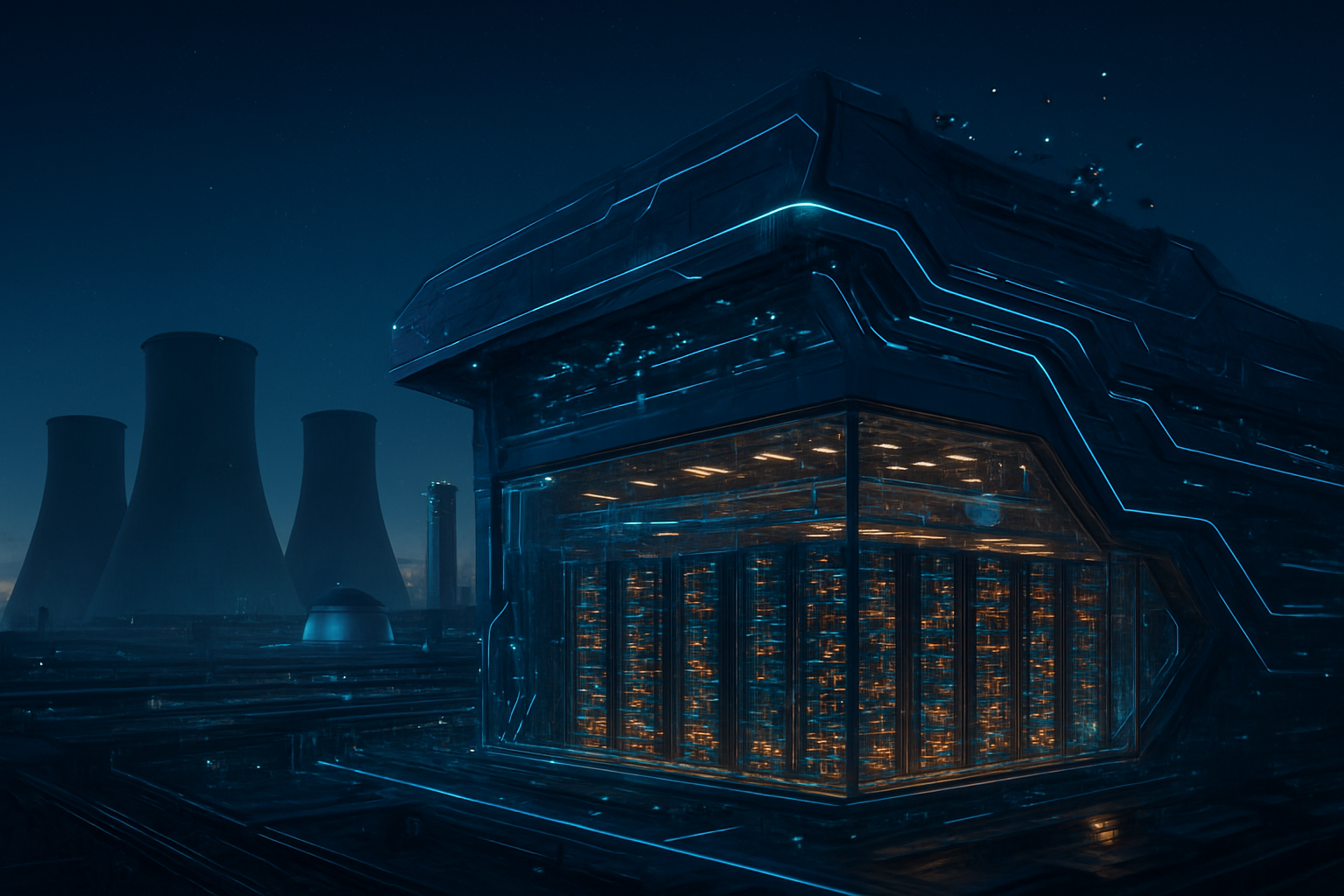
    At the heart of Project Stargate is the "Phase 5" supercomputer, a single facility estimated to cost upwards of $100 billion—roughly ten times the cost of the James Webb Space Telescope. Unlike the general-purpose data centers of the previous decade, Phase 5 is architected as a specialized industrial complex designed to house millions of next-generation GPUs. These facilities are expected to utilize Nvidia’s (NASDAQ: NVDA) latest "Vera Rubin" platform, which began shipping in late 2025. These chips offer a quantum leap in tensor processing power and energy efficiency, integrated via a proprietary liquid-cooling infrastructure that allows for compute densities previously thought impossible.

    This approach differs fundamentally from existing technology in its "compute-first" design. While traditional data centers are built to serve a variety of cloud workloads, the Stargate Superfactories are monolithic entities where the entire building is treated as a single computer. The networking fabric required to connect millions of GPUs with low latency has necessitated the development of new optical interconnects and custom silicon. Industry experts have noted that the sheer scale of Phase 5 will allow OpenAI to train models with parameters in the tens of trillions, moving far beyond the capabilities of GPT-4 or its immediate successors.

    Initial reactions from the AI research community have been a mix of awe and trepidation. Leading researchers suggest that the Phase 5 system will provide the "brute force" necessary to overcome current plateaus in reasoning and multi-modal understanding. However, some experts warn that such a concentration of power could lead to a "compute divide," where only a handful of entities have the resources to push the frontier of AI, potentially stifling smaller-scale academic research.

    A Geopolitical Power Play: The Strategic Alliance of Tech Titans

    The $500 billion initiative is supported by a "Multi-Pillar Grid" of strategic partners, most notably Oracle Corp. (NYSE: ORCL) and SoftBank Group Corp. (OTC: SFTBY). Oracle has emerged as the lead infrastructure builder, signing a multi-year agreement valued at over $300 billion to develop up to 4.5 gigawatts of Stargate capacity. Oracle’s ability to rapidly deploy its Oracle Cloud Infrastructure (OCI) in modular configurations has been critical to meeting the project's aggressive timelines, with the flagship "Stargate I" site in Abilene, Texas, already operational.

    SoftBank, under the leadership of Masayoshi Son, serves as the primary financial engine and energy strategist. Through its subsidiary SB Energy, SoftBank is providing the "powered infrastructure"—massive solar arrays and battery storage systems—needed to bridge the gap until permanent nuclear solutions are online. This alliance creates a formidable competitive advantage, as it secures the entire supply chain from capital and energy to chips and software. For Microsoft, the project solidifies its Azure platform as the indispensable layer for enterprise AI, while OpenAI secures the exclusive "lab" environment needed to test its most advanced models.

    The implications for the rest of the tech industry are profound. Competitors like Alphabet Inc. (NASDAQ: GOOGL) and Amazon.com Inc. (NASDAQ: AMZN) are now forced to accelerate their own infrastructure investments to avoid being outpaced by Stargate’s sheer volume of compute. This has led to a "re-industrialization" of the United States, as tech giants compete for land, water, and power rights in states like Michigan, Ohio, and New Mexico. Startups, meanwhile, are increasingly finding themselves forced to choose sides in a bifurcated cloud ecosystem dominated by these mega-clusters.

    The 5-Gigawatt Frontier: Powering the Future of Compute

    Perhaps the most daunting aspect of Project Stargate is its voracious appetite for electricity. A single Phase 5 campus is projected to require up to 5 gigawatts (GW) of power—enough to light up five million homes. To meet this demand without compromising carbon-neutrality goals, the consortium has turned to nuclear energy. Microsoft has already moved to restart the Three Mile Island nuclear facility, now known as the Crane Clean Energy Center, to provide dedicated baseload power. Furthermore, the project is pioneering the use of Small Modular Reactors (SMRs) to create self-contained "energy islands" for its data centers.

    This massive power requirement has transformed national energy policy, sparking debates over the "Compute-Energy Nexus." Regulators are grappling with how to balance the energy needs of AI Superfactories with the requirements of the public grid. In Michigan, the approval of a 1.4-gigawatt site required a complex 19-year power agreement that includes significant investments in local grid resilience. While proponents argue that this investment will modernize the U.S. electrical grid, critics express concern over the environmental impact of such concentrated energy use and the potential for AI projects to drive up electricity costs for consumers.

    Comparatively, Project Stargate makes previous milestones, like the building of the first hyper-scale data centers in the 2010s, look modest. It represents a shift where "intelligence" is treated as a utility, similar to water or electricity. This has raised significant concerns regarding digital sovereignty and antitrust. The EU and various U.S. regulatory bodies are closely monitoring the Microsoft-OpenAI-Oracle alliance, fearing that a "digital monoculture" could emerge, where the infrastructure for global intelligence is controlled by a single private entity.

    Beyond the Silicon: The Future of Global AI Infrastructure

    Looking ahead, Project Stargate is expected to expand beyond the borders of the United States. Plans are already in motion for a 5 GW hub in the UAE in partnership with MGX, and a 500 MW site in the Patagonia region of Argentina to take advantage of natural cooling and wind energy. In the near term, we can expect the first "Stargate-trained" models to debut in late 2026, which experts predict will demonstrate capabilities in autonomous scientific discovery and advanced robotic orchestration that are currently impossible.

    The long-term challenge for the project will be maintaining its financial and operational momentum. While Wall Street currently views Stargate as a massive fiscal stimulus—contributing an estimated 1% to U.S. GDP growth through construction and high-tech jobs—the pressure to deliver "AGI-level" returns on a $500 billion investment is immense. There are also technical hurdles to address, particularly in the realm of data scarcity; as compute grows, the need for high-quality synthetic data to train these massive models becomes even more critical.

    Predicting the next steps, industry analysts suggest that the "Superfactory" model will become the standard for any nation or corporation wishing to remain relevant in the AI era. We may see the emergence of "Sovereign AI Clouds," where countries build their own versions of Stargate to ensure their national security and economic independence. The coming months will be defined by the race to bring the Michigan and New Mexico sites online, as the world watches to see if this half-trillion-dollar gamble will truly unlock the gates to AGI.

    A New Industrial Revolution: Summary and Final Thoughts

    Project Stargate represents a definitive turning point in the history of technology. By committing $500 billion to the creation of AI Superfactories and a Phase 5 supercomputer, Microsoft, OpenAI, Oracle, and SoftBank are betting that the path to AGI is paved with unprecedented amounts of silicon and power. The project’s reliance on nuclear energy and specialized industrial design marks the end of the "software-only" era of AI and the beginning of a new, hardware-intensive industrial revolution.

    The key takeaways are clear: the scale of AI development has moved beyond the reach of all but the largest global entities; energy has become the new currency of the tech world; and the strategic alliances formed today will dictate the hierarchy of the 2030s. While the economic and technological benefits could be transformative, the risks of centralizing such immense power cannot be ignored.

    In the coming months, observers should watch for the progress of the Three Mile Island restart and the breaking of ground at the Michigan site. These milestones will serve as the true litmus test for whether the ambitious vision of Project Stargate can be realized. As we stand at the dawn of 2026, one thing is certain: the era of the AI Superfactory has arrived, and the world will never be the same.


    This content is intended for informational purposes only and represents analysis of current AI developments.

    TokenRing AI delivers enterprise-grade solutions for multi-agent AI workflow orchestration, AI-powered development tools, and seamless remote collaboration platforms.
    For more information, visit https://www.tokenring.ai/.
  • The Memphis Powerhouse: How xAI’s 200,000-GPU ‘Colossus’ is Redefining the Global AI Arms Race

    The Memphis Powerhouse: How xAI’s 200,000-GPU ‘Colossus’ is Redefining the Global AI Arms Race

    As of December 31, 2025, the artificial intelligence landscape has been fundamentally reshaped by a single industrial site in Memphis, Tennessee. Elon Musk’s xAI has officially reached a historic milestone with its "Colossus" supercomputer, now operating at a staggering capacity of 200,000 Nvidia H100 and H200 GPUs. This massive concentration of compute power has served as the forge for Grok-3, a model that has stunned the industry by achieving near-perfect scores on high-level reasoning benchmarks and introducing a new era of "agentic" search capabilities.

    The significance of this development cannot be overstated. By successfully scaling a single cluster to 200,000 high-end accelerators—supported by a massive infrastructure of liquid cooling and off-grid power generation—xAI has challenged the traditional dominance of established giants like OpenAI and Google. The deployment of Grok-3 marks the moment when "deep reasoning"—the ability for an AI to deliberate, self-correct, and execute multi-step logical chains—became the primary frontier of the AI race, moving beyond the simple "next-token prediction" that defined earlier large language models.

    Technical Mastery: Inside the 200,000-GPU Cluster

    The Colossus supercomputer is a marvel of modern engineering, constructed in a record-breaking 122 days for its initial phase and doubling in size by late 2025. The cluster is a heterogeneous powerhouse, primarily composed of 150,000 Nvidia (NASDAQ:NVDA) H100 GPUs, supplemented by 50,000 of the newer H200 units and the first major integration of Blackwell-generation GB200 chips. This hardware configuration delivers a unified memory bandwidth of approximately 194 Petabytes per second (PB/s), utilizing the Nvidia Spectrum-X Ethernet platform to maintain a staggering 3.6 Terabits per second (Tbps) of network bandwidth per server.

    This immense compute reservoir powers Grok-3’s standout features: "Think Mode" and "Big Brain Mode." Unlike previous iterations, Grok-3 utilizes a chain-of-thought (CoT) architecture that allows it to visualize its logical steps before providing an answer, a process that enables it to solve PhD-level mathematics and complex coding audits with unprecedented accuracy. Furthermore, its "DeepSearch" technology functions as an agentic researcher, scanning the web and the X platform in real-time to verify sources and synthesize live news feeds that are only minutes old. This differs from existing technologies by prioritizing "freshness" and verifiable citations over static training data, giving xAI a distinct advantage in real-time information processing.

    The hardware was brought to life through a strategic partnership with Dell Technologies (NYSE:DELL) and Super Micro Computer (NASDAQ:SMCI). Dell assembled half of the server racks using its PowerEdge XE9680 platform, while Supermicro provided the other half, leveraging its expertise in Direct Liquid Cooling (DLC) to manage the intense thermal output of the high-density racks. Initial reactions from the AI research community have been a mix of awe and scrutiny, with many experts noting that Grok-3’s 93.3% score on the 2025 American Invitational Mathematics Examination (AIME) sets a new gold standard for machine intelligence.

    A Seismic Shift in the AI Competitive Landscape

    The rapid expansion of Colossus has sent shockwaves through the tech industry, forcing a "Code Red" at rival labs. OpenAI, which released GPT-5 earlier in 2025, found itself in a cycle of rapid-fire updates to keep pace with Grok’s reasoning depth. By December 2025, OpenAI was forced to rush out GPT-5.2, specifically targeting the "Thinking" capabilities that Grok-3 popularized. Similarly, Alphabet (NASDAQ:GOOGL) has had to lean heavily into its Gemini 3 Deep Think models to maintain its position on the LMSYS Chatbot Arena leaderboard, where Grok-3 has frequently held the top spot throughout the latter half of the year.

    The primary beneficiaries of this development are the hardware providers. Nvidia has reported record-breaking quarterly net incomes, with CEO Jensen Huang citing the Memphis "AI Factory" as the blueprint for future industrial-scale compute. Dell and Supermicro have also seen significant market positioning advantages; Dell’s server segment grew by an estimated 25% due to its xAI partnership, while Supermicro stabilized after earlier supply chain hurdles by signing multi-billion dollar deals to maintain the liquid-cooling infrastructure in Memphis.

    For startups and smaller AI labs, the sheer scale of Colossus creates a daunting barrier to entry. The "compute moat" established by xAI suggests that training frontier-class models may soon require a minimum of 100,000 GPUs, potentially consolidating the industry around a few "hyper-labs" that can afford the multi-billion dollar price tags for such clusters. This has led to a strategic shift where many startups are now focusing on specialized, smaller "distilled" models rather than attempting to compete in the general-purpose LLM space.

    Scaling Laws, Energy Crises, and Environmental Fallout

    The broader significance of the Memphis cluster lies in its validation of "Scaling Laws"—the theory that more compute and more data consistently lead to more intelligent models. However, this progress has come with significant societal and environmental costs. The Colossus facility now demands upwards of 1.2 Gigawatts (GW) of power, nearly half of the peak demand for the entire city of Memphis. To bypass local grid limitations, xAI deployed dozens of mobile natural gas turbines and 168 Tesla (NASDAQ:TSLA) Megapack battery units to stabilize the site.

    This massive energy footprint has sparked a legal and environmental crisis. In mid-2025, the NAACP and Southern Environmental Law Center filed an intent to sue xAI under the Clean Air Act, alleging that the facility’s methane turbines are a major source of nitrogen oxides and formaldehyde. These emissions are particularly concerning for the neighboring Boxtown community, which already faces high cancer rates. While xAI has attempted to mitigate its impact by constructing an $80 million greywater recycling plant to reduce its reliance on the Memphis Sands Aquifer, the environmental trade-offs of the AI revolution remain a flashpoint for public debate.

    Comparatively, the Colossus milestone is being viewed as the "Apollo Program" of the AI era. While previous breakthroughs like GPT-4 focused on the breadth of knowledge, Grok-3 and Colossus represent the shift toward "Compute-on-Demand" reasoning. The ability to throw massive amounts of processing power at a single query to "think" through a problem is a paradigm shift that mirrors the transition from simple calculators to high-performance computing in the late 20th century.

    The Road to One Million GPUs and Beyond

    Looking ahead, xAI shows no signs of slowing down. Plans are already in motion for "Colossus 2" and a third facility, colloquially named "Macrohardrr," with the goal of reaching 1 million GPUs by late 2026. This next phase will transition fully into Nvidia’s Blackwell architecture, providing the foundation for Grok-4. Experts predict that this level of compute will enable truly "agentic" AI—models that don't just answer questions but can autonomously navigate software, conduct scientific research, and manage complex supply chains with minimal human oversight.

    The near-term focus for xAI will be addressing the cooling and power challenges that come with gigawatt-scale computing. Potential applications on the horizon include real-time simulation of chemical reactions for drug discovery and the development of "digital twins" for entire cities. However, the industry must still address the "data wall"—the fear that AI will eventually run out of high-quality human-generated data to train on. Grok-3’s success in using synthetic data and real-time X data suggests that xAI may have found a temporary workaround to this looming bottleneck.

    A Landmark in Machine Intelligence

    The emergence of Grok-3 and the Colossus supercomputer marks a definitive chapter in the history of artificial intelligence. It is the moment when the "compute-first" philosophy reached its logical extreme, proving that massive hardware investment, when paired with sophisticated reasoning algorithms, can bridge the gap between conversational bots and genuine problem-solving agents. The Memphis facility stands as a monument to this ambition, representing both the incredible potential and the daunting costs of the AI age.

    As we move into 2026, the industry will be watching closely to see if OpenAI or Google can reclaim the compute crown, or if xAI’s aggressive expansion will leave them in the rearview mirror. For now, the "Digital Delta" in Memphis remains the center of the AI universe, a 200,000-GPU engine that is quite literally thinking its way into the future. The long-term impact will likely be measured not just in benchmarks, but in how this concentrated power is harnessed to solve the world's most complex challenges—and whether the environmental and social costs can be effectively managed.


    This content is intended for informational purposes only and represents analysis of current AI developments.

    TokenRing AI delivers enterprise-grade solutions for multi-agent AI workflow orchestration, AI-powered development tools, and seamless remote collaboration platforms.
    For more information, visit https://www.tokenring.ai/.

  • NVIDIA Fuels Starship Dreams: Jensen Huang Delivers Petaflop AI Supercomputer to SpaceX

    NVIDIA Fuels Starship Dreams: Jensen Huang Delivers Petaflop AI Supercomputer to SpaceX

    October 15, 2025 – In a move poised to redefine the intersection of artificial intelligence and space exploration, NVIDIA (NASDAQ: NVDA) CEO Jensen Huang personally delivered a cutting-edge 128GB AI supercomputer, the DGX Spark, to Elon Musk at SpaceX's Starbase facility. This pivotal moment, occurring amidst the advanced preparations for Starship's rigorous testing, signifies a strategic leap towards embedding powerful, localized AI capabilities directly into the heart of space technology development. The partnership between the AI hardware giant and the ambitious aerospace innovator is set to accelerate breakthroughs in autonomous spaceflight, real-time data analysis, and the overall efficiency of next-generation rockets, pushing the boundaries of what's possible for humanity's multi-planetary future.

    The immediate significance of this delivery lies in providing SpaceX with unprecedented on-site AI computing power. The DGX Spark, touted as the world's smallest AI supercomputer, packs a staggering petaflop of AI performance and 128GB of unified memory into a compact, desktop-sized form factor. This allows SpaceX engineers to prototype, fine-tune, and run inference for complex AI models with up to 200 billion parameters locally, bypassing the latency and costs associated with constant cloud interaction. For Starship's rapid development and testing cycles, this translates into accelerated analysis of vast flight data, enhanced autonomous system refinement for flight control and landing, and a truly portable supercomputing capability essential for a dynamic testing environment.

    Unpacking the Petaflop Powerhouse: The DGX Spark's Technical Edge

    The NVIDIA DGX Spark is an engineering marvel, designed to democratize access to petaflop-scale AI performance. At its core lies the NVIDIA GB10 Grace Blackwell Superchip, which seamlessly integrates a powerful Blackwell GPU with a 20-core Arm-based Grace CPU. This unified architecture delivers an astounding one petaflop of AI performance at FP4 precision, coupled with 128GB of LPDDR5X unified CPU-GPU memory. This shared memory space is crucial, as it eliminates data transfer bottlenecks common in systems with separate memory pools, allowing for the efficient processing of incredibly large and complex AI models.

    Capable of running inference on AI models up to 200 billion parameters and fine-tuning models up to 70 billion parameters locally, the DGX Spark also features NVIDIA ConnectX networking for clustering and NVLink-C2C, offering five times the bandwidth of PCIe. With up to 4TB of NVMe storage, it ensures rapid data access for demanding workloads. Its most striking feature, however, is its form factor: roughly the size of a hardcover book and weighing only 1.2 kg, it brings supercomputer-class performance to a "grab-and-go" desktop unit. This contrasts sharply with previous AI hardware in aerospace, which often relied on significantly less powerful, more constrained computational capabilities, or required extensive cloud-based processing. While earlier systems, like those on Mars rovers or Earth-observing satellites, focused on simpler algorithms due to hardware limitations, the DGX Spark provides a generational leap in local processing power and memory capacity, enabling far more sophisticated AI applications directly at the edge.

    Initial reactions from the AI research community and industry experts have been a mix of excitement and strategic recognition. Many hail the DGX Spark as a significant step towards "democratizing AI," making petaflop-scale computing accessible beyond traditional data centers. Experts anticipate it will accelerate agentic AI and physical AI development, fostering rapid prototyping and experimentation. However, some voices have expressed skepticism regarding the timing and marketing, with claims of chip delays, though the physical delivery to SpaceX confirms its operational status and strategic importance.

    Reshaping the AI Landscape: Corporate Impacts and Competitive Dynamics

    NVIDIA's delivery of the DGX Spark to SpaceX carries profound implications for AI companies, tech giants, and startups, reshaping competitive landscapes and market positioning. Directly, SpaceX gains an unparalleled advantage in accelerating the development and testing of AI for Starship, autonomous rocket operations, and satellite constellation management for Starlink. This on-site, high-performance computing capability will significantly enhance real-time decision-making and autonomy in space. Elon Musk's AI venture, xAI, which is reportedly seeking substantial NVIDIA GPU funding, could also leverage this technology for its large language models (LLMs) and broader AI research, especially for localized, high-performance needs.

    NVIDIA's (NASDAQ: NVDA) hardware partners, including Acer (TWSE: 2353), ASUS (TWSE: 2357), Dell Technologies (NYSE: DELL), GIGABYTE, HP (NYSE: HPQ), Lenovo (HKEX: 0992), and MSI (TWSE: 2377), stand to benefit significantly. As they roll out their own DGX Spark systems, the market for NVIDIA's powerful, compact AI ecosystem expands, allowing these partners to offer cutting-edge AI solutions to a broader customer base. AI development tool and software providers, such as Google (NASDAQ: GOOGL), Microsoft (NASDAQ: MSFT), and Meta (NASDAQ: META), are already optimizing their platforms for the DGX Spark, further solidifying NVIDIA's comprehensive AI stack. This democratization of petaflop-scale AI also empowers edge AI and robotics startups, enabling smaller teams to innovate faster and prototype locally for agentic and physical AI applications.

    The competitive implications are substantial. While cloud AI service providers remain crucial for massive-scale training, the DGX Spark's ability to perform data center-level AI workloads locally could reduce reliance on cloud infrastructure for certain on-site aerospace or edge applications, potentially pushing cloud providers to further differentiate. Companies offering less powerful edge AI hardware for aerospace might face pressure to upgrade their offerings. NVIDIA further solidifies its dominance in AI hardware and software, extending its ecosystem from large data centers to desktop supercomputers. Competitors like Intel (NASDAQ: INTC) and AMD (NASDAQ: AMD) will need to continue rapid innovation to keep pace with NVIDIA's advancements and the escalating demand for specialized AI hardware, as seen with Broadcom's (NASDAQ: AVGO) recent partnership with OpenAI for AI accelerators.

    A New Frontier: Wider Significance and Ethical Considerations

    The delivery of the NVIDIA DGX Spark to SpaceX represents more than a hardware transaction; it's a profound statement on the trajectory of AI, aligning with several broader trends in the AI landscape. It underscores the accelerating democratization of high-performance AI, making powerful computing accessible beyond the confines of massive data centers. This move echoes NVIDIA CEO Jensen Huang's 2016 delivery of the first DGX-1 to OpenAI, which is widely credited with "kickstarting the AI revolution" that led to generative AI breakthroughs like ChatGPT. The DGX Spark aims to "ignite the next wave of breakthroughs" by empowering a broader array of developers and researchers. This aligns with the rapid growth of AI supercomputing, where computational performance doubles approximately every nine months, and the notable shift of AI supercomputing power from public sectors to private industry, with the U.S. currently holding the majority of global AI supercomputing capacity.

    The potential impacts on space exploration are revolutionary. Advanced AI algorithms, powered by systems like the DGX Spark, are crucial for enhancing autonomy in space, from optimizing rocket landings and trajectories to enabling autonomous course corrections and fault predictions for Starship. For deep-space missions to Mars, where communication delays are extreme, on-board AI becomes indispensable for real-time decision-making. AI is also vital for managing vast satellite constellations like Starlink, coordinating collision avoidance, and optimizing network performance. Beyond operations, AI will be critical for mission planning, rapid data analysis from spacecraft, and assisting astronauts in crewed missions.

    In autonomous systems, the DGX Spark will accelerate the training and validation of sophisticated algorithms for self-driving vehicles, drones, and industrial robots. Elon Musk's integrated AI strategy, aiming to centralize AI across ventures like SpaceX, Tesla (NASDAQ: TSLA), and xAI, exemplifies how breakthroughs in one domain can rapidly accelerate innovation in others, from autonomous rockets to humanoid robots like Optimus. However, this rapid advancement also brings potential concerns. The immense energy consumption of AI supercomputing is a growing environmental concern, with projections for future systems requiring gigawatts of power. Ethical considerations around AI safety, including bias and fairness in LLMs, misinformation, privacy, and the opaque nature of complex AI decision-making (the "black box" problem), demand robust research into explainable AI (XAI) and human-in-the-loop systems. The potential for malicious use of powerful AI tools, from cybercrime to deepfakes, also necessitates proactive cybersecurity measures and content filtering.

    Charting the Cosmos: Future Developments and Expert Predictions

    The delivery of the NVIDIA DGX Spark to SpaceX is not merely an endpoint but a catalyst for significant near-term and long-term developments in AI and space technology. In the near term, the DGX Spark will be instrumental in refining Starship's autonomous flight adjustments, controlled descents, and intricate maneuvers. Its on-site, real-time data processing capabilities will accelerate the analysis of vast amounts of telemetry, optimizing rocket performance and improving fault detection and recovery. For Starlink, the enhanced supercomputing power will further optimize network efficiency and satellite collision avoidance.

    Looking further ahead, the long-term implications are foundational for SpaceX's ambitious goals of deep-space missions and planetary colonization. AI is expected to become the "neural operating system" for off-world industry, orchestrating autonomous robotics, intelligent planning, and logistics for in-situ resource utilization (ISRU) on the Moon and Mars. This will involve identifying, extracting, and processing local resources for fuel, water, and building materials. AI will also be vital for automating in-space manufacturing, servicing, and repair of spacecraft. Experts predict a future with highly autonomous deep-space missions, self-sufficient off-world outposts, and even space-based data centers, where powerful AI hardware, potentially space-qualified versions of NVIDIA's chips, process data in orbit to reduce bandwidth strain and latency.

    However, challenges abound. The harsh space environment, characterized by radiation, extreme temperatures, and launch vibrations, poses significant risks to complex AI processors. Developing radiation-hardened yet high-performing chips remains a critical hurdle. Power consumption and thermal management in the vacuum of space are also formidable engineering challenges. Furthermore, acquiring sufficient and representative training data for novel space instruments or unexplored environments is difficult. Experts widely predict increased spacecraft autonomy and a significant expansion of edge computing in space. The demand for AI in space is also driving the development of commercial-off-the-shelf (COTS) chips that are "radiation-hardened at the system level" or specialized radiation-tolerant designs, such as an NVIDIA Jetson Orin NX chip slated for a SpaceX rideshare mission.

    A New Era of AI-Driven Exploration: The Wrap-Up

    NVIDIA's (NASDAQ: NVDA) delivery of the 128GB DGX Spark AI supercomputer to SpaceX marks a transformative moment in both artificial intelligence and space technology. The key takeaway is the unprecedented convergence of desktop-scale supercomputing power with the cutting-edge demands of aerospace innovation. This compact, petaflop-performance system, equipped with 128GB of unified memory and NVIDIA's comprehensive AI software stack, signifies a strategic push to democratize advanced AI capabilities, making them accessible directly at the point of development.

    This development holds immense significance in the history of AI, echoing the foundational impact of the first DGX-1 delivery to OpenAI. It represents a generational leap in bringing data center-level AI capabilities to the "edge," empowering rapid prototyping and localized inference for complex AI models. For space technology, it promises to accelerate Starship's autonomous testing, enable real-time data analysis, and pave the way for highly autonomous deep-space missions, in-space resource utilization, and advanced robotics essential for multi-planetary endeavors. The long-term impact is expected to be a fundamental shift in how AI is developed and deployed, fostering innovation across diverse industries by making powerful tools more accessible.

    In the coming weeks and months, the industry should closely watch how SpaceX leverages the DGX Spark in its Starship testing, looking for advancements in autonomous flight and data processing. The innovations from other early adopters, including major tech giants like Google (NASDAQ: GOOGL), Microsoft (NASDAQ: MSFT), and Meta (NASDAQ: META), and various research institutions, will provide crucial insights into the system's diverse applications, particularly in agentic and physical AI development. Furthermore, observe the product rollouts from NVIDIA's OEM partners and the competitive responses from other chip manufacturers like AMD (NASDAQ: AMD). The distinct roles of desktop AI supercomputers like the DGX Spark versus massive cloud-based AI training systems will also continue to evolve, defining the future trajectories of AI infrastructure at different scales.


    This content is intended for informational purposes only and represents analysis of current AI developments.

    TokenRing AI delivers enterprise-grade solutions for multi-agent AI workflow orchestration, AI-powered development tools, and seamless remote collaboration platforms.
    For more information, visit https://www.tokenring.ai/.