Tag: Superconductors

  • The Atomic Revolution: New Materials Propel AI Semiconductors Beyond Silicon’s Limits

    The Atomic Revolution: New Materials Propel AI Semiconductors Beyond Silicon’s Limits

    The relentless march of artificial intelligence, demanding ever-greater computational power and energy efficiency, is pushing the very limits of traditional silicon-based semiconductors. As AI models grow in complexity and data centers consume prodigious amounts of energy, a quiet but profound revolution is unfolding in materials science. Researchers and industry leaders are now looking beyond silicon to a new generation of exotic materials – from atomically thin 2D compounds to 'memory-remembering' ferroelectrics and zero-resistance superconductors – that promise to unlock unprecedented performance and sustainability for the next wave of AI chips. This fundamental shift is not just an incremental upgrade but a foundational re-imagining of how AI hardware is built, with immediate and far-reaching implications for the entire technology landscape.

    This paradigm shift is driven by the urgent need to overcome the physical and energetic bottlenecks inherent in current silicon technology. As transistors shrink to atomic scales, quantum effects become problematic, and heat dissipation becomes a major hurdle. The new materials, each with unique properties, offer pathways to denser, faster, and dramatically more power-efficient AI processors, essential for everything from sophisticated generative AI models to ubiquitous edge computing devices. The race is on to integrate these innovations, heralding an era where AI's potential is no longer constrained by the limitations of a single element.

    The Microscopic Engineers: Specific Innovations and Their Technical Prowess

    The core of this revolution lies in the unique properties of several advanced material classes. Two-dimensional (2D) materials, such as graphene and hexagonal boron nitride (hBN), are at the forefront. Graphene, a single layer of carbon atoms, boasts ultra-high carrier mobility and exceptional electrical conductivity, making it ideal for faster electronic devices. Its counterpart, hBN, acts as an excellent insulator and substrate, enhancing graphene's performance by minimizing scattering. Their atomic thinness allows for unprecedented miniaturization, enabling denser chip designs and reducing the physical size limits faced by silicon, while also being crucial for energy-efficient, atomically thin artificial neurons in neuromorphic computing.

    Ferroelectric materials are another game-changer, characterized by their ability to retain electrical polarization even after an electric field is removed, effectively "remembering" their state. This non-volatility, combined with low power consumption and high endurance, makes them perfect for addressing the notorious "memory bottleneck" in AI. By creating ferroelectric RAM (FeRAM) and high-performance electronic synapses, these materials are enabling neuromorphic chips that mimic the human brain's adaptive learning and computation with significantly reduced energy overhead. Materials like hafnium-based thin films even become more robust at nanometer scales, promising ultra-small, efficient AI components.

    Superconducting materials represent the pinnacle of energy efficiency, exhibiting zero electrical resistance below a critical temperature. This means electric currents can flow indefinitely without energy loss, leading to potentially 100 times more energy efficiency and 1000 times more computational density than state-of-the-art CMOS processors. While typically requiring cryogenic temperatures, recent breakthroughs like germanium exhibiting superconductivity at 3.5 Kelvin hint at more accessible applications. Superconductors are also fundamental to quantum computing, forming the basis of Josephson junctions and qubits, which are critical for future quantum AI systems that demand unparalleled speed and precision.

    Finally, novel dielectrics are crucial insulators that prevent signal interference and leakage within chips. Low-k dielectrics, with their low dielectric constants, are essential for reducing capacitive coupling (crosstalk) as wiring becomes denser, enabling higher-speed communication. Conversely, certain high-κ dielectrics offer high permittivity, allowing for low-voltage, high-performance thin-film transistors. These advancements are vital for increasing chip density, improving signal integrity, and facilitating advanced 2.5D and 3D semiconductor packaging, ensuring that the benefits of new conductive and memory materials can be fully realized within complex chip architectures.

    Reshaping the AI Industry: Corporate Battlegrounds and Strategic Advantages

    The emergence of these new materials is creating a fierce new battleground for supremacy among AI companies, tech giants, and ambitious startups. Major semiconductor manufacturers like Taiwan Semiconductor Manufacturing Company (TSMC) (TWSE: 2330), Intel Corporation (NASDAQ: INTC), and Samsung Electronics Co., Ltd. (KRX: 005930) are heavily investing in researching and integrating these advanced materials into their future technology roadmaps. Their ability to successfully scale production and leverage these innovations will solidify their market dominance in the AI hardware space, giving them a critical edge in delivering the next generation of powerful and efficient AI chips.

    This shift also brings potential disruption to traditional silicon-centric chip design and manufacturing. Startups specializing in novel material synthesis or innovative device integration are poised to become key players or lucrative acquisition targets. Companies like Paragraf, which focuses on graphene-based electronics, and SuperQ Technologies, developing high-temperature superconductors, exemplify this new wave. Simultaneously, tech giants such as International Business Machines Corporation (NYSE: IBM) and Alphabet Inc. (NASDAQ: GOOGL) (Google) are pouring resources into superconducting quantum computing and neuromorphic chips, leveraging these materials to push the boundaries of their AI capabilities and maintain competitive leadership.

    The companies that master the integration of these materials will gain significant strategic advantages in performance, power consumption, and miniaturization. This is crucial for developing the increasingly sophisticated AI models that demand immense computational resources, as well as for enabling efficient AI at the edge in devices like autonomous vehicles and smart sensors. Overcoming the "memory bottleneck" with ferroelectrics or achieving near-zero energy loss with superconductors offers unparalleled efficiency gains, translating directly into lower operational costs for AI data centers and enhanced computational power for complex AI workloads.

    Research institutions like Imec in Belgium and Fraunhofer IPMS in Germany are playing a pivotal role in bridging the gap between fundamental materials science and industrial application. These centers, often in partnership with leading tech companies, are accelerating the development and validation of new material-based components. Furthermore, funding initiatives from bodies like the Defense Advanced Research Projects Agency (DARPA) underscore the national strategic importance of these material advancements, intensifying the global competitive race to harness their full potential for AI.

    A New Foundation for AI's Future: Broader Implications and Milestones

    These material innovations are not merely technical improvements; they are foundational to the continued exponential growth and evolution of artificial intelligence. By enabling the development of larger, more complex neural networks and facilitating breakthroughs in generative AI, autonomous systems, and advanced scientific discovery, they are crucial for sustaining the spirit of Moore's Law in an era where silicon is rapidly approaching its physical limits. This technological leap will underpin the next wave of AI capabilities, making previously unimaginable computational feats possible.

    The primary impacts of this revolution include vastly improved energy efficiency, a critical factor in mitigating the environmental footprint of increasingly powerful AI data centers. As AI scales, its energy demands become a significant concern; these materials offer a path toward more sustainable computing. Furthermore, by reducing the cost per computation, they could democratize access to higher AI capabilities. However, potential concerns include the complexity and cost of manufacturing these novel materials at industrial scale, the need for entirely new fabrication techniques, and potential supply chain vulnerabilities if specific rare materials become essential components.

    This shift in materials science can be likened to previous epoch-making transitions in computing history, such as the move from vacuum tubes to transistors, or the advent of integrated circuits. It represents a fundamental technological leap that will enable future AI milestones, much like how improvements in Graphics Processing Units (GPUs) fueled the deep learning revolution. The ability to create brain-inspired neuromorphic chips with ferroelectrics and 2D materials directly addresses the architectural limitations of traditional Von Neumann machines, paving the way for truly intelligent, adaptive systems that more closely mimic biological brains.

    The integration of AI itself into the discovery process for new materials further underscores the profound interconnectedness of these advancements. Institutions like the Johns Hopkins Applied Physics Laboratory (APL) and the National Institute of Standards and Technology (NIST) are leveraging AI to rapidly identify and optimize novel semiconductor materials, creating a virtuous cycle where AI helps build the very hardware that will power its future iterations. This self-accelerating innovation loop promises to compress development cycles and unlock material properties that might otherwise remain undiscovered.

    The Horizon of Innovation: Future Developments and Expert Outlook

    In the near term, the AI semiconductor landscape will likely feature hybrid chips that strategically incorporate novel materials for specialized functions. We can expect to see ferroelectric memory integrated alongside traditional silicon logic, or 2D material layers enhancing specific components within a silicon-based architecture. This allows for a gradual transition, leveraging the strengths of both established and emerging technologies. Long-term, however, the vision includes fully integrated chips built entirely from 2D materials or advanced superconducting circuits, particularly for groundbreaking applications in quantum computing and ultra-low-power edge AI devices. The continued miniaturization and efficiency gains will enable AI to be embedded in an even wider array of ubiquitous forms, from smart dust to advanced medical implants.

    The potential applications stemming from these material innovations are vast and transformative. They range from real-time, on-device AI processing for truly autonomous vehicles and smart city infrastructure, to massive-scale scientific simulations that can model complex biological systems or climate change scenarios with unprecedented accuracy. Personalized healthcare, advanced robotics, and immersive virtual realities will all benefit from the enhanced computational power and energy efficiency. However, significant challenges remain, including scaling up the manufacturing processes for these intricate new materials, ensuring their long-term reliability and yield in mass production, and developing entirely new chip architectures and software stacks that can fully leverage their unique properties. Interoperability with existing infrastructure and design tools will also be a key hurdle to overcome.

    Experts predict a future for AI semiconductors that is inherently multi-material, moving away from a single dominant material like silicon. The focus will be on optimizing specific material combinations and architectures for particular AI workloads, creating a highly specialized and efficient hardware ecosystem. The ongoing race to achieve stable room-temperature superconductivity or seamless, highly reliable 2D material integration continues, promising even more radical shifts in computing paradigms. Critically, the convergence of materials science, advanced AI, and quantum computing will be a defining trend, with AI acting as a catalyst for discovering and refining the very materials that will power its future, creating a self-reinforcing cycle of innovation.

    A New Era for AI: A Comprehensive Wrap-Up

    The journey beyond silicon to novel materials like 2D compounds, ferroelectrics, superconductors, and advanced dielectrics marks a pivotal moment in the history of artificial intelligence. This is not merely an incremental technological advancement but a foundational shift in how AI hardware is conceived, designed, and manufactured. It promises unprecedented gains in speed, energy efficiency, and miniaturization, which are absolutely critical for powering the next wave of AI innovation and addressing the escalating demands of increasingly complex models and data-intensive applications. This material revolution stands as a testament to human ingenuity, akin to earlier paradigm shifts that redefined the very nature of computing.

    The long-term impact of these developments will be a world where AI is more pervasive, powerful, and sustainable. By overcoming the current physical and energy bottlenecks, these material innovations will unlock capabilities previously confined to the realm of science fiction. From advanced robotics and immersive virtual realities to personalized medicine, climate modeling, and sophisticated generative AI, these new materials will underpin the essential infrastructure for truly transformative AI applications across every sector of society. The ability to process more information with less energy will accelerate scientific discovery, enable smarter infrastructure, and fundamentally alter how humans interact with technology.

    In the coming weeks and months, the tech world should closely watch for announcements from major semiconductor companies and leading research consortia regarding new material integration milestones. Particular attention should be paid to breakthroughs in 3D stacking technologies for heterogeneous integration and the unveiling of early neuromorphic chip prototypes that leverage ferroelectric or 2D materials. Keep an eye on advancements in manufacturing scalability for these novel materials, as well as the development of new software frameworks and programming models optimized for these emerging hardware architectures. The synergistic convergence of materials science, artificial intelligence, and quantum computing will undoubtedly be one of the most defining and exciting trends to follow in the unfolding narrative of technological progress.


    This content is intended for informational purposes only and represents analysis of current AI developments.

    TokenRing AI delivers enterprise-grade solutions for multi-agent AI workflow orchestration, AI-powered development tools, and seamless remote collaboration platforms.
    For more information, visit https://www.tokenring.ai/.
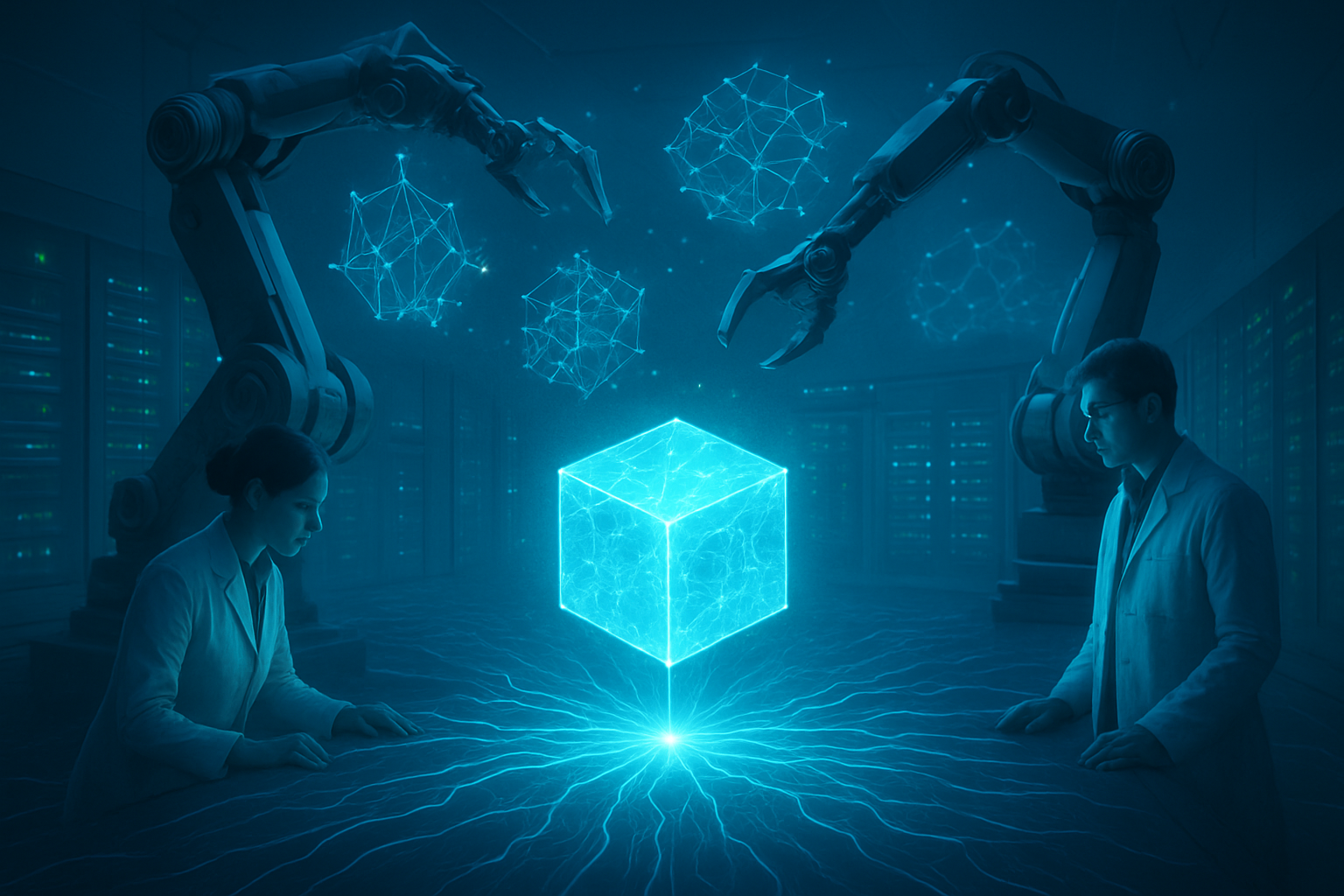
  • The Quantum Foundry: Superconductor Breakthroughs Ignite a New Era for Semiconductor-Powered Computing

    The Quantum Foundry: Superconductor Breakthroughs Ignite a New Era for Semiconductor-Powered Computing

    The landscape of computational power is on the precipice of a revolutionary transformation, driven by the burgeoning field of quantum computing. Far from merely an incremental step, this "quantum revolution" promises to unlock unprecedented capabilities that will reshape industries from healthcare and logistics to artificial intelligence and cybersecurity, with some estimates projecting the quantum computing market to reach $1.3 trillion by 2035. At the heart of this audacious future lies the often-understated, yet utterly pivotal, role of semiconductor technology. Leveraging decades of expertise in silicon-based fabrication, researchers are harnessing semiconductors as the fundamental bedrock for developing quantum hardware, particularly qubits, and for overcoming critical challenges in scalability, qubit fidelity, and coherence times.

    This convergence gains even more immediate significance when viewed through the lens of recent breakthroughs in superconductivity. Superconducting qubits are already a leading platform for practical quantum computers, favored for their speed and control, as demonstrated by the advanced processors from IBM (NYSE: IBM) and Google (NASDAQ: GOOGL). Crucially, recent scientific feats, such as successfully making germanium (a common semiconductor) superconducting for the first time, are paving the way for scalable, energy-efficient hybrid quantum devices that unify classical and quantum technologies. Additionally, the creation of novel superconducting states by combining superconductors with topological insulators, and even the ongoing research into high-temperature superconductors that could alleviate extreme cooling requirements, are directly fueling the rapid advancement and practical realization of semiconductor-based quantum systems. This immediate synergy between semiconductor innovation and superconducting breakthroughs is actively engineering the quantum future, bringing fault-tolerant quantum computers closer to reality and establishing a new paradigm where quantum capabilities are seamlessly integrated into our technological infrastructure.

    Detailed Technical Coverage: The Quantum-Semiconductor Nexus

    The future of quantum computing is inextricably linked with advancements in semiconductor technology, promising a revolution in computational capabilities. Semiconductor integration is proving crucial for scaling quantum processors, with companies like Intel (NASDAQ: INTC) and IBM leveraging existing semiconductor manufacturing infrastructures to advance their quantum hardware. Silicon-based qubits, particularly silicon spin qubits and quantum dots, are emerging as a promising platform due to their enhanced stability, longer coherence times, and compatibility with established CMOS fabrication processes. For instance, Intel's Horse Ridge II cryogenic control chip simplifies quantum system operations, integrating quantum processors with conventional hardware. These quantum semiconductors necessitate atomic-scale precision and meticulous control over individual atoms or electrons, diverging significantly from the design principles of classical semiconductors which prioritize density and power efficiency for binary operations. Innovations extend to specialized cryogenic control chips that operate at millikelvin temperatures, essential for minimizing thermal noise and maintaining the fragile quantum states of qubits. These advancements are paving the way for scalable architectures that can operate seamlessly under extreme cryogenic conditions.

    Technically, quantum computing differs fundamentally from classical computing by utilizing qubits that can exist in superposition (both 0 and 1 simultaneously) and entanglement, allowing them to process vast amounts of data exponentially faster for certain problems. While classical bits rely on deterministic operations, qubits leverage quantum phenomena for complex calculations. Current quantum devices, such as IBM's Eagle processor with 127 qubits or Google's Sycamore processor, demonstrate this power, with Sycamore achieving "quantum supremacy" by solving a problem in 200 seconds that would have taken a classical supercomputer 10,000 years. However, a significant challenge remains in maintaining qubit coherence and reducing error rates. Current state-of-the-art quantum computers typically exhibit error rates ranging from 0.1% to 1% per gate operation, significantly higher than classical computers where errors are exceedingly rare. Achieving fault-tolerant quantum computation will require error correction mechanisms that may demand hundreds or even thousands of physical qubits to form a single stable logical qubit.

    The quantum research community and industry experts are largely optimistic about the future of semiconductor-based quantum computing, recognizing its necessity for continued performance improvement in computing. However, this optimism is tempered by the substantial engineering challenges involved in bridging these two highly complex fields, including the high cost of R&D and the specialized infrastructure required for quantum chip fabrication. Companies like Intel, IBM, and IonQ (NYSE: IONQ) are heavily investing in this area, with IonQ achieving a new world record in two-qubit gate fidelity at 99.99% using semiconductor-based Electronic Qubit Control (EQC) technology, which promises easier scaling and lower costs compared to traditional laser-controlled ion trap systems. The consensus suggests that quantum computers will likely complement, rather than entirely replace, classical systems, leading to hybrid quantum-classical architectures where quantum processors act as accelerators for specific intractable tasks.

    Breakthroughs in superconductor technology are significantly influencing semiconductor-based quantum hardware, particularly for superconducting qubits and hybrid systems. Superconducting materials operating at extremely low temperatures are favored for their speed and control in performing quantum computations. Recent research has focused on developing superconductor-semiconductor materials, which have the potential to accelerate computations and integrate with existing CMOS processes. A monumental scientific achievement involves successfully transforming germanium, a common semiconductor, into a superconductor, unifying the fundamental building blocks of classical electronics and quantum systems. This discovery, which involved precisely incorporating gallium atoms into germanium's crystal lattice using molecular beam epitaxy, promises scalable, "foundry-ready" quantum devices with enhanced energy efficiency and computational power for advanced AI. Furthermore, advancements in cryogenic CMOS circuits, such as SemiQon's cryogenic transistor operating efficiently at 1 Kelvin with significantly reduced heat dissipation, are crucial for integrating control electronics closer to qubits, reducing signal latency, and improving overall system performance in ultra-cold quantum environments. These innovations highlight a symbiotic relationship, where the demands of quantum processors are driving unprecedented innovation in material science, ultra-precise fabrication techniques, and cryogenic integration, reshaping the foundations of chip manufacturing.

    Industry Impact: Reshaping the AI and Tech Landscape

    The convergence of quantum computing with advanced semiconductor technologies and superconductor breakthroughs is poised to profoundly reshape the landscape for AI companies, tech giants, and startups, ushering in an era of unprecedented computational power and intense competition. Quantum computers, leveraging principles like superposition and entanglement, promise to solve problems currently intractable for classical machines, particularly in complex optimization, simulation, and advanced artificial intelligence. This synergy is expected to accelerate complex AI algorithms, leading to more sophisticated machine learning models, enhanced data processing, and optimized large-scale logistics, potentially even catalyzing the development of Artificial General Intelligence (AGI). Semiconductor advancements are crucial, as they form the bedrock for developing stable and scalable quantum hardware, including qubits. Recent breakthroughs, such as successfully transforming germanium, a widely used semiconductor, into a superconductor, could lead to scalable, "foundry-ready" quantum devices with dramatically enhanced operational speeds and reduced energy consumption, fostering a new generation of hybrid quantum devices. This integrated approach is vital for overcoming challenges related to qubit fidelity, coherence times, and massive scalability.

    Major tech giants are strategically positioning themselves to capitalize on this quantum wave. Companies like IBM and Google are pursuing full-stack approaches, controlling hardware, software, and cloud access to their quantum systems, aiming to establish comprehensive ecosystems. IBM, for instance, plans to introduce a quantum system with 2,000 logical qubits by 2033 and offers its quantum systems via the cloud through IBM Quantum, Qiskit Runtime, and Qiskit Serverless. Google has demonstrated "quantum advantage" with its Sycamore processor and continues to push boundaries in quantum research. Microsoft (NASDAQ: MSFT) leverages its Azure Quantum platform, providing access to multiple quantum technologies through a unified cloud interface. Amazon (NASDAQ: AMZN), through AWS and Amazon Braket, offers cloud-based access to various quantum hardware vendors. Nvidia (NASDAQ: NVDA) is also making strategic moves with its NVQLink platform, connecting quantum processors to GPU-based supercomputers and expanding its CUDA-Q software to support quantum workloads, creating tools that are crucial for hybrid quantum-classical systems. Semiconductor companies like Intel are actively pursuing silicon spin qubits for scalability, and specialized component providers such as Coherent (NYSE: COHR) (for photonics and lasers) and Delft Circuits (for cryogenic I/O solutions) stand to benefit significantly from the demand for quantum-compatible materials and components.

    The competitive landscape is characterized by a race for "quantum advantage" or "quantum supremacy," where quantum computers demonstrably outperform classical machines for certain tasks. This intensely competitive environment sees startups focusing on niche areas like specific qubit architectures or specialized software and algorithms for particular industry applications. Startups are already innovating in areas like supply chain logistics (Qubit Tech), drug discovery (Quantum Health Solutions), risk analysis and portfolio optimization (FinTech Quantum), and cybersecurity (Toppan (TYO: 7911) and ISARA with quantum-safe cryptography). The disruptive implications are far-reaching; quantum computers, once scaled, could break many currently used public-key encryption methods, posing an existential threat to data security and driving an urgent need for post-quantum cryptography solutions. Furthermore, quantum computing promises to transform drug discovery, materials science, finance, and logistics by enabling breakthroughs in molecular simulation, energy management, and complex optimization problems. Companies that proactively understand and invest in quantum-enhanced AI and related technologies will be better positioned to lead in the future, as the global quantum hardware market is projected to grow substantially, reaching potentially trillions in economic value by 2035. Strategic partnerships, cloud deployment models, and a focus on hybrid quantum-classical computing architectures are key market positioning strategies to gain a competitive edge in this evolving technological frontier.

    Wider Significance: A Paradigm Shift for AI and Society

    The convergence of quantum computing and advanced semiconductor and superconductor technologies marks a pivotal moment in the broader technological landscape, particularly within the realm of artificial intelligence. Semiconductor advancements are foundational to quantum computing, enabling the creation of qubits and the intricate control circuitry required for quantum processors. Innovations like silicon-based qubits and 3D architectures are enhancing the practicality and scalability of quantum systems, addressing challenges such as error correction and noise reduction. Meanwhile, superconductor breakthroughs are critical for achieving the extremely cold temperatures necessary for stable qubit operation and for developing new types of qubits, such as topological qubits, which offer inherent resistance to noise. Recent successes, such as transforming germanium into a superconductor, could further integrate these technologies, paving the way for "foundry-ready" quantum devices with unprecedented energy efficiency. This synergy creates exponential computational capacity, directly influencing AI by enabling faster data processing, improved optimization algorithms, and the ability to model highly complex systems that are beyond classical computing's reach. This integration propels AI beyond its current computational ceiling, hinting at a new era of "Quantum AI" capable of solving previously impossible problems in seconds.

    The wider societal and technological impacts of this quantum-semiconductor revolution are profound and far-reaching. Industries such as healthcare, finance, materials science, and logistics stand to be fundamentally transformed. In healthcare, quantum-enhanced AI could revolutionize personalized medicine, accelerate drug discovery, and enable more accurate diagnostic tools by modeling the human body at a molecular level. Materials science will benefit from the rapid identification and design of advanced materials for more efficient chips and other applications, potentially leading to new, exotic materials. Financial institutions could leverage quantum computing for more sophisticated risk assessment, portfolio optimization, and fraud detection. Furthermore, quantum computing promises to optimize complex global supply chains and logistics, reducing costs and delays through real-time, large-scale simulations. Beyond these applications, quantum technologies could enable ultra-secure communication through quantum key distribution, enhance sensing capabilities, and even contribute to solving global challenges like climate change through optimizing renewable energy systems.

    Despite the immense potential, the rise of quantum computing brings significant concerns, necessitating careful consideration of ethical, security, and economic implications. One of the most urgent security threats is the ability of quantum computers to break current public-key encryption methods like RSA and ECC, which underpin global digital security. This "harvest now, decrypt later" threat, where encrypted data is collected today for future quantum decryption, makes the transition to post-quantum cryptography (PQC) an immediate imperative. Ethically, concerns include potential job displacement due to enhanced automation, biases in quantum-enhanced AI algorithms, and the critical issue of equitable access to this powerful technology, potentially widening the technological divide between nations and corporations. Economically, the high development and operational costs of quantum computers could exacerbate existing inequalities, and the concentration of quantum computing providers could introduce systemic risks. Comparing this to previous AI milestones, such as the development of expert systems or deep learning, quantum computing represents a more fundamental paradigm shift in computation, akin to the invention of the transistor. While past AI breakthroughs brought incremental improvements and new applications, quantum computing promises an exponential leap in capability for specific, complex problems, potentially disrupting entire industries and reshaping the very foundations of digital infrastructure in a way that is perhaps more analogous to the broad impact of the internet itself. This emphasizes the urgency for proactive planning and international cooperation to harness its benefits while mitigating its risks.

    Future Developments: The Road Ahead for Quantum Computing

    Future developments in quantum computing are intrinsically linked to significant advancements in semiconductor technology and transformative superconductor breakthroughs. In the near term, the semiconductor industry is adapting to the unique demands of quantum processors, necessitating a radical rethinking of design, materials, and manufacturing processes for qubits. Companies like Intel are actively pursuing silicon spin qubits due to their potential for scalability with existing lithography. Specialized cryogenic control chips, operating at the extremely low temperatures required for many quantum operations, are also under development, with progress being made in integrating all qubit-control components onto classical semiconductor chips. Experts anticipate seeing the first hints of quantum computers outperforming classical machines for specific tasks as early as 2025, with an increasing likelihood beyond that. This near-term focus will largely be on hybrid quantum-classical systems, where quantum processors act as accelerators for complex tasks, complementing classical CPUs rather than replacing them. By 2025, development teams are expected to prioritize qubit precision and performance over raw qubit count, with a greater allocation of resources to qubit quality from 2026.

    Superconductor breakthroughs are also poised to reshape the quantum computing landscape. A monumental scientific achievement in October 2025 involved successfully transforming germanium, a widely used semiconductor, into a superconductor. This discovery is crucial for unifying classical electronics and quantum systems, paving the way for scalable, "foundry-ready" quantum devices and ushering in an era of unprecedented energy efficiency and computational power for advanced AI applications. Superconducting circuits, which can be sufficiently isolated to preserve quantum coherence, form the basis of many superconducting qubit architectures. Long-term developments (beyond 10 years) are expected to bring a profound revolution across numerous sectors, driven by the scaling of quantum processors to thousands or even millions of stable qubits, requiring advanced error correction mechanisms. Potential applications span drug discovery, material science, energy infrastructure management, and financial modeling. Quantum computers are also predicted to significantly enhance AI's efficiency and enable the development of new AI architectures and algorithms. Furthermore, quantum computing will be critical for cybersecurity, both by posing a threat to current encryption standards and by driving the development and deployment of post-quantum cryptography.

    Despite the promising outlook, significant challenges remain. The delicate nature of quantum bits (qubits) makes them highly susceptible to quantum decoherence and noise, necessitating extremely controlled environments and robust error correction techniques. Qubit stability, cryogenic cooling, and scalability are major hurdles that researchers are tirelessly working to overcome. Experts predict a crucial transition in 2025 from physical qubits to logical qubits, which will fundamentally redefine what quantum technology can achieve by reducing error rates and improving scalability. The synergy between quantum computing and artificial intelligence is expected to accelerate, with AI assisting in quantum error mitigation and quantum technologies enhancing AI efficiency. Overall, the global quantum hardware market is projected to see substantial investment and innovation, with a predicted growth from $1.8 billion in 2024 to $9.6 billion by 2030, indicating a strong commitment to overcoming these challenges and realizing the transformative potential of quantum computing.

    Comprehensive Wrap-up: The Dawn of Quantum AI

    The convergence of quantum computing, advanced semiconductors, and superconductor breakthroughs is poised to inaugurate a new era of computational capability, fundamentally reshaping the landscape of Artificial Intelligence. Key takeaways from recent developments highlight quantum computing's transformative potential to overcome the inherent limitations of classical AI, offering unprecedented speed, energy efficiency, and the ability to tackle problems currently deemed intractable. The recent breakthrough in rendering germanium, a common semiconductor, superconducting, represents a pivotal moment, unifying classical electronics with quantum technologies and paving the way for scalable, energy-efficient hybrid quantum devices. Furthermore, advancements in superconducting digital technology promise to significantly boost computational density and energy efficiency, vital for the burgeoning demands of AI and machine learning. This synergistic relationship also extends to AI's role in optimizing quantum systems, reducing errors, and fine-tuning performance, accelerating the path toward practical quantum applications.

    This period of rapid advancement holds immense significance in the history of AI, drawing parallels to the shift from CPUs to GPUs that fueled the deep learning revolution. Quantum computing is set to break through the current "ceiling" of classical AI, ushering in "Quantum AI" where the processing of vast datasets and complex problem-solving become achievable in seconds. The ability to integrate superconducting capabilities directly into semiconductor platforms provides a tangible pathway to address the energy and performance bottlenecks that currently constrain the scaling of advanced AI models. This integration is anticipated to unlock immense computational power, enabling the training of far more sophisticated AI models, accelerating data analysis, and tackling optimization challenges beyond the reach of today's supercomputers, potentially even catalyzing the development of Artificial General Intelligence (AGI).

    Looking ahead, the long-term impact of these breakthroughs is expected to be a profound revolution across numerous sectors, from healthcare and materials science to logistics, finance, and mobility. The promise of significantly more sustainable AI, driven by the energy efficiency of quantum and superconducting technologies, addresses a critical environmental concern for the future of computing. While challenges remain, particularly in scaling quantum processors to thousands or millions of stable, error-corrected qubits, the trajectory points towards entirely new classes of computing devices and a potential "Age of Wonders". In the coming weeks and months, we should watch for continued progress in quantum hardware, specifically concerning error-corrected and stable topological qubits, and the practical implementation and scalability of superconducting semiconductors. Further demonstrations of quantum models achieving energy savings and competitive performance in AI tasks, alongside the evolution of Quantum-as-a-Service (QaaS) and hybrid quantum-classical computing, will be crucial indicators of this rapidly evolving field's maturation.


    This content is intended for informational purposes only and represents analysis of current AI developments.

    TokenRing AI delivers enterprise-grade solutions for multi-agent AI workflow orchestration, AI-powered development tools, and seamless remote collaboration platforms.
    For more information, visit https://www.tokenring.ai/.

  • Germanium’s Quantum Leap: A Superconducting Breakthrough Reshapes the Future of Computing and AI

    Germanium’s Quantum Leap: A Superconducting Breakthrough Reshapes the Future of Computing and AI

    In a monumental scientific achievement that promises to redefine the landscape of computing and quantum technologies, researchers have successfully transformed germanium, a widely utilized semiconductor, into a superconductor. This groundbreaking discovery, reported on October 30, 2025, in Nature Nanotechnology, marks a pivotal moment, unifying the fundamental building blocks of classical electronics and quantum systems in a way that had eluded scientists for over six decades. The immediate significance of this development is profound, paving the way for scalable, "foundry-ready" quantum devices and ushering in an era of unprecedented energy efficiency and computational power for advanced AI applications.

    This breakthrough is set to catalyze a new generation of hybrid quantum devices, enabling seamless integration between superconducting and semiconducting regions—a critical step for future quantum circuits, sensors, and low-power cryogenic electronics. By allowing electric currents to flow with zero resistance, superconducting germanium holds the potential to revolutionize everything from consumer electronics to industrial infrastructure, promising dramatically enhanced operational speeds and a drastic reduction in energy consumption across the board.

    Unpacking the Technical Marvel: Doping Germanium into Superconductivity

    The scientific community is buzzing over the intricate technical details of this advancement. For over 60 years, physicists struggled to imbue elemental semiconductors like germanium with superconducting properties, primarily due to the difficulty of maintaining a stable atomic structure at the high doping levels required. This recent success, spearheaded by an international team including physicists from New York University and the University of Queensland, meticulously bypassed these historical limitations.

    The core of the breakthrough lies in an innovative and highly precise doping method. Researchers achieved superconductivity by accurately incorporating gallium (Ga) atoms into the germanium crystal lattice at higher-than-normal concentrations. Gallium, a softer element commonly used in electronics, was introduced using Molecular Beam Epitaxy (MBE)—a sophisticated technique that allows for the controlled growth of thin crystal layers. This meticulous approach enabled the researchers to overcome previous challenges of structural disorder and atomic-scale imperfections, ensuring the germanium crystal remained stable while its electronic properties were fundamentally altered. Advanced X-ray techniques were instrumental in confirming the successful, high-density incorporation of gallium without compromising the lattice integrity.

    The result is a form of germanium that exhibits superconductivity at an "astonishingly low temperature" of 3.5 Kelvin (approximately -453 degrees Fahrenheit or -270.45 degrees Celsius). This specific temperature, while still cryogenic, is a significant milestone for a material that is already a "workhorse" in advanced semiconductor technologies. Unlike previous germanium-containing superconductors, which are typically intermetallic compounds, this achievement demonstrates superconductivity within germanium itself under controlled growth conditions, making it potentially "foundry-ready" for integration into existing semiconductor manufacturing processes. Initial reactions from the AI research community and industry experts are overwhelmingly positive, emphasizing its transformative potential for scalable quantum technologies and hybrid quantum devices.

    Reshaping the Tech Landscape: Implications for AI Giants and Startups

    The advent of superconducting germanium is poised to send ripples across the tech industry, particularly impacting AI companies, tech giants, and innovative startups. Companies deeply invested in quantum computing, semiconductor manufacturing, and advanced electronics stand to gain significant competitive advantages.

    Major players in the quantum computing arena, such as IBM (NYSE: IBM), Google (NASDAQ: GOOGL) through its Quantum AI division, Intel (NASDAQ: INTC), and Microsoft (NASDAQ: MSFT), could leverage this breakthrough to build more robust and integrated quantum processors. While these companies currently explore various qubit technologies, the potential for scalable, superconducting germanium offers a new, potentially more manufacturable pathway for hybrid quantum architectures. Similarly, semiconductor manufacturing giants like TSMC (NYSE: TSM) and Samsung (KRX: 005930) are well-positioned to integrate this material into their existing fabrication processes, given germanium's current role in advanced devices, potentially leading to rapid advancements in both consumer and industrial applications.

    This development could disrupt existing products and services by enabling a new generation of electronics with vastly improved performance and energy efficiency. Superconducting digital technologies, potentially incorporating germanium, could offer a 100-fold increase in energy efficiency and a 1,000-fold increase in compute density compared to classical CMOS. This directly addresses the escalating energy demands of AI training and large-scale computing, potentially leading to smaller, more efficient data centers and vastly extended battery life for devices. Startups focused on novel materials, cryogenic electronics, and quantum hardware will find fertile ground for innovation, potentially creating entirely new product categories and services. The competitive landscape will intensify, with a likely surge in R&D investments, strategic partnerships, and a global race for talent in condensed matter physics and quantum engineering.

    A Broader Horizon: Wider Significance and Future Trajectories

    The wider significance of the germanium superconductor breakthrough extends far beyond mere incremental improvements; it represents a fundamental materials science innovation that could redefine the physical limits of computation and accelerate the convergence of classical and quantum computing. In the broader AI landscape, this breakthrough directly addresses the insatiable demand for computational power and energy efficiency, enabling more sustainable cloud-based training of massive AI models and pushing the boundaries of real-time AI processing.

    The impacts are broad and transformative: from advanced quantum circuits and sensors to enhanced computational capabilities across all electronic devices. The promise of zero energy loss during electrical transmission is particularly compelling for the energy-intensive AI sector, offering a path to dramatically reduce operational costs and environmental footprints. However, potential concerns remain, primarily the necessity of cryogenic cooling (3.5 Kelvin is still extremely cold) which presents logistical and financial hurdles for widespread commercial adoption. Material stability and the scalability of advanced fabrication techniques like MBE also pose challenges for mass production.

    Compared to previous AI milestones, which largely focused on algorithmic advancements (e.g., deep learning) and specialized hardware accelerators (GPUs, TPUs), this breakthrough offers a new foundational hardware layer. It is akin to the invention of the transistor or integrated circuits, providing a physical substrate that can overcome fundamental limits of energy dissipation and computational density. This innovation paves the way for a more robust platform for the long-anticipated convergence of quantum and classical computing, crucial for developing practical, fault-tolerant quantum computers that can interface seamlessly with classical control electronics—a critical step for scaling quantum systems and unlocking advanced AI applications.

    Glimpsing the Future: Applications and Challenges Ahead

    Looking ahead, the germanium superconductor breakthrough promises a cascade of near-term and long-term developments. In the next 1-5 years, research will primarily focus on optimizing the superconducting properties of germanium, striving to increase its critical temperature and refine doping and crystal growth techniques for higher stability and performance. The goal is to develop "foundry-ready" quantum devices and low-power cryogenic electronics that can be integrated into existing CMOS manufacturing processes, creating clean interfaces between superconducting and semiconducting regions. The development of Josephson junctions and proximitized quantum dots in germanium for novel spin and superconducting qubits will be a key near-term focus.

    The long-term vision (5+ years) encompasses the development of more robust and scalable superconducting spin and topological qubits, potentially leading to the realization of topological Majorana zero modes for fault-tolerant quantum computing. The ultimate aim for energy-efficient electronics is the direct integration of dissipationless superconducting components into classical semiconductor chips, extending performance beyond current miniaturization limits and leading to a new era of high-performance, energy-efficient systems. Novel device architectures, such as gate-tunable superconductor-quantum dot-superconductor junctions, are also on the horizon.

    Potential applications span quantum computing, energy-efficient electronics (including consumer products, industrial technologies, and data centers), and highly sensitive sensors for medical imaging. However, significant challenges remain. The need for cryogenic temperatures is the most immediate hurdle; increasing the critical temperature is paramount for broader adoption. Material stability, reproducibility in large-scale manufacturing, and the complex engineering required for seamless integration into existing semiconductor architectures also need to be addressed. Experts, including Javad Shabani and Peter Jacobson, are highly optimistic, predicting a revolution in consumer products, industrial technologies, and the acceleration of scalable quantum devices, though commercialization of quantum computers remains a 10-20+ year prospect.

    A New Dawn for AI Hardware: The Path Forward

    The successful transformation of germanium into a superconductor represents a watershed moment in materials science, poised to usher in a new era for artificial intelligence and computing. The key takeaway is the unification of classical and quantum building blocks within a "workhorse" semiconductor material, offering unprecedented energy efficiency and computational density. This development is not merely an incremental step but a foundational shift that could fundamentally alter the hardware landscape upon which future AI systems are built.

    This breakthrough's significance in AI history cannot be overstated. It offers a tangible pathway to overcome the energy and performance bottlenecks that currently limit the scaling of advanced AI models. By enabling the seamless integration of classical and quantum functionalities, it promises a future where AI algorithms can leverage the best of both worlds, tackling problems previously deemed intractable. The long-term impact points towards a new hardware paradigm characterized by low-power cryogenic electronics and highly integrated, scalable quantum circuits, fundamentally reshaping how we conceive and build computational systems.

    In the coming weeks and months, the scientific community will eagerly watch for independent verification of these results and further characterization of the material's superconducting properties, particularly efforts to achieve higher operating temperatures. Demonstrations of functional hybrid devices that integrate superconducting germanium into quantum circuits will be critical indicators of progress. As theoretical understanding deepens and manufacturing techniques evolve, the AI and machine learning communities will undoubtedly begin to explore the profound implications of this new material for designing next-generation AI accelerators and algorithms. This is a pivotal moment, and the journey toward a quantum-enhanced, energy-efficient future for AI has just taken a giant leap forward.


    This content is intended for informational purposes only and represents analysis of current AI developments.

    TokenRing AI delivers enterprise-grade solutions for multi-agent AI workflow orchestration, AI-powered development tools, and seamless remote collaboration platforms.
    For more information, visit https://www.tokenring.ai/.