
Tag: Supply Chain

  • The Great Silicon Divide: Geopolitics Reshapes the Future of AI Chips

    The Great Silicon Divide: Geopolitics Reshapes the Future of AI Chips

    October 7, 2025 – The global semiconductor industry, the undisputed bedrock of modern technology and the relentless engine driving the artificial intelligence (AI) revolution, finds itself at the epicenter of an unprecedented geopolitical storm. What were once considered purely commercial goods are now critical strategic assets, central to national security, economic dominance, and military might. This intense strategic competition, primarily between the United States and China, is rapidly restructuring global supply chains, fostering a new era of techno-nationalism that profoundly impacts the development and deployment of AI across the globe.

    This seismic shift is characterized by a complex interplay of government policies, international relations, and fierce regional competition, leading to a fragmented and often less efficient, yet strategically more resilient, global semiconductor ecosystem. From the fabrication plants of Taiwan to the design labs of Silicon Valley and the burgeoning AI hubs in China, every facet of the industry is being recalibrated, with direct and far-reaching implications for AI innovation and accessibility.

    The Mechanisms of Disruption: Policies, Controls, and the Race for Self-Sufficiency

    The current geopolitical landscape is heavily influenced by a series of aggressive policies and escalating tensions designed to secure national interests in the high-stakes semiconductor arena. The United States, aiming to maintain its technological dominance, has implemented stringent export controls targeting China's access to advanced AI chips and the sophisticated equipment required to manufacture them. These measures, initiated in October 2022 and further tightened in December 2024 and January 2025, have expanded to include High-Bandwidth Memory (HBM), crucial for advanced AI applications, and introduced a global tiered framework for AI chip access, effectively barring Tier 3 nations like China, Russia, and Iran from receiving cutting-edge AI technology based on a Total Processing Performance (TPP) metric.

    This strategic decoupling has forced companies like NVIDIA (NASDAQ: NVDA) and Advanced Micro Devices (NASDAQ: AMD) to develop "China-compliant" versions of their powerful AI chips (e.g., Nvidia's A800 and H20) with intentionally reduced capabilities to circumvent restrictions. While an "AI Diffusion Rule" aimed at globally curbing AI chip exports was briefly withdrawn by the Trump administration in early 2025 due to industry backlash, the U.S. continues to pursue new tariffs and export restrictions. This aggressive stance is met by China's equally determined push for self-sufficiency under its "Made in China 2025" strategy, fueled by massive government investments, including a $47 billion "Big Fund" established in May 2024 to bolster domestic semiconductor production and reduce reliance on foreign chips.

    Meanwhile, nations are pouring billions into domestic manufacturing and R&D through initiatives like the U.S. CHIPS and Science Act (2022), which allocates over $52.7 billion in subsidies, and the EU Chips Act (2023), mobilizing over €43 billion. These acts aim to reshore and expand chip production, diversifying supply chains away from single points of failure. Taiwan Semiconductor Manufacturing Company (TSMC) (NYSE: TSM), the undisputed titan of advanced chip manufacturing, finds itself at the heart of these tensions. While the U.S. has pressured Taiwan to shift 50% of its advanced chip production to American soil by 2027, Taiwan's Vice Premier Cheng Li-chiun explicitly rejected this "50-50" proposal in October 2025, underscoring Taiwan's resolve to maintain strategic control over its leading chip industry. The concentration of advanced manufacturing in Taiwan remains a critical geopolitical vulnerability, with any disruption posing catastrophic global economic consequences.

    AI Giants Navigate a Fragmented Future

    The ramifications of this geopolitical chess game are profoundly reshaping the competitive landscape for AI companies, tech giants, and nascent startups. Major AI labs and tech companies, particularly those reliant on cutting-edge processors, are grappling with supply chain uncertainties and the need for strategic re-evaluation. NVIDIA (NASDAQ: NVDA), a dominant force in AI hardware, has been compelled to design specific, less powerful chips for the Chinese market, impacting its revenue streams and R&D allocation. This creates a bifurcated product strategy, where innovation is sometimes capped for compliance rather than maximized for performance.

    Companies like Intel (NASDAQ: INTC), a significant beneficiary of CHIPS Act funding, are strategically positioned to leverage domestic manufacturing incentives, aiming to re-establish a leadership role in foundry services and advanced packaging. This could reduce reliance on East Asian foundries for some AI workloads. Similarly, South Korean giants like Samsung (KRX: 005930) are diversifying their global footprint, investing heavily in both domestic and international manufacturing to secure their position in memory and foundry markets critical for AI. Chinese tech giants such as Huawei and AI startups like Horizon Robotics are accelerating their domestic chip development, particularly in sectors like autonomous vehicles, aiming for full domestic sourcing. This creates a distinct, albeit potentially less advanced, ecosystem within China.

    The competitive implications are stark: companies with diversified manufacturing capabilities or those aligned with national strategic priorities stand to benefit. Startups, often with limited resources, face increased complexities in sourcing components and navigating export controls, potentially hindering their ability to scale and compete globally. The fragmentation could lead to higher costs for AI hardware, slower innovation cycles in certain regions, and a widening technological gap between nations with access to advanced fabrication and those facing restrictions. This directly impacts the development of next-generation AI models, which demand ever-increasing computational power.

    The Broader Canvas: National Security, Economic Stability, and the AI Divide

    Beyond corporate balance sheets, the geopolitical dynamics in semiconductors carry immense wider significance, impacting national security, economic stability, and the very trajectory of AI development. The "chip war" is essentially an "AI Cold War," where control over advanced chips is synonymous with control over future technological and military capabilities. Nations recognize that AI supremacy hinges on semiconductor supremacy, making the supply chain a matter of existential importance. The push for reshoring, near-shoring, and "friend-shoring" reflects a global effort to build more resilient, albeit more expensive, supply chains, prioritizing strategic autonomy over pure economic efficiency.

    This shift fits into a broader trend of techno-nationalism, where governments view technological leadership as a core component of national power. The impacts are multifaceted: increased production costs due to duplicated infrastructure (U.S. fabs, for instance, cost 30-50% more to build and operate than those in East Asia), potential delays in technological advancements due to restricted access to cutting-edge components, and a looming "talent war" for skilled semiconductor and AI engineers. The extreme concentration of advanced manufacturing in Taiwan, while a "silicon shield" for the island, also represents a critical single point of failure that could trigger a global economic crisis if disrupted.

    Comparisons to previous AI milestones underscore the current geopolitical environment's uniqueness. While past breakthroughs focused on computational power and algorithmic advancements, the present era is defined by the physical constraints and political Weaponization of that computational power. The current situation suggests a future where AI development might bifurcate along geopolitical lines, with distinct technological ecosystems emerging, potentially leading to divergent standards and capabilities. This could slow global AI progress, foster redundant research, and create new forms of digital divides.

    The Horizon: A Fragmented Future and Enduring Challenges

    Looking ahead, the geopolitical landscape of semiconductors and its impact on AI are expected to intensify. In the near term, we can anticipate continued tightening of export controls, particularly concerning advanced AI training chips and High-Bandwidth Memory (HBM). Nations will double down on their respective CHIPS Acts and subsidy programs, leading to a surge in new fab construction globally, with 18 new fabs slated to begin construction in 2025. This will further diversify manufacturing geographically, but also increase overall production costs.

    Long-term developments will likely see the emergence of truly regionalized semiconductor ecosystems. The U.S. and its allies will continue to invest in domestic design, manufacturing, and packaging capabilities, while China will relentlessly pursue its goal of 100% domestic chip sourcing, especially for critical applications like AI and automotive. This will foster greater self-sufficiency but also create distinct technological blocs. Potential applications on the horizon include more robust, secure, and localized AI supply chains for critical infrastructure and defense, but also the challenge of integrating disparate technological standards.

    Experts predict that the "AI supercycle" will continue to drive unprecedented demand for specialized AI chips, pushing the market beyond $150 billion in 2025. However, this demand will be met by a supply chain increasingly shaped by geopolitical considerations rather than pure market forces. Challenges remain significant: ensuring the effectiveness of export controls, preventing unintended economic fallout, managing the brain drain of semiconductor talent, and fostering international collaboration where possible, despite the prevailing competitive environment. The delicate balance between national security and global innovation will be a defining feature of the coming years.

    Navigating the New Silicon Era: A Summary of Key Takeaways

    The current geopolitical dynamics represent a monumental turning point for the semiconductor industry and, by extension, the future of artificial intelligence. The key takeaways are clear: semiconductors have transitioned from commercial goods to strategic assets, driving a global push for technological sovereignty. This has led to the fragmentation of global supply chains, characterized by reshoring, near-shoring, and friend-shoring initiatives, often at the expense of economic efficiency but in pursuit of strategic resilience.

    The significance of this development in AI history cannot be overstated. It marks a shift from purely technological races to a complex interplay of technology and statecraft, where access to computational power is as critical as the algorithms themselves. The long-term impact will likely be a deeply bifurcated global semiconductor market, with distinct technological ecosystems emerging in the U.S./allied nations and China. This will reshape innovation trajectories, market competition, and the very nature of global AI collaboration.

    In the coming weeks and months, watch for further announcements regarding CHIPS Act funding disbursements, the progress of new fab constructions globally, and any new iterations of export controls. The ongoing tug-of-war over advanced semiconductor technology will continue to define the contours of the AI revolution, making the geopolitical landscape of silicon a critical area of focus for anyone interested in the future of technology and global power.

    This content is intended for informational purposes only and represents analysis of current AI developments.

    TokenRing AI delivers enterprise-grade solutions for multi-agent AI workflow orchestration, AI-powered development tools, and seamless remote collaboration platforms. For more information, visit https://www.tokenring.ai/.

  • The Chip Crucible: AI’s Insatiable Demand Forges a New Semiconductor Supply Chain

    The Chip Crucible: AI’s Insatiable Demand Forges a New Semiconductor Supply Chain

    The global semiconductor supply chain, a complex and often fragile network, is undergoing a profound transformation. While the widespread chip shortages that plagued industries during the pandemic have largely receded, a new, more targeted scarcity has emerged, driven by the unprecedented demands of the Artificial Intelligence (AI) supercycle. This isn't just about more chips; it's about an insatiable hunger for advanced, specialized semiconductors crucial for AI hardware, pushing manufacturing capabilities to their absolute limits and compelling the industry to adapt at an astonishing pace.

    As of October 7, 2025, the semiconductor sector is poised for exponential growth, with projections hinting at an $800 billion market this year and an ambitious trajectory towards $1 trillion by 2030. This surge is predominantly fueled by AI, high-performance computing (HPC), and edge AI applications, with data centers acting as the primary engine. However, this boom is accompanied by significant structural challenges, forcing companies and governments alike to rethink established norms and build more robust, resilient systems to power the future of AI.

    Building Resilience: Technical Adaptations in a Disrupted Landscape

    The semiconductor industry’s journey through disruption has been a turbulent one. The COVID-19 pandemic initiated a global chip shortage impacting over 169 industries, a crisis that lingered for years. Geopolitical tensions, such as the Russia-Ukraine conflict, disrupted critical material supplies like neon gas, while natural disasters and factory fires further highlighted the fragility of a highly concentrated supply chain. These events served as a stark wake-up call, pushing the industry to pivot from a "just-in-time" to a "just-in-case" inventory model.

    In response to these pervasive challenges and the escalating AI demand, the industry has initiated a multi-faceted approach to building resilience. A key strategy involves massive capacity expansion, particularly from leading foundries like Taiwan Semiconductor Manufacturing Company (TSMC) (NYSE: TSM). TSMC, for instance, is aggressively expanding its advanced packaging technologies, such as CoWoS, which are vital for integrating the complex components of AI accelerators. These efforts aim to significantly increase wafer output and bring cutting-edge processes online, though the multi-year timeline for fab construction means demand continues to outpace immediate supply. Governments have also stepped in with strategic initiatives, exemplified by the U.S. CHIPS and Science Act and the EU Chips Act. These legislative efforts allocate billions to bolster domestic semiconductor production, research, and workforce development, encouraging onshoring and "friendshoring" to reduce reliance on single regions and enhance supply chain stability.

    Beyond physical infrastructure, technological innovations are playing a crucial role. The adoption of chiplet architecture, where complex integrated circuits are broken down into smaller, interconnected "chiplets," offers greater flexibility in design and sourcing, mitigating reliance on single monolithic chip designs. Furthermore, AI itself is being leveraged to improve supply chain resilience. Advanced analytics and machine learning models are enhancing demand forecasting, identifying potential disruptions from natural disasters or geopolitical events, and optimizing inventory levels in real-time. Companies like NVIDIA (NASDAQ: NVDA) have publicly acknowledged using AI to navigate supply chain challenges, demonstrating a self-reinforcing cycle where AI's demand drives supply chain innovation, and AI then helps manage that very supply chain. This holistic approach, combining governmental support, technological advancements, and strategic shifts in operational models, represents a significant departure from previous, less integrated responses to supply chain volatility.

    Competitive Battlegrounds: Impact on AI Companies and Tech Giants

    The ongoing semiconductor supply chain dynamics have profound implications for AI companies, tech giants, and nascent startups, creating both immense opportunities and significant competitive pressures. Companies at the forefront of AI development, particularly those driving generative AI and large language models (LLMs), are experiencing unprecedented demand for high-performance Graphics Processing Units (GPUs), specialized AI accelerators (ASICs, NPUs), and high-bandwidth memory (HBM). This targeted scarcity means that access to these cutting-edge components is not just a logistical challenge but a critical competitive differentiator.

    Tech giants like Google (NASDAQ: GOOGL), Amazon (NASDAQ: AMZN), and Microsoft (NASDAQ: MSFT), heavily invested in cloud AI infrastructure, are strategically diversifying their sourcing and increasingly designing their own custom AI accelerators (e.g., Google's TPUs, Amazon's Trainium/Inferentia). This vertical integration provides greater control over their supply chains, reduces reliance on external suppliers for critical AI components, and allows for highly optimized hardware-software co-design. This trend could potentially disrupt the market dominance of traditional GPU providers by offering alternatives tailored to specific AI workloads, though the sheer scale of demand ensures a robust market for all high-performance AI chips. Startups, while agile, often face greater challenges in securing allocations of scarce advanced chips, potentially hindering their ability to scale and compete with well-resourced incumbents.

    The competitive implications extend to market positioning and strategic advantages. Companies that can reliably secure or produce their own supply of advanced AI chips gain a significant edge in deploying and scaling AI services. This also influences partnerships and collaborations within the industry, as access to foundry capacity and specialized packaging becomes a key bargaining chip. The current environment is fostering an intense race to innovate in chip design and manufacturing, with billions being poured into R&D. The ability to navigate these supply chain complexities and secure critical hardware is not just about sustaining operations; it's about defining leadership in the rapidly evolving AI landscape.

    Wider Significance: AI's Dependency and Geopolitical Crossroads

    The challenges and opportunities within the semiconductor supply chain are not isolated industry concerns; they represent a critical juncture in the broader AI landscape and global technological trends. The dependency of advanced AI on a concentrated handful of manufacturing hubs, particularly in Taiwan, highlights significant geopolitical risks. With over 60% of advanced chips manufactured in Taiwan, and a few companies globally producing most high-performance chips, any geopolitical instability in the region could have catastrophic ripple effects across the global economy and significantly impede AI progress. This concentration has prompted a shift from pure globalization to strategic fragmentation, with nations prioritizing "tech sovereignty" and investing heavily in domestic chip production.

    This strategic fragmentation, while aiming to enhance national security and supply chain resilience, also raises concerns about increased costs, potential inefficiencies, and the fragmentation of global technological standards. The significant investment required to build new fabs—tens of billions of dollars per facility—and the critical shortage of skilled labor further compound these challenges. For example, TSMC's decision to postpone a plant opening in Arizona due to labor shortages underscores the complexity of re-shoring efforts. Beyond economics and geopolitics, the environmental impact of resource-intensive manufacturing, from raw material extraction to energy consumption and e-waste, is a growing concern that the industry must address as it scales.

    Comparisons to previous AI milestones reveal a fundamental difference: while earlier breakthroughs often focused on algorithmic advancements, the current AI supercycle is intrinsically tied to hardware capabilities. Without a robust and resilient semiconductor supply chain, the most innovative AI models and applications cannot be deployed at scale. This makes the current supply chain challenges not just a logistical hurdle, but a foundational constraint on the pace of AI innovation and adoption globally. The industry's ability to overcome these challenges will largely dictate the speed and direction of AI's future development, shaping economies and societies for decades to come.

    The Road Ahead: Future Developments and Persistent Challenges

    Looking ahead, the semiconductor industry is poised for continuous evolution, driven by the relentless demands of AI. In the near term, we can expect to see the continued aggressive expansion of fabrication capacity, particularly for advanced nodes (3nm and below) and specialized packaging technologies like CoWoS. These investments, supported by government initiatives like the CHIPS Act, aim to diversify manufacturing footprints and reduce reliance on single geographic regions. The development of more sophisticated chiplet architectures and 3D chip stacking will also gain momentum, offering pathways to higher performance and greater manufacturing flexibility by integrating diverse components from potentially different foundries.

    Longer-term, the focus will shift towards even greater automation in manufacturing, leveraging AI and robotics to optimize production processes, improve yield rates, and mitigate labor shortages. Research into novel materials and alternative manufacturing techniques will intensify, seeking to reduce dependency on rare-earth elements and specialty gases, and to make the production process more sustainable. Experts predict that meeting AI-driven demand may necessitate building 20-25 additional fabs across logic, memory, and interconnect technologies by 2030, a monumental undertaking that will require sustained investment and a concerted effort to cultivate a skilled workforce. The challenges, however, remain significant: persistent targeted shortages of advanced AI chips, the escalating costs of fab construction, and the ongoing geopolitical tensions that threaten to fragment the global supply chain further.

    The horizon also holds the promise of new applications and use cases. As AI hardware becomes more accessible and efficient, we can anticipate breakthroughs in edge AI, enabling intelligent devices and autonomous systems to perform complex AI tasks locally, reducing latency and reliance on cloud infrastructure. This will drive demand for even more specialized and power-efficient AI accelerators. Experts predict that the semiconductor supply chain will evolve into a more distributed, yet interconnected, network, where resilience is built through redundancy and strategic partnerships rather than singular points of failure. The journey will be complex, but the imperative to power the AI revolution ensures that innovation and adaptation will remain at the forefront of the semiconductor industry's agenda.

    A Resilient Future: Wrapping Up the AI-Driven Semiconductor Transformation

    The ongoing transformation of the semiconductor supply chain, catalyzed by the AI supercycle, represents one of the most significant industrial shifts of our time. The key takeaways underscore a fundamental pivot: from a globalized, "just-in-time" model that prioritized efficiency, to a more strategically fragmented, "just-in-case" paradigm focused on resilience and security. The targeted scarcity of advanced AI chips, particularly GPUs and HBM, has highlighted the critical dependency of AI innovation on robust hardware infrastructure, making supply chain stability a national and economic imperative.

    This development marks a pivotal moment in AI history, demonstrating that the future of artificial intelligence is as much about the physical infrastructure—the chips and the factories that produce them—as it is about algorithms and data. The strategic investments by governments, the aggressive capacity expansions by leading manufacturers, and the innovative technological shifts like chiplet architecture and AI-powered supply chain management are all testaments to the industry's determination to adapt. The long-term impact will likely be a more diversified and geographically distributed semiconductor ecosystem, albeit one that remains intensely competitive and capital-intensive.

    In the coming weeks and months, watch for continued announcements regarding new fab constructions, particularly in regions like North America and Europe, and further developments in advanced packaging technologies. Pay close attention to how geopolitical tensions influence trade policies and investment flows in the semiconductor sector. Most importantly, observe how AI companies navigate these supply chain complexities, as their ability to secure critical hardware will directly correlate with their capacity to innovate and lead in the ever-accelerating AI race. The crucible of AI demand is forging a new, more resilient semiconductor supply chain, shaping the technological landscape for decades to come.

    This content is intended for informational purposes only and represents analysis of current AI developments.

    TokenRing AI delivers enterprise-grade solutions for multi-agent AI workflow orchestration, AI-powered development tools, and seamless remote collaboration platforms.
    For more information, visit https://www.tokenring.ai/.

  • The Silicon Curtain: How Geopolitics is Reshaping the Global AI Chip Supply Chain

    The Silicon Curtain: How Geopolitics is Reshaping the Global AI Chip Supply Chain

    The global landscape of chip manufacturing, once primarily driven by economic efficiency and technological innovation, has dramatically transformed into a battleground for national security and technological supremacy. A "Silicon Curtain" is rapidly descending, primarily between the United States and China, fundamentally altering the availability and cost of the advanced AI chips that power the modern world. This geopolitical reorientation is forcing a profound re-evaluation of global supply chains, pushing for strategic resilience over pure cost optimization, and creating a bifurcated future for artificial intelligence development. As nations vie for dominance in AI, control over the foundational hardware – semiconductors – has become the ultimate strategic asset, with far-reaching implications for tech giants, startups, and the very trajectory of global innovation.

    The Microchip's Macro Impact: Policies, Performance, and a Fragmented Future

    The core of this escalating "chip war" lies in the stringent export controls implemented by the United States, aimed at curbing China's access to cutting-edge AI chips and the sophisticated equipment required to manufacture them. These measures, which intensified around 2022, target specific technical thresholds. For instance, the U.S. Department of Commerce has set performance limits on AI GPUs, leading companies like NVIDIA (NASDAQ: NVDA) to develop "China-compliant" versions, such as the A800 and H20, with intentionally reduced interconnect bandwidths to fall below export restriction criteria. Similarly, AMD (NASDAQ: AMD) has faced limitations on its advanced AI accelerators. More recent regulations, effective January 2025, introduce a global tiered framework for AI chip access, with China, Russia, and Iran classified as Tier 3 nations, effectively barred from receiving advanced AI technology based on a Total Processing Performance (TPP) metric.

    Crucially, these restrictions extend to semiconductor manufacturing equipment (SME), particularly Extreme Ultraviolet (EUV) and advanced Deep Ultraviolet (DUV) lithography machines, predominantly supplied by the Dutch firm ASML (NASDAQ: ASML). ASML holds a near-monopoly on EUV technology, which is indispensable for producing chips at 7 nanometers (nm) and smaller, the bedrock of modern AI computing. By leveraging its influence, the U.S. has effectively prevented ASML from selling its most advanced EUV systems to China, thereby freezing China's ability to produce leading-edge semiconductors independently.

    China has responded with a dual strategy of retaliatory measures and aggressive investments in domestic self-sufficiency. This includes imposing export controls on critical minerals like gallium and germanium, vital for semiconductor production, and initiating anti-dumping probes. More significantly, Beijing has poured approximately $47.5 billion into its domestic semiconductor sector through initiatives like the "Big Fund 3.0" and the "Made in China 2025" plan. This has spurred remarkable, albeit constrained, progress. Companies like SMIC (HKEX: 0981) have reportedly achieved 7nm process technology using DUV lithography, circumventing EUV restrictions, and Huawei (SHE: 002502) has successfully produced 7nm 5G chips and is ramping up production of its Ascend series AI chips, which some Chinese regulators deem competitive with certain NVIDIA offerings in the domestic market. This dynamic marks a significant departure from previous periods in semiconductor history, where competition was primarily economic. The current conflict is fundamentally driven by national security and the race for AI dominance, with an unprecedented scope of controls directly dictating chip specifications and fostering a deliberate bifurcation of technology ecosystems.

    AI's Shifting Sands: Winners, Losers, and Strategic Pivots

    The geopolitical turbulence in chip manufacturing is creating a distinct landscape of winners and losers across the AI industry, compelling tech giants and nimble startups alike to reassess their strategic positioning.

    Companies like NVIDIA and AMD, while global leaders in AI chip design, are directly disadvantaged by export controls. The necessity of developing downgraded "China-only" chips impacts their revenue streams from a crucial market and diverts valuable R&D resources. NVIDIA, for instance, anticipated a $5.5 billion hit in 2025 due to H20 export restrictions, and its share of China's AI chip market reportedly plummeted from 95% to 50% following the bans. Chinese tech giants and cloud providers, including Huawei, face significant hurdles in accessing the most advanced chips, potentially hindering their ability to deploy cutting-edge AI models at scale. AI startups globally, particularly those operating on tighter budgets, face increased component costs, fragmented supply chains, and intensified competition for limited advanced GPUs.

    Conversely, hyperscale cloud providers and tech giants with the capital to invest in in-house chip design are emerging as beneficiaries. Companies like Alphabet (NASDAQ: GOOGL) with its Tensor Processing Units (TPUs), Amazon (NASDAQ: AMZN) with Inferentia, Microsoft (NASDAQ: MSFT) with Azure Maia AI Accelerator, and Meta Platforms (NASDAQ: META) are increasingly developing custom AI chips. This strategy reduces their reliance on external vendors, provides greater control over performance and supply, and offers a significant strategic advantage in an uncertain hardware market. Domestic semiconductor manufacturers and foundries, such as Intel (NASDAQ: INTC), are also benefiting from government incentives like the U.S. CHIPS Act, which aims to re-establish domestic manufacturing leadership. Similarly, Chinese domestic AI chip startups are receiving substantial government funding and benefiting from a protected market, accelerating their efforts to replace foreign technology.

    The competitive landscape for major AI labs is shifting dramatically. Strategic reassessment of supply chains, prioritizing resilience and redundancy over pure cost efficiency, is paramount. The rise of in-house chip development by hyperscalers means established chipmakers face a push towards specialization. The geopolitical environment is also fueling an intense global talent war for skilled semiconductor engineers and AI specialists. This fragmentation of ecosystems could lead to a "splinter-chip" world with potentially incompatible standards, stifling global innovation and creating a bifurcation of AI development where advanced hardware access is regionally constrained.

    Beyond the Battlefield: Wider Significance and a New AI Era

    The geopolitical landscape of chip manufacturing is not merely a trade dispute; it's a fundamental reordering of the global technology ecosystem with profound implications for the broader AI landscape. This "AI Cold War" signifies a departure from an era of open collaboration and economically driven globalization towards one dominated by techno-nationalism and strategic competition.

    The most significant impact is the potential for a bifurcated AI world. The drive for technological sovereignty, exemplified by initiatives like the U.S. CHIPS Act and the European Chips Act, risks creating distinct technological ecosystems with parallel supply chains and potentially divergent standards. This "Silicon Curtain" challenges the historically integrated nature of the tech industry, raising concerns about interoperability, efficiency, and the overall pace of global innovation. Reduced cross-border collaboration and a potential fragmentation of AI research along national lines could slow the advancement of AI globally, making AI development more expensive, time-consuming, and potentially less diverse.

    This era draws parallels to historical technological arms races, such as the U.S.-Soviet space race during the Cold War. However, the current situation is unique in its explicit weaponization of hardware. Advanced semiconductors are now considered critical strategic assets, underpinning modern military capabilities, intelligence gathering, and defense systems. The dual-use nature of AI chips intensifies scrutiny and controls, making chip access a direct instrument of national power. Unlike previous tech competitions where the focus might have been solely on scientific discovery or software advancements, policy is now directly dictating chip specifications, forcing companies to intentionally cap capabilities for compliance. The extreme concentration of advanced chip manufacturing in a few entities, particularly Taiwan Semiconductor Manufacturing Company (NYSE: TSM), creates unique geopolitical chokepoints, making Taiwan's stability a "silicon shield" and a point of immense global tension.

    The Road Ahead: Navigating a Fragmented Future

    The future of AI, inextricably linked to the geopolitical landscape of chip manufacturing, promises both unprecedented innovation and formidable challenges. In the near term (1-3 years), intensified strategic competition, particularly between the U.S. and China, will continue to define the environment. U.S. export controls will likely see further refinements and stricter enforcement, while China will double down on its self-sufficiency efforts, accelerating domestic R&D and production. The ongoing construction of new fabs by TSMC in Arizona and Japan, though initially a generation behind leading-edge nodes, represents a critical step towards diversifying advanced manufacturing capabilities outside of Taiwan.

    Longer term (3+ years), experts predict a deeply bifurcated global semiconductor market with separate technological ecosystems and standards. This will lead to less efficient, duplicated supply chains that prioritize strategic resilience over pure economic efficiency. The "talent war" for skilled semiconductor and AI engineers will intensify, with geopolitical alignment increasingly dictating market access and operational strategies.

    Potential applications and use cases for advanced AI chips will continue to expand across all sectors: powering autonomous systems in transportation and logistics, enabling AI-driven diagnostics and personalized medicine in healthcare, enhancing algorithmic trading and fraud detection in finance, and integrating sophisticated AI into consumer electronics for edge processing. New computing paradigms, such as neuromorphic and quantum computing, are on the horizon, promising to redefine AI's potential and computational efficiency.

    However, significant challenges remain. The extreme concentration of advanced chip manufacturing in Taiwan poses an enduring single point of failure. The push for technological decoupling risks fragmenting the global tech ecosystem, leading to increased costs and divergent technical standards. Policy volatility, rising production costs, and the intensifying talent war will continue to demand strategic agility from AI companies. The dual-use nature of AI technologies also necessitates addressing ethical and governance gaps, particularly concerning cybersecurity and data privacy. Experts universally agree that semiconductors are now the currency of global power, much like oil in the 20th century. The innovation cycle around AI chips is only just beginning, with more specialized architectures expected to emerge beyond general-purpose GPUs.

    A New Era of AI: Resilience, Redundancy, and Geopolitical Imperatives

    The geopolitical landscape of chip manufacturing has irrevocably altered the course of AI development, ushering in an era where technological progress is deeply intertwined with national security and strategic competition. The key takeaway is the definitive end of a truly open and globally integrated AI chip supply chain. We are witnessing the rise of techno-nationalism, driving a global push for supply chain resilience through "friend-shoring" and onshoring, even at the cost of economic efficiency.

    This marks a pivotal moment in AI history, moving beyond purely algorithmic breakthroughs to a reality where access to and control over foundational hardware are paramount. The long-term impact will be a more regionalized, potentially more secure, but also likely less efficient and more expensive, foundation for AI. This will necessitate a constant balancing act between fostering domestic innovation, building robust supply chains with allies, and deftly managing complex geopolitical tensions.

    In the coming weeks and months, observers should closely watch for further refinements and enforcement of export controls by the U.S., as well as China's reported advancements in domestic chip production. The progress of national chip initiatives, such as the U.S. CHIPS Act and the EU Chips Act, and the operationalization of new fabrication facilities by major foundries like TSMC, will be critical indicators. Any shifts in geopolitical stability in the Taiwan Strait will have immediate and profound implications. Finally, the strategic adaptations of major AI and chip companies, and the emergence of new international cooperation agreements, will reveal the evolving shape of this new, geopolitically charged AI future.


    This content is intended for informational purposes only and represents analysis of current AI developments.

    TokenRing AI delivers enterprise-grade solutions for multi-agent AI workflow orchestration, AI-powered development tools, and seamless remote collaboration platforms. For more information, visit https://www.tokenring.ai/.

  • Amkor Technology’s $7 Billion Arizona Investment Ignites U.S. Semiconductor Manufacturing Renaissance

    Amkor Technology’s $7 Billion Arizona Investment Ignites U.S. Semiconductor Manufacturing Renaissance

    Peoria, Arizona – October 6, 2025 – In a landmark announcement poised to reshape the global semiconductor landscape, Amkor Technology (NASDAQ: AMKR) today officially broke ground on its expanded, state-of-the-art advanced packaging and test campus in Peoria, Arizona. This monumental $7 billion investment, significantly up from initial projections, marks a pivotal moment for U.S. manufacturing, establishing the nation's first high-volume advanced packaging facility. The move is a critical stride towards fortifying domestic supply chain resilience and cementing America's technological sovereignty in an increasingly competitive global arena.

    The immediate significance of Amkor's Arizona campus cannot be overstated. By bringing advanced packaging – a crucial, intricate step in chip manufacturing – back to U.S. soil, the project addresses a long-standing vulnerability in the domestic semiconductor ecosystem. It promises to create up to 3,000 high-quality jobs and serves as a vital anchor for the burgeoning semiconductor cluster in Arizona, further solidifying the state's position as a national hub for cutting-edge chip production.

    A Strategic Pivot: Onshoring Advanced Packaging for the AI Era

    Amkor Technology's $7 billion commitment in Peoria represents a profound strategic shift from its historical operating model. For decades, Amkor, a global leader in outsourced semiconductor assembly and test (OSAT) services, has relied on a globally diversified manufacturing footprint, primarily concentrated in East Asia. This new investment, however, signals a deliberate and aggressive pivot towards onshoring critical back-end processes, driven by national security imperatives and the relentless demand for advanced chips.

    The Arizona campus, spanning 104 acres within the Peoria Innovation Core, is designed to feature over 750,000 square feet of cleanroom space upon completion of both phases. It will specialize in advanced packaging and test technologies, including sophisticated 2.5D and 3D interposer solutions, essential for powering next-generation applications in artificial intelligence (AI), high-performance computing (HPC), mobile communications, and the automotive sector. This capability is crucial, as performance gains in modern chips increasingly depend on packaging innovations rather than just transistor scaling. The facility is strategically co-located to complement Taiwan Semiconductor Manufacturing Company's (TSMC) (NYSE: TSM) nearby wafer fabrication plants in Phoenix, enabling a seamless, integrated "start-to-finish" chip production process within Arizona. This proximity will significantly reduce lead times and enhance collaboration, circumventing the need to ship wafers overseas for crucial back-end processing.

    The project is substantially bolstered by the U.S. government's CHIPS and Science Act, with Amkor having preliminary non-binding terms for $407 million in direct funding and up to $200 million in loans. Additionally, it qualifies for an investment tax credit covering up to 25% of certain capital expenditures, and the City of Peoria has committed $3 million for infrastructure. This robust government support underscores a national policy objective to rebuild and strengthen domestic semiconductor manufacturing capabilities, ensuring the U.S. can produce and package its most advanced chips domestically, thereby securing a critical component of its technological future.

    Reshaping the Competitive Landscape: Beneficiaries and Strategic Advantages

    The strategic geographic expansion of semiconductor manufacturing in the U.S., epitomized by Amkor's Arizona venture, is poised to create a ripple effect across the industry, benefiting a diverse array of companies and fundamentally altering competitive dynamics.

    Amkor Technology (NASDAQ: AMKR) itself stands as a primary beneficiary, solidifying its position as a key player in the re-emerging U.S. semiconductor ecosystem. The new facility will not only secure its role in advanced packaging but also deepen its ties with major customers. Foundries like TSMC (NYSE: TSM), which has committed over $165 billion to its Arizona operations, and Intel (NASDAQ: INTC), awarded $8.5 billion in CHIPS Act subsidies for its own Arizona and Ohio fabs, will find a critical domestic partner in Amkor for the final stages of chip production. Other beneficiaries include Samsung, with its $17 billion fab in Texas, Micron Technology (NASDAQ: MU) with its Idaho DRAM fab, and Texas Instruments (NASDAQ: TXN) with its extensive fab investments in Texas and Utah, all contributing to a robust U.S. manufacturing base.

    The competitive implications are significant. Tech giants and fabless design companies such as Apple (NASDAQ: AAPL), Nvidia (NASDAQ: NVDA), and AMD (NASDAQ: AMD), which rely on cutting-edge chips for their AI, HPC, and advanced mobile products, will gain a more secure and resilient domestic supply chain. This reduces their vulnerability to geopolitical disruptions and logistical delays, potentially accelerating innovation cycles. However, this domestic shift also presents challenges, including the higher cost of manufacturing in the U.S. – potentially 10% more expensive to build and up to 35% higher in operating costs compared to Asian counterparts. Equipment and materials suppliers like Applied Materials (NASDAQ: AMAT), Lam Research (NASDAQ: LRCX), and KLA Corporation (NASDAQ: KLAC) are also poised for increased demand, as new fabs and packaging facilities require a constant influx of advanced machinery and materials.

    A New Era of Techno-Nationalism: Wider Significance and Global Implications

    Amkor's Arizona investment is more than just a corporate expansion; it is a microcosm of a broader, epoch-defining shift in the global technological landscape. This strategic geographic expansion in semiconductor manufacturing is deeply intertwined with geopolitical considerations, the imperative for supply chain resilience, and national security, signaling a new era of "techno-nationalism."

    The U.S.-China technology rivalry is a primary driver, transforming semiconductors into critical strategic assets and pushing nations towards technological self-sufficiency. Initiatives like the U.S. CHIPS Act, along with similar programs in Europe and Asia, reflect a global scramble to reduce reliance on concentrated manufacturing hubs, particularly in Taiwan, which currently accounts for a vast majority of advanced chip production. The COVID-19 pandemic vividly exposed the fragility of these highly concentrated supply chains, underscoring the need for diversification and regionalization to mitigate risks from natural disasters, trade conflicts, and geopolitical tensions. For national security, a domestic supply of advanced chips is paramount for everything from defense systems to cutting-edge AI for military applications, ensuring technological leadership and reducing vulnerabilities.

    However, this push for localization is not without its concerns. The monumental costs of building and operating advanced fabs in the U.S., coupled with a projected shortage of 67,000 skilled semiconductor workers by 2030, pose significant hurdles. The complexity of the semiconductor value chain, which relies on a global network of specialized materials and equipment suppliers, means that complete "decoupling" is challenging. While the current trend shares similarities with historical industrial shifts driven by national security, such as steel production, its distinctiveness lies in the rapid pace of technological innovation in semiconductors and their foundational role in emerging technologies like AI and 5G/6G. The drive for self-sufficiency, if not carefully managed, could also lead to market fragmentation and potentially a slower pace of global innovation due to duplicated supply chains and divergent standards.

    The Road Ahead: Future Developments and Expert Predictions

    Looking ahead, the semiconductor industry is poised for a decade of transformative growth and strategic realignment, with significant near-term and long-term developments anticipated, particularly in the U.S. and in advanced packaging technologies.

    In the near term, the U.S. is projected to more than triple its semiconductor manufacturing capacity between 2022 and 2032, largely fueled by the CHIPS Act. Key hubs like Arizona, Texas, and Ohio will continue to see massive investments, creating a network of advanced wafer fabrication and packaging facilities. The CHIPS National Advanced Packaging Manufacturing Program (NAPMP) will further accelerate domestic capabilities in 2.5D and 3D packaging, which are critical for enhancing performance and power efficiency in advanced chips. These developments will directly enable the "AI supercycle," providing the essential hardware for increasingly sophisticated AI and machine learning applications, high-performance computing, autonomous vehicles, and 5G/6G technologies.

    Longer term, experts predict continued robust growth driven by AI, with the market for AI accelerator chips alone estimated to reach $500 billion by 2028. Advanced packaging will remain a dominant force, pushing innovation beyond traditional transistor scaling. The trend towards regionalization and resilient supply chains will persist, although a completely localized ecosystem is unlikely due to the global interdependence of the industry. Challenges such as the immense costs of new fabs, persistent workforce shortages, and the complexity of securing the entire raw material supply chain will require ongoing collaboration between industry, academia, and government. Experts also foresee greater integration of AI in manufacturing processes for predictive maintenance and yield enhancement, as well as continued innovation in areas like on-chip optical communication and advanced lithography to sustain the industry's relentless progress.

    A New Dawn for U.S. Chipmaking: A Comprehensive Wrap-up

    Amkor Technology's $7 billion investment in Arizona, officially announced today on October 6, 2025, represents a monumental leap forward in the U.S. effort to revitalize its domestic semiconductor manufacturing capabilities. This project, establishing the nation's first high-volume advanced packaging facility, is a cornerstone in building an end-to-end domestic chip production ecosystem, from wafer fabrication to advanced packaging and test.

    The significance of this development in AI history and the broader tech landscape cannot be overstated. It underscores a global pivot away from highly concentrated supply chains towards greater regionalization and resilience, driven by geopolitical realities and national security imperatives. While challenges such as high costs and skilled labor shortages persist, the concerted efforts by industry and government through initiatives like the CHIPS Act are laying the foundation for a more secure, innovative, and competitive U.S. semiconductor industry.

    As we move forward, the industry will be watching closely for the successful execution of these ambitious projects, the development of a robust talent pipeline, and how these domestic capabilities translate into tangible advantages for tech giants and startups alike. The long-term impact promises a future where critical AI and high-performance computing components are not only designed in the U.S. but also manufactured and packaged on American soil, ushering in a new dawn for U.S. chipmaking and technological leadership.


    This content is intended for informational purposes only and represents analysis of current AI developments.

    TokenRing AI delivers enterprise-grade solutions for multi-agent AI workflow orchestration, AI-powered development tools, and seamless remote collaboration platforms. For more information, visit https://www.tokenring.ai/.

  • The Predictability Imperative: How AI and Digital Twins are Forging a Resilient Semiconductor Future

    The Predictability Imperative: How AI and Digital Twins are Forging a Resilient Semiconductor Future

    The global semiconductor industry, a foundational pillar of modern technology, is undergoing a profound transformation. Driven by an insatiable demand for advanced chips and a landscape fraught with geopolitical complexities and supply chain vulnerabilities, the emphasis on predictability and operational efficiency has never been more critical. This strategic pivot is exemplified by recent leadership changes, such as Silvaco's appointment of Chris Zegarelli as its new Chief Financial Officer (CFO) on September 15, 2025. While Zegarelli's stated priorities focus on strategic growth, strengthening the financial foundation, and scaling the business, these objectives inherently underscore a deep commitment to disciplined financial management, efficient resource allocation, and predictable financial outcomes in a sector notorious for its volatility.

    The move towards greater predictability and efficiency is not merely a financial aspiration but a strategic imperative that leverages cutting-edge AI and digital twin technologies. As the world becomes increasingly reliant on semiconductors for everything from smartphones to artificial intelligence, the industry's ability to consistently deliver high-quality products on time and at scale is paramount. This article delves into the intricate challenges of achieving predictability in semiconductor manufacturing, the strategic importance of operational efficiency, and how companies are harnessing advanced technologies to ensure stable production and delivery in a rapidly evolving global market.

    Navigating the Labyrinth: Technical Challenges and Strategic Solutions

    The semiconductor manufacturing process is a marvel of human ingenuity, yet it is plagued by inherent complexities that severely hinder predictability. The continuous push for miniaturization, driven by Moore's Law, leads to increasingly intricate designs and fabrication processes at advanced nodes (e.g., sub-10nm). These processes involve hundreds of steps and can take 4-6 months or more from wafer fabrication to final testing. Each stage, from photolithography to etching, introduces potential points of failure, making yield management a constant battle. Moreover, capital-intensive facilities require long lead times for construction, making it difficult to balance capacity with fluctuating global demand, often leading to allocation issues and delays during peak periods.

    Beyond the factory floor, the global semiconductor supply chain introduces a host of external variables. Geopolitical tensions, trade restrictions, and the concentration of critical production hubs in specific regions (e.g., Taiwan, South Korea) create single points of failure vulnerable to natural disasters, facility stoppages, or export controls on essential raw materials. The "bullwhip effect," where small demand fluctuations at the consumer level amplify upstream, further exacerbates supply-demand imbalances. In this volatile environment, operational efficiency emerges as a strategic imperative. It's not just about cost-cutting; it's about building resilience, reducing lead times, improving delivery consistency, and optimizing resource utilization. Companies are increasingly turning to advanced technologies to address these issues. Artificial Intelligence (AI) and Machine Learning (ML) are being deployed to accelerate design and verification, optimize manufacturing processes (e.g., dynamically adjusting parameters in lithography to reduce yield loss by up to 30%), and enable predictive maintenance to minimize unplanned downtime. Digital twin technology, creating virtual replicas of physical processes and entire factories, allows for running predictive analyses, optimizing workflows, and simulating scenarios to identify bottlenecks before they impact production. This can lead to up to a 20% increase in on-time delivery and a 25% reduction in cycle times.

    Reshaping the Competitive Landscape: Who Benefits and How

    The widespread adoption of AI, digital twins, and other Industry 4.0 strategies is fundamentally reshaping the competitive dynamics across the semiconductor ecosystem. While benefits accrue to all players, certain segments stand to gain most significantly.

    Fabs (Foundries and Integrated Device Manufacturers – IDMs), such as Taiwan Semiconductor Manufacturing Company (NYSE: TSM) and Samsung Electronics (KRX: 005930), are arguably the biggest beneficiaries. Improvements in yield rates, reduced unplanned downtime, and optimized energy usage directly translate to significant cost savings and increased production capacity. This enhanced efficiency allows them to deliver products more reliably and quickly, fulfilling market demand more effectively and strengthening their competitive position.

    Fabless semiconductor companies, like NVIDIA Corporation (NASDAQ: NVDA) and Qualcomm Incorporated (NASDAQ: QCOM), which design chips but outsource manufacturing, also benefit immensely. Increased manufacturing capacity and efficiency among foundries can lead to lower production costs and faster time-to-market for their cutting-edge designs. By leveraging efficient foundry partners and AI-accelerated design tools, fabless firms can bring new products to market much faster, focusing their resources on innovation rather than manufacturing complexities.

    Electronic Design Automation (EDA) companies, such as Synopsys, Inc. (NASDAQ: SNPS) and Cadence Design Systems, Inc. (NASDAQ: CDNS), are seeing increased demand for their advanced, AI-powered tools. Solutions like Synopsys DSO.ai and Cadence Cerebrus, which integrate ML to automate design, predict errors, and optimize layouts, are becoming indispensable. This strengthens their product portfolios and value proposition to chip designers.

    Equipment manufacturers, like ASML Holding N.V. (NASDAQ: ASML) and Applied Materials, Inc. (NASDAQ: AMAT), are experiencing a surge in demand for "smart" equipment with embedded sensors, AI capabilities, and advanced process control systems. Offering equipment with built-in intelligence and predictive maintenance features enhances their product value and creates opportunities for service contracts and data-driven insights. The competitive implications are profound: early and effective adopters will widen their competitive moats through cost leadership, higher quality products, and faster innovation cycles. This will accelerate innovation, as AI expedites chip design and R&D, allowing leading companies to constantly push technological boundaries. Furthermore, the need for deeper collaboration across the value chain will foster new partnership models for data sharing and joint optimization, potentially leading to a rebalancing of regional production footprints due to initiatives like the U.S. CHIPS Act.

    A New Era: Broader Significance and Societal Impact

    The semiconductor industry's deep dive into predictability and operational efficiency, powered by AI and digital technologies, is not an isolated phenomenon but a critical facet of broader AI and tech trends. It aligns perfectly with Industry 4.0 and Smart Manufacturing, creating smarter, more agile, and efficient production models. The industry is both a driver and a beneficiary of the AI Supercycle, with the "insatiable" demand for specialized AI chips fueling unprecedented growth, projected to reach $1 trillion by 2030. This necessitates efficient production to meet escalating demand.

    The wider societal and economic impacts are substantial. More efficient and faster semiconductor production directly translates to accelerated technological innovation across all sectors, from healthcare to autonomous transportation. This creates a "virtuous cycle of innovation," where AI helps produce more powerful chips, which in turn fuels more advanced AI. Economically, increased efficiency and predictability lead to significant cost savings and reduced waste, strengthening the competitive edge of companies and nations. Furthermore, AI algorithms are contributing to sustainability, optimizing energy usage, water consumption, and reducing raw material waste, addressing growing environmental, social, and governance (ESG) scrutiny. The enhanced resilience of global supply chains, made possible by AI-driven visibility and predictive analytics, helps mitigate future chip shortages that can cripple various industries.

    However, this transformation is not without its concerns. Data security and intellectual property (IP) risks are paramount, as AI systems rely on vast amounts of sensitive data. The high implementation costs of AI-driven solutions, the complexity of AI model development, and the talent gap requiring new skills in AI and data science are significant hurdles. Geopolitical and regulatory influences, such as trade restrictions on advanced AI chips, also pose challenges, potentially forcing companies to design downgraded versions to comply with export controls. Despite these concerns, this era represents a "once-in-a-generation reset," fundamentally different from previous milestones. Unlike past innovations focused on general-purpose computing, the current era is characterized by AI itself being the primary demand driver for specialized AI chips, with AI simultaneously acting as a powerful tool for designing and manufacturing those very semiconductors. This creates an unprecedented feedback loop, accelerating progress at an unparalleled pace and shifting from iterative testing to predictive optimization across the entire value chain.

    The Horizon: Future Developments and Remaining Challenges

    The journey towards fully predictable and operationally efficient semiconductor manufacturing is ongoing, with exciting developments on the horizon. In the near-term (1-3 years), AI and digital twins will continue to drive predictive maintenance, real-time optimization, and virtual prototyping, democratizing digital twin technology beyond product design to encompass entire manufacturing environments. This will lead to early facility optimization, allowing companies to virtually model and optimize resource usage even before physical construction. Digital twins will also become critical tools for faster workforce development, enabling training on virtual models without impacting live production.

    Looking long-term (3-5+ years), the vision is to achieve fully autonomous factories where AI agents predict and solve problems proactively, optimizing processes in real-time. Digital twins are expected to become self-adjusting, continuously learning and adapting, leading to the creation of "integral digital semiconductor factories" where digital twins are seamlessly integrated across all operations. The integration of generative AI, particularly large language models (LLMs), is anticipated to accelerate the development of digital twins by generating code, potentially leading to generalized digital twin solutions. New applications will include smarter design cycles, where engineers validate architectures and embed reliability virtually, and enhanced operational control, with autonomous decisions impacting tool and lot assignments. Resource management and sustainability will see significant gains, with facility-level digital twins optimizing energy and water usage.

    Despite this promising outlook, significant challenges remain. Data integration and quality are paramount, requiring seamless interoperability, real-time synchronization, and robust security across complex, heterogeneous systems. A lack of common understanding and standardization across the industry hinders widespread adoption. The high implementation costs and the need for clear ROI demonstrations remain a hurdle, especially for smaller firms or those with legacy infrastructure. The existing talent gap for skilled professionals in AI and data science, coupled with security concerns surrounding intellectual property, must also be addressed. Experts predict that overcoming these challenges will require sustained collaboration, investment in infrastructure, talent development, and the establishment of industry-wide standards to unlock the full potential of AI and digital twin technology.

    A Resilient Future: Wrapping Up the Semiconductor Revolution

    The semiconductor industry stands at a pivotal juncture, where the pursuit of predictability and operational efficiency is no longer a luxury but a fundamental necessity for survival and growth. The appointment of Chris Zegarelli as Silvaco's CFO, with his focus on financial strength and strategic growth, reflects a broader industry trend towards disciplined operations. The confluence of advanced AI, machine learning, and digital twin technologies is providing the tools to navigate the inherent complexities of chip manufacturing and the volatility of global supply chains.

    This transformation represents a paradigm shift, moving the industry from reactive problem-solving to proactive, predictive optimization. The benefits are far-reaching, from significant cost reductions and accelerated innovation for fabs and fabless companies to enhanced product portfolios for EDA providers and "smart" equipment for manufacturers. More broadly, this revolution fuels technological advancement across all sectors, drives economic growth, and contributes to sustainability efforts. While challenges such as data integration, cybersecurity, and talent development persist, the industry's commitment to overcoming them is unwavering.

    The coming weeks and months will undoubtedly bring further advancements in AI-driven process optimization, more sophisticated digital twin deployments, and intensified efforts to build resilient, regionalized supply chains. As the foundation of the digital age, a predictable and efficient semiconductor industry is essential for powering the next wave of technological innovation and ensuring a stable, interconnected future.

    This content is intended for informational purposes only and represents analysis of current AI developments.

    TokenRing AI delivers enterprise-grade solutions for multi-agent AI workflow orchestration, AI-powered development tools, and seamless remote collaboration platforms.
    For more information, visit https://www.tokenring.ai/.

  • Arizona Ascends: The Grand Canyon State Forges America’s Semiconductor Future with Billions in Investment

    Arizona Ascends: The Grand Canyon State Forges America’s Semiconductor Future with Billions in Investment

    Arizona is rapidly cementing its status as a pivotal hub for semiconductor manufacturing and advanced packaging, attracting an unprecedented wave of investment that is reshaping the global tech landscape. Leading this charge is Amkor Technology (NASDAQ: AMKR), whose repeated, multi-billion dollar commitments to campus development in the state serve as a powerful testament to Arizona's strategic advantages. This burgeoning growth is not merely a regional phenomenon but a critical component of a broader national and international effort to diversify the semiconductor supply chain and establish resilient manufacturing capabilities within the United States.

    The immediate significance of Arizona's rise cannot be overstated. As of October 6, 2025, the state has become a magnet for some of the world's largest chipmakers, driven by a strategic alignment of federal incentives, state support, a skilled workforce, and robust infrastructure. This surge in domestic production capacity aims to mitigate future supply chain disruptions, bolster national security, and re-establish American leadership in advanced microelectronics, promising a more secure and innovative technological future.

    The Sonoran Silicon Valley: Why Arizona's Ecosystem is Irresistible to Chipmakers

    Arizona's transformation into a semiconductor powerhouse is rooted in a confluence of favorable conditions and proactive strategies. The state offers a highly attractive business environment, characterized by competitive corporate tax structures, various tax credits, and a streamlined regulatory framework. These state-level efforts, combined with substantial federal backing, have catalyzed over 40 semiconductor projects in Arizona since 2020, representing more than $102 billion in capital investment and the creation of over 15,700 direct jobs.

    A deep-seated industrial cluster further strengthens Arizona's appeal. The state boasts a rich history in microelectronics, dating back to Motorola's pioneering research in 1949 and Intel's (NASDAQ: INTC) first factory in 1980. Today, this legacy has cultivated a vibrant ecosystem comprising over 75 semiconductor companies, including global giants like Intel, Taiwan Semiconductor Manufacturing Company (TSMC) (NYSE: TSM), onsemi (NASDAQ: ON), Microchip Technology (NASDAQ: MCHP), NXP Semiconductors (NASDAQ: NXPI), and ASM America, supported by a robust network of suppliers. This established presence fosters collaboration, attracts talent, and provides a fertile ground for innovation.

    Crucially, Arizona is aggressively addressing the critical demand for a skilled workforce. Educational institutions, including Arizona State University (ASU) and the University of Arizona's Center for Semiconductor Manufacturing (CSM), are expanding programs to develop a strong talent pipeline. Initiatives like the Future48 Workforce Accelerator and the Maricopa Accelerated Semiconductor Training (MAST) program offer hands-on training for high-demand roles, often in partnership with unions and community colleges. This concerted effort has positioned Arizona fourth nationally in semiconductor employment, with over 22,000 direct manufacturing jobs and more than 140,000 jobs tied to the broader semiconductor industry.

    The state also provides robust infrastructure, including reliable power from sources like the Palo Verde Nuclear Generating Station, high-speed fiber connectivity, and a well-established network of industrial gas manufacturers—all critical for sensitive chip fabrication. Abundant land for large-scale facilities and a low risk of natural disasters, coupled with high seismic stability, further enhance Arizona's attractiveness, offering a predictable and secure environment for cutting-edge chip manufacturing processes where even minor disturbances can be catastrophic.

    Amkor Technology's $7 Billion Bet: A Blueprint for Domestic Advanced Packaging

    Amkor Technology stands as a prime illustration of this strategic investment trend. With a presence in Greater Phoenix since 1984, Amkor has demonstrated a long-term commitment to the region. In November 2023, the company initially announced plans for its first domestic Outsourced Semiconductor Assembly and Test (OSAT) facility in Peoria, Arizona, with a projected $2 billion investment and 2,000 jobs.

    As of October 6, 2025, Amkor has not only broken ground but has significantly expanded its vision for a state-of-the-art manufacturing campus in Peoria, increasing its total planned investment to a staggering $7 billion across two phases. This ambitious expansion will include additional cleanroom space and a second greenfield packaging and test facility. Upon completion of both phases, the campus is projected to feature over 750,000 square feet of cleanroom space and create approximately 3,000 high-quality jobs. The first manufacturing facility is targeted to be ready for production by mid-2027, with operations commencing in early 2028.

    Amkor's monumental investment is bolstered by proposed funding of up to $400 million in direct funding and $200 million in loans from the U.S. Department of Commerce through the CHIPS and Science Act. The company also intends to leverage the Department of the Treasury's Investment Tax Credit, which can cover up to 25% of qualified capital expenditures. This facility is poised to become the largest outsourced advanced packaging and test facility in the United States, playing a pivotal role in establishing a robust domestic semiconductor supply chain. Amkor is strategically collaborating with TSMC to provide high-volume, leading-edge technologies for advanced packaging and testing, directly complementing TSMC's front-end wafer fabrication efforts in the state. This integrated approach signifies a critical shift towards a more localized and secure semiconductor ecosystem.

    Re-shoring and Resilience: The Broader Implications for the Semiconductor Industry

    Arizona's semiconductor boom is a microcosm of a fundamental transformation sweeping the global semiconductor industry. The shift is away from a model optimized solely for efficiency and geographic specialization, towards one prioritizing resilience, redundancy, and regional self-sufficiency. This broader trend of geographic diversification is a direct response to several critical imperatives.

    The COVID-19 pandemic starkly exposed the fragility of global supply chains and the perilous overreliance on a few key regions, predominantly East Asia, for semiconductor production. Diversification aims to reduce vulnerabilities to disruptions from natural disasters, pandemics, and escalating geopolitical events. Furthermore, governments worldwide, particularly in the U.S., now recognize semiconductors as indispensable components for national security, defense, and advanced technological leadership. Reducing dependence on foreign manufacturing for essential chips has become a strategic imperative, driving initiatives like the CHIPS and Science Act.

    The benefits of establishing manufacturing hubs in the U.S. are multifaceted. Domestically produced chips ensure a reliable supply for critical infrastructure, military applications, and emerging technologies like AI, thereby strengthening national security and mitigating geopolitical risks. Economically, these hubs generate high-paying jobs across manufacturing, engineering, R&D, and supporting industries, diversifying local economies and fostering innovation. The CHIPS and Science Act, in particular, allocates significant funds for semiconductor research and development, fostering public-private consortia and strengthening the U.S. semiconductor ecosystem, as exemplified by facilities like ASU's flagship chip packaging and prototype R&D facility under NATCAST. The U.S. aims to significantly boost its semiconductor manufacturing capacity, with projections to triple its overall fab capacity by 2032, re-establishing its leadership in global semiconductor production.

    The Road Ahead: Challenges and Opportunities in America's Chip Future

    The trajectory of Arizona's semiconductor industry points towards significant near-term and long-term developments. With Amkor's first facility targeting production by mid-2027 and TSMC's first Phoenix plant having commenced high-volume production in Q4 2024, the U.S. will see a tangible increase in domestic chip output in the coming years. This will enable advanced applications in AI, high-performance computing, automotive electronics, and defense systems to rely more heavily on domestically sourced components.

    However, challenges remain. Sustaining the rapid growth requires a continuous supply of highly skilled labor, necessitating ongoing investment in education and training programs. The high cost of domestic manufacturing compared to overseas options will also require sustained governmental support and innovation to remain competitive. Furthermore, ensuring that the entire supply chain—from raw materials to advanced equipment—can support this domestic expansion will be crucial. Experts predict a continued focus on "friend-shoring" and partnerships with allied nations to build a more robust and diversified global semiconductor ecosystem, with the U.S. playing a more central role.

    Securing the Future: Arizona's Enduring Legacy in Microelectronics

    Arizona's emergence as a premier semiconductor manufacturing and advanced packaging hub marks a pivotal moment in the history of the global technology industry. The substantial investments by companies like Amkor Technology, TSMC, and Intel, significantly bolstered by the CHIPS and Science Act, are not just about building factories; they are about constructing a foundation for national security, economic prosperity, and technological leadership.

    The key takeaways from this development underscore the critical importance of supply chain resilience, strategic government intervention, and a robust ecosystem of talent and infrastructure. Arizona's success story serves as a powerful blueprint for how focused investment and collaborative efforts can re-shore critical manufacturing capabilities. In the coming weeks and months, the industry will be watching closely for further progress on these massive construction projects, the ramping up of production, and the continued development of the specialized workforce needed to power America's semiconductor future.

    This content is intended for informational purposes only and represents analysis of current AI developments.

    TokenRing AI delivers enterprise-grade solutions for multi-agent AI workflow orchestration, AI-powered development tools, and seamless remote collaboration platforms.
    For more information, visit https://www.tokenring.ai/.

  • AI and Additive Manufacturing: Forging the Future of Custom Defense Components

    AI and Additive Manufacturing: Forging the Future of Custom Defense Components

    The convergence of Artificial Intelligence (AI) and additive manufacturing (AM), often known as 3D printing, is poised to fundamentally revolutionize the production of custom submarine and aircraft components, marking a pivotal moment for military readiness and technological superiority. This powerful synergy promises to dramatically accelerate design cycles, enable on-demand manufacturing in challenging environments, and enhance the performance and resilience of critical defense systems. The immediate significance lies in its capacity to address long-standing challenges in defense logistics and supply chain vulnerabilities, offering a new paradigm for rapid innovation and operational agility.

    This integration is not merely an incremental improvement; it's a strategic shift that allows for the creation of complex, optimized parts that were previously impossible to produce. By leveraging AI to guide and enhance every stage of the additive manufacturing process, from initial design to final quality assurance, the defense sector can achieve unprecedented levels of customization, efficiency, and responsiveness. This capability is critical for maintaining a technological edge in a rapidly evolving global security landscape, ensuring that military forces can adapt swiftly to new threats and operational demands.

    Technical Prowess: AI's Precision in Manufacturing

    AI advancements are profoundly transforming additive manufacturing for custom defense components, offering significant improvements in design optimization, process control, and material science compared to traditional methods. Through machine learning (ML) and other AI techniques, the defense industry can achieve faster production, enhanced performance, reduced costs, and greater adaptability.

    In design optimization, AI, particularly through generative design (GD), is revolutionizing how defense components are conceived. Algorithms can rapidly generate and evaluate a multitude of design options based on predefined performance criteria, material properties, and manufacturing constraints. This allows for the creation of highly intricate geometries, such as internal lattice structures and conformal cooling channels, which are challenging with conventional manufacturing. These AI-driven designs can lead to significant weight reduction while maintaining or increasing strength, crucial for aerospace and defense applications. This approach drastically reduces design cycles and time-to-market by automating complex procedures, a stark contrast to the slow, iterative process of manual CAD modeling.

    For process control, AI is critical for real-time monitoring, adjustment, and quality assurance during the AM process. AI systems continuously monitor printing parameters like laser power and material flow using real-time sensor data, fine-tuning variables to maintain consistent part quality and minimize defects. Machine learning algorithms can accurately predict the size and position of anomalies during printing, allowing for proactive adjustments to prevent costly failures. This proactive, highly precise approach to quality control, often utilizing AI-driven computer vision, significantly improves accuracy and consistency compared to traditional human-dependent inspections.

    Furthermore, AI is accelerating material science, driving the discovery, development, and qualification of new materials for defense. AI-driven models can anticipate the physical and chemical characteristics of alloys, facilitating the refinement of existing materials and the invention of novel ones, including those capable of withstanding extreme conditions like the high temperatures required for hypersonic vehicles. By using techniques like Bayesian optimization, AI can rapidly identify optimal processing conditions, exploring thousands of configurations virtually before physical tests, dramatically cutting down the laborious trial-and-error phase in material research and development. This provides critical insights into the fundamental physics of AM processes, identifying predictive pathways for optimizing material quality.

    Reshaping the Industrial Landscape: Impact on Companies

    The integration of AI and additive manufacturing for defense components is fundamentally reshaping the competitive landscape, creating both immense opportunities and significant challenges for AI companies, tech giants, and startups. The global AI market in aerospace and defense alone is projected to grow from approximately $28 billion today to $65 billion by 2034, underscoring the lucrative nature of this convergence.

    AI companies specializing in industrial AI, machine learning for materials science, and computer vision stand to benefit immensely. Their core offerings are crucial for optimizing design (e.g., Autodesk [NASDAQ: ADSK], nTopology), predicting material behavior, and ensuring quality control in 3D printing. Companies like Aibuild and 3D Systems [NYSE: DDD] are developing AI-powered software platforms for automated toolpath generation and overall AM process automation, positioning themselves as critical enablers of next-generation defense manufacturing.

    Tech giants with extensive resources in cloud computing, AI research, and data infrastructure, such as Alphabet (Google) [NASDAQ: GOOGL], Microsoft [NASDAQ: MSFT], and Amazon (AWS) [NASDAQ: AMZN], are uniquely positioned to capitalize. They provide the essential cloud backbone for the massive datasets generated by AI-driven AM and can leverage their advanced AI research to develop sophisticated generative design tools and simulation platforms. These giants can offer integrated, end-to-end solutions, often through strategic partnerships or acquisitions of defense tech startups, intensifying competition and potentially making traditional defense contractors more reliant on their digital capabilities.

    Startups often drive innovation and can fill niche gaps. Agile companies like Divergent Technologies Inc. are already using AI and 3D printing to produce aerospace components with drastically reduced part counts. Firestorm Labs is deploying mobile additive manufacturing stations to produce drones and parts in expeditionary environments, demonstrating how startups can introduce disruptive technologies. While they face challenges in scaling and certification, venture capital funding in defense tech is attracting significant investment, allowing specialized startups to focus on rapid prototyping and niche solutions where agility and customization are paramount. Companies like Markforged [NYSE: MKFG] and SPEE3D are also key players in deployable printing systems.

    The overall competitive landscape will be characterized by increased collaboration between AI firms, AM providers, and traditional defense contractors like Lockheed Martin [NYSE: LMT] and Boeing [NYSE: BA]. There will also be potential consolidation as larger entities acquire innovative startups. This shift towards data-driven manufacturing and a DoD increasingly open to non-traditional defense companies will lead to new entrants and a redefinition of market positioning, with AI and AM companies becoming strategic partners for governments and prime contractors.

    A New Era of Strategic Readiness: Wider Significance

    The integration of AI with additive manufacturing for defense components signifies a profound shift, deeply embedded within broader AI trends and poised to redefine strategic readiness. This convergence is a cornerstone of Industry 40 and smart factories in the defense sector, leveraging AI for unprecedented efficiency, real-time monitoring, and data-driven decision-making. It aligns with the rise of generative AI, where algorithms autonomously create complex designs, moving beyond mere analysis to proactive, intelligent creation. The use of AI for predictive maintenance and supply chain optimization also mirrors the widespread application of predictive analytics across industries.

    The impacts are transformative: operational paradigms are shifting towards rapid deployment of customized solutions, vastly improving maintenance of aging equipment, and accelerating the development of advanced unmanned systems. This offers a significant strategic advantage by enabling faster innovation, superior component production, and enhanced supply chain resilience in a volatile global landscape. The emergence of "dual-use factories" capable of switching between commercial and defense production highlights the economic and strategic flexibility offered. However, this also necessitates a workforce evolution, as automation creates new, tech-savvy roles demanding specialized skills.

    Potential concerns include paramount issues of cybersecurity and intellectual property (IP) protection, given the digital nature of AM designs and AI integration. The lack of fully defined industry standards for 3D printed defense parts remains a hurdle for widespread adoption and certification. Profound ethical and proliferation risks arise from the development of AI-powered autonomous systems, particularly weapons capable of lethal decisions without human intervention, raising complex questions of accountability and the potential for an AI arms race. Furthermore, while AI creates new jobs, it also raises concerns about job displacement in traditional manufacturing roles.

    Comparing this to previous AI milestones, this integration represents a distinct evolution. It moves beyond earlier expert systems with predefined rules, leveraging machine learning and deep learning for real-time, adaptive capabilities. Unlike rigid automation, current AI in AM can learn and adapt, making real-time adjustments. It signifies a shift from standalone AI tools to deeply integrated systems across the entire manufacturing lifecycle, from design to supply chain. The transition to generative AI for design, where AI creates optimal structures rather than just analyzing existing ones, marks a significant breakthrough, positioning AI as an indispensable, active participant in physical production rather than just an analytical aid.

    The Horizon of Innovation: Future Developments

    The convergence of AI and additive manufacturing for defense components is on a trajectory for profound evolution, promising transformative capabilities in both the near and long term. Experts predict a significant acceleration in this domain, driven by strategic imperatives and technological advancements.

    In the near term (1-5 years), we can expect accelerated design and optimization, with generative AI rapidly exploring and creating numerous design possibilities, significantly shortening design cycles. Real-time quality control and defect detection will become more sophisticated, with AI-powered systems monitoring AM processes and even enabling rapid re-printing of faulty parts. Predictive maintenance will be further enhanced, leveraging AI algorithms to anticipate machinery faults and facilitate proactive 3D printing of replacements. AI will also streamline supply chain management by predicting demand fluctuations and optimizing logistics, further bolstering resilience through on-demand, localized production. The automation of repetitive tasks and the enhanced creation of digital twins using generative AI will also become more prevalent.

    Looking into the long term (5+ years), the vision includes fully autonomous manufacturing cells capable of resilient production in remote or contested environments. AI will revolutionize advanced material development, predicting new alloy chemistries and expanding the materials frontier to include lightweight, high-temperature, and energetic materials for flight hardware. Self-correcting AM processes will emerge, where AI enables 3D printers to detect and correct flaws in real-time. A comprehensive digital product lifecycle, guided by AI, will provide deep insights into AM processes from end-to-end. Furthermore, generative AI will play a pivotal role in creating adaptive autonomous systems, allowing drones and other platforms to make on-the-fly decisions. A strategic development is the establishment of "dual-use factories" that can rapidly pivot between commercial and defense production, leveraging AI and AM for national security needs.

    Potential applications are vast, encompassing lightweight, high-strength parts for aircraft and spacecraft, unique replacement components for naval vessels, optimized structures for ground vehicles, and rapid production of parts for unmanned systems. AI-driven AM will also be critical for stealth technology, advanced camouflage, electronic warfare systems, and enhancing training and simulation environments by creating dynamic scenarios.

    However, several challenges need to be addressed. The complexity of AM processing parameters and the current fragmentation of data across different machine OEMs hinder AI's full potential, necessitating standardized data lakes. Rigorous qualification and certification processes for AM parts in highly regulated defense applications remain crucial, with a shift from "can we print it?" to "can we certify and supply it at scale?" Security, confidentiality, high initial investment, and workforce development are also critical hurdles.

    Despite these challenges, expert predictions are overwhelmingly optimistic. The global military 3D printing market is projected for significant growth, with a compound annual growth rate (CAGR) of 12.54% from 2025–2034, and AI in defense technologies is expected to see a CAGR of over 15% through 2030. Industry leaders believe 3D printing will become standard in defense within the next decade, driven by surging investment. The long-term vision includes a digital supply chain where defense contractors provide digital 3D CAD models rather than physical parts, reducing inventory and warehouse costs. The integration of AI into defense strategies is considered a "strategic imperative" for maintaining military superiority.

    A Transformative Leap for Defense: Comprehensive Wrap-up

    The fusion of Artificial Intelligence and additive manufacturing represents a groundbreaking advancement, poised to redefine military readiness and industrial capabilities for decades to come. This powerful synergy is not merely a technological upgrade but a strategic revolution that promises to deliver unprecedented agility, efficiency, and resilience to the defense sector.

    The key takeaways underscore AI's pivotal role in accelerating design, enhancing manufacturing precision, bolstering supply chain resilience through on-demand production, and ultimately reducing costs while fostering sustainability. From generative design creating optimal, complex geometries to real-time quality control and predictive maintenance, AI is transforming every facet of the additive manufacturing lifecycle for critical defense components.

    In the annals of AI history, this development marks a significant shift from analytical AI to truly generative and real-time autonomous control over physical production. It signifies AI's evolution from a data-processing tool to an active participant in shaping the material world, pushing the boundaries of what is manufacturable and achievable. This integration positions AI as an indispensable enabler of advanced manufacturing and a core component of national security.

    The long-term impact will be a defense ecosystem characterized by unparalleled responsiveness, where military forces can rapidly innovate, produce, and repair equipment closer to the point of need. This will lead to a fundamental redefinition of military sustainment, moving towards digital inventories and highly adaptive supply chains. The strategic geopolitical implications are profound, as nations leveraging this technology will gain significant advantages in maintaining technological superiority and industrial resilience. However, this also necessitates careful consideration of ethical frameworks, regulatory standards, and robust cybersecurity measures to manage the increased autonomy and complexity.

    In the coming weeks and months, watch for further integration of AI with robotics and automation in defense manufacturing, alongside advancements in Explainable AI (XAI) to ensure transparency and trust. Expect concrete steps towards establishing dual-use factories and continued efforts to standardize AM processes and materials. Increased investment in R&D and the continued prototyping and deployment of AI-designed, 3D-printed drones will be key indicators of this technology's accelerating adoption. The convergence of AI and additive manufacturing is more than a trend; it is a strategic imperative that promises to reshape the future of defense.


    This content is intended for informational purposes only and represents analysis of current AI developments.

    TokenRing AI delivers enterprise-grade solutions for multi-agent AI workflow orchestration, AI-powered development tools, and seamless remote collaboration platforms. For more information, visit https://www.tokenring.ai/.
  • Polysilicon’s Ascendant Reign: Fueling the AI Era and Green Revolution

    Polysilicon’s Ascendant Reign: Fueling the AI Era and Green Revolution

    The polysilicon market is experiencing an unprecedented boom, driven by the relentless expansion of the electronics and solar energy industries. This high-purity form of silicon, a fundamental building block for both advanced semiconductors and photovoltaic cells, is not merely a commodity; it is the bedrock upon which the future of artificial intelligence (AI) and the global transition to sustainable energy are being built. With market valuations projected to reach between USD 106.2 billion and USD 155.87 billion by 2030-2034, polysilicon's critical role in powering our digital world and decarbonizing our planet has never been more pronounced. Its rapid expansion underscores a pivotal moment where technological advancement and environmental imperatives converge, making its supply chain and production innovations central to global progress.

    This surge is predominantly fueled by the insatiable demand for solar panels, which account for a staggering 76% to 91.81% of polysilicon consumption, as nations worldwide push towards aggressive renewable energy targets. Concurrently, the burgeoning electronics sector, propelled by the proliferation of 5G, AI, IoT, and electric vehicles (EVs), continues to drive the need for ultra-high purity polysilicon essential for cutting-edge microchips. The intricate dance between supply, demand, and technological evolution in this market is shaping the competitive landscape for tech giants, influencing geopolitical strategies, and dictating the pace of innovation in critical sectors.

    The Micro-Mechanics of Purity: Siemens vs. FBR and the Quest for Perfection

    The production of polysilicon is a highly specialized and energy-intensive endeavor, primarily dominated by two distinct technologies: the established Siemens process and the emerging Fluidized Bed Reactor (FBR) technology. Each method strives to achieve the ultra-high purity levels required, albeit with different efficiencies and environmental footprints.

    The Siemens process, developed by Siemens AG (FWB: SIE) in 1954, remains the industry's workhorse, particularly for electronics-grade polysilicon. It involves reacting metallurgical-grade silicon with hydrogen chloride to produce trichlorosilane (SiHCl₃), which is then rigorously distilled to achieve exceptional purity (often 9N to 11N, or 99.9999999% to 99.999999999%). This purified gas then undergoes chemical vapor deposition (CVD) onto heated silicon rods, growing them into large polysilicon ingots. While highly effective in achieving stringent purity, the Siemens process is energy-intensive, consuming 100-200 kWh/kg of polysilicon, and operates in batches, making it less efficient than continuous methods. Companies like Wacker Chemie AG (FWB: WCH) and OCI Company Ltd. (KRX: 010060) have continuously refined the Siemens process, improving energy efficiency and yield over decades, proving it to be a "moving target" for alternatives. Wacker, for instance, developed a new ultra-pure grade in 2023 for sub-3nm chip production, with metallic contamination below 5 parts per trillion (ppt).

    Fluidized Bed Reactor (FBR) technology, on the other hand, represents a significant leap towards more sustainable and cost-effective production. In an FBR, silicon seed particles are suspended and agitated by a silicon-containing gas (like silane or trichlorosilane), allowing silicon to deposit continuously onto the particles, forming granules. FBR boasts significantly lower energy consumption (up to 80-90% less electricity than Siemens), a continuous production cycle, and higher output per reactor volume. Companies like GCL Technology Holdings Ltd. (HKG: 3800) and REC Silicon ASA (OSL: RECSI) have made substantial investments in FBR, with GCL-Poly announcing in 2021 that its FBR granular polysilicon achieved monocrystalline purity requirements, potentially outperforming the Siemens process in certain parameters. This breakthrough could drastically reduce the carbon footprint and energy consumption for high-efficiency solar cells. However, FBR still faces challenges such as managing silicon dust (fines), unwanted depositions, and ensuring consistent quality, which historically has limited its widespread adoption for the most demanding electronic-grade applications.

    The distinction between electronics-grade (EG-Si) and solar-grade (SoG-Si) polysilicon is paramount. EG-Si demands ultra-high purity (9N to 11N) to prevent even trace impurities from compromising the performance of sophisticated semiconductor devices. SoG-Si, while still requiring high purity (6N to 9N), has a slightly higher tolerance for certain impurities, balancing cost-effectiveness with solar cell efficiency. The shift towards more efficient solar cell architectures (e.g., N-type TOPCon, heterojunction) is pushing the purity requirements for SoG-Si closer to those of EG-Si, driving further innovation in both production methods. Initial reactions from the industry highlight a dual focus: continued optimization of the Siemens process for the most critical semiconductor applications, and aggressive development of FBR technology to meet the massive, growing demand for solar-grade material with a reduced environmental impact.

    Corporate Chessboard: Polysilicon's Influence on Tech Giants and AI Innovators

    The polysilicon market's dynamics profoundly impact a diverse ecosystem of companies, from raw material producers to chipmakers and renewable energy providers, with significant implications for the AI sector.

    Major Polysilicon Producers are at the forefront. Chinese giants like Tongwei Co., Ltd. (SHA: 600438), GCL Technology Holdings Ltd. (HKG: 3800), Daqo New Energy Corp. (NYSE: DQ), Xinte Energy Co., Ltd. (HKG: 1799), and Asia Silicon (Qinghai) Co., Ltd. dominate the solar-grade market, leveraging cost advantages in raw materials, electricity, and labor. Their rapid capacity expansion has led to China controlling approximately 89% of global solar-grade polysilicon production in 2022. For ultra-high purity electronic-grade polysilicon, companies like Wacker Chemie AG (FWB: WCH), Hemlock Semiconductor Operations LLC (a joint venture involving Dow Inc. (NYSE: DOW) and Corning Inc. (NYSE: GLW)), Tokuyama Corporation (TYO: 4043), and REC Silicon ASA (OSL: RECSI) are critical suppliers, catering to the exacting demands of the semiconductor industry. These firms benefit from premium pricing and long-term contracts for their specialized products.

    The Semiconductor Industry, the backbone of AI, is heavily reliant on a stable supply of high-purity polysilicon. Companies like Intel Corporation (NASDAQ: INTC), Samsung Electronics Co., Ltd. (KRX: 005930), and Taiwan Semiconductor Manufacturing Company Limited (NYSE: TSM) require vast quantities of electronic-grade polysilicon to produce the advanced silicon wafers that become microprocessors, GPUs, and memory chips essential for AI training and inference. Disruptions in polysilicon supply, such as those experienced during the COVID-19 pandemic, can cascade into global chip shortages, directly hindering AI development and deployment. The fact that China, despite its polysilicon dominance, currently lacks the equipment and expertise to produce semiconductor-grade polysilicon at scale creates a strategic vulnerability for non-Chinese chip manufacturers, fostering a push for diversified and localized supply chains, as seen with Hemlock Semiconductor securing a federal grant to expand U.S. production.

    For the Solar Energy Industry, which consumes the lion's share of polysilicon, price volatility and supply chain stability are critical. Solar panel manufacturers, including major players like Longi Green Energy Technology Co., Ltd. (SHA: 601012) and JinkoSolar Holding Co., Ltd. (NYSE: JKS), are directly impacted by polysilicon costs. Recent increases in polysilicon prices, driven by Chinese policy shifts and production cuts, are expected to lead to higher solar module prices, potentially affecting project economics. Companies with vertical integration, from polysilicon production to module assembly, like GCL-Poly, gain a competitive edge by controlling costs and ensuring supply.

    The implications for AI companies, tech giants, and startups are profound. The escalating demand for high-performance AI chips means a continuous and growing need for ultra-high purity electronic-grade polysilicon. This specialized demand, representing a smaller but crucial segment of the overall polysilicon market, could strain existing supply chains. Furthermore, the immense energy consumption of AI data centers (an "unsustainable trajectory") creates a bottleneck in power generation, making access to reliable and affordable energy, increasingly from solar, a strategic imperative. Companies that can secure stable supplies of high-purity polysilicon and leverage energy-efficient technologies (like silicon photonics) will gain a significant competitive advantage. The interplay between polysilicon supply, semiconductor manufacturing, and renewable energy generation directly influences the scalability and sustainability of AI development globally.

    A Foundational Pillar: Polysilicon's Broader Significance in the AI and Green Landscape

    Polysilicon's expanding market transcends mere industrial growth; it is a foundational pillar supporting two of the most transformative trends of our era: the proliferation of artificial intelligence and the global transition to clean energy. Its significance extends to sustainable technology, geopolitical dynamics, and environmental stewardship.

    In the broader AI landscape, polysilicon underpins the very hardware that enables intelligent systems. Every advanced AI model, from large language models to complex neural networks, relies on high-performance silicon-based semiconductors for processing, memory, and high-speed data transfer. The continuous evolution of AI demands increasingly powerful and efficient chips, which in turn necessitates ever-higher purity and quality of electronic-grade polysilicon. Innovations in silicon photonics, allowing light-speed data transmission on silicon chips, are directly tied to polysilicon advancements, promising to address the data transfer bottlenecks that limit AI's scalability and energy efficiency. Thus, the robust health and growth of the polysilicon market are not just relevant; they are critical enablers for the future of AI.

    For sustainable technology, polysilicon is indispensable. It is the core material for photovoltaic solar cells, which are central to decarbonizing global energy grids. As countries commit to aggressive renewable energy targets, the demand for solar panels, and consequently solar-grade polysilicon, will continue to soar. By facilitating the widespread adoption of solar power, polysilicon directly contributes to reducing greenhouse gas emissions and mitigating climate change. Furthermore, advancements in polysilicon recycling from decommissioned solar panels are fostering a more circular economy, reducing waste and the environmental impact of primary production.

    However, this vital material is not without its potential concerns. The most significant is the geopolitical concentration of its supply chain. China's overwhelming dominance in polysilicon production, particularly solar-grade, creates strategic dependencies and vulnerabilities. Allegations of forced labor in the Xinjiang region, a major polysilicon production hub, have led to international sanctions, such as the U.S. Uyghur Forced Labor Prevention Act (UFLPA), disrupting global supply chains and creating a bifurcated market. This geopolitical tension drives efforts by countries like the U.S. to incentivize domestic polysilicon and solar manufacturing to enhance supply chain resilience and reduce reliance on a single, potentially contentious, source.

    Environmental considerations are also paramount. While polysilicon enables clean energy, its production is notoriously energy-intensive, often relying on fossil fuels, leading to a substantial carbon footprint. The Siemens process, in particular, requires significant electricity and can generate toxic byproducts like silicon tetrachloride, necessitating careful management and recycling. The industry is actively pursuing "sustainable polysilicon production" through energy efficiency, waste heat recovery, and the integration of renewable energy sources into manufacturing processes, aiming to lower its environmental impact.

    Comparing polysilicon to other foundational materials, its dual role in both advanced electronics and mainstream renewable energy is unique. While rare-earth elements are vital for specialized magnets and lithium for batteries, silicon, and by extension polysilicon, forms the very substrate of digital intelligence and the primary engine of solar power. Its foundational importance is arguably unmatched, making its market dynamics a bellwether for both technological progress and global sustainability efforts.

    The Horizon Ahead: Navigating Polysilicon's Future

    The polysilicon market stands at a critical juncture, with near-term challenges giving way to long-term growth opportunities, driven by relentless innovation and evolving global priorities. Experts predict a dynamic landscape shaped by technological advancements, new applications, and persistent geopolitical and environmental considerations.

    In the near-term, the market is grappling with significant overcapacity, particularly from China's rapid expansion, which has led to polysilicon prices falling below cash costs for many manufacturers. This oversupply, coupled with seasonal slowdowns in solar installations, is creating inventory build-up. However, this period of adjustment is expected to pave the way for a more balanced market as demand continues its upward trajectory.

    Long-term developments will be characterized by a relentless pursuit of higher purity and efficiency. Fluidized Bed Reactor (FBR) technology is expected to gain further traction, with continuous improvements aimed at reducing manufacturing costs and energy consumption. Breakthroughs like GCL-Poly's (HKG: 3800) FBR granular polysilicon achieving monocrystalline purity requirements signal a shift towards more sustainable and efficient production methods for solar-grade material. For electronics, the demand for ultra-high purity polysilicon (11N or higher) for sub-3nm chip production will intensify, pushing the boundaries of existing Siemens process refinements, as demonstrated by Wacker Chemie AG's (FWB: WCH) recent innovations.

    Polysilicon recycling is also emerging as a crucial future development. As millions of solar panels reach the end of their operational life, closed-loop silicon recycling initiatives will become increasingly vital, offering both environmental benefits and enhancing supply chain resilience. While currently facing economic hurdles, especially for older p-type wafers, advancements in recycling technologies and the growth of n-type and tandem cells are expected to make polysilicon recovery a more viable and significant part of the supply chain by 2035.

    Potential new applications extend beyond traditional solar panels and semiconductors. Polysilicon is finding its way into advanced sensors, Microelectromechanical Systems (MEMS), and critical components for electric and hybrid vehicles. Innovations in thin-film solar cells using polycrystalline silicon are enabling new architectural integrations, such as bent or transparent solar modules, expanding possibilities for green building design and ubiquitous energy harvesting.

    Ongoing challenges include the high energy consumption and associated carbon footprint of polysilicon production, which will continue to drive innovation towards greener manufacturing processes and greater reliance on renewable energy sources for production facilities. Supply chain resilience remains a top concern, with geopolitical tensions and trade restrictions prompting significant investments in domestic polysilicon production in regions like North America and Europe to reduce dependence on concentrated foreign supply. Experts, such as Bernreuter Research, even predict a potential new shortage by 2028 if aggressive capacity elimination continues, underscoring the cyclical nature of this market and the critical need for strategic planning.

    A Future Forged in Silicon: Polysilicon's Enduring Legacy

    The rapid expansion of the polysilicon market is more than a fleeting trend; it is a profound testament to humanity's dual pursuit of advanced technology and a sustainable future. From the intricate circuits powering artificial intelligence to the vast solar farms harnessing the sun's energy, polysilicon is the silent, yet indispensable, enabler.

    The key takeaways are clear: polysilicon is fundamental to both the digital revolution and the green energy transition. Its market growth is driven by unprecedented demand from the semiconductor and solar industries, which are themselves experiencing explosive growth. While the established Siemens process continues to deliver ultra-high purity for cutting-edge electronics, emerging FBR technology promises more energy-efficient and sustainable production for the burgeoning solar sector. The market faces critical challenges, including geopolitical supply chain concentration, energy-intensive production, and price volatility, yet it is responding with continuous innovation in purity, efficiency, and recycling.

    This development's significance in AI history cannot be overstated. Without a stable and increasingly pure supply of polysilicon, the exponential growth of AI, which relies on ever more powerful and energy-efficient chips, would be severely hampered. Similarly, the global push for renewable energy, a critical component of AI's sustainability given its immense data center energy demands, hinges on the availability of affordable, high-quality solar-grade polysilicon. Polysilicon is, in essence, the physical manifestation of the digital and green future.

    Looking ahead, the long-term impact of the polysilicon market's trajectory will be monumental. It will shape the pace of AI innovation, determine the success of global decarbonization efforts, and influence geopolitical power dynamics through control over critical raw material supply chains. The drive for domestic production in Western nations and the continuous technological advancements, particularly in FBR and recycling, will be crucial in mitigating risks and ensuring a resilient supply.

    What to watch for in the coming weeks and months includes the evolution of polysilicon prices, particularly how the current oversupply resolves and whether new shortages emerge as predicted. Keep an eye on new announcements regarding FBR technology breakthroughs and commercial deployments, as these could dramatically shift the cost and environmental footprint of polysilicon production. Furthermore, monitor governmental policies and investments aimed at diversifying supply chains and incentivizing sustainable manufacturing practices outside of China. The story of polysilicon is far from over; it is a narrative of innovation, challenge, and profound impact, continuing to unfold at the very foundation of our technological world.

    This content is intended for informational purposes only and represents analysis of current AI developments.

    TokenRing AI delivers enterprise-grade solutions for multi-agent AI workflow orchestration, AI-powered development tools, and seamless remote collaboration platforms.
    For more information, visit https://www.tokenring.ai/.

  • Silicon Shield or Geopolitical Minefield? How Global Tensions Are Reshaping AI’s Future

    Silicon Shield or Geopolitical Minefield? How Global Tensions Are Reshaping AI’s Future

    As of October 2025, the global landscape of Artificial Intelligence (AI) is being profoundly reshaped not just by technological breakthroughs, but by an intensifying geopolitical struggle over the very building blocks of intelligence: semiconductors. What was once a purely commercial commodity has rapidly transformed into a strategic national asset, igniting an "AI Cold War" primarily between the United States and China. This escalating competition is leading to significant fragmentation of global supply chains, driving up production costs, and forcing nations to critically re-evaluate their technological dependencies. The immediate significance for the AI industry is a heightened vulnerability of its foundational hardware, risking slower innovation, increased costs, and the balkanization of AI development along national lines, even as demand for advanced AI chips continues to surge.

    The repercussions are far-reaching, impacting everything from the development of next-generation AI models to national security strategies. With Taiwan's TSMC (TPE: 2330, NYSE: TSM) holding a near-monopoly on advanced chip manufacturing, its geopolitical stability has become a "silicon shield" for the global AI industry, yet also a point of immense tension. Nations worldwide are now scrambling to onshore and diversify their semiconductor production, pouring billions into initiatives like the U.S. CHIPS Act and the EU Chips Act, fundamentally altering the trajectory of AI innovation and global technological leadership.

    The New Geopolitics of Silicon

    The geopolitical landscape surrounding semiconductor production for AI is a stark departure from historical trends, pivoting from a globalization model driven by efficiency to one dominated by technological sovereignty and strategic control. The central dynamic remains the escalating strategic competition between the United States and China for AI leadership, where advanced semiconductors are now unequivocally viewed as critical national security assets. This shift has reshaped global trade, diverging significantly from classical free trade principles. The highly concentrated nature of advanced chip manufacturing, especially in Taiwan, exacerbates these geopolitical vulnerabilities, creating critical "chokepoints" in the global supply chain.

    The United States has implemented a robust and evolving set of policies to secure its lead. Stringent export controls, initiated in October 2022 and expanded through 2023 and December 2024, restrict the export of advanced computing chips, particularly Graphics Processing Units (GPUs), and semiconductor manufacturing equipment to China. These measures, targeting specific technical thresholds, aim to curb China's AI and military capabilities. Domestically, the CHIPS and Science Act provides substantial subsidies and incentives for reshoring semiconductor manufacturing, exemplified by GlobalFoundries' $16 billion investment in June 2025 to expand facilities in New York and Vermont. The Trump administration's July 2025 AI Action Plan further emphasized domestic chip manufacturing, though it rescinded the broader "AI Diffusion Rule" in favor of more targeted export controls to prevent diversion to China via third countries like Malaysia and Thailand.

    China, in response, is aggressively pursuing self-sufficiency under its "Independent and Controllable" (自主可控) strategy. Initiatives like "Made in China 2025" and "Big Fund 3.0" channel massive state-backed investments into domestic chip design and manufacturing. Companies like Huawei's HiSilicon (Ascend series) and SMIC are central to this effort, increasingly viable for mid-tier AI applications, with SMIC having surprised the industry by producing 7nm chips. In a retaliatory move, China announced a ban on exporting key rare minerals like gallium and germanium, vital for semiconductors, to the U.S. in December 2024. Chinese tech giants like Tencent (HKG: 0700) are also actively supporting domestically designed AI chips, aligning with the national agenda.

    Taiwan, home to TSMC, remains the indispensable "Silicon Shield," producing over 90% of the world's most advanced chips. Its dominance is a crucial deterrent against aggression, as global economies rely heavily on its foundries. Despite U.S. pressure for TSMC to shift significant production to the U.S. (with TSMC investing $100 billion to $165 billion in Arizona fabs), Taiwan explicitly rejected a 50-50 split in global production in October 2025, reaffirming its strategic role. Other nations are also bolstering their capabilities: Japan is revitalizing its semiconductor industry with a ¥10 trillion investment plan by 2030, spearheaded by Rapidus, a public-private collaboration aiming for 2nm chips by 2027. South Korea, a memory chip powerhouse, has allocated $23.25 billion to expand into non-memory AI semiconductors, with companies like Samsung (KRX: 005930) and SK Hynix (KRX: 000660) dominating the High Bandwidth Memory (HBM) market crucial for AI. South Korea is also recalibrating its strategy towards "friend-shoring" with the U.S. and its allies.

    This era fundamentally differs from past globalization. The primary driver has shifted from economic efficiency to national security, leading to fragmented, regionalized, and "friend-shored" supply chains. Unprecedented government intervention through massive subsidies and export controls contrasts sharply with previous hands-off approaches. The emergence of advanced AI has elevated semiconductors to a critical dual-use technology, making them indispensable for military, economic, and geopolitical power, thus intensifying scrutiny and competition to an unprecedented degree.

    Impact on AI Companies, Tech Giants, and Startups

    The escalating geopolitical tensions in the semiconductor supply chain are creating a turbulent and fragmented environment that profoundly impacts AI companies, tech giants, and startups. The "weaponization of interdependence" in the industry is forcing a strategic shift from "just-in-time" to "just-in-case" approaches, prioritizing resilience over economic efficiency. This directly translates to increased costs for critical AI accelerators—GPUs, ASICs, and High Bandwidth Memory (HBM)—and prolonged supply chain disruptions, with potential price hikes of 20% on advanced GPUs if significant disruptions occur.

    Tech giants, particularly hyperscalers like Alphabet (NASDAQ: GOOGL), Amazon (NASDAQ: AMZN), and Microsoft (NASDAQ: MSFT), are heavily investing in in-house chip design to develop custom AI chips such as Google's TPUs, Amazon's Inferentia, and Microsoft's Azure Maia AI Accelerator. This strategy aims to reduce reliance on external vendors like NVIDIA (NASDAQ: NVDA) and AMD (NASDAQ: AMD), providing greater control and mitigating supply chain risks. However, even these giants face an intense battle for skilled semiconductor engineers and AI specialists. U.S. export controls on advanced AI chips to China have also compelled companies like NVIDIA and AMD to develop modified, less powerful chips for the Chinese market, sometimes with a revenue cut to the U.S. government, with NVIDIA facing an estimated $5.5 billion decline in revenue in 2025 due to these restrictions.

    AI startups are particularly vulnerable. Increased component costs and fragmented supply chains make it harder for them to procure advanced GPUs and specialized chips, forcing them to compete for limited resources against tech giants who can absorb higher costs or leverage economies of scale. This hardware disparity, coupled with difficulties in attracting and retaining top talent, stifles innovation for smaller players.

    Companies most vulnerable include Chinese tech giants like Baidu (NASDAQ: BIDU), Tencent (HKG: 0700), and Alibaba (NYSE: BABA), which are highly exposed to stringent U.S. export controls, limiting their access to crucial technologies and slowing their AI roadmaps. Firms overly reliant on a single region or manufacturer, especially Taiwan's TSMC, face immense risks from geopolitical shocks. Companies with significant dual U.S.-China operations also navigate a bifurcated market where geopolitical alignment dictates survival. The U.S. revoked TSMC's "Validated End-User" status for its Nanjing facility in 2025, further limiting China's access to U.S.-origin equipment.

    Conversely, those set to benefit include hyperscalers with in-house chip design, as they gain strategic advantages. Key semiconductor equipment manufacturers like NVIDIA (chip design), ASML (AMS: ASML, NASDAQ: ASML) (lithography equipment), and TSMC (manufacturing) form a critical triumvirate controlling over 90% of advanced AI chip production. SK Hynix (KRX: 000660) has emerged as a major winner in the high-growth HBM market. Companies diversifying geographically through "friend-shoring," such as TSMC's investments in Arizona and Japan, and Intel's (NASDAQ: INTC) domestic expansion, are also accelerating growth. Samsung Electronics (KRX: 005930) benefits from its integrated device manufacturing model and diversified global production. Emerging regional hubs like South Korea's $471 billion semiconductor "supercluster" and India's new manufacturing incentives are also gaining prominence.

    The competitive implications for AI innovation are significant, leading to a "Silicon Curtain" and an "AI Cold War." The global technology ecosystem is fragmenting into distinct blocs with competing standards, potentially slowing global innovation. While this techno-nationalism fuels accelerated domestic innovation, it also leads to higher costs, reduced efficiency, and an intensified global talent war for skilled engineers. Strategic alliances, such as the U.S.-Japan-South Korea-Taiwan alliance, are forming to secure supply chains, but the overall landscape is becoming more fragmented, expensive, and driven by national security priorities.

    Wider Significance: AI as the New Geopolitical Battleground

    The geopolitical reshaping of AI semiconductor supply chains carries profound wider significance, extending beyond corporate balance sheets to national security, economic stability, and technological sovereignty. This dynamic, frequently termed an "AI Cold War," presents challenges distinct from previous technological shifts due to the dual-use nature of AI chips and aggressive state intervention.

    From a national security perspective, advanced semiconductors are now critical strategic assets, underpinning modern military capabilities, intelligence gathering, and defense systems. Disruptions to their supply can have global impacts on a nation's ability to develop and deploy cutting-edge technologies like generative AI, quantum computing, and autonomous systems. The U.S. export controls on advanced chips to China, for instance, are explicitly aimed at hindering China's AI development for military applications. China, in turn, accelerates its domestic AI research and leverages its dominance in critical raw materials, viewing self-sufficiency as paramount. The concentration of advanced chip manufacturing in Taiwan, with TSMC producing over 90% of the world's most advanced logic chips, creates a single point of failure, linking Taiwan's geopolitical stability directly to global AI infrastructure and defense. Cybersecurity also becomes a critical dimension, as secure chips are vital for protecting sensitive data and infrastructure.

    Economically, the geopolitical impact directly threatens global stability. The industry, facing unprecedented demand for AI chips, operates with systemic vulnerabilities. Export controls and trade barriers disrupt global supply chains, forcing a divergence from traditional free trade models as nations prioritize security over market efficiency. This "Silicon Curtain" is driving up costs, fragmenting development pathways, and forcing a fundamental reassessment of operational strategies. While the semiconductor industry is projected to rebound with a 19% surge in 2024 driven by AI demand, geopolitical headwinds could erode long-term margins for companies like NVIDIA. The push for domestic production, though aimed at resilience, often comes at a higher cost; building a U.S. fab, for example, is approximately 30% more expensive than in Asia. This economic nationalism risks a more fragmented, regionalized, and ultimately more expensive semiconductor industry, with duplicated supply chains and a potentially slower pace of global innovation. Venture capital flows for Chinese AI startups have also slowed due to chip availability restrictions.

    Technological sovereignty, a nation's ability to control its digital destiny, has become a central objective. This encompasses control over the entire AI supply chain, from data to hardware and software. The U.S. CHIPS and Science Act and the European Chips Act are prime examples of strategic policies aimed at bolstering domestic semiconductor capabilities and reducing reliance on foreign manufacturing, with the EU aiming to double its semiconductor market share to 20% by 2030. China's "Made in China 2025" and Dual Circulation strategy similarly seek technological independence. However, complete self-sufficiency is challenging due to the highly globalized and specialized nature of the semiconductor value chain. No single country can dominate all segments, meaning interdependence, collaboration, and "friendshoring" remain crucial for maintaining technological leadership and resilience.

    Compared to previous technological shifts, the current situation is distinct. It features an explicit geopolitical weaponization of technology, tying AI leadership directly to national security and military advantage, a level of state intervention not seen in past tech races. The dual-use nature and foundational importance of AI chips make them subject to unprecedented scrutiny, unlike earlier technologies. This era involves a deliberate push for self-sufficiency and technological decoupling, moving beyond mere resilience strategies seen after past disruptions like the 1973 oil crisis or the COVID-19 pandemic. The scale of government subsidies and strategic stockpiling reflects the perceived existential importance of these technologies, making this a crisis of a different magnitude and intent.

    Future Developments: Navigating the AI Semiconductor Maze

    The future of AI semiconductor geopolitics promises continued transformation, characterized by intensified competition, strategic realignments, and an unwavering focus on technological sovereignty. The insatiable demand for advanced AI chips, powering everything from generative AI to national security, will remain the core driver.

    In the near-term (2025-2026), the US-China "Global Chip War" will intensify, with refined export controls from the U.S. and continued aggressive investments in domestic production from China. This rivalry will directly impact the pace and direction of AI innovation, with China demonstrating "innovation under pressure" by optimizing existing hardware and developing advanced AI models with lower computational costs. Regionalization and reshoring efforts through acts like the U.S. CHIPS Act and the EU Chips Act will continue, though they face hurdles such as high costs (new fabs exceeding $20 billion) and vendor concentration. TSMC's new fabs in Arizona will progress, but its most advanced production and R&D will remain in Taiwan, sustaining strategic vulnerability. Supply chain diversification will see Asian semiconductor suppliers relocating from China to countries like Malaysia, Thailand, and the Philippines, with India emerging as a strategic alternative. An intensifying global shortage of skilled semiconductor engineers and AI specialists will pose a critical threat, driving up wages and challenging progress.

    Long-term (beyond 2026), experts predict a deeply bifurcated global semiconductor market, with distinct technological ecosystems potentially slowing overall AI innovation and increasing costs. The ability of the U.S. and its partners to cooperate on controls around "chokepoint" technologies, such as advanced lithography equipment from ASML, will strengthen their relative positions. As transistors approach physical limits and costs rise, there may be a long-term shift towards algorithmic rather than purely hardware-driven AI innovation. The risk of technological balkanization, where regions develop incompatible standards, could hinder global AI collaboration, yet also foster greater resilience. Persistent geopolitical tensions, especially concerning Taiwan, will continue to influence international relations for decades.

    Potential applications and use cases on the horizon are vast, driven by the "AI supercycle." Data centers and cloud computing will remain primary engines for high-performance GPUs, HBM, and advanced memory. Edge AI will see explosive growth in autonomous vehicles, industrial automation, smart manufacturing, consumer electronics, and IoT sensors, demanding low-power, high-performance chips. Healthcare will be transformed by AI chips in medical imaging, wearables, and telemedicine. Aerospace and defense will increasingly leverage AI chips for dual-use applications. New chip architectures like neuromorphic computing (Intel's Loihi, IBM's TrueNorth), quantum computing, silicon photonics (TSMC investments), and specialized ASICs (Meta (NASDAQ: META) testing its MTIA chip) will revolutionize processing capabilities. FPGAs will offer flexible hybrid solutions.

    Challenges that need to be addressed include persistent supply chain vulnerabilities, geopolitical uncertainty, and the concentration of manufacturing. The high costs of new fabs, the physical limits to Moore's Law, and severe talent shortages across the semiconductor industry threaten to slow AI innovation. The soaring energy consumption of AI models necessitates a focus on energy-efficient chips and sustainable manufacturing. Experts predict a continued surge in government funding for regional semiconductor hubs, an acceleration in the development of ASICs and neuromorphic chips, and an intensified talent war. Despite restrictions, Chinese firms will continue "innovation under pressure," with NVIDIA CEO Jensen Huang noting China is "nanoseconds behind" the U.S. in advancements. AI will also be increasingly used to optimize semiconductor supply chains through dynamic demand forecasting and risk mitigation. Strategic partnerships and alliances, such as the U.S. working with Japan and South Korea, will be crucial, with the EU pushing for a "Chips Act 2.0" to strengthen its domestic supply chains.

    Comprehensive Wrap-up: The Enduring Geopolitical Imperative of AI

    The intricate relationship between geopolitics and AI semiconductors has irrevocably shifted from an efficiency-driven global model to a security-centric paradigm. The profound interdependence of AI and semiconductor technology means that control over advanced chips is now a critical determinant of national security, economic resilience, and global influence, marking a pivotal moment in AI history.

    Key takeaways underscore the rise of techno-nationalism, with semiconductors becoming strategic national assets and nations prioritizing technological sovereignty. The intensifying US-China rivalry remains the primary driver, characterized by stringent export controls and a concerted push for self-sufficiency by both powers. The inherent vulnerability and concentration of advanced chip manufacturing, particularly in Taiwan via TSMC, create a "Silicon Shield" that is simultaneously a significant geopolitical flashpoint. This has spurred a global push for diversification and resilience through massive investments in reshoring and friend-shoring initiatives. The dual-use nature of AI chips, with both commercial and strategic military applications, further intensifies scrutiny and controls.

    In the long term, this geopolitical realignment is expected to lead to technological bifurcation and fragmented AI ecosystems, potentially reducing global interoperability and hindering collaborative innovation. While diversification efforts enhance resilience, they often come at increased costs, potentially leading to higher chip prices and slower global AI progress. This reshapes global trade and alliances, moving from efficiency-focused policies to security-centric governance. Export controls, while intended to slow adversaries, can also inadvertently accelerate self-reliance and spur indigenous innovation, as seen in China. Exacerbated talent shortages will remain a critical challenge. Ultimately, key players like TSMC face a complex future, balancing global expansion with the strategic imperative of maintaining their core technological DNA in Taiwan.

    In the coming weeks and months, several critical areas demand close monitoring. The evolution of US-China policy, particularly new iterations of US export restrictions and China's counter-responses and domestic progress, will be crucial. The ongoing US-Taiwan strategic partnership negotiations and any developments in Taiwan Strait tensions will remain paramount due to TSMC's indispensable role. The implementation and new targets of the European Union's "Chips Act 2.0" and its impact on EU AI development will reveal Europe's path to strategic autonomy. We must also watch the concrete progress of global diversification efforts and the emergence of new semiconductor hubs in India and Southeast Asia. Finally, technological innovation in advanced packaging capacity and the debate around open-source architectures like RISC-V will shape future chip design. The balance between the surging AI-driven demand and the industry's ability to supply amidst geopolitical uncertainties, alongside efforts towards energy efficiency and talent development, will define the trajectory of AI for years to come.

    This content is intended for informational purposes only and represents analysis of current AI developments.

    TokenRing AI delivers enterprise-grade solutions for multi-agent AI workflow orchestration, AI-powered development tools, and seamless remote collaboration platforms.
    For more information, visit https://www.tokenring.ai/.
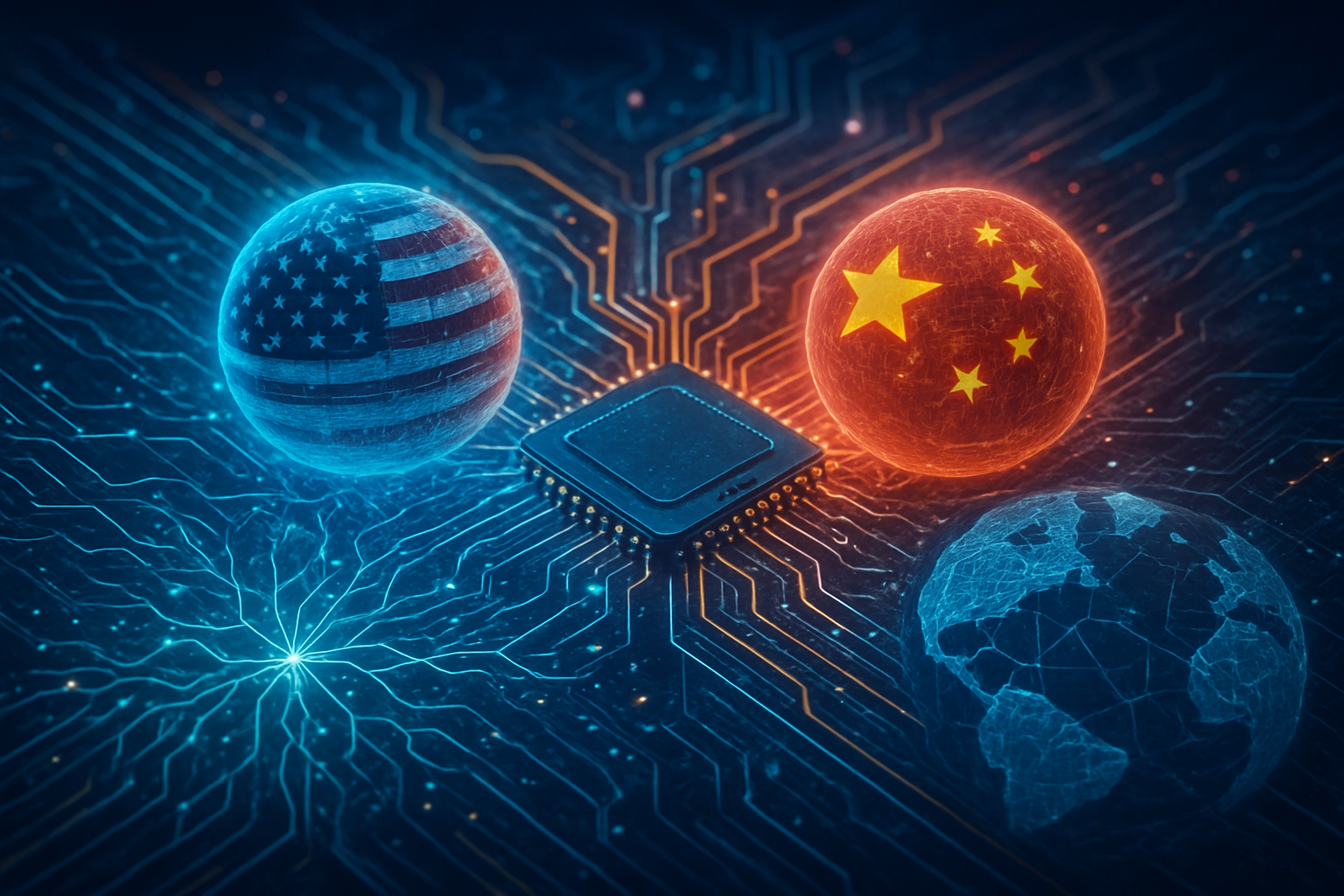
  • AI’s Fragile Foundation: Global Turmoil Threatens the Chip Supply Chain, Imperiling the Future of Artificial Intelligence

    AI’s Fragile Foundation: Global Turmoil Threatens the Chip Supply Chain, Imperiling the Future of Artificial Intelligence

    The relentless march of artificial intelligence, from generative models to autonomous systems, relies on a bedrock of advanced semiconductors. Yet, this critical foundation is increasingly exposed to the tremors of global instability, transforming semiconductor supply chain resilience from a niche industry concern into an urgent, strategic imperative. Global events—ranging from geopolitical tensions and trade restrictions to natural disasters and pandemics—have repeatedly highlighted the extreme fragility of a highly concentrated and interconnected chip manufacturing ecosystem. The resulting shortages, delays, and escalating costs directly obstruct technological progress, making the stability and growth of AI development acutely vulnerable.

    For the AI sector, the immediate significance of a robust and secure chip supply cannot be overstated. AI processors require sophisticated fabrication techniques and specialized components, making their supply chain particularly susceptible to disruption. As demand for AI chips is projected to surge dramatically—potentially tenfold between 2023 and 2033—any interruption in the flow of these vital components can cripple innovation, delay the training of next-generation AI models, and undermine national strategies dependent on AI leadership. The "Global Chip War," characterized by export controls and the drive for regional self-sufficiency, underscores how access to these critical technologies has become a strategic asset, directly impacting a nation's economic security and its capacity to advance AI. Without a resilient, diversified, and predictable semiconductor supply chain, the future of AI's transformative potential hangs precariously in the balance.

    The Technical Underpinnings: How Supply Chain Fragility Stifles AI Innovation

    The global semiconductor supply chain, a complex and highly specialized ecosystem, faces significant vulnerabilities that profoundly impact the availability and development of Artificial Intelligence (AI) chips. These vulnerabilities, ranging from raw material scarcity to geopolitical tensions, translate into concrete technical challenges for AI innovation, pushing the industry to rethink traditional supply chain models and sparking varied reactions from experts.

    The intricate nature of modern AI chips, particularly those used for advanced AI models, makes them acutely susceptible to disruptions. Technical implications manifest in several critical areas. Raw material shortages, such as silicon carbide, gallium nitride, and rare earth elements (with China holding a near-monopoly on 70% of mining and 90% of processing for rare earths), directly hinder component production. Furthermore, the manufacturing of advanced AI chips is highly concentrated, with a "triumvirate" of companies dominating over 90% of the market: NVIDIA (NASDAQ: NVDA) for chip designs, ASML (NASDAQ: ASML) for precision lithography equipment (especially Extreme Ultraviolet, EUV, essential for 5nm and 3nm nodes), and Taiwan Semiconductor Manufacturing Company (TSMC) (NYSE: TSM) for manufacturing facilities in Taiwan. This concentration creates strategic vulnerabilities, exacerbated by geopolitical tensions that lead to export restrictions on advanced technologies, limiting access to high-performance GPUs, ASICs, and High Bandwidth Memory (HBM) crucial for training complex AI models.

    The industry is also grappling with physical and economic constraints. As Moore's Law approaches its limits, shrinking transistors becomes exponentially more expensive and technically challenging. Building and operating advanced semiconductor fabrication plants (fabs) in regions like the U.S. can be significantly more costly (approximately 30% higher) than in Asian competitors, even with government subsidies like the CHIPS Act, making complete supply chain independence for the most advanced chips impractical. Beyond general chip shortages, the AI "supercycle" has led to targeted scarcity of specialized, cutting-edge components, such as the "substrate squeeze" for Ajinomoto Build-up Film (ABF), critical for advanced packaging architectures like CoWoS used in NVIDIA GPUs. These deeper bottlenecks delay product development and limit the sales rate of new AI chips. Compounding these issues is a severe and intensifying global shortage of skilled workers across chip design, manufacturing, operations, and maintenance, directly threatening to slow innovation and the deployment of next-generation AI solutions.

    Historically, the semiconductor industry relied on a "just-in-time" (JIT) manufacturing model, prioritizing efficiency and cost savings by minimizing inventory. While effective in stable environments, JIT proved highly vulnerable to global disruptions, leading to widespread chip shortages. In response, there's a significant shift towards "resilient supply chains" or a "just-in-case" (JIC) philosophy. This new approach emphasizes diversification, regionalization (supported by initiatives like the U.S. CHIPS Act and the EU Chips Act), buffer inventories, long-term contracts with foundries, and enhanced visibility through predictive analytics. The AI research community and industry experts have recognized the criticality of semiconductors, with an overwhelming consensus that without a steady supply of high-performance chips and skilled professionals, AI progress could slow considerably. Some experts, noting developments like a Chinese AI startup DeepSeek demonstrating powerful AI systems with fewer advanced chips, are also discussing a shift towards efficient resource use and innovative technical approaches, challenging the notion that "bigger chips equal bigger AI capabilities."

    The Ripple Effect: How Supply Chain Resilience Shapes the AI Competitive Landscape

    The volatility in the semiconductor supply chain has profound implications for AI companies, tech giants, and startups alike, reshaping competitive dynamics and strategic advantages. The ability to secure a consistent and advanced chip supply has become a primary differentiator, influencing market positioning and the pace of innovation.

    Tech giants with deep pockets and established relationships, such as Alphabet (NASDAQ: GOOGL), Amazon (NASDAQ: AMZN), Microsoft (NASDAQ: MSFT), and Meta Platforms (NASDAQ: META), are leveraging their significant resources to mitigate supply chain risks. These companies are increasingly designing their own custom AI chips (e.g., Google's TPUs, Amazon's Trainium/Inferentia) to reduce reliance on external suppliers like NVIDIA (NASDAQ: NVDA) and TSMC (NYSE: TSM). This vertical integration provides them with greater control over their hardware roadmap, optimizing chips specifically for their AI workloads and cloud infrastructure. Furthermore, their financial strength allows them to secure long-term contracts, make large pre-payments, and even invest in foundry capacity, effectively insulating them from some of the worst impacts of shortages. This strategy not only ensures a steady supply but also grants them a competitive edge in delivering cutting-edge AI services and products.

    For AI startups and smaller innovators, the landscape is far more challenging. Without the negotiating power or capital of tech giants, they are often at the mercy of market fluctuations, facing higher prices, longer lead times, and limited access to the most advanced chips. This can significantly slow their development cycles, increase their operational costs, and hinder their ability to compete with larger players who can deploy more powerful AI models faster. Some startups are exploring alternative strategies, such as optimizing their AI models for less powerful or older generation chips, or focusing on software-only solutions that can run on a wider range of hardware. However, for those requiring state-of-the-art computational power, the chip supply crunch remains a significant barrier to entry and growth, potentially stifling innovation from new entrants.

    The competitive implications extend beyond individual companies to the entire AI ecosystem. Companies that can demonstrate robust supply chain resilience, either through vertical integration, diversified sourcing, or strategic partnerships, stand to gain significant market share. This includes not only AI model developers but also cloud providers, hardware manufacturers, and even enterprises looking to deploy AI solutions. The ability to guarantee consistent performance and availability of AI-powered products and services becomes a key selling point. Conversely, companies heavily reliant on a single, vulnerable source may face disruptions to their product launches, service delivery, and overall market credibility. This has spurred a global race among nations and companies to onshore or nearshore semiconductor manufacturing, aiming to secure national technological sovereignty and ensure a stable foundation for their AI ambitions.

    Broadening Horizons: AI's Dependence on a Stable Chip Ecosystem

    The semiconductor supply chain's stability is not merely a logistical challenge; it's a foundational pillar for the entire AI landscape, influencing broader trends, societal impacts, and future trajectories. Its fragility has underscored how deeply interconnected modern technological progress is with geopolitical stability and industrial policy.

    In the broader AI landscape, the current chip scarcity highlights a critical vulnerability in the race for AI supremacy. As AI models become increasingly complex and data-hungry, requiring ever-greater computational power, the availability of advanced chips directly dictates the pace of innovation. A constrained supply means slower progress in areas like large language model development, autonomous systems, and advanced scientific AI. This fits into a trend where hardware limitations are becoming as significant as algorithmic breakthroughs. The "Global Chip War," characterized by export controls and nationalistic policies, has transformed semiconductors from commodities into strategic assets, directly tying a nation's AI capabilities to its control over chip manufacturing. This shift is driving substantial investments in domestic chip production, such as the U.S. CHIPS Act and the EU Chips Act, aimed at reducing reliance on East Asian manufacturing hubs.

    The impacts of an unstable chip supply chain extend far beyond the tech sector. Societally, it can lead to increased costs for AI-powered services, slower adoption of beneficial AI applications in healthcare, education, and energy, and even national security concerns if critical AI infrastructure relies on vulnerable foreign supply. For example, delays in developing and deploying AI for disaster prediction, medical diagnostics, or smart infrastructure could have tangible negative consequences. Potential concerns include the creation of a two-tiered AI world, where only well-resourced nations or companies can afford the necessary compute, exacerbating existing digital divides. Furthermore, the push for regional self-sufficiency, while addressing resilience, could also lead to inefficiencies and higher costs in the long run, potentially slowing global AI progress if not managed through international cooperation.

    Comparing this to previous AI milestones, the current situation is unique. While earlier AI breakthroughs, like the development of expert systems or early neural networks, faced computational limitations, these were primarily due to the inherent lack of processing power available globally. Today, the challenge is not just the absence of powerful chips, but the inaccessibility or unreliability of their supply, despite their existence. This marks a shift from a purely technological hurdle to a complex techno-geopolitical one. It underscores that continuous, unfettered access to advanced manufacturing capabilities is now as crucial as scientific discovery itself for advancing AI. The current environment forces a re-evaluation of how AI progress is measured, moving beyond just algorithmic improvements to encompass the entire hardware-software ecosystem and its geopolitical dependencies.

    Charting the Future: Navigating AI's Semiconductor Horizon

    The challenges posed by semiconductor supply chain vulnerabilities are catalyzing significant shifts, pointing towards a future where resilience and strategic foresight will define success in AI development. Expected near-term and long-term developments are focused on diversification, innovation, and international collaboration.

    In the near term, we can expect continued aggressive investment in regional semiconductor manufacturing capabilities. Countries are pouring billions into incentives to build new fabs, with companies like Intel (NASDAQ: INTC), Samsung (KRX: 005930), and TSMC (NYSE: TSM) being key beneficiaries of these subsidies. This push for "chip sovereignty" aims to create redundant supply sources and reduce geographic concentration. We will also see a continued trend of vertical integration among major AI players, with more companies designing custom AI accelerators optimized for their specific workloads, further diversifying the demand for specialized manufacturing. Furthermore, advancements in packaging technologies, such as chiplets and 3D stacking, will become crucial. These innovations allow for the integration of multiple smaller, specialized chips into a single package, potentially making AI systems more flexible and less reliant on a single, monolithic advanced chip, thus easing some supply chain pressures.

    Looking further ahead, the long-term future will likely involve a more distributed and adaptable global semiconductor ecosystem. This includes not only more geographically diverse manufacturing but also a greater emphasis on open-source hardware designs and modular chip architectures. Such approaches could foster greater collaboration, reduce proprietary bottlenecks, and make the supply chain more transparent and less prone to single points of failure. Potential applications on the horizon include AI models that are inherently more efficient, requiring less raw computational power, and advanced materials science breakthroughs that could lead to entirely new forms of semiconductors, moving beyond silicon to offer greater performance or easier manufacturing. Challenges that need to be addressed include the immense capital expenditure required for new fabs, the critical shortage of skilled labor, and the need for international standards and cooperation to prevent protectionist policies from stifling global innovation.

    Experts predict a future where AI development is less about a single "killer chip" and more about an optimized, resilient hardware-software co-design. This means a greater focus on software optimization, efficient algorithms, and the development of AI models that can scale effectively across diverse hardware platforms, including those built with slightly older or less cutting-edge process nodes. The emphasis will shift from pure computational brute force to smart, efficient compute. What experts predict is a continuous arms race between demand for AI compute and the capacity to supply it, with resilience becoming a permanent fixture in strategic planning. The development of AI-powered supply chain management tools will also play a crucial role, using predictive analytics to anticipate disruptions and optimize logistics.

    The Unfolding Story: AI's Future Forged in Silicon Resilience

    The journey of artificial intelligence is inextricably linked to the stability and innovation within the semiconductor industry. The recent global disruptions have unequivocally underscored that supply chain resilience is not merely an operational concern but a strategic imperative that will define the trajectory of AI development for decades to come.

    The key takeaways are clear: the concentrated nature of advanced semiconductor manufacturing presents a significant vulnerability for AI, demanding a pivot from "just-in-time" to "just-in-case" strategies. This involves massive investments in regional fabrication, vertical integration by tech giants, and a renewed focus on diversifying suppliers and materials. For AI companies, access to cutting-edge chips is no longer a given but a hard-won strategic advantage, influencing everything from product roadmaps to market competitiveness. The broader significance lies in the recognition that AI's progress is now deeply entwined with geopolitical stability and industrial policy, transforming semiconductors into strategic national assets.

    This development marks a pivotal moment in AI history, shifting the narrative from purely algorithmic breakthroughs to a holistic understanding of the entire hardware-software-geopolitical ecosystem. It highlights that the most brilliant AI innovations can be stalled by a bottleneck in a distant factory or a political decision, forcing the industry to confront its physical dependencies. The long-term impact will be a more diversified, geographically distributed, and potentially more expensive semiconductor supply chain, but one that is ultimately more robust and less susceptible to single points of failure.

    In the coming weeks and months, watch for continued announcements of new fab construction, particularly in the U.S. and Europe, alongside further strategic partnerships between AI developers and chip manufacturers. Pay close attention to advancements in chiplet technology and new materials, which could offer alternative pathways to performance. Also, monitor government policies regarding export controls and subsidies, as these will continue to shape the global landscape of AI hardware. The future of AI, a future rich with transformative potential, will ultimately be forged in the resilient silicon foundations we build today.

    This content is intended for informational purposes only and represents analysis of current AI developments.

    TokenRing AI delivers enterprise-grade solutions for multi-agent AI workflow orchestration, AI-powered development tools, and seamless remote collaboration platforms.
    For more information, visit https://www.tokenring.ai/.