Tag: Surveillance

  • Bihar Greenlights Massive AI-Ready Surveillance Grid for Jails: A New Era for Prison Security and Scrutiny

    Bihar Greenlights Massive AI-Ready Surveillance Grid for Jails: A New Era for Prison Security and Scrutiny

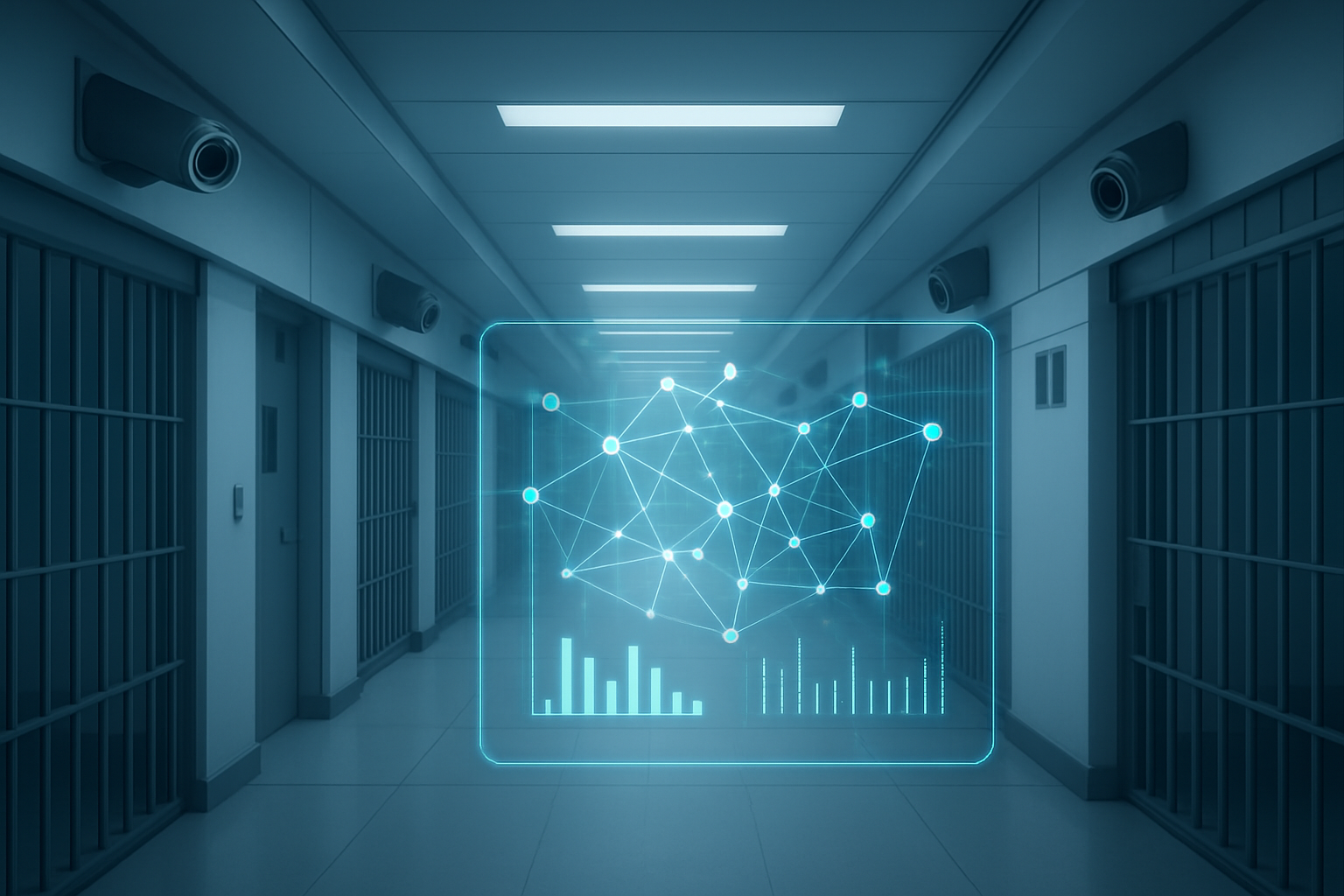
    Patna, Bihar – December 4, 2025 – In a landmark decision poised to redefine correctional facility management, the Bihar government today approved an ambitious plan to install over 9,000 state-of-the-art CCTV cameras across all 53 jails in the state. This colossal undertaking, sanctioned with a budget of Rs 155.38 crore, signals a significant leap towards modernizing prison security and enhancing transparency through large-scale surveillance technology. The move places Bihar at the forefront of adopting advanced monitoring systems within its carceral infrastructure, aiming to curtail illicit activities, improve inmate management, and ensure greater accountability within the prison system.

    The comprehensive project, greenlit by Deputy Chief Minister Samrat Choudhary, is not merely about deploying cameras but establishing a robust, integrated surveillance ecosystem. It encompasses the installation of 9,073 new CCTV units, coupled with dedicated software, extensive field infrastructure, and a high-speed fiber optic network for seamless data transmission. With provisions for local monitoring systems and a five-year commitment to operation and maintenance manpower, Bihar is investing in a long-term solution designed to transform its jails into highly monitored environments. This initiative is expected to kickstart immediately, with implementation slated for the financial year 2025-26, marking a pivotal moment in the state's approach to law enforcement and correctional administration.

    Technical Deep Dive: Crafting a Modern Panopticon

    The Bihar government's initiative represents a significant technical upgrade from traditional, often piecemeal, surveillance methods in correctional facilities. The deployment of 9,073 new CCTV cameras, integrated with existing systems in eight jails, signifies a move towards a unified and comprehensive monitoring network. At its core, the project leverages a robust fiber optic network, a critical component for ensuring high-bandwidth, low-latency transmission of video data from thousands of cameras simultaneously. This fiber backbone is essential for handling the sheer volume of data generated, especially if high-definition or 4K cameras are part of the deployment, which is increasingly standard in modern surveillance.

    Unlike older analog systems that required extensive wiring and suffered from signal degradation over distance, a fiber-based IP surveillance system offers superior image quality, scalability, and flexibility. The dedicated software component will likely be a sophisticated Video Management System (VMS) capable of centralized monitoring, recording, archival, and potentially, rudimentary analytics. Such systems allow for granular control over camera feeds, event logging, and efficient data retrieval. The inclusion of "field infrastructure" suggests purpose-built enclosures, power supply units, and mounting solutions designed to withstand the challenging environment of a prison. This large-scale, networked approach differs markedly from previous installations that might have involved standalone DVRs or NVRs with limited connectivity, paving the way for future AI integration and more proactive security measures. Initial reactions from security experts emphasize the scale, noting that such an extensive deployment requires meticulous planning for cybersecurity, data storage, and personnel training to be truly effective.

    Market Implications: A Boon for Surveillance Tech Giants

    The Bihar government's substantial investment of Rs 155.38 crore in prison surveillance presents a significant market opportunity for a range of technology companies. Hardware manufacturers specializing in CCTV cameras, network video recorders (NVRs), and related infrastructure stand to benefit immensely. Global giants like Hikvision (SHE: 002415), Dahua Technology (SHE: 002236), Axis Communications (a subsidiary of Canon Inc. – TYO: 7751), and Bosch Security Systems (a division of Robert Bosch GmbH) are prime candidates to supply the thousands of cameras and associated networking equipment required for such a large-scale deployment. Their established presence in the Indian market and expertise in large-scale government projects give them a competitive edge.

    Beyond hardware, companies specializing in Video Management Systems (VMS) and network infrastructure will also see increased demand. Software providers offering intelligent video analytics, though not explicitly detailed in the initial announcement, represent a future growth area as the system matures. The competitive landscape for major AI labs and tech companies might not be immediately disrupted, as the initial phase focuses on core surveillance infrastructure. However, for startups and mid-sized firms specializing in AI-powered security solutions, this project could serve as a blueprint for similar deployments, opening doors for partnerships or future contracts to enhance the system with advanced analytics. The Bihar State Electronics Development Corporation Ltd (BELTRON), which provided the revised detailed estimate, will likely play a crucial role in procurement and project management, potentially partnering with multiple vendors to fulfill the technological requirements.

    Wider Significance: Balancing Security with Scrutiny

    The deployment of over 9,000 CCTV cameras in Bihar's jails fits squarely into a broader global trend of increasing reliance on surveillance technology for public safety and security. This initiative highlights the growing acceptance, and often necessity, of digital oversight in environments traditionally prone to opacity. In the broader AI landscape, while the initial phase focuses on raw video capture, the sheer volume of data generated creates a fertile ground for future AI integration, particularly in video analytics for anomaly detection, crowd monitoring, and even predictive security.

    The impacts are multifaceted. Positively, such extensive surveillance can significantly enhance security, deterring illegal activities like drug trafficking, contraband smuggling, and inmate violence. It can also improve accountability, providing irrefutable evidence for investigations into staff misconduct or human rights violations. However, the scale of this deployment raises significant concerns regarding privacy, data security, and the potential for misuse. Critics often point to the "panopticon effect," where constant surveillance can infringe on the limited privacy rights of inmates and staff, potentially leading to psychological distress or a chilling effect on legitimate activities. Ethical considerations around continuous monitoring, data storage protocols, access controls, and the potential for algorithmic bias (if AI analytics are introduced) must be rigorously addressed. This initiative, while a milestone for Bihar's prison modernization, also serves as a critical case study for the ongoing global debate about the appropriate balance between security imperatives and fundamental human rights in an increasingly surveilled world.

    The Road Ahead: AI Integration and Ethical Challenges

    Looking ahead, the Bihar government's extensive CCTV network lays the groundwork for significant future developments in prison management. The most immediate expected evolution is the integration of advanced AI-powered video analytics. Near-term applications could include automated anomaly detection, flagging unusual movements, gatherings, or potential altercations without constant human oversight. Long-term, the system could incorporate facial recognition for inmate identification and tracking, although this would require careful ethical and legal consideration, given the sensitive nature of correctional facilities. Behavior analysis, such as detecting signs of distress or aggression, could also be on the horizon, enabling proactive interventions.

    Potential applications extend to optimizing resource allocation, understanding movement patterns within jails to improve facility design, and even providing data for rehabilitation programs by identifying behavioral trends. However, several challenges need to be addressed. The enormous amount of video data generated will require robust storage solutions and sophisticated processing capabilities. Ensuring the cybersecurity of such a vast network is paramount to prevent breaches or tampering. Furthermore, the accuracy and bias of AI algorithms, particularly in diverse populations, will be a critical concern if advanced analytics are implemented. Experts predict a gradual move towards more intelligent systems, but emphasize that human oversight, clear ethical guidelines, and strong legal frameworks will be indispensable to prevent the surveillance technology from becoming a tool for oppression rather than enhanced security and management.

    A New Dawn for Prison Oversight in Bihar

    The Bihar government's approval of over 9,000 CCTV cameras across its jails marks a monumental shift in the state's approach to correctional facility management. This ambitious Rs 155.38 crore project, sanctioned on December 4, 2025, represents not just an upgrade in security infrastructure but a strategic move towards a more transparent and technologically advanced prison system. The key takeaways include the sheer scale of the deployment, the commitment to a fiber-optic network and dedicated software, and the long-term investment in operation and maintenance.

    This development holds significant historical importance in the context of AI and surveillance, showcasing a growing trend of integrating sophisticated monitoring solutions into public infrastructure. While promising enhanced security, improved management, and greater accountability, it also brings to the fore critical questions about privacy, data ethics, and the potential for misuse in highly controlled environments. As the project rolls out in the coming weeks and months, all eyes will be on its implementation, the effectiveness of the new systems, and how Bihar navigates the complex ethical landscape of pervasive surveillance. The success of this initiative could serve as a blueprint for other regions, solidifying the role of advanced technology in modernizing correctional facilities while simultaneously setting precedents for responsible deployment and oversight.


    This content is intended for informational purposes only and represents analysis of current AI developments.

    TokenRing AI delivers enterprise-grade solutions for multi-agent AI workflow orchestration, AI-powered development tools, and seamless remote collaboration platforms.
    For more information, visit https://www.tokenring.ai/.

  • Bridging Trust and Tech: UP CM Emphasizes Modern Policing for IPS Officers

    Bridging Trust and Tech: UP CM Emphasizes Modern Policing for IPS Officers

    Lucknow, Uttar Pradesh – December 1, 2025 – In a pivotal address delivered today, Uttar Pradesh Chief Minister Yogi Adityanath met with 23 trainee officers from the Indian Police Service (IPS) 2023 and 2024 batches at his official residence in Lucknow. The Chief Minister underscored a dual imperative for modern policing: the paramount importance of building public trust and the strategic utilization of cutting-edge technology. This directive highlights a growing recognition within law enforcement of the need to balance human-centric approaches with technological advancements to address the evolving landscape of crime and public safety.

    CM Adityanath's guidance comes at a critical juncture where technological innovation is rapidly reshaping law enforcement capabilities. His emphasis on "smart policing"—being strict yet sensitive, modern yet mobile, alert and accountable, and both tech-savvy and kind—reflects a comprehensive vision for a police force that is both effective and trusted by its citizens. The meeting serves as a clear signal that Uttar Pradesh is committed to integrating advanced tools and ethical practices into its policing framework, setting a precedent for other states grappling with similar challenges.

    The Technological Shield: Digital Forensics, Cyber Tools, and Smart Surveillance

    Modern policing is undergoing a profound transformation, moving beyond traditional methods to embrace sophisticated digital forensics, advanced cyber tools, and pervasive surveillance systems. These innovations are designed to enhance crime prevention, accelerate investigations, and improve public safety, marking a significant departure from previous approaches.

    Digital Forensics has become a cornerstone of criminal investigations. Historically, digital evidence recovery was manual and limited. Today, automated forensic tools, cloud forensics instruments, and mobile forensics utilities process vast amounts of data from smartphones, laptops, cloud platforms, and even vehicle data. Companies like ADF Solutions Inc., Magnet Forensics, and Cellebrite provide software that streamlines evidence gathering and analysis, often leveraging AI and machine learning to rapidly classify media and identify patterns. This significantly reduces investigation times from months to hours, making it a "pivotal arm" of modern investigations.

    Cyber Tools are equally critical in combating the intangible and borderless nature of cybercrime. Previous approaches struggled to trace digital footprints; now, law enforcement utilizes digital forensics software (e.g., EnCase, FTK), network analysis tools (e.g., Wireshark), malware analysis tools, and sophisticated social media/Open Source Intelligence (OSINT) analysis tools like Maltego and Paliscope. These tools enable proactive intelligence gathering, combating complex threats like ransomware and online fraud. The Uttar Pradesh government has actively invested in this area, establishing cyber units in all 75 districts and cyber help desks in 1,994 police stations, aligning with new criminal laws effective from July 2024.

    Surveillance Technologies have also advanced dramatically. Intelligent surveillance systems now leverage AI-powered cameras, facial recognition technology (FRT), drones, Automatic License Plate Readers (ALPRs), and body-worn cameras with real-time streaming. These systems, often feeding into Real-Time Crime Centers (RTCCs), move beyond mere recording to active analysis and identification of potential threats. AI-powered cameras can identify faces, scan license plates, detect suspicious activity, and trigger alerts. Drones provide aerial surveillance for rapid response and crime scene investigation, while ALPRs track vehicles. While law enforcement widely embraces these tools for their effectiveness, civil liberties advocates express concerns regarding privacy, bias (FRT systems can be less accurate for people of color), and the lack of robust oversight.

    AI's Footprint: Competitive Landscape and Market Disruption

    The increasing integration of technology into policing is creating a burgeoning market, presenting significant opportunities and competitive implications for a diverse range of companies, from established tech giants to specialized AI firms. The global policing technologies market is projected to grow substantially, with the AI in predictive policing market alone expected to reach USD 157 billion by 2034.

    Companies specializing in digital forensics, such as ADF Solutions Inc., Magnet Forensics, and Cellebrite, are at the forefront, providing essential tools for evidence recovery and analysis. In the cyber tools domain, cybersecurity powerhouses like CrowdStrike (NASDAQ: CRWD), Palo Alto Networks (NASDAQ: PANW), and Mandiant (FireEye) (NASDAQ: GOOGL) offer advanced threat detection and incident response solutions, with Microsoft (NASDAQ: MSFT) also providing comprehensive cybersecurity offerings.

    The surveillance market sees key players like Axon (NASDAQ: AXON), renowned for its body-worn cameras and cloud-based evidence management software, and Motorola Solutions (NYSE: MSI), which provides end-to-end software solutions linking emergency dispatch to field response. Companies like LiveView Technologies (LVT) and WCCTV USA offer mobile surveillance units, while tech giants like Amazon (NASDAQ: AMZN) have entered the space through partnerships with law enforcement via its Ring platform.

    This market expansion is leading to strategic partnerships and acquisitions, as companies seek to build comprehensive ecosystems. However, the involvement of AI and tech giants in policing also invites significant ethical and societal scrutiny, particularly concerning privacy, bias, and civil liberties. Companies that prioritize ethical AI development, bias mitigation, and transparency are likely to gain a strategic advantage, as public trust becomes a critical differentiator. The shift towards integrated, cloud-native, and scalable platforms is disrupting legacy, siloed systems, demanding interoperability and continuous innovation.

    The Broader Canvas: AI, Ethics, and Societal Implications

    The integration of AI and advanced technology into policing reflects a broader societal trend where sophisticated algorithms are applied to analyze vast datasets and automate tasks. This shift is poised to profoundly impact society, offering both promises of enhanced public safety and substantial concerns regarding individual rights and ethical implications.

    Impacts: AI can significantly enhance efficiency, optimize resource allocation, and improve crime prevention and investigation by rapidly processing data and identifying patterns. Predictive policing, for instance, can theoretically enable proactive crime deterrence. However, concerns about algorithmic bias are paramount. If AI systems are trained on historical data reflecting discriminatory policing practices, they can perpetuate and amplify existing inequalities, leading to disproportionate targeting of certain communities. Facial recognition technology, for example, has shown higher misidentification rates for people of color, as highlighted by the NAACP.

    Privacy and Civil Liberties are also at stake. Mass surveillance capabilities, through pervasive cameras, social media monitoring, and data aggregation, raise alarms about the erosion of personal privacy and the potential for a "chilling effect" on free speech and association. The "black-box" nature of some AI algorithms further complicates matters, making it difficult to scrutinize decisions and ensure due process. The potential for AI-generated police reports, while efficient, raises questions about reliability and factual accuracy.

    This era of AI in policing represents a significant leap from previous data-driven policing initiatives like CompStat. While CompStat aggregated data, modern AI provides far more complex pattern recognition, real-time analysis, and predictive power, moving from human-assisted data analysis to AI-driven insights that actively shape operational strategies. The ethical landscape demands a delicate balance between security and individual rights, necessitating robust governance structures, transparent AI development, and a "human-in-the-loop" approach to maintain accountability.

    The Horizon: Future Developments and Expert Predictions

    The trajectory of AI and technology in policing points towards a future where these tools become increasingly sophisticated and integrated, promising more efficient and proactive law enforcement, yet simultaneously demanding rigorous ethical oversight.

    In the near-term, AI will become an indispensable tool for processing vast digital data, managing growing workloads, and accelerating case resolution. This includes AI-powered tools that quickly identify key evidence from terabytes of text, audio, and video. Mobile technology will further empower officers with real-time information access, while AI-enhanced software will make surveillance devices more adept at real-time criminal activity identification.

    Long-term developments foresee the continuous evolution of AI and machine learning, leading to more accurate systems that interpret context and reduce false alarms. Multimodal AI technologies, processing video, acoustic, biometric, and geospatial data, will enhance forensic investigations. Robotics and autonomous systems, such as patrol robots and drones, are expected to support hazardous patrols and high-crime area monitoring. Edge computing will enable on-device data processing, reducing latency. Quantum computing, though nascent, is anticipated to offer practical applications within the next decade, particularly for quantum encryption to protect sensitive data.

    Potential applications on the horizon include AI revolutionizing digital forensics through automated data analysis, fraud detection, and even deepfake detection tools like Magnet Copilot. In cyber tools, AI will be critical for investigating complex cybercrimes, proactive threat detection, and even countering AI-enabled criminal activities. For surveillance, advanced predictive policing algorithms will forecast crime hotspots with greater accuracy, while enhanced facial recognition and biometric systems will aid identification. Drones will offer more sophisticated aerial reconnaissance, and Real-Time Crime Centers (RTCCs) will integrate diverse data sources for dynamic situational awareness.

    However, significant challenges persist. Algorithmic bias and discrimination, privacy concerns, the "black-box" nature of some AI, and the need for robust human oversight are critical issues. The high cost of adoption and the evolving nature of AI-enabled crimes also pose hurdles. Experts predict a future of augmented human capabilities, where AI acts as a "teammate," processing data and making predictions faster than humans, freeing officers for nuanced judgments. This will necessitate the development of clear ethical frameworks, robust regulations, community engagement, and a continuous shift towards proactive, intelligence-driven policing.

    A New Era: Balancing Innovation with Integrity

    The growing role of technology in modern policing, particularly the integration of AI, heralds a new era for law enforcement. As Uttar Pradesh Chief Minister Yogi Adityanath aptly advised IPS officers, the future of policing hinges on a delicate but essential balance: harnessing the immense power of technological innovation while steadfastly building and maintaining public trust.

    The key takeaways from this evolving landscape are clear: AI offers unprecedented capabilities for enhancing efficiency, accelerating investigations, and enabling proactive crime prevention. From advanced digital forensics and sophisticated cyber tools to intelligent surveillance and predictive analytics, these technologies are fundamentally reshaping how law enforcement operates. This represents a significant milestone in both AI history and the evolution of policing, moving beyond reactive measures to intelligence-led strategies.

    The long-term impact promises more effective and responsive law enforcement models, potentially leading to safer communities. However, this transformative potential is inextricably linked to addressing profound ethical concerns. The dangers of algorithmic bias, the erosion of privacy, the "black-box" problem of AI transparency, and the critical need for human oversight demand continuous vigilance and robust frameworks. The ethical implications are as significant as the technological benefits, requiring a steadfast commitment to fairness, accountability, and the protection of civil liberties.

    In the coming weeks and months, watch for evolving regulations and legislation aimed at governing AI in law enforcement, increased demands for accountability and transparency mandates, and further development of ethical guidelines and auditing practices. The scrutiny of AI-generated police reports will intensify, and efforts towards community engagement and trust-building initiatives will become even more crucial. Ultimately, the success of AI in policing will be measured not just by its technological prowess, but by its ability to serve justice and public safety without compromising the fundamental rights and values of a democratic society.


    This content is intended for informational purposes only and represents analysis of current AI developments.

    TokenRing AI delivers enterprise-grade solutions for multi-agent AI workflow orchestration, AI-powered development tools, and seamless remote collaboration platforms.
    For more information, visit https://www.tokenring.ai/.

  • AI, Cyber, and Autonomous Systems: The Future Battleground Anticipated at the Northeast Indiana Defense Summit

    AI, Cyber, and Autonomous Systems: The Future Battleground Anticipated at the Northeast Indiana Defense Summit

    As the global geopolitical landscape continues to evolve with unprecedented speed, the role of cutting-edge technology in national security and defense has never been more critical. The upcoming 4th Annual Northeast Indiana Defense Summit, slated for November 11-12, 2025, is poised to be a pivotal forum where leaders, policymakers, and industry experts will delve into the transformative impact of emerging technologies, including Artificial Intelligence (AI), advanced cybersecurity, and sophisticated surveillance systems. This gathering is expected to underscore Indiana's growing significance in bolstering America's defense industrial base and shaping the future of warfare, particularly in the face of intense technological competition.

    The summit's agenda, building on themes from previous years, is expected to emphasize the strategic imperative for the United States to maintain its technological edge. Discussions will likely revolve around leveraging these innovations to enhance military readiness, streamline operations, and develop next-generation capabilities essential for national security. The focus will not merely be on incremental improvements but on foundational shifts driven by AI and its related domains, promising a new era of defense where data-driven insights and autonomous actions play a central role.

    The Technological Vanguard: AI, Cyber, and Advanced Surveillance Redefine Defense

    The advancements in AI, cybersecurity, and advanced surveillance represent a paradigm shift from traditional defense methodologies, offering capabilities that were once the realm of science fiction. These technologies empower defense agencies to operate with unparalleled speed, precision, and efficiency across multiple domains.

    Artificial Intelligence (AI) in Action: AI is rapidly reshaping intelligence gathering, autonomous operations, and strategic decision-making. In intelligence, AI algorithms now process exabytes of data—from satellite imagery and global communications to social media—at speeds unattainable by human analysts. This enables rapid pattern recognition, anomaly detection, and target identification, significantly enhancing situational awareness. Project Maven, for example, aims to integrate AI tools into intelligence systems for object recognition and tracking. Autonomous systems, from unmanned aerial vehicles (UAVs) and robotic ground vehicles to " loyal wingmen" and drone swarms, are performing reconnaissance, logistics, and even combat operations with reduced human intervention, especially in high-risk environments. Lethal Autonomous Weapon Systems (LAWS), while ethically debated, are already deployed in defensive capacities like the Iron Dome, and their offensive capabilities are rapidly advancing. For decision-making, AI augments human commanders by providing real-time, data-driven insights, optimizing mission planning, and predicting equipment failures, thereby accelerating the military decision-making process. Unlike previous static, rule-based systems, AI's ability to learn, adapt, and operate at scale marks a fundamental departure, enabling proactive defense against evolving threats.

    Cybersecurity's Evolving Shield: Modern cybersecurity has transcended simple perimeter defenses, embracing dynamic and predictive strategies. AI and Machine Learning (ML) are now foundational, powering platforms that analyze billions of data points in real-time to detect subtle threat patterns and anomalous behaviors, often identifying stealthy attacks missed by human analysts. Systems like Microsoft's (NASDAQ: MSFT) Security Copilot leverage Large Language Models (LLMs) to summarize incidents and generate response scripts, drastically reducing investigation times. The "Zero Trust Architecture" (ZTA) paradigm assumes no entity, inside or outside the network, is inherently trustworthy, requiring continuous verification and least privilege access. This contrasts sharply with older, perimeter-focused models and is vital for securing dispersed, cloud-based operations. Furthermore, Cyber Threat Intelligence (CTI) is moving beyond reactive analysis to provide early warnings and proactive defense by understanding adversary tactics, techniques, and procedures (TTPs). Looking ahead, Quantum Cryptography (QC) and Post-Quantum Cryptography (PQC) are emerging to "future-proof" sensitive communications against the existential threat posed by future quantum computers, a significant leap from current encryption methods vulnerable to quantum attacks.

    Advanced Surveillance Systems: Surveillance has evolved from static cameras and human observers to complex digital networks leveraging AI and advanced sensors. AI-powered systems provide real-time monitoring and anomaly detection across vast data streams from CCTV, drones, and satellites. Facial recognition and other biometric technologies (like gait recognition) rapidly identify individuals in diverse environments, crucial for border control and counter-terrorism. Autonomous drones and unmanned systems offer high-precision reconnaissance and intelligence gathering, even collaborating in swarms to cover large areas. This represents a massive leap from traditional, human-intensive surveillance, offering automated analysis and predictive capabilities that significantly increase coverage and efficiency while reducing human resource needs.

    Reshaping the Defense Industrial Complex

    These technological advancements carry profound implications for the defense industrial complex, influencing established giants, tech behemoths, and agile startups alike.

    Traditional defense contractors such as Lockheed Martin (NYSE: LMT), Raytheon Technologies (NYSE: RTX), and Northrop Grumman (NYSE: NOC) stand to benefit immensely, provided they effectively integrate these emerging technologies into their existing platforms and develop new solutions. Their long-standing relationships with defense agencies and expertise in complex systems position them well to become prime integrators of AI, cyber, and surveillance capabilities. The competitive landscape, however, is being reshaped by tech giants like Microsoft (NASDAQ: MSFT), IBM (NYSE: IBM), and Google (NASDAQ: GOOGL) (through its various government and defense initiatives), which bring deep expertise in AI, cloud computing, and cybersecurity. These companies are increasingly vying for lucrative defense contracts, offering advanced software and data analytics solutions that complement traditional hardware.

    This shift also creates significant opportunities for specialized AI and cybersecurity startups. These agile firms, often with groundbreaking intellectual property, can disrupt existing product lines by offering innovative solutions that are faster, more efficient, and more adaptable. Partnerships and acquisitions between large defense contractors and these smaller, innovative companies are becoming increasingly common, as larger entities seek to rapidly acquire cutting-edge capabilities. The market positioning will increasingly favor companies that can demonstrate robust, secure, and ethically sound AI and cyber solutions, leading to a race for talent and intellectual property in these critical areas.

    Broader Implications and Ethical Crossroads

    The integration of AI, advanced cybersecurity, and sophisticated surveillance systems into national defense extends far beyond technological upgrades; it signals a fundamental reorientation of military doctrine, geopolitical power dynamics, and societal norms.

    These developments fit into a broader AI landscape characterized by intense global competition, particularly between the U.S. and adversaries like China, to achieve AI supremacy. The ability to leverage these technologies effectively will determine future military advantage and influence global stability. The impacts are vast: from more precise and efficient military operations to potentially reducing human casualties in combat scenarios through autonomous systems. However, this also ushers in significant concerns. The ethical implications of Lethal Autonomous Weapon Systems (LAWS) are paramount, raising questions about accountability, the dehumanization of warfare, and the potential for unintended escalation. Advanced surveillance systems, while enhancing security, pose considerable risks to privacy and civil liberties through mass data collection, facial recognition, and potential for misuse or discriminatory practices. Cybersecurity ethics also come into play, balancing the need for robust defense with the protection of individual privacy and the complexities of offensive cyber operations. These developments demand robust policy frameworks, transparent governance, and international dialogue to ensure responsible and ethical deployment, aligning with democratic values and human rights.

    The Horizon: Anticipating Future Developments

    The trajectory of AI, cybersecurity, and advanced surveillance in national security points towards even more sophisticated and integrated systems in the near and long term.

    In the near term, we can expect deeper integration of AI across all military functions, leading to more autonomous decision support systems and highly resilient, self-healing cyber defenses. The maturation and widespread deployment of Zero Trust Architectures will continue, becoming the standard for securing critical infrastructure. Post-Quantum Cryptography will move from standardization to widespread implementation, securing data against future quantum threats. Long-term developments could include fully autonomous and adaptive swarms of air, land, and sea systems capable of complex collaborative missions; advanced human-machine teaming where AI acts as an intelligent co-pilot in every aspect of defense; and potentially even quantum internet for ultra-secure military communications.

    However, significant challenges remain. Ethical governance of AI, especially concerning LAWS and surveillance, will require continuous debate and international consensus. Addressing the talent gap in AI and cybersecurity expertise within defense agencies is crucial. Ensuring the security and integrity of complex supply chains, which are increasingly targeted by adversaries, will be paramount. Experts predict a continued acceleration of these technologies, emphasizing the need for continuous innovation, robust testing, and a focus on resilience to adapt to an ever-evolving threat landscape.

    A New Era of Defense: The Unfolding Story

    The discussions anticipated at the Northeast Indiana Defense Summit on November 11-12, 2025, underscore a pivotal moment in national security. The convergence of AI, advanced cybersecurity, and sophisticated surveillance systems is not merely enhancing existing capabilities; it is fundamentally redefining the nature of defense, intelligence, and warfare itself.

    The key takeaway is clear: technological supremacy in these domains is no longer an advantage but a necessity for national security. This development marks a new era, shifting the emphasis from hardware dominance to superiority in data, intelligence, and adaptive autonomous systems. The race for technological leadership is intense, demanding continuous adaptation, strategic investment, and a proactive approach to both innovation and ethical governance. What to watch for in the coming weeks and months includes further policy debates on AI ethics, new strategic partnerships between defense and tech sectors, breakthroughs in quantum computing and AI, and the practical implementation of these advanced systems in military exercises and deployments. The future of national security will be written by those who master these emerging technologies responsibly and effectively.


    This content is intended for informational purposes only and represents analysis of current AI developments.

    TokenRing AI delivers enterprise-grade solutions for multi-agent AI workflow orchestration, AI-powered development tools, and seamless remote collaboration platforms.
    For more information, visit https://www.tokenring.ai/.