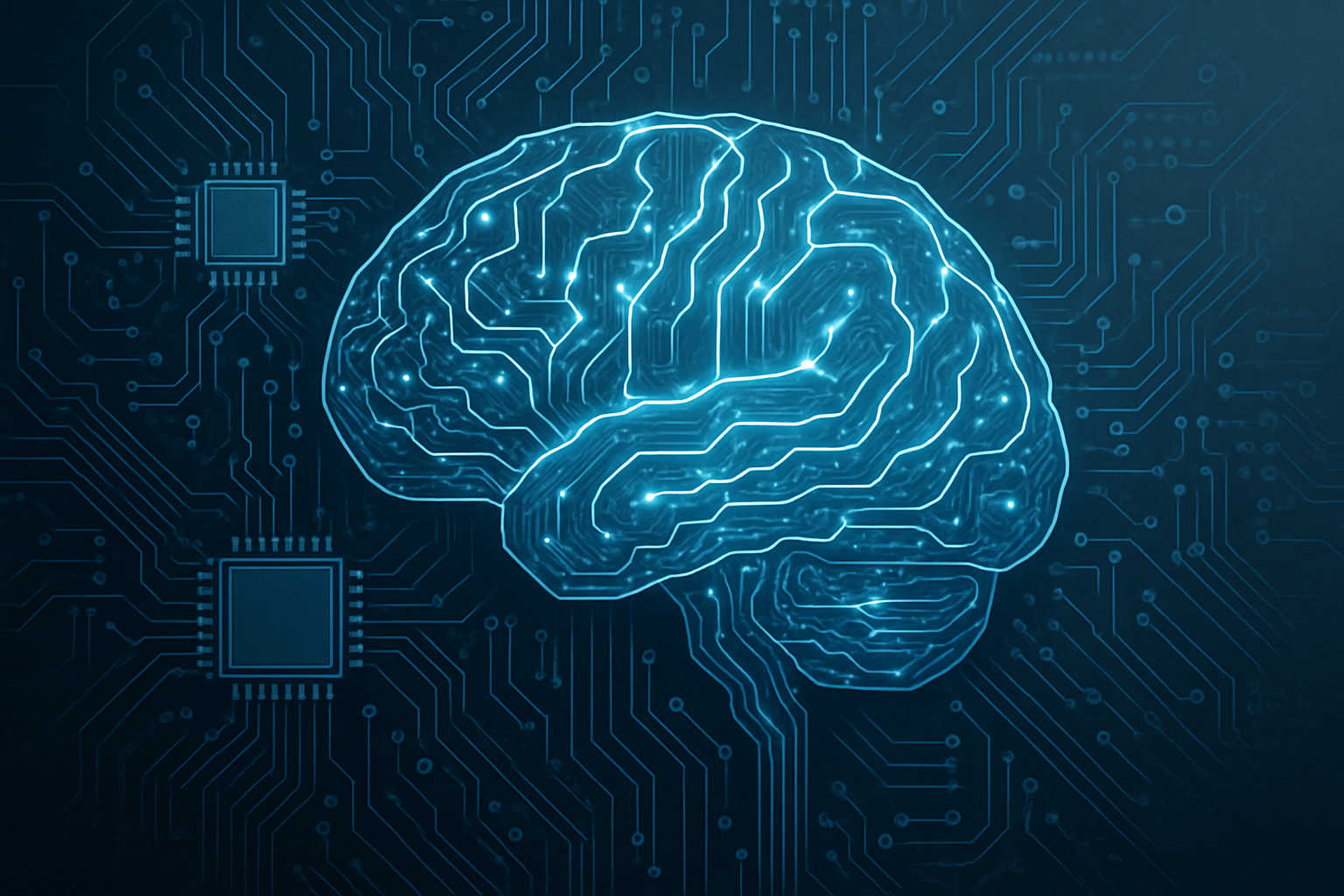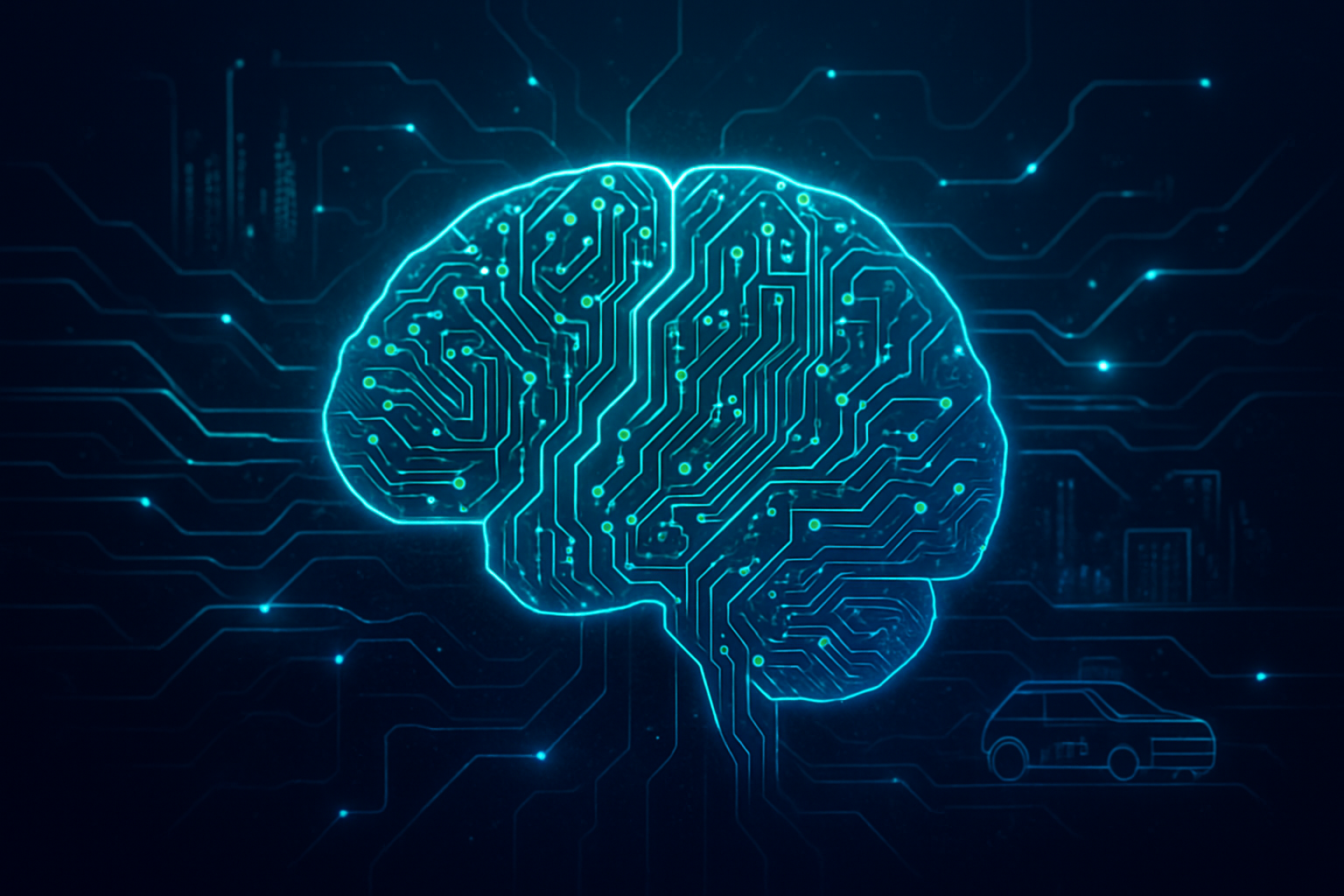
In a significant leap forward for artificial intelligence, neuromorphic computing is rapidly transitioning from a theoretical concept to a tangible reality, promising to revolutionize how AI hardware is designed and operates. This brain-inspired approach fundamentally rethinks traditional computing architectures, aiming to overcome the long-standing limitations of the Von Neumann bottleneck that have constrained the efficiency and scalability of modern AI systems. By mimicking the human brain's remarkable parallelism, energy efficiency, and adaptive learning capabilities, neuromorphic chips are set to usher in a new era of intelligent, real-time, and sustainable AI.
The immediate significance of neuromorphic computing lies in its potential to accelerate AI development and enable entirely new classes of intelligent, efficient, and adaptive systems. As AI workloads, particularly those involving large language models and real-time sensory data processing, continue to demand exponential increases in computational power, the energy consumption and latency of traditional hardware have become critical bottlenecks. Neuromorphic systems offer a compelling solution by integrating memory and processing, allowing for event-driven, low-power operations that are orders of magnitude more efficient than their conventional counterparts.
A Deep Dive into Brain-Inspired Architectures and Technical Prowess
At the core of neuromorphic computing are architectures that directly draw inspiration from biological neural networks, primarily relying on Spiking Neural Networks (SNNs) and in-memory processing. Unlike conventional Artificial Neural Networks (ANNs) that use continuous activation functions, SNNs communicate through discrete, event-driven "spikes," much like biological neurons. This asynchronous, sparse communication is inherently energy-efficient, as computation only occurs when relevant events are triggered. SNNs also leverage temporal coding, encoding information not just by the presence of a spike but also by its precise timing and frequency, making them adept at processing complex, real-time data. Furthermore, they often incorporate biologically inspired learning mechanisms like Spike-Timing-Dependent Plasticity (STDP), enabling on-chip learning and adaptation.
A fundamental departure from the Von Neumann architecture is the co-location of memory and processing units in neuromorphic systems. This design directly addresses the "memory wall" or Von Neumann bottleneck by minimizing the constant, energy-consuming shuttling of data between separate processing units (CPU/GPU) and memory units. By integrating memory and computation within the same physical array, neuromorphic chips allow for massive parallelism and highly localized data processing, mirroring the distributed nature of the brain. Technologies like memristors are being explored to enable this, acting as resistors with memory that can store and process information, effectively mimicking synaptic plasticity.
Leading the charge in hardware development are tech giants like Intel (NASDAQ: INTC) and IBM (NYSE: IBM). Intel's Loihi series, for instance, showcases significant advancements. Loihi 1, released in 2018, featured 128 neuromorphic cores, supporting up to 130,000 synthetic neurons and 130 million synapses, with typical power consumption under 1.5 W. Its successor, Loihi 2 (released in 2021), fabricated using a pre-production 7 nm process, dramatically increased capabilities to 1 million neurons and 120 million synapses per chip, while achieving up to 10x faster spike processing and consuming approximately 1W. IBM's TrueNorth (released in 2014) was a 5.4 billion-transistor chip with 4,096 neurosynaptic cores, totaling over 1 million neurons and 256 million synapses, consuming only 70 milliwatts. More recently, IBM's NorthPole (released in 2023), fabricated in a 12-nm process, contains 22 billion transistors and 256 cores, each integrating its own memory and compute units. It boasts 25 times more energy efficiency and is 22 times faster than NVIDIA's (NASDAQ: NVDA) V100 GPU for specific inference tasks.
The AI research community and industry experts have reacted with "overwhelming positivity" to these developments, often calling the current period a "breakthrough year" for neuromorphic computing's transition from academic pursuit to tangible commercial products. The primary driver of this enthusiasm is the technology's potential to address the escalating energy demands of modern AI, offering significantly reduced power consumption (often 80-100 times less for specific AI workloads compared to GPUs). This aligns perfectly with the growing imperative for sustainable and greener AI solutions, particularly for "edge AI" applications where real-time, low-power processing is critical. While challenges remain in scalability, precision, and algorithm development, the consensus points towards a future where specialized neuromorphic hardware complements traditional computing, leading to powerful hybrid systems.
Reshaping the AI Industry Landscape: Beneficiaries and Disruptions
Neuromorphic computing is poised to profoundly impact the competitive landscape for AI companies, tech giants, and startups alike. Its inherent energy efficiency, real-time processing capabilities, and adaptability are creating new strategic advantages and threatening to disrupt existing products and services across various sectors.
Intel (NASDAQ: INTC), with its Loihi series and the large-scale Hala Point system (launched in 2024, featuring 1.15 billion neurons), is positioning itself as a key hardware provider for brain-inspired AI, demonstrating significant efficiency gains in robotics, healthcare, and IoT. IBM (NYSE: IBM) continues to innovate with its TrueNorth and NorthPole chips, emphasizing energy efficiency for image recognition and machine learning. Other tech giants like Qualcomm Technologies Inc. (NASDAQ: QCOM), Cadence Design Systems, Inc. (NASDAQ: CDNS), and Samsung (KRX: 005930) are also heavily invested in neuromorphic advancements, focusing on specialized processors and integrated memory solutions. While NVIDIA (NASDAQ: NVDA) currently dominates the GPU market for AI, the rise of neuromorphic computing could drive a strategic pivot towards specialized AI silicon, prompting companies to adapt or acquire neuromorphic expertise.
The potential for disruption is most pronounced in edge computing and IoT. Neuromorphic chips offer up to 1000x improvements in energy efficiency for certain AI inference tasks, making them ideal for battery-powered IoT devices, autonomous vehicles, drones, wearables, and smart home systems. This could enable "always-on" AI capabilities with minimal power drain and significantly reduce reliance on cloud services for many AI tasks, leading to decreased latency and energy consumption associated with data transfer. Autonomous systems, requiring real-time decision-making and adaptive learning, will also see significant benefits.
For startups, neuromorphic computing offers a fertile ground for innovation. Companies like BrainChip (ASX: BRN) with its Akida chip, SynSense specializing in high-speed neuromorphic chips, and Innatera (introduced its T1 neuromorphic microcontroller in 2024) are developing ultra-low-power processors and event-based systems for various sectors, from smart sensors to aerospace. These agile players are carving out significant niches by focusing on specific applications where neuromorphic advantages are most critical. The neuromorphic computing market is projected for substantial growth, valued at USD 28.5 million in 2024 and expected to reach approximately USD 8.36 billion by October 2025, further growing to USD 1,325.2 million by 2030, with an impressive Compound Annual Growth Rate (CAGR) of 89.7%. This growth underscores the strategic advantages of radical energy efficiency, real-time processing, and on-chip learning, which are becoming paramount in the evolving AI landscape.
Wider Significance: Sustainability, Ethics, and the AI Evolution
Neuromorphic computing represents a fundamental architectural departure from conventional AI, aligning with several critical emerging trends in the broader AI landscape. It directly addresses the escalating energy demands of modern AI, which is becoming a major bottleneck for large generative models and data centers. By building "neurons" and "synapses" directly into hardware and utilizing event-driven spiking neural networks, neuromorphic systems aim to replicate the human brain's incredible efficiency, which operates on approximately 20 watts while performing computations far beyond the capabilities of supercomputers consuming megawatts. This extreme energy efficiency translates directly to a smaller carbon footprint, contributing significantly to sustainable and greener AI solutions.
Beyond sustainability, neuromorphic computing introduces a unique set of ethical considerations. While traditional neural networks often act as "black boxes," neuromorphic systems, by mimicking brain functionality more closely, may offer greater interpretability and explainability in their decision-making processes, potentially addressing concerns about accountability in AI. However, the intricate nature of these networks can also make understanding their internal workings complex. The replication of biological neural processes also raises profound philosophical questions about the potential for AI systems to exhibit consciousness-like attributes or even warrant personhood rights. Furthermore, as these systems become capable of performing tasks requiring sensory-motor integration and cognitive judgment, concerns about widespread labor displacement intensify, necessitating robust frameworks for equitable transitions.
Despite its immense promise, neuromorphic computing faces significant hurdles. The development complexity is high, requiring an interdisciplinary approach that draws from biology, computer science, electronic engineering, neuroscience, and physics. Accurately mimicking the intricate neural structures and processes of the human brain in artificial hardware is a monumental challenge. There's also a lack of a standardized hierarchical stack compared to classical computing, making scaling and development more challenging. Accuracy can be a concern, as converting deep neural networks to spiking neural networks (SNNs) can sometimes lead to a drop in performance, and components like memristors may exhibit variations affecting precision. Scalability remains a primary hurdle, as developing large-scale, high-performance neuromorphic systems that can compete with existing optimized computing methods is difficult. The software ecosystem is still underdeveloped, requiring new programming languages, development frameworks, and debugging tools, and there is a shortage of standardized benchmarks for comparison.
Neuromorphic computing differentiates itself from previous AI milestones by proposing a "non-Von Neumann" architecture. While the deep learning revolution (2010s-present) achieved breakthroughs in image recognition and natural language processing, it relied on brute-force computation, was incredibly energy-intensive, and remained constrained by the Von Neumann bottleneck. Neuromorphic computing fundamentally rethinks the hardware itself to mimic biological efficiency, prioritizing extreme energy efficiency through its event-driven, spiking communication mechanisms and in-memory computing. Experts view this as a potential "phase transition" in the relationship between computation and global energy consumption, signaling a shift towards inherently sustainable and ubiquitous AI, drawing closer to the ultimate goal of brain-like intelligence.
The Road Ahead: Future Developments and Expert Predictions
The trajectory of neuromorphic computing points towards a future where AI systems are not only more powerful but also fundamentally more efficient, adaptive, and pervasive. Near-term advancements (within the next 1-5 years, extending to 2030) will see a proliferation of neuromorphic chips in Edge AI and IoT devices, integrating into smart home devices, drones, robots, and various sensors to enable local, real-time data processing. This will lead to enhanced AI capabilities in consumer electronics like smartphones and smart speakers, offering always-on voice recognition and intelligent functionalities without constant cloud dependence. Focus will remain on improving existing silicon-based technologies and adopting advanced packaging techniques like 2.5D and 3D-IC stacking to overcome bandwidth limitations and reduce energy consumption.
Looking further ahead (beyond 2030), the long-term vision involves achieving truly cognitive AI and Artificial General Intelligence (AGI). Neuromorphic systems offer potential pathways toward AGI by enabling more efficient learning, real-time adaptation, and robust information processing. Experts predict the emergence of hybrid architectures where conventional CPU/GPU cores seamlessly combine with neuromorphic processors, leveraging the strengths of each for diverse computational needs. There's also anticipation of convergence with quantum computing and optical computing, unlocking unprecedented levels of computational power and efficiency. Advancements in materials science and manufacturing processes will be critical, with new electronic materials expected to gradually displace silicon, promising fundamentally more efficient and versatile computing.
The potential applications and use cases are vast and transformative. Autonomous systems (driverless cars, drones, industrial robots) will benefit from enhanced sensory processing and real-time decision-making. In healthcare, neuromorphic computing can aid in real-time disease diagnosis, personalized drug discovery, intelligent prosthetics, and wearable health monitors. Sensory processing and pattern recognition will see improvements in speech recognition in noisy environments, real-time object detection, and anomaly recognition. Other areas include optimization and resource management, aerospace and defense, and even FinTech for real-time fraud detection and ultra-low latency predictions.
However, significant challenges remain for widespread adoption. Hardware limitations still exist in accurately replicating biological synapses and their dynamic properties. Algorithmic complexity is another hurdle, as developing algorithms that accurately mimic neural processes is difficult, and the current software ecosystem is underdeveloped. Integration issues with existing digital infrastructure are complex, and there's a lack of standardized benchmarks. Latency challenges and scalability concerns also need to be addressed. Experts predict that neuromorphic computing will revolutionize AI by enabling algorithms to run at the edge, address the end of Moore's Law, and lead to massive market growth, with some estimates projecting the market to reach USD 54.05 billion by 2035. The future of AI will involve a "marriage of physics and neuroscience," with AI itself playing a critical role in accelerating semiconductor innovation.
A New Dawn for AI: The Brain's Blueprint for the Future
Neuromorphic computing stands as a pivotal development in the history of artificial intelligence, representing a fundamental paradigm shift rather than a mere incremental improvement. By drawing inspiration from the human brain's unparalleled efficiency and parallel processing capabilities, this technology promises to overcome the critical limitations of traditional Von Neumann architectures, particularly concerning energy consumption and real-time adaptability for complex AI workloads. The ability of neuromorphic systems to integrate memory and processing, utilize event-driven spiking neural networks, and enable on-chip learning offers a biologically plausible and energy-conscious alternative that is essential for the sustainable and intelligent future of AI.
The key takeaways are clear: neuromorphic computing is inherently more energy-efficient, excels in parallel processing, and enables real-time learning and adaptability, making it ideal for edge AI, autonomous systems, and a myriad of IoT applications. Its significance in AI history is profound, as it addresses the escalating energy demands of modern AI and provides a potential pathway towards Artificial General Intelligence (AGI) by fostering machines that learn and adapt more like humans. The long-term impact will be transformative, extending across industries from healthcare and cybersecurity to aerospace and FinTech, fundamentally redefining how intelligent systems operate and interact with the world.
As we move forward, the coming weeks and months will be crucial for observing the accelerating transition of neuromorphic computing from research to commercial viability. We should watch for increased commercial deployments, particularly in autonomous vehicles, robotics, and industrial IoT. Continued advancements in chip design and materials, including novel memristive devices, will be vital for improving performance and miniaturization. The development of hybrid computing architectures, where neuromorphic chips work in conjunction with CPUs, GPUs, and even quantum processors, will likely define the next generation of computing. Furthermore, progress in software and algorithm development for spiking neural networks, coupled with stronger academic and industry collaborations, will be essential for widespread adoption. Finally, ongoing discussions around the ethical and societal implications, including data privacy, security, and workforce impact, will be paramount in shaping the responsible deployment of this revolutionary technology. Neuromorphic computing is not just an evolution; it is a revolution, building the brain's blueprint for the future of AI.
This content is intended for informational purposes only and represents analysis of current AI developments.
TokenRing AI delivers enterprise-grade solutions for multi-agent AI workflow orchestration, AI-powered development tools, and seamless remote collaboration platforms. For more information, visit https://www.tokenring.ai/.