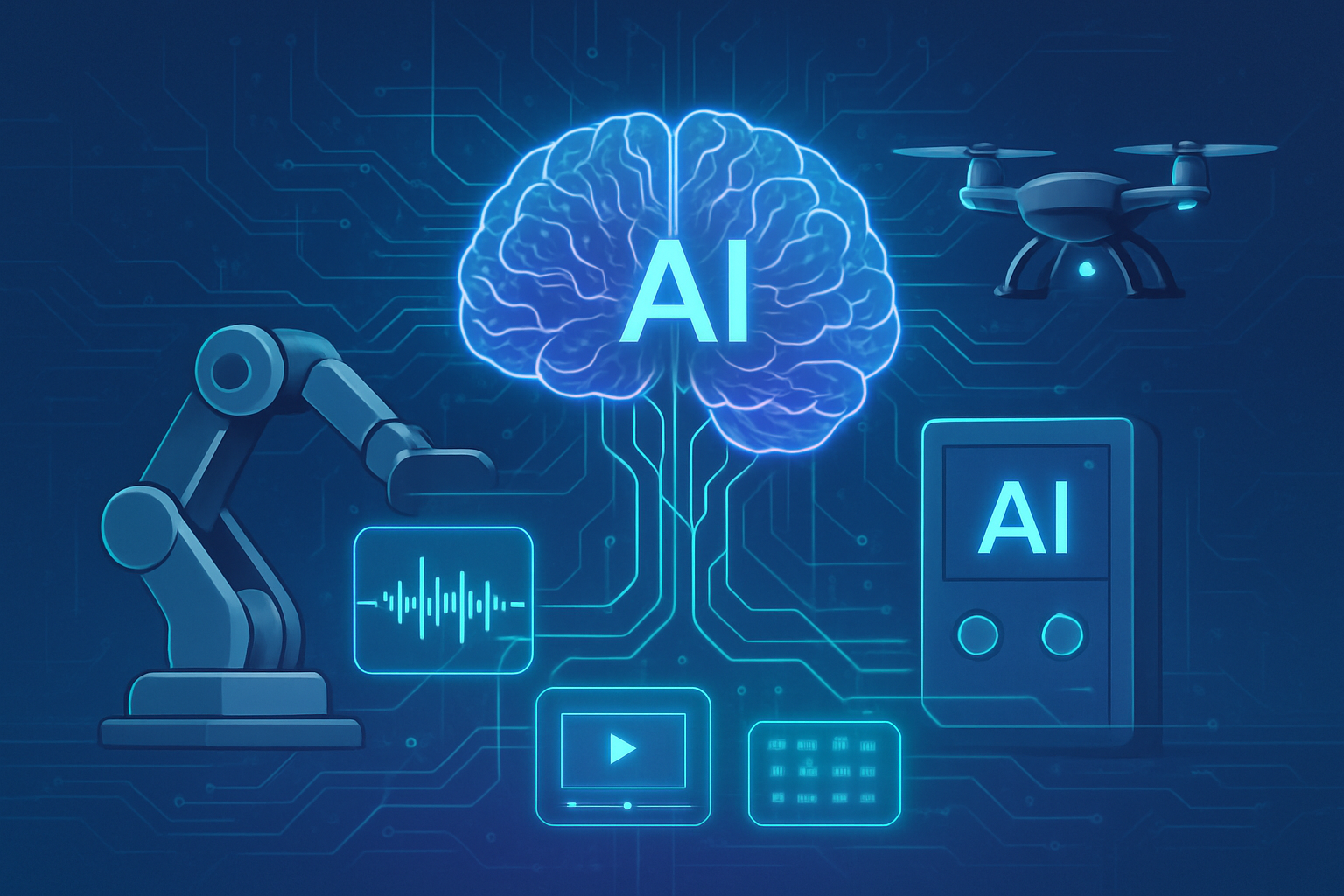
The landscape of artificial intelligence is undergoing a profound transformation as computational power and data processing shift from centralized cloud servers to the very edge of networks. This burgeoning field, known as "AI at the Edge," is bringing intelligence directly to devices where data is generated, enabling real-time decision-making, enhanced privacy, and unprecedented efficiency. This paradigm shift is being pioneered by advancements in semiconductor technology, with specialized chips forming the bedrock of this decentralized AI revolution.
The immediate significance of AI at the Edge lies in its ability to overcome the inherent limitations of traditional cloud-based AI. By eliminating the latency associated with transmitting vast amounts of data to remote data centers for processing, edge AI enables instantaneous responses crucial for applications like autonomous vehicles, industrial automation, and real-time health monitoring. This not only accelerates decision-making but also drastically reduces bandwidth consumption, enhances data privacy by keeping sensitive information localized, and ensures continuous operation even in environments with intermittent or no internet connectivity.
The Silicon Brains: Specialized Chips Powering Edge AI
The technical backbone of AI at the Edge is a new generation of specialized semiconductor chips designed for efficiency and high-performance inference. These chips often integrate diverse processing units to handle the unique demands of local AI tasks. Neural Processing Units (NPUs) are purpose-built to accelerate neural network computations, while Graphics Processing Units (GPUs) provide parallel processing capabilities for complex AI workloads like video analytics. Alongside these, optimized Central Processing Units (CPUs) manage general compute tasks, and Digital Signal Processors (DSPs) handle audio and signal processing for multimodal AI applications. Application-Specific Integrated Circuits (ASICs) offer custom-designed, highly efficient solutions for particular AI tasks.
Performance in edge AI chips is frequently measured in TOPS (tera-operations per second), indicating trillions of operations per second, while maintaining ultra-low power consumption—a critical factor for battery-powered or energy-constrained edge devices. These chips feature optimized memory architectures, robust connectivity options (Wi-Fi 7, Bluetooth, Thread, UWB), and embedded security features like hardware-accelerated encryption and secure boot to protect sensitive on-device data. Support for optimized software frameworks such as TensorFlow Lite and ONNX Runtime is also essential for seamless model deployment.
Synaptics (NASDAQ: SYNA), a company with a rich history in human interface technologies, is at the forefront of this revolution. At the Wells Fargo 9th Annual TMT Summit on November 19, 2025, Synaptics' CFO, Ken Rizvi, highlighted the company's strategic focus on the Internet of Things (IoT) sector, particularly in AI at the Edge. A cornerstone of their innovation is the "AI-native" Astra embedded computing platform, designed to streamline edge AI product development for consumer, industrial, and enterprise IoT applications. The Astra platform boasts scalable hardware, unified software, open-source AI tools, a robust partner ecosystem, and best-in-class wireless connectivity.
Within the Astra platform, Synaptics' SL-Series processors, such as the SL2600 Series, are multimodal Edge AI processors engineered for high-performance, low-power intelligence. The SL2610 product line, for instance, integrates Arm Cortex-A55 and Cortex-M52 with Helium cores, a transformer-capable Neural Processing Unit (NPU), and a Mali G31 GPU. A significant innovation is the integration of Google's RISC-V-based Coral NPU into the Astra SL2600 series, marking its first production deployment and providing developers access to an open compiler stack. Complementing the SL-Series, the SR-Series microcontrollers (MCUs) extend Synaptics' roadmap with power-optimized AI-enabling MCUs, featuring Cortex-M55 cores with Arm Helium™ technology for ultra-low-power, always-on sensing.
Initial reactions from the AI research community and industry experts have been overwhelmingly positive, particularly from a business and investment perspective. Financial analysts have maintained or increased "Buy" or "Overweight" ratings for Synaptics, citing strong growth in their Core IoT segment driven by edge AI. Experts commend Synaptics' strategic positioning, especially with the Astra platform and Google Coral NPU integration, for effectively addressing the low-latency, low-energy demands of edge AI. The company's developer-first approach, offering open-source tools and development kits, is seen as crucial for accelerating innovation and time-to-market for OEMs. Synaptics also secured the 2024 EDGE Award for its Astra AI-native IoT compute platform, further solidifying its leadership in the field.
Reshaping the AI Landscape: Impact on Companies and Markets
The rise of AI at the Edge is fundamentally reshaping the competitive dynamics for AI companies, tech giants, and startups alike. Specialized chip manufacturers like NVIDIA (NASDAQ: NVDA), Intel (NASDAQ: INTC), Qualcomm (NASDAQ: QCOM), Samsung (KRX: 005930), and Arm (NASDAQ: ARM) are clear beneficiaries, investing heavily in developing advanced GPUs, NPUs, and ASICs optimized for local AI processing. Emerging edge AI hardware specialists such as Hailo Technologies, SiMa.ai, and BrainChip Holdings are also carving out significant niches with energy-efficient processors tailored for edge inference. Foundries like Taiwan Semiconductor Manufacturing Company (TSMC: TPE) stand as critical enablers, fabricating these cutting-edge chips.
Beyond hardware, providers of integrated edge AI solutions and platforms, such as Edge Impulse, are simplifying the development and deployment of edge AI models, fostering a broader ecosystem. Industries that stand to benefit most are those requiring real-time decision-making, high privacy, and reliability. This includes autonomous systems (vehicles, drones, robotics), Industrial IoT (IIoT) for predictive maintenance and quality control, healthcare for remote patient monitoring and diagnostics, smart cities for traffic and public safety, and smart homes for personalized, secure experiences.
For tech giants like Google (NASDAQ: GOOGL), Microsoft (NASDAQ: MSFT), and Amazon (NASDAQ: AMZN), the shift to edge AI presents both challenges and opportunities. While they have historically dominated cloud AI, they are rapidly adapting by developing their own edge AI hardware and software, and integrating AI deeply into their vast product ecosystems. The key challenge lies in balancing centralized cloud resources for complex analytics and model training with decentralized edge processing for real-time applications, potentially decentralizing profit centers from the cloud to the edge.
Startups, with their agility, can rapidly develop disruptive business models by leveraging edge AI in niche markets or by creating innovative, lightweight AI models. However, they face significant hurdles, including limited resources and intense competition for talent. Success for startups hinges on finding unique value propositions and avoiding direct competition with the giants in areas requiring massive computational power.
AI at the Edge is disrupting existing products and services by decentralizing intelligence. This transforms IoT devices from simple "sensing + communication" to "autonomous decision-making" devices, creating a closed-loop system of "on-site perception -> real-time decision -> intelligent service." Products previously constrained by cloud latency can now offer instantaneous responses, leading to new business models centered on "smart service subscriptions." While cloud services will remain essential for training and analytics, edge AI will offload a significant portion of inference tasks, altering demand patterns for cloud resources and freeing them for more complex workloads. Enhanced security and privacy, by keeping sensitive data local, are also transforming products in healthcare, finance, and home security. Early adopters gain significant strategic advantages through innovation leadership, market differentiation, cost efficiency, improved customer engagement, and the development of proprietary capabilities, allowing them to establish market benchmarks and build resilience.
A Broader Lens: Significance, Concerns, and Milestones
AI at the Edge fits seamlessly into the broader AI landscape as a complementary force to cloud AI, rather than a replacement. It addresses the growing proliferation of Internet of Things (IoT) devices, enabling them to process the immense data they generate locally, thus alleviating network congestion. It is also deeply intertwined with the rollout of 5G technology, which provides the high-speed, low-latency connectivity essential for more advanced edge AI applications. Furthermore, it contributes to the trend of distributed AI and "Micro AI," where intelligence is spread across numerous, often resource-constrained, devices.
The impacts on society, industries, and technology are profound. Technologically, it means reduced latency, enhanced data security and privacy, lower bandwidth usage, improved reliability, and offline functionality. Industrially, it is revolutionizing manufacturing with predictive maintenance and quality control, enabling true autonomy in vehicles, providing real-time patient monitoring in healthcare, and powering smart city initiatives. Societally, it promises enhanced user experience and personalization, greater automation and efficiency across sectors, and improved accessibility to AI-powered tools.
However, the widespread adoption of AI at the Edge also raises several critical concerns and ethical considerations. While it generally improves privacy by localizing data, edge devices can still be targets for security breaches if not adequately protected, and managing security across a decentralized network is challenging. The limited computational power and storage of edge devices can restrict the complexity and accuracy of AI models, potentially leading to suboptimal performance. Data quality and diversity issues can arise from isolated edge environments, affecting model robustness. Managing updates and monitoring AI models across millions of distributed edge devices presents significant logistical complexities. Furthermore, inherent biases in training data can lead to discriminatory outcomes, and the "black box" nature of some AI models raises concerns about transparency and accountability, particularly in critical applications. The potential for job displacement due to automation and challenges in ensuring user control and consent over continuous data processing are also significant ethical considerations.
Comparing AI at the Edge to previous AI milestones reveals it as an evolution that builds upon foundational breakthroughs. While early AI systems focused on symbolic reasoning, and the machine learning/deep learning era (2000s-present) leveraged vast datasets and cloud computing for unprecedented accuracy, Edge AI takes these powerful models and optimizes them for efficient execution on resource-constrained devices. It extends the reach of AI beyond the data center, addressing the practical limitations of cloud-centric AI in terms of latency, bandwidth, and privacy. It signifies a critical next step, making intelligence ubiquitous and actionable at the point of interaction, expanding AI's applicability into scenarios previously impractical or impossible.
The Horizon: Future Developments and Challenges
The future of AI at the Edge is characterized by continuous innovation and explosive growth. In the near term (2024-2025), analysts predict that 50% of enterprises will adopt edge computing, with industries like manufacturing, retail, and healthcare leading the charge. The rise of "Agentic AI," where autonomous decision-making occurs directly on edge devices, is a significant trend, promising enhanced efficiency and safety in various applications. The development of robust edge infrastructure platforms will become crucial for managing and orchestrating multiple edge workloads. Continued advancements in specialized hardware and software frameworks, along with the optimization of smaller, more efficient AI models (including lightweight large language models), will further enable widespread deployment. Hybrid edge-cloud inferencing, balancing real-time edge processing with cloud-based training and storage, will also see increased adoption, facilitated by the ongoing rollout of 5G networks.
Looking further ahead (next 5-10 years), experts envision ubiquitous decentralized intelligence by 2030, with AI running directly on devices, sensors, and autonomous systems, making decisions at the source without relying on the cloud for critical responses. Real-time learning and adaptive intelligence, potentially powered by neuromorphic AI, will allow edge devices to continuously learn and adapt based on live data, revolutionizing robotics and autonomous systems. The long-term trajectory also includes the integration of edge AI with emerging 6G networks and potentially quantum computing, promising ultra-low-latency, massively parallel processing at the edge and democratizing access to cutting-edge AI capabilities. Federated learning will become more prevalent, further enhancing privacy and enabling hyper-personalized, real-time evolving models in sensitive sectors.
Potential applications on the horizon are vast and transformative. In smart manufacturing, AI at the Edge will enable predictive maintenance, AI-powered quality control, and enhanced worker safety. Healthcare will see advanced remote patient monitoring, on-device diagnostics, and AI-assisted surgeries with improved privacy. Autonomous vehicles will rely entirely on edge AI for real-time navigation and collision prevention. Smart cities will leverage edge AI for intelligent traffic management, public safety, and optimized resource allocation. Consumer electronics, smart homes, agriculture, and even office productivity tools will integrate edge AI for more personalized, efficient, and secure experiences.
Despite this immense potential, several challenges need to be addressed. Hardware limitations (processing power, memory, battery life) and the critical need for energy efficiency remain significant hurdles. Optimizing complex AI models, including large language models, to run efficiently on resource-constrained edge devices without compromising accuracy is an ongoing challenge, exacerbated by a shortage of production-ready edge-specific models and skilled talent. Data management across distributed edge environments, ensuring consistency, and orchestrating data movement with intermittent connectivity are complex. Security and privacy vulnerabilities in a decentralized network of edge devices require robust solutions. Furthermore, integration complexities, lack of interoperability standards, and cost considerations for setting up and maintaining edge infrastructure pose significant barriers.
Experts predict that "Agentic AI" will be a transformative force, with Deloitte forecasting the agentic AI market to reach $45 billion by 2030. Gartner predicts that by 2025, 75% of enterprise-managed data will be created and processed outside traditional data centers or the cloud, indicating a massive shift of data gravity to the edge. IDC forecasts that by 2028, 60% of Global 2000 companies will double their spending on remote compute, storage, and networking resources at the edge due to generative AI inferencing workloads. AI models will continue to get smaller, more effective, and personalized, becoming standard across mobile devices and affordable PCs. Industry-specific AI solutions, particularly in asset-intensive sectors, will lead the way, fostering increased partnerships among AI developers, platform providers, and device manufacturers. The Edge AI market is projected to expand significantly, reaching between $157 billion and $234 billion by 2030, driven by smart cities, connected vehicles, and industrial digitization. Hardware innovation, specifically for AI-specific chips, is expected to soar to $150 billion by 2028, with edge AI as a primary catalyst. Finally, AI oversight committees are expected to become commonplace in large organizations to review AI use and ensure ethical deployment.
A New Era of Ubiquitous Intelligence
In summary, AI at the Edge represents a pivotal moment in the evolution of artificial intelligence. By decentralizing processing and bringing intelligence closer to the data source, it addresses critical limitations of cloud-centric AI, ushering in an era of real-time responsiveness, enhanced privacy, and operational efficiency. Specialized semiconductor technologies, exemplified by companies like Synaptics and their Astra platform, are the unsung heroes enabling this transformation, providing the silicon brains for a new generation of intelligent devices.
The significance of this development cannot be overstated. It is not merely an incremental improvement but a fundamental shift that will redefine how AI is deployed and utilized across virtually every industry. While challenges related to hardware constraints, model optimization, data management, and security remain, the ongoing research and development efforts, coupled with the clear benefits, are paving the way for a future where intelligent decisions are made ubiquitously at the source of data. The coming weeks and months will undoubtedly bring further announcements and advancements as companies race to capitalize on this burgeoning field. We are witnessing the dawn of truly pervasive AI, where intelligence is embedded in the fabric of our everyday lives, from our smart homes to our cities, and from our factories to our autonomous vehicles.
This content is intended for informational purposes only and represents analysis of current AI developments.
TokenRing AI delivers enterprise-grade solutions for multi-agent AI workflow orchestration, AI-powered development tools, and seamless remote collaboration platforms.
For more information, visit https://www.tokenring.ai/.