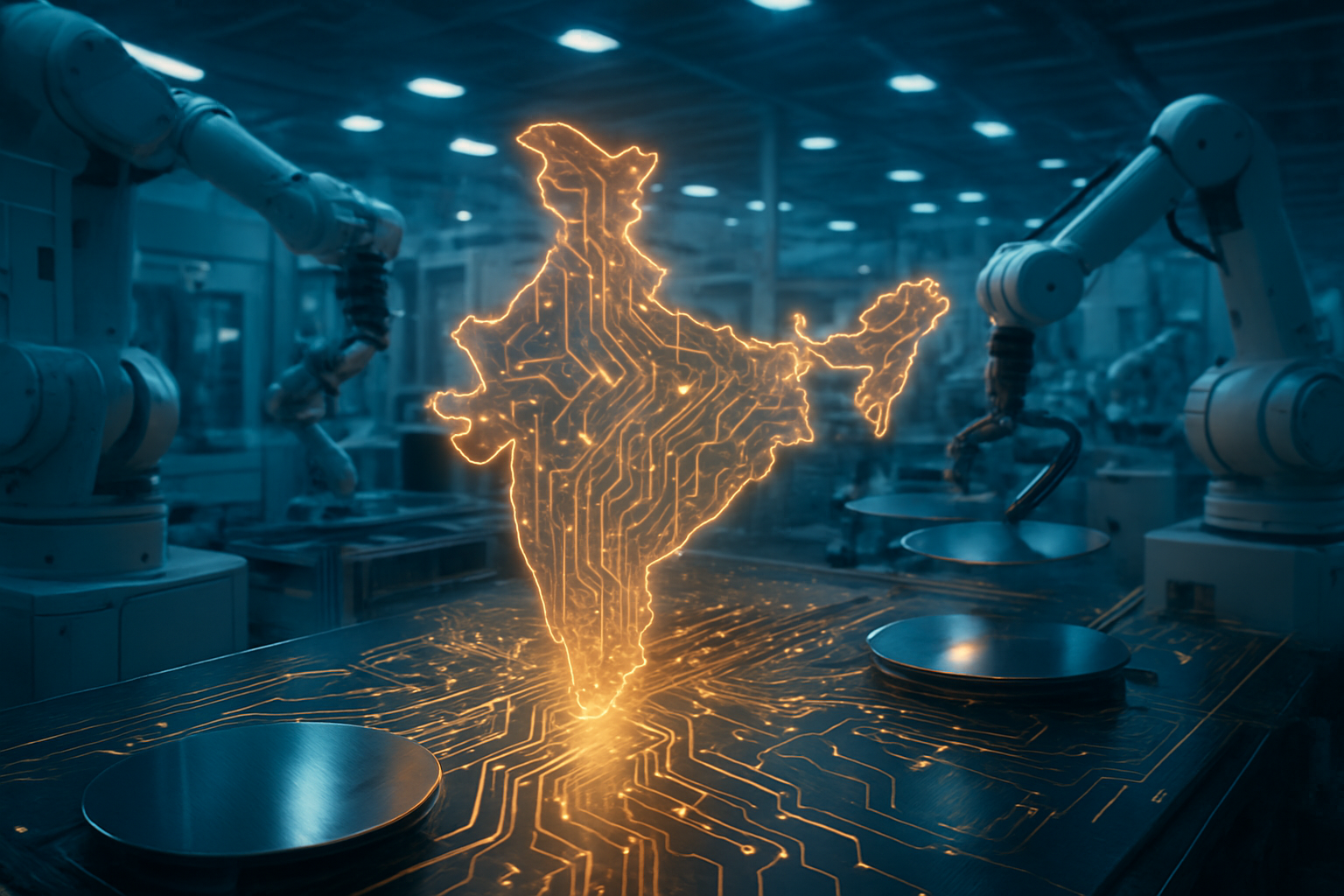
Tag: Tata Electronics

  • India’s Chip Dream Takes Shape: Tata Electronics’ Assam Plant Ignites Self-Reliance and Reshapes Global Supply Chains

    India’s Chip Dream Takes Shape: Tata Electronics’ Assam Plant Ignites Self-Reliance and Reshapes Global Supply Chains

    Jagiroad, Assam – November 7, 2025 – In a landmark development for India's ambitious drive towards semiconductor self-reliance, Union Finance Minister Nirmala Sitharaman today visited Tata Electronics' (NSE: TATAELXSI) cutting-edge semiconductor manufacturing facility in Jagiroad, Assam. Her presence underscored the national significance of this monumental project, which is poised to transform India into a crucial node in the global semiconductor supply chain and significantly bolster the nation's technological sovereignty. This greenfield Outsourced Semiconductor Assembly and Test (OSAT) unit represents a strategic leap, aiming to dramatically reduce India's historical dependence on imported chips and foster a robust, indigenous semiconductor ecosystem.

    The facility, a cornerstone of Prime Minister Narendra Modi's 'Viksit Bharat' vision, is more than just a manufacturing plant; it symbolizes India's resolve to move beyond being a consumer of technology to becoming a producer and innovator. As construction progresses rapidly, with the first phase expected to be operational by mid-2025 and full-scale production of "Made In India" chips slated for 2026, the Assam plant is set to address critical demands across diverse sectors, from electric vehicles and mobile devices to advanced AI applications and communication infrastructure.

    Engineering India's Semiconductor Future: A Deep Dive into Tata Electronics' OSAT Facility

    The Tata Electronics semiconductor facility in Jagiroad represents a staggering investment of approximately INR 27,000 crore (around US$3.6 billion), a testament to the scale of India's commitment to this high-tech sector. Approved by the Union Cabinet on February 29, 2024, and following a groundbreaking ceremony on August 3, 2024, the project has moved with remarkable speed, driven by the supportive framework of the India Semiconductor Mission and Assam's Electronics policy.

    This state-of-the-art OSAT unit will specialize in advanced packaging technologies, a critical phase in semiconductor manufacturing that involves assembling, testing, and packaging integrated circuits before they are deployed in electronic devices. The facility will initially deploy three key platform technologies: Wire Bond, Flip Chip, and Integrated Systems Packaging (ISP), with plans for a future roadmap to incorporate even more advanced packaging solutions. Once fully operational, the plant is projected to produce an impressive 4.83 crore (48.3 million) chips per day, employing indigenously developed technologies to cater to a vast array of applications including 5G communications, routers, and other consumer and industrial electronics, particularly for the burgeoning electric vehicle market.

    The establishment of such an advanced OSAT facility marks a significant departure from India's traditional role, which has historically been strong in chip design but heavily reliant on foreign manufacturing for production. By focusing on advanced packaging, Tata Electronics is not only building a crucial part of the semiconductor value chain domestically but also positioning India to capture a higher value segment. This strategic move aims to reduce the current import dependence, which stands at over 90% of India's semiconductor demand, and to build a resilient supply chain that can withstand global disruptions, distinguishing it from previous approaches that primarily focused on chip design.

    Reshaping the Competitive Landscape: Implications for Tech Giants and Startups

    The advent of Tata Electronics' (NSE: TATAELXSI) Assam plant carries profound implications for a wide spectrum of companies, from established tech giants to burgeoning startups, both domestically and internationally. Indian technology companies, particularly those in the automotive, consumer electronics, and telecommunications sectors, stand to benefit immensely from a reliable, localized source of high-quality packaged semiconductors. This domestic supply will mitigate risks associated with geopolitical tensions and global supply chain bottlenecks, offering greater stability and faster turnaround times for product development and manufacturing.

    Globally, the new OSAT facility positions India as a competitive alternative to existing semiconductor packaging hubs, predominantly located in East Asia. Companies like Apple (NASDAQ: AAPL), Samsung (KRX: 005930), and Qualcomm (NASDAQ: QCOM), which rely heavily on outsourced assembly and testing, may find India an attractive option for diversifying their supply chains, enhancing resilience, and potentially reducing costs in the long run. This development introduces a new dynamic into the competitive landscape, potentially disrupting the market positioning of established OSAT providers by offering a strategically located, high-capacity alternative.

    Furthermore, this initiative could catalyze the growth of a vibrant ecosystem of ancillary industries and startups in India. Companies involved in semiconductor design, materials, equipment, and testing services will find new opportunities for collaboration and expansion. The plant's focus on advanced packaging for sectors like AI and EVs will also fuel innovation within India's AI startups and automotive tech firms, providing them with crucial hardware components developed within the country. This strategic advantage could foster a new wave of innovation and product development, strengthening India's overall technological prowess and market share in critical global industries.

    A Pillar of India's Global Semiconductor Ambition and Geopolitical Resilience

    The Tata Electronics facility in Assam is far more than an isolated industrial project; it is a critical pillar in India's broader strategic vision to become a global semiconductor powerhouse. This endeavor is meticulously guided by the India Semiconductor Mission (ISM), launched in December 2021 with a substantial outlay of ₹76,000 crore (approximately US$10 billion), alongside the National Policy on Electronics (NPE) 2019. These policies aim to cultivate a sustainable semiconductor and display ecosystem across the entire value chain, offering attractive incentives, including the Production Linked Incentive (PLI) Scheme, to foster domestic manufacturing.

    The plant's strategic importance extends to global supply chain resilience. Amidst growing geopolitical uncertainties and the lessons learned from recent global chip shortages, nations worldwide are seeking to decentralize and diversify their semiconductor manufacturing capabilities. India, with its vast talent pool, growing market, and robust government support, is emerging as a compelling partner in this global recalibration. The "Made in Assam" chips are not only intended for domestic consumption but are also expected to be supplied to major international markets, including Japan, the United States, and Germany, thereby cementing India's role in the global technology infrastructure.

    Beyond economic benefits, the facility underscores India's commitment to strategic autonomy. By reducing its overwhelming reliance on chip imports, India enhances its national security and technological independence. This move draws parallels with efforts by other major economies, such as the United States and the European Union, to bring semiconductor manufacturing onshore. The project is expected to significantly boost industrialization in India's North-Eastern region, creating hundreds of thousands of direct and indirect jobs and contributing to holistic regional development, aligning with the vision of 'Viksit Bharat' and positioning India as a reliable and competitive player in the global technology arena.

    The Road Ahead: Cultivating a Comprehensive Semiconductor Ecosystem

    Looking ahead, the Tata Electronics (NSE: TATAELXSI) semiconductor facility in Assam is merely the beginning of a much larger journey for India. The initial focus on advanced OSAT technologies, including Wire Bond, Flip Chip, and Integrated Systems Packaging (ISP), is expected to pave the way for a broader expansion into even more sophisticated packaging solutions and potentially, over time, into more complex fabrication (fab) processes. Experts predict that the success of this and similar initiatives will embolden further investments across the semiconductor value chain, from materials and equipment manufacturing to design and R&D.

    The government's continued support through the India Semiconductor Mission and various incentive schemes will be crucial in overcoming challenges such as developing a highly skilled workforce, attracting top-tier global talent, and keeping pace with the rapid technological advancements in the semiconductor industry. Educational institutions and vocational training centers will need to align their curricula with the industry's demands, ensuring a steady supply of engineers and technicians. The collaboration between industry, academia, and government will be paramount for sustained growth.

    Experts anticipate that by the end of the decade, India's semiconductor market, projected to surge from approximately $38 billion in 2023 to $100-$110 billion by 2030, will not only cater to a significant portion of its domestic demand but also become a significant exporter of chips and related services. The success of the Assam plant will serve as a blueprint and a confidence booster for future projects, cementing India's position as a formidable force in the global semiconductor industry and a crucial contributor to the next generation of technological advancements. This development is not just about chips; it's about shaping India's future as a global leader in technology and innovation.

    A New Dawn for Indian Technology: The Long-Term Impact

    The establishment of Tata Electronics' (NSE: TATAELXSI) semiconductor manufacturing facility in Assam marks a pivotal moment in India's technological history. It signifies a decisive step towards achieving true self-reliance in a critical industry, moving beyond aspirations to concrete execution. The facility's rapid development, supported by substantial investment and robust government backing, underscores India's commitment to building a resilient and indigenous semiconductor ecosystem. This endeavor is set to not only fuel the nation's economic growth but also to fundamentally alter its strategic standing on the global stage.

    The long-term impact of this development will be multifaceted. Economically, it promises to create hundreds of thousands of high-value jobs, attract further foreign direct investment, and drive industrialization in previously underserved regions. Strategically, it will provide India with greater control over its technological destiny, reducing vulnerabilities to global supply chain shocks and geopolitical pressures. Environmentally, the focus on a "greenfield" facility emphasizes sustainable manufacturing practices, aligning with global efforts towards responsible industrial growth.

    As the plant moves towards full operational capacity in 2026, the world will be watching closely. Key milestones to watch for in the coming weeks and months include further announcements regarding technological partnerships, progress on workforce development initiatives, and the initial production runs. The success of the "Made In India" chips from Assam will undoubtedly inspire further investments and innovations, cementing India's position as a formidable force in the global semiconductor industry and a crucial contributor to the next generation of technological advancements. This development is not just about chips; it's about shaping India's future as a global leader in technology and innovation.


    This content is intended for informational purposes only and represents analysis of current AI developments.

    TokenRing AI delivers enterprise-grade solutions for multi-agent AI workflow orchestration, AI-powered development tools, and seamless remote collaboration platforms.
    For more information, visit https://www.tokenring.ai/.

  • India’s Semiconductor Dawn: Tata Electronics Plant in Assam Poised to Reshape Global Tech Landscape

    India’s Semiconductor Dawn: Tata Electronics Plant in Assam Poised to Reshape Global Tech Landscape

    GUWAHATI, ASSAM – November 7, 2025 – In a monumental stride towards technological self-reliance, India today witnessed Union Finance Minister Nirmala Sitharaman's pivotal visit to the new Tata Electronics semiconductor manufacturing facility in Jagiroad, Assam. This state-of-the-art Outsourced Semiconductor Assembly and Test (OSAT) unit, backed by an investment of INR 27,000 crore (approximately US$3.6 billion), is not merely a factory; it is a declaration of intent, positioning India at the heart of the global semiconductor supply chain and promising to ignite an economic transformation in the country's North-Eastern region. The facility, currently under construction, is on track for its first phase of operations by mid-2025, with full-scale production slated for 2026, marking a critical juncture in India's journey to becoming a formidable player in high-tech manufacturing.

    The significance of this project reverberated through Minister Sitharaman's remarks during her review of the advanced facility. She hailed the initiative as the "driver of the engine for Viksit Bharat" (Developed India) and a "golden moment" for Assam, underscoring its alignment with Prime Minister Narendra Modi's vision of a self-reliant India and the holistic development of the North-Eastern region. The establishment of such a high-value manufacturing unit is expected to dramatically reduce India's historical dependence on imported chips, fortifying its economic and strategic resilience in an increasingly digitized world.

    A Deep Dive into India's Semiconductor Ambition

    The Tata Electronics (a subsidiary of the Tata Group, represented by public entities like Tata Motors (NSE: TATAMOTORS)) facility in Assam is designed as an advanced OSAT unit, focusing on the critical stages of semiconductor manufacturing: assembly and testing. This involves taking silicon wafers produced elsewhere and transforming them into finished, functional chips through sophisticated packaging techniques. The plant will leverage three cutting-edge platform technologies: Wire Bond, Flip Chip, and Integrated Systems Packaging (ISP). These technologies are crucial for creating high-performance, compact, and reliable semiconductor components essential for modern electronics.

    Unlike traditional chip fabrication (fabs), which involves the complex and capital-intensive process of wafer manufacturing, the OSAT unit specializes in the subsequent, equally vital steps of packaging and testing. This strategic focus allows India to rapidly build capabilities in a high-value segment of the semiconductor supply chain that is currently dominated by a few global players. The semiconductors processed here will be integral to a vast array of applications, including the rapidly expanding electric vehicle (EV) sector, mobile devices, artificial intelligence (AI) hardware, advanced communications infrastructure, industrial automation, and diverse consumer electronics. Once fully operational, the facility boasts an impressive capacity to produce up to 48 million semiconductor chips daily, a testament to its scale and ambition. This indigenous capability is a stark departure from previous approaches, where India primarily served as a consumer market, and represents a significant leap in its technological maturity. Initial reactions from the domestic tech community have been overwhelmingly positive, viewing it as a watershed moment for India's manufacturing prowess.

    Reshaping the Indian and Global Tech Landscape

    The establishment of the Tata Electronics semiconductor plant is poised to have a profound impact on various stakeholders, from major tech giants to emerging startups. For the Tata Group itself, this venture marks a significant diversification and strengthening of its industrial portfolio, positioning it as a key player in a strategically vital sector. The project is expected to attract a global ecosystem to India, fostering the development of cutting-edge technologies and advanced skill sets within the country. Tata Group Chairman N Chandrasekaran had previously indicated plans to sign Memoranda of Understanding (MoUs) with ten additional semiconductor companies, signaling a concerted effort to build a robust ancillary ecosystem around the Assam facility.

    This development presents competitive implications for existing global semiconductor players by offering a new, geographically diversified manufacturing hub. While not directly competing with established fabrication giants, the OSAT facility provides an alternative for packaging and testing services, potentially reducing lead times and supply chain risks for companies worldwide. Indian tech startups, particularly those in AI, IoT, and automotive electronics, stand to benefit immensely from the domestic availability of advanced semiconductor components, enabling faster prototyping, reduced import costs, and greater innovation. The plant’s existence could also disrupt existing product development cycles by providing a localized, efficient supply of critical components, encouraging more companies to design and manufacture within India, thus enhancing the nation's market positioning and strategic advantages in the global tech arena.

    Broader Implications and Global Supply Chain Resilience

    The Tata Electronics facility in Assam fits seamlessly into the broader global trend of diversifying semiconductor manufacturing away from concentrated hubs, a strategy increasingly prioritized in the wake of geopolitical tensions and recent supply chain disruptions. By establishing significant OSAT capabilities, India is actively contributing to de-risking the global tech supply chain, offering an alternative production base that enhances resilience and reduces the world's reliance on a few key regions, particularly in East Asia. This move solidifies India's commitment to becoming a reliable and integral part of the global technology ecosystem, moving beyond its traditional role as a software and services powerhouse to a hardware manufacturing hub.

    The economic impacts on Assam and the wider North-Eastern region are anticipated to be transformative. The INR 27,000 crore investment is projected to create over 27,000 direct and indirect jobs, providing substantial employment opportunities and fostering economic diversification in a region traditionally reliant on agriculture and tea. Beyond direct employment, the project necessitates and stimulates significant infrastructure development, including improved roads, utilities, and an "electronic city" designed to house approximately 40,000 employees. The Government of Assam's commitment of a Rs 111 crore Water Supply Project further underscores the holistic development around the plant. This industrialization is expected to spawn numerous peripheral industries, creating a vibrant local business ecosystem and positioning the Northeast as a key driver in India's technology-driven growth narrative, comparable to how previous industrial milestones have reshaped other regions.

    The Road Ahead: Future Developments and Challenges

    With the first phase of the Tata Electronics plant expected to be operational by mid-2025 and full production by 2026, the near-term focus will be on ramping up operations, ensuring quality control, and integrating seamlessly into global supply chains. Experts predict that the success of this initial venture could pave the way for further significant investments in India's semiconductor ecosystem, potentially including more advanced fabrication units in the long term. The plant's focus on advanced packaging technologies like Wire Bond, Flip Chip, and ISP suggests a pathway towards even more sophisticated packaging solutions in the future, keeping pace with evolving global demands.

    However, challenges remain. Developing a highly skilled workforce capable of operating and maintaining such advanced facilities will be crucial, necessitating robust training programs and educational initiatives. Maintaining a technological edge in a rapidly evolving industry will also require continuous investment in research and development. What experts predict next is a domino effect: the establishment of this anchor unit is expected to attract more foreign direct investment into India's semiconductor sector, fostering a complete ecosystem from design to manufacturing and testing. Potential applications and use cases on the horizon include specialized chips for India's burgeoning space and defense sectors, further cementing the nation's strategic autonomy.

    A New Chapter in India's Industrial History

    The Tata Electronics semiconductor manufacturing facility in Assam represents a pivotal moment in India's industrial and technological history. It is a bold statement of intent, signaling India's ambition to move beyond being a consumer of technology to a significant producer, capable of meeting both domestic and global demands for critical electronic components. The substantial investment, coupled with the promise of thousands of jobs and comprehensive regional development, underscores the project's multifaceted significance.

    As the facility moves from construction to operationalization in the coming months, the world will be watching. The success of this venture will not only bolster India's self-reliance in a strategically vital sector but also contribute significantly to the diversification and resilience of the global tech supply chain. Key takeaways include India's commitment to indigenous manufacturing, the transformative economic potential for the North-East, and the strategic importance of semiconductor independence. The coming weeks and months will be crucial as the plant approaches its operational milestones, with further partnerships and ecosystem developments expected to unfold, cementing India's place on the global semiconductor map.


    This content is intended for informational purposes only and represents analysis of current AI developments.

    TokenRing AI delivers enterprise-grade solutions for multi-agent AI workflow orchestration, AI-powered development tools, and seamless remote collaboration platforms.
    For more information, visit https://www.tokenring.ai/.

  • Dholera Emerges as India’s Semiconductor Superhub: A New Dawn for High-Tech Manufacturing

    Dholera Emerges as India’s Semiconductor Superhub: A New Dawn for High-Tech Manufacturing

    Dholera Special Investment Region (SIR) in Gujarat is rapidly transforming into India's most ambitious high-tech manufacturing and innovation hub. With an unwavering focus on the burgeoning semiconductor industry and other advanced technology sectors, this strategically located smart city is poised to attract unprecedented levels of domestic and international investment. The extensive governmental support, coupled with world-class infrastructure, signals a significant leap forward in India's aspiration to become a global leader in advanced manufacturing, moving beyond its traditional strengths in IT services to hardware and deep technology.

    This monumental development is not merely an urban planning project but a cornerstone of India's broader economic and technological sovereignty agenda. By creating a conducive environment for cutting-edge industries, Dholera aims to reduce the nation's reliance on global supply chains, particularly in critical sectors like semiconductors, and foster an ecosystem ripe for innovation in AI, IoT, electric vehicles, and renewable energy. The sheer scale and speed of its development underscore a national commitment to establishing a resilient and technologically advanced manufacturing base, set to redefine India's position on the global economic stage.

    Engineering a Silicon Future: The Technical Blueprint of Dholera

    Dholera SIR, spanning an impressive 920 square kilometers – twice the size of Mumbai – is being meticulously engineered as India's largest Greenfield smart city and a "plug-and-play" ecosystem for high-tech industries. Its strategic location along the Delhi-Mumbai Industrial Corridor (DMIC) provides unparalleled logistical advantages. The technical infrastructure is designed for seamless operations, featuring 72 km of fully developed internal roads and robust underground utility corridors that ensure uninterrupted access to electricity, data, water, gas, and effluent solutions. This comprehensive approach aims to drastically minimize setup time and capital expenditure for incoming investors, differentiating it from conventional industrial parks.

    The region boasts advanced Information and Communication Technology (ICT) infrastructure, including high-speed fiber optic networks, IoT capabilities, big data analytics, and AI solutions for real-time monitoring and smart governance, with the ABCD (Administrative Cum Business Centre for Dholera) building serving as the city's command-and-control hub. Power supply is secured through dual sources, complemented by a massive 4,400 MW solar park, with 300 MW already operational by Tata Power (NSE: TATAPOWER). Potable water is ensured by a 50 MLD water treatment plant and desalination infrastructure. This integrated smart city design, supported by the Gujarat Semiconductor Policy (2022) which offers significant capital expenditure assistance (40% in addition to central support) and land subsidies (75% for the first 200 acres), sets Dholera apart. The single-window clearance system and fixed timelines for approvals further streamline the "ease of doing business," a stark contrast to traditional bureaucratic hurdles. Initial reactions from the industry have been overwhelmingly positive, evidenced by significant investment commitments from major players like Tata Electronics (NSE: TATAELXSI) and Nextgen Semiconductors, validating Dholera's potential as a premier manufacturing destination.

    Catalyzing Growth: Impact on Tech Giants and Emerging Innovators

    Dholera's emergence as a high-tech manufacturing hub is set to profoundly impact a diverse range of companies, from established tech giants to agile startups. Tata Electronics (NSE: TATAELXSI), in partnership with Taiwan's Powerchip Semiconductor Manufacturing Corporation (PSMC), is constructing India's first AI-enabled semiconductor fabrication plant (fab) in Dholera with a staggering investment of ₹91,000 crore (approximately $11 billion). This facility, expected to be operational by 2026, will produce 50,000 wafers per month for critical sectors like automotive, AI, data storage, and wireless communication. This move positions Tata Electronics as a pivotal player in India's semiconductor ambitions and signals a strategic diversification for the conglomerate.

    Beyond Tata, Nextgen Semiconductors has announced an ₹8,800 crore investment for a Silicon Carbide (SiC) chip fabrication plant, with construction anticipated by April 2026. While not directly in Dholera, Micron Technology (NASDAQ: MU), the American chip giant, is investing $2.75 billion in an Outsourced Semiconductor Assembly and Testing (OSAT) facility in nearby Sanand, expected to be fully operational by the end of 2025. Similarly, CG Power (NSE: CGPOWER), part of the Murugappa Group, is establishing an OSAT plant in Sanand with a ₹7,600 crore investment. These developments collectively create a robust semiconductor ecosystem in Gujarat, benefiting from Dholera's advanced infrastructure and policy support. The competitive implications are significant, as India aims to disrupt existing global supply chains, offering a new, reliable manufacturing base. This shift could lead to new product development opportunities for domestic startups leveraging locally produced chips and components, fostering a vibrant innovation landscape.

    A New Chapter in India's Tech Odyssey: Wider Significance

    Dholera's strategic development fits seamlessly into India's broader "Make in India" and "Atmanirbhar Bharat" (self-reliant India) initiatives, aiming to elevate the nation's role in the global technology landscape. This ambitious undertaking signifies a pivot from primarily software and services to advanced hardware manufacturing, a critical step for a truly self-reliant digital economy. The impacts are multi-faceted: it promises to generate hundreds of thousands of high-skilled jobs, stimulate economic growth in Gujarat, and bolster India's technological sovereignty by securing crucial components like semiconductors. This is particularly vital in an era marked by global chip shortages and geopolitical tensions, making reliable domestic production a national imperative.

    The project represents a significant milestone compared to previous industrial development efforts, leveraging smart city principles and an integrated approach to infrastructure, policy, and industry attraction. While the opportunities are immense, potential concerns include the sustained attraction of a highly skilled workforce, managing the environmental impact of large-scale industrialization, and navigating the complexities of global competition in the semiconductor sector. However, the comprehensive planning and robust governmental backing suggest a strong commitment to addressing these challenges. Dholera's success could serve as a blueprint for future industrial smart cities in India, positioning the nation as a formidable player in the global high-tech manufacturing arena, much like how Silicon Valley shaped the digital revolution or Shenzhen transformed into a manufacturing powerhouse.

    The Road Ahead: Anticipating Future Developments and Challenges

    The near-term future for Dholera promises a flurry of activity and significant milestones. The Ahmedabad-Dholera Expressway, a vital artery, is expected to be fully operational by late 2025, drastically cutting travel times and enhancing connectivity. Concurrently, the Dholera International Airport is slated for cargo operations in Q2 FY25-26 and passenger flights by early 2026, further cementing Dholera's logistical advantages. Crucially, the Tata Electronics (NSE: TATAELXSI) semiconductor fab is on track to be operational by 2026, marking a pivotal moment for India's indigenous chip manufacturing capabilities. Similarly, Micron Technology's (NASDAQ: MU) Sanand facility is expected to be fully operational by the end of 2025.

    Looking further ahead, Dholera is envisioned to be a fully functional, self-sustained industrial-residential smart city by 2047, aligning with India's 100th year of independence. This long-term vision includes continuous expansion of its industrial base, further integration of AI and IoT into urban management, and the development of a vibrant social infrastructure to support a growing population. Challenges remain, including the need to continuously attract and retain top-tier talent, adapt to rapidly evolving technological landscapes, and maintain the momentum of investment amidst global economic shifts. Experts predict that Dholera's success will be a critical determinant of India's ability to become a significant player in the global semiconductor value chain, potentially transforming it into a major hub for advanced electronics and AI-driven manufacturing.

    Dholera's Defining Moment: A Comprehensive Wrap-Up

    Dholera's strategic development represents a defining moment in India's industrial and technological history. The confluence of ambitious government policies, substantial infrastructure investments, and significant commitments from global and domestic technology leaders is propelling Dholera into the forefront of high-tech manufacturing, particularly in the critical semiconductor sector. Key takeaways include India's proactive stance in creating a resilient supply chain, the innovative "plug-and-play" smart city model, and the magnetic pull of incentives attracting major players like Tata Electronics (NSE: TATAELXSI) and Micron Technology (NASDAQ: MU).

    This development's significance in AI history is profound, as it lays the groundwork for indigenous AI hardware development and advanced electronics manufacturing, crucial for realizing the full potential of AI applications across various industries. The long-term impact is expected to reshape India's economic trajectory, foster technological self-reliance, and establish a new benchmark for integrated industrial city development globally. In the coming weeks and months, all eyes will be on the progress of the Tata Electronics fab, the operationalization of the Dholera International Airport and Expressway, and further announcements of investments, which will undoubtedly solidify Dholera's position as a beacon of India's high-tech future.


    This content is intended for informational purposes only and represents analysis of current AI developments.

    TokenRing AI delivers enterprise-grade solutions for multi-agent AI workflow orchestration, AI-powered development tools, and seamless remote collaboration platforms.
    For more information, visit https://www.tokenring.ai/.

  • India’s Chip Ambition: From Design Hub to Global Semiconductor Powerhouse, Backed by Industry Giants

    India’s Chip Ambition: From Design Hub to Global Semiconductor Powerhouse, Backed by Industry Giants

    India is rapidly ascending as a formidable player in the global semiconductor landscape, transitioning from a prominent design hub to an aspiring manufacturing and packaging powerhouse. This strategic pivot, fueled by an ambitious government agenda and significant international investments, is reshaping the global chip supply chain and drawing the attention of industry behemoths like ASML (AMS: ASML), the Dutch lithography equipment giant. With developments accelerating through October 2025, India's concerted efforts are setting the stage for it to become a crucial pillar in the world's semiconductor ecosystem, aiming to capture a substantial share of the trillion-dollar market by 2030.

    The nation's aggressive push, encapsulated by the India Semiconductor Mission (ISM), is a direct response to global supply chain vulnerabilities exposed in recent years and a strategic move to bolster its technological sovereignty. By offering robust financial incentives and fostering a conducive environment for manufacturing, India is attracting investments that promise to bring advanced fabrication (fab), assembly, testing, marking, and packaging (ATMP) capabilities to its shores. This comprehensive approach, combining policy support with skill development and international collaboration, marks a significant departure from previous, more fragmented attempts, signaling a serious and sustained commitment to building an end-to-end semiconductor value chain.

    Unpacking India's Semiconductor Ascent: Policy, Investment, and Innovation

    India's journey towards semiconductor self-reliance is underpinned by a multi-pronged strategy that leverages government incentives, attracts massive private investment, and focuses heavily on indigenous skill development and R&D. The India Semiconductor Mission (ISM), launched in December 2021 with an initial outlay of approximately $9.2 billion, serves as the central orchestrator, vetting projects and disbursing incentives. A key differentiator of this current push compared to previous efforts is the scale and commitment of financial support, with the Production Linked Incentive (PLI) Scheme offering up to 50% of project costs for fabs and ATMP facilities, potentially reaching 75% with state-level subsidies. As of October 2025, this initial allocation is nearly fully committed, prompting discussions for a second phase, indicating the overwhelming response and rapid progress.

    Beyond manufacturing, the Design Linked Incentive (DLI) Scheme is fostering indigenous intellectual property, supporting 23 chip design projects by September 2025. Complementing these, the Electronics Components Manufacturing Scheme (ECMS), approved in March 2025, has already attracted investment proposals exceeding $13 billion by October 2025, nearly doubling its initial target. This comprehensive policy framework differs significantly from previous, less integrated approaches by addressing the entire semiconductor value chain, from design to advanced packaging, and by actively engaging international partners through agreements with the US (TRUST), UK (TSI), EU, and Japan.

    The tangible results of these policies are evident in the significant investments pouring into the sector. Tata Electronics, in partnership with Taiwan's Powerchip Semiconductor Manufacturing Corp (PSMC), is establishing India's first wafer fabrication facility in Dholera, Gujarat, with an investment of approximately $11 billion. This facility, targeting 28 nm and above nodes, expects trial production by early 2027. Simultaneously, Tata Electronics is building a state-of-the-art ATMP facility in Jagiroad, Assam, with a $27 billion investment, anticipated to be operational by mid-2025. US-based memory chipmaker Micron Technology (NASDAQ: MU) is investing $2.75 billion in an ATMP facility in Sanand, Gujarat, with Phase 1 expected to be operational by late 2024 or early 2025. Other notable projects include a tripartite collaboration between CG Power (NSE: CGPOWER), Renesas, and Stars Microelectronics for a semiconductor plant in Sanand, and Kaynes SemiCon (a subsidiary of Kaynes Technology India Limited (NSE: KAYNES)) on track to deliver India's first packaged semiconductor chips by October 2025 from its OSAT unit. Furthermore, India inaugurated its first centers for advanced 3-nanometer chip design in May 2025, pushing the boundaries of innovation.

    Competitive Implications and Corporate Beneficiaries

    India's emergence as a semiconductor hub carries profound implications for global tech giants, established AI companies, and burgeoning startups. Companies directly investing in India, such as Micron Technology (NASDAQ: MU), Tata Electronics, and CG Power (NSE: CGPOWER), stand to benefit significantly from the substantial government subsidies, a rapidly growing domestic market, and a vast, increasingly skilled talent pool. For Micron, its ATMP facility in Sanand not only diversifies its manufacturing footprint but also positions it strategically within a burgeoning electronics market. Tata's dual investment in a fab and an ATMP unit marks a monumental step for an Indian conglomerate, establishing it as a key domestic player in a highly capital-intensive industry.

    The competitive landscape is shifting as major global players eye India for diversification and growth. ASML (AMS: ASML), a critical enabler of advanced chip manufacturing, views India as attractive due to its immense talent pool for engineering and software development, a rapidly expanding market for electronics, and its role in strengthening global supply chain resilience. While ASML currently focuses on establishing a customer support office and showcasing its lithography portfolio, its engagement signals future potential for deeper collaboration, especially as India's manufacturing capabilities mature. For other companies like Intel (NASDAQ: INTC), AMD (NASDAQ: AMD), and NVIDIA (NASDAQ: NVDA), which already have significant design and R&D operations in India, the development of local manufacturing and packaging capabilities could streamline their supply chains, reduce lead times, and potentially lower costs for products targeted at the Indian market.

    This strategic shift could disrupt existing supply chain dependencies, particularly on East Asian manufacturing hubs, by offering an alternative. For startups and smaller AI labs, India's growing ecosystem, supported by schemes like the DLI, provides opportunities for indigenous chip design and development, fostering local innovation. However, the success of these ventures will depend on continued government support, access to cutting-edge technology, and the ability to compete on a global scale. The market positioning of Indian domestic firms like Tata and Kaynes Technology is being significantly enhanced, transforming them from service providers or component assemblers to integrated semiconductor players, creating new strategic advantages in the global tech race.

    Wider Significance: Reshaping the Global AI and Tech Landscape

    India's ambitious foray into semiconductor manufacturing is not merely an economic endeavor; it represents a significant geopolitical and strategic move that will profoundly impact the broader AI and tech landscape. The most immediate and critical impact is on global supply chain diversification and resilience. The COVID-19 pandemic and geopolitical tensions have starkly highlighted the fragility of a highly concentrated semiconductor supply chain. India's emergence offers a crucial alternative, reducing the world's reliance on a few key regions and mitigating risks associated with natural disasters, trade disputes, or regional conflicts. This diversification is vital for all tech sectors, including AI, which heavily depend on a steady supply of advanced chips for training models, running inference, and developing new hardware.

    This development also fits into the broader trend of "friend-shoring" and de-risking in global trade, particularly in critical technologies. India's strong democratic institutions and strategic partnerships with Western nations make it an attractive location for semiconductor investments, aligning with efforts to build more secure and politically stable supply chains. The economic implications for India are transformative, promising to create hundreds of thousands of high-skilled jobs, attract foreign direct investment, and significantly boost its manufacturing sector, contributing to its goal of becoming a developed economy. The growth of a domestic semiconductor industry will also catalyze innovation in allied sectors like AI, IoT, automotive electronics, and telecommunications, as local access to advanced chips can accelerate product development and deployment.

    Potential concerns, however, include the immense capital intensity of semiconductor manufacturing, the need for consistent policy support over decades, and challenges related to infrastructure (reliable power, water, and logistics) and environmental regulations. While India boasts a vast talent pool, scaling up the highly specialized workforce required for advanced fab operations remains a significant hurdle. Technology transfer and intellectual property protection will also be crucial for securing partnerships with leading global players. Comparisons to previous AI milestones reveal that access to powerful, custom-designed chips has been a consistent driver of AI breakthroughs. India's ability to produce these chips domestically could accelerate its own AI research and application development, similar to how local chip ecosystems have historically fueled technological advancement in other nations. This strategic move is not just about manufacturing chips; it's about building the foundational infrastructure for India's digital future and its role in the global technological order.

    Future Trajectories and Expert Predictions

    Looking ahead, the next few years are critical for India's semiconductor ambitions, with several key developments expected to materialize. The operationalization of Micron Technology's (NASDAQ: MU) ATMP facility by early 2025 and Tata Electronics' (in partnership with PSMC) wafer fab by early 2027 will be significant milestones, demonstrating India's capability to move beyond design into advanced manufacturing and packaging. Experts predict a phased approach, with India initially focusing on mature nodes (28nm and above) and advanced packaging, gradually moving towards more cutting-edge technologies as its ecosystem matures and expertise deepens. The ongoing discussions for a second phase of the PLI scheme underscore the government's commitment to continuous investment and expansion.

    The potential applications and use cases on the horizon are vast, spanning across critical sectors. Domestically produced chips will fuel the growth of India's burgeoning smartphone market, automotive sector (especially electric vehicles), 5G infrastructure, and the rapidly expanding Internet of Things (IoT) ecosystem. Crucially, these chips will be vital for India's burgeoning AI sector, enabling more localized and secure development of AI models and applications, from smart city solutions to advanced robotics and healthcare diagnostics. The development of advanced 3nm chip design centers also hints at future capabilities in high-performance computing, essential for cutting-edge AI research.

    However, significant challenges remain. Ensuring a sustainable supply of ultra-pure water and uninterrupted power for fabs is paramount. Attracting and retaining top-tier global talent, alongside upskilling the domestic workforce to meet the highly specialized demands of semiconductor manufacturing, will be an ongoing effort. Technology transfer and intellectual property protection will also be crucial for securing partnerships with leading global players. Experts predict that while India may not immediately compete with leading-edge foundries like TSMC (TPE: 2330) or Samsung (KRX: 005930) in terms of process nodes, its strategic focus on mature nodes, ATMP, and design will establish it as a vital hub for diversified supply chains and specialized applications. The next decade will likely see India solidify its position as a reliable and significant contributor to the global semiconductor supply, potentially becoming the "pharmacy of the world" for chips.

    A New Era for India's Tech Destiny: A Comprehensive Wrap-up

    India's determined push into the semiconductor sector represents a pivotal moment in its technological and economic history. The confluence of robust government policies like the India Semiconductor Mission, substantial domestic and international investments from entities like Tata Electronics and Micron Technology, and a concerted effort towards skill development is rapidly transforming the nation into a potential global chip powerhouse. The engagement of industry leaders such as ASML (AMS: ASML) further validates India's strategic importance and long-term potential, signaling a significant shift in the global semiconductor landscape.

    This development holds immense significance for the AI industry and the broader tech world. By establishing an indigenous semiconductor ecosystem, India is not only enhancing its economic resilience but also securing the foundational hardware necessary for its burgeoning AI research and application development. The move towards diversified supply chains is a critical de-risking strategy for the global economy, offering a stable and reliable alternative amidst geopolitical uncertainties. While challenges related to infrastructure, talent, and technology transfer persist, the momentum generated by current initiatives and the strong political will suggest that India is well-positioned to overcome these hurdles.

    In the coming weeks and months, industry observers will be closely watching the progress of key projects, particularly the operationalization of Micron's ATMP facility and the groundbreaking developments at Tata's fab and ATMP units. Further announcements regarding the second phase of the PLI scheme and new international collaborations will also be crucial indicators of India's continued trajectory. This strategic pivot is more than just about manufacturing chips; it is about India asserting its role as a key player in shaping the future of global technology and innovation, cementing its position as a critical hub in the digital age.

    This content is intended for informational purposes only and represents analysis of current AI developments.

    TokenRing AI delivers enterprise-grade solutions for multi-agent AI workflow orchestration, AI-powered development tools, and seamless remote collaboration platforms.
    For more information, visit https://www.tokenring.ai/.