Tag: Tech Investment

  • Warren Buffett’s Quiet Bet on the Future: Unpacking Berkshire Hathaway’s Strategic AI Investments

    Warren Buffett’s Quiet Bet on the Future: Unpacking Berkshire Hathaway’s Strategic AI Investments

    Berkshire Hathaway (NYSE: BRK.A, BRK.B), the venerable conglomerate led by Warren Buffett, has long been known for its disciplined, value-oriented investment philosophy, often shying away from the speculative fervor surrounding emerging technologies. Yet, a closer look at its formidable portfolio reveals a significant, albeit indirect, embrace of Artificial Intelligence (AI). Rather than chasing pure-play AI startups, Berkshire's strategy appears to integrate AI as a critical enabler within fundamentally strong, established businesses. This approach reflects a cautious yet confident belief in AI's transformative power, primarily through companies that are leaders in their respective fields and leverage AI to enhance their core operations, competitive advantages, and profitability.

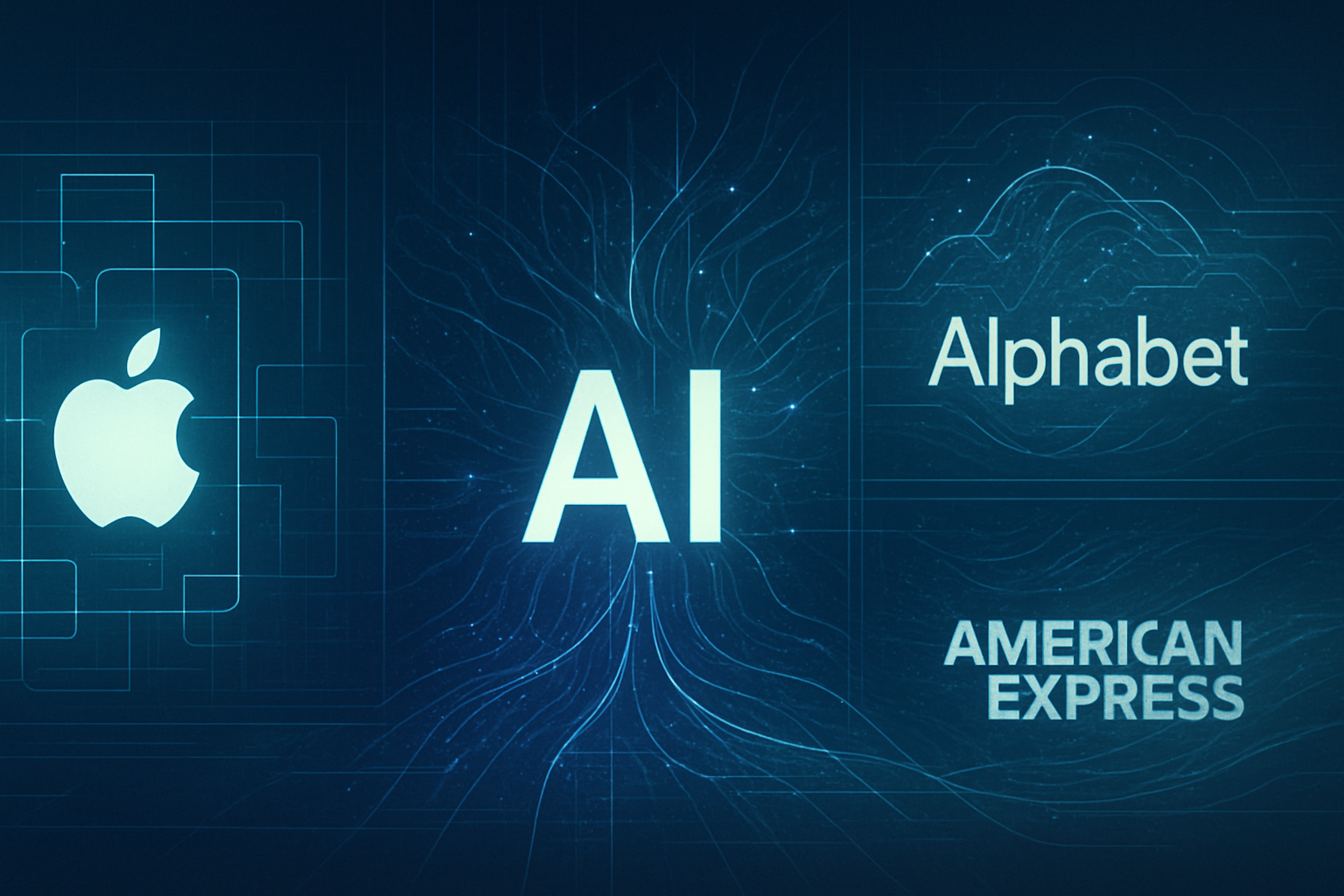
    The recent significant investment in Alphabet (NASDAQ: GOOGL), coupled with long-standing positions in Apple (NASDAQ: AAPL) and American Express (NYSE: AXP), highlights a nuanced strategy that prioritizes AI's application within proven business models. This article delves into these top three AI-related holdings, examining their individual AI strategies, technical capabilities, and how Berkshire Hathaway's quiet conviction in these tech-forward giants could reshape perceptions of traditional value investing in an AI-driven era.

    The AI Engines Within: Apple, Alphabet, and American Express's Technical Prowess

    Berkshire Hathaway's top three AI-related holdings—Apple, Alphabet, and American Express—each demonstrate distinct yet powerful approaches to integrating Artificial Intelligence into their operations and product offerings. Their technical capabilities showcase the diverse applications of AI, from on-device intelligence to vast cloud-based ecosystems and sophisticated financial fraud detection.

    Apple (NASDAQ: AAPL), Berkshire's largest holding, is a pioneer in on-device AI, a strategy that prioritizes user privacy and performance by executing AI tasks directly on the device rather than relying solely on cloud servers. Its custom-designed A-series and M-series chips feature dedicated Neural Engines, specialized hardware accelerators capable of performing trillions of operations per second. This enables features like Face ID for secure authentication, Siri for natural language processing, advanced computational photography (e.g., Deep Fusion, Photographic Styles), and personalized suggestions across iOS, iPadOS, and macOS. Apple's approach differs from purely cloud-centric models by offering immediate processing, reduced latency, and enhanced data privacy, as sensitive user data often remains on the device. This strategy has garnered praise from privacy advocates and positions Apple to deliver highly personalized and responsive AI experiences directly to its vast user base.

    Alphabet (NASDAQ: GOOGL), a substantial new investment for Berkshire, stands as a global titan in cloud-centric and platform-wide AI. Its AI capabilities span an enormous breadth, from powering the world's most used search engine to developing advanced autonomous driving systems. Technically, Alphabet leverages its vast data centers and proprietary Tensor Processing Units (TPUs) to train and deploy massive AI models. Its flagship generative AI model, Gemini, is a multimodal AI system designed to understand and operate across text, code, audio, image, and video. This technical depth allows Gemini to power new "AI Overviews" in Google Search, generate code, summarize content, and drive conversational AI experiences. Google Cloud offers a comprehensive suite of AI/ML services, including access to powerful models and infrastructure, including its Tensor Processing Units (TPUs), enabling businesses to integrate AI into their own operations. This approach contrasts with Apple's by focusing on large-scale data processing and model training in the cloud, offering unparalleled computational power and versatility for a wide array of AI applications.

    American Express (NYSE: AXP), another long-held Berkshire investment, exemplifies the critical role of AI in enterprise-level operational efficiency and risk management. While not a "tech" company in the traditional sense, American Express heavily relies on sophisticated machine learning algorithms for real-time fraud detection and prevention. These systems analyze billions of transactions, identifying anomalous patterns and potential threats with remarkable speed and accuracy, significantly reducing financial losses and enhancing security for cardholders. AI also underpins their credit risk assessment models, automating and improving the precision of lending decisions. Furthermore, AI-powered chatbots and virtual assistants are increasingly integrated into their customer service operations, providing personalized support and streamlining interactions. This application of AI differs from the other two by focusing on back-end operational intelligence, where AI's ability to process vast datasets and identify complex patterns directly translates into tangible business benefits, such as reduced fraud and improved customer experience.

    Competitive Implications and Market Positioning in the AI Era

    Berkshire Hathaway's strategic investments in Apple, Alphabet, and American Express carry significant competitive implications for the broader AI landscape, influencing tech giants, established financial institutions, and emerging startups alike. These holdings validate the enduring power of companies that deeply embed AI into their core value propositions, rather than treating it as a standalone feature.

    Apple's (NASDAQ: AAPL) robust on-device AI strategy positions it as a formidable competitor in the personal AI space, particularly as concerns around data privacy intensify. By performing AI tasks locally, Apple strengthens its privacy-centric brand image, potentially drawing users away from platforms with more extensive cloud data collection. This approach challenges other device manufacturers and software developers to develop more efficient on-device AI capabilities, driving innovation in edge computing and specialized AI hardware. Apple stands to benefit from continued consumer demand for secure, personalized, and high-performance AI experiences, reinforcing its ecosystem lock-in. Its competitive advantage lies in its vertically integrated hardware and software, allowing for optimized AI performance that others struggle to match.

    Alphabet (NASDAQ: GOOGL) is at the forefront of the generative AI race, and Berkshire's investment underscores confidence in its leadership position. Alphabet's vast research capabilities, extensive data resources, and powerful infrastructure (TPUs) give it a significant edge over many startups and even other tech giants in developing and deploying cutting-edge AI models like Gemini. This strengthens its competitive stance in search, cloud computing (Google Cloud), and potentially new AI-powered applications. Companies reliant on Google's advertising ecosystem will likely see enhanced targeting and efficiency through AI, while competitors in cloud AI will face intense pressure to match Google Cloud's offerings. Alphabet is poised to benefit from the increasing demand for advanced AI models and services, leveraging its scale to democratize AI access while maintaining its market dominance.

    American Express (NYSE: AXP), while not a direct AI product company, benefits immensely from its sophisticated use of AI in fraud detection and risk management. This provides a critical competitive advantage in the highly competitive financial services sector. By significantly reducing fraud losses and improving the accuracy of credit decisions, American Express can offer more secure and efficient services than competitors with less advanced AI capabilities. This technological edge translates into stronger customer trust and better financial performance. The company's strategic use of AI serves as a model for other traditional industries looking to leverage AI for operational excellence, demonstrating that AI's impact extends far beyond consumer-facing applications.

    Ultimately, Berkshire's investments suggest a belief that the greatest beneficiaries of AI will be those companies that can seamlessly integrate it to enhance existing, proven business models, rather than those built solely on speculative AI technologies. This creates a challenging environment for AI startups that lack established revenue streams or a clear path to profitability, while reinforcing the market positioning of tech giants and incumbents who can leverage AI at scale.

    Broader Significance: AI's Maturation and Investment Trends

    Berkshire Hathaway's calculated foray into AI through its major holdings signals a profound shift in the broader AI landscape and investment trends. It suggests that AI is moving beyond its nascent, experimental phase and is now a critical, foundational technology that underpins the operations and future growth of even the most established global enterprises. This isn't about speculative bets on unproven AI concepts; it's about recognizing AI as an indispensable tool for enhancing efficiency, intelligence, and competitive advantage in mature, cash-generating businesses.

    This investment strategy by a historically conservative investor like Warren Buffett validates the commercial viability and long-term impact of AI. It underscores that AI is not merely a technological fad but a fundamental driver of productivity and innovation across diverse sectors, from consumer electronics and internet services to financial operations. The move by Berkshire Hathaway, known for its emphasis on durable competitive moats, suggests that AI is now a crucial component of those moats for leading companies. This fits into the broader AI trend of "AI Everywhere," where AI is becoming embedded in virtually every product, service, and operational process, often invisibly to the end-user.

    Potential concerns, however, include the risk of over-reliance on AI for critical functions, the ethical implications of AI deployment, and the ongoing challenge of talent acquisition and retention in the AI space. While Berkshire's chosen companies are well-equipped to manage these, smaller entities might struggle. Comparisons to previous AI milestones, such as the rise of expert systems or early machine learning, reveal a key difference: today's AI, particularly generative AI, is far more versatile, capable of autonomous learning, and integrated into complex, real-world systems. This marks a maturation from niche applications to pervasive utility, making it a more attractive, albeit still complex, investment for long-term holders.

    The wider significance also lies in how this influences traditional investment philosophies. It demonstrates that even value investors, who prioritize understanding a business's fundamentals, must now account for technological integration, particularly AI, as a core part of that fundamental analysis. It's a recognition that ignoring AI means ignoring a critical factor in a company's future success and resilience. This could encourage other large, traditional funds to re-evaluate their tech exposure, not just in pure-play tech but in how established companies are leveraging advanced technologies to maintain their market leadership.

    Future Developments: The Horizon of AI Integration

    Looking ahead, the trajectory of AI integration within Berkshire Hathaway's top holdings—Apple (NASDAQ: AAPL), Alphabet (NASDAQ: GOOGL), and American Express (NYSE: AXP)—promises significant advancements and evolving applications. Experts predict a continued deepening of AI's role, moving beyond current capabilities to more predictive, personalized, and autonomous functions across these diverse sectors.

    For Apple, the future will likely see an expansion of its on-device AI capabilities, pushing the boundaries of edge computing. Expect more sophisticated and contextually aware Siri interactions, proactive health monitoring features powered by AI, and even more advanced computational photography and video capabilities. Near-term developments will focus on enhancing user privacy while delivering hyper-personalized experiences, potentially through federated learning techniques that allow AI models to learn from user data without it ever leaving the device. Long-term, Apple's investment in its own silicon will enable it to run even larger and more complex AI models locally, potentially leading to truly intelligent personal assistants that anticipate needs and manage complex tasks autonomously. Challenges will include balancing performance with battery life and ensuring the ethical deployment of increasingly powerful on-device AI.

    Alphabet's (NASDAQ: GOOGL) future in AI is geared towards ubiquitous intelligence across its vast ecosystem. Near-term, expect Gemini and its successors to become even more powerful and multimodal, integrating seamlessly into Google Search, Workspace, and Android. The development of more specialized AI models for various industries, delivered through Google Cloud, will also be a key focus. Long-term, Alphabet is likely to push the boundaries of AI research into areas like artificial general intelligence (AGI), advanced robotics, and more sophisticated autonomous systems (e.g., Waymo). The company will continue to leverage its massive data and computational resources to maintain its lead in foundational AI models. Challenges include managing the ethical implications of powerful generative AI, ensuring responsible deployment, and navigating the intense global competition in AI development.

    American Express (NYSE: AXP) will further entrench AI in its financial operations, moving towards even more proactive and predictive capabilities. Near-term, this means enhanced real-time fraud prevention, leveraging AI to identify emerging fraud patterns faster and with greater accuracy. AI will also play a larger role in personalized financial advice, credit scoring, and customer relationship management, offering tailored products and services based on individual spending habits and financial goals. Long-term, expect AI to drive greater automation in back-office operations, potentially leading to more efficient processing of claims, disputes, and regulatory compliance. The challenge for American Express will be to continuously adapt its AI models to evolving fraud tactics and market conditions, while ensuring fairness and transparency in AI-driven financial decisions.

    Experts predict that the convergence of these AI advancements will lead to more intelligent environments, where devices, services, and financial systems anticipate user needs and operate with greater autonomy. The coming years will be crucial for these companies to solidify their AI strategies, address ethical considerations, and continue to innovate at a rapid pace to maintain their competitive edge in an increasingly AI-driven world.

    A New Chapter for Value Investing in the Age of AI

    Berkshire Hathaway's significant, albeit indirect, investments in Artificial Intelligence through its major holdings in Apple (NASDAQ: AAPL), Alphabet (NASDAQ: GOOGL), and American Express (NYSE: AXP) mark a pivotal moment in the intersection of traditional value investing and cutting-edge technology. The key takeaway is clear: AI is no longer a niche technology for speculative ventures but a fundamental enabler for established, high-quality businesses to sustain and grow their competitive advantages. This strategic embrace by one of the world's most respected conglomerates signals a maturation of AI, validating its commercial impact across diverse sectors.

    This development holds significant importance in AI history, demonstrating how even the most cautious investors are recognizing AI's profound and pervasive influence. It underscores that the "smart money" is not necessarily chasing the latest AI startup but rather identifying companies that can effectively integrate AI to enhance existing, durable business models. This approach mitigates the inherent risks of early-stage tech investments while still capturing the immense upside potential of AI's transformative power. The strategic choices of Apple's on-device intelligence, Alphabet's cloud-centric and platform-wide AI dominance, and American Express's operational AI prowess illustrate a comprehensive understanding of where AI truly adds value.

    For the long term, this strategy suggests that companies capable of seamlessly weaving AI into their core operations will be the ones that thrive. It redefines what constitutes a "durable business" in the 21st century, firmly placing technological leadership, particularly in AI, as a critical component. Investors should watch for how these companies continue to innovate their AI capabilities, how they address ethical considerations surrounding AI deployment, and how their AI-driven efficiencies and product enhancements translate into sustained financial performance. The coming weeks and months will reveal further details of their AI roadmaps and how these investments continue to shape the future of AI-powered commerce and technology.


    This content is intended for informational purposes only and represents analysis of current AI developments.

    TokenRing AI delivers enterprise-grade solutions for multi-agent AI workflow orchestration, AI-powered development tools, and seamless remote collaboration platforms.
    For more information, visit https://www.tokenring.ai/.

  • Amazon Commits Staggering $50 Billion to Supercharge U.S. Government AI and Supercomputing Capabilities

    Amazon Commits Staggering $50 Billion to Supercharge U.S. Government AI and Supercomputing Capabilities

    In a monumental announcement that underscores the rapidly escalating importance of artificial intelligence in national infrastructure, Amazon (NASDAQ: AMZN) revealed on Monday, November 24, 2025, a staggering investment of up to $50 billion. This unprecedented commitment is earmarked to dramatically enhance AI and supercomputing capabilities specifically for U.S. government customers through its Amazon Web Services (AWS) division. The move is poised to be a game-changer, not only solidifying America's technological leadership but also redefining the symbiotic relationship between private innovation and public sector advancement.

    This colossal investment, one of the largest cloud infrastructure commitments ever directed at the public sector, signifies a strategic pivot towards embedding advanced AI and high-performance computing (HPC) into the very fabric of government operations. AWS CEO Matt Garman highlighted that the initiative aims to dismantle technological barriers, enabling federal agencies to accelerate critical missions spanning cybersecurity, scientific discovery, and national security. It directly supports the Administration's AI Action Plan, positioning the U.S. to lead the next generation of computational discovery and decision-making on a global scale.

    Unpacking the Technological Behemoth: A Deep Dive into AWS's Government AI Offensive

    The technical scope of Amazon's $50 billion investment is as ambitious as its price tag. The initiative, with ground-breaking anticipated in 2026, is set to add nearly 1.3 gigawatts of AI and high-performance computing capacity. This immense expansion will be strategically deployed across AWS's highly secure Top Secret, Secret, and GovCloud (US) Regions—environments meticulously designed to handle the most sensitive government data across all classification levels. The project involves the construction of new, state-of-the-art data centers, purpose-built with cutting-edge compute and networking technologies tailored for the demands of advanced AI workloads.

    Federal agencies will gain unprecedented access to an expansive and sophisticated suite of AWS AI services and hardware. This includes Amazon SageMaker AI for advanced model training and customization, and Amazon Bedrock for the deployment of complex AI models and agents. Furthermore, the investment will facilitate broader access to powerful foundation models, such as Amazon Nova and Anthropic Claude, alongside leading open-weights foundation models. Crucially, the underlying hardware infrastructure will see significant enhancements, incorporating AWS Trainium AI chips and NVIDIA AI infrastructure, ensuring that government customers have access to the pinnacle of AI processing power. This dedicated and expanded capacity is a departure from previous, more generalized cloud offerings, signaling a focused effort to meet the unique and stringent requirements of government AI at scale.

    Initial reactions from the AI research community and industry experts have been overwhelmingly positive, albeit with a healthy dose of scrutiny regarding implementation. Dr. Evelyn Reed, a leading AI policy analyst, commented, "This isn't just an investment; it's a declaration of intent. Amazon is essentially building the backbone for America's future AI-driven government, providing a secure sandbox for innovation that was previously fragmented or non-existent." Others point to the sheer scale of the power and cooling infrastructure required, highlighting the engineering marvel this project represents and its potential to set new industry standards for secure, high-density AI computing.

    Reshaping the AI Landscape: Competitive Dynamics and Market Implications

    Amazon's (NASDAQ: AMZN) $50 billion investment is poised to send ripples throughout the AI industry, fundamentally reshaping competitive dynamics among tech giants, specialized AI labs, and burgeoning startups. Clearly, AWS stands to be the primary beneficiary, solidifying its dominant position as the preferred cloud provider for sensitive government workloads. This move establishes a formidable competitive moat, as few, if any, other providers can match the scale, security accreditations, and integrated AI services that AWS will offer to the U.S. government.

    The competitive implications for major AI labs and other tech companies are significant. While companies like Microsoft (NASDAQ: MSFT) with Azure Government and Google (NASDAQ: GOOGL) with Google Cloud have also pursued government contracts, Amazon's commitment sets a new benchmark for dedicated infrastructure investment. This could pressure rivals to increase their own public sector AI offerings or risk falling behind in a crucial and rapidly growing market segment. For AI startups, this investment presents a dual opportunity and challenge. On one hand, it creates a massive platform where their specialized AI solutions, if compatible with AWS government environments, could find a vast new customer base. On the other hand, it raises the bar for entry, as startups may struggle to compete with the integrated, end-to-end solutions offered by a behemoth like AWS.

    The potential for disruption to existing products and services within the government tech space is substantial. Agencies currently relying on fragmented or less secure AI solutions may find themselves migrating to the centralized, high-security AWS environments. This could lead to a consolidation of government AI spending and a shift in procurement strategies. Amazon's strategic advantage lies in its ability to offer a comprehensive, secure, and scalable AI ecosystem, from infrastructure to foundation models, positioning it as an indispensable partner for national AI advancement and potentially disrupting smaller contractors who cannot offer a similar breadth of services.

    The Broader Canvas: National Security, Ethical AI, and Global Competition

    Amazon's (NASDAQ: AMZN) $50 billion investment is not merely a corporate expenditure; it's a strategic national asset that fits squarely into the broader AI landscape and the ongoing global technological arms race. This massive influx of compute capacity directly addresses a critical need for the U.S. to maintain and extend its lead in AI, particularly against geopolitical rivals like China, which are also heavily investing in AI infrastructure. By providing secure, scalable, and cutting-edge AI and supercomputing resources, the U.S. government will be better equipped to accelerate breakthroughs in areas vital for national security, economic competitiveness, and scientific discovery.

    The impacts are wide-ranging. From enhancing intelligence analysis and cybersecurity defenses to accelerating drug discovery for national health initiatives and improving climate modeling for disaster preparedness, the applications are virtually limitless. This investment promises to transform critical government missions, enabling a new era of data-driven decision-making and innovation. However, with great power comes potential concerns. The concentration of such immense AI capabilities within a single private entity, even one serving the government, raises questions about data privacy, algorithmic bias, and ethical AI governance. Ensuring robust oversight, transparency, and accountability mechanisms will be paramount to mitigate risks associated with powerful AI systems handling sensitive national data.

    Comparing this to previous AI milestones, Amazon's commitment stands out not just for its monetary value but for its targeted focus on government infrastructure. While past breakthroughs often centered on specific algorithms or applications, this investment is about building the foundational compute layer necessary for all future government AI innovation. It echoes the historical significance of projects like the ARPANET in laying the groundwork for the internet, but with the added complexity and ethical considerations inherent in advanced AI. This is a clear signal that AI compute capacity is now considered a national strategic resource, akin to energy or defense capabilities.

    The Road Ahead: Anticipating AI's Next Chapter in Government

    Looking ahead, Amazon's (NASDAQ: AMZN) colossal investment heralds a new era for AI integration within the U.S. government, promising both near-term and long-term transformative developments. In the near-term, we can expect a rapid acceleration in the deployment of AI-powered solutions across various federal agencies. This will likely manifest in enhanced data analytics for intelligence, more sophisticated cybersecurity defenses, and optimized logistical operations. The increased access to advanced foundation models and specialized AI hardware will empower government researchers and developers to prototype and deploy cutting-edge applications at an unprecedented pace.

    Long-term, this investment lays the groundwork for truly revolutionary advancements. We could see the development of highly autonomous systems for defense and exploration, AI-driven personalized medicine tailored for veterans, and sophisticated climate prediction models that inform national policy. The sheer scale of supercomputing capacity will enable scientific breakthroughs that were previously computationally intractable, pushing the boundaries of what's possible in fields like materials science, fusion energy, and space exploration. However, significant challenges remain, including attracting and retaining top AI talent within the government, establishing robust ethical guidelines for AI use in sensitive contexts, and ensuring interoperability across diverse agency systems.

    Experts predict that this move will catalyze a broader shift towards a "government-as-a-platform" model for AI, where secure, scalable cloud infrastructure provided by private companies becomes the default for advanced computing needs. What happens next will depend heavily on effective collaboration between Amazon (AWS) and government agencies, the establishment of clear regulatory frameworks, and continuous innovation to keep pace with the rapidly evolving AI landscape. The focus will be on transitioning from infrastructure build-out to practical application and demonstrating tangible benefits across critical missions.

    A New Frontier: Securing America's AI Future

    Amazon's (NASDAQ: AMZN) staggering $50 billion investment in AI and supercomputing for the U.S. government represents a pivotal moment in the history of artificial intelligence and national technological strategy. The key takeaway is clear: the U.S. is making an aggressive, large-scale commitment to secure its leadership in the global AI arena by leveraging the immense capabilities and innovation of the private sector. This initiative is set to provide an unparalleled foundation of secure, high-performance compute and AI services, directly addressing critical national needs from defense to scientific discovery.

    The significance of this development in AI history cannot be overstated. It marks a paradigm shift where the scale of private investment directly underpins national strategic capabilities in a domain as crucial as AI. It moves beyond incremental improvements, establishing a dedicated, robust ecosystem designed to foster innovation and accelerate decision-making across the entire federal apparatus. This investment underscores that AI compute capacity is now a strategic imperative, and the partnership between government and leading tech companies like Amazon (AWS) is becoming indispensable for maintaining a technological edge.

    In the coming weeks and months, the world will be watching for the initial phases of this ambitious project. Key areas to observe include the specifics of the data center constructions, the early adoption rates by various government agencies, and any initial use cases or pilot programs that demonstrate the immediate impact of this enhanced capacity. Furthermore, discussions around the governance, ethical implications, and security protocols for such a massive AI infrastructure will undoubtedly intensify. Amazon's commitment is not just an investment in technology; it's an investment in the future of national security, innovation, and global leadership, setting a new precedent for how nations will build their AI capabilities in the 21st century.


    This content is intended for informational purposes only and represents analysis of current AI developments.

    TokenRing AI delivers enterprise-grade solutions for multi-agent AI workflow orchestration, AI-powered development tools, and seamless remote collaboration platforms.
    For more information, visit https://www.tokenring.ai/.

  • Google Unveils Landmark AI Hardware Engineering Hub in Taiwan, Cementing Global AI Leadership

    Google Unveils Landmark AI Hardware Engineering Hub in Taiwan, Cementing Global AI Leadership

    In a significant move poised to reshape the landscape of artificial intelligence infrastructure, Google (NASDAQ: GOOGL) today, November 20, 2025, officially inaugurated its largest AI infrastructure hardware engineering center outside of the United States. Located in Taipei, Taiwan, this state-of-the-art multidisciplinary hub represents a monumental strategic investment, designed to accelerate the development and deployment of next-generation AI chips and server technologies that will power Google's global services and cutting-edge AI innovations, including its Gemini platform.

    The establishment of this new center, which builds upon Google's existing and rapidly expanding presence in Taiwan, underscores the tech giant's deepening commitment to leveraging Taiwan's unparalleled expertise in semiconductor manufacturing and its robust technology ecosystem. By bringing critical design, engineering, and testing capabilities closer to the world's leading chip foundries, Google aims to drastically reduce the development cycle for its advanced Tensor Processing Units (TPUs) and associated server infrastructure, promising to shave off up to 45% of deployment time for some projects. This strategic alignment not only strengthens Google's competitive edge in the fiercely contested AI race but also solidifies Taiwan's crucial role as a global powerhouse in the AI supply chain.

    Engineering the Future of AI: Google's Deep Dive into Custom Silicon and Server Design

    At the heart of Google's new Taipei facility lies a profound commitment to pioneering the next generation of AI infrastructure. The center is a multidisciplinary powerhouse dedicated to the end-to-end lifecycle of Google's proprietary AI chips, primarily its Tensor Processing Units (TPUs). Engineers here are tasked with the intricate design and rigorous testing of these specialized Application-Specific Integrated Circuits (ASICs), which are meticulously crafted to optimize neural network machine learning using Google's TensorFlow software. This involves not only the fundamental chip architecture but also their seamless integration onto motherboards and subsequent assembly into high-performance servers designed for massive-scale AI model training and inference.

    A notable strategic evolution revealed by this expansion is Google's reported partnership with Taiwan's MediaTek (TWSE: 2454) for the design of its seventh-generation TPUs, with production slated for the coming year. This marks a significant departure from previous collaborations, such as with Broadcom (NASDAQ: AVGO), and is widely seen as a move to leverage MediaTek's strong ties with Taiwan Semiconductor Manufacturing Company (TWSE: 2330, NYSE: TSM) (TSMC) and potentially achieve greater cost efficiencies. This shift underscores Google's proactive efforts to diversify its supply chain and reduce reliance on third-party AI chip providers, such as NVIDIA (NASDAQ: NVDA), by cultivating a more self-sufficient AI hardware ecosystem. Early job postings for the Taiwan facility, seeking "Graduate Silicon Engineer" and "Tensor Processing Unit designer," further emphasize the center's deep involvement in core chip design and ASIC development.

    This intensified focus on in-house hardware development and its proximity to Taiwan's world-leading semiconductor ecosystem represents a significant departure from previous approaches. While Google has maintained a presence in Taiwan for years, including an Asia-Pacific data center and consumer electronics hardware development for products like Pixel, Fitbit, and Nest, this new center centralizes and elevates its AI infrastructure hardware strategy. The co-location of design, engineering, manufacturing, and deployment resources is projected to dramatically "reduce the deployment cycle time by up to 45% on some projects," a critical advantage in the fast-paced AI innovation race. The move is also interpreted by some industry observers as a strategic play to mitigate potential supply chain bottlenecks and strengthen Google's competitive stance against dominant AI chipmakers.

    Initial reactions from both the AI research community and industry experts have been overwhelmingly positive. Taiwanese President Lai Ching-te lauded the investment as a "show of confidence in the island as a trustworthy technology partner" and a "key hub for building secure and trustworthy AI." Aamer Mahmood, Google Cloud's Vice President of Platforms Infrastructure Engineering, echoed this sentiment, calling it "not just an investment in an office, it's an investment in an ecosystem, a testament to Taiwan's place as an important center for global AI innovation." Experts view this as a shrewd move by Google to harness Taiwan's unique "chipmaking expertise, digital competitiveness, and trusted technology ecosystem" to further solidify its position in the global AI landscape, potentially setting new benchmarks for AI-oriented hardware.

    Reshaping the AI Landscape: Competitive Implications and Strategic Advantages

    Google's (NASDAQ: GOOGL) ambitious expansion into AI hardware engineering in Taiwan sends a clear signal across the tech industry, poised to reshape competitive dynamics for AI companies, tech giants, and startups alike. For Google, this strategic move provides a formidable array of advantages. The ability to design, engineer, manufacture, and deploy custom AI chips and servers within Taiwan's integrated technology ecosystem allows for unprecedented optimization. This tight integration of hardware and software, tailored specifically for Google's vast AI workloads, promises enhanced performance, greater efficiency for its cloud services, and a significant acceleration in development cycles, potentially reducing deployment times by up to 45% on some critical projects. Furthermore, by taking greater control over its AI infrastructure, Google bolsters its supply chain resilience, diversifying operations outside the U.S. and mitigating potential geopolitical risks.

    The competitive implications for major AI labs and tech companies are substantial. Google's deepened commitment to in-house AI hardware development intensifies the already heated competition in the AI chip market, placing more direct pressure on established players like NVIDIA (NASDAQ: NVDA). While NVIDIA's GPUs remain central to the global AI boom, the trend of hyperscalers developing their own silicon suggests a long-term shift where major cloud providers aim to reduce their dependence on third-party hardware. This could prompt other cloud giants, such as Microsoft (NASDAQ: MSFT), Amazon (NASDAQ: AMZN), and Meta (NASDAQ: META), who also rely heavily on Taiwanese assemblers for their AI server infrastructure, to re-evaluate their own strategies, potentially leading to increased in-house R&D or even closer partnerships with Taiwanese manufacturers to secure critical resources and talent.

    Taiwan's robust tech ecosystem stands to be a primary beneficiary of Google's investment. Companies like Taiwan Semiconductor Manufacturing Company (TWSE: 2330, NYSE: TSM) (TSMC), the world's largest contract chipmaker, will continue to be crucial for producing Google's advanced TPUs. Additionally, Taiwanese server manufacturers, such as Quanta Computer Inc. (TWSE: 2382), a leading supplier for AI data centers, and various component suppliers specializing in power solutions (e.g., Delta Electronics Inc. (TWSE: 2308)) and cooling systems (e.g., Asia Vital Components Co. (TWSE: 3016)), are poised for increased demand and collaboration opportunities. This influx of investment also promises to foster growth in Taiwan's highly skilled engineering talent pool, creating hundreds of new jobs in hardware engineering and AI infrastructure.

    While Google's custom hardware could lead to superior performance-to-cost ratios for its own AI services, potentially disrupting its reliance on commercially available AI accelerators, the impact on startups is more nuanced. Local Taiwanese startups specializing in niche AI hardware components or advanced manufacturing techniques may find new opportunities for partnerships or investment. However, startups directly competing with Google's in-house AI hardware efforts might face a formidable, vertically integrated competitor. Conversely, those building AI software or services that can leverage Google's rapidly advancing and optimized infrastructure may discover new platforms for innovation, ultimately benefiting from the increased capabilities and efficiency of Google's AI backend.

    A New Nexus in the Global AI Ecosystem: Broader Implications and Geopolitical Undercurrents

    Google's (NASDAQ: GOOGL) establishment of its largest AI infrastructure hardware engineering center outside the U.S. in Taiwan is more than just a corporate expansion; it represents a pivotal moment in the broader AI landscape, signaling a deepening commitment to specialized hardware and solidifying Taiwan's indispensable role in the global tech supply chain. This move directly addresses the escalating demand for increasingly sophisticated and efficient hardware required to power the booming AI industry. By dedicating a multidisciplinary hub to the engineering, development, and testing of AI hardware systems—including the integration of its custom Tensor Processing Units (TPUs) onto motherboards and servers—Google is firmly embracing a vertical integration strategy. This approach aims to achieve greater control over its AI infrastructure, enhance efficiency, reduce operational costs, and strategically lessen its dependence on external GPU suppliers like NVIDIA (NASDAQ: NVDA), a critical dual-track strategy in the ongoing AI hardware showdown.

    The impacts of this center are far-reaching. For Google, it significantly strengthens its internal AI capabilities, enabling accelerated innovation and deployment of its AI models, such as Gemini, which increasingly leverage its own TPU chips. For Taiwan, the center elevates its status beyond a manufacturing powerhouse to a high-value AI engineering and innovation hub. Taiwanese President Lai Ching-te emphasized that the center highlights Taiwan as a "key hub for building secure and trustworthy AI," reinforcing its engineering talent and attracting further high-tech investment. Across the broader AI industry, Google's successful TPU-first strategy could act as a catalyst, fostering more competition in AI hardware and potentially leading other tech giants to pursue similar custom AI hardware solutions, thus diversifying the industry's reliance on a single type of accelerator. Moreover, this investment reinforces the deep technological partnership between the United States and Taiwan, positioning Taiwan as a secure and trustworthy alternative for AI technology development amidst rising geopolitical tensions with China.

    Despite the overwhelmingly positive outlook, potential concerns warrant consideration. Taiwan's strategic value in the tech supply chain is undeniable, yet its geopolitical situation with China remains a precarious factor. Concentrating critical AI hardware development in Taiwan, while strategically sound from a technical standpoint, could expose global supply chains to resilience challenges. This concern is underscored by a broader trend among U.S. cloud giants, who are reportedly pushing Taiwanese suppliers to explore "twin-planting" approaches, diversifying AI hardware manufacturing closer to North America (e.g., Mexico) to mitigate such risks, indicating a recognition of the perils of over-reliance on a single geographic hub. It is important to note that while the vast majority of reports from November 2025 confirm the inauguration and expansion of this center, a few isolated, potentially anomalous reports from the same date mentioned Google ceasing or discontinuing major AI infrastructure investment in Taiwan; however, these appear to be misinterpretations given the consistent narrative of expansion across reputable sources.

    This new center marks a significant hardware-centric milestone, building upon and enabling future AI breakthroughs, much like the evolution from general-purpose CPUs to specialized GPUs for parallel processing. Google has a long history of hardware R&D in Taiwan, initially focused on consumer electronics like Pixel phones since acquiring HTC's smartphone team in 2017. This new AI hardware center represents a profound deepening of that commitment, shifting towards the core AI infrastructure that underpins its entire ecosystem. It signifies a maturing phase of AI where specialized hardware is paramount for pushing the boundaries of model complexity and efficiency, ultimately serving as a foundational enabler for Google's next generation of AI software and models.

    The Road Ahead: Future Developments and AI's Evolving Frontier

    In the near term, Google's (NASDAQ: GOOGL) Taiwan AI hardware center is poised to rapidly become a critical engine for the development and rigorous testing of advanced AI hardware systems. The immediate focus will be on accelerating the integration of specialized AI chips, particularly Google's Tensor Processing Units (TPUs), onto motherboards and assembling them into high-performance servers. The strategic co-location of design, engineering, manufacturing, and deployment elements within Taiwan is expected to drastically reduce the deployment cycle time for some projects by up to 45%, enabling Google to push AI innovations to its global data centers at an unprecedented pace. The ongoing recruitment for hundreds of hardware engineers, AI infrastructure specialists, and manufacturing operations personnel signals a rapid scaling of the center's capabilities.

    Looking further ahead, Google's investment is a clear indicator of a long-term commitment to scaling specialized AI infrastructure globally while strategically diversifying its operational footprint beyond the United States. This expansion is seen as an "investment in an ecosystem," designed to solidify Taiwan's status as a critical global hub for AI innovation and a trusted partner for developing secure and trustworthy AI. Google anticipates continuous expansion, with hundreds more staff expected to join the infrastructure engineering team in Taiwan, reinforcing the island's indispensable link in the global AI supply chain. The advanced hardware and technologies pioneered here will continue to underpin and enhance Google's foundational products like Search and YouTube, as well as drive the cutting-edge capabilities of its Gemini AI platform, impacting billions of users worldwide.

    However, the path forward is not without its challenges, primarily stemming from the complex geopolitical landscape surrounding Taiwan, particularly its relationship with China. The Taiwanese government has explicitly advocated for secure and trustworthy AI partners, cautioning against Chinese-developed AI systems. This geopolitical tension introduces an element of risk to global supply chains and underscores the motivation for tech giants like Google to diversify their operational bases. It's crucial to acknowledge a conflicting report, published around the same time as the center's inauguration (November 20, 2025), which claimed the closure of Google's "largest AI infrastructure hardware engineering center outside the United States, located in Taiwan," citing strategic realignment and geopolitical tensions in late 2024. However, the overwhelming majority of current, reputable reports confirm the recent opening and expansion of this facility, suggesting the contradictory report may refer to a different project, be speculative, or contain outdated information, highlighting the dynamic and sometimes uncertain nature of high-tech investments in politically sensitive regions.

    Experts widely predict that Taiwan will continue to solidify its position as a central and indispensable player in the global AI supply chain. Google's investment further cements this role, leveraging Taiwan's "unparalleled combination of talent, cost, and speed" for AI hardware development. This strategic alignment, coupled with Taiwan's world-class semiconductor manufacturing capabilities (like TSMC (TWSE: 2330, NYSE: TSM)) and expertise in global deployment, positions the island to be a critical determinant of the pace and direction of the global AI boom, projected to reach an estimated US$1.3 trillion by 2032. Analysts foresee other major U.S. tech companies following suit, increasing their investments in Taiwan to tap into its highly skilled engineering talent and robust ecosystem for building advanced AI systems.

    A Global Hub for AI Hardware: Google's Strategic Vision Takes Root in Taiwan

    Google's (NASDAQ: GOOGL) inauguration of its largest AI infrastructure hardware engineering center outside of the United States in Taipei, Taiwan, marks a watershed moment, solidifying the island's pivotal and increasingly indispensable role in global AI development and supply chains. This strategic investment is not merely an expansion but a profound commitment to accelerating AI innovation, promising significant long-term implications for Google's global operations and the broader AI landscape. The multidisciplinary hub, employing hundreds of engineers, is set to become the crucible for integrating advanced chips, including Google's Tensor Processing Units (TPUs), onto motherboards and assembling them into the high-performance servers that will power Google's global data centers and its suite of AI-driven services, from Search and YouTube to the cutting-edge Gemini platform.

    This development underscores Taiwan's unique value proposition: a "one-stop shop for AI-related hardware," encompassing design, engineering, manufacturing, and deployment. Google's decision to deepen its roots here is a testament to Taiwan's unparalleled chipmaking expertise, robust digital competitiveness, and a comprehensive ecosystem that extends beyond silicon to include thermal management, power systems, and optical interconnects. This strategic alignment is expected to drive advancements in energy-efficient AI infrastructure, building on Google's existing commitment to "green AI data centers" in Taiwan, which incorporate solar installations and water-saving systems. The center's establishment also reinforces the deep technological partnership between the U.S. and Taiwan, positioning the island as a secure and trustworthy alternative for AI technology development amidst global geopolitical shifts.

    In the coming weeks and months, the tech world will be closely watching several key indicators. We anticipate further announcements regarding the specific AI hardware developed and tested in Taipei and its deployment in Google's global data centers, offering concrete insights into the center's immediate impact. Expect to see expanded collaborations between Google and Taiwanese manufacturers for specialized AI server components, reflecting the "nine-figure volume of orders" for locally produced components. The continued talent recruitment and growth of the engineering team will signal the center's operational ramp-up. Furthermore, any shifts in geopolitical or economic dynamics related to China's stance on Taiwan, or further U.S. initiatives to strengthen supply chains away from China, will undoubtedly highlight the strategic foresight of Google's significant investment. This landmark move by Google is not just a chapter but a foundational volume in the unfolding history of AI, setting the stage for future breakthroughs and solidifying Taiwan's place at the epicenter of the AI hardware revolution.


    This content is intended for informational purposes only and represents analysis of current AI developments.

    TokenRing AI delivers enterprise-grade solutions for multi-agent AI workflow orchestration, AI-powered development tools, and seamless remote collaboration platforms.
    For more information, visit https://www.tokenring.ai/.

  • Navigating the AI Frontier: Valuation Concerns Loom Over TSX Penny Stocks Amidst Canadian Market’s AI Gold Rush

    Navigating the AI Frontier: Valuation Concerns Loom Over TSX Penny Stocks Amidst Canadian Market’s AI Gold Rush

    The Canadian market is currently experiencing a fascinating dichotomy in its approach to Artificial Intelligence (AI) investments. While the transformative potential of AI elicits widespread enthusiasm, a growing undercurrent of caution regarding valuations, particularly within the speculative realm of TSX penny stocks, is becoming increasingly palpable. This blend of speculative fervor and prudent skepticism defines the immediate landscape, as investors grapple with separating genuine innovation from inflated hype in the burgeoning AI sector.

    The prevailing sentiment, particularly concerning AI-related TSX penny stocks, is one of "palpable tension" between groundbreaking opportunity and significant risk. Early November 2025 saw global stock markets, including the tech-heavy Nasdaq and S&P 500, endure sharp declines driven by intensified valuation fears, drawing unsettling parallels to the dot-com bubble of the late 1990s. Prominent financial figures, such as Jamie Dimon of JP Morgan, have cautioned that a substantial portion of current AI investments might ultimately be wasted, while veteran investor Mark Mobius has even predicted a potential 40% crash in AI stocks. Despite these warnings, a "robust underlying demand for AI persists," leading to instances of "dip buying" and subsequent recovery in some prominent AI stocks around November 10, 2025. This suggests a lingering belief among some investors in AI's long-term potential, even amidst short-term volatility. The immediate significance of these valuation concerns lies in the potential for "rapid and severe devaluations if investor sentiment shifts," a risk amplified in the volatile penny stock segment.

    Dissecting the AI Valuation Conundrum in Canada

    The AI valuation concerns in the Canadian market, especially for TSX penny stocks, are multifaceted, stemming from both the inherent nature of emerging technologies and specific market dynamics. A significant factor is the widespread speculative enthusiasm that has led to concerns about an "AI bubble" and potentially inflated valuations. There's a noticeable disconnect between the market's excitement for AI's transformative power and the tangible, sustainable profitability of many AI-focused companies, particularly smaller ones. This is evidenced by some firms with substantial AI applications reportedly trading at astronomical price-to-earnings (P/E) ratios, in some cases as high as 700 times earnings, signaling potentially unsustainable valuations. Furthermore, smaller firms often struggle to attract and retain specialized AI talent against larger tech giants, hindering their ability to innovate and justify lofty valuations.

    These concerns are amplified in the TSX penny stock segment, where investors are advised to be "wary of penny and micro AI stocks" due to their "immense price volatility." Many pure-play AI companies in Canada have small market caps, making rigorous evaluation of their fundamentals, competitive advantages, and business models crucial. Some of these penny stocks may even be pre-revenue, adding a layer of speculative risk. For instance, Altus Group (TSX:AIF), while not a pure AI penny stock, exhibits high valuation risk with a P/E ratio of 77.6 times earnings, far exceeding industry averages.

    While parallels to the dot-com bubble are evident in the speculative fervor and high valuations, several key differences exist. Unlike the dot-com era, where valuations often expanded without corresponding profit growth, the current early phase of AI has been characterized by earnings growth, particularly from large, profitable technology companies. Today's AI expansion is also largely supported by disciplined valuations and substantial private funding, with profitable global companies reinvesting significant free cash flow into essential physical infrastructure. This contrasts with the dot-com boom, which was often fueled by startups with limited revenue and easy access to speculative capital. The pervasive nature and broad impact of AI, affecting virtually every industry, also suggest a more foundational shift than previous technological revolutions.

    The AI research community and industry experts generally exhibit cautious optimism. While acknowledging the potential for market corrections, they maintain that the AI sector has long-term potential, advising against completely avoiding AI investments but emphasizing careful selection. Experts stress the importance of focusing on company fundamentals, competitive advantages, and business models, and identifying "choke points"—scarce inputs like specialized equipment and energy infrastructure—as more reliable investment opportunities. Financial strategists widely recommend diversified portfolios to mitigate risks associated with overconcentration in AI stocks. Recent market pullbacks are often interpreted as natural sentiment and valuation adjustments rather than indicators of deteriorating corporate fundamentals, given that corporate earnings often remain strong and AI spending plans continue unabated.

    AI's Ripple Effect: Corporate Beneficiaries and Competitive Pressures

    AI valuation concerns are profoundly influencing Canadian AI companies, from established tech giants to burgeoning startups and speculative TSX penny stocks, creating a complex landscape of both opportunity and risk. This environment is characterized by stretched equity valuations and a keen eye from regulators like the Bank of Canada.

    Larger, more established Canadian AI companies are generally better positioned to navigate market volatility due to their scale, diversified offerings, and existing customer bases. Many Canadian tech giants are actively integrating AI into their core operations to enhance competitiveness and drive growth. However, their high valuations often imply that significant future AI-driven success is already factored into their stock prices. Shopify (TSX:SHOP), a Canadian tech champion, is poised to benefit from AI adoption in e-commerce, though its high P/E ratio (around 70) suggests substantial AI-driven growth is already priced in. Open Text Corp (TSX:OTEX), an information management software provider, is incorporating AI and machine learning into its products, such as the OpenText Aviator platform. Kinaxis (TSX:KXS), a software company offering AI solutions for supply chain management, leverages AI to remain competitive but also carries a very high valuation (trailing P/E over 400). BCE (TSX:BCE), Canada's second-largest telecom giant, is making a significant bet on AI with its Bell AI Fabric initiative, building a large AI computing network. CGI Group (TSX:GIB.A), a major IT consulting firm, is also well-positioned to leverage AI in its diversified offerings. Brookfield Infrastructure (TSX:BIP.UN) is positioning itself as a key player by partnering to roll out advanced fuel cell technology to power its growing network of AI "factories."

    Canadian AI startups are attracting high valuation multiples (e.g., 25-30x EV/Revenue) in fundraising rounds, particularly those with proprietary technology, data quality, and defensibility. Companies like Cohere, a generative AI company focused on large language models for businesses, have raised significant venture capital, positioning them as major players. Clio, a legal-tech company leveraging AI, recently closed a substantial Series G funding round, reaching a $5 billion valuation. However, Canadian AI startups face challenges in securing sufficient early-stage funding locally, often looking to the U.S. for growth due due to perceived risk aversion among Canadian investors. Larger tech firms' control over essential resources like specialized chips, cloud computing, and vast proprietary data also creates significant barriers to entry for startups.

    TSX penny stocks with an AI focus are characterized by high risk and speculative fervor. While they offer opportunities for growth at lower price points, they are highly vulnerable to market corrections if their valuations are driven purely by "AI buzz" rather than solid fundamentals or viable business models. Potential beneficiaries among TSX penny stocks include companies that genuinely integrate AI into their core operations, develop essential AI-enabling technologies, or provide critical raw materials for AI infrastructure. Firms involved in extracting critical minerals like lithium, copper, and gold (e.g., BCM Resources, Golconda Gold, GoldMining Inc., Majestic Gold, Frontier Lithium, Dynasty Gold, Intrepid Metals) are positioned to benefit from the foundational demand driven by AI and clean energy technologies, despite being speculative investments.

    AI is viewed as a transformative force, capable of creating new industries and products, but also carrying the potential for significant disruption. Canadian businesses, in general, have been slower to adopt AI compared to global competitors, which could hinder their competitive advantage. The Competition Bureau of Canada has raised concerns about AI's impact on competition, particularly regarding the control large tech firms exert over essential resources. This dominance creates barriers for new entrants and startups, with the Bureau examining potential anti-competitive behaviors such as algorithmic pricing and vertical mergers. Companies that fail to integrate AI into their offerings or adapt their business models face significant headwinds.

    AI's Broader Canvas: Global Trends and Societal Implications

    The wider significance of AI valuation concerns in the Canadian market, especially concerning TSX penny stocks, is best understood within the broader context of global AI trends. The Canadian financial landscape, while innovative, is experiencing a palpable tension between the transformative promise of AI and concerns over potentially inflated valuations. The S&P/TSX Composite Index has recently seen declines in its technology sector due to these worries, with hopes for an AI-fueled rally fizzling when strong corporate earnings failed to sustain enthusiasm. Brad Simpson, Chief Wealth Strategist with TD Wealth, highlighted similarities between the current AI boom and the 2000s Tech Bubble, pointing to high valuations, negative equity risk premium, elevated multiples, and market exuberance. Despite Canada's strong position in the global AI landscape, ranking high in talent concentration, patent growth, and per-capita VC investment, the domestic market is not immune to these valuation pressures.

    Globally, the current AI frenzy has drawn frequent comparisons to the dot-com bubble, with some economists warning that the market crash could be even more severe. Heavy investment in AI has led to a disconnection between stock prices and earnings for major companies like Nvidia (NASDAQ:NVDA), Microsoft (NASDAQ:MSFT), and Apple (NASDAQ:AAPL). Valuations of leading AI tech firms are raising concerns about a "circular flow of investments" that might be artificially inflating stock values. For instance, OpenAI's valuation surged despite reported significant losses, and companies like Palantir (NYSE:PLTR) have traded at astronomical P/E ratios. This speculative enthusiasm, driven by future potential rather than current profitability, is a key characteristic of the current global AI investment trend.

    The potential impacts of AI valuation concerns are multifaceted. Overvaluation can lead to significant and sharp market corrections, as seen in early November 2025 when global stock markets experienced sharp declines, with eight of the most valuable AI-focused companies reportedly losing nearly $800 billion in market capitalization in a single week. AI enthusiasm can also lead to stock market valuations being driven by sentiment and psychological biases rather than fundamentals, increasing the risk of companies undertaking unprofitable investment projects. Furthermore, increased automation and AI adoption have coincided with elevated layoff activity in some sectors, particularly tech-heavy roles, raising concerns about potential reductions in consumption and corporate earnings.

    While similarities exist with past speculative periods like the dot-com bubble, there are also crucial differences. Unlike the dot-com era, where spending was often funded by "vendor financing," many large AI "hyperscalers" today are funding capital expenditures with strong internal cash flows, suggesting a potentially more durable and profitable cycle. The market integration of AI technologies is also occurring across multiple sectors simultaneously, potentially creating a broader economic impact than some previous technology-specific bubbles. Despite the comparisons, some experts suggest that the current market volatility reflects sentiment and valuation adjustments rather than a fundamental flaw in corporate earnings or AI spending plans, indicating a potential "mini-correction" rather than a full-blown bust.

    The Horizon: Anticipating AI's Next Chapters

    The Canadian market's journey with AI is far from over, with experts anticipating continued accelerated adoption and significant growth, yet also cautioning against potential market overvaluation and emphasizing the need for robust regulatory frameworks. The Canadian AI market is projected for substantial expansion, with the finance sector alone expected to grow from USD 1,020 million in 2023 to USD 9,014 million by 2032. The broader Canadian AI market is forecast to reach USD 35 billion by 2035.

    AI is poised to redefine operational models and client interactions within Canada's financial sector. Key applications on the horizon include enhancing operational efficiency and automation, providing personalized financial advice and 24/7 support through virtual assistants, utilizing advanced algorithms for fraud detection and risk management, and employing predictive analytics for market insights and portfolio optimization. In sectors like mining, AI is being applied to accelerate resource delineation for critical minerals needed in the AI boom.

    Despite the promise, several challenges confront the responsible development and adoption of AI in the Canadian market. The risk of an "AI bubble" and unsustainable valuations remains a significant concern. Ensuring data accuracy, mitigating biases in AI models, and maintaining client trust are crucial. The rapidly changing legal landscape for AI, with Canada's Artificial Intelligence and Data Act (AIDA) introduced in 2022, will require both technical and legal expertise for compliance. A shortage of skilled AI professionals remains a barrier, and Canada struggles with retaining its AI talent and building a robust commercialization ecosystem. Furthermore, Canada's rank in AI infrastructure dropped from 15th to 23rd globally between 2021 and 2023, highlighting a growing demand for compute capacity, which the Canadian government is addressing with a $2 billion investment in a Canadian AI Sovereign Compute Strategy.

    Experts predict that AI will continue to play a pivotal role in shaping the future of finance in Canada, necessitating continuous learning, adaptation, and regulatory evolution. While a "sharp downward revaluation" is possible, it might not be a systemic financial crisis, as AI investments are primarily funded by cash-rich tech companies rather than leverage. However, a correction could still impact consumer confidence and risk tolerance more broadly. Edward Jones advises investors to maintain exposure to AI for its long-term potential but avoid overconcentration, advocating for a diversified portfolio. The consensus suggests that the current pullback in AI valuations reflects sentiment adjustments rather than a deterioration of corporate fundamentals, with AI seen as essential for survival and competitive advantage.

    The AI Investment Compass: A Concluding Outlook

    The Canadian market for TSX penny stocks involved in Artificial Intelligence is navigating a period of intense innovation coupled with significant valuation concerns. The enthusiasm for AI's transformative power is undeniable, propelling substantial investment and fostering an environment ripe for technological advancement. However, this excitement has also fueled speculative fervor, leading to potentially inflated valuations, particularly within the more volatile penny stock segment. This dynamic underscores the critical importance of a discerning approach for investors seeking to capitalize on AI's promise while mitigating inherent risks.

    This period marks a pivotal moment in AI history, showcasing an unprecedented acceleration in AI capabilities and its profound impact on the global economy. AI is transitioning from theoretical potential to a tangible force driving market shifts and corporate strategies across all sectors. The long-term impact is expected to be a more technologically advanced and efficient global economy, with AI serving as a powerful engine for productivity gains and economic growth. Canada, through strategic investments in its AI infrastructure and talent, aims to be a key player in this transformation.

    For investors, the key takeaway is the heightened importance of thorough research, a long-term investment perspective, and the ability to differentiate between genuine, sustainable technological revolution and speculative excess. The risk of overconcentration in AI-related stocks is a crucial consideration for portfolio management. The coming weeks and months will demand close attention to corporate earnings and fundamentals, assessing whether massive capital expenditures by major AI platform companies translate into significant revenue and productivity gains. Investors should also monitor market breadth and concentration, looking for signs of systemic risk in "circular" deals and interdependent financing among AI companies. Regulatory developments, particularly concerning data, privacy, and market manipulation, will also be critical. While differences exist, investors should remain aware of parallels to past speculative bubbles like the dot-com crash.

    In conclusion, while the long-term potential of AI is immense, the immediate future demands a cautious and discerning approach from investors in the Canadian market, prioritizing fundamental analysis and risk management over speculative exuberance. The AI journey is just beginning, and navigating its complexities will be key to unlocking its full, sustainable value.


    This content is intended for informational purposes only and represents analysis of current AI developments.

    TokenRing AI delivers enterprise-grade solutions for multi-agent AI workflow orchestration, AI-powered development tools, and seamless remote collaboration platforms.
    For more information, visit https://www.tokenring.ai/.
  • SoftBank’s Nvidia Divestment Ignites Fresh AI Bubble Concerns Amidst Strategic AI Reorientation

    SoftBank’s Nvidia Divestment Ignites Fresh AI Bubble Concerns Amidst Strategic AI Reorientation

    In a move that sent ripples through the global technology market, SoftBank Group (TYO: 9984) completed the sale of its entire stake in chipmaking giant Nvidia (NASDAQ: NVDA) in October 2025. This significant divestment, generating approximately $5.83 billion, has not only bolstered SoftBank's war chest but has also reignited intense debates among investors and analysts about the potential for an "AI bubble," drawing parallels to the speculative frenzy of the dot-com era. The transaction underscores SoftBank's aggressive strategic pivot, as the Japanese conglomerate, under the visionary leadership of CEO Masayoshi Son, doubles down on its "all-in" bet on artificial intelligence, earmarking colossal sums for new ventures, most notably with OpenAI.

    The sale, which saw SoftBank offload 32.1 million Nvidia shares, represents a calculated decision to capitalize on Nvidia's meteoric valuation gains while simultaneously freeing up capital for what SoftBank perceives as the next frontier of AI innovation. While the immediate market reaction saw a modest dip in Nvidia's stock, falling between 1% and 2.3% in pre-market and early trading, the broader sentiment suggests a nuanced interpretation of SoftBank's actions. Rather than signaling a loss of faith in Nvidia's foundational role in AI, many analysts view this as an internal strategic adjustment by SoftBank to fund its ambitious new AI initiatives, including a reported $30 billion to $40 billion investment in OpenAI and participation in the monumental $500 billion Stargate data center project. This isn't SoftBank's first dance with Nvidia, having previously divested its holdings in 2019 before repurchasing shares in 2020, further illustrating its dynamic investment philosophy.

    SoftBank's Strategic Chess Move and Nvidia's Enduring AI Dominance

    SoftBank's decision to divest its Nvidia stake is rooted in a clear strategic imperative: to fuel its next wave of aggressive AI investments. As SoftBank's Chief Financial Officer, Yoshimitsu Goto, articulated, the sale was primarily driven by the need to fund substantial commitments to companies like OpenAI, rather than any specific concern about Nvidia's long-term prospects. This move highlights SoftBank's unwavering conviction in the transformative power of AI and its readiness to make bold capital allocations to shape the future of the industry. The proceeds from the sale provide SoftBank with significant liquidity to pursue its vision of becoming a central player in the evolving AI landscape, particularly in areas like large language models and AI infrastructure.

    Despite the divestment, Nvidia's market position remains robust, a testament to its indispensable role as the leading provider of the specialized hardware powering the global AI revolution. The company reached an astounding $5 trillion market capitalization in October 2025, underscoring the immense demand for its GPUs and other AI-centric technologies. While the immediate market reaction to SoftBank's sale was a slight downturn, the broader market largely absorbed the news, with many experts reaffirming Nvidia's fundamental strength and its critical contribution to AI development. This event, therefore, serves less as an indictment of Nvidia and more as an illustration of SoftBank's proactive portfolio management, designed to optimize its exposure to the most promising, albeit capital-intensive, areas of AI innovation. The sheer scale of SoftBank's new investments, particularly in OpenAI, signifies a strategic shift from being a significant investor in AI enablers like Nvidia to becoming a direct shaper of AI's future capabilities.

    Competitive Repercussions and Market Dynamics in the AI Arena

    SoftBank's strategic divestment and subsequent reinvestment have significant implications for the competitive landscape of the AI industry. For Nvidia (NASDAQ: NVDA), while the sale by a major institutional investor could theoretically put some downward pressure on its stock in the short term, the company's fundamental position as the preeminent supplier of AI chips remains unchallenged. Its technological lead and extensive ecosystem ensure that it continues to be a critical partner for virtually every major AI lab and tech giant. The focus now shifts to how Nvidia will continue to innovate and expand its offerings to meet the ever-growing demand for AI compute, especially as competitors attempt to carve out niches.

    Conversely, SoftBank's massive commitment to OpenAI signals a direct investment in the development of cutting-edge AI models and applications, potentially intensifying competition in the AI software and services space. This could benefit companies collaborating with or leveraging OpenAI's technologies, while posing a challenge to other AI labs and startups vying for dominance in similar domains. SoftBank's renewed focus also highlights the increasing importance of integrated AI solutions, from foundational models to data center infrastructure, potentially disrupting existing product strategies and fostering new partnerships across the industry. The competitive implications extend to other tech giants like Microsoft (NASDAQ: MSFT) and Google (NASDAQ: GOOGL), who are also heavily invested in AI research and development, as SoftBank's aggressive moves could accelerate the pace of innovation and market consolidation.

    The Broader AI Landscape: Bubble or Boom?

    The timing of SoftBank's Nvidia stake sale has inevitably intensified the "AI bubble" discourse that has been percolating through financial markets for months. Warnings from prominent Wall Street figures and short-sellers have fueled these jitters, questioning whether the stratospheric valuations of AI-driven companies, particularly those involved in foundational technologies, have become unsustainably inflated. Comparisons to the dot-com bubble of the late 1990s and early 2000s are frequently drawn, evoking memories of speculative excesses followed by painful market corrections.

    However, many industry veterans and long-term investors contend that the current AI boom is fundamentally different. They argue that AI's transformative potential is far more pervasive and deeply rooted in real-world applications across virtually every sector of the economy, from healthcare and finance to manufacturing and logistics. Unlike the dot-com era, where many internet companies lacked sustainable business models, today's leading AI firms are often generating substantial revenues and profits, underpinned by tangible technological advancements. SoftBank's own actions, despite selling Nvidia, reinforce this perspective; its continued and even escalated investments in other AI ventures like OpenAI and Arm Holdings (NASDAQ: ARM) underscore an unwavering belief in the long-term, multi-year growth trajectory of the AI sector. The consensus among many tech investors remains that AI adoption is still in its nascent stages, with significant untapped potential for foundational chipmakers and AI software developers alike.

    Charting the Future: AI's Next Frontier

    Looking ahead, the AI landscape is poised for continued rapid evolution, driven by relentless innovation and substantial capital inflows. In the near term, we can expect to see further advancements in large language models, multimodal AI, and specialized AI agents, leading to more sophisticated and autonomous applications. SoftBank's substantial investment in OpenAI, for instance, is likely to accelerate breakthroughs in generative AI and its deployment across various industries, from content creation to complex problem-solving. The race to build and operate advanced AI data centers, exemplified by the Stargate project, will intensify, demanding ever more powerful and efficient hardware, thus reinforcing the critical role of companies like Nvidia.

    Over the long term, experts predict that AI will become even more deeply embedded in the fabric of daily life and business operations, leading to unprecedented levels of automation, personalization, and efficiency. Potential applications on the horizon include highly intelligent personal assistants, fully autonomous transportation systems, and AI-driven scientific discovery platforms that can accelerate breakthroughs in medicine and material science. However, challenges remain, including the ethical implications of advanced AI, the need for robust regulatory frameworks, and ensuring equitable access to AI technologies. The ongoing debate about AI valuations and potential bubbles will also continue to be a key factor to watch, as the market grapples with balancing transformative potential against speculative enthusiasm. Experts predict that while some consolidation and market corrections may occur, the fundamental trajectory of AI development and adoption will remain upward, driven by its undeniable utility and economic impact.

    A Defining Moment in AI's Evolution

    SoftBank's strategic divestment of its Nvidia stake, while immediately sparking concerns about an "AI bubble," ultimately represents a pivotal moment in the ongoing evolution of artificial intelligence. It underscores a strategic reorientation by one of the world's most influential technology investors, moving from a broad-based bet on AI enablers to a more concentrated, aggressive investment in the cutting edge of AI development itself. This move, far from signaling a retreat from AI, signifies a deeper, more focused commitment to shaping its future.

    The event highlights the dynamic tension within the AI market: the undeniable, transformative power of the technology versus the inherent risks of rapid growth and potentially inflated valuations. While the "AI bubble" debate will undoubtedly continue, the sustained demand for Nvidia's (NASDAQ: NVDA) technology and SoftBank's (TYO: 9984) substantial reinvestment in other AI ventures suggest a robust and resilient sector. The key takeaways are clear: AI is not merely a passing fad but a foundational technology driving profound change, and while market sentiment may fluctuate, the long-term trajectory of AI innovation remains strong. In the coming weeks and months, all eyes will be on SoftBank's new investments, Nvidia's continued market performance, and the broader market's ability to discern sustainable growth from speculative excess in the ever-expanding universe of artificial intelligence.


    This content is intended for informational purposes only and represents analysis of current AI developments.

    TokenRing AI delivers enterprise-grade solutions for multi-agent AI workflow orchestration, AI-powered development tools, and seamless remote collaboration platforms.
    For more information, visit https://www.tokenring.ai/.

  • The Bond Market’s Take: Why the AI Bubble Won’t Pop Anytime Soon

    The Bond Market’s Take: Why the AI Bubble Won’t Pop Anytime Soon

    The specter of an "AI bubble" has loomed large over the tech landscape, drawing comparisons to past speculative frenzies. Yet, a deeper dive into the bond market's behavior reveals a more sanguine outlook, suggesting that the current enthusiasm for artificial intelligence is grounded in solid financial fundamentals, at least for the sector's leading players. Far from anticipating an imminent collapse, bond investors are demonstrating a robust confidence in the stability and sustained growth of the AI sector, particularly within established tech giants.

    This conviction is not merely speculative; it's anchored in the strong financial health, strategic investments, and prudent leverage of the companies at the forefront of AI innovation. While equity markets may experience volatility, the fixed income universe, often a bellwether for long-term economic stability, is signaling that the AI revolution is a foundational shift, not a fleeting trend. This article will delve into the financial indicators and expert opinions that underpin the bond market's surprising calm amidst the AI surge, arguing that a widespread "AI bubble" pop is a distant prospect.

    Unpacking the Financial Underpinnings: Why Bonds Signal Stability

    The bond market's assessment of the AI sector's stability is built upon several key financial indicators and strategic considerations that differentiate the current AI boom from historical speculative bubbles. A primary driver of this confidence is the exceptional financial health of the major technology companies spearheading AI development. These firms, often characterized by robust free cash flow, are largely self-funding their significant AI initiatives, mitigating the need for excessive debt. When they do tap the bond market, it's frequently to capitalize on favorable interest rates rather than out of financial necessity, showcasing a proactive and strategic approach to capital management.

    A striking testament to this confidence is the overwhelming demand for long-duration bonds issued by these AI-centric tech giants. For instance, companies like Alphabet (NASDAQ: GOOGL) have successfully issued 50-year maturity bonds, a term rarely seen for technology firms, at relatively low yields. This strong investor appetite signals a profound belief in the sustained stability and long-term cash-generating capabilities of these companies, extending over decades. Furthermore, the vast majority of companies with significant AI exposure in the fixed income universe boast investment-grade credit ratings. This critical indicator signifies that bond investors perceive these firms as having a low risk of default, providing a bedrock of stability for the sector. While capital expenditure on AI infrastructure, particularly data centers, is surging, key financial metrics such as capex-to-sales ratios remain below the extreme levels observed during historical bubbles like the dot-com era. Leverage among these leading companies is also generally contained, further reinforcing the bond market's view that current valuations are underpinned by strong fundamentals rather than speculative excess. Goldman Sachs Research has echoed this sentiment, suggesting that the rise in technology stock valuations is led by established firms with robust earnings, rather than a proliferation of poorly capitalized startups. Many AI-related deals are also structured as multi-year contracts, indicating a more planned and stable investment cycle rather than short-term speculative ventures, cementing the perception of a foundational, long-term shift.

    The AI Sector's Impact on Companies: Beneficiaries and Competitive Shifts

    The bond market's bullish stance on AI stability has profound implications for a diverse range of companies, from established tech giants to burgeoning startups, reshaping competitive landscapes and strategic priorities. Unsurprisingly, the primary beneficiaries are the mega-cap technology companies that are not only developing foundational AI models but also investing heavily in the underlying infrastructure. Companies like Microsoft (NASDAQ: MSFT), Amazon (NASDAQ: AMZN), Google (NASDAQ: GOOGL), and NVIDIA (NASDAQ: NVDA) are at the forefront, leveraging their substantial financial resources to fund massive R&D, acquire promising AI startups, and build out the necessary computing power. Their strong balance sheets and consistent cash flows make their debt instruments highly attractive to bond investors, allowing them to raise capital efficiently for further AI expansion. This creates a virtuous cycle where bond market confidence fuels further investment, solidifying their market dominance.

    For these tech behemoths, the competitive implications are significant. Their ability to attract long-term debt at favorable rates provides a strategic advantage, enabling them to outpace competitors in the race for AI talent, data, and computational resources. This deepens their moats, making it increasingly challenging for smaller players to compete on scale. Existing products and services are undergoing rapid transformation, with AI integration becoming a critical differentiator. For example, Microsoft's integration of OpenAI's technologies into its Azure cloud services and productivity suite (e.g., Copilot) is a prime example of leveraging AI to enhance core offerings and capture new market share. Similarly, Amazon's investments in AI for its AWS cloud platform and e-commerce operations reinforce its market positioning. The strategic advantage lies not just in developing AI, but in seamlessly embedding it into established ecosystems, creating sticky services and fostering customer loyalty.

    While large tech companies are clear winners, the bond market's perspective also indirectly influences the startup ecosystem. While direct bond issuance by early-stage AI startups is rare, the overall positive sentiment towards the AI sector encourages venture capital and private equity investment. This capital then flows into promising startups, albeit with a greater focus on those demonstrating clear pathways to profitability or offering synergistic technologies to the larger players. However, there's an emerging concern about "circular financing," where large AI companies invest in smaller firms with the explicit or implicit condition that they use the investor's products or platforms. Much of this private market financing lacks transparency, raising questions about true debt levels and potential dependencies. This dynamic suggests that while the AI sector as a whole is viewed positively, the benefits are disproportionately flowing to, and being channeled by, the established giants, potentially consolidating power and creating barriers to entry for truly independent innovators.

    Wider Significance: AI's Broader Economic Tapestry and Emerging Concerns

    The bond market's current assessment of AI stability is not merely a financial footnote; it's a significant indicator of how this transformative technology is fitting into the broader economic landscape and global trends. The confidence in AI's long-term growth, as reflected in bond yields and investor demand, suggests that the market views AI not as a fleeting technological fad, but as a fundamental driver of future productivity and economic restructuring. This aligns with a broader narrative of a new industrial revolution, where AI is poised to redefine industries from healthcare and finance to manufacturing and logistics. The multi-year contracts and sustained capital expenditure observed in the sector underscore a foundational shift rather than a speculative surge, distinguishing it from previous tech booms that were often characterized by rapid, unsustainable growth built on unproven business models.

    However, this widespread significance is not without its complexities and potential concerns, some of which are subtly reflected in bond market behavior. Interestingly, some research has shown that long-term U.S. Treasury, TIPS, and corporate bond yields have, at times, fallen after major AI model releases. This is counter-intuitive, as economic theory would typically predict rising yields if investors anticipated widespread and significant future economic growth from AI, leading to increased consumption and inflation. One hypothesis for this divergence is that bond investors may be factoring in potential labor market disruptions caused by AI. If AI leads to significant job displacement and increased inequality, it could dampen aggregate consumption and overall economic growth, even as specific AI-centric companies thrive, even as specific AI-centric companies thrive, thereby dampening overall economic growth expectations. This suggests a nuanced view where the success of a few dominant AI players might not automatically translate into broad-based economic prosperity, a critical distinction from the more uniformly positive economic outlook that often accompanies major technological breakthroughs.

    Comparisons to previous AI milestones and breakthroughs reveal a distinct difference in the current phase. Unlike earlier "AI winters" or periods of limited practical application, today's AI advancements, particularly in generative AI, are demonstrating immediate and tangible economic value. This practical utility, coupled with the financial strength of the companies driving it, lends credibility to the bond market's positive outlook. Yet, concerns about the long-term economics of AI infrastructure at scale persist. While investment is substantial, the precise timing of revenue realization and the ratio of incremental revenue to capital expenditure have reportedly declined, indicating that the path to widespread profitability for all AI ventures might be more challenging than currently perceived. Furthermore, the opacity of private market financing, with early signs of rising defaults in high-risk private debt, highlights potential vulnerabilities that the broader, more transparent public bond market may not fully capture, urging a cautious optimism.

    Future Developments: Navigating the AI Horizon

    Looking ahead, the bond market's current perspective on AI stability suggests several expected near-term and long-term developments. In the near term, we can anticipate continued robust investment in AI infrastructure, particularly in data centers, specialized AI chips, and advanced cooling technologies. This will likely translate into sustained demand for corporate bonds from major cloud providers and semiconductor manufacturers, who will continue to find favorable borrowing conditions due to their integral role in the AI ecosystem. The integration of AI into enterprise software and business processes is also expected to accelerate, driving demand for AI-powered solutions across various industries. Experts predict that the focus will shift from foundational model development to the deployment and fine-tuning of these models for specific industry applications, creating new revenue streams and investment opportunities.

    Longer term, the implications are even more profound. The widespread adoption of AI is poised to redefine productivity, potentially leading to significant economic growth, though unevenly distributed. We can expect to see AI becoming an embedded component in almost every technological product and service, from autonomous vehicles and personalized medicine to smart cities and advanced materials discovery. The challenges that need to be addressed include the ethical deployment of AI, regulatory frameworks to govern its use, and strategies to mitigate potential labor market dislocations. The "circular financing" concerns in the private market also warrant close monitoring, as opaque debt structures could pose risks if not managed carefully.

    Experts predict that the next wave of AI innovation will focus on areas like multimodal AI, which can understand and generate content across different data types (text, image, video, audio), and more efficient, smaller AI models that can run on edge devices. This shift could democratize AI access and reduce the massive computational costs currently associated with large language models. The bond market will likely continue to differentiate between established, profitable AI players and more speculative ventures, maintaining its role as a discerning arbiter of long-term financial health. The ongoing evolution of AI's impact on labor markets and broader economic indicators will be crucial for shaping future bond investor sentiment.

    Comprehensive Wrap-up: A Measured Confidence in AI's Trajectory

    In summary, the bond market's current stance on the AI sector offers a compelling counter-narrative to the prevailing "AI bubble" fears. Key takeaways include the strong financial health and prudent capital management of leading AI companies, the robust demand for their long-duration, investment-grade debt, and the strategic, multi-year nature of AI investments. These factors collectively indicate that the bond market views the AI revolution as a deeply rooted, foundational shift rather than a speculative frenzy, largely mitigating the risk of an imminent widespread "AI bubble" pop. The financial underpinnings are more robust than those observed in past speculative booms, with leverage contained and valuations supported by strong fundamentals, particularly among the sector's giants.

    This development holds significant historical importance in the context of AI. It marks a period where AI has transitioned from a promising research area to a tangible economic force, attracting long-term capital from conservative investors. The confidence expressed by the bond market underscores the perceived inevitability and transformative power of AI across industries. However, this assessment comes with a measured caution, as evidenced by some bond market signals that may reflect concerns about AI's broader economic impacts, such as potential labor market disruptions and the opaque nature of private market financing.

    For the long term, the bond market's confidence suggests sustained investment and growth in the AI sector, particularly for established players. What to watch for in the coming weeks and months includes how regulatory frameworks evolve to address AI's societal impacts, the continued financial performance of key AI infrastructure providers, and any shifts in long-term bond yields that might signal changing perceptions of AI's broader economic effects. The interplay between equity market enthusiasm and bond market prudence will be a critical barometer for the health and trajectory of the AI revolution.


    This content is intended for informational purposes only and represents analysis of current AI developments.

    TokenRing AI delivers enterprise-grade solutions for multi-agent AI workflow orchestration, AI-powered development tools, and seamless remote collaboration platforms.
    For more information, visit https://www.tokenring.ai/.
  • Microsoft’s $110 Billion AI Data Center Blitz: Reshaping the Future of Intelligent Infrastructure

    Microsoft’s $110 Billion AI Data Center Blitz: Reshaping the Future of Intelligent Infrastructure

    Microsoft (NASDAQ: MSFT) is embarking on an unprecedented infrastructure expansion, committing over $110 billion to build and upgrade AI-optimized data centers globally through 2028. This colossal investment, the largest in the company's history, signals a pivotal moment in the race for AI dominance, aiming to solidify Microsoft's position as the foundational infrastructure provider for the next generation of artificial intelligence. With over half of the fiscal year 2025's planned $80 billion investment earmarked for projects within the United States, this strategic move is set to profoundly impact the capabilities of AI, cloud computing, and the global technological landscape.

    The immediate significance of this massive outlay lies in its potential to dramatically accelerate the development and deployment of advanced AI models. By establishing a vast network of hyperscale AI factories, Microsoft is not merely increasing computing capacity; it is engineering a purpose-built ecosystem designed to handle the insatiable demands of multimodal AI, sovereign cloud solutions, and the company's rapidly expanding Copilot offerings. This aggressive push is a clear declaration of intent to outpace rivals and underpin the AI revolution with unparalleled computational power and integrated services.

    Engineering the AI Future: A Technical Deep Dive into Microsoft's Hyperscale Ambition

    Microsoft's new generation of AI data centers represents a significant leap forward in technical design and capability, fundamentally differing from traditional data center architectures. These facilities, often referred to as "AI factories," are meticulously engineered to support the intensive demands of large-scale AI and machine learning workloads, particularly the training and inference of massive language models.

    At the heart of these new centers lies an unprecedented deployment of advanced Graphics Processing Units (GPUs). Microsoft is integrating hundreds of thousands of cutting-edge NVIDIA (NASDAQ: NVDA) GB200 and GB300 GPUs, crucial for handling the parallel processing required by complex AI models. Each GB200 rack, for instance, offers 1.8 terabytes of GPU-to-GPU bandwidth and access to 14 terabytes of pooled memory, capable of processing an astounding 865,000 tokens per second. Beyond third-party hardware, Microsoft is also developing its own custom silicon, including the Azure Integrated HSM for enhanced security and a Data Processing Unit (DPU) to optimize cloud storage performance. This "end-to-end AI stack ownership" strategy, from silicon to software, aims for unparalleled performance and efficiency.

    The networking infrastructure within these AI data centers is equally revolutionary. High-speed interconnects like NVLink and NVSwitch operate at terabytes per second within racks, while InfiniBand and Ethernet fabrics deliver 800 Gbps across multiple racks in a full fat-tree non-blocking architecture. This "single flat networking" allows hundreds of thousands of GPUs to function cohesively as one massive AI supercomputer, with two-story rack layouts meticulously designed to minimize cable lengths and latency. Such specialized networking is a stark contrast to the leaf-and-spine cabling common in general-purpose data centers, which would be insufficient for AI's bandwidth requirements.

    Furthermore, the sheer power density of AI hardware necessitates advanced cooling solutions. Microsoft employs closed-loop liquid cooling systems that circulate cold liquid directly into servers, efficiently extracting heat with "zero water waste." Facilities like the Fairwater data center in Wisconsin, for example, utilize the second-largest water-cooled chiller plant globally. This specialized approach is critical, as AI hardware demands significantly more power (40-110 kW per rack, potentially over 200 kW) compared to the 5-10 kW per rack typical in traditional air-cooled data centers. Initial reactions from the AI research community and industry experts acknowledge the transformative potential of these investments, recognizing Microsoft's strategic move to maintain a leading position in the competitive AI cloud race. However, concerns about the immense resource requirements, particularly electricity and water, are also prominent, prompting Microsoft to emphasize sustainability efforts and carbon-negative water usage in its designs.

    Reshaping the AI Battleground: Industry Impact and Competitive Dynamics

    Microsoft's gargantuan investment in AI data centers is fundamentally reshaping the competitive landscape, creating significant strategic advantages for the tech titan while intensifying the "AI arms race" among its rivals and presenting both challenges and opportunities for other AI companies and startups.

    For tech giants like Amazon (NASDAQ: AMZN) with AWS and Alphabet (NASDAQ: GOOGL) with Google Cloud, Microsoft's aggressive expansion escalates the competition in cloud AI services. While AWS currently holds the largest cloud market share, Microsoft Azure is rapidly gaining ground, driven largely by its robust AI offerings. Google Cloud is also demonstrating strong growth, sometimes even surpassing Microsoft in year-on-year growth in certain quarters, particularly due to surging AI demand. The battleground has expanded beyond software to foundational infrastructure, compelling all major players to invest heavily in building out vast data center networks and developing custom AI chips, such as Google's TPUs and AWS's Graviton, Trainium, and Inferentia. The recent multi-year, $38 billion agreement between OpenAI and AWS for cloud infrastructure further highlights the fierce competition for powering leading AI models, demonstrating a shift towards multi-cloud strategies for AI workloads.

    Microsoft's strategic advantages stem from its end-to-end AI stack ownership, encompassing custom silicon, software, and physical infrastructure. Its deep partnership with OpenAI, including a reported $13 billion investment and a 27% stake, has provided early access to advanced AI models, enabling rapid integration into its core products like Azure AI Services and the Copilot suite. This allows Microsoft to offer a highly integrated and optimized AI ecosystem, appealing to enterprise clients. Furthermore, Microsoft is actively engaged in a "talent war," recruiting top AI researchers and engineers, sometimes from rival startups, to bolster its capabilities.

    For other AI companies and startups, Microsoft's massive investment creates a dual impact. On one hand, the astronomical costs associated with developing advanced AI—requiring tens of billions for specialized hardware, data centers, and top-tier talent—significantly raise the barrier to entry for smaller players, concentrating power among a few well-capitalized tech giants. On the other hand, opportunities arise through strategic partnerships and specialization. Microsoft is actively collaborating with and investing in specialized AI startups focusing on infrastructure, tooling, and niche applications. Startups providing "picks and shovels" for the AI gold rush, such as specialized AI hardware (e.g., Lambda, which secured a multi-billion dollar contract with Microsoft) or cloud platforms optimized for AI workloads, stand to benefit. However, smaller innovative companies risk becoming acquisition targets or being outcompeted if they cannot secure significant funding or differentiate themselves within the rapidly evolving industry.

    The Broader AI Canvas: Impacts, Concerns, and Historical Parallels

    Microsoft's monumental investment in AI data centers is a defining feature of the current AI landscape, fitting squarely into a period characterized by an "AI arms race" among tech giants and the explosive growth of generative AI. This commitment not only accelerates technological advancement but also raises significant societal and environmental concerns, drawing comparisons to previous technological revolutions.

    The broader AI landscape is currently defined by an unprecedented surge in demand for computational power, primarily driven by the development and deployment of large language models (LLMs). Private investment in generative AI reached $33.9 billion in 2024, an 8.5-fold increase from 2022, underscoring the rapid expansion of the sector. Microsoft's strategy to build multi-gigawatt, AI-first campuses, integrating GPU supply, custom chip ecosystems, and secure power sites, is a direct response to this demand. Projections suggest that approximately 33% of global data center capacity will be dedicated to AI by 2025, potentially reaching 70% by 2030, fundamentally reshaping the global digital infrastructure.

    The wider societal and technological impacts are profound. Economically, Microsoft emphasizes extensive job creation in construction, manufacturing, and technology, predicting the emergence of "next billion AI-enabled jobs." Technologically, this infrastructure fuels the rapid development and deployment of next-generation AI models and applications across diverse sectors like healthcare, finance, and transportation. By controlling the underlying infrastructure, Microsoft aims to exert significant influence over the foundation of future digital services, fostering platform dominance akin to the early days of the internet.

    However, these advancements come with substantial concerns. The environmental impact is perhaps the most pressing: AI data centers are incredibly energy-intensive. Global data center electricity consumption is projected to double by 2026, largely due to AI, straining electricity grids and potentially hindering clean energy goals. Microsoft's own carbon emissions have increased by 30% since 2020 due to AI infrastructure expansion, leading to a revision of its climate commitments. Furthermore, data centers require vast amounts of water for cooling, which can strain local water supplies. Ethical concerns also loom large, including the potential for AI tools to perpetuate biases from training data, new privacy and security risks due to sensitive data access, and the exacerbation of misinformation. The potential for job displacement due to AI automation remains a significant societal worry.

    Comparing this to previous AI milestones reveals a stark difference in scale and infrastructure centrality. While earlier AI breakthroughs, such as Deep Blue beating Garry Kasparov or AlphaGo defeating Lee Sedol, were remarkable, they did not necessitate the kind of massive, purpose-built physical infrastructure seen today. The current era of generative AI demands unprecedented computational resources, making data centers critical global infrastructure. The investment scale, with corporate AI investment reaching $252.3 billion in 2024, dwarfs previous periods, highlighting a fundamental shift where physical infrastructure is as crucial as the algorithms themselves. This period marks not just an algorithmic breakthrough, but an infrastructural revolution that will integrate AI into nearly every facet of business and daily life at an accelerated pace.

    The Horizon of AI: Future Developments and Looming Challenges

    Microsoft's massive AI data center investments are poised to drive significant near-term and long-term developments, unlocking a vast array of potential applications while simultaneously presenting formidable challenges that industry experts are closely monitoring.

    In the near term (2025-2026), Microsoft plans to rapidly expand and upgrade its infrastructure, deploying cutting-edge AI and cloud-computing hardware, including hundreds of thousands of NVIDIA GPUs. Facilities like the "Fairwater" AI data center in Wisconsin, expected to be operational in early 2026, exemplify this focus on building the world's most powerful AI data centers. Concurrently, Microsoft is accelerating its in-house chip development, with products like the Arm-based Cobalt CPU and Maia AI accelerator aiming to reduce reliance on third-party providers. The immediate impact will be a dramatic increase in accessible compute power, solidifying cloud environments as the dominant platform for AI/ML workloads and enabling the training of even more sophisticated frontier AI models.

    Looking further ahead, Microsoft's long-term vision extends to global reach, aiming to expand its international data center presence to 40 countries and seamlessly integrate these AI factories with its existing cloud network of over 400 data centers. The company is also committed to ambitious sustainability targets, striving to be carbon-negative by 2030 and water-positive through advanced cooling and atmospheric water capture. This long-term strategy includes mobilizing private capital through initiatives like the 'Global AI Infrastructure Investment Partnership' (GAIIP) to fund future data center and energy infrastructure projects. These developments will underpin a vast array of applications, from powering Microsoft's extensive Copilot ecosystem across its product suite to enabling advanced enterprise AI solutions, sovereign cloud environments for sensitive industries, and even "Copilot Edge Pods" for on-premise AI services in sectors like manufacturing and healthcare.

    However, the path forward is not without significant hurdles. The most pressing challenge identified by Microsoft CEO Satya Nadella is power availability, which he states is now a greater bottleneck than chip supply. The immense energy demands of AI data centers, projected to account for up to 49% of total data center power consumption by the end of 2025, are straining electricity grids globally. Environmental impact, supply chain issues, and market volatility, including concerns about potential overcapacity, also remain critical challenges. Experts predict a continued dominance of cloud environments for AI compute, with the AI compute layer remaining highly concentrated among a few tech giants. While some, like OpenAI CEO Sam Altman, predict a temporary scarcity of computing power followed by an oversupply, others warn of a potential "AI bubble" driven by speculative growth projections. Analysts at Morgan Stanley estimate global spending on data centers could reach nearly $3 trillion by 2028, highlighting the scale of this ongoing infrastructural revolution.

    The AI Inflection Point: A Comprehensive Wrap-Up

    Microsoft's staggering $110 billion investment in AI data centers marks a profound inflection point in the history of artificial intelligence and cloud computing. This unprecedented commitment is not merely an expansion of existing infrastructure; it is a strategic re-engineering of the foundational layer upon which the next era of AI will be built. The key takeaways are clear: Microsoft (NASDAQ: MSFT) is making an aggressive play for long-term AI dominance, betting on the imperative of hyperscale, purpose-built infrastructure to power the future of intelligent systems.

    The significance of this development in AI history cannot be overstated. It underscores the shift from purely algorithmic breakthroughs to a recognition that physical infrastructure—massive data centers, specialized GPUs, advanced cooling, and optimized networking—is equally critical for pushing the boundaries of AI. This investment dwarfs previous AI milestones in terms of capital expenditure and resource intensity, signaling a new era where the sheer scale of computational power is a primary determinant of AI capability. It positions Microsoft as a central enabler, not just a participant, in the AI revolution, providing the essential "picks and shovels" for the burgeoning AI gold rush.

    Looking ahead, the long-term impact will be transformative. We can expect accelerated innovation in AI models, a proliferation of AI-powered applications across every industry, and a deepening integration of AI into daily life through services like Copilot. However, this journey will be accompanied by significant challenges, particularly concerning energy consumption, environmental sustainability, and the ethical implications of pervasive AI. What to watch for in the coming weeks and months includes further announcements regarding specific data center projects, advancements in Microsoft's custom AI silicon, and the ongoing competitive responses from rival tech giants. The true measure of this investment will be its ability to not only drive technological progress but also address the complex societal and environmental questions it inevitably raises.


    This content is intended for informational purposes only and represents analysis of current AI developments.

    TokenRing AI delivers enterprise-grade solutions for multi-agent AI workflow orchestration, AI-powered development tools, and seamless remote collaboration platforms.
    For more information, visit https://www.tokenring.ai/.

  • Google’s AI Gambit: Billions Poured into SMBs for a Future Forged in Artificial Intelligence

    Google’s AI Gambit: Billions Poured into SMBs for a Future Forged in Artificial Intelligence

    Google (NASDAQ: GOOGL) is making substantial, ongoing investments in AI infrastructure and tools, specifically targeting the Small and Medium-sized Business (SMB) market. This isn't just a minor initiative; it's a major strategic bet on AI's future profitability and widespread adoption, aiming to deeply embed AI into the core operations of millions of SMBs. This aggressive push is designed to democratize access to advanced AI capabilities, enabling smaller businesses to compete more effectively, boost productivity, and drive measurable growth in an increasingly digital and AI-driven economy. Google's strategy positions AI not merely as an add-on but as the fundamental operating system for future business workflows, securing its own relevance and expanding its ecosystem. The company's multifaceted approach includes significant capital expenditure on core AI infrastructure, the development of user-friendly AI-powered tools, and extensive educational initiatives to onboard SMBs into this new technological paradigm.

    Deep Dive into Google's AI Arsenal for SMBs

    Google's commitment to the SMB AI sector is evident in its comprehensive suite of offerings, ranging from foundational infrastructure to specialized applications. Alphabet, Google's parent company, is investing billions into its AI infrastructure, recognizing it as the bedrock for its next growth phase. This robust infrastructure underpins Google Cloud's managed AI services, which provide SMBs with access to pre-trained models like Vision AI, Natural Language AI, and AutoML. These services are designed to be low-code or no-code, significantly lowering the barrier to entry for businesses without extensive technical expertise or large development teams.

    A key differentiator from previous approaches is the seamless integration of generative AI directly into widely used platforms. As of January 2025, Google Workspace (including Gmail, Docs, Sheets, and Meet) has integrated advanced AI capabilities into its Business and Enterprise plans without requiring additional add-ons. This means SMBs can leverage tools for automated email summarization and drafting, document generation, meeting note creation, and enhanced data analysis in Sheets, all powered by Gemini AI. Workspace Flows further allows for the automation of repetitive tasks, transforming mundane workflows into efficient, AI-driven processes. This contrasts sharply with earlier AI tools that often required separate subscriptions, complex integrations, or significant technical know-how.

    Beyond productivity suites, Google is innovating in marketing and advertising tools. October 2025 saw the introduction of Pomelli, an AI experiment from Google Labs and DeepMind. Pomelli helps SMBs craft professional, on-brand marketing campaigns by analyzing a business's website to generate a "Business DNA" profile, then producing editable assets for social media, websites, and ads. This move simplifies sophisticated marketing, previously the domain of larger agencies, for smaller players. Furthermore, Google Ads' Performance Max, an AI-powered campaign tool, optimizes ad targeting and discovers conversion opportunities, aiming for higher conversions at a lower cost. Google Analytics 4, with AI at its core, provides predictive insights into consumer behavior, helping SMBs refine their marketing strategies more effectively than previous analytics platforms. Initial reactions from the SMB community have been largely positive, with businesses expressing enthusiasm for the potential to automate tasks, gain deeper customer insights, and level the playing field against larger competitors. Industry experts highlight Google's strategy of embedding AI directly into familiar tools as a critical factor for rapid adoption.

    Competitive Landscape and Strategic Implications

    Google's aggressive foray into the SMB AI market carries significant implications for a wide array of tech companies, from established giants to nimble startups. Primarily, Google stands to benefit immensely by solidifying its ecosystem as the default operating system for AI-driven business workflows. By integrating AI deeply into Workspace, Cloud, and Ads, Google aims to make its suite indispensable, fostering greater reliance and stickiness among its vast SMB user base. This strategy expands Google's addressable market beyond traditional search advertising, creating new, recurring revenue streams from subscriptions and enhanced services.

    The competitive implications for major AI labs and tech companies are substantial. Microsoft (NASDAQ: MSFT), with its Copilot integration across Microsoft 365, is a direct competitor in this space, vying for the same SMB market share. Google's approach of making AI capabilities often included in existing Workspace subscriptions, as seen with Gemini AI, puts pressure on competitors who might offer AI as a premium add-on. Companies specializing in niche AI tools for marketing, customer service, or operational efficiency may face increased competition as Google's comprehensive, integrated offerings become more robust and accessible. Startups focusing on specific AI solutions for SMBs will need to innovate rapidly and demonstrate unique value propositions to differentiate themselves from Google's broad, powerful ecosystem.

    This development poses a potential disruption to existing products and services that cater to SMBs without strong AI integration. Businesses reliant on manual processes or less sophisticated analytics tools will find themselves at a disadvantage, pushing them towards AI adoption. For marketing agencies serving SMBs, the availability of tools like Pomelli could either streamline their operations or challenge their traditional service models, necessitating a shift towards higher-value strategic consulting rather than basic content creation. Google's market positioning is strengthened by its existing relationships with millions of SMBs through Google My Business, Google Ads, and Google Workspace, providing a massive distribution channel for its new AI tools. This strategic advantage, combined with its massive AI research and development capabilities, positions Google as a formidable leader in democratizing AI for the small business sector.

    Broader Significance and AI Landscape Trends

    Google's deep dive into the SMB AI market is not just a corporate strategy; it's a significant inflection point in the broader AI landscape. It underscores a major trend: the democratization of artificial intelligence. Historically, advanced AI capabilities were largely the domain of large enterprises with deep pockets and specialized data science teams. Google's investment aims to dismantle this barrier, making sophisticated tools accessible and affordable for the millions of small and medium-sized businesses that form the backbone of global economies. This move aligns with the broader industry shift towards making AI practical, user-friendly, and embedded into everyday applications, rather than being a standalone, complex technology.

    The impacts are wide-ranging. For SMBs, it promises enhanced productivity, operational efficiency, and a newfound ability to compete with larger players by leveraging AI for tasks like personalized marketing, customer service automation, and data-driven decision-making. This could lead to a surge in innovation and economic growth within the SMB sector. However, potential concerns include data privacy, the ethical implications of AI deployment, and the digital divide – ensuring that all SMBs, regardless of their technological readiness, can benefit. There's also the risk of over-reliance on a single vendor's AI ecosystem, potentially limiting choice and fostering vendor lock-in.

    Comparing this to previous AI milestones, Google's current strategy echoes the widespread adoption of cloud computing and mobile technology. Just as these technologies transformed how businesses operated, AI integration into SMBs is poised to be equally transformative. Earlier breakthroughs, such as deep learning's impact on image recognition or natural language processing, were foundational. Now, the focus is on practical application and widespread accessibility. Google's "Make AI Work for You" and "Small Business B(AI)sics" initiatives, along with the funding for America's SBDC AI U, highlight a critical understanding that technology adoption requires education and support, not just powerful tools. This comprehensive approach, combining cutting-edge technology with extensive user enablement, signifies a maturing of the AI industry, moving from theoretical advancements to pervasive, real-world utility.

    Future Developments and Expert Predictions

    The trajectory of Google's AI investments in the SMB market suggests several exciting near-term and long-term developments. In the near future, we can expect a continuous rollout of more refined and specialized AI features within Google Workspace, Google Ads, and Google Cloud. This will likely include more sophisticated generative AI capabilities tailored for specific industry verticals within the SMB sector, offering hyper-personalized solutions for retail, hospitality, professional services, and more. Enhanced predictive analytics will become even more prevalent, allowing SMBs to anticipate market shifts, customer needs, and supply chain disruptions with greater accuracy. The ongoing development of tools like Pomelli indicates a future where AI will not only assist but actively co-create marketing content, business plans, and even product designs.

    Looking further ahead, the potential applications and use cases are vast. We could see AI-powered virtual assistants becoming ubiquitous for SMB customer service, capable of handling complex queries and providing proactive support. AI might also revolutionize inventory management, logistics, and supply chain optimization for small businesses, predicting demand and automating reordering processes. Personalized customer relationship management (CRM) systems, driven by AI, could offer unprecedented insights into customer behavior, enabling micro-targeted campaigns and bespoke service. Furthermore, AI could empower SMBs in areas like cybersecurity, offering advanced threat detection and automated response systems that were once only available to large enterprises.

    However, several challenges need to be addressed for this vision to fully materialize. Data privacy and security remain paramount, especially as AI systems process sensitive business and customer information. Ensuring the ethical deployment of AI, avoiding biases, and maintaining transparency in AI-driven decisions will be crucial. Scalability and affordability will also be ongoing challenges, as Google must continue to offer powerful AI solutions that are both accessible and cost-effective for businesses with varying budgets. Experts predict that the next phase will involve greater interoperability between different AI tools and platforms, creating a more seamless and integrated AI ecosystem. They also anticipate a growing demand for AI literacy among SMB owners and employees, necessitating continued investment in training and educational programs. The focus will shift from merely providing tools to fostering an AI-first mindset across the SMB landscape.

    A New Era for Small Business: Google's AI Bet Pays Off

    Google's substantial and ongoing investments in AI infrastructure and tools for the SMB market mark a pivotal moment in the history of artificial intelligence and its commercial application. The key takeaway is Google's strategic commitment to democratizing AI, making sophisticated capabilities accessible, affordable, and deeply integrated into the daily operations of small and medium-sized businesses. This isn't a peripheral initiative; it's a fundamental reorientation of Google's product strategy, aiming to position its ecosystem as the indispensable backbone for AI-driven business workflows. By embedding AI into Workspace, Cloud, and advertising platforms, Google is not just selling tools; it's cultivating an environment where AI is the default mode of operation, enabling SMBs to achieve unprecedented levels of productivity, efficiency, and growth.

    This development's significance in AI history cannot be overstated. It represents a crucial step beyond theoretical advancements and into widespread, practical utility. While previous milestones focused on breaking new ground in AI research, Google's current push is about bringing those breakthroughs to the masses, empowering businesses that traditionally lacked the resources for such technology. The long-term impact is likely to be transformative, fostering a more competitive and innovative SMB sector globally. It could lead to a redefinition of what a "small business" is capable of, narrowing the gap between small enterprises and corporate giants.

    In the coming weeks and months, it will be crucial to watch for further announcements regarding new AI features, expanded training programs, and partnerships aimed at accelerating SMB AI adoption. The competitive response from other tech giants, particularly Microsoft, will also be a key area of observation, as the battle for the AI-powered business ecosystem heats up. Ultimately, Google's comprehensive strategy, combining robust infrastructure, user-friendly tools, and extensive educational support, positions it to profoundly shape the future of small business, making AI not just a technology, but a fundamental enabler of economic prosperity.


    This content is intended for informational purposes only and represents analysis of current AI developments.

    TokenRing AI delivers enterprise-grade solutions for multi-agent AI workflow orchestration, AI-powered development tools, and seamless remote collaboration platforms.
    For more information, visit https://www.tokenring.ai/.

  • South Korea’s “Value-Up” Gambit: Fueling the AI Chip Revolution and Reshaping Global Tech Investment

    South Korea’s “Value-Up” Gambit: Fueling the AI Chip Revolution and Reshaping Global Tech Investment

    South Korea is embarking on an ambitious dual strategy to supercharge its economy and cement its leadership in the global technology landscape. At the heart of this initiative are the "Corporate Value-Up Program," designed to boost the valuation of Korean companies, and an unprecedented surge in direct investment targeting the semiconductor industry. This concerted effort is poised to significantly impact the trajectory of artificial intelligence development, particularly in the crucial realm of AI chip production, promising to accelerate innovation and reshape competitive dynamics on a global scale.

    The immediate significance of these policies lies in their potential to unleash a torrent of capital into the high-tech sector. By addressing the long-standing "Korea Discount" through improved corporate governance and shareholder returns, the "Value-Up Program" aims to make Korean companies more attractive to both domestic and international investors. Simultaneously, direct government funding, reaching tens of billions of dollars, is specifically funneling resources into semiconductor manufacturing and AI research, ensuring that the critical hardware underpinning the AI revolution sees accelerated development and production within South Korea's borders.

    A New Era of Semiconductor Investment: Strategic Shifts and Expert Acclaim

    South Korea's current semiconductor investment strategies mark a profound departure from previous approaches, characterized by a massive increase in direct funding, comprehensive ecosystem support, and a laser focus on AI semiconductors and value creation. Historically, the government often played a facilitating role for foreign investment and technology transfer. Today, it has adopted a proactive stance, committing over $23 billion in support programs, including low-interest loans and a dedicated ecosystem fund for fabless firms and equipment manufacturers. This includes a staggering $450 billion investment plan by 2030 to build a world-class semiconductor supply chain, underpinned by substantial tax deductions for R&D and facility investments.

    This aggressive pivot is not just about expanding memory chip production, an area where South Korean giants like Samsung Electronics (KRX: 005930) and SK Hynix (KRX: 000660) already dominate. The new strategy actively pushes into non-memory (system) semiconductors, fabless design, and explicitly targets AI semiconductors, with an additional $1.01 billion dedicated to supporting domestic AI semiconductor firms. Projects are underway to optimize domestic AI semiconductor designs and integrate them with AI model development, fostering an integrated demonstration ecosystem. This holistic approach aims to cultivate a resilient domestic AI hardware ecosystem, reducing reliance on foreign suppliers and fostering "AI sovereignty."

    Initial reactions from the global AI research community and industry experts have been overwhelmingly positive. Analysts foresee the beginning of an "AI-driven semiconductor supercycle," a long-term growth phase fueled by the insatiable demand for AI-specific hardware. South Korea, with its leading-edge firms, is recognized as being at the "epicenter" of this expansion. Experts particularly highlight the criticality of High-Bandwidth Memory (HBM) chips, where Korean companies are global leaders, for powering advanced AI accelerators. While acknowledging NVIDIA's (NASDAQ: NVDA) market dominance, experts believe Korea's strategic investments will accelerate innovation, create domestic competitiveness, and forge new value chains, though they also stress the need for an integrated ecosystem and swift legislative action like the "Special Act on Semiconductors."

    Reshaping the AI Company Landscape: Beneficiaries and Competitive Shifts

    South Korea's bolstered semiconductor and AI policies are creating a highly favorable environment for a diverse array of AI companies, from established domestic giants to nimble startups, and even international players. Unsurprisingly, Samsung Electronics (KRX: 005930) and SK Hynix (KRX: 000660) stand to benefit most significantly. These two powerhouses are at the forefront of HBM production, a critical component for AI servers, and their market capitalization has soared in response to booming AI demand. Both are aggressively investing in next-generation memory chips and AI-driven processors, with Samsung recently gaining approval to supply NVIDIA with advanced HBM chips. The "Value-Up Program" is also expected to further boost their market value by enhancing corporate governance and shareholder returns.

    Beyond the giants, a new wave of Korean AI startups specializing in AI-specific chips, particularly Neural Processing Units (NPUs), are receiving substantial government support and funding. Rebellions, an AI semiconductor startup, recently secured approximately $247 million in Series C funding, making it one of Korea's largest unlisted startup investments. Its merger with SK Hynix-backed Sapeon created South Korea's first AI chip unicorn, valued at 1.5 trillion won. Other notable players include FuriosaAI, whose "Warboy" chip reportedly outperforms NVIDIA's T4 in certain AI inference tasks, and DeepX, preparing for mass production of its DX-M1 edge AI chip. These firms are poised to challenge established global players in specialized AI chip design.

    The competitive implications for major AI labs and tech companies are substantial. Global AI infrastructure providers like NVIDIA (NASDAQ: NVDA) and AMD (NASDAQ: AMD), which rely heavily on advanced memory chips, will find their supply chains increasingly intertwined with South Korea's capabilities. OpenAI, the developer of ChatGPT, has already forged preliminary agreements with Samsung Electronics and SK Hynix for advanced memory chips for its "Stargate Project." Hyperscalers and cloud providers such as Microsoft (NASDAQ: MSFT), Google (NASDAQ: GOOGL), and Amazon Web Services (NASDAQ: AMZN) will benefit from the increased availability and technological advancements of Korean memory chips for their data centers and AI operations. This strategic reliance on Korean supply will necessitate robust supply chain diversification to mitigate geopolitical risks, especially given the complexities of US export controls impacting Korean firms' operations in China.

    Wider Significance: A National Pivot in a Global AI Race

    South Korea's integrated AI and semiconductor strategy fits squarely into the broader global trend of nations vying for technological supremacy in the AI era. With the global AI market projected to reach $1.81 trillion by 2030, and generative AI redefining industries, nations are increasingly investing in national AI infrastructure and fostering domestic ecosystems. South Korea's ambition to become one of the top three global AI powerhouses by 2030, backed by a planned 3-gigawatt AI data center capacity, positions it as a critical hub for AI infrastructure.

    The wider impacts on the global tech industry are multifaceted. South Korea's reinforced position in memory and advanced logic chips enhances the stability and innovation of the global AI hardware supply chain, providing crucial HBM for AI accelerators worldwide. The "Value-Up Program" could also serve as a governance precedent, inspiring similar corporate reforms in other emerging markets. However, potential concerns loom large. Geopolitically, South Korea navigates the delicate balance of deepening alignment with the US while maintaining significant trade ties with China. US export controls on advanced semiconductors to China directly impact Korean firms, necessitating strategic adjustments and supply chain diversification.

    Ethically, South Korea is proactively developing a regulatory framework, including "Human-centered Artificial Intelligence Ethical Standards" and a "Digital Bill of Rights." The "AI Basic Act," enacted in January 2025, mandates safety reports for "high-impact AI" and watermarks on AI-generated content, reflecting a progressive stance, though some industry players advocate for more flexible approaches to avoid stifling innovation. Economically, while the AI boom fuels the KOSPI index, concerns about a "narrow rally" concentrated in a few semiconductor giants raise questions about equitable growth and potential "AI bubbles." A critical emerging concern is South Korea's lagging renewable energy deployment, which could hinder the competitiveness of its energy-intensive semiconductor and AI industries amidst growing global demand for green supply chains.

    The Horizon: Unveiling Future AI Capabilities and Addressing Challenges

    Looking ahead, South Korea's strategic investments promise a dynamic future for semiconductor and AI hardware. In the near term, a continued surge in policy financing, including over $10 billion in low-interest loans for the chip sector in 2025, will accelerate infrastructure development. Long-term, the $84 billion government investment in AI-driven memory and HPC technologies, alongside the ambitious "K-Semiconductor strategy" aiming for $450 billion in total investment by 2030, will solidify South Korea's position. This includes scaling up 2nm chip production and HBM manufacturing by industry leaders, and continued innovation from AI-specific chip startups.

    These advancements will unlock a plethora of new applications and use cases. AI will transform smart cities and mobility, optimizing traffic, enhancing public safety, and enabling autonomous vehicles. In healthcare, AI will accelerate drug discovery and medical diagnosis. Manufacturing and robotics will see increased productivity and energy efficiency in "smart factories," with plans for humanoid robots in logistics. Public services and governance will leverage AI for resource allocation and emergency relief, while consumer electronics and content will be enhanced by AI-powered devices and creative tools. Furthermore, South Korea aims to develop a "smart military backed by AI technology" and commercialize initial 6G services by 2028, underscoring the pervasive impact of AI.

    However, significant challenges remain. South Korea lags behind competitors like China in basic research and design capabilities across many semiconductor sectors, despite its manufacturing prowess. A persistent talent shortage and the risk of brain drain pose threats to sustained innovation. Geopolitical tensions, particularly the US-China tech rivalry, continue to necessitate careful navigation and supply chain diversification. Crucially, South Korea's relatively slow adoption of renewable energy could hinder its energy-intensive semiconductor and AI industries, as global buyers increasingly prioritize green supply chains and ESG factors. Experts predict continued explosive growth in AI and semiconductors, with specialized AI chips, advanced packaging, and Edge AI leading the charge, but emphasize that addressing these challenges is paramount for South Korea to fully realize its ambitions.

    A Defining Moment for AI: A Comprehensive Wrap-up

    South Korea's "Corporate Value-Up Program" and monumental investments in semiconductors and AI represent a defining moment in its economic and technological history. These policies are not merely incremental adjustments but a comprehensive national pivot aimed at securing a leading, resilient, and ethically responsible position in the global AI-driven future. The key takeaways underscore a strategic intent to address the "Korea Discount," solidify global leadership in critical AI hardware like HBM, foster a vibrant domestic AI chip ecosystem, and integrate AI across all sectors of society.

    This development holds immense significance in AI history, marking a shift from individual technological breakthroughs to a holistic national strategy encompassing hardware, software, infrastructure, talent, and ethical governance. Unlike previous milestones that focused on specific innovations, South Korea's current approach is an "all-out war" effort to capture the entire AI value chain, comparable in strategic importance to historic national endeavors. Its proactive stance on AI ethics and governance, evidenced by the "AI Basic Act," also sets a precedent for balancing innovation with societal responsibility.

    In the coming weeks and months, all eyes will be on the execution of these ambitious plans. Investors will watch for the impact of the "Value-Up Program" on corporate valuations and capital allocation. The tech industry will keenly observe the progress in advanced chip manufacturing, particularly HBM production, and the emergence of next-generation AI accelerators from Korean startups. Geopolitical developments, especially concerning US-China tech policies, will continue to shape the operating environment for Korean semiconductor firms. Ultimately, South Korea's bold gambit aims not just to ride the AI wave but to actively steer its course, ensuring its place at the forefront of the intelligent future.


    This content is intended for informational purposes only and represents analysis of current AI developments.

    TokenRing AI delivers enterprise-grade solutions for multi-agent AI workflow orchestration, AI-powered development tools, and seamless remote collaboration platforms.
    For more information, visit https://www.tokenring.ai/.

  • Hitachi Energy Fuels India’s AI Ambitions with ₹2,000 Crore Chennai Innovation Hub Expansion

    Hitachi Energy Fuels India’s AI Ambitions with ₹2,000 Crore Chennai Innovation Hub Expansion

    Chennai, India – October 15, 2025 – In a monumental boost for India's burgeoning technology landscape and the global push towards sustainable energy, Hitachi Energy today announced a substantial investment of ₹2,000 crore (approximately $250 million) to significantly expand its Global Technology and Innovation Centre in Chennai. This strategic move, unveiled on this very day, is poised to create an impressive 3,000 new, high-value technology jobs, further solidifying India's position as a critical hub for advanced research and development in the energy sector.

    The expansion underscores Hitachi Energy's commitment to accelerating innovation, digitalization, and engineering capabilities, with a keen focus on developing cutting-edge sustainable energy solutions. The Chennai centre, already a powerhouse employing over 2,500 energy transition technologists, is set to become an even more formidable strategic global hub, consolidating diverse engineering and R&D expertise to serve both India and the world.

    Powering Tomorrow: AI and Digitalization at the Core of Chennai's Expanded Hub

    The ₹2,000 crore investment is earmarked for a comprehensive upgrade and expansion of the Chennai facility, transforming it into a nexus for next-generation energy technologies. At the heart of this transformation lies an aggressive push into digitalization and advanced artificial intelligence (AI) applications. The centre's enhanced capabilities will span critical areas including advanced grid automation, high-voltage systems, HVDC (High Voltage Direct Current) technologies, and seamless grid integration, all underpinned by sophisticated AI and machine learning frameworks.

    A key differentiator for the expanded centre will be its focus on "cutting-edge projects like development of digital twins and advanced grid automation applications." Digital twins, virtual replicas of physical assets, leverage AI for real-time data analysis, predictive maintenance, and optimized operational performance, enabling unprecedented levels of efficiency and reliability in energy infrastructure. Similarly, advanced grid automation, powered by AI, promises intelligent control, proactive fault detection, and enhanced resilience for complex power grids. This forward-thinking approach significantly deviates from traditional, often reactive, energy management systems, ushering in an era of predictive and self-optimizing energy networks. Initial reactions from the AI research community and industry experts highlight this as a pivotal step towards integrating AI deeply into critical infrastructure, setting a new benchmark for industrial digitalization.

    Beyond core energy technologies, the centre will also bolster its expertise in cybersecurity, recognizing the paramount importance of protecting digitized energy systems from evolving threats. AI and machine learning will be instrumental in developing robust defense mechanisms, anomaly detection, and threat intelligence to safeguard national and international energy grids. The creation of 3,000 high-value, high-paying, hi-tech jobs signals a clear demand for professionals skilled in AI, data science, advanced analytics, and complex software engineering, further enriching India's talent pool in these critical domains. The centre's capacity to manage over 1,000 projects annually across 40 countries speaks volumes about its global strategic importance.

    Competitive Edge and Market Disruption: The AI Factor in Energy

    This significant investment by Hitachi Energy (NSE: HITN) is poised to create substantial ripples across the energy sector, benefiting not only the company itself but also a broader ecosystem of AI companies, tech giants, and startups. Hitachi Energy stands to gain a considerable competitive advantage by spearheading the development of AI-driven sustainable energy solutions. Its consolidated global R&D hub in Chennai will enable faster innovation cycles and the creation of proprietary AI models tailored for grid optimization, renewable energy integration, and energy efficiency.

    For major AI labs and tech companies, this signals a growing demand for industrial AI expertise. Companies specializing in AI for IoT, predictive analytics, digital twin technology, and cybersecurity will find new avenues for collaboration and partnership with Hitachi Energy. The competitive implications are significant: companies that fail to integrate advanced AI and digitalization into their energy offerings risk falling behind. This development could disrupt existing products and services by introducing more efficient, resilient, and intelligent energy management solutions, potentially making older, less automated systems obsolete. Market positioning will increasingly favor firms capable of delivering end-to-end AI-powered energy solutions, and Hitachi Energy's move strategically positions it at the forefront of this transformation. Indian AI startups, in particular, could find fertile ground for growth, offering specialized AI components, services, or even becoming acquisition targets as Hitachi Energy seeks to augment its capabilities.

    A Global AI Trend Towards Sustainable Infrastructure

    Hitachi Energy's investment in Chennai fits squarely within the broader AI landscape and emerging trends that prioritize the application of artificial intelligence for sustainable development and critical infrastructure. As the world grapples with climate change and the need for reliable energy, AI is increasingly recognized as a key enabler for optimizing energy consumption, integrating intermittent renewable sources like solar and wind, and enhancing grid stability. This move reflects a global shift where industrial AI is moving beyond mere efficiency gains to become a cornerstone of national resilience and environmental stewardship.

    The impacts are far-reaching: enhanced energy efficiency will lead to reduced carbon footprints, while a more stable and intelligent grid will better accommodate renewable energy, accelerating the energy transition. Economically, the creation of 3,000 high-value jobs in India represents a significant boost to the local economy and reinforces India's reputation as a global tech talent hub. Potential concerns, while mitigated by the centre's focus on cybersecurity, include the ethical deployment of AI in critical infrastructure, data privacy in smart grids, and the potential for increased complexity in managing highly autonomous systems. This investment can be compared to other major AI milestones and breakthroughs where specialized AI centres are established to tackle specific societal challenges, underscoring AI's maturation from general-purpose research to targeted, impactful applications.

    The Horizon: Intelligent Grids and Predictive Energy Ecosystems

    Looking ahead, the expansion of Hitachi Energy's Chennai innovation centre promises a future where energy grids are not just smart, but truly intelligent and self-healing. Expected near-term developments include the deployment of advanced AI algorithms for real-time grid balancing, anomaly detection, and predictive maintenance across energy assets. In the long term, the centre is likely to drive innovations in AI-powered demand-response systems, intelligent energy trading platforms, and sophisticated microgrid management solutions that can operate autonomously.

    Potential applications and use cases on the horizon are vast, ranging from AI-optimized charging infrastructure for electric vehicles to intelligent energy storage management and the creation of fully decentralized, self-regulating energy communities. Challenges that need to be addressed include the continued acquisition and retention of top-tier AI talent, the development of robust regulatory frameworks that can keep pace with AI advancements in critical infrastructure, and the complexities of integrating diverse AI systems across legacy energy infrastructure. Experts predict that this investment will significantly accelerate the adoption of AI in the global energy sector, with India playing a pivotal role in shaping the next generation of sustainable and resilient energy systems. The innovations originating from Chennai are expected to be exported globally, setting new standards for energy digitalization.

    A New Chapter for AI in Sustainable Energy

    Hitachi Energy's ₹2,000 crore investment in its Chennai Global Technology and Innovation Centre marks a significant milestone in the convergence of artificial intelligence and sustainable energy. The key takeaways are clear: a massive financial commitment, substantial job creation, and a laser focus on AI-driven digitalization for critical energy infrastructure. This development is not merely an expansion; it's a strategic positioning of India as a global leader in industrial AI applications for the energy transition.

    Its significance in AI history lies in demonstrating how AI is moving beyond consumer applications to become an indispensable tool for tackling some of humanity's most pressing challenges, such as climate change and energy security. The long-term impact will likely manifest in more efficient, reliable, and sustainable energy systems worldwide, driven by innovations born in Chennai. In the coming weeks and months, the tech world will be watching for the first announcements of specific projects, partnerships, and breakthroughs emerging from this expanded hub, as Hitachi Energy embarks on a new chapter of powering a sustainable future with AI.


    This content is intended for informational purposes only and represents analysis of current AI developments.

    TokenRing AI delivers enterprise-grade solutions for multi-agent AI workflow orchestration, AI-powered development tools, and seamless remote collaboration platforms.
    For more information, visit https://www.tokenring.ai/.