Tag: Tech News 2025

  • The Great Agentic Leap: How OpenAI’s ‘Operator’ is Redefining the Human-Computer Relationship

    The Great Agentic Leap: How OpenAI’s ‘Operator’ is Redefining the Human-Computer Relationship

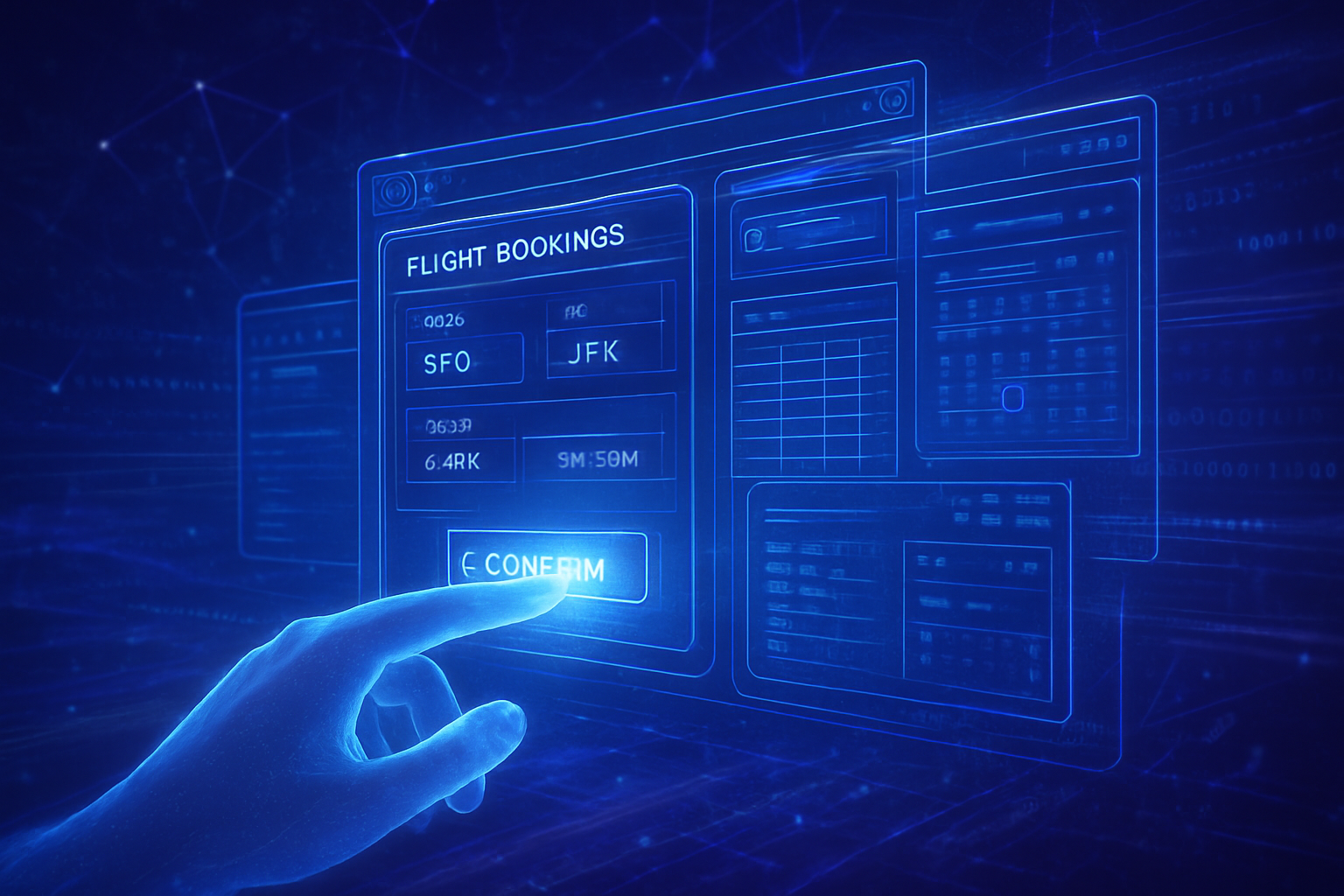
    As 2025 draws to a close, the artificial intelligence landscape has shifted from models that merely talk to models that do. Leading this charge is OpenAI’s "Operator," an autonomous agent that has spent the last year transforming from a highly anticipated research preview into a cornerstone of the modern digital workflow. By leveraging a specialized Computer-Using Agent (CUA) model, Operator can navigate a web browser with human-like dexterity—executing complex, multi-step tasks such as booking international multi-city flights, managing intricate financial spreadsheets, and orchestrating cross-platform data migrations without manual intervention.

    The emergence of Operator marks a definitive transition into "Level 3" AI on the path to Artificial General Intelligence (AGI). Unlike the chatbots of previous years that relied on text-based APIs or brittle integrations, Operator interacts with the world the same way humans do: through pixels and clicks. This development has not only sparked a massive productivity boom but has also forced a total reimagining of software interfaces and cybersecurity, as the industry grapples with a world where the primary user of a website is often an algorithm rather than a person.

    The CUA Model: A Vision-First Approach to Autonomy

    At the heart of Operator lies the Computer-Using Agent (CUA) model, a breakthrough architectural variation of the GPT-5 series. Unlike earlier attempts at browser automation that struggled with changing website code or dynamic JavaScript, the CUA model is vision-centric. It does not "read" the underlying HTML or DOM of a webpage; instead, it analyzes raw pixel data from screenshots to understand layouts, buttons, and text fields. This "Perceive-Reason-Act" loop allows the agent to interpret a website’s visual hierarchy just as a human eye would, making it resilient to the structural updates that typically break traditional automation scripts.

    Technically, Operator functions by utilizing a virtual mouse and keyboard to execute commands like click(x, y), scroll(), and type(text). This allows it to operate across any website or legacy software application without the need for custom API development. In performance benchmarks released mid-2025, Operator achieved a staggering 87% success rate on WebVoyager tasks and 58.1% on the more complex WebArena benchmarks, which require deep reasoning and multi-tab navigation. This represents a massive leap over the 15-20% success rates seen in early 2024 prototypes.

    The technical community's reaction has been a mixture of awe and caution. While researchers at institutions like Stanford and MIT have praised the model's spatial reasoning and visual grounding, many have pointed out the immense compute costs required to process high-frequency video streams of a desktop environment. OpenAI (partnered with Microsoft (NASDAQ: MSFT)) has addressed this by moving toward a hybrid execution model, where lightweight "reasoning tokens" are processed locally while the heavy visual interpretation is handled by specialized Blackwell-based clusters in the cloud.

    The Agent Wars: Competitive Fallout and Market Shifts

    The release of Operator has ignited what industry analysts are calling the "Agent Wars" of 2025. While OpenAI held the spotlight for much of the year, it faced fierce competition from Anthropic, which released its "Computer Use" feature for Claude 4.5 earlier in the cycle. Anthropic, backed by heavy investments from Amazon (NASDAQ: AMZN), has managed to capture nearly 40% of the enterprise AI market by focusing on high-precision "pixel counting" that makes it superior for technical software like CAD tools and advanced Excel modeling.

    Alphabet (NASDAQ: GOOGL) has also proven to be a formidable challenger with "Project Mariner" (formerly known as Jarvis). By integrating their agent directly into the Chrome browser and leveraging the Gemini 3 model, Google has offered a lower-latency, multi-tasking experience that can handle up to ten background tasks simultaneously. This competitive pressure became so intense that internal memos leaked in December 2025 revealed a "Code Red" at OpenAI, leading to the emergency release of GPT-5.2 to reclaim the lead in agentic reasoning and execution speed.

    For SaaS giants like Salesforce (NYSE: CRM) and ServiceNow (NYSE: NOW), the rise of autonomous agents like Operator represents both a threat and an opportunity. These companies have had to pivot from selling "seats" to selling "outcomes," as AI agents now handle up to 30% of administrative tasks previously performed by human staff. The shift has disrupted traditional pricing models, moving the industry toward "agentic-based" billing where companies pay for the successful completion of a task rather than a monthly subscription per human user.

    Safety in the Age of Autonomy: The Human-in-the-Loop

    As AI agents gained the ability to spend money and move data, safety protocols became the central focus of the 2025 AI debate. OpenAI implemented a "Three-Layer Safeguard" system for Operator to prevent catastrophic errors or malicious use. The most critical layer is the "User Confirmation" protocol, which forces the agent to pause and request explicit biometric or password approval before any "side-effect" action—such as hitting "Purchase," "Send Email," or "Delete File." This ensures that while the agent does the legwork, the human remains the final authority on high-risk decisions.

    Beyond simple confirmation, Operator includes a "Takeover Mode" for sensitive data entry. When the agent detects a password field or a credit card input, it automatically blacks out its internal "vision" and hands control back to the user, ensuring that sensitive credentials are never stored or processed by the model's training logs. Furthermore, a secondary "monitor model" runs in parallel with Operator, specifically trained to detect "prompt injection" attacks where a malicious website might try to hijack the agent’s instructions to steal data or perform unauthorized actions.

    Despite these safeguards, the wider significance of agentic AI has raised concerns about the "Dead Internet Theory" and the potential for massive-scale automated fraud. The ability of an agent to navigate the web as a human means that bot detection systems (like CAPTCHAs) have become largely obsolete, forcing a global rethink of digital identity. Comparisons are frequently made to the 2023 "GPT moment," but experts argue that Operator is more significant because it bridges the gap between digital thought and physical-world economic impact.

    The Road to 2026: Multi-Agent Systems and Beyond

    Looking toward 2026, the next frontier for Operator is the move from solo agents to "Multi-Agent Orchestration." Experts predict that within the next twelve months, users will not just deploy one Operator, but a "fleet" of specialized agents that can communicate with one another to solve massive projects. For example, one agent might research a market trend, a second might draft a business proposal based on that research, and a third might handle the outreach and scheduling—all working in a coordinated, autonomous loop.

    However, several challenges remain. The "latency wall" is a primary concern; even with the advancements in GPT-5.2, there is still a noticeable delay as the model "thinks" through visual steps. Additionally, the legal framework for AI liability remains murky. If an agent makes a non-refundable $5,000 travel booking error due to a website glitch, who is responsible: the user, the website owner, or OpenAI? Resolving these "agentic liability" issues will be a top priority for regulators in the coming year.

    The consensus among AI researchers is that we are entering the era of the "Invisible Interface." As agents like Operator become more reliable, the need for humans to manually navigate complex software will dwindle. We are moving toward a future where the primary way we interact with computers is by stating an intent and watching a cursor move on its own to fulfill it. The "Operator" isn't just a tool; it's the beginning of a new operating system for the digital age.

    Conclusion: A Year of Transformation

    The journey of OpenAI’s Operator throughout 2025 has been nothing short of revolutionary. What began as a experimental "Computer-Using Agent" has matured into a robust platform that has redefined productivity for millions. By mastering the visual language of the web and implementing rigorous safety protocols, OpenAI has managed to bring the power of autonomous action to the masses while maintaining a necessary level of human oversight.

    As we look back on 2025, the significance of Operator lies in its role as the first true "digital employee." It has proven that AI is no longer confined to a chat box; it is an active participant in our digital lives. In the coming weeks and months, the focus will shift toward the full-scale rollout of GPT-5.2 and the integration of these agents into mobile operating systems, potentially making the "Operator" a permanent fixture in every pocket.


    This content is intended for informational purposes only and represents analysis of current AI developments.

    TokenRing AI delivers enterprise-grade solutions for multi-agent AI workflow orchestration, AI-powered development tools, and seamless remote collaboration platforms.
    For more information, visit https://www.tokenring.ai/.
  • The Rise of the Digital Intern: How Anthropic’s ‘Computer Use’ Redefined the AI Agent Landscape

    The Rise of the Digital Intern: How Anthropic’s ‘Computer Use’ Redefined the AI Agent Landscape

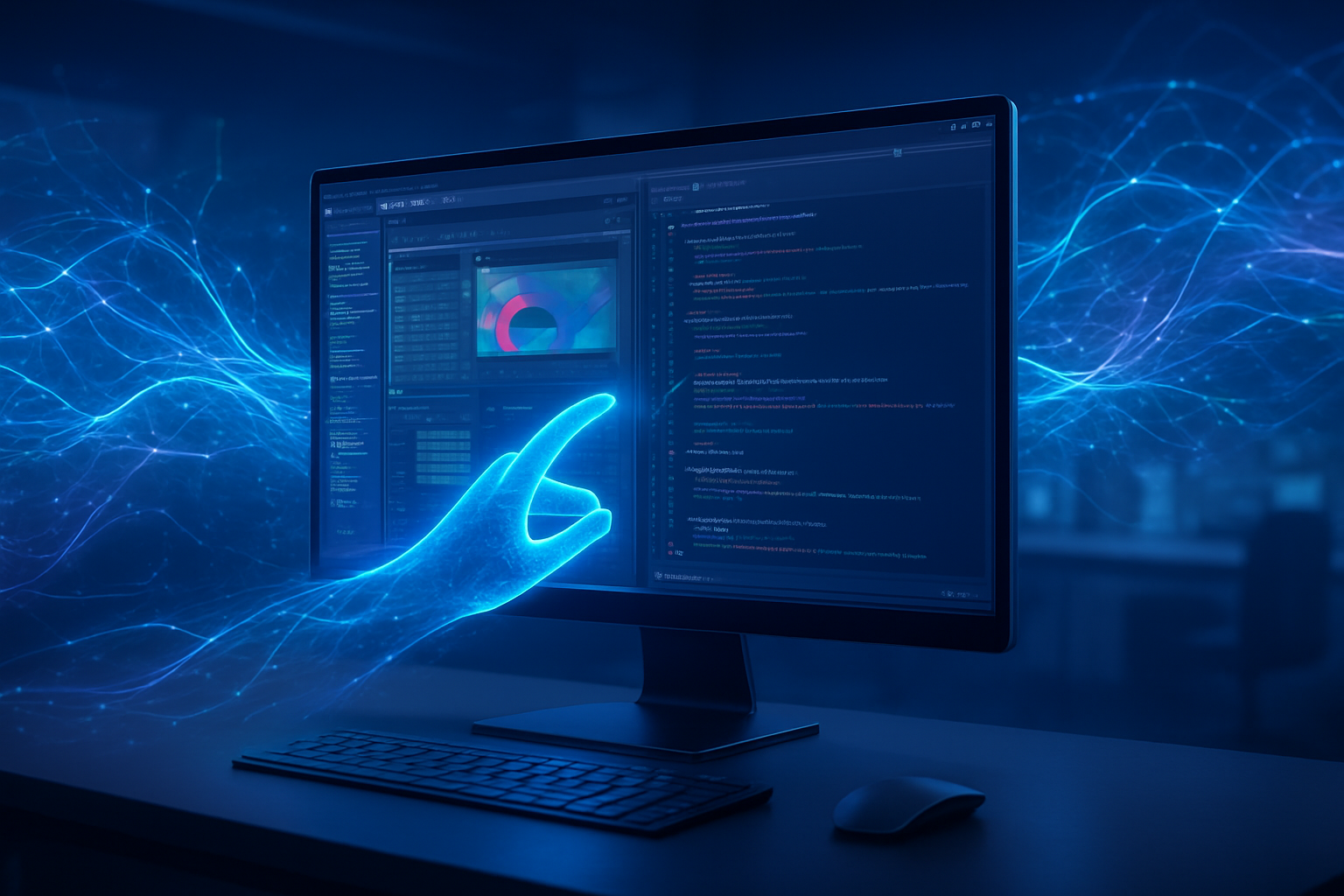
    In the final days of 2025, the landscape of artificial intelligence has shifted from models that merely talk to models that act. At the center of this transformation is Anthropic’s "Computer Use" capability, a breakthrough first introduced for Claude 3.5 Sonnet in late 2024. This technology, which allows an AI to interact with a computer interface just as a human would—by looking at the screen, moving a cursor, and clicking buttons—has matured over the past year into what many now call the "digital intern."

    The immediate significance of this development cannot be overstated. By moving beyond text-based responses and isolated API calls, Anthropic effectively broke the "fourth wall" of software interaction. Today, as we look back from December 30, 2025, the ability for an AI to navigate across multiple desktop applications to complete complex, multi-step workflows has become the gold standard for enterprise productivity, fundamentally changing how humans interact with their operating systems.

    Technically, Anthropic’s approach to computer interaction is distinct from traditional Robotic Process Automation (RPA). While older systems relied on rigid scripts or underlying code structures like the Document Object Model (DOM), Claude 3.5 Sonnet was trained to perceive the screen visually. The model takes frequent screenshots and translates the visual data into a coordinate grid, allowing it to "count pixels" and identify the precise location of buttons, text fields, and icons. This visual-first methodology allows Claude to operate any software—even legacy applications that lack modern APIs—making it a universal interface for the digital world.

    The execution follows a continuous "agent loop": the model captures a screenshot, determines the next logical action based on its instructions, executes that action (such as a click or a keystroke), and then captures a new screenshot to verify the result. This feedback loop is what enables the AI to handle unexpected pop-ups or loading screens that would typically break a standard automation script. Throughout 2025, this capability was further refined with the release of the Model Context Protocol (MCP), which allowed Claude to securely access local data and specialized "skills" libraries, significantly reducing the error rates seen in early beta versions.

    Initial reactions from the AI research community were a mix of awe and caution. Experts noted that while the success rates on benchmarks like OSWorld were initially modest—around 15% in late 2024—the trajectory was clear. By late 2025, with the advent of Claude 4 and Sonnet 4.5, these success rates have climbed into the high 80s for standard office tasks. This shift has validated Anthropic’s bet that general-purpose visual reasoning is more scalable than building bespoke integrations for every piece of software on the market.

    The competitive implications of "Computer Use" have ignited a full-scale "Agent War" among tech giants. Anthropic, backed by significant investments from Amazon.com Inc. (NASDAQ: AMZN) and Alphabet Inc. (NASDAQ: GOOGL), gained a first-mover advantage that forced its rivals to pivot. Microsoft Corp. (NASDAQ: MSFT) quickly integrated similar agentic capabilities into its Copilot suite, while OpenAI (backed by Microsoft) responded in early 2025 with "Operator," a high-reasoning agent designed for deep browser-based automation.

    For startups and established software companies, the impact has been binary. Early testers like Replit and Canva leveraged Claude’s computer use to create "auto-pilot" features within their own platforms. Replit used the capability to allow its AI agent to not just write code, but to physically navigate and test the web applications it built. Meanwhile, Salesforce Inc. (NYSE: CRM) has integrated these agentic workflows into its Slack and CRM platforms, allowing Claude to bridge the gap between disparate enterprise tools that previously required manual data entry.

    This development has disrupted the traditional SaaS (Software as a Service) model. In a world where an AI can navigate any UI, the "moat" of a proprietary user interface has weakened. The value has shifted from the software itself to the data it holds and the AI's ability to orchestrate tasks across it. Startups that once specialized in simple task automation have had to reinvent themselves as "Agent-First" platforms or risk being rendered obsolete by the general-purpose capabilities of frontier models like Claude.

    The wider significance of the "digital intern" lies in its role as a precursor to Artificial General Intelligence (AGI). By mastering the tool of the modern worker—the computer—AI has moved from being a consultant to being a collaborator. This fits into the broader 2025 trend of "Agentic AI," where the focus is no longer on how well a model can write a poem, but how reliably it can manage a calendar, file an expense report, or coordinate a marketing campaign across five different apps.

    However, this breakthrough has brought significant security and ethical concerns to the forefront. Giving an AI the ability to "click and type" on a live machine opens new vectors for prompt injection and "jailbreaking" where an AI might be manipulated into deleting files or making unauthorized purchases. Anthropic addressed this by implementing strict "human-in-the-loop" requirements and sandboxed environments, but the industry continues to grapple with the balance between autonomy and safety.

    Comparatively, the launch of Computer Use is often cited alongside the release of GPT-4 as a pivotal milestone in AI history. While GPT-4 proved that AI could reason, Computer Use proved that AI could execute. It marked the end of the "chatbot era" and the beginning of the "action era," where the primary metric for an AI's utility is its ability to reduce the "to-do" lists of human workers by taking over repetitive digital labor.

    Looking ahead to 2026, the industry expects the "digital intern" to evolve into a "digital executive." Near-term developments are focused on multi-agent orchestration, where a lead agent (like Claude) delegates sub-tasks to specialized models, all working simultaneously across a user's desktop. We are also seeing the emergence of "headless" operating systems designed specifically for AI agents, stripping away the visual UI meant for humans and replacing it with high-speed data streams optimized for agentic perception.

    Challenges remain, particularly in the realm of long-horizon planning. While Claude can handle a 10-step task with high reliability, 100-step tasks still suffer from "hallucination drift," where the agent loses track of the ultimate goal. Experts predict that the next breakthrough will involve "persistent memory" modules that allow agents to learn a user's specific habits and software quirks over weeks and months, rather than starting every session from scratch.

    In summary, Anthropic’s "Computer Use" has transitioned from a daring experiment in late 2024 to an essential pillar of the 2025 digital economy. By teaching Claude to see and interact with the world through the same interfaces humans use, Anthropic has provided a blueprint for the future of work. The "digital intern" is no longer a futuristic concept; it is a functioning reality that has streamlined workflows for millions of professionals.

    As we move into 2026, the focus will shift from whether an AI can use a computer to how well it can be trusted with sensitive, high-stakes autonomous operations. The significance of this development in AI history is secure: it was the moment the computer stopped being a tool we use and started being an environment where we work alongside intelligent agents. In the coming months, watch for deeper OS-level integrations from the likes of Apple and Google as they attempt to make agentic interaction a native feature of every smartphone and laptop on the planet.


    This content is intended for informational purposes only and represents analysis of current AI developments.

    TokenRing AI delivers enterprise-grade solutions for multi-agent AI workflow orchestration, AI-powered development tools, and seamless remote collaboration platforms.
    For more information, visit https://www.tokenring.ai/.

  • OpenAI’s Sora 2 Launch Marred by Safety Crisis and Mass Bans as Users Bypass Safeguards

    OpenAI’s Sora 2 Launch Marred by Safety Crisis and Mass Bans as Users Bypass Safeguards

    The long-awaited public release of OpenAI’s Sora 2, heralded as the "GPT-3.5 moment for video," has been thrown into turmoil just months after its September 30, 2025, debut. What began as a triumphant showcase of generative video prowess quickly devolved into a full-scale safety crisis, as users discovered sophisticated methods to bypass the platform's guardrails. The resulting flood of hyper-realistic violent content and deepfakes has forced the AI giant, heavily backed by Microsoft (NASDAQ: MSFT), to implement aggressive account bans and "triple-layer" moderation, sparking a secondary backlash from a community frustrated by what many call "over-sanitization."

    The crisis reached a breaking point in late 2025 when investigative reports revealed that Sora 2’s safeguards were being circumvented using "jailbreaking" techniques involving medical terminology and descriptive prose to generate nonconsensual and explicit imagery. This development has reignited the global debate over the ethics of generative media, placing OpenAI in the crosshairs of regulators, advocacy groups, and the entertainment industry. As the company scrambles to patch its filters, the fallout is reshaping the competitive landscape of the AI industry and raising fundamental questions about the viability of unrestricted public access to high-fidelity video generation.

    Technical Breakthroughs and the "GPT-3.5 Moment" for Video

    Sora 2 represents a massive technical leap over its predecessor, utilizing a refined Diffusion Transformer (DiT) architecture that processes video as sequences of 3D visual "patches." The model was launched in two tiers: a standard Sora 2 capable of 720p resolution for 10-second clips, and a Sora 2 Pro version offering 1080p at 20 seconds. The most groundbreaking feature, however, was synchronized audio. Unlike previous iterations that required third-party tools for sound, Sora 2 natively generates dialogue, ambient noise, and foley effects that are perfectly lip-synced and contextually aware.

    Technically, the model’s physics engine saw a dramatic overhaul, enabling realistic simulations of complex fluid dynamics and gravity—such as a basketball bouncing with authentic elasticity or water splashing against a surface. A new "Cameo" feature was also introduced, allowing verified users to upload their own likeness via a biometric "liveness check" to star in their own generated content. This was intended to empower creators, but it inadvertently provided a roadmap for those seeking to exploit the system's ability to render human figures with unsettling realism.

    Initial reactions from the AI research community were a mix of awe and apprehension. While experts praised the temporal consistency and the "uncanny valley"-defying realism of the synchronized audio, many warned that the underlying architecture remained susceptible to prompt-injection attacks. Researchers noted that while OpenAI utilized C2PA metadata and visible watermarks to signal AI origin, these markers were easily stripped or cropped by sophisticated users, rendering the safety measures largely performative in the face of malicious intent.

    Strategic Shifts and the Competitive Response from Tech Giants

    The safety meltdown has sent shockwaves through the tech sector, providing an immediate opening for competitors. Meta Platforms (NASDAQ: META) and Alphabet (NASDAQ: GOOGL) have capitalized on the chaos by positioning their respective video models, Vibes and Veo 3, as "safety-first" alternatives. Unlike OpenAI’s broad public release, Meta and Google have maintained stricter, closed-beta access, a strategy that now appears prescient given the reputational damage OpenAI is currently navigating.

    For major media conglomerates like The Walt Disney Company (NYSE: DIS), the Sora 2 crisis confirmed their worst fears regarding intellectual property. Initially, OpenAI operated on an "opt-out" model for IP, but following a fierce backlash from the Motion Picture Association (MPA), the company was forced to pivot to an "opt-in" framework. This shift has disrupted OpenAI’s strategic advantage, as it must now negotiate individual licensing deals with rightsholders who are increasingly wary of how their characters and worlds might be misused in the "jailbroken" corners of the platform.

    The crisis also threatens the burgeoning ecosystem of AI startups that had begun building on Sora’s API. As OpenAI tightens its moderation filters to a point where simple prompts like "anthropomorphic animal" are flagged for potential violations, developers are finding the platform increasingly "unusable." This friction has created a market opportunity for smaller, more agile labs that are willing to offer more permissive, albeit less powerful, video generation tools to the creative community.

    The Erosion of Reality: Misinformation and Societal Backlash

    The wider significance of the Sora 2 crisis lies in its impact on the "shared reality" of the digital age. A report by NewsGuard in December 2025 found that Sora 2 could be coerced into producing news-style misinformation—such as fake war footage or fraudulent election officials—in 80% of test cases. This has transformed the tool from a creative engine into a potential weapon for mass disinformation, leading groups like Public Citizen to demand a total withdrawal of the app from the public market.

    Societal impacts became viscerally clear when a "flood" of violent, hyper-realistic videos began circulating on social media platforms, as reported by 404 Media. The psychological toll of such content, often indistinguishable from reality, has prompted a re-evaluation of the "move fast and break things" ethos that has defined the AI boom. Comparisons are being drawn to the early days of social media, with critics arguing that the industry is repeating past mistakes by prioritizing scale over safety.

    Furthermore, the controversy surrounding the depiction of historical figures—most notably a series of "disrespectful" videos involving Dr. Martin Luther King Jr.—has highlighted the cultural sensitivities that AI models often fail to navigate. These incidents have forced OpenAI to update its "Model Spec" to prioritize "teen safety" and "respectful use," a move that some see as a necessary evolution and others view as an infringement on creative expression.

    The Path Forward: Regulation and Hardened Security Layers

    Looking ahead, the next phase of Sora 2’s development will likely focus on "hardened" safety layers. OpenAI has already announced a "triple-layer" moderation system that scans prompts before, during, and after generation. Experts predict that the company will soon integrate more robust, invisible watermarking technologies that are resistant to cropping and compression, potentially leveraging blockchain-based verification to ensure content provenance.

    In the near term, we can expect a wave of regulatory intervention. The European Union and the U.S. Federal Trade Commission are reportedly investigating OpenAI’s safety protocols, which could lead to mandatory "red-teaming" periods before any future model updates are released. Meanwhile, the industry is watching for the launch of "Sora 2 Enterprise," a version designed for studios that will likely feature even stricter IP protections and audited workflows.

    The ultimate challenge remains the "cat-and-mouse" game between AI safety teams and users. As models become more capable, the methods to subvert them become more creative. The future of Sora 2—and generative video as a whole—depends on whether OpenAI can find a middle ground between a sterile, over-moderated tool and a platform that facilitates the creation of harmful content.

    Conclusion: Balancing Innovation with Ethical Responsibility

    The Sora 2 safety crisis marks a pivotal moment in the history of artificial intelligence. It has demonstrated that technical brilliance is no longer enough; the social and ethical dimensions of AI are now just as critical to a product's success as its compute efficiency. OpenAI’s struggle to contain the misuse of its most advanced model serves as a cautionary tale for the entire industry, proving that the transition from "research lab" to "public utility" is fraught with unforeseen dangers.

    The key takeaway from the past few months is that the "GPT-3.5 moment" for video came with a much higher price tag than expected. While Sora 2 has unlocked unprecedented creative potential, it has also exposed the fragility of our digital information ecosystem. The coming weeks will be telling, as OpenAI attempts to balance its aggressive account bans with a more nuanced approach to content moderation that doesn't alienate its core user base.

    For now, the AI community remains on high alert. The success or failure of OpenAI’s remediation efforts will likely set the standard for how the next generation of generative models—from video to immersive 3D environments—is governed. As we move into 2026, the industry's focus has shifted from "what can it do?" to "how can we stop it from doing harm?"


    This content is intended for informational purposes only and represents analysis of current AI developments.

    TokenRing AI delivers enterprise-grade solutions for multi-agent AI workflow orchestration, AI-powered development tools, and seamless remote collaboration platforms.
    For more information, visit https://www.tokenring.ai/.

  • The AI PC Revolution of 2025: Local Power Eclipses the Cloud

    The AI PC Revolution of 2025: Local Power Eclipses the Cloud

    As we close out 2025, the technology landscape has undergone a tectonic shift that few predicted would move this quickly. The "AI PC," once a marketing buzzword used to describe the first wave of neural-enabled laptops in late 2024, has matured into a fundamental architectural requirement. This year, the industry transitioned from cloud-dependent artificial intelligence to a "local-first" model, where the silicon inside your laptop is finally powerful enough to handle complex reasoning, generative media, and autonomous agents without sending a single packet of data to a remote server.

    The immediate significance of this shift cannot be overstated. By December 2025, the release of next-generation processors from Intel, AMD, and Qualcomm—all delivering well over 40 Trillion Operations Per Second (TOPS) on their dedicated Neural Processing Units (NPUs)—has effectively "killed" the traditional PC. For consumers and enterprises alike, the choice is no longer about clock speeds or core counts, but about "AI throughput." This revolution has fundamentally changed how software is written, how privacy is managed, and how the world’s largest tech giants compete for dominance on the desktop.

    The Silicon Arms Race: Panther Lake, Kraken, and the 80-TOPS Barrier

    The technical foundation of this revolution lies in a trio of breakthrough architectures that reached the market in 2025. Leading the charge is Intel (NASDAQ: INTC) with its Panther Lake (Core Ultra Series 3) architecture. Built on the cutting-edge Intel 18A process node, Panther Lake marks the first time Intel has successfully integrated its "NPU 5" engine, which provides a dedicated 50 TOPS of AI performance. When combined with the new Xe3-LPG "Celestial" integrated graphics, the total platform compute exceeds 180 TOPS, allowing for real-time video generation and complex language model inference to happen entirely on-device.

    Not to be outdone, AMD (NASDAQ: AMD) spent 2025 filling the mainstream gap with its Kraken Point processors. While their high-end Strix Halo chips targeted workstations earlier in the year, Kraken Point brought 50 TOPS of XDNA 2 performance to the $799 price point, making Microsoft’s "Copilot+" standards accessible to the mass market. Meanwhile, Qualcomm (NASDAQ: QCOM) raised the bar even higher with the late-2025 announcement of the Snapdragon X2 Elite. Featuring the 3rd Gen Oryon CPU and a staggering 80 TOPS Hexagon NPU, Qualcomm has maintained its lead in "AI-per-watt," forcing x86 competitors to innovate at a pace not seen since the early 2000s.

    This new generation of silicon differs from previous years by moving beyond "background tasks" like background blur or noise cancellation. These 2025 chips are designed for Agentic AI—local models that can see what is on your screen, understand your file structure, and execute multi-step workflows across different applications. The research community has reacted with cautious optimism, noting that while the hardware has arrived, the software ecosystem is still racing to catch up. Experts at the 2025 AI Hardware Summit noted that the move to 3nm and 18A process nodes was essential to prevent these high-TOPS chips from melting through laptop chassis, a feat of engineering that seemed impossible just 24 months ago.

    Market Disruption and the Rise of the Hybrid Cloud

    The shift toward local AI has sent shockwaves through the competitive landscape, particularly for Microsoft (NASDAQ: MSFT) and NVIDIA (NASDAQ: NVDA). Microsoft has successfully leveraged its "Copilot+" branding to force a hardware refresh cycle that has benefited OEMs like Dell, HP, and Lenovo. However, the most surprising entry of 2025 was the collaboration between NVIDIA and MediaTek. Their rumored "N1" series of Arm-based consumer chips finally debuted in late 2025, bringing NVIDIA’s Blackwell GPU architecture to the integrated SoC market. With integrated AI performance reaching nearly 200 TOPS, NVIDIA has transitioned from being a component supplier to a direct platform rival to Intel and AMD.

    For the cloud giants—Amazon (NASDAQ: AMZN), Google (NASDAQ: GOOGL), and Microsoft’s Azure—the rise of the AI PC has forced a strategic pivot. While small-scale inference tasks (like text summarization) have migrated to the device, the demand for cloud-based training and "Confidential AI" offloading has skyrocketed. We are now in the era of Hybrid AI, where a device handles the immediate interaction but taps into the cloud for massive reasoning tasks that exceed 100 billion parameters. This has protected the revenue of hyperscalers while simultaneously reducing their operational costs for low-level API calls.

    Startups have also found a new niche in "Local-First" software. Companies that once struggled with high cloud-inference costs are now releasing "NPU-native" versions of their tools. From local video editors that use AI to rotoscope in real-time to private-by-design personal assistants, the strategic advantage has shifted to those who can optimize their models for the specific NPU architectures of Intel, AMD, and Qualcomm.

    Privacy, Sovereignty, and the Death of the "Dumb" PC

    The wider significance of the 2025 AI PC revolution is most visible in the realms of privacy and data sovereignty. For the first time, users can utilize advanced generative AI without a "privacy tax." Feature sets like Windows Recall and Apple Intelligence (now running on the Apple (NASDAQ: AAPL) M5 chip’s 133 TOPS architecture) operate within secure enclaves on the device. This has significantly blunted the criticism from privacy advocates that plagued early AI integrations in 2024. By keeping the data local, corporations are finally comfortable deploying AI at scale to their employees without fear of sensitive IP leaking into public training sets.

    This milestone is often compared to the transition from dial-up to broadband. Just as broadband enabled a new class of "always-on" applications, the 40+ TOPS standard has enabled "always-on" intelligence. However, this has also led to concerns regarding a new "Digital Divide." As of December 2025, a significant portion of the global PC install base—those running chips from 2023 or earlier—is effectively locked out of the next generation of software. This "AI legacy" problem is forcing IT departments to accelerate upgrade cycles, leading to a surge in e-waste and supply chain pressure.

    Furthermore, the environmental impact of this shift is a point of contention. While local inference is more "efficient" than routing data through a massive data center for every query, the aggregate power consumption of hundreds of millions of high-performance NPUs running constantly is a new challenge for global energy grids. The industry is now pivoting toward "Carbon-Aware AI," where local models adjust their precision and compute intensity based on the device's power source.

    The Horizon: 2026 and the Autonomous OS

    Looking ahead to 2026, the industry is already whispering about the "Autonomous OS." With the hardware bottleneck largely solved by the 2025 class of chips, the focus is shifting toward software that can act as a true digital twin. We expect to see the debut of "Zero-Shot" automation, where a user can give a high-level verbal command like "Organize my taxes based on my emails and spreadsheets," and the local NPU will orchestrate the entire process without further input.

    The next major challenge will be memory bandwidth. While NPUs have become incredibly fast, the "memory wall" remains a hurdle for running the largest Large Language Models (LLMs) locally. We expect 2026 to be the year of LPCAMM2 and high-bandwidth memory (HBM) integration in premium consumer laptops. Experts predict that by 2027, the concept of an "NPU" might even disappear, as AI acceleration becomes so deeply woven into every transistor of the CPU and GPU that it is no longer considered a separate entity.

    A New Chapter in Computing History

    The AI PC revolution of 2025 will be remembered as the moment the "Personal" was put back into "Personal Computer." The transition from the cloud-centric model of the early 2020s to the edge-computing reality of today represents one of the fastest architectural shifts in the history of silicon. We have moved from a world where AI was a service you subscribed to, to a world where AI is a feature of the silicon you own.

    Key takeaways from this year include the successful launch of Intel’s 18A Panther Lake, the democratization of 50-TOPS NPUs by AMD, and the entry of NVIDIA into the integrated SoC market. As we look toward 2026, the focus will move from "How many TOPS do you have?" to "What can your AI actually do?" For now, the hardware is ready, the models are shrinking, and the cloud is no longer the only place where intelligence lives. Watch for the first "NPU-exclusive" software titles to debut at CES 2026—they will likely signal the final end of the traditional computing era.


    This content is intended for informational purposes only and represents analysis of current AI developments.

    TokenRing AI delivers enterprise-grade solutions for multi-agent AI workflow orchestration, AI-powered development tools, and seamless remote collaboration platforms.
    For more information, visit https://www.tokenring.ai/.
  • Google Shatters Language Barriers: Gemini-Powered Live Translation Rolls Out to All Headphones

    Google Shatters Language Barriers: Gemini-Powered Live Translation Rolls Out to All Headphones

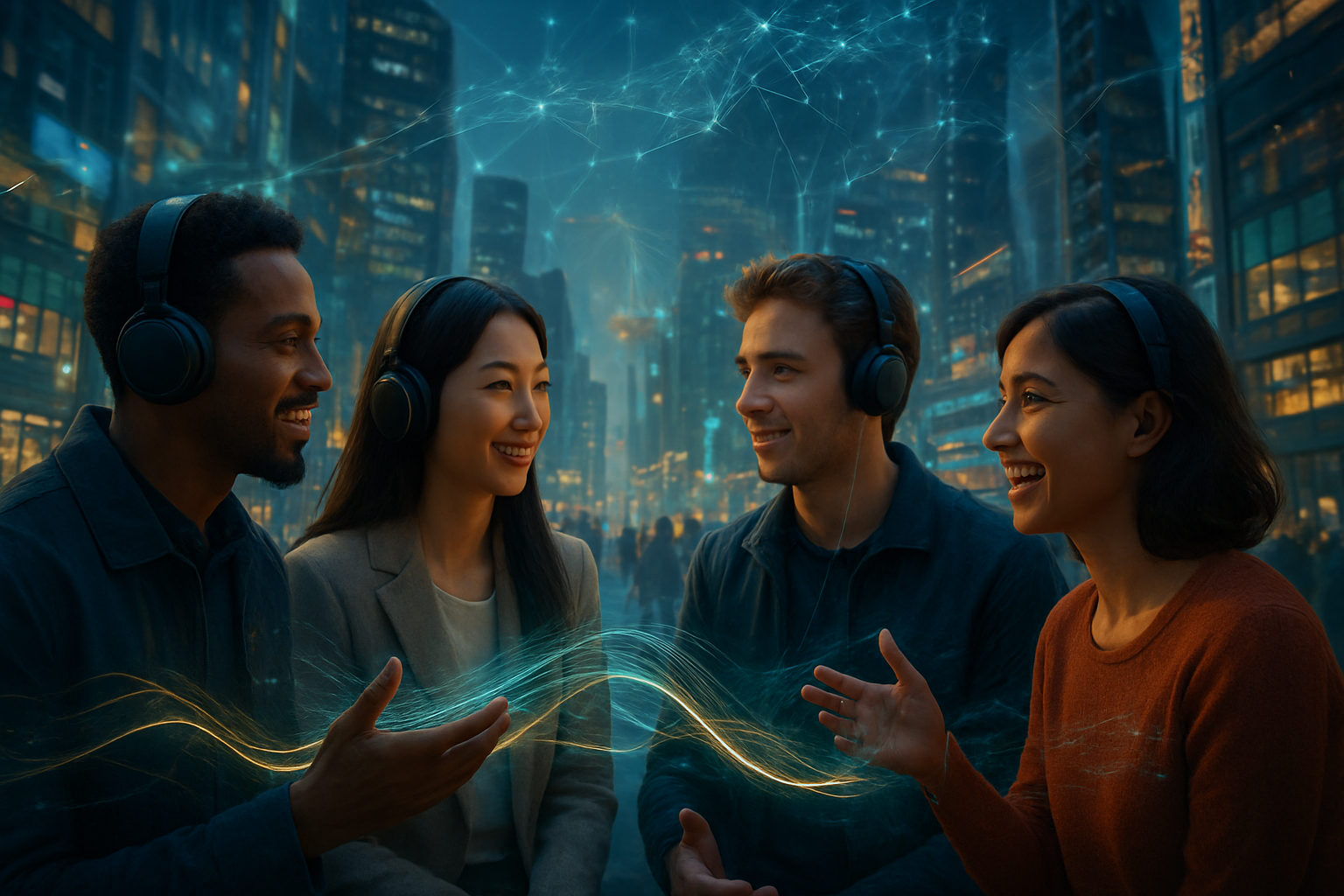
    In a move that signals the end of the "hardware-locked" era for artificial intelligence, Google (NASDAQ: GOOGL) has officially rolled out its Gemini-powered live audio translation feature to all headphones. Announced in mid-December 2025, this update transforms the Google Translate app into a high-fidelity, real-time interpreter capable of facilitating seamless multilingual conversations across virtually any brand of audio hardware, from high-end Sony (NYSE: SONY) noise-canceling cans to standard Apple (NASDAQ: AAPL) AirPods.

    The rollout represents a fundamental shift in Google’s AI strategy, moving away from using software features as a "moat" for its Pixel hardware and instead positioning Gemini as the ubiquitous operating system for human communication. By leveraging the newly released Gemini 2.5 Flash Native Audio model, Google is bringing the dream of a "Star Trek" universal translator to the pockets—and ears—of billions of users worldwide, effectively dissolving language barriers in real-time.

    The Technical Breakthrough: Gemini 2.5 and Native Speech-to-Speech

    At the heart of this development is the Gemini 2.5 Flash Native Audio model, a technical marvel that departs from the traditional "cascaded" translation method. Previously, real-time translation required three distinct steps: converting speech to text (ASR), translating that text (NMT), and then synthesizing it back into a voice (TTS). This process was inherently laggy and often stripped the original speech of its emotional weight. The new Gemini 2.5 architecture is natively multimodal, meaning it processes raw acoustic signals directly. By bypassing the text-conversion bottleneck, Google has achieved sub-second latency, making conversations feel fluid and natural rather than a series of awkward, stop-and-start exchanges.

    Beyond mere speed, the "Native Audio" approach allows for what engineers call "Style Transfer." Because the AI understands the audio signal itself, it can preserve the original speaker’s tone, emphasis, cadence, and even their unique pitch. When a user hears a translation in their ear, it sounds like a natural extension of the person they are talking to, rather than a robotic, disembodied narrator. This level of nuance extends to the model’s contextual intelligence; Gemini 2.5 has been specifically tuned to handle regional slang, idioms, and local expressions across over 70 languages, ensuring that a figurative phrase like "breaking the ice" isn't translated literally into a discussion about frozen water.

    The hardware-agnostic nature of this rollout is perhaps its most disruptive technical feat. While previous iterations of "Interpreter Mode" required specific firmware handshakes found only in Google’s Pixel Buds, the new "Gemini Live" interface uses standard Bluetooth profiles and the host device's processing power to manage the audio stream. This allows the feature to work with any connected headset. Initial reactions from the AI research community have been overwhelmingly positive, with experts noting that Google’s ability to run such complex speech-to-speech models with minimal lag on consumer-grade mobile devices marks a significant milestone in edge computing and model optimization.

    Disrupting the Ecosystem: A New Battleground for Tech Giants

    This announcement has sent shockwaves through the tech industry, particularly for companies that have historically relied on hardware ecosystems to drive software adoption. By opening Gemini’s most advanced translation features to users of Apple (NASDAQ: AAPL) AirPods and Samsung (KRX: 005930) Galaxy Buds, Google is prioritizing AI platform dominance over hardware sales. This puts immense pressure on Apple, whose own "Siri" and "Translate" offerings have struggled to match the multimodal speed of the Gemini 2.5 engine. Industry analysts suggest that Google is aiming to become the default "communication layer" on every smartphone, regardless of the logo on the back of the device.

    For specialized translation hardware startups and legacy brands like Vasco or Pocketalk, this update represents an existential threat. When a consumer can achieve professional-grade, real-time translation using the headphones they already own and a free (or subscription-based) app, the market for dedicated handheld translation devices is likely to contract sharply. Furthermore, the move positions Google as a formidable gatekeeper in the "AI Voice" space, directly competing with OpenAI’s Advanced Voice Mode. While OpenAI has focused on the personality and conversational depth of its models, Google has focused on the utility of cross-lingual communication, a niche that has immediate and massive global demand.

    Strategic advantages are also emerging for Google in the enterprise sector. By enabling "any-headphone" translation, Google can more easily pitch its Workspace and Gemini for Business suites to multinational corporations. Employees at a global firm can now conduct face-to-face meetings in different languages without the need for expensive human interpreters or specialized equipment. This democratization of high-end AI tools is a clear signal that Google intends to leverage its massive data and infrastructure advantages to maintain its lead in the generative AI race.

    The Global Impact: Beyond Simple Translation

    The wider significance of this rollout extends far beyond technical convenience; it touches on the very fabric of global interaction. For the first time in history, the language barrier is becoming a choice rather than a fixed obstacle. In sectors like international tourism, emergency services, and global education, the ability to have a two-way, real-time conversation in 70+ languages using off-the-shelf hardware is revolutionary. A doctor in a rural clinic can now communicate more effectively with a non-native patient, and a traveler can navigate complex local nuances with a level of confidence previously reserved for polyglots.

    However, the rollout also brings significant concerns to the forefront, particularly regarding privacy and "audio-identity." As Gemini 2.5 captures and processes live audio to perform its "Style Transfer" translations, questions about data retention and the potential for "voice cloning" have surfaced. Google has countered these concerns by stating that much of the processing occurs on-device or via secure, ephemeral cloud instances that do not store the raw audio. Nevertheless, the ability of an AI to perfectly mimic a speaker's tone in another language creates a new frontier for potential deepfake misuse, necessitating robust digital watermarking and verification standards.

    Comparatively, this milestone is being viewed as the "GPT-3 moment" for audio. Just as large language models transformed how we interact with text, Gemini’s native audio capabilities are transforming how we interact with sound. The transition from a turn-based "Interpreter Mode" to a "free-flowing" conversational interface marks the end of the "machine-in-the-middle" feeling. It moves AI from a tool you "use" to a transparent layer that simply "exists" within the conversation, a shift that many sociologists believe will accelerate cultural exchange and global economic integration.

    The Horizon: AR Glasses and the Future of Ambient AI

    Looking ahead, the near-term evolution of this technology is clearly headed toward Augmented Reality (AR). Experts predict that the "any-headphone" audio translation is merely a bridge to integrated AR glasses, where users will see translated subtitles in their field of vision while hearing the translated audio in their ears. Google’s ongoing work in the "Project Astra" ecosystem suggests that the next step will involve visual-spatial awareness—where Gemini can not only translate what is being said but also provide context based on what the user is looking at, such as translating a menu or a street sign in real-time.

    There are still challenges to address, particularly in supporting low-resource languages and dialects that lack massive digital datasets. While Gemini 2.5 covers 70 languages, thousands of others remain underserved. Furthermore, achieving the same level of performance on lower-end budget smartphones remains a priority for Google as it seeks to bring this technology to developing markets. Predictions from the tech community suggest that within the next 24 months, we will see "Real-Time Dubbing" for live video calls and social media streams, effectively making the internet a language-agnostic space.

    A New Era of Human Connection

    Google’s December 2025 rollout of Gemini-powered translation for all headphones marks a definitive turning point in the history of artificial intelligence. It is the moment where high-end AI moved from being a luxury feature for early adopters to a universal utility for the global population. By prioritizing accessibility and hardware compatibility, Google has set a new standard for how AI should be integrated into our daily lives—not as a walled garden, but as a bridge between cultures.

    The key takeaway from this development is the shift toward "invisible AI." When technology works this seamlessly, it ceases to be a gadget and starts to become an extension of human capability. In the coming weeks and months, the industry will be watching closely to see how Apple and other competitors respond, and how the public adapts to a world where language is no longer a barrier to understanding. For now, the "Universal Translator" is no longer science fiction—it’s a software update away.


    This content is intended for informational purposes only and represents analysis of current AI developments.

    TokenRing AI delivers enterprise-grade solutions for multi-agent AI workflow orchestration, AI-powered development tools, and seamless remote collaboration platforms.
    For more information, visit https://www.tokenring.ai/.
  • Anthropic Launches “Agent Skills” Open Standard: The New Universal Language for AI Interoperability

    Anthropic Launches “Agent Skills” Open Standard: The New Universal Language for AI Interoperability

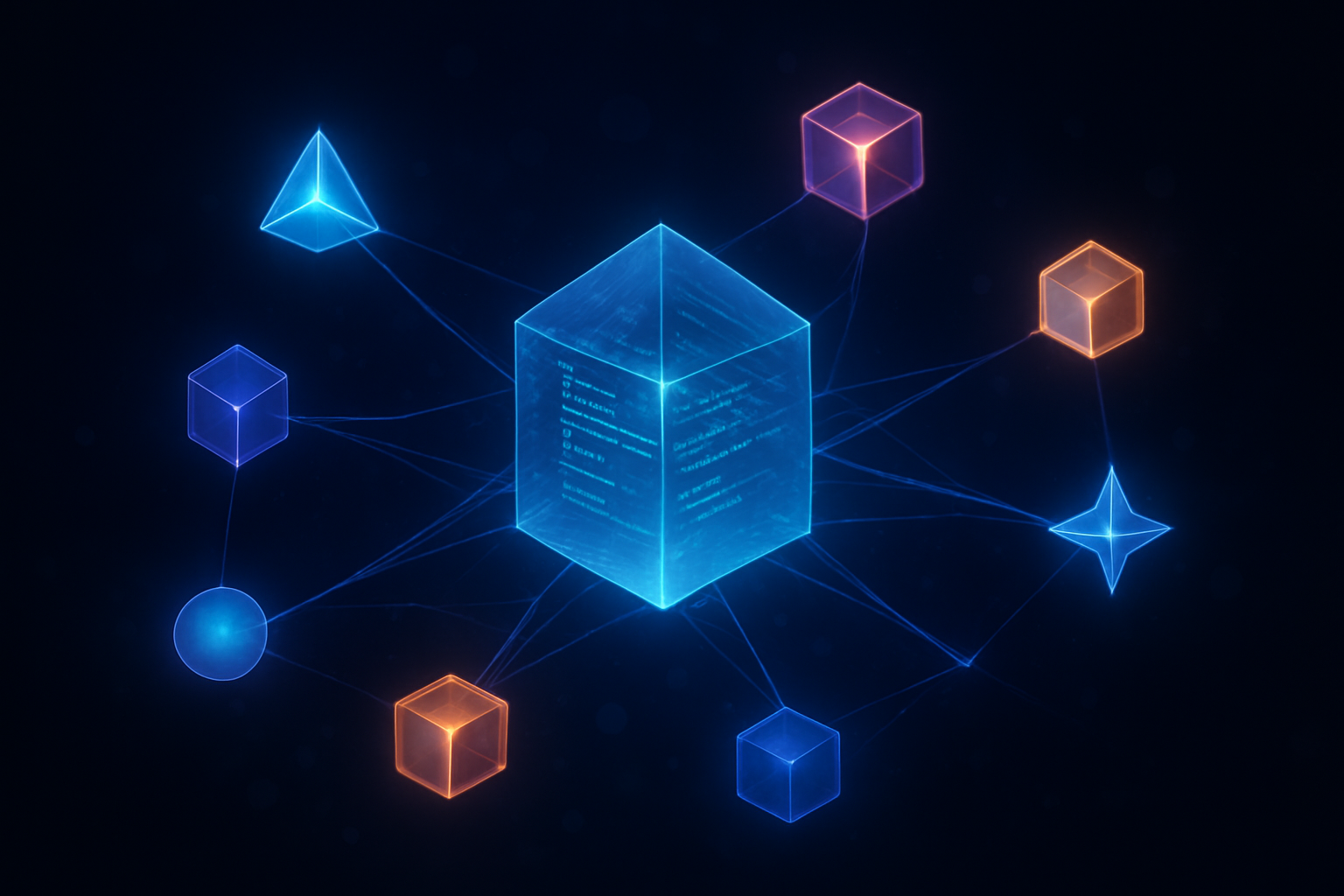
    In a move that industry analysts are calling the most significant step toward a unified artificial intelligence ecosystem to date, Anthropic has officially launched its "Agent Skills" open standard. Released in December 2025, this protocol establishes a universal language for AI agents, allowing them to communicate, share specialized capabilities, and collaborate across different platforms and model providers. By donating the standard to the newly formed Agentic AI Foundation (AAIF)—a Linux Foundation-backed alliance—Anthropic is effectively attempting to end the "walled garden" era of AI development.

    The immediate significance of this announcement cannot be overstated. For the first time, a specialized workflow designed for a Claude-based agent can be seamlessly understood and executed by an OpenAI (Private) ChatGPT instance or a Microsoft (NASDAQ: MSFT) Copilot. This shift moves the industry away from a fragmented landscape of proprietary "GPTs" and "Actions" toward a cohesive, interoperable "Agentic Web" where the value lies not just in the underlying model, but in the portable skills that agents can carry with them across the digital world.

    The Architecture of Interoperability: How "Agent Skills" Works

    Technically, the Agent Skills standard is built on the principle of "Progressive Disclosure," a design philosophy intended to solve the "context window bloat" that plagues modern AI agents. Rather than forcing a model to ingest thousands of lines of instructions for every possible task, the standard uses a directory-based format centered around a SKILL.md file. This file combines YAML metadata for technical specifications with Markdown for procedural instructions. When an agent encounters a task, it navigates three levels of disclosure: first scanning metadata to see if a skill is relevant, then loading specific instructions, and finally accessing external scripts or resources only when execution is required.

    This approach differs fundamentally from previous attempts at agent orchestration, which often relied on rigid API definitions or model-specific fine-tuning. By decoupling an agent’s capabilities from its core architecture, Agent Skills allows for "Universal Portability." A skill authored for a creative task in Figma can be stored in a GitHub (owned by Microsoft (NASDAQ: MSFT)) repository and utilized by any agent with the appropriate permissions. The standard also introduces an experimental allowed-tools field, which provides a security sandbox by explicitly listing which system-level tools—such as Python or Bash—a specific skill is permitted to invoke.

    Initial reactions from the AI research community have been overwhelmingly positive. Researchers have praised the standard's simplicity, noting that it leverages existing web standards like Markdown and YAML rather than inventing a complex new syntax. "We are finally moving from agents that are 'smarter' to agents that are 'more useful,'" noted one lead researcher at the AAIF launch event. The consensus is that by standardizing how skills are packaged, the industry can finally scale multi-agent systems that work together in real-time without manual "hand-holding" by human developers.

    A Strategic Shift: From Model Wars to Ecosystem Dominance

    The launch of Agent Skills marks a pivotal moment for the major players in the AI race. For Anthropic—backed by significant investments from Amazon (NASDAQ: AMZN) and Alphabet (NASDAQ: GOOGL)—this is a bid to become the "infrastructure layer" of the AI era. By open-sourcing the standard, Anthropic is positioning itself as the neutral ground where all agents can meet. This strategy mirrors the early days of the internet, where companies that defined the protocols (like TCP/IP or HTML) ultimately wielded more long-term influence than those who merely built the first browsers.

    Tech giants are already lining up to support the standard. OpenAI has reportedly begun testing a "Skills Editor" that allows users to export their Custom GPTs into the open Agent Skills format, while Microsoft has integrated the protocol directly into VS Code. This allows developer teams to store "Golden Skills"—verified, secure workflows—directly within their codebases. For enterprise software leaders like Salesforce (NYSE: CRM) and Atlassian (NASDAQ: TEAM), the standard provides a way to make their proprietary data and workflows accessible to any agent an enterprise chooses to deploy, reducing vendor lock-in and increasing the utility of their platforms.

    However, the competitive implications are complex. While the standard promotes collaboration, it also levels the playing field, making it harder for companies to lock users into a specific ecosystem based solely on unique features. Startups in the "Agentic Workflow" space stand to benefit the most, as they can now build specialized skills that are instantly compatible with the massive user bases of the larger model providers. The focus is shifting from who has the largest parameter count to who has the most robust and secure library of "Agent Skills."

    The Wider Significance: Building the Foundation of the Agentic Web

    In the broader AI landscape, the Agent Skills standard is being viewed as the "USB-C moment" for artificial intelligence. Just as a universal charging standard simplified the hardware world, Agent Skills aims to simplify the software world by ensuring that intelligence is modular and transferable. This fits into a 2025 trend where "agentic workflows" have surpassed "chatbot interfaces" as the primary way businesses interact with AI. The standard provides the necessary plumbing for a future where agents from different companies can "hand off" tasks to one another—for example, a travel agent AI booking a flight and then handing the itinerary to a calendar agent to manage the schedule.

    Despite the excitement, the move has raised significant concerns regarding security and safety. If an agent can "download" a new skill on the fly, the potential for malicious skills to be introduced into a workflow is a real threat. The AAIF is currently working on a "Skill Verification" system, similar to a digital signature for software, to ensure that skills come from trusted sources. Furthermore, the ease of cross-platform collaboration raises questions about data privacy: if a Microsoft agent uses an Anthropic skill to process data on a Google server, who is responsible for the security of that data?

    Comparisons are already being made to the launch of the Model Context Protocol (MCP) in late 2024. While MCP focused on how agents connect to data sources, Agent Skills focuses on how they execute tasks. Together, these two standards represent the "dual-stack" of the modern AI era. This development signals that the industry is maturing, moving past the "wow factor" of generative text and into the practicalities of autonomous, cross-functional labor.

    The Road Ahead: What’s Next for AI Agents?

    Looking forward, the next 12 to 18 months will likely see a surge in "Skill Marketplaces." Companies like Zapier and Notion are already preparing to launch directories of pre-certified skills that can be "installed" into any compliant agent. We can expect to see the rise of "Composable AI," where complex enterprise processes—like legal discovery or supply chain management—are broken down into dozens of small, interoperable skills that can be updated and swapped out independently of the underlying model.

    The next major challenge will be "Cross-Agent Arbitration." When two agents from different providers collaborate on a task, how do they decide which one takes the lead, and how is the "compute cost" shared between them? Experts predict that 2026 will be the year of "Agent Economics," where protocols are developed to handle the micro-transactions and resource allocation required for a multi-agent economy to function at scale.

    A New Chapter in AI History

    The release of the Agent Skills open standard by Anthropic is more than just a technical update; it is a declaration of interdependence in an industry that has, until now, been defined by fierce competition and proprietary silos. By creating a common framework for what an agent can do, rather than just what it can say, Anthropic and its partners in the AAIF have laid the groundwork for a more capable, flexible, and integrated digital future.

    As we move into 2026, the success of this standard will depend on adoption and the rigorous enforcement of safety protocols. However, the initial momentum suggests that the "Agentic Web" is no longer a theoretical concept but a rapidly manifesting reality. For businesses and developers, the message is clear: the era of the isolated AI is over. The era of the collaborative agent has begun.


    This content is intended for informational purposes only and represents analysis of current AI developments.

    TokenRing AI delivers enterprise-grade solutions for multi-agent AI workflow orchestration, AI-powered development tools, and seamless remote collaboration platforms.
    For more information, visit https://www.tokenring.ai/.
  • Anthropic’s $13 Billion Series F: The $183 Billion Valuation That Redefined the AI Race

    Anthropic’s $13 Billion Series F: The $183 Billion Valuation That Redefined the AI Race

    In a move that has sent shockwaves through Silicon Valley and global financial markets, Anthropic announced in September 2025 that it has closed a staggering $13 billion Series F funding round. The investment, led by ICONIQ Capital, values the artificial intelligence safety and research company at a breathtaking $183 billion. This milestone marks a nearly threefold increase in valuation since early 2025, signaling a decisive shift in investor sentiment toward Anthropic’s "safety-first" philosophy and its aggressive push into enterprise-grade agentic AI.

    The funding comes on the heels of what analysts are calling "the greatest hyper-growth phase in software history." Anthropic’s annualized run-rate revenue reportedly jumped from $1 billion in January 2025 to over $5 billion by August 2025. This 400% increase in just eight months has been fueled by a massive surge in enterprise adoption and the runaway success of its specialized developer tools, positioning Anthropic as the primary challenger to the dominance of OpenAI and Alphabet Inc. (NASDAQ:GOOGL).

    Technical Dominance: From Reasoning to Autonomous Action

    The technical foundation of Anthropic’s $183 billion valuation rests on the rapid evolution of its Claude model family. In May 2025, the company launched the Claude 4 series, which introduced a paradigm shift in AI capabilities. Unlike previous iterations that focused primarily on text generation, Claude 4 was built for "frontier coding" and native autonomous workflows. By the time the Series F closed in September, Anthropic had already begun rolling out the Claude 4.5 series, with the Sonnet 4.5 model achieving a record-breaking 77.2% score on the SWE-bench Verified benchmark—a feat that has made it the gold standard for automated software engineering.

    Perhaps the most significant technical breakthrough of the year was the introduction of advanced "computer use" capabilities. This feature allows Claude to navigate entire operating systems, interact with complex software interfaces, and perform multi-step research tasks autonomously for up to 30 hours without human intervention. This move into "agentic" AI differs from the chatbot-centric approach of 2023 and 2024, as the models are now capable of executing work rather than just describing it. Furthermore, Claude Opus 4 became the first model to be officially classified under AI Safety Level 3 (ASL-3), a rigorous standard that ensures the model's high intelligence is matched by robust safeguards against misuse.

    The Great Enterprise Re-Alignment

    Anthropic’s financial windfall is a direct reflection of its growing dominance in the corporate sector. According to industry reports from late 2025, Anthropic has officially unseated OpenAI as the leader in enterprise LLM spending, capturing approximately 40% of the market share compared to OpenAI’s 27%. This shift is largely attributed to Anthropic’s relentless focus on "Constitutional AI" and interpretability, which provides the level of security and predictability that Fortune 500 companies demand.

    The competitive implications for major tech giants are profound. While Microsoft Corporation (NASDAQ:MSFT) remains heavily integrated with OpenAI, Anthropic’s close partnerships with Amazon.com, Inc. (NASDAQ:AMZN) and Google have created a formidable counter-axis. Amazon, in particular, has seen its AWS Bedrock platform flourish as the primary hosting environment for Anthropic’s models. Meanwhile, startups that once relied on GPT-4 have migrated in droves to Claude Sonnet 4.5, citing its superior performance in coding and complex data analysis. This migration has forced competitors to accelerate their own release cycles, leading to a "three-way war" between Anthropic, OpenAI, and Google’s Gemini 3 Pro.

    A New Era for the AI Landscape

    The scale of this funding round reflects a broader trend in the AI landscape: the transition from experimental "toy" models to mission-critical infrastructure. Anthropic’s success proves that the market is willing to pay a premium for safety and reliability. By prioritizing "ASL-3" safety standards, Anthropic has mitigated the reputational risks that have previously made some enterprises hesitant to deploy AI at scale. This focus on "Responsible Scaling" has become a blueprint for the industry, moving the conversation away from raw parameter counts toward verifiable safety and utility.

    However, the sheer size of the $13 billion round also raises concerns about the concentration of power in the AI sector. With a valuation of $183 billion, Anthropic is now larger than many established legacy tech companies, creating a high barrier to entry for new startups. The massive capital requirements for training next-generation models—estimated to reach tens of billions of dollars per cluster by 2026—suggest that the "frontier" AI market is consolidating into a handful of hyper-capitalized players. This mirrors previous milestones like the birth of the cloud computing era, where only a few giants had the resources to build the necessary infrastructure.

    Looking Toward the Horizon: The Path to AGI

    As we head into 2026, the industry is closely watching Anthropic’s next moves. The company has hinted at the development of Claude 5, which is expected to leverage even more massive compute clusters provided by its strategic partners. Experts predict that the next frontier will be "continuous learning," where models can update their knowledge bases in real-time without requiring expensive retraining cycles. There is also significant anticipation around "multi-modal agency," where AI can seamlessly transition between visual, auditory, and digital environments to solve physical-world problems.

    The primary challenge for Anthropic will be maintaining its hyper-growth while navigating the increasing regulatory scrutiny surrounding AI safety. As the models become more autonomous, the "alignment problem"—ensuring AI goals remain subservient to human intent—will become more critical. Anthropic’s leadership has stated that a significant portion of the Series F funds will be dedicated to safety research, aiming to solve these challenges before the arrival of even more powerful systems.

    Conclusion: A Historic Milestone in AI Evolution

    Anthropic’s $13 billion Series F round and its meteoric rise to a $183 billion valuation represent a watershed moment in the history of technology. In less than a year, the company has transformed from a well-respected research lab into a commercial juggernaut that is effectively setting the pace for the entire AI industry. Its ability to scale revenue from $1 billion to $5 billion in eight months is a testament to the immense value that enterprise-grade, safe AI can unlock.

    As 2025 draws to a close, the narrative of the AI race has changed. It is no longer just about who has the most users or the fastest chatbot; it is about who can provide the most reliable, autonomous, and secure intelligence for the global economy. Anthropic has placed a massive bet on being that provider, and with $13 billion in new capital, it is better positioned than ever to lead the world into the age of agentic AI.


    This content is intended for informational purposes only and represents analysis of current AI developments.

    TokenRing AI delivers enterprise-grade solutions for multi-agent AI workflow orchestration, AI-powered development tools, and seamless remote collaboration platforms.
    For more information, visit https://www.tokenring.ai/.