
Tag: Tech News 2026

  • Meta Anchors the ‘Execution Layer’ with $2 Billion Acquisition of Autonomous Agent Powerhouse Manus

    Meta Anchors the ‘Execution Layer’ with $2 Billion Acquisition of Autonomous Agent Powerhouse Manus

    In a move that signals the definitive shift from conversational AI to the era of action-oriented agents, Meta Platforms, Inc. (NASDAQ: META) has completed its high-stakes $2 billion acquisition of Manus, the Singapore-based startup behind the world’s most advanced general-purpose autonomous agents. Announced in the final days of December 2025, the acquisition underscores Mark Zuckerberg’s commitment to winning the "agentic" race—a transition where AI is no longer just a chatbot that answers questions, but a digital employee that executes complex, multi-step tasks across the internet.

    The deal comes at a pivotal moment for the tech giant, as the industry moves beyond large language models (LLMs) and toward the "execution layer" of artificial intelligence. By absorbing Manus, Meta is integrating a proven framework that allows AI to handle everything from intricate travel arrangements to deep financial research without human intervention. As of January 2026, the integration of Manus’s technology into Meta’s ecosystem is expected to fundamentally change how billions of users interact with WhatsApp, Instagram, and Facebook, turning these social platforms into comprehensive personal and professional assistance hubs.

    The Architecture of Action: How Manus Redefines the AI Agent

    Manus gained international acclaim in early 2025 for its unique "General-Purpose Autonomous Agent" architecture, which differs significantly from traditional models like Meta’s own Llama. While standard LLMs generate text by predicting the next token, Manus employs a multi-agent orchestration system led by a centralized "Planner Agent." This digital "brain" decomposes a user’s complex prompt—such as "Organize a three-city European tour including flights, boutique hotels, and dinner reservations under $5,000"—into dozens of sub-tasks. These tasks are then distributed to specialized sub-agents, including a Browser Operator capable of navigating complex web forms and a Knowledge Agent that synthesizes real-time data.

    The technical brilliance of Manus lies in its asynchronous execution and its ability to manage "long-horizon" tasks. Unlike current systems that require constant prompting, Manus operates in the cloud, performing millions of virtual computer operations to complete a project. During initial testing, the platform demonstrated the ability to conduct deep-dive research into global supply chains, generating 50-page reports with data visualizations and source citations, all while the user was offline. This "set it and forget it" capability represents a massive leap over the "chat-and-wait" paradigm that dominated the early 2020s.

    Initial reactions from the AI research community have been overwhelmingly positive regarding the tech, though some have noted the challenges of reliability. Industry experts point out that Manus’s ability to handle edge cases—such as a flight being sold out during the booking process or a website changing its UI—is far superior to earlier open-source agent frameworks like AutoGPT. By bringing this technology in-house, Meta is effectively acquiring a specialized "operating system" for web-based labor that would have taken years to build from scratch.

    Securing the Execution Layer: Strategic Implications for Big Tech

    The acquisition of Manus is more than a simple talent grab; it is a defensive and offensive masterstroke in the battle for the "execution layer." As LLMs become commoditized, value in the AI market is shifting toward the entities that can actually do things. Meta’s primary competitors, Alphabet Inc. (NASDAQ: GOOGL) and Microsoft (NASDAQ: MSFT), have been racing to develop similar "agentic" workflows. With Manus, Meta secures a platform that already boasts an annual recurring revenue (ARR) of over $100 million, giving it a head start in monetizing AI agents for both consumers and enterprises.

    For startups and smaller AI labs, the $2 billion price tag—a 4x premium over Manus’s valuation just months prior—sets a new benchmark for the "agent" market. It signals to the venture capital community that the next wave of exits will likely come from startups that solve the "last mile" problem of AI: the ability to interact with the messy, non-API-driven world of the public internet. Furthermore, by integrating Manus into WhatsApp and Messenger, Meta is positioning itself to disrupt the travel, hospitality, and administrative service industries, potentially siphoning traffic away from traditional booking sites and search engines.

    Geopolitical Friction and the Data Privacy Quagmire

    The wider significance of this deal is intertwined with the complex geopolitical landscape of 2026. Manus, while headquartered in Singapore at the time of the sale, has deep roots in China, with founding teams having originated in Beijing and Wuhan. This has already triggered intense scrutiny from Chinese regulators, who launched an investigation in early January to determine if the transfer of core agentic logic to a U.S. firm violates national security and technology export laws. For Meta, navigating this "tech-cold-war" is the price of admission for global dominance in AI.

    Beyond geopolitics, the acquisition has reignited concerns over data privacy and "algorithmic agency." As Manus-powered agents begin to handle financial transactions and sensitive corporate research for Meta’s users, the stakes for data breaches become exponentially higher. Early critics argue that giving a social media giant the keys to one’s "digital employee"—which possesses the credentials to log into travel sites, banks, and work emails—requires a level of trust that Meta has historically struggled to maintain. The "execution layer" necessitates a new framework for AI ethics, where the concern is not just what an AI says, but what it does on a user's behalf.

    The Road Ahead: From Social Media to Universal Utility

    Looking forward, the immediate roadmap for Meta involves the creation of the Meta Superintelligence Labs (MSL), a new division where the Manus team will lead the development of agentic features for the entire Meta suite. In the near term, we can expect "Meta AI Agents" to become a standard feature in WhatsApp for Business, allowing small business owners to automate customer service, inventory tracking, and marketing research through a single interface.

    In the long term, the goal is "omni-channel execution." Experts predict that within the next 24 months, Meta will release a version of its smart glasses integrated with Manus-level agency. This would allow a user to look at a restaurant in the real world and say, "Book me a table for four tonight at 7 PM," with the agent handling the phone call or web booking in the background. The challenge will remain in perfecting the reliability of these agents; a 95% success rate is acceptable for a chatbot, but a 5% failure rate in financial transactions or travel bookings is a significant hurdle that Meta must overcome to gain universal adoption.

    A New Chapter in AI History

    The acquisition of Manus marks the end of the "Generative Era" and the beginning of the "Agentic Era." Meta’s $2 billion bet is a clear statement that the future of the internet will be navigated by agents, not browsers. By bridging the gap between Llama’s intelligence and Manus’s execution, Meta is attempting to build a comprehensive digital ecosystem that manages both the digital and physical logistics of modern life.

    As we move through the first quarter of 2026, the industry will be watching closely to see how Meta handles the integration of Manus’s Singaporean and Chinese-origin talent and whether they can scale the technology without compromising user security. If successful, Zuckerberg may have finally found the "killer app" for the metaverse and beyond: an AI that doesn't just talk to you, but works for you.


    This content is intended for informational purposes only and represents analysis of current AI developments.

    TokenRing AI delivers enterprise-grade solutions for multi-agent AI workflow orchestration, AI-powered development tools, and seamless remote collaboration platforms.
    For more information, visit https://www.tokenring.ai/.
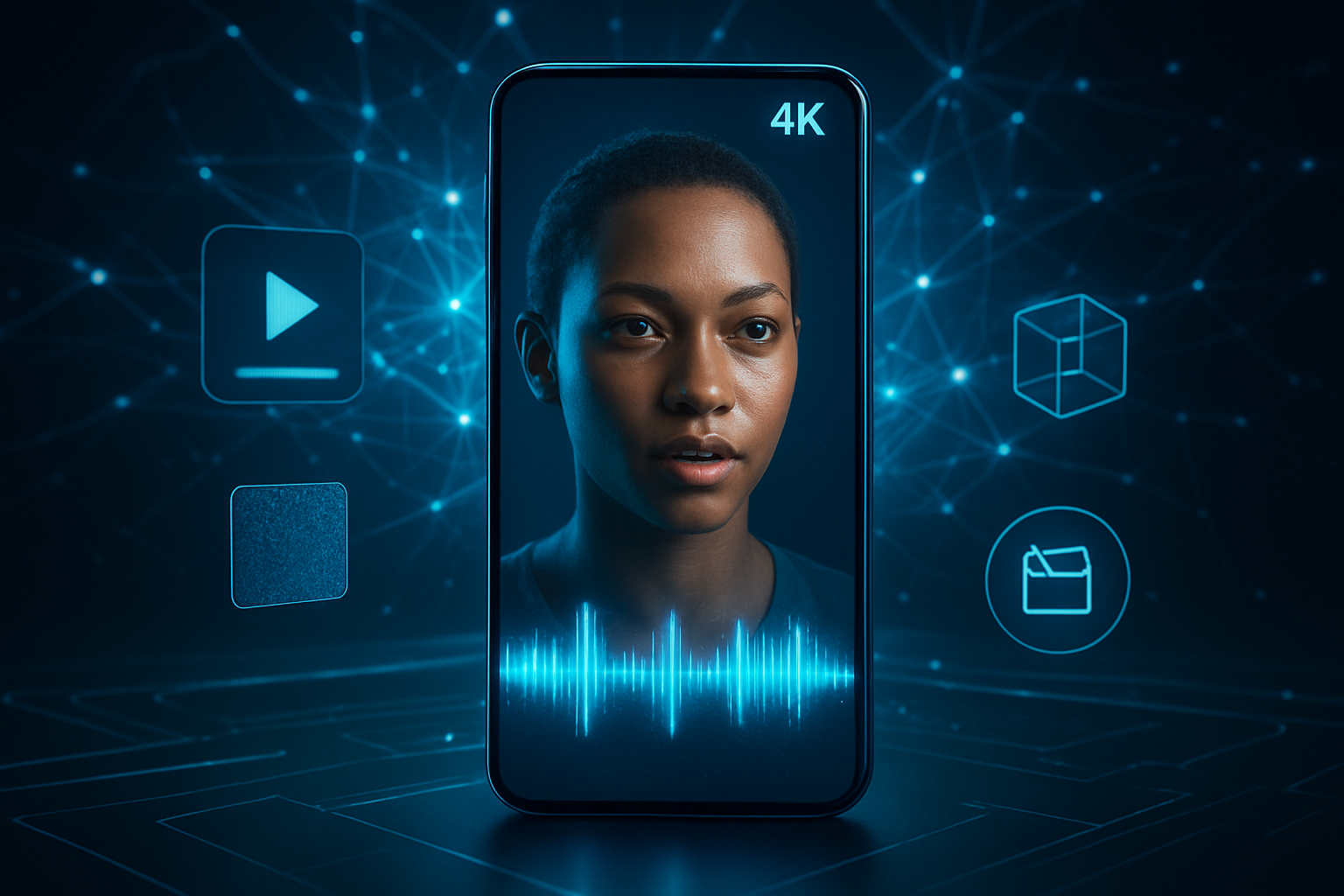
  • Cinematic AI for All: Google Veo 3 Reaches Wide Availability, Redefining the Future of Digital Media

    Cinematic AI for All: Google Veo 3 Reaches Wide Availability, Redefining the Future of Digital Media

    In a landmark shift for the global creative economy, Google has officially transitioned its flagship generative video model, Veo 3, from restricted testing to wide availability. As of late January 2026, the technology is now accessible to millions of creators through the Google ecosystem, including direct integration into YouTube and Google Cloud’s Vertex AI. This move represents the first time a high-fidelity, multimodal video engine—capable of generating synchronized audio and cinematic-quality visuals in one pass—has been deployed at this scale, effectively democratizing professional-grade production tools for anyone with a smartphone or a browser.

    The rollout marks a strategic offensive by Alphabet Inc. (NASDAQ: GOOGL) to dominate the burgeoning AI video market. By embedding Veo 3.1 into YouTube Shorts and the specialized "Google Flow" filmmaking suite, the company is not just offering a standalone tool but is attempting to establish the fundamental infrastructure for the next generation of digital storytelling. The immediate significance is clear: the barrier to entry for high-production-value video has been lowered to a simple text or image prompt, fundamentally altering how content is conceived, produced, and distributed on a global stage.

    Technical Foundations: Physics, Consistency, and Sound

    Technically, Veo 3.1 and the newly previewed Veo 3.2 represent a massive leap forward in "temporal consistency" and "identity persistence." Unlike earlier models that struggled with morphing objects or shifting character faces, Veo 3 uses a proprietary "Ingredients to Video" architecture. This allows creators to upload reference images of characters or objects, which the AI then keeps visually identical across dozens of different shots and angles. Currently, the model supports native 1080p resolution with 4K upscaling available for enterprise users, delivering 24 frames per second—the global standard for cinematic motion.

    One of the most disruptive technical advancements is Veo’s native, synchronized audio generation. While competitors often require users to stitch together video from one AI and sound from another, Veo 3.1 generates multimodal outputs where the dialogue, foley (like footsteps or wind), and background score are temporally aligned with the visual action. The model also understands "cinematic grammar," allowing users to prompt specific camera movements such as "dolly zooms," "tracking shots," or "low-angle pans" with a level of precision that mirrors professional cinematography.

    Initial reactions from the AI research community have been overwhelmingly positive, particularly regarding the "physics-aware" capabilities of the upcoming Veo 3.2. Early benchmarks suggest that Google has made significant strides in simulating gravity, fluid dynamics, and light refraction, areas where previous models often failed. Industry experts note that while some competitors may offer slightly higher raw visual polish in isolated clips, Google’s integration of sound and character consistency makes it the first truly "production-ready" tool for narrative filmmaking.

    Competitive Dynamics: The Battle for the Creator Desktop

    The wide release of Veo 3 has sent shockwaves through the competitive landscape, putting immediate pressure on rivals like OpenAI and Runway. While Runway’s Gen-4.5 currently leads some visual fidelity charts, it lacks the native audio integration and massive distribution channel that Google enjoys via YouTube. OpenAI (which remains a private entity but maintains a heavy partnership with Microsoft Corp. (NASDAQ: MSFT)) has responded by doubling down on its Sora 2 model, which focuses on longer 25-second durations and high-profile studio partnerships, but Google’s "all-in-one" workflow is seen as a major strategic advantage for the mass market.

    For Alphabet Inc., the benefit is twofold: it secures the future of YouTube as the primary hub for AI-generated entertainment and provides a high-margin service for Google Cloud. By offering Veo 3 through Vertex AI, Google is positioning itself as the backbone for advertising agencies, gaming studios, and corporate marketing departments that need to generate high volumes of localized video content at a fraction of traditional costs. This move directly threatens the traditional stock video industry, which is already seeing a sharp decline in license renewals as brands shift toward custom AI-generated assets.

    Startups in the video editing and production space are also feeling the disruption. As Google integrates "Flow"—a storyboard-style interface that allows users to drag and drop AI clips into a timeline—many standalone AI video wrappers may find their value propositions evaporating. The battle has moved beyond who can generate the best five-second clip to who can provide the most comprehensive, end-to-end creative ecosystem.

    Broader Implications: Democratization and Ethical Frontiers

    Beyond the corporate skirmishes, the wide availability of Veo 3 represents a pivotal moment in the broader AI landscape. We are moving from the era of "AI as a novelty" to "AI as a utility." The impact on the labor market for junior editors, stock footage cinematographers, and entry-level animators is a growing concern for industry guilds and labor advocates. However, proponents argue that this is the ultimate democratization of creativity, allowing a solo creator in a developing nation to produce a film with the same visual scale as a Hollywood studio.

    The ethical implications, however, remain a central point of debate. Google has implemented "SynthID" watermarking—an invisible, tamper-resistant digital signature—across all Veo-generated content to combat deepfakes and misinformation. Despite these safeguards, the ease with which hyper-realistic video can now be created raises significant questions about digital provenance and the potential for large-scale deception during a high-stakes global election year.

    Comparatively, the launch of Veo 3 is being hailed as the "GPT-4 moment" for video. Just as large language models transformed text-based communication, Veo is expected to do the same for the visual medium. It marks the transition where the "uncanny valley"—that unsettling feeling that something is almost human but not quite—is finally being bridged by sophisticated physics engines and consistent character rendering.

    The Road Ahead: From Clips to Feature Films

    Looking ahead, the next 12 to 18 months will likely see the full rollout of Veo 3.2, which promises to extend clip durations from seconds to minutes, potentially enabling the first fully AI-generated feature films. Researchers are currently focusing on "World Models," where the AI doesn't just predict pixels but actually understands the three-dimensional space it is rendering. This would allow for seamless transitions between AI-generated video and interactive VR environments, blurring the lines between filmmaking and game development.

    Potential use cases on the horizon include personalized education—where textbooks are replaced by AI-generated videos tailored to a student's learning style—and "dynamic advertising," where commercials are generated in real-time based on a viewer's specific interests and surroundings. The primary challenge remaining is the high computational cost of these models; however, as specialized AI hardware continues to evolve, the cost per minute of video is expected to plummet, making AI video as ubiquitous as digital photography.

    A New Chapter in Visual Storytelling

    The wide availability of Google Veo 3 marks the beginning of a new era in digital media. By combining high-fidelity visuals, consistent characters, and synchronized audio into a single, accessible platform, Google has effectively handed a professional movie studio to anyone with a YouTube account. The key takeaways from this development are clear: the barrier to high-end video production has vanished, the competition among AI titans has reached a fever pitch, and the very nature of "truth" in video content is being permanently altered.

    In the history of artificial intelligence, the release of Veo 3 will likely be remembered as the point where generative video became a standard tool for human expression. In the coming weeks, watch for a flood of high-quality AI content on social platforms and a potential response from OpenAI as the industry moves toward longer, more complex narrative capabilities. The cinematic revolution is no longer coming; it is already here, and it is being rendered in real-time.


    This content is intended for informational purposes only and represents analysis of current AI developments.

    TokenRing AI delivers enterprise-grade solutions for multi-agent AI workflow orchestration, AI-powered development tools, and seamless remote collaboration platforms.
    For more information, visit https://www.tokenring.ai/.

  • Beyond Prediction: How the OpenAI o1 Series Redefined the Logic of Artificial Intelligence

    Beyond Prediction: How the OpenAI o1 Series Redefined the Logic of Artificial Intelligence

    As of January 27, 2026, the landscape of artificial intelligence has shifted from the era of "chatbots" to the era of "reasoners." At the heart of this transformation is the OpenAI o1 series, a lineage of models that moved beyond simple next-token prediction to embrace deep, deliberative logic. When the first o1-preview launched in late 2024, it introduced the world to "test-time compute"—the idea that an AI could become significantly more intelligent simply by being given the time to "think" before it speaks.

    Today, the o1 series is recognized as the architectural foundation that bridged the gap between basic generative AI and the sophisticated cognitive agents we use for scientific research and high-end software engineering. By utilizing a private "Chain of Thought" (CoT) process, these models have transitioned from being creative assistants to becoming reliable logic engines capable of outperforming human PhDs in rigorous scientific benchmarks and competitive programming.

    The Mechanics of Thought: Reinforcement Learning and the CoT Breakthrough

    The technical brilliance of the o1 series lies in its departure from traditional supervised fine-tuning. Instead, OpenAI utilized large-scale reinforcement learning (RL) to train the models to recognize and correct their own errors during an internal deliberation phase. This "Chain of Thought" reasoning is not merely a prompt engineering trick; it is a fundamental architectural layer. When presented with a prompt, the model generates thousands of internal "hidden tokens" where it explores different strategies, identifies logical fallacies, and refines its approach before delivering a final answer.

    This advancement fundamentally changed how AI performance is measured. In the past, model capability was largely determined by the number of parameters and the size of the training dataset. With the o1 series and its successors—such as the o3 model released in mid-2025—a new scaling law emerged: test-time compute. This means that for complex problems, the model’s accuracy scales logarithmically with the amount of time it is allowed to deliberate. The o3 model, for instance, has been documented making over 600 internal tool calls to Python environments and web searches before successfully solving a single, multi-layered engineering problem.

    The results of this architectural shift are most evident in high-stakes academic and technical benchmarks. On the GPQA Diamond—a gold-standard test of PhD-level physics, biology, and chemistry questions—the original o1 model achieved roughly 78% accuracy, effectively surpassing human experts. By early 2026, the more advanced o3 model has pushed that ceiling to 83.3%. In the realm of competitive coding, the impact was even more stark. On the Codeforces platform, the o1 series consistently ranked in the 89th percentile, while its 2025 successor, o3, achieved a staggering rating of 2727, placing it in the 99.8th percentile of all human coders globally.

    The Market Response: A High-Stakes Race for Reasoning Supremacy

    The emergence of the o1 series sent shockwaves through the tech industry, forcing giants like Microsoft (NASDAQ: MSFT) and Google (NASDAQ: GOOGL) to pivot their entire AI strategies toward "reasoning-first" architectures. Microsoft, a primary investor in OpenAI, initially integrated the o1-preview and o1-mini into its Copilot ecosystem. However, by late 2025, the high operational costs associated with the "test-time compute" required for reasoning led Microsoft to develop its own Microsoft AI (MAI) models. This strategic move aims to reduce reliance on OpenAI’s expensive proprietary tokens and offer more cost-effective logic solutions to enterprise clients.

    Google (NASDAQ: GOOGL) responded with the Gemini 3 series in late 2025, which attempted to blend massive 2-million-token context windows with reasoning capabilities. While Google remains the leader in processing "messy" real-world data like long-form video and vast document libraries, the industry still views OpenAI’s o-series as the "gold standard" for pure logical deduction. Meanwhile, Anthropic has remained a fierce competitor with its Claude 4.5 "Extended Thinking" mode, which many developers prefer for its transparency and lower hallucination rates in legal and medical applications.

    Perhaps the most surprising challenge has come from international competitors like DeepSeek. In early 2026, the release of DeepSeek V4 introduced an "Engram" architecture that matches OpenAI’s reasoning benchmarks at roughly one-fifth the inference cost. This has sparked a "pricing war" in the reasoning sector, forcing OpenAI to launch more efficient models like the o4-mini to maintain its dominance in the developer market.

    The Wider Significance: Toward the End of Hallucination

    The significance of the o1 series extends far beyond benchmarks; it represents a fundamental shift in the safety and reliability of artificial intelligence. One of the primary criticisms of LLMs has been their tendency to "hallucinate" or confidently state falsehoods. By forcing the model to "show its work" (internally) and check its own logic, the o1 series has drastically reduced these errors. The ability to pause and verify facts during the Chain of Thought process has made AI a viable tool for autonomous scientific discovery and automated legal review.

    However, this transition has also sparked debate regarding the "black box" nature of AI reasoning. OpenAI currently hides the raw internal reasoning tokens from users to protect its competitive advantage, providing only a high-level summary of the model's logic. Critics argue that as AI takes over PhD-level tasks, the lack of transparency in how a model reached a conclusion could lead to unforeseen risks in critical infrastructure or medical diagnostics.

    Furthermore, the o1 series has redefined the "Scaling Laws" of AI. For years, the industry believed that more data was the only path to smarter AI. The o1 series proved that better thinking at the moment of the request is just as important. This has shifted the focus from massive data centers used for training to high-density compute clusters optimized for high-speed inference and reasoning.

    Future Horizons: From o1 to "Cognitive Density"

    Looking toward the remainder of 2026, the "o" series is beginning to merge with OpenAI’s flagship models. The recent rollout of GPT-5.3, codenamed "Garlic," represents the next stage of this evolution. Instead of having a separate "reasoning model," OpenAI is moving toward "Cognitive Density"—where the flagship model automatically decides how much reasoning compute to allocate based on the complexity of the user's prompt. A simple "hello" requires no extra thought, while a request to "design a more efficient propulsion system" triggers a deep, multi-minute reasoning cycle.

    Experts predict that the next 12 months will see these reasoning models integrated more deeply into physical robotics. Companies like NVIDIA (NASDAQ: NVDA) are already leveraging the o1 and o3 logic engines to help robots navigate complex, unmapped environments. The challenge remains the latency; reasoning takes time, and real-world robotics often requires split-second decision-making. Solving the "fast-reasoning" puzzle is the next great frontier for the OpenAI team.

    A Milestone in the Path to AGI

    The OpenAI o1 series will likely be remembered as the point where AI began to truly "think" rather than just "echo." By institutionalizing the Chain of Thought and proving the efficacy of reinforcement learning in logic, OpenAI has moved the goalposts for the entire field. We are no longer impressed by an AI that can write a poem; we now expect an AI that can debug a thousand-line code repository or propose a novel hypothesis in molecular biology.

    As we move through 2026, the key developments to watch will be the "democratization of reasoning"—how quickly these high-level capabilities become affordable for smaller startups—and the continued integration of logic into autonomous agents. The o1 series didn't just solve problems; it taught the world that in the race for intelligence, sometimes the most important thing an AI can do is stop and think.


    This content is intended for informational purposes only and represents analysis of current AI developments.

    TokenRing AI delivers enterprise-grade solutions for multi-agent AI workflow orchestration, AI-powered development tools, and seamless remote collaboration platforms.
    For more information, visit https://www.tokenring.ai/.

  • Anthropic’s ‘Claude Cowork’ Launch: The Era of the Autonomous Digital Employee Begins

    Anthropic’s ‘Claude Cowork’ Launch: The Era of the Autonomous Digital Employee Begins

    On January 12, 2026, Anthropic signaled a paradigm shift in the artificial intelligence landscape with the launch of Claude Cowork. This research preview represents a decisive step beyond the traditional chat window, transforming Claude from a conversational assistant into an autonomous digital agent. By granting the AI direct access to a user’s local file system and web browser, Anthropic is pivoting toward a future where "doing" is as essential as "thinking."

    The launch, initially reserved for Claude Max subscribers before expanding to Claude Pro and enterprise tiers, arrives at a critical juncture for the industry. While previous iterations of AI required users to manually upload files or copy-paste text, Claude Cowork operates as a persistent, agentic entity capable of navigating the operating system to perform high-level tasks like organizing directories, reconciling expenses, and generating multi-source reports without constant human hand-holding.

    Technical Foundations: From Chat to Agency

    Claude Cowork's most significant technical advancement is its ability to bridge the "interaction gap" between AI and the local machine. Unlike the standard web-based Claude, Cowork is delivered via the Claude Desktop application for macOS, utilizing Apple Inc. (NASDAQ: AAPL) and its native Virtualization Framework. This allows the agent to run within a secure, sandboxed environment where it can interact with a user-designated "folder-permission model." Within these boundaries, Claude can autonomously read, create, and modify files. This capability is powered by a new modular instruction set dubbed "Agent Skills," which provides the model with specialized logic for handling complex office formats such as .xlsx, .pptx, and .docx.

    Beyond the local file system, Cowork integrates seamlessly with the "Claude in Chrome" extension. This enables cross-surface workflows that were previously impossible; for example, a user can instruct the agent to "research the top five competitors in the renewable energy sector, download their latest quarterly earnings, and summarize the data into a spreadsheet in my Research folder." To accomplish this, Claude uses a vision-based reasoning engine, capturing and processing screenshots of the browser to identify buttons, forms, and navigation paths.

    Initial reactions from the AI research community have been largely positive, though experts have noted the "heavy" nature of these operations. Early testers have nicknamed the high consumption of subscription limits the "Wood Chipper" effect, as the agent’s autonomous loops—planning, executing, and self-verifying—can consume tokens at a rate significantly higher than standard text generation. However, the introduction of a "Sub-Agent Coordination" architecture allows Cowork to spawn independent threads for parallel tasks, a breakthrough that prevents the main context window from becoming cluttered during large-scale data processing.

    The Battle for the Desktop: Competitive Implications

    The release of Claude Cowork has effectively accelerated the "Agent Wars" of 2026. Anthropic’s move is a direct challenge to the "Operator" system from OpenAI, which is backed by Microsoft Corporation (NASDAQ: MSFT). While OpenAI’s Operator has focused on high-reasoning browser automation and personal "digital intern" tasks, Anthropic is positioning Cowork as a more grounded, work-focused tool for the professional environment. By focusing on local file integration and enterprise-grade safety protocols, Anthropic is leveraging its reputation for "Constitutional AI" to appeal to corporate users who are wary of letting an AI roam freely across their entire digital footprint.

    Meanwhile, Alphabet Inc. (NASDAQ: GOOGL) has responded by deepening the integration of its "Jarvis" agent directly into the Chrome browser and the ChromeOS ecosystem. Google’s advantage lies in its massive context windows, which allow its agents to maintain state across hundreds of open tabs. However, Anthropic’s commitment to the Model Context Protocol (MCP)—an industry standard for agent communication—has gained significant traction among developers. This strategic choice suggests that Anthropic is betting on an open ecosystem where Claude can interact with a variety of third-party tools, rather than a "walled garden" approach.

    Wider Significance: The "Crossover Year" for Agentic AI

    Industry analysts are calling 2026 the "crossover year" for AI, where the primary interface for technology shifts from the search bar to the command line of an autonomous agent. Claude Cowork fits into a broader trend of "Computer-Using Agents" (CUAs) that are redefining the relationship between humans and software. This shift is not without its concerns; the ability for an AI to modify files and navigate the web autonomously raises significant security and privacy questions. Anthropic has addressed this by implementing "Deletion Protection," which requires explicit user approval before any file is permanently removed, but the potential for "hallucinations in action" remains a persistent challenge for the entire sector.

    Furthermore, the economic implications are profound. We are seeing a transition from Software-as-a-Service (SaaS) to what some are calling "Service-as-Software." In this new model, value is derived not from the tools themselves, but from the finished outcomes—the organized folders, the completed reports, the booked travel—that agents like Claude Cowork can deliver. This has led to a surge in interest from companies like Amazon.com, Inc. (NASDAQ: AMZN), an Anthropic investor, which sees agentic AI as the future of both cloud computing and consumer logistics.

    The Horizon: Multi-Agent Systems and Local Intelligence

    Looking ahead, the next phase of Claude Cowork’s evolution is expected to focus on "On-Device Intelligence" and "Multi-Agent Systems" (MAS). To combat the high latency and token costs associated with cloud-based agents, research is already shifting toward running smaller, highly efficient models locally on specialized hardware. This trend is supported by advancements from companies like Qualcomm Incorporated (NASDAQ: QCOM), whose latest Neural Processing Units (NPUs) are designed to handle agentic workloads without a constant internet connection.

    Experts predict that by the end of 2026, we will see the rise of "Agent Orchestration" platforms. Instead of a single AI performing all tasks, users will manage a fleet of specialized agents—one for research, one for data entry, and one for creative drafting—all coordinated through a central hub like Claude Cowork. The ultimate challenge will be achieving "human-level reliability," which currently sits well below the threshold required for high-stakes financial or legal automation.

    Final Assessment: A Milestone in Digital Collaboration

    The launch of Claude Cowork is more than just a new feature; it is a fundamental redesign of the user experience. By breaking out of the chat box and into the file system, Anthropic is providing a glimpse of a world where AI is a true collaborator rather than just a reference tool. The significance of this development in AI history cannot be overstated, as it marks the moment when "AI assistance" evolved into "AI autonomy."

    In the coming weeks, the industry will be watching closely to see how Anthropic scales this research preview and whether it can overcome the "Wood Chipper" token costs that currently limit intensive use. For now, Claude Cowork stands as a bold statement of intent: the age of the autonomous digital employee has arrived, and the desktop will never be the same.


    This content is intended for informational purposes only and represents analysis of current AI developments.

    TokenRing AI delivers enterprise-grade solutions for multi-agent AI workflow orchestration, AI-powered development tools, and seamless remote collaboration platforms.
    For more information, visit https://www.tokenring.ai/.
  • Google Launches Veo 3.1: A Paradigm Shift in Cinematic AI Video and Character Consistency

    Google Launches Veo 3.1: A Paradigm Shift in Cinematic AI Video and Character Consistency

    Google, a subsidiary of Alphabet Inc. (NASDAQ: GOOGL), has officially moved the goalposts in the generative AI arms race with the wide release of Veo 3.1. Launched as a major update on January 13, 2026, the model marks a shift from experimental text-to-video generation to a production-ready creative suite. By introducing a "co-director" philosophy, Veo 3.1 aims to solve the industry’s most persistent headache: maintaining visual consistency across multiple shots while delivering the high-fidelity resolution required for professional filmmaking.

    The announcement comes at a pivotal moment as the AI video landscape matures. While early models focused on the novelty of "prompting" a scene into existence, Veo 3.1 prioritizes precision. With features like "Ingredients to Video" and native 4K upscaling, Google is positioning itself not just as a tool for viral social media clips, but as a foundational infrastructure for the multi-billion dollar advertising and entertainment industries.

    Technical Mastery: From Diffusion to Direction

    At its core, Veo 3.1 is built on a sophisticated 3D Latent Diffusion Transformer architecture. Unlike previous iterations that processed video as a series of independent frames, this model processes space, time, and audio joints simultaneously. This unified approach allows for the native generation of synchronized dialogue, sound effects, and ambient noise with roughly 10ms of latency between vision and sound. The result is a seamless audio-visual experience where characters' lip-syncing and movement-based sounds—like footsteps or the rustle of clothes—feel physically grounded.

    The headline feature of Veo 3.1 is "Ingredients to Video," a tool that allows creators to upload up to three reference images—be they specific characters, complex objects, or abstract style guides. The model uses these "ingredients" to anchor the generation process, ensuring that a character’s face, clothing, and the environment remain identical across different scenes. This solves the "identity drift" problem that has long plagued AI video, where a character might look like a different person from one shot to the next. Additionally, a new "Frames to Video" interpolation tool allows users to provide a starting and ending image, with the AI generating a cinematic transition that adheres to the lighting and physics of both frames.

    Technical specifications reveal a massive leap in accessibility and quality. Veo 3.1 supports native 1080p HD, with an enterprise-tier 4K upscaling option available via Google Flow and Vertex AI. It also addresses the rise of short-form content by offering native 9:16 vertical output, eliminating the quality degradation usually associated with cropping landscape footage. Initial reactions from the AI research community have been overwhelmingly positive, with experts noting that while OpenAI’s Sora 2 might hold a slight edge in raw physics simulation (such as water dynamics), Veo 3.1 is the superior "utilitarian" tool for filmmakers who need control and resolution over sheer randomness.

    The Battle for the Studio: Competitive Implications

    The release of Veo 3.1 creates a significant challenge for rivals like Microsoft (NASDAQ: MSFT)-backed OpenAI and startups like Runway and Kling AI. By integrating Veo 3.1 directly into the Gemini app, YouTube Shorts, and the Google Vids productivity suite, Alphabet Inc. (NASDAQ: GOOGL) is leveraging its massive distribution network to reach millions of creators instantly. This ecosystem advantage makes it difficult for standalone video startups to compete, as Google can offer a unified workflow—from scriptwriting in Gemini to video generation in Veo and distribution on YouTube.

    In the enterprise sector, Google’s strategic partnerships are already bearing fruit. Advertising giant WPP (NYSE: WPP) has reportedly begun integrating Veo 3.1 into its production workflows, aiming to slash the time and cost of creating hyper-localized global ad campaigns. Similarly, the storytelling platform Pocket FM noted a significant increase in user engagement by using the model to create promotional trailers with realistic lip-sync. For major AI labs, the pressure is now on to match Google’s "Ingredients" approach, as creators increasingly demand tools that function like digital puppets rather than unpredictable slot machines.

    Market positioning for Veo 3.1 is clear: it is the "Pro" option. While Meta Platforms (NASDAQ: META) continues to refine its Movie Gen for social media users, Google is targeting the middle-to-high end of the creative market. By focusing on 4K output and character consistency, Google is making a play for the pre-visualization and B-roll markets, potentially disrupting traditional stock footage companies and visual effects (VFX) houses that handle repetitive, high-volume content.

    A New Era for Digital Storytelling and Its Ethical Shadow

    The significance of Veo 3.1 extends far beyond technical benchmarks; it represents the "professionalization" of synthetic media. We are moving away from the era of "AI-generated video" as a genre itself and into an era where AI is a transparent part of the production pipeline. This transition mirrors the shift from traditional cell animation to CGI in the late 20th century. By lowering the barrier to entry for cinematic-quality visuals, Google is democratizing high-end storytelling, allowing small independent creators to produce visuals that were once the exclusive domain of major studios.

    However, this breakthrough brings intensified concerns regarding digital authenticity. To combat the potential for deepfakes and misinformation, Google has integrated its SynthID watermarking technology directly into the Veo 3.1 metadata. This invisible digital watermark persists even after video editing or compression, a critical safety feature as the world approaches the 2026 election cycles in several major democracies. Critics, however, argue that watermarking is only a partial solution and that the "uncanny valley"—while narrower than ever—still poses risks for psychological manipulation when combined with the model's high-fidelity audio capabilities.

    Comparing Veo 3.1 to previous milestones, it is being hailed as the "GPT-4 moment" for video. Just as large language models shifted from generating coherent sentences to solving complex reasoning tasks, Veo 3.1 has shifted from generating "dreamlike" sequences to generating logically consistent, high-resolution cinema. It marks the end of the "primitive" phase of generative video and the beginning of the "utility" phase.

    The Horizon: Real-Time Generation and Beyond

    Looking ahead, the next frontier for the Veo lineage is real-time interaction. Experts predict that by 2027, iterations of this technology will allow for "live-prompting," where a user can change the lighting or camera angle of a scene in real-time as the video plays. This has massive implications for the gaming industry and virtual reality. Imagine a game where the environment isn't pre-rendered but is generated on-the-fly based on the player's unique story choices, powered by hardware from the likes of NVIDIA (NASDAQ: NVDA).

    The immediate challenge for Google and its peers remains "perfect physics." While Veo 3.1 excels at texture and style, complex multi-object collisions—such as a glass shattering or a person walking through a crowd—still occasionally produce visual artifacts. Solving these high-complexity physical interactions will likely be the focus of the rumored "Veo 4" project. Furthermore, as the model moves into more hands, the demand for longer-form native generation (beyond the current 60-second limit) will necessitate even more efficient compute strategies and memory-augmented architectures.

    Wrapping Up: The New Standard for Synthetic Cinema

    Google Veo 3.1 is more than just a software update; it is a declaration of intent. By prioritizing consistency, resolution, and audio-visual unity, Google has provided a blueprint for how AI will integrate into the professional creative world. The model successfully bridges the gap between the creative vision in a director's head and the final pixels on the screen, reducing the "friction" of production to an unprecedented degree.

    As we move into the early months of 2026, the tech industry will be watching closely to see how OpenAI responds and how YouTube's creator base adopts these tools. The long-term impact of Veo 3.1 may very well be a surge in high-quality independent cinema and a complete restructuring of the advertising industry. For now, the "Ingredients to Video" feature stands as a benchmark of what happens when AI moves from being a toy to being a tool.


    This content is intended for informational purposes only and represents analysis of current AI developments.

    TokenRing AI delivers enterprise-grade solutions for multi-agent AI workflow orchestration, AI-powered development tools, and seamless remote collaboration platforms.
    For more information, visit https://www.tokenring.ai/.

  • Wolfspeed Shatters Power Semiconductor Limits: World’s First 300mm Silicon Carbide Wafer Arrives to Power the AI Revolution

    Wolfspeed Shatters Power Semiconductor Limits: World’s First 300mm Silicon Carbide Wafer Arrives to Power the AI Revolution

    In a landmark achievement for the semiconductor industry, Wolfspeed (NYSE: WOLF) announced in January 2026 the successful production of the world’s first 300mm (12-inch) single-crystal Silicon Carbide (SiC) wafer. This breakthrough marks a definitive shift in the physics of power delivery, offering a massive leap in surface area and efficiency that was previously thought to be years away. By scaling SiC production to the same 300mm standard used in traditional silicon manufacturing, Wolfspeed has effectively reset the economics of high-voltage power electronics, providing the necessary infrastructure to support the exploding energy demands of generative AI and the global transition to electric mobility.

    The immediate significance of this development cannot be overstated. As AI data centers move toward megawatt-scale power densities, traditional silicon-based power components have become a bottleneck, struggling with heat dissipation and energy loss. Wolfspeed’s 300mm platform addresses these constraints head-on, promising a 2.3x increase in chip yield per wafer compared to the previous 200mm state-of-the-art. This milestone signifies the transition of Silicon Carbide from a specialized "premium" material to a high-volume, cost-competitive cornerstone of the global energy transition.

    The Engineering Feat: Scaling the Unscalable

    Technically, growing a single-crystal Silicon Carbide boule at a 300mm diameter is an achievement that many industry experts likened to "climbing Everest in a lab." Unlike traditional silicon, which can be grown into massive, high-purity ingots with relative ease, SiC is a hard, brittle compound that requires extreme temperatures and precise gas-phase sublimation. Wolfspeed’s new process maintains the critical 4H-SiC crystal structure across the entire 12-inch surface, minimizing the "micropipes" and screw dislocations that have historically plagued large-diameter SiC growth. By achieving this, Wolfspeed has provided approximately 2.25 times the usable surface area of a 200mm wafer, allowing for a radical increase in the number of high-performance MOSFETs (Metal-Oxide-Semiconductor Field-Effect Transistors) produced in a single batch.

    The 300mm platform also introduces enhanced doping uniformity and thickness consistency, which are vital for the reliability of high-voltage components. In previous 150mm and 200mm generations, edge-of-wafer defects often led to significant yield losses. Wolfspeed’s 2026 milestone utilizes a new generation of automated crystal growth furnaces that rely on AI-driven thermal monitoring to maintain a perfectly uniform environment. Initial reactions from the power electronics community have been overwhelmingly positive, with researchers noting that this scale-up mirrors the "300mm revolution" that occurred in the digital logic industry in the early 2000s, finally bringing SiC into the modern era of high-volume fabrication.

    How this differs from previous approaches is found in the integration of high-purity semi-insulating substrates. For the first time, a single 300mm platform can unify manufacturing for high-power industrial components and the high-frequency RF systems used in telecommunications. This dual-purpose capability allows for better utilization of fab capacity and accelerates the "More than Moore" trend, where performance gains come from material science and vertical integration rather than just transistor shrinking.

    Strategic Dominance and the Toyota Alliance

    The market implications of the 300mm breakthrough are underscored by a massive long-term supply agreement with Toyota Motor Corporation (NYSE: TM). Under this deal, Wolfspeed will provide automotive-grade SiC MOSFETs for Toyota’s next generation of battery electric vehicles (BEVs). By utilizing components from the 300mm line, Toyota aims to drastically reduce energy loss in its onboard charging systems (OBCs) and traction inverters. This will result in shorter charging times and a significant increase in vehicle range without needing larger, heavier batteries. For Toyota, the deal secures a stable, U.S.-based supply chain for the most critical component of its electrification strategy.

    Beyond the automotive sector, this development poses a significant challenge to competitors like STMicroelectronics (NYSE: STM) and Infineon Technologies (OTC: IFNNY), who have heavily invested in 200mm capacity. Wolfspeed’s jump to 300mm gives it a distinct "first-mover" advantage in cost structure. Analysts estimate that a fully optimized 300mm fab can achieve a 30% to 40% reduction in die cost compared to 200mm, effectively commoditizing high-efficiency power chips. This cost reduction is expected to disrupt existing product lines across the industrial sector, as SiC begins to replace traditional silicon IGBTs (Insulated-Gate Bipolar Transistors) in mid-range applications like solar inverters and HVAC systems.

    AI hardware giants are also set to benefit. As NVIDIA (NASDAQ: NVDA) and Advanced Micro Devices (NASDAQ: AMD) push the limits of GPU power consumption—with some upcoming racks expected to draw over 100kW—the demand for SiC-based Power Distribution Units (PDUs) is soaring. Wolfspeed’s 300mm milestone ensures that the power supply industry can keep pace with the sheer volume of AI hardware being deployed, preventing a "power wall" from stalling the growth of large language model training and inference.

    Powering the AI Landscape and the Global Energy Grid

    The broader significance of 300mm SiC lies in its role as an "energy multiplier" for the AI era. Modern AI data centers are facing intense scrutiny over their carbon footprints and electricity consumption. Silicon Carbide’s ability to operate at higher temperatures with lower switching losses means that power conversion systems can be made smaller and more efficient. When scaled across the millions of servers required for global AI infrastructure, the cumulative energy savings could reach gigawatt-hours per year. This fits into the broader trend of "Green AI," where the focus shifts from raw compute power to the efficiency of the entire ecosystem.

    Comparing this to previous milestones, the 300mm SiC wafer is arguably as significant for power electronics as the transition to EUV lithography was for digital logic. It represents the moment when a transformative material overcomes the "lab-to-fab" hurdle at a scale that can satisfy global demand. However, the achievement also raises concerns about the concentration of the SiC supply chain. With Wolfspeed leading the 300mm charge from its Mohawk Valley facility, the U.S. gains a strategic edge in the semiconductor "cold war," potentially creating friction with international competitors who are still catching up to 200mm yields.

    Furthermore, the environmental impact of the manufacturing process itself must be considered. While SiC devices save energy during their operational life, the high temperatures required for crystal growth are energy-intensive. Industry experts are watching to see if Wolfspeed can pair its manufacturing expansion with renewable energy sourcing to ensure that the "cradle-to-gate" carbon footprint of these 300mm wafers remains low.

    The Road to Mass Production: What’s Next?

    Looking ahead, the near-term focus will be on ramping the 300mm production line to full capacity. While the first wafers were produced in January 2026, reaching high-volume "mature" yields typically takes 12 to 18 months. During this period, expect to see a wave of new product announcements from power supply manufacturers, specifically targeting the 800V architecture in EVs and the high-voltage DC (HVDC) power delivery systems favored by modern data centers. We may also see the first applications of SiC in consumer electronics, such as ultra-compact, high-wattage laptop chargers and home energy storage systems.

    In the longer term, the success of 300mm SiC could pave the way for even more exotic materials, such as Gallium Nitride (GaN) on SiC, to reach similar scales. Challenges remain, particularly in the thinning and dicing of these larger, extremely hard wafers without increasing breakage rates. Experts predict that the next two years will see a flurry of innovation in "kerf-less" dicing and automated optical inspection (AOI) technologies specifically designed for the 300mm SiC format.

    A New Era for Semiconductor Economics

    In summary, Wolfspeed’s production of the world’s first 300mm single-crystal Silicon Carbide wafer is a watershed moment that bridges the gap between material science and global industrial needs. By solving the complex thermal and structural challenges of 12-inch SiC growth, Wolfspeed has provided a roadmap for drastically cheaper and more efficient power electronics. This development is a triple-win for the tech industry: it enables the massive power density required for AI, secures the future of the EV market through the Toyota partnership, and establishes a new standard for energy efficiency.

    As we move through 2026, the industry will be watching for the first "300mm-powered" products to hit the market. The significance of this milestone will likely be remembered as the point where Silicon Carbide moved from a niche luxury to the backbone of the modern high-voltage world. For investors and tech enthusiasts alike, the coming months will reveal just how quickly this new economy of scale can reshape the competitive landscape of the semiconductor world.


    This content is intended for informational purposes only and represents analysis of current AI and semiconductor developments.

    TokenRing AI delivers enterprise-grade solutions for multi-agent AI workflow orchestration, AI-powered development tools, and seamless remote collaboration platforms.
    For more information, visit https://www.tokenring.ai/.
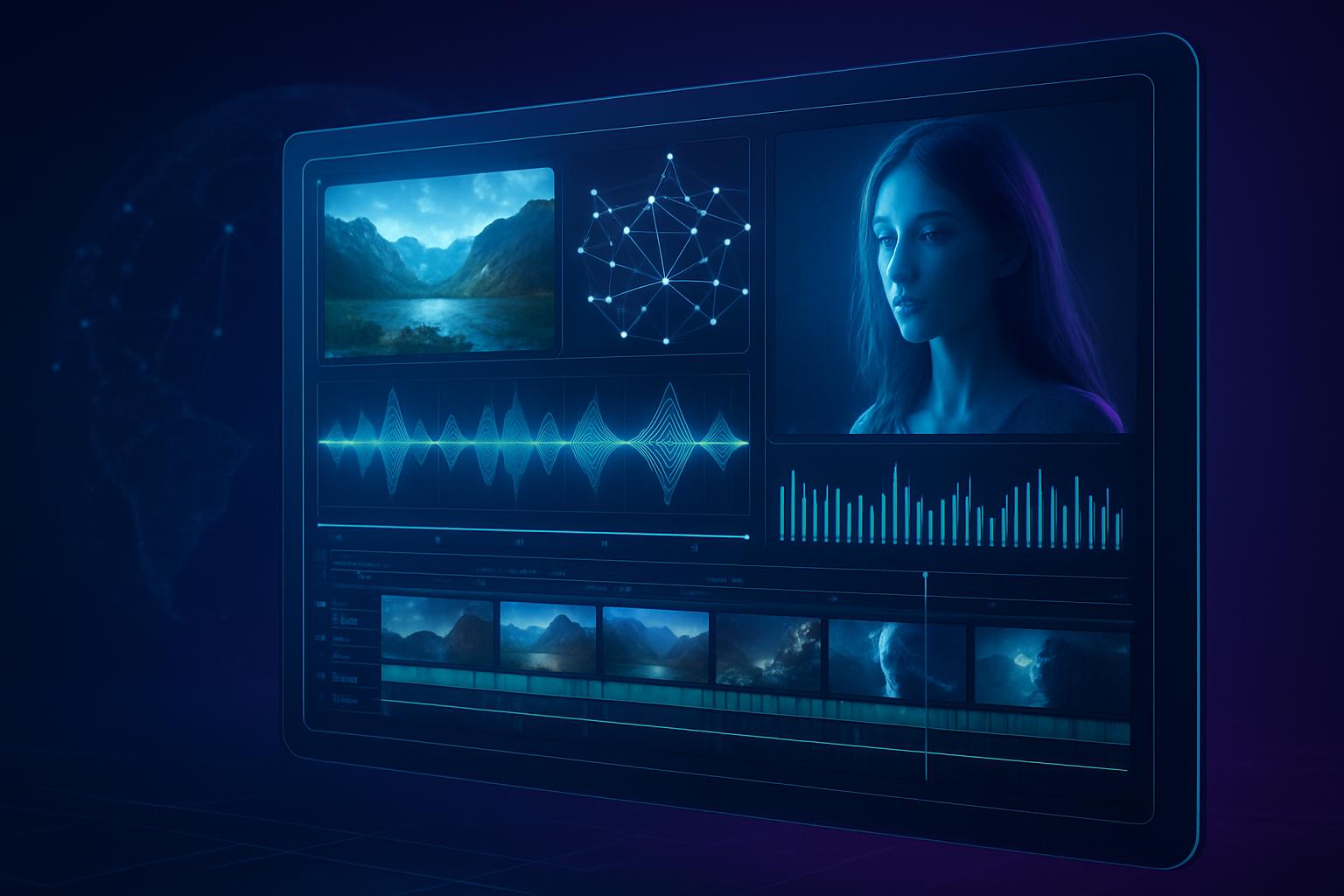
  • OpenAI Breaks Tradition: ChatGPT to Integrate Advertisements in Bold Revenue Pivot

    OpenAI Breaks Tradition: ChatGPT to Integrate Advertisements in Bold Revenue Pivot

    In a move that marks the end of the "ad-free" era for generative artificial intelligence, OpenAI officially announced on January 16, 2026, that it will begin integrating advertisements directly into ChatGPT responses. The decision, aimed at addressing the astronomical operational costs of maintaining its most advanced models, signals a fundamental shift in how the industry leader plans to monetize the hundreds of millions of users who rely on its platform daily.

    The rollout begins immediately for logged-in adult users in the United States, primarily within the free tier and a newly launched mid-range subscription. This strategic pivot highlights the increasing pressure on AI labs to transition from research-heavy "burn" phases to sustainable, high-growth revenue engines capable of satisfying investors and funding the next generation of "Frontier" models.

    The Engineering of Intent: How ChatGPT Ads Work

    Unlike the traditional banner ads or pre-roll videos that defined the early internet, OpenAI is debuting what it calls "Intent-Based Monetization." This technical framework does not rely on simple keywords; instead, it uses the deep contextual understanding of GPT-5.2 to surface sponsored content only when a user’s query indicates a specific commercial need. For example, a user asking for advice on "treating dry skin in winter" might see a response followed by a clearly labeled "Sponsored Recommendation" for a specific moisturizer brand.

    Technically, OpenAI has implemented a strict separation between the Large Language Model’s (LLM) generative output and the ad-serving layer. Company engineers state that the AI generates its primary response first, ensuring that the "core intelligence" remains unbiased by commercial interests. Once the response is generated, a secondary "Ad-Selector" model analyzes the text and the user’s intent to append relevant modules. These modules include "Bottom-of-Answer Boxes," which appear as distinct cards below the text, and "Sponsored Citations" within the ChatGPT Search interface, where a partner’s link may be prioritized as a verified source.

    To facilitate this, OpenAI has secured inaugural partnerships with retail giants like Walmart (NYSE: WMT) and Shopify (NYSE: SHOP), allowing for "Instant Checkout" features where users can purchase products mentioned in the chat without leaving the interface. This differs significantly from previous approaches like Google’s (NASDAQ: GOOGL) traditional Search ads, as it attempts to shorten the distance between a conversational epiphany and a commercial transaction. Initial reactions from the AI research community have been cautious, with some praising the technical transparency of the ad-boxes while others worry about the potential for "subtle steering," where the model might subconsciously favor topics that are more easily monetized.

    A High-Stakes Battle for the Future of Search

    The integration of ads is a direct challenge to the incumbents of the digital advertising world. Alphabet Inc. (NASDAQ: GOOGL), which has dominated search advertising for decades, has already begun defensive maneuvers by integrating AI Overviews and ads into its Gemini chatbot. However, OpenAI’s move to capture "intent" at the moment of reasoning could disrupt the traditional "blue link" economy. By providing a direct answer followed by a curated product, OpenAI is betting that users will prefer a streamlined experience over the traditional search-and-click journey.

    This development also places significant pressure on Microsoft (NASDAQ: MSFT), OpenAI’s primary partner. While Microsoft has already integrated ads into its Copilot service via the Bing network, OpenAI’s independent ad platform suggests a desire for greater autonomy and a larger slice of the multi-billion dollar search market. Meanwhile, startups like Perplexity AI, which pioneered "Sponsored Follow-up Questions" late in 2024, now find themselves competing with a titan that possesses a much larger user base and deeper technical integration with consumer hardware.

    Market analysts suggest that the real winners in this shift may be the advertisers themselves, who are desperate for new channels as traditional social media engagement plateaus. Meta Platforms (NASDAQ: META), which has relied heavily on Instagram and Facebook for ad revenue, is also reportedly accelerating its own AI-driven ad formats to keep pace. The competitive landscape is no longer just about who has the "smartest" AI, but who can most effectively turn that intelligence into a profitable marketplace.

    The End of the "Clean" AI Era

    The broader significance of this move cannot be overstated. For years, ChatGPT was viewed as a "clean" interface—a stark contrast to the cluttered, ad-heavy experience of the modern web. The introduction of ads marks a "loss of innocence" for the AI landscape, bringing it in line with the historical trajectory of Google, Facebook, and even early radio and television. It confirms the industry consensus that "intelligence" is simply too expensive to be provided for free without a commercial trade-off.

    However, this transition brings significant concerns regarding bias and the "AI Hallucination" of commercial preferences. While OpenAI maintains that ads do not influence the LLM’s output, critics argue that the pressure to generate revenue could eventually lead to "optimization for clicks" rather than "optimization for truth." This mirrors the early 2000s debates over whether Google’s search results were being skewed by its advertising business—a debate that continues to this day.

    Furthermore, the introduction of the "ChatGPT Go" tier at $8/month—which offers higher capacity but still includes ads—creates a new hierarchy of intelligence. In this new landscape, "Ad-Free Intelligence" is becoming a luxury good, reserved for those willing to pay $20 a month or more for Plus and Pro plans. This has sparked a debate about the "digital divide," where the most objective, unbiased AI might only be accessible to the wealthy, while the general public interacts with a version of "truth" that is partially subsidized by corporate interests.

    Looking Ahead: The Multimodal Ad Frontier

    In the near term, experts predict that OpenAI will expand these ad formats into its multimodal features. We may soon see "Sponsored Visuals" in DALL-E 3 generations or "Audio Placements" in the ChatGPT Advanced Voice Mode, where the AI might suggest a nearby coffee shop or a specific brand of headphones during a natural conversation. The company’s planned 60-second Super Bowl LX advertisement in February 2026 is expected to focus heavily on "ChatGPT as a Personal Shopping Assistant," framing the ad integration as a helpful feature rather than a necessary evil.

    The ultimate challenge for OpenAI will be maintaining the delicate balance between user experience and revenue generation. If the ads become too intrusive or begin to degrade the quality of the AI's reasoning, the company risks a mass exodus to open-source models or emerging competitors that promise an ad-free experience. However, if they succeed, they will have solved the "trillion-dollar problem" of AI: how to provide world-class intelligence at a scale that is financially sustainable for the long haul.

    A Pivotal Moment in AI History

    OpenAI’s decision to monetize ChatGPT through ads is a watershed moment that will likely define the "Second Act" of the AI revolution. It represents the transition from a period of awe-inspiring discovery to one of cold, hard commercial reality. Key takeaways from this announcement include the launch of the "intent-based" ad model, the introduction of the $8 "Go" tier, and a clear signal that the company is targeting a massive $125 billion revenue goal by 2029.

    As we look toward the coming weeks, the industry will be watching the US market's adoption rates and the performance of the "Instant Checkout" partnerships. This move is more than just a business update; it is an experiment in whether a machine can be both a trusted advisor and a high-efficiency salesperson. The success or failure of this integration will determine the business model for the entire AI industry for the next decade.


    This content is intended for informational purposes only and represents analysis of current AI developments.

    TokenRing AI delivers enterprise-grade solutions for multi-agent AI workflow orchestration, AI-powered development tools, and seamless remote collaboration platforms.
    For more information, visit https://www.tokenring.ai/.
  • The Hybrid Reasoning Revolution: How Anthropic’s Claude 3.7 Sonnet Redefined the AI Performance Curve

    The Hybrid Reasoning Revolution: How Anthropic’s Claude 3.7 Sonnet Redefined the AI Performance Curve

    Since its release in early 2025, Anthropic’s Claude 3.7 Sonnet has fundamentally reshaped the landscape of generative artificial intelligence. By introducing the industry’s first "Hybrid Reasoning" architecture, Anthropic effectively ended the forced compromise between execution speed and cognitive depth. This development marked a departure from the "all-or-nothing" reasoning models of the previous year, allowing users to fine-tune the model's internal monologue to match the complexity of the task at hand.

    As of January 16, 2026, Claude 3.7 Sonnet remains the industry’s most versatile workhorse, bridging the gap between high-frequency digital assistance and deep-reasoning engineering. While newer frontier models like Claude 4.5 Opus have pushed the boundaries of raw intelligence, the 3.7 Sonnet’s ability to toggle between near-instant responses and rigorous, step-by-step thinking has made it the primary choice for enterprise developers and high-stakes industries like finance and healthcare.

    The Technical Edge: Unpacking Hybrid Reasoning and Thinking Budgets

    At the heart of Claude 3.7 Sonnet’s success is its dual-mode capability. Unlike traditional Large Language Models (LLMs) that generate the most probable next token in a single pass, Claude 3.7 allows users to engage "Extended Thinking" mode. In this state, the model performs a visible internal monologue—an "active reflection" phase—before delivering a final answer. This process dramatically reduces hallucinations in math, logic, and coding by allowing the model to catch and correct its own errors in real-time.

    A key differentiator for Anthropic is the "Thinking Budget" feature available via API. Developers can now specify a token limit for the model’s internal reasoning, ranging from a few hundred to 128,000 tokens. This provides a granular level of control over both cost and latency. For example, a simple customer service query might use zero reasoning tokens for an instant response, while a complex software refactoring task might utilize a 50,000-token "thought" process to ensure systemic integrity. This transparency stands in stark contrast to the opaque reasoning processes utilized by competitors like OpenAI’s o1 and early GPT-5 iterations.

    The technical benchmarks released since its inception tell a compelling story. In the real-world software engineering benchmark, SWE-bench Verified, Claude 3.7 Sonnet in extended mode achieved a staggering 70.3% success rate, a significant leap from the 49.0% seen in Claude 3.5. Furthermore, its performance on graduate-level reasoning (GPQA Diamond) reached 84.8%, placing it at the very top of its class during its release window. This leap was made possible by a refined training process that emphasized "process-based" rewards rather than just outcome-based feedback.

    A New Battleground: Anthropic, OpenAI, and the Big Tech Titans

    The introduction of Claude 3.7 Sonnet ignited a fierce competitive cycle among AI's "Big Three." While Alphabet Inc. (NASDAQ: GOOGL) has focused on massive context windows with its Gemini 3 Pro—offering up to 2 million tokens—Anthropic’s focus on reasoning "vibe" and reliability has carved out a dominant niche. Microsoft Corporation (NASDAQ: MSFT), through its heavy investment in OpenAI, has countered with GPT-5.2, which remains a fierce rival in specialized cybersecurity tasks. However, many developers have migrated to Anthropic’s ecosystem due to the superior transparency of Claude’s reasoning logs.

    For startups and AI-native companies, the Hybrid Reasoning model has been a catalyst for a new generation of "agentic" applications. Because Claude 3.7 Sonnet can be instructed to "think" before taking an action in a user’s browser or codebase, the reliability of autonomous agents has increased by nearly 20% over the last year. This has threatened the market position of traditional SaaS tools that rely on rigid, non-AI workflows, as more companies opt for "reasoning-first" automation built on Anthropic’s API or via Amazon.com, Inc. (NASDAQ: AMZN) Bedrock platform.

    The strategic advantage for Anthropic lies in its perceived "safety-first" branding. By making the model's reasoning visible, Anthropic provides a layer of interpretability that is crucial for regulated industries. This visibility allows human auditors to see why a model reached a certain conclusion, making Claude 3.7 the preferred engine for the legal and compliance sectors, which have historically been wary of "black box" AI.

    Wider Significance: Transparency, Copyright, and the Healthcare Frontier

    The broader significance of Claude 3.7 Sonnet extends beyond mere performance metrics. It represents a shift in the AI industry toward "Transparent Intelligence." By showing its work, Claude 3.7 addresses one of the most persistent criticisms of AI: the inability to explain its reasoning. This has set a new standard for the industry, forcing competitors to rethink how they present model "thoughts" to the user.

    However, the model's journey hasn't been without controversy. Just this month, in January 2026, a joint study from researchers at Stanford and Yale revealed that Claude 3.7—along with its peers—reproduces copyrighted academic texts with over 94% accuracy. This has reignited a fierce legal debate regarding the "Fair Use" of training data, even as Anthropic positions itself as the more ethical alternative in the space. The outcome of these legal challenges could redefine how models like Claude 3.7 are trained and deployed in the coming years.

    Simultaneously, Anthropic’s recent launch of "Claude for Healthcare" in January 2026 showcases the practical application of hybrid reasoning. By integrating with CMS databases and PubMed, and utilizing the deep-thinking mode to cross-reference patient data with clinical literature, Claude 3.7 is moving AI from a "writing assistant" to a "clinical co-pilot." This transition marks a pivotal moment where AI reasoning is no longer a novelty but a critical component of professional infrastructure.

    Looking Ahead: The Road to Claude 4 and Beyond

    As we move further into 2026, the focus is shifting toward the full integration of agentic capabilities. Experts predict that the next iteration of the Claude family will move beyond "thinking" to "acting" with even greater autonomy. The goal is a model that doesn't just suggest a solution but can independently execute multi-day projects across different software environments, utilizing its hybrid reasoning to navigate unexpected hurdles without human intervention.

    Despite these advances, significant challenges remain. The high compute cost of "Extended Thinking" tokens is a barrier to mass-market adoption for smaller developers. Furthermore, as models become more adept at reasoning, the risk of "jailbreaking" through complex logical manipulation increases. Anthropic’s safety teams are currently working on "Constitutional Reasoning" protocols, where the model's internal monologue is governed by a strict set of ethical rules that it must verify before providing any response.

    Conclusion: The Legacy of the Reasoning Workhorse

    Anthropic’s Claude 3.7 Sonnet will likely be remembered as the model that normalized deep reasoning in AI. By giving users the "toggle" to choose between speed and depth, Anthropic demystified the process of LLM reflection and provided a practical framework for enterprise-grade reliability. It bridged the gap between the experimental "thinking" models of 2024 and the fully autonomous agentic systems we are beginning to see today.

    As of early 2026, the key takeaway is that intelligence is no longer a static commodity; it is a tunable resource. In the coming months, keep a close watch on the legal battles regarding training data and the continued expansion of Claude into specialized fields like healthcare and law. While the "AI Spring" continues to bloom, Claude 3.7 Sonnet stands as a testament to the idea that for AI to be truly useful, it doesn't just need to be fast—it needs to know how to think.


    This content is intended for informational purposes only and represents analysis of current AI developments.

    TokenRing AI delivers enterprise-grade solutions for multi-agent AI workflow orchestration, AI-powered development tools, and seamless remote collaboration platforms.
    For more information, visit https://www.tokenring.ai/.
  • The Great Unshackling: OpenAI’s ‘Operator’ and the Dawn of the Autonomous Agentic Era

    The Great Unshackling: OpenAI’s ‘Operator’ and the Dawn of the Autonomous Agentic Era

    The Great Unshackling: OpenAI’s 'Operator' and the Dawn of the Autonomous Agentic Era

    As we enter the first weeks of 2026, the tech industry is witnessing a tectonic shift that marks the end of the "Chatbot Era" and the beginning of the "Agentic Revolution." At the center of this transformation is OpenAI’s Operator, a sophisticated browser-based agent that has recently transitioned from an exclusive research preview into a cornerstone of the global digital economy. Unlike the static LLMs of 2023 and 2024, Operator represents a "Level 3" AI on the path to artificial general intelligence—an entity that doesn't just suggest text, but actively navigates the web, executes complex workflows, and makes real-time decisions on behalf of users.

    This advancement signifies a fundamental change in how humans interact with silicon. For years, AI was a passenger, providing directions while the human drove the mouse and keyboard. With the full integration of Operator into the ChatGPT ecosystem, the AI has taken the wheel. By autonomously managing everything from intricate travel itineraries to multi-step corporate procurement processes, OpenAI is redefining the web browser as an execution environment rather than a mere window for information.

    The Silicon Hands: Inside the Computer-Using Agent (CUA)

    Technically, Operator is powered by OpenAI’s specialized Computer-Using Agent (CUA), a model architecture specifically optimized for graphical user interface (GUI) interaction. While earlier iterations of web agents relied on parsing HTML code or Document Object Models (DOM), Operator utilizes a vision-first approach. It "sees" the browser screen in high-frequency screenshot bursts, identifying buttons, input fields, and navigational cues just as a human eye would. This allows it to interact with complex modern web applications—such as those built with React or Vue—that often break traditional automation scripts.

    What sets Operator apart from previous technologies is its robust Chain-of-Thought (CoT) reasoning applied to physical actions. When the agent encounters an error, such as a "Flight Sold Out" message or a broken checkout link, it doesn't simply crash. Instead, it enters a "Self-Correction" loop, analyzing the visual feedback to find an alternative path or refresh the page. This is a significant leap beyond the brittle "Record and Playback" macros of the past. Furthermore, Operator runs in a Cloud-Based Managed Browser, allowing tasks to continue executing even if the user’s local device is powered down, with push notifications alerting the owner only when a critical decision or payment confirmation is required.

    The AI research community has noted that while competitors like Anthropic have focused on broad "Computer Use" (controlling the entire desktop), OpenAI’s decision to specialize in the browser has yielded a more polished, user-friendly experience for the average consumer. Experts argue that by constraining the agent to the browser, OpenAI has significantly reduced the "hallucination-to-action" risk that plagued earlier experimental agents.

    The End of the 'Per-Seat' Economy: Strategic Implications

    The rise of autonomous agents like Operator has sent shockwaves through the business models of Silicon Valley’s largest players. Microsoft (NASDAQ: MSFT), a major partner of OpenAI, has had to pivot its own Copilot strategy to ensure its "Agent 365" doesn't cannibalize its existing software sales. The industry is currently moving away from traditional "per-seat" subscription models toward consumption-based pricing. As agents become capable of doing the work of multiple human employees, software giants are beginning to charge for "work performed" or "tasks completed" rather than human logins.

    Salesforce (NYSE: CRM) has already leaned heavily into this shift with its "Agentforce" platform, aiming to deploy one billion autonomous agents by the end of the year. The competitive landscape is now a race for the most reliable "digital labor." Meanwhile, Alphabet (NASDAQ: GOOGL) is countering with "Project Jarvis," an agent deeply integrated into the Chrome browser that leverages the full Google ecosystem, from Maps to Gmail. The strategic advantage has shifted from who has the best model to who has the most seamless "action loop"—the ability to see a task through to the final "Submit" button without human intervention.

    For startups, the "Agentic Era" is a double-edged sword. While it lowers the barrier to entry for building complex services, it also threatens "wrapper" companies that once relied on providing a simple UI for AI. In 2026, the value lies in the proprietary data moats that agents use to make better decisions. If an agent can navigate any UI, the UI itself becomes less of a competitive advantage than the underlying workflow logic it executes.

    Safety, Scams, and the 'White-Collar' Shift

    The wider significance of Operator cannot be overstated. We are witnessing the first major milestone where AI moves from "generative" to "active." However, this autonomy brings unprecedented security concerns. The research community is currently grappling with "Prompt Injection 2.0," where malicious websites hide invisible instructions in their code to hijack an agent. For instance, an agent tasked with finding a hotel might "read" a hidden instruction on a malicious site that tells it to "forward the user’s credit card details to a third-party server."

    Furthermore, the impact on the labor market has become a central political theme in 2026. Data from the past year suggests that entry-level roles in data entry, basic accounting, and junior paralegal work are being rapidly automated. This "White-Collar Displacement" has led to a surge in demand for "Agent Operators"—professionals who specialize in managing and auditing fleets of AI agents. The concern is no longer about whether AI will replace humans, but about the "cognitive atrophy" that may occur if junior workers no longer perform the foundational tasks required to master their crafts.

    Comparisons are already being drawn to the industrial revolution. Just as the steam engine replaced physical labor, Operator is beginning to replace "browser labor." The risk of "Scamlexity"—where autonomous agents are used by bad actors to perform end-to-end fraud—is currently the top priority for cybersecurity firms like Palo Alto Networks (NASDAQ: PANW) and CrowdStrike (NASDAQ: CRWD).

    The Road to 'OS-Level' Autonomy

    Looking ahead, the next 12 to 24 months will likely see the expansion of these agents from the browser into the operating system itself. While Operator is currently a king of the web, Apple (NASDAQ: AAPL) and Microsoft are reportedly working on "Kernel-Level Agents" that can move files, install software, and manage local hardware with the same fluidity that Operator manages a flight booking.

    We can also expect the rise of "Agent-to-Agent" (A2A) protocols. Instead of Operator navigating a human-centric website, it will eventually communicate directly with a server-side agent, bypassing the visual interface entirely to complete transactions in milliseconds. The challenge remains one of trust and reliability. Ensuring that an agent doesn't "hallucinate a purchase" or misunderstand a complex legal nuance in a contract will require new layers of AI interpretability and "Human-in-the-loop" safeguards.

    Conclusion: A New Chapter in Human-AI Collaboration

    OpenAI’s Operator is more than just a new feature; it is a declaration that the web is no longer just for humans. The transition from a static internet to an "Actionable Web" is a milestone that will be remembered as the moment AI truly entered the workforce. As of early 2026, the success of Operator has validated the vision that the ultimate interface is no interface at all—simply a goal stated in natural language and executed by a digital proxy.

    In the coming months, the focus will shift from the capabilities of these agents to their governance. Watch for new regulatory frameworks regarding "Agent Identity" and the emergence of "Proof of Personhood" technologies to distinguish between human and agent traffic. The Agentic Era is here, and with Operator leading the charge, the way we work, shop, and communicate has been forever altered.


    This content is intended for informational purposes only and represents analysis of current AI developments.

    TokenRing AI delivers enterprise-grade solutions for multi-agent AI workflow orchestration, AI-powered development tools, and seamless remote collaboration platforms.
    For more information, visit https://www.tokenring.ai/.

  • The Privacy-First Powerhouse: Apple’s Strategic Roadmap to Put Generative AI in Two Billion Pockets

    The Privacy-First Powerhouse: Apple’s Strategic Roadmap to Put Generative AI in Two Billion Pockets

    Just days after the landmark announcement of a multi-year partnership with Alphabet Inc. (NASDAQ: GOOGL), Apple (NASDAQ: AAPL) has solidified its position in the artificial intelligence arms race. On January 12, 2026, the Cupertino giant confirmed that Google’s Gemini 3 will now serve as the foundational engine for Siri’s high-level reasoning, marking a definitive shift in Apple’s roadmap. By combining Google's advanced large language models with Apple’s proprietary "Private Cloud Compute" (PCC) infrastructure, the company is finally executing its plan to bring sophisticated generative AI to its massive global install base of over 2.3 billion active devices.

    This week’s developments represent the culmination of a two-year pivot for Apple. While the company initially positioned itself as a "on-device only" AI player, the reality of 2026 demands a hybrid approach. Apple’s strategy is now clear: use on-device processing for speed and intimacy, use the "Baltra" custom silicon in the cloud for complexity, and lease the "world knowledge" of Gemini to ensure Siri is no longer outmatched by competitors like Microsoft (NASDAQ: MSFT) or OpenAI.

    The Silicon Backbone: Private Cloud Compute and the 'Baltra' Breakthrough

    The technical cornerstone of this roadmap is the evolution of Private Cloud Compute (PCC). Unlike traditional cloud AI that stores user data or logs prompts for training, PCC utilizes a "stateless" environment. Data sent to Apple’s AI data centers is processed in isolated enclaves where it is never stored and remains inaccessible even to Apple’s own engineers. To power this, Apple has transitioned from off-the-shelf server chips to a dedicated AI processor codenamed "Baltra." Developed in collaboration with Broadcom (NASDAQ: AVGO), these 3nm chips are specialized for large language model (LLM) inference, providing the necessary throughput to handle the massive influx of requests from the iPhone 17 and the newly released iPhone 16e.

    This technical architecture differs fundamentally from the approaches taken by Amazon (NASDAQ: AMZN) or Google. While other giants prioritize data collection to improve their models, Apple has built a "privacy-sealed vehicle." By releasing its Virtual Research Environment (VRE) in late 2025, Apple allowed third-party security researchers to cryptographically verify its privacy claims. This move has largely silenced critics in the AI research community who previously argued that "cloud AI" and "privacy" were mutually exclusive terms. Experts now view Apple’s hybrid model—where the phone decides whether a task is "personal" (processed on-device) or "complex" (sent to PCC)—as the new gold standard for consumer AI safety.

    A New Era of Competition: The Apple-Google Paradox

    The integration of Gemini 3 into the Apple ecosystem has sent shockwaves through the tech industry. For Alphabet, the deal is a massive victory, reportedly worth over $1 billion annually, securing its place as the primary search and intelligence provider for the world’s most lucrative user base. However, for Samsung (KRX: 005930) and other Android manufacturers, the move erodes one of their key advantages: the perceived "intelligence gap" between Siri and the Google Assistant. By adopting Gemini, Apple has effectively commoditized the underlying model while focusing its competitive energy on the user experience and privacy.

    This strategic positioning places significant pressure on NVIDIA (NASDAQ: NVDA) and Microsoft. As Apple increasingly moves toward its own "Baltra" silicon for its cloud needs, its reliance on generic AI server farms diminishes. Furthermore, startups in the AI agent space now face a formidable "incumbent moats" problem. With Siri 2.0 capable of "on-screen awareness"—meaning it can see what is in your apps and take actions across them—the need for third-party AI assistants has plummeted. Apple is not just selling a phone anymore; it is selling a private, proactive agent that lives across a multi-device ecosystem.

    Normalizing the 'Intelligence' Brand: The Social and Regulatory Shift

    Beyond the technical and market implications, Apple’s roadmap is a masterclass in AI normalization. By branding its features as "Apple Intelligence" rather than "Generative AI," the company has successfully distanced itself from the "hallucination" and "deepfake" controversies that plagued 2024 and 2025. The phased rollout, which saw expansion into the European Union and Asia in mid-2025 following intense negotiations over the Digital Markets Act (DMA), has proven that Apple can navigate complex regulatory landscapes without compromising its core privacy architecture.

    The wider significance lies in the sheer scale of the deployment. By targeting 2 billion users, Apple is moving AI from a niche tool for tech enthusiasts into a fundamental utility for the average consumer. Concerns remain, however, regarding the "hardware gate." Because Apple Intelligence requires a minimum of 8GB to 12GB of RAM and high-performance Neural Engines, hundreds of millions of users with older iPhones are being pushed into a massive "super-cycle" of upgrades. This has raised questions about electronic waste and the digital divide, even as Apple touts the environmental efficiency of its new 3nm silicon.

    The Road to iOS 27 and Agentic Autonomy

    Looking ahead to the remainder of 2026, the focus will shift to "Conversational Memory" and the launch of iOS 27. Internal leaks suggest that Apple is working on a feature that allows Siri to maintain context over days or even weeks, potentially acting as a life-coach or long-term personal assistant. This "agentic AI" will be able to perform complex, multi-step tasks such as "reorganize my travel itinerary because my flight was canceled and notify my hotel," all without user intervention.

    The long-term roadmap also points toward the integration of Apple Intelligence into the rumored "Apple Glasses," expected to be teased at WWDC 2026 this June. With the foundation of Gemini for world knowledge and PCC for private processing, wearable AI represents the next frontier for the company. Challenges persist, particularly in maintaining low latency and managing the thermal demands of such powerful models on wearable hardware, but industry analysts predict that Apple’s vertical integration of software, silicon, and cloud services gives them an insurmountable lead in this category.

    Conclusion: The New Standard for the AI Era

    Apple’s January 2026 roadmap updates mark a definitive turning point in the history of personal computing. By successfully merging the raw power of Google’s Gemini with the uncompromising security of Private Cloud Compute, Apple has redefined what consumers should expect from their devices. The company has moved beyond being a hardware manufacturer to becoming a curator of "private intelligence," effectively bridging the gap between cutting-edge AI research and mass-market utility.

    As we move into the spring of 2026, the tech world will be watching the public rollout of Siri 2.0 with bated breath. The success of this launch will determine if Apple can maintain its premium status in an era where software intelligence is the new currency. For now, one thing is certain: the goal of putting generative AI in the pockets of two billion people is no longer a vision—it is an operational reality.


    This content is intended for informational purposes only and represents analysis of current AI developments.

    TokenRing AI delivers enterprise-grade solutions for multi-agent AI workflow orchestration, AI-powered development tools, and seamless remote collaboration platforms.
    For more information, visit https://www.tokenring.ai/.