Tag: Tech Rivalry

  • EU Intensifies Stance on Huawei and ZTE: A Geopolitical Tech Reckoning

    EU Intensifies Stance on Huawei and ZTE: A Geopolitical Tech Reckoning

    The European Union is taking an increasingly assertive stance on the involvement of Chinese telecommunications giants Huawei and ZTE in its member countries' mobile networks, particularly concerning the critical 5G infrastructure. Driven by escalating national security concerns and a strategic push for digital sovereignty, the EU is urging its member states to restrict or ban these "high-risk" vendors, marking a pivotal moment in the global technological and geopolitical landscape.

    This deliberation, which gained significant traction between 2018 and 2019, explicitly named Huawei and ZTE for the first time in June 2023 as posing "materially higher risks than other 5G suppliers." The European Commission's urgent call to action and its own internal measures to cut off communications from networks using Huawei or ZTE equipment underscore the seriousness of the perceived threat. This move is a key component of the EU's broader strategy to "de-risk" its economic ties with China, reduce critical dependencies, and bolster the resilience of its vital infrastructure, reflecting a growing imperative to secure digital sovereignty in an increasingly contested technological arena.

    Geopolitical Currents and the 5G Battleground

    At the heart of the EU's intensified scrutiny are profound security concerns, rooted in allegations of links between Huawei and ZTE and the Chinese government. Western nations fear that Chinese national intelligence laws could compel these companies to cooperate with intelligence agencies, potentially leading to espionage, data theft, or sabotage of critical infrastructure. The European Commission's explicit designation of Huawei and ZTE as high-risk vendors highlights these worries, which include the potential for "backdoors" allowing unauthorized access to sensitive data and the ability to disrupt essential services reliant on 5G.

    5G is not merely an incremental upgrade to mobile communication; it is the foundational infrastructure for the digital economy and society of the future. Its ultra-high speeds, low latency, and massive connectivity will enable transformative applications in the Internet of Things (IoT), Artificial Intelligence (AI), autonomous driving, smart cities, and critical national infrastructure. Control over this infrastructure is therefore seen as a matter of national security and geopolitical power, shaping economic and technical leadership. The dense, software-defined architecture of 5G networks can also make them more vulnerable to cyberattacks, further emphasizing the need for trusted suppliers.

    This evolving EU policy is a significant front in the broader technological and economic rivalry between the West and China. It reflects a Western push for technological decoupling and supply chain resilience, aiming to reduce dependence on Chinese technology and promote diversification. China's rapid advancements and leadership in 5G have challenged Western technological dominance, framing this as a struggle for control over future industries. While Huawei consistently denies embedding backdoors, reports from entities like Finite State and GCHQ have identified "serious and systematic defects in Huawei's software engineering and cyber security competence," fueling concerns about the integrity and trustworthiness of Chinese 5G equipment.

    Reshaping Market Competition and Corporate Fortunes

    The potential EU ban on Huawei and ZTE equipment is set to significantly reshape the telecommunications market, creating substantial opportunities for alternative suppliers while posing complex implications for the broader tech ecosystem. The most direct beneficiaries are established non-Chinese vendors, primarily Ericsson (NASDAQ: ERIC) from Sweden and Nokia (NYSE: NOK) from Finland, who are well-positioned to fill the void. Other companies poised to gain market share include Samsung (KRX: 005930), Cisco (NASDAQ: CSCO), Ciena (NYSE: CIEN), Juniper Networks (NYSE: JNPR), NEC Corporation (TSE: 6701), and Fujitsu Limited (TSE: 6702). Major cloud providers like Dell Technologies (NYSE: DELL), Microsoft (NASDAQ: MSFT), and Amazon Web Services (AWS) (NASDAQ: AMZN) are also gaining traction as telecom operators increasingly invest in 5G core and cloud technologies. Furthermore, the drive for vendor diversification is boosting the profile of Open Radio Access Network (Open RAN) advocates such as Mavenir and NEC.

    The exclusion of Huawei and ZTE has multifaceted competitive implications for major AI labs and tech companies. 5G networks are foundational for the advancement of AI and IoT, and a ban forces European companies to rely on alternative suppliers. This transition can lead to increased costs and potential delays in 5G deployment, which, in turn, could slow down the adoption and innovation pace of AI and IoT applications across Europe. Huawei itself is a major developer of AI technologies, and its Vice-President for Europe has warned that bans could limit global collaboration, potentially hindering Europe's AI development. However, this could also serve as a catalyst for European digital sovereignty, spurring investment in homegrown AI tools and platforms.

    A widespread and rapid EU ban could lead to significant disruptions. Industry estimates suggest that banning Huawei and ZTE could cost EU mobile operators up to €55 billion and cause delays of up to 18 months in 5G rollout. The "rip and replace" process for existing Huawei equipment is costly and complex, particularly for operators with substantial existing infrastructure. Slower 5G deployment and higher operational costs for network providers could impede the growth of innovative services and products that rely heavily on high-speed, low-latency 5G connectivity, impacting areas like autonomous driving, smart cities, and advanced industrial automation.

    Alternative suppliers leverage their established presence, strong relationships with European operators, and adherence to stringent cybersecurity standards to capitalize on the ban. Ericsson and Nokia, with their comprehensive, end-to-end solutions, are well-positioned. Companies investing in Open RAN and cloud-native networks also offer flexibility and promote multi-vendor environments, aligning with the EU's desire for supply chain diversification. This strategic realignment aims to foster a more diverse, secure, and European-led innovation landscape in 5G, AI, and cloud computing.

    Broader Significance and Historical Echoes

    The EU's evolving stance on Huawei and ZTE is more than a regulatory decision; it is a profound realignment within the global tech order. It signifies a collective European recognition of the intertwining of technology, national security, and geopolitical power, pushing the continent towards greater digital sovereignty and resilience. This development is intricately woven into several overarching trends in the AI and tech landscape. 5G and next-generation connectivity are recognized as critical backbones for future AI applications and the Internet of Things. The ban aligns with the EU's broader regulatory push for data security and privacy, exemplified by GDPR and the upcoming Cyber Resilience Act. While potentially impacting AI development by limiting global collaboration, it could also stimulate European investment in AI-related infrastructure.

    The ban is a key component of the EU's strategy to enhance supply chain resilience and reduce critical dependencies on single suppliers or specific geopolitical blocs. The concept of "digital sovereignty"—establishing trust in the digital single market, setting its own rules, and developing strategic digital capacities—is central to the EU's motivation. This places Europe in a delicate position, balancing transatlantic alliances with its own strategic autonomy and economic interests with China amidst the intensifying US-China tech rivalry.

    Beyond immediate economic effects, the implications include potential impacts on innovation, interoperability, and research and development collaboration. While aiming for enhanced security, the transition could lead to higher costs and delays in 5G rollout. Conversely, it could foster greater competition among non-Chinese vendors and stimulate the development of European alternatives. A fragmented approach across member states, however, risks complicating global interoperability and the development of unified tech standards.

    This development echoes historical tech and geopolitical milestones. It shares similarities with Cold War-era strategic technology control, such as COCOM, which restricted the export of strategic technologies to the Soviet bloc. It also aligns with US Entity List actions and tech sanctions against Chinese companies, albeit with a more nuanced, and initially less unified, European approach. Furthermore, the pursuit of "digital sovereignty" parallels earlier European initiatives to achieve strategic independence in industries like aerospace (Airbus challenging Boeing) or space navigation (Galileo as an alternative to GPS), reflecting a long-standing desire to reduce reliance on non-European powers for critical infrastructure.

    The Road Ahead: Challenges and Predictions

    In the near term, the EU is pushing for accelerated action from its member states. The European Commission has formally designated Huawei and ZTE as "high-risk suppliers" and urged immediate bans, even removing their equipment from its own internal systems. Despite this, implementation varies, with many EU countries still lacking comprehensive plans to reduce dependency. Germany, for instance, has set deadlines for removing Huawei and ZTE components from its 5G core networks by the end of 2026 and all Chinese components from its 5G infrastructure by 2029.

    The long-term vision involves building resilience in the digital era and reducing critical dependencies on China. A key development is the push for Open Radio Access Network (OpenRAN) architecture, which promotes a modular and open network, fostering greater competition, innovation, and enhanced security by diversifying the supply chain. The EU Commission is also considering making the 5G cybersecurity toolbox mandatory under EU law, which would compel unified action.

    The shift away from Huawei and ZTE will primarily impact 5G infrastructure, opening opportunities for increased vendor diversity, particularly through OpenRAN, and enabling more secure critical infrastructure and cloud-native, software-driven networks. Companies like Mavenir, NEC, and Altiostar are emerging as OpenRAN providers.

    However, significant challenges remain. Slow adoption and enforcement by member states, coupled with the substantial economic burden and investment costs of replacing existing infrastructure, are major hurdles. Maintaining the pace of 5G rollout while transitioning is also a concern, as is the current limited maturity of some OpenRAN alternatives compared to established end-to-end solutions. The geopolitical and diplomatic pressure from China, which views the ban as discriminatory, further complicates the situation.

    Experts predict increased pressure for compliance from the European Commission, leading to a gradual phase-out with explicit deadlines in more countries. The rise of OpenRAN is seen as a long-term answer to supply chain diversity. The transition will continue to present economic challenges for communication service providers, leading to increased costs and potential delays. Furthermore, the EU's stance is part of a broader "de-risking" strategy, which will likely keep technology at the forefront of EU-China relations.

    A New Era of Digital Sovereignty

    The EU's deliberation over banning Huawei and ZTE is more than just a regulatory decision; it is a strategic recalibration with profound implications for its technological future, geopolitical standing, and the global digital economy. The key takeaway is a determined but complex process of disengagement, driven by national security concerns and a desire for digital sovereignty. This move assesses the significance of securing foundational technologies like 5G as paramount for the trustworthiness and resilience of all future AI and digital innovations.

    The long-term impact will likely include a more diversified vendor landscape, though potentially at the cost of increased short-term expenses and rollout delays. It also signifies a hardening of EU-China relations in the technology sphere, prioritizing security over purely economic considerations. Indirectly, by securing the underlying 5G infrastructure, the EU aims to build a more resilient and trustworthy foundation for the development and deployment of AI technologies.

    In the coming weeks and months, several key developments warrant close attention. The European Commission is actively considering transforming its 5G toolbox recommendations into a mandatory directive under an upcoming Digital Networks Act, which would legally bind member states. Monitoring increased member state compliance, particularly from those with high dependencies on Chinese components, will be crucial. Observers should also watch how strictly the EU applies its funding mechanisms and whether it explores expanding restrictions to fixed-line networks. Finally, geopolitical responses from China and the continued development and adoption of OpenRAN technologies will be critical indicators of the depth and speed of this strategic shift.


    This content is intended for informational purposes only and represents analysis of current AI developments.

    TokenRing AI delivers enterprise-grade solutions for multi-agent AI workflow orchestration, AI-powered development tools, and seamless remote collaboration platforms.
    For more information, visit https://www.tokenring.ai/.
  • China’s Strategic Chip Gambit: Lifting Export Curbs Amidst Intensifying AI Rivalry

    China’s Strategic Chip Gambit: Lifting Export Curbs Amidst Intensifying AI Rivalry

    Busan, South Korea – November 10, 2025 – In a significant move that reverberated across global supply chains, China has recently announced the lifting of export curbs on certain chip shipments, notably those produced by the Dutch semiconductor company Nexperia. This decision, confirmed in early November 2025, marks a calculated de-escalation in specific trade tensions, providing immediate relief to industries, particularly the European automotive sector, which faced imminent production halts. However, this pragmatic step unfolds against a backdrop of an unyielding and intensifying technological rivalry between the United States and China, especially in the critical arenas of artificial intelligence and advanced semiconductors.

    The lifting of these targeted restrictions, which also includes a temporary suspension of export bans on crucial rare earth elements and other critical minerals, signals a delicate dance between economic interdependence and national security imperatives. While offering a temporary reprieve and fostering a fragile trade truce following high-level discussions between US President Donald Trump and Chinese President Xi Jinping, analysts suggest this move does not fundamentally alter the trajectory towards technological decoupling. Instead, it underscores China's strategic leverage over key supply chain components and its determined pursuit of self-sufficiency in an increasingly fragmented global tech landscape.

    Deconstructing the Curbs: Legacy Chips, Geopolitical Chess, and Industry Relief

    The core of China's recent policy adjustment centers on discrete semiconductors, often termed "legacy chips" or "simple standard chips." These include vital components like diodes, transistors, and MOSFETs, which, despite not being at the cutting edge of advanced process nodes, are indispensable for a vast array of electronic devices. Their significance was starkly highlighted by the crisis in the automotive sector, where these chips perform essential functions from voltage regulation to power management in vehicle electrical systems, powering everything from airbags to steering controls.

    The export curbs, initially imposed by China's Ministry of Commerce in early October 2025, were a direct retaliatory measure. They followed the Dutch government's decision in late September 2025 to assume control over Nexperia, a Dutch-based company owned by China's Wingtech Technology (SSE:600745), citing "serious governance shortcomings" and national security concerns. Nexperia, a major producer of these legacy chips, has a unique "circular supply chain architecture": approximately 70% of its European-made chips are sent to China for final processing, packaging, and testing before re-export. This made China's ban particularly potent, creating an immediate choke point for global manufacturers.

    This policy shift differs from previous approaches by China, which have often been broader retaliatory measures against US export controls on advanced technology. Here, China employed its own export controls as a direct counter-measure concerning a Chinese-owned entity, then leveraged the lifting of these specific restrictions as part of a wider trade agreement. This agreement included the US agreeing to reduce tariffs on Chinese imports and China suspending export controls on critical minerals like gallium and germanium (essential for semiconductors) for a year. Initial reactions from the European automotive industry were overwhelmingly positive, with manufacturers like Volkswagen (FWB:VOW3), BMW (FWB:BMW), and Mercedes-Benz (FWB:MBG) expressing significant relief at the resumption of shipments, averting widespread plant shutdowns. However, the underlying dispute over Nexperia's ownership remains a point of contention, indicating a pragmatic, but not fully resolved, diplomatic solution.

    Ripple Effects: Navigating a Bifurcated Tech Landscape

    While the immediate beneficiaries of the lifted Nexperia curbs are primarily European automakers, the broader implications for AI companies, tech giants, and startups are complex, reflecting the intensifying US-China tech rivalry.

    On one hand, the easing of restrictions on critical minerals like rare earths, gallium, and germanium provides a measure of relief for global semiconductor producers such as Intel (NASDAQ:INTC), Texas Instruments (NASDAQ:TXN), Qualcomm (NASDAQ:QCOM), and ON Semiconductor (NASDAQ:ON). This can help stabilize supply chains and potentially lower costs for the fabrication of advanced chips and other high-tech products, indirectly benefiting companies relying on these components for their AI hardware.

    On the other hand, the core of the US-China tech war – the battle for advanced AI chip supremacy – remains fiercely contested. Chinese domestic AI chipmakers and tech giants, including Huawei Technologies, Cambricon (SSE:688256), Enflame, MetaX, and Moore Threads, stand to benefit significantly from China's aggressive push for self-sufficiency. Beijing's mandate for state-funded data centers to exclusively use domestically produced AI chips creates a massive, guaranteed market for these firms. This policy, alongside subsidies for using domestic chips, helps Chinese tech giants like ByteDance, Alibaba (NYSE:BABA), and Tencent (HKG:0700) maintain competitive edges in AI development and cloud services within China.

    For US-based AI labs and tech companies, particularly those like NVIDIA (NASDAQ:NVDA) and AMD (NASDAQ:AMD), the landscape in China remains challenging. NVIDIA, for instance, has seen its market share in China's AI chip market plummet, forcing it to develop China-specific, downgraded versions of its chips. This accelerating "technological decoupling" is creating two distinct pathways for AI development, one led by the US and its allies, and another by China focused on indigenous innovation. This bifurcation could lead to higher operational costs for Chinese companies and potential limitations in developing the most cutting-edge AI models compared to those using unrestricted global technology, even as Chinese labs optimize training methods to "squeeze more from the chips they have."

    Beyond the Truce: A Deeper Reshaping of Global AI

    China's decision to lift specific chip export curbs, while providing a temporary respite, does not fundamentally alter the broader trajectory of a deeply competitive and strategically vital AI landscape. This event serves as a stark reminder of the intricate geopolitical dance surrounding technology and its profound implications for global innovation.

    The wider significance lies in how this maneuver fits into the ongoing "chip war," a structural shift in international relations moving away from decades of globalized supply chains towards strategic autonomy and national security considerations. The US continues to tighten export restrictions on advanced AI chips and manufacturing items, aiming to curb China's high-tech and military advancements. In response, China is doubling down on its "Made in China 2025" initiative and massive investments in its domestic semiconductor industry, including "Big Fund III," explicitly aiming for self-reliance. This dynamic is exposing the vulnerabilities of highly interconnected supply chains, even for foundational components, and is driving a global trend towards diversification and regionalization of manufacturing.

    Potential concerns arising from this environment include the fragmentation of technological standards, which could hinder global interoperability and collaboration, and potentially reduce overall global innovation in AI and semiconductors. The economic costs of building less efficient but more secure regional supply chains are significant, leading to increased production costs and potentially higher consumer prices. Moreover, the US remains vigilant about China's "Military-Civil Fusion" strategy, where civilian technological advancements, including AI and semiconductors, can be leveraged for military capabilities. This geopolitical struggle over computing power is now central to the race for AI dominance, defining who controls the means of production for essential hardware.

    The Horizon: Dual Ecosystems and Persistent Challenges

    Looking ahead, the US-China tech rivalry, punctuated by such strategic de-escalations, is poised to profoundly reshape the future of AI and semiconductor industries. In the near term (2025-2026), expect a continuation of selective de-escalation in non-strategic areas, while the decoupling in advanced AI chips deepens. China will aggressively accelerate investments in its domestic semiconductor industry, aiming for ambitious self-sufficiency targets. The US will maintain and refine its export controls on advanced chip manufacturing technologies and continue to pressure allies for alignment. The global scramble for AI chips will intensify, with demand surging due to generative AI applications.

    In the long term (beyond 2026), the world is likely to further divide into distinct "Western" and "Chinese" technology blocs, with differing standards and architectures. This fragmentation, while potentially spurring innovation within each bloc, could also stifle global collaboration. AI dominance will remain a core geopolitical goal, with both nations striving to set global standards and control digital flows. Supply chain reconfiguration will continue, driven by massive government investments in domestic chip production, though high costs and long lead times mean stability will remain uneven.

    Potential applications on the horizon, fueled by this intense competition, include even more powerful generative AI models, advancements in defense and surveillance AI, enhanced industrial automation and robotics, and breakthroughs in AI-powered healthcare. However, significant challenges persist, including balancing economic interdependence with national security, addressing inherent supply chain vulnerabilities, managing the high costs of self-sufficiency, and overcoming talent shortages. Experts like NVIDIA CEO Jensen Huang have warned that China is "nanoseconds behind America" in AI, underscoring the urgency for sustained innovation rather than solely relying on restrictions. The long-term contest will shift beyond mere technical superiority to control over the standards, ecosystems, and governance models embedded in global digital infrastructure.

    A Fragile Equilibrium: What Lies Ahead

    China's recent decision to lift specific export curbs on chip shipments, particularly involving Nexperia's legacy chips and critical minerals, represents a complex maneuver within an evolving geopolitical landscape. It is a strategic de-escalation, influenced by a recent US-China trade deal, offering a temporary reprieve to affected industries and underscoring the deep economic interdependencies that still exist. However, this action does not signal a fundamental shift away from the underlying, intensifying tech rivalry between the US and China, especially concerning advanced AI and semiconductors.

    The significance of this development in AI history lies in its contribution to accelerating the bifurcation of the global AI ecosystem. The US export controls initiated in October 2022 aimed to curb China's ability to develop cutting-edge AI, and China's determined response – including massive state funding and mandates for domestic chip usage – is now solidifying two distinct technological pathways. This "AI chip war" is central to the global power struggle, defining who controls the computing power behind future industries and defense technologies.

    The long-term impact points towards a fragmented and increasingly localized global technology landscape. China will likely view any relaxation of US restrictions as temporary breathing room to further advance its indigenous capabilities rather than a return to reliance on foreign technology. This mindset, integrated into China's national strategy, will foster sustained investment in domestic fabs, foundries, and electronic design automation tools. While this competition may accelerate innovation in some areas, it risks creating incompatible ecosystems, hindering global collaboration and potentially slowing overall technological progress if not managed carefully.

    In the coming weeks and months, observers should closely watch for continued US-China negotiations, particularly regarding the specifics of critical mineral and chip export rules beyond the current temporary suspensions. The implementation and effectiveness of China's mandate for state-funded data centers to use domestic AI chips will be a key indicator of its self-sufficiency drive. Furthermore, monitor how major US and international chip companies continue to adapt their business models and supply chain strategies, and watch for any new technological breakthroughs from China's domestic AI and semiconductor industries. The expiration of the critical mineral export suspension in November 2026 will also be a crucial juncture for future policy shifts.


    This content is intended for informational purposes only and represents analysis of current AI developments.

    TokenRing AI delivers enterprise-grade solutions for multi-agent AI workflow orchestration, AI-powered development tools, and seamless remote collaboration platforms.
    For more information, visit https://www.tokenring.ai/.
  • US Intensifies AI Chip Blockade: Nvidia’s Blackwell Barred from China, Reshaping Global AI Landscape

    US Intensifies AI Chip Blockade: Nvidia’s Blackwell Barred from China, Reshaping Global AI Landscape

    The United States has dramatically escalated its export restrictions on advanced Artificial Intelligence (AI) chips, explicitly barring Nvidia's (NASDAQ: NVDA) cutting-edge Blackwell series, including even specially designed, toned-down variants, from the Chinese market. This decisive move marks a significant tightening of existing controls, underscoring a strategic shift where national security and technological leadership take precedence over free trade, and setting the stage for an irreversible bifurcation of the global AI ecosystem. The immediate significance is a profound reordering of the competitive dynamics in the AI industry, forcing both American and Chinese tech giants to recalibrate their strategies in a rapidly fragmenting world.

    This latest prohibition, which extends to Nvidia's B30A chip—a scaled-down Blackwell variant reportedly developed to comply with previous US regulations—signals Washington's unwavering resolve to impede China's access to the most powerful AI hardware. Nvidia CEO Jensen Huang has acknowledged the gravity of the situation, confirming that there are "no active discussions" to sell the advanced Blackwell AI chips to China and that the company is "not currently planning to ship anything to China." This development not only curtails Nvidia's access to a historically lucrative market but also compels China to accelerate its pursuit of indigenous AI capabilities, intensifying the technological rivalry between the two global superpowers.

    Blackwell: The Crown Jewel Under Lock and Key

    Nvidia's Blackwell architecture, named after the pioneering mathematician David Harold Blackwell, represents an unprecedented leap in AI chip technology, succeeding the formidable Hopper generation. Designed as the "engine of the new industrial revolution," Blackwell is engineered to power the next era of generative AI and accelerated computing, boasting features that dramatically enhance performance, efficiency, and scalability for the most demanding AI workloads.

    At its core, a Blackwell processor (e.g., the B200 chip) integrates a staggering 208 billion transistors, more than 2.5 times the 80 billion found in Nvidia's Hopper GPUs. Manufactured using a custom-designed 4NP TSMC process, each Blackwell product features two dies connected via a high-speed 10 terabit-per-second (Tb/s) chip-to-chip interconnect, allowing them to function as a single, fully cache-coherent GPU. These chips are equipped with up to 192 GB of HBM3e memory, delivering up to 8 TB/s of bandwidth. The flagship GB200 Grace Blackwell Superchip, combining two Blackwell GPUs and one Grace CPU, can boast a total of 896GB of unified memory.

    In terms of raw performance, the B200 delivers up to 20 petaFLOPS (PFLOPS) of FP4 AI compute, approximately 10 PFLOPS for FP8/FP6 Tensor Core operations, and roughly 5 PFLOPS for FP16/BF16. The GB200 NVL72 system, a rack-scale, liquid-cooled supercomputer integrating 36 Grace Blackwell Superchips (72 B200 GPUs and 36 Grace CPUs), can achieve an astonishing 1.44 exaFLOPS (FP4) and 5,760 TFLOPS (FP32), effectively acting as a single, massive GPU. Blackwell also introduces a fifth-generation NVLink that boosts data transfer across up to 576 GPUs, providing 1.8 TB/s of bidirectional bandwidth per GPU, and a second-generation Transformer Engine optimized for LLM training and inference with support for new precisions like FP4.

    The US export restrictions are technically stringent, focusing on a "performance density" measure to prevent workarounds. While initial rules targeted chips exceeding 300 teraflops, newer regulations use a Total Processing Performance (TPP) metric. Blackwell chips, with their unprecedented power, comfortably exceed these thresholds, leading to an outright ban on their top-tier variants for China. Even Nvidia's attempts to create downgraded versions like the B30A, which would still be significantly more powerful than previously approved chips like the H20 (potentially 12 times more powerful and exceeding current thresholds by over 18 times), have been blocked. This technically limits China's ability to acquire the hardware necessary for training and deploying frontier AI models at the scale and efficiency that Blackwell offers, directly impacting their capacity to compete at the cutting edge of AI development.

    Initial reactions from the AI research community and industry experts have been a mix of excitement over Blackwell's capabilities and concern over the geopolitical implications. Experts recognize Blackwell as a revolutionary leap, crucial for advancing generative AI, but they also acknowledge that the restrictions will profoundly impact China's ambitious AI development programs, forcing a rapid recalibration towards indigenous solutions and potentially creating a bifurcated global AI ecosystem.

    Shifting Sands: Impact on AI Companies and Tech Giants

    The US export restrictions have unleashed a seismic shift across the global AI industry, creating clear winners and losers, and forcing strategic re-evaluations for tech giants and startups alike.

    Nvidia (NASDAQ: NVDA), despite its technological prowess, faces significant headwinds in what was once a critical market. Its advanced AI chip business in China has reportedly plummeted from an estimated 95% market share in 2022 to "nearly zero." The outright ban on Blackwell, including its toned-down B30A variant, means a substantial loss of revenue and market presence. Nvidia CEO Jensen Huang has expressed concerns that these restrictions ultimately harm the American economy and could inadvertently accelerate China's AI development. In response, Nvidia is not only redesigning its B30A chip to meet potential future US export conditions but is also actively exploring and pivoting to other markets, such as India, for growth opportunities.

    On the American side, other major AI companies and tech giants like Microsoft (NASDAQ: MSFT), Meta Platforms (NASDAQ: META), and OpenAI generally stand to benefit from these restrictions. With China largely cut off from Nvidia's most advanced chips, these US entities gain reserved access to the cutting-edge Blackwell series, enabling them to build more powerful AI data centers and maintain a significant computational advantage in AI development. This preferential access solidifies the US's lead in AI computing power, although some US companies, including Oracle (NYSE: ORCL), have voiced concerns that overly stringent controls could, in the long term, reduce the global competitiveness of American chip manufacturers by shrinking their overall market.

    In China, AI companies and tech giants are facing profound challenges. Lacking access to state-of-the-art Nvidia chips, they are compelled to either rely on older, less powerful hardware or significantly accelerate their efforts to develop domestic alternatives. This could lead to a "3-5 year lag" in AI performance compared to their US counterparts, impacting their ability to train and deploy advanced generative AI models crucial for cloud services and autonomous driving.

    • Alibaba (NYSE: BABA) is aggressively developing its own AI chips, particularly for inference tasks, investing over $53 billion into its AI and cloud infrastructure to achieve self-sufficiency. Its domestically produced chips are reportedly beginning to rival Nvidia's H20 in training efficiency for certain tasks.
    • Tencent (HKG: 0700) claims to have a substantial inventory of AI chips and is focusing on software optimization to maximize performance from existing hardware. They are also exploring smaller AI models and diversifying cloud services to include CPU-based computing to lessen GPU dependence.
    • Baidu (NASDAQ: BIDU) is emphasizing its "full-stack" AI capabilities, optimizing its models, and piloting its Kunlun P800 chip for training newer versions of its Ernie large language model.
    • Huawei (SHE: 002502), despite significant setbacks from US sanctions that have pushed its AI chip development to older 7nm process technology, is positioning its Ascend series as a direct challenger. Its Ascend 910C is reported to deliver 60-70% of the H100's performance, with the upcoming 910D expected to narrow this gap further. Huawei is projected to ship around 700,000 Ascend AI processors in 2025.

    The Chinese government is actively bolstering its domestic semiconductor industry with massive power subsidies for data centers utilizing domestically produced AI processors, aiming to offset the higher energy consumption of Chinese-made chips. This strategic pivot is driving a "bifurcation" in the global AI ecosystem, with two partially interoperable worlds emerging: one led by Nvidia and the other by Huawei. Chinese AI labs are innovating around hardware limitations, producing efficient, open-source models that are increasingly competitive with Western ones, and optimizing models for domestic hardware.

    For startups, US AI startups benefit from uninterrupted access to leading-edge Nvidia chips, potentially giving them a hardware advantage. Conversely, Chinese AI startups face challenges in acquiring advanced hardware, with regulators encouraging reliance on domestic solutions to foster self-reliance. This push creates both a hurdle and an opportunity, forcing innovation within a constrained hardware environment but also potentially fostering a stronger domestic ecosystem.

    A New Cold War for AI: Wider Significance

    The US export restrictions on Nvidia's Blackwell chips are far more than a commercial dispute; they represent a defining moment in the history of artificial intelligence and global technological trends. This move is a strategic effort by the U.S. to cement its lead in AI technology and prevent China from leveraging advanced AI processors for military and surveillance capabilities, solidifying a global trend where AI is seen as critical for national security, economic leadership, and future innovation.

    This policy fits into a global trend where nations view AI as critical for national security, economic leadership, and future technological innovation. The Blackwell architecture represents the pinnacle of current AI chip technology, designed to power the next generation of generative AI and large language models (LLMs), making its restriction particularly impactful. China, in response, has accelerated its efforts to achieve self-sufficiency in AI chip development. Beijing has mandated that all new state-funded data center projects use only domestically produced AI chips, a directive aimed at eliminating reliance on foreign technology in critical infrastructure. This push for indigenous innovation is already leading to a shift where Chinese AI models are being optimized for domestic chip architectures, such as Huawei's Ascend and Cambricon.

    The geopolitical impacts are profound. The restrictions mark an "irreversible phase" in the "AI war," fundamentally altering how AI innovation will occur globally. This technological decoupling is expected to lead to a bifurcated global AI ecosystem, splitting along U.S.-China lines by 2026. This emerging landscape will likely feature two distinct technological spheres of influence, each with its own companies, standards, and supply chains. Countries will face pressure to align with either the U.S.-led or China-led AI governance frameworks, potentially fragmenting global technology development and complicating international collaboration. While the U.S. aims to preserve its leadership, concerns exist about potential retaliatory measures from China and the broader impact on international relations.

    The long-term implications for innovation and competition are multifaceted. While designed to slow China's progress, these controls act as a powerful impetus for China to redouble its indigenous chip design and manufacturing efforts. This could lead to the emergence of robust domestic alternatives in hardware, software, and AI training regimes, potentially making future market re-entry for U.S. companies more challenging. Some experts warn that by attempting to stifle competition, the U.S. risks undermining its own technological advantage, as American chip manufacturers may become less competitive due to shrinking global market share. Conversely, the chip scarcity in China has incentivized innovation in compute efficiency and the development of open-source AI models, potentially accelerating China's own technological advancements.

    The current U.S.-China tech rivalry draws comparisons to Cold War-era technological bifurcation, particularly the Coordinating Committee for Multilateral Export Controls (CoCom) regime that denied the Soviet bloc access to cutting-edge technology. This historical precedent suggests that technological decoupling can lead to parallel innovation tracks, albeit with potentially higher economic costs in a more interconnected global economy. This "tech war" now encompasses a much broader range of advanced technologies, including semiconductors, AI, and robotics, reflecting a fundamental competition for technological dominance in foundational 21st-century technologies.

    The Road Ahead: Future Developments in a Fragmented AI World

    The future developments concerning US export restrictions on Nvidia's Blackwell AI chips for China are expected to be characterized by increasing technological decoupling and an intensified race for AI supremacy, with both nations solidifying their respective positions.

    In the near term, the US government has unequivocally reaffirmed and intensified its ban on the export of Nvidia's Blackwell series chips to China. This prohibition extends to even scaled-down variants like the B30A, with federal agencies advised not to issue export licenses. Nvidia CEO Jensen Huang has confirmed the absence of active discussions for high-end Blackwell shipments to China. In parallel, China has retaliated by mandating that all new state-funded data center projects must exclusively use domestically produced AI chips, requiring existing projects to remove foreign components. This "hard turn" in US tech policy prioritizes national security and technological leadership, forcing Chinese AI companies to rely on older hardware or rapidly accelerate indigenous alternatives, potentially leading to a "3-5 year lag" in AI performance.

    Long-term, these restrictions are expected to accelerate China's ambition for complete self-sufficiency in advanced semiconductor manufacturing. Billions will likely be poured into research and development, foundry expansion, and talent acquisition within China to close the technological gap over the next decade. This could lead to the emergence of formidable Chinese competitors in the AI chip space. The geopolitical pressures on semiconductor supply chains will intensify, leading to continued aggressive investment in domestic chip manufacturing capabilities across the US, EU, Japan, and China, with significant government subsidies and R&D initiatives. The global AI landscape is likely to become increasingly bifurcated, with two parallel AI ecosystems emerging: one led by the US and its allies, and another by China and its partners.

    Nvidia's Blackwell chips are designed for highly demanding AI workloads, including training and running large language models (LLMs), generative AI systems, scientific simulations, and data analytics. For China, denied access to these cutting-edge chips, the focus will shift. Chinese AI companies will intensify efforts to optimize existing, less powerful hardware and invest heavily in domestic chip design. This could lead to a surge in demand for older-generation chips or a rapid acceleration in the development of custom AI accelerators tailored to specific Chinese applications. Chinese companies are already adopting innovative approaches, such as reinforcement learning and Mixture of Experts (MoE) architectures, to optimize computational resources and achieve high performance with lower computational costs on less advanced hardware.

    Challenges for US entities include maintaining market share and revenue in the face of losing a significant market, while also balancing innovation with export compliance. The US also faces challenges in preventing circumvention of its rules. For Chinese entities, the most acute challenge is the denial of access to state-of-the-art chips, leading to a potential lag in AI performance. They also face challenges in scaling domestic production and overcoming technological lags in their indigenous solutions.

    Experts predict that the global AI chip war will deepen, with continued US tightening of export controls and accelerated Chinese self-reliance. China will undoubtedly pour billions into R&D and manufacturing to achieve technological independence, fostering the growth of domestic alternatives like Huawei's (SHE: 002502) Ascend series and Baidu's (NASDAQ: BIDU) Kunlun chips. Chinese companies will also intensify their focus on software-level optimizations and model compression to "do more with less." The long-term trajectory points toward a fragmented technological future with two parallel AI systems, forcing countries and companies globally to adapt.

    The trajectory of AI development in the US aims to maintain its commanding lead, fueled by robust private investment, advanced chip design, and a strong talent pool. The US strategy involves safeguarding its AI lead, securing national security, and maintaining technological dominance. China, despite US restrictions, remains resilient. Beijing's ambitious roadmap to dominate AI by 2030 and its focus on "independent and controllable" AI are driving significant progress. While export controls act as "speed bumps," China's strong state backing, vast domestic market, and demonstrated resilience ensure continued progress, potentially allowing it to lead in AI application even while playing catch-up in hardware.

    A Defining Moment: Comprehensive Wrap-up

    The US export restrictions on Nvidia's Blackwell AI chips for China represent a defining moment in the history of artificial intelligence and global technology. This aggressive stance by the US government, aimed at curbing China's technological advancements and maintaining American leadership, has irrevocably altered the geopolitical landscape, the trajectory of AI development in both regions, and the strategic calculus for companies like Nvidia.

    Key Takeaways: The geopolitical implications are profound, marking an escalation of the US-China tech rivalry into a full-blown "AI war." The US seeks to safeguard its national security by denying China access to the "crown jewel" of AI innovation, while China is doubling down on its quest for technological self-sufficiency, mandating the exclusive use of domestic AI chips in state-funded data centers. This has created a bifurcated global AI ecosystem, with two distinct technological spheres emerging. The impact on AI development is a forced recalibration for Chinese companies, leading to a potential lag in performance but also accelerating indigenous innovation. Nvidia's strategy has been one of adaptation, attempting to create compliant "hobbled" chips for China, but even these are now being blocked, severely impacting its market share and revenue from the region.

    Significance in AI History: This development is one of the sharpest export curbs yet on AI hardware, signifying a "hard turn" in US tech policy where national security and technological leadership take precedence over free trade. It underscores the strategic importance of AI as a determinant of global power, initiating an "AI arms race" where control over advanced chip design and production is a top national security priority for both the US and China. This will be remembered as a pivotal moment that accelerated the decoupling of global technology.

    Long-Term Impact: The long-term impact will likely include accelerated domestic innovation and self-sufficiency in China's semiconductor industry, potentially leading to formidable Chinese competitors within the next decade. This will result in a more fragmented global tech industry with distinct supply chains and technological ecosystems for AI development. While the US aims to maintain its technological lead, there's a risk that overly aggressive measures could inadvertently strengthen China's resolve for independence and compel other nations to seek technology from Chinese sources. The traditional interdependence of the semiconductor industry is being challenged, highlighting a delicate balance between national security and the benefits of global collaboration for innovation.

    What to Watch For: In the coming weeks and months, several critical aspects will unfold. We will closely monitor Nvidia's continued efforts to redesign chips for potential future US administration approval and the pace and scale of China's advancements in indigenous AI chip production. The strictness of China's enforcement of its domestic chip mandate and its actual impact on foreign chipmakers will be crucial. Further US policy evolution, potentially expanding restrictions or impacting older AI chip models, remains a key watchpoint. Lastly, observing the realignment of global supply chains and shifts in international AI research partnerships will provide insight into the lasting effects of this intensifying technological decoupling.


    This content is intended for informational purposes only and represents analysis of current AI developments.

    TokenRing AI delivers enterprise-grade solutions for multi-agent AI workflow orchestration, AI-powered development tools, and seamless remote collaboration platforms.
    For more information, visit https://www.tokenring.ai/.
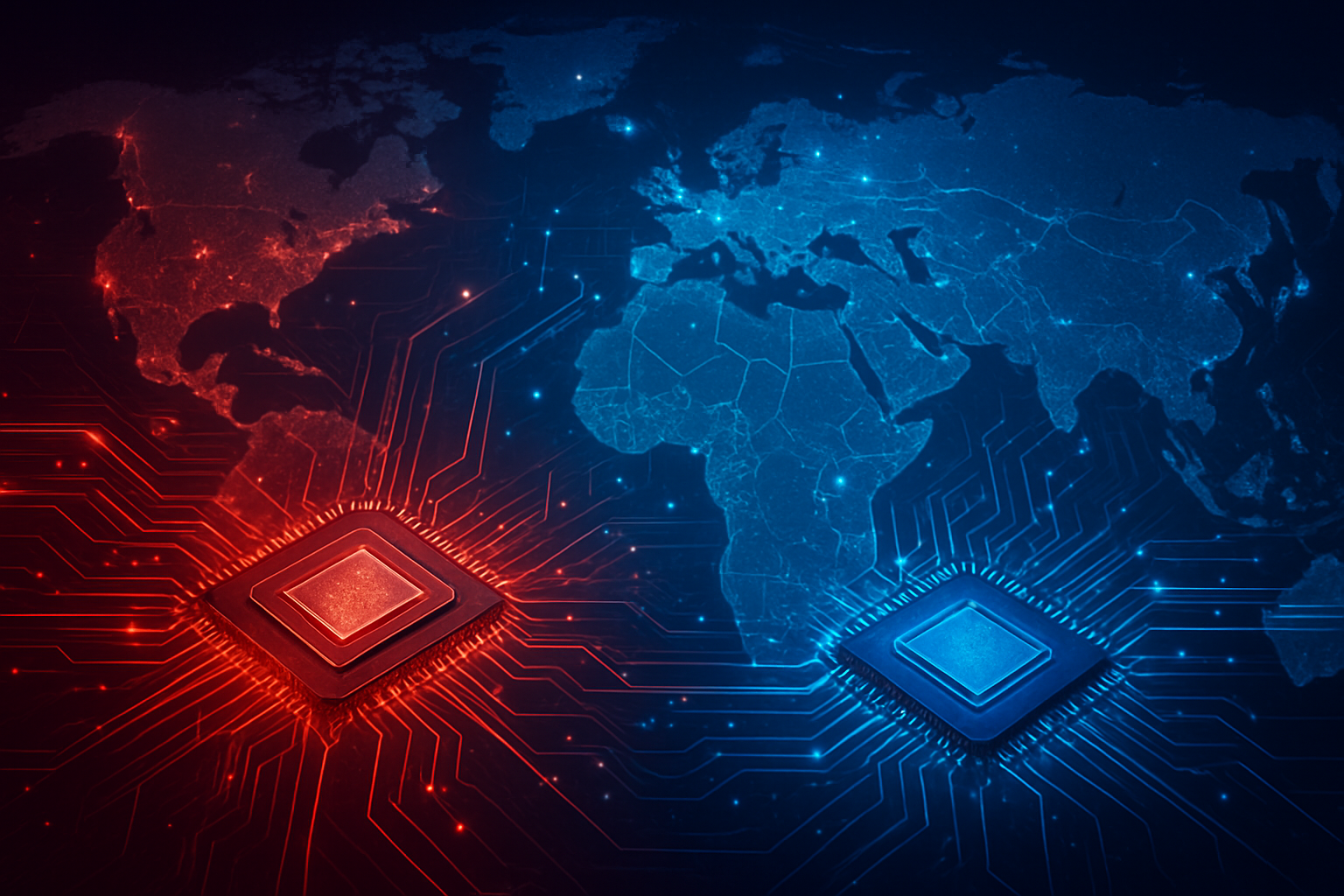
  • Chinese AI Challenger MetaX Ignites Fierce Battle for Chip Supremacy, Threatening Nvidia’s Reign

    Chinese AI Challenger MetaX Ignites Fierce Battle for Chip Supremacy, Threatening Nvidia’s Reign

    Shanghai, China – November 1, 2025 – The global artificial intelligence landscape is witnessing an unprecedented surge in competition, with a formidable new player emerging from China to challenge the long-held dominance of semiconductor giant Nvidia (NASDAQ: NVDA). MetaX, a rapidly ascendant Chinese startup valued at an impressive $1.4 billion, is making significant waves with its homegrown GPUs, signaling a pivotal shift in the AI chip market. This development underscores not only the increasing innovation within the AI semiconductor industry but also the strategic imperative for technological self-sufficiency, particularly in China.

    MetaX's aggressive push into the AI chip arena marks a critical juncture for the tech industry. As AI models grow in complexity and demand ever-greater computational power, the hardware that underpins these advancements becomes increasingly vital. With its robust funding and a clear mission to provide powerful, domestically produced AI accelerators, MetaX is not just another competitor; it represents China's determined effort to carve out its own path in the high-stakes race for AI supremacy, directly confronting Nvidia's near-monopoly.

    MetaX's Technical Prowess and Strategic Innovations

    Founded in 2020 by three veterans of US chipmaker Advanced Micro Devices (NASDAQ: AMD), MetaX (沐曦集成电路(上海)有限公司) has quickly established itself as a serious contender. Headquartered in Shanghai, with numerous R&D centers across China, the company is focused on developing full-stack GPU chips and solutions for heterogeneous computing. Its product portfolio is segmented into N-series GPUs for AI inference, C-series GPUs for AI training and general-purpose computing, and G-series GPUs for graphics rendering.

    The MetaX C500, an AI training GPU built on a 7nm process, was successfully tested in June 2023. It delivers 15 TFLOPS of FP32 performance, achieving approximately 75% of Nvidia's A100 GPU performance. The C500 is notably CUDA-compatible, a strategic move to ease adoption by developers already familiar with Nvidia's pervasive software ecosystem. In 2023, the N100, an AI inference GPU accelerator, entered mass production, offering 160 TOPS for INT8 inference and 80 TFLOPS for FP16, featuring HBM2E memory for high bandwidth.

    The latest flagship, the MetaX C600, launched in July 2025, represents a significant leap forward. It integrates HBM3e high-bandwidth memory, boasts 144 GB of memory, and supports FP8 precision, crucial for accelerating AI model training with lower power consumption. Crucially, the C600 is touted as "fully domestically produced," with mass production planned by year-end 2025. MetaX has also developed its proprietary computing platform, MXMACA, designed for compatibility with mainstream GPU ecosystems like CUDA, a direct challenge to Nvidia's formidable software moat. By the end of 2024, MetaX had already deployed over 10,000 GPUs in commercial operation across nine compute clusters in China, demonstrating tangible market penetration.

    While MetaX openly acknowledges being 1-2 generations behind Nvidia's cutting-edge products (like the H100, which uses a more advanced 4nm process and offers significantly higher TFLOPS and HBM3 memory), its rapid development and strategic focus on CUDA compatibility are critical. This approach aims to provide a viable, localized alternative that can integrate into existing AI development workflows within China, distinguishing it from other domestic efforts that might struggle with software ecosystem adoption.

    Reshaping the Competitive Landscape for Tech Giants

    MetaX's ascent has profound competitive implications, particularly for Nvidia (NASDAQ: NVDA) and the broader AI industry. Nvidia currently commands an estimated 75% to 90% of the global AI chip market and a staggering 98% of the global AI training market in 2025. However, this dominance is increasingly challenged by MetaX's strategic positioning within China.

    The US export controls on advanced semiconductors have created a critical vacuum in the Chinese market, which MetaX is aggressively filling. By offering "fully domestically produced" alternatives, MetaX provides Chinese AI companies and cloud providers, such as Alibaba Group Holding Limited (NYSE: BABA) and Tencent Holdings Limited (HKG: 0700), with a crucial domestic supply chain, reducing their reliance on restricted foreign technology. This strategic advantage is further bolstered by strong backing from state-linked investors and private venture capital firms, with MetaX securing over $1.4 billion in funding across nine rounds.

    For Nvidia, MetaX's growth in China means a direct erosion of market share and a more complex operating environment. Nvidia has been forced to offer downgraded versions of its high-end GPUs to comply with US restrictions, making its offerings less competitive against MetaX's increasingly capable solutions. The emergence of MetaX's MXMACA platform, with its CUDA compatibility, directly challenges Nvidia's critical software lock-in, potentially weakening its strategic advantage in the long run. Nvidia will need to intensify its innovation and potentially adjust its market strategies in China to contend with this burgeoning domestic competition.

    Other Chinese tech giants like Huawei Technologies Co. Ltd. (SHE: 002502, unlisted but relevant to Chinese tech) are also heavily invested in developing their own AI chips (e.g., Ascend series). MetaX's success intensifies domestic competition for these players, as all vie for market share in China's strategic push for indigenous hardware. For global players like Advanced Micro Devices (NASDAQ: AMD) and Intel Corporation (NASDAQ: INTC), MetaX's rise could limit their potential market opportunities in China, as the nation prioritizes homegrown solutions. The Beijing Academy of Artificial Intelligence (BAAI) has already collaborated with MetaX, utilizing its C-Series GPU clusters for pre-training a billion-parameter MoE AI model, underscoring its growing integration into China's leading AI research initiatives.

    Wider Significance: AI Sovereignty and Geopolitical Shifts

    MetaX's emergence is not merely a corporate rivalry; it is deeply embedded in the broader geopolitical landscape, particularly the escalating US-China tech rivalry and China's determined push for AI sovereignty. The US export controls, while aiming to slow China's AI progress, have inadvertently fueled a rapid acceleration in domestic chip development, transforming sanctions into a catalyst for indigenous innovation. MetaX, alongside other Chinese chipmakers, views these restrictions as a significant market opportunity to fill the void left by restricted foreign technology.

    This drive for AI sovereignty—the ability for nations to independently develop, control, and deploy AI technologies—is now a critical national security and economic imperative. The "fully domestically produced" claim for MetaX's C600 underscores China's ambition to build a resilient, self-reliant semiconductor supply chain, reducing its vulnerability to external pressures. This contributes to a broader realignment of global semiconductor supply chains, driven by both AI demand and geopolitical tensions, potentially leading to a more bifurcated global technology market.

    The impacts extend to global AI innovation. While MetaX's CUDA-compatible MXMACA platform can democratize AI innovation by offering alternative hardware, the current focus for Chinese homegrown chips has largely been on AI inference rather than the more demanding training of large, complex AI models, where US chips still hold an advantage. This could lead to a two-tiered AI development environment. Furthermore, the push for domestic production aims to reduce the cost and increase the accessibility of AI computing within China, but limitations in advanced training capabilities for domestic chips might keep the cost of developing cutting-edge foundational AI models high for now.

    Potential concerns include market fragmentation, leading to less interoperable ecosystems developing in China and the West, which could hinder global standardization and collaboration. While MetaX offers CUDA compatibility, the maturity and breadth of its software ecosystem still face the challenge of competing with Nvidia's deeply entrenched platform. From a strategic perspective, MetaX's progress, alongside that of other Chinese firms, signifies China's determination to not just compete but potentially lead in the AI arena, challenging the long-standing dominance of American firms. This quest for self-sufficiency in foundational AI hardware represents a profound shift in global power structures and the future of technological leadership.

    Future Developments and the Road Ahead

    Looking ahead, MetaX is poised for significant developments that will shape its trajectory and the broader AI chip market. The company successfully received approval for its Initial Public Offering (IPO) on Shanghai's NASDAQ-style Star Market in October 2025, aiming to raise approximately $548 million USD. This capital injection is crucial for funding the research and development of its next-generation GPUs and AI-inference accelerators, including future iterations beyond the C600, such as a potential C700 series targeting Nvidia H100 performance.

    MetaX's GPUs are expected to find widespread application across various frontier fields. Beyond core AI inference and training in cloud data centers, its chips are designed to power intelligent computing, smart cities, autonomous vehicles, and the rapidly expanding metaverse and digital twin sectors. The G-series GPUs, for instance, are tailored for high-resolution graphics rendering in cloud gaming and XR (Extended Reality) scenarios. Its C-series chips will also continue to accelerate scientific simulations and complex data analytics.

    However, MetaX faces considerable challenges. Scaling production remains a significant hurdle. As a fabless designer, MetaX relies on foundries, and geopolitical factors have forced it to submit "downgraded designs of its chips to TSMC (TPE: 2330) in late 2023 to comply with U.S. restrictions." This underscores the difficulty in accessing cutting-edge manufacturing capabilities. Building a fully capable domestic semiconductor supply chain is a long-term, complex endeavor. The maturity of its MXMACA software ecosystem, while CUDA-compatible, must continue to grow to genuinely compete with Nvidia's established developer community and extensive toolchain. Geopolitical tensions will also continue to be a defining factor, influencing MetaX's access to critical technologies and global market opportunities.

    Experts predict an intensifying rivalry, with MetaX's rise and IPO signaling China's growing investments and a potential "showdown with the American Titan Nvidia." While Chinese AI chipmakers are making rapid strides, it's "too early to tell" if they can fully match Nvidia's long-term dominance. The outcome will depend on their ability to overcome production scaling, mature their software ecosystems, and navigate the volatile geopolitical landscape, potentially leading to a bifurcation where Nvidia and domestic Chinese chips form two parallel lines of global computing power.

    A New Era in AI Hardware: The Long-Term Impact

    MetaX's emergence as a $1.4 billion Chinese startup directly challenging Nvidia's dominance in the AI chip market marks a truly significant inflection point in AI history. It underscores a fundamental shift from a largely monolithic AI hardware landscape to a more fragmented, competitive, and strategically diversified one. The key takeaway is the undeniable rise of national champions in critical technology sectors, driven by both economic ambition and geopolitical necessity.

    This development signifies the maturation of the AI industry, where the focus is moving beyond purely algorithmic advancements to the strategic control and optimization of the underlying hardware infrastructure. The long-term impact will likely include a more diversified AI hardware market, with increased specialization in chip design for various AI workloads. The geopolitical ramifications are profound, highlighting the ongoing US-China tech rivalry and accelerating the global push for AI sovereignty, where nations prioritize self-reliance in foundational technologies. This dynamic will drive continuous innovation in both hardware and software, fostering closer collaboration in hardware-software co-design.

    In the coming weeks and months, all eyes will be on MetaX's successful IPO on the Star Market and the mass production and deployment of its "fully domestically produced" C600 processor. Its ability to scale production, expand its developer ecosystem, and navigate the complex geopolitical environment will be crucial indicators of China's capability to challenge established Western chipmakers in AI. Concurrently, watching Nvidia's strategic responses, including new chip architectures and software enhancements, will be vital. The intensifying competition promises a vibrant, albeit complex, future for the AI chip industry, fundamentally reshaping how artificial intelligence is developed and deployed globally.


    This content is intended for informational purposes only and represents analysis of current AI developments.

    TokenRing AI delivers enterprise-grade solutions for multi-agent AI workflow orchestration, AI-powered development tools, and seamless remote collaboration platforms.
    For more information, visit https://www.tokenring.ai/.

  • The Silicon Curtain Descends: Geopolitical Tensions Reshape Global Semiconductor Supply Chains

    The Silicon Curtain Descends: Geopolitical Tensions Reshape Global Semiconductor Supply Chains

    The global semiconductor industry, the bedrock of modern technology and artificial intelligence, is currently (October 2025) undergoing a profound and unprecedented transformation. Driven by escalating geopolitical tensions, strategic trade policies, and recent disruptive events, the era of a globally optimized, efficiency-first semiconductor supply chain is rapidly giving way to fragmented, regional manufacturing ecosystems. This seismic shift signifies a fundamental re-evaluation of national security, economic power, and technological leadership, placing semiconductors at the heart of 21st-century global power struggles and fundamentally altering the landscape for AI development and deployment worldwide.

    The Great Decoupling: A New Era of Techno-Nationalism

    The current geopolitical landscape is characterized by a "great decoupling," with a "Silicon Curtain" descending that divides technological ecosystems. This fragmentation is primarily fueled by the intense tech rivalry between the United States and China, compelling nations to prioritize "techno-nationalism" and aggressively invest in domestic chip manufacturing. The historical concentration of advanced chip manufacturing in East Asia, particularly Taiwan, has exposed a critical vulnerability that major economic blocs like the U.S. and the European Union are actively seeking to mitigate. This strategic competition has led to a barrage of new trade policies and international maneuvering, fundamentally altering how semiconductors are designed, produced, and distributed.

    The United States has progressively tightened export controls on advanced semiconductors and related manufacturing equipment to China, with significant expansions occurring in October 2023, December 2024, and March 2025. These measures specifically target China's access to high-end AI chips, supercomputing capabilities, and advanced chip manufacturing tools, utilizing the Foreign Direct Product Rule and expanded Entity Lists. In a controversial recent development, the Trump administration is reportedly allowing certain NVIDIA (NASDAQ: NVDA) H20 chips to be sold to China, but with a condition: NVIDIA (NASDAQ: NVDA) and AMD (NASDAQ: AMD) must pay the U.S. government 15% of their revenues from these sales, signaling a shift towards using export controls as a revenue source and a bargaining chip. Concurrently, the CHIPS and Science Act, enacted in August 2022, commits over $52 billion to boost domestic chip production and R&D, aiming to triple U.S. manufacturing capacity by 2032. This legislation has spurred over $500 billion in private-sector investments, with major beneficiaries including Intel (NASDAQ: INTC), which has committed over $100 billion, TSMC (NYSE: TSM), expanding with three leading-edge fabs in Arizona with over $65 billion in investment and $6.6 billion in CHIPS Act subsidies, and Samsung (KRX: 005930), investing $37 billion in a new Texas factory. Further escalating tensions, the Trump administration announced 100% tariffs on all Chinese goods starting November 1, 2025.

    China has responded by weaponizing its dominance in rare earth elements, critical for semiconductor manufacturing. Sweeping export controls on rare earths and associated technologies were significantly expanded in April and October 2025. On October 9, 2025, Beijing implemented new regulations requiring government export licenses for rare earths used in semiconductor manufacturing or testing equipment, specifically targeting sub-14-nanometer chips and high-spec memory. Exports to U.S. defense industries have been effectively banned since December 1, 2025. Additionally, China added 28 U.S. companies to its "unreliable entities list" in early January 2025 and, more recently, on October 9, 2025, imposed export restrictions on components manufactured by Nexperia's China facilities, prohibiting them from leaving the country, following the Dutch government's seizure of Nexperia. The European Union, through its European Chips Act (September 2023), mobilizes over €43 billion to double its global market share to 20% by 2030, though it faces challenges, with Intel (NASDAQ: INTC) abandoning plans for a large-scale facility in Germany in July 2025. All 27 EU Member States have called for a stronger "Chips Act 2.0" to reinforce Europe's position.

    Reshaping the Corporate Landscape: Winners, Losers, and Strategic Shifts

    These geopolitical machinations are profoundly affecting AI companies, tech giants, and startups, creating a volatile environment of both opportunity and significant risk. Companies with diversified manufacturing footprints or those aligned with national strategic goals stand to benefit from the wave of government subsidies and incentives.

    Intel (NASDAQ: INTC) is a primary beneficiary of the U.S. CHIPS Act, receiving substantial funding to bolster its domestic manufacturing capabilities, aiming to regain its leadership in process technology. Similarly, TSMC (NYSE: TSM) and Samsung (KRX: 005930) are making significant investments in the U.S. and Europe, leveraging government support to de-risk their supply chains and gain access to new markets, albeit at potentially higher operational costs. This strategic diversification is critical for TSMC (NYSE: TSM), given Taiwan's pivotal role in advanced chipmaking (over 90% of 3nm and below chips) and rising cross-strait tensions. However, companies heavily reliant on a single manufacturing region or those caught in the crossfire of export controls face significant headwinds. SK Hynix (KRX: 000660) and Samsung (KRX: 005930) had their authorizations revoked by the U.S. Department of Commerce in August 2025, barring them from procuring U.S. semiconductor manufacturing equipment for their chip production units in China, severely impacting their operational flexibility and expansion plans in the region.

    The Dutch government's seizure of Nexperia on October 12, 2025, citing "serious governance shortcomings" and economic security risks, followed by China's retaliatory export restrictions on Nexperia's China-manufactured components, highlights the unpredictable nature of this geopolitical environment. Such actions create significant uncertainty, disrupt established supply chains, and can lead to immediate operational challenges and increased costs. The fragmentation of the supply chain is already leading to increased costs, with advanced GPU prices potentially seeing hikes of up to 20% due to disruptions. This directly impacts AI startups and research labs that rely on these high-performance components, potentially slowing innovation or increasing the cost of AI development. Companies are shifting from "just-in-time" to "just-in-case" supply chain strategies, prioritizing resilience over economic efficiency. This involves multi-sourcing, geographic diversification of manufacturing (e.g., "semiconductor corridors"), enhanced supply chain visibility with AI-powered analytics, and strategic buffer management, all of which require substantial investment and strategic foresight.

    Broader Implications: A Shift in Global Power Dynamics

    The geopolitical reshaping of the semiconductor supply chain extends far beyond corporate balance sheets, touching upon national security, economic stability, and the future trajectory of AI development. This "great decoupling" reflects a fundamental shift in global power dynamics, where technological sovereignty is increasingly equated with national security. The U.S.-China tech rivalry is the dominant force, pushing for technological decoupling and forcing nations to choose sides or build independent capabilities.

    The implications for the broader AI landscape are profound. Access to leading-edge chips is crucial for training and deploying advanced large language models and other AI systems. Restrictions on chip exports to certain regions could create a bifurcated AI development environment, where some nations have access to superior hardware, leading to a technological divide. Potential concerns include the weaponization of supply chains, where critical components become leverage in international disputes, as seen with China's rare earth controls. This could lead to price volatility and permanent shifts in global trade patterns, impacting the affordability and accessibility of AI technologies. The current scenario contrasts sharply with the pre-2020 globalized model, where efficiency and cost-effectiveness drove supply chain decisions. Now, resilience and national security are paramount, even if it means higher costs and slower innovation cycles in some areas. The formation of alliances, such as the emerging India-Japan-South Korea trilateral, driven by mutual ideals and a desire for a self-sufficient semiconductor ecosystem, underscores the urgency of building alternative, trusted supply chains, partly in response to growing resentment against U.S. tariffs.

    The Road Ahead: Fragmented Futures and Emerging Opportunities

    Looking ahead, the semiconductor industry is poised for continued fragmentation and strategic realignment, with significant near-term and long-term developments on the horizon. The aggressive pursuit of domestic manufacturing capabilities will continue, leading to the construction of more regional fabs, particularly in the U.S., Europe, and India. This will likely result in a more distributed, albeit potentially less efficient, global production network.

    Expected near-term developments include further tightening of export controls and retaliatory measures, as nations continue to jockey for technological advantage. We may see more instances of government intervention in private companies, similar to the Nexperia seizure, as states prioritize national security over market principles. Long-term, the industry is likely to settle into distinct regional ecosystems, each with its own supply chain, potentially leading to different technological standards and product offerings in various parts of the world. India is emerging as a significant player, implementing the Production Linked Incentive (PLI) scheme and approving multiple projects to boost its chip production capabilities by the end of 2025, signaling a potential new hub for manufacturing and design. Challenges that need to be addressed include the immense capital expenditure required for new fabs, the scarcity of skilled labor, and the environmental impact of increased manufacturing. While the EU's Chips Act aims to double its market share, it has struggled to gain meaningful traction, highlighting the difficulties in achieving ambitious chip independence. Experts predict that the focus on resilience will drive innovation in areas like advanced packaging, heterogeneous integration, and new materials, as companies seek to optimize performance within fragmented supply chains. Furthermore, the push for domestic production could foster new applications in areas like secure computing, defense AI, and localized industrial automation.

    Navigating the New Semiconductor Order

    In summary, the global semiconductor supply chain is undergoing a monumental transformation, driven by an intense geopolitical rivalry between the U.S. and China. This has ushered in an era of "techno-nationalism," characterized by aggressive trade policies, export controls, and massive government subsidies aimed at fostering domestic production and securing national technological sovereignty. Key takeaways include the rapid fragmentation of the supply chain into regional ecosystems, the shift from efficiency to resilience in supply chain strategies, and the increasing politicization of technology.

    This development holds immense significance in AI history, as the availability and accessibility of advanced chips are fundamental to the future of AI innovation. The emerging "Silicon Curtain" could lead to disparate AI development trajectories across the globe, with potential implications for global collaboration, ethical AI governance, and the pace of technological progress. What to watch for in the coming weeks and months includes further developments in U.S. export control policies and China's retaliatory measures, the progress of new fab constructions in the U.S. and Europe, and how emerging alliances like the India-Japan-South Korea trilateral evolve. The long-term impact will be a more resilient, but likely more expensive and fragmented, semiconductor industry, where geopolitical considerations will continue to heavily influence technological advancements and their global reach.


    This content is intended for informational purposes only and represents analysis of current AI developments.

    TokenRing AI delivers enterprise-grade solutions for multi-agent AI workflow orchestration, AI-powered development tools, and seamless remote collaboration platforms.
    For more information, visit https://www.tokenring.ai/.

  • The Silicon Curtain Descends: Geopolitics Reshaping the Future of AI Chip Availability and Innovation

    The Silicon Curtain Descends: Geopolitics Reshaping the Future of AI Chip Availability and Innovation

    As of late 2025, the global landscape of artificial intelligence is increasingly defined not just by technological breakthroughs but by the intricate dance of international relations and national security interests. The geopolitical tug-of-war over advanced semiconductors, the literal building blocks of AI, has intensified, creating a "Silicon Curtain" that threatens to bifurcate global tech ecosystems. This high-stakes competition, primarily between the United States and China, is fundamentally altering where and how AI chips are produced, traded, and innovated, with profound implications for AI companies, tech giants, and startups worldwide. The immediate significance is a rapid recalibration of global technology supply chains and a heightened focus on techno-nationalism, placing national security at the forefront of policy decisions over traditional free trade considerations.

    Geopolitical Dynamics: The Battle for Silicon Supremacy

    The current geopolitical environment is characterized by an escalating technological rivalry, with advanced semiconductors for AI chips at its core. This struggle involves key nations and their industrial champions, each vying for technological leadership and supply chain resilience. The United States, a leader in chip design through companies like Nvidia and Intel, has aggressively pursued policies to limit rivals' access to cutting-edge technology while simultaneously boosting domestic manufacturing through initiatives such as the CHIPS and Science Act. This legislation, enacted in 2022, has allocated over $52 billion in subsidies and tax credits to incentivize chip manufacturing within the US, alongside $200 billion for research in AI, quantum computing, and robotics, aiming to produce approximately 20% of the world's most advanced logic chips by the end of the decade.

    In response, China, with its "Made in China 2025" strategy and substantial state funding, is relentlessly pushing for self-sufficiency in high-tech sectors, including semiconductors. Companies like Huawei and Semiconductor Manufacturing International Corporation (SMIC) are central to these efforts, striving to overcome US export controls that have targeted their access to advanced chip-making equipment and high-performance AI chips. These restrictions, which include bans on the export of top-tier GPUs like Nvidia's A100 and H100 and critical Electronic Design Automation (EDA) software, aim to slow China's AI development, forcing Chinese firms to innovate domestically or seek alternative, less advanced solutions.

    Taiwan, home to Taiwan Semiconductor Manufacturing Company (TSMC), holds a uniquely pivotal position in this global contest. TSMC, the world's largest contract manufacturer of integrated circuits, produces over 90% of the world's most advanced chips, including those powering AI applications from major global tech players. This concentration makes Taiwan a critical geopolitical flashpoint, as any disruption to its semiconductor production would have catastrophic global economic and technological consequences. Other significant players include South Korea, with Samsung (a top memory chip maker and foundry player) and SK Hynix, and the Netherlands, home to ASML, the sole producer of extreme ultraviolet (EUV) lithography machines essential for manufacturing the most advanced semiconductors. Japan also plays a crucial role as a partner in limiting China's access to cutting-edge equipment and a recipient of investments aimed at strengthening semiconductor supply chains.

    The Ripple Effect: Impact on AI Companies and Tech Giants

    The intensifying geopolitical competition has sent significant ripple effects throughout the AI industry, impacting established tech giants, innovative startups, and the competitive landscape itself. Companies like Nvidia (the undisputed leader in AI computing with its GPUs) and AMD are navigating complex export control regulations, which have necessitated the creation of "China-only" versions of their advanced chips with reduced performance to comply with US mandates. This has not only impacted their revenue streams from a critical market but also forced strategic pivots in product development and market segmentation.

    For major AI labs and tech companies, the drive for supply chain resilience and national technological sovereignty is leading to significant strategic shifts. Many hyperscalers, including Google, Microsoft, and Amazon, are heavily investing in developing their own custom AI accelerators and chips to reduce reliance on external suppliers and mitigate geopolitical risks. This trend, while fostering innovation in chip design, also increases development costs and creates potential fragmentation in the AI hardware ecosystem. Intel, historically a CPU powerhouse, is aggressively expanding its foundry services to compete with TSMC and Samsung, aiming to become a major player in the contract manufacturing of AI chips and reduce global reliance on a single region.

    The competitive implications are stark. While Nvidia's dominance in high-end AI GPUs remains strong, the restrictions and the rise of in-house chip development by hyperscalers pose a long-term challenge. Samsung is making high-stakes investments in its foundry services for AI chips, aiming to compete directly with TSMC, but faces hurdles from US sanctions affecting sales to China and managing production delays. SK Hynix (South Korea) has strategically benefited from its focus on high-bandwidth memory (HBM), a crucial component for AI servers, gaining significant market share by aligning with Nvidia's needs. Chinese AI companies, facing restricted access to advanced foreign chips, are accelerating domestic innovation, optimizing their AI models for locally produced hardware, and investing heavily in domestic chip design and manufacturing capabilities, potentially fostering a parallel, albeit less advanced, AI ecosystem.

    Wider Significance: A New AI Landscape Emerges

    The geopolitical shaping of semiconductor production and trade extends far beyond corporate balance sheets, fundamentally altering the broader AI landscape and global technological trends. The emergence of a "Silicon Curtain" signifies a world increasingly fractured into distinct technology ecosystems, with parallel supply chains and potentially divergent standards. This bifurcation challenges the historically integrated and globalized nature of the tech industry, raising concerns about interoperability, efficiency, and the pace of global innovation.

    At its core, this shift elevates semiconductors and AI to the status of unequivocal strategic assets, placing national security at the forefront of policy decisions. Governments are now prioritizing techno-nationalism and economic sovereignty over traditional free trade considerations, viewing control over advanced AI capabilities as paramount for defense, economic competitiveness, and political influence. This perspective fuels an "AI arms race" narrative, where nations are striving for technological dominance across various sectors, intensifying the focus on controlling critical AI infrastructure, data, and talent.

    The economic restructuring underway is profound, impacting investment flows, corporate strategies, and global trade patterns. Companies must now navigate complex regulatory environments, balancing geopolitical alignments with market access. This environment also brings potential concerns, including increased production costs due to efforts to onshore or "friendshore" manufacturing, which could lead to higher prices for AI chips and potentially slow down the widespread adoption and advancement of AI technologies. Furthermore, the concentration of advanced chip manufacturing in geopolitically sensitive regions like Taiwan creates significant vulnerabilities, where any conflict could trigger a global economic catastrophe far beyond the tech sector. This era marks a departure from previous AI milestones, where breakthroughs were largely driven by open collaboration and scientific pursuit; now, national interests and strategic competition are equally powerful drivers, shaping the very trajectory of AI development.

    Future Developments: Navigating a Fractured Future

    Looking ahead, the geopolitical currents influencing AI chip availability and innovation are expected to intensify, leading to both near-term adjustments and long-term structural changes. In the near term, we can anticipate further refinements and expansions of export control regimes, with nations continually calibrating their policies to balance strategic advantage against the risks of stifling domestic innovation or alienating allies. The US, for instance, may continue to broaden its list of restricted entities and technologies, while China will likely redouble its efforts in indigenous research and development, potentially leading to breakthroughs in less advanced but still functional AI chip designs that circumvent current restrictions.

    The push for regional self-sufficiency will likely accelerate, with more investments flowing into semiconductor manufacturing hubs in North America, Europe, and potentially other allied nations. This trend is expected to foster greater diversification of the supply chain, albeit at a higher cost. We may see more strategic alliances forming among like-minded nations to secure critical components and share technological expertise, aimed at creating resilient supply chains that are less susceptible to geopolitical shocks. Experts predict that this will lead to a more complex, multi-polar semiconductor industry, where different regions specialize in various parts of the value chain, rather than the highly concentrated model of the past.

    Potential applications and use cases on the horizon will be shaped by these dynamics. While high-end AI research requiring the most advanced chips might face supply constraints in certain regions, the drive for domestic alternatives could spur innovation in optimizing AI models for less powerful hardware or developing new chip architectures. Challenges that need to be addressed include the immense capital expenditure required to build new fabs, the scarcity of skilled labor, and the ongoing need for international collaboration on fundamental research, even amidst competition. What experts predict will happen next is a continued dance between restriction and innovation, where geopolitical pressures inadvertently drive new forms of technological advancement and strategic partnerships, fundamentally reshaping the global AI ecosystem for decades to come.

    Comprehensive Wrap-up: The Dawn of Geopolitical AI

    In summary, the geopolitical landscape's profound impact on semiconductor production and trade has ushered in a new era for artificial intelligence—one defined by strategic competition, national security imperatives, and the restructuring of global supply chains. Key takeaways include the emergence of a "Silicon Curtain" dividing technological ecosystems, the aggressive use of export controls and domestic subsidies as tools of statecraft, and the subsequent acceleration of in-house chip development by major tech players. The centrality of Taiwan's TSMC to the advanced chip market underscores the acute vulnerabilities inherent in the current global setup, making it a focal point of international concern.

    This development marks a significant turning point in AI history, moving beyond purely technological milestones to encompass a deeply intertwined geopolitical dimension. The "AI arms race" narrative is no longer merely metaphorical but reflects tangible policy actions aimed at securing technological supremacy. The long-term impact will likely see a more fragmented yet potentially more resilient global semiconductor industry, with increased regional manufacturing capabilities and a greater emphasis on national control over critical technologies. However, this comes with the inherent risks of increased costs, slower global innovation due to reduced collaboration, and the potential for greater international friction.

    In the coming weeks and months, it will be crucial to watch for further policy announcements regarding export controls, the progress of major fab construction projects in the US and Europe, and any shifts in the strategic alliances surrounding semiconductor supply chains. The adaptability of Chinese AI companies in developing domestic alternatives will also be a key indicator of the effectiveness of current restrictions. Ultimately, the future of AI availability and innovation will be a testament to how effectively nations can balance competition with the undeniable need for global cooperation in advancing a technology that holds immense promise for all of humanity.

    This content is intended for informational purposes only and represents analysis of current AI developments.

    TokenRing AI delivers enterprise-grade solutions for multi-agent AI workflow orchestration, AI-powered development tools, and seamless remote collaboration platforms.
    For more information, visit https://www.tokenring.ai/.