
Tag: Tech War

  • The Silicon Curtain Descends: Nvidia’s China Exodus and the Reshaping of Global AI

    October 21, 2025 – The global artificial intelligence landscape is undergoing a seismic shift, epitomized by the dramatic decline of Nvidia's (NASDAQ: NVDA) market share in China's advanced AI chip sector. This precipitous fall, from a dominant 95% to effectively zero, is a direct consequence of the United States' progressively stringent AI chip export restrictions to China. The implications extend far beyond Nvidia's balance sheet, signaling a profound technological decoupling, intensifying the race for AI supremacy, and forcing a re-evaluation of global supply chains and innovation pathways.

    This strategic maneuver by the U.S. government, initially aimed at curbing China's military and surveillance capabilities, has inadvertently catalyzed China's drive for technological self-reliance, creating a bifurcated AI ecosystem that promises to redefine the future of artificial intelligence.

    The Escalating Technical Battle: From A100 to H20 and Beyond

    The U.S. government's export controls on advanced AI chips have evolved through several iterations, each more restrictive than the last. Initially, in October 2022, the ban targeted Nvidia's most powerful GPUs, the A100 and H100, which are essential for high-performance computing and large-scale AI model training. In response, Nvidia developed "China-compliant" versions with reduced capabilities, such as the A800 and H800.

    However, updated restrictions in October 2023 swiftly closed these loopholes, banning the A800 and H800 as well. This forced Nvidia to innovate further, leading to the creation of a new series of chips specifically designed to meet the tightened performance thresholds. The most notable of these was the Nvidia H20, a derivative of the H100 built on the Hopper architecture. The H20 featured 96GB of HBM3 memory with a bandwidth of 4.0 TB/s and an NVLink bandwidth of 900GB/s. While its raw mixed-precision compute power (296 TeraFLOPS) was significantly lower than the H100 (~2,000 TFLOPS FP8), it was optimized for certain large language model (LLM) inference tasks, leveraging its substantial memory bandwidth. Other compliant chips included the Nvidia L20 PCIe and Nvidia L2 PCIe, based on the Ada Lovelace architecture, with specifications adjusted to meet regulatory limits.

    Despite these efforts, a critical escalation occurred in April 2025 when the U.S. government banned the export of Nvidia's H20 chips to China indefinitely, requiring a special license for any shipments. This decision stemmed from concerns that even these reduced-capability chips could still be diverted for use in Chinese supercomputers with potential military applications. Further policy shifts, such as the January 2025 AI Diffusion Policy, designated China as a "Tier 3 nation," effectively barring it from receiving advanced AI technology. This progressive tightening demonstrates a policy shift from merely limiting performance to outright blocking chips perceived to pose a national security risk.

    Initial reactions from the AI research community and industry experts have been largely one of concern. Nvidia CEO Jensen Huang publicly stated that the company's market share in China's advanced AI chip segment has plummeted from an estimated 95% to effectively zero, anticipating a $5.5 billion hit in 2025 from H20 export restrictions alone. Experts widely agree that these restrictions are inadvertently accelerating China's efforts to develop its own domestic AI chip alternatives, potentially weakening U.S. technological leadership in the long run. Jensen Huang has openly criticized the U.S. policies as "counterproductive" and a "failure," arguing that they harm American innovation and economic interests by ceding a massive market to competitors.

    Reshaping the Competitive Landscape: Winners and Losers in the AI Chip War

    The updated U.S. AI chip export restrictions have profoundly reshaped the global technology landscape, creating significant challenges for American chipmakers while fostering unprecedented opportunities for domestic Chinese firms and alternative global suppliers.

    Chinese AI companies, tech giants like Alibaba (NYSE: BABA), and startups face severe bottlenecks, hindering their AI development and deployment. This has forced a strategic pivot towards self-reliance and innovation with less advanced hardware. Firms are now focusing on optimizing algorithms to run efficiently on older or domestically produced hardware, exemplified by companies like DeepSeek, which are building powerful AI models at lower costs. Tencent Cloud (HKG: 0700) and Baidu (NASDAQ: BIDU) are actively adapting their computing platforms to support mainstream domestic chips and utilizing in-house developed processors.

    The vacuum left by Nvidia in China has created a massive opportunity for domestic Chinese AI chip manufacturers. Huawei, despite being a primary target of U.S. sanctions, has shown remarkable resilience, aggressively pushing its Ascend series of AI processors (e.g., Ascend 910B, 910C). Huawei is expected to ship approximately 700,000 Ascend AI processors in 2025, leveraging advancements in clustering and manufacturing. Other Chinese firms like Cambricon (SSE: 688256) have experienced explosive growth, with revenue climbing over 4,000% year-over-year in the first half of 2025. Dubbed "China's Nvidia," Cambricon is becoming a formidable contender, with Chinese AI developers increasingly opting for its products. Locally developed AI chips are projected to capture 55% of the Chinese market by 2027, up from 17% in 2023.

    Globally, alternative suppliers are also benefiting. Advanced Micro Devices (NASDAQ: AMD) is rapidly gaining ground with its Instinct MI300X/A series, attracting major players like OpenAI and Oracle (NYSE: ORCL). Oracle, for instance, has pledged to deploy 50,000 of AMD's upcoming MI450 AI chips. Intel (NASDAQ: INTC) is also aggressively pushing its Gaudi accelerators. Taiwan Semiconductor Manufacturing Company (NYSE: TSM), as the world's largest contract chipmaker, benefits from the overall surge in AI chip demand globally, posting record earnings in Q3 2025.

    For Nvidia, the undisputed market leader in AI GPUs, the restrictions have been a significant blow, with the company assuming zero revenue from China in its forecasts and incurring a $4.5 billion inventory write-down for unsold China-specific H20 chips. Both AMD and Intel also face similar headwinds, with AMD expecting a $1.5 billion impact on its 2025 revenues due to restrictions on its MI308 series accelerators. The restrictions are accelerating a trend toward a "bifurcated AI world" with separate technological ecosystems, potentially hindering global collaboration and fragmenting supply chains.

    The Broader Geopolitical Chessboard: Decoupling and the Race for AI Supremacy

    The U.S. AI chip export restrictions are not merely a trade dispute; they are a cornerstone of a broader "tech war" or "AI Cold War" aimed at maintaining American technological leadership and preventing China from achieving AI supremacy. This strategic move underscores a fundamental shift where semiconductors are no longer commercial goods but strategic national assets, central to 21st-century global power struggles. The rationale has expanded beyond national security to a broader contest for winning the AI race, leading to a "Silicon Curtain" descending, dividing technological ecosystems and redefining the future of innovation.

    These restrictions have profoundly reshaped global semiconductor supply chains, which were previously optimized for efficiency through a globally integrated model. This has led to rapid fragmentation, compelling companies to reconsider manufacturing footprints and diversify suppliers, often at significant cost. The drive for strategic resilience has led to increased production costs, with U.S. fabs costing significantly more to build and operate than those in East Asia. Both the U.S. and China are "weaponizing" their technological and resource chokepoints. China, in retaliation for U.S. controls, has imposed its own export bans on critical minerals like gallium and germanium, essential for semiconductors, further straining U.S. manufacturers.

    Technological decoupling, initially a strategic rivalry, has intensified into a full-blown struggle for technological supremacy. The U.S. aims to maintain a commanding lead at the technological frontier by building secure, resilient supply chains among trusted partners, restricting China's access to advanced computing items, AI model weights, and essential manufacturing tools. In response, China is accelerating its "Made in China 2025" initiative and pushing for "silicon sovereignty" to achieve self-sufficiency across the entire semiconductor supply chain. This involves massive state funding into domestic semiconductor production and advanced AI and quantum computing research.

    While the restrictions aim to contain China's technological advancement, they also pose risks to global innovation. Overly stringent export controls can stifle innovation by limiting access to essential technologies and hindering collaboration with international researchers. Some argue that these controls have inadvertently spurred Chinese innovation, forcing firms to optimize older hardware and find smarter ways to train AI models, driving China towards long-term independence. The "bifurcated AI world" risks creating separate technological ecosystems, which can hinder global collaboration and lead to a fragmentation of supply chains, affecting research collaborations, licensing agreements, and joint ventures.

    The Road Ahead: Innovation, Adaptation, and Geopolitical Tensions

    The future of the AI chip market and the broader AI industry is characterized by accelerated innovation, market fragmentation, and persistent geopolitical tensions. In the near term, we can expect rapid diversification and customization of AI chips, driven by the need for specialized hardware for various AI workloads. The ubiquitous integration of Neural Processing Units (NPUs) into consumer devices like smartphones and "AI PCs" is already underway, with AI PCs projected to comprise 43% of all PC shipments by late 2025. Longer term, an "Agentic AI" boom is anticipated, demanding exponentially more computing resources and driving a multi-trillion dollar AI infrastructure boom.

    For Nvidia, the immediate challenge is to offset lost revenue from China through growth in unrestricted markets and new product developments. The company may focus more on emerging markets like India and the Middle East, accelerate software-based revenue streams, and lobby for regulatory clarity. A controversial August 2025 agreement even saw Nvidia and AMD agree to share 15% of their revenues from chip sales to China with the U.S. government as part of a deal to secure export licenses for certain semiconductors, blurring the lines between sanctions and taxation. However, Chinese regulators have also directly instructed major tech companies to stop buying Nvidia's compliant chips.

    Chinese counterparts like Huawei and Cambricon face the challenge of access to advanced technology and production bottlenecks. While Huawei's Ascend series is making significant strides, it is still generally a few generations behind the cutting edge due to sanctions. Building a robust software ecosystem comparable to Nvidia's CUDA will also take time. However, the restrictions have undeniably spurred China's accelerated domestic innovation, leading to more efficient use of older hardware and a focus on smaller, more specialized AI models.

    Expert predictions suggest continued tightening of U.S. export controls, with a move towards more targeted enforcement. The "Guaranteeing Access and Innovation for National Artificial Intelligence Act of 2026 (GAIN Act)," if enacted, would prioritize domestic customers for U.S.-made semiconductors. China is expected to continue its countermeasures, including further retaliatory export controls on critical materials and increased investment in its domestic chip industry. The degree of multilateral cooperation with U.S. allies on export controls will also be crucial, as concerns persist among allies regarding the balance between national security and commercial competition.

    A New Era of AI: Fragmentation, Resilience, and Divergent Paths

    The Nvidia stock decline, intrinsically linked to the U.S. AI chip export restrictions on China, marks a pivotal moment in AI history. It signifies not just a commercial setback for a leading technology company but a fundamental restructuring of the global tech industry and a deepening of geopolitical divides. The immediate impact on Nvidia's revenue and market share in China has been severe, forcing the company to adapt its global strategy.

    The long-term implications are far-reaching. The world is witnessing the acceleration of technological decoupling, leading to the emergence of parallel AI ecosystems. While the U.S. aims to maintain its leadership by controlling access to advanced chips, these restrictions have inadvertently fueled China's drive for self-sufficiency, fostering rapid innovation in domestic AI hardware and software optimization. This will likely lead to distinct innovation trajectories, with the U.S. focusing on frontier AI and China on efficient, localized solutions. The geopolitical landscape is increasingly defined by this technological rivalry, with both nations weaponizing supply chains and intellectual property.

    In the coming weeks and months, market observers will closely watch Nvidia's ability to diversify its revenue streams, the continued rise of Chinese AI chipmakers, and any further shifts in global supply chain resilience. On the policy front, the evolution of U.S. export controls, China's retaliatory measures, and the alignment of international allies will be critical. Technologically, the progress of China's domestic innovation and the broader industry's adoption of alternative AI architectures and efficiency research will be key indicators of the long-term effectiveness of these policies in shaping the future trajectory of AI and global technological leadership.


    This content is intended for informational purposes only and represents analysis of current AI developments.

    TokenRing AI delivers enterprise-grade solutions for multi-agent AI workflow orchestration, AI-powered development tools, and seamless remote collaboration platforms.
    For more information, visit https://www.tokenring.ai/.

  • The Silicon Curtain Descends: Geopolitics Reshapes the Global Semiconductor Landscape and the Future of AI

    The Silicon Curtain Descends: Geopolitics Reshapes the Global Semiconductor Landscape and the Future of AI

    The global semiconductor supply chain is undergoing an unprecedented and profound transformation, driven by escalating geopolitical tensions and strategic trade policies. As of October 2025, the era of a globally optimized, efficiency-first semiconductor industry is rapidly giving way to fragmented, regional manufacturing ecosystems. This fundamental restructuring is leading to increased costs, aggressive diversification efforts, and an intense strategic race for technological supremacy, with far-reaching implications for the burgeoning field of Artificial Intelligence.

    This geopolitical realignment is not merely a shift in trade dynamics; it represents a foundational re-evaluation of national security, economic power, and technological leadership, placing semiconductors at the very heart of 21st-century global power struggles. The immediate significance is a rapid fragmentation of the supply chain, compelling companies to reconsider manufacturing footprints and diversify suppliers, often at significant cost. The world is witnessing the emergence of a "Silicon Curtain," dividing technological ecosystems and redefining the future of innovation.

    The Technical Battleground: Export Controls, Rare Earths, and the Scramble for Lithography

    The current geopolitical climate has led to a complex web of technical implications for semiconductor manufacturing, primarily centered around access to advanced lithography and critical raw materials. The United States has progressively tightened export controls on advanced semiconductors and related manufacturing equipment to China, with significant expansions in October 2023, December 2024, and March 2025. These measures specifically target China's access to high-end AI chips, supercomputing capabilities, and advanced chip manufacturing tools, including the Foreign Direct Product Rule and expanded Entity Lists. The U.S. has even lowered the Total Processing Power (TPP) threshold from 4,800 to 1,600 Giga operations per second to further restrict China's ability to develop and produce advanced chips.

    Crucially, these restrictions extend to advanced lithography, the cornerstone of modern chipmaking. China's access to Extreme Ultraviolet (EUV) lithography machines, exclusively supplied by Dutch firm ASML, and advanced Deep Ultraviolet (DUV) immersion lithography systems, essential for producing chips at 7nm and below, has been largely cut off. This compels China to innovate rapidly with older technologies or pursue less advanced solutions, often leading to performance compromises in its AI and high-performance computing initiatives. While Chinese companies are accelerating indigenous innovation, including the development of their own electron beam lithography machines and testing homegrown immersion DUV tools, experts predict China will likely lag behind the cutting edge in advanced nodes for several years. ASML (AMS: ASML), however, anticipates the impact of these updated export restrictions to fall within its previously communicated outlook for 2025, with China's business expected to constitute around 20% of its total net sales for the year.

    China has responded by weaponizing its dominance in rare earth elements, critical for semiconductor manufacturing. Starting in late 2024 with gallium, germanium, and graphite, and significantly expanded in April and October 2025, Beijing has imposed sweeping export controls on rare earth elements and associated technologies. These controls, including stringent licensing requirements, target strategically significant heavy rare earth elements and extend beyond raw materials to encompass magnets, processing equipment, and products containing Chinese-origin rare earths. China controls approximately 70% of global rare earth mining production and commands 85-90% of processing capacity, making these restrictions a significant geopolitical lever. This has spurred dramatic acceleration of capital investment in non-Chinese rare earth supply chains, though these alternatives are still in nascent stages.

    These current policies mark a substantial departure from the globalization-focused trade agreements of previous decades. The driving rationale has shifted from prioritizing economic efficiency to national security and technological sovereignty. Both the U.S. and China are "weaponizing" their respective technological and resource chokepoints, creating a "Silicon Curtain." Initial reactions from the AI research community and industry experts are mixed but generally concerned. While there's optimism about industry revenue growth in 2025 fueled by the "AI Supercycle," this is tempered by concerns over geopolitical territorialism, tariffs, and trade restrictions. Experts predict increased costs for critical AI accelerators and a more fragmented, costly global semiconductor supply chain characterized by regionalized production.

    Corporate Crossroads: Navigating a Fragmented AI Hardware Landscape

    The geopolitical shifts in semiconductor supply chains are profoundly impacting AI companies, tech giants, and startups, creating a complex landscape of winners, losers, and strategic reconfigurations. Increased costs and supply disruptions are a major concern, with prices for advanced GPUs potentially seeing hikes of up to 20% if significant disruptions occur. This "Silicon Curtain" is fragmenting development pathways, forcing companies to prioritize resilience over economic efficiency, leading to a shift from "just-in-time" to "just-in-case" supply chain strategies. AI startups, in particular, are vulnerable, often struggling to acquire necessary hardware and compete for top talent against tech giants.

    Companies with diversified supply chains and those investing in "friend-shoring" or domestic manufacturing are best positioned to mitigate risks. The U.S. CHIPS and Science Act (CHIPS Act), a $52.7 billion initiative, is driving domestic production, with Intel (NASDAQ: INTC), Taiwan Semiconductor Manufacturing Company (NYSE: TSM), and Samsung Electronics (KRX: 005930) receiving significant funding to expand advanced manufacturing in the U.S. Tech giants like Alphabet (NASDAQ: GOOGL), Amazon (NASDAQ: AMZN), and Microsoft (NASDAQ: MSFT) are heavily investing in designing custom AI chips (e.g., Google's TPUs, Amazon's Inferentia, Microsoft's Azure Maia AI Accelerator) to reduce reliance on external vendors and mitigate supply chain risks. Chinese tech firms, led by Huawei and Alibaba (NYSE: BABA), are intensifying efforts to achieve self-reliance in AI technology, developing their own chips like Huawei's Ascend series, with SMIC (HKG: 0981) reportedly achieving 7nm process technology. Memory manufacturers like Samsung Electronics and SK Hynix (KRX: 000660) are poised for significant profit increases due to robust demand and escalating prices for high-bandwidth memory (HBM), DRAM, and NAND flash. While NVIDIA (NASDAQ: NVDA) and AMD (NASDAQ: AMD) remain global leaders in AI chip design, they face challenges due to export controls, compelling them to develop modified, less powerful "China-compliant" chips, impacting revenue and diverting R&D resources. Nonetheless, NVIDIA remains the preeminent beneficiary, with its GPUs commanding a market share between 70% and 95% in AI accelerators.

    The competitive landscape for major AI labs and tech companies is marked by intensified competition for resources—skilled semiconductor engineers, AI specialists, and access to cutting-edge computing power. Geopolitical restrictions can directly hinder R&D and product development, leading to delays. The escalating strategic competition is creating a "bifurcated AI world" with separate technological ecosystems and standards, shifting from open collaboration to techno-nationalism. This could lead to delayed rollouts of new AI products and services, reduced performance in restricted markets, and higher operating costs across the board. Companies are strategically moving away from purely efficiency-focused supply chains to prioritize resilience and redundancy, often through "friend-shoring" strategies. Innovation in alternative architectures, advanced packaging, and strategic partnerships (e.g., OpenAI's multi-billion-dollar chip deals with AMD, Samsung, and SK Hynix for projects like 'Stargate') are becoming critical for market positioning and strategic advantage.

    A New Cold War: AI, National Security, and Economic Bifurcation

    The geopolitical shifts in semiconductor supply chains are not isolated events but fundamental drivers reshaping the broader AI landscape and global power dynamics. Semiconductors, once commercial goods, are now viewed as critical strategic assets, integral to national security, economic power, and military capabilities. This "chip war" is driven by the understanding that control over advanced chips is foundational for AI leadership, which in turn underpins future economic and military power. Taiwan's pivotal role, controlling over 90% of the most advanced chips, represents a critical single point of failure that could trigger a global economic crisis if disrupted.

    The national security implications for AI are explicit: the U.S. has implemented stringent export controls to curb China's access to advanced AI chips, preventing their use for military modernization. A global tiered framework for AI chip access, introduced in January 2025, classifies China, Russia, and Iran as "Tier 3 nations," effectively barring them from receiving advanced AI technology. Nations are prioritizing "chip sovereignty" through initiatives like the U.S. CHIPS Act and the EU Chips Act, recognizing semiconductors as a pillar of national security. Furthermore, China's weaponization of critical minerals, including rare earth elements, through expanded export controls in October 2025, directly impacts defense systems and critical infrastructure, highlighting the limited substitutability of these essential materials.

    Economically, these shifts create significant instability. The drive for strategic resilience has led to increased production costs, with U.S. fabs costing 30-50% more to build and operate than those in East Asia. This duplication of infrastructure, while aiming for strategic resilience, leads to less globally efficient supply chains and higher component costs. Export controls directly impact the revenue streams of major chip designers, with NVIDIA anticipating a $5.5 billion hit in 2025 due to H20 export restrictions and its share of China's AI chip market plummeting. The tech sector experienced significant downward pressure in October 2025 due to renewed escalation in US-China trade tensions and potential 100% tariffs on Chinese goods by November 1, 2025. This volatility leads to a reassessment of valuation multiples for high-growth tech companies.

    The impact on innovation is equally profound. Export controls can lead to slower innovation cycles in restricted regions and widen the technological gap. Companies like NVIDIA and AMD are forced to develop "China-compliant" downgraded versions of their AI chips, diverting valuable R&D resources from pushing the absolute technological frontier. Conversely, these controls stimulate domestic innovation in restricted countries, with China pouring billions into its semiconductor industry to achieve self-sufficiency. This geopolitical struggle is increasingly framed as a "digital Cold War," a fight for AI sovereignty that will define global markets, national security, and the balance of world power, drawing parallels to historical resource conflicts where control over vital resources dictated global power dynamics.

    The Horizon: A Fragmented Future for AI and Chips

    From October 2025 onwards, the future of semiconductor geopolitics and AI is characterized by intensifying strategic competition, rapid technological advancements, and significant supply chain restructuring. The "tech war" between the U.S. and China will lead to an accelerating trend towards "techno-nationalism," with nations aggressively investing in domestic chip manufacturing. China will continue its drive for self-sufficiency, while the U.S. and its allies will strengthen their domestic ecosystems and tighten technological alliances. The militarization of chip policy will also intensify, with semiconductors becoming integral to defense strategies. Long-term, a permanent bifurcation of the semiconductor industry is likely, leading to separate research, development, and manufacturing facilities for different geopolitical blocs, higher operational costs, and slower global product rollouts. The race for next-gen AI and quantum computing will become an even more critical front in this tech war.

    On the AI front, integration into human systems is accelerating. In the enterprise, AI is evolving into proactive digital partners (e.g., Google Gemini Enterprise, Microsoft Copilot Studio 2025 Wave 2) and workforce architects, transforming work itself through multi-agent orchestration. Industry-specific applications are booming, with AI becoming a fixture in healthcare for diagnosis and drug discovery, driving military modernization with autonomous systems, and revolutionizing industrial IoT, finance, and software development. Consumer AI is also expanding, with chatbots becoming mainstream companions and new tools enabling advanced content creation.

    However, significant challenges loom. Geopolitical disruptions will continue to increase production costs and market uncertainty. Technological decoupling threatens to reverse decades of globalization, leading to inefficiencies and slower overall technological progress. The industry faces a severe talent shortage, requiring over a million additional skilled workers globally by 2030. Infrastructure costs for new fabs are massive, and delays are common. Natural resource limitations, particularly water and critical minerals, pose significant concerns. Experts predict robust growth for the semiconductor industry, with sales reaching US$697 billion in 2025 and potentially US$1 trillion by 2030, largely driven by AI. The generative AI chip market alone is projected to exceed $150 billion in 2025. Innovation will focus on AI-specific processors, advanced memory (HBM, GDDR7), and advanced packaging technologies. For AI, 2025 is seen as a pivotal year where AI becomes embedded into the entire fabric of human systems, with the rise of "agentic AI" and multimodal AI systems. While AI will augment professionals, the high investment required for training and running large language models may lead to market consolidation.

    The Dawn of a New AI Era: Resilience Over Efficiency

    The geopolitical reshaping of AI semiconductor supply chains represents a profound and irreversible alteration in the trajectory of AI development. It has ushered in an era where technological progress is inextricably linked with national security and strategic competition, frequently termed an "AI Cold War." This marks the definitive end of a truly open and globally integrated AI chip supply chain, where the availability and advancement of high-performance semiconductors directly impact the pace of AI innovation. Advanced semiconductors are now considered critical national security assets, underpinning modern military capabilities, intelligence gathering, and defense systems.

    The long-term impact will be a more regionalized, potentially more secure, but almost certainly less efficient and more expensive foundation for AI development. Experts predict a deeply bifurcated global semiconductor market within three years, characterized by separate technological ecosystems and standards, leading to duplicated supply chains that prioritize strategic resilience over pure economic efficiency. An intensified "talent war" for skilled semiconductor and AI engineers will continue, with geopolitical alignment increasingly dictating market access and operational strategies. Companies and consumers will face increased costs for advanced AI hardware.

    In the coming weeks and months, observers should closely monitor any further refinements or enforcement of export controls by the U.S. Department of Commerce, as well as China's reported advancements in domestic chip production and the efficacy of its aggressive investments in achieving self-sufficiency. China's continued tightening of export restrictions on rare earth elements and magnets will be a key indicator of geopolitical leverage. The progress of national chip initiatives, such as the U.S. CHIPS Act and the EU Chips Act, including the operationalization of new fabrication facilities, will be crucial. The anticipated volume production of 2-nanometer (N2) nodes by TSMC (NYSE: TSM) in the second half of 2025 and A16 chips in the second half of 2026 will be significant milestones. Finally, the dynamics of the memory market, particularly the "AI explosion" driven demand for HBM, DRAM, and NAND, and the expansion of AI-driven semiconductors beyond large cloud data centers into enterprise edge devices and IoT applications, will shape demand and supply chain pressures. The coming period will continue to demonstrate how geopolitical tensions are not merely external factors but are fundamentally integrated into the strategy, economics, and technological evolution of the AI and semiconductor industries.


    This content is intended for informational purposes only and represents analysis of current AI developments.

    TokenRing AI delivers enterprise-grade solutions for multi-agent AI workflow orchestration, AI-powered development tools, and seamless remote collaboration platforms.
    For more information, visit https://www.tokenring.ai/.
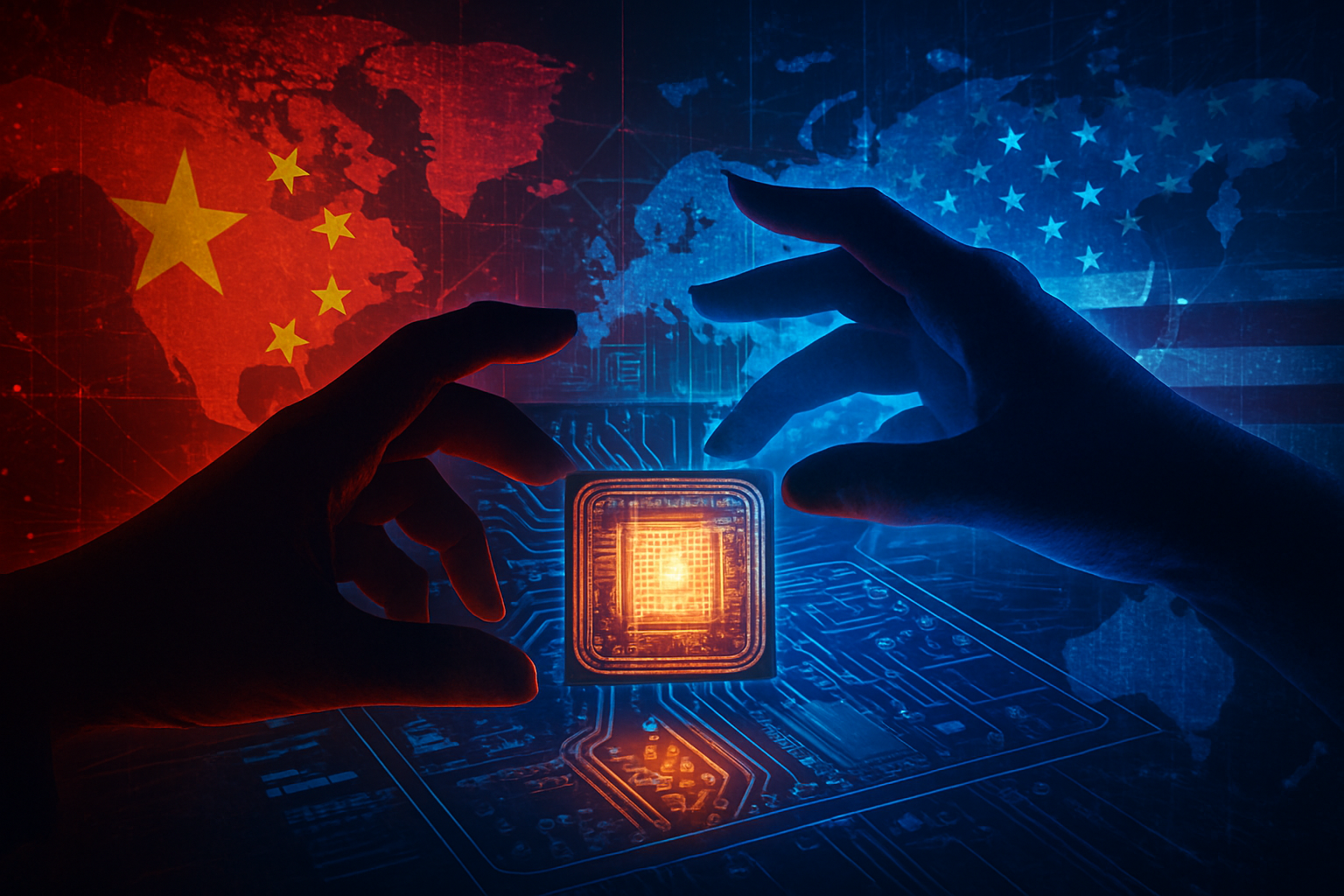
  • China Blacklists Canadian Consultancy TechInsights: A New Front in the Global Chip War

    China Blacklists Canadian Consultancy TechInsights: A New Front in the Global Chip War

    October 9, 2025 – In a significant escalation of geopolitical tensions within the semiconductor industry, China has officially added the Canadian semiconductor consultancy, TechInsights, to its "Unreliable Entity List." This move, announced today, effectively bans the firm from conducting business with organizations or individuals within China, sending a clear message to foreign entities scrutinizing Beijing's technological advancements. The immediate fallout marks a critical juncture in the ongoing tech war, underscoring China's resolve to protect its technological ambitions and control the narrative around its domestic chip capabilities.

    TechInsights, a prominent global authority in semiconductor and electronics analysis, has gained notoriety for its meticulous chip teardowns, particularly those that have exposed the intricate details of Huawei Technologies Co. Ltd. (SHE: 002502)'s advanced chip designs and supply chain dependencies. This retaliatory action by Beijing is a direct consequence of TechInsights' recent reports, which, in collaboration with Bloomberg and other outlets, revealed the presence of non-Chinese components—specifically from Taiwan Semiconductor Manufacturing Company (TSMC) (NYSE: TSM), Samsung Electronics Co. Ltd. (KRX: 005930), and SK Hynix Inc. (KRX: 000660)—in Huawei's cutting-edge AI semiconductors, such as the Ascend 910C and 910B. These findings challenged China's narrative of complete domestic technological independence for Huawei's most advanced products amidst stringent U.S. export controls.

    The Indispensable Role of Chip Teardowns in a Geopolitical Minefield

    Semiconductor consultancies like TechInsights are not merely dismantling gadgets; they are dissecting the very sinews of modern technology, providing indispensable insights that drive competitive intelligence, safeguard intellectual property, and enable crucial supply chain scrutiny. Their work involves a painstaking process of reverse engineering, where engineers meticulously delayer chips to the transistor level, reconstructing schematics and identifying internal structures, materials, and fabrication processes. This granular analysis reveals a chip's architecture, process node (e.g., 7nm, 5nm), packaging techniques, and the origins of its components.

    For competitive intelligence, these teardowns offer an unparalleled window into rivals' design strategies, manufacturing costs, and technological innovations, allowing companies to benchmark performance and anticipate market shifts. In the realm of intellectual property (IP) analysis, teardowns are critical for detecting potential patent infringements and developing "evidence-of-use" charts vital for licensing and litigation. However, it is in supply chain scrutiny where their importance has soared amidst escalating geopolitical tensions. By identifying specific components and their manufacturers, consultancies expose the intricate web of global dependencies, helping governments and corporations assess compliance with sanctions, manage risks, and understand vulnerabilities to geopolitical disruptions. TechInsights' revelations about Huawei's AI chips, for instance, provided concrete evidence of how Chinese firms navigate complex global supply chains despite stringent sanctions, offering critical data for policymakers and industry observers alike.

    Navigating the Tech War: Implications for Global Semiconductor Players and National Strategies

    China's targeting of TechInsights is a clear manifestation of its broader strategy to achieve technological self-sufficiency and assert tech sovereignty in the face of aggressive U.S. export controls. Beijing's motivations are multi-faceted: to deter further foreign scrutiny into its domestic technological progress, to control information that might undermine its narrative of self-reliance, and to acquire critical knowledge for reverse engineering and accelerating indigenous innovation. The incident underscores China's persistent reliance on foreign hardware for advanced chips, despite massive investments and its "Made in China 2025" initiative.

    The implications for major semiconductor companies are profound. Huawei (SHE: 002502), already under severe U.S. export curbs since 2019, continues its aggressive push for indigenous solutions, with its HiSilicon subsidiary ramping up production of AI chips like the Ascend 910B and the forthcoming 910D to rival offerings from Nvidia Corporation (NASDAQ: NVDA). However, the TechInsights reports highlight the enduring challenge of achieving complete self-sufficiency. TSMC (NYSE: TSM), as the world's leading contract chipmaker, finds itself precariously positioned between U.S. restrictions and its significant business with Chinese customers. Following the recent revelations, TSMC has reportedly halted advanced chip orders from mainland China for certain clients to ensure compliance with U.S. regulations, a move that could impact its revenue. Similarly, South Korean memory giants Samsung Electronics Co. Ltd. (KRX: 005930) and SK Hynix Inc. (KRX: 000660) are navigating U.S. export controls on equipment for their Chinese plants, adopting a "dual-track strategy" to balance Western market expansion with continued supply to China, even as China's AI chip self-sufficiency drive threatens to narrow the technology gap. For nations, the overarching goal is tech sovereignty, with the U.S. strengthening export controls and fostering domestic manufacturing through the CHIPS and Science Act, while the EU pursues its own European Chips Act. This global scramble is leading to a strategic shift towards diversifying supply chains and localizing capabilities to mitigate geopolitical risks.

    A Widening "Silicon Curtain" and the Future of AI

    This latest development fits squarely into a broader AI landscape characterized by a fierce global race for AI dominance and heightened concerns over technological control. The ability to design and manufacture advanced semiconductors is unequivocally seen as fundamental to AI development and national security, making control over this domain synonymous with economic power and geopolitical influence. China's pursuit of "independent and controllable" AI directly challenges the U.S.'s efforts to restrict its access to advanced AI chips, creating a "Silicon Curtain" that threatens to bifurcate the global technology ecosystem.

    The US-China tech war has starkly exposed the extreme vulnerabilities of the global semiconductor supply chain, which is highly concentrated and specialized, with Taiwan alone producing over 50% of the world's chips. This incident further underscores the urgent need for nations to secure their access to critical components, driving a strategic shift from "just-in-time" to "just-in-case" supply chain strategies. Massive investments in regional fabrication, vertical integration by tech giants, and diversification of suppliers are now the norm. The fragmentation of the supply chain creates both challenges and strategic opportunities, emphasizing the need for robust technological infrastructure and vendor diversification. This ongoing "chip war" is a defining feature of current international relations, fueling geopolitical tensions and competition, and risks stifling global scientific collaboration and the pace of global AI development.

    The Road Ahead: Bifurcation, Resilience, and Unwavering Ambition

    In the near term, the geopolitical semiconductor landscape will be marked by intensified government-backed investments aimed at boosting domestic manufacturing capabilities across the U.S., Europe, and China. Expect continued supply chain disruptions and rising costs as export controls and trade restrictions persist. Companies will accelerate "friend-shoring" strategies, diversifying their manufacturing bases to allied countries to mitigate risks. China, for its part, will double down on its "Made in China 2025" initiative, channeling billions into indigenous R&D to achieve self-sufficiency in advanced semiconductors, reportedly aiming for 5nm chips for smartphones and instructing major tech companies to prioritize local AI chips.

    Longer term, experts predict the solidification of a bifurcated global semiconductor market, characterized by distinct technological ecosystems and standards catering to different geopolitical blocs. This "Silicon Curtain" risks leading to divergent technological standards and potentially incompatible hardware, which could slow global AI progress as innovation becomes increasingly siloed. The emphasis in supply chain management will fundamentally shift from economic efficiency to strategic resilience and national security, resulting in a more regionalized, and likely more expensive, semiconductor industry. Despite current efforts by the U.S. to slow its progress, China's long-term goal of becoming a global leader in chip production remains undeterred, though it is currently estimated to be 5-10 years behind in the most advanced semiconductor technologies. Challenges remain formidable, including the fragility of the global supply chain, concentration of manufacturing in Taiwan, reliance on critical minerals, talent shortages, and the immense costs of domestic manufacturing. Experts foresee continued escalation of the US-China tech war, with the U.S. imposing further controls on chips and future technologies, and China continuing its retaliatory measures, expanding the battleground to AI and 6G wireless technology.

    A Defining Moment in the Tech Geopolitics

    The blacklisting of TechInsights by China is more than just an isolated incident; it is a profound indicator of the intensifying geopolitical struggle for technological supremacy. This development highlights the critical role of independent analysis in exposing the realities of global supply chains and the lengths to which nations will go to protect their technological ambitions. It underscores the ongoing "chip war" as a defining battle for global technological leadership, national security, and economic dominance.

    As the "Silicon Curtain" descends, the world watches to see how nations and companies will adapt to this increasingly fragmented and politicized landscape. The coming weeks and months will likely bring further retaliatory measures, accelerated domestic investment, and continued efforts by all parties to secure their technological future. The drive for tech sovereignty and supply chain resilience will continue to reshape the global semiconductor industry, with profound implications for the pace and direction of AI innovation worldwide.


    This content is intended for informational purposes only and represents analysis of current AI developments.

    TokenRing AI delivers enterprise-grade solutions for multi-agent AI workflow orchestration, AI-powered development tools, and seamless remote collaboration platforms. For more information, visit https://www.tokenring.ai/.