
Tag: Technology News

  • Texas Instruments: A Foundational AI Enabler Navigates Slow Recovery with Strong Franchise

    Texas Instruments: A Foundational AI Enabler Navigates Slow Recovery with Strong Franchise

    Texas Instruments (NASDAQ: TXN), a venerable giant in the semiconductor industry, is demonstrating remarkable financial resilience and strategic foresight as it navigates a period of slow market recovery. While the broader semiconductor landscape experiences fluctuating demand, particularly outside the booming high-end AI accelerator market, TI's robust financial health and deep-seated "strong franchise" in analog and embedded processing position it as a critical, albeit often understated, enabler for the pervasive deployment of artificial intelligence, especially at the edge, in industrial automation, and within the automotive sector. As of Q3 2025, the company's consistent revenue growth, strong cash flow, and significant long-term investments underscore its pivotal role in building the intelligent infrastructure that underpins the AI revolution.

    TI's strategic focus on foundational chips, coupled with substantial investments in domestic manufacturing, ensures a stable supply chain and a diverse customer base, insulating it from some of the more volatile swings seen in other segments of the tech industry. This stability allows TI to steadily advance its AI-enabled product portfolio, embedding intelligence directly into a vast array of real-world applications. The narrative of TI in late 2024 and mid-2025 is one of a financially sound entity meticulously building the silicon bedrock for a smarter, more automated future, even as it acknowledges and adapts to a semiconductor market recovery that is "continuing, though at a slower pace than prior upturns."

    Embedding Intelligence: Texas Instruments' Technical Contributions to AI

    Texas Instruments' technical contributions to AI are primarily concentrated on delivering efficient, real-time intelligence at the edge, a critical complement to the cloud-centric AI processing that dominates headlines. The company's strategy from late 2024 to mid-2025 has seen the introduction and enhancement of several product lines specifically designed for AI and machine learning applications in industrial, automotive, and personal electronics sectors.

    A cornerstone of TI's edge AI platform is its scalable AM6xA series of vision processors, including the AM62A, AM68A, and AM69A. These processors are engineered for low-power, real-time AI inference. The AM62A, for instance, is optimized for battery-operated devices like video doorbells, performing advanced object detection and classification while consuming less than 2 watts. For more demanding applications, the AM68A and AM69A offer higher performance and scalability, supporting up to 8 and 12 cameras respectively. These chips integrate dedicated AI hardware accelerators for deep learning algorithms, delivering processing power from 1 to 32 TOPS (Tera Operations Per Second). This enables them to simultaneously stream multiple 4K60 video feeds while executing onboard AI inference, significantly reducing latency and simplifying system design for applications ranging from traffic management to industrial inspection. This differs from previous approaches by offering a highly integrated, low-power solution that brings sophisticated AI capabilities directly to the device, reducing the need for constant cloud connectivity and enabling faster, more secure decision-making.

    Further expanding its AI capabilities, TI introduced the TMS320F28P55x series of C2000™ real-time microcontrollers (MCUs) in November 2024. These MCUs are notable as the industry's first real-time microcontrollers with an integrated neural processing unit (NPU). This NPU offloads neural network execution from the main CPU, resulting in a 5 to 10 times lower latency compared to software-only implementations, achieving up to 99% fault detection accuracy in industrial and automotive applications. This represents a significant technical leap for embedded control systems, enabling highly accurate predictive maintenance and real-time anomaly detection crucial for smart factories and autonomous systems. In the automotive realm, TI continues to innovate with new chips for advanced driver-assistance systems (ADAS). In April 2025, it unveiled a portfolio including the LMH13000 high-speed lidar laser driver for improved real-time decision-making and the AWR2944P front and corner radar sensor, which features enhanced computational capabilities and an integrated radar hardware accelerator specifically for machine learning in edge AI automotive applications. These advancements are critical for the development of more robust and reliable autonomous vehicles.

    Initial reactions from the embedded systems community and industrial automation experts have been largely positive, recognizing the practical implications of bringing AI inference directly to the device level. While not as flashy as cloud AI supercomputers, these integrated solutions are seen as essential for the widespread adoption and functionality of AI in the physical world, offering tangible benefits in terms of latency, power consumption, and data privacy. Furthermore, TI's commitment to a robust software development kit (SDK) and ecosystem, including AI tools and pre-trained models, facilitates rapid prototyping and deployment, lowering the barrier to entry for developers looking to incorporate AI into embedded systems. Beyond edge devices, TI also addresses the burgeoning power demands of AI computing in data centers with new power management devices and reference designs, including gallium nitride (GaN) products, enabling scalable power architectures from 12V to 800V DC, critical for the efficiency and density requirements of next-generation AI infrastructures.

    Shaping the AI Landscape: Implications for Companies and Competitive Dynamics

    Texas Instruments' foundational role in analog and embedded processing, now increasingly infused with AI capabilities, significantly shapes the competitive landscape for AI companies, tech giants, and startups alike. While TI may not be directly competing with the likes of Nvidia (NASDAQ: NVDA) or Advanced Micro Devices (NASDAQ: AMD) in the high-performance AI accelerator market, its offerings are indispensable to companies building the intelligent devices and systems that utilize AI.

    Companies that stand to benefit most from TI's developments are those focused on industrial automation, robotics, smart factories, automotive ADAS and autonomous driving, medical devices, and advanced IoT applications. Startups and established players in these sectors can leverage TI's low-power, high-performance edge AI processors and MCUs to integrate sophisticated AI inference directly into their products, enabling features like predictive maintenance, real-time object recognition, and enhanced sensor fusion. This reduces their reliance on costly and latency-prone cloud processing for every decision, democratizing AI deployment in real-world environments. For example, a robotics startup can use TI's vision processors to equip its robots with on-board intelligence for navigation and object manipulation, while an automotive OEM can enhance its ADAS systems with TI's radar and lidar chips for more accurate environmental perception.

    The competitive implications for major AI labs and tech companies are nuanced. While TI isn't building the next large language model (LLM) training supercomputer, it is providing the essential building blocks for the deployment of AI models in countless edge applications. This positions TI as a critical partner rather than a direct competitor to companies developing cutting-edge AI algorithms. Its robust, long-lifecycle analog and embedded chips are integrated deeply into systems, providing a stable revenue stream and a resilient market position, even as the market for high-end AI accelerators experiences rapid shifts. Analysts note that TI's margins are "a lot less cyclical" compared to other semiconductor companies, reflecting the enduring demand for its core products. However, TI's "limited exposure to the artificial intelligence (AI) capital expenditure cycle" for high-end AI accelerators is a point of consideration, potentially impacting its growth trajectory compared to firms more deeply embedded in that specific, booming segment.

    Potential disruption to existing products or services is primarily positive, enabling a new generation of smarter, more autonomous devices. TI's integrated NPU in its C2000 MCUs, for instance, allows for significantly faster and more accurate real-time fault detection than previous software-only approaches, potentially disrupting traditional industrial control systems with more intelligent, self-optimizing alternatives. TI's market positioning is bolstered by its proprietary 300mm manufacturing strategy, aiming for over 95% in-house production by 2030, which provides dependable, low-cost capacity and strengthens control over its supply chain—a significant strategic advantage in a world sensitive to geopolitical risks and supply chain disruptions. Its direct-to-customer model, accounting for approximately 80% of its 2024 revenue, offers deeper insights into customer needs and fosters stronger partnerships, further solidifying its market hold.

    The Wider Significance: Pervasive AI and Foundational Enablers

    Texas Instruments' advancements, particularly in edge AI and embedded intelligence, fit into the broader AI landscape as a crucial enabler of pervasive, distributed AI. While much of the public discourse around AI focuses on massive cloud-based models and their computational demands, the practical application of AI in the physical world often relies on efficient processing at the "edge"—close to the data source. TI's chips are fundamental to this paradigm, allowing AI to move beyond data centers and into everyday devices, machinery, and vehicles, making them smarter, more responsive, and more autonomous. This complements, rather than competes with, the advancements in cloud AI, creating a more holistic and robust AI ecosystem where intelligence can be deployed where it makes the most sense.

    The impacts of TI's work are far-reaching. By providing low-power, high-performance processors with integrated AI accelerators, TI is enabling a new wave of innovation in sectors traditionally reliant on simpler embedded systems. This means more intelligent industrial robots capable of complex tasks, safer and more autonomous vehicles with enhanced perception, and smarter medical devices that can perform real-time diagnostics. The ability to perform AI inference on-device reduces latency, enhances privacy by keeping data local, and decreases reliance on network connectivity, making AI applications more reliable and accessible in diverse environments. This foundational work by TI is critical for unlocking the full potential of AI beyond large-scale data analytics and into the fabric of daily life and industry.

    Potential concerns, however, include TI's relatively limited direct exposure to the hyper-growth segment of high-end AI accelerators, which some analysts view as a constraint on its overall AI-driven growth trajectory compared to pure-play AI chip companies. Geopolitical tensions, particularly concerning U.S.-China trade relations, also pose a challenge, as China remains a significant market for TI. Additionally, the broader semiconductor market is experiencing fragmented growth, with robust demand for AI and logic chips contrasting with headwinds in other segments, including some areas of analog chips where oversupply risks have been noted.

    Comparing TI's contributions to previous AI milestones, its role is akin to providing the essential infrastructure rather than a headline-grabbing breakthrough in AI algorithms or model size. Just as the development of robust microcontrollers and power management ICs was crucial for the widespread adoption of digital electronics, TI's current focus on AI-enabled embedded processors is vital for the transition to an AI-driven world. It's a testament to the fact that the AI revolution isn't just about bigger models; it's also about making intelligence ubiquitous and practical, a task at which TI excels. Its long design cycles and deep integration into customer systems provide a different kind of milestone: enduring, pervasive intelligence.

    The Road Ahead: Future Developments and Expert Predictions

    Looking ahead, Texas Instruments is poised for continued strategic development, building on its strong franchise and cautious navigation of the slow market recovery. Near-term and long-term developments will likely center on the continued expansion of its AI-enabled embedded processing portfolio and further investment in its advanced manufacturing capabilities. The company is committed to its ambitious capital expenditure plans, projecting to spend around $50 billion by 2025 on multi-year phased expansions in the U.S., including a minimum of $20 billion to complete ongoing projects by 2026. These investments, partially offset by anticipated U.S. CHIPS Act incentives, underscore TI's commitment to controlling its supply chain and providing reliable, low-cost capacity for future demand, including that driven by AI.

    Expected future applications and use cases on the horizon are vast. We can anticipate more sophisticated industrial automation, where TI's MCUs with integrated NPUs enable even more precise predictive maintenance and real-time process optimization, leading to highly autonomous factories. In the automotive sector, continued advancements in TI's radar, lidar, and vision processors will contribute to higher levels of vehicle autonomy, enhancing safety and efficiency. The proliferation of smart home devices, wearables, and other IoT endpoints will also benefit from TI's low-power edge AI solutions, making everyday objects more intelligent and responsive without constant cloud interaction. As AI models become more efficient, they can be deployed on increasingly constrained edge devices, expanding the addressable market for TI's specialized processors.

    Challenges that need to be addressed include navigating ongoing macroeconomic uncertainties and geopolitical tensions, which can impact customer capital spending and supply chain stability. Intense competition in specific embedded product markets, particularly in automotive infotainment and ADAS from players like Qualcomm, will also require continuous innovation and strategic positioning. Furthermore, while TI's exposure to high-end AI accelerators is limited, it must continue to demonstrate how its foundational chips are essential enablers for the broader AI ecosystem to maintain investor confidence and capture growth opportunities.

    Experts predict that TI will continue to generate strong cash flow and maintain its leadership in analog and embedded processing. While it may not be at the forefront of the high-performance AI chip race dominated by GPUs, its role as an enabler of pervasive, real-world AI is expected to solidify. Analysts anticipate steady revenue growth in the coming years, with some adjusted forecasts for 2025 and beyond reflecting a cautious but optimistic outlook. The strategic investments in domestic manufacturing are seen as a long-term advantage, providing resilience against global supply chain disruptions and strengthening its competitive position.

    Comprehensive Wrap-up: TI's Enduring Significance in the AI Era

    In summary, Texas Instruments' financial health, characterized by consistent revenue and profit growth as of Q3 2025, combined with its "strong franchise" in analog and embedded processing, positions it as an indispensable, albeit indirect, force in the ongoing artificial intelligence revolution. While navigating a "slow recovery" in the broader semiconductor market, TI's strategic investments in advanced manufacturing and its focused development of AI-enabled edge processors, real-time MCUs with NPUs, and automotive sensor chips are critical for bringing intelligence to the physical world.

    This development's significance in AI history lies in its contribution to the practical, widespread deployment of AI. TI is not just building chips; it's building the foundational components that allow AI to move from theoretical models and cloud data centers into the everyday devices and systems that power our industries, vehicles, and homes. Its emphasis on low-power, real-time processing at the edge is crucial for creating a truly intelligent environment, where decisions are made quickly and efficiently, close to the source of data.

    Looking to the long-term impact, TI's strategy ensures that as AI becomes more sophisticated, the underlying hardware infrastructure for its real-world application will be robust, efficient, and readily available. The company's commitment to in-house manufacturing and direct customer engagement also fosters a resilient supply chain, which is increasingly vital in a complex global economy.

    What to watch for in the coming weeks and months includes TI's progress on its new 300mm wafer fabrication facilities, the expansion of its AI-enabled product lines into new industrial and automotive applications, and how it continues to gain market share in its core segments amidst evolving competitive pressures. Its ability to leverage its financial strength and manufacturing prowess to adapt to the dynamic demands of the AI era will be key to its sustained success and its continued role as a foundational enabler of intelligence everywhere.


    This content is intended for informational purposes only and represents analysis of current AI developments.

    TokenRing AI delivers enterprise-grade solutions for multi-agent AI workflow orchestration, AI-powered development tools, and seamless remote collaboration platforms.
    For more information, visit https://www.tokenring.ai/.
  • TSMC: The Unseen Architect Powering the AI Revolution with Unprecedented Spending

    TSMC: The Unseen Architect Powering the AI Revolution with Unprecedented Spending

    Taipei, Taiwan – October 22, 2025 – Taiwan Semiconductor Manufacturing Company (TSMC) (NYSE: TSM) stands as the undisputed titan in the global semiconductor industry, a position that has become critically pronounced amidst the burgeoning artificial intelligence revolution. As the leading pure-play foundry, TSMC's advanced manufacturing capabilities are not merely facilitating but actively dictating the pace and scale of AI innovation worldwide. The company's relentless pursuit of cutting-edge process technologies, coupled with a staggering capital expenditure, underscores its indispensable role as the "backbone" and "arms supplier" to an AI industry experiencing insatiable demand.

    The immediate significance of TSMC's dominance cannot be overstated. With an estimated 90-92% market share in advanced AI chip manufacturing, virtually every major AI breakthrough, from sophisticated large language models (LLMs) to autonomous systems, relies on TSMC's silicon. This concentration of advanced manufacturing power in one entity highlights both the incredible efficiency and technological leadership of TSMC, as well as the inherent vulnerabilities within the global AI supply chain. As AI-related revenue continues to surge, TSMC's strategic investments and technological roadmap are charting the course for the next generation of intelligent machines and services.

    The Microscopic Engines: TSMC's Technical Prowess in AI Chip Manufacturing

    TSMC's technological leadership is rooted in its continuous innovation across advanced process nodes and sophisticated packaging solutions, which are paramount for the high-performance and power-efficient chips demanded by AI.

    At the forefront of miniaturization, TSMC's 3nm process (N3 family) has been in high-volume production since 2022, contributing 23% to its wafer revenue in Q3 2025. This node delivers a 1.6x increase in logic transistor density and a 25-30% reduction in power consumption compared to its 5nm predecessor. Major AI players like Apple (NASDAQ: AAPL), NVIDIA (NASDAQ: NVDA), and Advanced Micro Devices (NASDAQ: AMD) are already leveraging TSMC's 3nm technology. The monumental leap, however, comes with the 2nm process (N2), transitioning from FinFET to Gate-All-Around (GAA) nanosheet transistors. Set for mass production in the second half of 2025, N2 promises a 15% performance boost at the same power or a remarkable 25-30% power reduction compared to 3nm, along with a 1.15x increase in transistor density. This architectural shift is critical for future AI models, with an improved variant (N2P) scheduled for late 2026. Looking further ahead, TSMC's roadmap includes the A16 (1.6nm-class) process with "Super Power Rail" technology and the A14 (1.4nm) node, targeting mass production in late 2028, promising even greater performance and efficiency gains.

    Beyond traditional scaling, TSMC's advanced packaging technologies are equally indispensable for AI chips, effectively overcoming the "memory wall" bottleneck. CoWoS (Chip-on-Wafer-on-Substrate), TSMC's pioneering 2.5D advanced packaging technology, integrates multiple active silicon dies, such as logic SoCs (e.g., GPUs or AI accelerators) and High Bandwidth Memory (HBM) stacks, on a passive silicon interposer. This significantly reduces data travel distances, enabling massively increased bandwidth (up to 8.6 Tb/s) and lower latency—crucial for memory-bound AI workloads. TSMC is aggressively expanding its CoWoS capacity, aiming to quadruple output by the end of 2025 and reach 130,000 wafers per month by 2026. Furthermore, SoIC (System-on-Integrated-Chips), a 3D stacking technology planned for mass production in 2025, pushes boundaries further by facilitating ultra-high bandwidth density between stacked dies with ultra-fine pitches below 2 microns, providing lower latency and higher power efficiency. AMD's MI300, for instance, utilizes SoIC paired with CoWoS. These innovations differentiate TSMC by offering integrated, high-density, and high-bandwidth solutions that far surpass previous 2D packaging approaches.

    Initial reactions from the AI research community and industry experts have been overwhelmingly positive, hailing TSMC as the "indispensable architect" and "golden goose of AI." Experts view TSMC's 2nm node and advanced packaging as critical enablers for the next generation of AI models, including multimodal and foundation models. However, concerns persist regarding the extreme concentration of advanced AI chip manufacturing, which could lead to supply chain vulnerabilities and significant cost increases for next-generation chips, potentially up to 50% compared to 3nm.

    Market Reshaping: Impact on AI Companies, Tech Giants, and Startups

    TSMC's unparalleled dominance in advanced AI chip manufacturing is profoundly shaping the competitive landscape, conferring significant strategic advantages to its partners and creating substantial barriers to entry for others.

    Companies that stand to benefit are predominantly the leading innovators in AI and high-performance computing (HPC) chip design. NVIDIA (NASDAQ: NVDA), a cornerstone client, relies heavily on TSMC for its industry-leading GPUs like the H100, Blackwell, and future architectures, which are crucial for AI accelerators and data centers. Apple (NASDAQ: AAPL) secures a substantial portion of initial 2nm production capacity for its AI-powered M-series chips for Macs and iPhones. AMD (NASDAQ: AMD) leverages TSMC for its next-generation data center GPUs (MI300 series) and Ryzen processors, positioning itself as a strong challenger. Hyperscale cloud providers and tech giants such as Alphabet (NASDAQ: GOOGL) (Google), Amazon (NASDAQ: AMZN), Meta Platforms (NASDAQ: META), and Microsoft (NASDAQ: MSFT) are increasingly designing custom AI silicon, optimizing their vast AI infrastructures and maintaining market leadership through TSMC's manufacturing prowess. Even Tesla (NASDAQ: TSLA) relies on TSMC for its AI-powered self-driving chips.

    The competitive implications for major AI labs and tech companies are significant. TSMC's technological lead and capacity expansion further entrench the market leadership of companies with early access to cutting-edge nodes, establishing high barriers to entry for newer firms. While competitors like Samsung Electronics (KRX: 005930) and Intel (NASDAQ: INTC) are aggressively pursuing advanced nodes (e.g., Intel's 18A process, comparable to TSMC's 2nm, scheduled for mass production in H2 2025), TSMC generally maintains superior yield rates and established customer trust, making rapid migration unlikely due to massive technical risks and financial costs. The reliance on TSMC also encourages some tech giants to invest more heavily in their own chip design capabilities to gain greater control, though they remain dependent on TSMC for manufacturing.

    Potential disruption to existing products or services is multifaceted. The rapid advancement in AI chip technology, driven by TSMC's nodes, accelerates hardware obsolescence, compelling continuous upgrades to AI infrastructure. Conversely, TSMC's manufacturing capabilities directly accelerate the time-to-market for AI-powered products and services, potentially disrupting industries slower to adopt AI. The unprecedented performance and power efficiency leaps from 2nm technology are critical for enabling AI capabilities to migrate from energy-intensive cloud data centers to edge devices and consumer electronics, potentially triggering a major PC refresh cycle as generative AI transforms applications in smartphones, PCs, and autonomous vehicles. However, the immense R&D and capital expenditures associated with advanced nodes could lead to a significant increase in chip prices, potentially up to 50% compared to 3nm, which may be passed on to end-users and increase costs for AI infrastructure.

    TSMC's market positioning and strategic advantages are virtually unassailable. As of October 2025, it holds an estimated 70-71% market share in the global pure-play wafer foundry market. Its technological leadership in process nodes (3nm in high-volume production, 2nm mass production in H2 2025, A16 by 2026) and advanced packaging (CoWoS, SoIC) provides unmatched performance and energy efficiency. TSMC's pure-play foundry model fosters strong, long-term partnerships without internal competition, creating customer lock-in and pricing power, with prices expected to increase by 5-10% in 2025. Furthermore, TSMC is aggressively expanding its manufacturing footprint with a capital expenditure of $40-$42 billion in 2025, including new fabs in Arizona (U.S.) and Japan, and exploring Germany. This geographical diversification serves as a critical geopolitical hedge, reducing reliance on Taiwan-centric manufacturing in the face of U.S.-China tensions.

    The Broader Canvas: Wider Significance in the AI Landscape

    TSMC's foundational role extends far beyond mere manufacturing; it is fundamentally shaping the broader AI landscape, enabling unprecedented innovation while simultaneously highlighting critical geopolitical and supply chain vulnerabilities.

    TSMC's leading role in AI chip manufacturing and its substantial capital expenditures are not just business metrics but critical drivers for the entire AI ecosystem. The company's continuous innovation in process nodes (3nm, 2nm, A16, A14) and advanced packaging (CoWoS, SoIC) directly translates into the ability to create smaller, faster, and more energy-efficient chips. This capability is the linchpin for the next generation of AI breakthroughs, from sophisticated large language models and generative AI to complex autonomous systems. AI and high-performance computing (HPC) now account for a substantial portion of TSMC's revenue, exceeding 60% in Q3 2025, with AI-related revenue projected to double in 2025 and achieve a compound annual growth rate (CAGR) exceeding 45% through 2029. This symbiotic relationship where AI innovation drives demand for TSMC's chips, and TSMC's capabilities, in turn, enable further AI development, underscores its central role in the current "AI supercycle."

    The broader impacts are profound. TSMC's technology dictates who can build the most powerful AI systems, influencing the competitive landscape and acting as a powerful economic catalyst. The global AI chip market is projected to contribute over $15 trillion to the global economy by 2030. However, this rapid advancement also accelerates hardware obsolescence, compelling continuous upgrades to AI infrastructure. While AI chips are energy-intensive, TSMC's focus on improving power efficiency with new nodes directly influences the sustainability and scalability of AI solutions, even leveraging AI itself to design more energy-efficient chips.

    However, this critical reliance on TSMC also introduces significant potential concerns. The extreme supply chain concentration means any disruption to TSMC's operations could have far-reaching impacts across the global tech industry. More critically, TSMC's headquarters in Taiwan introduce substantial geopolitical risks. The island's strategic importance in advanced chip manufacturing has given rise to the concept of a "silicon shield," suggesting it acts as a deterrent against potential aggression, particularly from China. The ongoing "chip war" between the U.S. and China, characterized by U.S. export controls, directly impacts China's access to TSMC's advanced nodes and slows its AI development. To mitigate these risks, TSMC is aggressively diversifying its manufacturing footprint with multi-billion dollar investments in new fabrication plants in Arizona (U.S.), Japan, and potentially Germany. The company's near-monopoly also grants it pricing power, which can impact the cost of AI development and deployment.

    In comparison to previous AI milestones and breakthroughs, TSMC's contribution is unique in its emphasis on the physical hardware foundation. While earlier AI advancements were often centered on algorithmic and software innovations, the current era is fundamentally hardware-driven. TSMC's pioneering of the "pure-play" foundry business model in 1987 fundamentally reshaped the semiconductor industry, enabling fabless companies to innovate at an unprecedented pace. This model directly fueled the rise of modern computing and subsequently, AI, by providing the "picks and shovels" for the digital gold rush, much like how foundational technologies or companies enabled earlier tech revolutions.

    The Horizon: Future Developments in TSMC's AI Chip Manufacturing

    Looking ahead, TSMC is poised for continued groundbreaking developments, driven by the relentless demand for AI, though it must navigate significant challenges to maintain its trajectory.

    In the near-term and long-term, process technology advancements will remain paramount. The mass production of the 2nm (N2) process in the second half of 2025, featuring GAA nanosheet transistors, will be a critical milestone, enabling substantial improvements in power consumption and speed for next-generation AI accelerators from leading companies like NVIDIA, AMD, and Apple. Beyond 2nm, TSMC plans to introduce the A16 (1.6nm-class) and A14 (1.4nm) processes, with groundbreaking for the A14 facility in Taichung, Taiwan, scheduled for November 2025, targeting mass production by late 2028. These future nodes will offer even greater performance at lower power. Alongside process technology, advanced packaging innovations will be crucial. TSMC is aggressively expanding its CoWoS capacity, aiming to quadruple output by the end of 2025 and reach 130,000 wafers per month by 2026. Its 3D stacking technology, SoIC, is also slated for mass production in 2025, further boosting bandwidth density. TSMC is also exploring new square substrate packaging methods to embed more semiconductors per chip, targeting small volumes by 2027.

    These advancements will unlock a wide array of potential applications and use cases. They will continue to fuel the capabilities of AI accelerators and data centers for training massive LLMs and generative AI. More sophisticated autonomous systems, from vehicles to robotics, will benefit from enhanced edge AI. Smart devices will gain advanced AI capabilities, potentially triggering a major refresh cycle for smartphones and PCs. High-Performance Computing (HPC), augmented and virtual reality (AR/VR), and highly nuanced personal AI assistants are also on the horizon. TSMC is even leveraging AI in its own chip design, aiming for a 10-fold improvement in AI computing chip efficiency by using AI-powered design tools, showcasing a recursive innovation loop.

    However, several challenges need to be addressed. The exponential increase in power consumption by AI chips poses a major challenge. TSMC's electricity usage is projected to triple by 2030, making energy consumption a strategic bottleneck in the global AI race. The escalating cost of building and equipping modern fabs, coupled with immense R&D, means 2nm chips could see a price increase of up to 50% compared to 3nm, and overseas production in places like Arizona is significantly more expensive. Geopolitical stability remains the largest overhang, given the concentration of advanced manufacturing in Taiwan amidst US-China tensions. Taiwan's reliance on imported energy further underscores this fragility. TSMC's global diversification efforts are partly aimed at mitigating these risks, alongside addressing persistent capacity bottlenecks in advanced packaging.

    Experts predict that TSMC will remain an "indispensable architect" of the AI supercycle. AI is projected to drive double-digit growth in semiconductor demand through 2030, with the global AI chip market exceeding $150 billion in 2025. TSMC has raised its 2025 revenue growth forecast to the mid-30% range, with AI-related revenue expected to double in 2025 and achieve a CAGR exceeding 45% through 2029. By 2030, AI chips are predicted to constitute over 25% of TSMC's total revenue. 2025 is seen as a pivotal year where AI becomes embedded into the entire fabric of human systems, leading to the rise of "agentic AI" and multimodal AI.

    The AI Supercycle's Foundation: A Comprehensive Wrap-up

    TSMC has cemented its position as the undisputed leader in AI chip manufacturing, serving as the foundational backbone for the global artificial intelligence industry. Its unparalleled technological prowess, strategic business model, and massive manufacturing scale make it an indispensable partner for virtually every major AI innovator, driving the current "AI supercycle."

    The key takeaways are clear: TSMC's continuous innovation in process nodes (3nm, 2nm, A16) and advanced packaging (CoWoS, SoIC) is a technological imperative for AI advancement. The global AI industry is heavily reliant on this single company for its most critical hardware components, with AI now the primary growth engine for TSMC's revenue and capital expenditures. In response to geopolitical risks and supply chain vulnerabilities, TSMC is strategically diversifying its manufacturing footprint beyond Taiwan to locations like Arizona, Japan, and potentially Germany.

    TSMC's significance in AI history is profound. It is the "backbone" and "unseen architect" of the AI revolution, enabling the creation and scaling of advanced AI models by consistently providing more powerful, energy-efficient, and compact chips. Its pioneering of the "pure-play" foundry model fundamentally reshaped the semiconductor industry, directly fueling the rise of modern computing and subsequently, AI.

    In the long term, TSMC's dominance is poised to continue, driven by the structural demand for advanced computing. AI chips are expected to constitute a significant and growing portion of TSMC's total revenue, potentially reaching 50% by 2029. However, this critical position is tempered by challenges such as geopolitical tensions concerning Taiwan, the escalating costs of advanced manufacturing, and the need to address increasing power consumption.

    In the coming weeks and months, several key developments bear watching: the successful high-volume production ramp-up of TSMC's 2nm process node in the second half of 2025 will be a critical indicator of its continued technological leadership and ability to meet the "insatiable" demand from its 15 secured customers, many of whom are in the HPC and AI sectors. Updates on its aggressive expansion of CoWoS capacity, particularly its goal to quadruple output by the end of 2025, will directly impact the supply of high-end AI accelerators. Progress on the acceleration of advanced process node deployment at its Arizona fabs and developments in its other international sites in Japan and Germany will be crucial for supply chain resilience. Finally, TSMC's Q4 2025 earnings calls will offer further insights into the strength of AI demand, updated revenue forecasts, and capital expenditure plans, all of which will continue to shape the trajectory of the global AI landscape.


    This content is intended for informational purposes only and represents analysis of current AI developments.

    TokenRing AI delivers enterprise-grade solutions for multi-agent AI workflow orchestration, AI-powered development tools, and seamless remote collaboration platforms.
    For more information, visit https://www.tokenring.ai/.

  • ASML Soars: AI Boom Fuels Record EUV Demand and Propels Stock to New Heights

    ASML Soars: AI Boom Fuels Record EUV Demand and Propels Stock to New Heights

    Veldhoven, Netherlands – October 16, 2025 – ASML Holding N.V. (AMS: ASML), the Dutch giant and sole manufacturer of advanced Extreme Ultraviolet (EUV) lithography systems, has seen its stock climb significantly this week, driven by a stellar third-quarter earnings report, unprecedented demand for its cutting-edge technology, and an optimistic outlook fueled by the insatiable appetite of the artificial intelligence (AI) sector. The semiconductor industry’s bedrock, ASML, finds itself at the epicenter of a technological revolution, with its specialized machinery becoming increasingly indispensable for producing the next generation of AI-powered chips.

    The company's strong performance underscores its pivotal role in the global technology ecosystem. As the world races to develop more sophisticated AI models and applications, the need for smaller, more powerful, and energy-efficient semiconductors has never been greater. ASML’s EUV technology is the bottleneck-breaking solution, enabling chipmakers to push the boundaries of Moore’s Law and deliver the processing power required for advanced AI, from large language models to complex neural networks.

    Unpacking the Technical Edge: EUV and the Dawn of High-NA

    ASML's recent surge is firmly rooted in its technological dominance, particularly its Extreme Ultraviolet (EUV) lithography. The company's third-quarter 2025 results, released on October 15, revealed net bookings of €5.4 billion, significantly exceeding analyst expectations. A staggering €3.6 billion of this was attributed to EUV systems, highlighting the robust and sustained demand for its most advanced tools. These systems are critical for manufacturing chips with geometries below 5 nanometers, a threshold where traditional Deep Ultraviolet (DUV) lithography struggles due to physical limitations of light wavelengths.

    EUV lithography utilizes a much shorter wavelength of light (13.5 nanometers) compared to DUV (typically 193 nanometers), allowing for the printing of significantly finer patterns on silicon wafers. This precision is paramount for creating the dense transistor layouts found in modern CPUs, GPUs, and specialized AI accelerators. Beyond current EUV, ASML is pioneering High Numerical Aperture (High-NA) EUV, which further enhances resolution and enables even denser chip designs. ASML recognized its first revenue from a High-NA EUV system in Q3 2025, marking a significant milestone. Key industry players like Samsung (KRX: 005930) are slated to receive ASML's High-NA EUV machines (TWINSCAN EXE:5200B) by mid-2026 for their 2nm and advanced DRAM production, with Intel (NASDAQ: INTC) and Taiwan Semiconductor Manufacturing Company (TSMC) (NYSE: TSM) already deploying prototype systems. This next-generation technology is crucial for extending Moore's Law into the sub-2nm era, enabling the exponentially increasing computational demands of future AI.

    AI's Indispensable Enabler: Impact on Tech Giants and the Competitive Landscape

    ASML’s unparalleled position as the sole provider of EUV technology makes it an indispensable partner for the world's leading chip manufacturers. Companies like TSMC, Intel, and Samsung are heavily reliant on ASML's equipment to produce the advanced semiconductors that power everything from smartphones to data centers and, crucially, the burgeoning AI infrastructure. The strong demand for ASML's EUV systems directly reflects the capital expenditures these tech giants are making to scale up their advanced chip production, a substantial portion of which is dedicated to meeting the explosive growth in AI hardware.

    For AI companies, both established tech giants and innovative startups, ASML's advancements translate directly into more powerful and efficient computing resources. Faster, smaller, and more energy-efficient chips enable the training of larger AI models, the deployment of AI at the edge, and the development of entirely new AI applications. While ASML faces competition in other segments of the semiconductor equipment market from players like Applied Materials (NASDAQ: AMAT) and Lam Research (NASDAQ: LRCX), its near-monopoly in EUV lithography creates an unassailable competitive moat. This strategic advantage positions ASML not just as a supplier, but as a foundational enabler shaping the competitive landscape of the entire AI industry, determining who can produce the most advanced chips and thus, who can innovate fastest in AI.

    Broader Significance: Fueling the AI Revolution and Geopolitical Chess

    The continued ascent of ASML underscores its critical role in the broader AI landscape and global technological trends. As AI transitions from a niche technology to a pervasive force, the demand for specialized hardware capable of handling immense computational loads has surged. ASML's lithography machines are the linchpin in this supply chain, directly impacting the pace of AI development and deployment worldwide. The company's ability to consistently innovate and deliver more advanced lithography solutions is fundamental to sustaining Moore's Law, a principle that has guided the semiconductor industry for decades and is now more vital than ever for the AI revolution.

    However, ASML's strategic importance also places it at the center of geopolitical considerations. While the company's optimistic outlook is buoyed by strong overall demand, it anticipates a "significant" decline in DUV sales to China in 2026 due to ongoing export restrictions. This highlights the delicate balance ASML must maintain between global market opportunities and international trade policies. The reliance of major nations on ASML's technology for their advanced chip aspirations has transformed the company into a key player in the global competition for technological sovereignty, making its operational health and technological advancements a matter of national and international strategic interest.

    The Road Ahead: High-NA EUV and Beyond

    Looking ahead, ASML's trajectory is set to be defined by the continued rollout and adoption of its High-NA EUV technology. The first revenue recognition from these systems in Q3 2025 is just the beginning. As chipmakers like Samsung, Intel, and TSMC integrate these machines into their production lines over the next year, the industry can expect a new wave of chip innovation, enabling even more powerful and efficient AI accelerators, advanced memory solutions, and next-generation processors. This will pave the way for more sophisticated AI applications, from fully autonomous systems and advanced robotics to personalized medicine and hyper-realistic simulations.

    Challenges, however, remain. Navigating the complex geopolitical landscape and managing export controls will continue to be a delicate act for ASML. Furthermore, the immense R&D investment required to stay at the forefront of lithography technology necessitates sustained financial performance and a strong talent pipeline. Experts predict that ASML's innovations will not only extend the capabilities of traditional silicon chips but also potentially facilitate the development of novel computing architectures, such as neuromorphic computing, which could revolutionize AI processing. The coming years will see ASML solidify its position as the foundational technology provider for the AI era.

    A Cornerstone of the AI Future

    ASML’s remarkable stock performance this week, driven by robust Q3 earnings and surging EUV demand, underscores its critical and growing significance in the global technology landscape. The company's near-monopoly on advanced lithography technology, particularly EUV, positions it as an indispensable enabler for the artificial intelligence revolution. As AI continues its rapid expansion, the demand for ever-more powerful and efficient semiconductors will only intensify, cementing ASML's role as a cornerstone of technological progress.

    The successful rollout of High-NA EUV systems, coupled with sustained investment in R&D, will be key indicators to watch in the coming months and years. While geopolitical tensions and trade restrictions present ongoing challenges, ASML's fundamental technological leadership and the insatiable global demand for advanced chips ensure its central role in shaping the future of AI and the broader digital economy. Investors and industry observers will be keenly watching ASML's Q4 2025 results and its continued progress in pushing the boundaries of semiconductor manufacturing.


    This content is intended for informational purposes only and represents analysis of current AI developments.

    TokenRing AI delivers enterprise-grade solutions for multi-agent AI workflow orchestration, AI-powered development tools, and seamless remote collaboration platforms.
    For more information, visit https://www.tokenring.ai/.

  • Quantum Computing Stocks Soar: Rigetti Leads the Charge Amidst Institutional Bets and Innovation

    Quantum Computing Stocks Soar: Rigetti Leads the Charge Amidst Institutional Bets and Innovation

    The burgeoning field of quantum computing has recently captured the fervent attention of investors, leading to an unprecedented surge in the stock valuations of key players. Leading this remarkable ascent is Rigetti Computing (NASDAQ: RGTI), whose shares have witnessed an extraordinary rally, reflecting a growing institutional confidence and a palpable excitement surrounding the commercialization of quantum technologies. This market effervescence, particularly prominent in mid-October 2025, underscores a pivotal moment for an industry long considered to be on the distant horizon, now seemingly accelerating towards mainstream applicability.

    This dramatic uptick is not merely speculative froth but is underpinned by a series of strategic announcements, significant partnerships, and tangible technological advancements. While the rapid appreciation has sparked discussions about potential overvaluation in a nascent sector, the immediate significance lies in the clear signal that major financial institutions and government entities are now actively betting on quantum computing as a critical component of future economic and national security.

    The Quantum Leap: Rigetti's Technological Prowess and Market Catalysts

    Rigetti Computing, a pioneer in superconducting quantum processors, has been at the forefront of this market dynamism. The company's stock performance has been nothing short of spectacular, with an impressive 185% return in the past month, a 259% year-to-date gain in 2025, and an astonishing 5,000% to 6,000% increase over the last year, propelling its market capitalization to approximately $16.9 billion to $17.8 billion. This surge was particularly pronounced around October 13-14, 2025, when the stock saw consecutive 25% daily increases.

    A primary catalyst for this recent spike was JPMorgan Chase's (NYSE: JPM) announcement of a $10 billion "Security and Resiliency Initiative" during the same period. This monumental investment targets 27 critical U.S. national economic security areas, with quantum computing explicitly named as a key focus. Such a significant capital commitment from a global financial titan served as a powerful validation of the sector's long-term potential, igniting a broader "melt-up" across pure-play quantum firms. Beyond this, Rigetti secured approximately $21 million in new contracts for 2025, including multi-million dollar agreements with the U.S. Air Force Research Lab (AFRL) for superconducting quantum networking and purchase orders for two Novera on-premises quantum computers totaling around $5.7 million.

    Technologically, Rigetti continues to push boundaries. In August 2025, the company launched its 36-qubit Cepheus-1 system, featuring a multi-chip architecture that quadruples its qubit count and significantly reduces two-qubit error rates. This system is accessible via Rigetti's Quantum Cloud Services and Microsoft's (NASDAQ: MSFT) Azure Quantum cloud. This advancement, coupled with a strategic collaboration with Quanta Computer (TPE: 2382) involving over $100 million in investments and a direct $35 million investment from Quanta, highlights Rigetti's robust innovation pipeline and strategic positioning. The recent Nobel Prize in Physics for foundational quantum computing work further amplified public and investor interest, alongside a crucial partnership with Nvidia (NASDAQ: NVDA) that strengthens Rigetti's competitive edge.

    Reshaping the AI and Tech Landscape: Competitive Implications and Strategic Advantages

    The surge in quantum computing stocks, exemplified by Rigetti, signals a profound shift in the broader technology and AI landscape. Companies deeply invested in quantum research and development, such as IBM (NYSE: IBM), Google's (NASDAQ: GOOGL) Alphabet, and Microsoft (NASDAQ: MSFT), stand to benefit immensely from increased investor confidence and the accelerating pace of innovation. For Rigetti, its partnerships with government entities like the U.S. Air Force and academic institutions, alongside its collaboration with industry giants like Quanta Computer and Nvidia, position it as a critical enabler of quantum solutions across various sectors.

    This competitive environment is intensifying, with major AI labs and tech companies vying for leadership in quantum supremacy. The potential disruption to existing products and services is immense; quantum algorithms promise to solve problems intractable for even the most powerful classical supercomputers, impacting fields from drug discovery and materials science to financial modeling and cybersecurity. Rigetti's focus on delivering accessible quantum computing through its cloud services and on-premises systems provides a strategic advantage, democratizing access to this cutting-edge technology. However, the market also faces warnings of a "quantum bubble," with some analysts suggesting valuations, including Rigetti's, may be outpacing actual profitability and fundamental business performance, given its minimal annual revenue (around $8 million) and current losses.

    The market positioning of pure-play quantum firms like Rigetti, juxtaposed against tech giants with diversified portfolios, highlights the unique risks and rewards. While the tech giants can absorb the significant R&D costs associated with quantum computing, specialized companies like Rigetti must consistently demonstrate technological breakthroughs and viable commercial pathways to maintain investor confidence. The reported sale of CEO Subodh Kulkarni's entire 1 million-share stake, despite the company's strong performance, has raised concerns about leadership conviction, contributing to recent share price declines and underscoring the inherent volatility of the sector.

    Broader Significance: An Inflection Point for the Quantum Era

    The recent surge in quantum computing stocks represents more than just market speculation; it signifies a growing consensus that the industry is approaching a critical inflection point. This development fits squarely into the broader AI landscape as quantum computing is poised to become a foundational platform for next-generation AI, machine learning, and optimization algorithms. The ability of quantum computers to process vast datasets and perform complex calculations exponentially faster than classical computers could unlock breakthroughs in areas like drug discovery, materials science, and cryptography, fundamentally reshaping industries.

    The impacts are far-reaching. From accelerating the development of new pharmaceuticals to creating unhackable encryption methods, quantum computing holds the promise of solving some of humanity's most complex challenges. However, potential concerns include the significant capital expenditure required for quantum infrastructure, the scarcity of specialized talent, and the ethical implications of such powerful computational capabilities. The "quantum bubble" concern, where valuations may be detached from current revenue and profitability, also looms large, echoing past tech booms and busts.

    Comparisons to previous AI milestones, such as the rise of deep learning and large language models, are inevitable. Just as those advancements transformed data processing and natural language understanding, quantum computing is expected to usher in a new era of computational power, enabling previously impossible simulations and optimizations. The institutional backing from entities like JPMorgan Chase underscores the strategic national importance of maintaining leadership in this critical technology, viewing it as essential for U.S. technological superiority and economic resilience.

    Future Developments: The Horizon of Quantum Applications

    Looking ahead, the quantum computing sector is poised for rapid evolution. Near-term developments are expected to focus on increasing qubit stability, reducing error rates, and improving the coherence times of quantum processors. Companies like Rigetti will likely continue to pursue multi-chip architectures and integrate more tightly with hybrid quantum-classical computing environments to tackle increasingly complex problems. The development of specialized quantum algorithms tailored for specific industry applications, such as financial risk modeling and drug discovery, will also be a key area of focus.

    On the long-term horizon, the potential applications and use cases are virtually limitless. Quantum computers could revolutionize materials science by simulating molecular interactions with unprecedented accuracy, leading to the development of novel materials with bespoke properties. In cybersecurity, quantum cryptography promises truly unhackable communication, while quantum machine learning could enhance AI capabilities by enabling more efficient training of complex models and unlocking new forms of intelligence.

    However, significant challenges remain. The engineering hurdles in building scalable, fault-tolerant quantum computers are immense. The need for specialized talent—quantum physicists, engineers, and software developers—is growing exponentially, creating a talent gap. Furthermore, the development of robust quantum software and programming tools is crucial for widespread adoption. Experts predict that while universal fault-tolerant quantum computers are still years away, noisy intermediate-scale quantum (NISQ) devices will continue to find niche applications, driving incremental progress and demonstrating commercial value. The continued influx of private and public investment will be critical in addressing these challenges and accelerating the journey towards practical quantum advantage.

    A New Era Dawns: Assessing Quantum's Enduring Impact

    The recent surge in quantum computing stocks, with Rigetti Computing as a prime example, marks a definitive moment in the history of artificial intelligence and advanced computing. The key takeaway is the undeniable shift from theoretical exploration to serious commercial and strategic investment in quantum technologies. This period signifies a validation of the long-term potential of quantum computing, moving it from the realm of academic curiosity into a tangible, albeit nascent, industry.

    This development's significance in AI history cannot be overstated. Quantum computing is not just an incremental improvement; it represents a paradigm shift in computational power that could unlock capabilities far beyond what classical computers can achieve. Its ability to process and analyze data in fundamentally new ways will inevitably impact the trajectory of AI research and application, offering solutions to problems currently deemed intractable.

    As we move forward, the long-term impact will depend on the industry's ability to navigate the challenges of scalability, error correction, and commercial viability. While the enthusiasm is palpable, investors and industry watchers must remain vigilant regarding market volatility and the inherent risks of investing in a nascent, high-tech sector. What to watch for in the coming weeks and months includes further technological breakthroughs, additional strategic partnerships, and more concrete demonstrations of quantum advantage in real-world applications. The quantum era is not just coming; it is rapidly unfolding before our eyes.


    This content is intended for informational purposes only and represents analysis of current AI developments.

    TokenRing AI delivers enterprise-grade solutions for multi-agent AI workflow orchestration, AI-powered development tools, and seamless remote collaboration platforms.
    For more information, visit https://www.tokenring.ai/.

  • Edge of Innovation: How AI is Reshaping Semiconductor Design and Fueling a New Era of On-Device Intelligence

    Edge of Innovation: How AI is Reshaping Semiconductor Design and Fueling a New Era of On-Device Intelligence

    The landscape of artificial intelligence is undergoing a profound transformation, shifting from predominantly centralized cloud-based processing to a decentralized model where AI algorithms and models operate directly on local "edge" devices. This paradigm, known as Edge AI, is not merely an incremental advancement but a fundamental re-architecture of how intelligence is delivered and consumed. Its burgeoning impact is creating an unprecedented ripple effect across the semiconductor industry, dictating new design imperatives and skyrocketing demand for specialized chips optimized for real-time, on-device AI processing. This strategic pivot promises to unlock a new era of intelligent, efficient, and secure devices, fundamentally altering the fabric of technology and society.

    The immediate significance of Edge AI lies in its ability to address critical limitations of cloud-centric AI: latency, bandwidth, and privacy. By bringing computation closer to the data source, Edge AI enables instantaneous decision-making, crucial for applications where even milliseconds of delay can have severe consequences. It reduces the reliance on constant internet connectivity, conserves bandwidth, and inherently enhances data privacy and security by minimizing the transmission of sensitive information to remote servers. This decentralization of intelligence is driving a massive surge in demand for purpose-built silicon, compelling semiconductor manufacturers to innovate at an accelerated pace to meet the unique requirements of on-device AI.

    The Technical Crucible: Forging Smarter Silicon for the Edge

    The optimization of chips for on-device AI processing represents a significant departure from traditional computing paradigms, necessitating specialized architectures and meticulous engineering. Unlike general-purpose CPUs or even traditional GPUs, which were initially designed for graphics rendering, Edge AI chips are purpose-built to execute already trained AI models (inference) efficiently within stringent power and resource constraints.

    A cornerstone of this technical evolution is the proliferation of Neural Processing Units (NPUs) and other dedicated AI accelerators. These specialized processors are designed from the ground up to accelerate machine learning tasks, particularly deep learning and neural networks, by efficiently handling operations like matrix multiplication and convolution with significantly fewer instructions than a CPU. For instance, the Hailo-8 AI Accelerator delivers up to 26 Tera-Operations Per Second (TOPS) of AI performance at a mere 2.5W, achieving an impressive efficiency of approximately 10 TOPS/W. Similarly, the Hailo-10H AI Processor pushes this further to 40 TOPS. Other notable examples include Google's (NASDAQ: GOOGL) Coral Dev Board (Edge TPU), offering 4 TOPS of INT8 performance at about 2 Watts, and NVIDIA's (NASDAQ: NVDA) Jetson AGX Orin, a high-end module for robotics, delivering up to 275 TOPS of AI performance within a configurable power envelope of 15W to 60W. Qualcomm's (NASDAQ: QCOM) 5th-generation AI Engine in its Robotics RB5 Platform delivers 15 TOPS of on-device AI performance.

    These dedicated accelerators contrast sharply with previous approaches. While CPUs are versatile, they are inefficient for highly parallel AI workloads. GPUs, repurposed for AI due to their parallel processing, are suitable for intensive training but for edge inference, dedicated AI accelerators (NPUs, DPUs, ASICs) offer superior performance-per-watt, lower power consumption, and reduced latency, making them better suited for power-constrained environments. The move from cloud-centric AI, which relies on massive data centers, to Edge AI significantly reduces latency, improves data privacy, and lowers power consumption by eliminating constant data transfer. Experts from the AI research community have largely welcomed this shift, emphasizing its transformative potential for enhanced privacy, reduced latency, and the ability to run sophisticated AI models, including Large Language Models (LLMs) and diffusion models, directly on devices. The industry is strategically investing in specialized architectures, recognizing the growing importance of tailored hardware for specific AI workloads.

    Beyond NPUs, other critical technical advancements include In-Memory Computing (IMC), which integrates compute functions directly into memory to overcome the "memory wall" bottleneck, drastically reducing energy consumption and latency. Low-bit quantization and model compression techniques are also essential, reducing the precision of model parameters (e.g., from 32-bit floating-point to 8-bit or 4-bit integers) to significantly cut down memory usage and computational demands while maintaining accuracy on resource-constrained edge devices. Furthermore, heterogeneous computing architectures that combine NPUs with CPUs and GPUs are becoming standard, leveraging the strengths of each processor for different tasks.

    Corporate Chessboard: Navigating the Edge AI Revolution

    The ascendance of Edge AI is profoundly reshaping the competitive landscape for AI companies, tech giants, and startups, creating both immense opportunities and strategic imperatives. Companies that effectively adapt their semiconductor design strategies and embrace specialized hardware stand to gain significant market positioning and strategic advantages.

    Established semiconductor giants are at the forefront of this transformation. NVIDIA (NASDAQ: NVDA), a dominant force in AI GPUs, is extending its reach to the edge with platforms like Jetson. Qualcomm (NASDAQ: QCOM) is a strong player in the Edge AI semiconductor market, providing AI acceleration across mobile, IoT, automotive, and enterprise devices. Intel (NASDAQ: INTC) is making significant inroads with Core Ultra processors designed for Edge AI and its Habana Labs AI processors. AMD (NASDAQ: AMD) is also adopting a multi-pronged approach with GPUs and NPUs. Arm Holdings (NASDAQ: ARM), with its energy-efficient architecture, is increasingly powering AI workloads on edge devices, making it ideal for power-constrained applications. TSMC (Taiwan Semiconductor Manufacturing Company) (NYSE: TSM), as the leading pure-play foundry, is an indispensable player, fabricating cutting-edge AI chips for major clients.

    Tech giants like Google (NASDAQ: GOOGL), Amazon (NASDAQ: AMZN) (with its Trainium and Inferentia chips), and Microsoft (NASDAQ: MSFT) (with Azure Maia) are heavily investing in developing their own custom AI chips. This strategy provides strategic independence from third-party suppliers, optimizes their massive cloud and edge AI workloads, reduces operational costs, and allows them to offer differentiated AI services. Edge AI has become a new battleground, reflecting a shift in industry focus from cloud to edge.

    Startups are also finding fertile ground by providing highly specialized, performance-optimized solutions. Companies like Hailo, Mythic, and Graphcore are investing heavily in custom chips for on-device AI. Ambarella (NASDAQ: AMBA) focuses on all-in-one computer vision platforms. Lattice Semiconductor (NASDAQ: LSCC) provides ultra-low-power FPGAs for near-sensor AI. These agile innovators are carving out niches by offering superior performance per watt and cost-efficiency for specific AI models at the edge.

    The competitive landscape is intensifying, compelling major AI labs and tech companies to diversify their hardware supply chains. The ability to run more complex AI models on resource-constrained edge devices creates new competitive dynamics. Potential disruptions loom for existing products and services heavily reliant on cloud-based AI, as demand for real-time, local processing grows. However, a hybrid edge-cloud inferencing model is likely to emerge, where cloud platforms remain essential for large-scale model training and complex computations, while edge AI handles real-time inference. Strategic advantages include reduced latency, enhanced data privacy, conserved bandwidth, and operational efficiency, all critical for the next generation of intelligent systems.

    A Broader Canvas: Edge AI in the Grand Tapestry of AI

    Edge AI is not just a technological advancement; it's a pivotal evolutionary step in the broader AI landscape, profoundly influencing societal and economic structures. It fits into a larger trend of pervasive computing and the Internet of Things (IoT), acting as a critical enabler for truly smart environments.

    This decentralization of intelligence aligns perfectly with the growing trend of Micro AI and TinyML, which focuses on developing lightweight, hyper-efficient AI models specifically designed for resource-constrained edge devices. These miniature AI brains enable real-time data processing in smartwatches, IoT sensors, and drones without heavy cloud reliance. The convergence of Edge AI with 5G technology is also critical, enabling applications like smart cities, real-time industrial inspection, and remote health monitoring, where low-latency communication combined with on-device intelligence ensures systems react in milliseconds. Gartner predicts that by 2025, 75% of enterprise-generated data will be created and processed outside traditional data centers or the cloud, with Edge AI being a significant driver of this shift.

    The broader impacts are transformative. Edge AI is poised to create a truly intelligent and responsive physical environment, altering how humans interact with their surroundings. From healthcare (wearables for early illness detection) and smart cities (optimized traffic flow, public safety) to autonomous systems (self-driving cars, factory robots), it promises smarter, safer, and more responsive systems. Economically, the global Edge AI market is experiencing robust growth, fostering innovation and creating new business models.

    However, this widespread adoption also brings potential concerns. While enhancing privacy by local processing, Edge AI introduces new security risks due to its decentralized nature. Edge devices, often in physically accessible locations, are more susceptible to physical tampering, theft, and unauthorized access. They typically lack the advanced security features of data centers, creating a broader attack surface. Privacy concerns persist regarding the collection, storage, and potential misuse of sensitive data on edge devices. Resource constraints on edge devices limit the size and complexity of AI models, and managing and updating numerous, geographically dispersed edge devices can be complex. Ethical implications, such as algorithmic bias and accountability for autonomous decision-making, also require careful consideration.

    Comparing Edge AI to previous AI milestones reveals its significance. Unlike early AI (expert systems, symbolic AI) that relied on explicit programming, Edge AI is driven by machine learning and deep learning models. While breakthroughs in machine learning and deep learning (cloud-centric) democratized AI training, Edge AI is now democratizing AI inference, making intelligence pervasive and embedded in everyday devices, operating at the data source. It represents a maturation of AI, moving beyond solely cloud-dependent models to a hybrid ecosystem that leverages the strengths of both centralized and distributed computing.

    The Horizon Beckons: Future Trajectories of Edge AI and Semiconductors

    The journey of Edge AI and its symbiotic relationship with semiconductor design is only just beginning, with a trajectory pointing towards increasingly sophisticated and pervasive intelligence.

    In the near-term (1-3 years), we can expect wider commercial deployment of chiplet architectures and heterogeneous integration in AI accelerators, improving yields and integrating diverse functions. The rapid transition to smaller process nodes, with 3nm and 2nm technologies, will become prevalent, enabling higher transistor density crucial for complex AI models; TSMC (NYSE: TSM), for instance, anticipates high-volume production of its 2nm (N2) process node in late 2025. NPUs are set to become ubiquitous in consumer devices, including smartphones and "AI PCs," with projections indicating that AI PCs will constitute 43% of all PC shipments by the end of 2025. Qualcomm (NASDAQ: QCOM) has already launched platforms with dedicated NPUs for high-performance AI inference on PCs.

    Looking further into the long-term (3-10+ years), we anticipate the continued innovation of intelligent sensors enabling nearly every physical object to have a "digital twin" for optimized monitoring. Edge AI will deepen its integration across various sectors, enabling real-time patient monitoring in healthcare, sophisticated control in industrial automation, and highly responsive autonomous systems. Novel computing architectures, such as hybrid AI-quantum systems and specialized silicon hardware tailored for BitNet models, are on the horizon, promising to accelerate AI training and reduce operational costs. Neuromorphic computing, inspired by the human brain, will mature, offering unprecedented energy efficiency for AI tasks at the edge. A profound prediction is the continuous, symbiotic evolution where AI tools will increasingly design their own chips, accelerating development and even discovering new materials, creating a "virtuous cycle of innovation."

    Potential applications and use cases on the horizon are vast. From enhanced on-device AI in consumer electronics for personalization and real-time translation to fully autonomous vehicles relying on Edge AI for instantaneous decision-making, the possibilities are immense. Industrial automation will see predictive maintenance, real-time quality control, and optimized logistics. Healthcare will benefit from wearable devices for real-time health monitoring and faster diagnostics. Smart cities will leverage Edge AI for optimizing traffic flow and public safety. Even office tools like Microsoft (NASDAQ: MSFT) Word and Excel will integrate on-device LLMs for document summarization and anomaly detection.

    However, significant challenges remain. Resource limitations, power consumption, and thermal management for compact edge devices pose substantial hurdles. Balancing model complexity with performance on constrained hardware, efficient data management, and robust security and privacy frameworks are critical. High manufacturing costs of advanced edge AI chips and complex integration requirements can be barriers to widespread adoption, compounded by persistent supply chain vulnerabilities and a severe global talent shortage in both AI algorithms and semiconductor technology.

    Despite these challenges, experts are largely optimistic. They predict explosive market growth for AI chips, potentially reaching $1.3 trillion by 2030 and $2 trillion by 2040. There will be an intense diversification and customization of AI chips, moving away from "one size fits all" solutions towards purpose-built silicon. AI itself will become the "backbone of innovation" within the semiconductor industry, optimizing chip design, manufacturing processes, and supply chain management. The shift towards Edge AI signifies a fundamental decentralization of intelligence, creating a hybrid AI ecosystem that dynamically leverages both centralized and distributed computing strengths, with a strong focus on sustainability.

    The Intelligent Frontier: A Concluding Assessment

    The growing impact of Edge AI on semiconductor design and demand represents one of the most significant technological shifts of our time. It's a testament to the relentless pursuit of more efficient, responsive, and secure artificial intelligence.

    Key takeaways include the imperative for localized processing, driven by the need for real-time responses, reduced bandwidth, and enhanced privacy. This has catalyzed a boom in specialized AI accelerators, forcing innovation in chip design and manufacturing, with a keen focus on power, performance, and area (PPA) optimization. The immediate significance is the decentralization of intelligence, enabling new applications and experiences while driving substantial market growth.

    In AI history, Edge AI marks a pivotal moment, transitioning AI from a powerful but often remote tool to an embedded, ubiquitous intelligence that directly interacts with the physical world. It's the "hardware bedrock" upon which the next generation of AI capabilities will be built, fostering a symbiotic relationship between hardware and software advancements.

    The long-term impact will see continued specialization in AI chips, breakthroughs in advanced manufacturing (e.g., sub-2nm nodes, heterogeneous integration), and the emergence of novel computing architectures like neuromorphic and hybrid AI-quantum systems. Edge AI will foster truly pervasive intelligence, creating environments that learn and adapt, transforming industries from healthcare to transportation.

    In the coming weeks and months, watch for the wider commercial deployment of chiplet architectures, increased focus on NPUs for efficient inference, and the deepening convergence of 5G and Edge AI. The "AI chip race" will intensify, with major tech companies investing heavily in custom silicon. Furthermore, advancements in AI-driven Electronic Design Automation (EDA) tools will accelerate chip design cycles, and semiconductor manufacturers will continue to expand capacity to meet surging demand. The intelligent frontier is upon us, and its hardware foundation is being laid today.


    This content is intended for informational purposes only and represents analysis of current AI developments.

    TokenRing AI delivers enterprise-grade solutions for multi-agent AI workflow orchestration, AI-powered development tools, and seamless remote collaboration platforms.
    For more information, visit https://www.tokenring.ai/.
  • TSMC Supercharges US 2nm Production to Fuel AI Revolution Amid “Insane” Demand

    TSMC Supercharges US 2nm Production to Fuel AI Revolution Amid “Insane” Demand

    Taiwan Semiconductor Manufacturing Company (TSMC) (NYSE: TSM), the world's leading contract chipmaker, is significantly accelerating its 2-nanometer (2nm) chip production in the United States, a strategic move directly aimed at addressing the explosive and "insane" demand for high-performance artificial intelligence (AI) chips. This expedited timeline underscores the critical role advanced semiconductors play in the ongoing AI boom and signals a pivotal shift towards a more diversified and resilient global supply chain for cutting-edge technology. The decision, driven by unprecedented requirements from AI giants like NVIDIA (NASDAQ: NVDA), AMD (NASDAQ: AMD), Google (NASDAQ: GOOGL), and Amazon (NASDAQ: AMZN), is set to reshape the landscape of AI hardware development and availability, cementing the US's position in the manufacturing of the world's most advanced silicon.

    The immediate implications of this acceleration are profound, promising to alleviate current bottlenecks in AI chip supply and enable the next generation of AI innovation. With approximately 30% of TSMC's 2nm and more advanced capacity slated for its Arizona facilities, this initiative not only bolsters national security by localizing critical technology but also ensures that US-based AI companies have closer access to the bleeding edge of semiconductor manufacturing. This strategic pivot is a direct response to the market's insatiable appetite for chips capable of powering increasingly complex AI models, offering significant performance enhancements and power efficiency crucial for the future of artificial intelligence.

    Technical Leap: Unpacking the 2nm Advantage for AI

    The 2-nanometer process node, designated N2 by TSMC, represents a monumental leap in semiconductor technology, transitioning from the established FinFET architecture to the more advanced Gate-All-Around (GAA) nanosheet transistors. This architectural shift is not merely an incremental improvement but a foundational change that unlocks unprecedented levels of performance and efficiency—qualities paramount for the demanding workloads of artificial intelligence. Compared to the previous 3nm node, the 2nm process promises a substantial 15% increase in performance at the same power, or a remarkable 25-30% reduction in power consumption at the same speed. Furthermore, it offers a 1.15x increase in transistor density, allowing for more powerful and complex circuitry within the same footprint.

    These technical specifications are particularly critical for AI applications. Training larger, more sophisticated neural networks requires immense computational power and energy, and the advancements offered by 2nm chips directly address these challenges. AI accelerators, such as those developed by NVIDIA for its Rubin Ultra GPUs or AMD for its Instinct MI450, will leverage these efficiencies to process vast datasets faster and with less energy, significantly reducing operational costs for data centers and cloud providers. The enhanced transistor density also allows for the integration of more AI-specific accelerators and memory bandwidth, crucial for improving the throughput of AI inferencing and training.

    The transition to GAA nanosheet transistors is a complex engineering feat, differing significantly from the FinFET design by offering superior gate control over the channel, thereby reducing leakage current and enhancing performance. This departure from previous approaches is a testament to the continuous innovation required at the very forefront of semiconductor manufacturing. Initial reactions from the AI research community and industry experts have been overwhelmingly positive, with many recognizing the 2nm node as a critical enabler for the next generation of AI models, including multimodal AI and foundation models that demand unprecedented computational resources. The ability to pack more transistors with greater efficiency into a smaller area is seen as a key factor in pushing the boundaries of what AI can achieve.

    Reshaping the AI Industry: Beneficiaries and Competitive Dynamics

    The acceleration of 2nm chip production by TSMC in the US will profoundly impact AI companies, tech giants, and startups alike, creating both significant opportunities and intensifying competitive pressures. Major players in the AI space, particularly those designing their own custom AI accelerators or relying heavily on advanced GPUs, stand to benefit immensely. Companies like NVIDIA (NASDAQ: NVDA), AMD (NASDAQ: AMD), Google (NASDAQ: GOOGL), Amazon (NASDAQ: AMZN), and OpenAI, all of whom are reportedly among the 15 customers already designing on TSMC's 2nm process, will gain more stable and localized access to the most advanced silicon. This proximity and guaranteed supply can streamline their product development cycles and reduce their vulnerability to global supply chain disruptions.

    The competitive implications for major AI labs and tech companies are substantial. Those with the resources and foresight to secure early access to TSMC's 2nm capacity will gain a significant strategic advantage. For instance, Apple (NASDAQ: AAPL) is reportedly reserving a substantial portion of the initial 2nm output for future iPhones and Macs, demonstrating the critical role these chips play across various product lines. This early access translates directly into superior performance for their AI-powered features, potentially disrupting existing product offerings from competitors still reliant on older process nodes. The enhanced power efficiency and computational density of 2nm chips could lead to breakthroughs in on-device AI capabilities, reducing reliance on cloud infrastructure for certain tasks and enabling more personalized and responsive AI experiences.

    Furthermore, the domestic availability of 2nm production in the US could foster a more robust ecosystem for AI hardware innovation, attracting further investment and talent. While TSMC maintains its dominant position, this move also puts pressure on competitors like Samsung (KRX: 005930) and Intel (NASDAQ: INTC) to accelerate their own advanced node roadmaps and manufacturing capabilities in the US. Samsung, for example, is also pursuing 2nm production in the US, indicating a broader industry trend towards geographical diversification of advanced semiconductor manufacturing. For AI startups, while direct access to 2nm might be challenging initially due to cost and volume, the overall increase in advanced chip availability could indirectly benefit them through more powerful and accessible cloud computing resources built on these next-generation chips.

    Broader Significance: AI's New Frontier

    The acceleration of TSMC's 2nm production in the US is more than just a manufacturing update; it's a pivotal moment that fits squarely into the broader AI landscape and ongoing technological trends. It signifies the critical role of hardware innovation in sustaining the rapid advancements in artificial intelligence. As AI models become increasingly complex—think of multimodal foundation models that understand and generate text, images, and video simultaneously—the demand for raw computational power grows exponentially. The 2nm node, with its unprecedented performance and efficiency gains, is an essential enabler for these next-generation AI capabilities, pushing the boundaries of what AI can perceive, process, and create.

    The impacts extend beyond mere computational horsepower. This development directly addresses concerns about supply chain resilience, a lesson painfully learned during recent global disruptions. By establishing advanced fabs in Arizona, TSMC is mitigating geopolitical risks associated with concentrating advanced manufacturing in Taiwan, a potential flashpoint in US-China tensions. This diversification is crucial for global economic stability and national security, ensuring a more stable supply of chips vital for everything from defense systems to critical infrastructure, alongside cutting-edge AI. However, potential concerns include the significant capital expenditure and R&D costs associated with 2nm technology, which could lead to higher chip prices, potentially impacting the cost of AI infrastructure and consumer electronics.

    Comparing this to previous AI milestones, the 2nm acceleration is akin to a foundational infrastructure upgrade that underpins a new era of innovation. Just as breakthroughs in GPU architecture enabled the deep learning revolution, and the advent of transformer models unlocked large language models, the availability of increasingly powerful and efficient chips is fundamental to the continued progress of AI. It's not a direct AI algorithm breakthrough, but rather the essential hardware bedrock upon which future AI breakthroughs will be built. This move reinforces the idea that hardware and software co-evolution is crucial for AI's advancement, with each pushing the limits of the other.

    The Road Ahead: Future Developments and Expert Predictions

    Looking ahead, the acceleration of 2nm chip production in the US by TSMC is expected to catalyze a cascade of near-term and long-term developments across the AI ecosystem. In the near term, we can anticipate a more robust and localized supply of advanced AI accelerators for US-based companies, potentially easing current supply constraints, especially for advanced packaging technologies like CoWoS. This will enable faster iteration and deployment of new AI models and services. In the long term, the establishment of a comprehensive "gigafab cluster" in Arizona, including advanced wafer fabs, packaging facilities, and an R&D center, signifies the creation of an independent and leading-edge semiconductor manufacturing ecosystem within the US. This could attract further investment in related industries, fostering a vibrant hub for AI hardware and software innovation.

    The potential applications and use cases on the horizon are vast. More powerful and energy-efficient 2nm chips will enable the development of even more sophisticated AI models, pushing the boundaries in areas like generative AI, autonomous systems, personalized medicine, and scientific discovery. We can expect to see AI models capable of handling even larger datasets, performing real-time inference with unprecedented speed, and operating with greater energy efficiency, making AI more accessible and sustainable. Edge AI, where AI processing occurs locally on devices rather than in the cloud, will also see significant advancements, leading to more responsive and private AI experiences in consumer electronics, industrial IoT, and smart cities.

    However, challenges remain. The immense cost of developing and manufacturing at the 2nm node, particularly the transition to GAA transistors, poses a significant financial hurdle. Ensuring a skilled workforce to operate these advanced fabs in the US is another critical challenge that needs to be addressed through robust educational and training programs. Experts predict that the intensified competition in advanced node manufacturing will continue, with Intel and Samsung vying to catch up with TSMC. The industry is also closely watching the development of even more advanced nodes, such as 1.4nm (A14) and beyond, as the quest for ever-smaller and more powerful transistors continues, pushing the limits of physics and engineering. The coming years will likely see continued investment in materials science and novel transistor architectures to sustain this relentless pace of innovation.

    A New Era for AI Hardware: A Comprehensive Wrap-Up

    In summary, TSMC's decision to accelerate 2-nanometer chip production in the United States, driven by the "insane" demand from the AI sector, marks a watershed moment in the evolution of artificial intelligence. Key takeaways include the critical role of advanced hardware in enabling the next generation of AI, the strategic imperative of diversifying global semiconductor supply chains, and the significant performance and efficiency gains offered by the transition to Gate-All-Around (GAA) transistors. This move is poised to provide a more stable and localized supply of cutting-edge chips for US-based AI giants and innovators, directly fueling the development of more powerful, efficient, and sophisticated AI models.

    This development's significance in AI history cannot be overstated. It underscores that while algorithmic breakthroughs capture headlines, the underlying hardware infrastructure is equally vital for translating theoretical advancements into real-world capabilities. The 2nm node is not just an incremental step but a foundational upgrade that will empower AI to tackle problems of unprecedented complexity and scale. It represents a commitment to sustained innovation at the very core of computing, ensuring that the physical limitations of silicon do not impede the boundless ambitions of artificial intelligence.

    Looking to the long-term impact, this acceleration reinforces the US's position as a hub for advanced technological manufacturing and innovation, creating a more resilient and self-sufficient AI supply chain. The ripple effects will be felt across industries, from cloud computing and data centers to autonomous vehicles and consumer electronics, as more powerful and efficient AI becomes embedded into every facet of our lives. In the coming weeks and months, the industry will be watching for further announcements regarding TSMC's Arizona fabs, including construction progress, talent acquisition, and initial production timelines, as well as how competitors like Intel and Samsung respond with their own advanced manufacturing roadmaps. The race for AI supremacy is inextricably linked to the race for semiconductor dominance, and TSMC's latest move has just significantly upped the ante.


    This content is intended for informational purposes only and represents analysis of current AI developments.

    TokenRing AI delivers enterprise-grade solutions for multi-agent AI workflow orchestration, AI-powered development tools, and seamless remote collaboration platforms.
    For more information, visit https://www.tokenring.ai/.

  • The AI Supercycle: HPC Chip Demand Soars, Reshaping the Tech Landscape

    The AI Supercycle: HPC Chip Demand Soars, Reshaping the Tech Landscape

    The artificial intelligence (AI) boom has ignited an unprecedented surge in demand for High-Performance Computing (HPC) chips, fundamentally reshaping the semiconductor industry and driving a new era of technological innovation. This insatiable appetite for computational power, propelled by the increasing complexity of AI models, particularly large language models (LLMs) and generative AI, is rapidly transforming market dynamics, driving innovation, and exposing critical vulnerabilities within global supply chains. The AI chip market, valued at approximately USD 123.16 billion in 2024, is projected to soar to USD 311.58 billion by 2029, a staggering compound annual growth rate (CAGR) of 24.4%. This surge is primarily fueled by the extensive deployment of AI servers and a growing emphasis on real-time data processing across various sectors.

    Data centers have emerged as the primary engines of this demand, racing to build AI infrastructure for cloud and HPC at an unprecedented scale. This relentless need for AI data center chips is displacing traditional demand drivers like smartphones and PCs. The market for HPC AI chips is highly concentrated, with a few major players dominating, most notably NVIDIA (NASDAQ: NVDA), which holds an estimated 70% market share in 2023. However, competitors like Advanced Micro Devices (NASDAQ: AMD) and Intel (NASDAQ: INTC) are making substantial investments to vie for market share, intensifying the competitive landscape. Foundries like Taiwan Semiconductor Manufacturing Company (NYSE: TSM) are direct beneficiaries, reporting record profits driven by this booming demand.

    The Cutting Edge: Technical Prowess of Next-Gen AI Accelerators

    The AI boom, particularly the rapid advancements in generative AI and large language models (LLMs), is fundamentally driven by a new generation of high-performance computing (HPC) chips. These specialized accelerators, designed for massive parallel processing and high-bandwidth memory access, offer orders of magnitude greater performance and efficiency than general-purpose CPUs for AI workloads.

    NVIDIA's H100 Tensor Core GPU, based on the Hopper architecture and launched in 2022, has become a cornerstone of modern AI infrastructure. Fabricated on TSMC's 4N custom 4nm process, it boasts 80 billion transistors, up to 16,896 FP32 CUDA Cores, and 528 fourth-generation Tensor Cores. A key innovation is the Transformer Engine, which accelerates transformer model training and inference, delivering up to 30x faster AI inference and 9x faster training compared to its predecessor, the A100. It features 80 GB of HBM3 memory with a bandwidth of approximately 3.35 TB/s and a fourth-generation NVLink with 900 GB/s bidirectional bandwidth, enabling GPU-to-GPU communication among up to 256 GPUs. Initial reactions have been overwhelmingly positive, with researchers leveraging H100 GPUs to dramatically reduce development time for complex AI models.

    Challenging NVIDIA's dominance is the AMD Instinct MI300X, part of the MI300 series. Employing a chiplet-based CDNA 3 architecture on TSMC's 5nm and 6nm nodes, it packs 153 billion transistors. Its standout feature is a massive 192 GB of HBM3 memory, providing a peak memory bandwidth of 5.3 TB/s—significantly higher than the H100. This large memory capacity allows bigger LLM sizes to fit entirely in memory, accelerating training by 30% and enabling handling of models up to 680B parameters in inference. Major tech companies like Microsoft (NASDAQ: MSFT) and Meta Platforms (NASDAQ: META) have committed to deploying MI300X accelerators, signaling a market appetite for diverse hardware solutions.

    Intel's (NASDAQ: INTC) Gaudi 3 AI Accelerator, unveiled at Intel Vision 2024, is the company's third-generation AI accelerator, built on a heterogeneous compute architecture using TSMC's 5nm process. It includes 8 Matrix Multiplication Engines (MME) and 64 Tensor Processor Cores (TPCs) across two dies. Gaudi 3 features 128 GB of HBM2e memory with 3.7 TB/s bandwidth and 24x 200 Gbps RDMA NIC ports, providing 1.2 TB/s bidirectional networking bandwidth. Intel claims Gaudi 3 is generally 40% faster than NVIDIA's H100 and up to 1.7 times faster in training Llama2, positioning it as a cost-effective and power-efficient solution. StabilityAI, a user of Gaudi accelerators, praised the platform for its price-performance, reduced lead time, and ease of use.

    These chips fundamentally differ from previous generations and general-purpose CPUs through specialized architectures for parallelism, integrating High-Bandwidth Memory (HBM) directly onto the package, incorporating dedicated AI accelerators (like Tensor Cores or MMEs), and utilizing advanced interconnects (NVLink, Infinity Fabric, RoCE) for rapid data transfer in large AI clusters.

    Corporate Chessboard: Beneficiaries, Competitors, and Strategic Plays

    The surging demand for HPC chips is profoundly reshaping the technology landscape, creating significant opportunities for chip manufacturers and critical infrastructure providers, while simultaneously posing challenges and fostering strategic shifts among AI companies, tech giants, and startups.

    NVIDIA (NASDAQ: NVDA) remains the undisputed market leader in AI accelerators, controlling approximately 80% of the market. Its dominance is largely attributed to its powerful GPUs and its comprehensive CUDA software ecosystem, which is widely adopted by AI developers. NVIDIA's stock surged over 240% in 2023 due to this demand. Advanced Micro Devices (NASDAQ: AMD) is rapidly gaining market share with its MI300 series, securing significant multi-year deals with major AI labs like OpenAI and cloud providers such as Oracle (NYSE: ORCL). AMD's stock also saw substantial growth, adding over 80% in value in 2025. Intel (NASDAQ: INTC) is making a determined strategic re-entry into the AI chip market with its 'Crescent Island' AI chip, slated for sampling in late 2026, and its Gaudi AI chips, aiming to be more affordable than NVIDIA's H100.

    As the world's largest contract chipmaker, Taiwan Semiconductor Manufacturing Company (NYSE: TSM) is a primary beneficiary, fabricating advanced AI processors for NVIDIA, Apple (NASDAQ: AAPL), and other tech giants. Its High-Performance Computing (HPC) division, which includes AI and advanced data center chips, contributed over 55% of its total revenues in Q3 2025. Equipment providers like Lam Research (NASDAQ: LRCX), a leading provider of wafer fabrication equipment, and Teradyne (NASDAQ: TER), a leader in automated test equipment, also directly benefit from the increased capital expenditure by chip manufacturers to expand production capacity.

    Major AI labs and tech companies are actively diversifying their chip suppliers to reduce dependency on a single vendor. Cloud providers like Alphabet (NASDAQ: GOOGL) with its Tensor Processing Units (TPU), Amazon (NASDAQ: AMZN) with Trainium and Inferentia, and Microsoft (NASDAQ: MSFT) with its Maia AI Accelerator are developing their own custom ASICs. This vertical integration allows them to optimize hardware for their specific, massive AI workloads, potentially offering advantages in performance, efficiency, and cost over general-purpose GPUs. NVIDIA's CUDA platform remains a significant competitive advantage due to its mature software ecosystem, while AMD and Intel are heavily investing in their own software platforms (ROCm) to offer viable alternatives.

    The HPC chip demand can lead to several disruptions, including supply chain disruptions and higher costs for companies relying on third-party hardware. This particularly impacts industries like automotive, consumer electronics, and telecommunications. The drive for efficiency and cost reduction also pushes AI companies to optimize their models and inference processes, leading to a shift towards more specialized chips for inference.

    A New Frontier: Wider Significance and Lingering Concerns

    The escalating demand for HPC chips, fueled by the rapid advancements in AI, represents a pivotal shift in the technological landscape with far-reaching implications. This phenomenon is deeply intertwined with the broader AI ecosystem, influencing everything from economic growth and technological innovation to geopolitical stability and ethical considerations.

    The relationship between AI and HPC chips is symbiotic: AI's increasing need for processing power, lower latency, and energy efficiency spurs the development of more advanced chips, while these chip advancements, in turn, unlock new capabilities and breakthroughs in AI applications, creating a "virtuous cycle of innovation." The computing power used to train significant AI systems has historically doubled approximately every six months, increasing by a factor of 350 million over the past decade.

    Economically, the semiconductor market is experiencing explosive growth, with the compute semiconductor segment projected to grow by 36% in 2025, reaching $349 billion. Technologically, this surge drives rapid development of specialized AI chips, advanced memory technologies like HBM, and sophisticated packaging solutions such as CoWoS. AI is even being used in chip design itself to optimize layouts and reduce time-to-market.

    However, this rapid expansion also introduces several critical concerns. Energy consumption is a significant and growing issue, with generative AI estimated to consume 1.5% of global electricity between 2025 and 2029. Newer generations of AI chips, such as NVIDIA's Blackwell B200 (up to 1,200W) and GB200 (up to 2,700W), consume substantially more power, raising concerns about carbon emissions. Supply chain vulnerabilities are also pronounced, with a high concentration of advanced chip production in a few key players and regions, particularly Taiwan. Geopolitical tensions, notably between the United States and China, have led to export restrictions and trade barriers, with nations actively pursuing "semiconductor sovereignty." Finally, the ethical implications of increasingly powerful AI systems, enabled by advanced HPC chips, necessitate careful societal consideration and regulatory frameworks to address issues like fairness, privacy, and equitable access.

    The current surge in HPC chip demand for AI echoes and amplifies trends seen in previous AI milestones. Unlike earlier periods where consumer markets primarily drove semiconductor demand, the current era is characterized by an insatiable appetite for AI data center chips, fundamentally reshaping the industry's dynamics. This unprecedented scale of computational demand and capability marks a distinct and transformative phase in AI's evolution.

    The Horizon: Anticipated Developments and Future Challenges

    The intersection of HPC chips and AI is a dynamic frontier, promising to reshape various industries through continuous innovation in chip architectures, a proliferation of AI models, and a shared pursuit of unprecedented computational power.

    In the near term (2025-2028), HPC chip development will focus on the refinement of heterogeneous architectures, combining CPUs with specialized accelerators. Multi-die and chiplet-based designs are expected to become prevalent, with 50% of new HPC chip designs predicted to be 2.5D or 3D multi-die by 2025. Advanced process nodes like 3nm and 2nm technologies will deliver further power reductions and performance boosts. Silicon photonics will be increasingly integrated to address data movement bottlenecks, while in-memory computing (IMC) and near-memory computing (NMC) will mature to dramatically impact AI acceleration. For AI hardware, Neural Processing Units (NPUs) are expected to see ubiquitous integration into consumer devices like "AI PCs," projected to comprise 43% of PC shipments by late 2025.

    Long-term (beyond 2028), we can anticipate the accelerated emergence of next-generation architectures like neuromorphic and quantum computing, promising entirely new paradigms for AI processing. Experts predict that AI will increasingly design its own chips, leading to faster development and the discovery of novel materials.

    These advancements will unlock transformative applications across numerous sectors. In scientific research, AI-enhanced simulations will accelerate climate modeling and drug discovery. In healthcare, AI-driven HPC solutions will enable predictive analytics and personalized treatment plans. Finance will see improved fraud detection and algorithmic trading, while transportation will benefit from real-time processing for autonomous vehicles. Cybersecurity will leverage exascale computing for sophisticated threat intelligence, and smart cities will optimize urban infrastructure.

    However, significant challenges remain. Power consumption and thermal management are paramount, with high-end GPUs drawing immense power and data center electricity consumption projected to double by 2030. Addressing this requires advanced cooling solutions and a transition to more efficient power distribution architectures. Manufacturing complexity associated with new fabrication techniques and 3D architectures poses significant hurdles. The development of robust software ecosystems and standardization of programming models are crucial, as highly specialized hardware architectures require new programming paradigms and a specialized workforce. Data movement bottlenecks also need to be addressed through technologies like processing-in-memory (PIM) and silicon photonics.

    Experts predict an explosive growth in the HPC and AI market, potentially reaching $1.3 trillion by 2030, driven by intense diversification and customization of chips. A heterogeneous computing environment will emerge, where different AI tasks are offloaded to the most efficient specialized hardware.

    The AI Supercycle: A Transformative Era

    The artificial intelligence boom has ignited an unprecedented surge in demand for High-Performance Computing (HPC) chips, fundamentally reshaping the semiconductor industry and driving a new era of technological innovation. This "AI Supercycle" is characterized by explosive growth, strategic shifts in manufacturing, and a relentless pursuit of more powerful and efficient processing capabilities.

    The skyrocketing demand for HPC chips is primarily fueled by the increasing complexity of AI models, particularly Large Language Models (LLMs) and generative AI. This has led to a market projected to see substantial expansion through 2033, with the broader semiconductor market expected to reach $800 billion in 2025. Key takeaways include the dominance of specialized hardware like GPUs from NVIDIA (NASDAQ: NVDA) and AMD (NASDAQ: AMD), the significant push towards custom AI ASICs by hyperscalers, and the accelerating demand for advanced memory (HBM) and packaging technologies. This period marks a profound technological inflection point, signifying the "immense economic value being generated by the demand for underlying AI infrastructure."

    The long-term impact will be characterized by a relentless pursuit of smaller, faster, and more energy-efficient chips, driving continuous innovation in chip design, manufacturing, and packaging. AI itself is becoming an "indispensable ally" in the semiconductor industry, enhancing chip design processes. However, this rapid expansion also presents challenges, including high development costs, potential supply chain disruptions, and the significant environmental impact of resource-intensive chip production and the vast energy consumption of large-scale AI models. Balancing performance with sustainability will be a central challenge.

    In the coming weeks and months, market watchers should closely monitor sustained robust demand for AI chips and AI-enabling memory products through 2026. Look for a proliferation of strategic partnerships and custom silicon solutions emerging between AI developers and chip manufacturers. The latter half of 2025 is anticipated to see the introduction of HBM4 and will be a pivotal year for the widespread adoption and development of 2nm technology. Continued efforts to mitigate supply chain disruptions, innovations in energy-efficient chip designs, and the expansion of AI at the edge will be crucial. The financial performance of major chipmakers like TSMC (NYSE: TSM), a bellwether for the industry, will continue to offer insights into the strength of the AI mega-trend.


    This content is intended for informational purposes only and represents analysis of current AI developments.

    TokenRing AI delivers enterprise-grade solutions for multi-agent AI workflow orchestration, AI-powered development tools, and seamless remote collaboration platforms.
    For more information, visit https://www.tokenring.ai/.

  • The AI Supercycle: Semiconductor Stocks Soar to Unprecedented Heights on Waves of Billions in AI Investment

    The AI Supercycle: Semiconductor Stocks Soar to Unprecedented Heights on Waves of Billions in AI Investment

    The global semiconductor industry is currently experiencing an unparalleled boom, with stock prices surging to new financial heights. This dramatic ascent, dubbed the "AI Supercycle," is fundamentally reshaping the technological and economic landscape, driven by an insatiable global demand for advanced computing power. As of October 2025, this isn't merely a market rally but a clear signal of a new industrial revolution, where Artificial Intelligence is cementing its role as a core component of future economic growth across every conceivable sector.

    This monumental shift is being propelled by a confluence of factors, notably the stellar financial results of industry giants like Taiwan Semiconductor Manufacturing Company (TSMC) (NYSE: TSM) and colossal strategic investments from financial heavyweights like BlackRock (NYSE: BLK), alongside aggressive infrastructure plays by leading AI developers such as OpenAI. These developments underscore a lasting transformation in the chip industry's fortunes, highlighting an accelerating race for specialized silicon and the underlying infrastructure essential for powering the next generation of artificial intelligence.

    Unpacking the Technical Engine Driving the AI Boom

    At the heart of this surge lies the escalating demand for high-performance computing (HPC) and specialized AI accelerators. TSMC (NYSE: TSM), the world's largest contract chipmaker, has emerged as a primary beneficiary and bellwether of this trend. The company recently reported a record 39% jump in its third-quarter profit for 2025, a testament to robust demand for AI and 5G chips. Its HPC division, which fabricates the sophisticated silicon required for AI and advanced data centers, contributed over 55% of its total revenues in Q3 2025. TSMC's dominance in advanced nodes, with 7-nanometer or smaller chips accounting for nearly three-quarters of its sales, positions it uniquely to capitalize on the AI boom, with major clients like Nvidia (NASDAQ: NVDA) and Apple (NASDAQ: AAPL) relying on its cutting-edge 3nm and 5nm processes for their AI-centric designs.

    The strategic investments flowing into AI infrastructure are equally significant. BlackRock (NYSE: BLK), through its participation in the AI Infrastructure Partnership (AIP) alongside Nvidia (NASDAQ: NVDA), Microsoft (NASDAQ: MSFT), and xAI, recently executed a $40 billion acquisition of Aligned Data Centers. This move is designed to construct the physical backbone necessary for AI, providing specialized facilities that allow AI and cloud leaders to scale their operations without over-encumbering their balance sheets. BlackRock's CEO, Larry Fink, has explicitly highlighted AI-driven semiconductor demand from hyperscalers, sovereign funds, and enterprises as a dominant factor in the latter half of 2025, signaling a deep institutional belief in the sector's trajectory.

    Further solidifying the demand for advanced silicon are the aggressive moves by AI innovators like OpenAI. On October 13, 2025, OpenAI announced a multi-billion-dollar partnership with Broadcom (NASDAQ: AVGO) to co-develop and deploy custom AI accelerators and systems, aiming to deliver an astounding 10 gigawatts of specialized AI computing power starting in mid-2026. This collaboration underscores a critical shift towards bespoke silicon solutions, enabling OpenAI to optimize performance and cost efficiency for its next-generation AI models while reducing reliance on generic GPU suppliers. This initiative complements earlier agreements, including a multi-year, multi-billion-dollar deal with Advanced Micro Devices (AMD) (NASDAQ: AMD) in early October 2025 for up to 6 gigawatts of AMD’s Instinct MI450 GPUs, and a September 2025 commitment from Nvidia (NASDAQ: NVDA) to supply millions of AI chips. These partnerships collectively demonstrate a clear industry trend: leading AI developers are increasingly seeking specialized, high-performance, and often custom-designed chips to meet the escalating computational demands of their groundbreaking models.

    The initial reactions from the AI research community and industry experts have been overwhelmingly positive, albeit with a cautious eye on sustainability. TSMC's CEO, C.C. Wei, confidently stated that AI demand has been "very strong—stronger than we thought three months ago," leading to an upward revision of TSMC's 2025 revenue growth forecast. The consensus is that the "AI Supercycle" represents a profound technological inflection point, demanding unprecedented levels of innovation in chip design, manufacturing, and packaging, pushing the boundaries of what was previously thought possible in high-performance computing.

    Impact on AI Companies, Tech Giants, and Startups

    The AI-driven semiconductor boom is fundamentally reshaping the competitive landscape across the tech industry, creating clear winners and intensifying strategic battles among giants and innovative startups alike. Companies that design, manufacture, or provide the foundational infrastructure for AI are experiencing unprecedented growth and strategic advantages. Nvidia (NASDAQ: NVDA) remains the undisputed market leader in AI GPUs, commanding approximately 80% of the AI chip market. Its H100 and next-generation Blackwell architectures are indispensable for training large language models (LLMs), ensuring continued high demand from cloud providers, enterprises, and AI research labs. Nvidia's colossal partnership with OpenAI for up to $100 billion in AI systems, built on its Vera Rubin platform, further solidifies its dominant position.

    However, the competitive arena is rapidly evolving. Advanced Micro Devices (AMD) (NASDAQ: AMD) has emerged as a formidable challenger, with its stock soaring due to landmark AI chip deals. Its multi-year partnership with OpenAI for at least 6 gigawatts of Instinct MI450 GPUs, valued around $10 billion and including potential equity incentives for OpenAI, signals a significant market share gain. Additionally, AMD is supplying 50,000 MI450 series chips to Oracle Cloud Infrastructure (NYSE: ORCL), further cementing its position as a strong alternative to Nvidia. Broadcom (NASDAQ: AVGO) has also vaulted deeper into the AI market through its partnership with OpenAI to co-develop 10 gigawatts of custom AI accelerators and networking solutions, positioning it as a critical enabler in the AI infrastructure build-out. Taiwan Semiconductor Manufacturing Company (TSMC) (NYSE: TSM), as the leading foundry, remains an indispensable player, crucial for manufacturing the most sophisticated semiconductors for all these AI chip designers. Memory manufacturers like SK Hynix (KRX: 000660) and Micron (NASDAQ: MU) are also experiencing booming demand, particularly for High Bandwidth Memory (HBM), which is critical for AI accelerators, with HBM demand increasing by 200% in 2024 and projected to grow by another 70% in 2025.

    Major tech giants, often referred to as hyperscalers, are aggressively pursuing vertical integration to gain strategic advantages. Google (NASDAQ: GOOGL) (Alphabet) has doubled down on its AI chip development with its Tensor Processing Unit (TPU) line, announcing the general availability of Trillium, its sixth-generation TPU, which powers its Gemini 2.0 AI model and Google Cloud's AI Hypercomputer. Microsoft (NASDAQ: MSFT) is accelerating the development of its own AI chips (Maia and Cobalt CPU) to reduce reliance on external suppliers, aiming for greater efficiency and cost reduction in its Azure data centers, though its next-generation AI chip rollout is now expected in 2026. Similarly, Amazon (NASDAQ: AMZN) (AWS) is investing heavily in custom silicon, with its next-generation Inferentia2 and upcoming Trainium3 chips powering its Bedrock AI platform and promising significant performance increases for machine learning workloads. This trend towards in-house chip design by tech giants signifies a strategic imperative to control their AI infrastructure, optimize performance, and offer differentiated cloud services, potentially disrupting traditional chip supplier-customer dynamics.

    For AI startups, this boom presents both immense opportunities and significant challenges. While the availability of advanced hardware fosters rapid innovation, the high cost of developing and accessing cutting-edge AI chips remains a substantial barrier to entry. Many startups will increasingly rely on cloud providers' AI-optimized offerings or seek strategic partnerships to access the necessary computing power. Companies that can efficiently leverage and integrate advanced AI hardware, or those developing innovative solutions like Groq's Language Processing Units (LPUs) optimized for AI inference, are gaining significant advantages, pushing the boundaries of what's possible in the AI landscape and intensifying the demand for both Nvidia and AMD's offerings. The symbiotic relationship between AI and semiconductor innovation is creating a powerful feedback loop, accelerating breakthroughs and reshaping the entire tech landscape.

    Wider Significance: A New Era of Technological Revolution

    The AI-driven semiconductor boom, as of October 2025, signifies a pivotal transformation with far-reaching implications for the broader AI landscape, global economic growth, and international geopolitical dynamics. This unprecedented surge in demand for specialized chips is not merely an incremental technological advancement but a fundamental re-architecting of the digital economy, echoing and, in some ways, surpassing previous technological milestones. The proliferation of generative AI and large language models (LLMs) is inextricably linked to this boom, as these advanced AI systems require immense computational power, making cutting-edge semiconductors the "lifeblood of a global AI economy."

    Within the broader AI landscape, this era is marked by the dominance of specialized hardware. The industry is rapidly shifting from general-purpose CPUs to highly optimized accelerators like Graphics Processing Units (GPUs), Application-Specific Integrated Circuits (ASICs), and High-Bandwidth Memory (HBM), all essential for efficiently training and deploying complex AI models. Companies like Nvidia (NASDAQ: NVDA) continue to be central with their dominant GPUs and CUDA software ecosystem, while AMD (NASDAQ: AMD) and Broadcom (NASDAQ: AVGO) are aggressively expanding their presence. This focus on specialized, energy-efficient designs is also driving innovation towards novel computing paradigms, with neuromorphic computing and quantum computing on the horizon, promising to fundamentally reshape chip design and AI capabilities. These advancements are propelling AI from theoretical concepts to pervasive applications across virtually every sector, from advanced medical diagnostics and autonomous systems to personalized user experiences and "physical AI" in robotics.

    Economically, the AI-driven semiconductor boom is a colossal force. The global semiconductor industry is experiencing extraordinary growth, with sales projected to reach approximately $697-701 billion in 2025, an 11-18% increase year-over-year, firmly on an ambitious trajectory towards a $1 trillion valuation by 2030. The AI chip market alone is projected to exceed $150 billion in 2025. This growth is fueled by massive capital investments, with approximately $185 billion projected for 2025 to expand manufacturing capacity globally, including substantial investments in advanced process nodes like 2nm and 1.4nm technologies by leading foundries. While leading chipmakers are reporting robust financial health and impressive stock performance, the economic profit is largely concentrated among a handful of key suppliers, raising questions about market concentration and the distribution of wealth generated by this boom.

    However, this technological and economic ascendancy is shadowed by significant geopolitical concerns. The era of a globally optimized semiconductor industry is rapidly giving way to fragmented, regional manufacturing ecosystems, driven by escalating geopolitical tensions, particularly the U.S.-China rivalry. The world is witnessing the emergence of a "Silicon Curtain," dividing technological ecosystems and redefining innovation's future. The United States has progressively tightened export controls on advanced semiconductors and related manufacturing equipment to China, aiming to curb China's access to high-end AI chips and supercomputing capabilities. In response, China is accelerating its drive for semiconductor self-reliance, creating a techno-nationalist push that risks a "bifurcated AI world" and hinders global collaboration. AI chips have transitioned from commercial commodities to strategic national assets, becoming the focal point of global power struggles, with nations increasingly "weaponizing" their technological and resource chokepoints. Taiwan's critical role in manufacturing 90% of the world's most advanced logic chips creates a significant vulnerability, prompting global efforts to diversify manufacturing footprints to regions like the U.S. and Europe, often incentivized by government initiatives like the U.S. CHIPS Act.

    This current "AI Supercycle" is viewed as a profoundly significant milestone, drawing parallels to the most transformative periods in computing history. It is often compared to the GPU revolution, pioneered by Nvidia (NASDAQ: NVDA) with CUDA in 2006, which transformed deep learning by enabling massive parallel processing. Experts describe this era as a "new computing paradigm," akin to the internet's early infrastructure build-out or even the invention of the transistor, signifying a fundamental rethinking of the physics of computation for AI. Unlike previous periods of AI hype followed by "AI winters," the current "AI chip supercycle" is driven by insatiable, real-world demand for processing power for LLMs and generative AI, leading to a sustained and fundamental shift rather than a cyclical upturn. This intertwining of hardware and AI, now reaching unprecedented scale and transformative potential, promises to revolutionize nearly every aspect of human endeavor.

    The Road Ahead: Future Developments in AI Semiconductors

    The AI-driven semiconductor industry is currently navigating an unprecedented "AI supercycle," fundamentally reshaping the technological landscape and accelerating innovation. This transformation, fueled by the escalating complexity of AI algorithms, the proliferation of generative AI (GenAI) and large language models (LLMs), and the widespread adoption of AI across nearly every sector, is projected to drive the global AI hardware market from an estimated USD 27.91 billion in 2024 to approximately USD 210.50 billion by 2034.

    In the near term (the next 1-3 years, as of October 2025), several key trends are anticipated. Graphics Processing Units (GPUs), spearheaded by companies like Nvidia (NASDAQ: NVDA) with its Blackwell architecture and AMD (NASDAQ: AMD) with its Instinct accelerators, will maintain their dominance, continually pushing boundaries in AI workloads. Concurrently, the development of custom AI chips, including Application-Specific Integrated Circuits (ASICs) and Neural Processing Units (NPUs), will accelerate. Tech giants like Google (NASDAQ: GOOGL), AWS (NASDAQ: AMZN), and Microsoft (NASDAQ: MSFT) are designing custom ASICs to optimize performance for specific AI workloads and reduce costs, while OpenAI's collaboration with Broadcom (NASDAQ: AVGO) to deploy custom AI accelerators from late 2026 onwards highlights this strategic shift. The proliferation of Edge AI processors, enabling real-time, on-device processing in smartphones, IoT devices, and autonomous vehicles, will also be crucial, enhancing data privacy and reducing reliance on cloud infrastructure. A significant emphasis will be placed on energy efficiency through advanced memory technologies like High-Bandwidth Memory (HBM3) and advanced packaging solutions such as TSMC's (NYSE: TSM) CoWoS.

    Looking further ahead (3+ years and beyond), the AI semiconductor industry is poised for even more transformative shifts. The trend of specialization will intensify, leading to hyper-tailored AI chips for extremely specific tasks, complemented by the prevalence of hybrid computing architectures combining diverse processor types. Neuromorphic computing, inspired by the human brain, promises significant advancements in energy efficiency and adaptability for pattern recognition, while quantum computing, though nascent, holds immense potential for exponentially accelerating complex AI computations. Experts predict that AI itself will play a larger role in optimizing chip design, further enhancing power efficiency and performance, and the global semiconductor market is projected to exceed $1 trillion by 2030, largely driven by the surging demand for high-performance AI chips.

    However, this rapid growth also brings significant challenges. Energy consumption is a paramount concern, with AI data centers projected to more than double their electricity demand by 2030, straining global electrical grids. This necessitates innovation in energy-efficient designs, advanced cooling solutions, and greater integration of renewable energy sources. Supply chain vulnerabilities remain critical, as the AI chip supply chain is highly concentrated and geopolitically fragile, relying on a few key manufacturers primarily located in East Asia. Mitigating these risks will involve diversifying suppliers, investing in local chip fabrication units, fostering international collaborations, and securing long-term contracts. Furthermore, a persistent talent shortage for AI hardware engineers and specialists across various roles is expected to continue through 2027, forcing companies to reassess hiring strategies and invest in upskilling their workforce. High development and manufacturing costs, architectural complexity, and the need for seamless software-hardware synchronization are also crucial challenges that the industry must address to sustain its rapid pace of innovation.

    Experts predict a foundational economic shift driven by this "AI supercycle," with hardware re-emerging as the critical enabler and often the primary bottleneck for AI's future advancements. The focus will increasingly shift from merely creating the "biggest models" to developing the underlying hardware infrastructure necessary for enabling real-world AI applications. The imperative for sustainability will drive innovations in energy-efficient designs and the integration of renewable energy sources for data centers. The future of AI will be shaped by the convergence of various technologies, including physical AI, agentic AI, and multimodal AI, with neuromorphic and quantum computing poised to play increasingly significant roles in enhancing AI capabilities, all demanding continuous innovation in the semiconductor industry.

    Comprehensive Wrap-up: A Defining Era for AI and Semiconductors

    The AI-driven semiconductor boom continues its unprecedented trajectory as of October 2025, fundamentally reshaping the global technology landscape. This "AI Supercycle," fueled by the insatiable demand for artificial intelligence and high-performance computing (HPC), has solidified semiconductors' role as the "lifeblood of a global AI economy." Key takeaways underscore an explosive market growth, with the global semiconductor market projected to reach approximately $697 billion in 2025, an 11% increase over 2024, and the AI chip market alone expected to surpass $150 billion. This growth is overwhelmingly driven by the dominance of AI accelerators like GPUs, specialized ASICs, and the criticality of High Bandwidth Memory (HBM), with demand for HBM from AI applications driving a 200% increase in 2024 and an expected 70% increase in 2025. Unprecedented capital expenditure, projected to reach $185 billion in 2025, is flowing into advanced nodes and cutting-edge packaging technologies, with companies like Nvidia (NASDAQ: NVDA), TSMC (NYSE: TSM), Broadcom (NASDAQ: AVGO), AMD (NASDAQ: AMD), Samsung (KRX: 005930), and SK Hynix (KRX: 000660) leading the charge.

    This AI-driven semiconductor boom represents a critical juncture in AI history, marking a fundamental and sustained shift rather than a mere cyclical upturn. It signifies the maturation of the AI field, moving beyond theoretical breakthroughs to a phase of industrial-scale deployment and optimization where hardware innovation is proving as crucial as software breakthroughs. This period is akin to previous industrial revolutions or major technological shifts like the internet boom, demanding ever-increasing computational power and energy efficiency. The rapid advancement of AI capabilities has created a self-reinforcing cycle: more AI adoption drives demand for better chips, which in turn accelerates AI innovation, firmly establishing this era as a foundational milestone in technological progress.

    The long-term impact of this boom will be profound, enabling AI to permeate every facet of society, from accelerating medical breakthroughs and optimizing manufacturing processes to advancing autonomous systems. The relentless demand for more powerful, energy-efficient, and specialized AI chips will only intensify as AI models become more complex and ubiquitous, pushing the boundaries of transistor miniaturization (e.g., 2nm technology) and advanced packaging solutions. However, significant challenges persist, including a global shortage of skilled workers, the need to secure consistent raw material supplies, and the complexities of geopolitical considerations that continue to fragment supply chains. An "accounting puzzle" also looms, where companies depreciate AI chips over five to six years, while their useful lifespan due to rapid technological obsolescence and physical wear is often one to three years, potentially overstating long-run sustainability and competitive implications.

    In the coming weeks and months, several key areas deserve close attention. Expect continued robust demand for AI chips and AI-enabling memory products like HBM through 2026. Strategic partnerships and the pursuit of custom silicon solutions between AI developers and chip manufacturers will likely proliferate further. Accelerated investments and advancements in advanced packaging technologies and materials science will be critical. The introduction of HBM4 is expected in the second half of 2025, and 2025 will be a pivotal year for the widespread adoption and development of 2nm technology. While demand from hyperscalers is expected to moderate slightly after a significant surge, overall growth in AI hardware will still be robust, driven by enterprise and edge demands. The geopolitical landscape, particularly regarding trade policies and efforts towards supply chain resilience, will continue to heavily influence market sentiment and investment decisions. Finally, the increasing traction of Edge AI, with AI-enabled PCs and mobile devices, and the proliferation of AI models (projected to nearly double to over 2.5 million in 2025), will drive demand for specialized, energy-efficient chips beyond traditional data centers, signaling a pervasive AI future.


    This content is intended for informational purposes only and represents analysis of current AI developments.

    TokenRing AI delivers enterprise-grade solutions for multi-agent AI workflow orchestration, AI-powered development tools, and seamless remote collaboration platforms.
    For more information, visit https://www.tokenring.ai/.

  • OpenAI and Broadcom Forge Multi-Billion Dollar Custom Chip Alliance, Reshaping AI’s Future

    OpenAI and Broadcom Forge Multi-Billion Dollar Custom Chip Alliance, Reshaping AI’s Future

    San Francisco, CA & San Jose, CA – October 13, 2025 – In a monumental move set to redefine the landscape of artificial intelligence infrastructure, OpenAI and Broadcom (NASDAQ: AVGO) today announced a multi-billion dollar strategic partnership focused on developing and deploying custom AI accelerators. This collaboration, unveiled on the current date of October 13, 2025, positions OpenAI to dramatically scale its computing capabilities with bespoke silicon, while solidifying Broadcom's standing as a critical enabler of next-generation AI hardware. The deal underscores a growing trend among leading AI developers to vertically integrate their compute stacks, moving beyond reliance on general-purpose GPUs to gain unprecedented control over performance, cost, and supply.

    The immediate significance of this alliance cannot be overstated. By committing to custom Application-Specific Integrated Circuits (ASICs), OpenAI aims to optimize its AI models directly at the hardware level, promising breakthroughs in efficiency and intelligence. For Broadcom, a powerhouse in networking and custom silicon, the partnership represents a substantial revenue opportunity and a validation of its expertise in large-scale chip development and fabrication. This strategic alignment is poised to send ripples across the semiconductor industry, challenging existing market dynamics and accelerating the evolution of AI infrastructure globally.

    A Deep Dive into Bespoke AI Silicon: Powering the Next Frontier

    The core of this multi-billion dollar agreement centers on the development and deployment of custom AI accelerators and integrated systems. OpenAI will leverage its deep understanding of frontier AI models to design these specialized chips, embedding critical insights directly into the hardware architecture. Broadcom will then take the reins on the intricate development, deployment, and management of the fabrication process, utilizing its mature supply chain and ASIC design prowess. These integrated systems are not merely chips but comprehensive rack solutions, incorporating Broadcom’s advanced Ethernet and other connectivity solutions essential for scale-up and scale-out networking in massive AI data centers.

    Technically, the ambition is staggering: the partnership targets delivering an astounding 10 gigawatts (GW) of specialized AI computing power. To contextualize, 10 GW is roughly equivalent to the electricity consumption of over 8 million U.S. households or five times the output of the Hoover Dam. The rollout of these custom AI accelerator and network systems is slated to commence in the second half of 2026 and reach full completion by the end of 2029. This aggressive timeline highlights the urgent demand for specialized compute resources in the race towards advanced AI.

    This custom ASIC approach represents a significant departure from the prevailing reliance on general-purpose GPUs, predominantly from NVIDIA (NASDAQ: NVDA). While GPUs offer flexibility, custom ASICs allow for unparalleled optimization of performance-per-watt, cost-efficiency, and supply assurance tailored precisely to OpenAI's unique training and inference workloads. By embedding model-specific insights directly into the silicon, OpenAI expects to unlock new levels of capability and intelligence that might be challenging to achieve with off-the-shelf hardware. This strategic pivot marks a profound evolution in AI hardware development, emphasizing tightly integrated, purpose-built silicon. Initial reactions from industry experts suggest a strong endorsement of this vertical integration strategy, aligning OpenAI with other tech giants like Google (NASDAQ: GOOGL), Amazon (NASDAQ: AMZN), and Meta (NASDAQ: META) who have successfully pursued in-house chip design.

    Reshaping the AI and Semiconductor Ecosystem: Winners and Challengers

    This groundbreaking deal will inevitably reshape competitive landscapes across both the AI and semiconductor industries. OpenAI stands to be a primary beneficiary, gaining unprecedented control over its compute infrastructure, optimizing for its specific AI workloads, and potentially reducing its heavy reliance on external GPU suppliers. This strategic independence is crucial for its long-term vision of developing advanced AI models. For Broadcom (NASDAQ: AVGO), the partnership significantly expands its footprint in the booming custom accelerator market, reinforcing its position as a go-to partner for hyperscalers seeking bespoke silicon solutions. The deal also validates Broadcom's Ethernet technology as the preferred networking backbone for large-scale AI data centers, securing substantial revenue and strategic advantage.

    The competitive implications for major AI labs and tech companies are profound. While NVIDIA (NASDAQ: NVDA) remains the dominant force in AI accelerators, this deal, alongside similar initiatives from other tech giants, signals a growing trend of "de-NVIDIAtion" in certain segments. While NVIDIA's robust CUDA software ecosystem and networking solutions offer a strong moat, the rise of custom ASICs could gradually erode its market share in the fastest-growing AI workloads and exert pressure on pricing power. OpenAI CEO Sam Altman himself noted that building its own accelerators contributes to a "broader ecosystem of partners all building the capacity required to push the frontier of AI," indicating a diversified approach rather than an outright replacement.

    Furthermore, this deal highlights a strategic multi-sourcing approach from OpenAI, which recently announced a separate 6-gigawatt AI chip supply deal with AMD (NASDAQ: AMD), including an option to buy a stake in the chipmaker. This diversification strategy aims to mitigate supply chain risks and foster competition among hardware providers. The move also underscores potential disruption to existing products and services, as custom silicon can offer performance advantages that off-the-shelf components might struggle to match for highly specific AI tasks. For smaller AI startups, this trend towards custom hardware by industry leaders could create a widening compute gap, necessitating innovative strategies to access sufficient and optimized processing power.

    The Broader AI Canvas: A New Era of Specialization

    The Broadcom-OpenAI partnership fits squarely into a broader and accelerating trend within the AI landscape: the shift towards specialized, custom AI silicon. This movement is driven by the insatiable demand for computing power, the need for extreme efficiency, and the strategic imperative for leading AI developers to control their core infrastructure. Major players like Google with its TPUs, Amazon with Trainium/Inferentia, and Meta with MTIA have already blazed this trail, and OpenAI's entry into custom ASIC design solidifies this as a mainstream strategy for frontier AI development.

    The impacts are multi-faceted. On one hand, it promises an era of unprecedented AI performance, as hardware and software are co-designed for maximum synergy. This could unlock new capabilities in large language models, multimodal AI, and scientific discovery. On the other hand, potential concerns arise regarding the concentration of advanced AI capabilities within a few organizations capable of making such massive infrastructure investments. The sheer cost and complexity of developing custom chips could create higher barriers to entry for new players, potentially exacerbating an "AI compute gap." The deal also raises questions about the financial sustainability of such colossal infrastructure commitments, particularly for companies like OpenAI, which are not yet profitable.

    This development draws comparisons to previous AI milestones, such as the initial breakthroughs in deep learning enabled by GPUs, or the rise of transformer architectures. However, the move to custom ASICs represents a fundamental shift in how AI is built and scaled, moving beyond software-centric innovations to a hardware-software co-design paradigm. It signifies an acknowledgement that general-purpose hardware, while powerful, may no longer be sufficient for the most demanding, cutting-edge AI workloads.

    Charting the Future: An Exponential Path to AI Compute

    Looking ahead, the Broadcom-OpenAI partnership sets the stage for exponential growth in specialized AI computing power. The deployment of 10 GW of custom accelerators between late 2026 and the end of 2029 is just one piece of OpenAI's ambitious "Stargate" initiative, which envisions building out massive data centers with immense computing power. This includes additional partnerships with NVIDIA for 10 GW of infrastructure, AMD for 6 GW of GPUs, and Oracle (NYSE: ORCL) for a staggering $300 billion deal for 5 GW of cloud capacity. OpenAI CEO Sam Altman reportedly aims for the company to build out 250 gigawatts of compute power over the next eight years, underscoring a future dominated by unprecedented demand for AI computing infrastructure.

    Expected near-term developments include the detailed design and prototyping phases of the custom ASICs, followed by the rigorous testing and integration into OpenAI's data centers. Long-term, these custom chips are expected to enable the training of even larger and more complex AI models, pushing the boundaries of what AI can achieve. Potential applications and use cases on the horizon include highly efficient and powerful AI agents, advanced scientific simulations, and personalized AI experiences that require immense, dedicated compute resources.

    However, significant challenges remain. The complexity of designing, fabricating, and deploying chips at this scale is immense, requiring seamless coordination between hardware and software teams. Ensuring the chips deliver the promised performance-per-watt and remain competitive with rapidly evolving commercial offerings will be critical. Furthermore, the environmental impact of 10 GW of computing power, particularly in terms of energy consumption and cooling, will need to be carefully managed. Experts predict that this trend towards custom silicon will accelerate, forcing all major AI players to consider similar strategies to maintain a competitive edge. The success of this Broadcom partnership will be pivotal in determining OpenAI's trajectory in achieving its superintelligence goals and reducing reliance on external hardware providers.

    A Defining Moment in AI's Hardware Evolution

    The multi-billion dollar chip deal between Broadcom and OpenAI is a defining moment in the history of artificial intelligence, signaling a profound shift in how the most advanced AI systems will be built and powered. The key takeaway is the accelerating trend of vertical integration in AI compute, where leading AI developers are taking control of their hardware destiny through custom silicon. This move promises enhanced performance, cost efficiency, and supply chain security for OpenAI, while solidifying Broadcom's position at the forefront of custom ASIC development and AI networking.

    This development's significance lies in its potential to unlock new frontiers in AI capabilities by optimizing hardware precisely for the demands of advanced models. It underscores that the next generation of AI breakthroughs will not solely come from algorithmic innovations but also from a deep co-design of hardware and software. While it poses competitive challenges for established GPU manufacturers, it also fosters a more diverse and specialized AI hardware ecosystem.

    In the coming weeks and months, the industry will be closely watching for further details on the technical specifications of these custom chips, the progress of their development, and any initial benchmarks that emerge. The financial markets will also be keen to see how this colossal investment impacts OpenAI's long-term profitability and Broadcom's revenue growth. This partnership is more than just a business deal; it's a blueprint for the future of AI infrastructure, setting a new standard for performance, efficiency, and strategic autonomy in the race towards artificial general intelligence.


    This content is intended for informational purposes only and represents analysis of current AI developments.

    TokenRing AI delivers enterprise-grade solutions for multi-agent AI workflow orchestration, AI-powered development tools, and seamless remote collaboration platforms.
    For more information, visit https://www.tokenring.ai/.
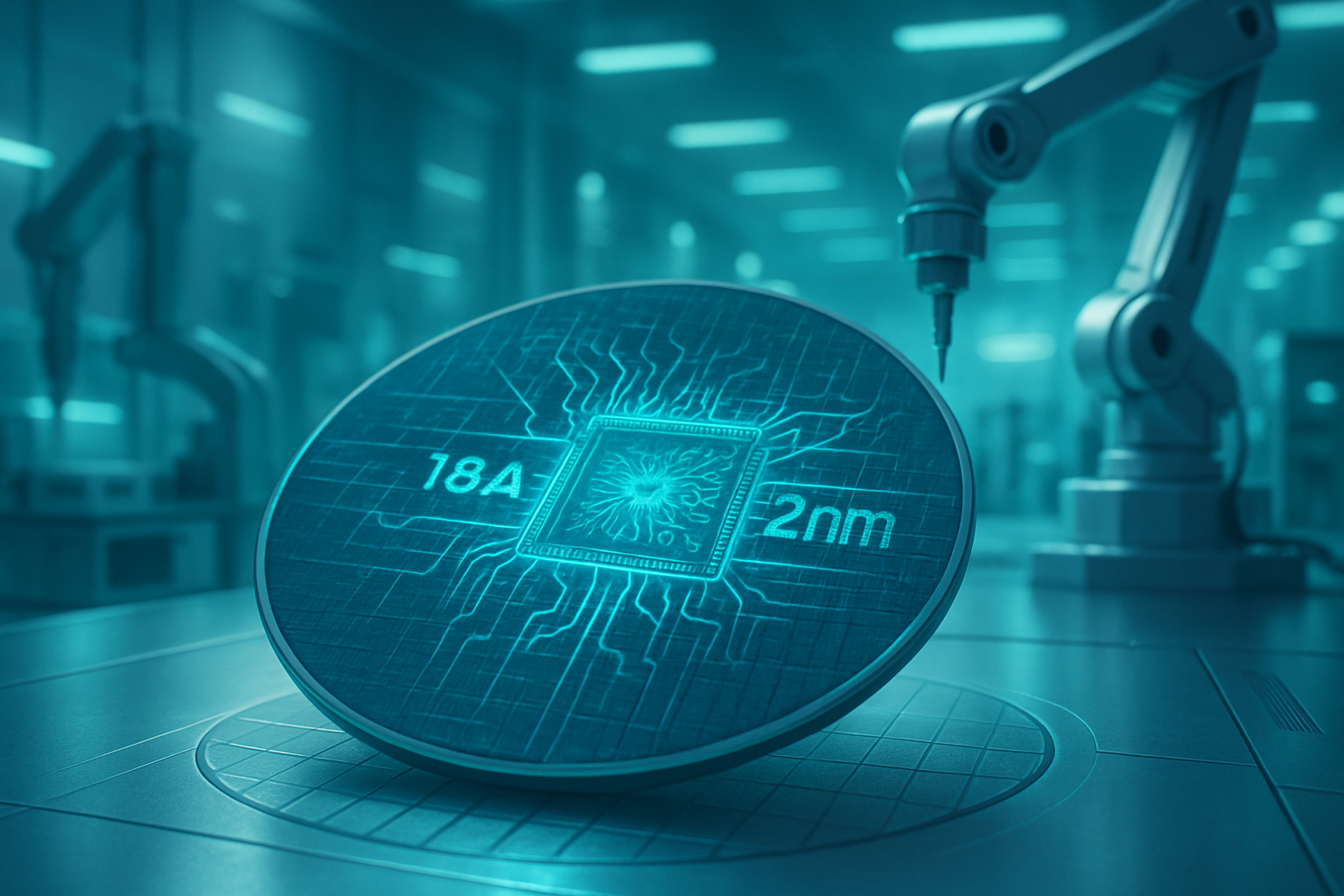
  • Intel’s 18A Process: A New Era Dawns for American Semiconductor Manufacturing

    Intel’s 18A Process: A New Era Dawns for American Semiconductor Manufacturing

    Santa Clara, CA – October 13, 2025 – Intel Corporation (NASDAQ: INTC) is on the cusp of a historic resurgence in semiconductor manufacturing, with its groundbreaking 18A process technology rapidly advancing towards high-volume production. This ambitious endeavor, coupled with a strategic expansion of its foundry business, signals a pivotal moment for the U.S. tech industry, promising to reshape the global chip landscape and bolster national security through domestic production. The company's aggressive IDM 2.0 strategy, spearheaded by significant technological innovation and a renewed focus on external foundry customers, aims to restore Intel's leadership position and establish it as a formidable competitor to industry giants like TSMC (NYSE: TSM) and Samsung (KRX: 005930).

    The 18A process is not merely an incremental upgrade; it represents a fundamental leap in transistor technology, designed to deliver superior performance and efficiency. As Intel prepares to unleash its first 18A-powered products – consumer AI PCs and server processors – by late 2025 and early 2026, the implications extend far beyond commercial markets. The expansion of Intel Foundry Services (IFS) to include new external customers, most notably Microsoft (NASDAQ: MSFT), and a critical engagement with the U.S. Department of Defense (DoD) through programs like RAMP-C, underscores a broader strategic imperative: to diversify the global semiconductor supply chain and establish a robust, secure domestic manufacturing ecosystem.

    Intel's 18A: A Technical Deep Dive into the Future of Silicon

    Intel's 18A process, signifying 1.8 Angstroms and placing it firmly in the "2-nanometer class," is built upon two revolutionary technologies: RibbonFET and PowerVia. RibbonFET, Intel's pioneering implementation of a gate-all-around (GAA) transistor architecture, marks the company's first new transistor architecture in over a decade. Unlike traditional FinFET designs, RibbonFET utilizes ribbon-shaped channels completely surrounded by a gate, providing enhanced control over current flow. This design translates directly into faster transistor switching speeds, improved performance, and greater energy efficiency, all within a smaller footprint, offering a significant advantage for next-generation computing.

    Complementing RibbonFET is PowerVia, Intel's innovative backside power delivery network. Historically, power and signal lines have competed for space on the front side of the die, leading to congestion and performance limitations. PowerVia ingeniously reroutes power wires to the backside of the transistor layer, completely separating them from signal wires. This separation dramatically improves area efficiency, reduces voltage leakage, and boosts overall performance by optimizing signal routing. Intel claims PowerVia alone contributes a 10% density gain in cell utilization and a 4% improvement in ISO power performance, showcasing its transformative impact. Together, these innovations position 18A to deliver up to 15% better performance-per-watt and 30% greater transistor density compared to its Intel 3 process node.

    The development and qualification of 18A have progressed rapidly, with early production already underway in Oregon and a significant ramp-up towards high-volume manufacturing at the state-of-the-art Fab 52 in Chandler, Arizona. Intel announced in August 2024 that its lead 18A products, the client AI PC processor "Panther Lake" and the server processor "Clearwater Forest," had successfully powered on and booted operating systems less than two quarters after tape-out. This rapid progress indicates that high-volume production of 18A chips is on track to begin in the second half of 2025, with some reports specifying Q4 2025. This timeline positions Intel to compete directly with Samsung and TSMC, which are also targeting 2nm node production in the same timeframe, signaling a fierce but healthy competition at the bleeding edge of semiconductor technology. Furthermore, Intel has reported that its 18A node has achieved a record-low defect density, a crucial metric that bodes well for optimal yield rates and successful volume production.

    Reshaping the AI and Tech Landscape: A Foundry for the Future

    Intel's aggressive push into advanced foundry services with 18A has profound implications for AI companies, tech giants, and startups alike. The availability of a cutting-edge, domestically produced process node offers a critical alternative to the predominantly East Asian-centric foundry market. Companies seeking to diversify their supply chains, mitigate geopolitical risks, or simply access leading-edge technology stand to benefit significantly. Microsoft's public commitment to utilize Intel's 18A process for its internally designed chips is a monumental validation, signaling trust in Intel's manufacturing capabilities and its technological prowess. This partnership could pave the way for other major tech players to consider Intel Foundry Services (IFS) for their advanced silicon needs, especially those developing custom AI accelerators and specialized processors.

    The competitive landscape for major AI labs and tech companies is set for a shake-up. While Intel's internal products like "Panther Lake" and "Clearwater Forest" will be the primary early customers for 18A, the long-term vision of IFS is to become a leading external foundry. The ability to offer a 2nm-class process node with unique advantages like PowerVia could attract design wins from companies currently reliant on TSMC or Samsung. This increased competition could lead to more innovation, better pricing, and greater flexibility for chip designers. However, Intel's CFO David Zinsner admitted in May 2025 that committed volume from external customers for 18A is "not significant right now," and a July 2025 10-Q filing reported only $50 million in revenue from external foundry customers year-to-date. Despite this, new CEO Lip-Bu Tan remains optimistic about attracting more external customers once internal products are ramping in high volume, and Intel is actively courting customers for its successor node, 14A.

    For startups and smaller AI firms, access to such advanced process technology through a competitive foundry could accelerate their innovation cycles. While the initial costs of 18A will be substantial, the long-term strategic advantage of having a robust and diverse foundry ecosystem cannot be overstated. This development could potentially disrupt existing product roadmaps for companies that have historically relied on a single foundry provider, forcing a re-evaluation of their supply chain strategies. Intel's market positioning as a full-stack provider – from design to manufacturing – gives it a strategic advantage, especially as AI hardware becomes increasingly specialized and integrated. The company's significant investment, including over $32 billion for new fabs in Arizona, further cements its commitment to this foundry expansion and its ambition to become the world's second-largest foundry by 2030.

    Broader Significance: Securing the Future of Microelectronics

    Intel's 18A process and the expansion of its foundry business fit squarely into the broader AI landscape as a critical enabler of next-generation AI hardware. As AI models grow exponentially in complexity, demanding ever-increasing computational power and energy efficiency, the underlying semiconductor technology becomes paramount. 18A's advancements in transistor density and performance-per-watt are precisely what is needed to power more sophisticated AI accelerators, edge AI devices, and high-performance computing platforms. This development is not just about faster chips; it's about creating the foundation for more powerful, more efficient, and more pervasive AI applications across every industry.

    The impacts extend far beyond commercial gains, touching upon critical geopolitical and national security concerns. The U.S. Department of Defense's engagement with Intel Foundry through the Rapid Assured Microelectronics Prototypes – Commercial (RAMP-C) project is a clear testament to this. The DoD approved Intel Foundry's 18A process for manufacturing prototypes of semiconductors for defense systems in April 2024, aiming to rebuild a domestic commercial foundry network. This initiative ensures a secure, trusted source for advanced microelectronics essential for military applications, reducing reliance on potentially vulnerable overseas supply chains. In January 2025, Intel Foundry onboarded Trusted Semiconductor Solutions and Reliable MicroSystems as new defense industrial base customers for the RAMP-C project, utilizing 18A for both prototypes and high-volume manufacturing for the U.S. DoD.

    Potential concerns primarily revolve around the speed and scale of external customer adoption for IFS. While Intel has secured a landmark customer in Microsoft and is actively engaging the DoD, attracting a diverse portfolio of high-volume commercial customers remains crucial for the long-term profitability and success of its foundry ambitions. The historical dominance of TSMC in advanced nodes presents a formidable challenge. However, comparisons to previous AI milestones, such as the shift from general-purpose CPUs to GPUs for AI training, highlight how foundational hardware advancements can unlock entirely new capabilities. Intel's 18A, particularly with its PowerVia and RibbonFET innovations, represents a similar foundational shift in manufacturing, potentially enabling a new generation of AI hardware that is currently unimaginable. The substantial $7.86 billion award to Intel under the U.S. CHIPS and Science Act further underscores the national strategic importance placed on these developments.

    The Road Ahead: Anticipating Future Milestones and Applications

    The near-term future for Intel's 18A process is focused on achieving stable high-volume manufacturing by Q4 2025 and successfully launching its first internal products. The "Panther Lake" client AI PC processor, expected to ship by the end of 2025 and be widely available in January 2026, will be a critical litmus test for 18A's performance in consumer devices. Similarly, the "Clearwater Forest" server processor, slated for launch in the first half of 2026, will demonstrate 18A's capabilities in demanding data center and AI-driven workloads. The successful rollout of these products will be crucial in building confidence among potential external foundry customers.

    Looking further ahead, experts predict a continued diversification of Intel's foundry customer base, especially as the 18A process matures and its successor, 14A, comes into view. Potential applications and use cases on the horizon are vast, ranging from next-generation AI accelerators for cloud and edge computing to highly specialized chips for autonomous vehicles, advanced robotics, and quantum computing interfaces. The unique properties of RibbonFET and PowerVia could offer distinct advantages for these emerging fields, where power efficiency and transistor density are paramount.

    However, several challenges need to be addressed. Attracting significant external foundry customers beyond Microsoft will be key to making IFS a financially robust and globally competitive entity. This requires not only cutting-edge technology but also a proven track record of reliable high-volume production, competitive pricing, and strong customer support – areas where established foundries have a significant lead. Furthermore, the immense capital expenditure required for leading-edge fabs means that sustained government support, like the CHIPS Act funding, will remain important. Experts predict that the next few years will be a period of intense competition and innovation in the foundry space, with Intel's success hinging on its ability to execute flawlessly on its manufacturing roadmap and build strong, long-lasting customer relationships. The development of a robust IP ecosystem around 18A will also be critical for attracting diverse designs.

    A New Chapter in American Innovation: The Enduring Impact of 18A

    Intel's journey with its 18A process and the bold expansion of its foundry business marks a pivotal moment in the history of semiconductor manufacturing and, by extension, the future of artificial intelligence. The key takeaways are clear: Intel is making a determined bid to regain process technology leadership, backed by significant innovations like RibbonFET and PowerVia. This strategy is not just about internal product competitiveness but also about establishing a formidable foundry service that can cater to a diverse range of external customers, including critical defense applications. The successful ramp-up of 18A production in the U.S. will have far-reaching implications for supply chain resilience, national security, and the global balance of power in advanced technology.

    This development's significance in AI history cannot be overstated. By providing a cutting-edge, domestically produced manufacturing option, Intel is laying the groundwork for the next generation of AI hardware, enabling more powerful, efficient, and secure AI systems. It represents a crucial step towards a more geographically diversified and robust semiconductor ecosystem, moving away from a single point of failure in critical technology supply chains. While challenges remain in scaling external customer adoption, the technological foundation and strategic intent are firmly in place.

    In the coming weeks and months, the tech world will be closely watching Intel's progress on several fronts. The most immediate indicators will be the successful launch and market reception of "Panther Lake" and "Clearwater Forest." Beyond that, the focus will shift to announcements of new external foundry customers, particularly for 18A and its successor nodes, and the continued integration of Intel's technology into defense systems under the RAMP-C program. Intel's journey with 18A is more than just a corporate turnaround; it's a national strategic imperative, promising to usher in a new chapter of American innovation and leadership in the critical field of microelectronics.


    This content is intended for informational purposes only and represents analysis of current AI developments.

    TokenRing AI delivers enterprise-grade solutions for multi-agent AI workflow orchestration, AI-powered development tools, and seamless remote collaboration platforms.
    For more information, visit https://www.tokenring.ai/.