
Tag: Technology

  • AI Fights Back: How Cutting-Edge Technology is Rewriting the Future of Food Security

    AI Fights Back: How Cutting-Edge Technology is Rewriting the Future of Food Security

    Global hunger, a persistent and devastating challenge, is meeting a formidable new adversary: artificial intelligence. As the world grapples with a burgeoning population, climate change, and geopolitical instabilities, AI is emerging as a transformative force, offering innovative solutions across the entire food system. From revolutionizing agricultural practices to optimizing complex supply chains and managing precious resources, AI's immediate significance lies in its capacity to amplify human efforts, making food production and distribution smarter, more efficient, and ultimately, more equitable. With the United Nations projecting a need for a 70% increase in food production by 2050 to feed 9.7 billion people, the strategic deployment of AI is not merely an advancement but a critical imperative for a sustainable and food-secure future.

    The power of AI in this fight stems from its unparalleled ability to process and analyze colossal datasets, discern intricate patterns, and generate actionable insights at speeds and scales impossible for human analysis alone. This leads to more informed decision-making and swifter responses to impending food crises. By enhancing rather than replacing human ingenuity, AI empowers farmers, humanitarian organizations, and policymakers to maximize their impact with available resources, playing a crucial role in predicting and mitigating shortages exacerbated by conflict, drought, and economic volatility. As of late 2025, the integration of AI into global food security initiatives is rapidly accelerating, demonstrating tangible breakthroughs that are already saving lives and building resilience in vulnerable communities worldwide.

    Precision Agriculture to Predictive Power: The Technical Edge of AI in Food Systems

    The technical advancements driving AI's impact on global hunger are multifaceted, spanning sophisticated algorithms, advanced robotics, and intelligent data analysis platforms. In agriculture, precision farming, powered by AI, represents a paradigm shift from broad-stroke methods to highly targeted interventions. Unlike traditional farming, which often relies on generalized practices across vast fields, AI-driven systems utilize data from a myriad of sources—including sensors, drones, satellites, and weather stations—to provide granular, real-time insights. For instance, companies like Blue River Technology (acquired by Deere & Company [NYSE: DE]) have developed systems like the LettuceBot, which employs computer vision and deep learning to differentiate weeds from crops, enabling precise herbicide application. This not only drastically reduces herbicide use—by up to 90% in some cases—but also minimizes environmental impact and cultivation costs, a stark contrast to the blanket spraying of previous eras.

    Furthermore, AI is making significant strides in crop yield optimization and genetic improvement. Platforms such as FarmView leverage AI to analyze vast genetic and environmental datasets, identifying optimal genetic markers for seeds that result in higher yields, enhanced nutritional content, and increased disease resistance in staple crops like sorghum. This intelligent crop breeding accelerates the development of resilient varieties, including drought-resistant wheat, a process that traditionally took decades through conventional breeding methods. In terms of pest and disease detection, deep learning AI models are enabling farmers to diagnose crop health issues through smartphone applications, often before visible symptoms appear, preventing catastrophic losses. Startups like Israel-based Prospera utilize AI to continuously analyze millions of data points from fields, detecting outbreaks of pests and diseases with remarkable accuracy and allowing for timely, targeted interventions, a significant leap from manual scouting or reactive treatments.

    Beyond the farm, AI is optimizing the notoriously complex global food supply chain. The World Food Programme's (WFP) "Optimus" program, for example, employs advanced mathematical models and AI algorithms to recommend optimal operational plans for food basket delivery. By analyzing past shipping routes, delivery times, and demand forecasts, Optimus identifies bottlenecks, predicts potential disruptions, and minimizes transport costs while maximizing impact, ensuring food reaches those in need more efficiently than traditional logistics planning. This differs from previous approaches that often relied on static models or human intuition, which struggled to adapt to dynamic variables like sudden crises or infrastructure damage. Initial reactions from the AI research community and humanitarian organizations have been overwhelmingly positive, highlighting AI's potential to not only streamline operations but also to enhance the accountability and effectiveness of aid efforts. The development of tools like DEEP (Digital Engine for Emergency Photo-analysis) and SKAI (developed by WFP and Google Research [NASDAQ: GOOGL]) further exemplifies this, using machine learning to automate post-disaster damage assessments from drone images, compressing critical insight delivery from weeks to mere hours—a crucial factor in rapid humanitarian response.

    Corporate Crossroads: AI's Impact on Tech Giants and Agri-Tech Innovators

    The burgeoning application of AI in combating global hunger is creating significant opportunities and competitive shifts among AI companies, tech giants, and a new wave of agri-tech startups. Major players like Google (NASDAQ: GOOGL), through initiatives such as Google Research's collaboration with the WFP on SKAI, are demonstrating how their core AI capabilities in machine learning and data analytics can be leveraged for humanitarian ends, simultaneously enhancing their public image and exploring new application domains for their technology. Similarly, Microsoft (NASDAQ: MSFT) has invested in AI for Earth initiatives, supporting projects that use AI to address environmental challenges, including food security. These tech giants stand to benefit by showcasing the societal impact of their AI platforms, attracting top talent, and potentially opening new markets for their cloud services and AI tools in the agricultural and humanitarian sectors.

    Traditional agricultural powerhouses are also keenly aware of this shift. Deere & Company (NYSE: DE), for instance, has strategically acquired AI-driven companies like Blue River Technology, integrating precision agriculture capabilities directly into their machinery and services. This move positions them at the forefront of smart farming, offering comprehensive solutions that combine hardware with intelligent software. This creates a competitive advantage over companies still primarily focused on conventional farm equipment, potentially disrupting the market for traditional agricultural inputs like fertilizers and pesticides by promoting more targeted, AI-guided applications. Startups, on the other hand, are flourishing in niche areas. Companies like Prospera, focused on AI-powered crop monitoring, or those developing AI for vertical farming, are attracting significant venture capital, demonstrating the market's confidence in specialized AI solutions. These startups often move with greater agility, innovating rapidly and challenging established players with focused, data-driven solutions.

    The competitive implications extend to major AI labs, which are increasingly seeing the agricultural and food security sectors as fertile ground for applying their research. The demand for robust AI models capable of handling diverse environmental data, predicting complex biological outcomes, and optimizing global logistics is pushing the boundaries of machine learning, computer vision, and predictive analytics. This could lead to new partnerships between AI research institutions and agricultural organizations, fostering innovation and creating new standards for data collection and analysis in the sector. Furthermore, the development of open-source AI tools specifically designed for agricultural applications could democratize access to these technologies, empowering smallholder farmers and creating a more level playing field, while also challenging companies that rely on proprietary, high-cost solutions. The strategic advantages lie with those companies that can effectively integrate AI across the entire food value chain, from seed to table, offering holistic, sustainable, and scalable solutions.

    A Wider Lens: AI's Transformative Role in the Global Landscape

    The integration of AI into the fight against global hunger is not an isolated phenomenon but rather a significant development within the broader AI landscape, reflecting a growing trend towards applying advanced intelligence to solve pressing global challenges. This movement signifies a maturation of AI, moving beyond consumer applications and enterprise optimization into areas of profound societal impact. It highlights AI's potential as a tool for sustainable development, aligning with global goals for poverty reduction, environmental protection, and improved health and well-being. The advancements in precision agriculture and supply chain optimization fit seamlessly into the broader push for sustainable practices, demonstrating how AI can enable more efficient resource use and reduce waste, which are critical in an era of climate change and diminishing natural resources.

    However, this wider significance also brings potential concerns. The "digital divide" remains a significant hurdle; smallholder farmers in developing nations, who often constitute the backbone of global food production, may lack access to the necessary technology, internet connectivity, or training to effectively utilize AI tools. This could exacerbate existing inequalities if not addressed through inclusive policies and accessible technology initiatives. Furthermore, data privacy and security, especially concerning agricultural data, are emerging as critical issues. Who owns the data generated by AI-powered farm equipment, and how is it protected from misuse? The reliance on complex AI systems also raises questions about transparency and accountability, particularly when critical decisions about food allocation or crop management are made by algorithms.

    Comparing this to previous AI milestones, the current applications in food security represent a shift from purely predictive or analytical tasks to prescriptive and interventionist roles. While earlier AI breakthroughs might have focused on optimizing financial markets or personalizing online experiences, the current wave is directly influencing physical systems and human livelihoods on a global scale. This marks a significant evolution, showcasing AI's capability to move from abstract problem-solving to tangible, real-world impact. It underscores the increasing recognition among AI developers and policymakers that the technology's greatest potential lies in addressing humanity's grand challenges, positioning AI as a critical enabler for a more resilient and equitable future, rather than just a driver of economic growth.

    The Horizon: Charting Future Developments and Overcoming Challenges

    Looking ahead, the trajectory of AI in combating global hunger promises even more profound and integrated solutions. In the near term, we can expect to see further refinement and widespread adoption of existing technologies. AI-powered remote crop monitoring, enhanced by 5G connectivity, will become more ubiquitous, providing real-time data and expert recommendations to farmers in increasingly remote areas. Robotic technology, combined with advanced computer vision, will move beyond mere detection to autonomous intervention, performing tasks like precise weeding, targeted nutrient application, and even selective harvesting of ripe produce, further reducing labor costs and increasing efficiency. We will also see AI playing a more significant role in the development of alternative food sources, with machine learning algorithms accelerating breakthroughs in lab-grown meats and plant-based proteins, optimizing their taste, texture, and nutritional profiles.

    Long-term developments are likely to involve the creation of highly integrated, self-optimizing food ecosystems. Imagine AI-driven networks that connect farms, distribution centers, and consumer demand in real-time, predicting surpluses and shortages with unprecedented accuracy and rerouting resources dynamically to prevent waste and alleviate hunger hotspots. The concept of "digital twins" for entire agricultural regions or even global food systems could emerge, allowing for sophisticated simulations and predictive modeling of various scenarios, from climate shocks to geopolitical disruptions. Experts predict that AI will become an indispensable component of national and international food security strategies, enabling proactive rather than reactive responses to crises.

    However, significant challenges need to be addressed to fully realize this potential. Ensuring equitable access to AI technologies for smallholder farmers remains paramount, requiring robust infrastructure development, affordable solutions, and comprehensive training programs. The ethical implications of AI in food systems, including data ownership, algorithmic bias in resource allocation, and the potential for job displacement in certain agricultural roles, must be carefully considered and mitigated through policy and responsible development. Furthermore, the need for high-quality, diverse, and representative data is crucial for training effective AI models that can perform reliably across different climates, soil types, and farming practices. What experts predict will happen next is a continued push towards collaborative initiatives between governments, tech companies, NGOs, and local communities to co-create AI solutions that are not only technologically advanced but also socially equitable and environmentally sustainable.

    A New Era of Food Security: AI's Enduring Legacy

    The journey of artificial intelligence in confronting global hunger marks a pivotal moment in both AI history and the ongoing quest for human well-being. The key takeaways from current developments are clear: AI is not just an incremental improvement but a foundational shift in how we approach food production, distribution, and resource management. Its ability to analyze vast datasets, optimize complex systems, and provide predictive insights is proving indispensable in creating more resilient and efficient food systems. From precision agriculture that maximizes yields while minimizing environmental impact, to intelligent supply chains that drastically reduce food waste and ensure timely delivery, AI is demonstrating its power to tackle one of humanity's most enduring challenges.

    This development's significance in AI history lies in its powerful demonstration of AI's capacity for profound societal impact, moving beyond commercial applications to address fundamental human needs. It underscores the technology's potential to be a force for good, provided it is developed and deployed responsibly and ethically. The long-term impact promises a future where food scarcity is not an inevitability but a solvable problem, where data-driven decisions lead to more equitable access to nutritious food, and where agriculture can thrive sustainably in the face of climate change.

    In the coming weeks and months, it will be crucial to watch for continued advancements in AI models specifically tailored for diverse agricultural environments, particularly in developing nations. We should also look for increased collaboration between public and private sectors to bridge the digital divide and ensure that AI's benefits are accessible to all. The ethical frameworks governing AI in food systems will also be a critical area of development, ensuring that these powerful tools are used responsibly and equitably. The fight against global hunger is far from over, but with AI now firmly on the front lines, the prospects for a food-secure world have never looked brighter.


    This content is intended for informational purposes only and represents analysis of current AI developments.

    TokenRing AI delivers enterprise-grade solutions for multi-agent AI workflow orchestration, AI-powered development tools, and seamless remote collaboration platforms.
    For more information, visit https://www.tokenring.ai/.

  • Ocean’s Digital Harvest: AI and IoT Revolutionize Fisheries and Aquaculture, as Universities Champion Innovation

    Ocean’s Digital Harvest: AI and IoT Revolutionize Fisheries and Aquaculture, as Universities Champion Innovation

    The global quest for sustainable food sources and efficient resource management is driving an unprecedented wave of technological innovation across the fisheries and aquaculture sectors. From AI-powered monitoring systems to advanced recirculating aquaculture systems, these advancements are reshaping how we interact with marine ecosystems and cultivate aquatic life. This transformative period was recently underscored at the 9th Convocation of Tamil Nadu Dr. J. Jayalalithaa Fisheries University (TNJFU) in Nagapattinam, India, held on September 18, 2024. The event celebrated academic achievements and implicitly highlighted the critical role of cutting-edge research and education in preparing the next generation for an industry increasingly reliant on digital and biological breakthroughs.

    The convocation, attended by dignitaries including Tamil Nadu Governor Thiru. R.N. Ravi and featuring a key address by Dr. C.N. Ravishankar, Director and Vice-Chancellor of ICAR-Central Institute of Fisheries Education, Mumbai, served as a poignant reminder of the sector's dynamic evolution. While specific technological exhibits weren't detailed, the university's emphasis on "innovative and Technology" and "significant achievements" in fisheries sciences, engineering, and food technology strongly suggests a curriculum and research agenda deeply intertwined with these modern advancements. The convergence of academic excellence and technological progress signals a future where fisheries and aquaculture are not just about harvesting, but about intelligent, sustainable stewardship of aquatic resources.

    The Digital Tides: Specific Advancements Reshaping Aquatic Industries

    The technological revolution sweeping through fisheries and aquaculture is multifaceted, integrating a suite of advanced tools that promise enhanced efficiency, sustainability, and productivity. At the forefront are Artificial Intelligence (AI), the Internet of Things (IoT), and robotics, which are being deployed across various stages of the supply chain, from monitoring marine environments to optimizing farming practices.

    In wild capture fisheries, remote sensing and satellite technology are providing unprecedented real-time data on oceanographic parameters, enabling precise identification of productive fishing grounds and crucial monitoring of climate change impacts and illegal fishing activities. This marks a significant departure from traditional methods that relied heavily on historical data and visual observation, offering a more dynamic and responsive approach to fisheries management. Drones and uncrewed vehicles (UAVs/USVs) further extend this reach, offering cost-effective surveillance, habitat mapping, and wildlife tracking, complementing traditional vessel-based surveys with high-resolution, agile data collection. Acoustic technologies, like advanced sonar, provide detailed underwater mapping and fish school detection, refining stock assessment and harvest strategies.

    Aquaculture, too, is experiencing a paradigm shift. Recirculating Aquaculture Systems (RAS) are revolutionizing fish farming by creating closed-loop, land-based environments that reuse up to 99% of water. These systems drastically reduce water consumption, enhance biosecurity by minimizing disease risks, and offer scalability through modular designs, contrasting sharply with traditional open-cage farming that is more susceptible to environmental fluctuations and effluent discharge. IoT and smart monitoring systems, equipped with sensors for oxygen, temperature, pH, and ammonia, provide real-time data streams, enabling predictive analytics for disease outbreaks and optimized feeding regimes. AI further enhances this by monitoring fish health and behavior, and powering smart feeding systems that prevent overfeeding and reduce waste. These integrated systems offer a level of control and precision previously unattainable, moving aquaculture towards a more industrialized and environmentally controlled form of food production.

    Corporate Currents: Beneficiaries and Competitive Shifts

    The rapid technological advancements in fisheries and aquaculture are creating significant opportunities and competitive shifts across the industry, benefiting a diverse range of companies from established tech giants to specialized startups. Companies specializing in AI, IoT, robotics, and data analytics are particularly well-positioned to capitalize on this transformation.

    Tech giants with strong AI and cloud computing capabilities, such as Microsoft (NASDAQ: MSFT), Amazon (NASDAQ: AMZN) with AWS, and Google (NASDAQ: GOOGL), stand to benefit from providing the underlying infrastructure and AI platforms that power these smart aquaculture and fisheries solutions. Their machine learning frameworks and data storage solutions are essential for processing the vast amounts of data generated by sensors, drones, and satellites. Furthermore, specialized companies focusing on marine technology, such as Kongsberg Gruppen (OSE: KOG) with its advanced acoustic and maritime solutions, or Xocean (private), which deploys uncrewed surface vessels for data collection, are seeing increased demand for their hardware and services.

    The competitive landscape is also seeing the rise of innovative startups. Companies developing AI-driven solutions for fish health monitoring, precision feeding, and automated farm management, like AquaManager (private) or BioFishency (private), are gaining traction. Similarly, those innovating in sustainable aquafeed ingredients, such as companies producing insect-based proteins or algae, are poised for growth, potentially disrupting traditional feed markets dominated by conventional fishmeal producers. The shift towards land-based RAS also creates opportunities for engineering firms and technology providers specializing in water treatment, filtration, and system design, like AquaMaof Aquaculture Technologies (private) or Pure Salmon Technology (private). This disruption forces traditional fisheries and aquaculture operators to either adopt new technologies or risk being outcompeted by more efficient and sustainable rivals. Market positioning now increasingly hinges on the ability to integrate and leverage these digital and biological innovations for improved yield, reduced environmental impact, and enhanced traceability.

    Broader Horizons: Impact and Ethical Considerations

    These technological leaps in fisheries and aquaculture are not isolated events; they are integral to broader global trends in food security, environmental sustainability, and the digitalization of primary industries. The integration of AI, IoT, and advanced biological techniques into aquatic food production signifies a crucial step towards a more resilient and efficient global food system, aligning with the United Nations' Sustainable Development Goals.

    The impacts are far-reaching. Environmentally, these technologies offer the promise of reducing the ecological footprint of seafood production. Smart fishing gear minimizes bycatch, remote monitoring combats illegal fishing, and RAS significantly reduces water usage and nutrient runoff compared to traditional methods. Economically, they can lead to increased yields, lower operational costs, and improved product quality, benefiting producers and consumers alike. Socially, these advancements can create new high-skilled jobs in technology and data analysis within the aquatic sectors, though they may also require significant retraining for existing workforces.

    However, this progress is not without its concerns. The reliance on complex technology introduces new vulnerabilities, such as cybersecurity risks to automated systems and data privacy issues. There are also ethical considerations surrounding the increasing industrialization of animal agriculture and the potential for technological solutions to exacerbate inequalities if access to these innovations is not equitable. Comparisons to previous agricultural revolutions are apt; just as mechanization transformed land-based farming, digital and biological technologies are now poised to redefine aquatic food production. The challenge lies in ensuring that these powerful tools are deployed responsibly, transparently, and inclusively, avoiding unintended consequences that could undermine their potential benefits.

    Charting Future Waters: The Path Ahead

    The trajectory of technological advancements in fisheries and aquaculture points towards an even more integrated, intelligent, and autonomous future for aquatic food production. Near-term developments are likely to focus on refining existing technologies and improving their accessibility and cost-effectiveness for a wider range of producers. We can expect to see more sophisticated AI models for predictive analytics, capable of forecasting disease outbreaks with greater accuracy and optimizing growth conditions with unprecedented precision. The proliferation of smaller, more affordable IoT sensors and drone technology will make real-time monitoring capabilities available to a broader spectrum of farms and fishing vessels.

    Looking further ahead, the horizon includes fully autonomous aquaculture farms, where robotic systems manage feeding, cleaning, and health monitoring with minimal human intervention. Advanced genetic editing techniques will likely lead to the development of aquatic species with enhanced disease resistance, faster growth rates, and improved nutritional profiles. The concept of "digital twins" for entire aquaculture facilities or even marine ecosystems could emerge, allowing for virtual experimentation and optimization before real-world implementation. Challenges remain, particularly in standardizing data collection, ensuring interoperability between diverse technological systems, and developing robust regulatory frameworks to govern these rapidly evolving practices. Experts predict a continued convergence of biotechnology and information technology, leading to truly "smart" aquatic systems that are not only productive but also inherently sustainable and resilient against environmental changes.

    The Next Wave: A Comprehensive Wrap-up

    The technological advancements currently reshaping fisheries and aquaculture represent a pivotal moment in the global effort to secure sustainable food sources. From AI-driven analytics and IoT-enabled monitoring to closed-loop Recirculating Aquaculture Systems and smart fishing gear, these innovations are fundamentally altering how humanity interacts with and harvests from aquatic environments. The recent 9th Convocation of Tamil Nadu Dr. J. Jayalalithaa Fisheries University served as a timely reminder of the academic and research commitment underpinning this transformation, highlighting the critical role of education in fostering the expertise required for this new era.

    This development's significance in AI history lies in its application to a vital, yet often overlooked, primary industry. It demonstrates AI's capacity to move beyond conventional tech sectors and deliver tangible, impactful solutions for global challenges like food security and environmental conservation. The long-term impact promises more efficient, environmentally friendly, and traceable seafood production, but also necessitates careful consideration of ethical implications, data security, and equitable access to these powerful tools. In the coming weeks and months, observers should watch for further integration of these technologies into commercial operations, continued investment in sustainable aquafeed alternatives, and policy discussions surrounding the regulation and support of this rapidly evolving sector. The future of our oceans and the food they provide is increasingly intertwined with the intelligent application of technology.


    This content is intended for informational purposes only and represents analysis of current AI developments.

    TokenRing AI delivers enterprise-grade solutions for multi-agent AI workflow orchestration, AI-powered development tools, and seamless remote collaboration platforms.
    For more information, visit https://www.tokenring.ai/.

  • The New Silicon Curtain: Geopolitics Reshapes Global Chip Supply and the Future of AI

    The New Silicon Curtain: Geopolitics Reshapes Global Chip Supply and the Future of AI

    The global semiconductor industry, the bedrock of modern technology and the engine of artificial intelligence, is currently in the throes of an unprecedented geopolitical realignment. As of early November 2025, a complex interplay of national security imperatives, economic competition, and strategic policy shifts—most notably from the United States and China—is fundamentally reshaping the global chip supply chain. This dynamic landscape, characterized by escalating export controls, resource nationalism, and a fervent drive for technological sovereignty, is sending ripple effects across critical industries, with the automotive sector facing immediate and profound challenges.

    The long-standing model of a hyper-globalized, efficiency-optimized chip supply chain is giving way to a more fragmented, security-centric regionalization. This transformation is not merely a recalibration of trade routes; it represents a foundational shift in global power dynamics, where control over advanced silicon is increasingly equated with national security and AI supremacy. Recent developments, including China's tightening of rare earth export policies and a diplomatic resolution to a critical automotive chip crisis involving Nexperia, underscore the volatility and strategic importance of this unfolding "chip war."

    Unpacking China's Strategic Chip Policies and Their Technical Echoes

    China's recent chip export policies, as of November 3, 2025, illustrate a strategic hardening coupled with tactical flexibility in the face of international pressure. A pivotal move occurred on October 9, 2025, when China's Ministry of Commerce (MOFCOM) significantly broadened and strengthened export controls across the rare earth, lithium battery, and superhard materials industries. For the first time, MOFCOM asserted extraterritorial jurisdiction through a "50% Rule," requiring foreign entities to obtain licenses for exporting certain controlled rare earth elements between non-Chinese countries if Chinese entities hold a majority stake in the subsidiary. This mirrors U.S. export control frameworks and signals China's intent to exert global leverage over critical materials. The tightening specifically targets rare earth elements used in logic chips of 14 nanometers (nm) or below and memory chips of 256 layers or more, along with related production equipment.

    This aggressive posture, however, was partially tempered by a significant development on November 1, 2025. Following high-level diplomatic engagements, including a reported one-year tariff truce between U.S. President Donald Trump and Chinese President Xi Jinping in South Korea, China announced a conditional exemption for certain orders from the chip manufacturer Nexperia from a recently imposed export ban. The Nexperia crisis, which originated in late September when the Dutch government effectively seized control of the Dutch-headquartered chipmaker (owned by China's Wingtech Technology) citing national security concerns, had threatened to halt production for major European automakers like Volkswagen. The initial ban had affected finished semiconductor products, particularly "automotive computer chips" critical for various vehicle functions, with Nexperia reportedly supplying 40% of the market segment for transistors and diodes in the automotive sector.

    These policies represent a marked departure from China's previous, more economically focused approach to semiconductor development. While the "Made in China 2025" initiative has long emphasized self-sufficiency, the October 2025 measures signal a more direct and expansive use of export controls as a retaliatory and protective tool, extending their reach beyond domestic borders. This contrasts with the U.S. strategy, which, since October 2022, has progressively shifted from merely slowing China's technological progress to actively degrading its peak capabilities in advanced AI chips and manufacturing, targeting products, equipment, software, and human capital. The initial reactions from the tech community reflect a mix of relief over the Nexperia exemption, but also deep concern over increased market fragmentation, rising costs, and a potential slowdown in global innovation due to these escalating trade tensions. Experts also acknowledge China's rapid progress in domestic chip production and AI accelerators, with companies already developing "China-compliant" versions of AI chips.

    Corporate Crossroads: Navigating the Geopolitical Chip Maze

    The reverberations of these geopolitical maneuvers are acutely felt across the corporate landscape, forcing strategic reassessments from automotive giants to leading AI chip developers.

    The automotive industry stands as one of the most vulnerable sectors, given its immense reliance on a diverse array of semiconductors. The Nexperia crisis, for instance, brought companies like Volkswagen AG (FWB: VOW) to the brink, with the German automaker explicitly warning in October 2025 that its annual profit targets were at risk due to potential production outages from the export restrictions. Similarly, General Motors Co. (NYSE: GM) CEO Mary Barra acknowledged the potential for production impacts, with teams "working around the clock" to minimize disruptions in a "very fluid" situation. Tesla, Inc. (NASDAQ: TSLA), heavily dependent on China's semiconductor supply base, faces significant exposure, with over 30% of its revenues contingent on the region and its Shanghai Gigafactory relies heavily on the Chinese chip supply chain. Any sustained disruption could lead to production delays and increased costs. Conversely, Chinese automakers like BYD Co. Ltd. (HKG: 1211) are strategically positioned to benefit from Beijing's push for chip self-reliance, with some aiming for vehicles with 100% domestically produced chips as early as 2026, reducing their vulnerability to foreign export controls.

    For major AI labs and tech companies, the landscape is equally volatile. Nvidia Corp. (NASDAQ: NVDA) and Advanced Micro Devices, Inc. (NASDAQ: AMD) have navigated a complex environment of shifting U.S. export policies. While earlier restrictions led to substantial financial write-downs, a reported easing in August 2025 allowed Nvidia to resume shipments of its H20 processors and AMD its MI308 chip to China, albeit sometimes with revenue concessions. However, in a renewed tightening on November 3, 2025, President Trump announced that Nvidia's most advanced Blackwell AI chips would be reserved exclusively for U.S. companies, potentially impacting deals with allies. Conversely, China agreed to terminate antitrust investigations into U.S. chip companies, including Nvidia and Qualcomm Inc. (NASDAQ: QCOM), as part of the broader trade deal. This divergence creates a bifurcated logistics environment, forcing companies to develop "tiered hardware" designed to comply with varying export restrictions for different markets, adding complexity but allowing continued market access.

    The broader implications include widespread production delays and potential price increases for consumers. Companies are aggressively pursuing supply chain resilience through diversification, exploring "China+1" strategies (e.g., manufacturing in Southeast Asia) and investing in domestic production capabilities, as seen with the U.S. CHIPS and Science Act and the EU Chips Act. This shift will favor companies with diversified sourcing and regionalized production, potentially disrupting existing market positions. Startups, with their typically less robust supply chains, are particularly vulnerable to sudden policy changes, facing existential threats if critical components become unobtainable or prohibitively expensive, hindering their ability to bring new products to market or scale existing ones. The ongoing strategic decoupling is accelerating the development of distinct technology ecosystems, creating a complex and challenging environment for all players.

    The Broader Canvas: AI, National Security, and a Fragmented Future

    The geopolitical machinations within the chip supply chain are not merely trade disputes; they are the defining struggle for the future of artificial intelligence, national security, and the very structure of the global technological order. This "silicon arms race" profoundly impacts technological innovation, economic stability, and the potential for global collaboration.

    For the broader AI landscape, advanced semiconductors are the indisputable "lifeblood," essential for training and deploying increasingly complex models. The drive for national self-sufficiency in chip production is inextricably linked to achieving "AI supremacy" and technological sovereignty. While the intensified competition and massive investments in foundry capacity (e.g., by Taiwan Semiconductor Manufacturing Company Limited (NYSE: TSM), Intel Corporation (NASDAQ: INTC), and Samsung Electronics Co., Ltd. (KRX: 005930)) are accelerating AI development, the U.S. strategy of restricting China's access to cutting-edge AI chips is explicitly designed to impede its rival's ability to develop advanced AI systems, particularly those with military applications. This has, paradoxically, catalyzed China's indigenous innovation, stimulating significant investments in domestic AI chip R&D and potentially leading to breakthroughs that could rival Western solutions. The long-term trend points towards a more complex and segmented global AI market, where technological prowess and geopolitical alignment are equally influential.

    The impacts on technological innovation are dual-edged. While the rivalry fosters new eras of semiconductor innovation, it also risks creating inefficiencies, increasing manufacturing costs, and potentially slowing the overall pace of global technological progress due to reduced collaboration and the development of distinct, potentially incompatible, technological ecosystems. Economically, the reshaping of global supply chains aims for greater resilience, but this transition comes with significant costs, including higher manufacturing expenses and increased complexity. The unpredictability of trade policies further adds to economic instability, forcing companies to constantly re-evaluate sourcing and logistics.

    National security concerns are paramount. Advanced semiconductors are foundational for military systems, digital infrastructure, and AI capabilities. The U.S. aims to maintain a decisive technological lead, fearing the potential use of advanced AI in military applications by rivals. The weaponization of supply chains, including critical minerals, highlights national vulnerabilities. Taiwan's dominant role in advanced chip manufacturing makes its stability a critical geopolitical flashpoint, with any conflict having catastrophic global consequences for the AI ecosystem. This environment is also eroding global collaboration, with the U.S. push for "tech decoupling" challenging traditional free trade and risking the fragmentation of the global technology ecosystem into distinct AI hardware and software stacks. This can create interoperability challenges and slow the development of common standards for responsible AI.

    Compared to previous technological competitions, the current "chip war" is distinct in its strategic focus on semiconductors as a "choke point" for national security and AI leadership. The comprehensive nature of U.S. controls, targeting not just products but also equipment, software, and human capital, is unprecedented. The COVID-19 pandemic served as a stark lesson, exposing the extreme fragility of concentrated supply chains and accelerating the current shift towards diversification and resilience. The long-term implication is a "technological iron curtain," leading to increased costs, reduced collaboration, but also enhanced regional resilience and new innovation pathways within bifurcated markets.

    The Road Ahead: Navigating a Fragmented Future

    The trajectory of the global chip supply chain and its impact on AI is set for continued dynamism, characterized by a sustained "AI supercycle" and an accelerating shift towards regionalized technological ecosystems.

    In the near-term (2025-2028), intensified geopolitical competition and export controls will persist, particularly between the U.S. and China, forcing companies to meticulously navigate a complex web of regulations. Regionalization and diversification of manufacturing will continue apace, with 18 new fabs slated for construction in 2025, aiming to bolster domestic production and foster "split-shoring." Advanced packaging technologies will become increasingly crucial for enhancing chip performance and energy efficiency, driven by AI computing demands. Despite these efforts, persistent supply chain volatility is expected due to complex regulations, raw material shortages, and the concentrated nature of advanced node manufacturing. The demand for AI chips, especially bleeding-edge fabs and High-Bandwidth Memory (HBM), is projected to cause significant shortages.

    Long-term (beyond 2028), distinct technological blocs are expected to fully form, prioritizing technological sovereignty and security over market efficiency. This fragmentation, while potentially increasing costs and slowing global progress, aims to yield a more stable and diversified semiconductor industry, better equipped to withstand future shocks. AI will remain the primary catalyst for semiconductor market growth, potentially driving the industry to a $1 trillion valuation by 2030 and over $2 trillion by 2032, with a focus on optimizing chip architectures for specific AI workloads. Taiwan, despite diversification efforts, is likely to remain a critical hub for the most advanced semiconductor production.

    Potential applications and use cases for AI, given these trends, include AI-driven chip design and manufacturing, leveraging generative AI to accelerate material discovery and validate architectures. Ubiquitous AI at the edge will require specialized, low-power, high-performance chips embedded in everything from smartphones to autonomous vehicles. Enhanced AI capabilities will transform critical sectors like healthcare, finance, telecommunications, and military systems. However, significant challenges remain, including ongoing geopolitical conflicts, raw material shortages, the concentration of manufacturing at critical chokepoints, workforce shortages, high capital intensity, and the lack of global regulatory coordination.

    Experts predict a continued "AI supercycle," driving unprecedented demand for specialized AI chips. Fragmentation and regionalization will intensify, with companies exploring "friend-shoring" and near-shoring options. The U.S.-China tech rivalry will remain a central force, shaping investment and supply chain strategies. Strategic investments in domestic capabilities across nations will continue, alongside innovation in chip architectures and advanced packaging. The critical need for supply chain visibility and diversification will push companies to adopt advanced data and risk management tools. Technology, especially AI and semiconductors, will remain the primary terrain of global competition, redefining power structures and demanding new thinking in diplomacy and national strategy.

    The Enduring Shift: A New Era for AI and Global Commerce

    The current geopolitical impact on the global chip supply chain represents a pivotal moment in both economic and AI history. The shift from a purely efficiency-driven, globalized model to one prioritizing resilience and national security is undeniable and enduring. Key takeaways include China's assertive use of export controls as a strategic tool, the automotive industry's acute vulnerability, and the profound implications for AI development, which is increasingly bifurcated along geopolitical lines.

    This development signifies the end of a seamlessly integrated global semiconductor supply chain, replaced by regionalized blocs and strategic rivalries. While this transition introduces higher costs and potential inefficiencies, it also fosters innovation within localized ecosystems and builds greater resilience against future shocks. The long-term impact will see the emergence of distinct technological ecosystems and standards, particularly for AI, forcing companies to adapt to bifurcated markets and potentially develop region-specific product offerings.

    In the coming weeks and months, observers should closely watch the progress of global fab expansion in the U.S., Japan, and Europe, as well as the fierce competition for leadership in advanced nodes among TSMC, Intel, and Samsung. China's implementation of its stricter export controls on rare earths and other materials, alongside any further diplomatic maneuvering regarding specific chip exports, will be critical indicators. Further adjustments to U.S. policy, including potential new tariffs or changes to export controls, will also significantly impact global trade dynamics. Finally, the flow of investment into AI-related technologies, semiconductor companies, and critical mineral extraction will reveal the true extent of this strategic realignment. The coming period will further solidify the regionalized structure of the semiconductor industry, testing the resilience of new supply chains and shaping the geopolitical competition for AI dominance for decades to come.


    This content is intended for informational purposes only and represents analysis of current AI developments.

    TokenRing AI delivers enterprise-grade solutions for multi-agent AI workflow orchestration, AI-powered development tools, and seamless remote collaboration platforms.
    For more information, visit https://www.tokenring.ai/.

  • Fortifying the Digital Backbone: The Urgent Quest for Semiconductor Supply Chain Resilience

    Fortifying the Digital Backbone: The Urgent Quest for Semiconductor Supply Chain Resilience

    The intricate web of the global semiconductor supply chain, the very bedrock of our digital age, is undergoing an unprecedented and critical transformation. Propelled by the stark lessons of recent disruptions – from the widespread chaos of the COVID-19 pandemic to escalating geopolitical tensions and natural disasters – the world is now engaged in an urgent and strategic pivot towards resilience and diversification. Semiconductors, once seen primarily as mere components, have unequivocally ascended to the status of strategic national assets, vital for economic stability, national security, and technological supremacy, particularly in the burgeoning field of Artificial Intelligence (AI). This seismic shift is reshaping global trade dynamics, prompting colossal investments, and fundamentally redefining how nations and industries secure their technological futures.

    The immediate significance of this global re-evaluation cannot be overstated. With semiconductors powering virtually every facet of modern life, from smartphones and electric vehicles to critical infrastructure, medical devices, and advanced military hardware, any disruption to their supply chain sends profound ripple effects across the global economy. The pervasive role of these chips means that vulnerabilities in their production directly impede innovation, inflate costs, and threaten national capabilities. The strategic competition between global powers, notably the United States and China, has further amplified this urgency, as control over semiconductor manufacturing is increasingly viewed as a key determinant of geopolitical influence and technological independence.

    Lessons Learned and Strategies for a Robust Future

    The recent era of disruption has provided invaluable, albeit costly, lessons regarding the fragility of the globally optimized, just-in-time semiconductor supply chain. A primary takeaway has been the over-reliance on geographically concentrated production, particularly in East Asia. Taiwan, for instance, commands over 50% of the global wafer foundry market for advanced chips, making the entire world susceptible to any regional event, be it a natural disaster or geopolitical conflict. The COVID-19 pandemic also exposed the severe limitations of just-in-time inventory models, which, while efficient, left companies without sufficient buffers to meet surging or shifting demand, leading to widespread shortages across industries like automotive. Furthermore, a lack of end-to-end supply chain visibility hindered accurate demand forecasting, and geopolitical influence demonstrated how national security interests could fundamentally restructure global trade flows, exemplified by export controls and tariffs.

    In response to these critical lessons, a multi-faceted approach to building more robust and diversified supply networks is rapidly taking shape. A cornerstone strategy is the geographic diversification of manufacturing (fab diversification). Governments worldwide are pouring billions into incentives, such as the U.S. CHIPS Act ($52.7 billion) and the European Chips Act (€43 billion), to encourage companies like Taiwan Semiconductor Manufacturing Company (TSMC) (NYSE: TSM) and Intel Corporation (NASDAQ: INTC) to establish new fabrication plants (fabs) in diverse regions, including the U.S., Europe, and Japan. The U.S., for example, is projected to triple its domestic fab capacity by 2032. This "reshoring" or "friend-shoring" aims to create resilient regional manufacturing ecosystems.

    Beyond geographical shifts, supplier diversification and multi-sourcing are becoming standard practice, reducing dependence on single vendors for critical components and raw materials. Companies are also leveraging advanced technologies like AI and data analytics to improve demand forecasting and enhance end-to-end supply chain visibility, enabling faster responses to disruptions. A strategic shift towards "just-in-case" inventory building is also underway, involving the stockpiling of critical components to buffer against sudden shortages, even if it entails higher costs.

    Technically, resilience efforts extend to advanced packaging innovation. As traditional Moore's Law scaling faces physical limits, technologies like chiplet architectures, 3D packaging, and heterogeneous integration are becoming crucial for performance and supply chain stability. Advanced packaging is projected to represent 35% of total semiconductor value by 2027. Furthermore, material sourcing strategies are focusing on diversifying beyond concentrated regions, seeking alternative suppliers for critical raw materials like gallium and germanium, and investing in R&D for innovative substitute materials. This comprehensive re-engineering of the supply chain is designed to withstand future shocks and ensure the uninterrupted flow of the world's most vital technological components.

    Competitive Realignments and Strategic Advantages

    The global drive for semiconductor supply chain resilience is fundamentally reshaping the competitive landscape for major semiconductor companies, tech giants, and nascent startups alike. For leading pure-play foundries like TSMC (NYSE: TSM), the pressure to diversify manufacturing beyond Taiwan has led to substantial investments in new fabs in Arizona (U.S.) and Europe. While maintaining its cutting-edge R&D in Taiwan, this expansion enhances supply chain security for its global clientele, albeit at a higher cost. Intel Corporation (NASDAQ: INTC), through its IDM 2.0 strategy, is aggressively reasserting itself as both a chip designer and a foundry, leveraging significant government incentives to build new fabs in the U.S. and Europe. Its ability to offer guaranteed supply through its own diversified manufacturing capabilities is a powerful differentiator, particularly in critical sectors like AI cloud computing. Samsung Electronics Co., Ltd. (KRX: 005930), the second-largest foundry, is similarly investing heavily in advanced technology nodes and global manufacturing expansion. These companies are direct beneficiaries of massive government support, strengthening their market positions and reducing vulnerability to geopolitical and logistical risks.

    Tech giants that are major consumers of advanced semiconductors, such as Apple Inc. (NASDAQ: AAPL), Qualcomm Incorporated (NASDAQ: QCOM), and NVIDIA Corporation (NASDAQ: NVDA), stand to gain significant advantages from localized and diversified production. Enhanced supply chain security means more reliable access to cutting-edge process technologies and reduced exposure to international disruptions, ensuring consistent product availability. For NVIDIA, whose AI business is rapidly expanding, a secure and localized supply of advanced chips is paramount. Companies that proactively invest in resilient supply chains will secure a strategic advantage by avoiding the costly production halts that have plagued less agile competitors, thereby protecting market share and fostering growth.

    For startups, the implications are mixed. While a more stable supply chain can reduce the risk of chip shortages, the higher manufacturing costs associated with diversification in certain regions could inflate operational expenses. Startups, often lacking the bargaining power of tech giants, may also face challenges in securing critical chip allocations during periods of shortage. However, government initiatives, such as India's "Chips-to-Startup" program, are actively fostering localized design and manufacturing ecosystems, creating new opportunities. The rise of regional manufacturing hubs can provide smaller firms with closer access to foundries and design services, accelerating product development. Furthermore, the demand for specialized "Resilience-as-a-Service" consulting and innovation in materials science, advanced packaging, and AI-driven supply chain management presents fertile ground for agile startups.

    Potential disruptions to existing products include increased costs, as regionalized manufacturing can be more expensive, potentially leading to higher consumer prices. Supply imbalances can also arise, requiring considerable time to correct. However, the strategic advantages of investing in resilience—ensured product availability, market share protection, alignment with national security goals, enhanced collaboration, and improved risk management—far outweigh these short-term challenges, positioning companies for sustainable growth in an increasingly volatile global environment.

    A New Era of Geopolitical and Economic Imperatives

    The drive for semiconductor supply chain resilience transcends mere economic efficiency; it represents a profound shift in global industrial policy, carrying immense wider significance for economic and geopolitical landscapes. Semiconductors are now recognized as a foundational technology, underpinning global economic growth and national security. The disruptions of recent years, particularly the estimated $210 billion output loss for global automakers due to chip shortages in 2021, underscore their capacity to cause widespread economic instability. The massive investments in domestic manufacturing, exemplified by the U.S. CHIPS Act, aim not only to stimulate local economies but also to reduce reliance on concentrated manufacturing hubs, fostering a more stable global supply.

    Geopolitically, semiconductors are at the epicenter of intense competition, particularly between the United States and China. Nations view secure access to advanced chips as critical for national defense systems, critical infrastructure, and maintaining a technological edge, especially in AI. Over-reliance on foreign suppliers, particularly those in potentially adversarial or unstable regions like Taiwan, presents significant national security risks. Strategies like "friend-shoring" – establishing supply chains with allied partners – are emerging as a means to manage technology, economics, and security more cooperatively. This pursuit of "tech sovereignty" is aimed at fostering domestic innovation and preventing the potential weaponization of supply chains.

    However, this paradigm shift is not without its concerns. The diversification of manufacturing geographically and the investment in domestic production facilities are inherently more expensive than the previous model optimized for global efficiency. These increased costs, exacerbated by tariffs and trade restrictions, are likely to be passed on to consumers. The ongoing "chip war" between the U.S. and China, characterized by stringent sanctions and export controls, risks fragmenting global semiconductor markets, potentially disrupting trade flows and reducing economies of scale. Furthermore, the ambitious expansion of domestic manufacturing capacity globally is exacerbated by a chronic talent shortage across the industry, posing a critical bottleneck.

    Historically, industrial policy is not new. The U.S. has roots in it dating back to Alexander Hamilton, and Japan's semiconductor industrial policy in the 1970s and 80s propelled it to global leadership. Today's initiatives, such as the CHIPS Act, are being implemented in a far more interconnected and geopolitically charged environment. While concerns about "subsidy races" exist, the current shift prioritizes strategic independence and security alongside economic competitiveness, marking a significant departure from purely market-fundamentalist approaches.

    The Horizon: Innovation, Regional Hubs, and Persistent Challenges

    The trajectory of semiconductor supply chain resilience points towards a future defined by continued innovation, strategic regionalization, and the persistent need to overcome significant challenges. In the near term (2025-2028), the focus will remain on the regionalization and diversification of manufacturing capacity, with initiatives like the U.S. CHIPS Act driving substantial public and private investment into new fabrication plants. This will see an increase in "split-shoring," combining offshore production with domestic manufacturing for greater flexibility. Crucially, AI integration in logistics and supply chain management will become more prevalent, with advanced analytics and machine learning optimizing real-time monitoring, demand forecasting, and predictive maintenance.

    Longer term (beyond 2028-2030), the geographic diversification of advanced logic chip production is expected to expand significantly beyond traditional hubs to include the U.S., Europe, and Japan, with the U.S. potentially capturing 28% of advanced logic capacity by 2032. AI's role will deepen, becoming integral to chip design and fabrication processes, from ideation to production. Sustainability is also predicted to become a core criterion in vendor selection, with increasing pressure for eco-friendly manufacturing practices and carbon accounting. Furthermore, continuous innovation in advanced materials and packaging, such as next-generation glass-core substrates, will be crucial for the increasing density and performance demands of AI chips.

    Potential applications and use cases are primarily centered around the development of regional semiconductor manufacturing hubs. In the U.S., regions like Phoenix, Arizona ("Silicon Desert"), and Austin, Texas, are emerging as powerhouses, attracting major investments from Intel Corporation (NASDAQ: INTC) and TSMC (NYSE: TSM). Other potential hubs include Ohio ("Silicon Heartland") and Virginia ("Silicon Commonwealth"). Globally, Europe, Japan, India, and Southeast Asia are also pushing for local production and R&D. Advanced manufacturing will rely heavily on AI-driven smart factories and modular manufacturing systems to enhance efficiency and flexibility, maximizing data utilization across the complex semiconductor production process.

    However, several significant challenges persist. The workforce shortage is critical, with Deloitte predicting over one million additional skilled workers needed globally by 2030. Geopolitical tensions continue to hinder technology flow and increase costs. The high capital intensity of building new fabs (often over $10 billion and five years) and the higher operating costs in some reshoring regions remain formidable barriers. Dependence on a limited number of suppliers for critical manufacturing equipment (e.g., EUV lithography from ASML Holding N.V. (NASDAQ: ASML)) and advanced materials also presents vulnerabilities. Finally, cybersecurity threats, natural disasters exacerbated by climate change, and the inherent cyclicality of the semiconductor market all pose ongoing risks that require continuous vigilance and strategic planning.

    Experts predict a continuation of robust industrial policy from governments worldwide, providing sustained incentives for domestic manufacturing and R&D. The semiconductor sector is currently experiencing a "Silicon Supercycle," characterized by surging capital expenditures, with over $2.3 trillion in new private sector investment in wafer fabrication projected between 2024 and 2032, largely driven by AI demand and resilience efforts. Technologically, AI and machine learning will be transformative in optimizing R&D, production, and logistics. Innovations in on-chip optical communication, advanced memory technologies (HBM, GDDR7), backside power delivery, and liquid cooling systems for GPU server clusters are expected to push the boundaries of performance and efficiency.

    The Enduring Imperative of Resilience

    The global semiconductor supply chain is in the midst of a historic transformation, fundamentally shifting from a model driven solely by efficiency and cost to one that prioritizes strategic independence, security, and diversification. This pivot, born from the harsh realities of recent disruptions, underscores the semiconductor's evolution from a mere component to a critical geopolitical asset.

    The key takeaways are clear: diversification of manufacturing across regions, substantial government and private investment in new fabrication hubs, a strategic shift towards "just-in-case" inventory models, and the profound integration of AI and data analytics for enhanced visibility and forecasting. While challenges such as high costs, talent shortages, and persistent geopolitical tensions remain significant, the global commitment to building resilience is unwavering.

    This endeavor holds immense significance in the context of global trade and technology. It directly impacts economic stability, national security, and the pace of technological advancement, particularly in AI. The long-term impact is expected to yield a more stable and diversified semiconductor industry, better equipped to withstand future shocks, albeit potentially with initial increases in production costs. This will foster regional innovation ecosystems and a more geographically diverse talent pool, while also driving a greater focus on sustainability in manufacturing.

    In the coming weeks and months, stakeholders across governments and industries must closely monitor the progress of new fabrication facilities, the effectiveness and potential extension of government incentive programs, and the evolving geopolitical landscape. The widespread adoption of AI in supply chain management, initiatives to address the talent shortage, and the industry's response to market dynamics will also be crucial indicators. The journey towards a truly resilient semiconductor supply chain is complex and long-term, but it is an imperative for securing the digital future of nations and industries worldwide.


    This content is intended for informational purposes only and represents analysis of current AI developments.

    TokenRing AI delivers enterprise-grade solutions for multi-agent AI workflow orchestration, AI-powered development tools, and seamless remote collaboration platforms.
    For more information, visit https://www.tokenring.ai/.
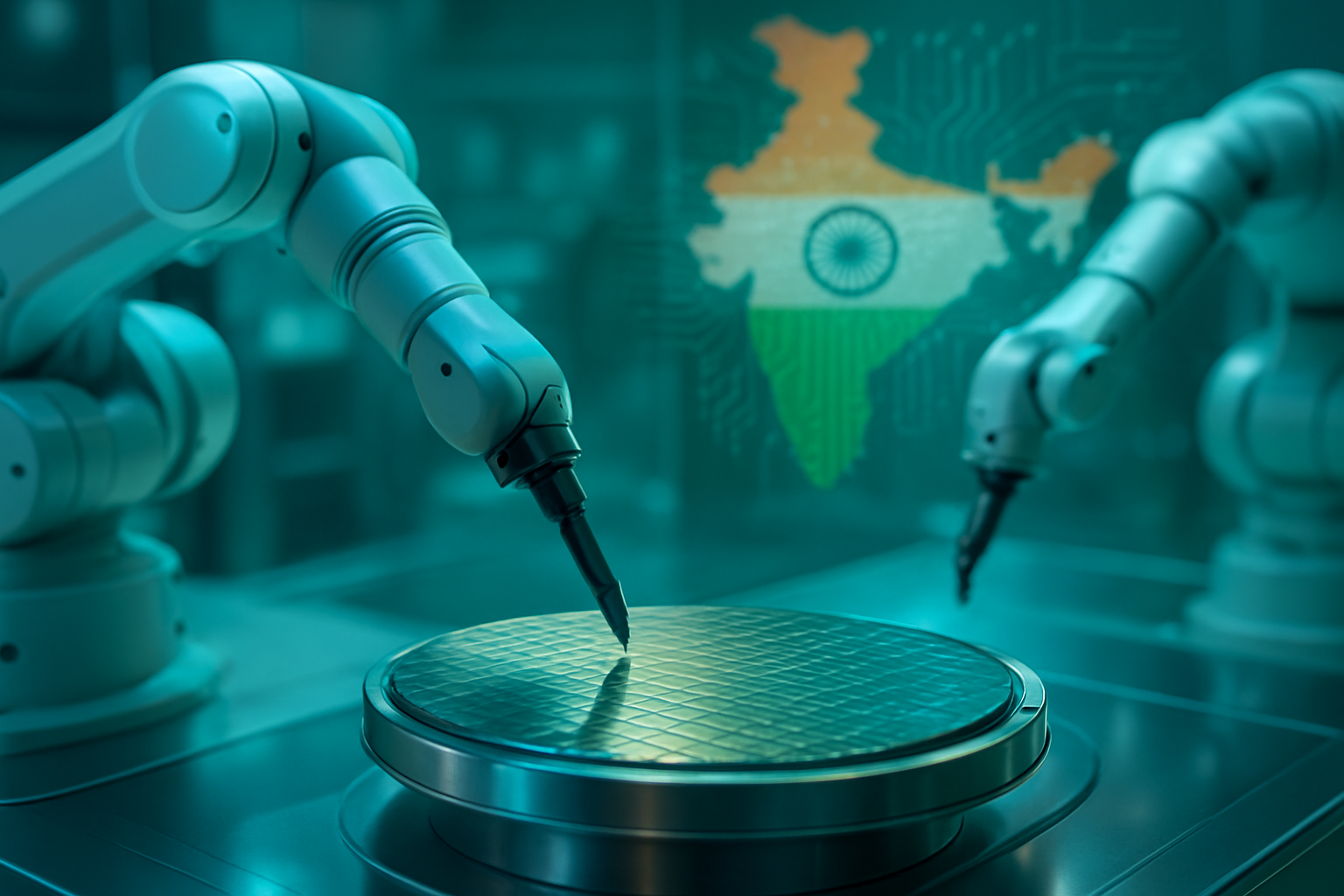
  • India’s Bold Bet: A New Era of Semiconductor Self-Reliance and Global Ambition

    India’s Bold Bet: A New Era of Semiconductor Self-Reliance and Global Ambition

    India is embarking on an ambitious journey to transform itself into a global powerhouse in semiconductor manufacturing, driven by a suite of aggressive government policies, substantial financial incentives, and strategic initiatives. This comprehensive national endeavor is not merely about establishing domestic production capabilities; it is a profound strategic move aimed at bolstering the nation's economic sovereignty, reducing critical import dependencies, and securing its technological future in an increasingly digital and geopolitically complex world. The immediate significance of this push cannot be overstated, as it promises to reshape India's industrial landscape, create high-skilled employment, and position the country as a pivotal player in the global technology supply chain.

    At its core, India's semiconductor strategy seeks to mitigate the vulnerabilities exposed by recent global supply chain disruptions, which highlighted the precariousness of relying heavily on a few concentrated manufacturing hubs. By fostering a robust domestic semiconductor ecosystem, India aims to build resilience against future shocks and ensure a secure supply of the foundational technology for everything from smartphones and electric vehicles to critical defense systems. This strategic imperative is also a significant economic driver, with projections indicating the Indian semiconductor market, valued at approximately $38 billion in 2023, could surge to $100-$110 billion by 2030, creating hundreds of thousands of jobs and fueling high-tech exports.

    The Blueprint for a Semiconductor Superpower: Policies, Incentives, and Strategic Initiatives

    India's journey towards semiconductor self-reliance is meticulously charted through several flagship government policies and programs designed to attract investment and cultivate a thriving domestic ecosystem. The National Policy on Electronics (NPE) 2019 laid the groundwork, aiming to position India as a global hub for Electronics System Design and Manufacturing (ESDM) by promoting domestic production and supporting high-tech projects, including semiconductor facilities. Building on this, the India Semiconductor Mission (ISM), launched in December 2021 with a substantial outlay of ₹76,000 crore (approximately US$10 billion), acts as the nodal agency for orchestrating the long-term development of a sustainable semiconductor and display ecosystem.

    Under the umbrella of the Semicon India Program, implemented through the ISM, the government offers attractive incentive support across the entire semiconductor value chain. A cornerstone of this strategy is the Production Linked Incentive (PLI) Scheme for Semiconductor Manufacturing, also launched in December 2021 with the same ₹76,000 crore outlay. This scheme provides direct financial support, including grants and tax rebates, covering up to 50% of the project cost for eligible companies establishing semiconductor fabrication units, display fabs, and Assembly, Testing, Marking, and Packaging (ATMP)/Outsourced Semiconductor Assembly and Test (OSAT) facilities. This direct financial backing is a significant departure from previous, less aggressive approaches, aiming to de-risk investments for global players.

    Further bolstering the ecosystem, the Design-Linked Incentive (DLI) Scheme, with a budget of INR 1,000 crore (US$114 million), specifically targets local startups and MSMEs, providing financial incentives and design infrastructure support for indigenous chip development. The Scheme for Promotion of Manufacturing of Electronic Components and Semiconductors (SPECS), notified in April 2020, offers a 25% capital expenditure incentive for electronic components and specialized sub-assemblies. Beyond federal initiatives, states like Gujarat, Uttar Pradesh, and Karnataka have introduced their own complementary policies, offering additional capital assistance, land cost reimbursements, and subsidized power tariffs, creating a competitive landscape for attracting investments. The government also allows 100% Foreign Direct Investment (FDI) in the ESDM sector via the automatic route, signaling an open door for international collaboration and technology transfer. These multi-pronged efforts, combined with a focus on talent development and the broader "Make in India" and "Design-led Manufacturing" initiatives, aim to foster not just manufacturing, but also indigenous design and intellectual property generation, ensuring higher economic value and strategic autonomy for India.

    Reshaping the Landscape: Impact on Companies and Competitive Dynamics

    India's aggressive push into semiconductor manufacturing is poised to significantly impact both domestic and international companies, reshaping competitive dynamics within the global tech industry. Major global chipmakers and display manufacturers are keenly eyeing India's incentives, with several already making commitments. Companies like Micron Technology (NASDAQ: MU), a leading U.S. memory chip manufacturer, has announced a significant investment of $2.75 billion to set up an ATMP facility in Gujarat, signaling a major vote of confidence in India's ecosystem. This move is expected to attract other players in the semiconductor supply chain to establish their presence in the region.

    The competitive implications are substantial. For existing global semiconductor giants, India presents an attractive new manufacturing hub, offering diversification away from traditional centers and access to a rapidly growing domestic market. However, it also introduces a new layer of competition, particularly for those who do not engage with India's incentive schemes. Domestically, Indian conglomerates and startups are set to benefit immensely. Companies like Tata Group and Vedanta Limited (NSE: VEDL) have expressed strong interest and are actively pursuing partnerships to establish fabrication units. The government's focus on design-linked incentives (DLI) is specifically designed to nurture local semiconductor design startups, potentially fostering a new generation of Indian "fabless" companies that design chips but outsource manufacturing. This could disrupt the existing product landscape by introducing more cost-effective and customized chip solutions for the Indian market, and potentially for global exports.

    The potential disruption extends to the broader electronics manufacturing services (EMS) sector, where companies like Foxconn (TWSE: 2317) and Pegatron (TWSE: 4938), already present in India for smartphone assembly, could integrate more deeply into the semiconductor supply chain by partnering with local entities or expanding their own component manufacturing. This strategic advantage for companies investing in India lies in their ability to leverage significant government subsidies, access a large and growing talent pool, and cater directly to India's burgeoning demand for electronics, from consumer devices to automotive and defense applications. The entry of major players and the fostering of a domestic ecosystem will inevitably lead to increased competition, but also to greater innovation and a more resilient global semiconductor supply chain, with India emerging as a crucial new node.

    Broader Significance: Geopolitics, Innovation, and Global Trends

    India's semiconductor manufacturing drive transcends mere industrial policy; it is a significant geopolitical move that aligns with broader global trends of supply chain de-risking and technological nationalism. In an era marked by increasing US-China tensions and the weaponization of technology, nations are prioritizing strategic autonomy in critical sectors like semiconductors. India's initiative positions it as a crucial alternative manufacturing destination, offering a democratic and stable environment compared to some existing hubs. This move fits squarely into the global landscape's shift towards diversifying manufacturing bases and building more resilient supply chains, a trend accelerated by the COVID-19 pandemic and ongoing geopolitical realignments.

    The impacts are multi-faceted. Economically, it promises to significantly reduce India's import bill for electronics, foster a high-tech manufacturing base, and create a ripple effect across ancillary industries. Technologically, it encourages indigenous research and development, potentially leading to breakthroughs tailored to India's unique market needs. However, the endeavor is not without potential concerns. The immense capital expenditure required for semiconductor fabs, the highly complex technological know-how, and the intense global competition pose significant challenges. Ensuring a steady supply of ultra-pure water, uninterrupted power, and a highly skilled workforce are critical operational hurdles that need to be consistently addressed. Comparisons to previous AI milestones, such as the rise of Silicon Valley or the emergence of East Asian manufacturing powerhouses, highlight the long-term vision required and the potential for transformative economic growth if successful.

    Moreover, India's push is a crucial step towards achieving technological sovereignty, enabling the nation to control the foundational components of its digital future. This is particularly vital for national security and defense applications, where reliance on foreign-made chips can pose significant risks. By fostering a domestic ecosystem, India aims to mitigate these vulnerabilities and ensure that its strategic technologies are built on secure foundations. The success of this initiative could fundamentally alter the global semiconductor map, reducing over-reliance on a few regions and contributing to a more distributed and resilient global technology infrastructure, thereby impacting global power dynamics and technological innovation for decades to come.

    The Road Ahead: Future Developments and Expert Predictions

    The coming years are expected to witness significant acceleration in India's semiconductor journey, marked by both near-term milestones and long-term strategic developments. In the near term, the focus will be on the operationalization of approved projects, particularly the ATMP facilities and the first fabrication units. Experts predict that India's first domestically produced semiconductor chip, likely from a facility like the one being set up by CG Power, could roll out by the end of 2025, marking a tangible achievement. This initial success will be crucial for building confidence and attracting further investment. The government is also expected to continue refining its incentive schemes, potentially introducing new support mechanisms to address specific gaps in the ecosystem, such as advanced packaging or specialized materials.

    Long-term developments will likely include the establishment of multiple high-volume fabrication units across different technology nodes, moving beyond assembly and testing to full-fledged chip manufacturing. This will be complemented by a burgeoning design ecosystem, with Indian startups increasingly developing intellectual property for a range of applications, from AI accelerators to IoT devices. Potential applications and use cases on the horizon are vast, spanning across consumer electronics, automotive (especially electric vehicles), telecommunications (5G/6G infrastructure), defense, and even space technology. The "Semicon City" concept, exemplified by Gujarat's initiative, is expected to proliferate, creating integrated clusters that combine manufacturing, research, and talent development.

    However, significant challenges need to be addressed. Securing access to advanced technology licenses from global leaders, attracting and retaining top-tier talent in a highly competitive global market, and ensuring sustainable infrastructure (power, water) will remain critical. Geopolitical shifts and global market fluctuations could also impact investment flows and the pace of development. Experts predict that while India's ambition is grand, the success will hinge on consistent policy implementation, seamless collaboration between industry and academia, and continued government commitment. The next decade will be pivotal in determining whether India can truly transform into a self-reliant semiconductor giant, with its impact reverberating across the global tech landscape.

    A New Dawn for Indian Tech: A Comprehensive Wrap-up

    India's determined push for self-reliance in semiconductor manufacturing marks a watershed moment in the nation's technological and economic history. The confluence of robust government policies, substantial financial incentives like the PLI and DLI schemes, and strategic initiatives under the India Semiconductor Mission underscores a clear national resolve to establish a comprehensive domestic semiconductor ecosystem. The key takeaways are clear: India is committed to de-risking global supply chains, fostering indigenous innovation, creating high-skilled employment, and achieving technological sovereignty. The immediate significance lies in enhancing national security and positioning India as a resilient player in the global technology arena.

    This development holds immense significance in AI history, not directly as an AI breakthrough, but as a foundational enabler for future AI advancements within India. Semiconductors are the bedrock upon which AI hardware is built, from powerful GPUs for training large language models to energy-efficient chips for edge AI applications. A strong domestic semiconductor industry will empower Indian AI companies and researchers to innovate more freely, develop specialized AI hardware, and reduce reliance on imported components, thereby accelerating India's progress in the global AI race. It represents a strategic investment in the underlying infrastructure that will fuel the next generation of AI innovation.

    Looking ahead, the long-term impact is poised to be transformative, positioning India as a significant contributor to the global technology supply chain and fostering a vibrant domestic innovation landscape. What to watch for in the coming weeks and months includes further announcements of investment from global chipmakers, progress on the ground at existing and newly approved fabrication sites, and the government's continued efforts to streamline regulatory processes and develop a robust talent pipeline. The success of this endeavor will not only redefine India's economic trajectory but also solidify its standing as a major force in the evolving global technological order.


    This content is intended for informational purposes only and represents analysis of current AI developments.

    TokenRing AI delivers enterprise-grade solutions for multi-agent AI workflow orchestration, AI-powered development tools, and seamless remote collaboration platforms.
    For more information, visit https://www.tokenring.ai/.

  • India’s Silicon Surge: Gujarat Emerges as a Global Semiconductor Powerhouse

    India’s Silicon Surge: Gujarat Emerges as a Global Semiconductor Powerhouse

    Gandhinagar, Gujarat – November 3, 2025 – India is making an aggressive and strategic push to etch its name into the global semiconductor manufacturing landscape, with the state of Gujarat rapidly emerging as the epicenter of this ambitious endeavor. Union Minister for Electronics and Information Technology, Ashwini Vaishnaw, today concluded a pivotal review meeting in Gandhinagar, underscoring the significant progress of four critical semiconductor projects in the state. His optimistic pronouncements signal a new era for India, moving beyond a mere consumer of chips to a formidable producer, a transformation vital for the nation's technological sovereignty, economic resilience, and its burgeoning artificial intelligence ecosystem.

    This concerted effort, backed by substantial government incentives under the India Semiconductor Mission (ISM), aims to mitigate global supply chain vulnerabilities and position India as a reliable partner in high-tech manufacturing. With pilot production already underway at several sites, the vision of "Made in India" chips powering the next generation of electronics, including advanced AI hardware, is rapidly materializing. The strategic importance of these facilities in Gujarat cannot be overstated, as they lay the foundational silicon for a future where India's digital economy is not just robust but also self-reliant.

    Laying the Silicon Foundation: Technical Deep Dive into Gujarat's Chip Plants

    The progress reviewed by Minister Vaishnaw highlights a multi-pronged approach to semiconductor manufacturing, encompassing various crucial stages of chip production. Central to this initiative are four key projects, each bringing distinct capabilities to India's nascent chip ecosystem.

    Leading the charge is Micron Technology (NASDAQ: MU), which is establishing a state-of-the-art assembly and test (ATMP) facility in Sanand. This plant will focus on packaging and testing DRAM and NAND products, essential memory components for everything from smartphones to data centers, and critically, AI accelerators. As of today, November 3, 2025, pilot production at Micron’s mini-plant has commenced and is scaling up, with Phase 1 of the larger facility expected to be fully operational in early 2025. This move is significant as it brings advanced memory packaging capabilities directly to Indian soil, reducing reliance on overseas facilities and enhancing supply chain security for high-demand components.

    In a landmark development, Tata Electronics, in collaboration with Taiwan's Powerchip Semiconductor Manufacturing Corporation (PSMC) (TWSE: 6770), is constructing India's first commercial semiconductor fabrication facility (fab) in Dholera. This ambitious project, with an investment exceeding ₹91,000 crore (approximately $11 billion), is slated to begin operations by 2027. This fab will be capable of producing advanced logic chips, which are the brains of modern electronics and critical for complex AI computations. Unlike previous Indian attempts at semiconductor manufacturing, which often stalled, this venture represents a robust, government-backed, and internationally partnered effort to establish a full-fledged foundry.

    Further bolstering the ecosystem is the collaboration between CG Power and Industrial Solutions (NSE: CGPOWER), Japan's Renesas Electronics Corporation (TYO: 6723), and Thailand's Stars Microelectronics (SET: SMT). This consortium is setting up an Outsourced Semiconductor Assembly and Test (OSAT) facility in Sanand. OSAT facilities are crucial for the final stages of chip manufacturing, including packaging, testing, and preparing chips for integration into electronic devices. Pilot production has already begun at this site, with a significant milestone achieved on August 28, 2025, when one of India's first end-to-end OSAT pilot lines was inaugurated, rolling out the first 'Made in India' chip from CG-Semi. Additionally, Kaynes Semicon, an Indian electronics firm, is establishing its own chip manufacturing facility in Sanand, also with pilot production underway, aiming to produce around 6 million chips daily.

    These projects collectively mark a departure from India's previous focus primarily on chip design, shifting towards an integrated approach that includes fabrication, assembly, and testing. This holistic strategy is vital for building a resilient domestic supply chain, attracting further investments, and cultivating a skilled workforce. The initial reactions from within the Indian government and industry have been overwhelmingly positive, viewing these developments as a monumental step towards technological self-sufficiency and a testament to India's commitment to becoming a global manufacturing hub.

    Catalyzing India's Tech Landscape: Impact on Companies and Competition

    The establishment of these semiconductor manufacturing plants in Gujarat is poised to profoundly impact India's technology landscape, creating a ripple effect across various sectors and reshaping competitive dynamics. Several companies, both domestic and international, stand to gain significantly from this development.

    Micron Technology (NASDAQ: MU) is a direct beneficiary, leveraging India's incentives and burgeoning market to expand its global manufacturing footprint. This move strengthens its position in the memory chip market and provides a strategic base for serving the rapidly growing Indian and regional electronics markets. For the Tata Group, through Tata Electronics, this venture marks a monumental entry into high-tech manufacturing, diversifying its industrial portfolio and positioning it as a key player in India's strategic technology ambitions. Their partnership with PSMC (TWSE: 6770) brings invaluable expertise and technology to India, fostering a robust knowledge transfer. Similarly, Renesas Electronics Corporation (TYO: 6723) and Stars Microelectronics (SET: SMT) benefit from expanding into a new, high-growth market, while CG Power and Industrial Solutions (NSE: CGPOWER) and Kaynes Technology India (NSE: KAYNES), through its subsidiary Kaynes Semicon, are at the forefront of establishing indigenous OSAT capabilities, elevating their market positioning within India's electronics manufacturing services (EMS) sector.

    The competitive implications for major AI labs and tech companies are substantial. A domestic semiconductor supply chain promises greater security, reduced lead times, and potentially lower costs for Indian tech giants and startups that rely heavily on specialized chips for AI development, cloud computing, and advanced electronics. This can foster innovation by making it easier for smaller firms to access critical hardware, potentially disrupting existing product lines that are heavily dependent on imported components. Indian companies developing AI hardware, edge AI devices, and specialized processors will find a more robust local ecosystem to support their R&D and manufacturing needs. This also positions India as an attractive destination for global tech giants looking to diversify their supply chains and tap into a growing local market for AI-driven solutions.

    Furthermore, this initiative creates strategic advantages for India by reducing its vulnerability to geopolitical tensions and global supply chain disruptions, as witnessed during the recent chip shortages. It enhances India's bargaining power in the global technology arena and supports the "Make in India" and "Digital India" initiatives. The development of a local semiconductor ecosystem will not only attract further foreign direct investment but also cultivate a highly skilled workforce, creating a virtuous cycle of growth and innovation.

    Reshaping the Global Tech Landscape: Wider Significance and Implications

    India's aggressive foray into semiconductor manufacturing transcends mere industrial development; it represents a pivotal shift in the broader global technology landscape and holds profound implications for the future of AI. Semiconductors are the foundational bedrock upon which all modern technology, especially AI, is built. By establishing these fabrication and assembly plants, India is not just manufacturing chips; it is building the very infrastructure that will power its AI aspirations, from advanced research to widespread deployment.

    This initiative directly addresses critical trends in the global AI landscape, particularly the increasing demand for specialized AI hardware, edge computing, and robust data center infrastructure. A domestic supply of chips ensures that India's burgeoning AI sector has reliable access to the necessary components, fostering greater innovation and reducing dependence on external geopolitical factors. The move aligns with a global trend of nations seeking greater technological sovereignty and supply chain resilience in critical sectors.

    The impacts are multifaceted. Economically, these projects are expected to generate thousands of high-skilled jobs, stimulate ancillary industries, and significantly contribute to India's GDP growth. Geopolitically, India's emergence as a semiconductor manufacturer adds another dimension to global supply chain diversification, potentially offering an alternative to existing hubs and strengthening its strategic partnerships. It reinforces India's position as a rising technological power, capable of contributing to complex global manufacturing.

    However, this ambitious undertaking is not without potential concerns. The environmental impact of semiconductor fabrication, particularly regarding water and energy consumption, is significant and will require sustainable practices and robust regulatory oversight. Ensuring a consistent supply of ultra-pure water and uninterrupted power will be crucial. Furthermore, the immense capital expenditure and the highly competitive nature of the global semiconductor industry pose continuous challenges in terms of technological upgrades and attracting top-tier talent. Comparisons can be drawn to the early days of semiconductor development in Taiwan and South Korea, where sustained government support, strategic investments, and a relentless focus on R&D were key to their success. India's journey, while starting later, benefits from observing these precedents and leveraging global partnerships.

    The Road Ahead: Future Developments and Expert Predictions

    The current progress in Gujarat marks merely the beginning of India's long-term vision for semiconductor self-reliance. In the near term, the focus will be on the successful ramp-up of pilot productions to full commercial operations at the Micron, CG Power, and Kaynes facilities, with Minister Vaishnaw predicting significant production levels within the next two to three months for three of the Gujarat plants. The successful commissioning of Tata Electronics' fab by 2027 will be a monumental milestone, ushering in India's capability to produce advanced logic chips.

    Looking further ahead, expected developments include the expansion of existing plants, attracting more global semiconductor giants to set up manufacturing or design units in India, and the growth of a robust domestic ecosystem for semiconductor design, materials, and equipment. The government is likely to continue offering attractive incentives and fostering a conducive policy environment to sustain this momentum. Potential applications and use cases on the horizon are vast, ranging from powering next-generation smartphones and consumer electronics to advanced automotive systems, defense applications, and a new wave of AI-powered industrial IoT devices. India's burgeoning startup ecosystem, particularly in AI and hardware, stands to benefit immensely from localized chip manufacturing.

    However, several challenges need to be addressed to ensure sustained success. The most critical is the talent gap; a continuous supply of highly skilled engineers and technicians specializing in semiconductor manufacturing, process technology, and materials science will be essential. India will need to invest heavily in specialized education and training programs. Furthermore, staying abreast of rapidly evolving semiconductor technology, which requires massive R&D investment, will be crucial. Experts predict that India's strategic focus on both ATMP/OSAT and full-scale fabrication is a wise approach, allowing for quicker wins in assembly and testing while building foundational fab capabilities. The long-term success will hinge on consistent policy support, continuous innovation, and the ability to integrate seamlessly into the global semiconductor value chain, not just as a manufacturing hub but also as a significant contributor to design and intellectual property.

    A New Dawn for India's Tech Ambitions: A Comprehensive Wrap-up

    India's determined march towards establishing a robust semiconductor manufacturing ecosystem in Gujarat represents a watershed moment in its technological journey. The swift progress, highlighted by Union Minister Ashwini Vaishnaw's recent review, underscores a strategic shift from being primarily a consumer and designer of chips to a significant global producer. Key takeaways include the rapid advancement of projects by Micron, Tata Electronics with PSMC, CG Power with Renesas and Stars Microelectronics, and Kaynes Semicon, all contributing diverse capabilities from advanced packaging and testing to full-scale chip fabrication.

    This development holds immense significance for the future of AI in India. While not an AI breakthrough in itself, it is the fundamental enabler for all AI advancements. A secure, domestic supply of semiconductors will empower India's AI researchers, developers, and hardware companies, fostering innovation, reducing costs, and ensuring a resilient infrastructure for the nation's digital economy. It is a testament to India's commitment to technological sovereignty and its ambition to play a leading role in the global tech order.

    The long-term impact of these initiatives will be transformative, cementing India's position as a global manufacturing hub, creating substantial economic opportunities, and enhancing its strategic independence in critical technologies. What to watch for in the coming weeks and months are further announcements on production milestones, the onboarding of more international partners, and the continued development of a skilled workforce. The successful execution of these projects will not only fulfill India's vision of "Made in India" chips but also lay a powerful foundation for its aspirations as a leader in the age of artificial intelligence.


    This content is intended for informational purposes only and represents analysis of current AI developments.

    TokenRing AI delivers enterprise-grade solutions for multi-agent AI workflow orchestration, AI-powered development tools, and seamless remote collaboration platforms.
    For more information, visit https://www.tokenring.ai/.

  • AI Ignites a Semiconductor Revolution: Reshaping Design, Manufacturing, and the Future of Technology

    AI Ignites a Semiconductor Revolution: Reshaping Design, Manufacturing, and the Future of Technology

    Artificial Intelligence (AI) is orchestrating a profound transformation within the semiconductor industry, fundamentally altering how microchips are conceived, designed, and manufactured. This isn't merely an incremental upgrade; it's a paradigm shift that is enabling the creation of exponentially more efficient and complex chip architectures while simultaneously optimizing manufacturing processes for unprecedented yields and performance. The immediate significance lies in AI's capacity to automate highly intricate tasks, analyze colossal datasets, and pinpoint optimizations far beyond human cognitive abilities, thereby accelerating innovation cycles, reducing costs, and elevating product quality across the board.

    The Technical Core: AI's Precision Engineering of Silicon

    AI is deeply embedded in electronic design automation (EDA) tools, automating and optimizing stages of chip design that were historically labor-intensive and time-consuming. Generative AI (GenAI) stands at the forefront, revolutionizing chip design by automating the creation of optimized layouts and generating new design content. GenAI tools analyze extensive EDA datasets to produce novel designs that meet stringent performance, power, and area (PPA) objectives. For instance, customized Large Language Models (LLMs) are streamlining EDA tasks such as code generation, query responses, and documentation assistance, including report generation and bug triage. Companies like Synopsys (NASDAQ: SNPS) are integrating GenAI with services like Azure's OpenAI to accelerate chip design and time-to-market.

    Deep Learning (DL) models are critical for various optimization and verification tasks. Trained on vast datasets, they expedite logic synthesis, simplify the transition from architectural descriptions to gate-level structures, and reduce errors. In verification, AI-driven tools automate test case generation, detect design flaws, and predict failure points before manufacturing, catching bugs significantly faster than manual methods. Reinforcement Learning (RL) further enhances design by training agents to make autonomous decisions, exploring millions of potential design alternatives to optimize PPA. NVIDIA (NASDAQ: NVDA), for example, utilizes its PrefixRL tool to create "substantially better" circuit designs, evident in its Hopper GPU architecture, which incorporates nearly 13,000 instances of AI-designed circuits. Google has also famously employed reinforcement learning to optimize the chip layout of its Tensor Processing Units (TPUs).

    In manufacturing, AI is transforming operations through enhanced efficiency, improved yield rates, and reduced costs. Deep learning and machine learning (ML) are vital for process control, defect detection, and yield optimization. AI-powered automated optical inspection (AOI) systems identify microscopic defects on wafers faster and more accurately than human inspectors, continuously improving their detection capabilities. Predictive maintenance, another AI application, analyzes sensor data from fabrication equipment to forecast potential failures, enabling proactive servicing and reducing costly unplanned downtime by 10-20% while cutting maintenance planning time by up to 50% and material spend by 10%. Generative AI also plays a role in creating digital twins—virtual replicas of physical assets—which provide real-time insights for decision-making, improving efficiency, productivity, and quality control. This differs profoundly from previous approaches that relied heavily on human expertise, manual iteration, and limited data analysis, leading to slower design cycles, higher defect rates, and less optimized performance. Initial reactions from the AI research community and industry experts hail this as a "transformative phase" and the dawn of an "AI Supercycle," where AI not only consumes powerful chips but actively participates in their creation.

    Corporate Chessboard: Beneficiaries, Battles, and Breakthroughs

    The integration of AI into semiconductor design and manufacturing is profoundly reshaping the competitive landscape, creating immense opportunities and challenges for tech giants, AI companies, and startups alike. This transformation is fueling an "AI arms race," where advanced AI-driven capabilities are a critical differentiator.

    Major tech giants are increasingly designing their own custom AI chips. Google (NASDAQ: GOOGL), with its TPUs, and Amazon (NASDAQ: AMZN), with its Trainium and Inferentia chips, exemplify this vertical integration. This strategy allows them to optimize chip performance for specific workloads, reduce reliance on third-party suppliers, and achieve strategic advantages by controlling the entire hardware-software stack. Microsoft (NASDAQ: MSFT) and Meta (NASDAQ: META) are also making significant investments in custom silicon. This shift, however, demands massive R&D investments, and companies failing to adapt to specialized AI hardware risk falling behind.

    Several public companies across the semiconductor ecosystem are significant beneficiaries. In AI chip design and acceleration, NVIDIA (NASDAQ: NVDA) remains the dominant force with its GPUs and CUDA platform, while Advanced Micro Devices (AMD) (NASDAQ: AMD) is rapidly expanding its MI series accelerators as a strong competitor. Broadcom (NASDAQ: AVGO) and Marvell Technology (NASDAQ: MRVL) contribute critical IP and interconnect technologies. In EDA tools, Synopsys (NASDAQ: SNPS) leads with its DSO.ai autonomous AI application, and Cadence Design Systems (NASDAQ: CDNS) is a primary beneficiary, deeply integrating AI into its software. Semiconductor manufacturers like Taiwan Semiconductor Manufacturing Company (TSMC) (NYSE: TSM) and Samsung Electronics (KRX: 005930) are leveraging AI for process optimization, defect detection, and predictive maintenance to meet surging demand. Intel (NASDAQ: INTC) is aggressively re-entering the foundry business and developing its own AI accelerators. Equipment suppliers like ASML Holding (AMS: ASML) benefit universally, providing essential advanced lithography tools.

    For startups, AI-driven EDA tools and cloud platforms are democratizing access to world-class design environments, lowering barriers to entry. This enables smaller teams to compete by automating complex design tasks, potentially achieving significant productivity boosts. Startups focusing on novel AI hardware architectures or AI-driven chip design tools represent potential disruptors. However, they face challenges related to the high cost of advanced chip development and a projected shortage of skilled workers. The competitive landscape is marked by an intensified "AI arms race," a trend towards vertical integration, and a talent war for skilled engineers. Companies that can optimize the entire technology stack, from silicon to software, gain significant strategic advantages, challenging even NVIDIA's dominance as competitors and cloud giants develop custom solutions.

    A New Epoch: Wider Significance and Lingering Concerns

    The symbiotic relationship between AI and semiconductors is central to a defining "AI Supercycle," fundamentally re-architecting how microchips are conceived, designed, and manufactured. AI's insatiable demand for computational power pushes the limits of chip design, while breakthroughs in semiconductor technology unlock more sophisticated AI applications, creating a self-improving loop. This development aligns with broader AI trends, marking AI's evolution from a specialized application to a foundational industrial tool. This synergy fuels the demand for specialized AI hardware, including GPUs, ASICs, NPUs, and neuromorphic chips, essential for cost-effectively implementing AI at scale and enabling capabilities once considered science fiction, such as those found in generative AI.

    Economically, the impact is substantial, with the semiconductor industry projected to see an annual increase of $85-$95 billion in earnings before interest by 2025 due to AI integration. The global market for AI chips is forecast to exceed $150 billion in 2025 and potentially reach $400 billion by 2027. Societally, AI in semiconductors enables transformative applications such as Edge AI, making AI accessible in underserved regions, powering real-time health monitoring in wearables, and enhancing public safety through advanced analytics.

    Despite the advancements, critical concerns persist. Ethical implications arise from potential biases in AI algorithms leading to discriminatory outcomes in AI-designed chips. The increasing complexity of AI-designed chips can obscure the rationale behind their choices, impeding human comprehension and oversight. Data privacy and security are paramount, necessitating robust protection against misuse, especially as these systems handle vast amounts of personal information. The resource-intensive nature of chip production and AI training also raises environmental sustainability concerns. Job displacement is another significant worry, as AI and automation streamline repetitive tasks, requiring a proactive approach to reskilling and retraining the workforce. Geopolitical risks are magnified by the global semiconductor supply chain's concentration, with over 90% of advanced chip manufacturing located in Taiwan and South Korea. This creates chokepoints, intensifying scrutiny and competition, especially amidst escalating tensions between major global powers. Disruptions to critical manufacturing hubs could trigger catastrophic global economic consequences.

    This current "AI Supercycle" differs from previous AI milestones. Historically, semiconductors merely enabled AI; now, AI is an active co-creator of the very hardware that fuels its own advancement. This marks a transition from theoretical AI concepts to practical, scalable, and pervasive intelligence, fundamentally redefining the foundation of future AI.

    The Horizon: Future Trajectories and Uncharted Territories

    The future of AI in semiconductors promises a continuous evolution toward unprecedented levels of efficiency, performance, and innovation. In the near term (1-3 years), expect enhanced design and verification workflows through AI-powered assistants, further acceleration of design cycles, and pervasive predictive analytics in fabrication, optimizing lithography and identifying bottlenecks in real-time. Advanced AI-driven Automated Optical Inspection (AOI) will achieve even greater precision in defect detection, while generative AI will continue to refine defect categorization and predictive maintenance.

    Longer term (beyond 3-5 years), the vision is one of autonomous chip design, where AI systems conceptualize, design, verify, and optimize entire chip architectures with minimal human intervention. The emergence of "AI architects" is envisioned, capable of autonomously generating novel chip architectures from high-level specifications. AI will also accelerate material discovery, predicting behavior at the atomic level, which is crucial for revolutionary semiconductors and emerging computing paradigms like neuromorphic and quantum computing. Manufacturing plants are expected to become self-optimizing, continuously refining processes for improved yield and efficiency without constant human oversight, leading to full-chip automation across the entire lifecycle.

    Potential applications on the horizon include highly customized chip designs tailored for specific applications (e.g., autonomous vehicles, data centers), rapid prototyping, and sophisticated IP search assistants. In manufacturing, AI will further refine predictive maintenance, achieving even greater accuracy in forecasting equipment failures, and elevate defect detection and yield optimization through advanced image recognition and machine vision. AI will also play a crucial role in optimizing supply chains by analyzing market trends and managing inventory.

    However, significant challenges remain. High initial investment and operational costs for advanced AI systems can be a barrier. The increasing complexity of chip design at advanced nodes (7nm and below) continues to push limits, and ensuring high yield rates remains paramount. Data scarcity and quality are critical, as AI models demand vast amounts of high-quality proprietary data, raising concerns about sharing and intellectual property. Validating AI models to ensure deterministic and reliable results, especially given the potential for "hallucinations" in generative AI, is an ongoing challenge, as is the need for explainability in AI decisions. The shortage of skilled professionals capable of developing and managing these advanced AI tasks is a pressing concern. Furthermore, sustainability issues related to the energy and water consumption of chip production and AI training demand energy-efficient designs and sustainable manufacturing practices.

    Experts widely predict that AI will boost semiconductor design productivity by at least 20%, with some forecasting a 10-fold increase by 2030. The "AI Supercycle" will lead to a shift from raw performance to application-specific efficiency, driving customized chips. Breakthroughs in material science, alongside advanced packaging and AI-driven design, will define the next decade. AI will increasingly act as a co-designer, augmenting EDA tools and enabling real-time optimization. The global AI chip market is expected to surge, with agentic AI integrating into up to 90% of advanced chips by 2027, enabling smaller teams and accelerating learning for junior engineers. Ultimately, AI will facilitate new computing paradigms such as neuromorphic and quantum computing.

    Conclusion: A New Dawn for Silicon Intelligence

    The integration of Artificial Intelligence into semiconductor design and manufacturing represents a monumental shift, ushering in an era where AI is not merely a consumer of computing power but an active co-creator of the very hardware that fuels its own advancement. The key takeaways underscore AI's transformative role in automating complex design tasks, optimizing manufacturing processes for unprecedented yields, and accelerating time-to-market for cutting-edge chips. This development marks a pivotal moment in AI history, moving beyond theoretical concepts to practical, scalable, and pervasive intelligence, fundamentally redefining the foundation of future AI.

    The long-term impact is poised to be profound, leading to an increasingly autonomous and intelligent future for semiconductor development, driving advancements in material discovery, and enabling revolutionary computing paradigms. While challenges related to cost, data quality, workforce skills, and geopolitical complexities persist, the continuous evolution of AI is unlocking unprecedented levels of efficiency, innovation, and ultimately, empowering the next generation of intelligent hardware that underpins our AI-driven world.

    In the coming weeks and months, watch for continued advancements in sub-2nm chip production, innovations in High-Bandwidth Memory (HBM4) and advanced packaging, and the rollout of more sophisticated "agentic AI" in EDA tools. Keep an eye on strategic partnerships and "AI Megafactory" announcements, like those from Samsung and Nvidia, signaling large-scale investments in AI-driven intelligent manufacturing. Industry conferences such as AISC 2025, ASMC 2025, and DAC will offer critical insights into the latest breakthroughs and future directions. Finally, increased emphasis on developing verifiable and accurate AI models will be crucial to mitigate risks and ensure the reliability of AI-designed solutions.


    This content is intended for informational purposes only and represents analysis of current AI developments.

    TokenRing AI delivers enterprise-grade solutions for multi-agent AI workflow orchestration, AI-powered development tools, and seamless remote collaboration platforms.
    For more information, visit https://www.tokenring.ai/.

  • The 2-Nanometer Frontier: A Global Race to Reshape AI and Computing

    The 2-Nanometer Frontier: A Global Race to Reshape AI and Computing

    The semiconductor industry is currently embroiled in an intense global race to develop and mass-produce advanced 2-nanometer (nm) chips, pushing the very boundaries of miniaturization and performance. This pursuit represents a pivotal moment for technology, promising unprecedented advancements that will redefine computing capabilities across nearly every sector. These next-generation chips are poised to deliver revolutionary improvements in processing speed and energy efficiency, allowing for significantly more powerful and compact devices.

    The immediate significance of 2nm chips is profound. Prototypes, such as IBM's groundbreaking 2nm chip, project an astonishing 45% higher performance or 75% lower energy consumption compared to current 7nm chips. Similarly, Taiwan Semiconductor Manufacturing Company (TSMC) (NYSE: TSM) aims for a 10-15% performance boost and a 25-30% reduction in power consumption over its 3nm predecessors. This leap in efficiency and power directly translates to longer battery life for mobile devices, faster processing for AI workloads, and a reduced carbon footprint for data centers. Moreover, the smaller 2nm process allows for an exponential increase in transistor density, with designs like IBM's capable of fitting up to 50 billion transistors on a chip the size of a fingernail, ensuring the continued march of Moore's Law. This miniaturization is crucial for accelerating advancements in artificial intelligence (AI), high-performance computing (HPC), autonomous vehicles, 5G/6G communication, and the Internet of Things (IoT).

    The Technical Leap: Gate-All-Around and Beyond

    The transition to 2nm technology is fundamentally driven by a significant architectural shift in transistor design. For years, the industry relied on FinFET (Fin Field-Effect Transistor) architecture, but at 2nm and beyond, FinFETs face physical limitations in controlling current leakage and maintaining performance. The key technological advancement enabling 2nm is the widespread adoption of Gate-All-Around (GAA) transistor architecture, often implemented as nanosheet or nanowire FETs. This innovative design allows the gate to completely surround the channel, providing superior electrostatic control, which significantly reduces leakage current and enhances performance at smaller scales.

    Leading the charge in this technical evolution are industry giants like TSMC, Samsung (KRX: 005930), and Intel (NASDAQ: INTC). TSMC's N2 process, set for mass production in the second half of 2025, is its first to fully embrace GAA. Samsung, a fierce competitor, was an early adopter of GAA for its 3nm chips and is "all-in" on the technology for its 2nm process, slated for production in 2025. Intel, with its aggressive 18A (1.8nm-class) process, incorporates its own version of GAAFETs, dubbed RibbonFET, alongside a novel power delivery system called PowerVia, which moves power lines to the backside of the wafer to free up space on the front for more signal routing. These innovations are critical for achieving the density and performance targets of the 2nm node.

    The technical specifications of these 2nm chips are staggering. Beyond raw performance and power efficiency gains, the increased transistor density allows for more complex and specialized logic circuits to be integrated directly onto the chip. This is particularly beneficial for AI accelerators, enabling more sophisticated neural network architectures and on-device AI processing. Initial reactions from the AI research community and industry experts have been overwhelmingly positive, marked by intense demand. TSMC has reported promising early yields for its N2 process, estimated between 60% and 70%, and its 2nm production capacity for 2026 is already fully booked, with Apple (NASDAQ: AAPL) reportedly reserving over half of the initial output for its future iPhones and Macs. This high demand underscores the industry's belief that 2nm chips are not just an incremental upgrade, but a foundational technology for the next wave of innovation, especially in AI. The economic and geopolitical importance of mastering this technology cannot be overstated, as nations invest heavily to secure domestic semiconductor production capabilities.

    Competitive Implications and Market Disruption

    The global race for 2-nanometer chips is creating a highly competitive landscape, with significant implications for AI companies, tech giants, and startups alike. The foundries that successfully achieve high-volume, high-yield 2nm production stand to gain immense strategic advantages, dictating the pace of innovation for their customers. TSMC, with its reported superior early yields and fully booked 2nm capacity for 2026, appears to be in a commanding position, solidifying its role as the primary enabler for many of the world's leading AI and tech companies. Companies like Apple, AMD (NASDAQ: AMD), NVIDIA (NASDAQ: NVDA), and Qualcomm (NASDAQ: QCOM) are deeply reliant on these advanced nodes for their next-generation products, making access to TSMC's 2nm capacity a critical competitive differentiator.

    Samsung is aggressively pursuing its 2nm roadmap, aiming to catch up and even surpass TSMC. Its "all-in" strategy on GAA technology and significant deals, such as the reported $16.5 billion agreement with Tesla (NASDAQ: TSLA) for 2nm chips, indicate its determination to secure a substantial share of the high-end foundry market. If Samsung can consistently improve its yield rates, it could offer a crucial alternative sourcing option for companies looking to diversify their supply chains or gain a competitive edge. Intel, with its ambitious 18A process, is not only aiming to reclaim its manufacturing leadership but also to become a major foundry for external customers. Its recent announcement of mass production for 18A chips in October 2025, claiming to be ahead of some competitors in this class, signals a serious intent to disrupt the foundry market. The success of Intel Foundry Services (IFS) in attracting major clients will be a key factor in its resurgence.

    The availability of 2nm chips will profoundly disrupt existing products and services. For AI, the enhanced performance and efficiency mean that more complex models can run faster, both in data centers and on edge devices. This could lead to a new generation of AI-powered applications that were previously computationally infeasible. Startups focusing on advanced AI hardware or highly optimized AI software stand to benefit immensely, as they can leverage these powerful new chips to bring their innovative solutions to market. However, companies reliant on older process nodes may find their products quickly becoming obsolete, facing pressure to adopt the latest technology or risk falling behind. The immense cost of 2nm chip development and production also means that only the largest and most well-funded companies can afford to design and utilize these cutting-edge components, potentially widening the gap between tech giants and smaller players, unless innovative ways to access these technologies emerge.

    Wider Significance in the AI Landscape

    The advent of 2-nanometer chips represents a monumental stride that will profoundly reshape the broader AI landscape and accelerate prevailing technological trends. At its core, this miniaturization and performance boost directly fuels the insatiable demand for computational power required by increasingly complex AI models, particularly in areas like large language models (LLMs), generative AI, and advanced machine learning. These chips will enable faster training of models, more efficient inference at scale, and the proliferation of on-device AI capabilities, moving intelligence closer to the data source and reducing latency. This fits perfectly into the trend of pervasive AI, where AI is integrated into every aspect of computing, from cloud servers to personal devices.

    The impacts of 2nm chips are far-reaching. In AI, they will unlock new levels of performance for real-time processing in autonomous systems, enhance the capabilities of AI-driven scientific discovery, and make advanced AI more accessible and energy-efficient for a wider array of applications. For instance, the ability to run sophisticated AI algorithms directly on a smartphone or in an autonomous vehicle without constant cloud connectivity opens up new paradigms for privacy, security, and responsiveness. Potential concerns, however, include the escalating cost of developing and manufacturing these cutting-edge chips, which could further centralize power among a few dominant foundries and chip designers. There are also environmental considerations regarding the energy consumption of fabrication plants and the lifecycle of these increasingly complex devices.

    Comparing this milestone to previous AI breakthroughs, the 2nm chip race is analogous to the foundational leaps in transistor technology that enabled the personal computer revolution or the rise of the internet. Just as those advancements provided the hardware bedrock for subsequent software innovations, 2nm chips will serve as the crucial infrastructure for the next generation of AI. They promise to move AI beyond its current capabilities, allowing for more human-like reasoning, more robust decision-making in real-world scenarios, and the development of truly intelligent agents. This is not merely an incremental improvement but a foundational shift that will underpin the next decade of AI progress, facilitating advancements in areas from personalized medicine to climate modeling.

    The Road Ahead: Future Developments and Challenges

    The immediate future will see the ramp-up of 2nm mass production from TSMC, Samsung, and Intel throughout 2025 and into 2026. Experts predict a fierce battle for market share, with each foundry striving to optimize yields and secure long-term contracts with key customers. Near-term developments will focus on integrating these chips into flagship products: Apple's next-generation iPhones and Macs, new high-performance computing platforms from AMD and NVIDIA, and advanced mobile processors from Qualcomm and MediaTek. The initial applications will primarily target high-end consumer electronics, data center AI accelerators, and specialized components for autonomous driving and advanced networking.

    Looking further ahead, the pursuit of even smaller nodes, such as 1.4nm (often referred to as A14) and potentially 1nm, is already underway. Challenges that need to be addressed include the increasing complexity and cost of manufacturing, which demands ever more sophisticated Extreme Ultraviolet (EUV) lithography machines and advanced materials science. The physical limits of silicon-based transistors are also becoming apparent, prompting research into alternative materials and novel computing paradigms like quantum computing or neuromorphic chips. Experts predict that while silicon will remain dominant for the foreseeable future, hybrid approaches and new architectures will become increasingly important to continue the trajectory of performance improvements. The integration of specialized AI accelerators directly onto the chip, designed for specific AI workloads, will also become more prevalent.

    What experts predict will happen next is a continued specialization of chip design. Instead of a one-size-fits-all approach, we will see highly customized chips optimized for specific AI tasks, leveraging the increased transistor density of 2nm and beyond. This will lead to more efficient and powerful AI systems tailored for everything from edge inference in IoT devices to massive cloud-based training of foundation models. The geopolitical implications will also intensify, as nations recognize the strategic importance of domestic chip manufacturing capabilities, leading to further investments and potential trade policy shifts. The coming years will be defined by how successfully the industry navigates these technical, economic, and geopolitical challenges to fully harness the potential of 2nm technology.

    A New Era of Computing: Wrap-Up

    The global race to produce 2-nanometer chips marks a monumental inflection point in the history of technology, heralding a new era of unprecedented computing power and efficiency. The key takeaways from this intense competition are the critical shift to Gate-All-Around (GAA) transistor architecture, the staggering performance and power efficiency gains promised by these chips, and the fierce competition among TSMC, Samsung, and Intel to lead this technological frontier. These advancements are not merely incremental; they are foundational, providing the essential hardware bedrock for the next generation of artificial intelligence, high-performance computing, and ubiquitous smart devices.

    This development's significance in AI history cannot be overstated. Just as earlier chip advancements enabled the rise of deep learning, 2nm chips will unlock new paradigms for AI, allowing for more complex models, faster training, and pervasive on-device intelligence. They will accelerate the development of truly autonomous systems, more sophisticated generative AI, and AI-driven solutions across science, medicine, and industry. The long-term impact will be a world where AI is more deeply integrated, more powerful, and more energy-efficient, driving innovation across every sector.

    In the coming weeks and months, industry observers should watch for updates on yield rates from the major foundries, announcements of new design wins for 2nm processes, and the first wave of consumer and enterprise products incorporating these cutting-edge chips. The strategic positioning of Intel Foundry Services, the continued expansion plans of TSMC and Samsung, and the emergence of new players like Rapidus will also be crucial indicators of the future trajectory of the semiconductor industry. The 2nm frontier is not just about smaller chips; it's about building the fundamental infrastructure for a smarter, more connected, and more capable future powered by advanced AI.


    This content is intended for informational purposes only and represents analysis of current AI developments.

    TokenRing AI delivers enterprise-grade solutions for multi-agent AI workflow orchestration, AI-powered development tools, and seamless remote collaboration platforms.
    For more information, visit https://www.tokenring.ai/.

  • AI Revolutionizes Pharma Supply Chains: A New Era of Localized Resilience and Efficiency

    AI Revolutionizes Pharma Supply Chains: A New Era of Localized Resilience and Efficiency

    The pharmaceutical industry is experiencing a profound and immediate transformation as Artificial Intelligence (AI) becomes a strategic imperative for localizing supply chains, fundamentally enhancing both resilience and efficiency through intelligent logistics and regional optimization. This shift, driven by geopolitical concerns, trade tariffs, and the lessons learned from global disruptions like the COVID-19 pandemic, is no longer a futuristic concept but a present-day reality, reshaping how life-saving medicines are produced, moved, and monitored globally.

    As of October 31, 2025, AI's proven ability to compress timelines, reduce costs, and enhance the precision of drug delivery is promising a more efficient and patient-centric healthcare landscape. Its integration is rapidly becoming the foundation for resilient, transparent, and agile pharmaceutical supply chains, ensuring essential medications are available when and where they are needed most.

    Detailed Technical Coverage: The AI Engine Driving Localization

    AI advancements are profoundly transforming pharmaceutical supply chain localization, addressing long-standing challenges with sophisticated technical solutions. This shift is driven by the undeniable need for more regional manufacturing and distribution, moving away from a sole reliance on traditional globalized supply chains.

    Several key AI technologies are at the forefront of this transformation. Predictive Analytics and Machine Learning (ML) models, including regression, time-series analysis (e.g., ARIMA, Prophet), Gradient Boosting Machines (GBM), and Deep Learning (DL) strategies, analyze vast datasets—historical sales, market trends, epidemiological patterns, and even real-time social media sentiment—to forecast demand with remarkable accuracy. For localized supply chains, these models can incorporate regional demographics, local disease outbreaks, and specific health awareness campaigns to anticipate fluctuations more precisely within a defined geographic area, minimizing stockouts or costly overstocking. This represents a significant leap from traditional statistical forecasting, offering proactive rather than reactive capabilities.

    Reinforcement Learning (RL), with models like Deep Q-Networks (DQN), focuses on sequential decision-making. An AI agent learns optimal policies by interacting with a dynamic environment, optimizing drug routing, inventory replenishment, and demand forecasting using real-time data like GPS tracking and warehouse levels. This allows for adaptive decision-making vital for localized distribution networks that must respond quickly to regional needs, unlike static, rule-based systems of the past. Complementing this, Digital Twins create virtual replicas of physical objects or processes, continuously updated with real-time data from IoT sensors, serialization data, and ERP systems. These dynamic models enable "what-if" scenario planning for localized hubs, simulating the impact of regional events and allowing for proactive contingency planning, providing unprecedented visibility and risk management.

    Further enhancing these capabilities, Computer Vision algorithms are deployed for automated quality control, detecting defects in manufacturing with greater accuracy than manual methods, particularly crucial for ensuring consistent quality at local production sites. Natural Language Processing (NLP) analyzes vast amounts of unstructured text data, such as regulatory databases and supplier news, to help companies stay updated with evolving global and local regulations, streamlining compliance documentation. While not strictly AI, Blockchain Integration is frequently combined with AI to provide a secure, immutable ledger for transactions, enhancing transparency and traceability. AI can then monitor this blockchain data for irregularities, preventing fraud and improving regulatory compliance, especially against the threat of counterfeit drugs in localized networks.

    Impact on Industry Players: Reshaping the Competitive Landscape

    The integration of AI into pharmaceutical supply chain localization is driving significant impacts across AI companies, tech giants, and startups, creating new opportunities and competitive pressures.

    Pure-play AI companies, specializing in machine learning and predictive analytics, stand to benefit immensely. They offer tailored solutions for critical pain points such as highly accurate demand forecasting, inventory optimization, automated quality control, and sophisticated risk management. Their competitive advantage lies in deep specialization and the ability to demonstrate a strong return on investment (ROI) for specific use cases, though they must navigate stringent regulatory environments and integrate with existing pharma systems. These companies are often at the forefront of developing niche solutions that can rapidly improve efficiency and resilience.

    Tech giants like Alphabet (NASDAQ: GOOGL), Amazon (NASDAQ: AMZN), Microsoft (NASDAQ: MSFT), and SAP (NYSE: SAP) possess significant advantages due to their extensive cloud infrastructure, data analytics platforms, and existing AI capabilities. They are well-positioned to offer comprehensive, end-to-end solutions that span the entire pharmaceutical value chain, from drug discovery to patient delivery. Their robust platforms provide the scalability, security, and computing power needed to process the vast amounts of real-time data crucial for localized supply chains. These giants often consolidate the market by acquiring innovative AI startups, leveraging their resources to establish "Intelligence Centers of Excellence" and provide sophisticated tools for regulatory compliance automation.

    Startups in the AI and pharmaceutical supply chain space face both immense opportunities and significant challenges. Their agility allows them to identify and address niche problems, such as highly specialized solutions for regional demand sensing or optimizing last-mile delivery in specific geographical areas. To succeed, they must differentiate themselves with unique intellectual property, speed of innovation, and a deep understanding of specific localization challenges. Innovative startups can quickly introduce novel solutions, compelling established companies to innovate or acquire their technologies, often aiming for acquisition by larger tech giants or pharmaceutical companies seeking to integrate cutting-edge AI capabilities. Partnerships are crucial for leveraging larger infrastructures and market access.

    Pharmaceutical companies themselves, such as Moderna (NASDAQ: MRNA), Pfizer (NYSE: PFE), and GSK (NYSE: GSK), are among the primary beneficiaries. Those that proactively integrate AI gain a competitive edge by improving operational efficiency, reducing costs, minimizing stockouts, enhancing patient safety, and accelerating time-to-market for critical medicines. Logistics and 3PL providers are also adopting AI to streamline operations, manage inventory, and enhance compliance, especially for temperature-sensitive drugs. The market is seeing increased competition and consolidation, a shift towards data-driven decisions, and the disruption of traditional, less adaptive supply chain management systems, emphasizing the importance of resilient and agile ecosystems.

    Wider Significance and Societal Impact: A Pillar of Public Health

    The wider significance of AI in pharmaceutical supply chain localization is profound, touching upon global public health, economic stability, and national security. By facilitating the establishment of regional manufacturing and distribution hubs, AI helps mitigate the risks of drug shortages, which have historically caused significant disruptions to patient care. This localization, powered by AI, ensures a more reliable and uninterrupted supply of medications, especially temperature-sensitive biologics and vaccines, which are critical for patient well-being. The ability to predict and prevent disruptions locally, optimize inventory for regional demand, and streamline local manufacturing processes translates directly into better health outcomes and greater access to essential medicines.

    This development fits squarely within broader AI landscape trends, leveraging advanced machine learning, deep learning, and natural language processing for sophisticated data analysis. Its integration with IoT for real-time monitoring and robotics for automation aligns with the industry's shift towards data-driven decision-making and smart factories. Furthermore, the combination of AI with blockchain technology for enhanced transparency and traceability is a key aspect of the evolving digital supply network, securing records and combating fraud.

    The impacts are overwhelmingly positive: enhanced resilience and agility, reduced drug shortages, improved patient access, and significant operational efficiency leading to cost reductions. AI-driven solutions can achieve up to 94% accuracy in demand forecasting, reduce inventory by up to 30%, and cut logistics costs by up to 20%. It also improves quality control, prevents fraud, and streamlines complex regulatory compliance across diverse localized settings. However, challenges persist. Data quality and integration remain a significant hurdle, as AI's effectiveness is contingent on accurate, high-quality, and integrated data from fragmented sources. Data security and privacy are paramount, given the sensitive nature of pharmaceutical and patient data, requiring robust cybersecurity measures and compliance with regulations like GDPR and HIPAA. Regulatory and ethical challenges arise from AI's rapid evolution, often outpacing existing GxP guidelines, alongside concerns about decision-making transparency and potential biases. High implementation costs, a significant skill gap in AI expertise, and the complexity of integrating new AI solutions into legacy systems are also considerable barriers.

    Comparing this to previous AI milestones, the current application marks a strategic imperative rather than a novelty, with AI now considered foundational for critical infrastructure. It represents a transition from mere automation to intelligent, adaptive systems capable of proactive decision-making, leveraging big data in ways previously unattainable. The rapid pace of AI adoption in this sector, even faster than the internet or electricity in their early days, underscores its transformative power and marks a significant evolution in AI's journey from research to widespread, critical application.

    The Road Ahead: Future Developments Shaping Pharma Logistics

    The future of AI in pharmaceutical supply chain localization promises a profound transformation, moving towards highly autonomous and personalized supply chain models, while also requiring careful navigation of persistent challenges.

    In the near-term (1-3 years), we can expect enhanced productivity and inventory management, with machine learning significantly reducing stockouts and excess inventory, gaining competitive edges for early adopters by 2025. Real-time visibility and monitoring, powered by AI-IoT integration, will provide unprecedented control over critical conditions, especially for cold chain management. Predictive analytics will revolutionize demand and risk forecasting, allowing proactive mitigation of disruptions. AI-powered authentication, often combined with blockchain, will strengthen security against counterfeiting. Generative AI will also play a role in improving real-time data collection and visibility.

    Long-term developments (beyond 3 years) will see the rise of AI-driven autonomous supply chain management, where self-learning and self-optimizing logistics systems make real-time decisions with minimal human oversight. Advanced Digital Twins will create virtual simulations of entire supply chain processes, enabling comprehensive "what-if" scenario planning and risk management. The industry is also moving towards hyper-personalized supply chains, where AI analyzes individual patient data to optimize inventory and distribution for specific medication needs. Synergistic integration of AI with blockchain, IoT, and robotics will create a comprehensive Pharma Supply Chain 4.0 ecosystem, ensuring product integrity and streamlining operations from manufacturing to last-mile delivery. Experts predict AI will act as "passive knowledge," optimizing functions beyond just the supply chain, including drug discovery and regulatory submissions.

    Potential applications on the horizon include optimized sourcing and procurement, further manufacturing efficiency with automated quality control, and highly localized production and distribution planning leveraging AI to navigate tariffs and regional regulations. Warehouse management, logistics, and patient-centric delivery will be revolutionized, potentially integrating with direct-to-patient models. Furthermore, AI will contribute significantly to sustainability by optimizing inventory to reduce drug wastage and promoting eco-friendly logistics.

    However, significant challenges must be addressed. The industry still grapples with complex, fragmented data landscapes and the need for high-quality, integrated data. Regulatory and compliance hurdles remain substantial, requiring AI applications to meet strict, evolving GxP guidelines with transparency and explainability. High implementation costs, a persistent shortage of in-house AI expertise, and the complexity of integrating new AI solutions into existing legacy systems are also critical barriers. Data privacy and cybersecurity, organizational resistance to change, and ethical dilemmas regarding AI bias and accountability are ongoing concerns that require robust solutions and clear strategies.

    Experts predict an accelerated digital transformation, with AI delivering tangible business impact by 2025, enabling a shift to interconnected Digital Supply Networks (DSN). The integration of AI in pharma logistics is set to deepen, leading to autonomous systems and a continued drive towards localization due to geopolitical concerns. Crucially, AI is seen as an opportunity to amplify human capabilities, fostering human-AI collaboration rather than widespread job displacement, ensuring that the industry moves towards a more intelligent, resilient, and patient-centric future.

    Conclusion: A New Era for Pharma Logistics

    The integration of AI into pharmaceutical supply chain localization marks a pivotal moment, fundamentally reshaping an industry critical to global health. This is not merely an incremental technological upgrade but a strategic transformation, driven by the imperative to build more resilient, efficient, and transparent systems in an increasingly unpredictable world.

    The key takeaways are clear: AI is delivering enhanced efficiency and cost reduction, significantly improving demand forecasting and inventory optimization, and providing unprecedented supply chain visibility and transparency. It is bolstering risk management, ensuring automated quality control and patient safety, and crucially, facilitating the strategic shift towards localized supply chains. This enables quicker responses to regional needs and reduces reliance on vulnerable global networks. AI is also streamlining complex regulatory compliance, a perennial challenge in the pharmaceutical sector.

    In the broader history of AI, this development stands out as a strategic imperative, transitioning supply chain management from reactive to proactive. It leverages the full potential of digitalization, augmenting human capabilities rather than replacing them, and is globalizing at an unprecedented pace. The comprehensive impact across the entire drug production process, from discovery to patient delivery, underscores its profound significance.

    Looking ahead, the long-term impact promises unprecedented resilience in pharmaceutical supply chains, leading to improved global health outcomes through reliable access to medications, including personalized treatments. Sustained cost efficiency will fuel further innovation, while optimized practices will contribute to more sustainable and ethical supply chains. The journey will involve continued digitalization, the maturation of "Intelligence Centers of Excellence," expansion of agentic AI and digital twins, and advanced AI-powered logistics for cold chain management. Evolving regulatory frameworks will be crucial, alongside a strong focus on ethical AI and robust "guardrails" to ensure safe, transparent, and accountable deployment, with human oversight remaining paramount.

    What to watch for in the coming weeks and months includes the intensified drive for full digitalization across the industry, the establishment of more dedicated AI "Intelligence Centers of Excellence," and the increasing deployment of AI agents for automation. The development and adoption of "digital twins" will accelerate, alongside further advancements in AI-powered logistics for temperature-sensitive products. Regulatory bodies will likely introduce clearer guidelines for AI in pharma, and the synergistic integration of AI with blockchain and IoT will continue to evolve, creating ever more intelligent and interconnected supply chain ecosystems. The ongoing dialogue around ethical AI and human-AI collaboration will also be a critical area of focus.


    This content is intended for informational purposes only and represents analysis of current AI developments.

    TokenRing AI delivers enterprise-grade solutions for multi-agent AI workflow orchestration, AI-powered development tools, and seamless remote collaboration platforms.
    For more information, visit https://www.tokenring.ai/.

  • The Human Touch: Why a Human-Centered Approach is Revolutionizing AI’s Future

    The Human Touch: Why a Human-Centered Approach is Revolutionizing AI’s Future

    In an era defined by rapid advancements in artificial intelligence, a profound shift is underway, steering the trajectory of AI development towards a more human-centric future. This burgeoning philosophy, known as Human-Centered AI (HCAI), champions the design and implementation of AI systems that prioritize human values, needs, and well-being. Far from merely augmenting technological capabilities, HCAI seeks to foster collaboration between humans and machines, ensuring that AI serves to enhance human abilities, improve quality of life, and ultimately build a more equitable and ethical digital landscape. This approach is not just a theoretical concept but a burgeoning movement, drawing insights from current discussions and initiatives across academia, industry, and government, signaling a crucial maturation in the AI field.

    This paradigm shift is gaining immediate significance as the widespread deployment of AI brings both unprecedented opportunities and pressing concerns. From algorithmic bias to opaque decision-making, the potential for unintended negative consequences has underscored the urgent need for a more responsible development framework. HCAI addresses these risks head-on by embedding principles of transparency, fairness, and human oversight from the outset. By focusing on user needs and ethical considerations, HCAI aims to build trust, facilitate broader adoption, and ensure that AI truly empowers individuals and communities, rather than simply automating tasks or replacing human roles.

    Technical Foundations and a New Development Philosophy

    The push for human-centered AI is supported by a growing suite of technical advancements and frameworks that fundamentally diverge from traditional AI development. At its core, HCAI moves away from the "black box" approach, where AI decisions are inscrutable, towards systems that are transparent, understandable, and accountable.

    Key technical pillars enabling HCAI include:

    • Explainable AI (XAI): This critical component focuses on making AI models interpretable, allowing users to understand why a particular decision was made. Advancements in XAI involve integrating explainable feature extraction, symbolic reasoning, and interactive language generation to provide clear explanations for diverse stakeholders. This is a direct contrast to earlier AI, where performance metrics often overshadowed the need for interpretability.
    • Fairness, Transparency, and Accountability (FTA): These principles are embedded throughout the AI lifecycle, with technical mechanisms developed for sophisticated bias detection and mitigation. This ensures that AI systems are not only efficient but also equitable, preventing discriminatory outcomes often seen in early, less regulated AI deployments.
    • Privacy-Preserving AI: With increasing data privacy concerns, technologies like federated learning (training models on decentralized data without centralizing personal information), differential privacy (adding statistical noise to protect individual data points), homomorphic encryption (computing on encrypted data), and secure multiparty computation (joint computation while keeping inputs private) are crucial. These advancements ensure AI can deliver personalized services without compromising user privacy, a common oversight in previous data-hungry AI models.
    • Human-in-the-Loop (HITL) Systems: HCAI emphasizes systems where humans maintain ultimate oversight and control. This means designing for real-time human intervention, particularly in high-stakes applications like medical diagnosis or legal advice, ensuring human judgment remains paramount.
    • Context Awareness and Emotional Intelligence: Future HCAI systems aim to understand human behavior, tone, and emotional cues, leading to more empathetic and relevant interactions, a significant leap from the purely logical processing of earlier AI.

    Leading tech companies are actively developing and promoting frameworks for HCAI. Microsoft (NASDAQ: MSFT), for instance, is positioning its Copilot as an "empathetic collaborator" designed to enhance human creativity and productivity. Its recent Copilot Fall Release emphasizes personalization, memory, and group chat functionality, aiming to make AI the intuitive interface for work. Salesforce (NYSE: CRM) is leveraging agentic AI for public-sector labor gaps, with its Agentforce platform enabling autonomous AI agents for complex workflows, fostering a "digital workforce" where humans and AI collaborate. Even traditional companies like AT&T (NYSE: T) are adopting grounded AI strategies for customer support and software development, prioritizing ROI and early collaboration with risk organizations.

    The AI research community and industry experts have largely embraced HCAI. Dr. Fei-Fei Li, co-founder of the Stanford Institute for Human-Centered Artificial Intelligence (HAI), emphasizes ethical governance and a collaborative approach. The "Humanity AI" initiative, a $500 million, five-year commitment from ten major U.S. foundations, underscores a growing consensus that AI development must serve people and communities, countering purely corporate-driven innovation. While challenges remain, particularly in achieving true transparency in complex models and mitigating public anxiety, the overarching reaction is one of strong support for this more responsible and user-focused direction.

    Reshaping the AI Industry Landscape

    The shift towards a human-centered approach is not merely an ethical imperative but a strategic one, poised to profoundly impact AI companies, tech giants, and startups. Those who successfully integrate HCAI principles stand to gain significant competitive advantages, redefine market positioning, and disrupt existing product and service paradigms.

    Major tech giants are already aligning their strategies. Microsoft (NASDAQ: MSFT), for instance, is positioning its Copilot as an "empathetic collaborator" designed to enhance human creativity and productivity. Its recent Copilot Fall Release emphasizes personalization, memory, and group chat functionality, aiming to make AI the intuitive interface for work. Salesforce (NYSE: CRM) is leveraging agentic AI for public-sector labor gaps, with its Agentforce platform enabling autonomous AI agents for complex workflows, fostering a "digital workforce" where humans and AI collaborate. Even traditional companies like AT&T (NYSE: T) are adopting grounded AI strategies for customer support and software development, prioritizing ROI and early collaboration with risk organizations.

    Startups focused on ethical AI development, like Anthropic, known for its conversational AI model Claude, are particularly well-positioned due to their inherent emphasis on aligning AI with human values. Companies like Inqli, which connects users to real people with firsthand experience, and Tavus, aiming for natural human-AI interaction, demonstrate the value of human-centric design in niche applications. Firms like DeepL, known for its accurate AI-powered language translation, also exemplify how a focus on quality and user experience can drive success.

    The competitive implications are significant. Companies prioritizing human needs in their AI development report significantly higher success rates and greater returns on AI investments. This means differentiation will increasingly come from how masterfully AI is integrated into human systems, fostering trust and seamless user experiences, rather than just raw algorithmic power. Early adopters will gain an edge in navigating evolving regulatory landscapes, attracting top talent by empowering employees with AI, and setting new industry standards for user experience and ethical practice. The race for "agentic AI" – systems capable of autonomously executing complex tasks – is intensifying, with HCAI principles guiding the development of agents that can collaborate effectively and safely with humans.

    This approach will disrupt existing products by challenging traditional software reliant on rigid rules with adaptable, learning AI systems. Routine tasks in customer service, data processing, and IT operations are ripe for automation by context-aware AI agents, freeing human workers for higher-value activities. In healthcare, AI will augment diagnostics and research, while in customer service, voice AI and chatbots will streamline interactions, though the need for empathetic human agents for complex issues will persist. The concern of "cognitive offloading," where over-reliance on AI might erode human critical thinking, necessitates careful design and implementation strategies.

    Wider Societal Resonance and Historical Context

    The embrace of human-centered AI represents a profound shift within the broader AI landscape, signaling a maturation of the field that moves beyond purely technical ambition to embrace societal well-being. HCAI is not just a trend but a foundational philosophy, deeply interwoven with current movements like Responsible AI and Explainable AI (XAI). It underscores a collective recognition that for AI to be truly beneficial, it must be transparent, fair, and designed to augment, rather than diminish, human capabilities.

    The societal impacts of HCAI are poised to be transformative. Positively, it promises to enhance human intelligence, creativity, and decision-making across all domains. By prioritizing user needs and ethical design, HCAI fosters more intuitive and trustworthy AI systems, leading to greater acceptance and engagement. In education, it can create personalized learning experiences; in healthcare, it can assist in diagnostics and personalized treatments; and in the workplace, it can streamline workflows, allowing humans to focus on strategic and creative tasks. Initiatives like UNESCO's advocacy for a human-centered approach aim to address inequalities and ensure AI does not widen technological divides.

    However, potential concerns remain. Despite best intentions, HCAI systems can still perpetuate or amplify existing societal biases if not meticulously designed and monitored. Privacy and data security are paramount, as personalized AI often requires access to sensitive information. There's also the risk of over-reliance on AI potentially leading to a decline in human critical thinking or problem-solving skills. The increasing autonomy of "agentic AI" raises questions about human control and accountability, necessitating robust ethical frameworks and independent oversight to navigate complex ethical dilemmas.

    Historically, AI has evolved through distinct phases. Early AI (1950s-1980s), characterized by symbolic AI and expert systems, aimed to mimic human reasoning through rules-based programming. While these systems demonstrated early successes in narrow domains, they lacked adaptability and were often brittle. The subsequent era of Machine Learning and Deep Learning (1990s-2010s) brought breakthroughs in pattern recognition and data-driven learning, enabling AI to achieve superhuman performance in specific tasks like Go. However, many of these systems were "black boxes," opaque in their decision-making.

    Human-centered AI differentiates itself by directly addressing the shortcomings of these earlier phases. It moves beyond fixed rules and opaque algorithms, championing explainability, ethical design, and continuous user involvement. With the advent of Generative AI (2020s onwards), which can create human-like text, images, and code, the urgency for HCAI has intensified. HCAI ensures these powerful generative tools are used to augment human creativity and productivity, not just automate, and are developed with robust ethical guardrails to prevent misuse and bias. It represents a maturation, recognizing that technological prowess must be intrinsically linked with human values and societal impact.

    The Horizon: Future Developments and Challenges

    As of October 30, 2025, the trajectory of human-centered AI is marked by exciting near-term and long-term developments, promising transformative applications while also presenting significant challenges that demand proactive solutions.

    In the near term, we can expect to see:

    • Enhanced Human-AI Collaboration: AI will increasingly function as a collaborative partner, providing insights and supporting human decision-making across professional and personal domains.
    • Advanced Personalization and Emotional Intelligence: AI companions will become more sophisticated, adapting to individual psychological needs and offering empathetic support, with systems like Microsoft's Copilot evolving with avatars, emotional range refinement, and long-term memory.
    • Widespread XAI and Agentic AI Integration: Explainable AI will become a standard expectation, fostering trust. Simultaneously, agentic AI, capable of autonomous goal achievement and interaction with third-party applications, will redefine business workflows, automating routine tasks and augmenting human capabilities.
    • Multimodal AI as a Standard Interface: AI will seamlessly process and generate content across text, images, audio, and video, making multimodal interaction the norm.

    Looking to the long term, HCAI is poised to redefine the very fabric of human experience. Experts like Dr. Fei-Fei Li envision AI as a "civilizational technology," deeply embedded in institutions and daily life, akin to electricity or computing. The long-term success hinges on successfully orchestrating collaboration between humans and AI agents, preserving human judgment, adaptability, and accountability, with roughly half of AI experts predicting AI will eventually be trustworthy for important personal decisions.

    Potential applications and use cases are vast and varied:

    • Healthcare: AI will continue to assist in diagnostics, precision medicine, and personalized treatment plans, including mental health support via AI coaches and virtual assistants.
    • Education: Personalized learning systems and intelligent tutors will adapt to individual student needs, making learning more inclusive and effective.
    • Finance and Legal Services: AI will enhance fraud detection, provide personalized financial advice, and increase access to justice through basic legal assistance and document processing.
    • Workplace: AI will reduce bias in hiring, improve customer service, and provide real-time employee support, allowing humans to focus on strategic oversight.
    • Creative Fields: Generative AI will serve as an "apprentice," automating mundane tasks in writing, design, and coding, empowering human creativity.
    • Accessibility: AI technologies will bridge gaps for individuals with disabilities, promoting inclusivity.
    • Government Processes: HCAI can update and streamline government processes, involving users in decision-making for automation adoption.
    • Environmental Sustainability: AI can promote sustainable practices through better data analysis and optimized resource management.
    • Predicting Human Cognition: Advanced AI models like Centaur, developed by researchers at the Institute for Human-Centered AI, can predict human decisions with high accuracy, offering applications in healthcare, education, product design, and workplace training.

    However, several critical challenges must be addressed. Ensuring AI genuinely improves human well-being, designing responsible and ethical systems free from bias, safeguarding privacy and data, and developing robust human-centered design and evaluation frameworks are paramount. Governance and independent oversight are essential to maintain human control and accountability over increasingly autonomous AI. Cultivating organizational adoption, managing cultural transitions, and preventing over-reliance on AI that could diminish human cognitive skills are also key.

    Experts predict a continued shift towards augmentation over replacement, with companies investing in reskilling programs for uniquely human skills like creativity and critical thinking. The next phase of AI adoption will be organizational, focusing on how well companies orchestrate human-AI collaboration. Ethical guidelines and user-centric control will remain central, exemplified by initiatives like Humanity AI. The evolution of human-AI teams, with AI agents moving from tools to colleagues, will necessitate integrated HR and IT functions within five years, redesigning workforce planning. Beyond language, the next frontier for HCAI involves spatial intelligence, sensors, and embodied context, moving towards a more holistic understanding of the human world.

    A New Chapter in AI History

    The push for a human-centered approach to artificial intelligence development marks a pivotal moment in AI history. It represents a fundamental re-evaluation of AI's purpose, shifting from a pure pursuit of technological capability to a deliberate design for human flourishing. The key takeaways are clear: AI must be built with transparency, fairness, and human well-being at its core, augmenting human abilities rather than replacing them. This interdisciplinary approach, involving designers, ethicists, social scientists, and technologists, is crucial for fostering trust and ensuring AI's long-term societal benefit.

    The significance of this development cannot be overstated. It is a conscious course correction for a technology that, while immensely powerful, has often raised ethical dilemmas and societal concerns. HCAI positions AI not just as a tool, but as a potential partner in solving humanity's most complex challenges, from personalized healthcare to equitable education. Its long-term impact will be seen in the profound reshaping of human-machine collaboration, the establishment of a robust ethical AI ecosystem, enhanced human capabilities across the workforce, and an overall improvement in societal well-being.

    In the coming weeks and months, as of late 2025, several trends bear close watching. The maturity of generative AI will increasingly highlight the need for authenticity and genuine human experience, creating a demand for content that stands out from AI-generated noise. The rise of multimodal and agentic AI will transform human-computer interaction, making AI more proactive and capable of autonomous action. AI is rapidly becoming standard business practice, accelerating integration across industries and shifting the AI job market towards production-focused roles like "AI engineers." Continued regulatory scrutiny will drive the development of clearer rules and ethical frameworks, while the focus on robust human-AI teaming and training will be crucial for successful workplace integration. Finally, expect ongoing breakthroughs in scientific research, guided by HCAI principles to ensure these powerful tools are applied for humanity's greatest good. This era promises not just smarter machines, but wiser, more empathetic, and ultimately, more human-aligned AI.


    This content is intended for informational purposes only and represents analysis of current AI developments.

    TokenRing AI delivers enterprise-grade solutions for multi-agent AI workflow orchestration, AI-powered development tools, and seamless remote collaboration platforms.
    For more information, visit https://www.tokenring.ai/.