Tag: Trade Policy

  • The New Silicon Curtain: Geopolitics Reshapes Global Semiconductor Landscape

    The New Silicon Curtain: Geopolitics Reshapes Global Semiconductor Landscape

    The global semiconductor industry, once a paragon of hyper-efficient, specialized global supply chains, is now undeniably at the epicenter of escalating geopolitical tensions and strategic national interests. This profound shift signifies a fundamental re-evaluation of semiconductors, elevating them from mere components to critical strategic assets vital for national security, economic power, and technological supremacy. The immediate consequence is a rapid and often disruptive restructuring of manufacturing and trade policies worldwide, ushering in an era where resilience and national interest frequently supersede traditional economic efficiencies.

    Nations are increasingly viewing advanced chips as "the new oil," essential for everything from cutting-edge AI and electric vehicles to sophisticated military systems and critical infrastructure. This perception has ignited a global race for technological autonomy and supply chain security, most notably driven by the intense rivalry between the United States and China. The ramifications are sweeping, leading to fragmented supply chains, massive government investments, and the potential emergence of distinct technological ecosystems across the globe.

    Policy Battlegrounds: Tariffs, Export Controls, and the Race for Reshoring

    The current geopolitical climate has birthed a complex web of policies, trade disputes, and international agreements that are fundamentally altering how semiconductors are produced, supplied, and distributed. At the forefront is the US-China technological rivalry, characterized by the United States' aggressive implementation of export controls aimed at curbing China's access to advanced semiconductor manufacturing equipment, Electronic Design Automation (EDA) software, and high-end AI chips. These measures, often citing national security concerns, have forced global semiconductor companies to navigate a bifurcated market, impacting their design, production, and sales strategies. For instance, the October 2022 US export controls and subsequent updates have significantly restricted the ability of US companies and companies using US technology from supplying certain advanced chips and chip-making tools to China, compelling Chinese firms to accelerate their indigenous research and development efforts.

    In response, China is vigorously pursuing self-sufficiency through massive state-backed investments and initiatives like the National Integrated Circuit Industry Investment Fund (Big Fund), aiming to create an "all-Chinese supply chain" and reduce its reliance on foreign technology. Meanwhile, other nations are also enacting their own strategic policies. The European Chips Act, for example, mobilizes over €43 billion in public and private investment to double the EU's global market share in semiconductors from 10% to 20% by 2030. Similarly, India has introduced a $10 billion incentive scheme to attract semiconductor manufacturing and design, positioning itself as a new hub in the global supply chain.

    These policies mark a significant departure from the previous globalized model, which prioritized cost-effectiveness and specialized regional expertise. The new paradigm emphasizes "techno-nationalism" and reshoring, where governments are willing to subsidize domestic production heavily, even if it means higher manufacturing costs. For example, producing advanced 4nm chips in the US can be approximately 30% more expensive than in Taiwan. This willingness to absorb higher costs underscores the strategic imperative placed on supply chain resilience and national control over critical technologies, fundamentally reshaping investment decisions and global manufacturing footprints across the semiconductor industry.

    Shifting Sands: How Geopolitics Reshapes the Semiconductor Corporate Landscape

    The geopolitical realignment of the semiconductor industry is creating both immense opportunities and significant challenges for established tech giants, specialized chipmakers, and emerging startups alike. Companies like Taiwan Semiconductor Manufacturing Company (TSMC) (TWSE: 2330), the world's leading contract chip manufacturer, are strategically diversifying their manufacturing footprint, investing billions in new fabrication plants in the United States (Arizona) and Europe (Germany and Japan). While these moves are partly driven by customer demand, they are largely a response to governmental incentives like the US CHIPS and Science Act and the European Chips Act, aimed at de-risking supply chains and fostering domestic production. These investments, though costly, position TSMC to benefit from government subsidies and secure access to critical markets, albeit at potentially higher operational expenses.

    Similarly, Samsung Electronics (KRX: 005930) and Intel Corporation (NASDAQ: INTC) are making substantial domestic investments, leveraging national incentives to bolster their foundry services and advanced manufacturing capabilities. Intel, in particular, is positioning itself as a Western alternative for cutting-edge chip production, with ambitious plans for new fabs in the US and Europe. These companies stand to benefit from direct financial aid, tax breaks, and a more secure operating environment in geopolitically aligned regions. However, they also face the complex challenge of navigating export controls and trade restrictions, which can limit their access to certain markets or necessitate the development of region-specific product lines.

    Conversely, companies heavily reliant on the Chinese market or those involved in supplying advanced equipment to China face significant headwinds. US-based equipment manufacturers like Applied Materials (NASDAQ: AMAT), Lam Research (NASDAQ: LRCX), and KLA Corporation (NASDAQ: KLAC) have had to adjust their sales strategies and product offerings to comply with export restrictions, impacting their revenue streams from China. Chinese semiconductor companies, while facing restrictions on advanced foreign technology, are simultaneously experiencing a surge in domestic investment and demand, fostering the growth of local champions in areas like mature node production, packaging, and design. This dynamic is leading to a bifurcation of the market, where companies must increasingly choose sides or develop complex strategies to operate within multiple, often conflicting, regulatory frameworks.

    The Broader Implications: A New Era of Tech Sovereignty and Strategic Competition

    The increasing influence of geopolitics on semiconductor manufacturing transcends mere trade policy; it represents a fundamental shift in the global technological landscape, ushering in an era of tech sovereignty and intensified strategic competition. This trend fits squarely within broader global movements towards industrial policy and national security-driven economic strategies. The reliance on a single geographic region, particularly Taiwan, for over 90% of the world's most advanced logic chips has been identified as a critical vulnerability, amplifying geopolitical concerns and driving a global scramble for diversification.

    The impacts are profound. Beyond the immediate economic effects of increased costs and fragmented supply chains, there are significant concerns about the future of global innovation. A "Silicon Curtain" is emerging, potentially leading to bifurcated technological ecosystems where different regions develop distinct standards, architectures, and supply chains. This could hinder the free flow of ideas and talent, slowing down the pace of global AI and technological advancement. For instance, the development of cutting-edge AI chips, which rely heavily on advanced manufacturing processes, could see parallel and potentially incompatible development paths in the West and in China.

    Comparisons to historical industrial shifts are apt. Just as nations once competed for control over oil fields and steel production, the current geopolitical contest centers on the "digital oil" of semiconductors. This competition is arguably more complex, given the intricate global nature of chip design, manufacturing, and supply. While past milestones like the space race spurred innovation through competition, the current semiconductor rivalry carries the added risk of fragmenting the very foundation of global technological progress. The long-term implications include potential de-globalization of critical technology sectors, increased geopolitical instability, and a world where technological leadership is fiercely guarded as a matter of national survival.

    The Road Ahead: Regionalization, Innovation, and Enduring Challenges

    Looking ahead, the semiconductor industry is poised for continued transformation, driven by an interplay of geopolitical forces and technological imperatives. In the near term, we can expect further regionalization of supply chains. More fabrication plants will be built in the US, Europe, Japan, and India, fueled by ongoing government incentives. This will lead to a more geographically diverse, albeit potentially less cost-efficient, manufacturing base. Companies will continue to invest heavily in advanced packaging technologies and materials science, seeking ways to circumvent or mitigate the impact of export controls on leading-edge lithography equipment. We may also see increased collaboration among geopolitically aligned nations to share research, development, and manufacturing capabilities, solidifying regional tech blocs.

    Longer-term developments will likely involve a push towards greater vertical integration within specific regions, as nations strive for end-to-end control over their semiconductor ecosystems, from design and IP to manufacturing and packaging. The development of new materials and novel chip architectures, potentially less reliant on current advanced lithography techniques, could also emerge as a strategic imperative. Experts predict a continued focus on "chiplets" and heterogeneous integration as a way to achieve high performance while potentially sidestepping some of the most advanced (and geopolitically sensitive) manufacturing steps. This modular approach could offer greater flexibility and resilience in a fragmented world.

    However, significant challenges remain. The global talent shortage in semiconductor engineering and manufacturing is acute and will only worsen with the push for reshoring. Attracting and training a sufficient workforce will be critical for the success of national semiconductor ambitions. Furthermore, the economic viability of operating multiple, geographically dispersed, high-cost fabs will be a constant pressure point for companies. The risk of oversupply in certain mature nodes, as countries rush to build capacity, could also emerge. What experts predict is a sustained period of strategic competition, where geopolitical considerations will continue to heavily influence investment, innovation, and trade policies, compelling the industry to balance national security with global economic realities.

    A New Global Order for Silicon: Resilience Over Efficiency

    The profound influence of geopolitics on global semiconductor manufacturing and trade policies marks a pivotal moment in technological history. The era of a seamlessly integrated, efficiency-driven global supply chain is rapidly giving way to a more fragmented, security-conscious landscape. Key takeaways include the reclassification of semiconductors as strategic national assets, the vigorous implementation of export controls and tariffs, and massive government-backed initiatives like the US CHIPS Act and European Chips Act aimed at reshoring and diversifying production. This shift is compelling major players like TSMC, Samsung, and Intel to undertake multi-billion dollar investments in new regions, transforming the competitive dynamics of the industry.

    This development's significance in AI history cannot be overstated, as the availability and control of advanced AI chips are intrinsically linked to national technological leadership. The emergence of a "Silicon Curtain" risks bifurcating innovation pathways, potentially slowing global AI progress while simultaneously fostering localized breakthroughs in distinct technological ecosystems. The long-term impact points towards a more resilient but potentially less efficient and more costly global semiconductor industry, where national interests dictate supply chain architecture.

    In the coming weeks and months, observers should watch for further announcements regarding new fab constructions, particularly in nascent semiconductor regions like India and Southeast Asia. The ongoing effectiveness and adaptation of export controls, as well as the progress of indigenous chip development in China, will be critical indicators. Finally, the ability of governments to sustain massive subsidies and attract sufficient talent will determine the ultimate success of these ambitious national semiconductor strategies. The geopolitical chessboard of silicon is still being laid, and its final configuration will define the future of technology for decades to come.


    This content is intended for informational purposes only and represents analysis of current AI developments.

    TokenRing AI delivers enterprise-grade solutions for multi-agent AI workflow orchestration, AI-powered development tools, and seamless remote collaboration platforms.
    For more information, visit https://www.tokenring.ai/.

  • The Silicon Curtain Descends: Geopolitical Tensions Reshape Global Semiconductor Supply Chains

    The Silicon Curtain Descends: Geopolitical Tensions Reshape Global Semiconductor Supply Chains

    The global semiconductor industry, the bedrock of modern technology and artificial intelligence, is currently (October 2025) undergoing a profound and unprecedented transformation. Driven by escalating geopolitical tensions, strategic trade policies, and recent disruptive events, the era of a globally optimized, efficiency-first semiconductor supply chain is rapidly giving way to fragmented, regional manufacturing ecosystems. This seismic shift signifies a fundamental re-evaluation of national security, economic power, and technological leadership, placing semiconductors at the heart of 21st-century global power struggles and fundamentally altering the landscape for AI development and deployment worldwide.

    The Great Decoupling: A New Era of Techno-Nationalism

    The current geopolitical landscape is characterized by a "great decoupling," with a "Silicon Curtain" descending that divides technological ecosystems. This fragmentation is primarily fueled by the intense tech rivalry between the United States and China, compelling nations to prioritize "techno-nationalism" and aggressively invest in domestic chip manufacturing. The historical concentration of advanced chip manufacturing in East Asia, particularly Taiwan, has exposed a critical vulnerability that major economic blocs like the U.S. and the European Union are actively seeking to mitigate. This strategic competition has led to a barrage of new trade policies and international maneuvering, fundamentally altering how semiconductors are designed, produced, and distributed.

    The United States has progressively tightened export controls on advanced semiconductors and related manufacturing equipment to China, with significant expansions occurring in October 2023, December 2024, and March 2025. These measures specifically target China's access to high-end AI chips, supercomputing capabilities, and advanced chip manufacturing tools, utilizing the Foreign Direct Product Rule and expanded Entity Lists. In a controversial recent development, the Trump administration is reportedly allowing certain NVIDIA (NASDAQ: NVDA) H20 chips to be sold to China, but with a condition: NVIDIA (NASDAQ: NVDA) and AMD (NASDAQ: AMD) must pay the U.S. government 15% of their revenues from these sales, signaling a shift towards using export controls as a revenue source and a bargaining chip. Concurrently, the CHIPS and Science Act, enacted in August 2022, commits over $52 billion to boost domestic chip production and R&D, aiming to triple U.S. manufacturing capacity by 2032. This legislation has spurred over $500 billion in private-sector investments, with major beneficiaries including Intel (NASDAQ: INTC), which has committed over $100 billion, TSMC (NYSE: TSM), expanding with three leading-edge fabs in Arizona with over $65 billion in investment and $6.6 billion in CHIPS Act subsidies, and Samsung (KRX: 005930), investing $37 billion in a new Texas factory. Further escalating tensions, the Trump administration announced 100% tariffs on all Chinese goods starting November 1, 2025.

    China has responded by weaponizing its dominance in rare earth elements, critical for semiconductor manufacturing. Sweeping export controls on rare earths and associated technologies were significantly expanded in April and October 2025. On October 9, 2025, Beijing implemented new regulations requiring government export licenses for rare earths used in semiconductor manufacturing or testing equipment, specifically targeting sub-14-nanometer chips and high-spec memory. Exports to U.S. defense industries have been effectively banned since December 1, 2025. Additionally, China added 28 U.S. companies to its "unreliable entities list" in early January 2025 and, more recently, on October 9, 2025, imposed export restrictions on components manufactured by Nexperia's China facilities, prohibiting them from leaving the country, following the Dutch government's seizure of Nexperia. The European Union, through its European Chips Act (September 2023), mobilizes over €43 billion to double its global market share to 20% by 2030, though it faces challenges, with Intel (NASDAQ: INTC) abandoning plans for a large-scale facility in Germany in July 2025. All 27 EU Member States have called for a stronger "Chips Act 2.0" to reinforce Europe's position.

    Reshaping the Corporate Landscape: Winners, Losers, and Strategic Shifts

    These geopolitical machinations are profoundly affecting AI companies, tech giants, and startups, creating a volatile environment of both opportunity and significant risk. Companies with diversified manufacturing footprints or those aligned with national strategic goals stand to benefit from the wave of government subsidies and incentives.

    Intel (NASDAQ: INTC) is a primary beneficiary of the U.S. CHIPS Act, receiving substantial funding to bolster its domestic manufacturing capabilities, aiming to regain its leadership in process technology. Similarly, TSMC (NYSE: TSM) and Samsung (KRX: 005930) are making significant investments in the U.S. and Europe, leveraging government support to de-risk their supply chains and gain access to new markets, albeit at potentially higher operational costs. This strategic diversification is critical for TSMC (NYSE: TSM), given Taiwan's pivotal role in advanced chipmaking (over 90% of 3nm and below chips) and rising cross-strait tensions. However, companies heavily reliant on a single manufacturing region or those caught in the crossfire of export controls face significant headwinds. SK Hynix (KRX: 000660) and Samsung (KRX: 005930) had their authorizations revoked by the U.S. Department of Commerce in August 2025, barring them from procuring U.S. semiconductor manufacturing equipment for their chip production units in China, severely impacting their operational flexibility and expansion plans in the region.

    The Dutch government's seizure of Nexperia on October 12, 2025, citing "serious governance shortcomings" and economic security risks, followed by China's retaliatory export restrictions on Nexperia's China-manufactured components, highlights the unpredictable nature of this geopolitical environment. Such actions create significant uncertainty, disrupt established supply chains, and can lead to immediate operational challenges and increased costs. The fragmentation of the supply chain is already leading to increased costs, with advanced GPU prices potentially seeing hikes of up to 20% due to disruptions. This directly impacts AI startups and research labs that rely on these high-performance components, potentially slowing innovation or increasing the cost of AI development. Companies are shifting from "just-in-time" to "just-in-case" supply chain strategies, prioritizing resilience over economic efficiency. This involves multi-sourcing, geographic diversification of manufacturing (e.g., "semiconductor corridors"), enhanced supply chain visibility with AI-powered analytics, and strategic buffer management, all of which require substantial investment and strategic foresight.

    Broader Implications: A Shift in Global Power Dynamics

    The geopolitical reshaping of the semiconductor supply chain extends far beyond corporate balance sheets, touching upon national security, economic stability, and the future trajectory of AI development. This "great decoupling" reflects a fundamental shift in global power dynamics, where technological sovereignty is increasingly equated with national security. The U.S.-China tech rivalry is the dominant force, pushing for technological decoupling and forcing nations to choose sides or build independent capabilities.

    The implications for the broader AI landscape are profound. Access to leading-edge chips is crucial for training and deploying advanced large language models and other AI systems. Restrictions on chip exports to certain regions could create a bifurcated AI development environment, where some nations have access to superior hardware, leading to a technological divide. Potential concerns include the weaponization of supply chains, where critical components become leverage in international disputes, as seen with China's rare earth controls. This could lead to price volatility and permanent shifts in global trade patterns, impacting the affordability and accessibility of AI technologies. The current scenario contrasts sharply with the pre-2020 globalized model, where efficiency and cost-effectiveness drove supply chain decisions. Now, resilience and national security are paramount, even if it means higher costs and slower innovation cycles in some areas. The formation of alliances, such as the emerging India-Japan-South Korea trilateral, driven by mutual ideals and a desire for a self-sufficient semiconductor ecosystem, underscores the urgency of building alternative, trusted supply chains, partly in response to growing resentment against U.S. tariffs.

    The Road Ahead: Fragmented Futures and Emerging Opportunities

    Looking ahead, the semiconductor industry is poised for continued fragmentation and strategic realignment, with significant near-term and long-term developments on the horizon. The aggressive pursuit of domestic manufacturing capabilities will continue, leading to the construction of more regional fabs, particularly in the U.S., Europe, and India. This will likely result in a more distributed, albeit potentially less efficient, global production network.

    Expected near-term developments include further tightening of export controls and retaliatory measures, as nations continue to jockey for technological advantage. We may see more instances of government intervention in private companies, similar to the Nexperia seizure, as states prioritize national security over market principles. Long-term, the industry is likely to settle into distinct regional ecosystems, each with its own supply chain, potentially leading to different technological standards and product offerings in various parts of the world. India is emerging as a significant player, implementing the Production Linked Incentive (PLI) scheme and approving multiple projects to boost its chip production capabilities by the end of 2025, signaling a potential new hub for manufacturing and design. Challenges that need to be addressed include the immense capital expenditure required for new fabs, the scarcity of skilled labor, and the environmental impact of increased manufacturing. While the EU's Chips Act aims to double its market share, it has struggled to gain meaningful traction, highlighting the difficulties in achieving ambitious chip independence. Experts predict that the focus on resilience will drive innovation in areas like advanced packaging, heterogeneous integration, and new materials, as companies seek to optimize performance within fragmented supply chains. Furthermore, the push for domestic production could foster new applications in areas like secure computing, defense AI, and localized industrial automation.

    Navigating the New Semiconductor Order

    In summary, the global semiconductor supply chain is undergoing a monumental transformation, driven by an intense geopolitical rivalry between the U.S. and China. This has ushered in an era of "techno-nationalism," characterized by aggressive trade policies, export controls, and massive government subsidies aimed at fostering domestic production and securing national technological sovereignty. Key takeaways include the rapid fragmentation of the supply chain into regional ecosystems, the shift from efficiency to resilience in supply chain strategies, and the increasing politicization of technology.

    This development holds immense significance in AI history, as the availability and accessibility of advanced chips are fundamental to the future of AI innovation. The emerging "Silicon Curtain" could lead to disparate AI development trajectories across the globe, with potential implications for global collaboration, ethical AI governance, and the pace of technological progress. What to watch for in the coming weeks and months includes further developments in U.S. export control policies and China's retaliatory measures, the progress of new fab constructions in the U.S. and Europe, and how emerging alliances like the India-Japan-South Korea trilateral evolve. The long-term impact will be a more resilient, but likely more expensive and fragmented, semiconductor industry, where geopolitical considerations will continue to heavily influence technological advancements and their global reach.


    This content is intended for informational purposes only and represents analysis of current AI developments.

    TokenRing AI delivers enterprise-grade solutions for multi-agent AI workflow orchestration, AI-powered development tools, and seamless remote collaboration platforms.
    For more information, visit https://www.tokenring.ai/.
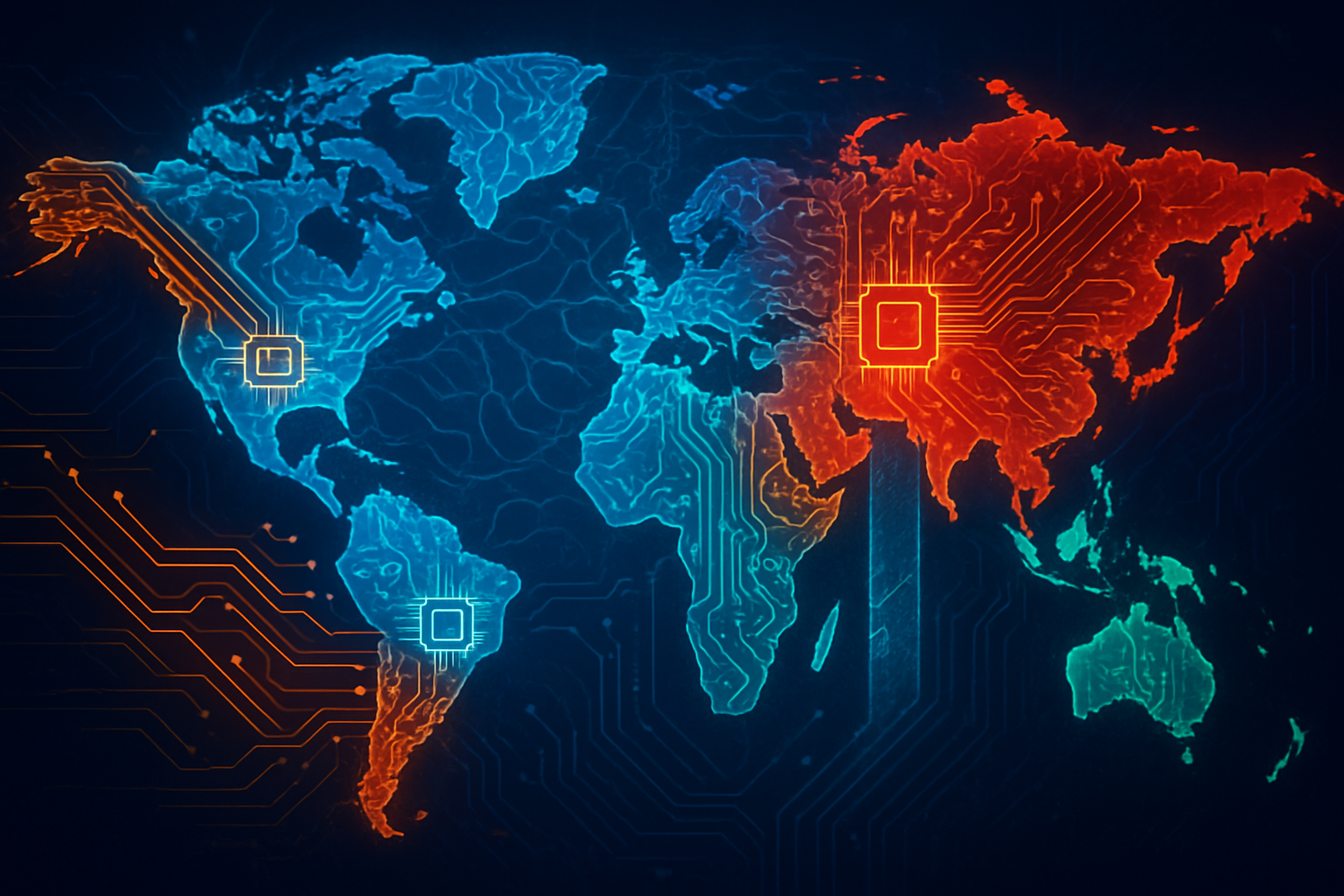
  • The Silicon Curtain Descends: Geopolitics Reshapes the Global Semiconductor Landscape and the Future of AI

    The Silicon Curtain Descends: Geopolitics Reshapes the Global Semiconductor Landscape and the Future of AI

    The global semiconductor supply chain is undergoing an unprecedented and profound transformation, driven by escalating geopolitical tensions and strategic trade policies. As of October 2025, the era of a globally optimized, efficiency-first semiconductor industry is rapidly giving way to fragmented, regional manufacturing ecosystems. This fundamental restructuring is leading to increased costs, aggressive diversification efforts, and an intense strategic race for technological supremacy, with far-reaching implications for the burgeoning field of Artificial Intelligence.

    This geopolitical realignment is not merely a shift in trade dynamics; it represents a foundational re-evaluation of national security, economic power, and technological leadership, placing semiconductors at the very heart of 21st-century global power struggles. The immediate significance is a rapid fragmentation of the supply chain, compelling companies to reconsider manufacturing footprints and diversify suppliers, often at significant cost. The world is witnessing the emergence of a "Silicon Curtain," dividing technological ecosystems and redefining the future of innovation.

    The Technical Battleground: Export Controls, Rare Earths, and the Scramble for Lithography

    The current geopolitical climate has led to a complex web of technical implications for semiconductor manufacturing, primarily centered around access to advanced lithography and critical raw materials. The United States has progressively tightened export controls on advanced semiconductors and related manufacturing equipment to China, with significant expansions in October 2023, December 2024, and March 2025. These measures specifically target China's access to high-end AI chips, supercomputing capabilities, and advanced chip manufacturing tools, including the Foreign Direct Product Rule and expanded Entity Lists. The U.S. has even lowered the Total Processing Power (TPP) threshold from 4,800 to 1,600 Giga operations per second to further restrict China's ability to develop and produce advanced chips.

    Crucially, these restrictions extend to advanced lithography, the cornerstone of modern chipmaking. China's access to Extreme Ultraviolet (EUV) lithography machines, exclusively supplied by Dutch firm ASML, and advanced Deep Ultraviolet (DUV) immersion lithography systems, essential for producing chips at 7nm and below, has been largely cut off. This compels China to innovate rapidly with older technologies or pursue less advanced solutions, often leading to performance compromises in its AI and high-performance computing initiatives. While Chinese companies are accelerating indigenous innovation, including the development of their own electron beam lithography machines and testing homegrown immersion DUV tools, experts predict China will likely lag behind the cutting edge in advanced nodes for several years. ASML (AMS: ASML), however, anticipates the impact of these updated export restrictions to fall within its previously communicated outlook for 2025, with China's business expected to constitute around 20% of its total net sales for the year.

    China has responded by weaponizing its dominance in rare earth elements, critical for semiconductor manufacturing. Starting in late 2024 with gallium, germanium, and graphite, and significantly expanded in April and October 2025, Beijing has imposed sweeping export controls on rare earth elements and associated technologies. These controls, including stringent licensing requirements, target strategically significant heavy rare earth elements and extend beyond raw materials to encompass magnets, processing equipment, and products containing Chinese-origin rare earths. China controls approximately 70% of global rare earth mining production and commands 85-90% of processing capacity, making these restrictions a significant geopolitical lever. This has spurred dramatic acceleration of capital investment in non-Chinese rare earth supply chains, though these alternatives are still in nascent stages.

    These current policies mark a substantial departure from the globalization-focused trade agreements of previous decades. The driving rationale has shifted from prioritizing economic efficiency to national security and technological sovereignty. Both the U.S. and China are "weaponizing" their respective technological and resource chokepoints, creating a "Silicon Curtain." Initial reactions from the AI research community and industry experts are mixed but generally concerned. While there's optimism about industry revenue growth in 2025 fueled by the "AI Supercycle," this is tempered by concerns over geopolitical territorialism, tariffs, and trade restrictions. Experts predict increased costs for critical AI accelerators and a more fragmented, costly global semiconductor supply chain characterized by regionalized production.

    Corporate Crossroads: Navigating a Fragmented AI Hardware Landscape

    The geopolitical shifts in semiconductor supply chains are profoundly impacting AI companies, tech giants, and startups, creating a complex landscape of winners, losers, and strategic reconfigurations. Increased costs and supply disruptions are a major concern, with prices for advanced GPUs potentially seeing hikes of up to 20% if significant disruptions occur. This "Silicon Curtain" is fragmenting development pathways, forcing companies to prioritize resilience over economic efficiency, leading to a shift from "just-in-time" to "just-in-case" supply chain strategies. AI startups, in particular, are vulnerable, often struggling to acquire necessary hardware and compete for top talent against tech giants.

    Companies with diversified supply chains and those investing in "friend-shoring" or domestic manufacturing are best positioned to mitigate risks. The U.S. CHIPS and Science Act (CHIPS Act), a $52.7 billion initiative, is driving domestic production, with Intel (NASDAQ: INTC), Taiwan Semiconductor Manufacturing Company (NYSE: TSM), and Samsung Electronics (KRX: 005930) receiving significant funding to expand advanced manufacturing in the U.S. Tech giants like Alphabet (NASDAQ: GOOGL), Amazon (NASDAQ: AMZN), and Microsoft (NASDAQ: MSFT) are heavily investing in designing custom AI chips (e.g., Google's TPUs, Amazon's Inferentia, Microsoft's Azure Maia AI Accelerator) to reduce reliance on external vendors and mitigate supply chain risks. Chinese tech firms, led by Huawei and Alibaba (NYSE: BABA), are intensifying efforts to achieve self-reliance in AI technology, developing their own chips like Huawei's Ascend series, with SMIC (HKG: 0981) reportedly achieving 7nm process technology. Memory manufacturers like Samsung Electronics and SK Hynix (KRX: 000660) are poised for significant profit increases due to robust demand and escalating prices for high-bandwidth memory (HBM), DRAM, and NAND flash. While NVIDIA (NASDAQ: NVDA) and AMD (NASDAQ: AMD) remain global leaders in AI chip design, they face challenges due to export controls, compelling them to develop modified, less powerful "China-compliant" chips, impacting revenue and diverting R&D resources. Nonetheless, NVIDIA remains the preeminent beneficiary, with its GPUs commanding a market share between 70% and 95% in AI accelerators.

    The competitive landscape for major AI labs and tech companies is marked by intensified competition for resources—skilled semiconductor engineers, AI specialists, and access to cutting-edge computing power. Geopolitical restrictions can directly hinder R&D and product development, leading to delays. The escalating strategic competition is creating a "bifurcated AI world" with separate technological ecosystems and standards, shifting from open collaboration to techno-nationalism. This could lead to delayed rollouts of new AI products and services, reduced performance in restricted markets, and higher operating costs across the board. Companies are strategically moving away from purely efficiency-focused supply chains to prioritize resilience and redundancy, often through "friend-shoring" strategies. Innovation in alternative architectures, advanced packaging, and strategic partnerships (e.g., OpenAI's multi-billion-dollar chip deals with AMD, Samsung, and SK Hynix for projects like 'Stargate') are becoming critical for market positioning and strategic advantage.

    A New Cold War: AI, National Security, and Economic Bifurcation

    The geopolitical shifts in semiconductor supply chains are not isolated events but fundamental drivers reshaping the broader AI landscape and global power dynamics. Semiconductors, once commercial goods, are now viewed as critical strategic assets, integral to national security, economic power, and military capabilities. This "chip war" is driven by the understanding that control over advanced chips is foundational for AI leadership, which in turn underpins future economic and military power. Taiwan's pivotal role, controlling over 90% of the most advanced chips, represents a critical single point of failure that could trigger a global economic crisis if disrupted.

    The national security implications for AI are explicit: the U.S. has implemented stringent export controls to curb China's access to advanced AI chips, preventing their use for military modernization. A global tiered framework for AI chip access, introduced in January 2025, classifies China, Russia, and Iran as "Tier 3 nations," effectively barring them from receiving advanced AI technology. Nations are prioritizing "chip sovereignty" through initiatives like the U.S. CHIPS Act and the EU Chips Act, recognizing semiconductors as a pillar of national security. Furthermore, China's weaponization of critical minerals, including rare earth elements, through expanded export controls in October 2025, directly impacts defense systems and critical infrastructure, highlighting the limited substitutability of these essential materials.

    Economically, these shifts create significant instability. The drive for strategic resilience has led to increased production costs, with U.S. fabs costing 30-50% more to build and operate than those in East Asia. This duplication of infrastructure, while aiming for strategic resilience, leads to less globally efficient supply chains and higher component costs. Export controls directly impact the revenue streams of major chip designers, with NVIDIA anticipating a $5.5 billion hit in 2025 due to H20 export restrictions and its share of China's AI chip market plummeting. The tech sector experienced significant downward pressure in October 2025 due to renewed escalation in US-China trade tensions and potential 100% tariffs on Chinese goods by November 1, 2025. This volatility leads to a reassessment of valuation multiples for high-growth tech companies.

    The impact on innovation is equally profound. Export controls can lead to slower innovation cycles in restricted regions and widen the technological gap. Companies like NVIDIA and AMD are forced to develop "China-compliant" downgraded versions of their AI chips, diverting valuable R&D resources from pushing the absolute technological frontier. Conversely, these controls stimulate domestic innovation in restricted countries, with China pouring billions into its semiconductor industry to achieve self-sufficiency. This geopolitical struggle is increasingly framed as a "digital Cold War," a fight for AI sovereignty that will define global markets, national security, and the balance of world power, drawing parallels to historical resource conflicts where control over vital resources dictated global power dynamics.

    The Horizon: A Fragmented Future for AI and Chips

    From October 2025 onwards, the future of semiconductor geopolitics and AI is characterized by intensifying strategic competition, rapid technological advancements, and significant supply chain restructuring. The "tech war" between the U.S. and China will lead to an accelerating trend towards "techno-nationalism," with nations aggressively investing in domestic chip manufacturing. China will continue its drive for self-sufficiency, while the U.S. and its allies will strengthen their domestic ecosystems and tighten technological alliances. The militarization of chip policy will also intensify, with semiconductors becoming integral to defense strategies. Long-term, a permanent bifurcation of the semiconductor industry is likely, leading to separate research, development, and manufacturing facilities for different geopolitical blocs, higher operational costs, and slower global product rollouts. The race for next-gen AI and quantum computing will become an even more critical front in this tech war.

    On the AI front, integration into human systems is accelerating. In the enterprise, AI is evolving into proactive digital partners (e.g., Google Gemini Enterprise, Microsoft Copilot Studio 2025 Wave 2) and workforce architects, transforming work itself through multi-agent orchestration. Industry-specific applications are booming, with AI becoming a fixture in healthcare for diagnosis and drug discovery, driving military modernization with autonomous systems, and revolutionizing industrial IoT, finance, and software development. Consumer AI is also expanding, with chatbots becoming mainstream companions and new tools enabling advanced content creation.

    However, significant challenges loom. Geopolitical disruptions will continue to increase production costs and market uncertainty. Technological decoupling threatens to reverse decades of globalization, leading to inefficiencies and slower overall technological progress. The industry faces a severe talent shortage, requiring over a million additional skilled workers globally by 2030. Infrastructure costs for new fabs are massive, and delays are common. Natural resource limitations, particularly water and critical minerals, pose significant concerns. Experts predict robust growth for the semiconductor industry, with sales reaching US$697 billion in 2025 and potentially US$1 trillion by 2030, largely driven by AI. The generative AI chip market alone is projected to exceed $150 billion in 2025. Innovation will focus on AI-specific processors, advanced memory (HBM, GDDR7), and advanced packaging technologies. For AI, 2025 is seen as a pivotal year where AI becomes embedded into the entire fabric of human systems, with the rise of "agentic AI" and multimodal AI systems. While AI will augment professionals, the high investment required for training and running large language models may lead to market consolidation.

    The Dawn of a New AI Era: Resilience Over Efficiency

    The geopolitical reshaping of AI semiconductor supply chains represents a profound and irreversible alteration in the trajectory of AI development. It has ushered in an era where technological progress is inextricably linked with national security and strategic competition, frequently termed an "AI Cold War." This marks the definitive end of a truly open and globally integrated AI chip supply chain, where the availability and advancement of high-performance semiconductors directly impact the pace of AI innovation. Advanced semiconductors are now considered critical national security assets, underpinning modern military capabilities, intelligence gathering, and defense systems.

    The long-term impact will be a more regionalized, potentially more secure, but almost certainly less efficient and more expensive foundation for AI development. Experts predict a deeply bifurcated global semiconductor market within three years, characterized by separate technological ecosystems and standards, leading to duplicated supply chains that prioritize strategic resilience over pure economic efficiency. An intensified "talent war" for skilled semiconductor and AI engineers will continue, with geopolitical alignment increasingly dictating market access and operational strategies. Companies and consumers will face increased costs for advanced AI hardware.

    In the coming weeks and months, observers should closely monitor any further refinements or enforcement of export controls by the U.S. Department of Commerce, as well as China's reported advancements in domestic chip production and the efficacy of its aggressive investments in achieving self-sufficiency. China's continued tightening of export restrictions on rare earth elements and magnets will be a key indicator of geopolitical leverage. The progress of national chip initiatives, such as the U.S. CHIPS Act and the EU Chips Act, including the operationalization of new fabrication facilities, will be crucial. The anticipated volume production of 2-nanometer (N2) nodes by TSMC (NYSE: TSM) in the second half of 2025 and A16 chips in the second half of 2026 will be significant milestones. Finally, the dynamics of the memory market, particularly the "AI explosion" driven demand for HBM, DRAM, and NAND, and the expansion of AI-driven semiconductors beyond large cloud data centers into enterprise edge devices and IoT applications, will shape demand and supply chain pressures. The coming period will continue to demonstrate how geopolitical tensions are not merely external factors but are fundamentally integrated into the strategy, economics, and technological evolution of the AI and semiconductor industries.


    This content is intended for informational purposes only and represents analysis of current AI developments.

    TokenRing AI delivers enterprise-grade solutions for multi-agent AI workflow orchestration, AI-powered development tools, and seamless remote collaboration platforms.
    For more information, visit https://www.tokenring.ai/.

  • Geopolitics and Chips: Navigating the Turbulent Semiconductor Supply Chain

    Geopolitics and Chips: Navigating the Turbulent Semiconductor Supply Chain

    The global semiconductor industry, the bedrock of modern technology and the engine driving the artificial intelligence revolution, finds itself at the epicenter of an unprecedented geopolitical maelstrom. Far from a mere commercial enterprise, semiconductors have unequivocally become strategic assets, with nations worldwide scrambling for technological supremacy and self-sufficiency. This escalating tension, fueled by export controls, trade restrictions, and a fierce competition for advanced manufacturing capabilities, is creating widespread disruptions, escalating costs, and fundamentally reshaping the intricate global supply chain. The ripple effects are profound, threatening the stability of the entire tech sector and, most critically, the future trajectory of AI development and deployment.

    This turbulent environment signifies a paradigm shift where geopolitical alignment increasingly dictates market access and operational strategies, transforming a once globally integrated network into a battleground for technological dominance. For the burgeoning AI industry, which relies insatiably on cutting-edge, high-performance semiconductors, these disruptions are particularly critical. Delays, shortages, and increased costs for these essential components risk slowing the pace of innovation, exacerbating the digital divide, and potentially fragmenting AI development along national lines. The world watches as the delicate balance of chip production and distribution hangs in the balance, with immediate and long-term implications for global technological progress.

    The Technical Fault Lines: How Geopolitics Reshapes Chip Production and Distribution

    The intricate dance of semiconductor manufacturing, once governed primarily by economic efficiency and global collaboration, is now dictated by the sharp edges of geopolitical strategy. Specific trade policies, escalating international rivalries, and the looming specter of regional conflicts are not merely inconveniencing the industry; they are fundamentally altering its technical architecture, distribution pathways, and long-term stability in ways unprecedented in its history.

    At the forefront of these technical disruptions are export controls, wielded as precision instruments to impede technological advancement. The most potent example is the restriction on advanced lithography equipment, particularly Extreme Ultraviolet (EUV) and advanced Deep Ultraviolet (DUV) systems from companies like ASML (AMS:ASML) in the Netherlands. These highly specialized machines, crucial for etching transistor patterns smaller than 7 nanometers, are essential for producing the cutting-edge chips demanded by advanced AI. By limiting access to these tools for nations like China, geopolitical actors are effectively freezing their ability to produce leading-edge semiconductors, forcing them to focus on less advanced, "mature node" technologies. This creates a technical chasm, hindering the development of high-performance computing necessary for sophisticated AI models. Furthermore, controls extend to critical manufacturing equipment, metrology tools, and Electronic Design Automation (EDA) software, meaning even if a nation could construct a fabrication plant, it would lack the precision tools and design capabilities for advanced chip production, leading to lower yields and poorer performance. Companies like NVIDIA (NASDAQ:NVDA) have already been forced to technically downgrade their AI chip offerings for certain markets to comply with these regulations, directly impacting their product portfolios and market strategies.

    Tariffs, while seemingly a blunt economic instrument, also introduce significant technical and logistical complexities. Proposed tariffs, such as a 10% levy on Taiwan-made chips or a potential 25% on all semiconductors, directly inflate the cost of critical components for Original Equipment Manufacturers (OEMs) across sectors, from AI accelerators to consumer electronics. This cost increase is not simply absorbed; it can necessitate a disproportionate rise in end-product prices (e.g., a $1 chip price increase potentially leading to a $3 product price hike), impacting overall manufacturing costs and global competitiveness. The threat of substantial tariffs, like a hypothetical 100% on imported semiconductors, compels major Asian manufacturers such as Taiwan Semiconductor Manufacturing Company (TSMC) (NYSE:TSM), Samsung Electronics (KRX:005930), and SK Hynix (KRX:000660) to consider massive investments in establishing manufacturing facilities in regions like the United States. This "reshoring" or "friend-shoring" requires years of planning, tens of billions of dollars in capital expenditure, and the development of entirely new logistical frameworks and skilled workforces—a monumental technical undertaking that fundamentally alters global production footprints.

    The overarching US-China tech rivalry has transformed semiconductors into the central battleground for technological leadership, accelerating a "technical decoupling" or "bifurcation" of global technological ecosystems. This rivalry drives both nations to invest heavily in domestic semiconductor manufacturing and R&D, leading to duplicated efforts and less globally efficient, but strategically necessary, technological infrastructures. China's push for self-reliance, backed by massive state-led investments, aims to overcome restrictions on IP and design tools. Conversely, the US CHIPS Act incentivizes domestic production and "friend-shoring" to reduce reliance on foreign supply chains, especially for advanced nodes. Technically, this means building entirely new fabrication plants (fabs) from the ground up—a process that takes 3-5 years and requires intricate coordination across a vast ecosystem of suppliers and highly specialized talent. The long-term implication is a potential divergence in technical standards and product offerings between different geopolitical blocs, slowing universal advancements.

    These current geopolitical approaches represent a fundamental departure from previous challenges in the semiconductor industry. Historically, disruptions stemmed largely from unintended shocks like natural disasters (e.g., earthquakes, fires), economic downturns, or market fluctuations, leading to temporary shortages or oversupply. The industry responded by optimizing for "just-in-time" efficiency. Today, the disruptions are deliberate, state-led efforts to strategically control technology flows, driven by national security and technological supremacy. This "weaponization of interdependence" transforms semiconductors from commercial goods into critical strategic assets, necessitating a shift from "just-in-time" to "just-in-case" strategies. The extreme concentration of advanced manufacturing in a single geographic region (e.g., TSMC in Taiwan) makes the industry uniquely vulnerable to these targeted geopolitical shocks, leading to a more permanent fragmentation of global technological ecosystems and a costly re-prioritization of resilience over pure economic efficiency.

    The Shifting Sands of Innovation: Impact on AI Companies, Tech Giants, and Startups

    The escalating geopolitical tensions, manifesting as a turbulent semiconductor supply chain, are profoundly reshaping the competitive landscape for AI companies, tech giants, and nascent startups alike. The foundational hardware that powers artificial intelligence – advanced chips – is now a strategic asset, dictating who innovates, how quickly, and where. This "Silicon Curtain" is driving up costs, fragmenting development pathways, and forcing a fundamental reassessment of operational strategies across the industry.

    For tech giants like Alphabet (NASDAQ:GOOGL), Amazon (NASDAQ:AMZN), and Microsoft (NASDAQ:MSFT), the immediate impact includes increased costs for critical AI accelerators and prolonged supply chain disruptions. In response, these hyperscalers are increasingly investing in in-house chip design, developing custom AI chips such as Google's TPUs, Amazon's Inferentia, and Microsoft's Azure Maia AI Accelerator. This strategic move aims to reduce reliance on external vendors like NVIDIA (NASDAQ:NVDA) and AMD (NASDAQ:AMD), providing greater control over their AI infrastructure, optimizing performance for their specific workloads, and mitigating geopolitical risks. While this offers a strategic advantage, it also represents a massive capital outlay and a significant shift from their traditional software-centric business models. The competitive implication for established chipmakers is a push towards specialization and differentiation, as their largest customers become their competitors in certain segments.

    AI startups, often operating on tighter budgets and with less leverage, face significantly higher barriers to entry. Increased component costs, coupled with fragmented supply chains, make it harder to procure the necessary advanced GPUs and other specialized chips. This struggle for hardware parity can stifle innovation, as startups compete for limited resources against tech giants who can absorb higher costs or leverage economies of scale. Furthermore, the "talent war" for skilled semiconductor engineers and AI specialists intensifies, with giants offering vastly more computing power and resources, making it challenging for startups to attract and retain top talent. Policy volatility, such as export controls on advanced AI chips, can also directly disrupt a startup's product roadmap if their chosen hardware becomes restricted or unavailable in key markets.

    Conversely, certain players are strategically positioned to benefit from this new environment. Semiconductor manufacturers with diversified production capabilities, particularly those responding to government incentives, stand to gain. Intel (NASDAQ:INTC), for example, is a significant recipient of CHIPS Act funding for its expansion in the U.S., aiming to re-establish its foundry leadership. TSMC (NYSE:TSM) is similarly investing billions in new facilities in Arizona and Japan, strategically addressing the need for onshore and "friend-shored" production. These investments, though costly, secure future market access and strengthen their position as indispensable partners in a fractured supply chain. In China, domestic AI chip startups are receiving substantial government funding, benefiting from a protected market and a national drive for self-sufficiency, accelerating their development in a bid to replace foreign technology. Additionally, non-China-based semiconductor material and equipment firms, such as Japanese chemical companies and equipment giants like ASML (AMS:ASML), Applied Materials (NASDAQ:AMAT), and Lam Research (NASDAQ:LRCX), are seeing increased demand as global fab construction proliferates outside of politically sensitive regions, despite facing restrictions on advanced exports to China.

    The competitive implications for major AI labs are a fundamental reassessment of their global supply chain strategies, prioritizing resilience and redundancy over pure cost efficiency. This involves exploring multiple suppliers, investing in proprietary chip design, and even co-investing in new fabrication facilities. The need to comply with export controls has also forced companies like NVIDIA and AMD to develop downgraded versions of their AI chips for specific markets, potentially diverting R&D resources from pushing the absolute technological frontier to optimizing for legal limits. This paradoxical outcome could inadvertently boost rivals who are incentivized to innovate rapidly within their own ecosystems, such as Huawei in China. Ultimately, the geopolitical landscape is driving a profound and costly realignment, where market positioning is increasingly determined by strategic control over the semiconductor supply chain, rather than just technological prowess alone.

    The "AI Cold War": Wider Significance and Looming Concerns

    The geopolitical wrestling match over semiconductor supply chains transcends mere economic competition; it is the defining characteristic of an emerging "AI Cold War," fundamentally reshaping the global technological landscape. This strategic rivalry, primarily between the United States and China, views semiconductors not just as components, but as the foundational strategic assets upon which national security, economic dominance, and military capabilities in the age of artificial intelligence will be built.

    The impact on the broader AI landscape is profound and multifaceted. Export controls, such as those imposed by the U.S. on advanced AI chips (like NVIDIA's A100 and H100) and critical manufacturing equipment (like ASML's (AMS:ASML) EUV lithography machines), directly hinder the development of cutting-edge AI in targeted nations. While intended to slow down rivals, this strategy also forces companies like NVIDIA (NASDAQ:NVDA) to divert engineering resources into developing "China-compliant" versions of their accelerators with reduced capabilities, potentially slowing their overall pace of innovation. This deliberate fragmentation accelerates "techno-nationalism," pushing global tech ecosystems into distinct blocs with potentially divergent standards and limited interoperability – a "digital divorce" that affects global trade, investment, and collaborative AI research. The inherent drive for self-sufficiency, while boosting domestic industries, also leads to duplicated supply chains and higher production costs, which could translate into increased prices for AI chips and, consequently, for AI-powered products and services globally.

    Several critical concerns arise from this intensified geopolitical environment. First and foremost is a potential slowdown in global innovation. Reduced international collaboration, market fragmentation, and the diversion of R&D efforts into creating compliant or redundant technologies rather than pushing the absolute frontier of AI could stifle the collective pace of advancement that has characterized the field thus far. Secondly, economic disruption remains a significant threat, with supply chain vulnerabilities, soaring production costs, and the specter of trade wars risking instability, inflation, and reduced global growth. Furthermore, the explicit link between advanced AI and national security raises security risks, including the potential for diversion or unauthorized use of advanced chips, prompting proposals for intricate location verification systems for exported AI hardware. Finally, the emergence of distinct AI ecosystems risks creating severe technological divides, where certain regions lag significantly in access to advanced AI capabilities, impacting everything from healthcare and education to defense and economic competitiveness.

    Comparing this era to previous AI milestones or technological breakthroughs reveals a stark difference. While AI's current trajectory is often likened to transformative shifts like the Industrial Revolution or the Information Age due to its pervasive impact, the "AI Cold War" introduces a new, deliberate geopolitical dimension. Previous tech races were primarily driven by innovation and market forces, fostering a more interconnected global scientific community. Today, the race is explicitly tied to national security and strategic military advantage, with governments actively intervening to control the flow of foundational technologies. This weaponization of interdependence contrasts sharply with past eras where technological progress, while competitive, was less overtly politicized at the fundamental hardware level. The narrative of an "AI Cold War" underscores that the competition is not just about who builds the better algorithm, but who controls the very silicon that makes AI possible, setting the stage for a fragmented and potentially less collaborative future for artificial intelligence.

    The Road Ahead: Navigating a Fragmented Future

    The semiconductor industry, now undeniably a linchpin of geopolitical power, faces a future defined by strategic realignment, intensified competition, and a delicate balance between national security and global innovation. Both near-term and long-term developments point towards a fragmented yet resilient ecosystem, fundamentally altered by the ongoing geopolitical tensions.

    In the near term, expect to see a surge in government-backed investments aimed at boosting domestic manufacturing capabilities. Initiatives like the U.S. CHIPS Act, the European Chips Act, and similar programs in Japan and India are fueling the construction of new fabrication plants (fabs) and expanding existing ones. This aggressive push for "chip nationalism" aims to reduce reliance on concentrated manufacturing hubs in East Asia. China, in parallel, will continue to pour billions into indigenous research and development to achieve greater self-sufficiency in chip technologies and improve its domestic equipment manufacturing capabilities, attempting to circumvent foreign restrictions. Companies will increasingly adopt "split-shoring" strategies, balancing offshore production with domestic manufacturing to enhance flexibility and resilience, though these efforts will inevitably lead to increased production costs due to the substantial capital investments and potentially higher operating expenses in new regions. The intense global talent war for skilled semiconductor engineers and AI specialists will also escalate, driving up wages and posing immediate challenges for companies seeking qualified personnel.

    Looking further ahead, long-term developments will likely solidify a deeply bifurcated global semiconductor market, characterized by distinct technological ecosystems and standards catering to different geopolitical blocs. This could manifest as two separate, less efficient supply chains, impacting everything from consumer electronics to advanced AI infrastructure. The emphasis will shift from pure economic efficiency to strategic resilience and national security, making the semiconductor supply chain a critical battleground in the global race for AI supremacy and overall technological dominance. This re-evaluation of globalization prioritizes technological sovereignty over interconnectedness, leading to a more regionalized and, ultimately, more expensive semiconductor industry, though potentially more resilient against single points of failure.

    These geopolitical shifts are directly influencing potential applications and use cases on the horizon. AI chips will remain at the heart of this struggle, recognized as essential national security assets for military superiority and economic dominance. The insatiable demand for computational power for AI, including large language models and autonomous systems, will continue to drive the need for more advanced and efficient semiconductors. Beyond AI, semiconductors are vital for the development and deployment of 5G/6G communication infrastructure, the burgeoning electric vehicle (EV) industry (where China's domestic chip development is a key differentiator), and advanced military and defense systems. The nascent field of quantum computing also carries significant geopolitical implications, with control over quantum technology becoming a key factor in future national security and economic power.

    However, significant challenges must be addressed. The continued concentration of advanced chip manufacturing in geopolitically sensitive regions, particularly Taiwan, poses a catastrophic risk, with potential disruptions costing hundreds of billions annually. The industry also confronts a severe and escalating global talent shortage, projected to require over one million additional skilled workers by 2030, exacerbated by an aging workforce, declining STEM enrollments, and restrictive immigration policies. The enormous costs of reshoring and building new, cutting-edge fabs (around $20 billion each) will lead to higher consumer and business expenses. Furthermore, the trend towards "techno-nationalism" and decoupling from Chinese IT supply chains poses challenges for global interoperability and collaborative innovation.

    Experts predict an intensification of the geopolitical impact on the semiconductor industry. Continued aggressive investment in domestic chip manufacturing by the U.S. and its allies, alongside China's indigenous R&D push, will persist, though bringing new fabs online and achieving significant production volumes will take years. The global semiconductor market will become more fragmented and regionalized, likely leading to higher manufacturing costs and increased prices for electronic goods. Resilience will remain a paramount priority for nations and corporations, fostering an ecosystem where long-term innovation and cross-border collaboration for resilience may ultimately outweigh pure competition. Despite these uncertainties, demand for semiconductors is expected to grow rapidly, driven by the ongoing digitalization of the global economy, AI, EVs, and 5G/6G, with the sector potentially reaching $1 trillion in revenue by 2030. Companies like NVIDIA (NASDAQ:NVDA) will continue to strategically adapt, developing region-specific chips and leveraging their existing ecosystems to maintain relevance in this complex global market, as the industry moves towards a more decentralized and geopolitically influenced future where national security and technological sovereignty are paramount.

    A New Era of Silicon Sovereignty: The Enduring Impact and What Comes Next

    The global semiconductor supply chain, once a testament to interconnected efficiency, has been irrevocably transformed by the relentless forces of geopolitics. What began as a series of trade disputes has blossomed into a full-blown "AI Cold War," fundamentally redefining the industry's structure, driving up costs, and reshaping the trajectory of technological innovation, particularly within the burgeoning field of artificial intelligence.

    Key takeaways from this turbulent period underscore that semiconductors are no longer mere commercial goods but critical strategic assets, indispensable for national security and economic power. The intensifying US-China rivalry stands as the primary catalyst, manifesting in aggressive export controls by the United States to curb China's access to advanced chip technology, and a determined, state-backed push by China for technological self-sufficiency. This has led to a pronounced fragmentation of supply chains, with nations investing heavily in domestic manufacturing through initiatives like the U.S. CHIPS Act and the European Chips Act, aiming to reduce reliance on concentrated production hubs, especially Taiwan. Taiwan's (TWSE:2330) pivotal role, home to TSMC (NYSE:TSM) and its near-monopoly on advanced chip production, makes its security paramount to global technology and economic stability, rendering cross-strait tensions a major geopolitical risk. The vulnerabilities exposed by past disruptions, such as the COVID-19 pandemic, have reinforced the need for resilience, albeit at the cost of rising production expenses and a critical global shortage of skilled talent.

    In the annals of AI history, this geopolitical restructuring marks a truly critical juncture. The future of AI, from its raw computational power to its accessibility, is now intrinsically linked to the availability, resilience, and political control of its underlying hardware. The insatiable demand for advanced semiconductors (GPUs, ASICs, High Bandwidth Memory) to power large language models and autonomous systems collides with an increasingly scarce and politically controlled supply. This acute scarcity of specialized, cutting-edge components threatens to slow the pace of AI innovation and raise costs across the tech ecosystem. This dynamic risks concentrating AI power among a select few dominant players or nations, potentially widening economic and digital divides. The "techno-nationalism" currently on display underscores that control over advanced chips is now foundational for national AI strategies and maintaining a competitive edge, profoundly altering the landscape of AI development.

    The long-term impact will see a more fragmented, regionalized, and ultimately more expensive semiconductor industry. Major economic blocs will strive for greater self-sufficiency in critical chip production, leading to duplicated supply chains and a slower pace of global innovation. Diversification beyond East Asia will accelerate, with significant investments expanding leading-edge wafer fabrication capacity into the U.S., Europe, and Japan, and Assembly, Test, and Packaging (ATP) capacity spreading across Southeast Asia, Latin America, and Eastern Europe. Companies will permanently shift from lean "just-in-time" inventory models to more resilient "just-in-case" strategies, incorporating multi-sourcing and real-time market intelligence. Large technology companies and automotive OEMs will increasingly focus on in-house chip design to mitigate supply chain risks, ensuring that access to advanced chip technology remains a central pillar of national power and strategic competition for decades to come.

    In the coming weeks and months, observers should closely watch the continued implementation and adjustment of national chip strategies by major players like the U.S., China, the EU, and Japan, including the progress of new "fab" constructions and reshoring initiatives. The adaptation of semiconductor giants such as TSMC, Samsung (KRX:005930), and Intel (NASDAQ:INTC) to these changing geopolitical realities and government incentives will be crucial. Political developments, particularly election cycles and their potential impact on existing legislation (e.g., criticisms of the CHIPS Act), could introduce further uncertainty. Expect potential new rounds of export controls or retaliatory trade disputes as nations continue to vie for technological advantage. Monitoring the "multispeed recovery" of the semiconductor supply chain, where demand for AI, 5G, and electric vehicles surges while other sectors catch up, will be key. Finally, how the industry addresses persistent challenges like skilled labor shortages, high construction costs, and energy constraints will determine the ultimate success of diversification efforts, all against a backdrop of continued market volatility heavily influenced by regulatory changes and geopolitical announcements. The journey towards silicon sovereignty is long and fraught with challenges, but its outcome will define the next chapter of technological progress and global power.

    This content is intended for informational purposes only and represents analysis of current AI developments.

    TokenRing AI delivers enterprise-grade solutions for multi-agent AI workflow orchestration, AI-powered development tools, and seamless remote collaboration platforms.
    For more information, visit https://www.tokenring.ai/.

  • US Export Controls Reshape Global Semiconductor Landscape: A Deep Dive into Market Dynamics and Supply Chain Shifts

    The global semiconductor industry finds itself in an unprecedented era of geopolitical influence, as stringent US export controls and trade policies continue to fundamentally reshape its landscape. As of October 2025, these measures, primarily aimed at curbing China's access to advanced chip technology and safeguarding US national security interests, have triggered a profound restructuring of global supply chains, redefined market dynamics, and ignited a fierce race for technological self-sufficiency. The immediate significance lies in the expanded scope of restrictions, the revocation of key operational statuses for international giants, and the mandated development of "China-compliant" products, signaling a long-term bifurcation of the industry.

    This strategic recalibration by the United States has sent ripples through every segment of the semiconductor ecosystem, from chip design and manufacturing to equipment suppliers and end-users. Companies are grappling with increased compliance burdens, revenue impacts, and the imperative to diversify production and R&D efforts. The policies have inadvertently spurred significant investment in domestic semiconductor capabilities in China, while simultaneously pushing allied nations and multinational corporations to reassess their global manufacturing footprints, creating a complex and evolving environment that balances national security with economic interdependence.

    Unpacking the Technicalities: The Evolution of US Semiconductor Restrictions

    The US government's approach to semiconductor export controls has evolved significantly, becoming increasingly granular and comprehensive since initial measures in October 2022. As of October 2025, the technical specifications and scope of these restrictions are designed to specifically target advanced computing capabilities, high-bandwidth memory (HBM), and sophisticated semiconductor manufacturing equipment (SME) critical for producing chips at or below the 16/14nm node.

    A key technical differentiator from previous approaches is the continuous broadening of the Entity List, with significant updates in October 2023 and December 2024, and further intensification by the Trump administration in March 2025, adding over 140 new entities. These lists effectively bar US companies from supplying listed Chinese firms with specific technologies without explicit licenses. Furthermore, the revocation of Validated End-User (VEU) status for major foreign semiconductor manufacturers operating in China, including Taiwan Semiconductor Manufacturing Company (NYSE: TSM), Samsung (KRX: 005930), and SK Hynix (KRX: 000660), has introduced significant operational hurdles. These companies, which previously enjoyed streamlined exports of US-origin goods to their Chinese facilities, now face a complex and often delayed licensing process, with South Korean firms reportedly needing yearly approvals for specific quantities of restricted gear, parts, and materials for their China operations, explicitly prohibiting upgrades or expansions.

    The implications extend to US chip designers like Nvidia (NASDAQ: NVDA) and Advanced Micro Devices (NASDAQ: AMD), which have been compelled to engineer "China-compliant" versions of their advanced AI accelerators. These products are intentionally designed with capped capabilities to fall below the export control thresholds, effectively turning a portion of their engineering efforts into compliance exercises. For example, Nvidia's efforts to develop modified AI processors for the Chinese market, while allowing sales, reportedly involve an agreement to provide the US government a 15% revenue cut from these sales in exchange for export licenses as of August 2025. This differs from previous policies that focused more broadly on military end-use, now extending to commercial applications deemed critical for AI development. Initial reactions from the AI research community and industry experts have been mixed, with some acknowledging the national security imperatives while others express concerns about potential stifling of innovation due to reduced revenue for R&D and the creation of separate, less advanced technology ecosystems.

    Corporate Chessboard: Navigating the New Semiconductor Order

    The ripple effects of US export controls have profoundly impacted AI companies, tech giants, and startups globally, creating both beneficiaries and significant challenges. US-based semiconductor equipment manufacturers like Applied Materials (NASDAQ: AMAT), Lam Research (NASDAQ: LRCX), and KLA Corporation (NASDAQ: KLAC) face a double-edged sword: while restrictions limit their sales to specific Chinese entities, they also reinforce the reliance of allied nations on US technology, potentially bolstering their long-term market position in non-Chinese markets. However, the immediate impact on US chip designers has been substantial. Nvidia, for instance, faced an estimated $5.5 billion decline in revenue, and AMD an $800 million decline in 2025, due to restricted access to the lucrative Chinese market for their high-end AI chips. This has forced these companies to innovate within compliance boundaries, developing specialized, less powerful chips for China.

    Conversely, Chinese domestic semiconductor firms, such as Semiconductor Manufacturing International Corp (SMIC) (HKG: 00981) and Yangtze Memory Technologies (YMTC), stand to indirectly benefit from the intensified push for self-sufficiency. Supported by substantial state funding and national mandates, these companies are rapidly advancing their capabilities, with SMIC reportedly making progress in 7nm chip production. While still lagging in high-end memory and advanced AI chip production, the controls have accelerated their R&D and manufacturing efforts to replace foreign equipment and technology. This competitive dynamic is creating a bifurcated market, where Chinese companies are gaining ground in certain segments within their domestic market, while global leaders focus on advanced nodes and diversified supply chains.

    The competitive implications for major AI labs and tech companies are significant. Companies that rely on cutting-edge AI accelerators, particularly those outside of China, are seeking to secure diversified supply chains for these critical components. The potential disruption to existing products or services is evident in sectors like advanced AI development and high-performance computing, where access to the most powerful chips is paramount. Market positioning is increasingly influenced by geopolitical alignment and the ability to navigate complex regulatory environments. Companies that can demonstrate robust, geographically diversified supply chains and compliance with varying trade policies will gain a strategic advantage, while those heavily reliant on restricted markets or technologies face increased vulnerability and pressure to adapt their strategies rapidly.

    Broader Implications: Geopolitics, Supply Chains, and the Future of Innovation

    The US export controls on semiconductors are not merely trade policies; they are a central component of a broader geopolitical strategy, fundamentally reshaping the global AI landscape and technological trends. These measures underscore a strategic competition between the US and China, with semiconductors at the core of national security and economic dominance. The controls fit into a trend of technological decoupling, where nations prioritize resilient domestic supply chains and control over critical technologies, moving away from an interconnected globalized model. This has accelerated the fragmentation of the global semiconductor market into US-aligned and China-aligned ecosystems, influencing everything from R&D investment to talent migration.

    The most significant impact on supply chains is the push for diversification and regionalization. Companies globally are adopting "China+many" strategies, shifting production and sourcing to countries like Vietnam, Malaysia, and India to mitigate risks associated with over-reliance on China. Approximately 20% of South Korean and Taiwanese semiconductor production has reportedly shifted to these regions in 2025. This diversification, however, comes with challenges, including higher operating costs in regions like the US (estimated 30-50% more expensive than Asia) and potential workforce shortages. The policies have also spurred massive global investments in semiconductor manufacturing, exceeding $500 billion, driven by incentives in the US (e.g., CHIPS Act) and the EU, aiming to onshore critical production capabilities.

    Potential concerns arising from these controls include the risk of stifling global innovation. While the US aims to maintain its technological lead, critics argue that restricting access to large markets like China could reduce revenues necessary for R&D, thereby slowing down the pace of innovation for US companies. Furthermore, these controls inadvertently incentivize targeted countries to redouble their efforts in independent innovation, potentially leading to a "two-speed" technology development. Comparisons to previous AI milestones and breakthroughs highlight a shift from purely technological races to geopolitical ones, where access to foundational hardware, not just algorithms, dictates national AI capabilities. The long-term impact could be a more fragmented and less efficient global innovation ecosystem, albeit one that is arguably more resilient to geopolitical shocks.

    The Road Ahead: Anticipated Developments and Emerging Challenges

    Looking ahead, the semiconductor industry is poised for continued transformation under the shadow of US export controls. In the near term, experts predict further refinements and potential expansions of existing restrictions, especially concerning AI chips and advanced manufacturing equipment. The ongoing debate within the US government about balancing national security with economic competitiveness suggests that while some controls might be relaxed for allied nations (as seen with the UAE and Saudi Arabia generating heightened demand), the core restrictions against China will likely persist. We can expect to see more "China-compliant" product iterations from US companies, pushing the boundaries of what is permissible under the regulations.

    Long-term developments will likely include a sustained push for domestic semiconductor manufacturing capabilities in multiple regions. The US, EU, Japan, and India are all investing heavily in building out their fabrication plants and R&D infrastructure, aiming for greater supply chain resilience. This will foster new regional hubs for semiconductor innovation and production, potentially reducing the industry's historical reliance on a few key locations in Asia. Potential applications and use cases on the horizon will be shaped by these geopolitical realities. For instance, the demand for "edge AI" solutions that require less powerful, but still capable, chips might see accelerated development in regions facing restrictions on high-end components.

    However, significant challenges need to be addressed. Workforce development remains a critical hurdle, as building and staffing advanced fabs requires a highly skilled labor force that is currently in short supply globally. The high cost of domestic manufacturing compared to established Asian hubs also poses an economic challenge. Moreover, the risk of technological divergence, where different regions develop incompatible standards or ecosystems, could hinder global collaboration and economies of scale. Experts predict that the industry will continue to navigate a delicate balance between national security imperatives and the economic realities of a globally interconnected market. The coming years will reveal whether these controls ultimately strengthen or fragment the global technological landscape.

    A New Era for Semiconductors: Navigating Geopolitical Headwinds

    The US export controls and trade policies have undeniably ushered in a new era for the global semiconductor industry, characterized by strategic realignments, supply chain diversification, and intensified geopolitical competition. As of October 2025, the immediate and profound impact is evident in the restrictive measures targeting advanced chips and manufacturing equipment, the operational complexities faced by multinational corporations, and the accelerated drive for technological self-sufficiency in China. These policies are not merely influencing market dynamics; they are fundamentally reshaping the very architecture of the global tech ecosystem.

    The significance of these developments in AI history cannot be overstated. Access to cutting-edge semiconductors is the bedrock of advanced AI development, and by restricting this access, the US is directly influencing the trajectory of AI innovation on a global scale. This marks a shift from a purely collaborative, globalized approach to technological advancement to one increasingly defined by national security interests and strategic competition. While concerns about stifled innovation and market fragmentation are valid, the policies also underscore a growing recognition of the strategic importance of semiconductors as critical national assets.

    In the coming weeks and months, industry watchers should closely monitor several key areas. These include further updates to export control lists, the progress of domestic manufacturing initiatives in various countries, the financial performance of companies heavily impacted by these restrictions, and any potential shifts in diplomatic relations that could influence trade policies. The long-term impact will likely be a more resilient but potentially less efficient and more fragmented global semiconductor supply chain, with significant implications for the future of AI and technological innovation worldwide. The industry is in a state of flux, and adaptability will be paramount for all stakeholders.

    This content is intended for informational purposes only and represents analysis of current AI developments.

    TokenRing AI delivers enterprise-grade solutions for multi-agent AI workflow orchestration, AI-powered development tools, and seamless remote collaboration platforms.
    For more information, visit https://www.tokenring.ai/.